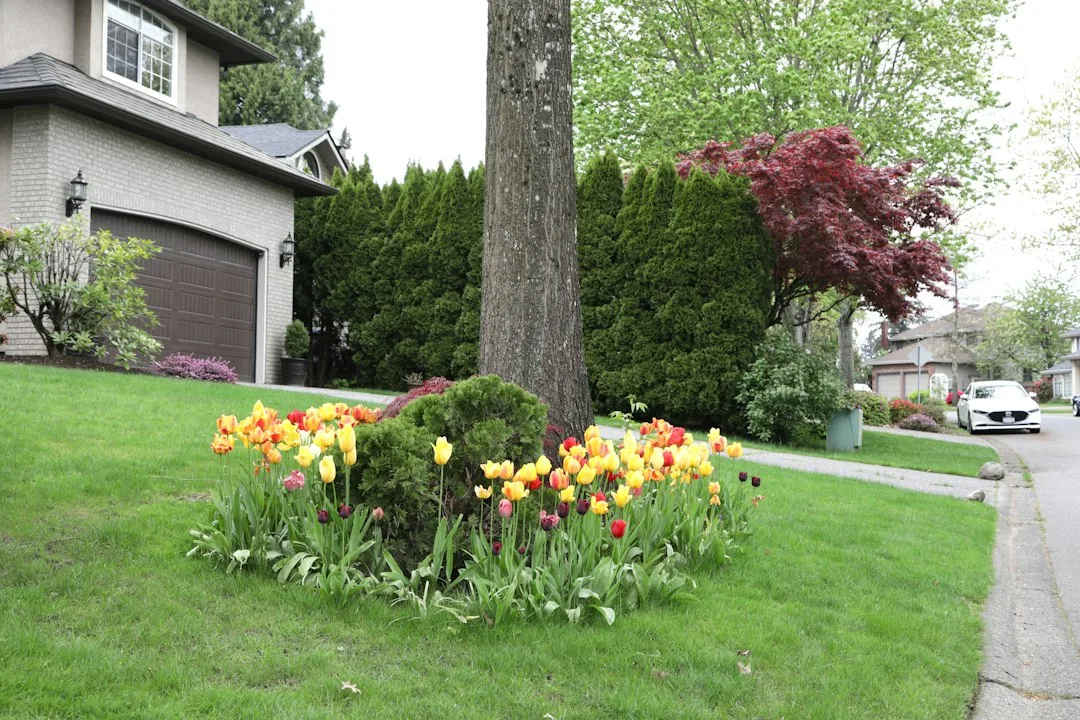
Foundation planting used to mean a continuous row of rounded evergreens pressed against the siding, identical from one lot to the next. That habit is loosening fast, and the reason is simple: those rows demand shearing twice a year and rarely look intentional. Today, foundation planting leans toward layered beds that frame the door and windows without hiding them.
Foundation Planting Starts With Dropping the Builder Hedge
Builder packages in many new subdivisions still include a single species, often one boxwood or yew, planted in a straight line along the front wall. Homeowners inherit that line and spend weekends trimming it into a flat box. The shift now is toward mixed beds of three to five plant types, each chosen for its shape and bloom time. Layering fixes that.
Proven Winners’ Little Lime hydrangea is a common anchor in these new beds. It is a panicle hydrangea with lime-green summer blooms that age to rose-tinged tones, and it stays compact enough for a front corner. Pair it with a low evergreen and the bed reads as deliberate rather than leftover.
Quick Tips
- Replace one straight hedge with three plants of different heights.
- Set the tallest shrub at the corner, not the center of the wall.
- Leave at least a foot of mulched soil between plants and siding.
- Choose one flowering shrub for color across two seasons.
Choosing Plants Sized for Their Mature Footprint
Green Velvet boxwood, a Buxus cultivar, holds a dense, rounded habit and tolerates regular shaping. Pick it for the low tier of a bed, where it reads as structure all year. Its growth stays modest, so it rarely pushes into walkways.
Goldflame spirea offers what boxwood cannot: reddish new foliage and pink flower clusters in early summer. Knock Out roses, introduced by Star Roses and Plants, bloom repeatedly through the season and need little spraying in most climates. Both sit comfortably in the middle tier.
The reason to match plant size to the site is maintenance. A shrub that grows six feet tall in a three-foot space will be sheared every spring. Check the tag first.
| Plant | Typical Mature Size | Best Bed Position |
|---|---|---|
| Green Velvet boxwood | About 2 to 3 feet tall | Front edge, low tier |
| Goldflame spirea | About 3 to 4 feet tall | Middle tier, spring color |
| Little Lime hydrangea | About 3 to 5 feet tall | Corner accent |
| Emerald Green arborvitae | Often 12 feet or more | Not against the foundation |
Spacing Rules That Keep Beds From Crowding the Wall
Plant spacing starts with the mature width, not the size at purchase. Most homeowners plant too close because the nursery pot looks small. A gallon-size shrub may spread several feet within a few seasons.
Leave a clear gap between the shrub and the siding, roughly half the plant’s expected width. That gap allows air movement, keeps leaves off the wall, and lets you reach the trim for paint touch-ups. Walkways need the same respect, so keep a path at least two feet wide.
Group odd numbers of the same plant rather than lining them up. Three boxwoods in a loose triangle read as a planned cluster. Five in a straight line read as a hedge.
The Mistake That Turns a Tidy Entry Into a Tangle
The most common error is planting a tall, narrow conifer right against the foundation because it fills a gap quickly. Picture the typical outcome: an Emerald Green arborvitae set about 18 inches from the siding beneath a front window. Within three years, the tops cover the glass, branches press on the trim, and damp needles stay against the wall after rain.
Hard pruning rarely fixes that shape, because arborvitae often fail to regrow from bare wood. Removal and replanting then cost more than the original shrub. Start with the mature width.
Swap the conifer for a Little Lime hydrangea or a dwarf spirea set well out from the wall. The bed looks fuller in year one and stays in scale for the life of the house.
Pairing Beds With Porches, Paint and Paths
Beds look finished when they relate to the hard surfaces around them. A pale stone path with dark mulch creates contrast that reads well from the street. Warm exterior colors also decide which plants look right, and warm beige and taupe paint colors pull houses into their landscapes, with deep green and plum foliage sitting well against them.
Front porches benefit from a bed that steps up toward the rail instead of sitting flat. A two-tier arrangement hides the foundation line without blocking the steps. For a more formal entry, look at French style home exterior ideas that use symmetrical planting on either side of the door.
Keeping Front Beds Low Maintenance Through the Year
Plan two pruning windows: late spring after the first flush, and early fall before frost. Boxwood and spirea respond well to that schedule. Little Lime blooms on new wood, so a late winter cut is safe for it.
Mulch depth matters as much as plant choice. Two to three inches of shredded hardwood suppresses weeds and holds moisture through dry spells. Keep it pulled back a few inches from the siding to avoid rot and insect trails.
Foundation planting works best when each plant has room to reach its natural size and a clear job in the composition. Start at the entry, choose three to five species, and measure before you dig. The result looks intentional from the street and asks far less of you each spring.