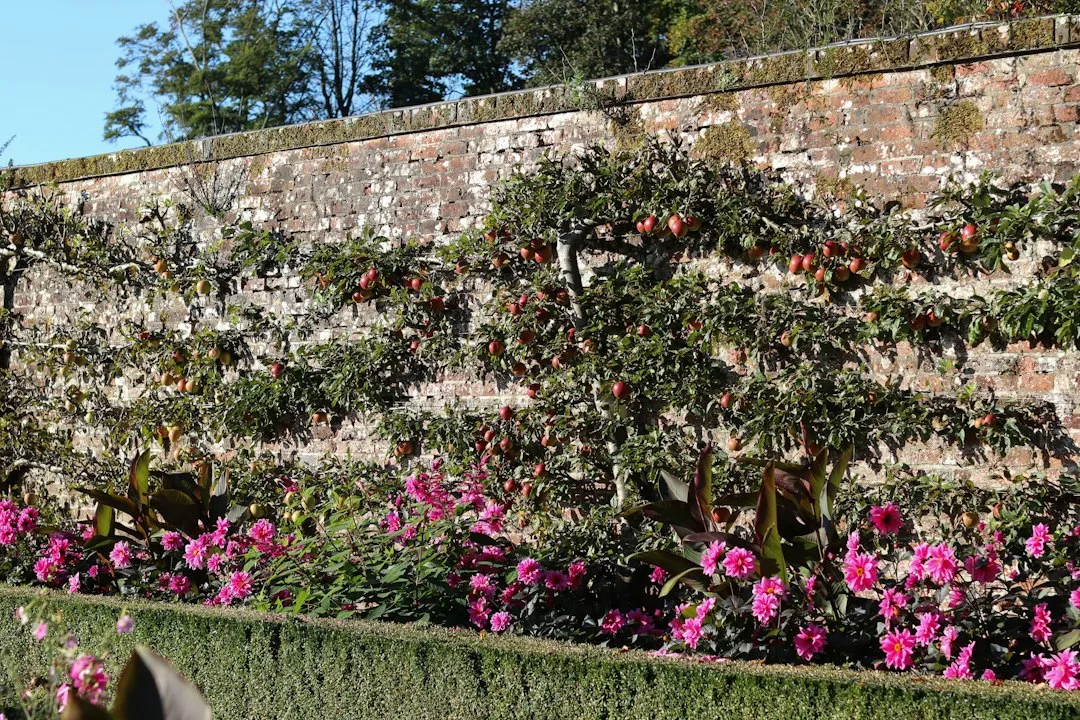
Espalier fruit trees have been trained flat against walls in European gardens for centuries. Growers used the method to coax fruit from sunny brick and stone where ground space was scarce. The same logic now drives small backyards from Ohio to Oregon.
A dwarf apple or pear pruned into a flat, two-dimensional shape can fit into a strip of soil only about two feet deep. That is the whole appeal. Space is the point.
Why Espalier Fruit Trees Suit Narrow Yards
Most fruit trees spread outward as they age. A standard apple can swallow a small lot within a decade. Espalier forces the tree to grow along a fixed set of horizontal wires instead, so the framework stays within a foot or two of the wall. Your lawn stays usable.
Walls also add warmth. A south- or west-facing surface holds heat after sunset, which can extend the ripening window for pears and help apples color up. Stone and brick work well.
Quick Tips
- Face the wall south or southwest in cold climates, since east-facing walls warm slowly after frost.
- Mount wires on posts or brackets so branches sit a few inches off the surface for airflow.
- Choose a dwarf rootstock first, because standard trees are very hard to hold flat.
- Start with a one-year-old whip that already has a few side branches to train.
Choosing Rootstock That Keeps Trees Small
Rootstock controls how large a grafted fruit tree grows. It matters more than the variety for a trained form. Stark Bro’s, the nursery founded in 1816 in Louisiana, Missouri, offers apples on M9, a dwarfing rootstock widely used for tight training.
Cornell University’s Geneva series, bred in New York, adds newer dwarf options. Several show better disease resistance in many gardens. Ask which one came with each tree.
Pears need a slightly different approach. OHxF rootstocks, the Old Home by Farmingdale series, dwarf pears well but some need more room than apples. Plan the space.
| Rootstock | Mature Trained Height | Best Fit |
|---|---|---|
| M9 apple | Roughly 8 to 10 feet | Tight walls and fences |
| Geneva apple series | Varies by rootstock, generally compact | Humid sites with disease pressure |
| OHxF pear | Roughly 8 to 12 feet | Pears on smaller lots |
| Standard seedling | Over 20 feet | Not suited to espalier |
Training the Frame Over the First Three Years
Most nursery references recommend a simple T or fan pattern for a first espalier. Tie the central leader vertically to a stake or wire. Then select two lateral branches to form the first tier.
Use soft ties or cloth strips, never bare wire pressed into bark. Growing trunks swell fast. Gardener’s Supply Company sells galvanized trellis hardware suited to this kind of wall training.
Plan the hardware early. Bend laterals toward the horizontal wires in late winter. Branches are dormant then and flex without cracking.
Each year, add one tier and cut the leader back to just above the next wire. Expect the framework to take about three seasons before it looks finished. Patience pays here.
The Pruning Mistake That Costs a Season of Fruit
The most common error is pruning too hard in the first summer. A gardener sees long vertical shoots. He cuts them back hard and trims every side branch to two buds.
Within weeks, the tree sends up a thicket of water sprouts. Those sprouts, not fruit, become the new growth. The tree spends its energy on wood that will never bear.
Use Felco F-2 bypass pruners, which have forged aluminum handles and replaceable blades, to make clean cuts on young wood. Clean cuts heal faster. Snip water sprouts while they are green in midsummer, when a thumb can snap them off.
A homeowner who trained a young apple against a garage wall, but never removed its water sprouts, had a tree that bore almost nothing for two seasons. The wall was perfect. The pruning was not.
Caring for the Wall Microclimate
The wall that makes espalier work also shapes watering. Brick and stone can dry quickly in summer heat, and soil under an eave may stay bone dry. Water deeply once a week during dry spells.
Mulch the root zone, but keep it pulled back from the trunk. Pale masonry reflects light, so warm wall tones help the fruit ripen. If you are repainting the backdrop, Warm Beige and Taupe Exterior Paint Colors Pull Houses Into Their Landscapes covers tones that sit well beside greenery.
Harvest, Winter Care, and What Comes Next Spring
Espalier apples usually bear within two to four years of planting, depending on rootstock and care. Thin fruit to one apple per cluster in early summer. That keeps the framework from overloading.
Pick when the stem lifts cleanly from the spur. In winter, check ties for bark pinching and loosen them as trunks thicken. Clear fallen leaves from the wall base to reduce overwintering disease.
Formal garden frames like those in Create the French Style Home Exterior of Your Dreams pair naturally with a trained fruit wall. The structure looks deliberate even in bare months.
When a Standard Tree Makes More Sense
Espalier takes time and attention every season. Gardeners who travel often or who prefer minimal pruning usually do better with a dwarf bush or a container tree. Those options grow in the open and need less hands-on shaping.
Very windy or heavily shaded sites also limit results. Fruit needs sun, and a wall that gets only a few hours of light will mostly grow leaves. Check exposure before you buy any trees.