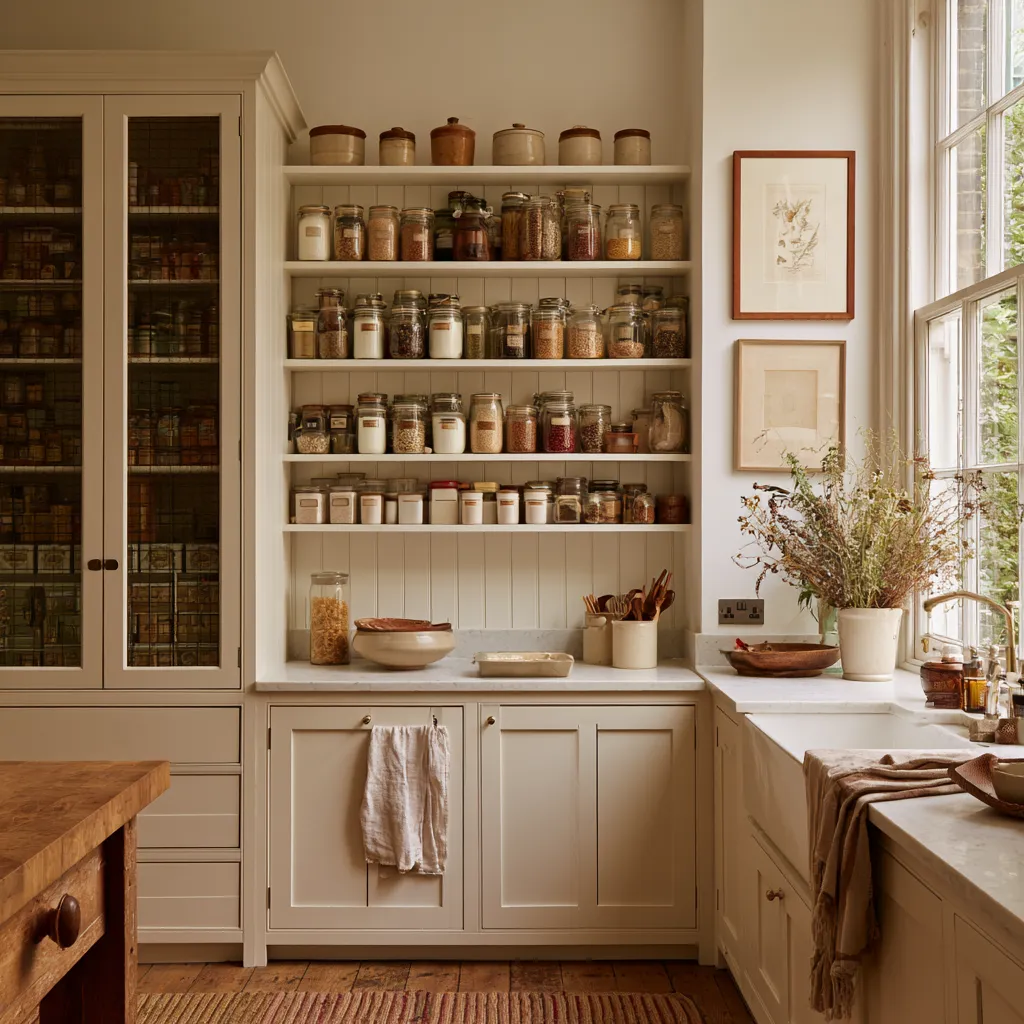
A white corner kitchen cabinet solves two problems at once: it brightens the darkest part of an L- or U-shaped layout and turns an awkward reach-in void into usable storage. A crisp white such as Benjamin Moore Chantilly Lace reflects about 92% of incoming light, against roughly 85% for a softer white like White Dove. Does the color alone fix a corner? No, the hardware inside decides whether you actually use it.
Standard corner bases come in two families. A lazy Susan base takes 33 or 36 inches of wall on each side, while a blind corner base is 36 to 42 inches wide but claims 39 to 48 inches of wall once pulled out from the corner. Pick the cabinet by what you store and how often, then pick the shade of white by how much daylight reaches that corner.
The ideas below cover modern handleless corners, classic glass-front uppers and open corner shelving, with typical prices and sizes for each. Treat the corner like a parking spot: the box matters less than how easily you can get in and out of it.
Quick Scan
- Bright whites with an LRV of 91–93 bounce noticeably more light into a corner than creamy whites around LRV 85.
- Lazy Susan corners need 33 or 36 inches per wall; blind corners claim 39–48 inches.
- A basic lazy Susan insert starts around $70, while full-access corner pull-outs can pass $1,800 before installation.
- Glass-front doors typically cost $150–300 each vs $30–80 for a stock solid door.
- Open shelving runs about $50–150 per linear foot installed vs $200–800 for upper cabinets.
- Small items need pull-outs; heavy pots live happily on a rotating shelf.
- Satin or matte white hides fingerprints better than high gloss on a corner you open daily.
Modern Handleless Corners Built Around a White Corner Kitchen Cabinet
A modern white corner kitchen cabinet works best when the fronts stay flat and the hardware disappears. Slab doors with push-to-open latches or integrated finger pulls keep the corner reading as one calm plane instead of a cluster of knobs. Is high gloss the obvious match for a modern look? Not on a corner you open ten times a day, since satin and matte finishes hide fingerprints far better.


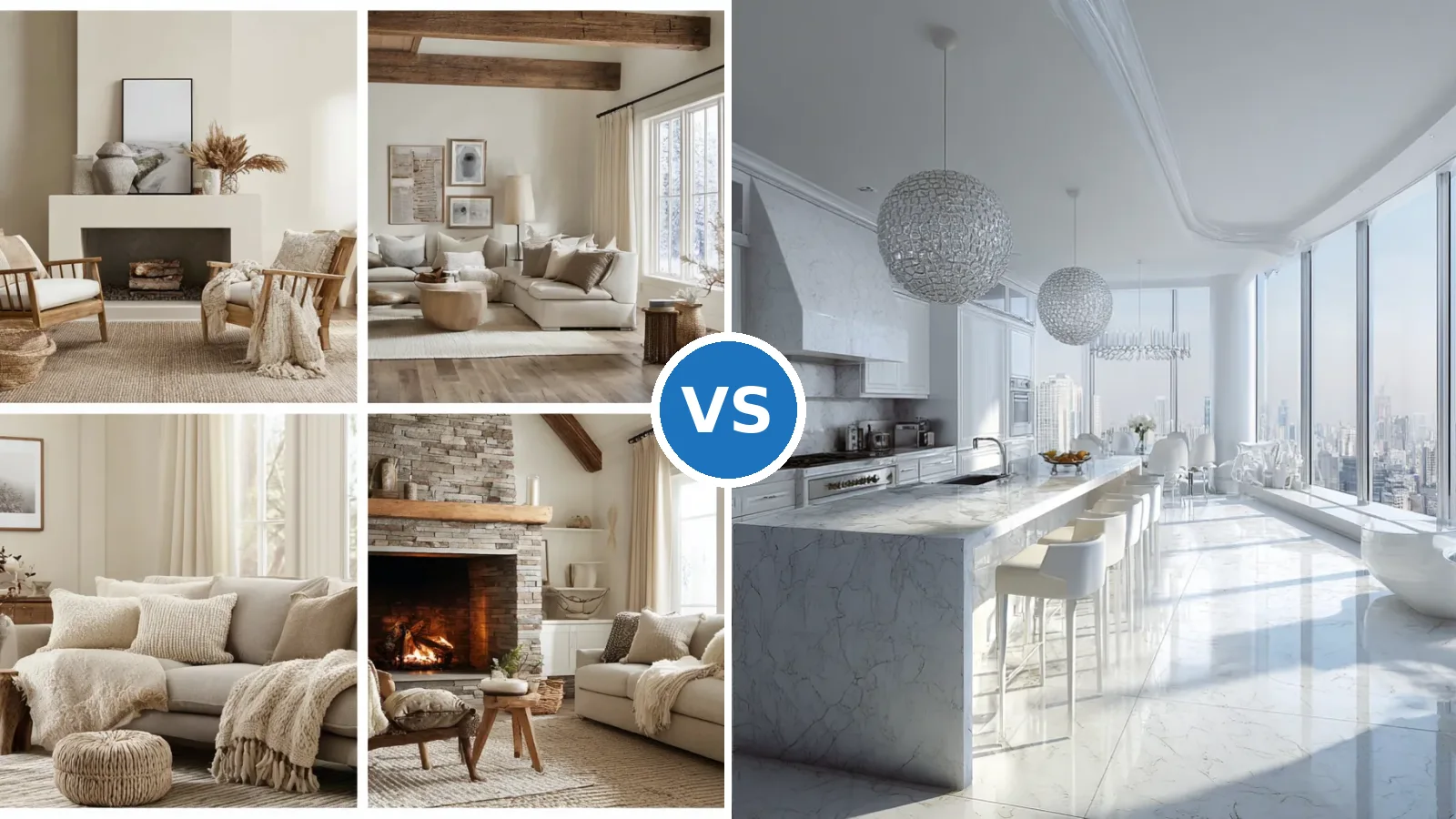
The shade of white changes the result more than most people expect. Chantilly Lace sits at an LRV of 92.2 and Simply White at 91.7, so both read bright and clean in a sunny corner. A north-facing corner with little daylight can make those same whites look grey, so a slightly warmer option often feels better there. Before ordering doors, compare a crisp white against a softer shade using this comparison of creamy and pure white kitchen palettes.
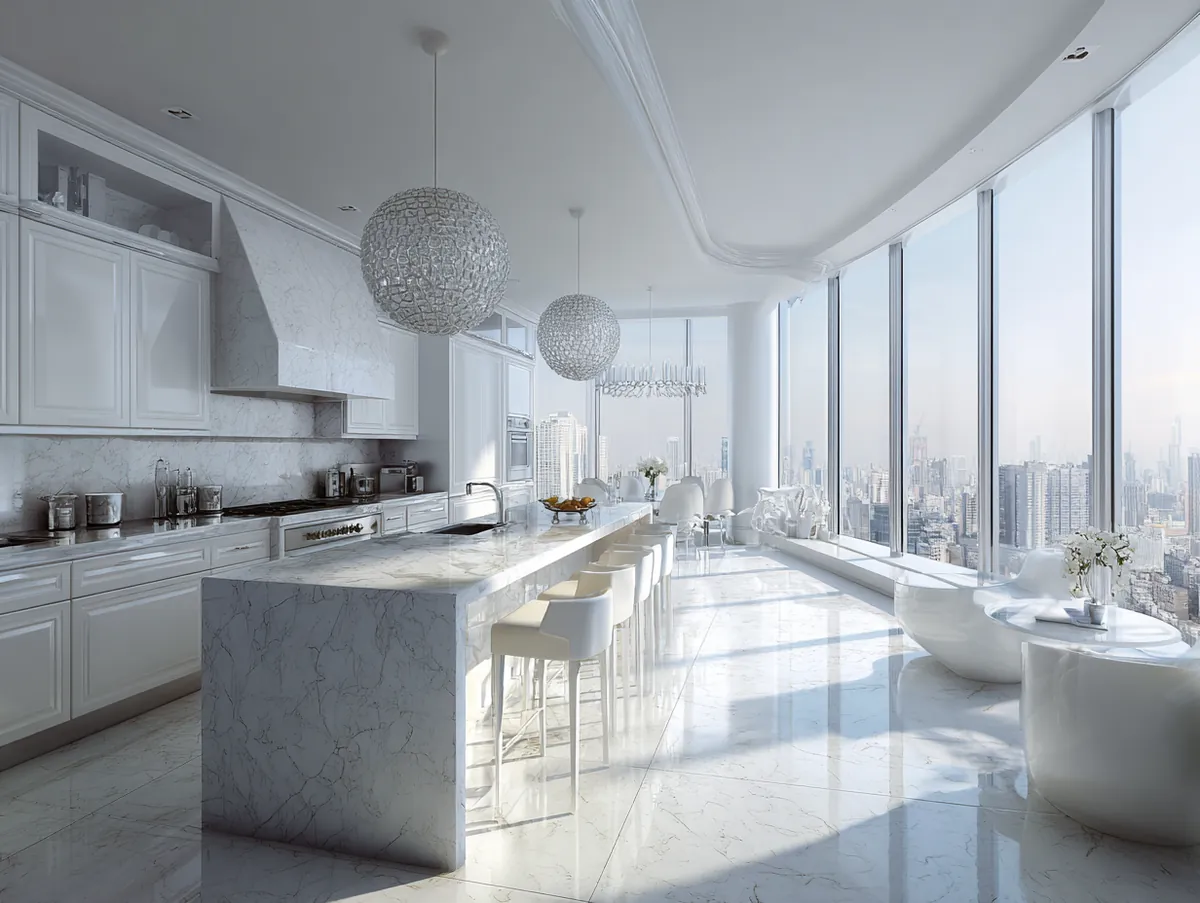
Reflective partners multiply that brightness. Stainless steel appliances and a pale quartz top bounce light back into the corner, acting like a mirror placed opposite a window. A dark granite slab beside a white corner does the opposite and pulls the eye down. If the counter must be dark, keep the backsplash white and run under-cabinet LEDs to the very end of the run.


Rotating Shelves vs Pull-Outs Inside the Corner
Corner storage hardware is what makes white corner cabinets for the kitchen earn their space. A lazy Susan spins jars and pots to the front, while a blind corner pull-out drags the hidden back section into view. Which one wins? Heavy, stable items such as pots and mixing bowls suit a rotating shelf, but spice bottles and cans need a pull-out to stay organised.
Budget follows the mechanism, not the box. A basic lazy Susan insert typically starts around $70, a quality pull-out system for a blind corner runs about $500–800 for hardware alone, and full-access corner pull-outs can reach $1,800 or more before installation. Ask the supplier to price the corner mechanism as a separate line, because a quote that looks cheap often hides a standard lazy Susan where a pull-out was expected.
| Corner type | Wall space per side | Typical hardware cost | Access to the back | Best for |
|---|---|---|---|---|
| Lazy Susan base | 33 or 36 in | From about $70 | Good, rotates to front | Pots, bowls, jars |
| Blind corner, no hardware | 39–48 in | $0 extra | Poor, reach-in only | Rarely used bulk items |
| Blind corner pull-out | 39–48 in | About $500–800 | Very good | Daily cookware |
| Full-access corner pull-out | 36–48 in | $1,800+ before install | Full | Small items, cans, spices |
| Diagonal corner base | 36 in | Shelf or kidney tray | Moderate | Corner sinks, tall items |
Don’t Do This
Never leave a 39–48 inch blind corner empty to save $500 on a pull-out. That back pocket turns into a dust museum within a year, and you lose the most expensive cubic feet in the kitchen. Measure the door swing too, since a pull-out that fits on paper can still hit the hinge side.
Glass Accents for a Classic White Kitchen Corner Cabinet
A classic white kitchen corner cabinet with glass-front uppers feels lighter than a wall of solid doors. The glass lets the eye travel to the back of the cabinet, so the corner reads deeper and less boxed in. Should every upper go glass? No, glazing roughly 20% of the uppers gives the airy effect without putting every mismatched mug on display.


Glass changes the budget more than the layout. Average pricing for replacement cabinet doors and glass-front upgrades puts glass-front doors at $150–300 each, compared with $30–80 for a stock solid door, and hinges add $15–40 per pair. Think of glass like a shop window: it sells what sits behind it, so it rewards tidy shelves and punishes clutter.
Mixing glass and solid fronts keeps both cost and maintenance in check. A full glass conversion on a 10-foot run can land at $2,500–4,000 with lighting and labor, while a mixed glass and solid layout typically sits around $1,200–2,000. Avoid frosted or reeded glass on every door, since specialty glass raises the price per panel. Put clear glass on the two doors nearest the window and keep the rest solid white.


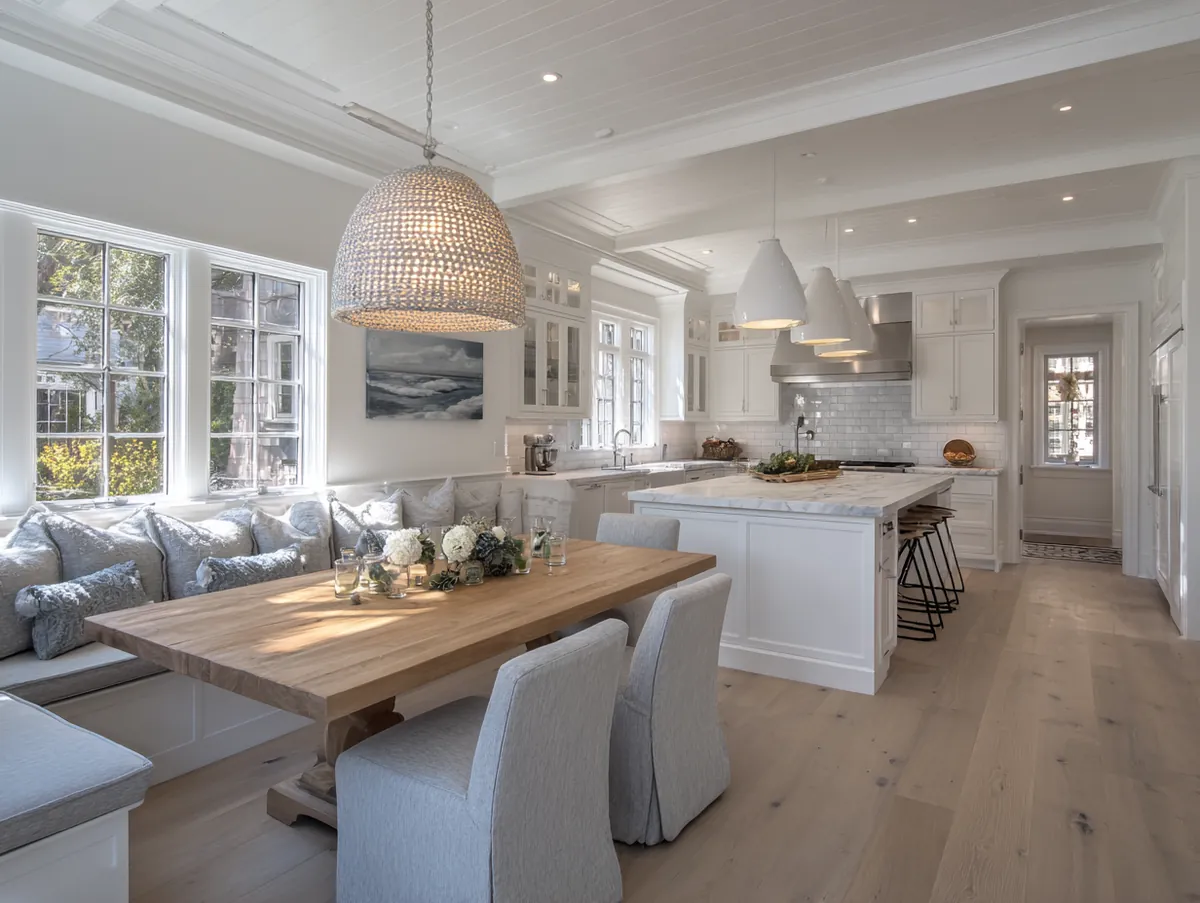
Warm materials stop a glass-and-white corner from feeling clinical. Oak flooring, a ceramic vase or a small brass scale under the uppers bring texture, much like a wool throw on a white sofa. Skip a row of identical white decor pieces behind the glass, because the corner then reads flat. Pick three objects in two materials and leave space around each.
Open Shelving That Keeps a White Corner Bright
White corner shelving for kitchens removes the doors altogether, which is the fastest way to open up a tight L-shaped run. Open shelves let light pass from the window to the far wall instead of stopping at a cabinet face. Are they cheaper than cabinets? Usually yes, at about $50–150 per linear foot installed compared with $200–800 for upper cabinets.


Placement decides whether open shelves look intentional or improvised. Designers typically hang the first shelf 18–20 inches above the counter, where an upper cabinet would sit, and standard floating brackets carry about 35–50 pounds per stud. Do not load a single floating shelf with a full stack of stoneware plates. Spread heavy dishes across two shelves and anchor every bracket into studs.
- Keep shelf depth around 250–300 mm so items at the back stay visible.
- Use matching white ceramics or clear jars to cut visual noise by half.
- Limit open shelving to one wall and keep closed white cabinets on the cooking wall.
- Add an LED strip under the top shelf for evening light in the corner.


Open shelving carries a cleaning cost that closed white doors avoid. Grease and dust settle on displayed dishes, so a weekly wipe becomes part of the routine, while closed fronts usually need attention once a month. Marble or pale quartz under the shelves adds veining and texture, like grain on a white oak floor. If you cook with a lot of oil, keep open shelves at least one cabinet width away from the hob.
| Front style | Typical cost | Light in the corner | Cleaning rhythm | Clutter tolerance |
|---|---|---|---|---|
| Solid white doors | $30–80 per stock door | Moderate | Front wipe monthly | High |
| Glass-front doors | $150–300 per door | High | Glass cleaned often | Low |
| Mixed glass and solid, 10 ft run | $1,200–2,000 | High | Moderate | Medium |
| Open shelving | $50–150 per linear ft | Highest | Weekly dusting | Very low |
| Upper cabinets | $200–800 per linear ft | Lowest | Front wipe monthly | High |
Corner Pantries, Hutches and Living Room Units in White
A white corner pantry cabinet or freestanding corner hutch extends the same idea beyond fitted runs. A corner shelf tower with a footprint of about 350 by 350 mm, standing 1600–1800 mm tall, holds roughly 80–150 litres of food in a spot that was dead space. Does it need wall fixings? Most freestanding units do not, which suits renters as well as owners.
For a kitchen without a dedicated larder, a tall white corner unit works like an extra shelf in a bookcase you already own. Bamboo or painted steel corner shelves typically cost $40–120 and tolerate kitchen humidity better than raw MDF. These pantry ideas for a small kitchen without a pantry show how corner towers, door racks and turntables add capacity without renovation. Avoid deep shelves past 300 mm in a corner unit, since items at the back vanish.
The same logic carries into a white corner cabinet for the living room, dining room or bedroom. A small white corner accent cabinet softens a sharp angle and gives books, glassware or chargers a home. A glass-front corner hutch suits dining rooms, while a closed off-white unit suits bedrooms where clutter should stay hidden. Match the depth of the cabinet to the walkway and keep at least 36 inches of clear passage in front of it.
Where the Corner Pays Off
The best white corner setups pair a high-LRV white around 91–93 with hardware that brings the back of the cabinet forward. A $70 lazy Susan beats an empty $0 blind corner every time, and a $500–800 pull-out beats both when the corner holds daily cookware.
Use glass on roughly 20% of the uppers rather than every door. A mixed layout keeps a 10-foot run near $1,200–2,000 instead of $2,500–4,000 for full glass.
Choose open shelving when light matters most and cleaning time is available. At $50–150 per linear foot, it costs a fraction of $200–800 uppers but asks for weekly dusting.
Measure before buying anything. A lazy Susan needs 33 or 36 inches per wall, a blind corner needs 39–48 inches, and that single number usually decides the whole corner plan.