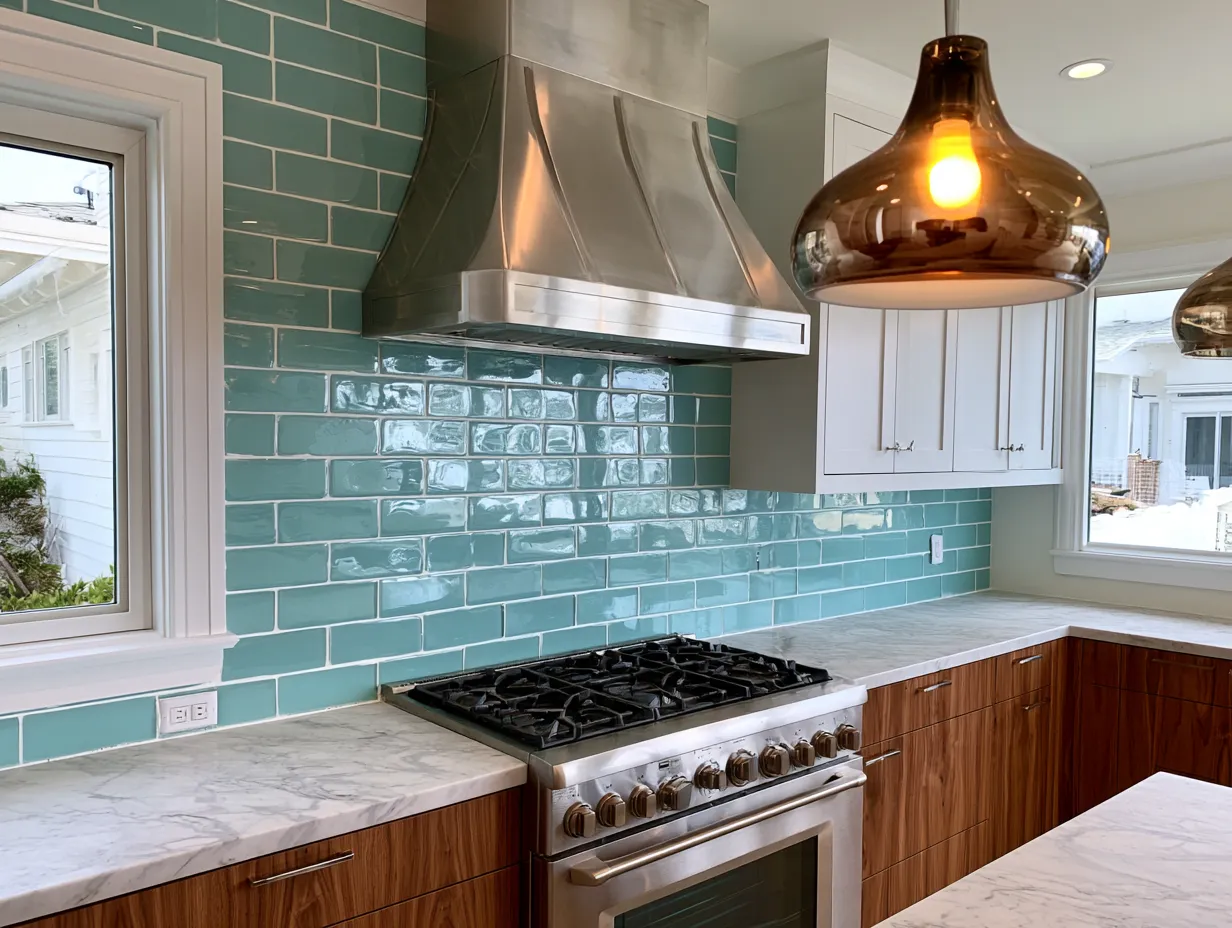
A green tile backsplash kitchen transformation works because the wall between your cabinets and countertop is the one surface nobody actually touches — which means color lands there without risk. Swap the standard off-white subway tile for anything from sage to emerald and the whole room shifts register, not just the backsplash. Designers who work on kitchen renovations full-time call it the highest-ROI change per square foot in the room.
Green sits in a rare position on the color wheel: it reads warm next to wood tones and cool next to marble, which means it adapts to kitchens that already exist rather than demanding a full overhaul. That flexibility is why three distinct green tile styles — subway, emerald mosaic, and hexagon — can all work in the same category without competing.
The range covered here goes from a straightforward glossy subway tile at around $2–$15 per square foot for materials to a crackle-glazed ceramic at $11.66/sq ft (Ivy Hill Tile Colorwave Inflex Emerald Green at Home Depot), plus the often-missed black-and-green combination that has quietly become the most-saved kitchen pairing on Pinterest. Installation adds another $15–$40 per square foot depending on pattern complexity, per Angi’s 2026 data.
Quick Scan
- Green subway tile in a classic 3×6 format is the lowest-commitment entry point — materials run $2–$15/sq ft.
- Emerald mosaic tile creates the most visual complexity; mesh-backed sheets install faster than the pattern implies.
- Hexagon tiles in glossy green work best when grout color is chosen first — dark grout amplifies the geometry, light grout softens it.
- Black-and-green kitchens read moody or fresh depending entirely on cabinet finish: matte black = dramatic, white = punchy.
- Mint and seafoam tiles age better in smaller kitchens where darker shades would shrink the room further.
- Avoid mixing green tile with warm-toned beige countertops — the undertones fight each other visually.
What Green Subway Tile Actually Does to a Kitchen Wall
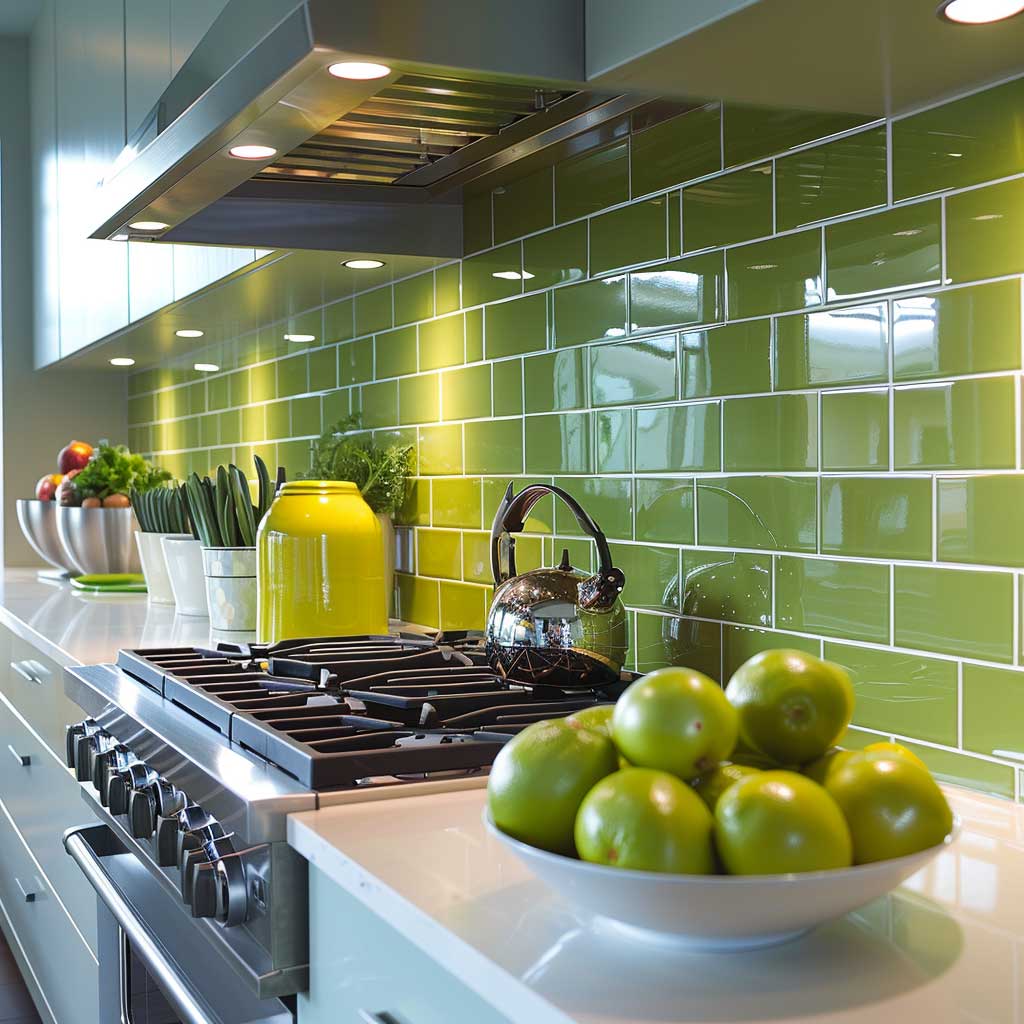
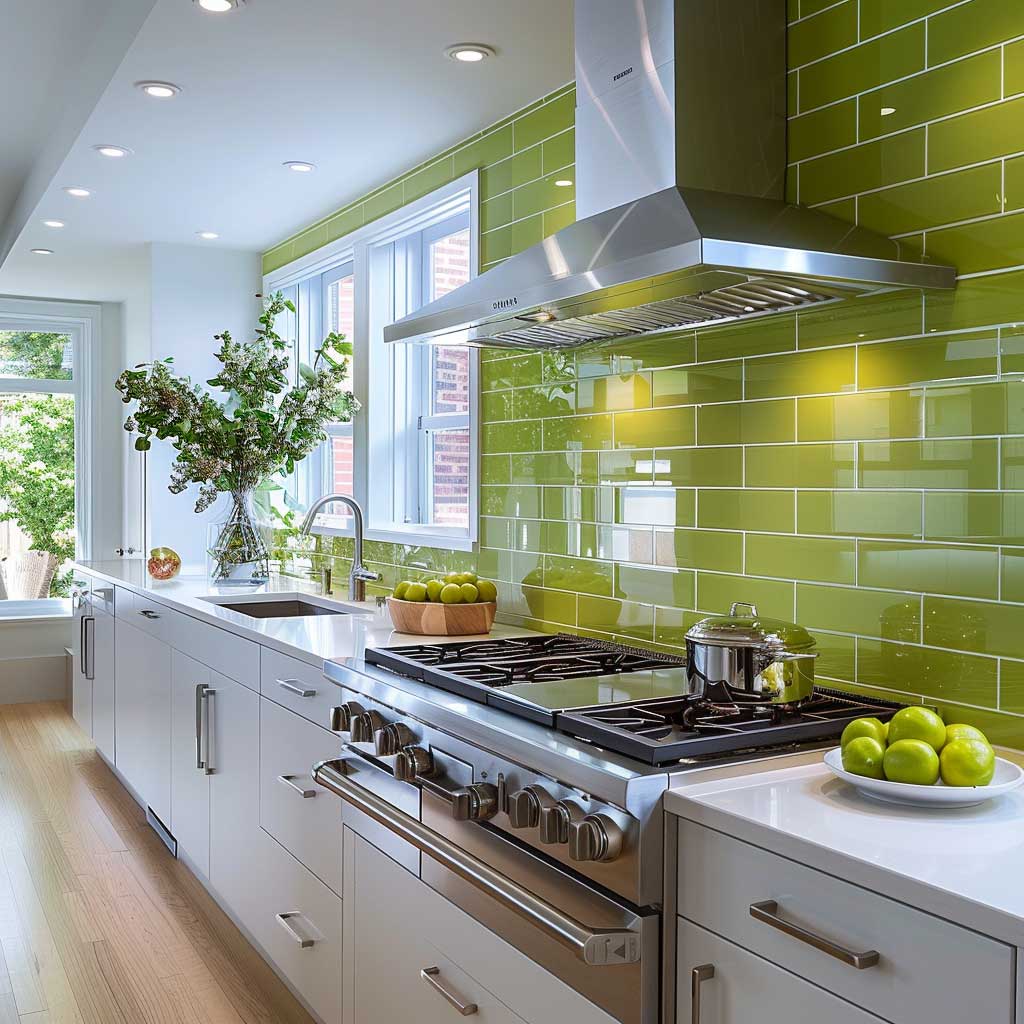
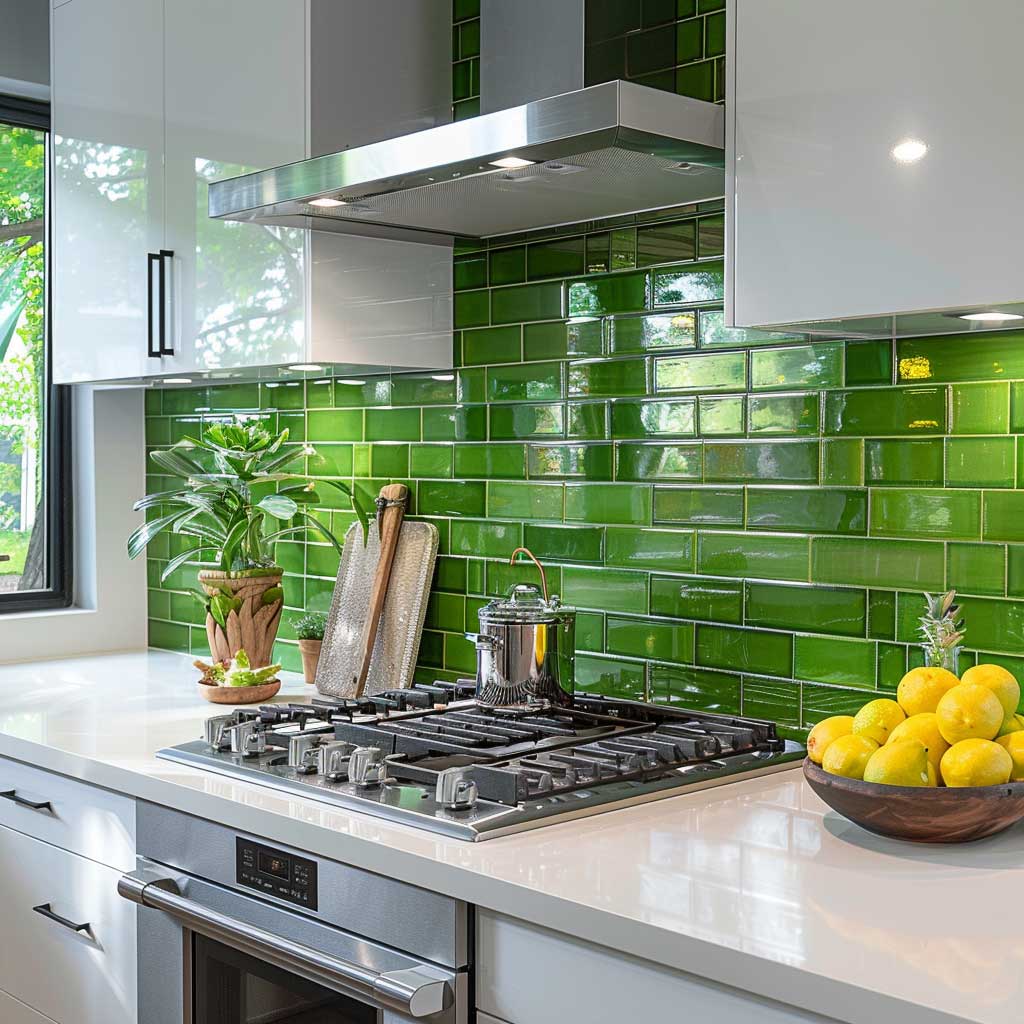
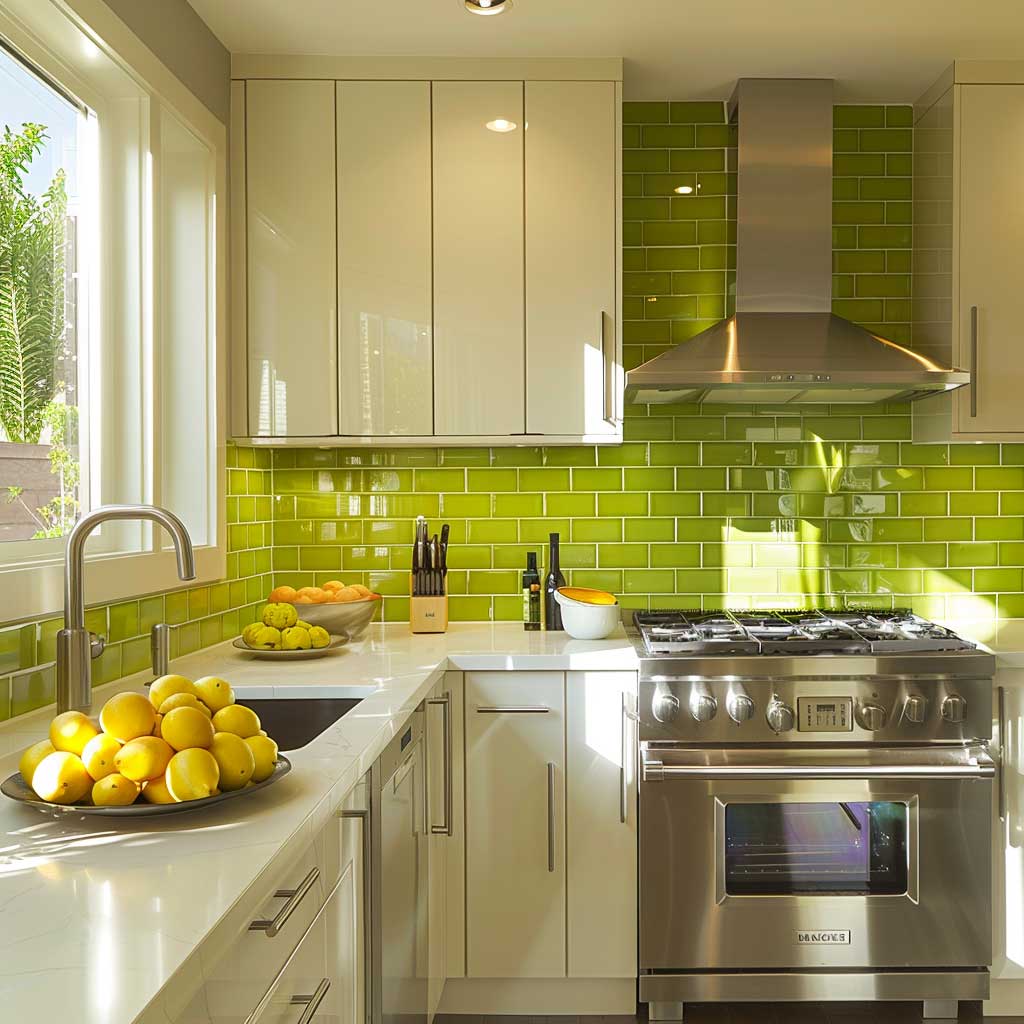
Green subway tile backsplash kitchens tend to photograph dramatically better than they look in the tile sample — which is the reverse of most renovation decisions. The reason is scale: a 3×6 tile swatch reads flat, but a full backsplash run of thirty-plus tiles catches light differently at each grout joint, so the wall appears to glow rather than just be colored. Materials alone start around $2 per square foot for basic ceramic and reach $15 for glass in the same format.
The pairing question most people ask is whether to use white or colored grout. Stylists typically recommend white grout with mid-toned greens like sage or fern — it keeps the color readable and adds a crisp, almost café-tiled quality. With darker greens like hunter or forest, a charcoal grout makes the wall feel like a single continuous surface rather than a grid. The worst call? Beige grout with any green tile — it muddies the contrast and ages poorly.
Running bond (standard offset pattern) costs the least to install because cuts are predictable. A stack bond — tiles lined up vertically rather than offset — looks distinctly more contemporary and adds almost nothing to labor cost because the cuts are actually simpler. If the kitchen already has strong horizontal lines from cabinets and countertops, stack bond breaks that rhythm in a way that reads as deliberate design rather than accident. You’ll notice the difference most in photos — horizontal grids can make a narrow kitchen look even more corridor-like.
Subway tile is also the format where the “anti-advice” is most useful: avoid glossy green subway tile directly behind a gas range unless the grout is sealed annually. Steam, grease, and heat cycling cause sanded grout in that zone to absorb discoloration faster than anywhere else on the wall. The fix — an epoxy grout in the range zone only — runs about $30–$50 extra in materials and saves a visible staining problem by year two. You can see this issue on nearly every five-year-old subway tile installation that didn’t plan for it.
For a green tile backsplash kitchen at the more relaxed end of the budget, the Merola Tile Soho Glossy Subway in green is widely stocked at around $3–$5/sq ft and available in the same week from most big-box tile sections. At the higher end, handmade zellige-style tiles in olive or sage add visible surface variation that photographed studio tiles lack — each piece is slightly different in thickness and glaze depth, which creates a wall that actually has texture to catch afternoon light. Those run $12–$20/sq ft for materials.
Don’t Do This
Do not install glossy green subway tile with warm-toned beige countertops. The yellow undertones in beige fight the blue undertones in most greens, and the result is a wall that looks unfinished rather than designed — as if the tile and the countertop were chosen by different people in different rooms. Green tiles pair cleanly with: cool whites, warm whites with gray undertones (like Benjamin Moore Chantilly Lace), black, charcoal, wood with gray tones, and true off-white marble. Cream, warm ivory, and yellow-beige are the specific neutrals to avoid.
Emerald Green Backsplash Tile Kitchen — Mosaic Format and Why It Lands Differently

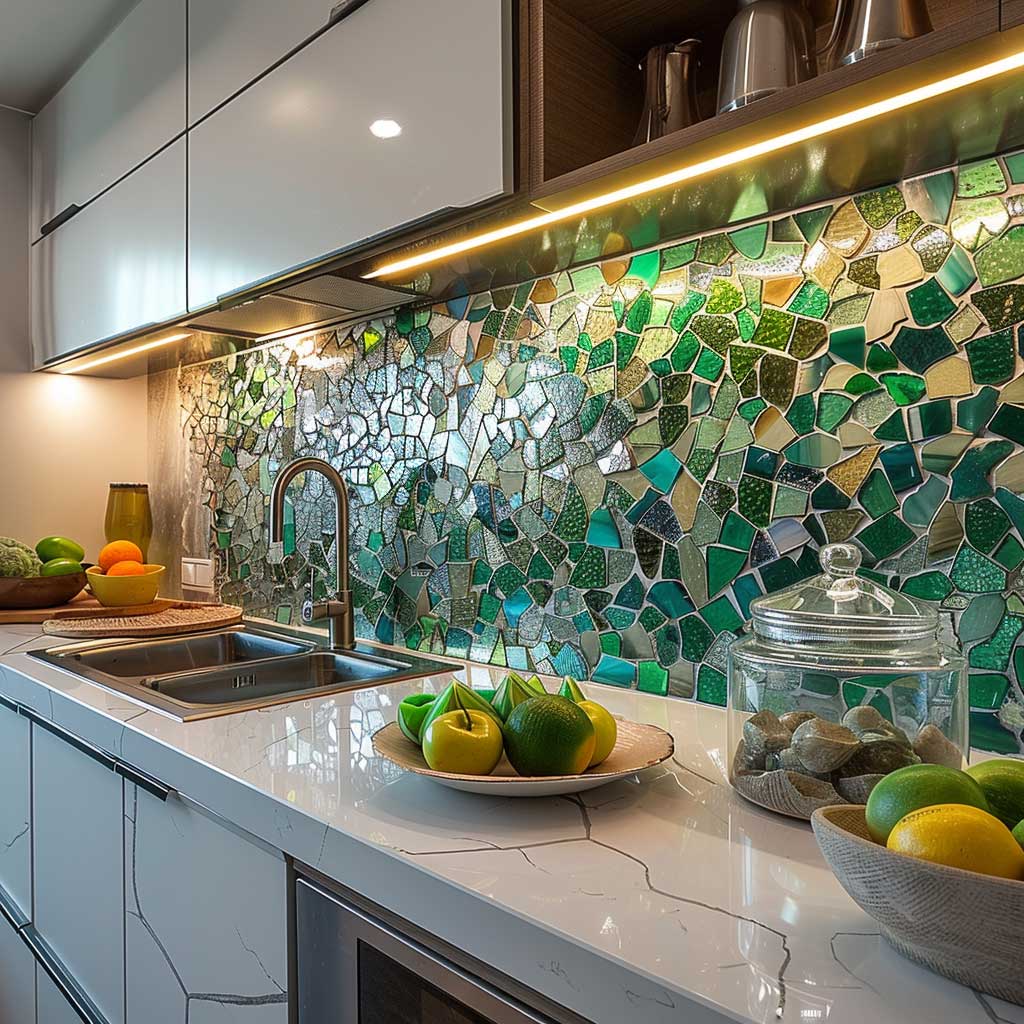
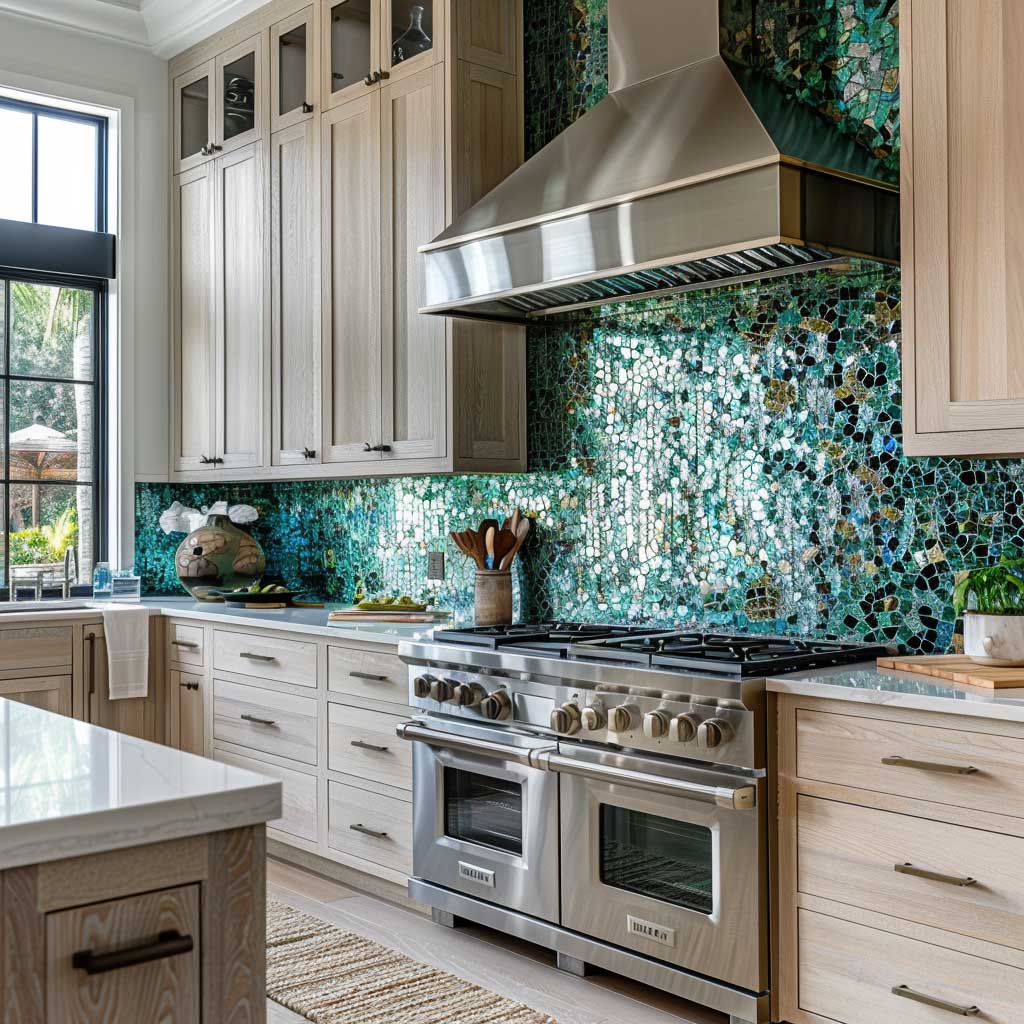
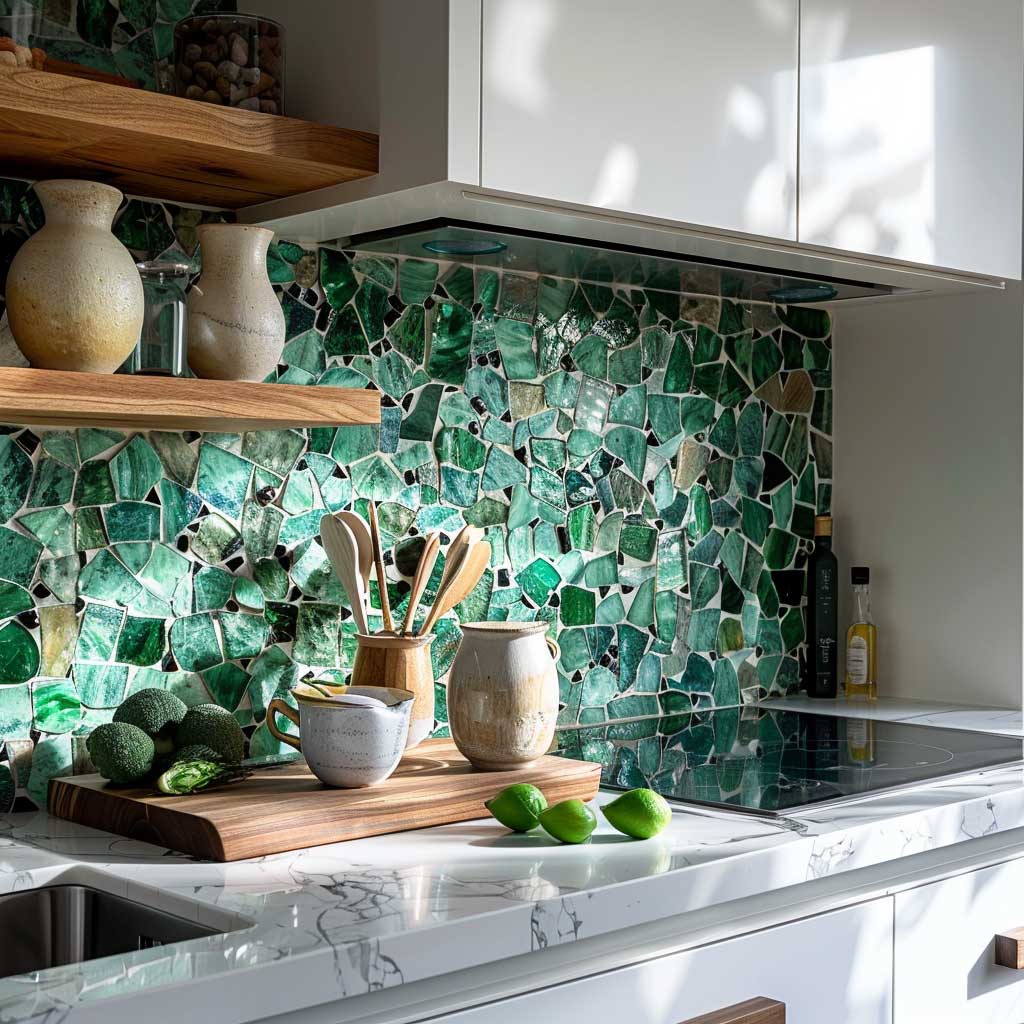
Emerald green backsplash tile in mosaic format solves a problem that single-size subway tiles cannot: tonal variation within the same color family. A wall of identical emerald tiles looks painted; a mosaic that blends deep jewel tones with lighter sage-to-emerald transitions looks like it has depth. The principle is the same one used in luxury hotel lobbies — texture and color shift keep a large surface visually alive across different lighting conditions throughout the day.
Mesh-backed mosaic sheets made the installation complexity myth mostly obsolete. A typical 12×12 sheet covers one square foot and installs with the same thinset used for standard tile — the mesh holds the small pieces in position, so the layout work happens in the factory, not on your wall. Mosaic installation runs $8–$43 per square foot including labor according to HomeGuide’s 2026 data, with the higher end applying to intricate custom patterns or cuts around outlets. A standard emerald glass mosaic backsplash in a 30-square-foot kitchen typically finishes under $1,000 in materials.
What shade of emerald works? The Ivy Hill Tile Colorwave Inflex Emerald Green at Home Depot ($11.66/sq ft) offers a crackle-glazed ceramic with subtle surface lines that deepen over time — it sits between a true jewel-tone emerald and a more aged, artisanal green. For glass mosaic, the tile sections at major retailers carry emerald blends in the $10–$20/sq ft range for materials, with glass adding a reflective quality ceramic can’t replicate. Glass emerald mosaic behind a range is especially effective because every time the hood light is on, the backsplash acts like a lit display — not a painted wall.
The question stylists answer most often about emerald mosaic: does it work in a small kitchen? Yes, more reliably than in a large one. Think of it like a jewel box — the concentration of a bold color in a compact space reads as intentional luxury rather than excess. The mistake in large kitchens is running mosaic floor-to-ceiling on three walls; that tips from statement to overwhelm. In a standard galley kitchen, emerald mosaic behind the range wall with plain white tile on the flanking walls is the proportional move most designers recommend. For more green kitchen backsplash designs across shades from sage to deep forest, the full range of approaches is worth reviewing before committing to a single tile format.
Hexagon Tiles in Green — the Geometry Does Work the Subway Format Cannot
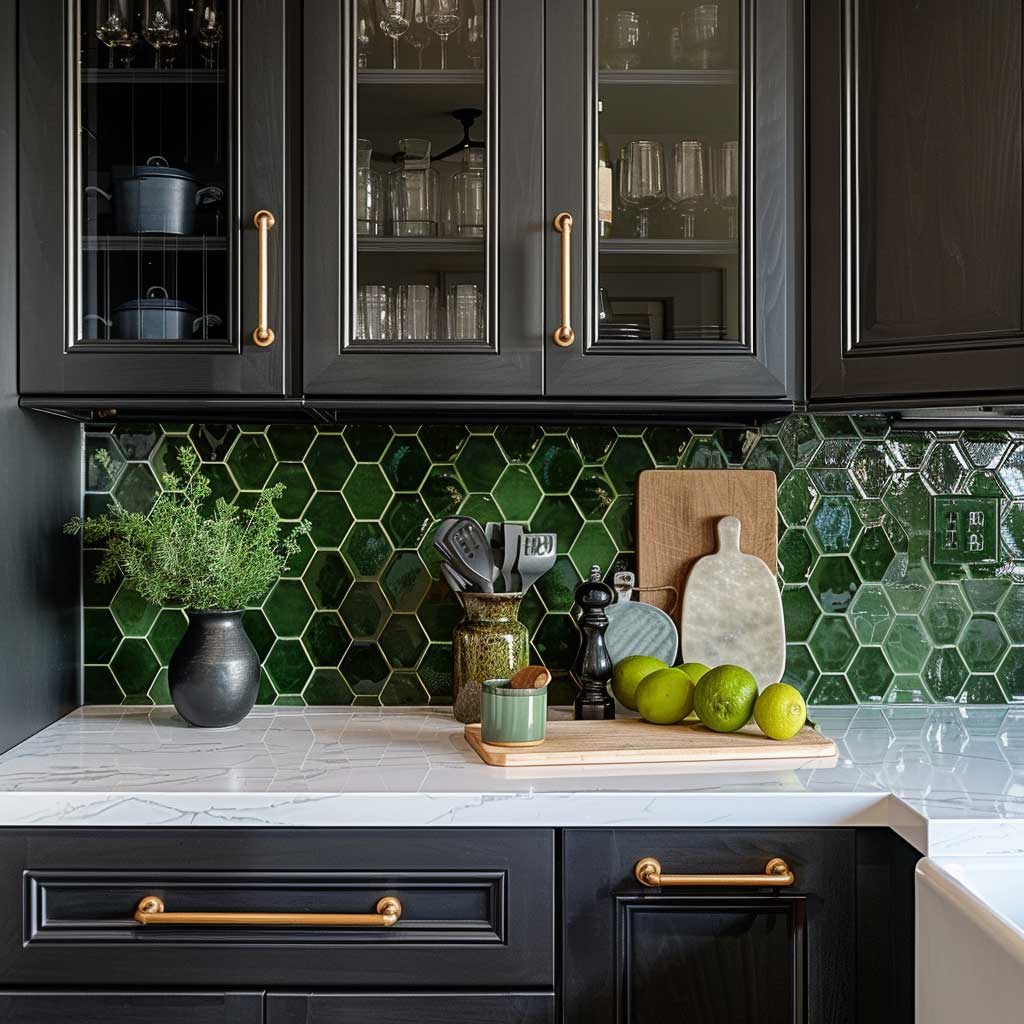
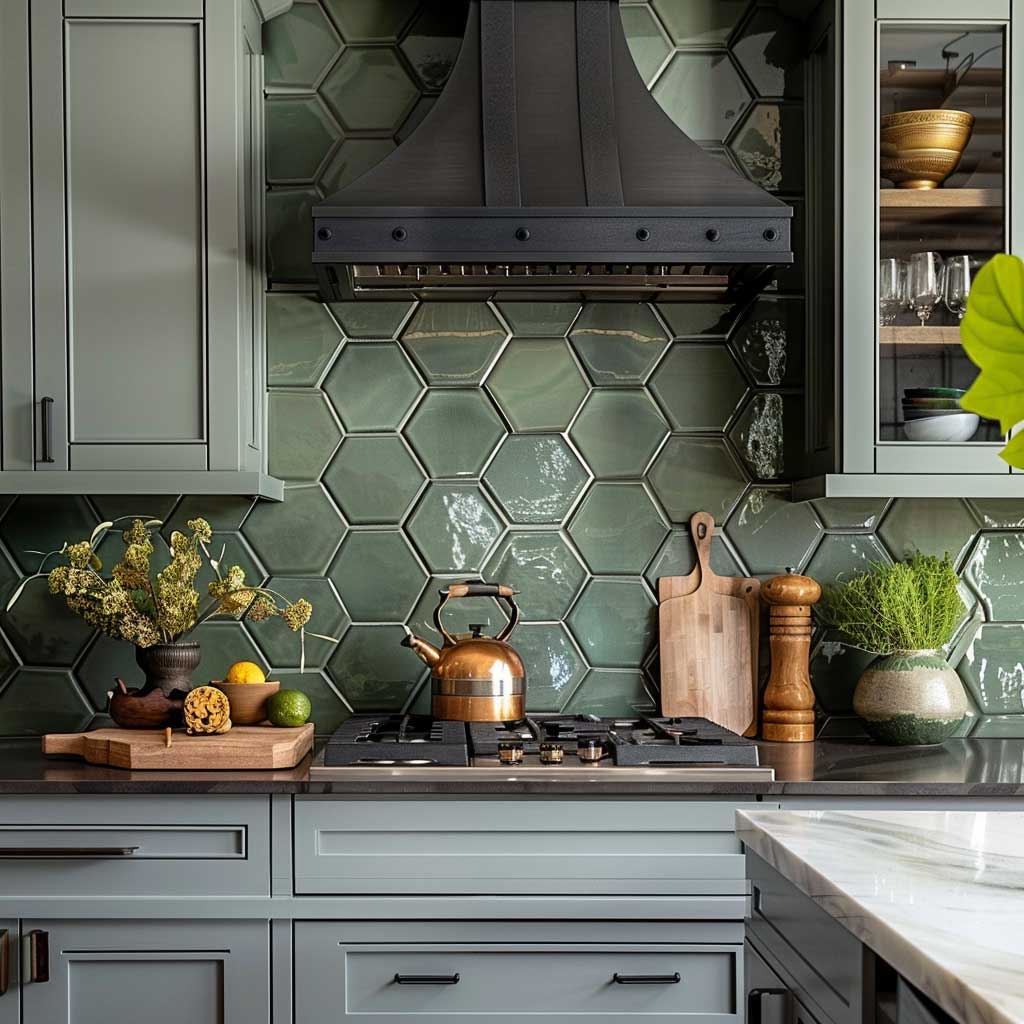
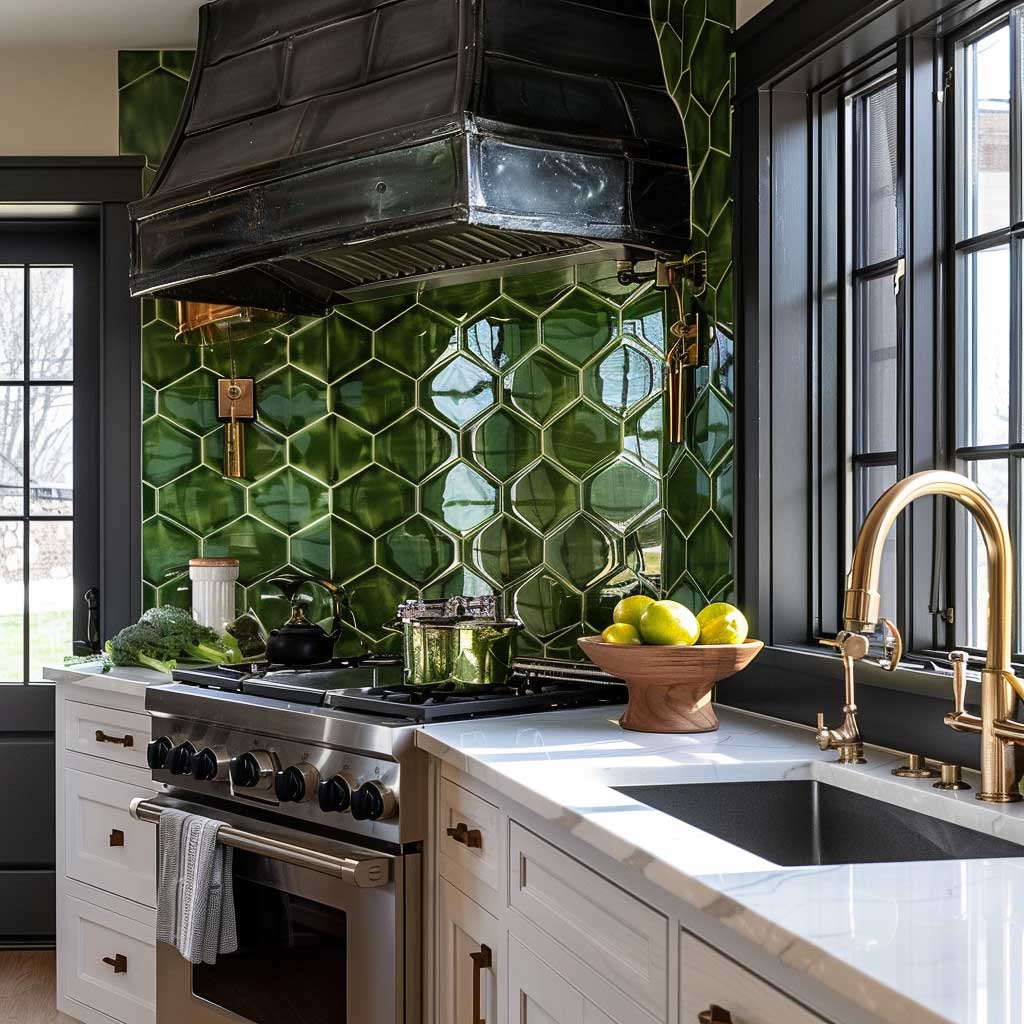
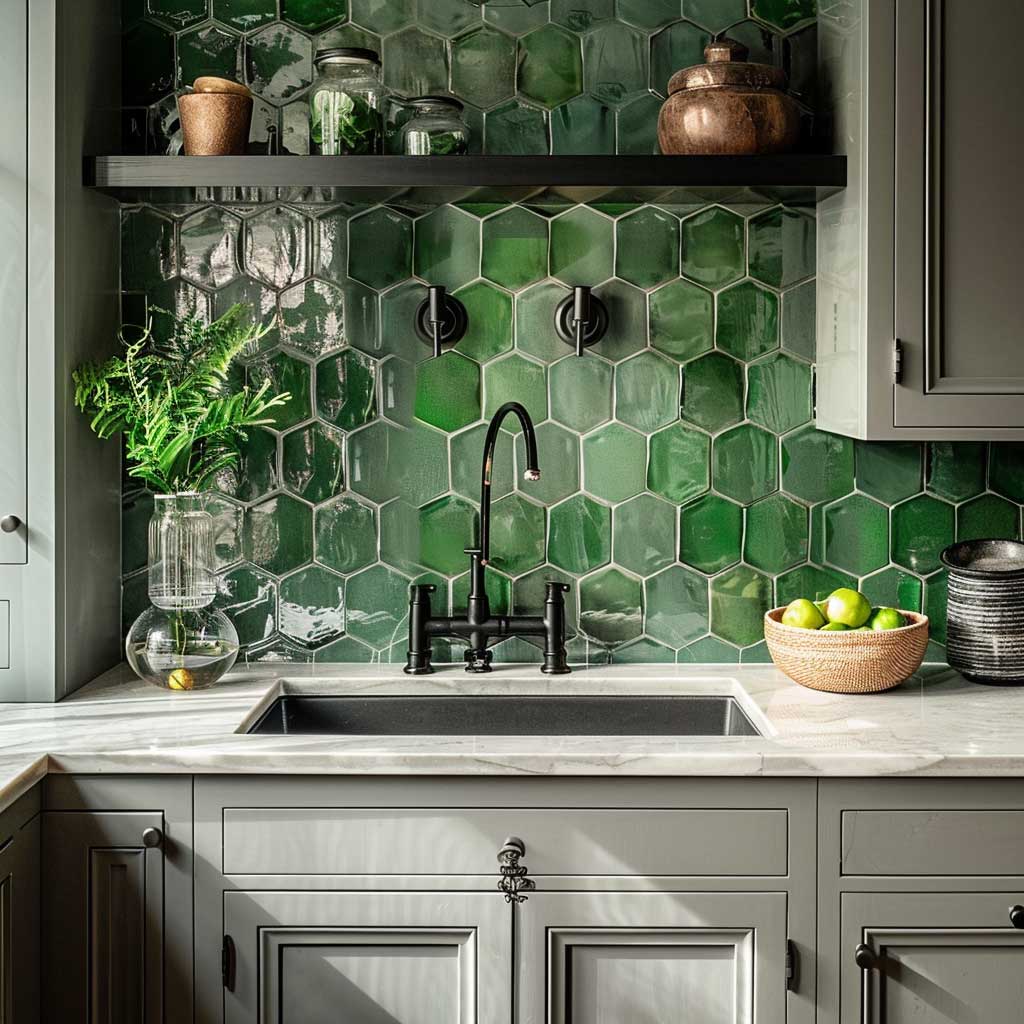
Glossy green hexagon tiles introduce a structural pattern that rectangular subway tile is geometrically incapable of making: every vertex on a hexagon connects to six neighbors simultaneously, which means the eye follows the wall as a continuous field rather than a row-by-row grid. That’s why hexagon tile in a small kitchen reads as larger, not busier — the all-directional pattern doesn’t lead the eye toward any particular edge or corner.
Size matters more with hexagons than with subway tile. A 1-inch penny-hex format in glossy green gives a fine-grained, almost fabric-like texture — it recedes visually even in bold colors. A 4-inch large hexagon in the same green becomes an architectural statement that competes with cabinetry for attention. The professional approach is to decide whether the tile should be a backdrop or the centerpiece before choosing the size, not after. In most kitchens without significant natural light, the 2-inch hex is the safe scale — large enough to read clearly, small enough to stay subordinate to the rest of the room.
Do hexagon tiles cost more than subway? Yes, typically. Labor for hexagon backsplash runs on the higher end of the $5–$20/sq ft installation range because cuts around outlets and edge transitions require more angle work. Materials in glazed ceramic hexagon formats start around $4–$8/sq ft; glass hexagon in emerald or seafoam typically runs $12–$22/sq ft. The tradeoff is that a hexagon backsplash photographs extremely well for resale, which subway tile — being everywhere — no longer does.
The anti-advice for hexagon tile: avoid using a hexagon pattern on both the floor and the backsplash in the same kitchen. Two hexagon surfaces in the same space, even in different colors, creates a visual pattern collision that stylists describe as “tiling the inside of a beehive.” One hexagon surface is a considered design choice. Two is a pattern that needs to be resolved. Keep the backsplash hexagon and use a plain plank-format floor tile, or vice versa — the contrast between a patterned surface and a plain one makes both read more intentionally.
Black and Green Kitchen Backsplash — How the Contrast Changes the Mood Completely
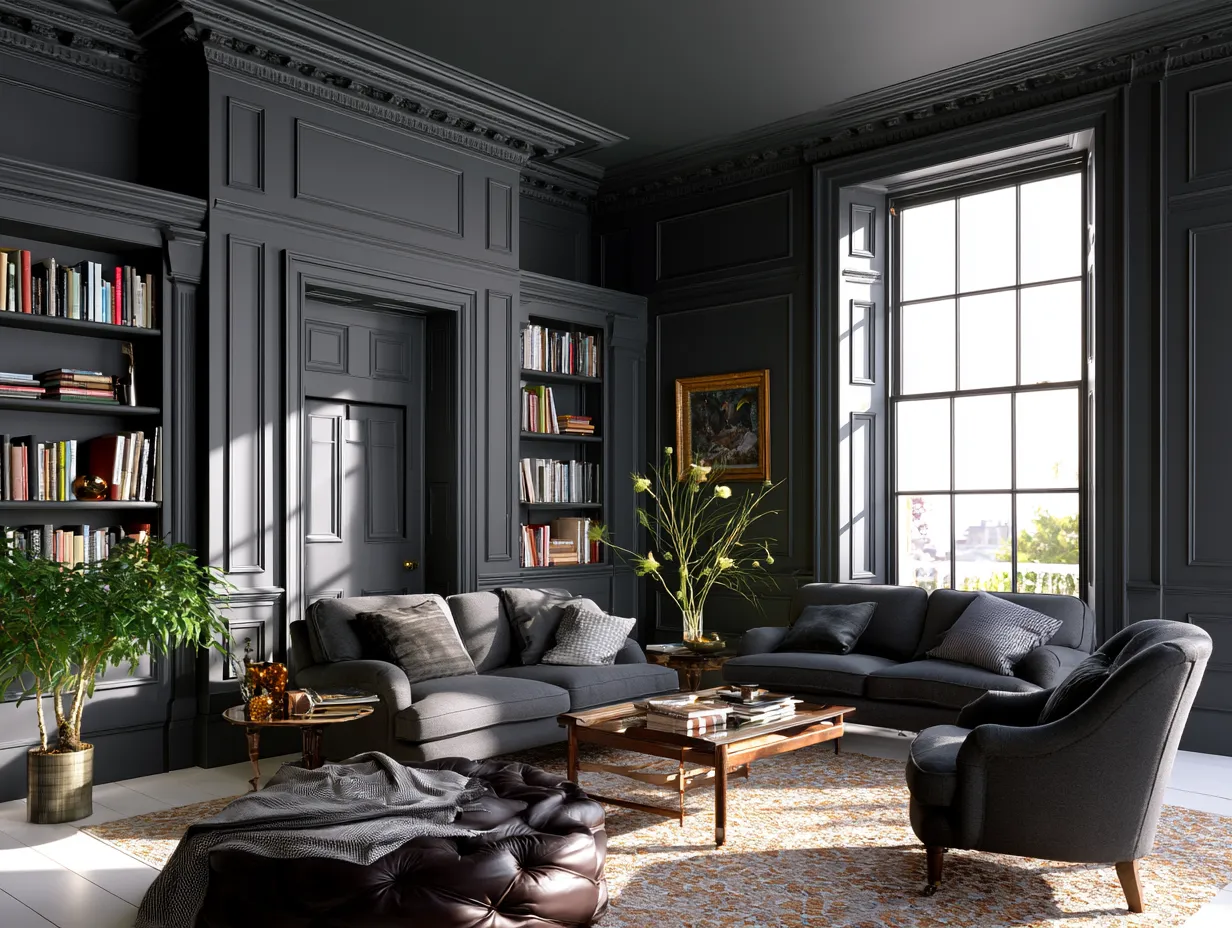
A black and green kitchen backsplash combination is the design decision that reads as either dramatic or fresh based on one variable: whether the black component is matte or glossy. Matte black cabinetry or fixtures next to green tile pulls toward a moody, almost editorial kitchen — the kind that photographs best in lower, warmer light. Glossy black against green tile reads more contemporary and high-contrast, better suited to kitchens with significant natural light or under-cabinet LEDs. Getting this distinction wrong is how a kitchen ends up looking unintentionally dark rather than intentionally dramatic.
The most-executed version of this combination, based on designer project coverage on sites like Houzz, pairs hunter green subway tile with matte black hardware and white marble or quartz countertops. The white countertop acts as a visual reset — without it, the black-and-green combination can feel claustrophobic in kitchens under 150 square feet. For kitchens with more floor area and ceiling height above 9 feet, the countertop can shift to black granite or dark quartz, and the space can absorb the full palette without feeling enclosed. An emerald green and matte black kitchen done with cabinetry rather than tile shows how the same color logic plays out at larger scale.
Mint green is the underused option in this category. Where emerald against black feels rich, mint against black feels almost graphic — closer in spirit to Scandinavian design or the saturated color palettes used in Brazilian restaurant interiors than the moody English-kitchen aesthetic most people associate with dark green. Mint green tile from TileShop runs around $8–$14/sq ft for glass formats; paired with matte black fixtures, it creates a kitchen that doesn’t look like anyone else’s without requiring a full renovation commitment.
The structural question that determines whether black-and-green works: how much of the black is fixed (cabinetry, appliances) versus swappable (hardware, fixtures)? If the black is all in hardware — handles, faucets, light fixtures — the commitment is low and the look is reversible. If the black is structural — cabinets, a range hood, an island — the green backsplash has to be chosen with that fixed element in mind from the start. A common mistake is selecting a green tile sample against a neutral white wall, then installing it in a kitchen with black cabinets and discovering the tile reads more yellow-green than expected against the darker surround.
| Tile Style | Best For | Material Cost (per sq ft) | Key Watch-Out |
|---|---|---|---|
| Green Subway (ceramic) | First-time renovation, rental-friendly | $2–$15 | Beige grout stains near range |
| Emerald Mosaic (glass) | Statement wall, range zone | $10–$20 | Grout lines multiply cleaning effort |
| Glossy Green Hexagon | Small kitchens, contemporary builds | $4–$22 | Avoid matching floor pattern |
| Mint or Seafoam Tile | Compact kitchens, Scandinavian aesthetic | $8–$14 | Warm-toned wood cabinetry clashes |
According to Angi’s 2026 backsplash installation data, the average kitchen backsplash project runs $500–$1,700 total — materials plus labor — for a standard 30–40 square foot surface. Complex mosaic or herringbone patterns in intricate colors push labor toward $20/sq ft; a straight-set subway tile in any color sits at the low end. The tile color itself doesn’t change installation cost; the format and pattern do.
The Takeaway
Green tile backsplash choices are mostly grout and scale decisions, not color decisions
The tile format — subway, mosaic, hexagon — determines how dramatic the result looks more than the green shade itself. Emerald in a 1-inch mosaic reads completely differently than emerald in a 4×12 subway tile, even at identical saturation.
The grout color is the single decision with the most impact per dollar. Dark grout on any green tile emphasizes pattern and geometry. Light grout on the same tile reads as almost neutral. Choose the grout before ordering tile samples.
Mint and seafoam hold up better than deep emerald in small kitchens with low ceilings. Dark greens need vertical space or significant natural light to stay readable rather than oppressive. Save this post before the next tile store visit.
Related Topics
FAQ
What is the best grout color for a green tile backsplash kitchen?
How much does a green backsplash tile kitchen installation cost?
Is dark green backsplash kitchen a good choice for a small space?
What are the 2025 and 2026 backsplash trends for green tile?
How do I choose between green subway tile and green mosaic tile for a kitchen backsplash?
Does green tile backsplash work with white kitchen cabinets?
Complete guide
Green Home Color Ideas for Every Room and Every Shade
Sage, emerald, olive, mint — interiors, exteriors, gardens — all in one place