Mint green and yellow combination turns a bedroom into a space that feels both airy and grounded at the same time. The cool green keeps the yellow from reading like pure sunshine, while the yellow stops the mint from slipping into clinical territory. One gallon of quality interior paint covers 350–400 square feet, so a standard 12×12 room usually needs two gallons for two solid coats.
Stylists reach for this pairing when the goal is energy without noise. The palette works in both traditional and modern rooms because neither color fights the other for attention. Skip any shade that leans neon or toothpaste-bright; those versions collapse the balance instantly.
Quick takeaways
- Light yellow walls + mint trim = soft contrast that highlights architecture
- Half-and-half walls ground the room while lifting the ceiling line
- Gradient feature wall mimics sunrise without painting every surface
- Expect 350–400 sq ft coverage per gallon; two coats minimum
- Avoid cool gray furniture — it drains the warmth from both colors
Yellow Walls That Catch the Light While Mint Frames Every Edge
Light yellow walls with mint green trim create the softest version of a mint green and yellow combination. The yellow acts like filtered morning light, and the mint outlines windows, doors, and crown molding so the room never feels flat. Benjamin Moore Hawthorne Yellow (HC-4) sits around the $60–80 range per gallon and holds its warmth without tipping into neon.
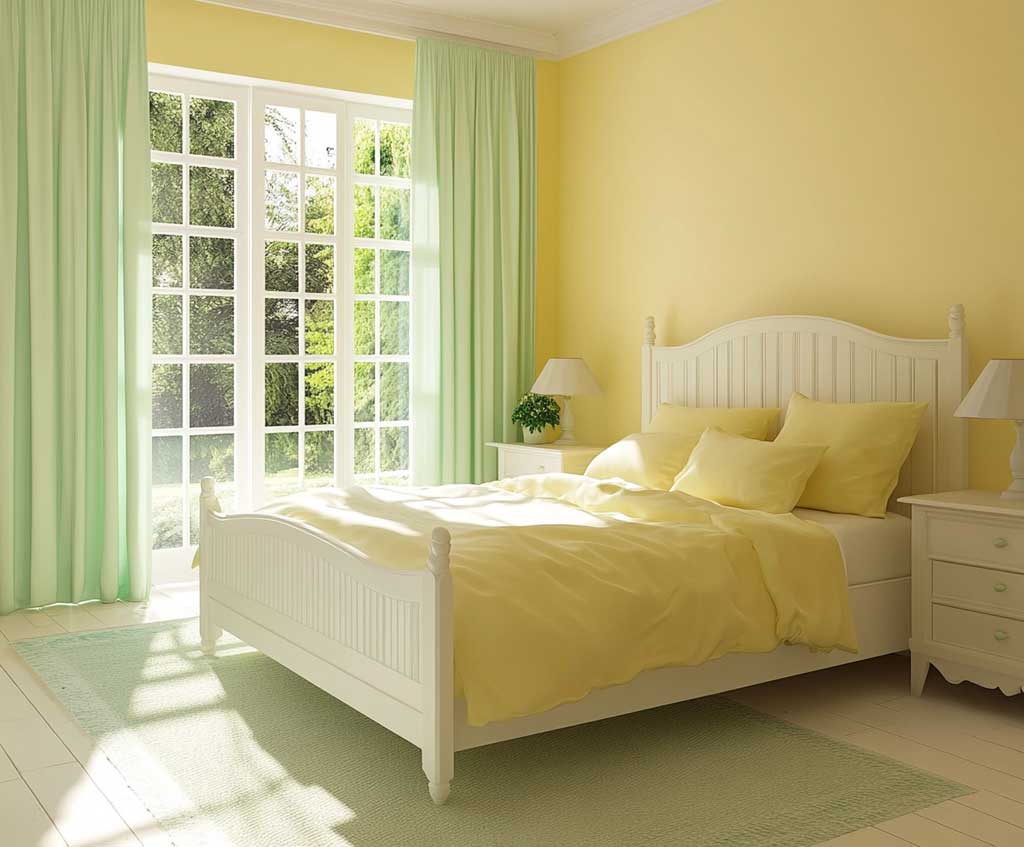
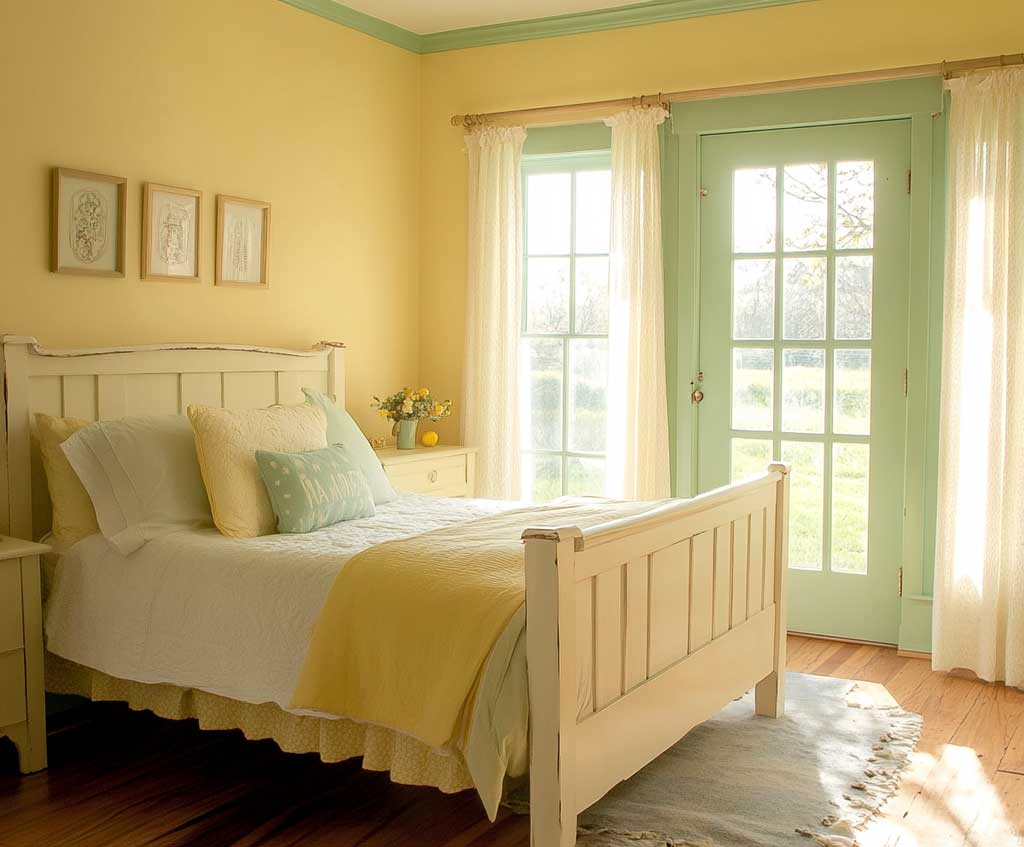
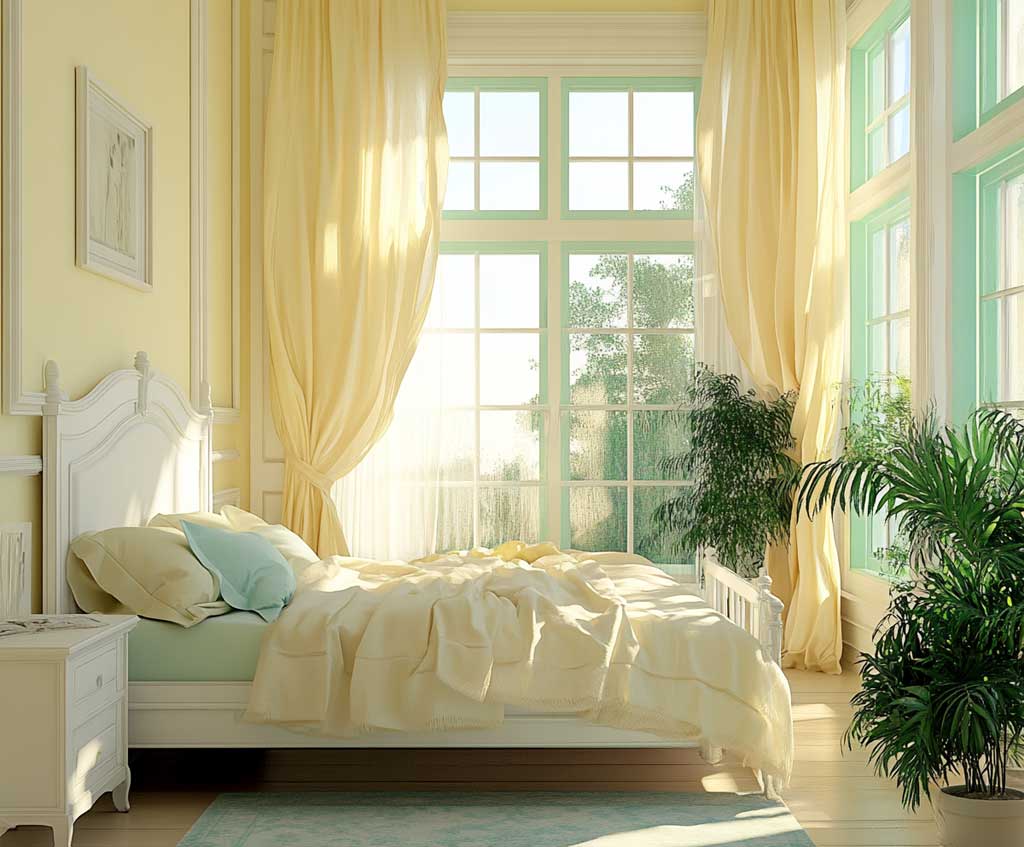
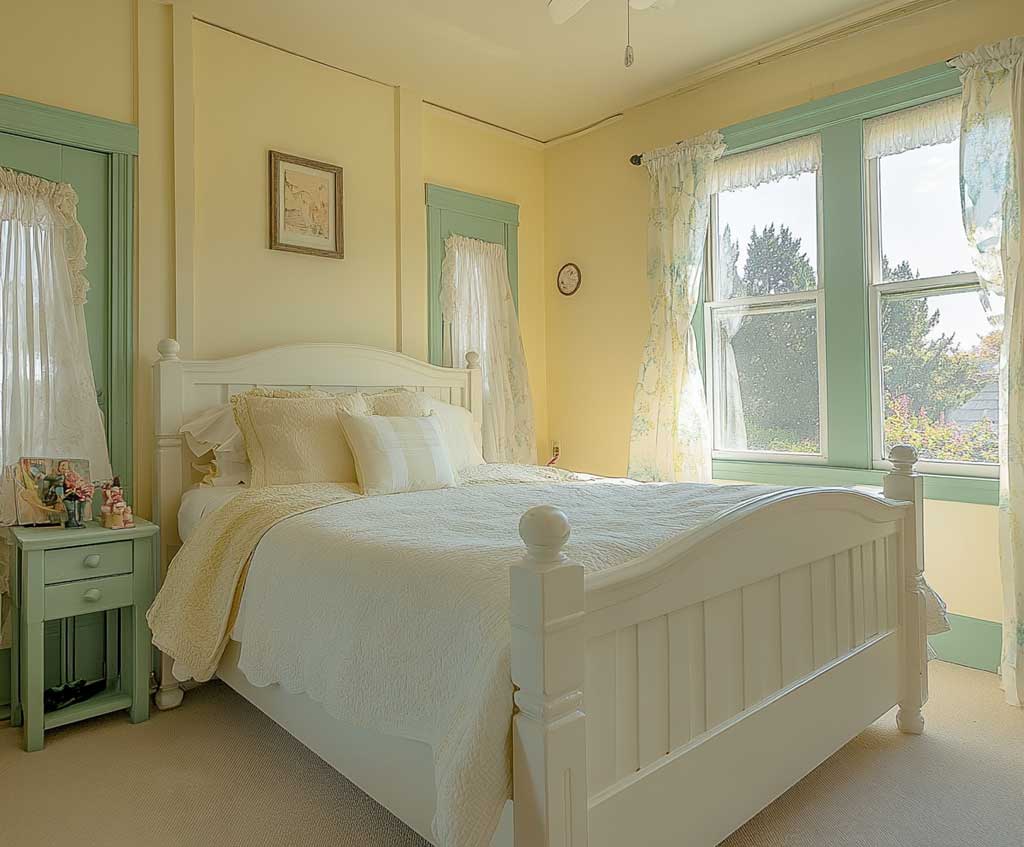
What fails here is painting the trim the same light value as the walls. The edge disappears and the architecture loses definition. Keep the mint two or three shades deeper so it reads as a deliberate frame. White or light wood furniture stays neutral; cool gray pieces pull the yellow toward mud.
Does the trim need a semi-gloss finish? Yes. Eggshell on the walls and a higher sheen on the trim creates a clean break that lasts through repeated dusting. Pair with sheer white curtains so the yellow can still bounce light around the room. This is the version that feels like a sunroom even on overcast days.
Horizontal Split That Grounds the Floor and Opens the Ceiling
Mint green and light yellow half-and-half walls give a modern take on the same mint green and yellow combination. The lower band in mint anchors furniture, while the upper band in yellow lifts the eye and makes the ceiling feel higher. Tape the dividing line carefully or install a slim chair rail; a wobbly seam ruins the entire effect.
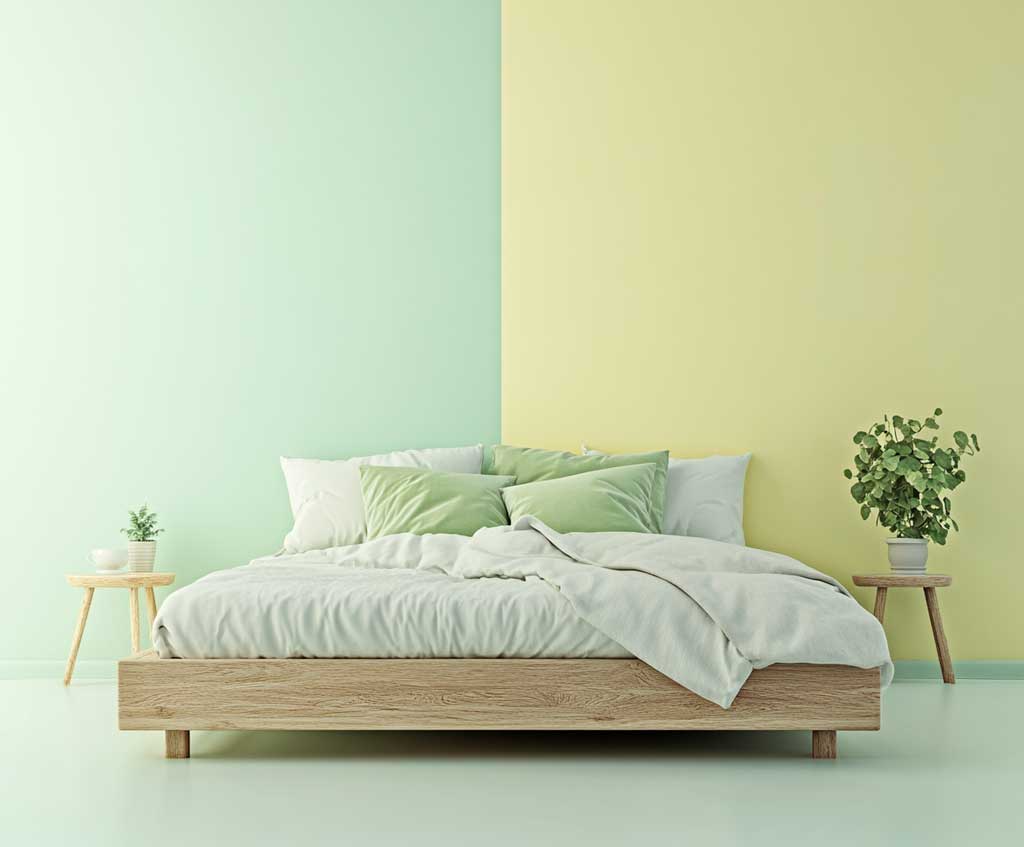


A common approach is to place the color break at chair-rail height, roughly 32–36 inches from the floor. That measurement keeps the mint from climbing too high and overwhelming smaller rooms. Natural wood bed frames and white linens keep the palette calm; throw pillows in both colors tie the two bands together.
Skip dark furniture against the lower mint band. The contrast becomes too sharp and the room feels chopped in half rather than balanced. Plants or a single piece of soft artwork on the upper yellow section add life without competing. The horizontal line works like a visual horizon — everything below feels settled, everything above feels open.
Don’t do this
Never freehand the dividing line or use cheap masking tape that bleeds. A crooked or fuzzy edge turns the clean modern idea into a DIY disaster that draws the eye for all the wrong reasons. Invest in quality painter’s tape and a laser level if the room is large.
Sunrise Gradient That Softens Every Corner of the Room
A gradient blend of mint green and light yellow creates the most atmospheric version of a mint green and yellow combination. Start deeper at the base and fade upward so the transition reads like early light rather than a hard stripe. Restrict the effect to one feature wall; four walls of gradient overwhelm most bedrooms.


Sherwin-Williams Breaktime or a similar clean mint runs about $75 per gallon and pairs cleanly with a soft yellow of comparable value. Work wet-into-wet or use a dry brush technique for the middle zone; hard edges destroy the dreamy effect. Keep the remaining walls in warm white so the gradient stays the focal point.
How much extra paint does the blend need? Plan on 20–30 percent more than a solid wall because the transition zone requires layering. Soft warm lighting at night makes the fade read even smoother. A single vase of fresh stems or a light wood nightstand is enough accessory — the wall already does the heavy lifting.
For more ways to handle mint in bedrooms, see these green paint colors for bedrooms that test real undertones and lighting. The same principle of matching light levels applies when yellow enters the mix.
| Approach | Best For | Maintenance | Key Risk |
|---|---|---|---|
| Yellow walls + mint trim | Traditional or airy rooms | Easy touch-ups on trim | Trim too close in value |
| Half-and-half split | Modern or small spaces | Protect the dividing line | Uneven horizontal seam |
| Gradient feature wall | Creative focal points | Harder to match later | Overdoing all four walls |
If cream feels safer than yellow as the second tone, these mint green and cream bedroom ideas show how the cooler green still stays fresh against a warmer neutral.
For official color details and LRV numbers on a balanced yellow option, check the Benjamin Moore Hawthorne Yellow page.
Final note
Choose the version that matches how much light your room actually gets
South- or east-facing rooms handle the brighter yellow walls easily. North-facing spaces do better with the half-and-half or a softer gradient so the mint never turns gray.
Test every sample on the real wall for a full day and night cycle. Paint shifts more than any swatch card ever shows.
Save this post before you head to the paint store.