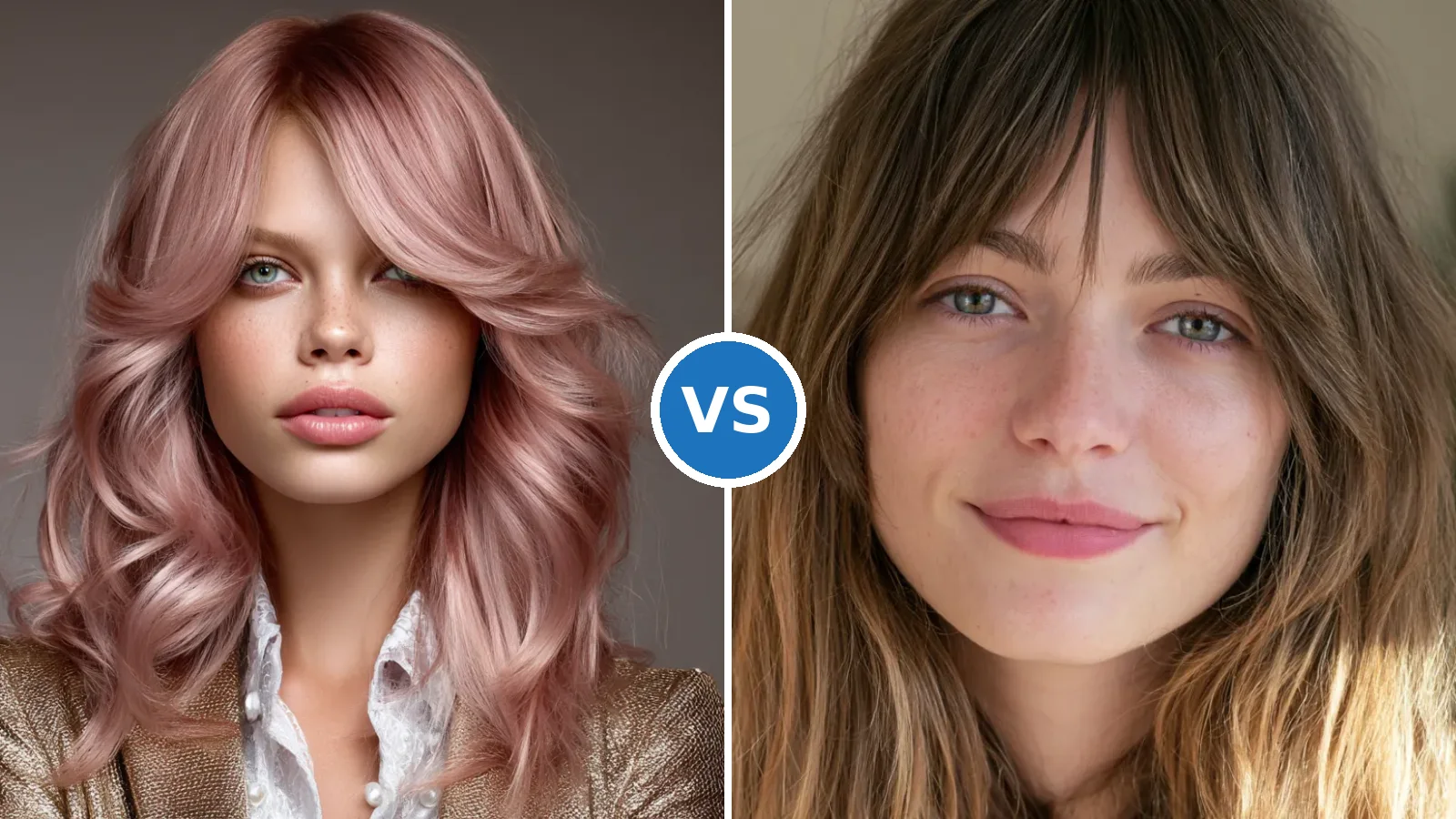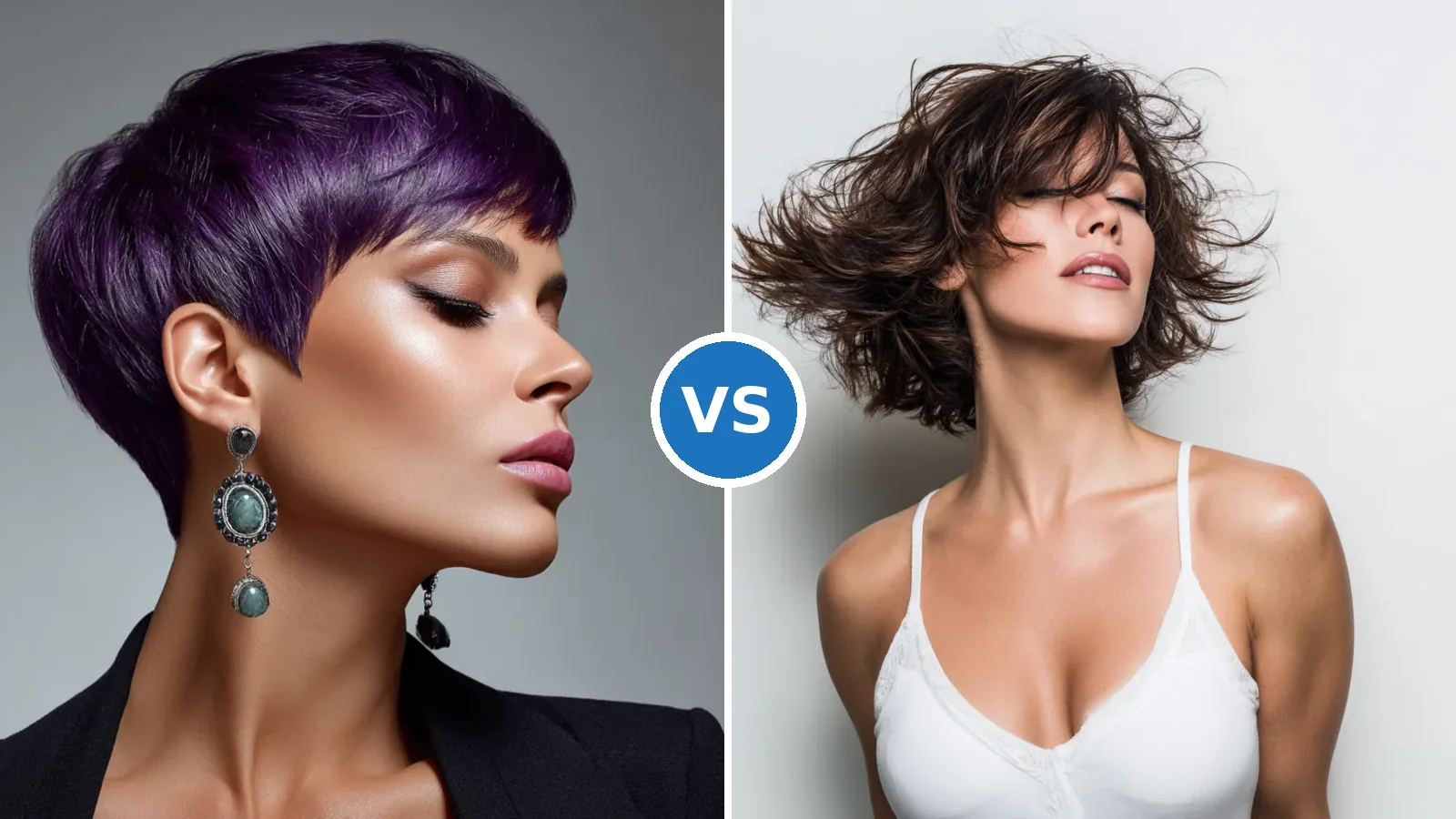
When comparing a step cut vs butterfly cut, you’re deciding whether to refine your face shape or maximize volume from root to tip. Both styles rely on strategic layering, but they accomplish entirely different transformations. The step cut reshapes round faces by introducing subtle angles, while the butterfly cut builds dramatic lift through disconnected layers. If you’re seeking structure and facial contouring, the step cut is your move; if you crave bounce and dynamic volume that commands a room, the butterfly cut delivers.

Understanding the two layering approaches
The step cut places its shortest layers deliberately below the cheekbones or chin to break up circular face lines. Each layer builds downward in measured increments, creating a stacked, graduated effect that prevents fullness from dominating your silhouette.
The butterfly cut, by contrast, removes massive interior weight while preserving length. Its disconnected sections around the crown and face act as scaffolding, allowing shorter pieces to spring upward independently while longer strands cascade beneath.
Both achieve movement, but through opposing geometry. Step layering emphasizes downward flow and cheekbone definition. Butterfly layering prioritizes upward lift and crown expansion.
Quick Verdict
- Choose step cut if you have a round face and want a modern, face-flattering shape that looks intentional and sculpted.
- Choose butterfly cut if you have thick hair and crave dramatic volume that moves independently and commands visual attention.
- Choose step cut if you prefer styling flexibility and a cut that works whether you’re tousling or sleek-styling.
- Choose butterfly cut if you’re ready to commit to regular blow-drying or styling tools to maintain that architectural lift.
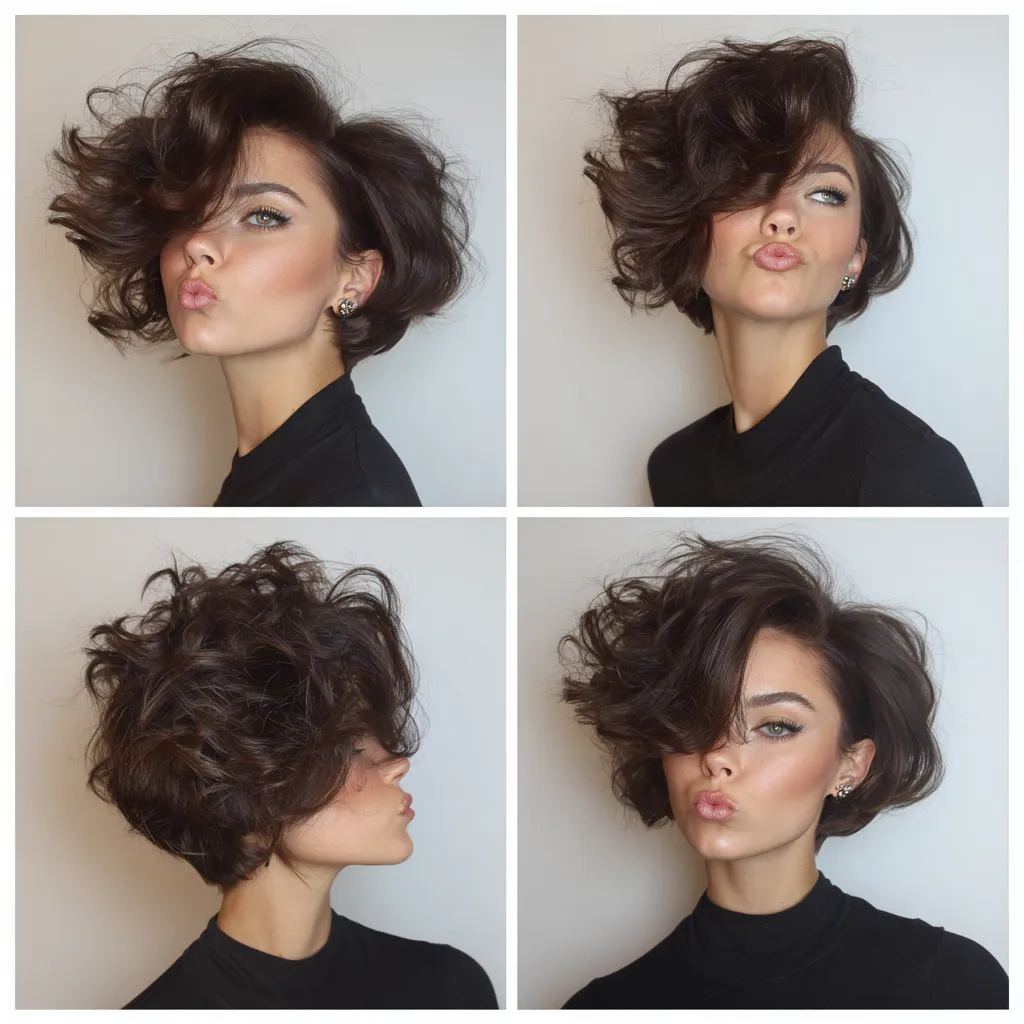
Step cut vs butterfly cut for face shape and texture matching
The step cut excels when face shape matters most. Its strategic placement of angles directly counteracts roundness by drawing the eye downward and creating visual length. Asymmetry in the layering helps hide the widest part of your face.
The butterfly cut prioritizes hair density over face geometry. It works best on thick hair that fights against gravity, transforming weight into an asset rather than a burden. The shortest layers typically land at the cheekbones or drop to the collarbone depending on your face width.
Step cuts suit anyone with a round face seeking refinement. Butterfly cuts suit anyone with abundant hair seeking explosion.
| Criteria | Step Cut | Butterfly Cut |
|---|---|---|
| Best for face shape | Round faces; creates visual angles | All faces; customized by cheekbone placement |
| Hair texture match | Works on any texture | Maximizes thick hair; needs substance to hold shape |
| Volume potential | Moderate; controlled and structured | Maximalist; sky-high lift |
| Styling complexity | Tousled or smooth; flexible | Requires hot tools or natural wave to activate |
| Daily maintenance | Light; doesn’t demand precision | Regular styling needed for full effect |
| Color impact | Highlights layers beautifully (electric blue, rose gold) | Color secondary to volume; shine and depth enhance movement |

Where the step cut wins
The step cut dominates when facial contouring is the priority. Its deliberate angle placement creates cheekbone emphasis and jawline definition that round faces benefit from. By controlling where layers begin and end, a stylist can address specific proportions.
The step cut also wins on styling flexibility. You can wear it tousled with wax for edge, smooth with mousse for polish, or blow-dried for volume—the cut works across all approaches because its foundation is structure, not weight removal.
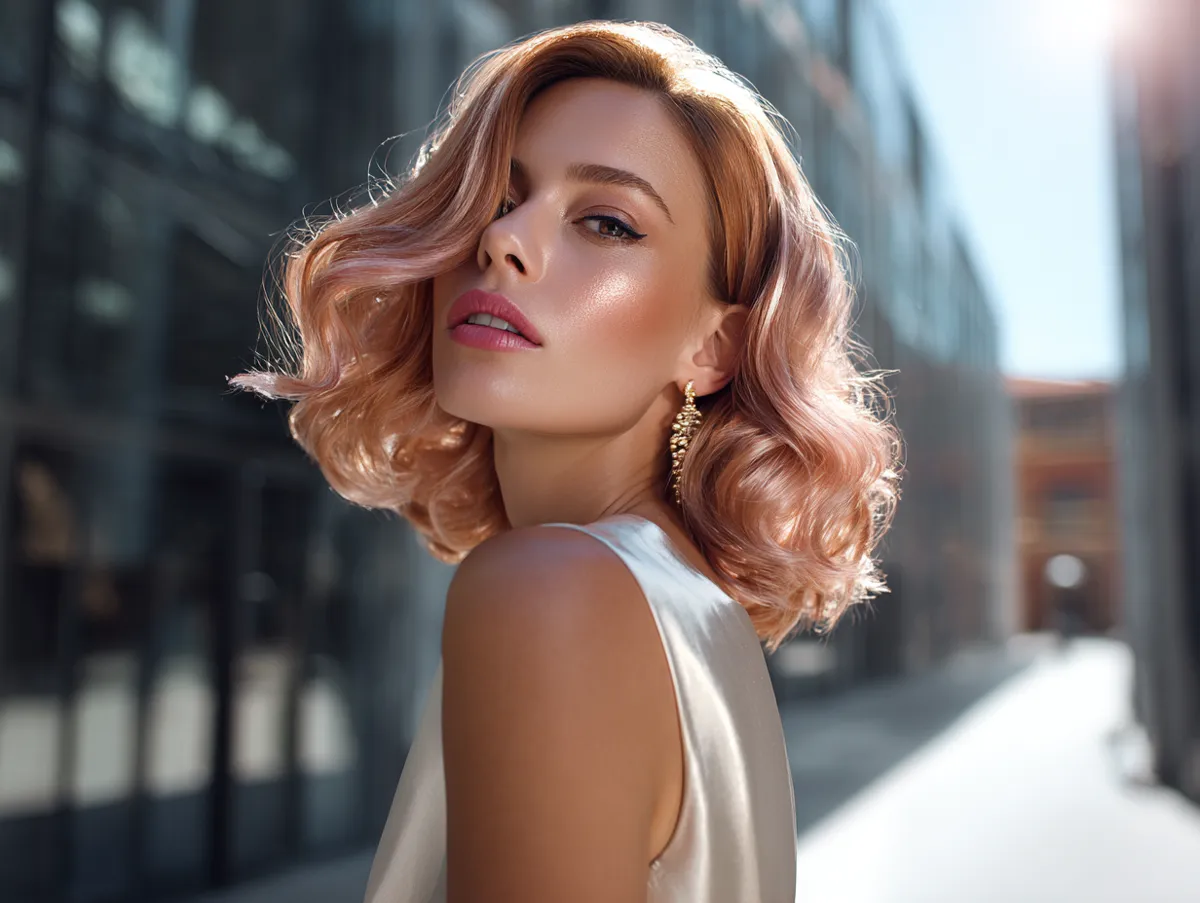
Color integration is another step cut strength. Vivid hues like electric blue and rose gold punch through because the layered steps catch light at multiple angles, making the hair appear thicker and more dimensional.


Where the butterfly cut wins
The butterfly cut reigns supreme for volume maximization. Its aggressive interior layering frees the top sections from the downward drag of heavy density, creating feathery movement that responds beautifully to any styling method.
The butterfly cut also wins on visual impact. With that much lift and movement, you feel your hair shift and resettle with every head turn. The volume reshapes your silhouette, creating dynamic presence.
For thick-haired individuals, the butterfly cut transforms a challenge into an asset. The weight that usually pulls everything flat instead becomes the foundation for creating independent waves and feathered cascades.


The biggest mistake when choosing between them
Final verdict and how to choose
The step cut emerges as the winner for anyone seeking a refined, controlled aesthetic with longevity built into the design. If you value clean lines, easier daily styling, and a cut that works harder to flatter your face shape regardless of hair texture, the step cut delivers consistency. It’s the sophisticated choice for professionals, minimalists, and anyone who views their haircut as an investment in a polished appearance rather than a statement piece.
The butterfly cut claims victory for those willing to embrace daily styling as part of their identity. Choose this if you have thick hair, love the sensation of movement, and want a cut that adapts to your mood and styling mood. It’s for people who see their hair as a canvas and view the effort required as part of the appeal, not a burden.
Here’s the practical truth: ask yourself whether you’re choosing a cut for what it does at the salon or what it does at home. The step cut looks exceptional fresh from the chair and improves slightly with each wash. The butterfly cut looks mediocre immediately after styling and transforms into something spectacular once your natural texture takes over.
If you have time to style, the butterfly cut rewards that investment. If you prefer wash-and-go convenience, the step cut is your answer.
Your hair texture ultimately makes the decision for you. Thin to medium hair gravitates toward step cuts, while thick hair finds its true expression in butterfly layers. Work with your stylist on this distinction rather than against it, and you’ll walk out with the cut that actually belongs on your head.