Pearl white and dark chocolate house paint is one of those combinations that reads as polished on a colonial, refined on a craftsman, and unexpectedly modern on a flat-roofed contemporary. Sherwin-Williams Pearly White (SW 7009), with its LRV of 77, reflects enough daylight to make a facade glow at golden hour while staying just warm enough to avoid that sterile, hospital-white look. Pair it with a deep brown trim and you have a two-tone scheme that stops working only if you apply it wrong.
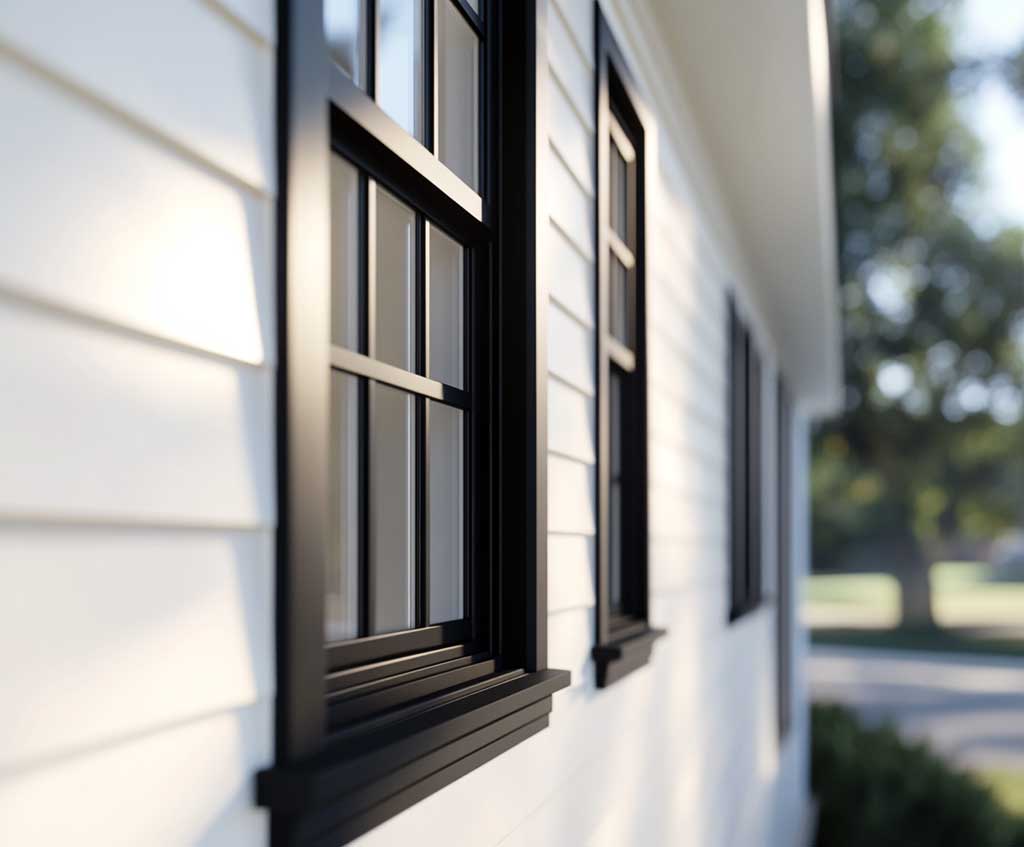
The trick most homeowners miss is sheen. Pearl white body paint in satin finishes looks intentional; flat finishes on the same color look chalky and trap mildew in humid climates. Dark chocolate trim earns its drama in semi-gloss, where it catches raking light against window frames and corner boards. That contrast in sheen — satin body, semi-gloss trim — does as much visual work as the color difference itself.
What follows are three distinct ways to run this palette — classic manor proportions, minimalist geometry, and a rustic retreat approach — each with different ratios of white to brown and different material pairings. None of them are interchangeable; the architecture of your house should drive which one fits.
– Pearl white body + dark chocolate trim is a two-tone scheme that works across colonial, craftsman, and contemporary styles
– Sherwin-Williams Pearly White (SW 7009, LRV 77) is a proven exterior white — warm-neutral, not stark
– Satin sheen on the body, semi-gloss on trim: the sheen difference adds depth even before color does
– One gallon of quality exterior paint covers 350–400 sq ft on smooth siding; plan two coats minimum
– Exterior paint lasts 7–10 years depending on climate and paint tier — premium products extend that window
– Dark chocolate trim hides weathering better than lighter trim colors — practical advantage on north-facing walls
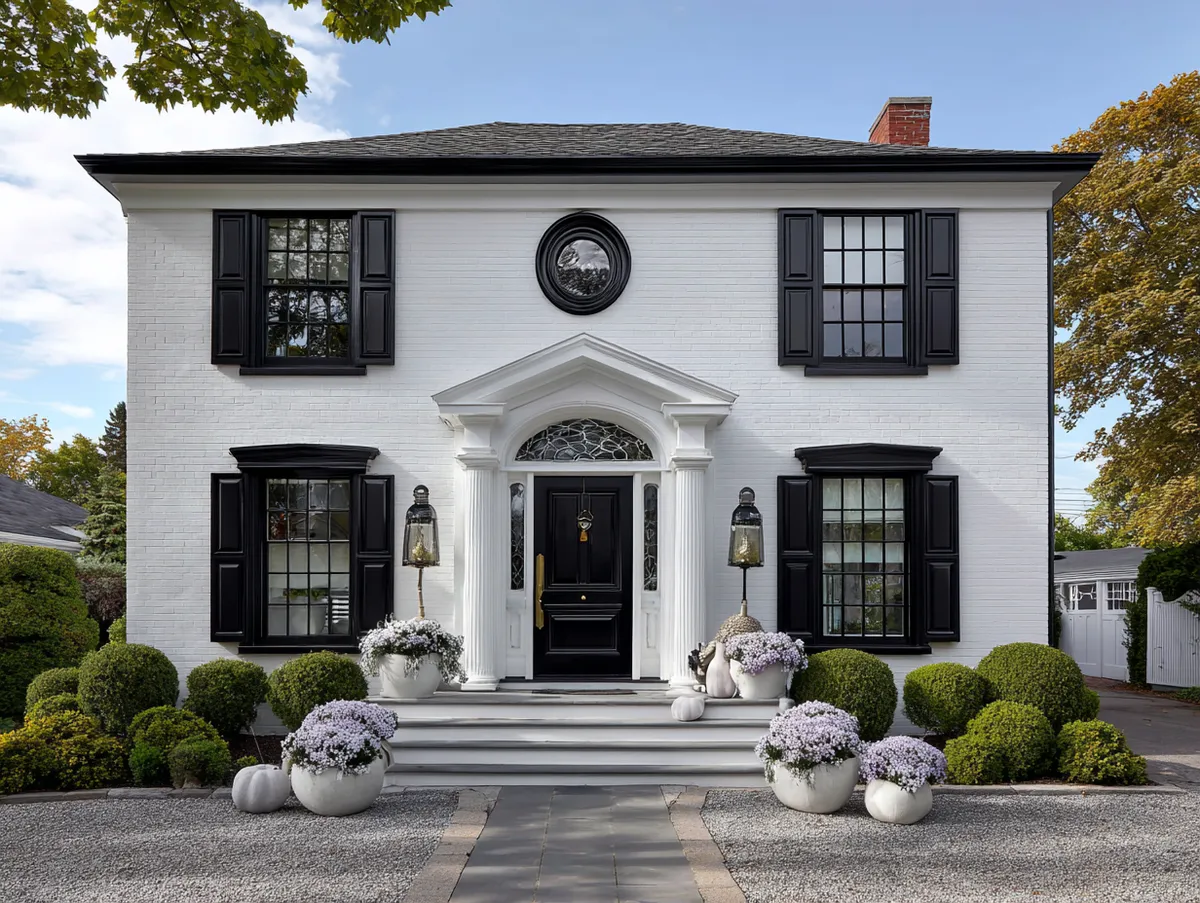
Classic Manor Proportions — Pearl White Body, Chocolate Framing Every Detail


Pearl white and dark chocolate house paint becomes most legible on homes with abundant architectural detail — dentil moulding, pronounced window casings, pilasters, or covered porches with columns. Sherwin-Williams Pearly White (SW 7009) applied in satin on the body gives the facade a warm luminosity; plan on 350–400 square feet of coverage per gallon on smooth siding, dropping to around 200–250 square feet per gallon on textured stucco. For a 2,000-square-foot paintable exterior, that typically means 10–12 gallons of body paint before factoring in trim.
Dark chocolate trim works here like a picture frame works around a painting — it tightens every element and tells the eye where to look. Window frames, fascia boards, shutters, and the front door all read more deliberately against the white body, the way a pencil sketch becomes a finished illustration the moment someone adds a bold outline. Avoid painting gutters and downspouts in the trim color; they run vertical and read as lines, not frames, which fragments the composition rather than completing it.
Ask yourself whether dark chocolate trim suits your roof: if your shingles are mid-brown, the trim blends into them at a distance and you lose the contrast you paid for. The pairing works cleanest against charcoal gray, slate blue-gray, or black roofing — the roof becomes a cap rather than a competing brown element. According to Sherwin-Williams, quality exterior paint lasts 7–10 years depending on climate and surface; south-facing walls degrade faster and may need touch-up on the 7-year end of that range.
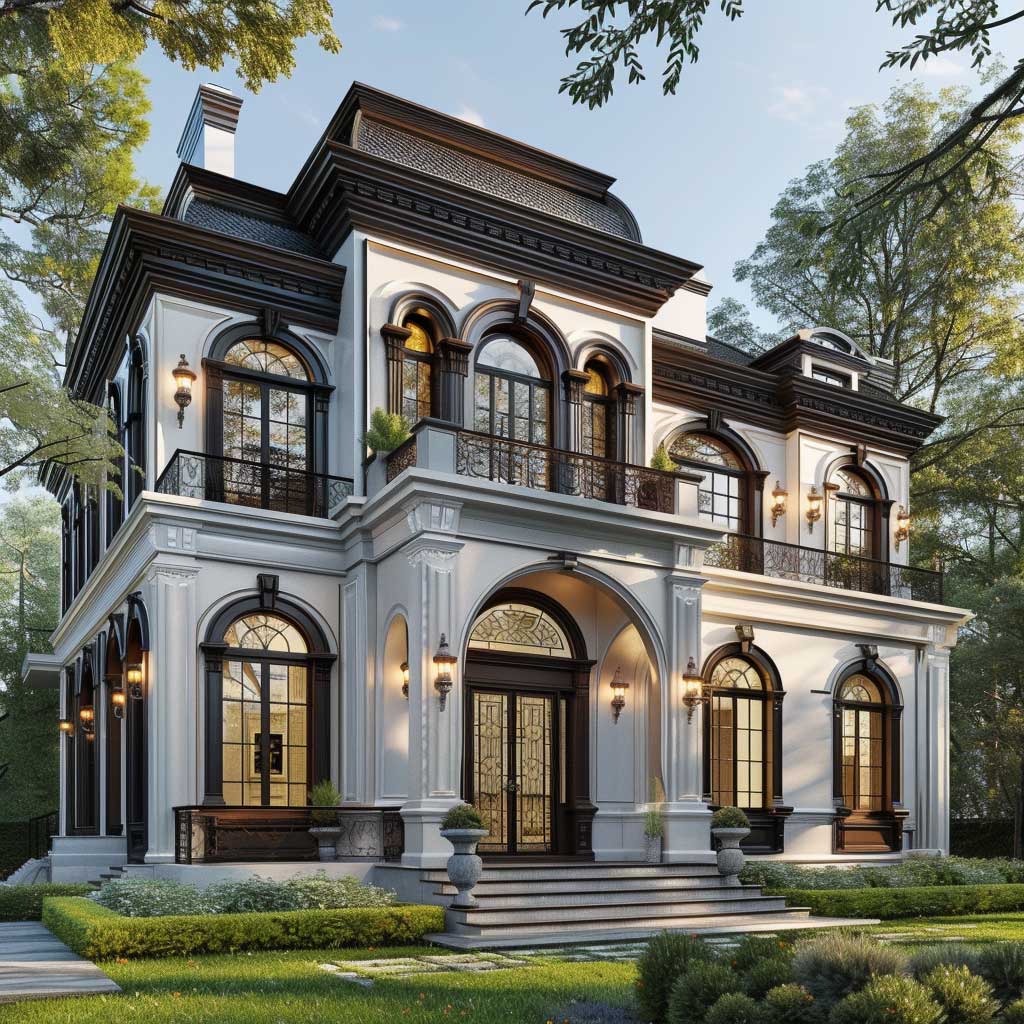


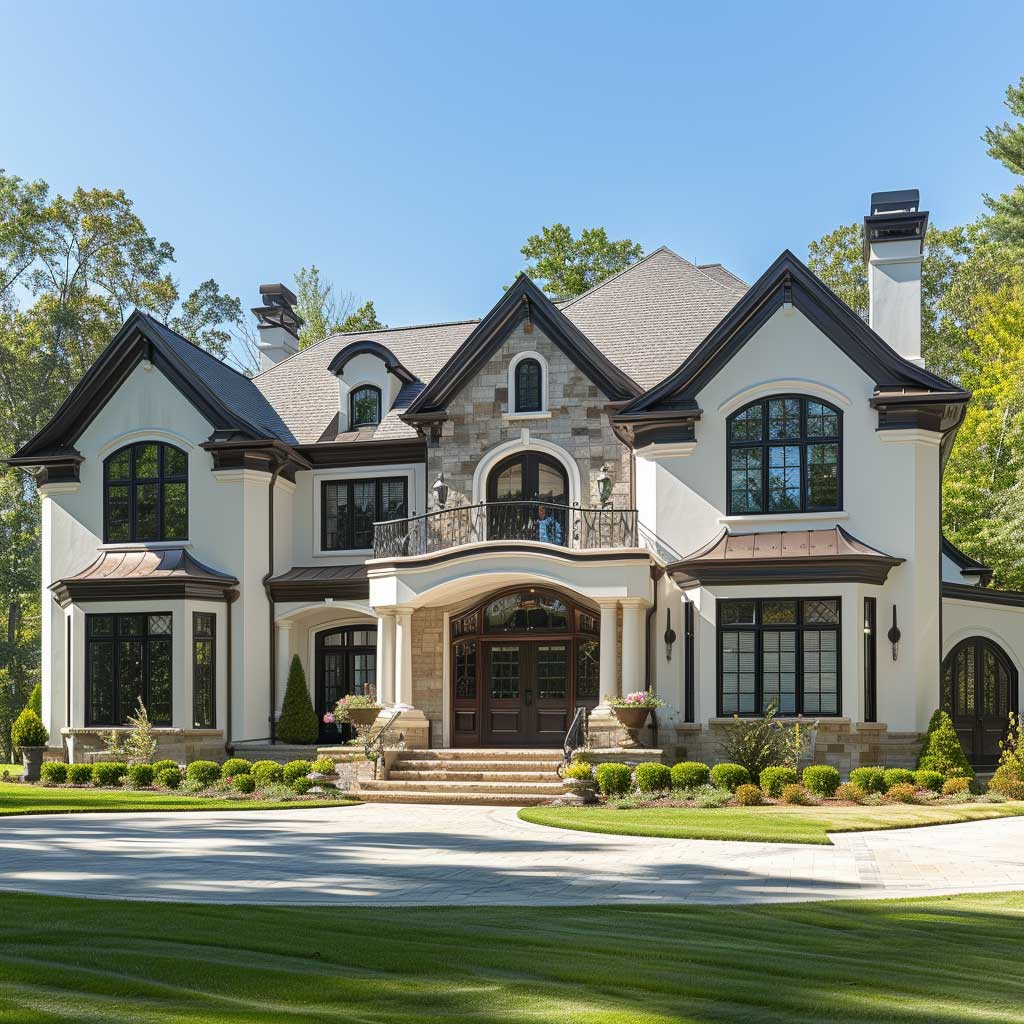
Stucco and pearl white is a pairing worth handling carefully. The texture reads rougher than smooth clapboard, which softens the warmth of the white and can make cheap paints look dingy within two seasons. Stylists recommend a minimum of a satin-grade exterior paint with mildew-resistant additives on stucco substrates — not flat, regardless of how the local paint store rep describes the finish options. Budget roughly one gallon per 200–250 square feet on stucco versus 350–400 on smooth siding when calculating materials.
One underappreciated advantage of pearl white on large facades is solar reflectance. Light-colored exteriors reflect more radiant heat than dark ones, which translates to modest cooling benefits for the interior during summer — especially meaningful on south- and west-facing walls that take direct afternoon sun. The dark chocolate trim absorbs heat in those same spots, so keep it off large unshaded wall sections and concentrate it where it performs its design function: around windows, at corners, and along rooflines. For more tested two-tone exterior house paint combinations for traditional homes, the proportioning rules there apply directly to this palette.
Don’t apply dark chocolate trim to gutters and downspouts. They run vertical across the facade and fragment the composition — they read as streaks, not frames. Stick to the trim color on horizontal elements and architectural features with defined edges.
Don’t match trim color to roof color. When the dark brown trim blends into a mid-brown roof, the contrast you built the whole palette around disappears. You need separation between roof cap and trim band — charcoal, slate, or black roofing gives you that.
Don’t skip a primer coat on bare wood before the dark chocolate trim paint. Dark pigments fade unevenly on unsealed wood, leaving patchy results after the first winter. One coat of exterior primer at $45–$65 per gallon saves a full repaint.
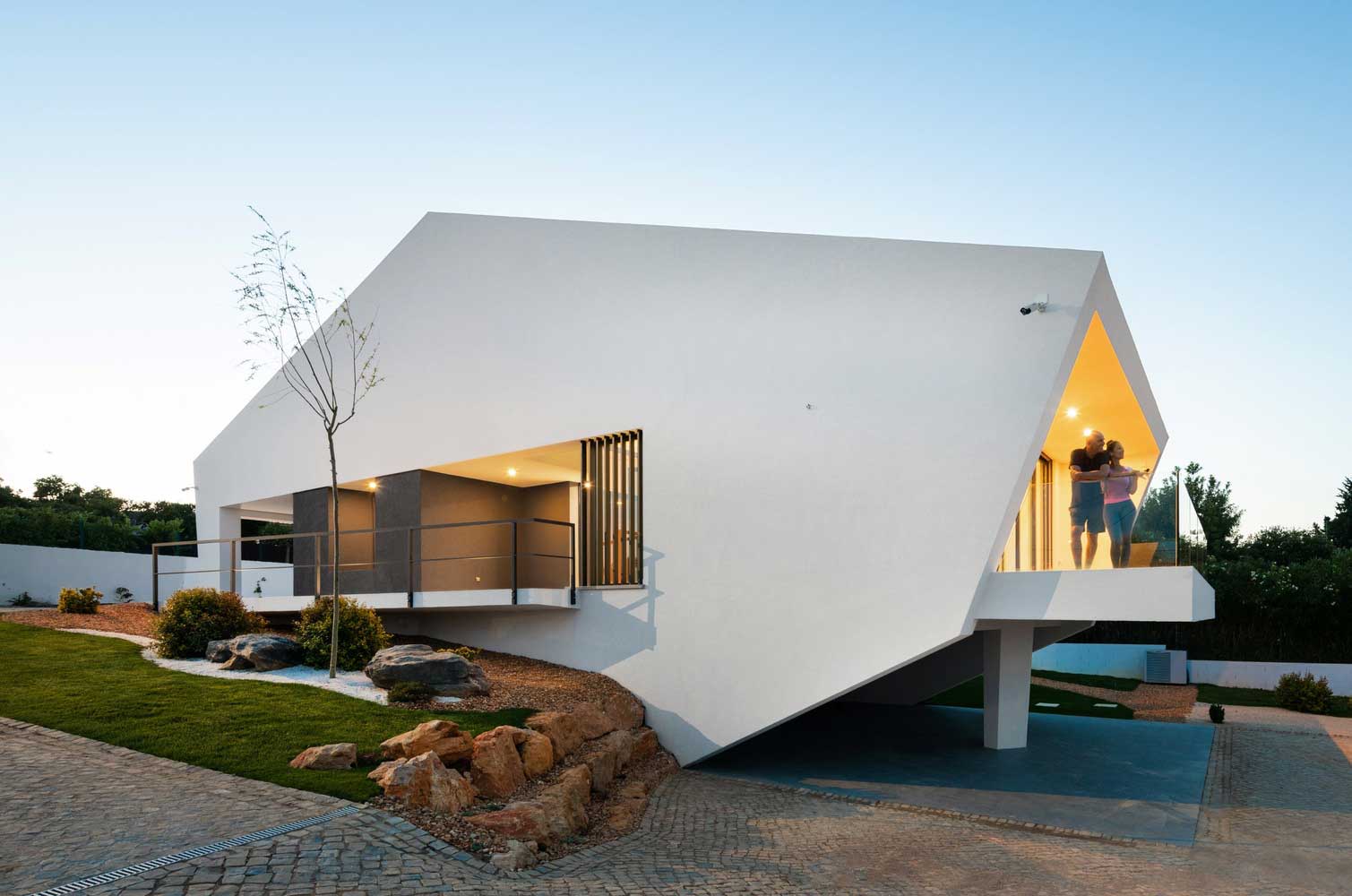
Where Pearl White and Dark Chocolate House Paint Serve a Minimalist Form


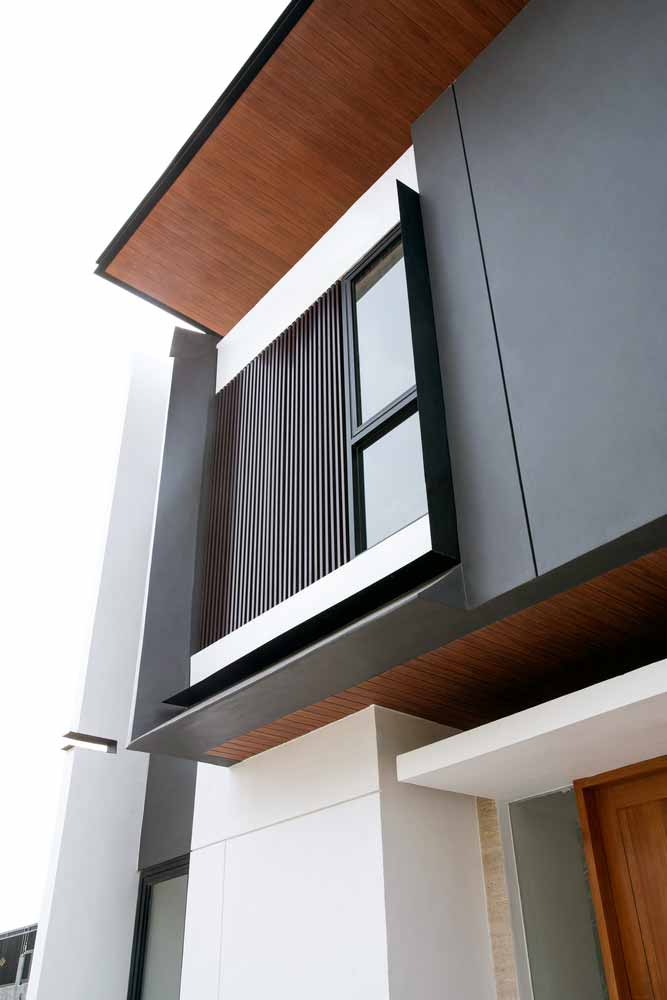
On a contemporary home with flat planes and few ornamental details, pearl white and dark chocolate house paint function as a graphic pairing — value contrast doing the work that ornamentation does on a traditional facade. The dark chocolate reads as a structural line wherever it appears: along a roofline fascia, as a window frame against white cladding, or as a solid base course running the ground-floor perimeter. Remove those chocolate elements and the house risks reading as a white box. Add too many and it looks striped rather than structured.
How much trim paint do you need? A useful planning figure is approximately one gallon of trim paint per 50 linear feet of trim for a single coat. A mid-size contemporary with 200 linear feet of window and door trim plus a fascia perimeter runs to roughly 4–6 gallons of trim paint for two coats — a fraction of the body paint budget but the detail that determines whether the exterior looks considered or accidental. Trim paint in semi-gloss at this scale costs $380–$630 at premium pricing ($95–$105 per gallon for products like SW Emerald Exterior).
What materials pair with this two-tone scheme on a modern facade? Natural wood in a warm walnut or teak stain works as a third element — a front door, a soffit panel, a deck surface — without competing with either the white or the brown. Metal in matte black or gunmetal threads through as hardware. Glass-heavy facades benefit from the dark chocolate frame because it makes each glazed panel feel deliberate rather than punched at random into white cladding. Avoid warm beige or tan stone cladding alongside this palette; it muddies the clean white-and-brown read by introducing a third near-neutral that belongs to neither camp.

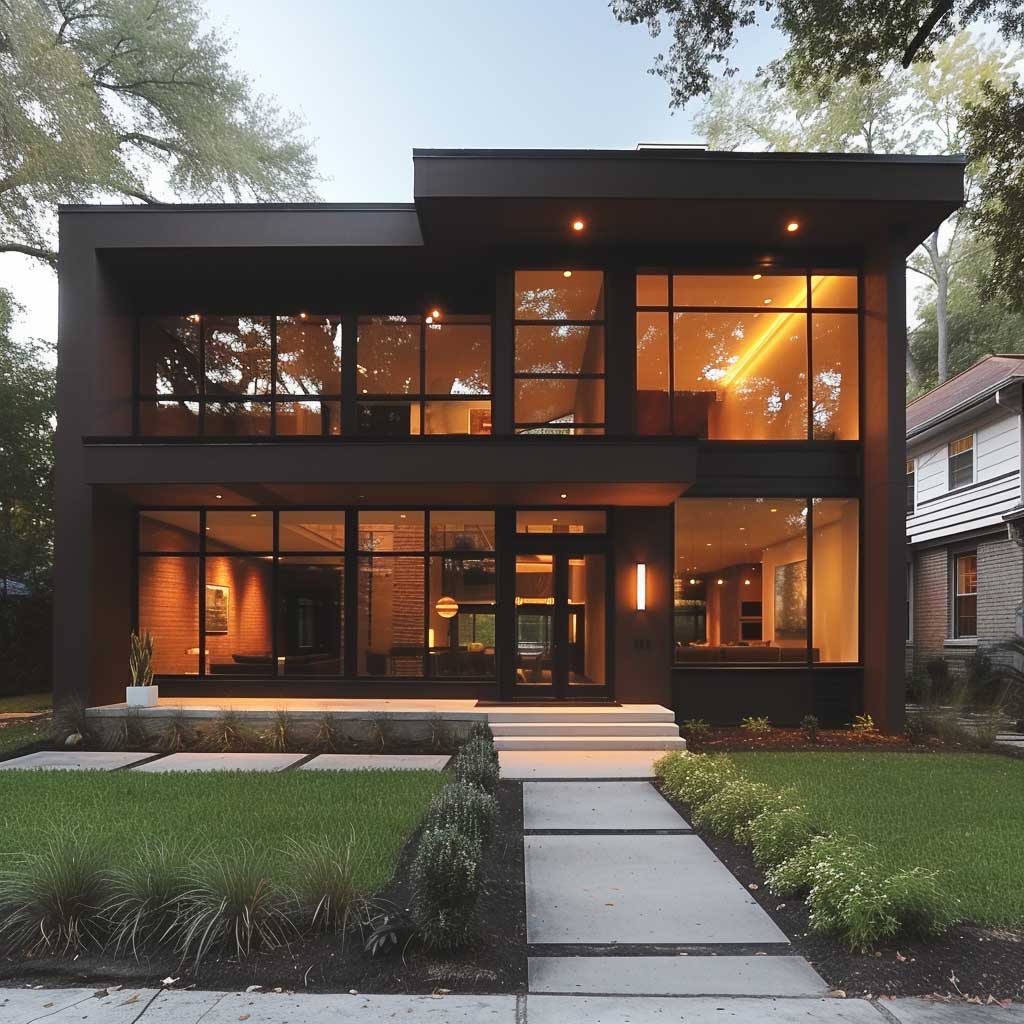


Color temperature matters more on minimalist facades than it does on ornate ones, because there are fewer elements to absorb or correct for it. Pearly White (SW 7009) has warm beige undertones with occasional green-gray shift depending on lighting conditions — an LRV of 77 keeps it firmly in bright-white territory outdoors in direct sun, but in shade it can read creamier than expected. A south-facing minimalist facade in Pearly White looks crisp; a north-facing one in the same color can look slightly dingy by comparison. Test a 2×2-foot patch on your actual siding and check it at 8 AM, noon, and 6 PM before committing to 12 gallons.
The minimalist case for dark chocolate is partly practical: deep brown pigments are less prone to showing weathering marks, water streaks, and oxidation than lighter trim colors. North-facing trim that doesn’t dry fully between rain events tends to show green mildew on light tan or gray trim within three to five years; dark chocolate absorbs those subtle marks without visibly degrading. That’s the hidden return on using a darker trim color — the next repaint cycle starts with a surface that still looks acceptable rather than one that has been slowly embarrassing you for two years.
Rustic Proportions — Dark Chocolate Trim on Pearl White Without Looking Like a Log Cabin
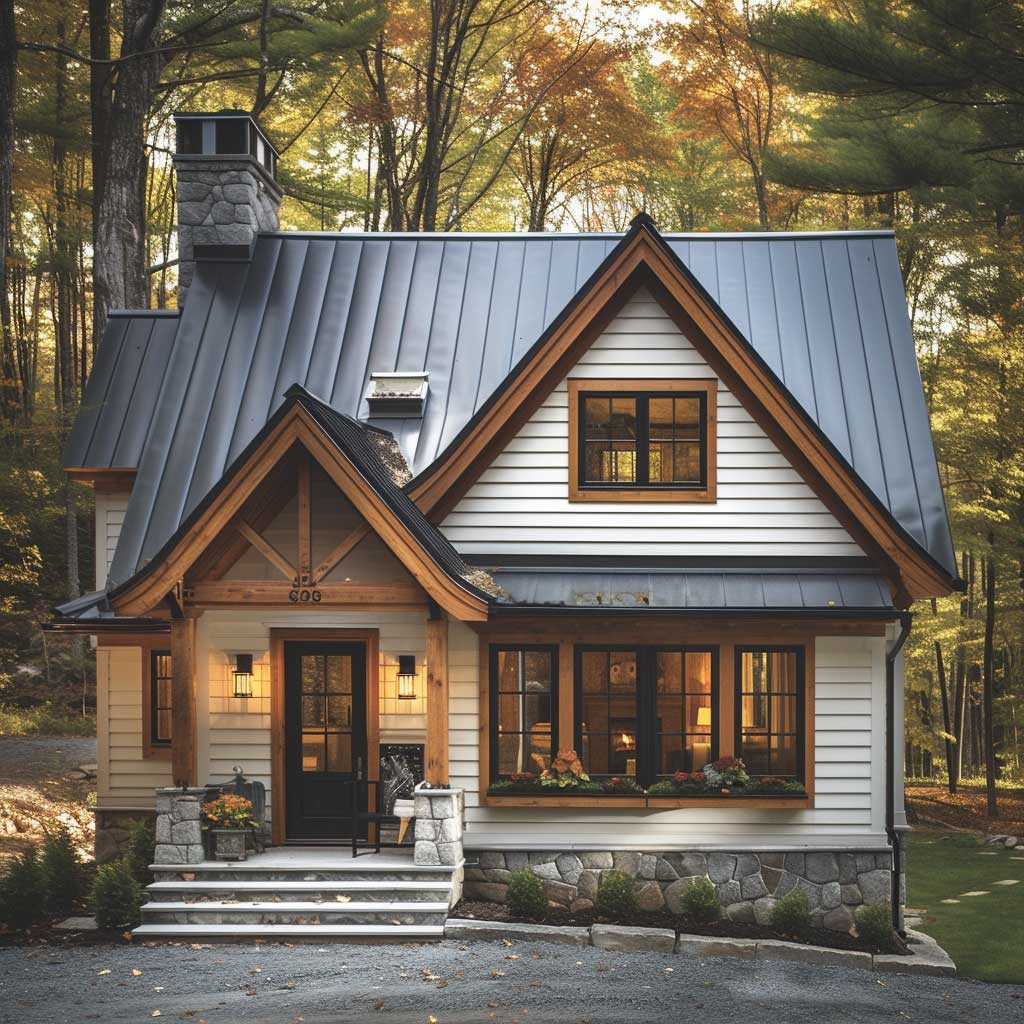
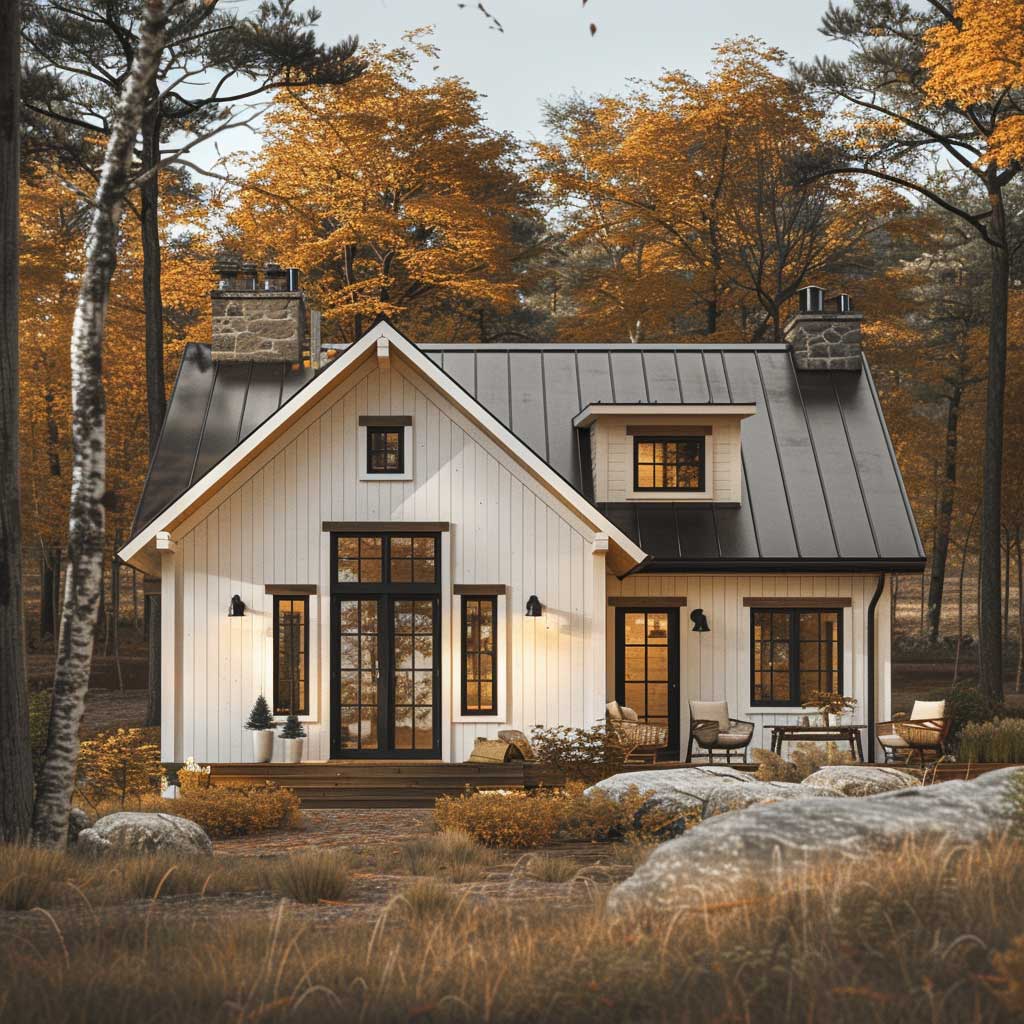
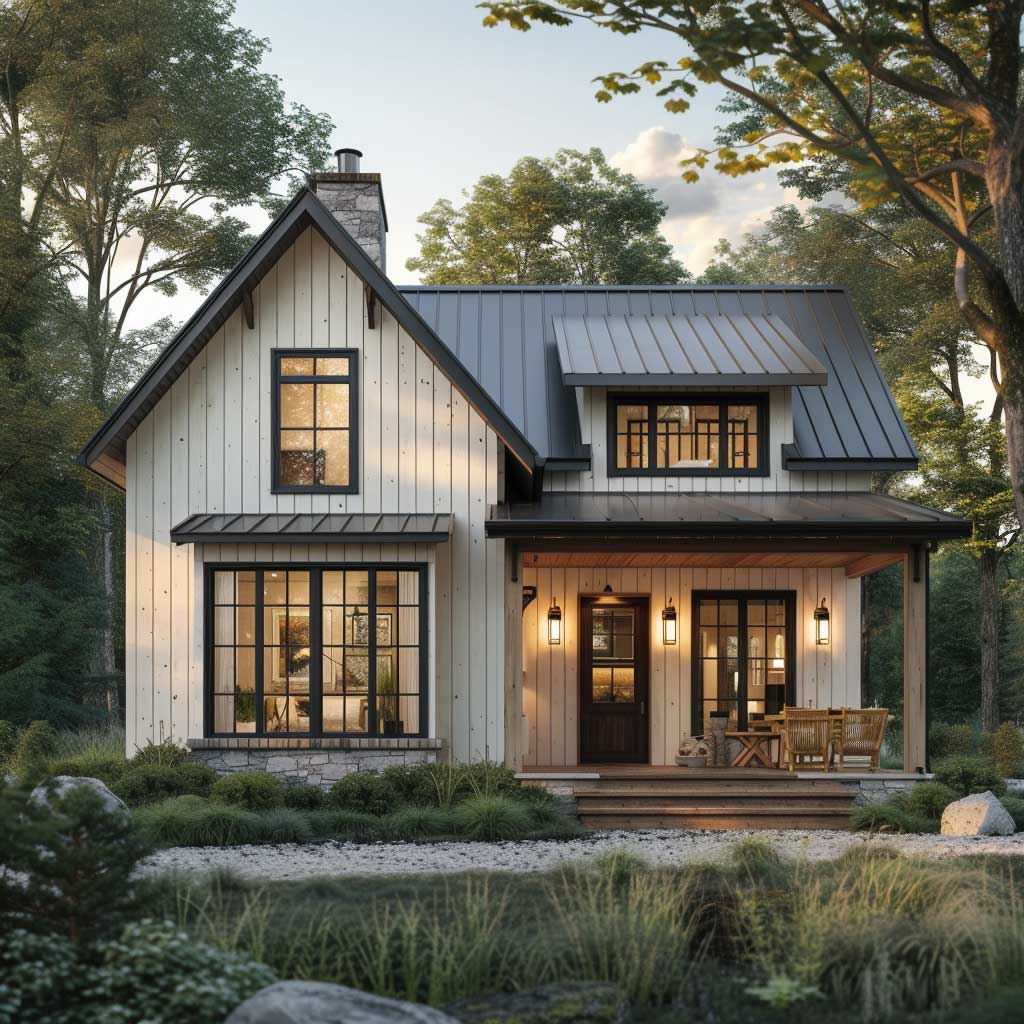

Dark chocolate trim on pearl white in a rustic or farmhouse context works because the combination borrows the palette of the surrounding landscape — white like birch bark, brown like exposed timber and soil — without copying the materiality of an actual log structure. The exterior stays crisp and maintained rather than raw and unfinished. The risk is overcrowding: on a home with exposed rafter tails, board-and-batten details, and a covered porch, every surface fights to carry the dark chocolate, and the eye has nowhere to rest. Pick two focal elements — typically the window frames and the front door surround — and hold the rest in white.
Natural wood accents sit comfortably between the pearl white and the dark chocolate in this context. A cedar porch ceiling painted in a warm gray or left in a clear-sealed natural finish reads as a bridge tone rather than a competing element. Cedar porch decking typically runs $4–$8 per linear foot for 5/4×6 boards; the cost premium over pressure-treated pine is worth it because cedar resists the moisture cycling that causes paint-adjacent wood to swell, split, and eventually pull away from trim. Reseal cedar decking every two years with a penetrating oil to keep it from graying.
The question stylists get asked most often about this scheme: does it work in a wooded setting where the house is partially shaded? Pearl white in deep shade loses brightness — it reads more as a warm cream, which actually softens the contrast with the dark chocolate and produces a result that feels more nestled than stark. That’s not a problem; it’s a feature. The common mistake is going brighter white specifically because the site is dark, then watching it turn yellow-green in mold-prone areas within five years. Pearly White’s muted warm-neutral undertone holds better than a pure cool white in a shaded, humid environment. For more exterior color pairing logic that goes beyond two tones, the breakdown of dark green exterior house paint colors covers similar undertone-matching principles for nature-heavy settings.
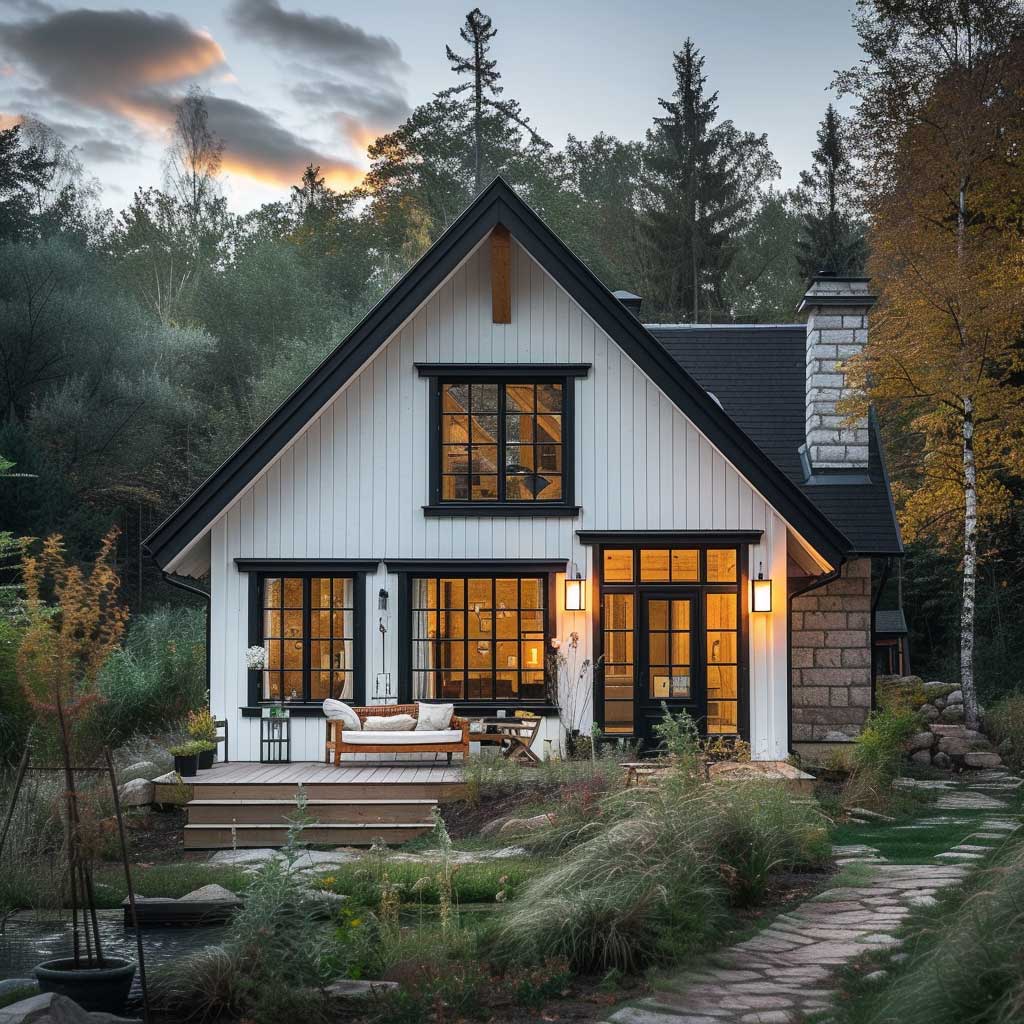

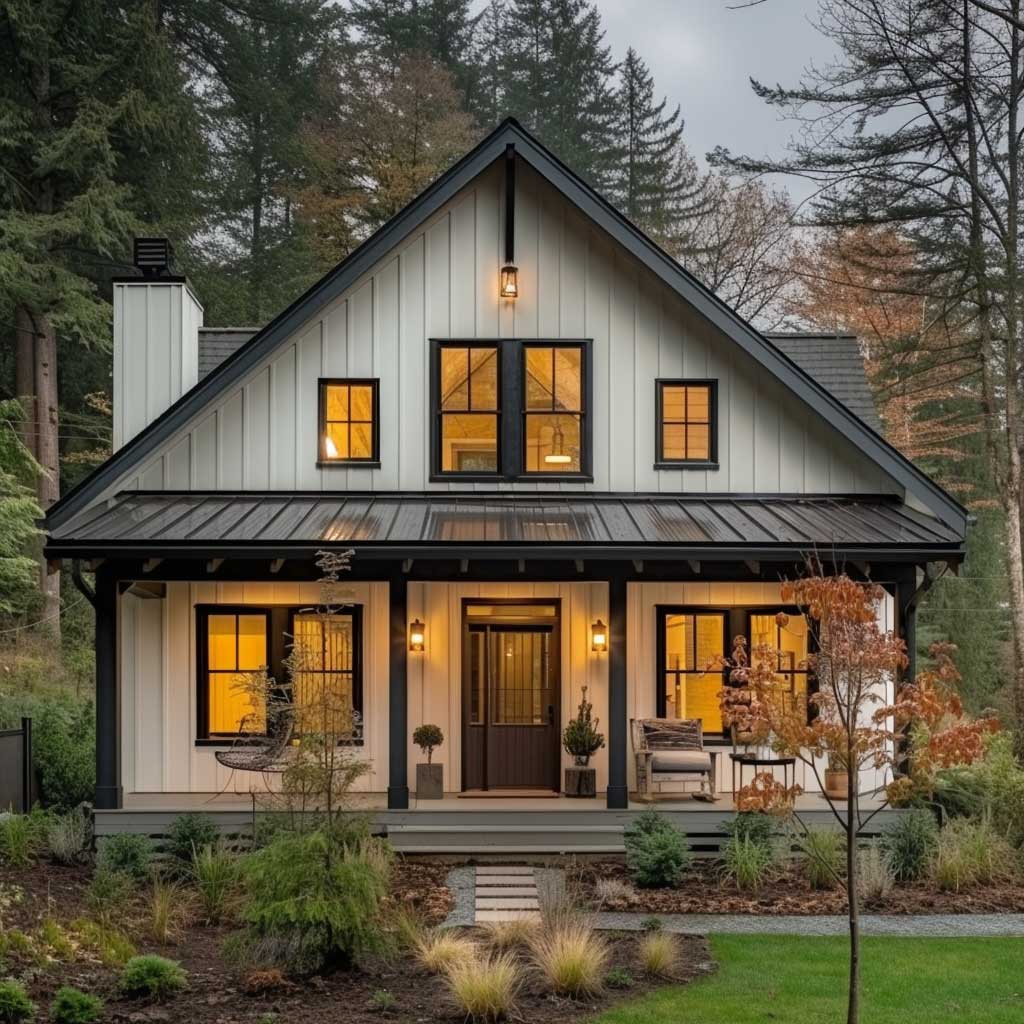

Stone foundations or accent panels pair cleanly with this palette only when the stone reads cool — gray limestone, blue-gray slate, dry-stacked fieldstone without heavy rust veining. Warm-toned stone (sandstone, travertine, flagstone with orange undertones) competes with the chocolate brown for the “warm anchor” role and the facade ends up looking muddy rather than layered. If the existing stone on the property is warm-toned, pull the trim slightly away from pure brown toward a cooler dark chocolate with gray undertone — Sherwin-Williams Kona Brown or a similar muted brown-gray keeps the peace.
Maintenance planning for this palette is simpler than for a single dark-body scheme. Pearl white siding shows dirt and algae growth before it shows paint degradation — the surface tells you when it needs attention rather than quietly failing under a patchy recoat. According to Sherwin-Williams’ exterior painting guide, repainting is typically needed every 7–10 years, and exterior paint should cure for at least 24 hours before rain exposure. Budget a pressure wash and light sand every three to four years as an interim maintenance step — it extends the repaint cycle by keeping mildew from gaining a foothold on the pearl white body.
| Style Approach | Pearl White Role | Chocolate Brown Placement | Best Roof Pairing |
|---|---|---|---|
| Classic Manor | Full body, all elevations | All trim, shutters, door surround | Charcoal gray or black shingles |
| Modern Minimalist | Full body, clean planes | Fascia, window frames, base course | Flat dark gray membrane or slate |
| Rustic Retreat | Full body, includes porch ceiling | Window frames and front door only | Dark brown cedar shake or metal |
The Takeaway
Pearl white reads differently on every facade — the trim does the deciding
Sherwin-Williams Pearly White (SW 7009, LRV 77) delivers warmth without yellow drift, making it one of the few exterior whites that holds on both north-facing and south-facing elevations without looking like two different colors.
Dark chocolate trim works as the frame, not the picture. Concentrate it on window casings, fascia, and the front door; keep it off gutters, downspouts, and large wall sections. Semi-gloss on the trim, satin on the body — always.
Plan for 350–400 sq ft per gallon on smooth siding and 200–250 on stucco; premium exterior paint runs $95–$105 per gallon but extends the repaint cycle to the 10-year end of the 7–10-year range. Save this post before you head to the paint store.