Contemporary patio design rewards the people who draw the zones first and order the furniture second. I’ve seen dozens of patios that had the right chairs, the right stone, the right plants — and still looked like a furniture showroom nobody wanted to sit in. A contemporary patio layout that actually works starts with understanding how outdoor space moves and breathes, not how it photographs in a single still frame. Get the structure right and even a $4,000 budget reads like three times that on a Friday evening.
The queries I see most often around contemporary patio design break into two real anxieties: whether the space will feel cohesive from inside the house, and whether it will hold up through different uses — solo coffee in the morning, eight people for dinner on Saturday. Both are solved at the layout stage, not the accessory stage. I’ll walk through every layer here, from zone logic to material choices to the lighting decisions most people get backwards.
Quick Scan
- Contemporary patio design starts with zone planning, not furniture selection
- The neutral palette rule: warm stone or warm concrete, never cool grey on its own
- Modular seating from brands like Crate & Barrel Outdoor or Restoration Hardware runs $1,800–$4,500 per configuration
- Lighting is the single cheapest change with the biggest after-dark return
- Eclectic patio details work when the geometry underneath them is strict
- Automated retractable awnings add usability on around 40 more days per year in most US climates
- Backyard patios and garden patios share the same zone logic — scale changes, rules don’t
Sleek Furniture Reads Wrong Until the Floor Plan Earns It


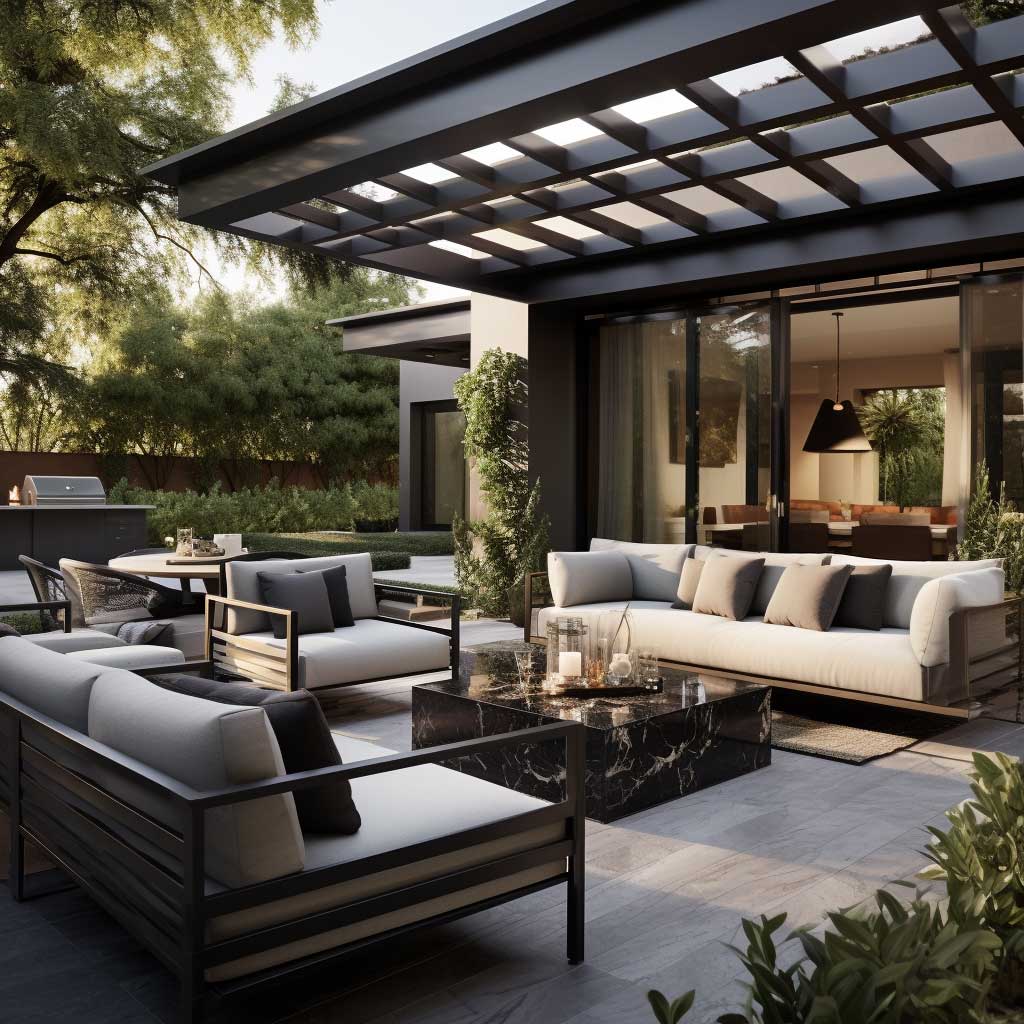
Modern elegance in a contemporary patio layout is not about buying expensive furniture — it’s about giving that furniture a floor plan that makes sense. Think of a well-laid patio the way a stylist thinks about a photo shoot backdrop: the background has to do most of the work before the talent walks on set. Warm-toned pavers, wide-format travertine around $12–$18 per square foot installed, or even polished concrete with a warm aggregate read entirely differently than the bluestone or cool grey concrete that fills most contractor spec sheets. I learned this the hard way on my own backyard renovation — $3,200 in furniture on a cold grey slab looked like a waiting room, not a retreat.
The choice of furniture materials matters enormously once the floor is right. Teak weathers into silver if you skip the annual oil — you’ll get about two seasons of warmth before it turns. Powder-coated aluminium in matte black or warm graphite stays consistent and costs 30–40% less than teak at comparable quality levels. Brands like Brown Jordan and Gloster price their aluminium sectionals between $2,200 and $5,800 depending on configuration; if that’s above budget, the CB2 Outdoor Dune collection at around $1,400 per piece holds its form well in most climates. Avoid the all-white synthetic wicker trend — it photographs well but reads as rental-grade in person and stains within one season in a real-use backyard.
Minimalist decor in a contemporary patio does not mean empty. It means deliberate. A single terracotta pot at 24 inches diameter, a row of ornamental grasses along a fence line, or one overhead pendant from a pergola structure makes a stronger statement than seven mismatched lanterns on a side table. Colour palettes in these layouts lean into the warm neutrals — linen, warm white, sand, dusty sage — with one accent you can swap out seasonally. You’ll notice the space looks twice as finished when you cut the number of decorative objects in half.


Layout logic in smaller contemporary patios is about protecting circulation. My rule is 36 inches of clear path around any dining table. Pull chairs in and measure again — you want no one turning sideways to walk behind a seated guest. In a 12×14 foot patio that doesn’t leave room for a six-chair dining set; a four-chair set at 36 inches square works and the space still breathes. Larger patios can zone into dining and lounge without a visual barrier — a change in paver pattern or an outdoor rug edge does the work a half-wall would overcomplicate.
Nature integration in a contemporary backyard patio is not about English garden abundance. Low boxwood hedges at the patio perimeter, a raised planter box with lavender or rosemary along one edge, a single olive tree in a large concrete vessel — these bring the living element without fighting the geometry. I stole this trick from a terrace project I photographed in Austin: one enormous Ficus lyrata in a matte black pot at the corner of the patio replaced an entire wall of planters and cost $180 at a local nursery. The natural world functions here the same way a single great artwork functions in a modern interior: focal point, not wallpaper.
Don’t Do This
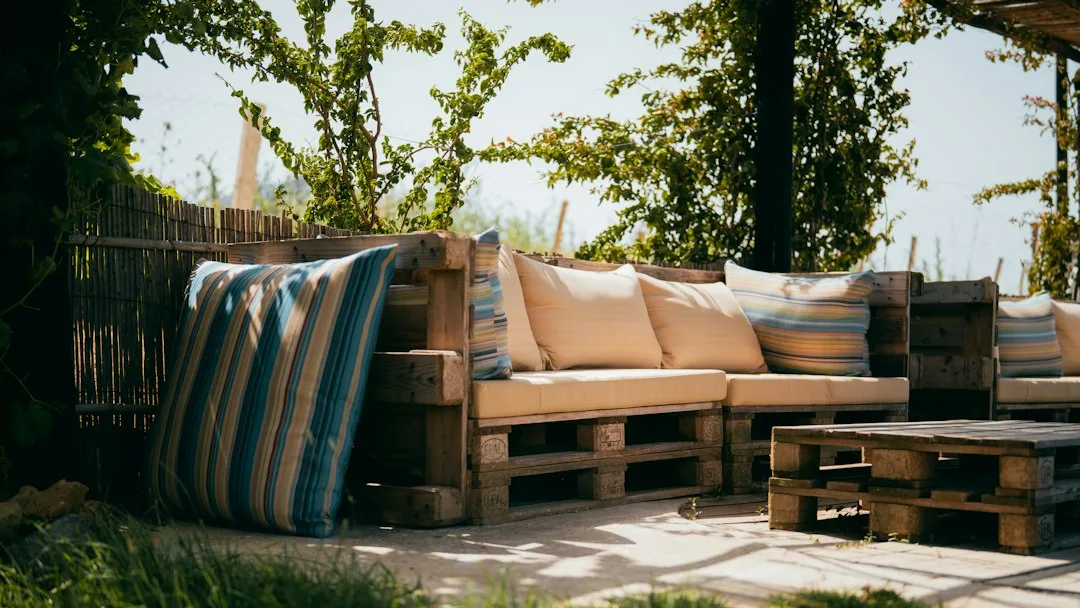
The most consistent mistake I see in contemporary patio layouts is buying a complete matching furniture set — sofa, loveseat, two chairs, coffee table, all from one SKU. It reads like a floor display, not a home. Matching sets eliminate the visual tension that makes a space feel collected and personal. Choose a sofa from one brand, side chairs from another, and a coffee table in a contrasting material. The mix signals that someone with actual taste lives here, not someone who pointed at a catalogue page.
Also avoid: covering 100% of the patio floor with an outdoor rug. Leave at least 12–18 inches of floor visible on all sides. An oversized rug shrinks the perceived space; the patio needs to breathe.
Where Outdoor Living Spaces Earn or Lose Their Sophistication


Sophisticated contemporary patios earn their reputation somewhere specific: at the transition point between indoor and outdoor. You’ll notice immediately when the floor level matches, when the door opens onto the patio without a step down, when the interior flooring tone rhymes with the patio surface. That seamless transition is where the space stops feeling like an afterthought and starts feeling like the point of the house. Most residential builds get this wrong by default — the slab is poured at grade and the interior floor sits four inches higher, forcing a threshold step that breaks the flow every single time.
Contemporary patio decor colours work best when they hold a conversation with the interior. What’s the dominant tone of your living room? Pull one element of that into the outdoor textile — a cushion colour, a rug tone, the stain on a side table. Neutral outdoor palettes often fail not because the colours are wrong but because they have no relationship to what’s visible through the glass door. The patio seen from inside the house is always part of the view; it deserves the same colour logic as a room extension, because that’s functionally what it is.
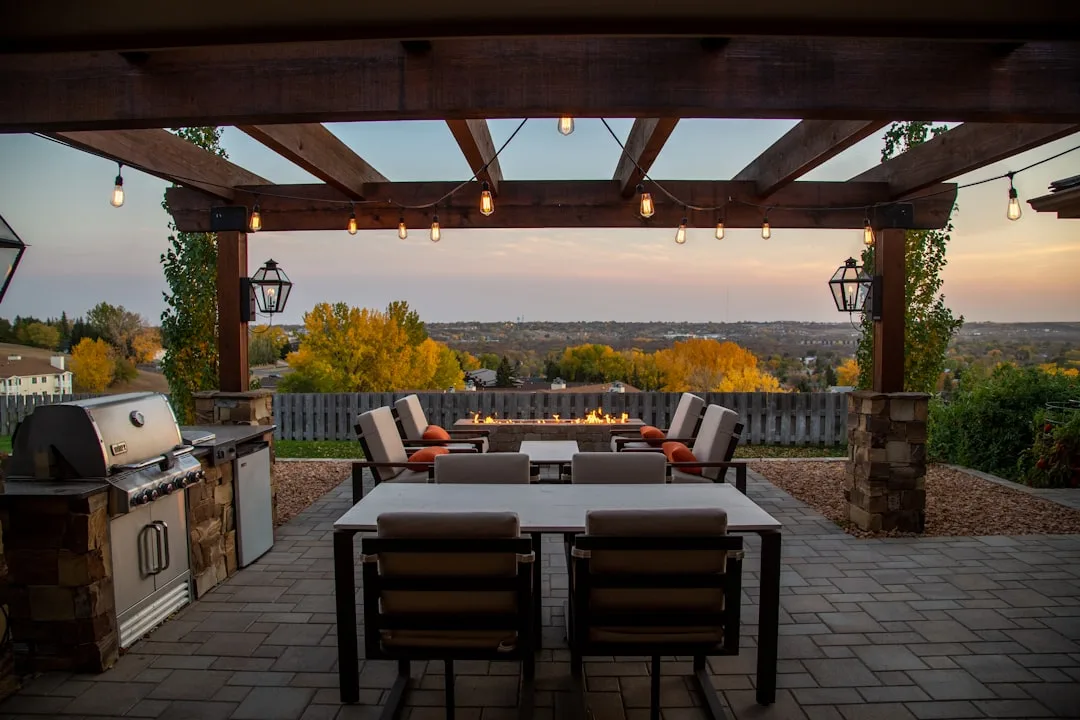
Lighting decides whether the contemporary patio works after 6pm. Most homeowners install one overhead fixture or a string of Edison bulbs and call it done. That’s one layer of three. You need downlighting for the table (overhead, aimed), ambient lighting at eye level (lanterns, wall sconces), and low ground lighting along the path or perimeter. Layered outdoor patio lighting transforms the space after dark in a way that no daytime furniture decision can match. The Kichler Landscape LED line runs around $18–$35 per fixture and the warm 2700K tone is the right choice for any patio — cooler temperatures read clinical under the night sky.


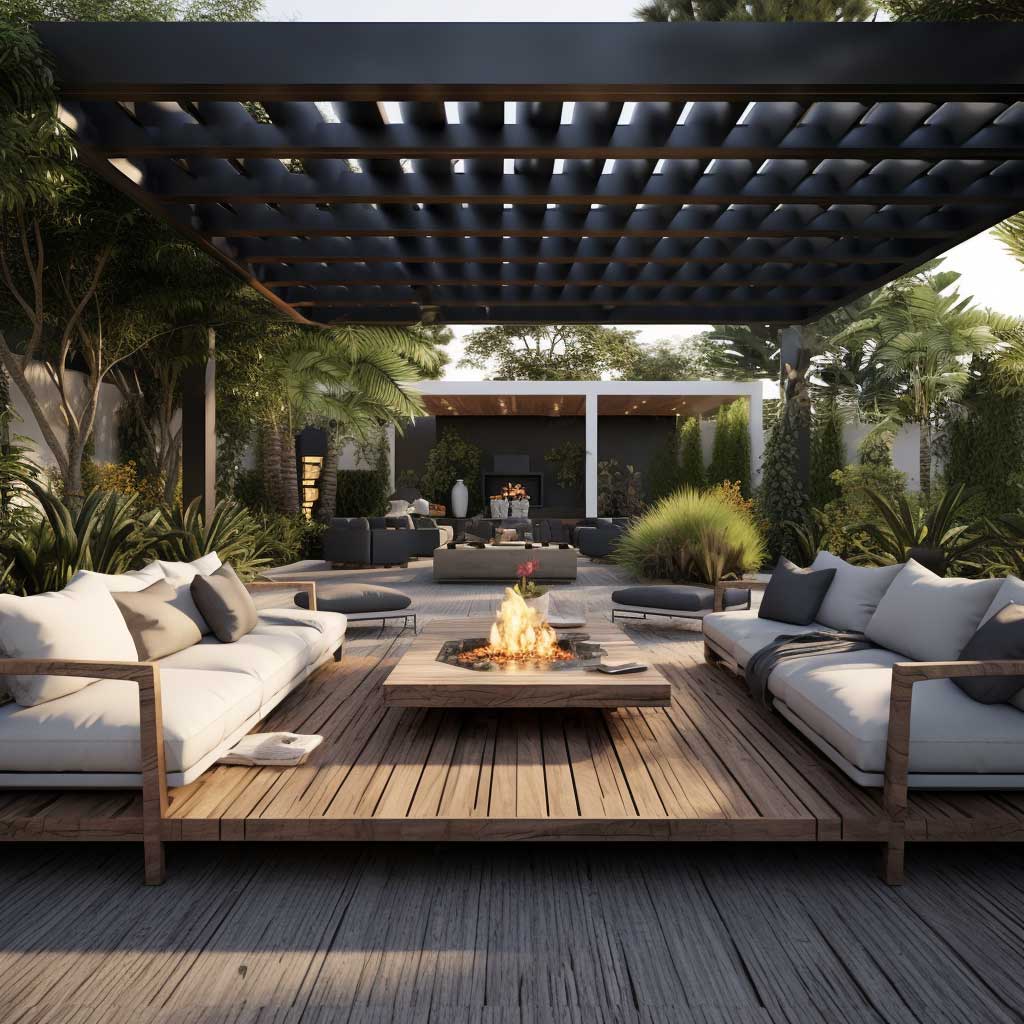
Fire features in contemporary patios have moved on from the round propane table. The current form is a linear gas fire table — brands like Hanamint and Telescope Casual both make aluminium frames with rectangular burners at $800–$2,400 — that anchors a lounge zone the way a fireplace anchors a living room. Round fire pits still work but they pull the furniture into a circle that resists every other layout configuration. Rectangular is strictly better for rectangular patios, which is most of them. Ask me whether a fire feature is worth the gas line cost and I’d say yes for anyone who uses the patio more than fifteen evenings a season.
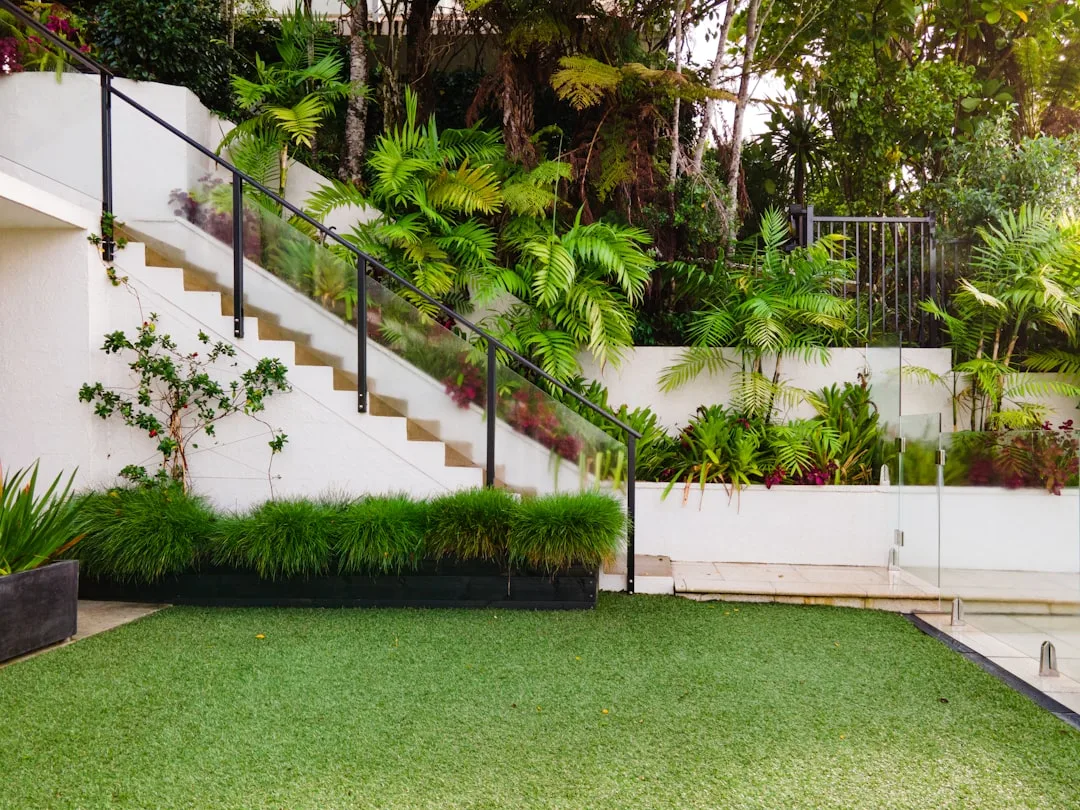
Landscaping around the contemporary patio perimeter is not a bonus — it’s structure. A bare concrete edge reads as unfinished regardless of how good the furniture is. I go to mixed-height plantings: one row of ornamental grasses at 24–30 inches, a second layer of low shrubs at 12–15 inches in front, and a ground cover or gravel strip at the patio edge itself. This is the landscape version of layered lighting — each height does a different visual job. Skip the annual colour flowers unless you actually want to replant every spring; drought-tolerant perennials like Russian sage, agastache, or sedge hold structure through four seasons with minimal maintenance.
Zoning a larger contemporary garden patio into distinct areas feels complicated until you realize the zones just need a visual anchor, not a wall. A dining table anchors one zone, a sectional sofa and coffee table anchor another. Garden patio privacy strategies can define a third zone when the space is large enough — a tall planter screen or a pergola section with climbing plants creates the sense of a room without construction. I’ve seen this done brilliantly with just three large bamboo planters and a Restoration Hardware pergola kit at $1,200; the result felt like three separate outdoor rooms on a 24×30 foot patio.
Contemporary Patio Designs That Solve Problems Most Renovations Create


Modern patio design solves real problems when it’s planned as a system rather than assembled as a collection of purchases. The biggest recurring problem is the hot-afternoon patio — $8,000 in furniture that nobody sits on between noon and 5pm in summer because the space faces west and there’s nothing overhead. Shade is infrastructure. A pergola with a retractable fabric shade panel (Sunbrella fabric, Sunesta or ShadeFX brand structure, $3,500–$7,000 installed) pays back in usable hours within the first season. I watched my neighbour spend three summers trying to fix a west-facing patio with bigger umbrellas before finally installing a proper structure. Night and day.
Modular outdoor furniture solves the single-use layout problem. Rather than a sofa locked into one configuration, modular systems from brands like Janus et Cie, TUUCI, or even the more accessible Outer Furniture (around $3,800–$5,600 per configuration) let you pull pieces apart and rearrange for a dinner party on Saturday and a solo reading setup on Tuesday. Do any of those modular pieces actually hold up to rain and UV? Yes — look for solution-dyed acrylic fabric (Sunbrella is the industry standard) and powder-coated aluminium frames with 10-year warranties. Skip modular sets with water-based fabric dyes and steel frames — both fail within two seasons of real outdoor exposure.
Smart outdoor systems — automated retractable awnings and app-controlled lighting — add actual comfort, not just a spec sheet item. A Lutron Caseta outdoor kit runs around $80 per circuit and controls all your outdoor fixtures from one app. Weather-sensing awning motors (SomfyPro systems, around $400–$600 for the motor and controller) close automatically when wind exceeds a set threshold — relevant if you’ve ever come home to a flipped umbrella and a broken patio table. I own two of these sensors and they’ve saved hardware twice that I know of.


Indoor-outdoor flow is the architectural feature most renovation budgets cut first and regret most. Large aluminium-framed sliding or bi-fold doors — Fleetwood and La Cantina both make residential versions at $800–$1,400 per linear foot — genuinely change how the patio functions. The patio stops being a destination you walk out to and starts being the room you’re already in. If a full door replacement is off the table, at least match the interior flooring height to the patio surface level. That single grade change costs almost nothing in a new pour and delivers half the experiential benefit of the more expensive door upgrade.
Eco-conscious contemporary patio choices are not just a moral position — they’re a maintenance position. Ipe and teak decking are beautiful and expensive and require annual oiling or they grey and crack. Composite decking from TimberTech or Trex runs $8–$14 per square foot installed, never needs sealing, and doesn’t splinter. Recycled plastic Adirondack chairs from Polywood cost $299–$450 each and outlast wood versions by a decade in direct sun and rain. Drought-resistant plants — agave, ornamental alliums, lavender — need watering roughly once a week in summer versus three times for annuals, which adds up to a real cost and time difference over a season. Your go-to approach for a low-maintenance contemporary patio: composite deck, aluminium furniture, perennial plants.
Eclectic patio design has one rule underneath all the visual freedom: the geometry has to be strict. Mix textures freely — rattan side chairs next to a concrete table next to a steel fire feature works. Mix colours carefully — one dominant neutral, one secondary tone, one accent colour maximum. What fails is the eclectic approach applied without a geometric anchor: mismatched furniture at different heights and orientations with no clear focal point. The space reads chaotic, not collected. Contemporary is not the same as modern minimalism — personality is allowed. Contemporary outdoor spaces can handle layered visual interest at the surface as long as the underlying structure is clear.
The Takeaway
Contemporary patio design is a planning problem, not a shopping problem.
Zone first. Get the floor tone right. Layer the lighting. Then buy furniture — in that order, without exception.
The materials and furniture are replaceable in five years. The floor, the grade level, and the overhead structure are not. Put your budget there and the rest follows.
Save this post before your next patio project and share it with whoever is about to skip straight to the sofa purchase.
Related Topics
FAQ
What makes a patio layout contemporary versus traditional?
How much does a contemporary patio design cost to build?
What outdoor furniture brands work best for a contemporary patio on a mid-range budget?
How do you create zones in a modern contemporary patio?
What patio surface material works best for contemporary design?
Does an eclectic patio design work with a contemporary home?
Complete guide
Patio and Yard Ideas That Turn Any Backyard Into a Living Room Outside
Flooring, furniture, shade, pools, kitchens, fire pits, courtyards — all in one place