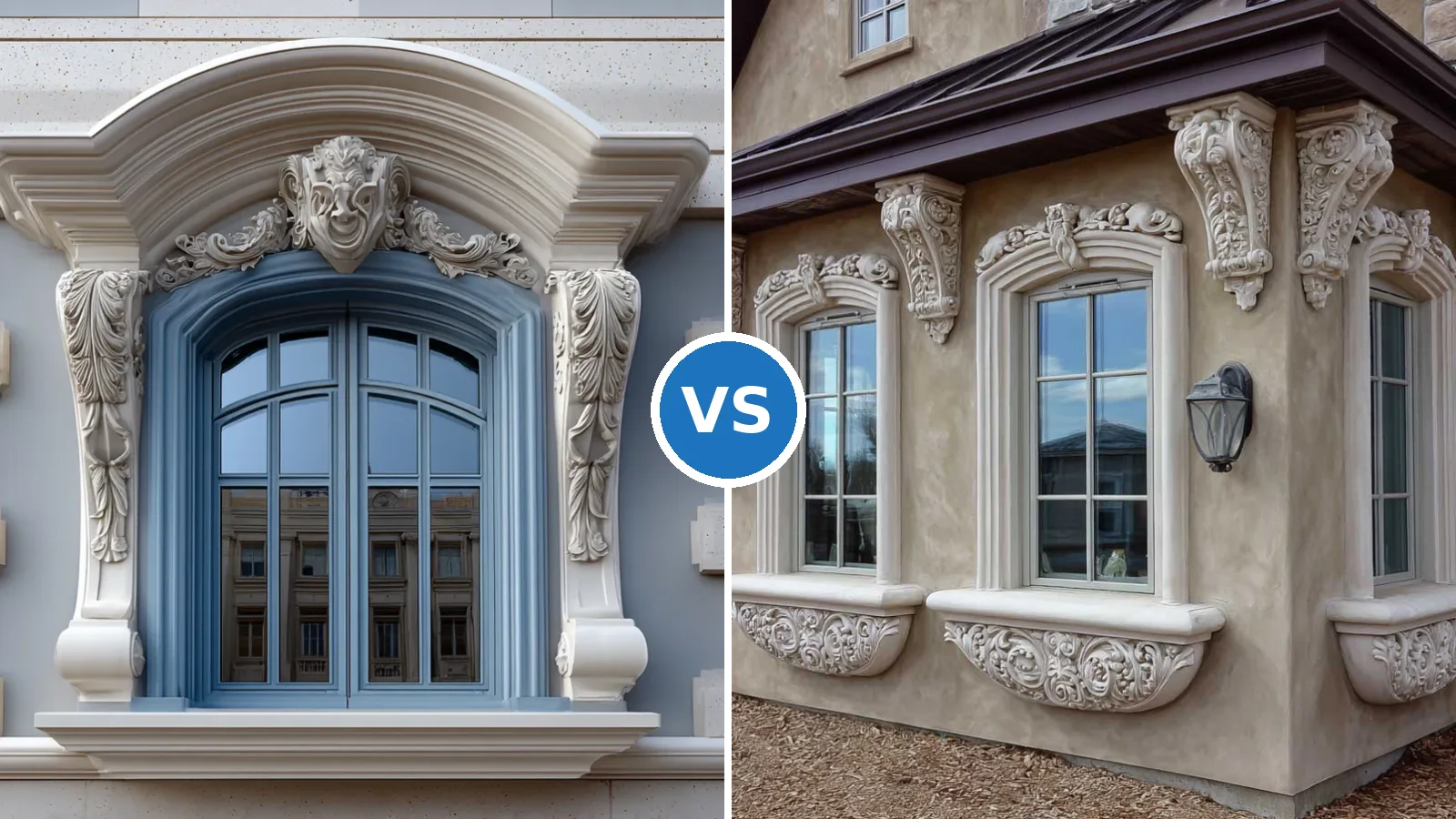
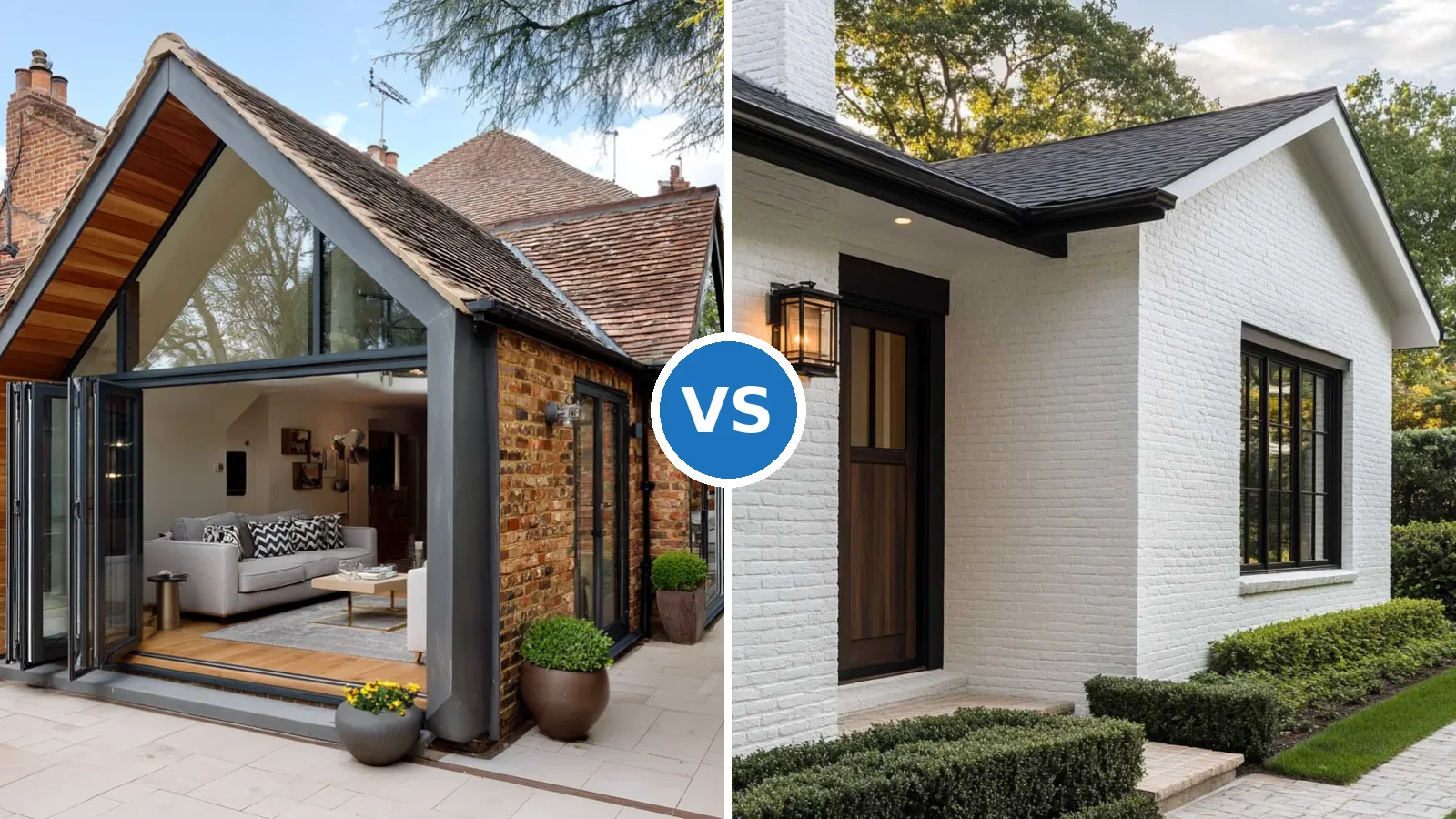
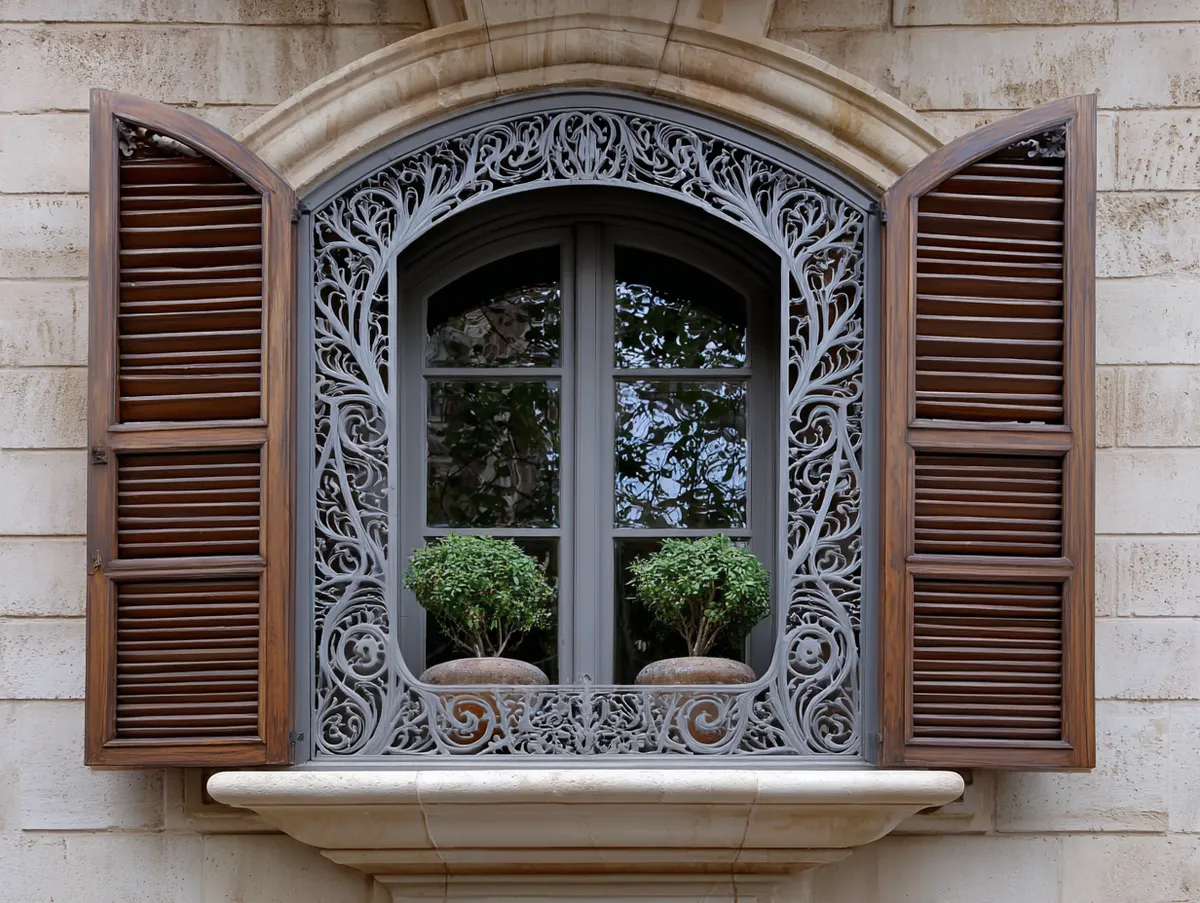
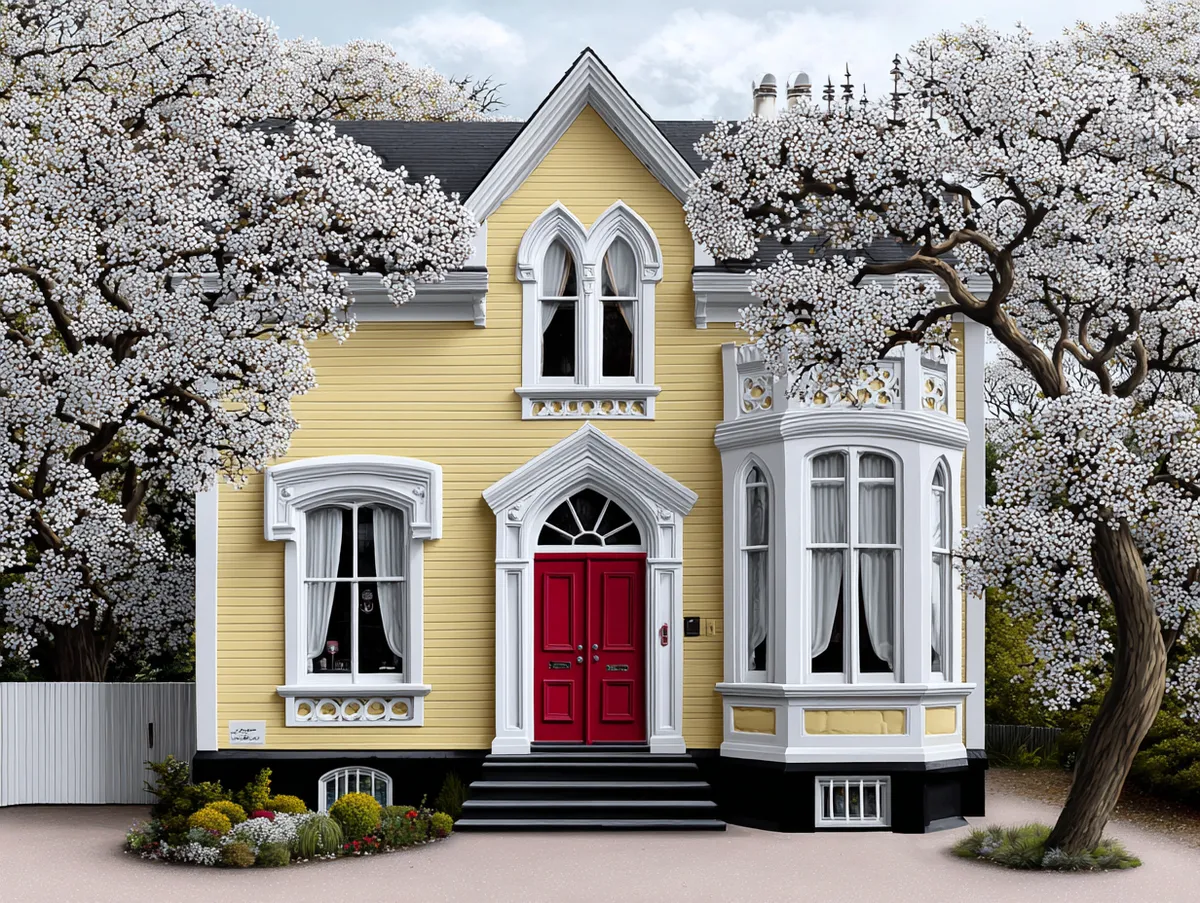
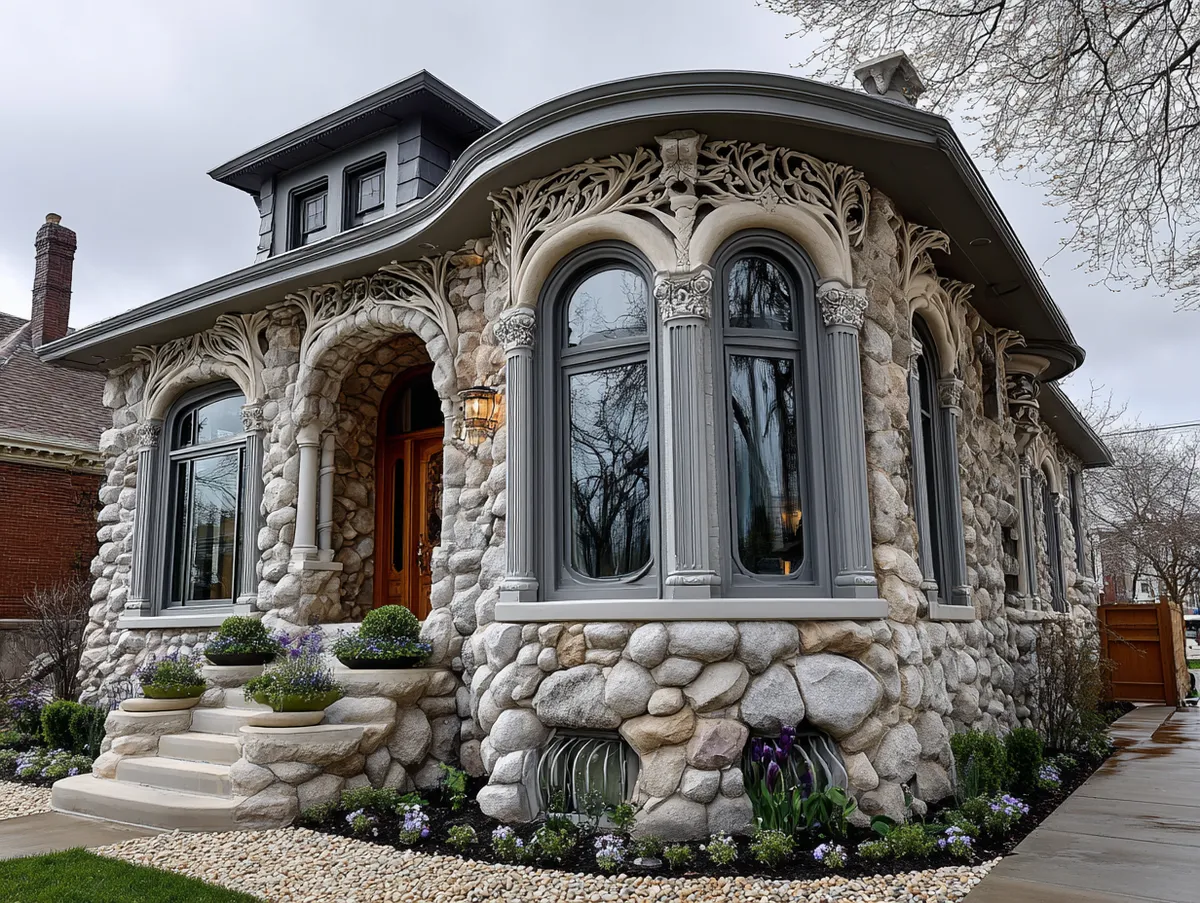
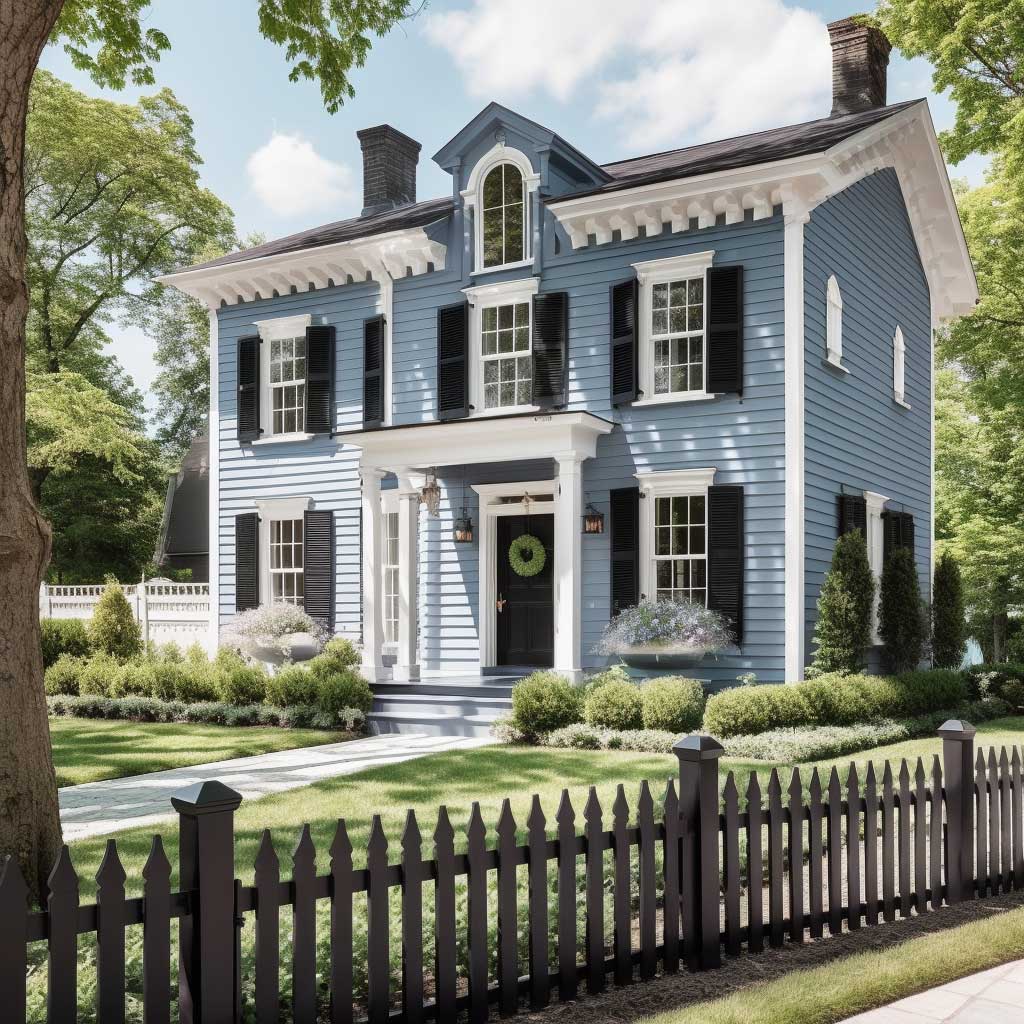
An exterior wall paint color combination decides how a house reads from the street long before anyone steps inside. Neutrals with white trim and dark shutters, deep blue against crisp white, or red brick balanced by cream walls all deliver lasting curb appeal when the proportions stay disciplined.
These three classic schemes work across most architectural styles because they respect the 60-30-10 rule: body color dominates, trim frames the details, and one accent adds focus. Professional exterior painting for a typical 2,000 sq ft home averages $5,800 in 2026, so the palette you lock in today will shape both daily impressions and resale value for the next decade.
Skip the temptation to chase every trend. Stick to proven pairings that photograph well under changing light and still look intentional five years later.
- Warm beige or greige body + white trim + dark shutters remains the most adaptable classic.
- Deep blue walls with white detailing create high contrast without feeling temporary.
- Red brick and cream paint deliver warmth that blends with landscaping.
- Budget $45–$95 per gallon for quality exterior acrylic; full jobs average $3,000–$9,500.
- Test every swatch on the actual wall at 8 AM and 4 PM for two days before buying.
- Limit the palette to three colors maximum or the facade loses clarity.
Timeless Neutrals That Frame Architecture Without Noise
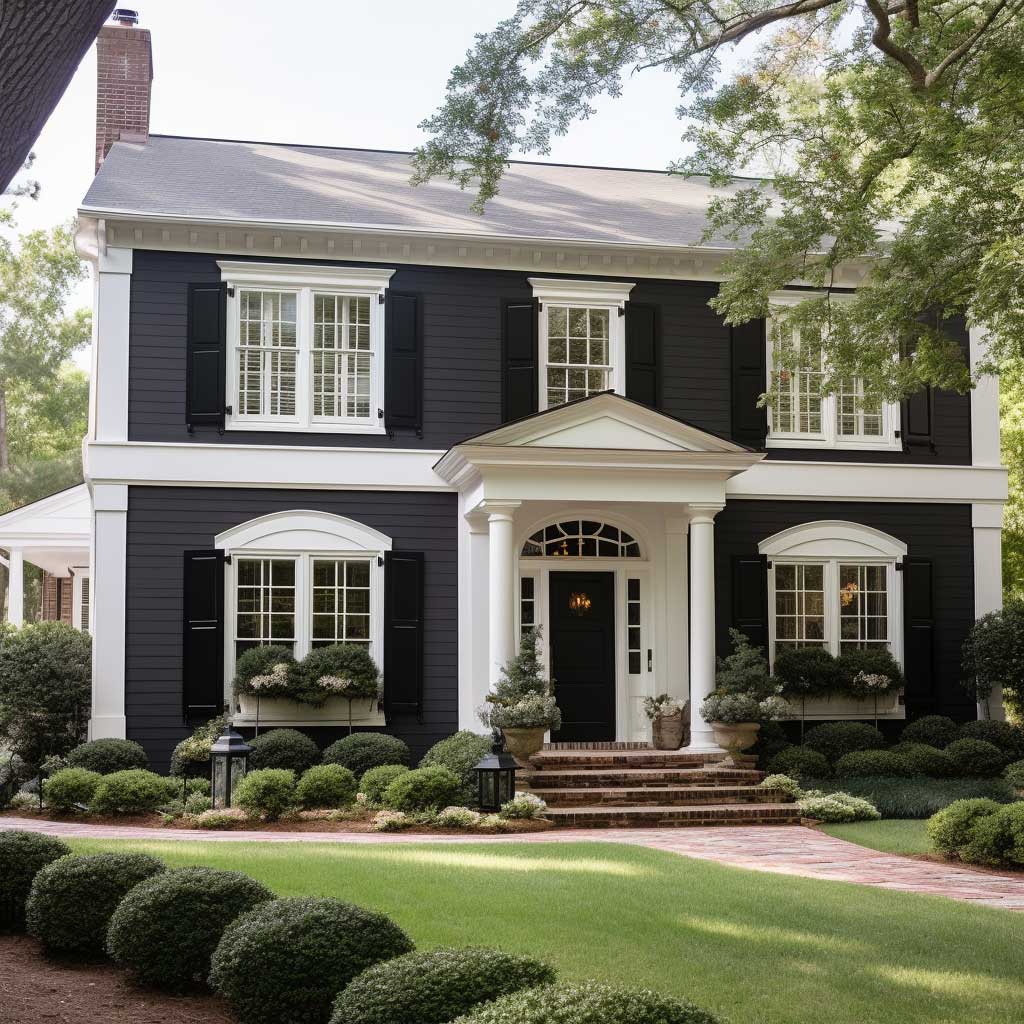
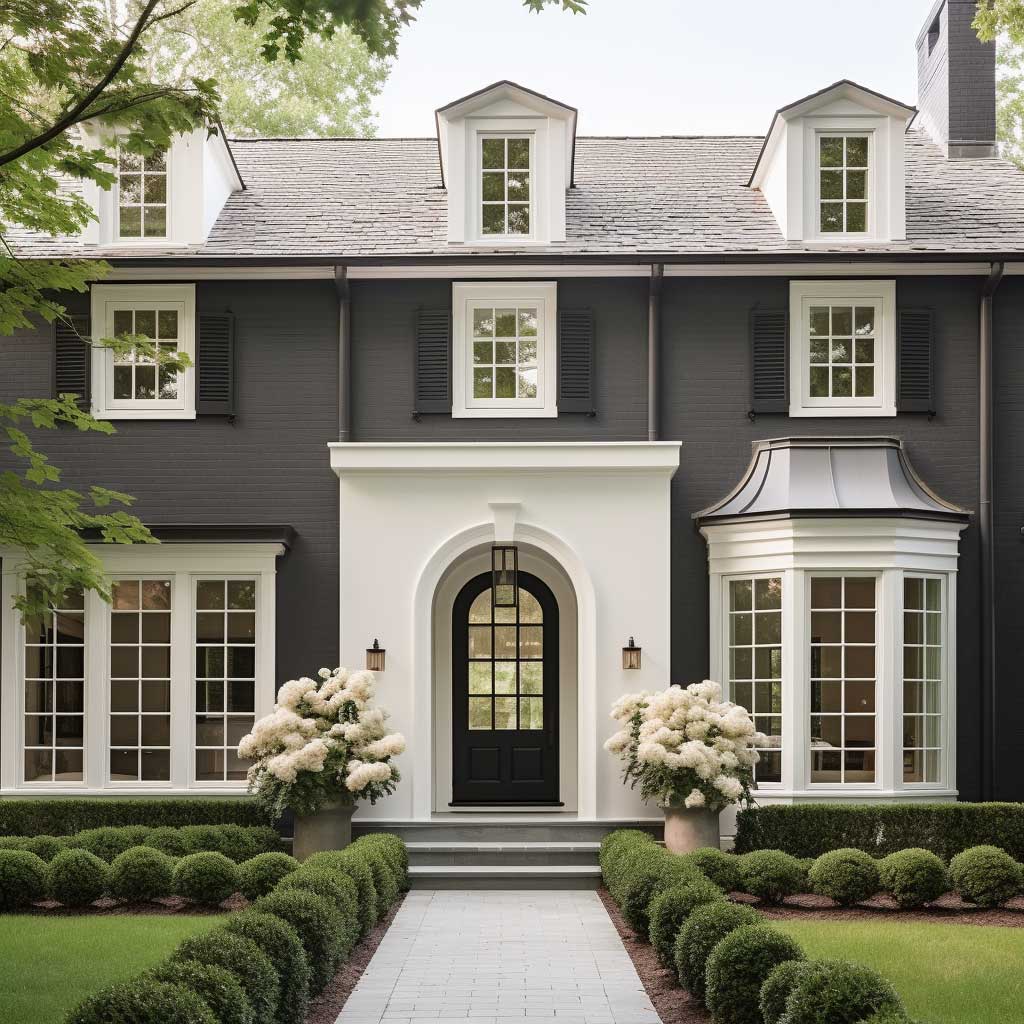
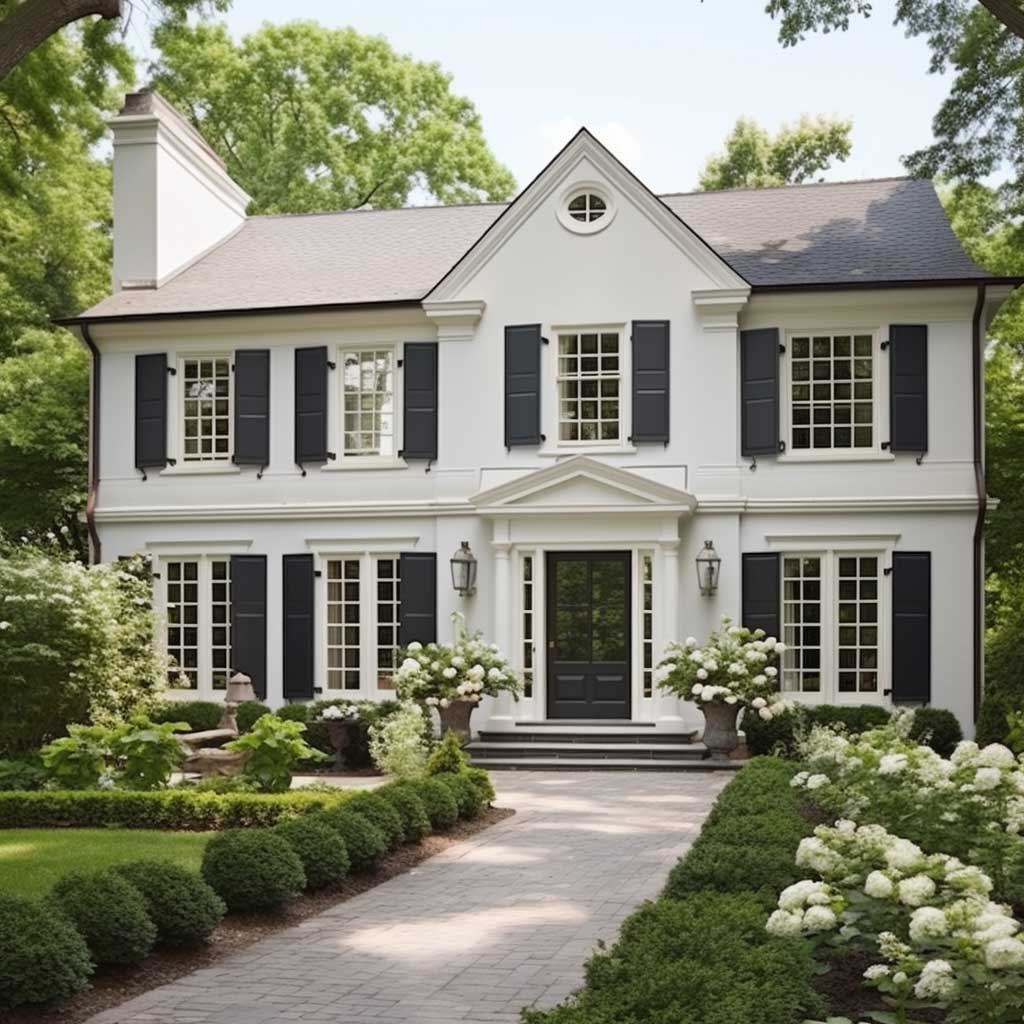
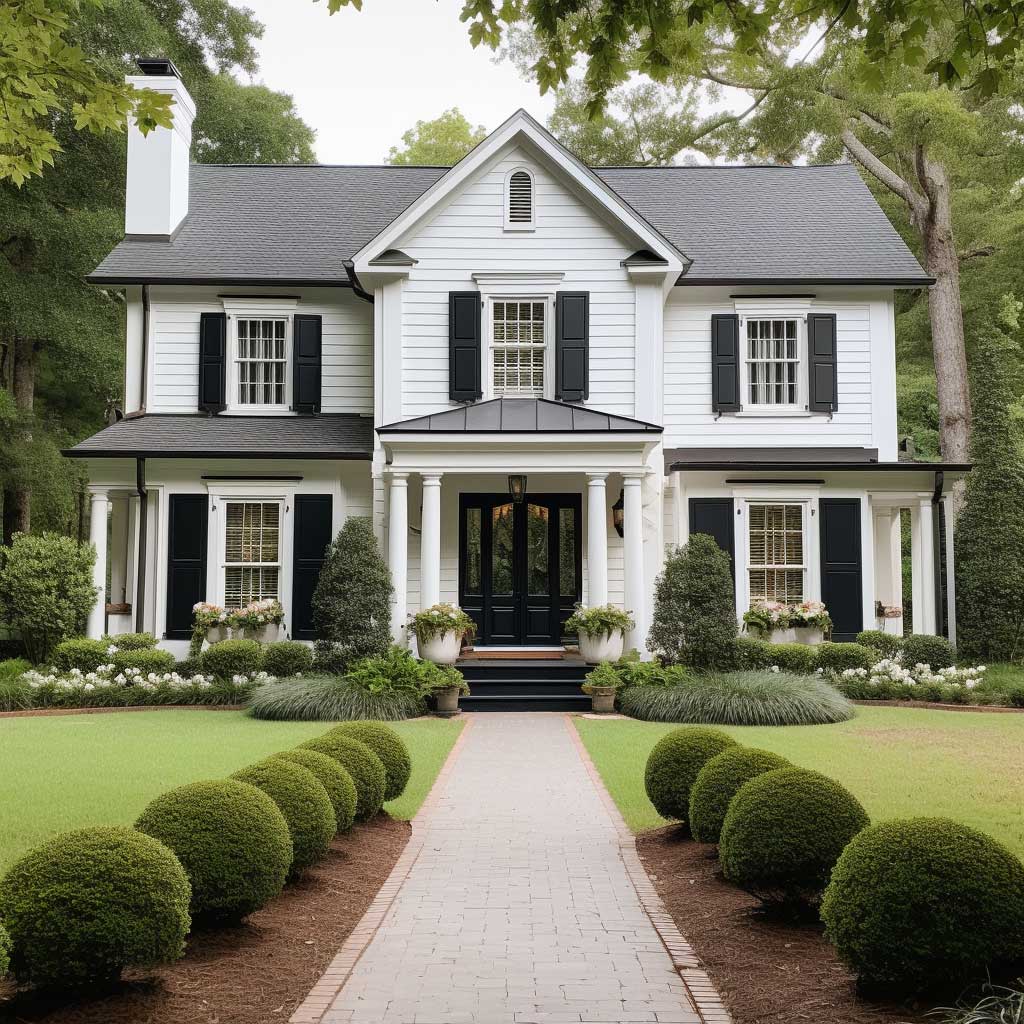
A warm beige or soft greige body color forms the foundation of the most reliable exterior wall paint color combination for traditional homes. Why does this pairing survive every trend cycle? Because it acts like a quiet stage set that lets window frames, cornices, and shutters take the spotlight without competing.
White trim around windows, doors, and rooflines supplies the necessary contrast. Dark shutters then add a measured touch of drama. Think of the scheme as a tailored suit: the beige is the fabric, the white is the stitching, and the shutters are the pocket square. Average exterior acrylic in this range costs $45–$75 per gallon in 2026, and the finish typically lasts 8–12 years on well-prepped siding.
Do not push the beige into a cool gray undertone if the roof is warm brown or the brick carries red. The temperature clash reads immediately from the curb. Keep the landscaping in mind as well—green foliage sharpens the neutrals rather than fighting them. For deeper guidance on related warm-gray approaches, see the warm gray exterior paint options for 2026 facades.
Elegant Blue and White Walls That Command Attention
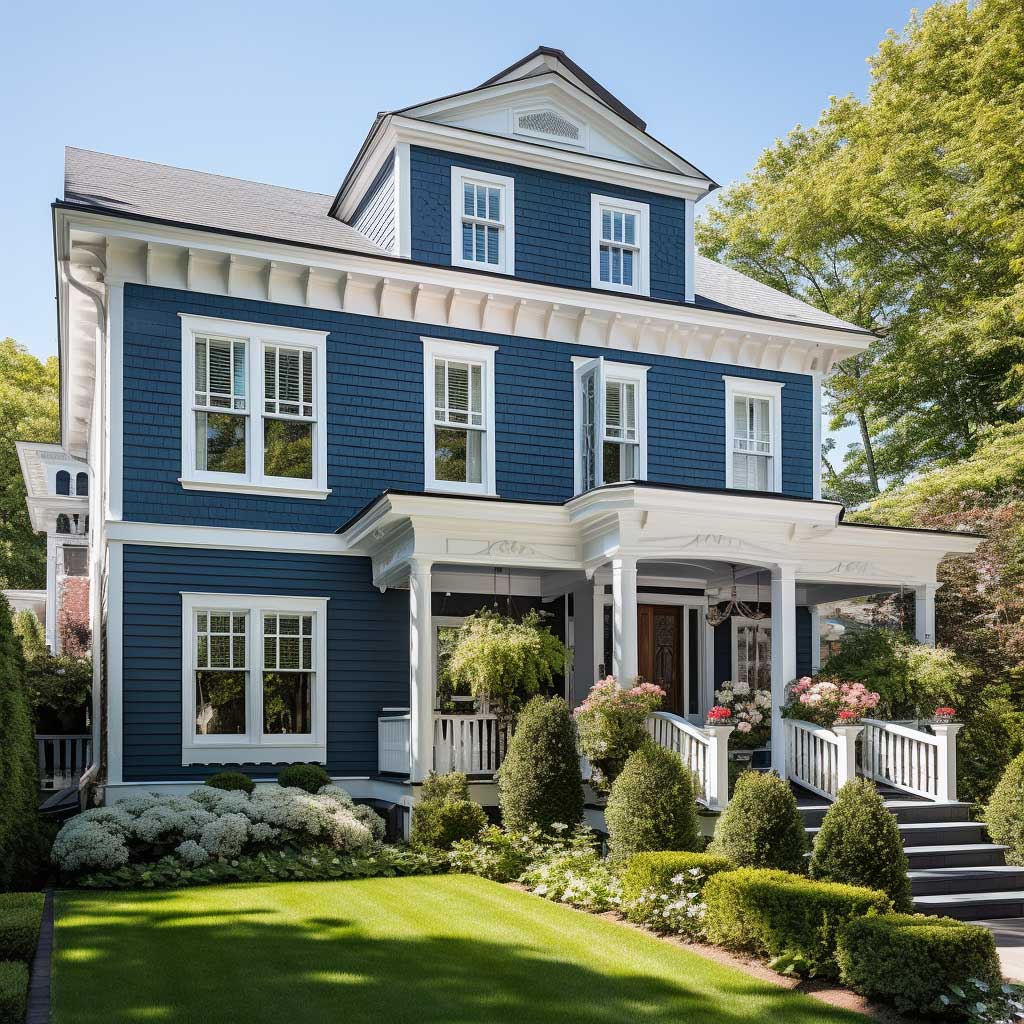
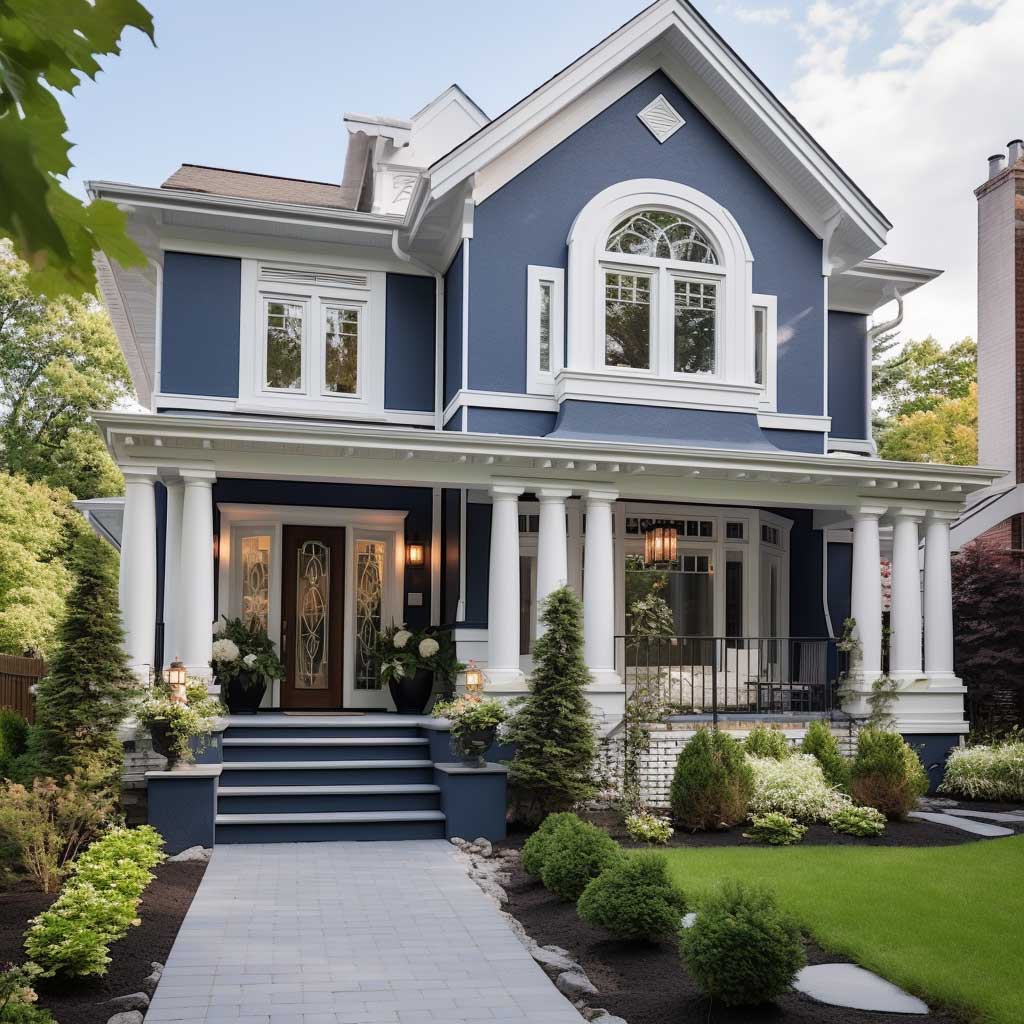
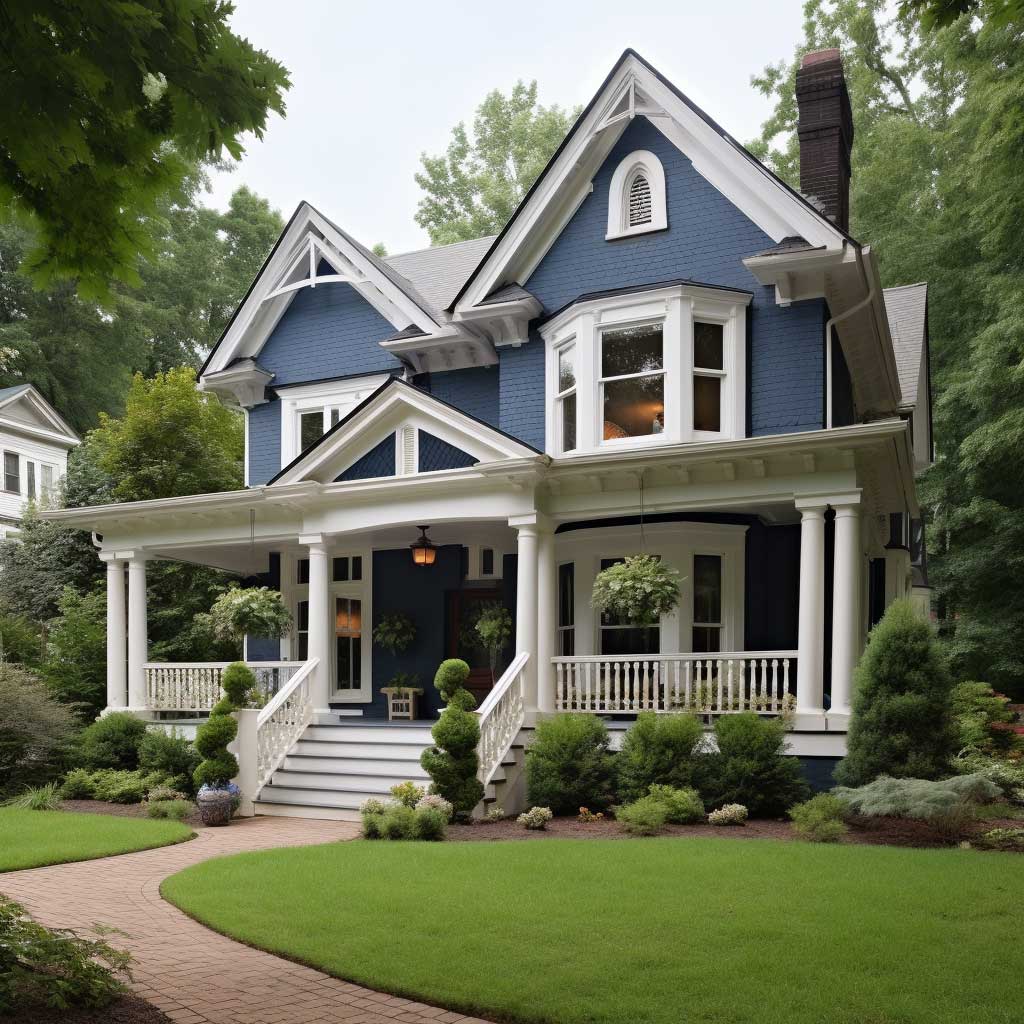
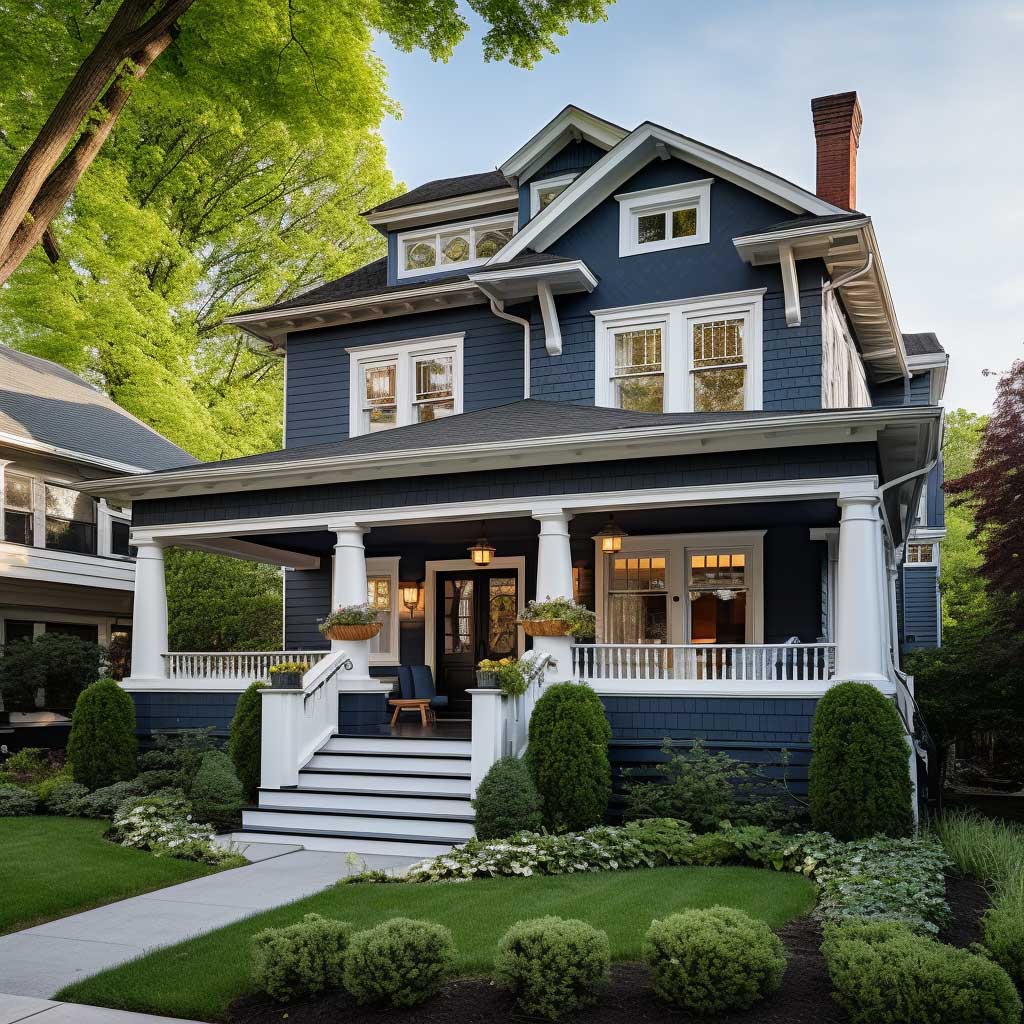
Deep blue walls with white trim deliver one of the strongest exterior wall paint color combinations when the goal is quiet confidence rather than camouflage. The blue claims the facade while white outlines every architectural line, turning moldings and window frames into deliberate features.
Natural wood on the front door or garage doors introduces warmth that prevents the palette from feeling cold. Premium exterior blues in the navy-to-slate range run $70–$95 per gallon and hold color longer on north-facing walls than on full-sun exposures. How much contrast is enough? Enough that the trim remains readable from the sidewalk at dusk.
Avoid pure stark white against a very dark navy if the house faces afternoon sun—the hard edge can look clinical. An off-white with a soft undertone softens the transition. White picket fencing or patio furniture can extend the same language into the garden without adding new hues. For more structured two-tone placement ideas, review these two-tone exterior house paint approaches for traditional homes.
Red Brick and Cream Paint for Warm Traditional Charm
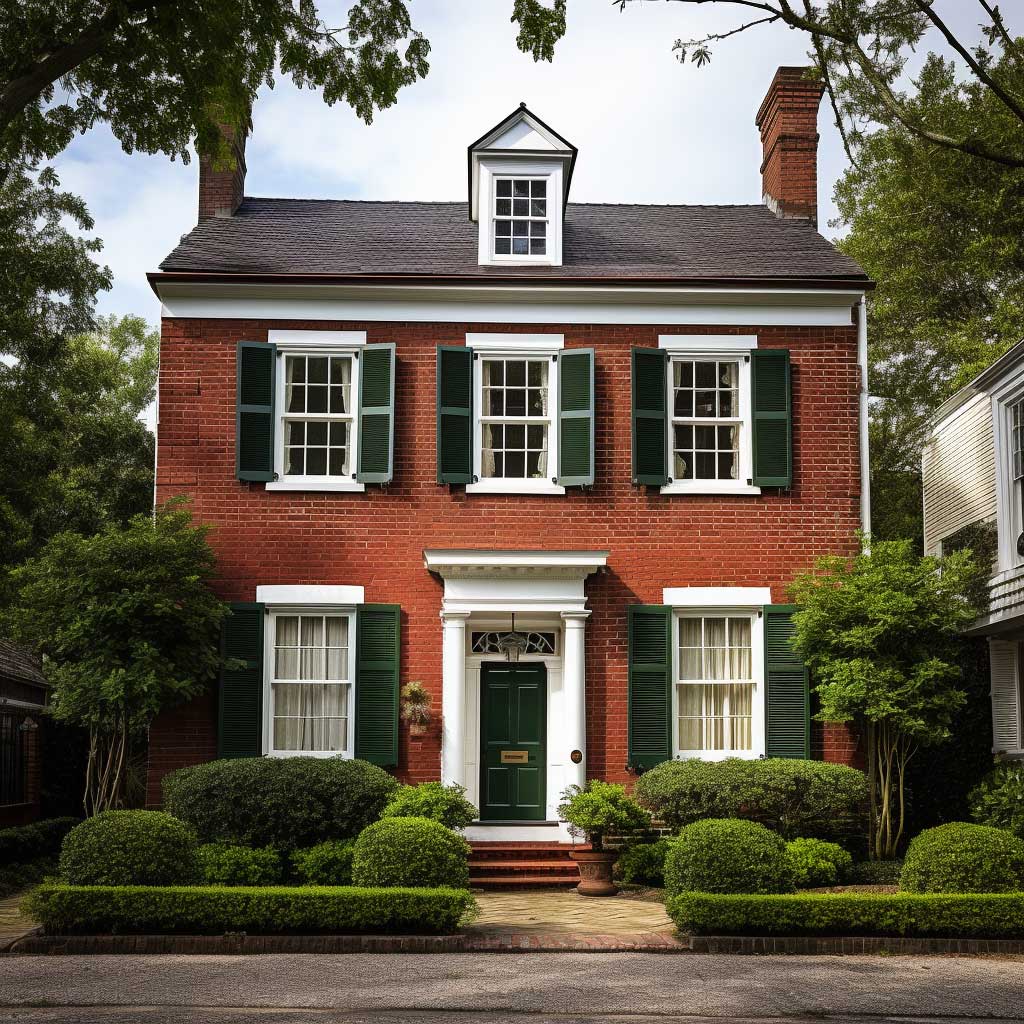
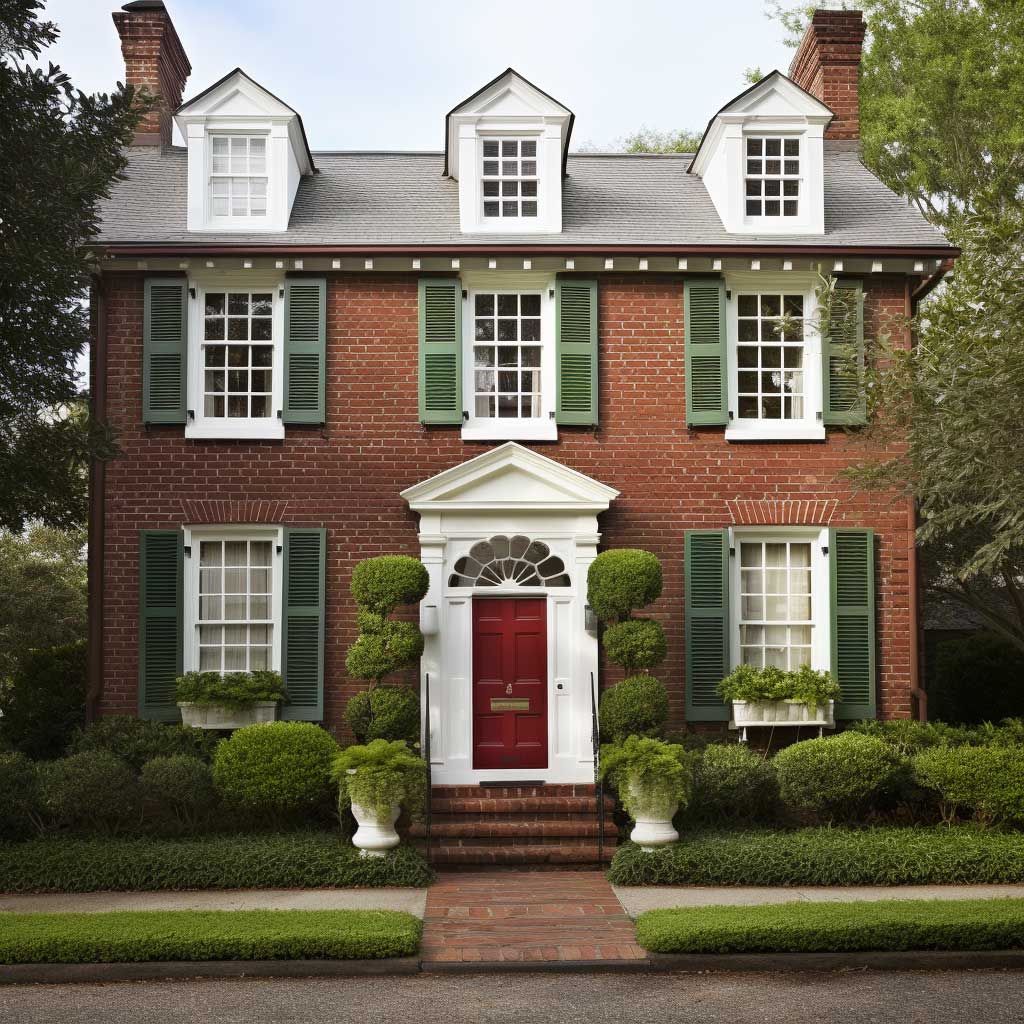
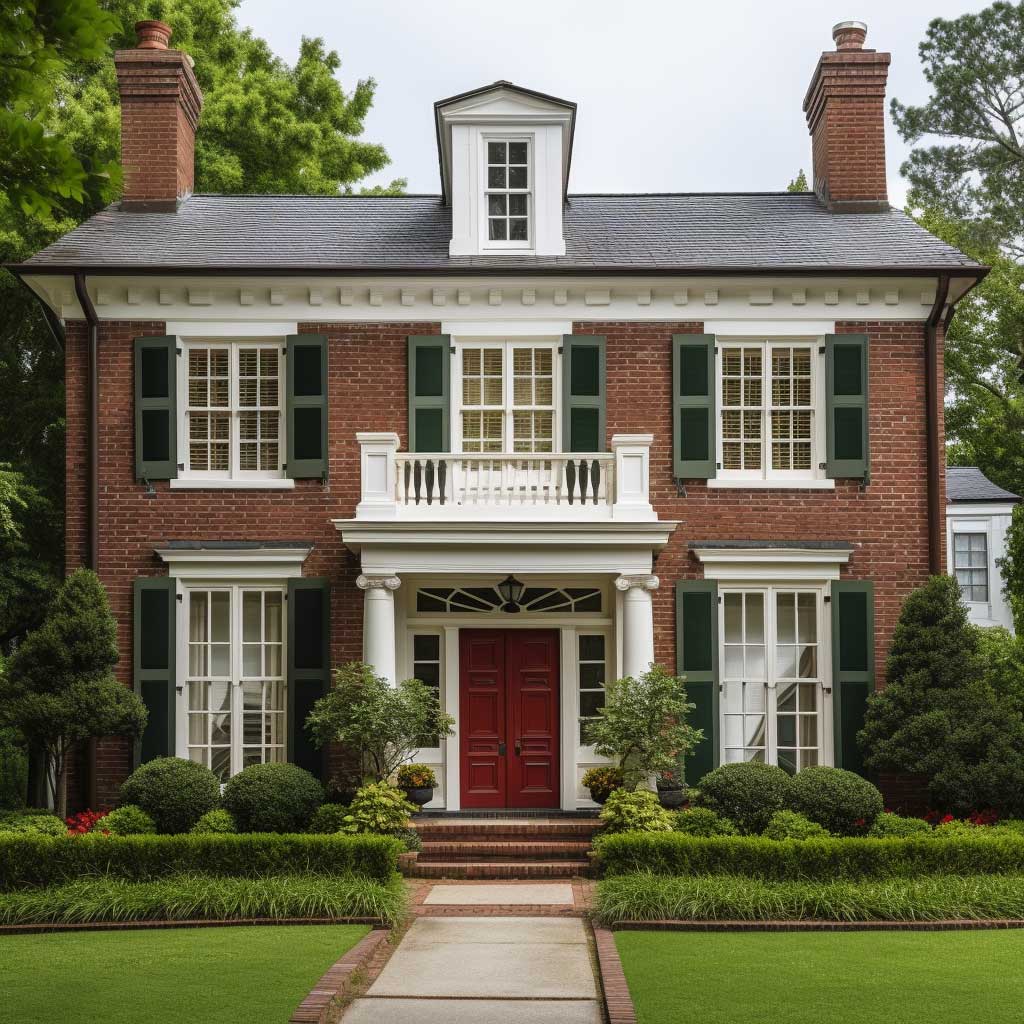
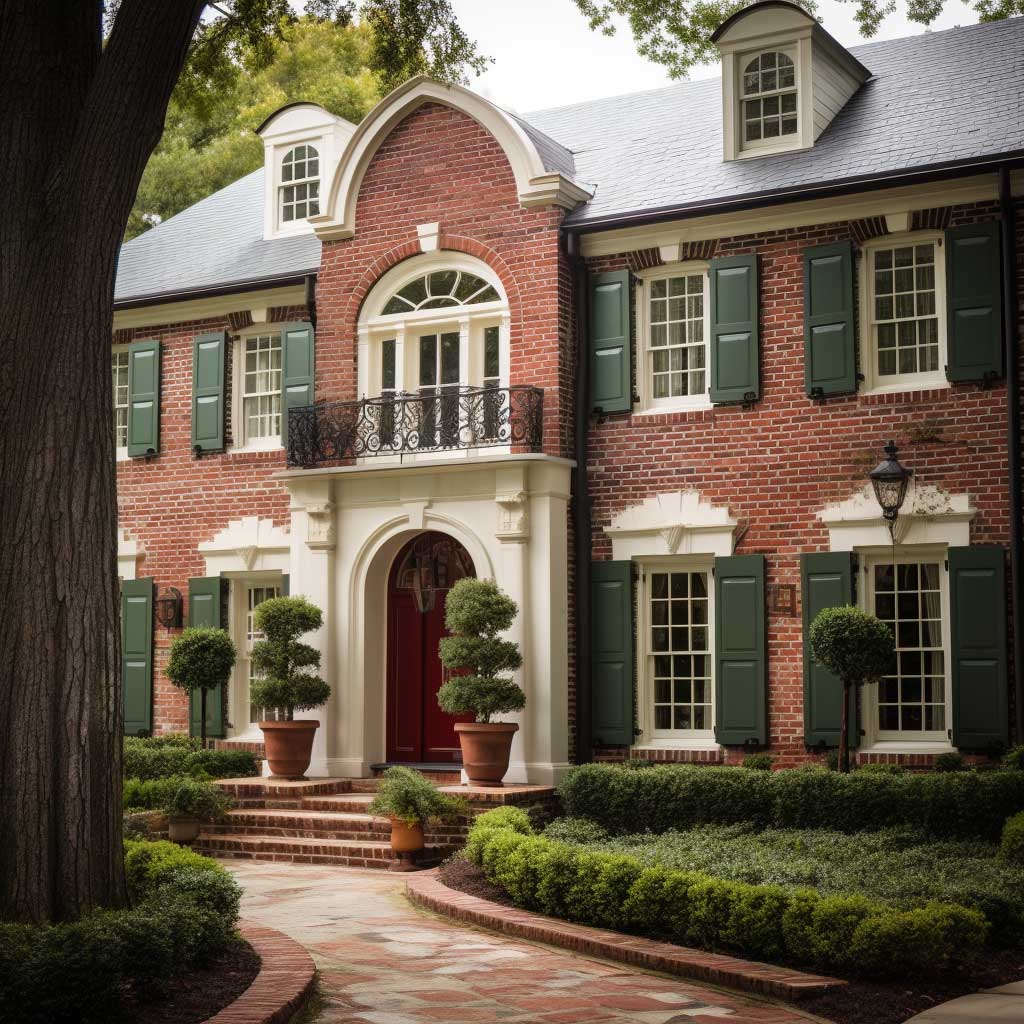
Cream colour combination for exterior walls works especially well when natural red brick already forms part of the structure. The cream softens the brick’s intensity while white trim draws clean lines around openings. Green shutters then introduce a living accent that ties the house to its planting.
Brick itself supplies texture and variation that no painted surface can match, so the cream should stay subordinate—usually on upper stories or side wings. Quality cream exterior paint falls in the $50–$80 per gallon range and reflects enough light to keep the overall mass from feeling heavy. What happens if the cream shifts too yellow? It starts to compete with the brick instead of supporting it.
Landscaping completes the picture. Plantings that echo the shutter green create a continuous visual thread from foundation to canopy. This scheme remains one of the most requested traditional exteriors precisely because it never fights the materials already present.
How the Three Classic Schemes Compare Side by Side
| Scheme | Body Color | Trim | Accent | Best For | Typical Paint Cost/Gal |
|---|---|---|---|---|---|
| Timeless Neutrals | Warm beige / greige | White | Dark shutters | Colonial, farmhouse, most styles | $45–$75 |
| Blue & White | Deep blue | Off-white | Natural wood door | Coastal, Cape Cod, traditional | $70–$95 |
| Brick & Cream | Cream (painted areas) | White | Green shutters | Brick homes, traditional neighborhoods | $50–$80 |
Each combination follows the same structural logic yet produces a different personality. Neutrals disappear politely into most streetscapes. Blue and white claim attention with controlled contrast. Brick and cream lean into existing material warmth. Choose according to the house you already own rather than the house you wish you had.
Don’t Do This
Never select the final exterior wall paint color combination from a phone screen or a store fluorescent light. Digital swatches and indoor samples shift dramatically once they meet real sunlight, roof color, and neighboring houses. Order large samples, tape them to the actual wall, and observe them morning and late afternoon for at least two full days. The shade that still looks intentional under both conditions is the only one worth buying by the gallon.
Practical Notes Before You Commit to Any Palette
Exterior paint quality matters more than the exact hue once the scheme is set. Mid-tier acrylics around $60–$85 per gallon routinely last 8–12 years; premium lines can stretch to 12–15 years on south-facing walls. A full professional job on a 2,000 sq ft two-story home typically lands between $4,000 and $7,500 depending on siding type and prep needs.
Roof color, existing brick or stone, and surrounding trees all influence how the chosen combination reads. A charcoal roof supports cooler blues and greiges; a warm brown roof favors cream and beige. Fresh exterior paint consistently ranks among the highest-ROI exterior updates, often recovering 60–100 % of cost at resale according to recent industry reports.
For broader pairing logic across more architectural styles, the Sherwin-Williams exterior color schemes resource offers useful regional and style-based starting points.
Final takeaway
Classic exterior wall paint color combinations succeed when they respect existing materials and limit themselves to three clear roles.
Pick the scheme that already lives in the house’s architecture rather than forcing a new personality onto it.
Test every candidate on the real wall under real light before ordering gallons.
Quality paint and proper prep protect the investment far longer than any trend color ever will.