A brown backsplash kitchen holds its appeal longer than most color trends because brown tile reads as wood, clay and stone all at once. It warms white cabinets, grounds pale counters and hides the daily splatter that shows instantly on white glaze. Does brown still look current? Yes, as long as the finish and shade match the rest of the room instead of fighting it.
Brown tile works best in three situations: when the kitchen needs warmth, when cabinets are white or painted, and when you want a surface that forgives grease between cleanings. It struggles only in dark, windowless kitchens, where a deep chocolate glaze can swallow the light. Average installed prices for a tile backsplash run roughly $15 to $40 per square foot, so a timeless brown wall stays within a mid-range budget. Pick the shade under your own lighting before you compare prices.
Below are three proven directions — elegant, rustic and modern — plus a shade comparison and pairing rules for brown cabinets. Think of the backsplash as the belt of an outfit: small in area, yet it decides whether everything else looks intentional. Each direction keeps brown from sliding into the dated look that once gave the color a bad reputation. Start with the style that matches your cabinets, not the tile you saved online.
- Brown tile warms white, cream and wood cabinets without competing for attention.
- Glossy glaze suits elegant kitchens; tumbled stone and matte clay suit rustic ones.
- Porcelain absorbs 0.5% of water or less, the low-effort pick behind the range.
- Natural stone needs resealing every 1–3 years; glazed ceramic needs only sealed grout.
- 2700K–3000K under-cabinet LEDs bring out the warm undertones in brown tile.
- Dark brown hides splatter in bright rooms; light brown keeps small kitchens open.
Glossy Tile Gives a Brown Backsplash Kitchen Its Polish
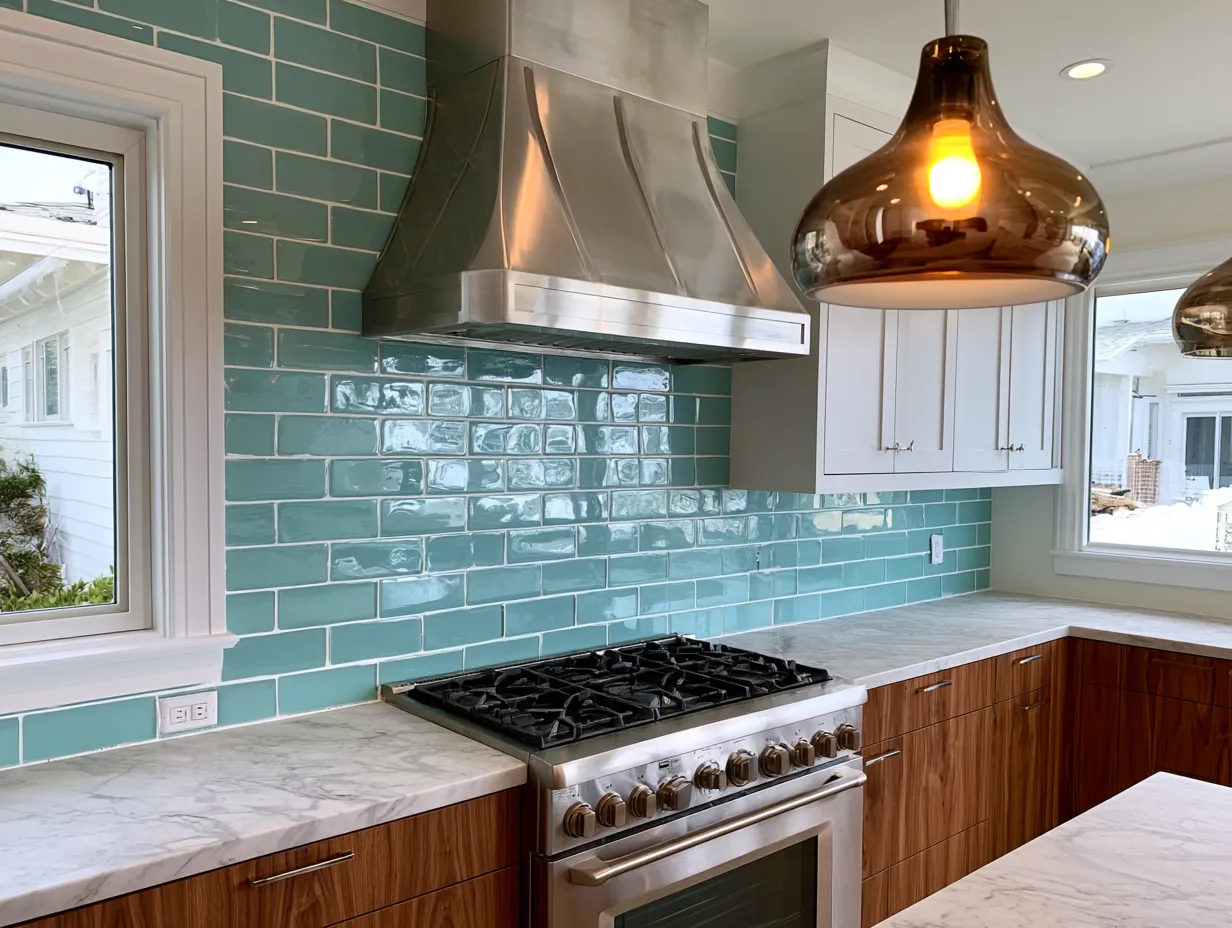
Elegant brown kitchen backsplash tile ideas start with gloss, because a polished glaze bounces light and turns chocolate or espresso tones into something close to lacquer. Pair it with marble or pale quartz counters, and the contrast does most of the design work. Warm under-cabinet light deepens the color at night while keeping the counters easy to read for cooking. Choose rectified tile so the grout lines stay thin and tailored.


Is gloss practical behind a stove? Glazed ceramic and porcelain wipe clean with mild soap, and porcelain is defined by a water absorption rate of 0.5% or less under the ANSI A137.1 porcelain tile standard, so grease stays on the surface instead of soaking in. Brass or aged-gold hardware finishes the look, as long as the room sticks to one metal. Two metals against a glossy brown field start to resemble a jewelry display case. Limit the kitchen to one warm metal and repeat it at least three times.


Resist adding a busy mosaic border to an elegant brown tile backsplash. Decorative listello strips were the signature of kitchens that now feel dated, and they break the calm that gloss creates. Let a single element — a crystal pendant, a veined counter or a tall range hood — carry the drama instead. If the formal mood feels too dressy for daily cooking, compare these easy-to-clean farmhouse backsplash materials that trade shine for texture.
Rustic Brown Tile That Wears Its Age Well


A rustic brown backsplash tile relies on variation: tumbled travertine, slate, handmade clay and zellige-style glazes that shift from caramel to tobacco across one wall. That irregularity hides chips, water spots and the occasional tomato splash better than any flat glaze. Ceiling beams, a farmhouse sink and open shelves complete the story without extra decoration. Blend tiles from several boxes during installation so no single patch of color clusters in one spot.
How much upkeep does stone demand? Natural stone is porous and generally needs resealing every one to three years, while glazed clay only needs its grout sealed. Average contractor pricing puts natural stone tile at roughly $7 to $45 per square foot installed, so the look spans very different budgets. Never leave travertine unsealed behind a range, because cooking oil settles into the pores and stays there. Put a resealing reminder on the calendar the day the tile goes up.


Rustic brown works like a worn leather saddle: the scuffs are part of the appeal, but only on good bones. Heavy dark wood everywhere turns that charm into a hunting lodge. Three pairings keep brown kitchen tiles warm instead of heavy. Test each one on a sample board before committing to the full wall.
- Honey oak or knotty pine cabinets with a mid-brown tumbled stone.
- Cream plaster walls with dark handmade clay tile behind the range only.
- Soapstone or butcher block counters with a caramel zellige-style glaze.
Sleek Lines Keep a Modern Brown Kitchen Backsplash Fresh
A modern brown kitchen backsplash swaps rustic texture for scale: long rectangular formats, stacked vertically or set in a straight grid, in satin or high gloss. White flat-panel cabinets and stainless appliances turn the brown into the one warm note in a cool room. The result reads crisp rather than cozy. Keep grout a shade darker than the tile so the grid looks deliberate.


What light makes brown tile look expensive? Warm-white LEDs in the 2700K–3000K range bring out red and amber undertones, while cooler 5000K strips turn the same tile gray and flat. Lighting manufacturers commonly recommend 3000K for kitchens as a balance between warmth and clear task light. Never mix a daylight ceiling fixture with warm under-cabinet strips, because the clash shows most on a glossy brown surface. Match every fixture in the room to one color temperature.
Minimal kitchens treat the backsplash like a picture frame, not the painting itself. Brown handles that role well because it recedes by day and warms up once the lights come on. For more directions in the same spirit, browse these modern backsplash ideas with graphic, glass and metal tiles. Pull in one idea at most so a brown scheme stays calm.


Choosing Between Dark Brown and Light Brown Backsplash Tile
Dark brown backsplash tile and light brown backsplash tile solve different problems, so the shade decision matters more than the style label. Espresso and chocolate glazes hide splatter and add weight under tall ceilings. Latte, sand and camel shades bounce light and keep a small kitchen from shrinking. Dark brown behaves like a charcoal suit, forgiving and serious, while light brown acts like linen, relaxed and airy. In a north-facing or compact kitchen, lean light.
Which shade costs more? Neither, since price follows material rather than color: basic ceramic runs about $1 to $8 per square foot for materials, and labor typically adds $5 to $20. A 20 to 40 square foot backsplash therefore lands between roughly $500 and $1,700 in most cost estimates. Don’t pay a premium for a dark “designer” glaze when a standard porcelain in the same shade performs identically. Compare the absorption rating on the box, not the collection name.
| Factor | Dark brown backsplash | Light brown backsplash |
|---|---|---|
| Hides splatter | Very well, especially in matte | Moderately; grease shows sooner |
| Best room type | Bright kitchens with tall ceilings | Compact or north-facing kitchens |
| Cabinet match | White, cream, honey oak | Espresso, walnut, painted greige |
| Counter match | White marble, pale quartz | Soapstone, dark granite, butcher block |
| Lighting need | Strong 2700K–3000K task light | Works with ambient light alone |
| Grout choice | Matching dark brown or charcoal | Warm beige or matching tone |
Backsplash Tile Ideas for Brown Cabinets Without the Muddy Effect
Kitchen backsplash tile ideas with brown cabinets depend on contrast, because brown on brown at the same depth turns the wall into one flat block. Think of it like layering coffee and cream: the same family, clearly different strengths. With mid-tone walnut or cherry, go two steps lighter with a cream-brown or pale taupe tile. With espresso cabinets, a light brown or sand backsplash keeps the lower half of the room from feeling like a cave. Hold a tile sample flush against a cabinet door in daylight before deciding.
- Walnut cabinets: pale taupe or cream-glazed subway tile.
- Cherry or red-brown wood: warm beige stone with gray veining to cool the red.
- Espresso cabinets: light brown or sand porcelain with matching grout.
- Honey oak: glossy chocolate tile for deliberate contrast.
Can tile match the cabinets exactly? It can, but only if the texture changes, since a glossy tile against matte wood keeps both surfaces readable. Ceramic tile often absorbs 3% to 7% water compared with 0.5% or less for porcelain, so porcelain is the safer pick where the run passes behind the sink. Skip bright white grout in a brown-on-brown scheme, because it turns the wall into a grid of lines. Match grout to the tile and let the wood grain carry the pattern.
Dont Do This
Don’t choose a brown backsplash from a phone screen or a showroom lit with cool daylight tubes. Brown undertones shift visibly between 3000K and 5000K light, sliding from warm caramel to gray mud. Order at least three physical samples, tape them to the wall for a full day and check them at breakfast and after dark. Skip this step and the most common regret — an orange or muddy wall — appears only after the grout cures.
Brown Earns the Timeless Label
Brown tile stays timeless because it borrows from materials people never tire of: wood, clay, stone and coffee.
Choose gloss and one warm metal for an elegant kitchen, tumbled stone or handmade clay for a rustic one, and long formats under 3000K light for a modern one.
Let the room’s daylight pick the shade: dark brown for bright, tall spaces, light brown for compact or north-facing ones.
Put porcelain behind the range and sink, reseal any natural stone every one to three years, and match grout to the tile for a wall that ages quietly.