Terracotta curtains for a bedroom do something most color choices don’t — they warm the light before it hits the floor. The shade reads like fired clay at noon, shifts toward amber under lamplight, and makes the entire room feel like it exhaled. That quality is real, but it’s inseparable from the fabric: the same terracotta color in cheap polyester and in heavyweight linen are not the same product, and they will not produce the same room.
The queries that land on this page split into three distinct needs — people who want linen for a natural, breathable hang; people drawn to velvet for a richer, more light-blocking result; and people pairing terracotta with cream walls who need the two colors to coexist without fighting. All three are covered below, with fabric specs and real prices so the decision isn’t guesswork.
Terracotta curtains also show up in living rooms, but the bedroom version has a different brief: it needs to handle morning light gently, support sleep, and hold warmth after dark. A curtain that does those three things well is worth taking time to choose.
- 3HLinen’s 100% European flax terracotta panel starts at $98 — unlined, with cotton-lining and blackout options available.
- Linen with cotton lining blocks ~50% of sunlight; add a blackout liner for near-total darkness.
- Unlined medium-to-heavy velvet blocks 60–80% of light on its own; add a proper blackout lining and that reaches 95–100%.
- Terracotta reads best against cream walls, not cool-gray or white walls — the undertones fight each other.
- Hang rods 6–8 inches above the frame and extend them 12 inches past each side to make windows appear wider.
- The one fabric that doesn’t belong here: thin polyester. It sags, collects static, and turns the terracotta color flat under natural light.
Why Linen Earns Its Place as Terracotta Curtain Fabric
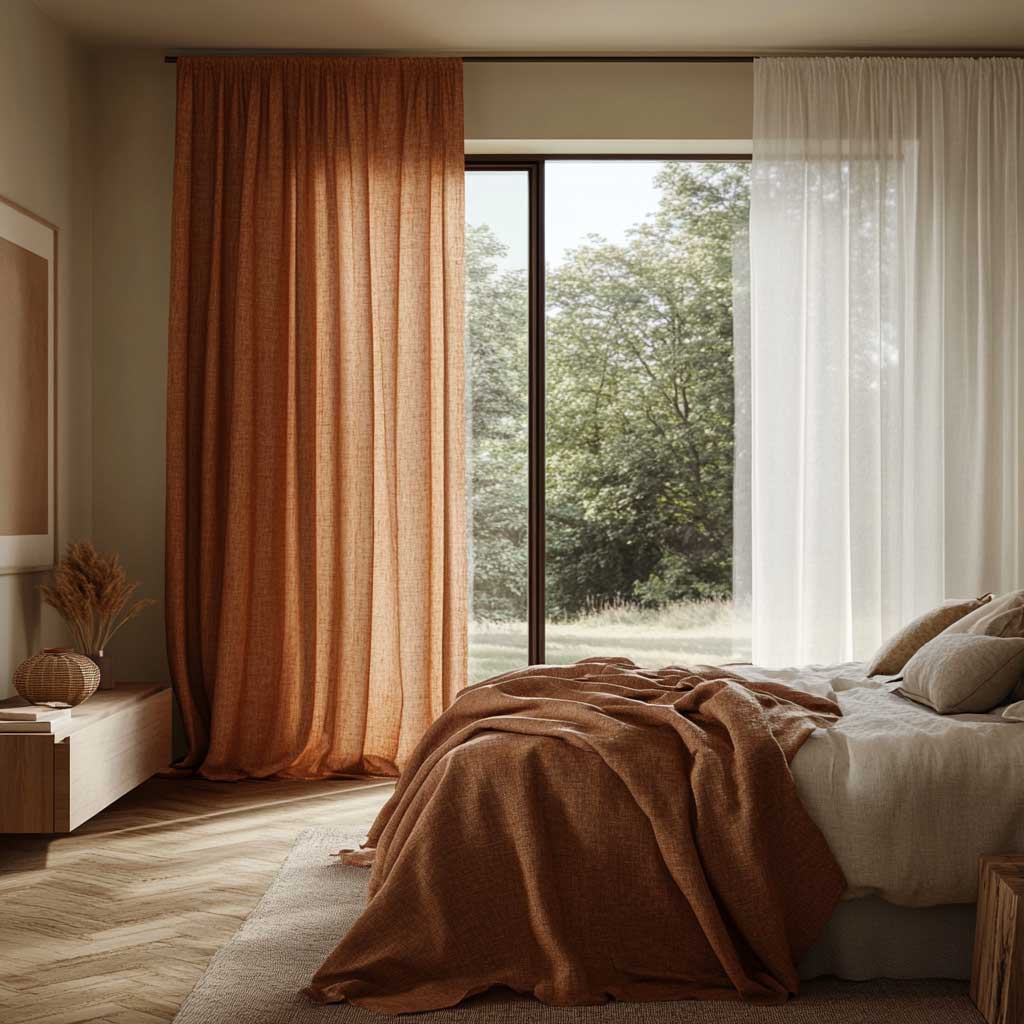
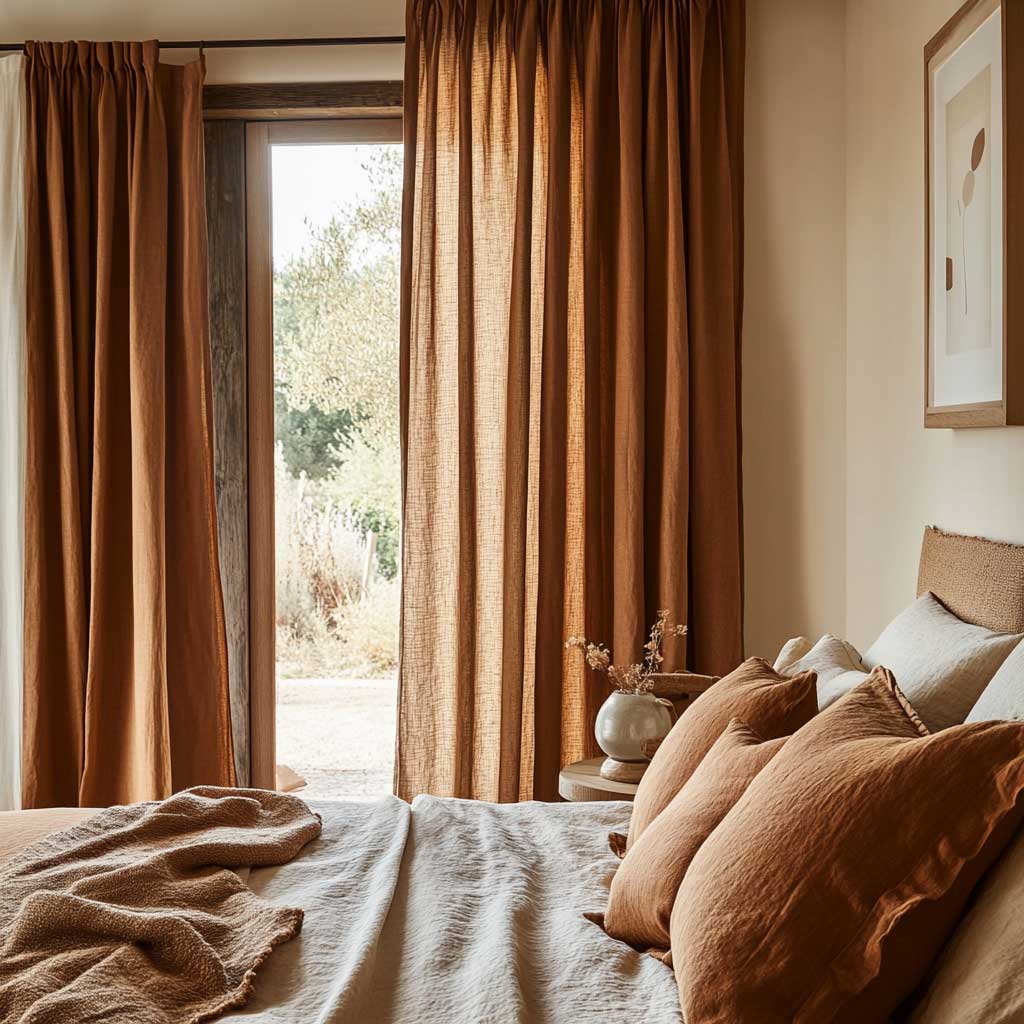

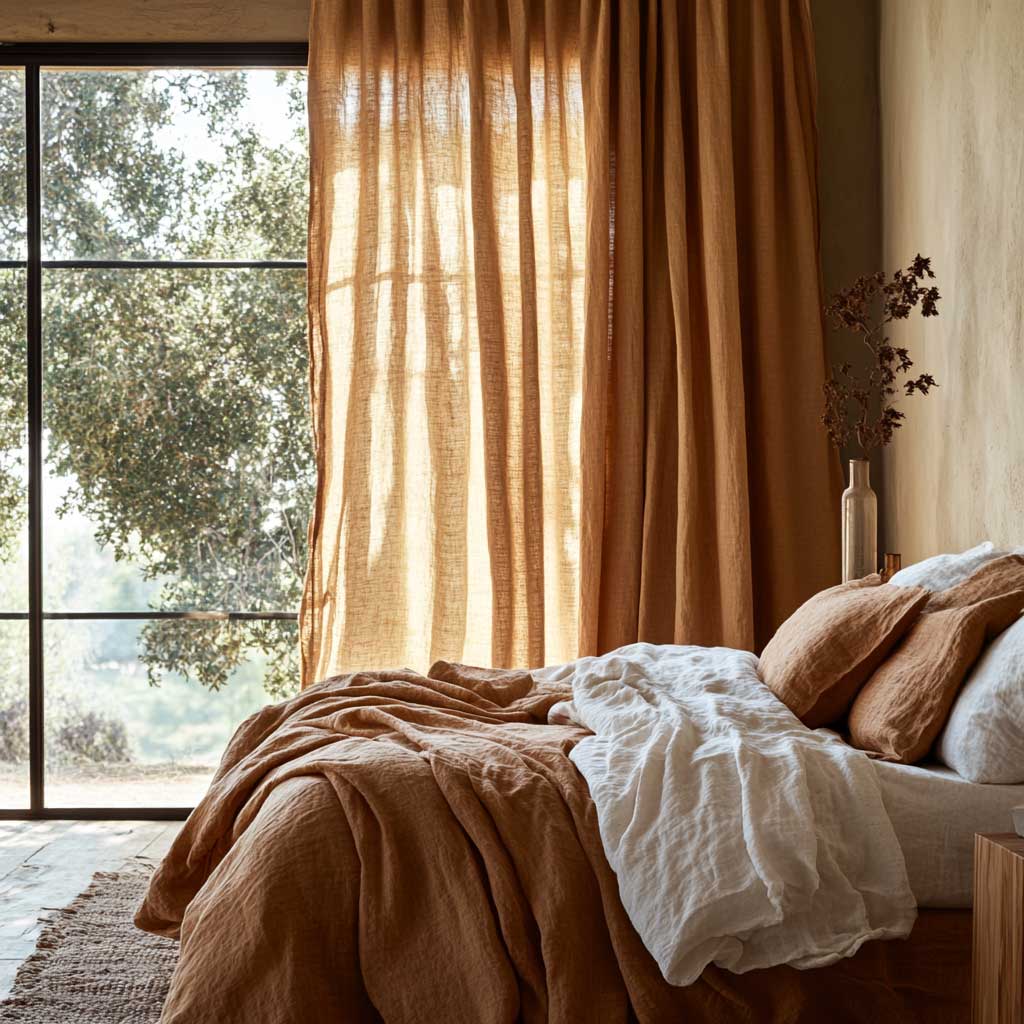
Linen is the default recommendation for terracotta curtains in a bedroom because the fiber behaves the way the color wants to. Terracotta in linen reads as a slightly uneven, organic tone that shifts when light moves across it — which is the effect interior designers are usually chasing. 3HLinen’s heavyweight terracotta 100% European flax panel starts at $98 per panel, available in lengths from 60 to 120 inches, and comes with unlined, cotton-lined, or blackout-lined options. The cotton lining blocks about 50% of sunlight — enough for morning softness, not quite enough for blackout. Order the blackout liner if the room faces east.
The structural argument for linen is weight. Medium-weight linen at 150 grams per square meter is airy and moves in drafts; heavyweight at 280 gsm is denser, less see-through, and holds a fuller puddle at the floor. For a bedroom, 280 gsm is usually worth the premium — it makes the window feel dressed rather than screened. What doesn’t work: using linen in a length that’s too short. A panel that ends at the sill instead of the floor makes the ceilings look lower and the window look smaller, regardless of what color the fabric is.
Linen also responds to steam rather than ironing. Hang the panels and steam them in place — you’ll notice the wrinkles drop out and the fabric settles into its natural vertical lines without becoming board-stiff. Dry cleaning is recommended to preserve the European Flax certification on premium panels. The trick here is ordering swatches before committing: terracotta shades vary significantly between manufacturers, and the color that reads as warm clay on a screen can appear closer to rusty orange once the full panel is hanging in your specific light.
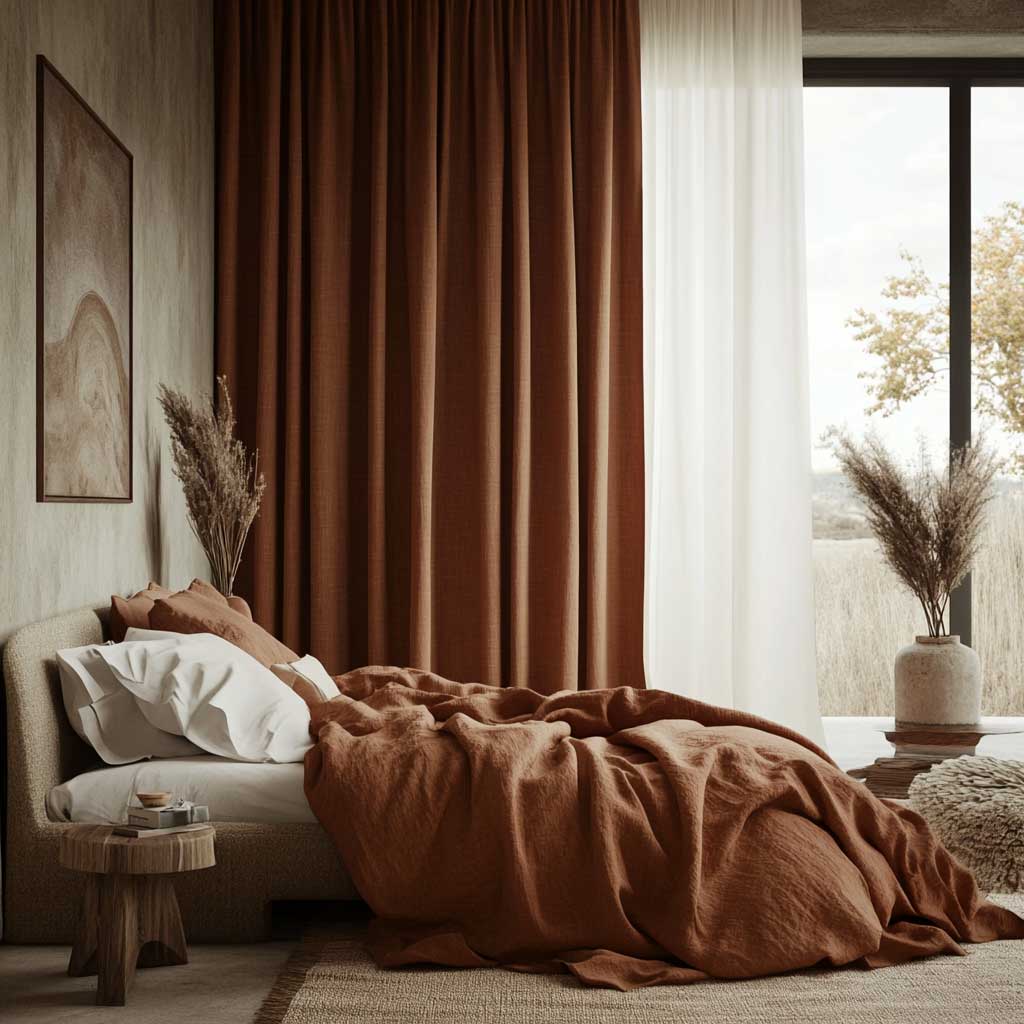
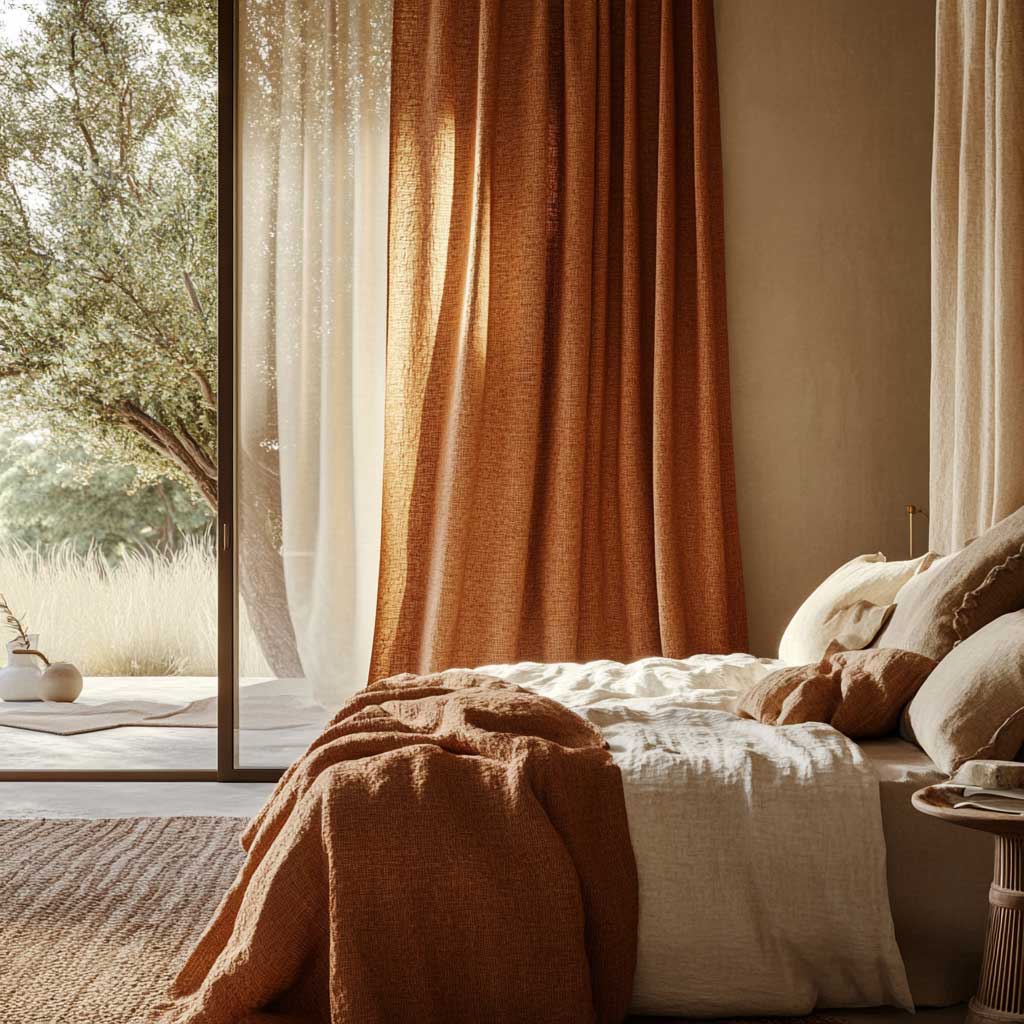
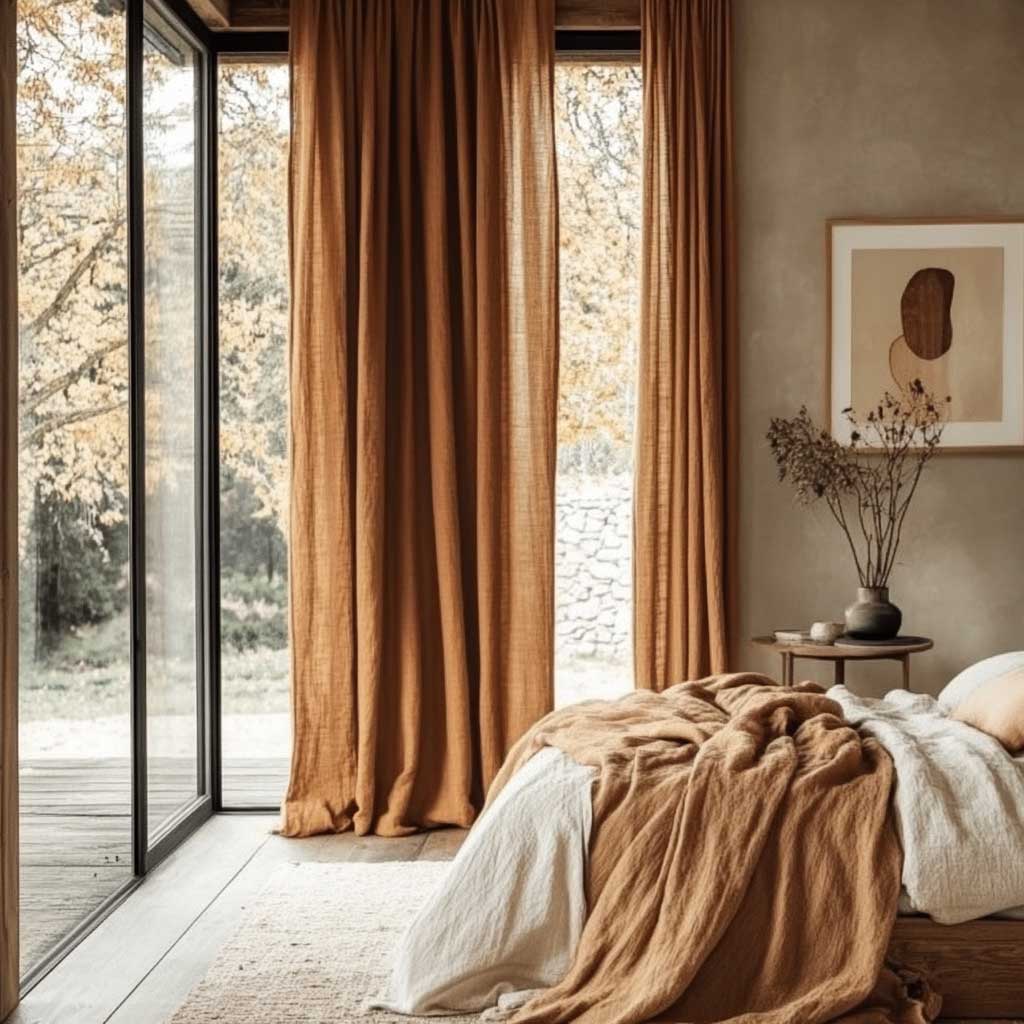
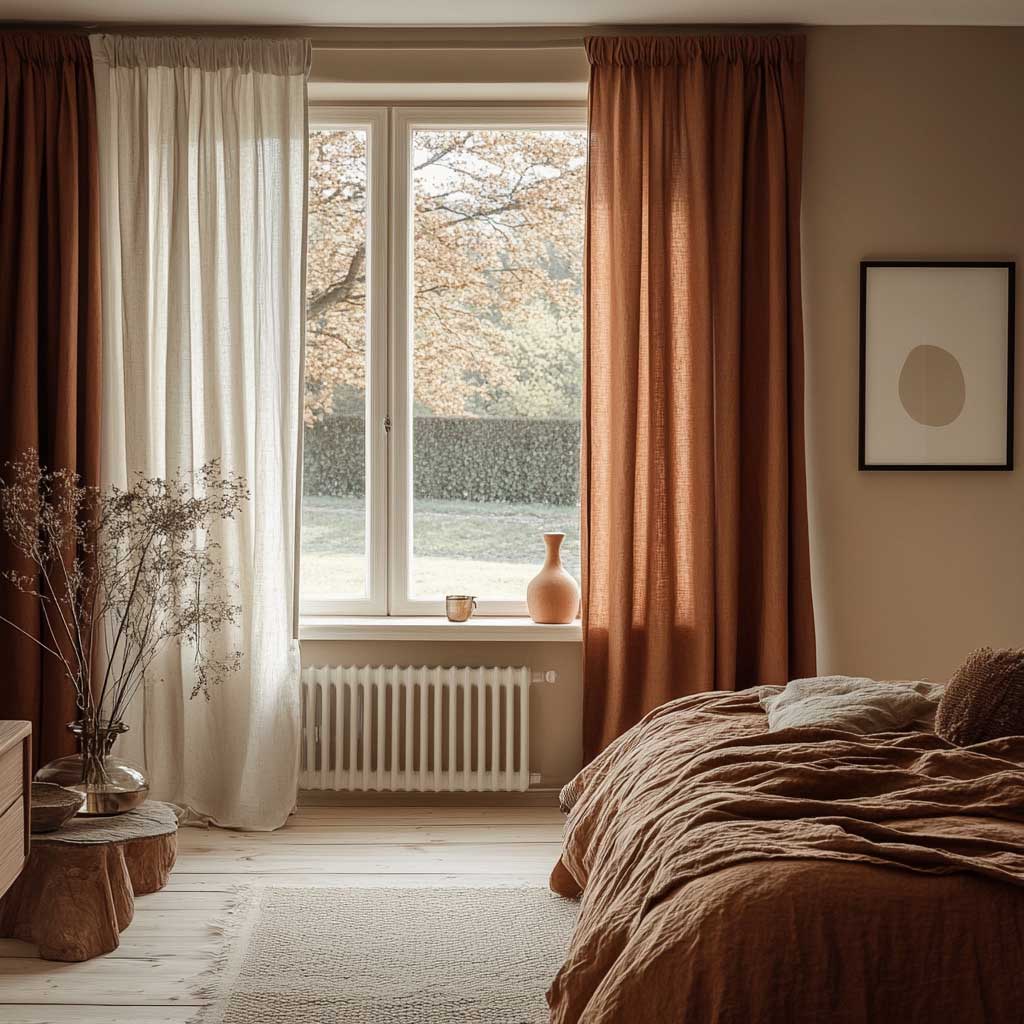
A common approach with linen terracotta panels is to layer a sheer white or cream linen panel underneath, hung on a separate track. This lets the room switch between diffused warmth during the day and full privacy at night without having to change the window hardware. What’s the downside? Doubled panels on a narrow track can bunch awkwardly when open — plan for a rod that extends at least 12 inches past each side of the window so the stack clears the glass entirely. For more ways to carry terracotta through the rest of the room, see these warm wall colour ideas for bedrooms covering the earthy palette in full.
Don’t hang terracotta linen over a white sheer from a different manufacturer without checking the undertones first. Linen panels with warm peach undertones next to a cool-white sheer read as two separate color stories rather than one layered window treatment. Also, don’t iron linen curtains while they’re off the rod — heat applied flat distorts the natural texture. Steam them hanging, always.
Velvet Terracotta Curtains Earn the Bedroom’s Darkest Hours
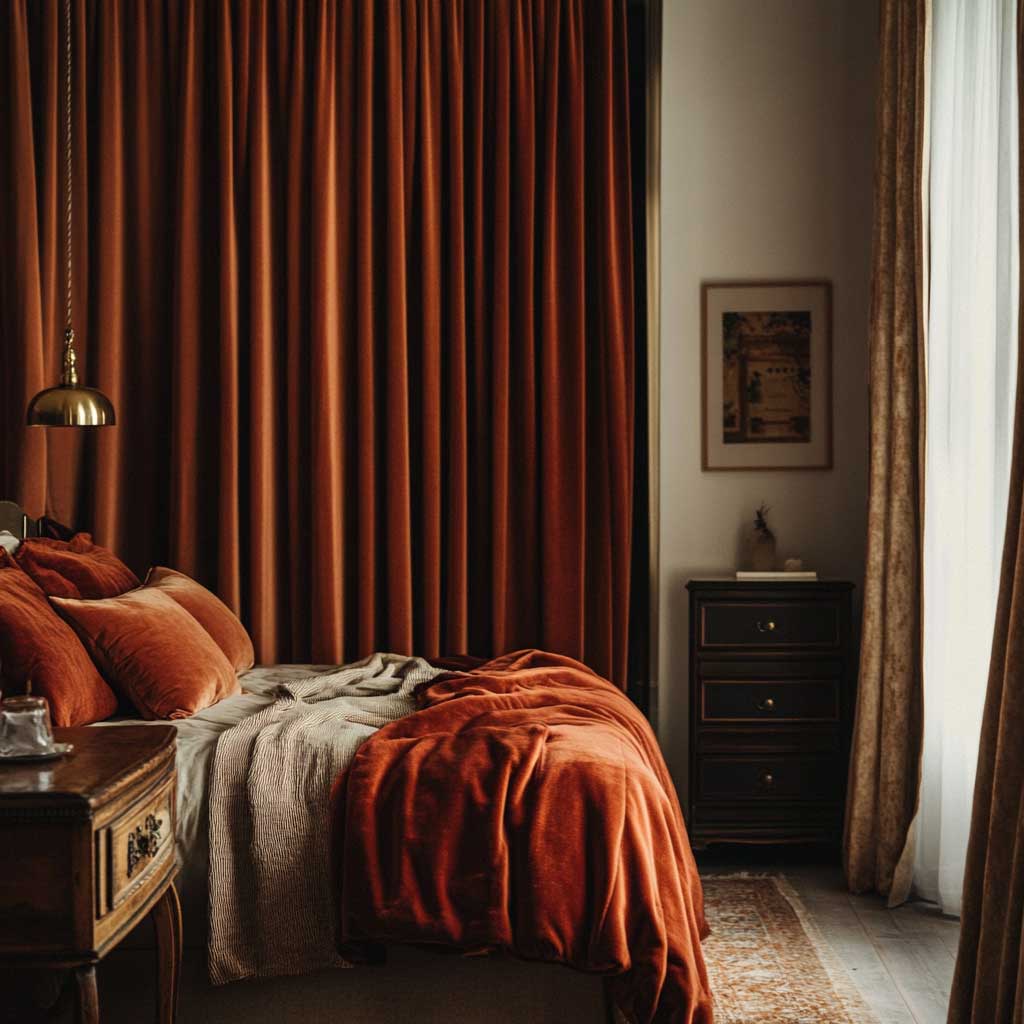
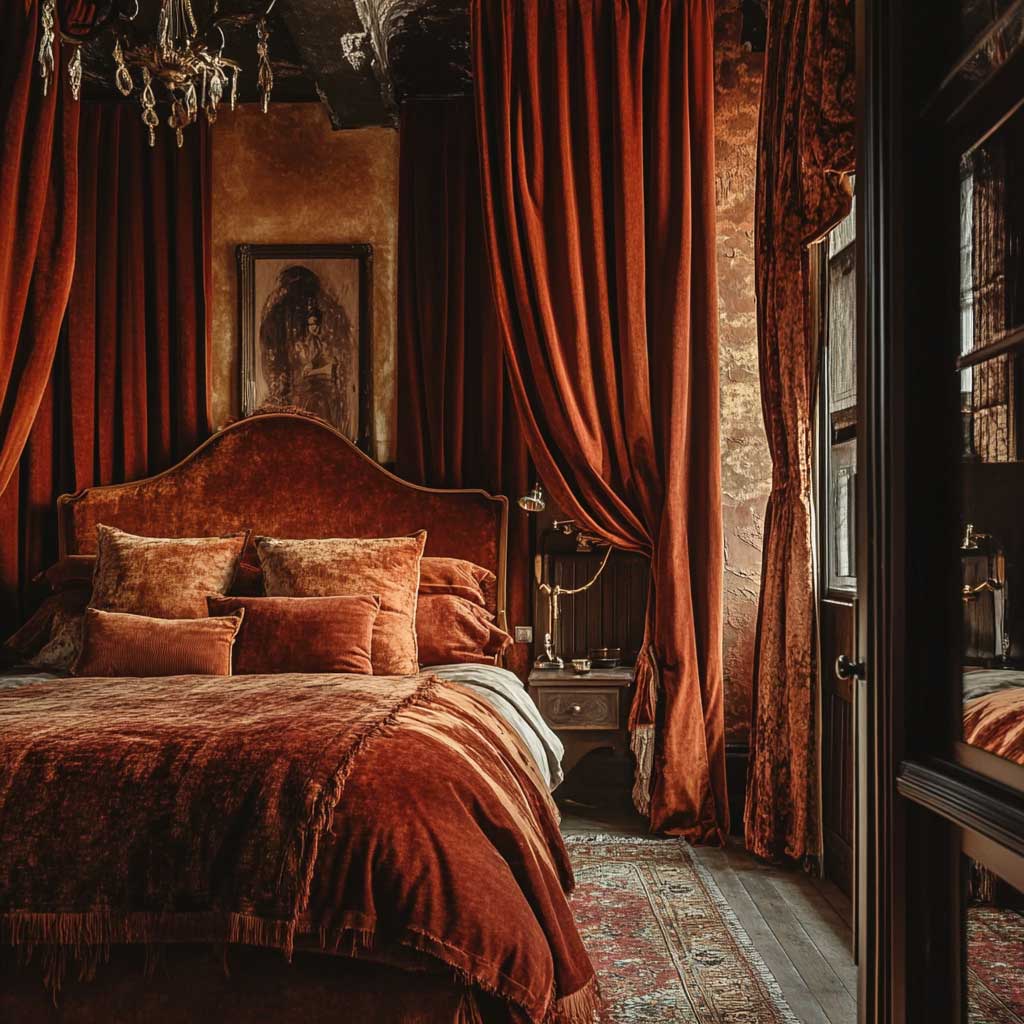
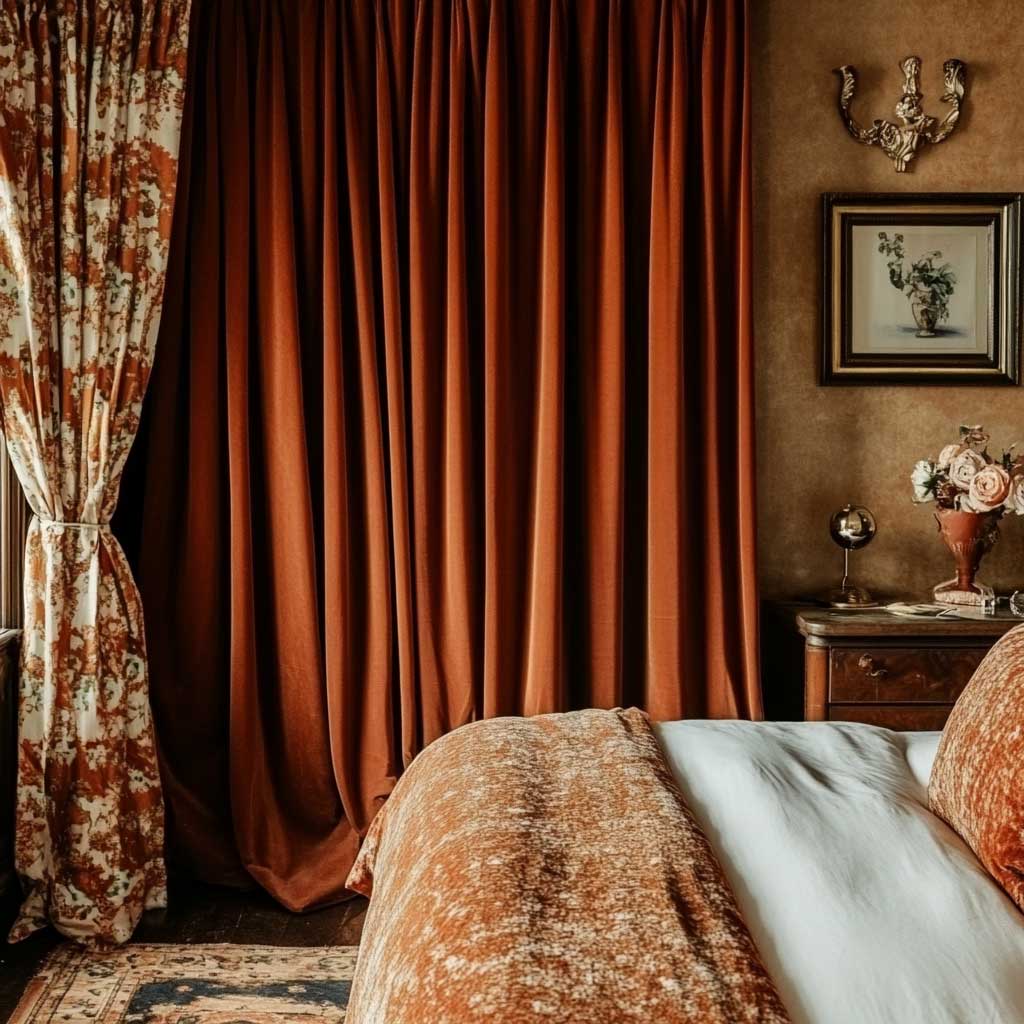
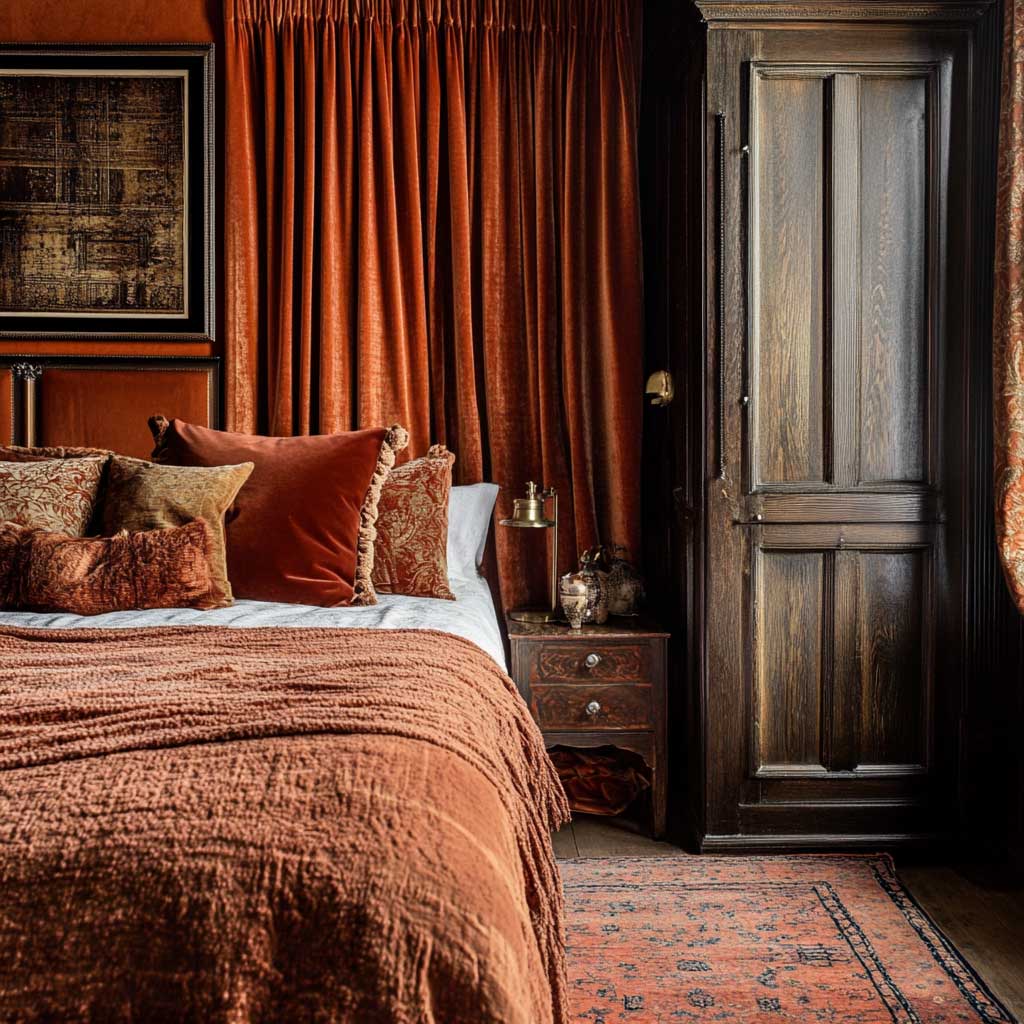
Warm terracotta curtains in velvet operate on a different visual register than linen — deeper, less textured on the surface, more dependent on sheen. Velvet’s pile reflects light directionally, which means the same terracotta panel looks slightly lighter when the fabric leans one way and deeper when it falls the other. That shift is what makes velvet feel expensive rather than flat. Unlined medium-to-heavy velvet blocks 60–80% of light by fabric alone; add a blackout lining and that reaches 95–100%, according to testing data from Unicurt. For a bedroom, that’s a meaningful upgrade over linen if the room faces a streetlight or gets early direct sun.
Brass rods are the correct hardware pairing — not chrome, not matte black. Brass carries warm yellow undertones that sit in the same color family as terracotta, and the contrast between the metallic finish and the matte pile of the velvet reads as deliberately curated rather than accidental. The 1.5-inch diameter brass rod is the standard size, and most terracotta velvet panels with grommet or rod pocket headers fit without modification. Sun Zero’s blackout velvet panels, available at Wayfair, reduce outside noise by up to 30% and decrease energy loss through windows by up to 40% — details that matter in a city-facing bedroom.
Keep the rest of the room intentionally understated when velvet curtains are the main event. Neutral linen or cotton bedding in warm sand tones prevents the room from tipping into maximalist territory where everything competes. A single brass lamp on each nightstand ties back to the rod hardware without adding another material. You’ll notice the panels look fuller when you order them at 2–2.5 times the window width — velvet that’s skimped on fullness hangs in flat strips rather than proper folds, and the whole effect collapses.
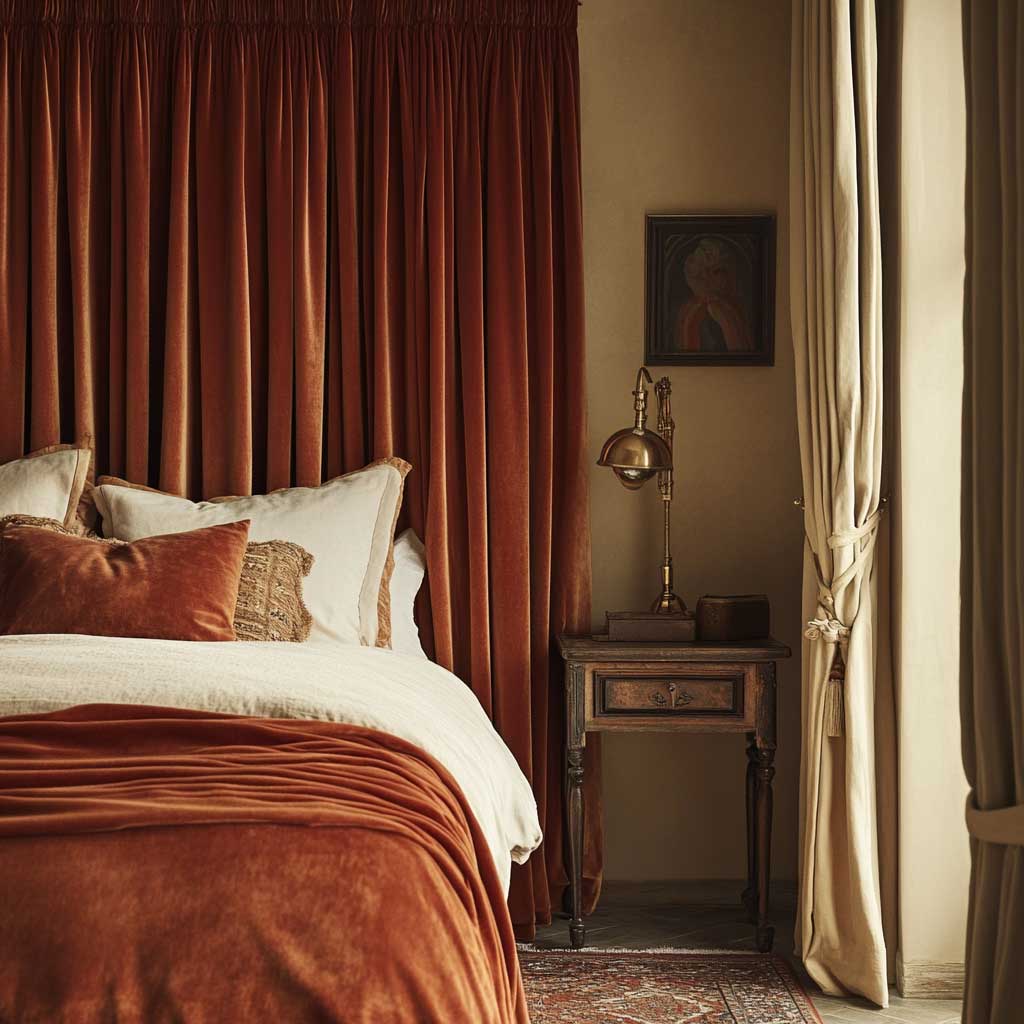
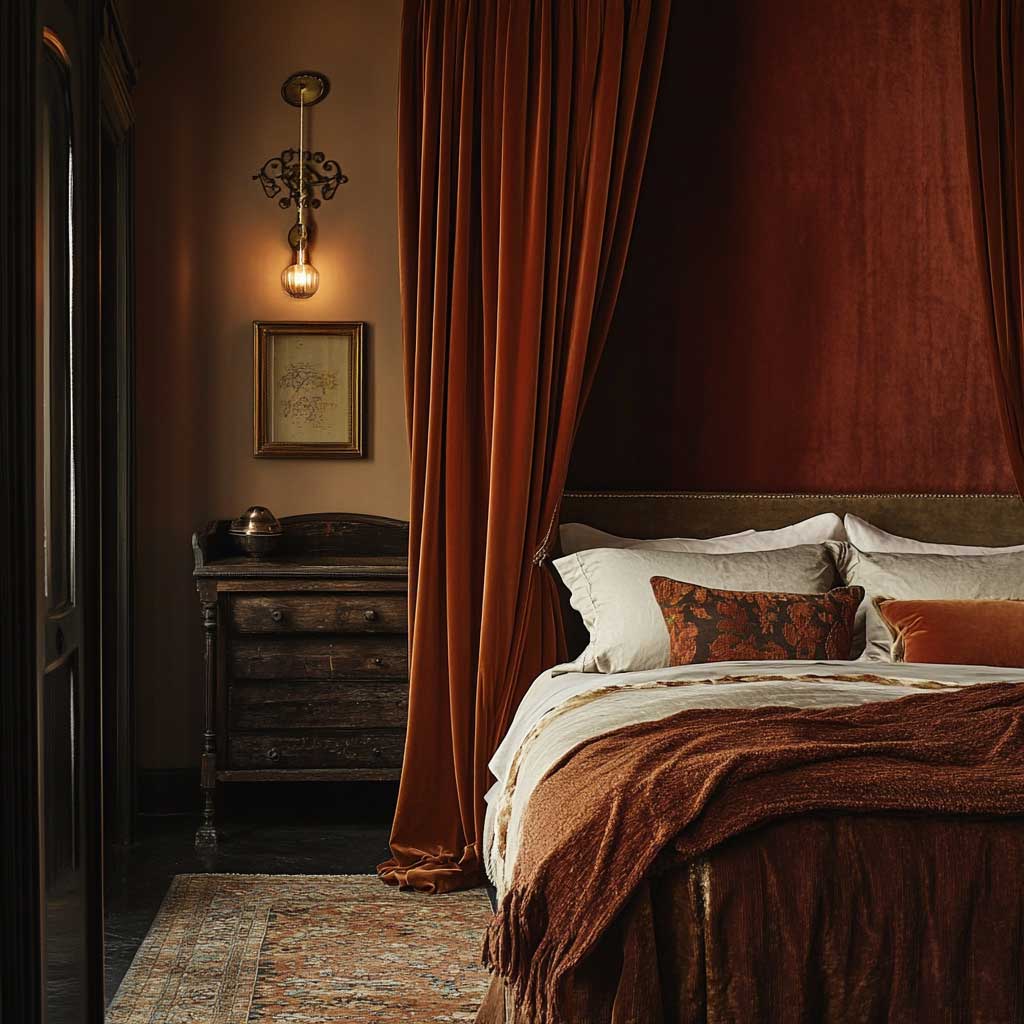
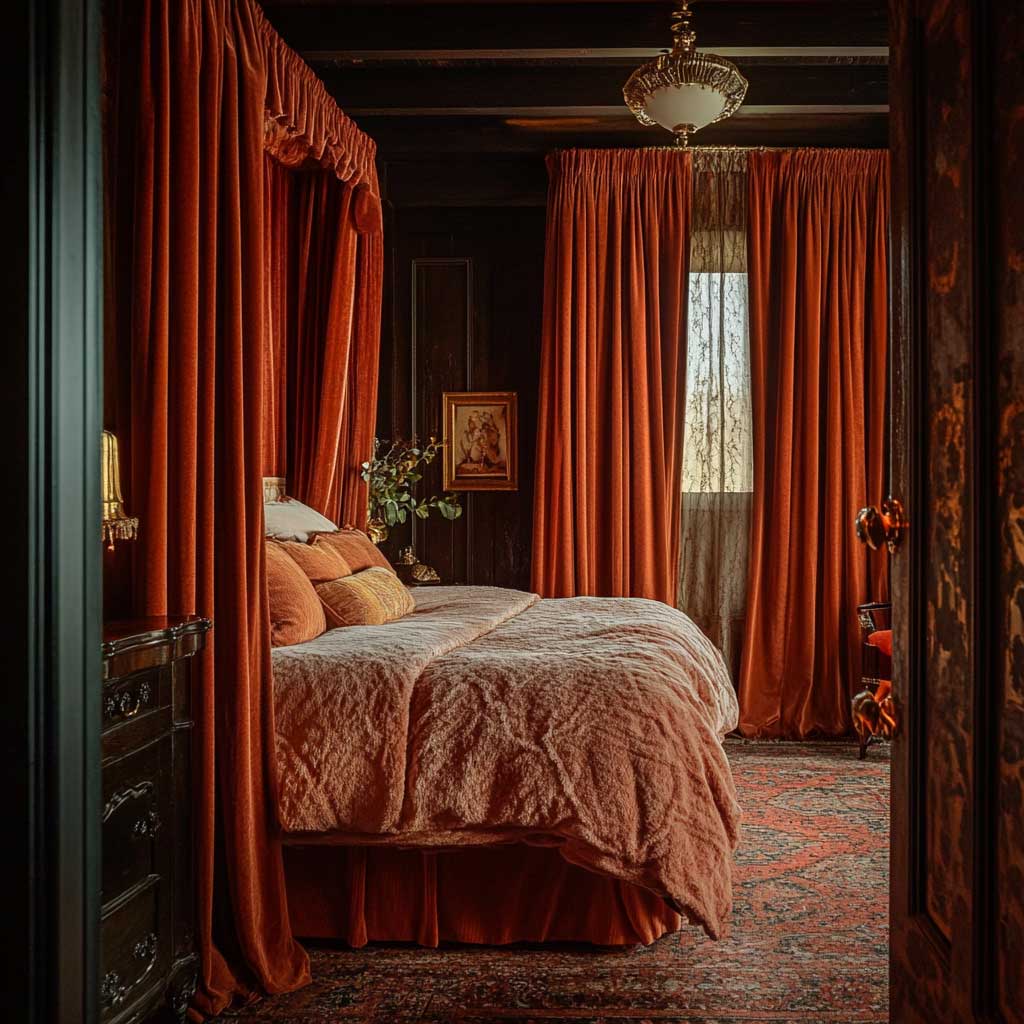
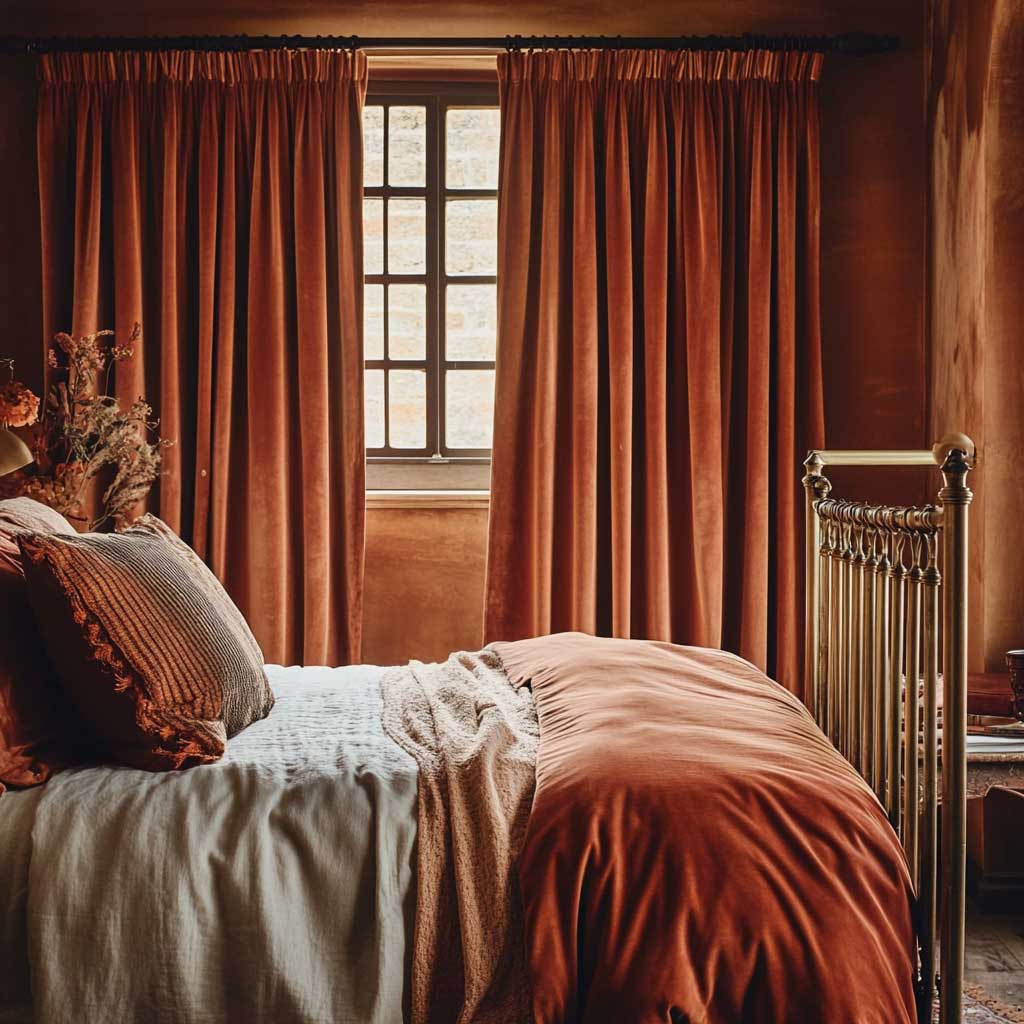
Velvet requires dry cleaning in most cases — check the care label, but machine washing even on gentle can crush the pile permanently. Think of velvet like a good cashmere sweater: it looks better for longer when you don’t over-launder it. A lint roller and occasional steam refresh handle the bulk of maintenance. What doesn’t belong in a velvet terracotta bedroom: patterned wallpaper on every wall. The velvet is already doing textural and color work — competing patterns on four walls turn a considered room into a busy one fast.
Cream Walls and Terracotta Curtains Share the Same Undertone Logic
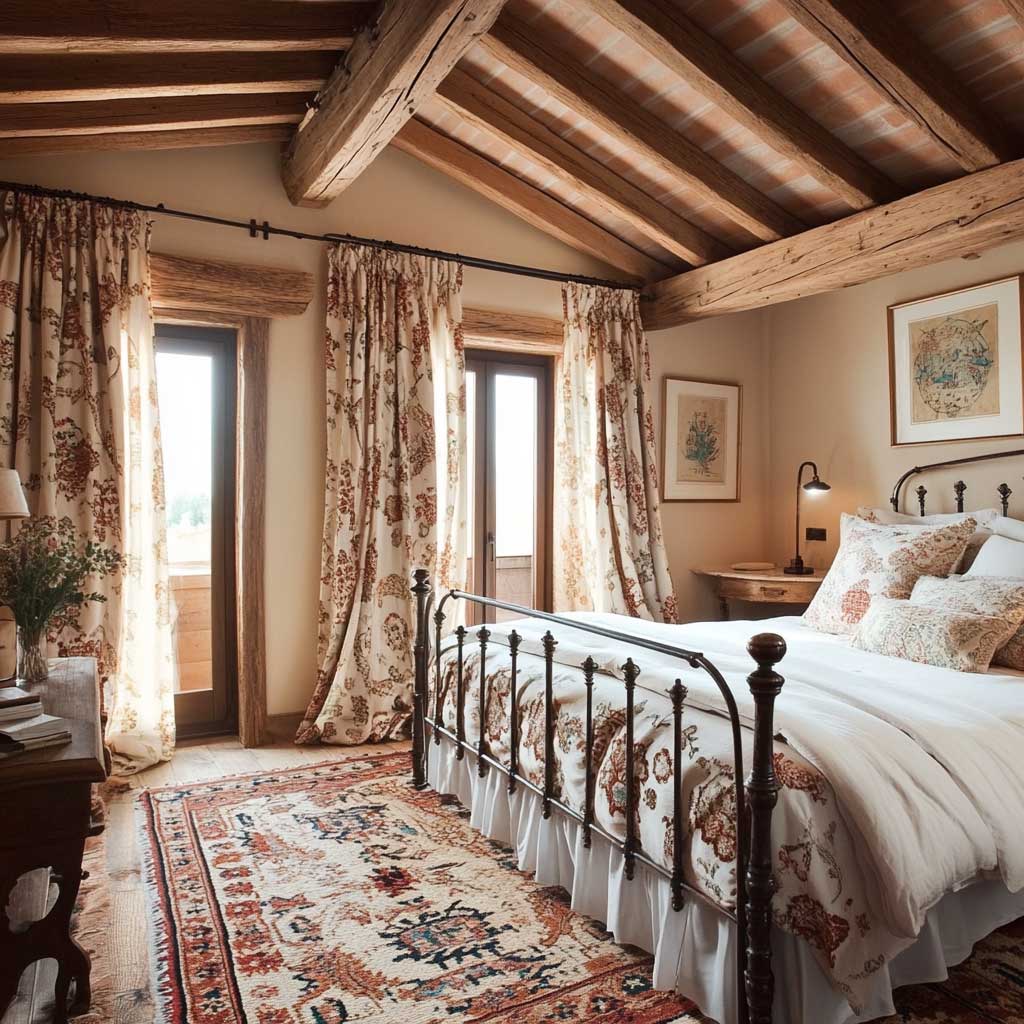
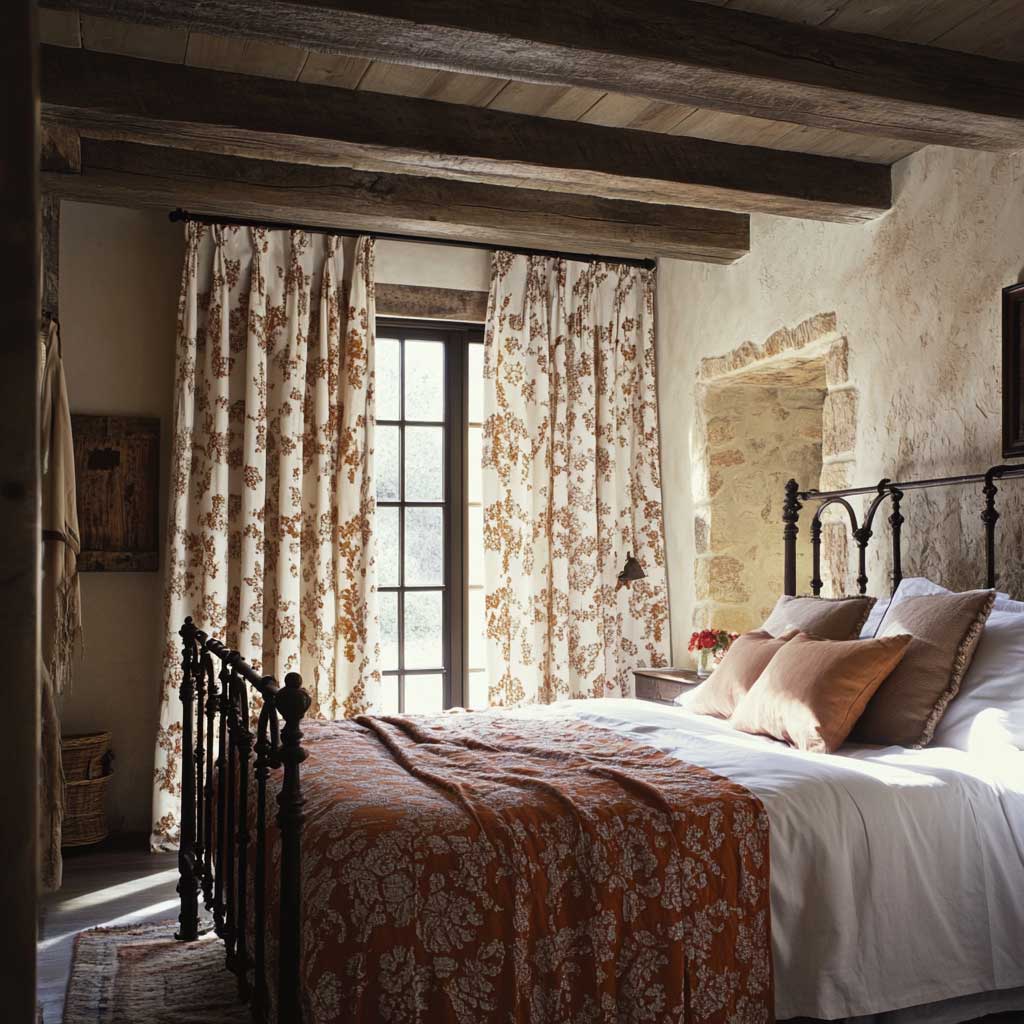
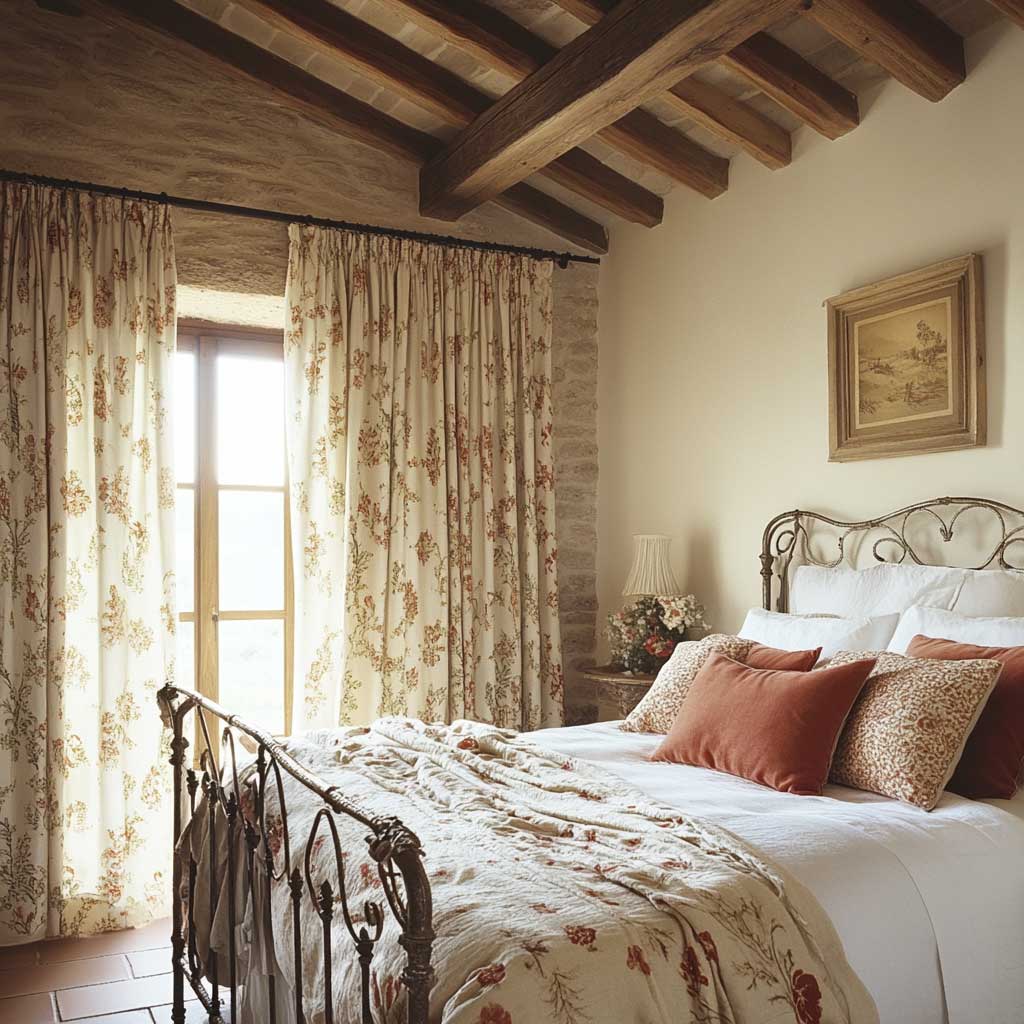
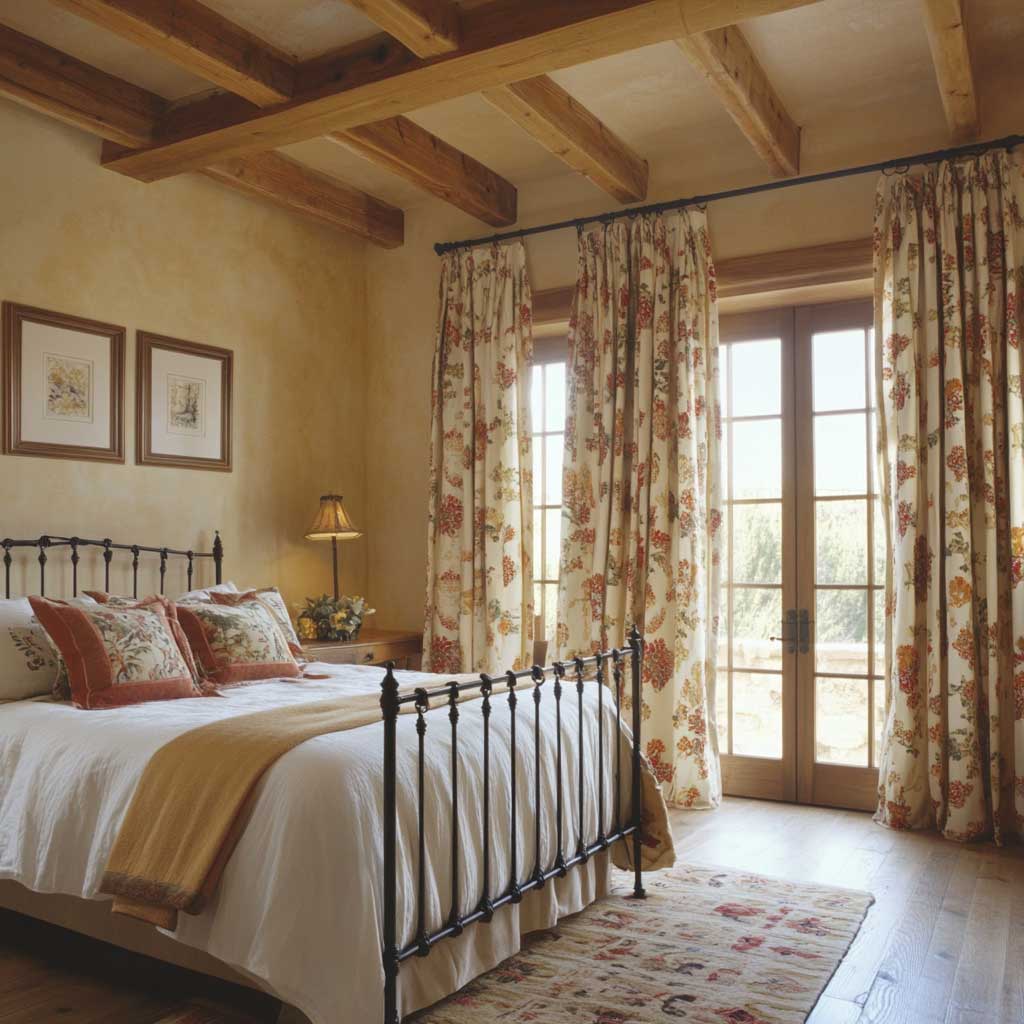
Curtains in terracotta against cream walls work because both colors sit in the warm end of the spectrum — cream with yellow or peach undertones, terracotta with its clay-orange base. The combination behaves like an analog photograph: soft contrast, no hard edges, a room that feels cohesive without feeling matched. What breaks this pairing immediately is choosing a cool-based cream — one with blue or gray undertones — where the terracotta starts reading as orange rather than clay, and the two colors appear to be from different rooms.
Patterned terracotta and cream curtains carry both colors simultaneously, which solves the undertone problem by default. Geometric or botanical patterns in these two tones against a plain cream wall add surface interest without the commitment of patterned wallpaper. The pattern scale matters: small repeats read as texture from across the room, large repeats read as a statement. For a standard 10-by-12-foot bedroom, a mid-scale pattern — roughly 4–8 inches in repeat — reads clearly without overwhelming the space. Stylists recommend testing a memo sample against the actual wall in different lighting conditions before ordering panels, since terracotta-and-cream combinations shift substantially between morning and evening light.
Rooms with cream walls and terracotta curtains do have a version that fails repeatedly: pairing the curtains with cream bedding and cream furniture, then wondering why the room has no depth. The terracotta needs something to contrast with beyond the walls — a dark wood headboard, a woven jute rug, a few ceramic pieces in deeper earthy tones. Without that grounding layer, the combination tips into pale and washed-out. For a full treatment of how terracotta works as a wall color alongside these curtains, the terracotta and cream bedroom wall panel breakdown covers material costs and finish decisions in practical detail.


Linen blend fabric is the most common substrate for patterned terracotta-and-cream curtains — it takes printing or weaving better than pure linen and costs considerably less than velvet at this pattern complexity. A linen-blend panel in a terracotta cream combination typically runs $30–$60 per panel at major retailers, compared to $98 for 100% European linen. The trade-off is texture: a linen blend reads smoother and slightly more uniform, which suits geometric patterns but loses some of the organic depth that makes solid terracotta linen look handmade.
| Option | Best For | Approx. Price Per Panel | Key Limitation |
|---|---|---|---|
| 100% European linen (solid terracotta) | Natural light, organic aesthetic | From $98 | Dry clean only; wrinkles easily |
| Velvet (terracotta, unlined) | Richer look, 60–80% light block | $28–$60 | Needs 2–2.5× fullness; crushes if machine washed |
| Linen blend (patterned, terracotta/cream) | Cream walls, patterned interest | $30–$60 | Less texture depth than 100% linen |
For sizing and fabric weight guidance beyond what retailers typically provide, 3HLinen’s product page on terracotta bedroom curtain panels covers the practical difference between 150 gsm and 280 gsm linen in plain language, with dimensions and lining options listed clearly.
Terracotta Curtains Bedroom
Fabric Is the Real Decision — Color Is Just the Starting Point
Linen at 280 gsm with cotton lining handles most bedrooms — morning glow in, privacy at night, no static or sagging. Add a blackout liner only if the window faces east or a streetlight.
Velvet blocks 60–80% of light unlined and earns its price in north-facing or city bedrooms where light control is the actual problem. Pair it with brass hardware only.
Cream-and-terracotta combinations fail when the cream has blue or gray undertones. Match to cream with yellow or peach base and the two colors stay in the same warm register. Save this post before you order swatches.
Related Topics
FAQ
What curtains go with cream walls in a bedroom?
What is the color combination for cream curtains and terracotta walls?
Are terracotta curtains suitable for a bedroom?
Do brown curtains work in a bedroom with terracotta accents?
Can terracotta curtains work in a living room as well as a bedroom?
What rod and hardware color works with terracotta curtains in a bedroom?
Complete guide
Bedroom Design Ideas That Actually Change How You Sleep, Feel and Live
Styles, colors, furniture, walls, layouts — 300+ ideas in one place
Complete guide
Window Treatments That Actually Transform a Room
Curtains, blinds, shades, valances, bay windows, doors — all in one place