Dark academia is not a trend in the way that terracotta or limewash walls are trends. It is a sensibility — a specific relationship with knowledge, melancholy, and the physical texture of things that have been used. The bedroom is where this sensibility finds its most personal expression: a space dense with books, layered with aged wood and worn velvet, lit in amber pools, and decorated with objects that suggest a life devoted to thought. Done well, a dark academia bedroom feels like it belongs to someone fascinating. Done badly, it feels like a costume.
This guide works through every design decision that separates the two outcomes — from the foundational palette and material choices to the specific styling details that make the aesthetic feel inhabited rather than assembled from a Pinterest board.
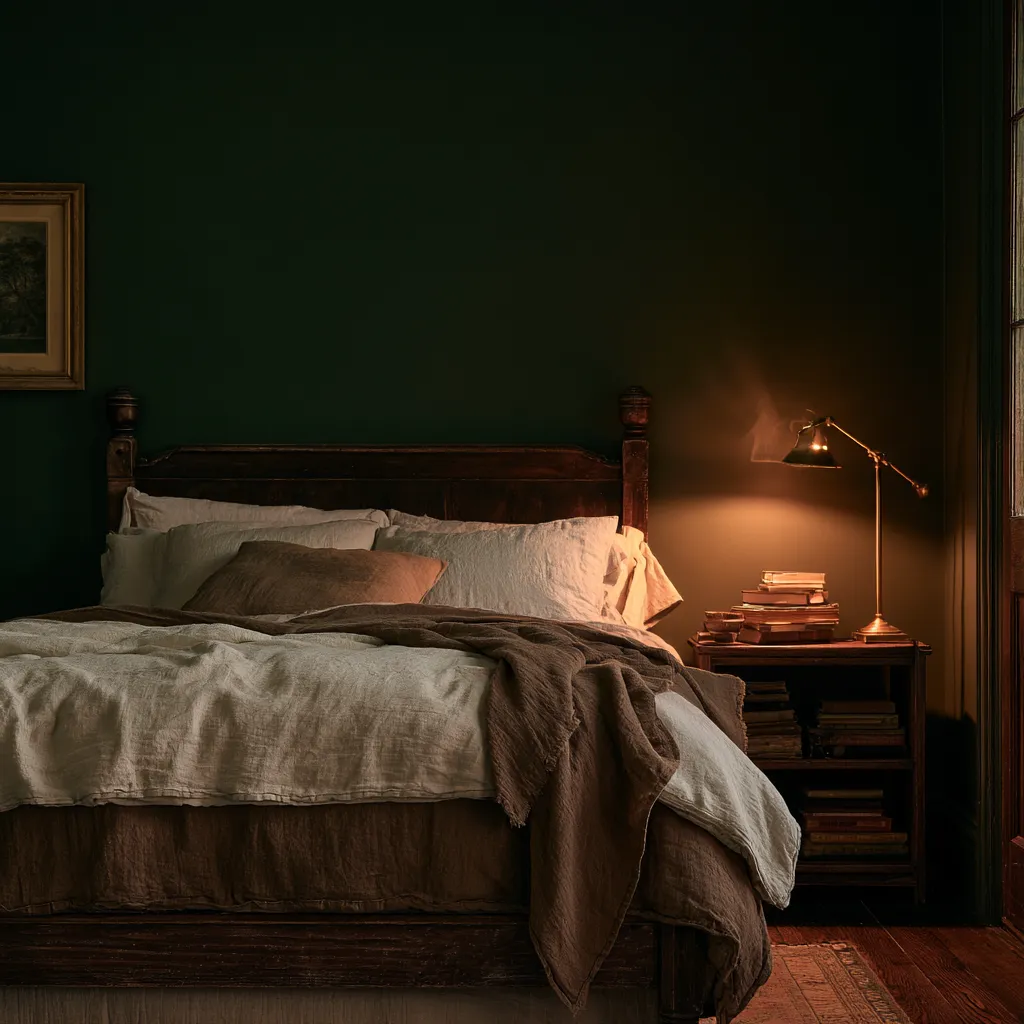
What the Dark Academia Bedroom Aesthetic Actually Means
Dark academia as a cultural aesthetic emerged with force on Tumblr around 2015 and reached mainstream visibility on TikTok in 2020, accumulating over 2.4 billion views on the platform by 2023. Its visual grammar draws from the architecture and interiors of elite European universities — Oxford, Cambridge, the Sorbonne — combined with the Gothic literary tradition, the Victorian collector’s study, and the romantic image of the scholar-hermit surrounded by books and candlelight.
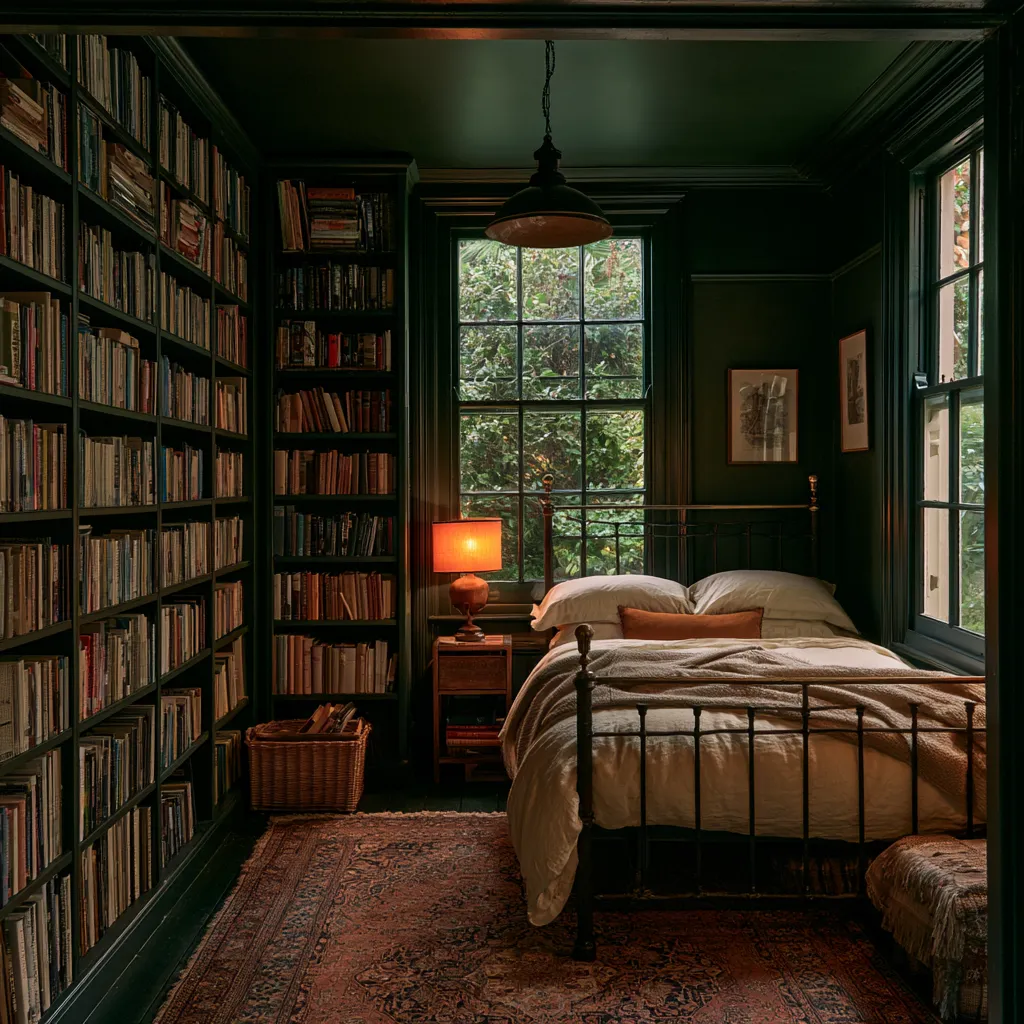
In bedroom design terms, this translates to a consistent set of visual principles: a palette built from deep, rich, and earthy tones rather than bright or saturated colours; a heavy reliance on natural materials — dark wood, aged leather, stone, wool, linen; layered textiles that suggest accumulated comfort rather than showroom arrangement; and lighting that creates drama and warmth through warm-toned sources rather than cool overhead illumination. The books are not decoration — they are the room’s argument.
The Dark Academia Bedroom Palette: Colours That Set the Tone
The foundation of any dark academia bedroom aesthetic is the palette, and it is one of the most nuanced in residential design. The colours are dark but not flat, saturated but never garish, and they work together in a way that feels as though they have been accumulating in the room over decades rather than selected from a paint chart on a single afternoon.
Primary Wall Colours
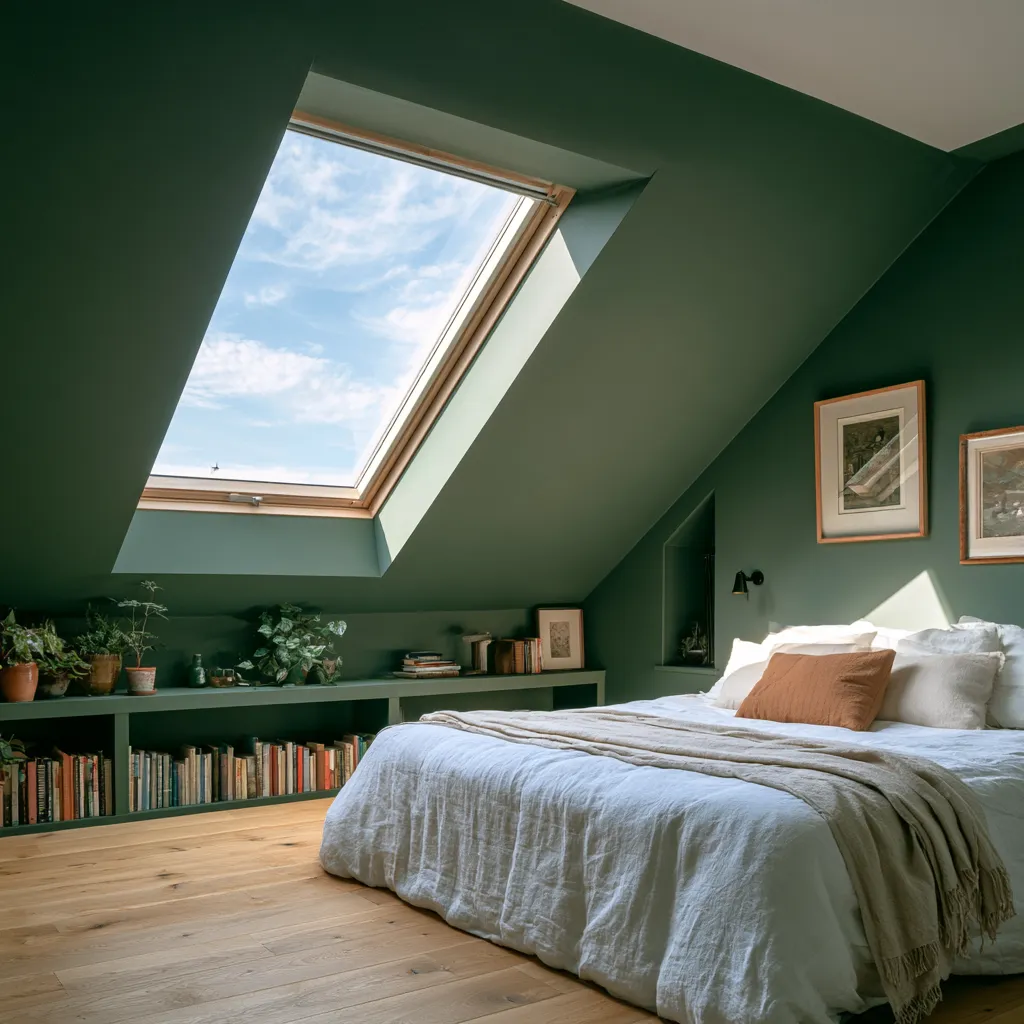
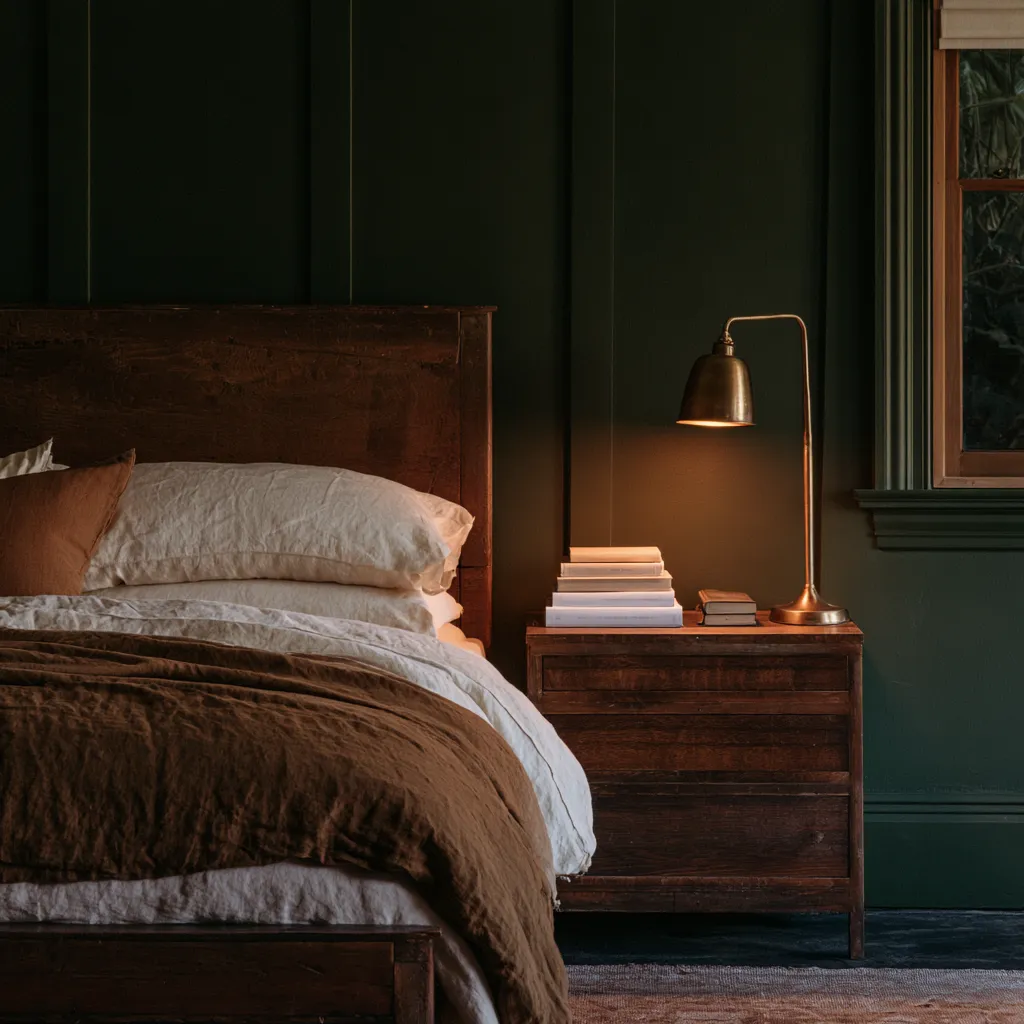
The ideal dark academia bedroom wall sits in one of three colour families: deep forest green, aged dark wood brown, or warm charcoal. These are not trendy choices — they are historically grounded in the library panelling and study walls of 18th and 19th century European institutional interiors, which is precisely why they feel right. Specific paint references that interior designers reach for most consistently in this aesthetic include Farrow and Ball’s Studio Green (No. 93), Railings (No. 31), and Brinjal (No. 222); Little Greene’s Obsidian and Leather; and Benjamin Moore’s Black Forest Green HC-188 and Wrought Iron 2124-10.
Avoid cooler greys, blues, or any wall colour with strong purple or violet undertones — these shift the mood from scholarly warmth into something more gothic-theatrical, which is a different aesthetic entirely. The dark academia bedroom palette should feel like aged paper and old leather, not a haunted manor.
Secondary and Accent Tones
Against the deep wall, the secondary palette introduces warmth through aged materials rather than additional colour. Cream and ivory in bedding and curtains; tobacco brown and cognac in leather and wood tones; ochre and amber in brass hardware and lamplight; and occasional dusty terracotta in small textile accents. This secondary palette is warm-weighted without being maximalist — the room should feel rich, not busy.
The connection between saturated deep tones and a genuinely sophisticated interior is explored in our article on how saturated jewel tones are redefining interior colour strategy in 2026, which provides useful context for understanding why these dark, rich colours are gaining traction across multiple design aesthetics simultaneously.
Dark Academia Bedroom Furniture: The Pieces That Define the Look
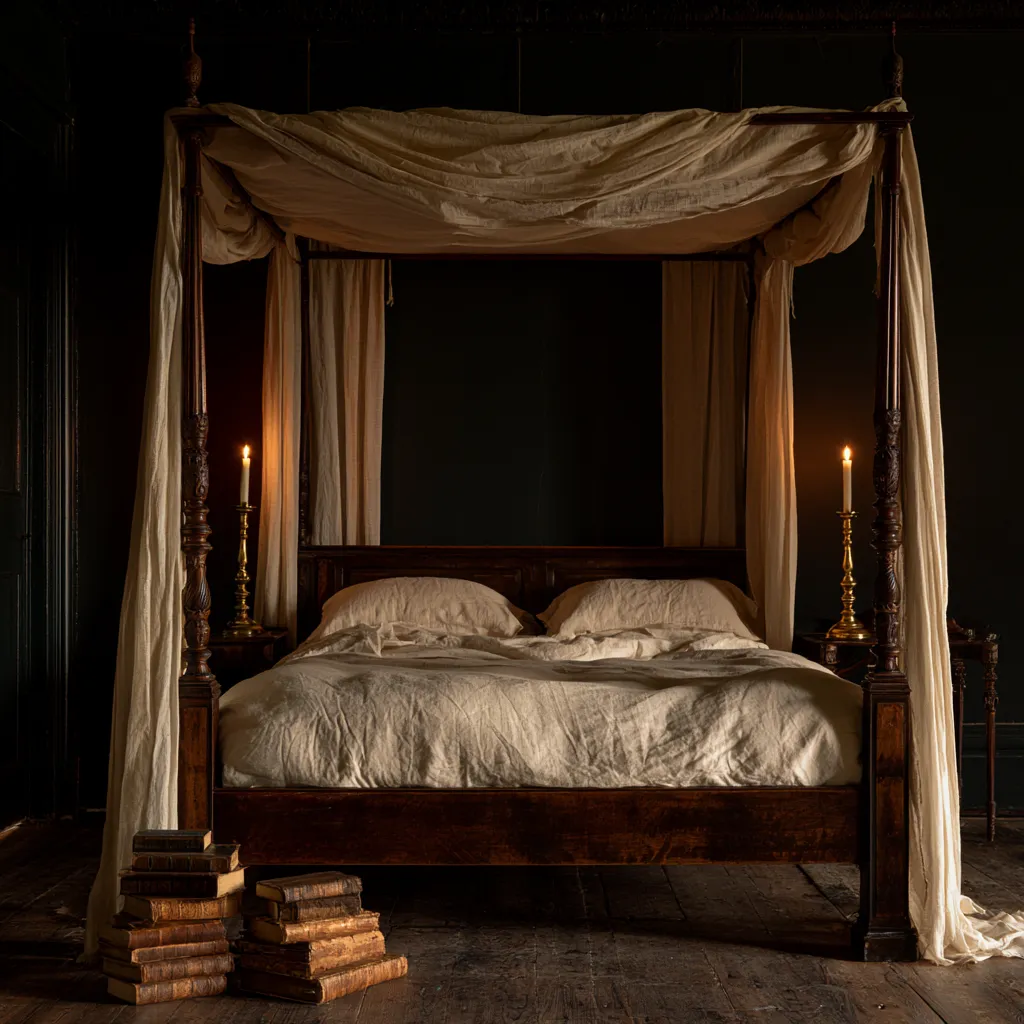
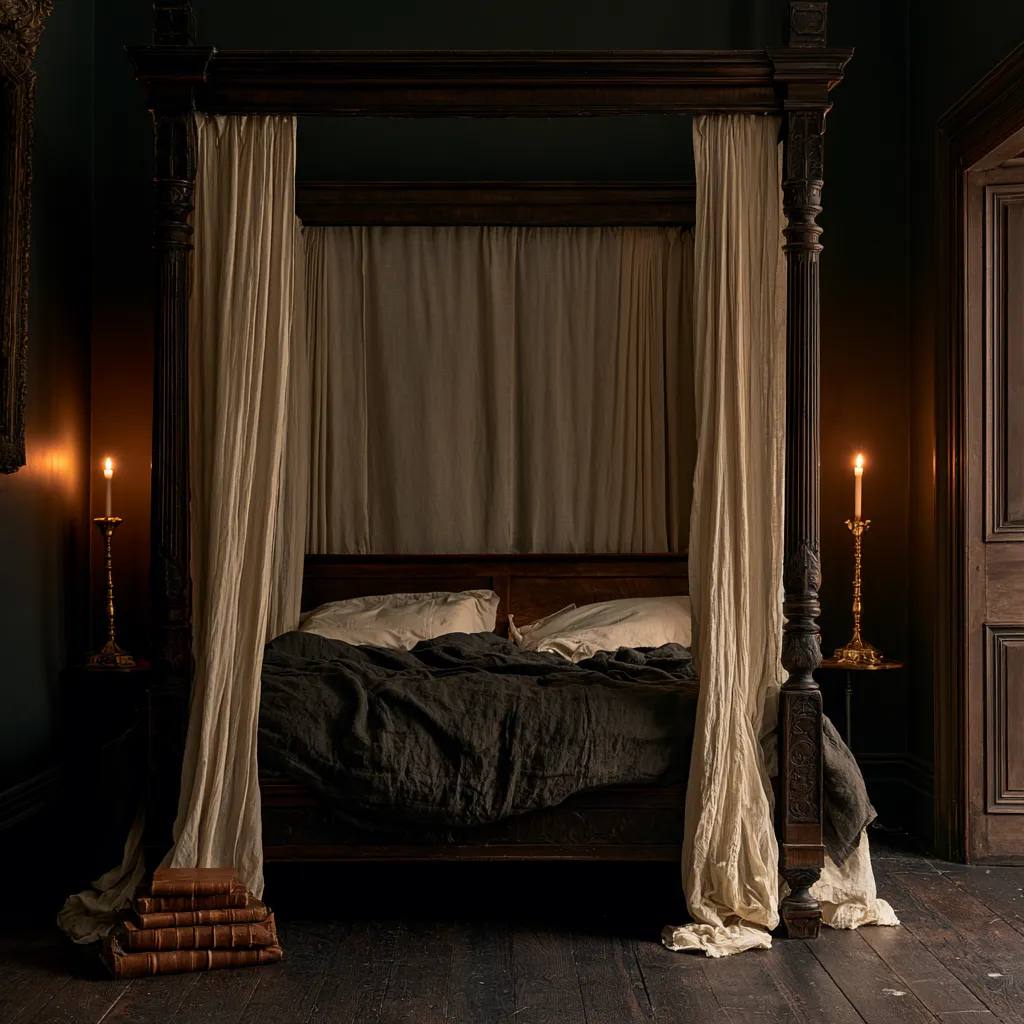
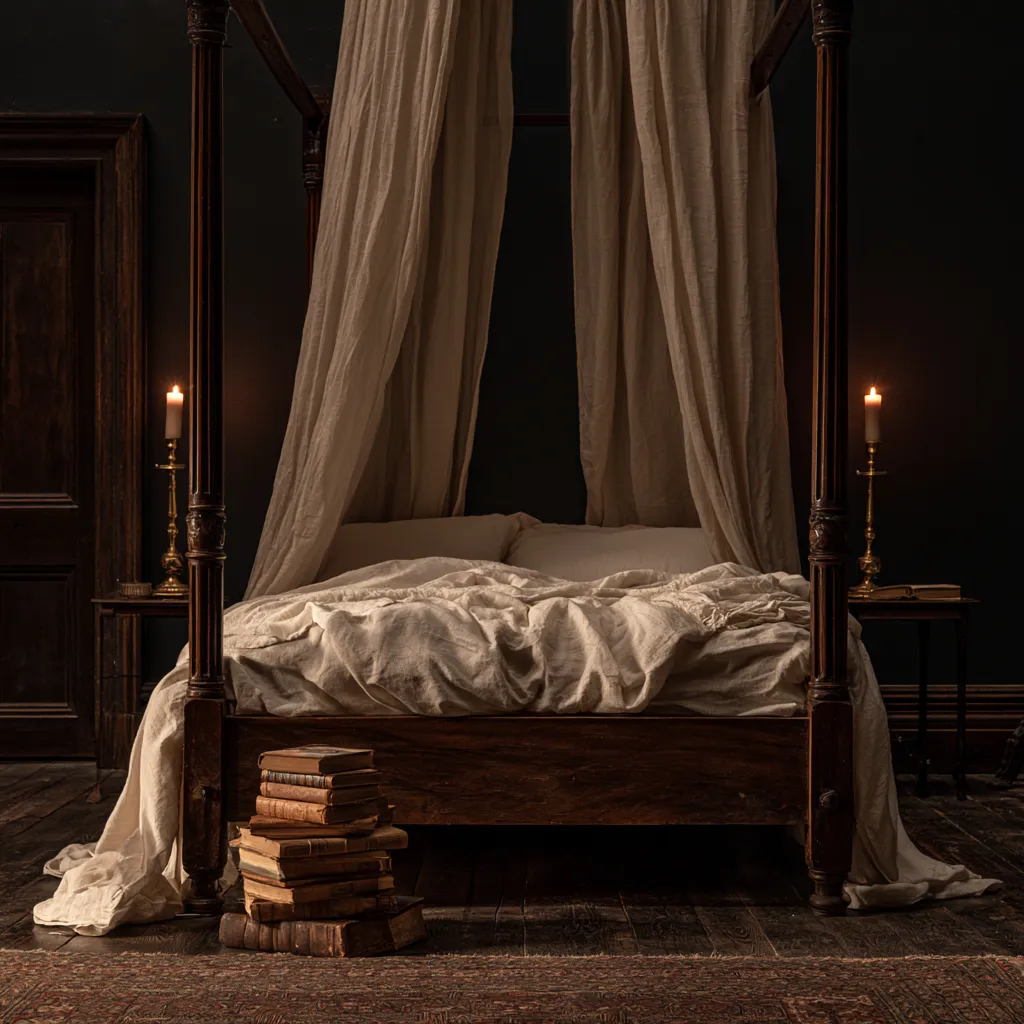
Furniture is where the dark academia bedroom aesthetic either succeeds or collapses. The goal is a room that looks as though its contents were acquired over time and through genuine interest — not assembled in a single afternoon from one retailer’s collection. This means prioritising silhouette and material quality over style consistency, and actively welcoming pieces from different periods as long as they share the same tonal language.
The Bed Frame
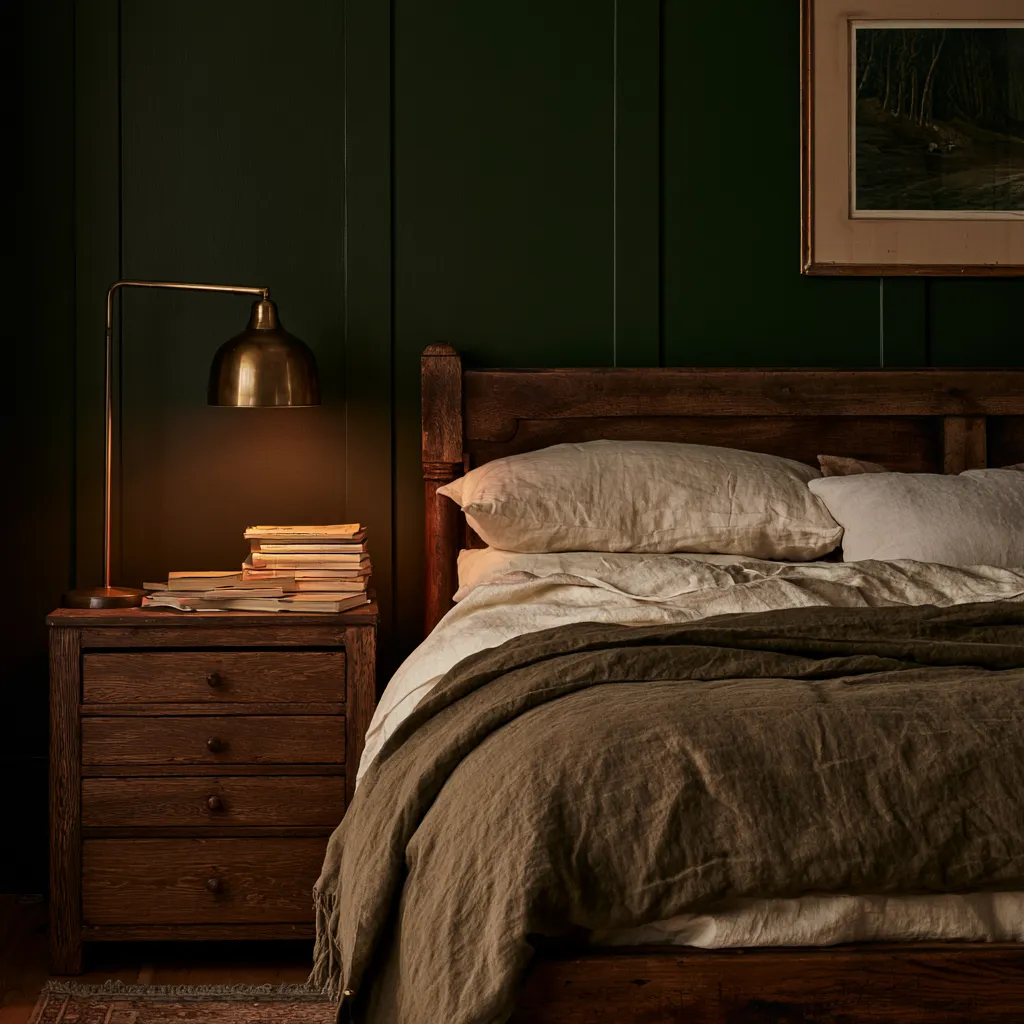
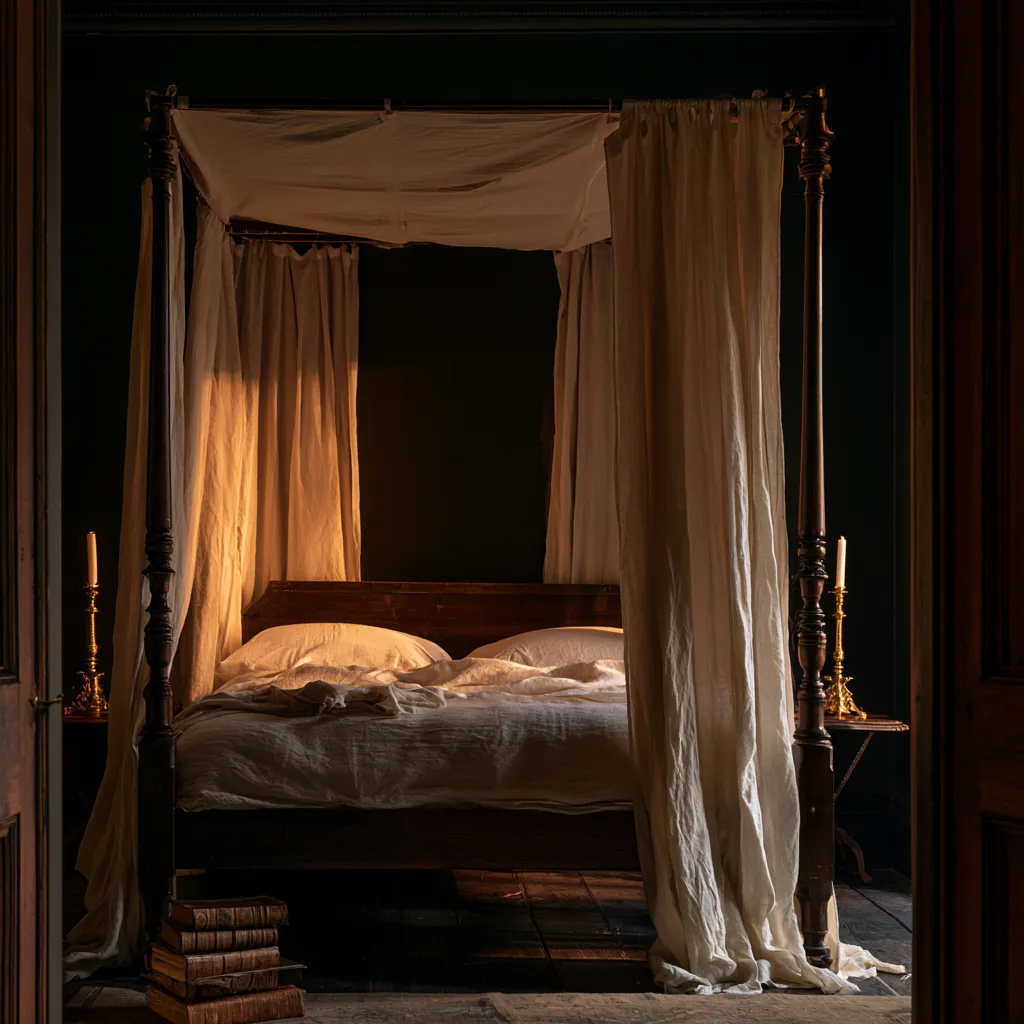
A dark academia bedroom demands a bed frame with architectural presence. The most authentic choices are antique or antique-replica wooden frames in dark walnut, mahogany, or ebonised oak — four-poster frames, sleigh beds, or high-headboard designs with carved detail. Iron or brass bed frames also work, particularly in older flat configurations that reference Victorian and Edwardian domestic interiors. What to avoid: upholstered platform beds, low-profile contemporary frames, or anything with clean minimal lines. The bed needs to look as though it has been slept in by someone who stayed up too late reading.
Storage and Shelving
Books are structural elements in the dark academia bedroom, not decorative afterthoughts. Built-in floor-to-ceiling shelving — or, where that is not possible, tall freestanding bookcases in dark wood — should occupy at least one full wall. An armoire or wardrobe with panelled doors in a dark finish functions better in this aesthetic than a fitted wardrobe; the visible form and the aged quality of standalone furniture are part of the room’s visual logic. Desks matter too: a leather-topped writing desk, even a small one, anchors the scholarly narrative that gives the aesthetic its internal consistency.
The concept of using built-in shelving as the dominant design feature of a room — rather than an afterthought — is explored in our guide to library wall built-ins that are replacing bare walls right now, which translates directly into bedroom applications for the dark academia look.
Seating
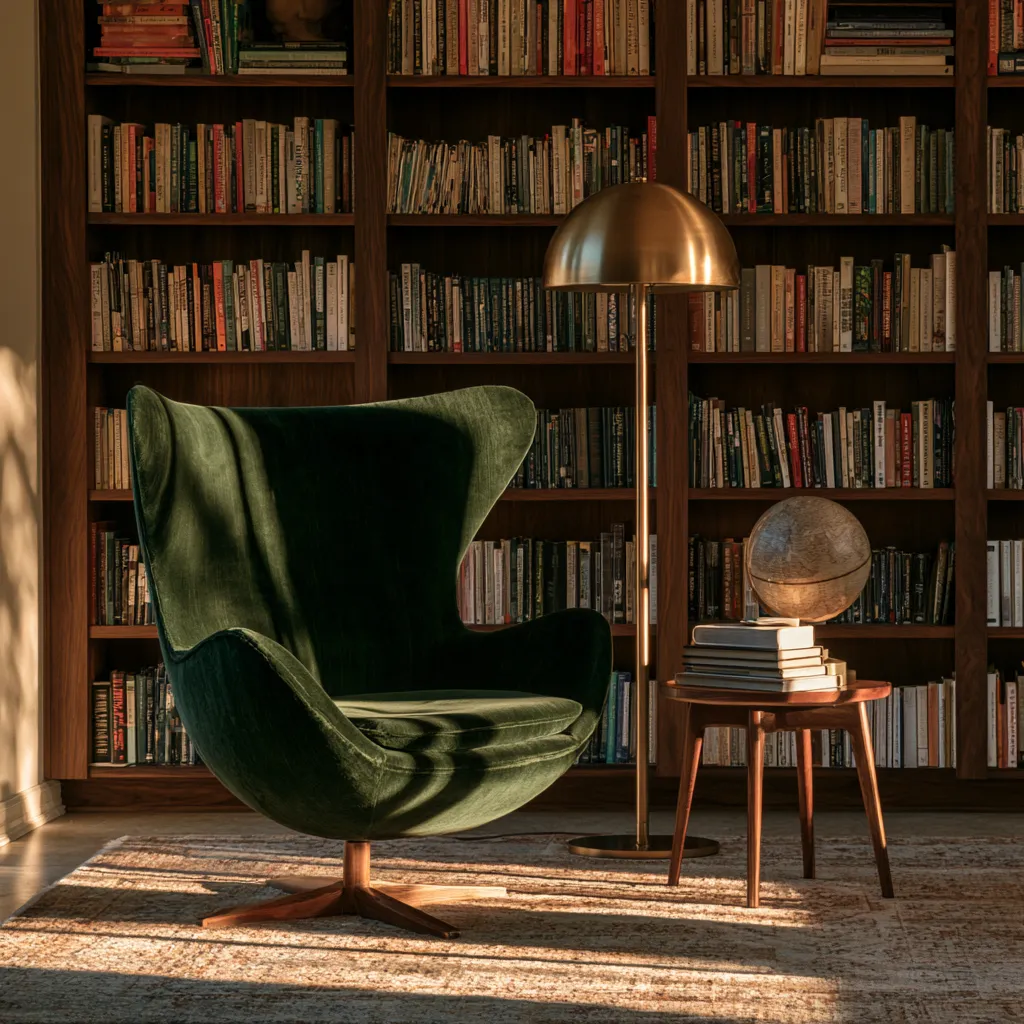
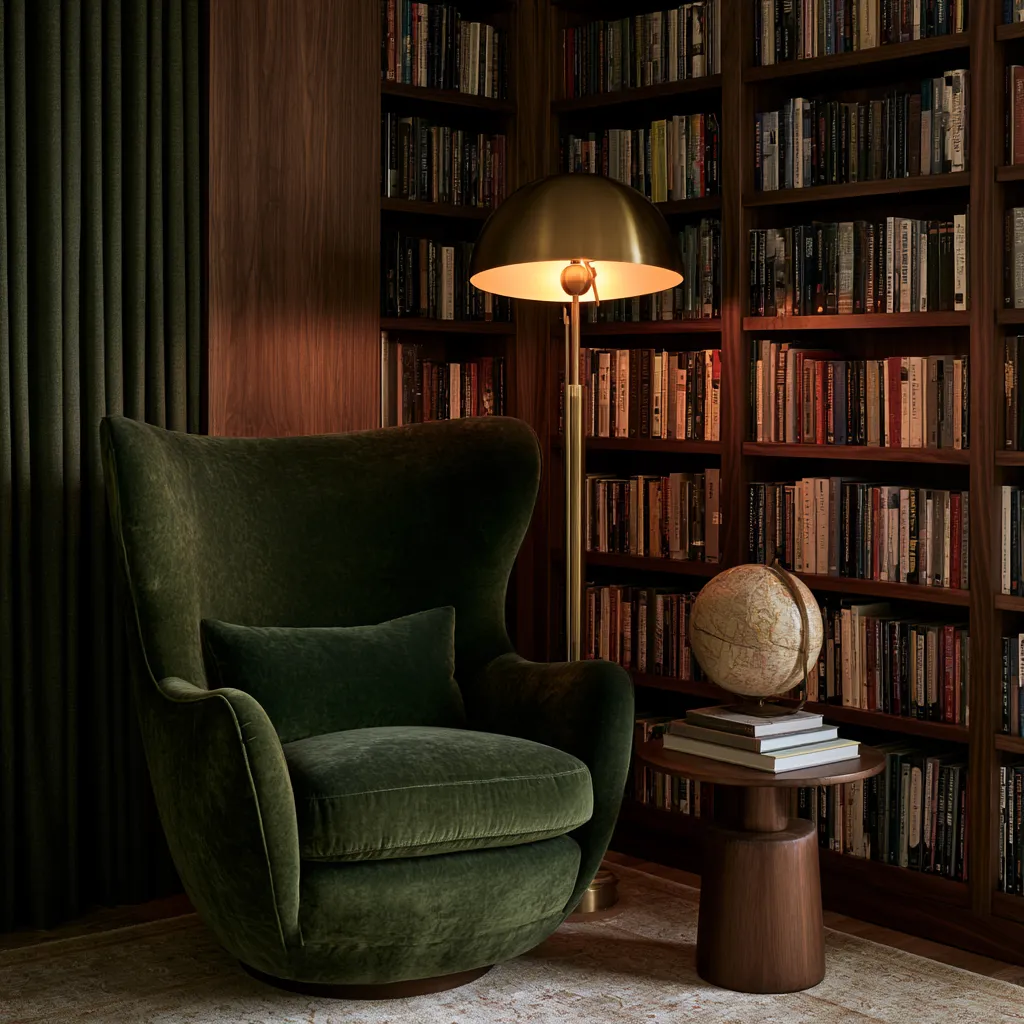
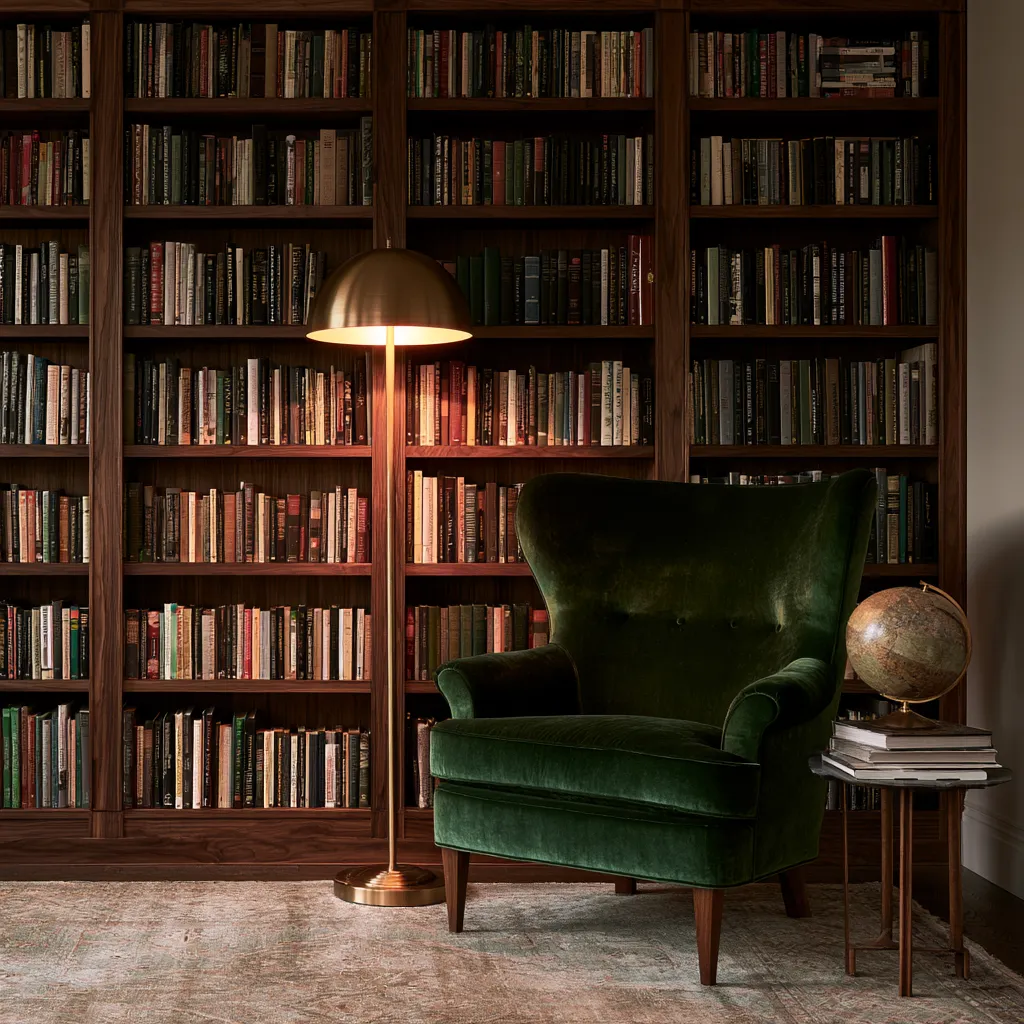
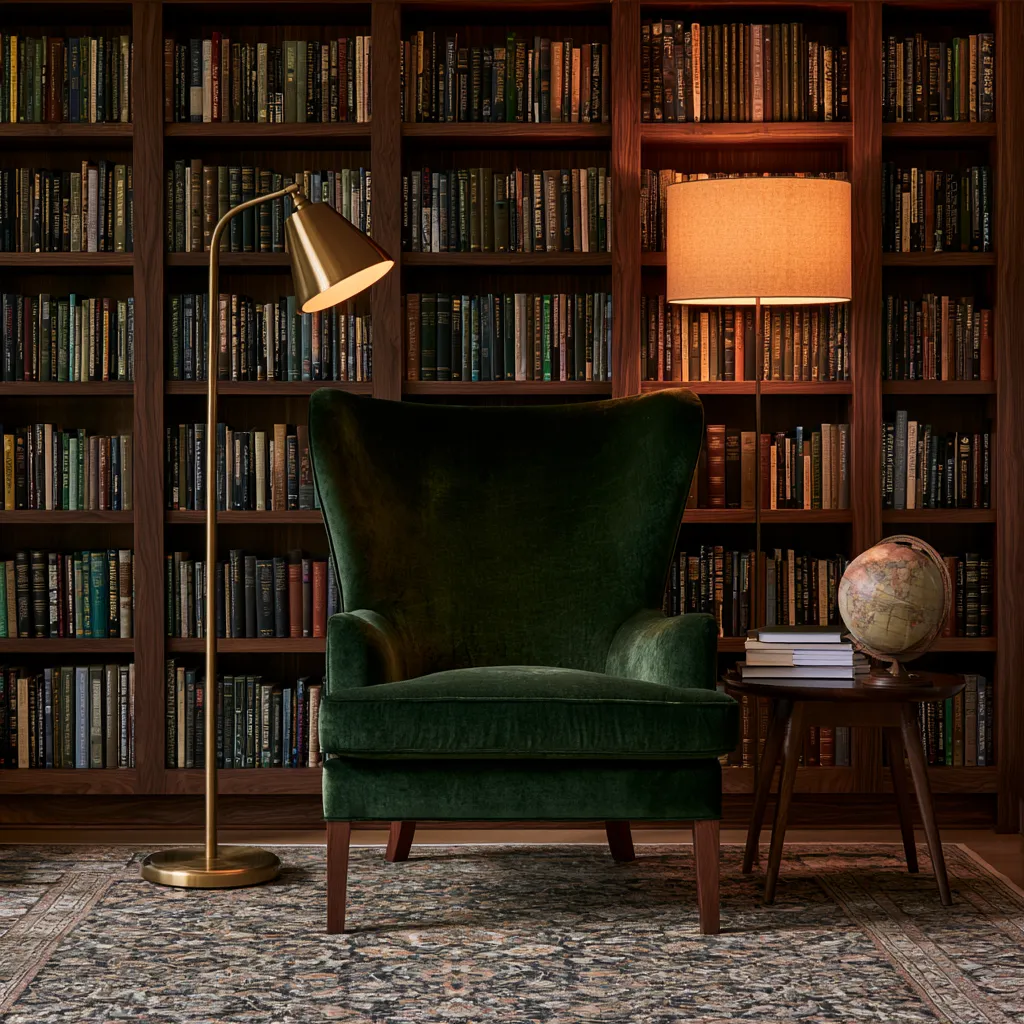
A single upholstered chair — preferably in a deep velvet, aged leather, or a worn chenille — placed near a window or beside a bookcase is one of the highest-impact single additions to a dark academia bedroom. It communicates that the room is not just for sleeping but for inhabiting, which is precisely the narrative the aesthetic depends on. A button-back armchair, a Victorian-profile wingback, or a low tub chair with visible wooden legs and a deep jewel-toned fabric are all appropriate. Add a footstool if the room’s size allows it; the arrangement of chair plus footstool beside a lamp and a small side table filled with books creates the room’s most photogenic corner.
Textiles and Layering in the Dark Academia Bedroom
Layering is the technique that distinguishes a genuinely atmospheric dark academia bedroom from a room that merely uses the right colours. The principle is accumulation: multiple textile layers at the bed, at the window, and on the floor, each in a slightly different material and tone that builds a sense of depth and long habitation.
Bed Layering
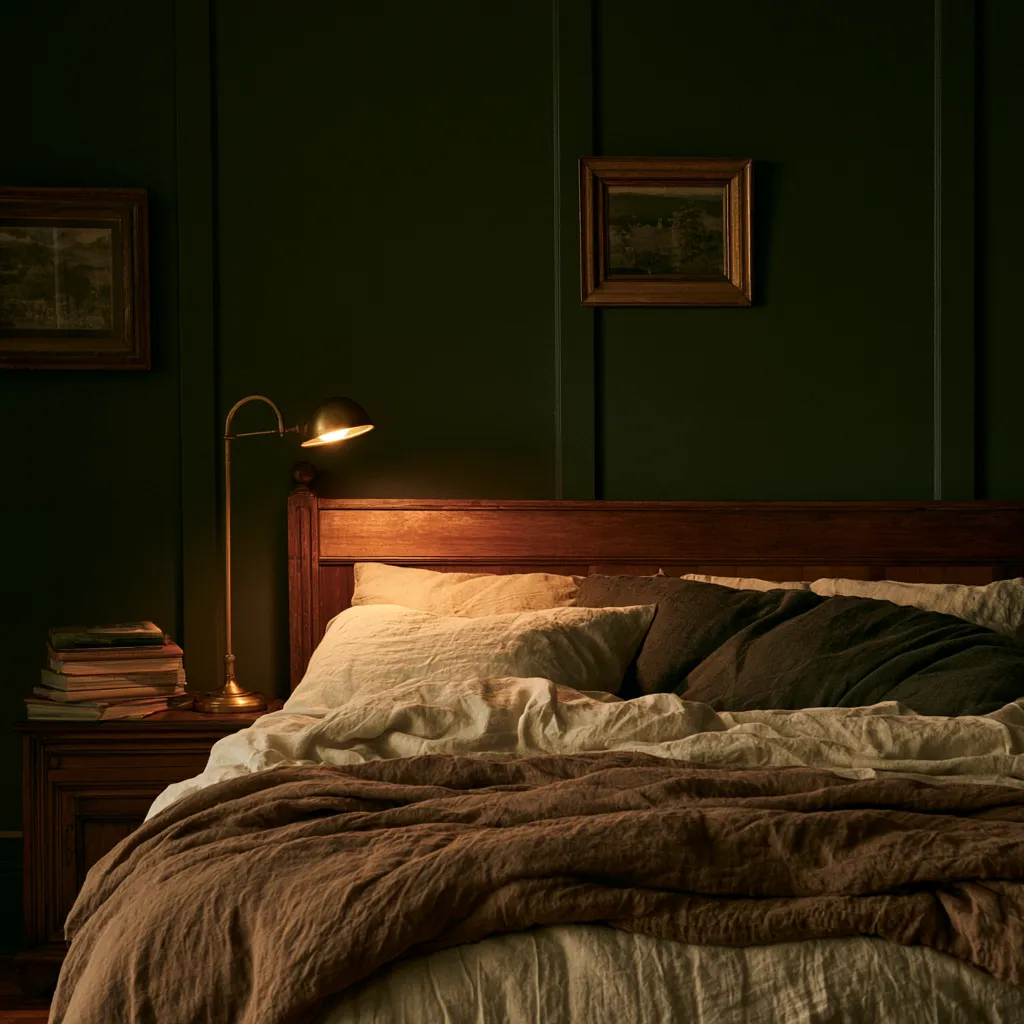
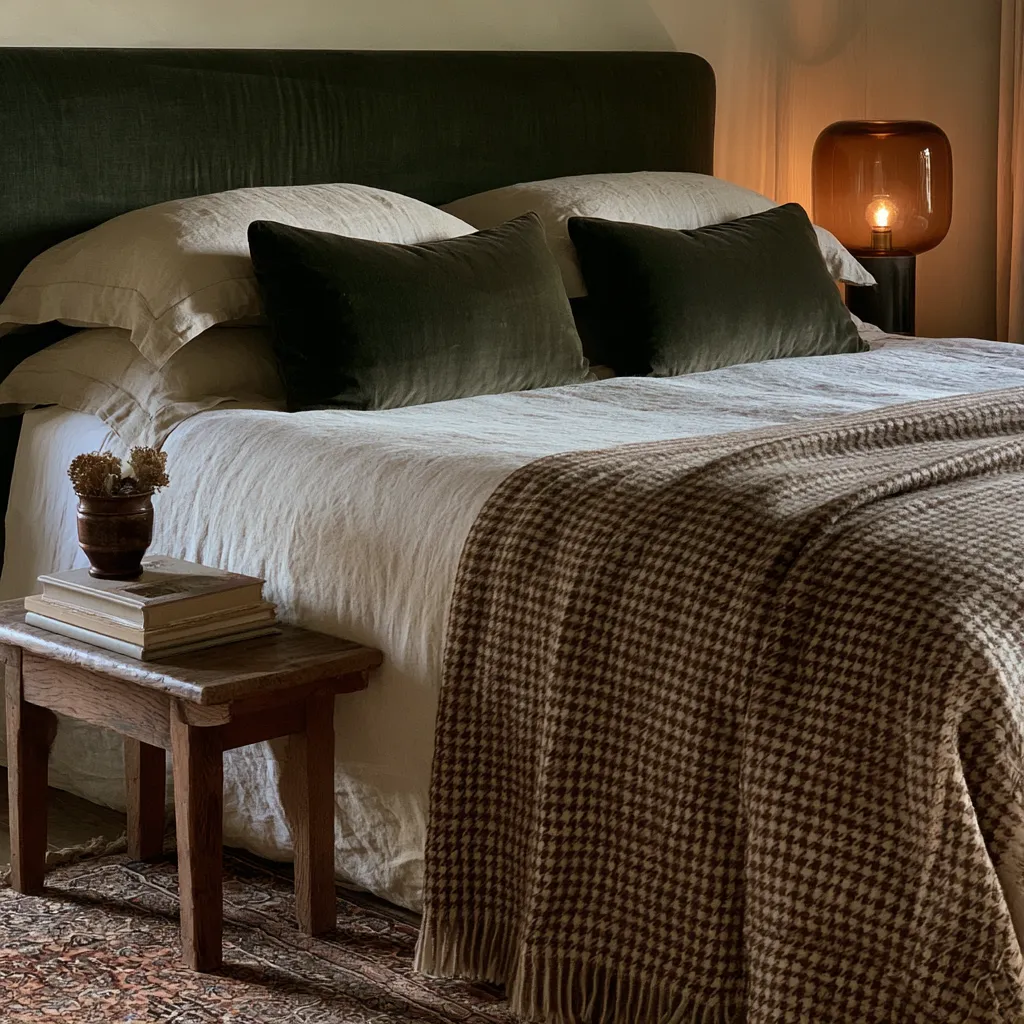
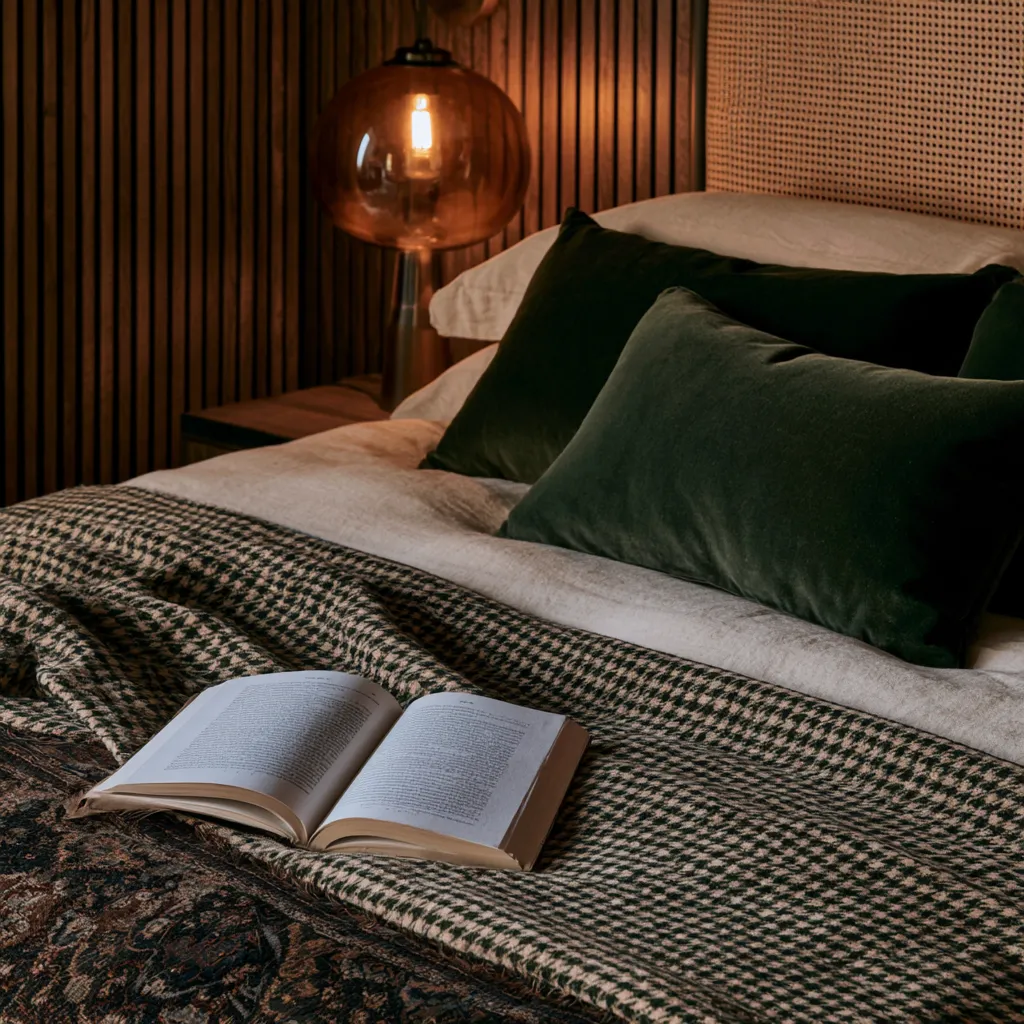
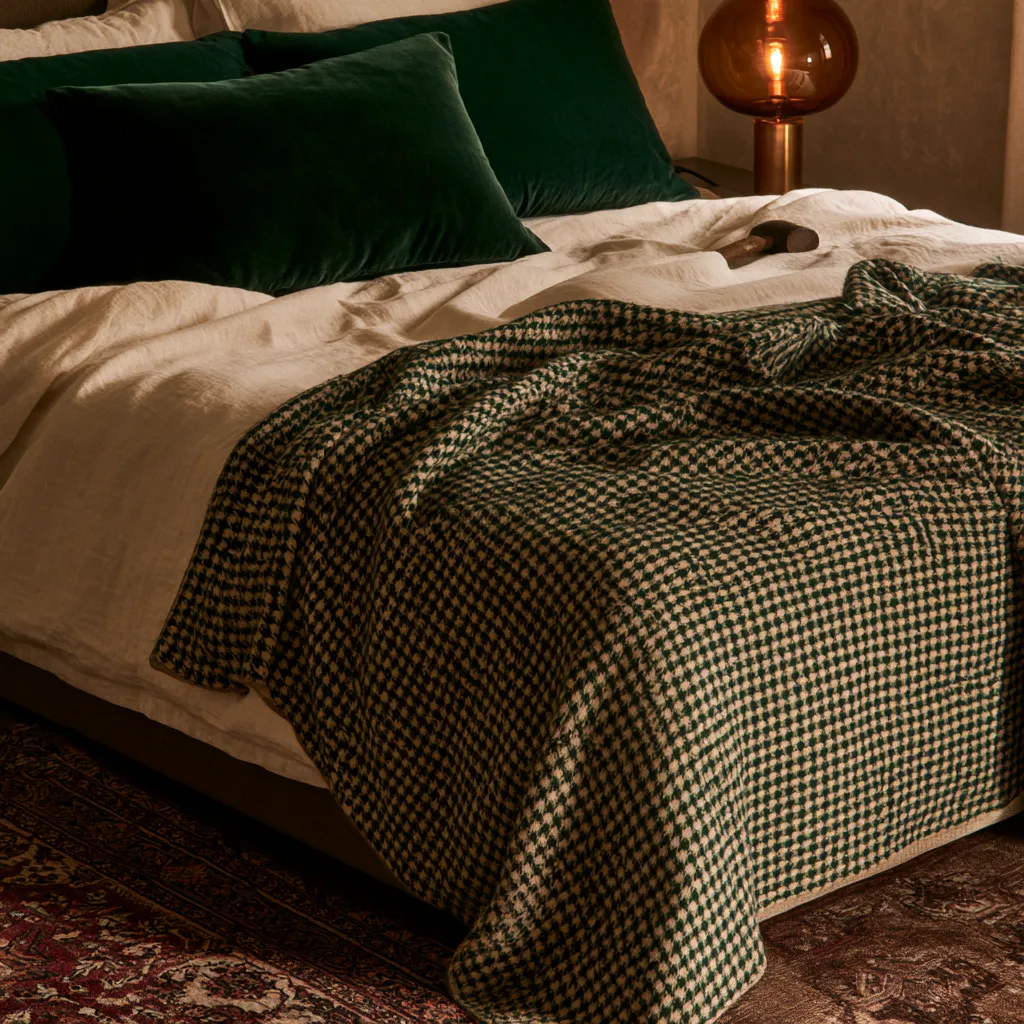
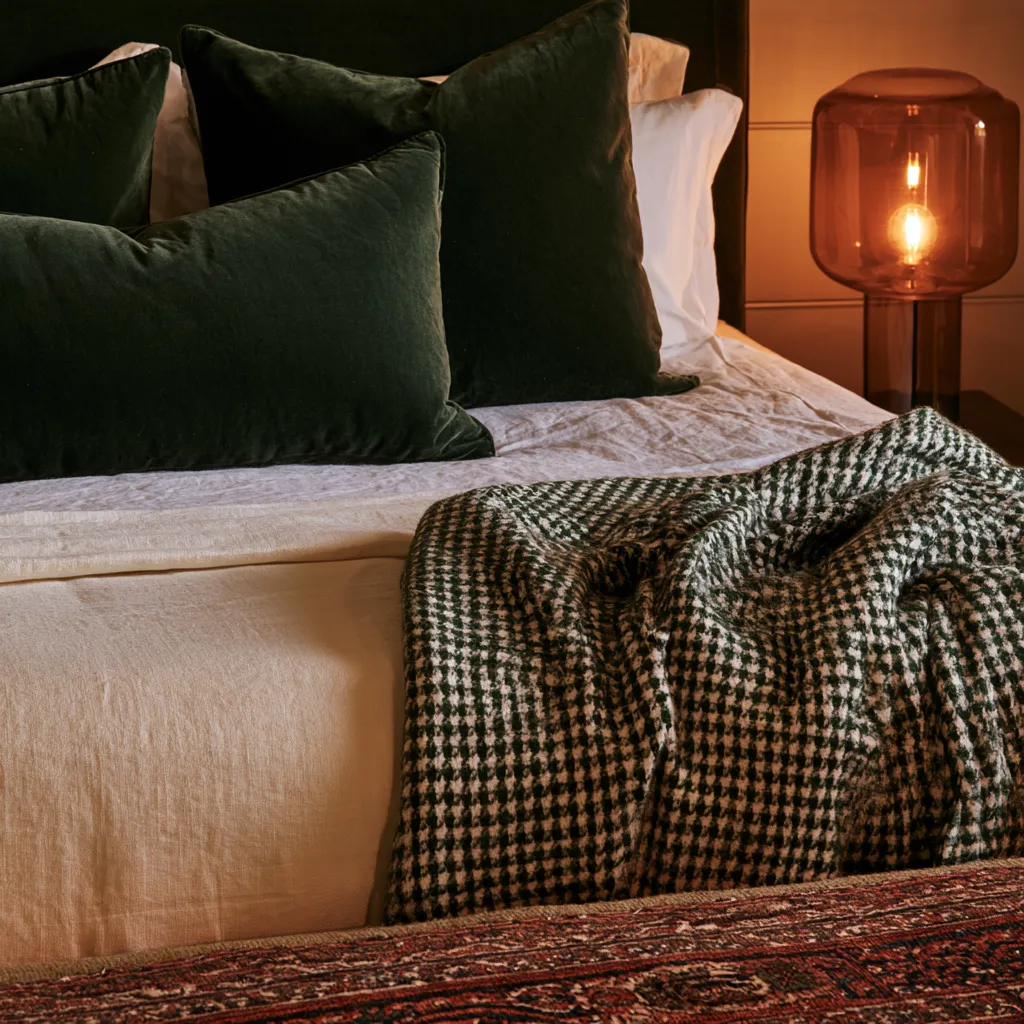
Start with a fitted sheet in a warm cream or aged ivory linen — not white, which reads as too clinical and modern for this aesthetic. Add a flat sheet in a slightly warmer tone, then a cotton or wool blanket in tobacco, camel, or dark sage. Over this, a heavy cotton or linen duvet in a neutral that picks up the wall colour — a deep green duvet against dark green walls creates the immersive, colour-drenched effect that the aesthetic’s most sophisticated interpretations favour. Finish with three to four scatter cushions: a combination of velvet in a jewel tone (emerald, burgundy, teal), a linen or cotton in a geometric or heritage print (plaid, houndstooth, a small floral in muted tones), and at least one that introduces texture — a boucle, a woven cotton, or a needlepoint.
Window Treatments
Curtains in a dark academia bedroom should be floor-length, fabric-heavy, and hang from as close to ceiling height as possible — the visual drama of floor-to-ceiling curtains is one of the aesthetic’s most reliable tools. Velvet curtains in forest green, aged burgundy, or a deep charcoal are the period-correct choice and have the additional functional benefit of blocking light and providing excellent insulation. Lined linen in a dark colour is a lighter-weight alternative that still delivers the necessary weight. Avoid sheers, roman blinds, or anything that reads as contemporary window treatment — they interrupt the room’s period logic.
Floor Textiles
The rug is the room’s anchor. In a dark academia bedroom, the rug should be an oriental or Persian-style pattern in deep reds, greens, navy, and gold — the layered, complex patterns that suggest age and origin. A faded or distressed finish is preferable to a new, bright pile; the slightly worn look adds authenticity. Size matters: in a bedroom, the rug should extend at least 24 inches beyond the sides of the bed on the exposed faces, and ideally be large enough that the feet land on it immediately upon rising. A rug that barely peeks out from under the bed reads as tentative; the dark academia bedroom should feel enveloped.
Lighting the Dark Academia Bedroom Aesthetic
Lighting is where the dark academia bedroom either achieves its atmosphere or completely undoes everything the furniture and palette have built. A single overhead ceiling light — particularly a recessed LED or a flat flush mount — is fatal to this aesthetic. The room needs multiple warm-toned sources at different heights, creating the layered, amber-pooled effect of candlelight without its impracticality.
The fundamental rule: no light source in a dark academia bedroom should have a colour temperature above 2,700K. Warm white (2,200–2,700K) is the target range; anything cooler reads as clinical and modern and destroys the atmosphere entirely. Edison filament bulbs in amber glass — visible through cage or fabric shades — are the most period-accurate choice and now come in LED versions that deliver the aesthetic at minimal wattage.
| Light Source | Placement | Bulb Type | Purpose in the Room |
|---|---|---|---|
| Bedside table lamp | 10–12 inches above mattress level | Edison LED 2,200K amber | Primary reading light, most-used source |
| Floor lamp (reading position) | Behind and to the side of the chair, head at 60–65 inches | Warm white LED 2,400K | Seating zone illumination, creates height |
| Desk lamp | On writing desk, adjustable arm | Warm white LED 2,700K | Task light, anchors the scholarly zone |
| Wall sconces | Flanking the bed or bookcase at 60–66 inches | Edison filament 2,200K | Ambient fill without ceiling fixture |
| Candle clusters | Mantelpiece, desk corner, windowsill | Real wax or high-quality LED flame | Period atmosphere, used decoratively not functionally |
| Picture light | Above framed art or mirror | Low-wattage warm white | Dramatic accent, draws attention to wall objects |
The combination of multiple warm sources at different heights is what produces the amber-layered effect that photographs so strongly in dark academia interiors and that makes the room feel genuinely immersive in person. If only one lighting upgrade is possible, the bedside lamp is the priority: it is the light that is on most often and the one that sets the room’s entire evening mood.
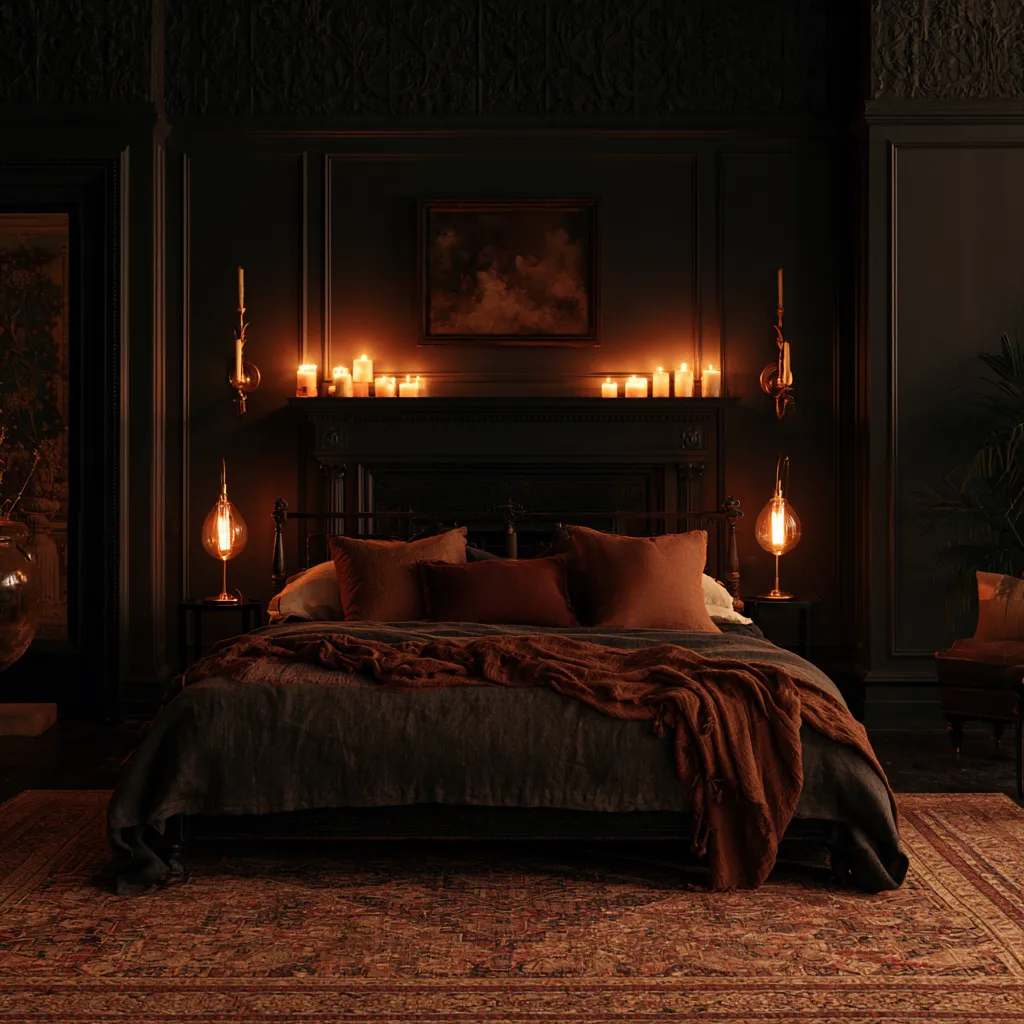
The Objects and Details That Make the Dark Academia Aesthetic Feel Real
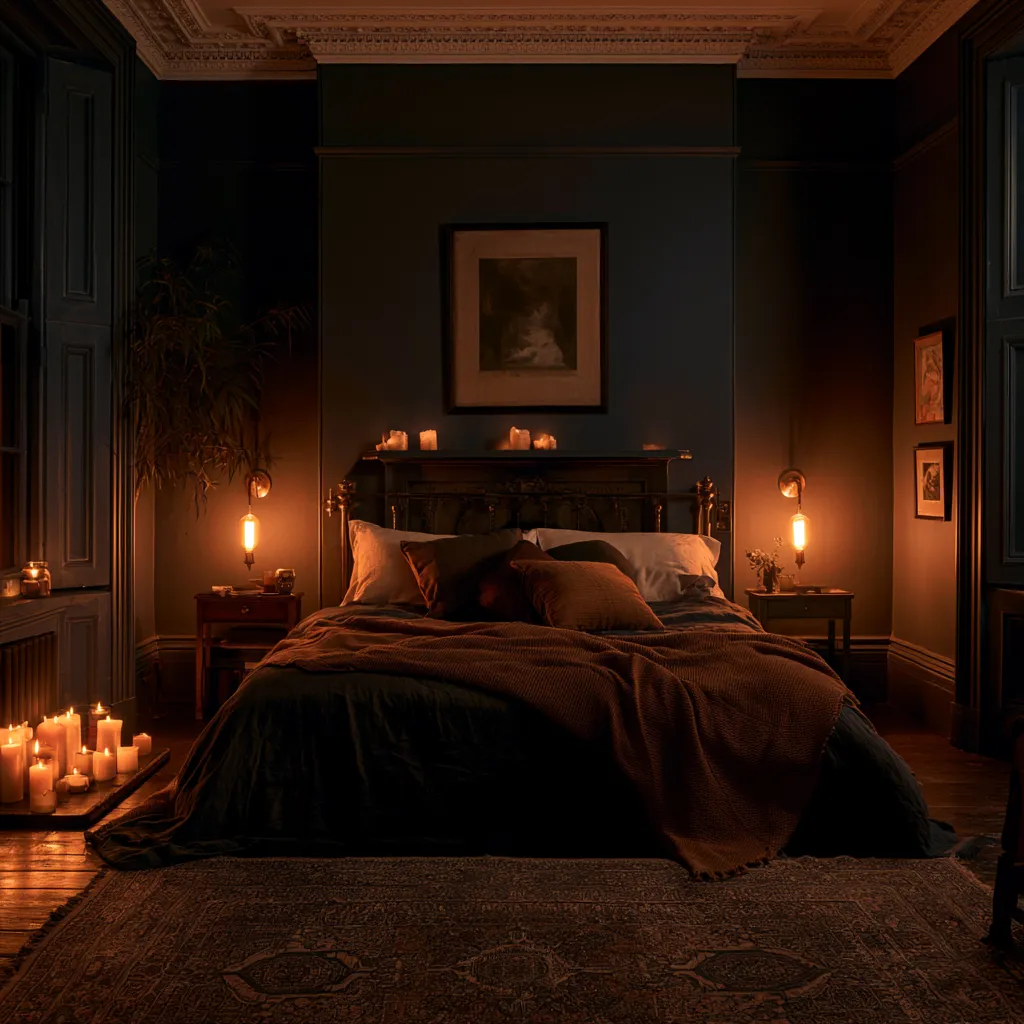
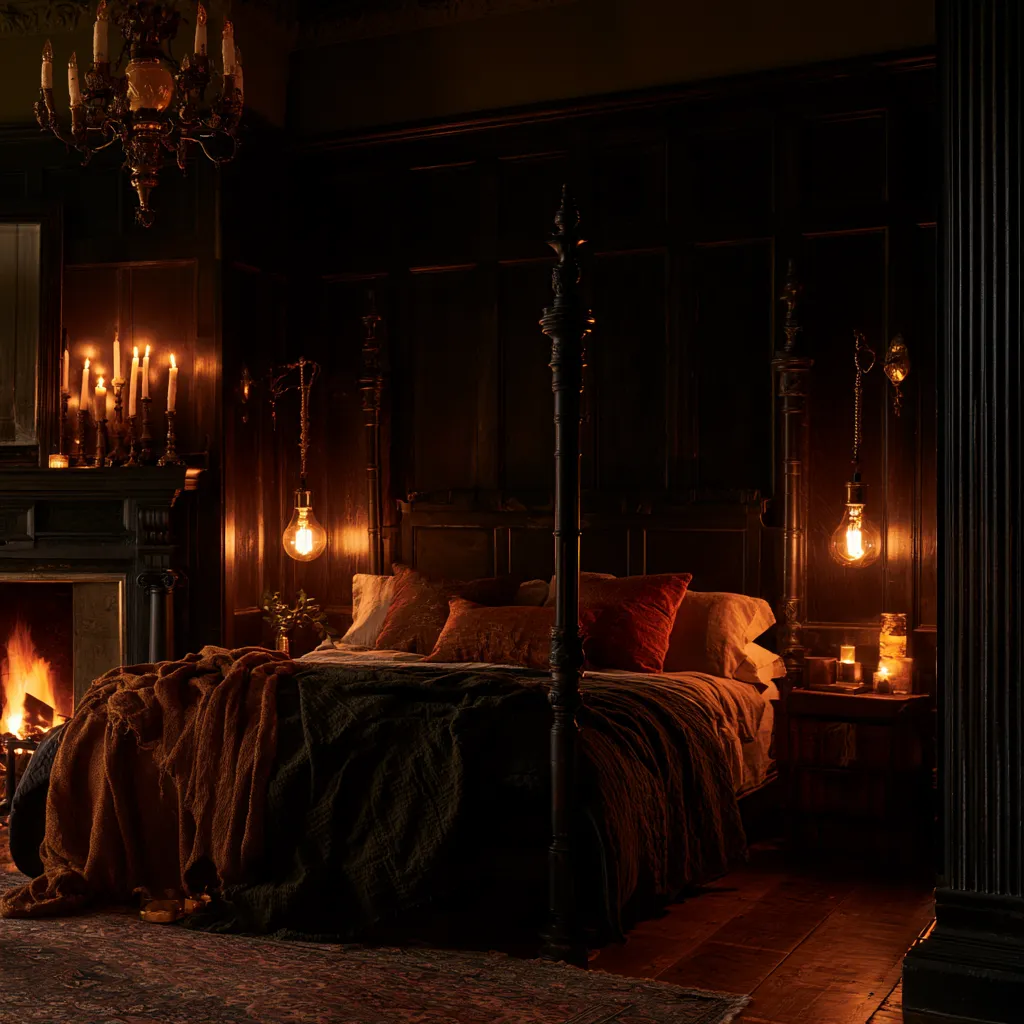
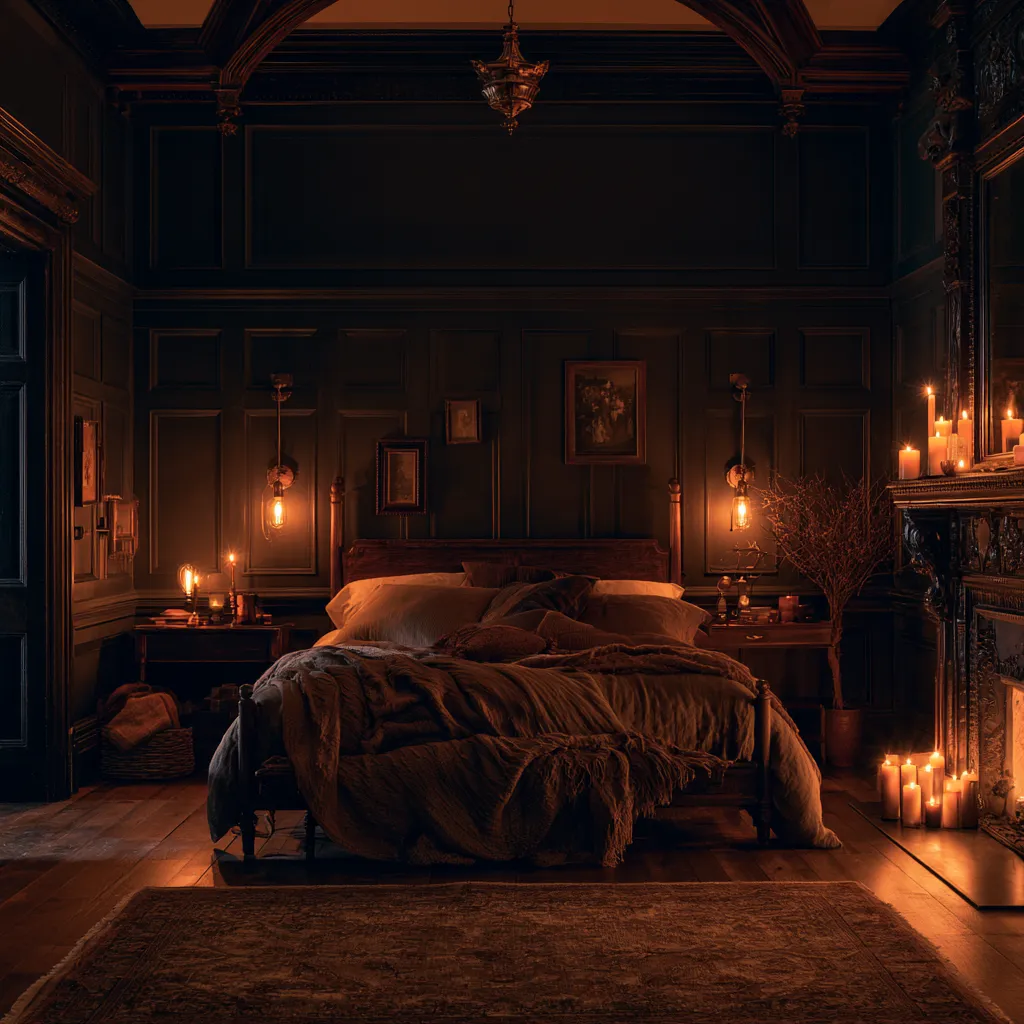
The objects in a dark academia bedroom are its most telling element. They are what separates a room with the right colours and furniture from one that genuinely feels inhabited by someone who reads, collects, and thinks. The rule is specificity over abundance: a few carefully chosen objects with evident history will outperform a dozen decorative pieces sourced from a trend-driven home store.
- Books stacked and arranged: The book arrangement in a dark academia bedroom should look functional rather than curated — some upright on shelves, some stacked horizontally as a surface, one open face-down on the nightstand. Avoid colour-coordinated spine arrangements; they signal decoration over scholarship and break the room’s internal logic entirely.
- Antique maps and botanical prints: Framed in dark wood, gilt, or aged black frames, these occupy the wall space between bookshelves and provide visual interest without competing with the room’s tonal palette. Sepia and aged paper tones work better than vivid colour prints.
- Globes: A terrestrial globe — particularly one on a brass or dark wood stand — is one of the most iconic dark academia objects and one of the most effective at communicating the aesthetic’s relationship with knowledge and exploration. Place on a desk, a bookcase, or a side table at approximately chair height.
- Candle holders and candlesticks: Brass candlesticks in varying heights grouped together on a mantelpiece or windowsill. The layered height of grouped candlesticks is a simple and low-cost way to add vertical interest and period authenticity simultaneously.
- Magnifying glasses, hourglasses, inkwells: Small objects with scholarly associations that sit on a desk or tray. Not every dark academia bedroom needs all of these, but one or two genuine vintage pieces — found at a market or inherited — anchor the room’s narrative in a way that reproduction pieces do not.
- Taxidermy or natural history objects: A framed butterfly collection, a fossil, an antique animal skull, a set of birds’ eggs under a glass dome — natural history objects in the Victorian collecting tradition are among the most powerful dark academia signals and are becoming increasingly available through specialist dealers and antique markets.
Dark Academia Bedroom Aesthetic vs Related Styles
Dark academia is one of several overlapping moody residential aesthetics, and understanding where it sits relative to adjacent styles helps clarify the specific design decisions that define it. The following comparison addresses the questions most commonly asked by those building a dark academia bedroom for the first time.
| Aesthetic | Dominant Palette | Key Materials | Book Role | Period Reference |
|---|---|---|---|---|
| Dark Academia | Forest green, charcoal, tobacco brown | Dark wood, worn leather, wool, aged brass | Central, structural | Victorian and Edwardian university interiors |
| Gothic | Black, deep purple, blood red | Iron, stone, velvet in dark tones | Incidental | Medieval and Romantic Gothic architecture |
| Moody Maximalist | Deep jewel tones, mixed | Mixed materials, pattern-heavy | Decorative | No specific period reference |
| Victorian | Deep red, green, gold | Heavy carved wood, velvet, brocade | Present but not dominant | Victorian domestic interior 1837–1901 |
| Dark Scandinavian | Charcoal, navy, deep olive | Light wood contrasted with dark walls | Minimal | Nordic modernism with dark palette |
| Cottagecore | Soft green, cream, blush | Linen, floral prints, light wood | Present, decorative | Pre-industrial rural English cottage |
The key differentiator of the dark academia bedroom aesthetic is the scholarly apparatus — the books, the desk, the writing implements, the objects of intellectual curiosity — combined with the specific warm-dark palette. Without these elements, a dark-walled bedroom with aged wood is closer to moody maximalism or Dark Scandinavian than to dark academia. For more on the Dark Scandinavian approach as a comparison point, our guide to dark Scandinavian bedroom interiors covers the intersection and divergence between these two dark-palette styles.
Building the Dark Academia Bedroom in a Small Space
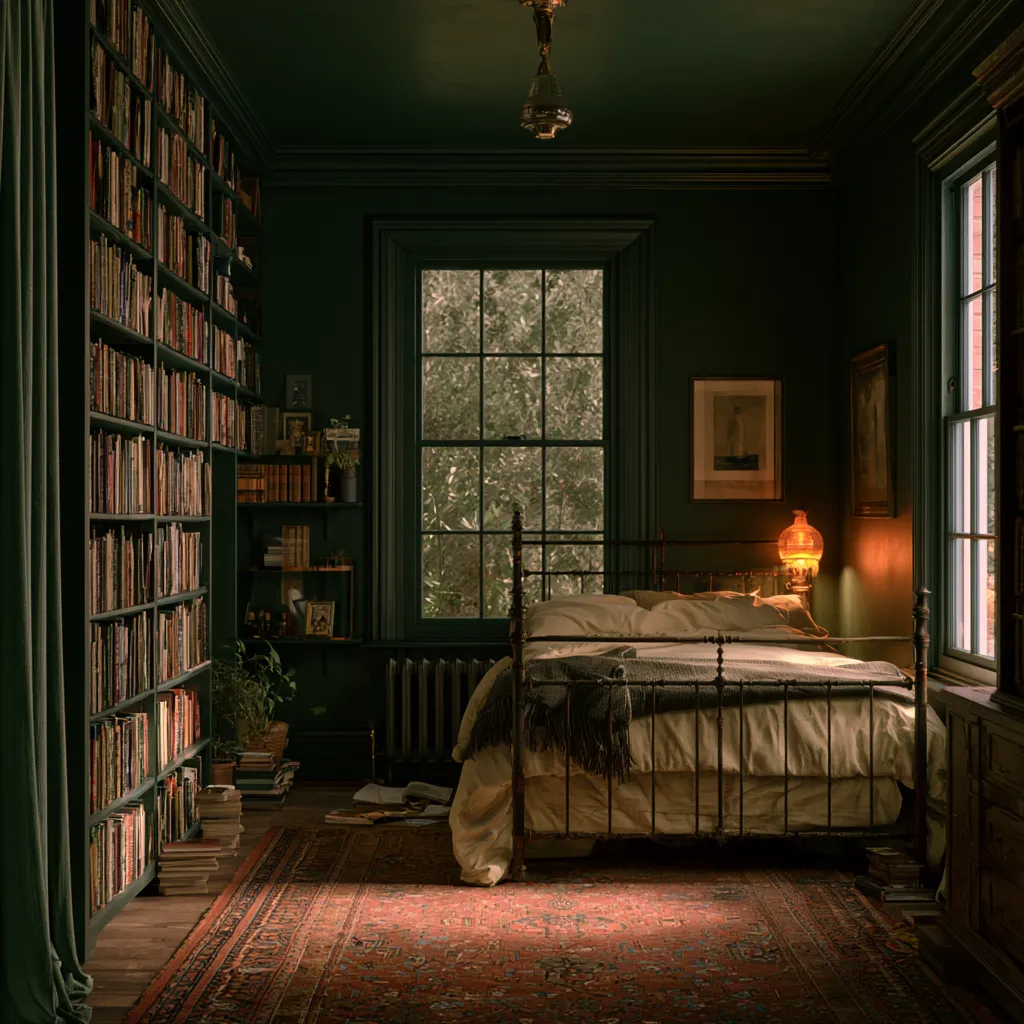
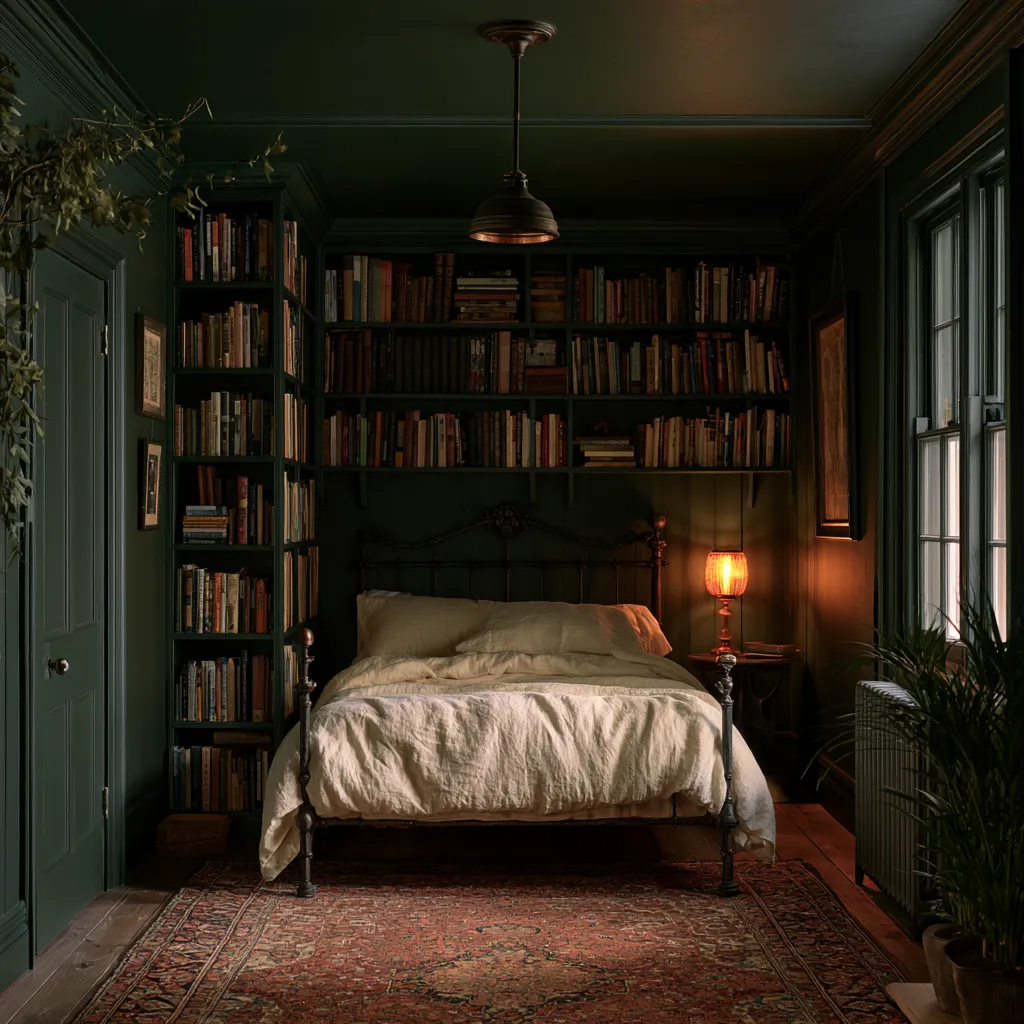
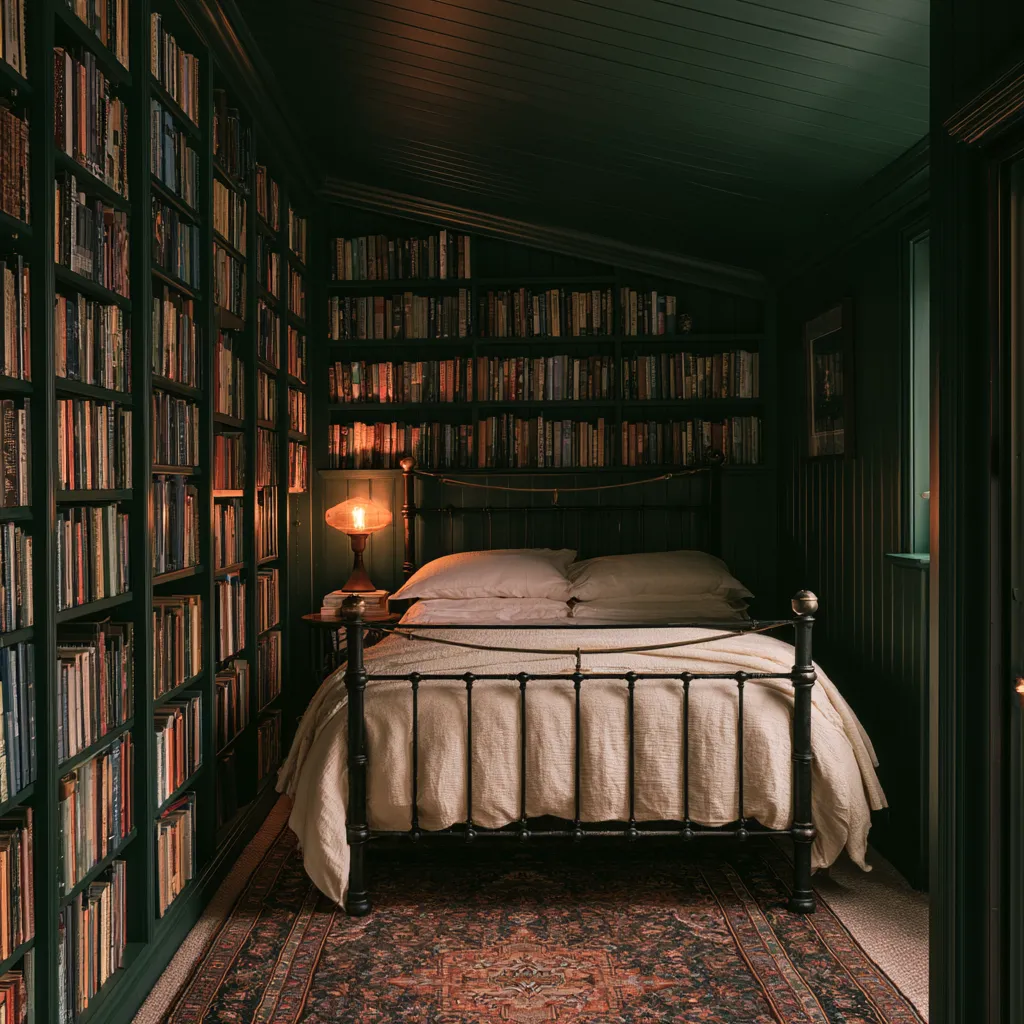
The most common concern about the dark academia bedroom aesthetic is that it requires large rooms — that the dark walls and heavy furniture will overwhelm a small space. This concern is understandable but largely unfounded. Some of the most compelling dark academia bedrooms are small: the aesthetic rewards intimacy, and a small room can feel deliberately cave-like and enveloping in a way that a large room never quite achieves.
The specific adaptations for a small dark academia bedroom are straightforward:
- Paint the ceiling the same colour as the walls: In a small room, painting ceiling and walls in the same dark tone creates an immersive, enveloping effect that reads as intentional. Leaving the ceiling white creates an awkward and dated contrast that emphasises the room’s dimensions rather than concealing them.
- Choose furniture with exposed legs: In a small room, any piece of furniture that allows the eye to see floor beneath it reduces the sense of crowding. A bed on tall legs, a side table with a thin frame, a chair on tapered wooden legs — all preserve the sense of floor space even when the footprint is limited.
- Vertical shelving over horizontal furniture: A single tall bookcase is a better storage and display solution in a small dark academia bedroom than a wide, low credenza. It introduces the vertical line that makes low ceilings read higher and keeps more of the floor visible.
- One rich textile at a time: In a small room, the layered textile approach requires restraint. Prioritise the rug and the bedding; reduce the curtain weight and the cushion count compared to a larger room. The room should feel rich, not cluttered.
Reading Nooks and Study Corners in the Dark Academia Bedroom
One of the most defining spatial elements of the dark academia bedroom aesthetic is the reading corner — a distinct zone within the bedroom dedicated to reading, writing, and thinking. This does not require a large room; even a corner measuring 4 × 4 feet can accommodate the essential configuration of chair, lamp, and surface.
The key to a convincing dark academia reading nook within a bedroom is that it should look used. A chair with a throw slightly displaced, a book left open on the arm, a half-empty mug on the side table — these are the details that communicate inhabitation rather than styling. For rooms where a dedicated corner is not possible, a window seat with a cushion, a throw, and a shelf of books immediately behind it achieves the same narrative at a much smaller footprint. Our guide to reading nook ideas for small spaces covers the technical details of creating these zones in constrained rooms, with specific furniture and dimension guidance that applies directly to the dark academia bedroom context.
Dark Academia Bedroom Aesthetic on a Budget
The dark academia aesthetic is unusually accessible at lower budget levels because its most powerful elements — books, dark paint, aged objects — are either inexpensive or findable second-hand. The following breakdown separates the high-impact, low-cost moves from the investment pieces worth saving for:
| Element | Budget Approach | Investment Approach | Impact |
|---|---|---|---|
| Wall colour | One tin of dark paint (£35–£60 / $45–$75): highest ROI in the room | Limewash or specialist plaster finish (£200–£500) | Very high — transforms the room immediately |
| Books | Charity shops, car boot sales, library sales: £1–£3 per book | First editions and antiquarian volumes | High — books are structural in this aesthetic |
| Rug | Vintage Persian rug from a market or online: £80–£200 | Antique hand-knotted rug (£500+) | High — anchors the entire floor composition |
| Bedside lamp | Edison bulb in a simple cage or ceramic base: £20–£40 | Antique brass desk lamp rewired: £80–£200 | High — sets the entire room’s light quality |
| Curtains | Velvet curtains from high street: £60–£120 per pair | Bespoke lined velvet: £300–£600 per pair | High — adds weight and period drama |
| Antique objects | Market finds, charity shops: £5–£30 per piece | Specialist antique dealers: £50–£300+ | Medium — important for authenticity, not scale |
| Bed frame | Second-hand iron or wood frame repainted: £100–£200 | Antique or quality reproduction: £600–£1,500 | Very high — the room’s primary visual anchor |
The most effective budget sequence for building a dark academia bedroom from scratch: paint the walls first, then address the lighting, then the rug, then the curtains. These four elements transform the room’s atmosphere before any furniture is changed and can collectively be achieved for under £300 / $380 in their budget versions — less than the cost of a single mid-range piece of furniture.
Common Mistakes in the Dark Academia Bedroom Aesthetic
The dark academia bedroom aesthetic is one of the easier aesthetics to approximate and one of the harder ones to do with genuine conviction. The mistakes that produce a room that reads as pastiche rather than personality tend to follow predictable patterns:
- Buying matching sets: A matched bedroom furniture set in dark wood — bed, wardrobe, chest of drawers, nightstands all from the same range — reads as a retail catalogue page rather than an accumulated collection. The dark academia bedroom should look like it was assembled from multiple sources across multiple years. Buy pieces individually and allow them to differ in tone and detail.
- Colour-coordinating the bookshelves: Arranging books by spine colour destroys the scholarly narrative in a single gesture. It signals that the books are decoration, not knowledge — which is the exact inversion of what the dark academia aesthetic requires. Arrange by author, by subject, or by the order in which they arrived in the room.
- Cool-toned dark walls: Cool greys, steel blues, or purple-tinged dark tones push the aesthetic toward gothic or industrial. The dark academia bedroom palette is warm-dark — the warmth of aged leather and amber firelight, not the cool of stone and shadow.
- Too many trend objects: The aesthetic has a recognisable object vocabulary — the globe, the quill, the magnifying glass — and filling a room with all of them simultaneously tips into costume rather than character. Choose two or three objects that feel personally meaningful and let the rest of the room’s composition carry the narrative.
- Bright overhead lighting as the primary source: A single overhead LED light fixture, regardless of the wall colour and furniture choices around it, will dissolve the atmosphere entirely. If overhead lighting must be used, fit a dimmer switch and set it to 20–30% maximum; rely on the floor-level and table-level sources for the room’s actual illumination.
Building the Room Over Time
The dark academia bedroom aesthetic is perhaps uniquely suited to incremental building. Unlike minimalist rooms, which require everything to be right simultaneously for the composition to work, the dark academia bedroom improves with each addition. Start with the wall colour and one warm light source. Add the rug. Add books — genuinely, from charity shops and markets and the shelves of people who want to pass them on. Add one good chair. Add curtains. Add objects one at a time, chosen for what they mean to you rather than what they signal to a trend.
The rooms that embody the dark academia aesthetic most convincingly are the ones that look as though they have been lived in rather than designed. That quality cannot be sourced; it can only be accumulated. The process of building the room — the finding, the arranging, the gradual layering — is itself part of what the aesthetic celebrates. That is not a design limitation. It is the point.
For further context on how moody interiors using dark palettes and antique material references are evolving in 2026, our piece on black and emerald green bedroom ideas for a dark, moody retreat explores one of the most compelling colour directions within the broader moody bedroom category and offers specific palette guidance applicable directly to the dark academia bedroom context.