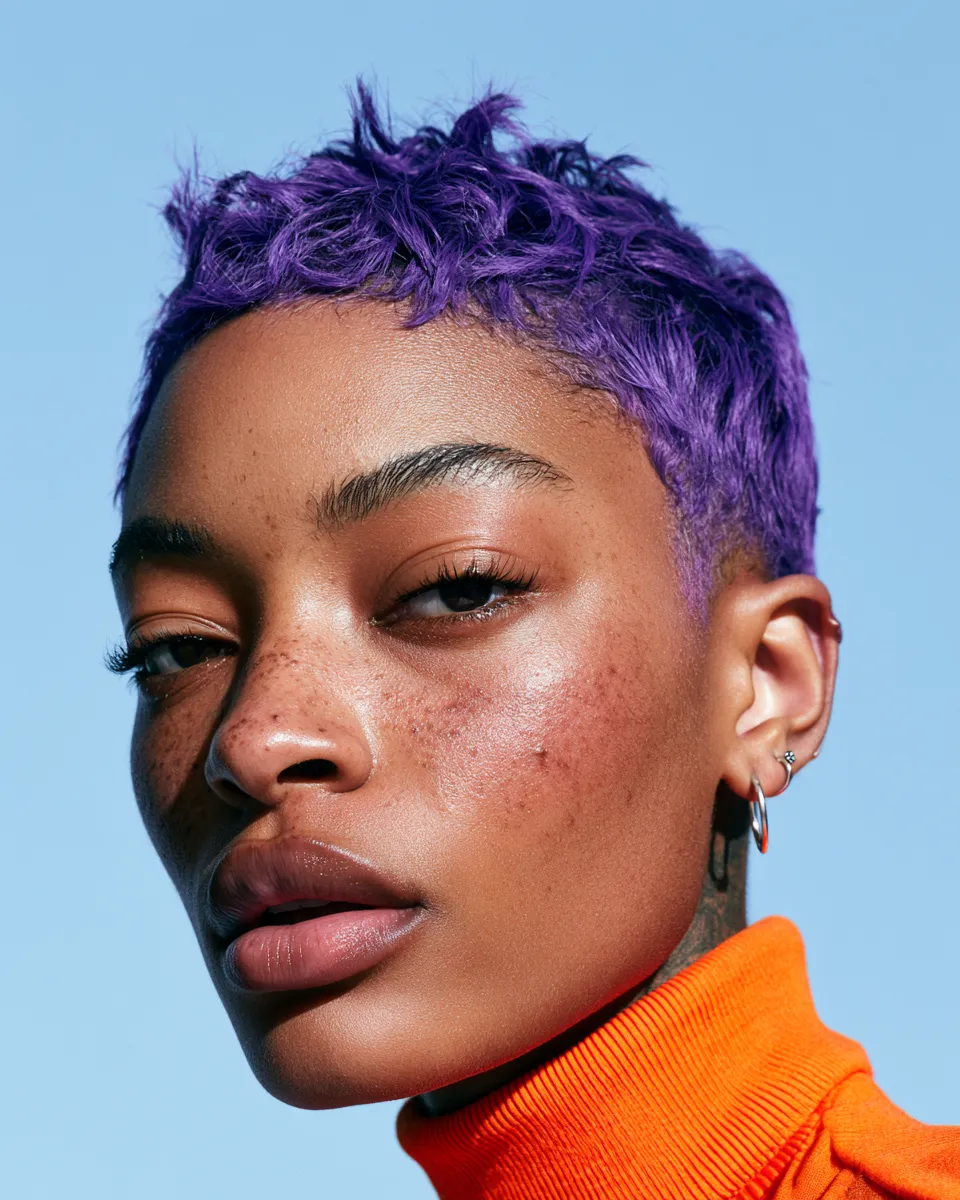
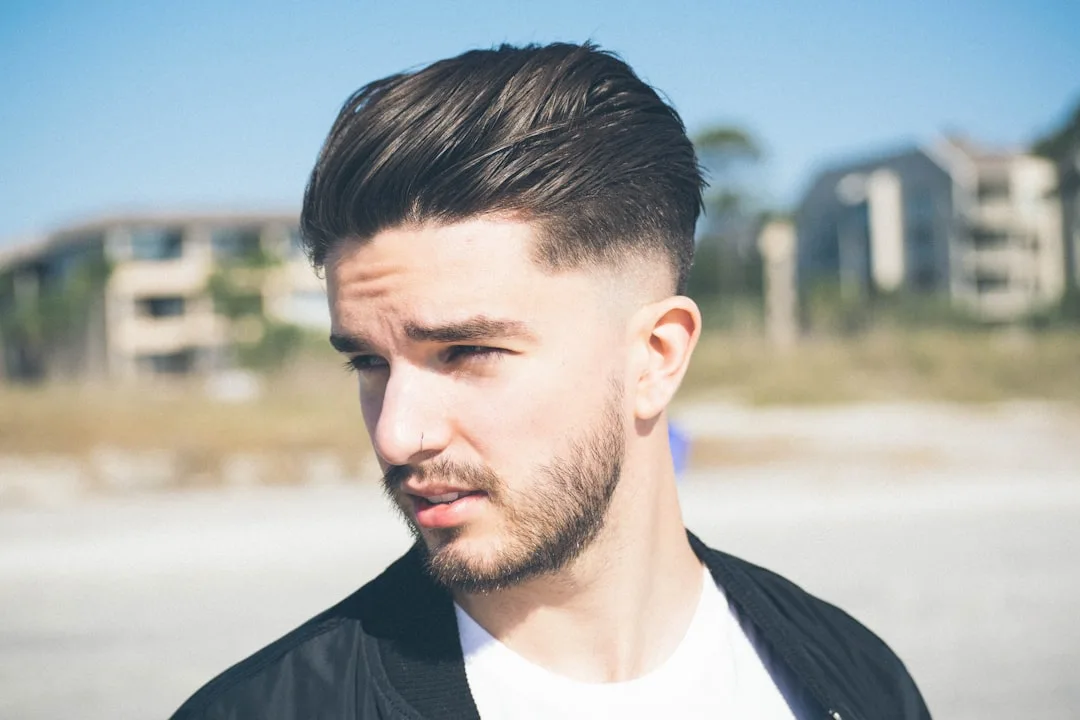
Short hairstyles for thick hair work best when the cut and color work together — and autumn makes that pairing almost effortless. Warm shades like caramel, auburn, and deep chestnut mirror the season’s palette while adding depth that dense hair genuinely needs. The result is hair that looks intentionally sculpted rather than simply heavy.
Do short cuts actually help with thick hair? Yes — consistently. Strategic layering removes bulk without sacrificing volume, and shorter lengths dry faster and hold shape longer between washes. For anyone with very thick hair who has wrestled with pyramid-shaped blowouts, a well-executed short cut is closer to a solution than a style choice.
The three styles covered here — a layered bob, an auburn pixie, and a deep chestnut lob — address different needs: maximum volume control, bold color impact, and versatile length, respectively. Each pairs a specific cut architecture with a fall-appropriate warm tone. If you’re deciding which new haircut direction suits you, understanding how these structures interact with thick hair is the right place to start.
- Layered bobs distribute thick hair’s weight evenly — caramel highlights amplify the dimensional effect.
- Auburn pixies remove bulk at the sides and nape, giving volume exactly where it looks best: at the crown.
- A deep chestnut lob is the most versatile option — enough length for waves or a sleek finish, enough cut to stay manageable.
- Thick hair adds 15–25% to salon coloring time and cost, per stylist pricing data — budget accordingly.
- Warm tones (caramel, auburn, chestnut) fade more gracefully than cool shades on dense hair, which means longer intervals between touch-ups.
- Heat protection is non-negotiable: board-certified dermatologists at the American Academy of Dermatology recommend low or medium heat settings and a protective product every time.
Layered Bob for Thick Hair Lifted by Caramel Highlights
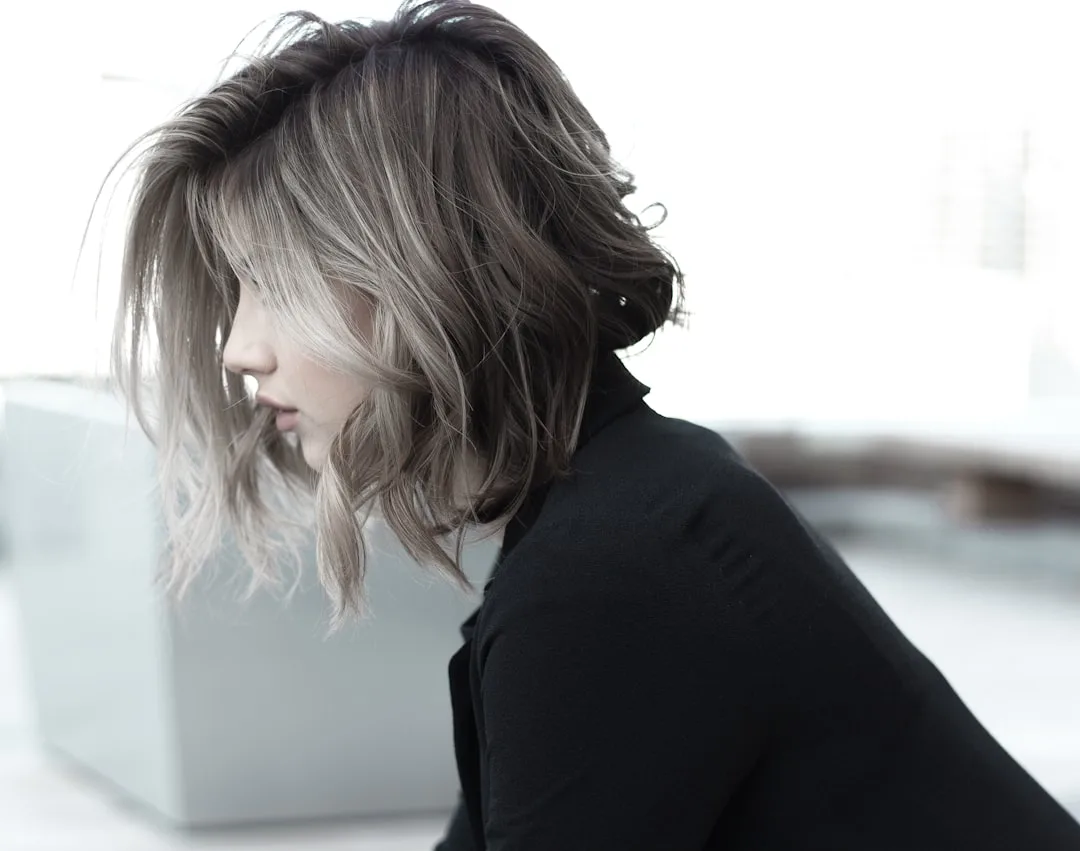
Short hairstyles for thick hair rarely deliver as reliably as a layered bob paired with caramel highlights. The layers break up the solid mass of dense strands — think of it less like a haircut and more like internal architecture that keeps the silhouette from collapsing under its own weight. Caramel highlights placed through the mid-lengths catch light at exactly the points where the layers fan out, so the overall shape reads as dimensional rather than blocky.
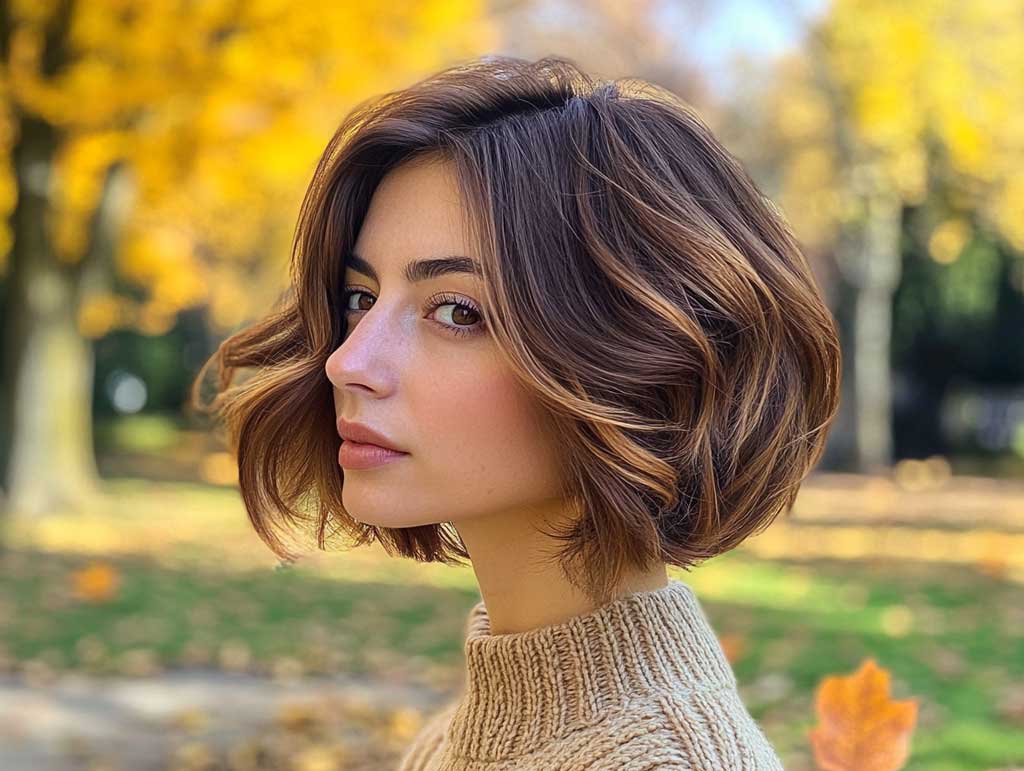
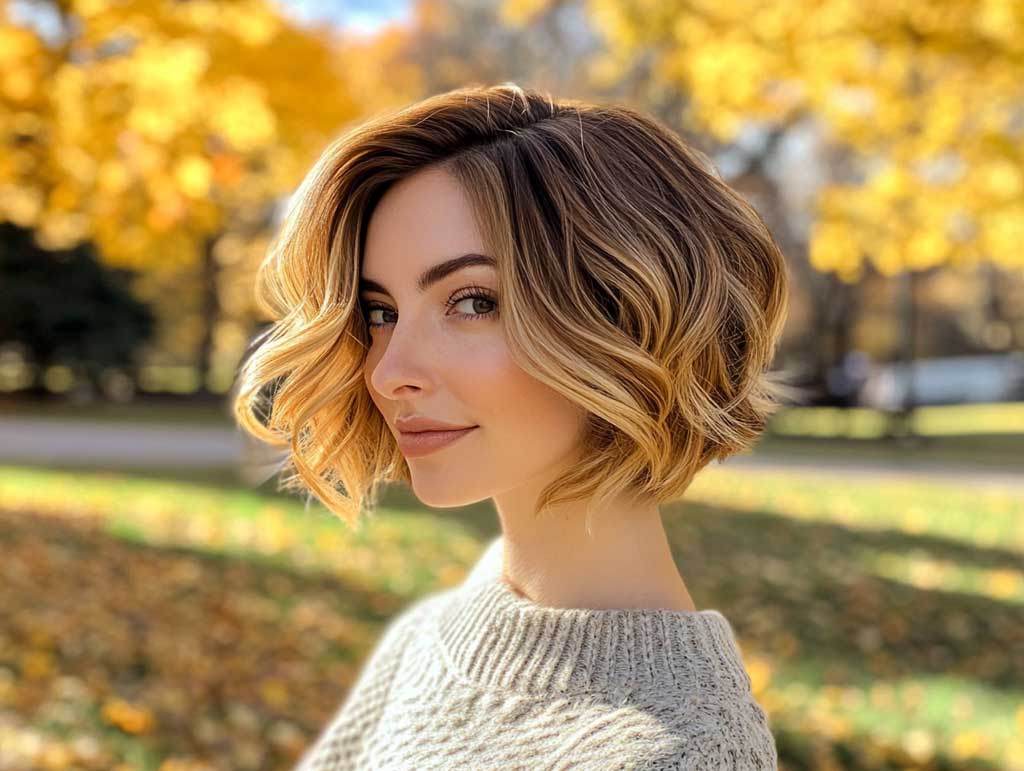
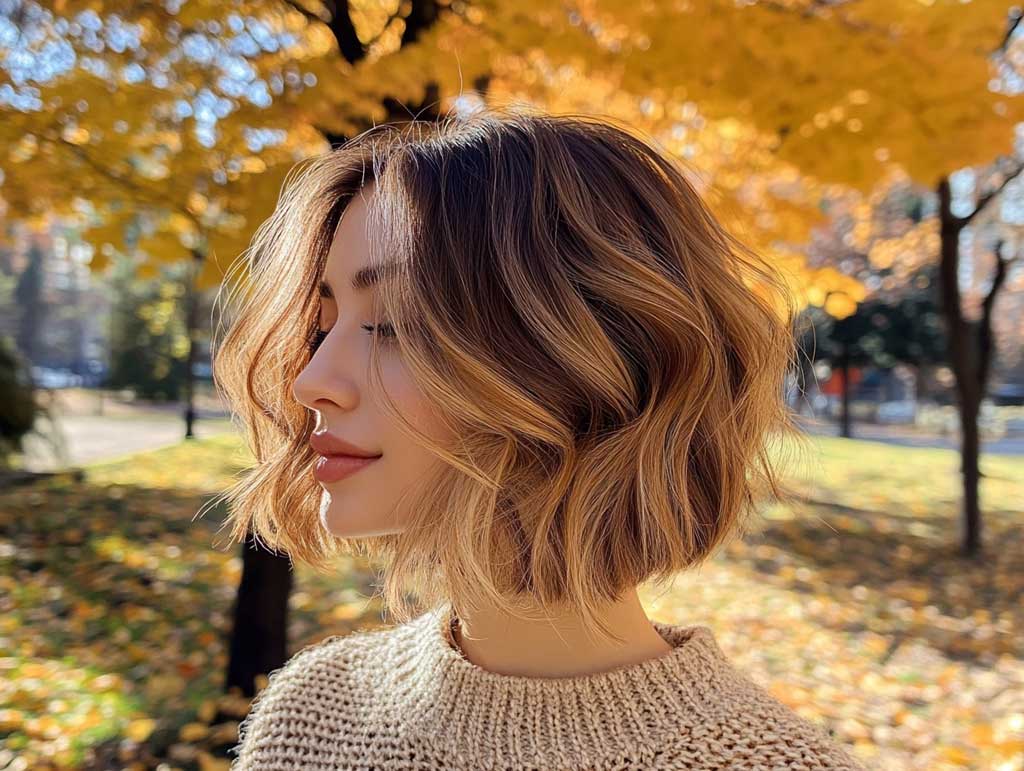
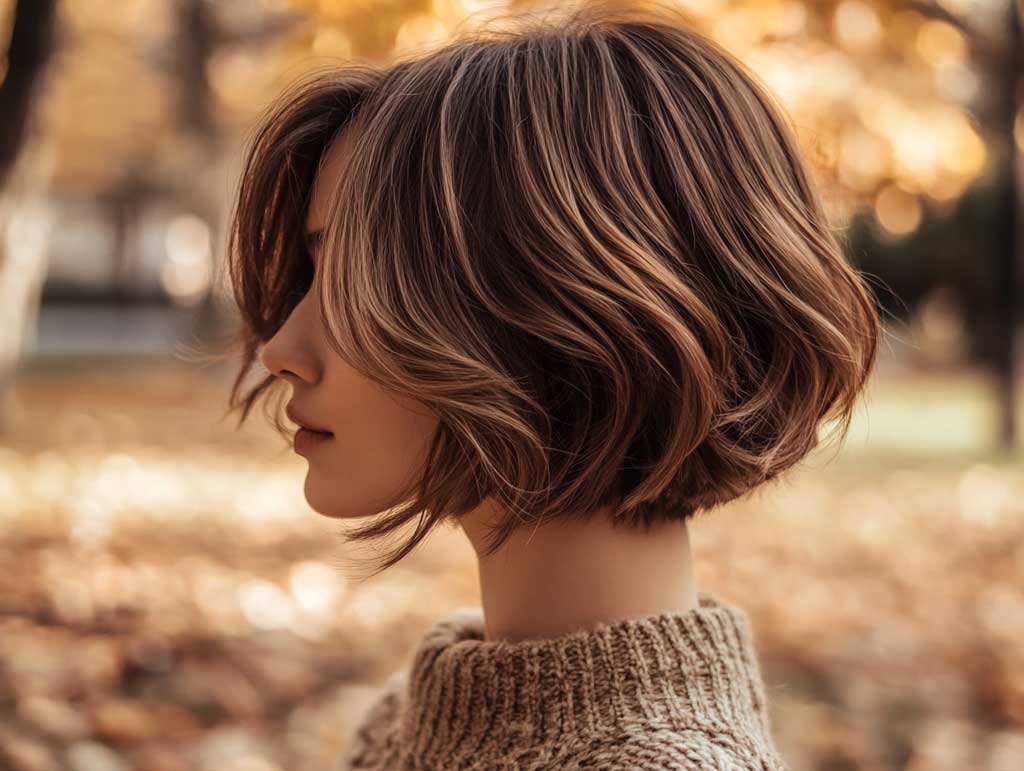
Don’t mistake this style for low-effort in the salon chair. Thick hair adds 15–25% to coloring time according to stylists’ pricing data, and caramel placement on dense strands requires careful sectioning to avoid stripy results. The payoff is a color that mirrors autumn leaves — shifting between honey and toffee depending on the light — without demanding a touch-up every six weeks. Caramel grows out naturally because the highlights are placed away from the root line.
Is this style worth it if you have very thick hair that tends to puff at the nape? That’s exactly what internal layering at the nape and sides addresses. The outer length stays intact for shape, while the interior is thinned just enough to stop the puffing. Skip the razor on ends, though — thick hair benefits from blunt or point-cut ends that give weight without bulk. A common mistake is over-thinning, which causes frizz at the perimeter.
For styling, a light mousse applied to damp hair and a round brush on low heat gives the bob its shape without weighing the caramel tones down. Wearing it sleek works for polished settings; leaving it with soft waves reads as relaxed autumn-ready. Either way, the layered structure handles itself — this cut does not need daily restyling to look intentional.
Auburn Pixie Cut — Where Short Hairstyles for Thick Hair Get Bold
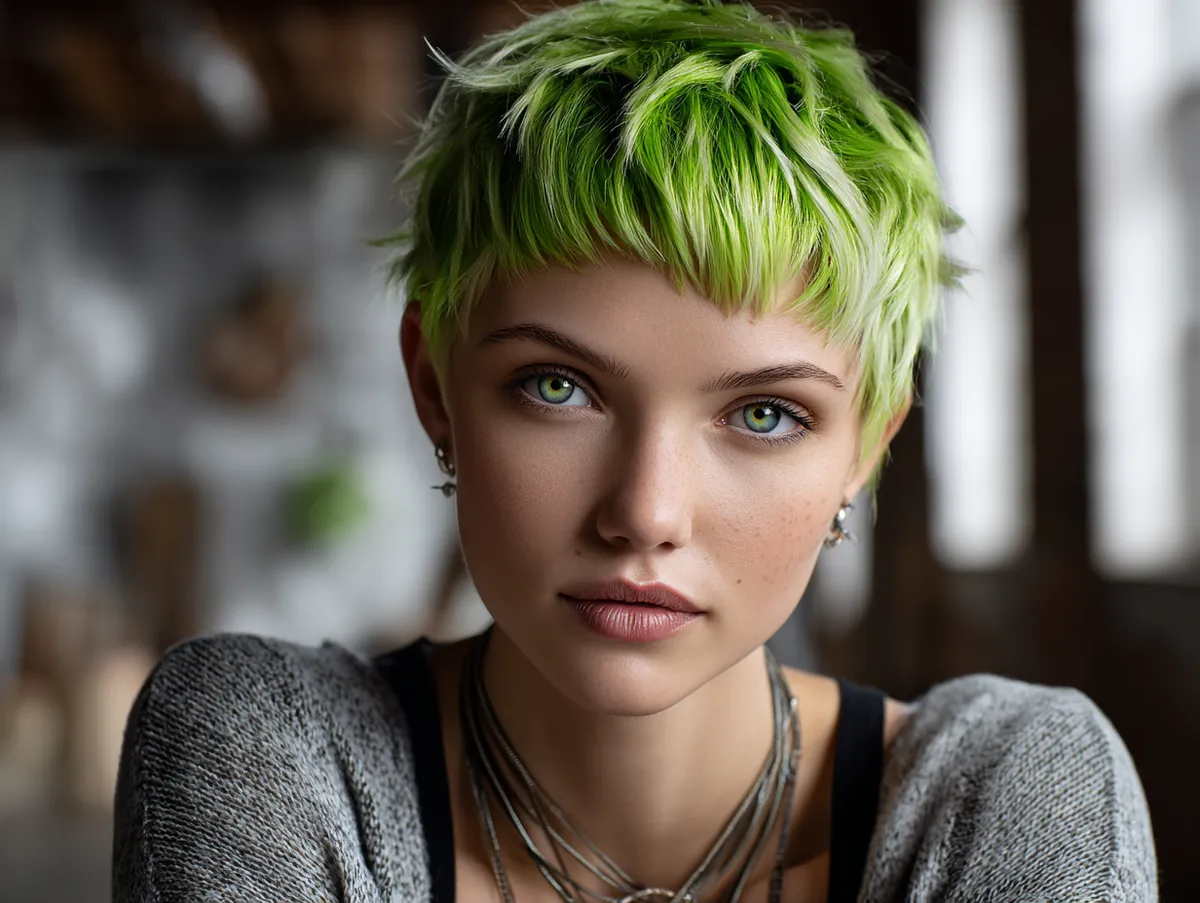
An auburn pixie cut is arguably the sharpest answer to thick hair’s most persistent problem: too much weight concentrated at the sides and nape. By removing length at the perimeter and keeping volume at the crown, a well-cut pixie reshapes the entire silhouette. Adding auburn — a deep red with brown undertones — pulls the look firmly into fall’s color story without requiring the drama of a full red dye.
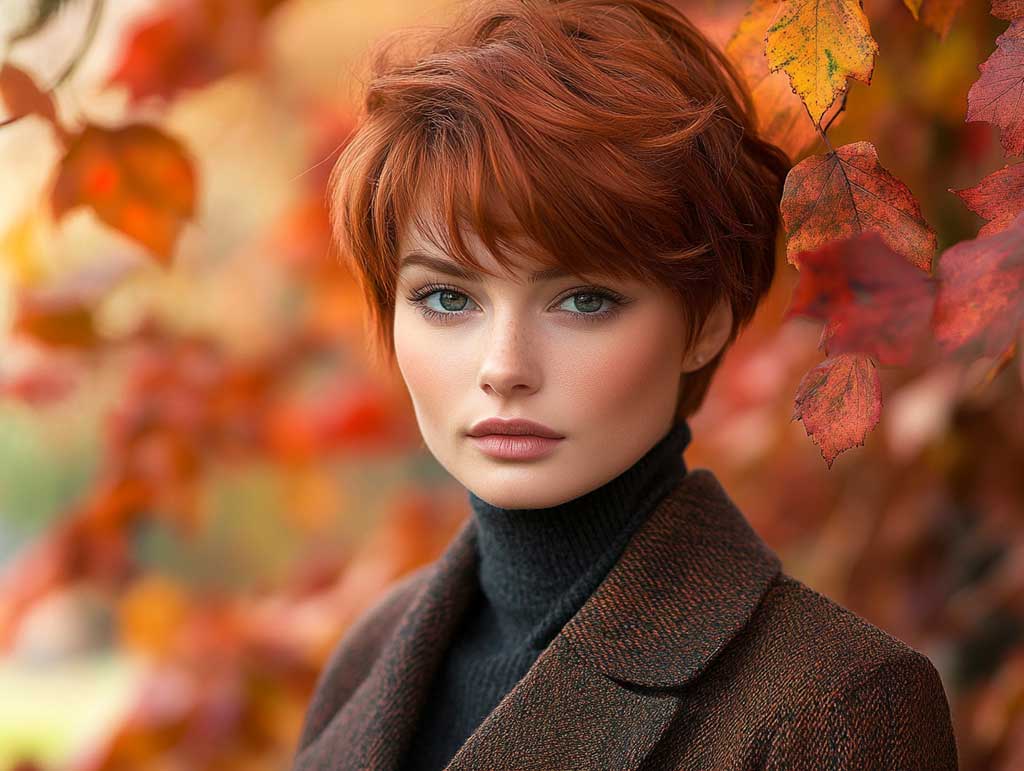


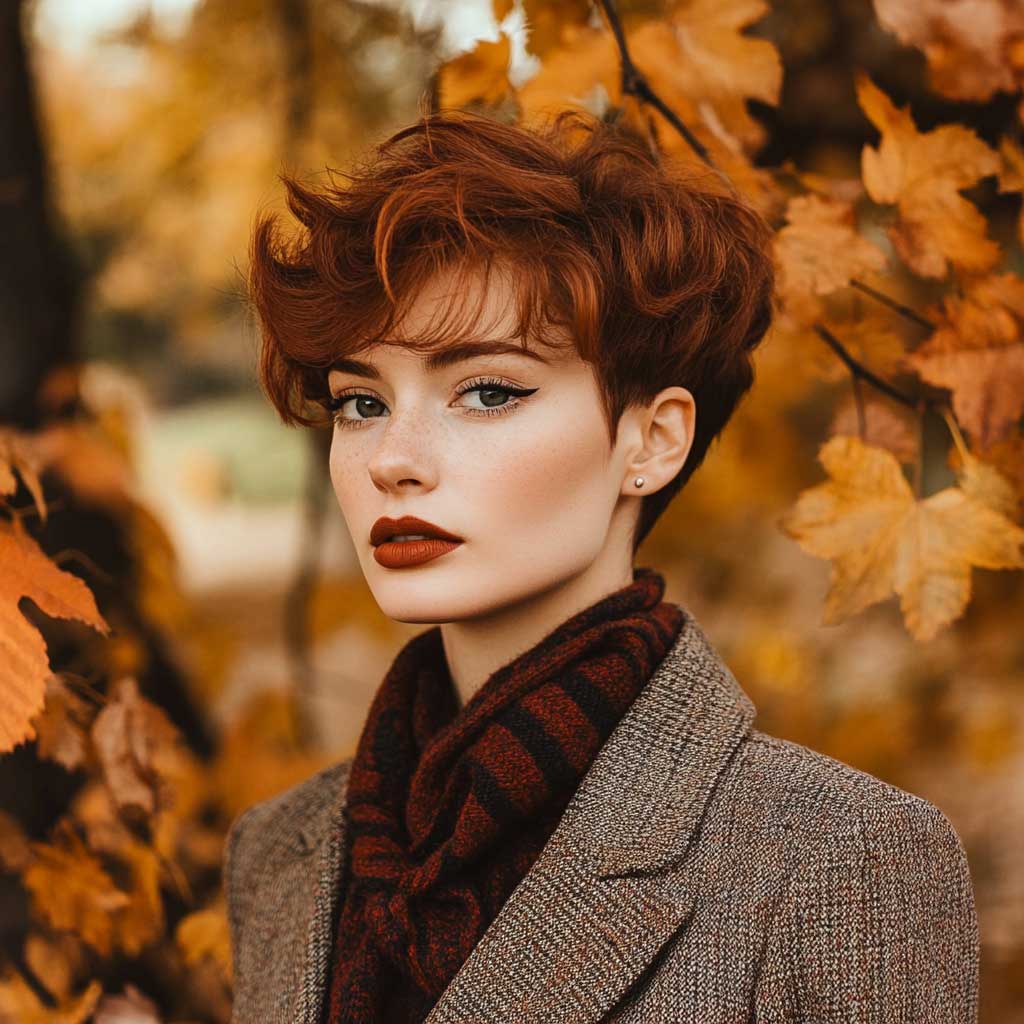
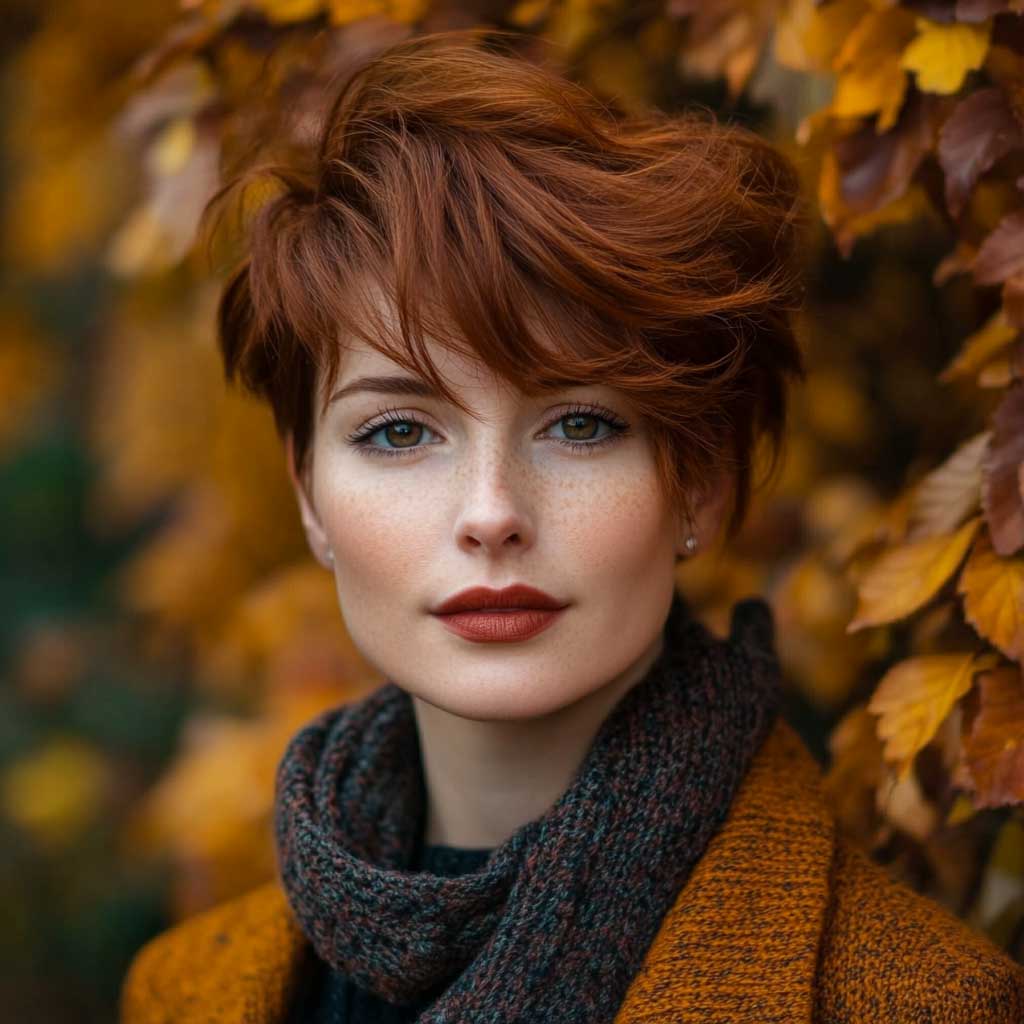
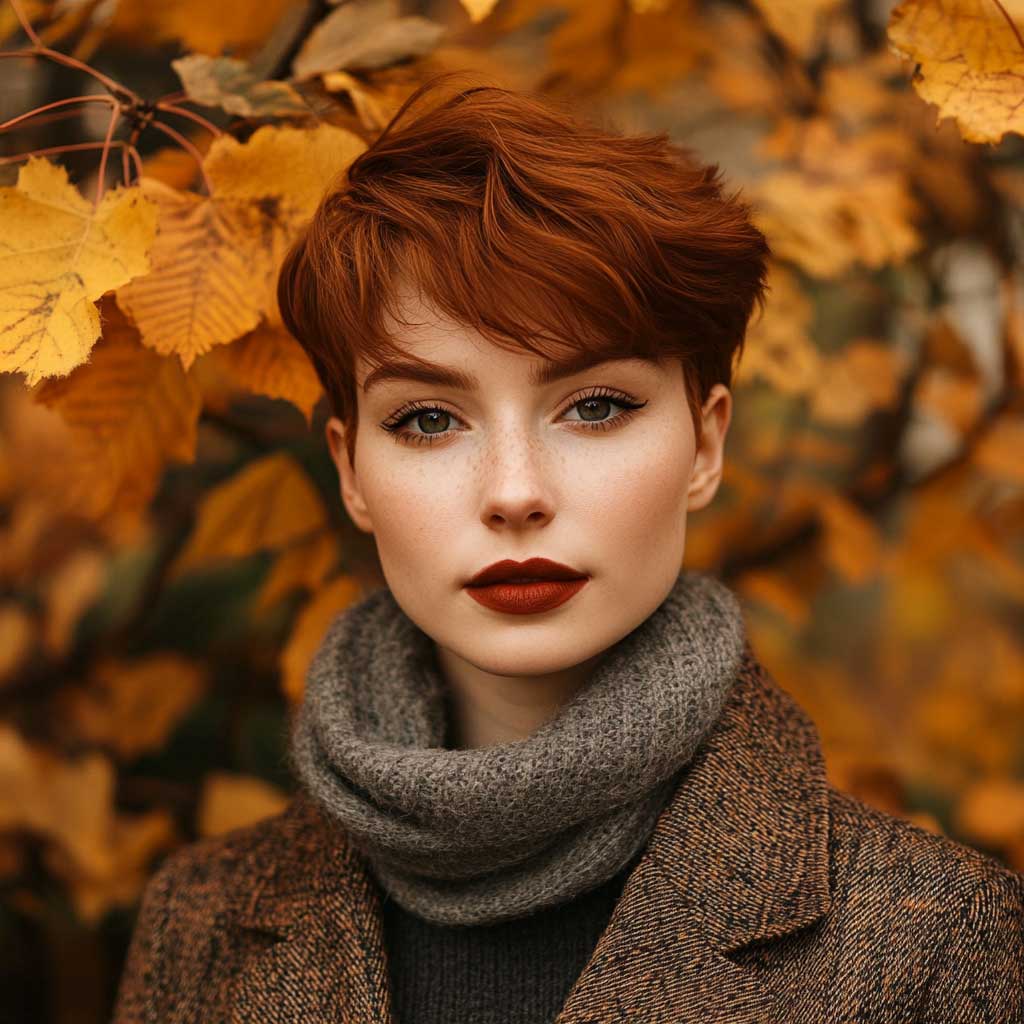


How does auburn actually sit on thick hair? Dense strands absorb pigment well, which means the red-brown tones stay saturated longer than on finer hair. Most colorists recommend a professional gloss treatment on top of the auburn to maximize reflectivity — thick hair can look matte without it, which mutes the seasonal impact you’re after. Budget roughly 90 minutes at the salon for cut plus color on thick hair; it’s more sectioning-intensive than a standard pixie.
The worst approach for a thick-hair pixie: cutting it flat with no internal texture. A pixie without texture on thick hair reads as a helmet. The fix is point-cutting through the crown and slide-cutting around the sides to create micro-movement that keeps the cut looking alive. Ask specifically for a “textured pixie” — the word signals the technique before scissors ever touch your hair.
Styling takes under five minutes. A fingertip of volumizing cream worked through dry hair, then fingers run through from back to front — that’s the whole routine. For a polished version, a smoothing balm tames flyaways at the temples. The auburn color is confident enough to carry the look; elaborate styling competes with it rather than adding to it.
Deep Chestnut Lob — Subtle Warmth for Thick Short Hair
A lob — the long bob that typically ends between the chin and collarbone — occupies an interesting middle ground for short hairstyles for thick hair. It’s short enough to reduce daily styling time and long enough to accommodate waves, braids, or a half-up style when the mood shifts. Adding a deep chestnut shade brings in fall’s richness without the maintenance demands of copper or auburn, which tend to fade faster on thick hair exposed to frequent washing.

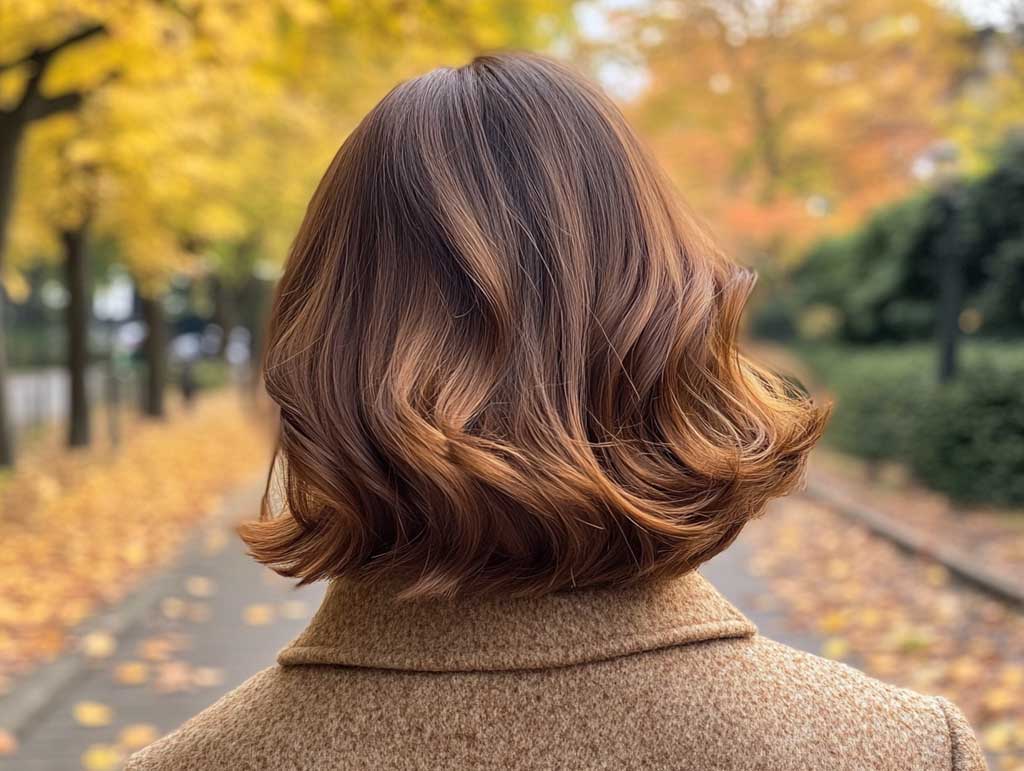
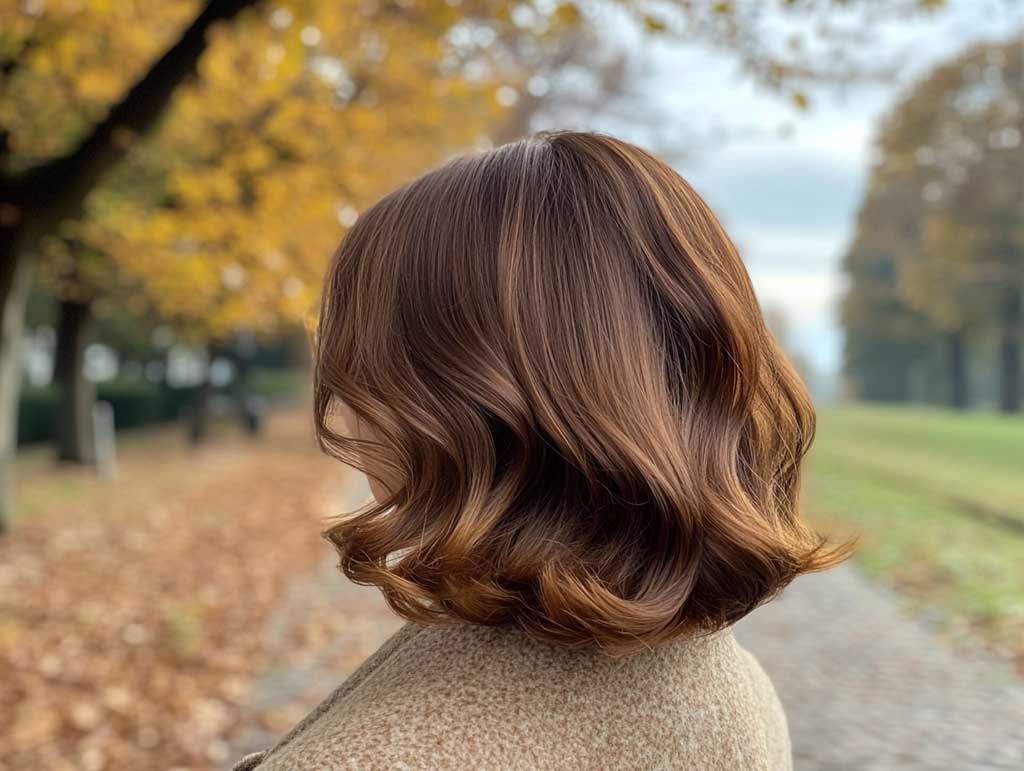
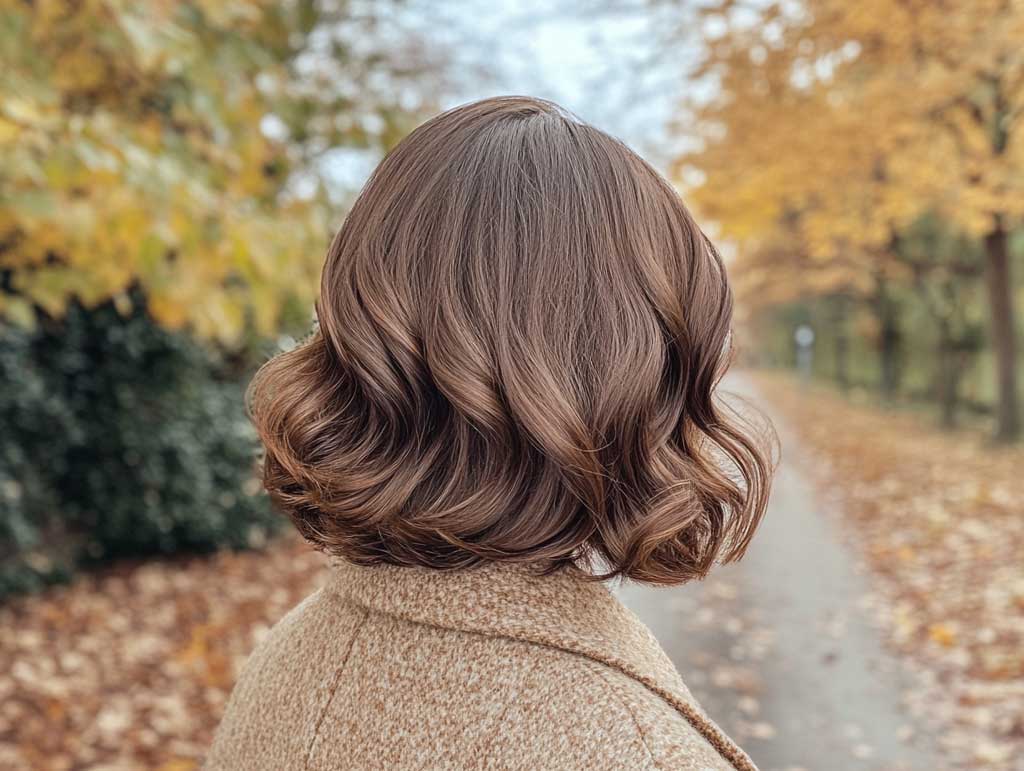
What makes chestnut work particularly well on thick hair is that it deepens rather than lightens the base. Thick hair already has optical density — lighter shades like blonde can make it look even heavier. Chestnut adds warmth and richness while actually making dense hair appear more refined. A lightweight shine serum applied to dry ends after styling amplifies the color’s depth without greasiness.
The lob’s styling range is its real argument. A curling wand on 1.5-inch sections produces soft bends that show off the color’s warmth between the waves. A flat iron and a shine spray produce a sleek, modern finish that works in professional settings. Thick hair holds both well — often for two to three days without restyling, which is relevant for anyone who’d rather spend ten minutes on their morning routine than thirty. For more ideas on how color placement can work alongside haircut shape, see these highlight approaches matched to specific face shapes.
Don’t skip internal layers with a lob on thick hair, even if you want a blunt-looking perimeter. Without interior layers, thick hair at lob length develops a triangular silhouette at the sides — the same pyramid shape that drives people toward short cuts in the first place. The layers stay invisible when the hair is styled straight but provide the weight distribution that makes the whole thing manageable.
Choosing Between These Three Cuts — What Actually Matters
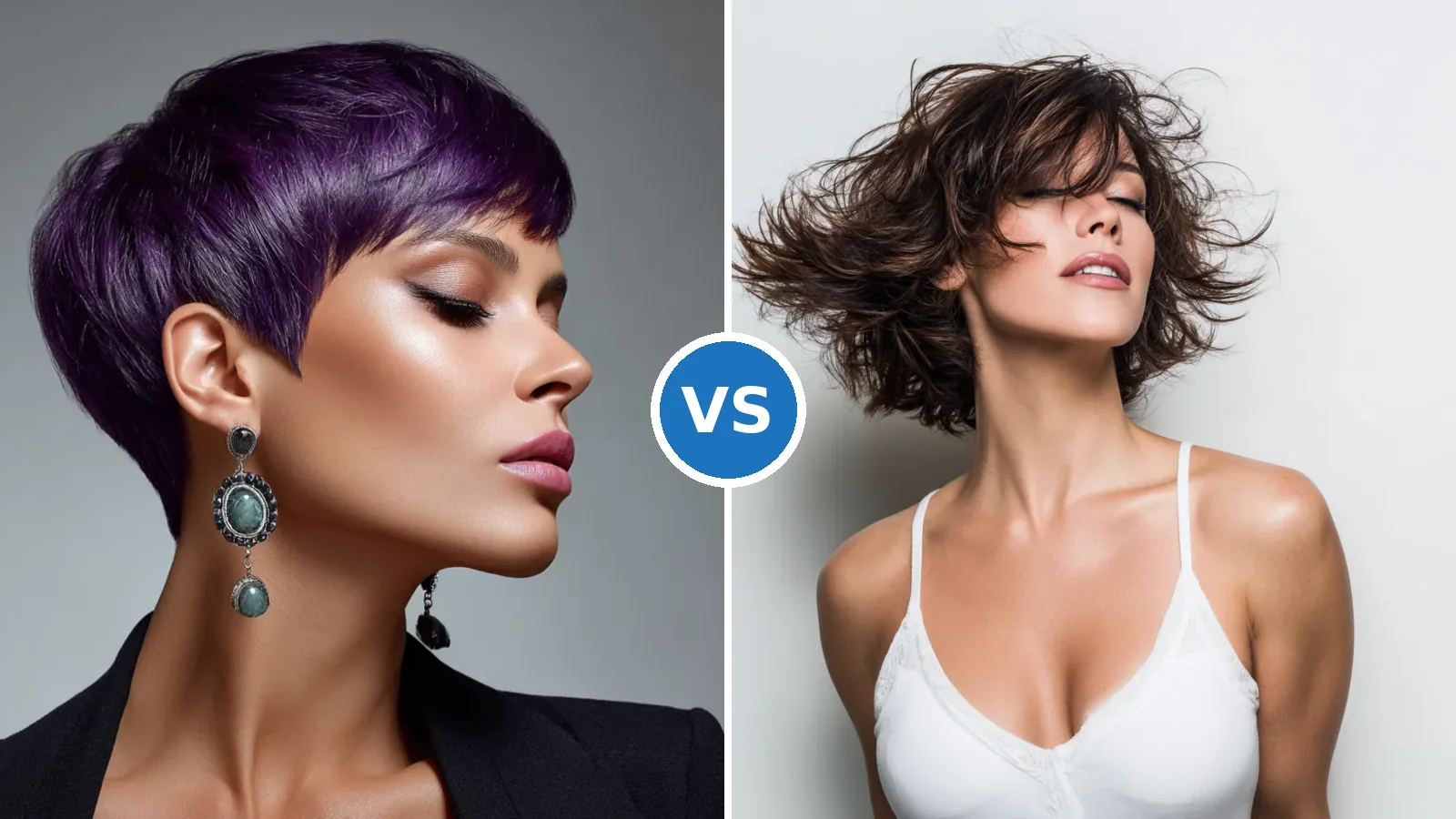
All three styles work for thick hair, but they solve different problems. Below is a direct comparison across the factors that matter most when thick hair is involved.
| Factor | Layered Bob + Caramel | Auburn Pixie | Chestnut Lob |
|---|---|---|---|
| Bulk removal | High — layers through entire length | Maximum — shortest perimeter | Moderate — internal layers only |
| Styling time | 10–15 min | Under 5 min | 5–20 min depending on finish |
| Color maintenance | Every 8–10 weeks | Every 6–8 weeks (edge upkeep) | Every 10–12 weeks |
| Versatility | Medium — sleek or wavy | Low — one signature look | High — waves, sleek, half-up |
| Best for | Wants color impact + shape | Wants minimal effort + bold look | Wants flexibility + low maintenance color |
What Not to Do with Thick Short Hair
A few common decisions undermine otherwise solid short hairstyles for thick hair. Over-thinning is the most frequent — removing too much interior weight causes the perimeter to frizz and the style to lose its shape within days. Point-cutting controls volume more precisely. Second: heavy products. Thick hair looks manageable naturally; adding anything with coconut oil or thick wax transforms it into something that looks matted by mid-afternoon. Lightweight mousse or cream is the appropriate range. Third: skipping the sealing step after color. Thick hair’s cuticle absorbs dye well but releases it just as readily — a color-protecting conditioner used twice a week meaningfully extends any warm fall shade.
- Never ask for uniform thinning shears across the whole length — it destabilizes the perimeter
- Avoid root-level highlights on thick hair if you want low-maintenance color — regrowth lines appear fast
- Don’t skip a heat protectant spray, even for low-heat diffusing
- Never assume one thick-hair product works universally — coarse-thick and fine-thick hair behave differently
Final Read
Short hairstyles for thick hair reach their best version when the cut does structural work and the color does seasonal work. These aren’t decorative choices layered on top of each other — they’re collaborative.
A layered bob with caramel highlights is the most versatile of the three: dimensional color, reliable volume control, and a shape that adapts to both sleek and textured styling. It suits thick hair that needs daily order without daily effort.
An auburn pixie is the decision that stops hair from being the thing you manage and makes it the thing you notice. The tradeoff is commitment — to frequent trims and to a single strong look. Worth it for the right person; too specific for everyone.
A deep chestnut lob earns its place through range. It’s the option that accommodates shifting schedules, changing aesthetics, and the kind of low-maintenance color that still reads as intentional three months after the salon visit. If in doubt, start here.