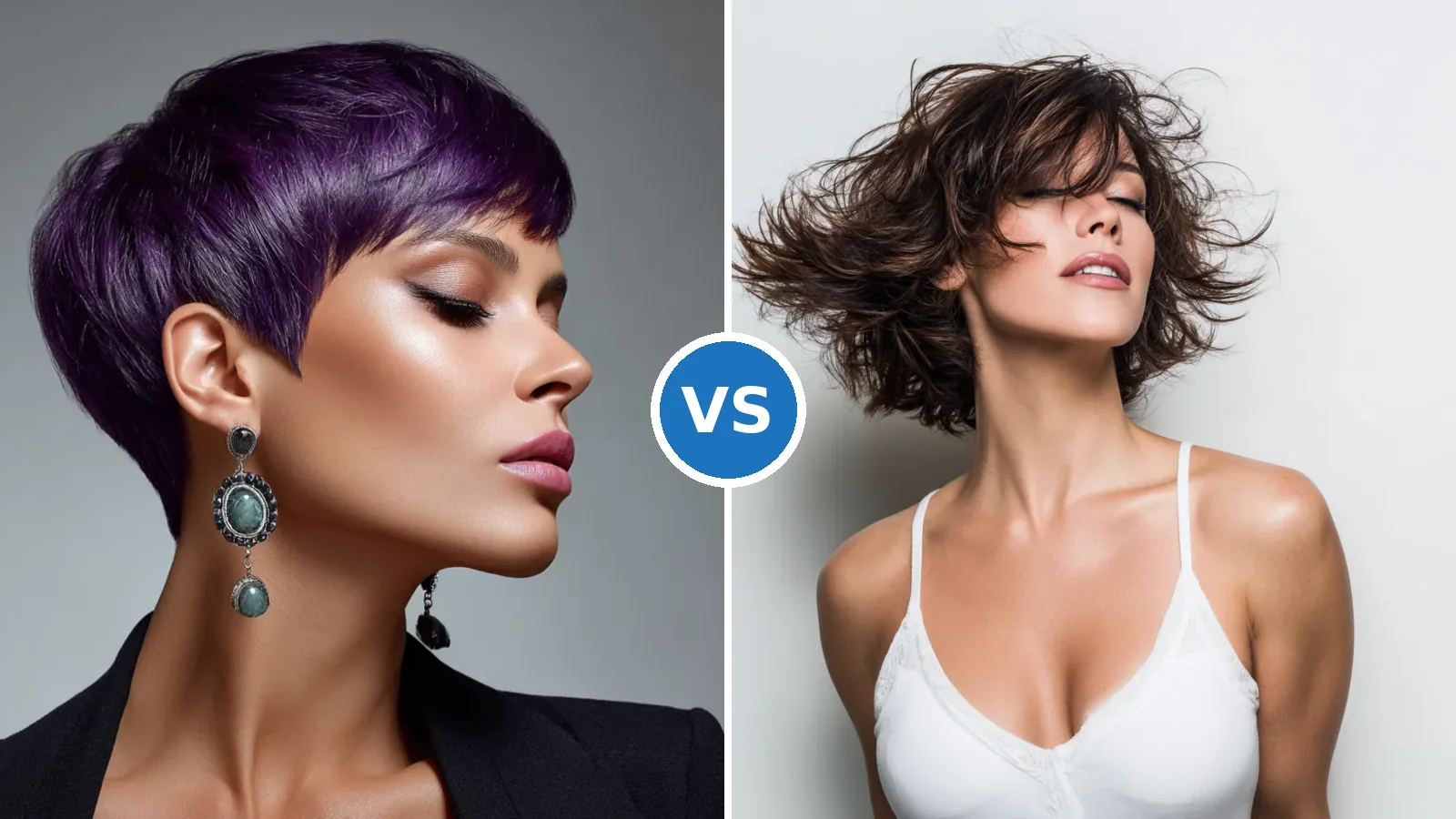
A Japanese short haircut doesn’t just remove length — it redraws the relationship between structure and movement. The shape holds through humidity, wind, and a full day in the city because it was engineered to do exactly that. Searches for the Japanese short haircut have climbed 128% year-over-year according to booking platform Fresha, and Tokyo salons that charge upward of ¥5,000 for a cut are booked weeks out for a reason.
What separates a Japanese haircut for short hair from a standard Western cut comes down to intention. Every section is deliberate — the weight is removed internally, not at the surface, so the shape holds without product and grows out without harsh lines. The three variations here cover the full range: soft layered strawberry blonde for movement, a jet black bob for architectural precision, and a choppy ash blue pixie for the readers who want their hair to arrive before they do.
Each style reflects a different personality and a different commitment level. The layered look asks the least of you at the salon, the bob demands the most in upkeep frequency, and the pixie sits somewhere in between — high reward, high maintenance. Pick the one that fits your actual schedule, not the one that looks best in photos.
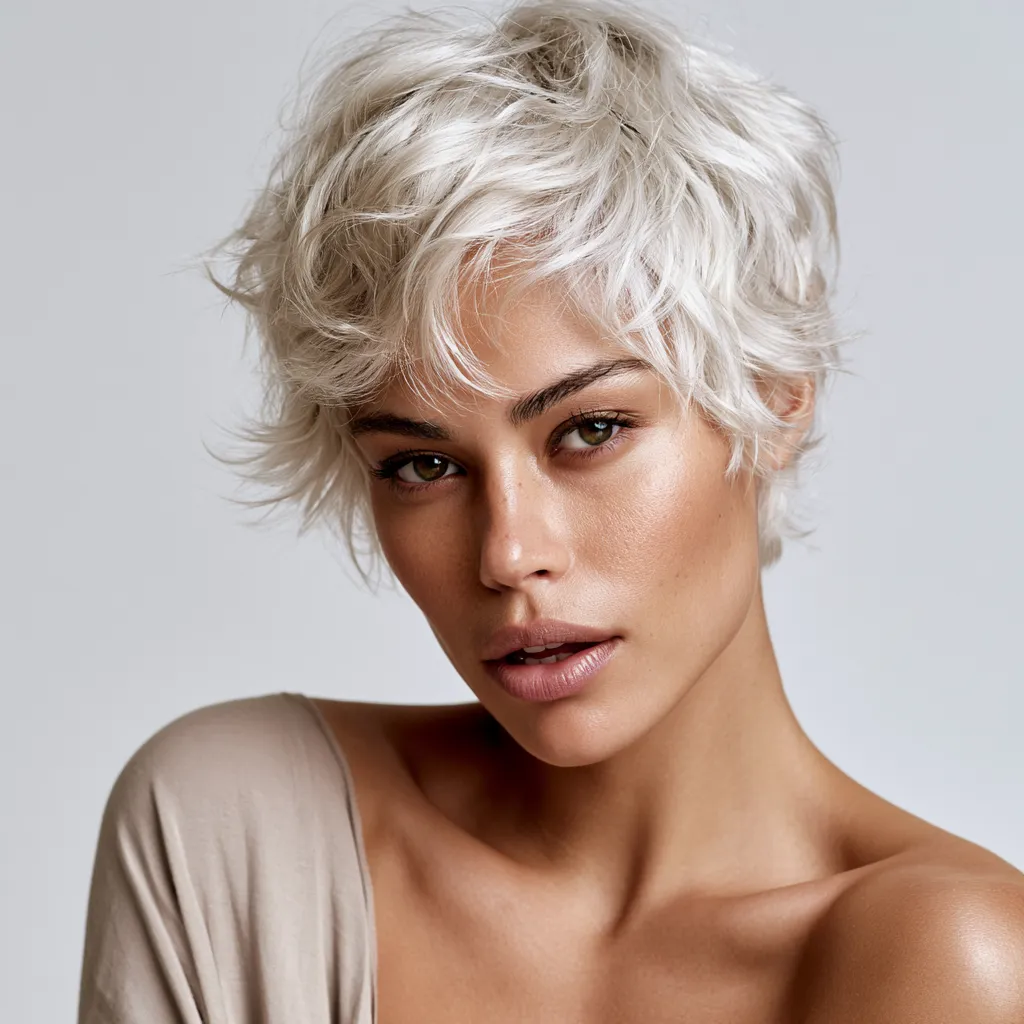
✂️ Japanese short haircut with soft layers — slide-cut interior removes bulk without shortening the perimeter; grows out without harsh lines
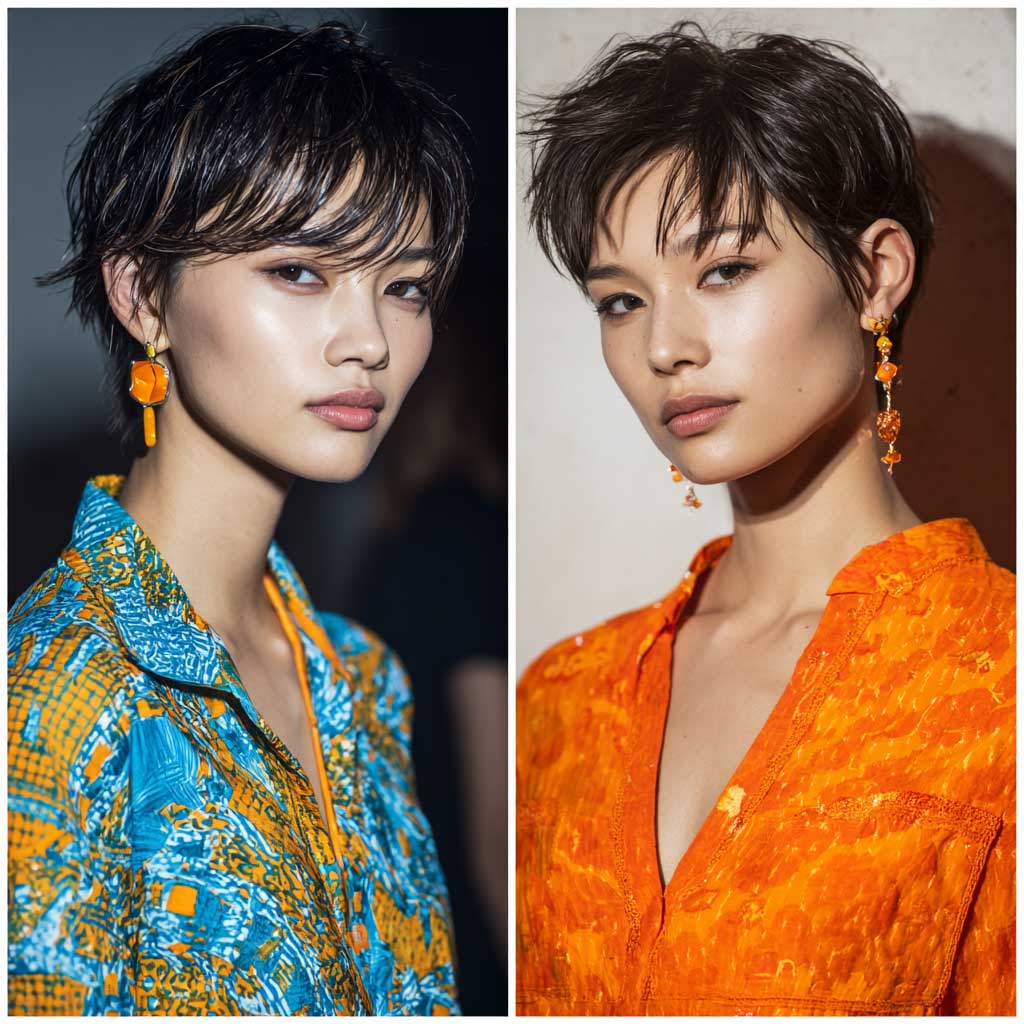
🖤 Japanese bob in jet black — blunt perimeter, minimal styling needed; requires a trim every 4–6 weeks to keep the geometry intact
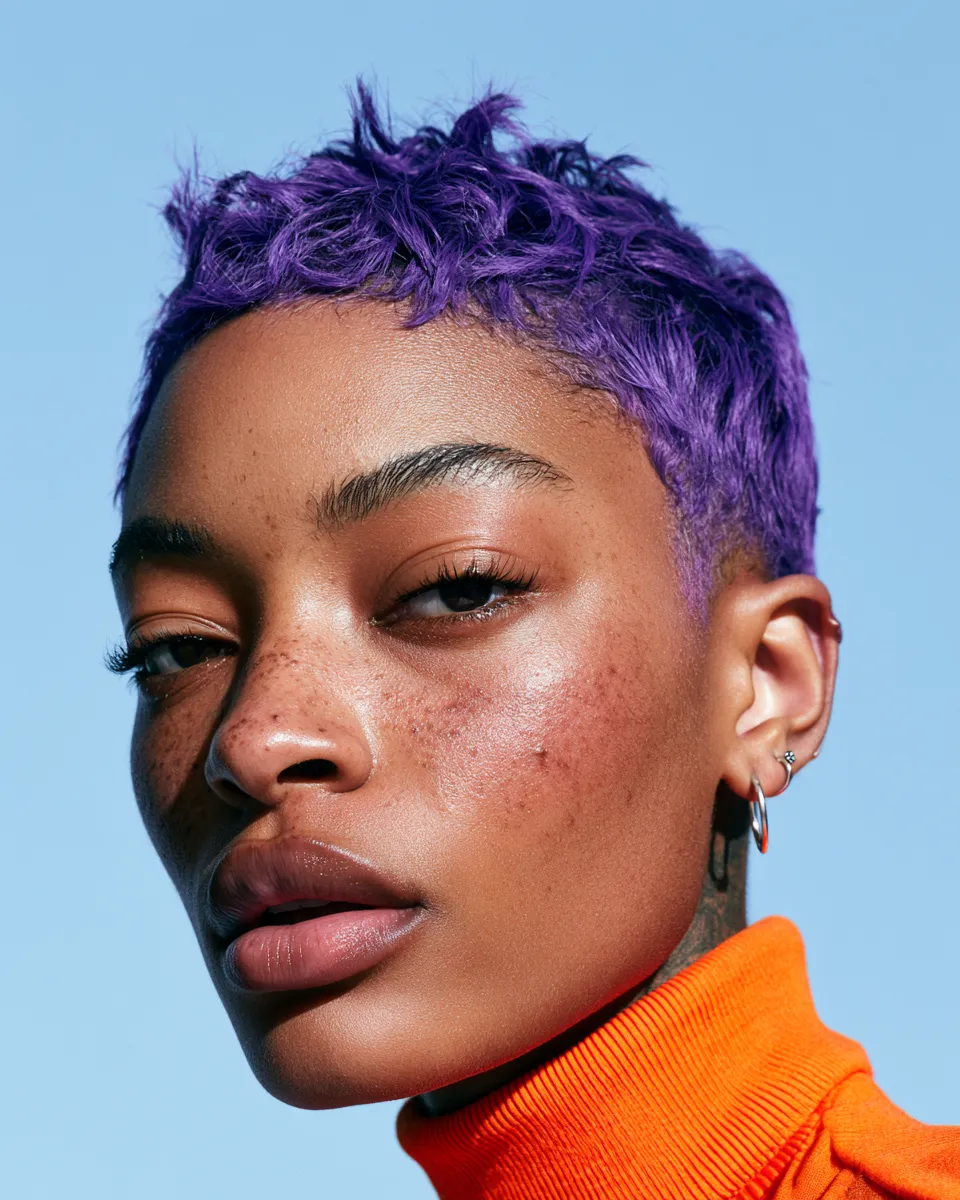
💙 Choppy ash blue pixie — vivid color fades in 4–6 weeks; structured choppy layers are precision-placed, not random
📌 Maintenance reality check — Tokyo salon cuts start at ¥5,000; at U.S. salons, expect $45–$95 per appointment for a precision short cut
📌 The one thing that kills these cuts — over-texturizing and blunt perimeters on wavy hair; both are covered in the Don’t Do This block below



Soft Layers in Strawberry Blonde Make a Japanese Short Haircut Feel Weightless
Layered Japanese short hairstyles like this one in strawberry blonde are built on a technique called slide cutting — the scissors move along the shaft at an angle rather than cutting straight across, removing interior bulk without shortening the visible perimeter. The result is hair that moves like it weighs nothing while still keeping its shape by end of day. Ask for it by name at your next appointment; most stylists trained in Japanese cutting methods will know exactly what you mean.
Strawberry blonde is a calculated choice here, not just an aesthetic one. The warm copper undertones catch light differently through each layer, creating the illusion of more dimension without adding any actual volume to the cut. On fine to medium hair — the texture this type of Japanese short haircut works best on — that light-play buys you fullness you can’t get from product alone. What doesn’t work: going too warm with the blonde. A brassy strawberry that reads orange under artificial lighting cancels out the delicacy of the layering entirely.



The longevity principle is central to this cut. Japanese beauty culture places significant value on a haircut that ages well rather than just looking good on day one — a soft layered cut in this style will grow out without creating the harsh horizontal lines that make a lot of Western short cuts look neglected after six weeks. You can realistically stretch salon visits to every eight to ten weeks and the shape stays coherent. Think of it like a well-made coat: the construction holds regardless of whether you’ve just picked it up from the tailor.
Styling this cut requires almost nothing. A pea-sized amount of texture cream worked through damp hair, then air-dried or diffused on low heat — that’s the full routine. Stylists recommend against blow-drying this style on high heat, because the slide-cut ends frizz under aggressive airflow and the feathered tips that define the look lose their separation. If you own a round brush and use it on this cut, you’re working against the haircut. Do you need more volume? Flip your head forward while diffusing and let it fall naturally when you stand up. That’s the technique.
Paired with short haircuts for wavy hair, this layered approach shows up across multiple textures, but it reaches its best form on fine, straight-to-slightly-wavy hair where the internal structure has room to breathe. The strawberry blonde color makes the whole thing glow under natural light in a way that darker shades of the same cut simply don’t.
What a Jet Black Bob Actually Demands From You
The Japanese bob in jet black is the cut that keeps showing up in data: according to booking platform Fresha, searches for “Japanese bob” reached 61,000 in a single month in 2026, up 128% year-over-year. That number reflects something real happening in salons. The blunt perimeter, the symmetry, the absence of unnecessary layering — all of it lands as a confident, finished aesthetic that photographs sharply and communicates the same way. What it does not do is forgive neglect.
A Japanese bob in jet black requires a trim every four to six weeks according to celebrity hairstylist Yuhi Kim, who cites the clean perimeter as both the cut’s defining feature and its primary vulnerability. Let it grow past the six-week mark and the line blurs, the shape loses its geometry, and the whole point of the cut disappears. That’s the maintenance reality check that stylists often skip: this haircut asks more of your schedule than your styling routine. The daily upkeep is minimal — a flat iron pass and a light smoothing serum — but the salon frequency is non-negotiable.


The jet black shade earns its place in this particular cut by doing what lighter colors can’t: it amplifies geometry. Every angle of the blunt perimeter reads more sharply under black because there’s no color fade to soften the line. This is the same principle that makes black clothing photograph more crisply than pastel — the contrast ratio between hair and skin is higher, the shape reads immediately. For people with fine hair, this is actually an advantage: the blunt cut creates the illusion of density at the ends, and the black deepens that effect. For thick hair, the lack of layers can feel heavy by mid-afternoon. A slight under-layer removal at the nape helps manage this.
Styling products stay minimal: a flat iron for that glassy, pressed finish, followed by one or two drops of a lightweight hair serum worked through the mid-lengths and ends. The Harajuku and Omotesando street style that inspired this cut relies on this exact ratio — the hair is styled, but it looks like it wasn’t. Heavy product kills the precision entirely. Does this cut work on wavy hair? Only if you’re willing to flat iron it every single morning, because the blunt perimeter needs to be straight to hold its geometry. If flat-ironing daily doesn’t fit your life, the soft layered version above is a better call.
The related pixie bob haircut styles in midnight black show how this dark-shade-plus-precision-cut combination works across slightly different lengths and structures — useful if you want to see how the architecture shifts when the perimeter moves toward the ear rather than the jaw.
A Japanese Pixie Cut in Ash Blue Is Sculpture, Not Spontaneity
A Japanese pixie cut carries different technical markers than its Western counterpart: the layers are placed based on each client’s natural hair growth direction and density, not cut to a standard template. In Tokyo salons that charge ¥5,000 and up for a cut, stylists spend the first few minutes of a consultation mapping the crown and nape patterns before touching scissors. That mapping is why a well-executed Japanese pixie holds its shape in a way that most short cuts don’t — the structure works with the hair’s natural movement rather than fighting it.
The ash blue color on this pixie does something interesting: it makes the choppiness visible. Each layer catches the metallic tone differently, turning what would read as a single mass of short hair into a multi-dimensional shape with visible depth. This only works at the right level of pre-lightening — ash blue needs a pale, even blonde base to deposit correctly. Apply it over hair with yellow or orange undertones and the blue turns greenish or muddy, which is not the architectural effect this cut is going for. Stylists recommend a violet toner first to neutralize any remaining warmth before the blue goes on.
Skip the toner step before going ash blue. Bleaching short hair and depositing blue directly over an uneven or warm blonde base produces a greenish cast — not the cool metallic tone you’re after. Add a violet or silver toner for 20 minutes first. Also: do not use a purple shampoo to maintain ash blue. Purple pigment actively pulls blue into a muddy lavender-gray within two weeks. Use a blue-pigmented color-depositing conditioner between salon visits instead. And on the pixie length: ash blue is a vivid color, which means it fades faster than natural shades — plan for a color refresh every 4–6 weeks if you want to maintain the vibrancy, and factor that into your budget before committing to the shade.



Maintaining a pixie cut requires a trim every four to six weeks — shorter than the bob’s schedule and more demanding than the layered style. A textured or choppy pixie can push toward six weeks; a very close or sharply defined cut needs attention closer to the three-to-four-week mark. This is the haircut that a pea-sized amount of fiber paste or wax handles better than any other product — applied to dry hair after styling, it separates the chopped layers and gives the ash blue maximum visibility. Gels and strong hold sprays work against the cut by clumping the layers together and killing the intentional separation that makes it look sculptural rather than matted.
This cut draws attention to the neck and cheekbones the way a bare statement necklace does — by clearing the frame. Ear cuffs, geometric frames, and high collars all read more clearly against this haircut than they do with longer styles. The ash blue shade holds one additional advantage: its fade is relatively graceful. It transitions from electric blue to soft powder blue to a faded denim tone over six to eight weeks — three distinct looks from a single salon appointment. Plan the color refresh around that arc, not against it.
Cut vs. Maintenance at a Glance
| Cut | Trim Interval | Color Refresh | Daily Effort |
|---|---|---|---|
| Soft layered strawberry blonde | 8–10 weeks | 8–10 weeks | Very low |
| Jet black Japanese bob | 4–6 weeks | 8–12 weeks | Low (flat iron) |
| Ash blue choppy pixie | 4–6 weeks | 4–6 weeks | Medium (paste) |
According to NewBeauty, the Japanese bob requires regular trims every six to eight weeks to maintain the balance that defines the cut. For context, women’s salon haircut appointments in the U.S. typically run $45–$95 per visit, which means the bob’s maintenance schedule adds up to roughly $360–$760 annually before color services.
For more information on what makes the Japanese bob specifically different from other short cuts — including which face shapes it suits best and the products a hairstylist at Fresha recommends — NewBeauty’s breakdown of the Japanese bob trend is worth reading before your next salon consultation.
FINAL TAKE
A Japanese Short Haircut Holds Its Shape Because the Math Was Done Before the First Cut
The layered strawberry blonde version earns its place for fine hair by making slide-cut technique visible in the way the hair moves — not in the way it was styled.
The jet black bob is the highest-commitment option of the three, with a trim schedule that punishes skipped appointments more visibly than almost any other short cut.
The ash blue pixie asks the most of your color budget but gives you the most expressive result — and a fade arc that’s actually worth watching unfold. Save this post.