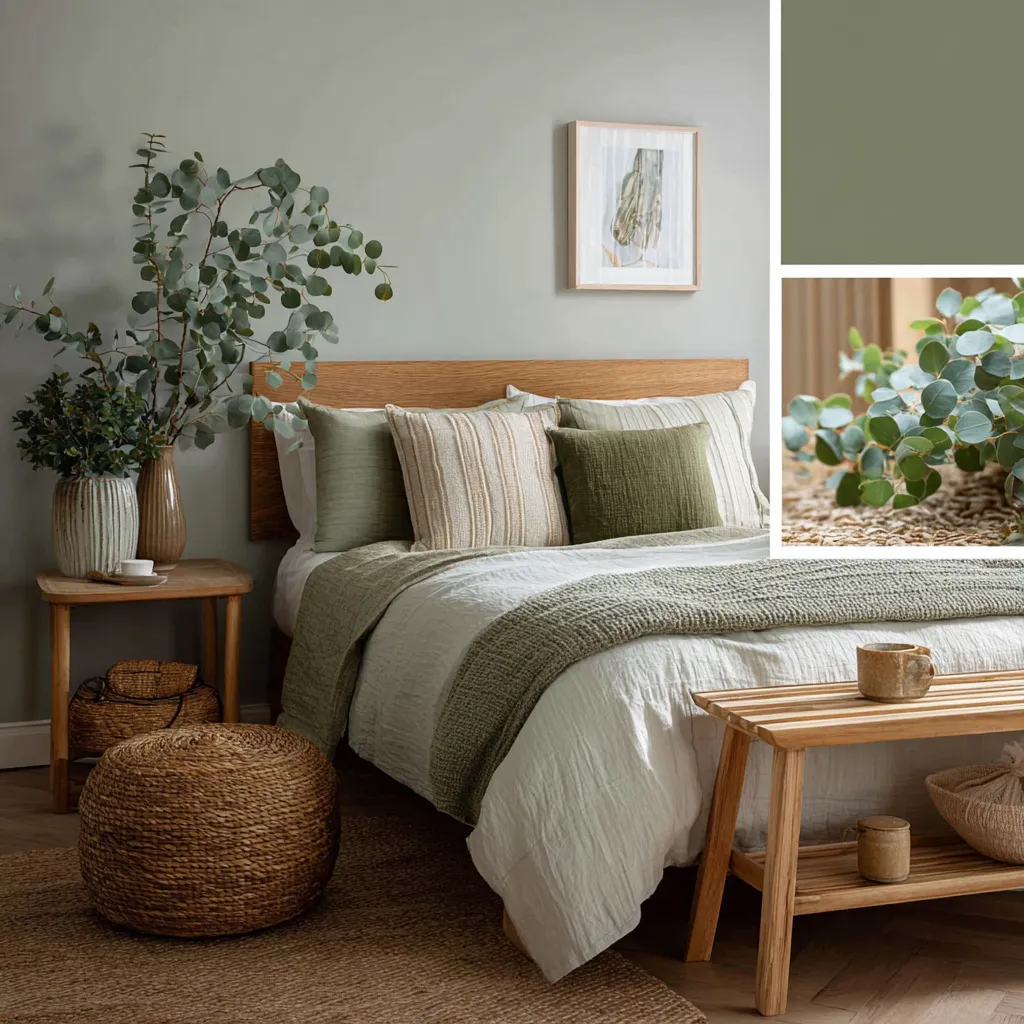
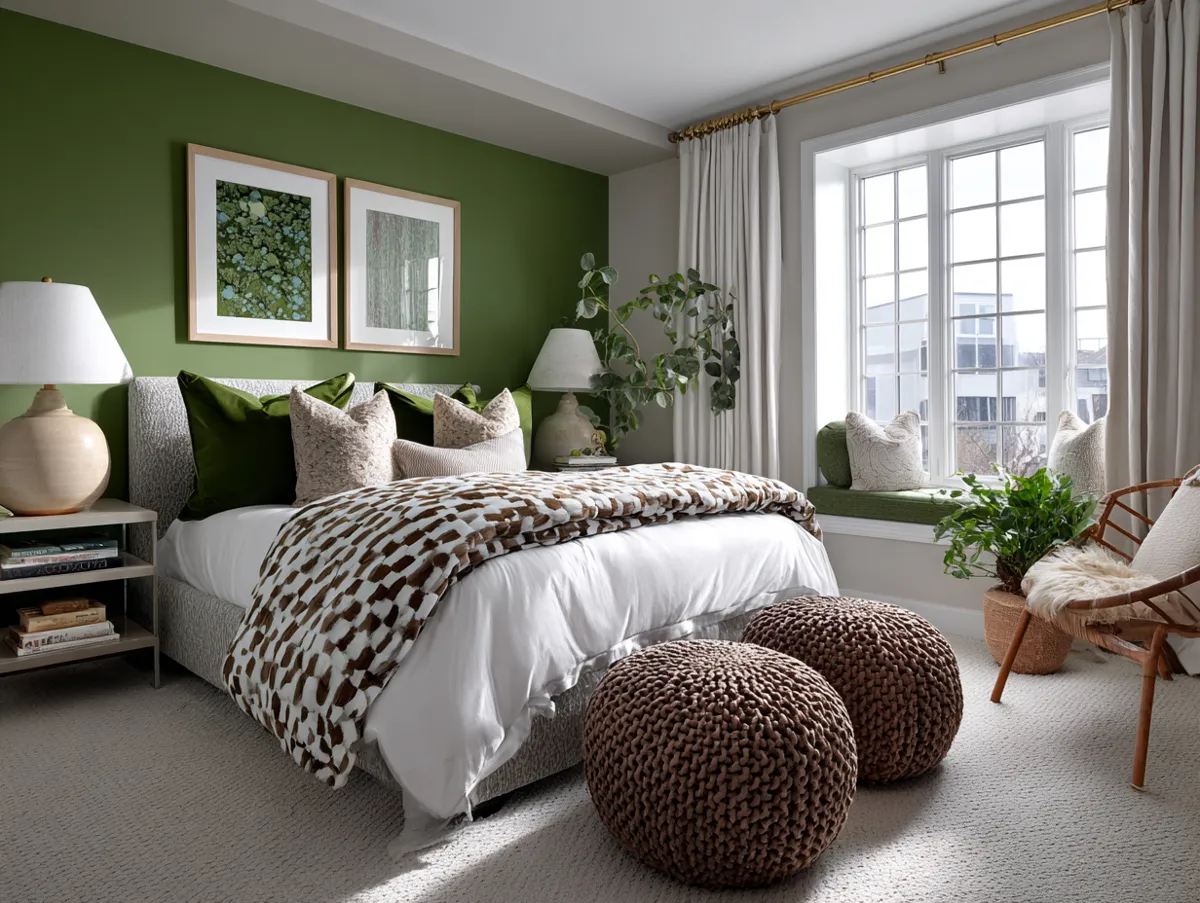
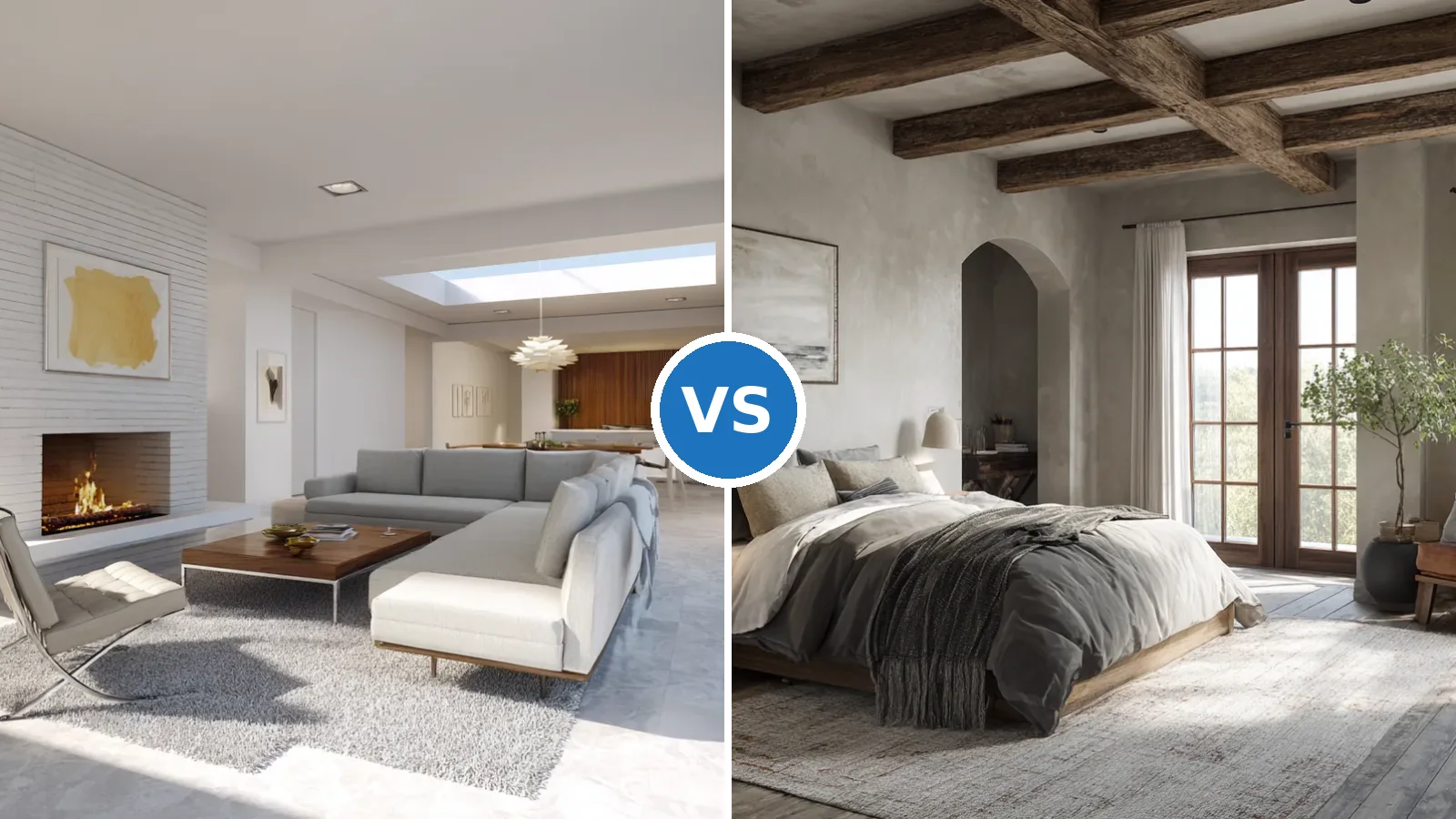
A sage green and cream bedroom works because the two colors solve each other’s problems. Sage on its own can read cold, especially in north-facing rooms or under artificial light. Cream on its own flatters nothing — it sits there, pleasant and forgettable. Put them together and the warm-cool tension creates a visual temperature that stylists describe as “settled.” Sherwin-Williams Evergreen Fog SW 9130, at around $75 per gallon with an LRV of 30, is the paint that made this pairing go mainstream — its gray-green base has just enough depth to hold cream without fighting it.
The pairing shows up across three very different design directions: a Scandinavian-leaning retreat built on texture and natural stone, a vintage-romantic room where the ceiling becomes the statement, and a minimalist space anchored by architectural form. What changes is the material language and scale; what stays constant is how the palette holds each room together without effort. A Bedsure sage green duvet cover set runs about $40 on Amazon — that’s all it takes to test whether sage and cream belong in your bedroom before committing to a gallon of paint.
Cream does one critical job in every version of this palette: it catches and reflects light. Stone, linen, painted cabinetry, an aged canopy frame — when cream takes a structural role rather than a decorative one, sage green stops being a color and starts being a mood. The three rooms below demonstrate exactly how that shift happens.
Paint to know: Sherwin-Williams Evergreen Fog SW 9130 (~$75/gal, LRV 30) pairs with cream trim in Alabaster or White Dove.
Texture approach: Mix velvet, linen, and waffle-knit — at least three fabric weights per bed.
Dark green variant: Works on a ceiling or arch wall; keep all four main walls cream to avoid visual heaviness.
Mistake to skip: Bright white trim next to sage — it makes sage read dirty. Use off-white or creamy white only.
Budget entry point: A $40 sage green duvet set (Bedsure queen, 3-piece) is enough to audition the palette before painting.
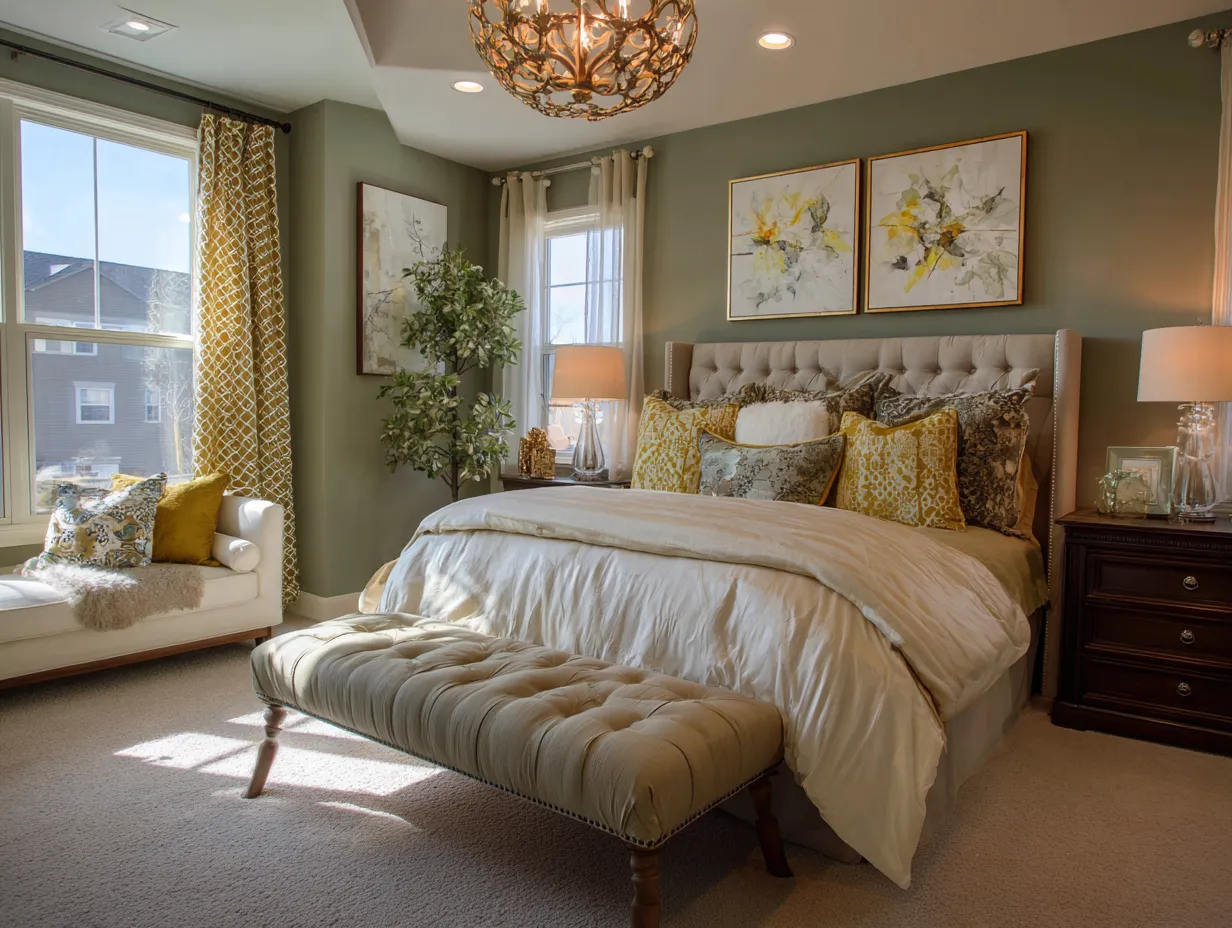
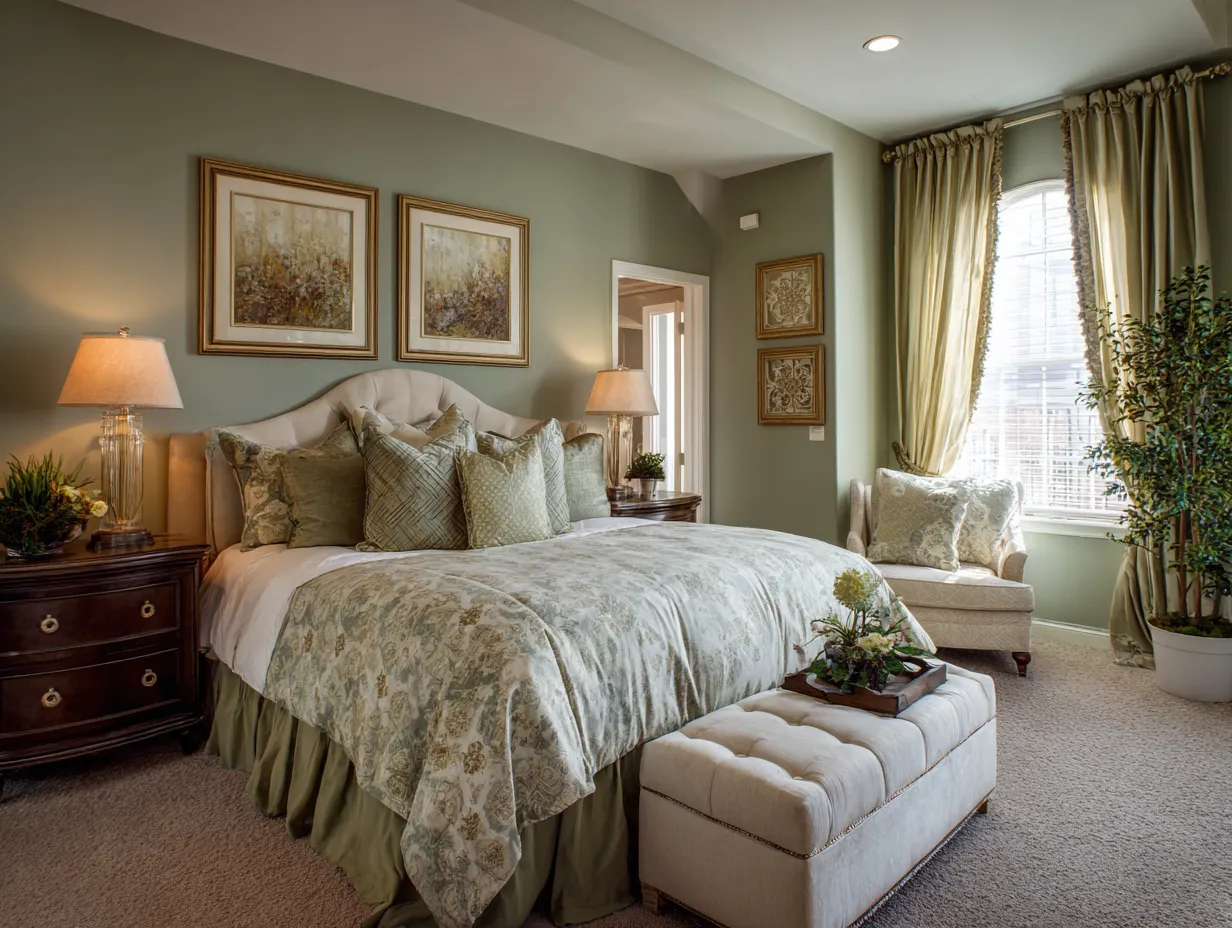
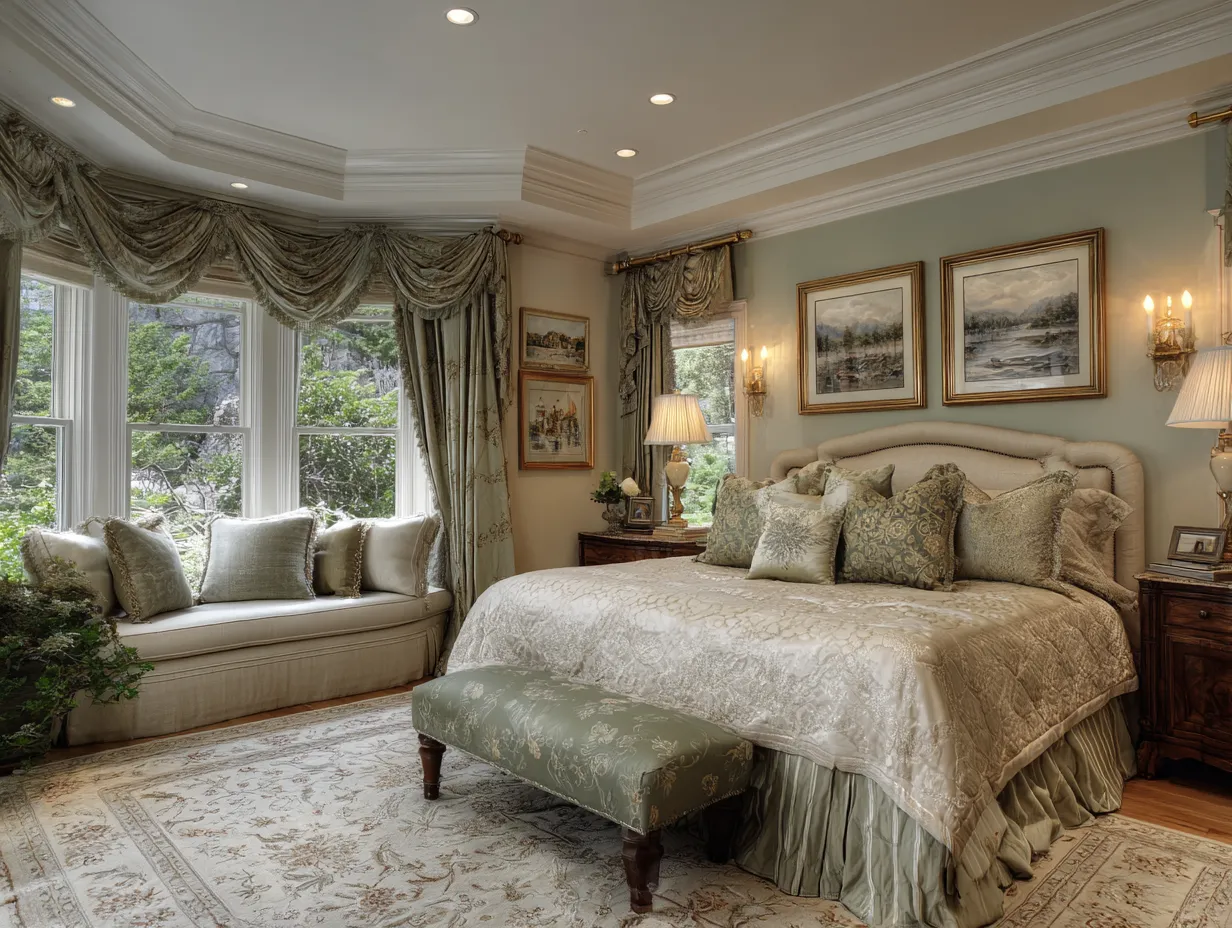
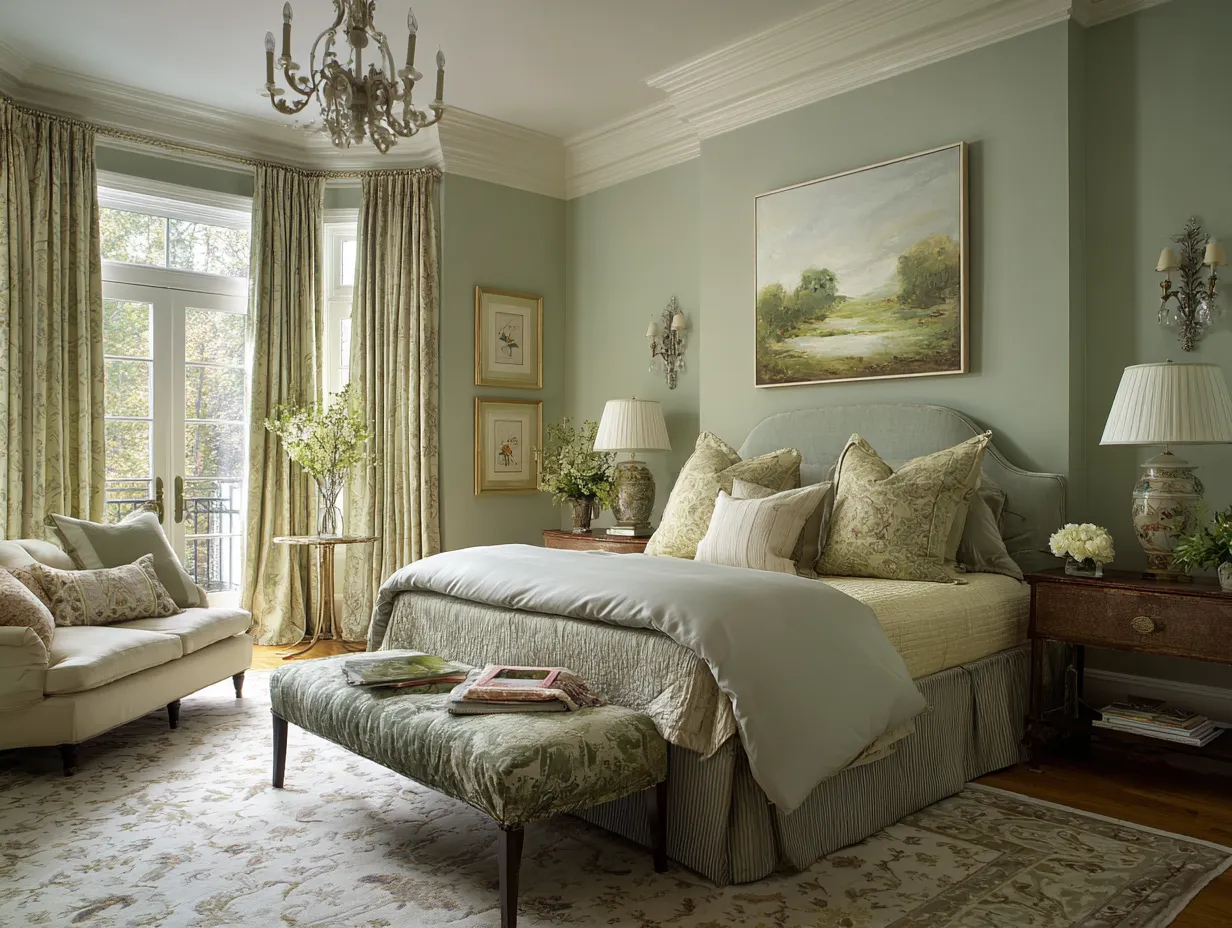
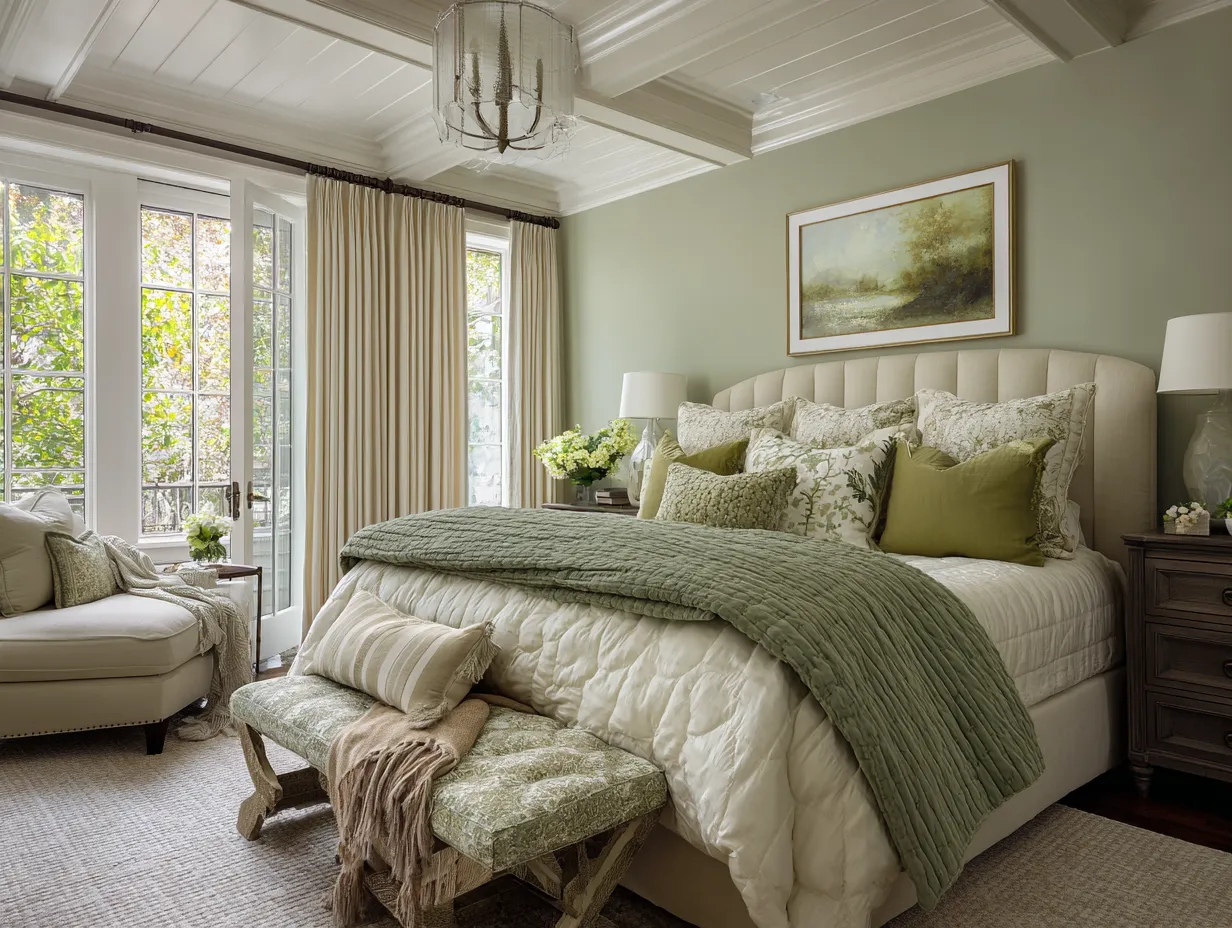
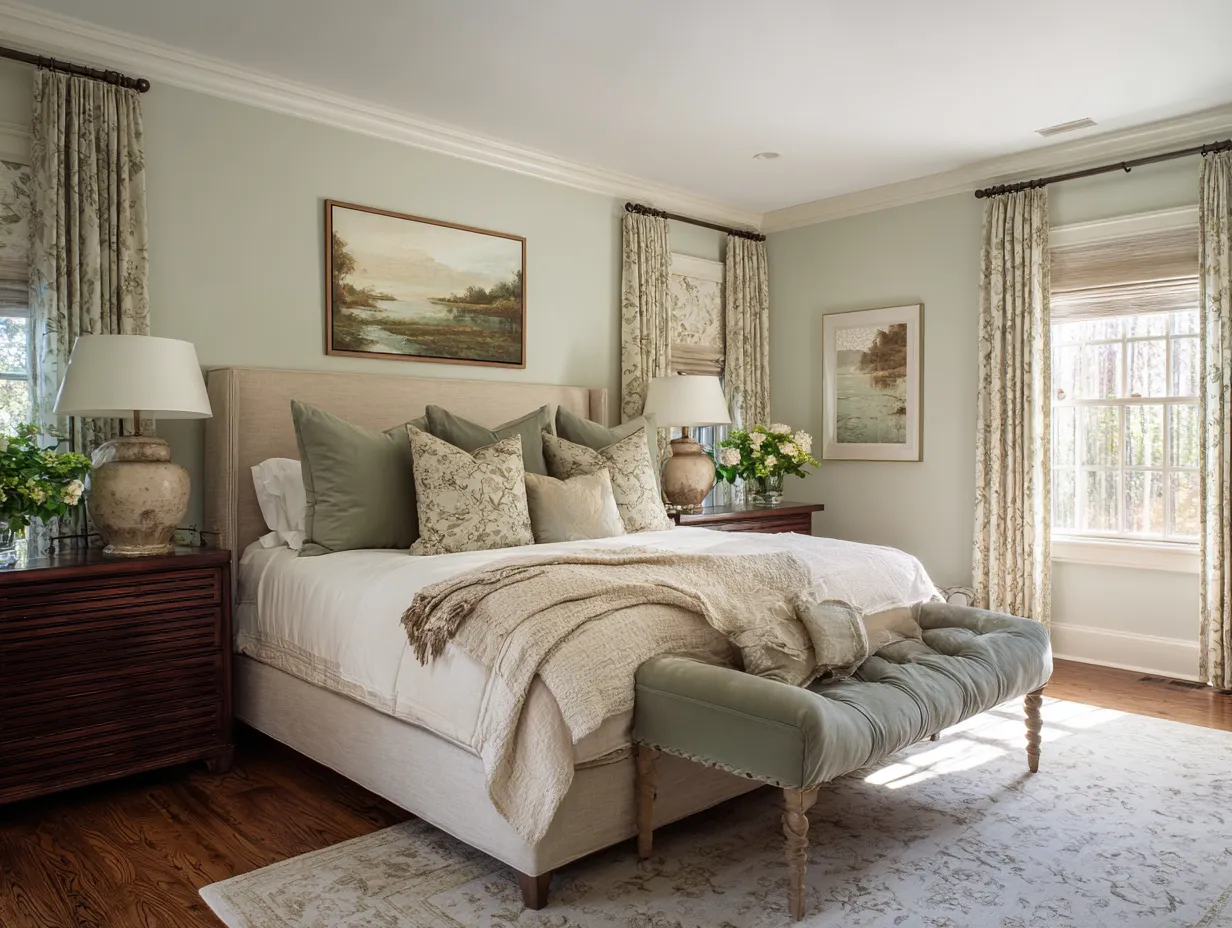
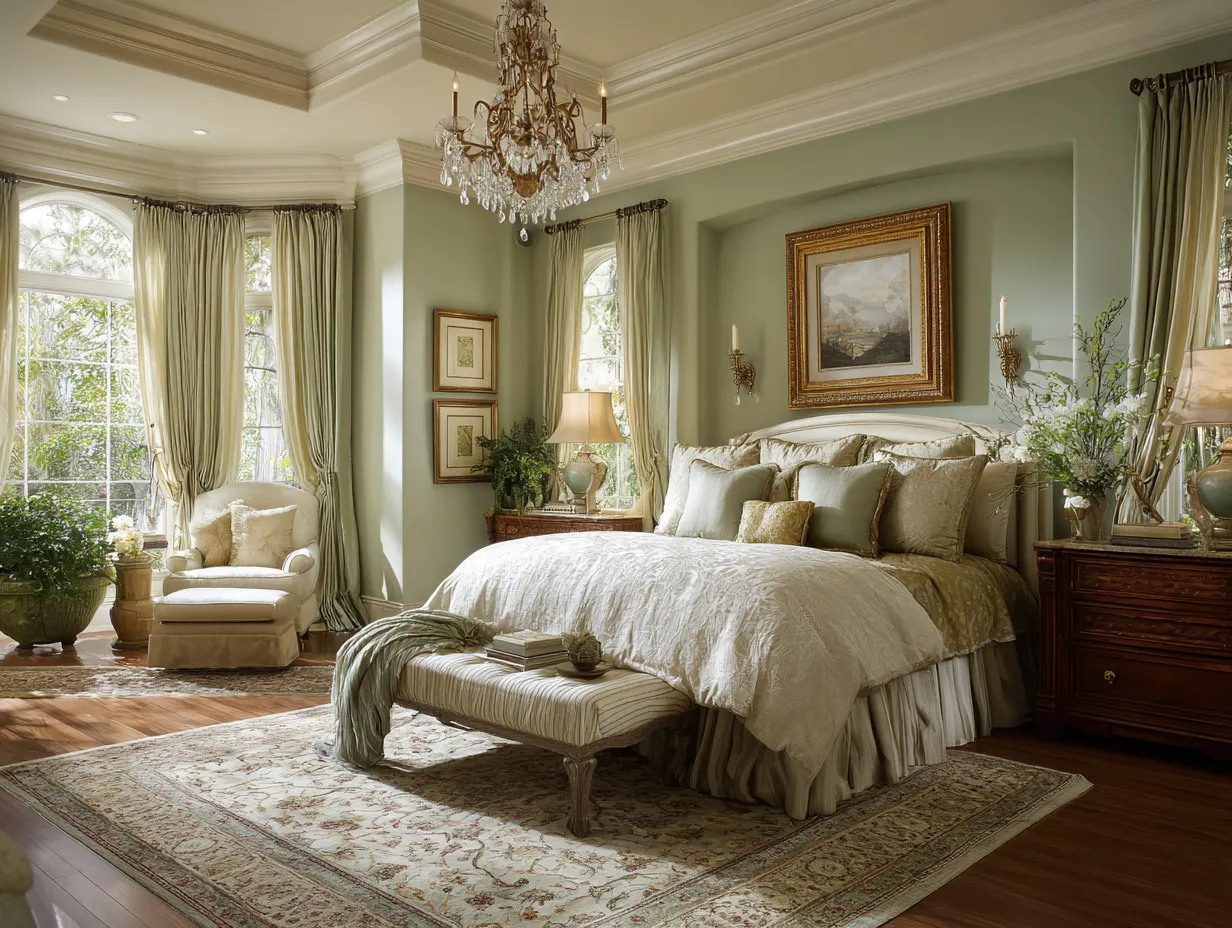
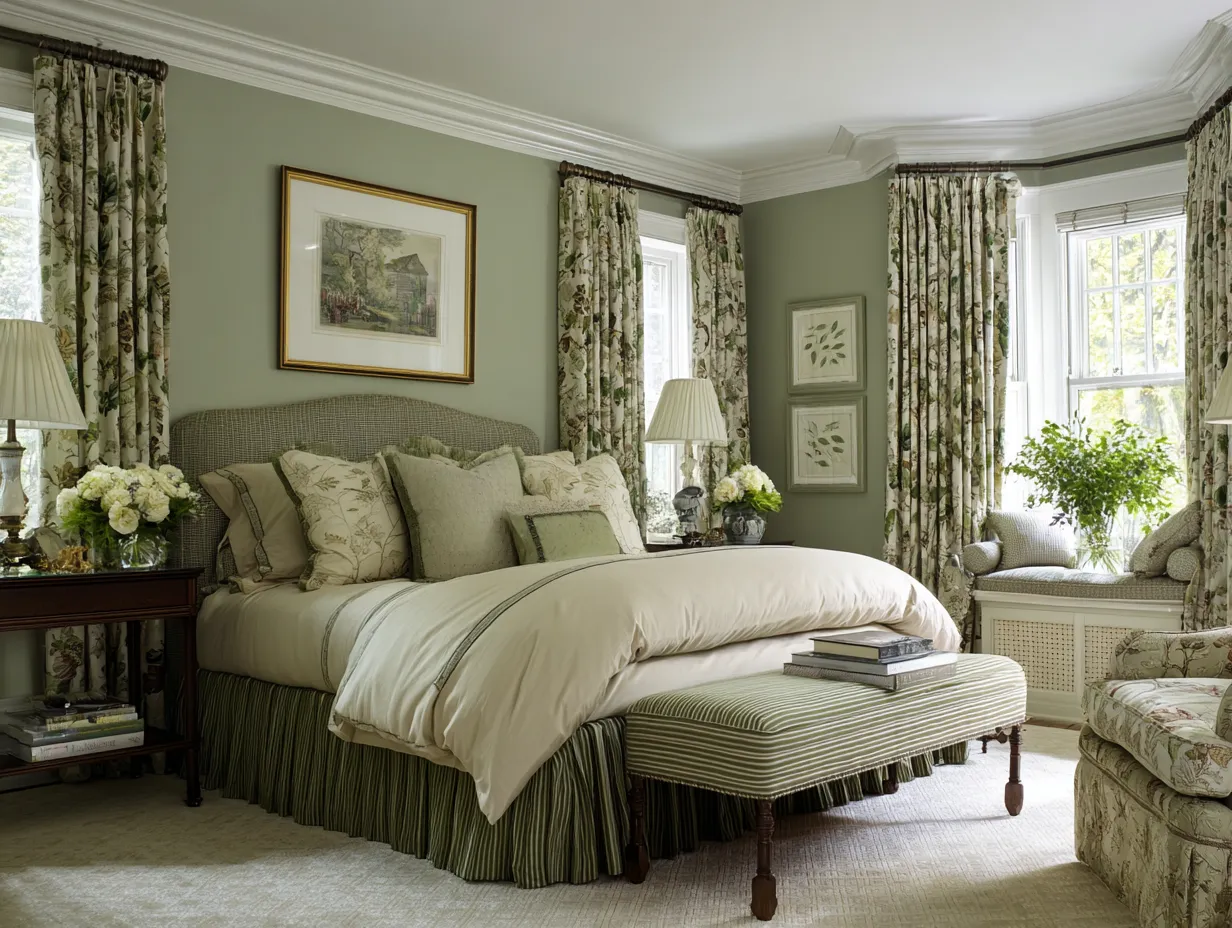
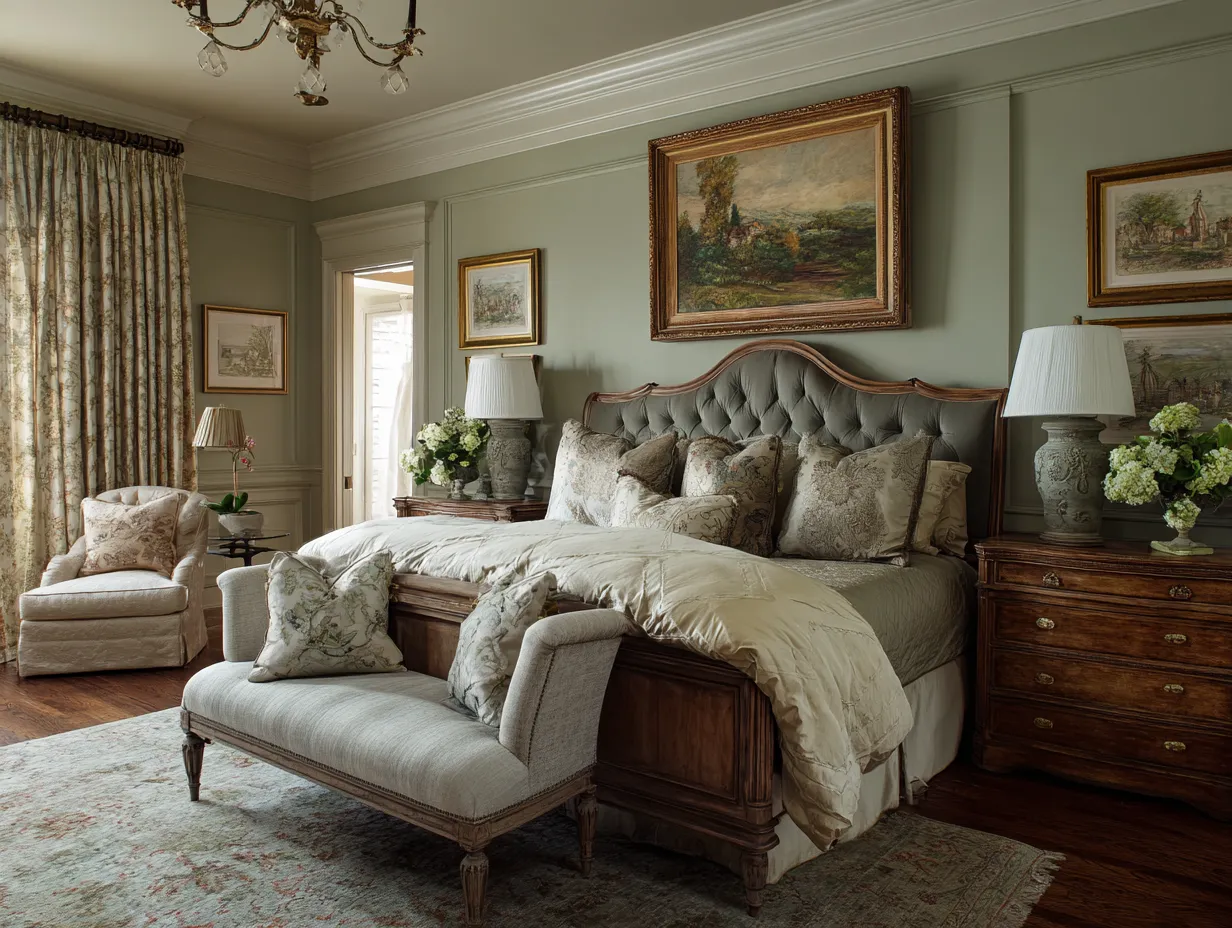
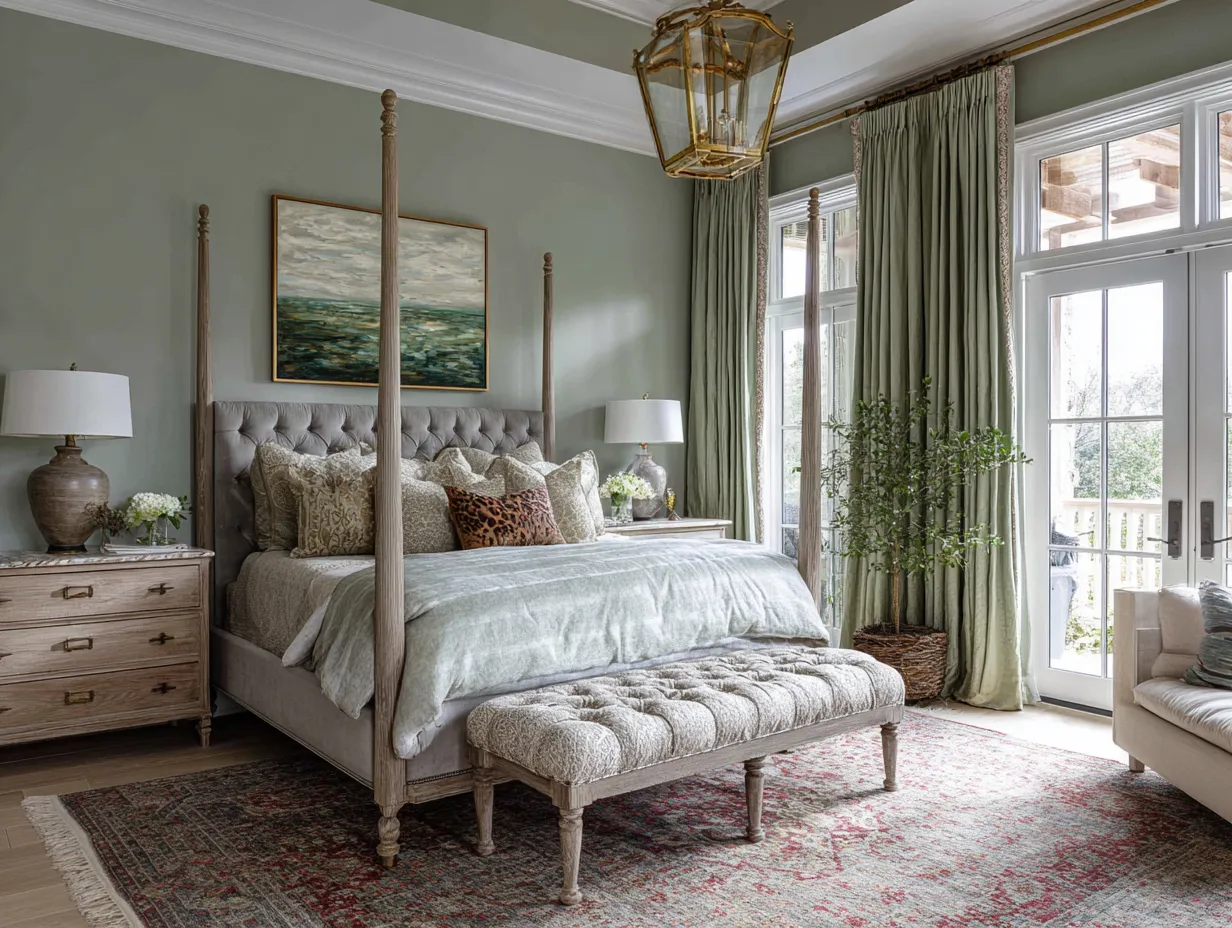
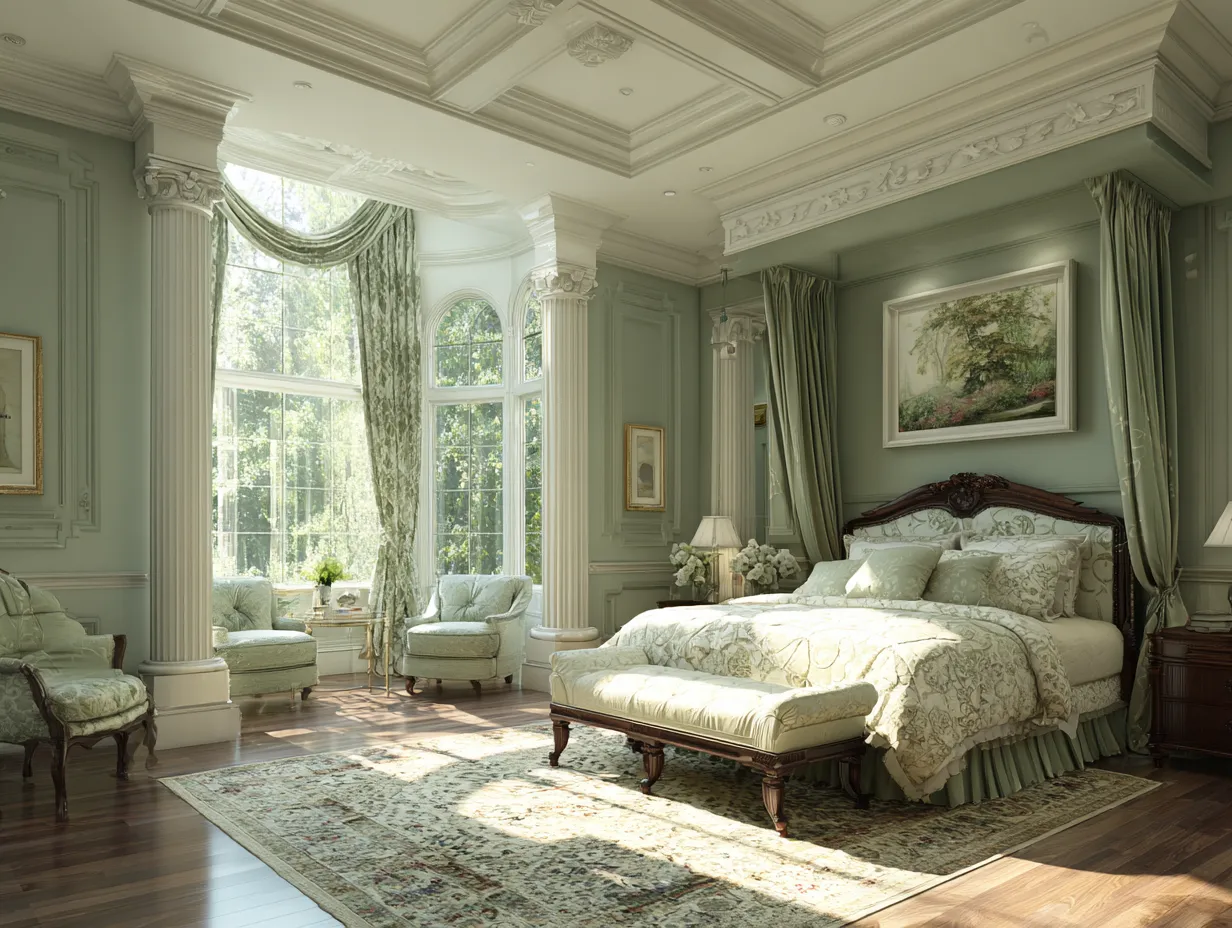
Layered Sage Textiles Against Cream Stone — Where the Palette Does Its Heaviest Work
Sage green and cream bedrooms built on natural stone and layered velvet represent the most tactile version of this palette. The walls here are cream-colored limestone — matte-finished, lightly textured — which means they bounce soft morning light without glare. Sage enters through the textiles: a deep velvet duvet at the core, a pale moss quilted throw at the foot, tasseled cushions in muted olive at the head. Each of those greens sits within the same muted family but reads as distinct, which is exactly how layering is supposed to work. A set of three sage-toned bedding items adds visual depth that a single block of color never achieves.
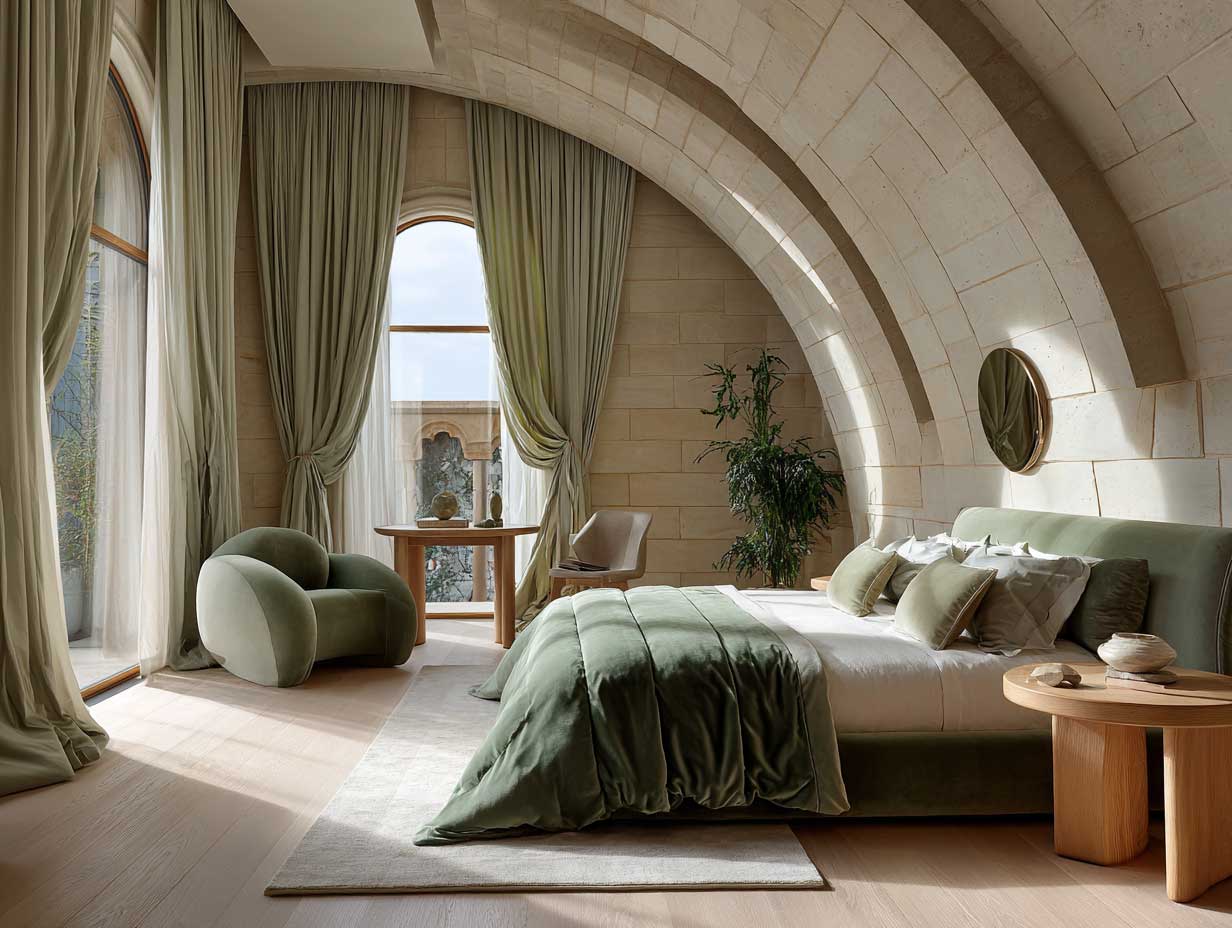


The furniture follows a Scandinavian logic: low, curved, pale-toned oak. The platform bed keeps its base exposed rather than upholstered — pale wood against cream stone creates horizontal warmth. Floor-to-ceiling linen curtains in natural cream filter daylight into patterns that shift across the bed throughout the day. Ask yourself: does a room that changes with the light need art on the walls? In this version, the answer is no. A good texture strategy — hard stone, soft velvet, airy linen, sculpted oak — handles visual interest without a single frame.
Lighting matters here more than most elements. A minimalist pendant with a glass globe diffuses rather than directs. Brushed brass wall sconces flank the bed, their warm metal picking up the gold undertones in the cream limestone. Storage disappears behind seamless cabinetry in the same cream as the walls, which means nothing competes with the sage textiles for visual attention. The lesson: cream does its best structural work when it’s invisible. You notice the green because the cream recedes.
What fails in this setup is any attempt to match greens exactly. Decorators who try to align a sage wall, sage duvet, and sage throw in the identical shade end up with a flat, unconvincing result — like a room staged for a catalog rather than lived in. The trio of velvet, quilted cotton, and tasseled linen works because each reads as its own shade of the same family. Choosing the right shade of green for bedroom walls matters before any textile decision — the undertone of the paint determines which fabric greens will harmonize and which will clash.
Bright white trim next to sage green is the most common error in this palette. Bright white has a blue undertone that makes sage read muddy and slightly gray-dirty by comparison. Benjamin Moore White Dove or Sherwin-Williams Alabaster — both creamy warm whites — are the correct choices for trim and ceiling when sage appears on walls or in textiles. The difference is immediate once you see it side by side.
Sage Green and Cream Bedroom With a Painted Ceiling — Reversing Where the Color Lives
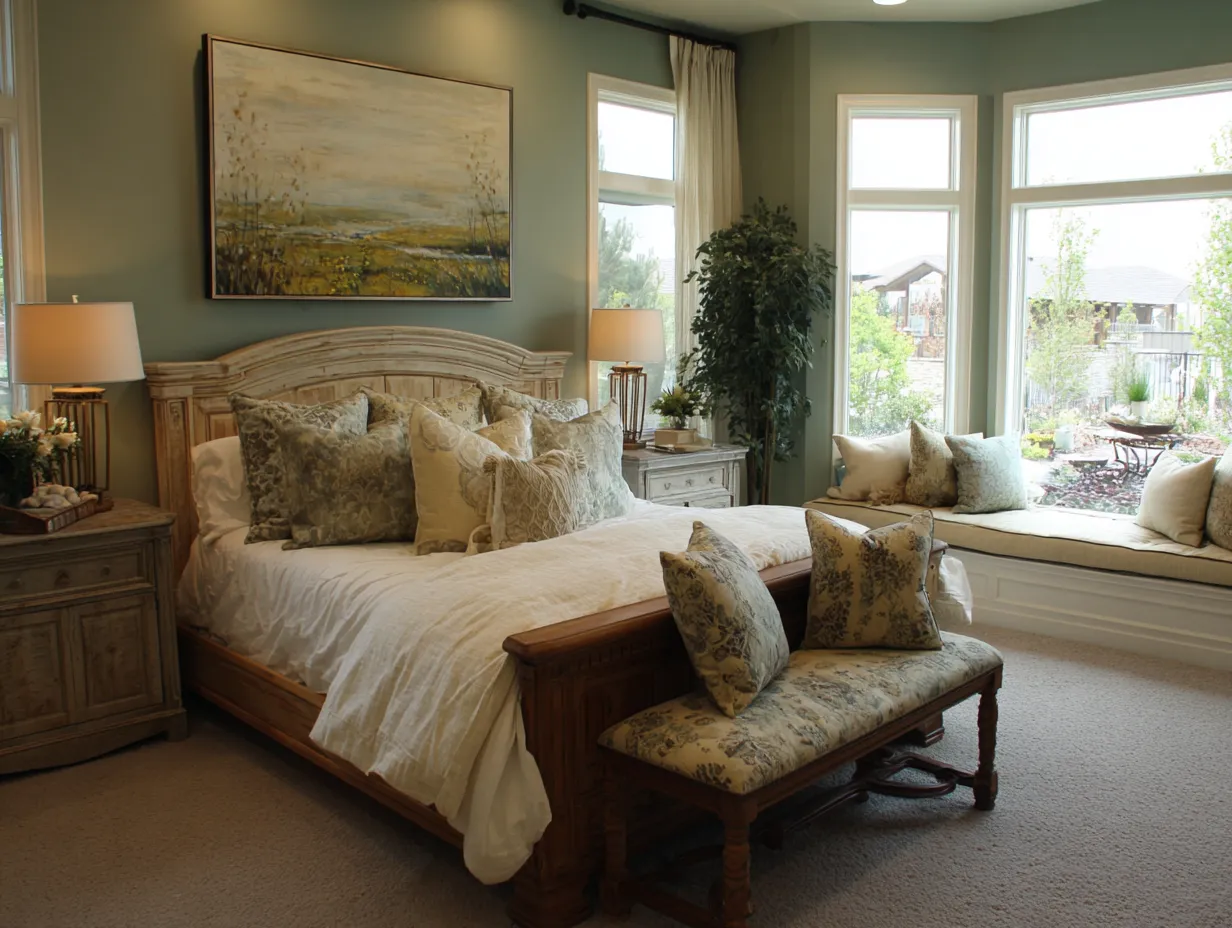
A sage green and cream bedroom where the color is on the ceiling rather than the walls turns the standard logic of this palette upside down. Sage overhead — rich, slightly warmer than the typical gray-green reading — wrapped with slim gold leaf trim in a floral motif creates the cocooning effect that dark painted ceilings are known for. Underneath sits a vintage four-poster in aged cream. The posts are worn to a softer tone than new cream paint, which is actually the point: aged finishes suggest history, and history reads as comfort.


The floor carries its own narrative through an antique Persian rug — faded with use, its original greens now sitting in the same muted olive and moss range as the ceiling. This is the rug doing something that new rugs rarely manage: bridging a palette rather than just sitting in it. Dark stained wood floors contrast with the cream tones above and anchor the whole layered scheme. French provincial furniture fills the room: a cream-painted armoire with softly chipped edges, a pale jade velvet bench at the foot of the bed, a carved walnut side table with marble inlay. The marble hits at around $200 to $400 for a quality side table of this type — worth noting because it’s the one hard material that keeps vintage rooms from reading as purely soft and precious.
Textiles in this room commit to the romantic direction completely: embroidered cream pillowcases, a quilted throw in pale jade, lace curtain panels in off-white that filter evening light into something amber and diffuse. Think of sage green the way you’d think of the patina on aged copper — it’s not a clean color, it’s a color with a story. Brass sconces with frosted glass shades deliver candlelight-adjacent warmth that makes the aged cream tones glow rather than flatten. The question worth asking is whether this richness translates to a room that feels rested or restless at night; here it tilts toward rested because the greens are muted enough to recede.
This is also the direction where dark green and cream bedroom ideas make the most sense. At ceiling level, a deeper, richer green gains context — it reads as canopy rather than wall, which is an invitation rather than an enclosure. Rooms with 9-foot or higher ceilings handle this treatment best. Lower ceilings compress the sage-painted surface and the four-poster posts until the room feels like a tent rather than a manor. Confirm ceiling height before committing to this version.
Sage Green Arch Wall and Cream Concrete — a Sage and Cream Bedroom Built from Geometry
Sage and cream bedroom design at its most architectural relies on shape rather than ornament to make the palette work. A large dimensional arch spans the wall behind the bed — not just painted, but modeled with depth, its surface curving at the edges where it meets the flat cream walls on either side. This is the key material distinction: the arch isn’t a painted arch, it’s a plastered form with actual volume. That volume catches light differently than a flat surface, which means the sage reads as two or three shades of green depending on where you’re standing.


Cream furniture here is structural and heavy: bed frame, nightstands, and a cantilevered vanity all cast from lightweight concrete polished to a silky matte finish. Concrete furniture of this specification typically runs $800 to $2,500 per piece from artisan makers, which explains why this approach is more often referenced than replicated. The bedding offsets the hardness — sage green linen sheets and a waffle-knit throw introduce softness without competing with the architecture. One risk in this direction is gravitating toward too many hard surfaces and not enough contrast. The waffle-knit throw earns its place precisely because nothing else in the room has that texture.
The floor is terrazzo, blending pastel chips in off-white, sage, and blush. Terrazzo works here the way a natural rug might in another room — it introduces pattern and variation at ground level without announcing itself. Recessed lighting runs along the baseboards and inside the arched niche above the bed, so the illumination at night is indirect and positional rather than overhead and flat. Stylists often describe this kind of lighting as “layered,” which means the room looks different at 7 AM, 2 PM, and 9 PM. For a bedroom, that quality of change through the day matters more than any single fixture.
Closet doors in this room are flush with the walls and finished in matching sage — they disappear rather than interrupt. A single ceramic lamp on one sculpted nightstand echoes the sage above. The whole room resists adding anything that doesn’t directly contribute to its geometry. That’s the discipline that makes architectural minimalism work: not just removing things, but resisting the urge to put them back. Mint green and cream bedroom ideas share the same restraint principle — when the palette is doing the visual work, decoration becomes subtraction.
For anyone curious about how paint color choices affect the mood and proportion of a bedroom, Sherwin-Williams offers practical guidance on matching shades to room size and lighting conditions — worth bookmarking before committing to a specific sage.
| Approach | Where Sage Lives | Cream’s Role | Key Risk |
|---|---|---|---|
| Layered Textiles + Stone | Duvet, throw, cushions | Structural (walls, cabinetry) | Matching greens too closely |
| Painted Ceiling + Canopy | Ceiling, rug undertones | Furniture, curtains, walls | Low ceiling height |
| Arch Wall + Concrete | Accent wall, closet doors | Furniture, floor chips | Too many hard surfaces |
The Verdict
Sage green and cream bedrooms work hardest when cream takes a structural role — not an accent one.
Sherwin-Williams Evergreen Fog SW 9130 at ~$75 per gallon delivers the gray-green base that reads sophisticated in every lighting condition. Test it against Benjamin Moore October Mist 1495 if you want a warmer sage with slightly more yellow in the undertone.
Texture does the layering. Three fabric weights minimum on the bed: velvet or sateen, linen or quilted cotton, knit or waffle-weave. One without the others reads flat regardless of the color.
The ceiling direction is underused. A sage painted ceiling with a cream canopy bed underneath creates drama without a single piece of art. Save this post.