A modern grey and white bedroom earns its reputation not because the palette is safe — it’s because, executed with the right furniture weights and one deliberate contrast move, it genuinely calms the nervous system in a way louder rooms can’t. The appeal is architectural: grey anchors the room without pulling warmth from it, white keeps surfaces from closing in, and together they create a backdrop that photographs at 8 AM the same way it photographs at midnight.
Where most rooms in this palette go wrong is in the furniture selection, not the color choice. A grey bed with white walls reads completely differently depending on whether the frame sits 14 inches off the ground or 26. The proportion of the bed to the room is the decision that makes or breaks the whole scheme — more than any specific shade of grey, more than the rug, more than the art on the wall.
Three distinct approaches to the grey-and-white bedroom are covered here: a low-profile minimalist layout with a grey bed and white linen, a contemporary floating-bed setup with a grey feature wall, and a sleek all-white platform arrangement anchored by a grey accent wall and workspace. Each one solves a different room problem.
→ Low-profile grey bed on white: the minimalist formula that reads calm, not empty
→ Floating bed + grey feature wall: adds depth without adding furniture
→ White platform bed + grey accent wall + desk: works as a combined bedroom-workspace
→ Benjamin Moore Regal Select grey runs $65–$75/gallon; Sherwin-Williams Emerald $90–$120/gallon
→ Sheer grey curtains outperform blackout panels in rooms under 150 sq ft — they keep the space feeling open
→ A low bed frame in a standard ceiling room makes the room read 20–30% larger than a tall frame would
The Low-Profile Grey Bed Is Doing More Structural Work Than It Looks
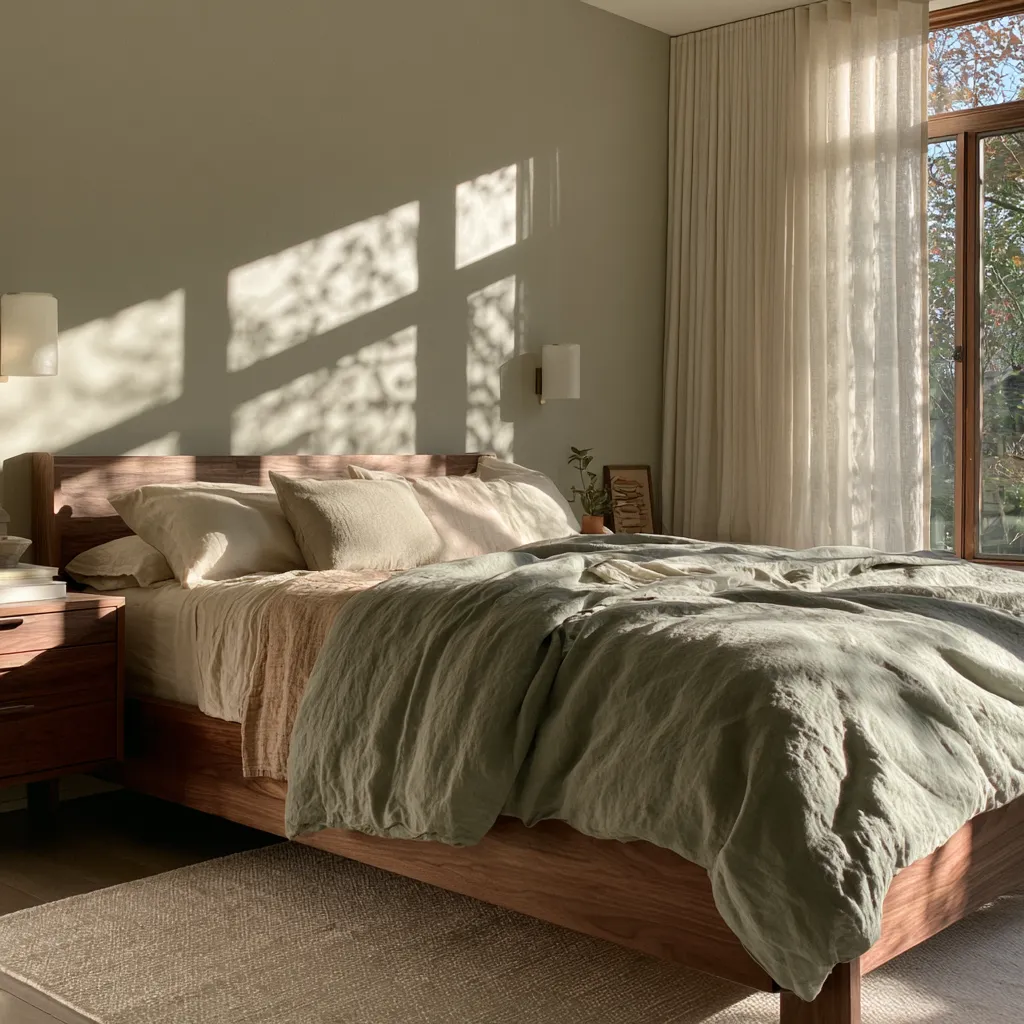
Minimalist grey and white bedroom design lives or dies on a single decision: how close to the floor does the bed sit. A grey bed frame at 14–16 inches of total height makes the ceiling appear taller and the floor area larger — the same optical principle that makes Japanese-style rooms feel spacious despite compact square footage. The low-profile grey bed paired with a white duvet is not a style choice so much as a spatial one, and it works in rooms from 120 square feet up.


Two white bedside tables flanking the grey bed keep the visual weight symmetrical — that symmetry is what gives a minimalist room the sense of calm rather than neglect. Geometric table lamps in this setup are the right call: they add vertical interest without requiring shelf space or a ledge. What doesn’t work here is a matching bedroom set bought as a package — a complete set from one manufacturer reads as a catalog page, not a room someone actually uses. Mix a grey upholstered bed with white painted side tables and the room immediately looks considered rather than assembled.
Sheer grey curtains at a large window are the detail most people skip and later regret skipping. The sheer fabric diffuses rather than blocks daylight, which means the light hits the grey walls at an angle that shifts across the day — the room reads slightly differently at 9 AM versus 3 PM, and that variation prevents the palette from feeling static. A soft grey area rug is the final anchor; stylists recommend extending it past the foot of the bed by at least 60 cm rather than tucking it fully under the frame, which makes the room look intentional rather than arranged. For more on how to make the most of a low-profile setup, the approach in minimalist bedroom interior design ideas covers exactly how far you can take the same formula.
Buying the grey rug in the same shade as the bed frame. When bed and rug match exactly, the floor disappears visually and the room flattens. Go one tone lighter or one tone darker on the rug.
Choosing blackout curtains in a room under 150 sq ft. Heavy blackout panels close in the walls during daylight hours. In a small grey and white bedroom, sheer panels preserve the open feel and let the grey read as grey rather than charcoal.
Centering the rug fully under the bed. A rug that disappears under the frame loses its function as a visual anchor. Extend it forward past the foot of the bed so at least 24 inches are visible from the doorway.
A Floating Bed and One Grey Feature Wall Solve the Monotone Problem
Contemporary grey and white bedroom design runs into one consistent problem: all-white walls with a grey bed can read as a staging photo rather than a room. The fix is a single grey feature wall behind the headboard — not two walls, not a painted-ceiling combination, just one. That wall adds depth without shifting the overall palette, and it gives the floating bed a visual backdrop that stops it from hovering in a white void.


The grey feature wall functions like a shadow — it makes everything in front of it appear lighter and more defined. A white dresser placed against the remaining white walls stays visually quiet because the eye is already anchored to the contrast wall. A floating grey bed in front of it creates a layered depth that a bed against a flat white wall simply cannot produce. Soft ambient lighting — a floor lamp with a warm bulb rather than harsh overhead — keeps the grey wall from reading as charcoal in evening hours, which is the most common complaint when this approach goes wrong.
Does the reading nook in this layout actually work? A large grey armchair beside the window is one of those additions that sounds decorative but earns its place — it creates a secondary function in the room that the bed alone can’t fill. The white-framed window, kept uncovered or with minimal sheer panels, pulls natural light into the room and reflects it off the remaining white walls, which visually offsets the darker feature wall. Benjamin Moore’s grey bedroom palette recommends pairing grey feature walls with pure white trim to avoid the room reading as uniformly dim — a detail that costs nothing but makes a significant difference. For more ideas on pairing white furniture within grey-dominant rooms, white bedroom furniture design ideas covers the full range of pieces that hold up against a dark wall.
White Platform Bed, Grey Wall, Workspace — the Layout That Makes One Room Do Three Jobs
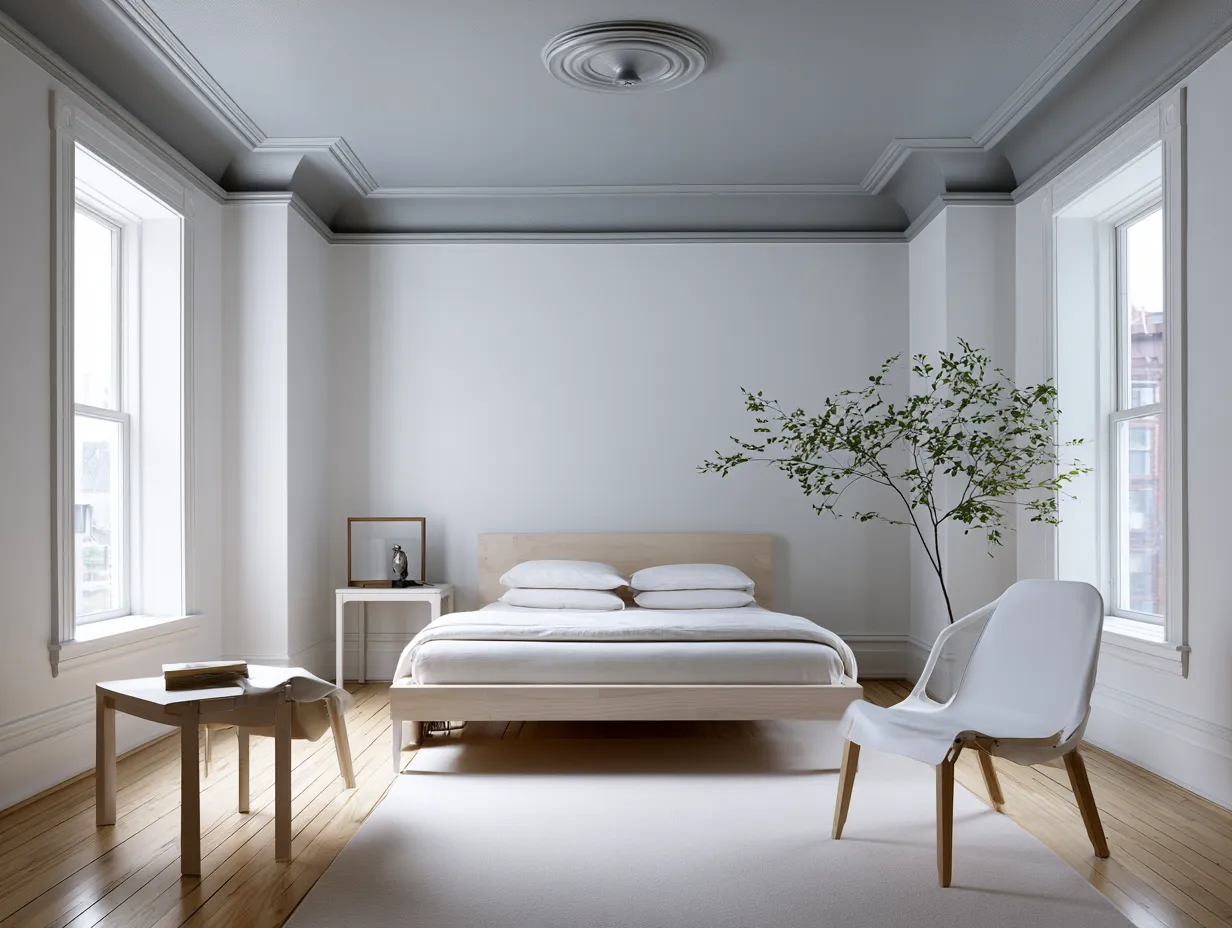
Grey and white bedroom furniture works differently when the palette is inverted — white bed, grey accent wall — and most rooms that need to double as a workspace benefit from this arrangement specifically. A white platform bed keeps the room feeling open even when a desk and wardrobe are added to the same four walls. The grey comforter on a white frame is the contrast element that keeps the bed from disappearing into the background, functioning the same way a grey feature wall does in the previous setup but at the furniture level rather than the architectural level.


A low grey nightstand beside a white platform bed needs to match the visual weight of the bed, not just the color. Think 14–16 inches tall maximum — tall nightstands beside low beds create a proportion problem that throws the whole room off. The sleek white desk and grey chair across the room establish the workspace without pulling visual attention away from the bed, which is the trick: the desk stays quiet because it’s white on white, and the grey chair reads as a punctuation mark rather than a competing focal point. A tall white wardrobe against the third wall provides storage while disappearing into the surrounding white surfaces. West Elm’s Schaefer low-profile bed in this configuration runs around $799–$1,099 for queen size, which lands roughly in the range where the quality of the frame actually affects how the room photographs over time.
Floor-to-ceiling windows with sheer white curtains are the feature that makes this three-function room feel livable rather than cramped. The curtains at full length visually raise the ceiling — the classic trick of hanging rods 4–6 inches above the window frame rather than at the frame itself. A large white area rug over light hardwood flooring softens the acoustic quality of the room, which matters when the desk is in regular use. Paint choice is worth attention here: for the grey accent wall, Benjamin Moore’s grey bedroom range lists options from the very light Classic Gray (LRV 73.67) to deeper mid-tone shades around LRV 48–57, which is the sweet spot for an accent wall that reads as intentional without making the room feel smaller. You can browse Benjamin Moore’s full grey bedroom palette at benjaminmoore.com/en-us/paint-colors/gray-bedroom.
| Setup | Bed Style | Key Contrast Element | Best For |
|---|---|---|---|
| Minimalist Clean | Low grey upholstered frame | White duvet + sheer curtains | Rooms under 150 sq ft |
| Contemporary Floating | Floating grey platform | Single grey feature wall | Rooms needing depth |
| White Platform + Workspace | White low-profile platform | Grey accent wall + comforter | Rooms doubling as office |
Modern Bedroom Takeaway
Grey and White Works Because It Lets the Furniture Speak
The palette removes competition. Every piece you add to a grey and white bedroom reads more clearly than it would in a busier room — which is exactly why the choice of bed frame height, nightstand proportion, and curtain weight matters so much more than it does elsewhere.
Sheer curtains over blackout panels, low frames over tall ones, one contrast wall over two — these are the three calls that separate a modern grey and white bedroom that photographs well from one that looks finished only in person.
Save this post. Come back to it when you’re deciding between the grey feature wall and the white-on-white platform approach — both work, but they solve different problems.