Asymmetrical haircuts for thin straight hair are the architectural move that flat, fine strands have always needed. Instead of chasing volume through products that weigh everything down by noon, these cuts use angle and direction to create the illusion of weight, movement, and shape — all without adding a single strand. I’ve sat in enough salon chairs to know that the difference between limp and sculpted is almost entirely about the geometry of the cut.
Fine straight hair has one real superpower: it holds a clean line better than any other texture. An asymmetrical shape exploits that completely. The longer side pools against the jaw or collarbone while the shorter side lifts, and the eye reads the contrast as fullness. You’ll notice it the moment the stylist reveals the finished cut — one side feels like three times as much hair as there actually is.
The three styles below cover the full range from barely-there asymmetry to graphic undercut territory. Each one was chosen because it solves a specific problem fine hair actually has — not because it looks good on someone with twice the density. Concrete styling notes and product realities are included for each, because knowing what your flat iron needs to do is half the battle.
– Asymmetrical haircuts for thin straight hair work by creating contrast and directional flow — not by adding fake volume.
– Cool ash blonde with a soft side sweep is the lowest-maintenance entry point; one side dips slightly longer and the effect is immediate.
– A lemon yellow undercut removes weight from below and redirects all visual attention upward — counterintuitive, but it works.
– Warm mocha with angular bangs uses diagonal energy to break the static flatness that fine textures tend to show.
– Avoid heavy layering below the chin on fine hair — it fragments what little weight you have instead of concentrating it.
– A $15 bottle of Redken Extreme Length Sealer keeps the ends of the longer side polished and prevents the wispy, unfinished look.
Ash Blonde Asymmetrical Haircuts for Thin Straight Hair with Soft Side Flow
Asymmetrical haircuts for thin straight hair land softest when the length imbalance is subtle — one side ending at the chin, the other at the jaw, with the whole shape swept in one direction. My go-to recommendation for anyone new to this cut is exactly this: a cool ash blonde tone on a gently swept silhouette. The color does half the visual work by reflecting light along every strand, making the hair appear thicker than it is without any product involvement.
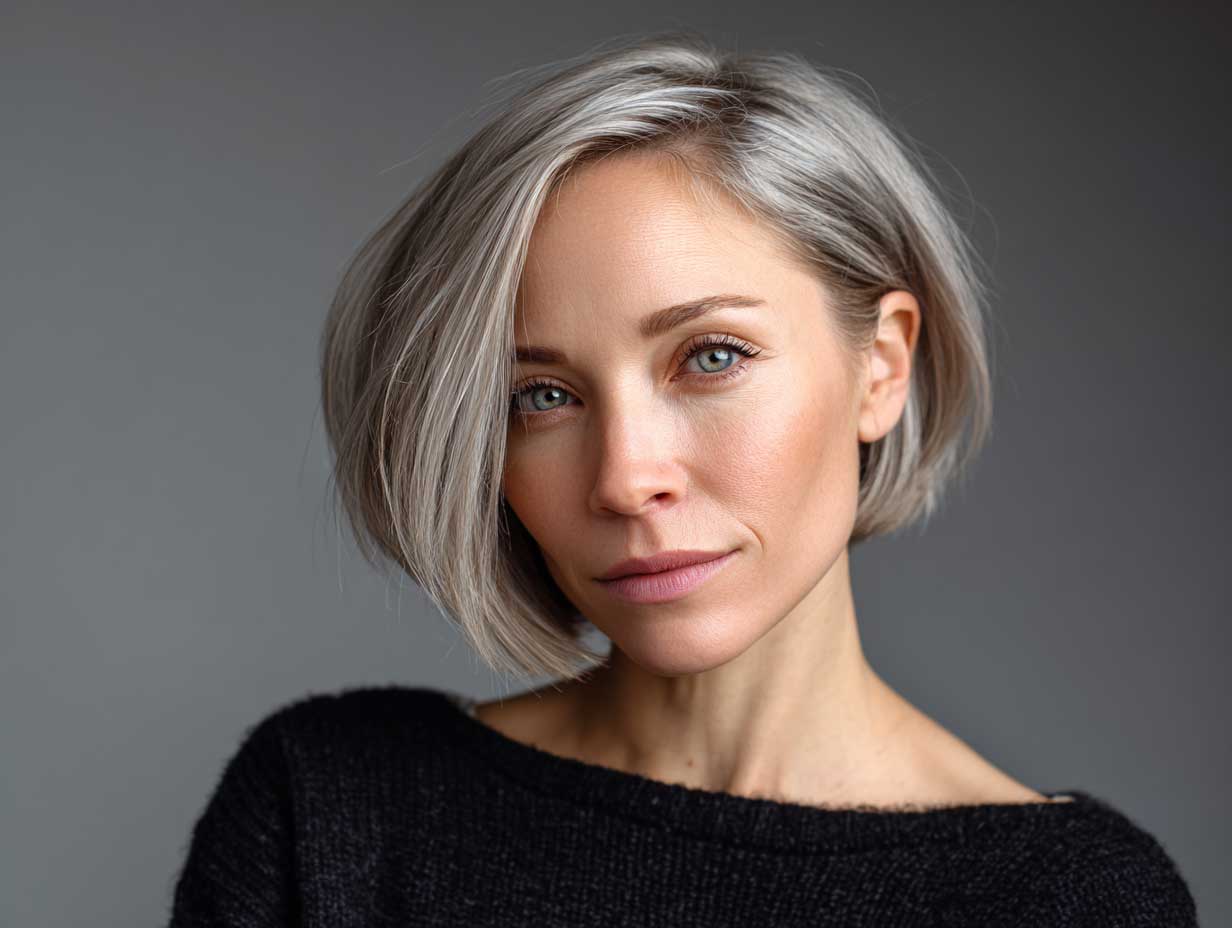
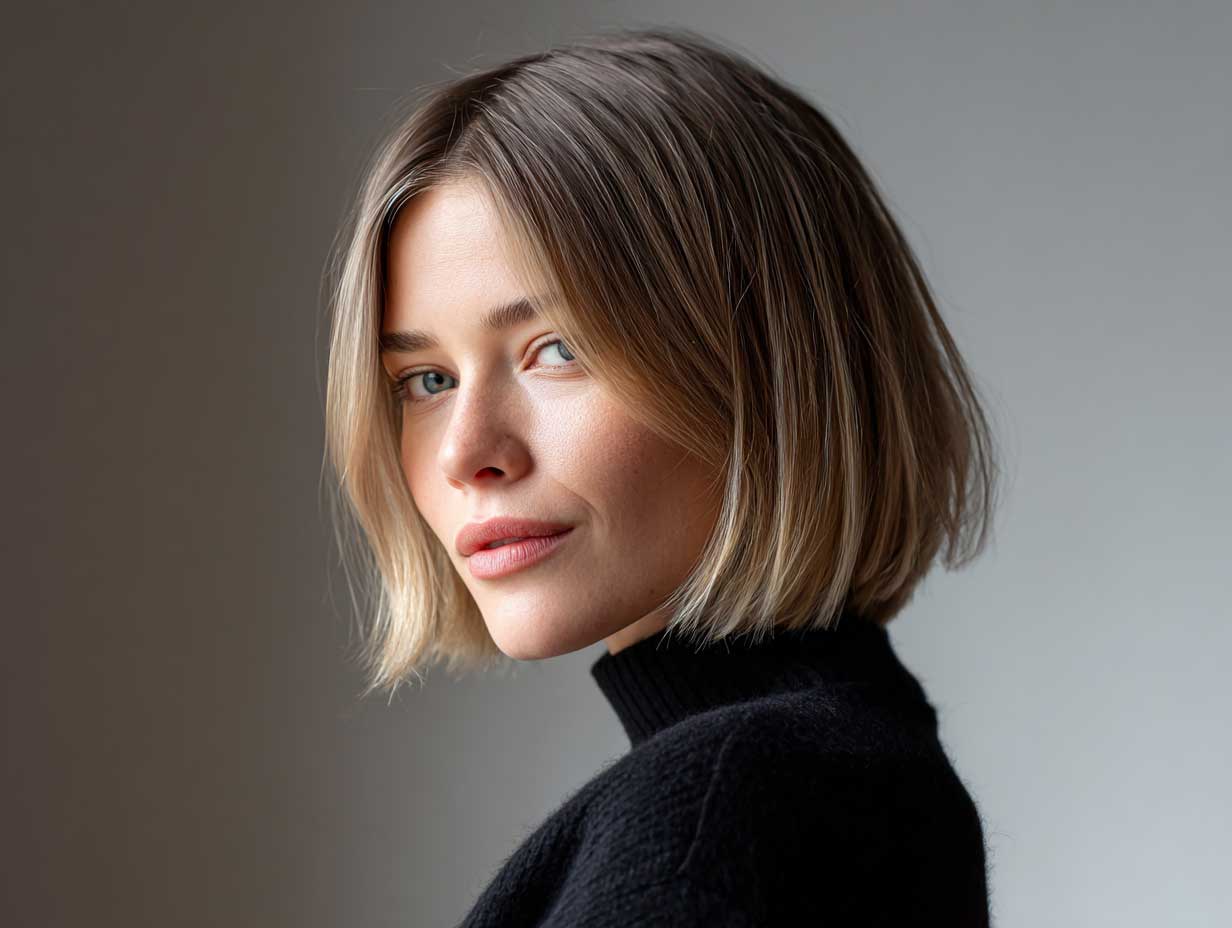


The side flow functions like a river current — it pulls the eye along a horizontal path, and when that path ends at a longer point on one side, the brain registers shape and volume rather than flatness. Ask your stylist to keep the longer side light and wispy at the ends rather than blunt-cutting it. A blunt line on fine hair reads as sparse; a tapered end reads as intentional. I’ve seen this mistake made on dozens of fine-haired clients who came in wanting a “heavier” look and got the opposite.
Ash blonde at the $80–$120 salon range (think Wella Koleston Perfect shade 8/1 or similar cool-neutral tone) sits at the sweet spot between glossy and dimensional. You want dimension, not warmth — warmth on straight hair tends to flatten it visually. What distinguishes this color from a generic blonde is its neutral undertone; it doesn’t fight the cool indoor light that most people live under, so it always looks deliberate. L’Oréal Professionnel’s Majirel Cool Cover range does this particularly well for around $10 per tube at supply stores.
Styling takes about six minutes. Blow-dry the longer side with a paddle brush directing heat downward and slightly toward the face; that sets the sweep. A dime-sized amount of Oribe Supershine Moisturizing Cream on the ends — around $20 for a travel size — seals the wispy finish without stiffness. Avoid volumizing mousse on the mid-lengths; it lifts the wrong sections and breaks the clean side-flow silhouette. More short haircut ideas for thin hair are worth exploring if you’re deciding between length options before your appointment.
What doesn’t work here: a center part. The moment you split this cut down the middle you lose the entire architectural logic. The asymmetry lives in the diagonal sweep, and a center part cancels it immediately. Side part only, positioned roughly above the outer edge of your brow.
Lemon Yellow Asymmetrical Haircuts for Thin Straight Hair with Side Undercut
Asymmetrical haircuts for thin straight hair reach maximum structural contrast when one side is buzzed to skin and the other falls freely past the chin — and when you paint the whole thing lemon yellow, you’ve built something that belongs in a magazine rather than hiding under a volumizing spray. This is the cut I stole from a client I saw at a salon in Brooklyn three years ago, and I’ve recommended it specifically for fine hair ever since, because the undercut removes all the dead weight from below while concentrating every strand at the top and longer side where the color and movement actually live.
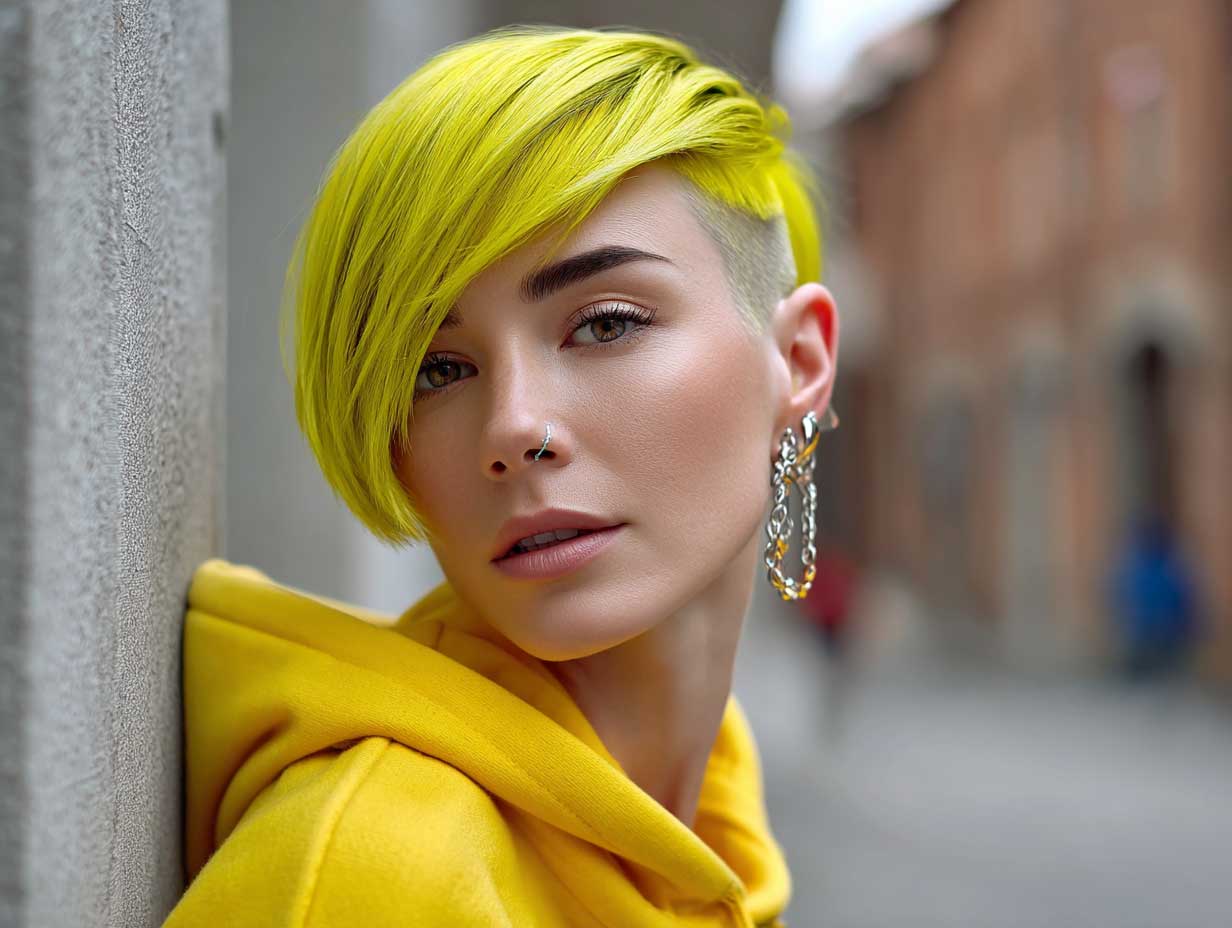
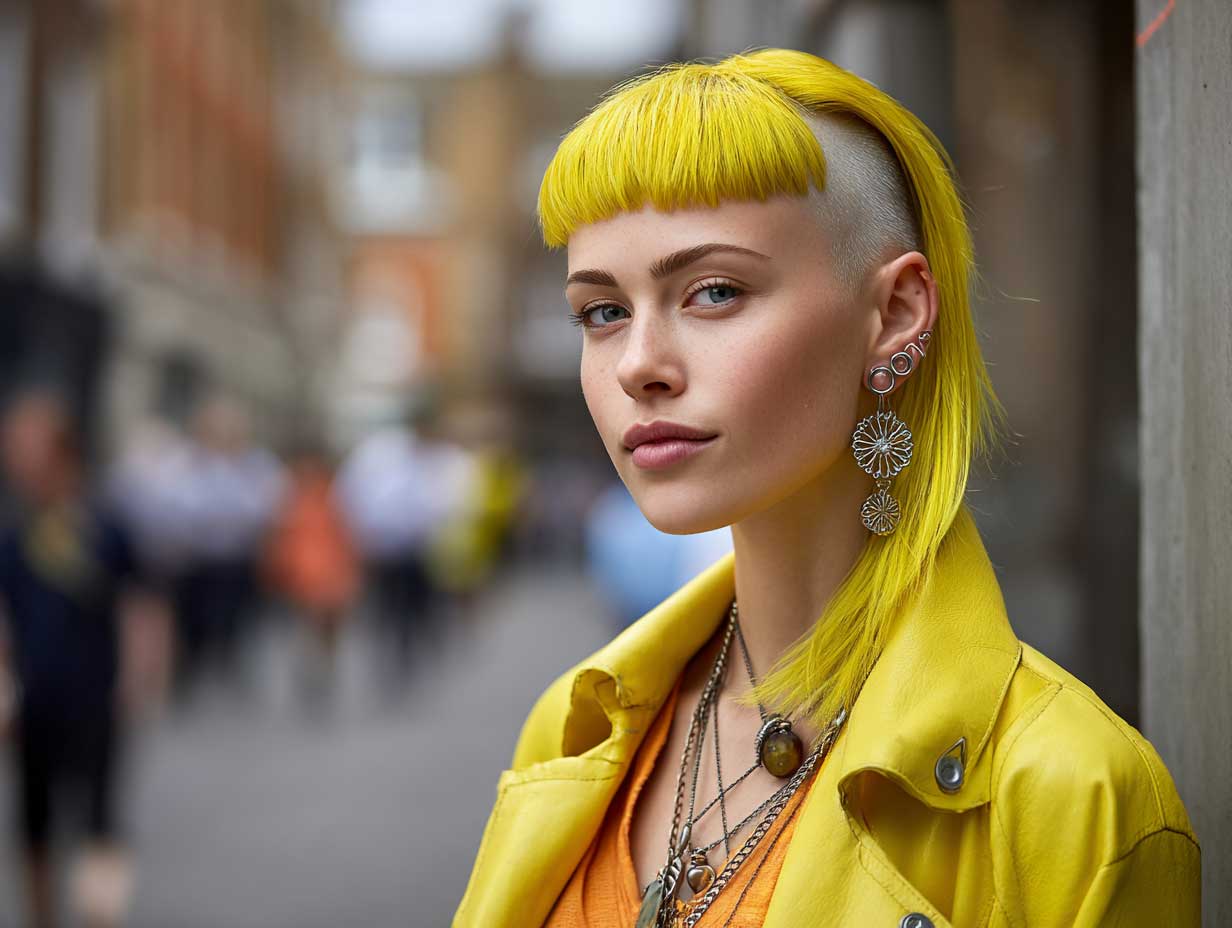
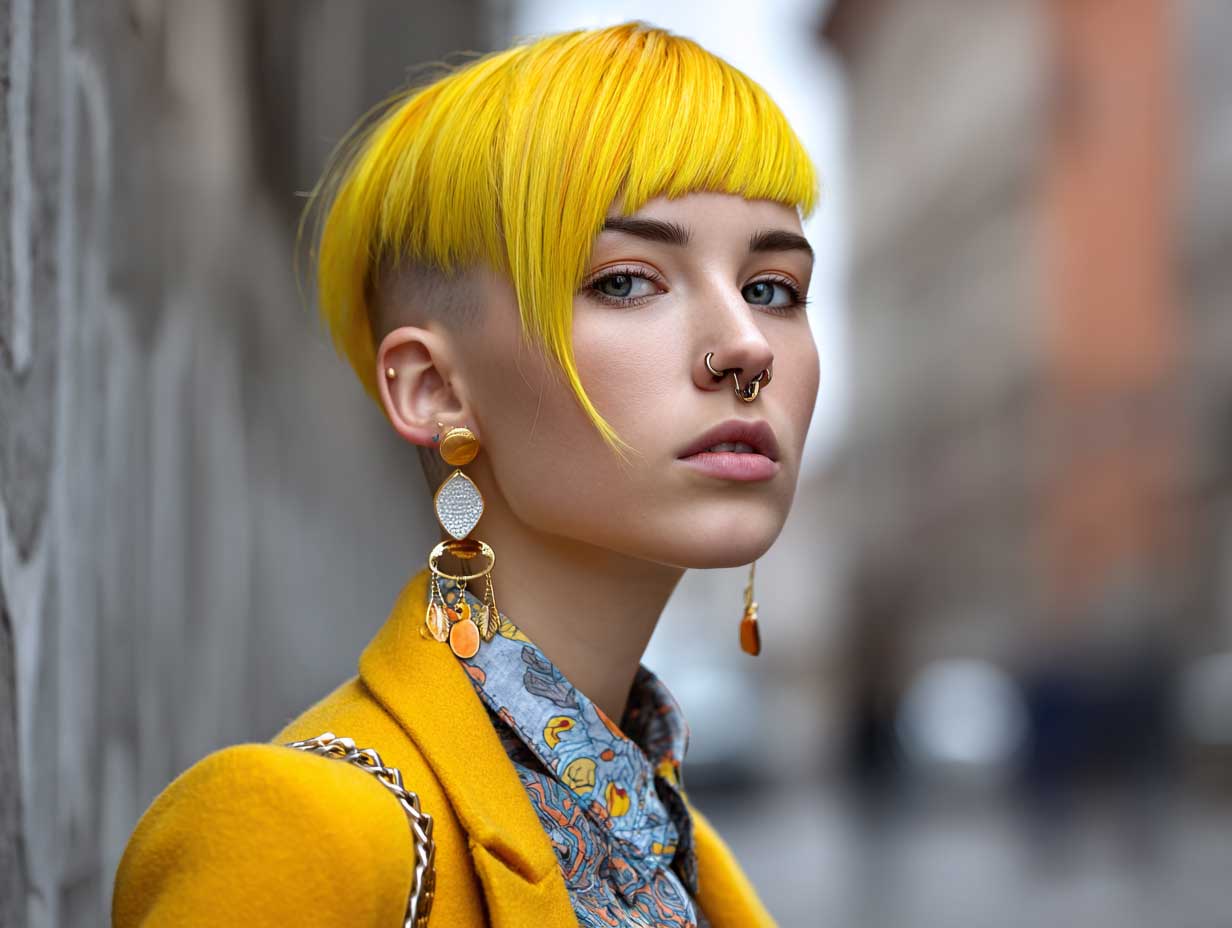
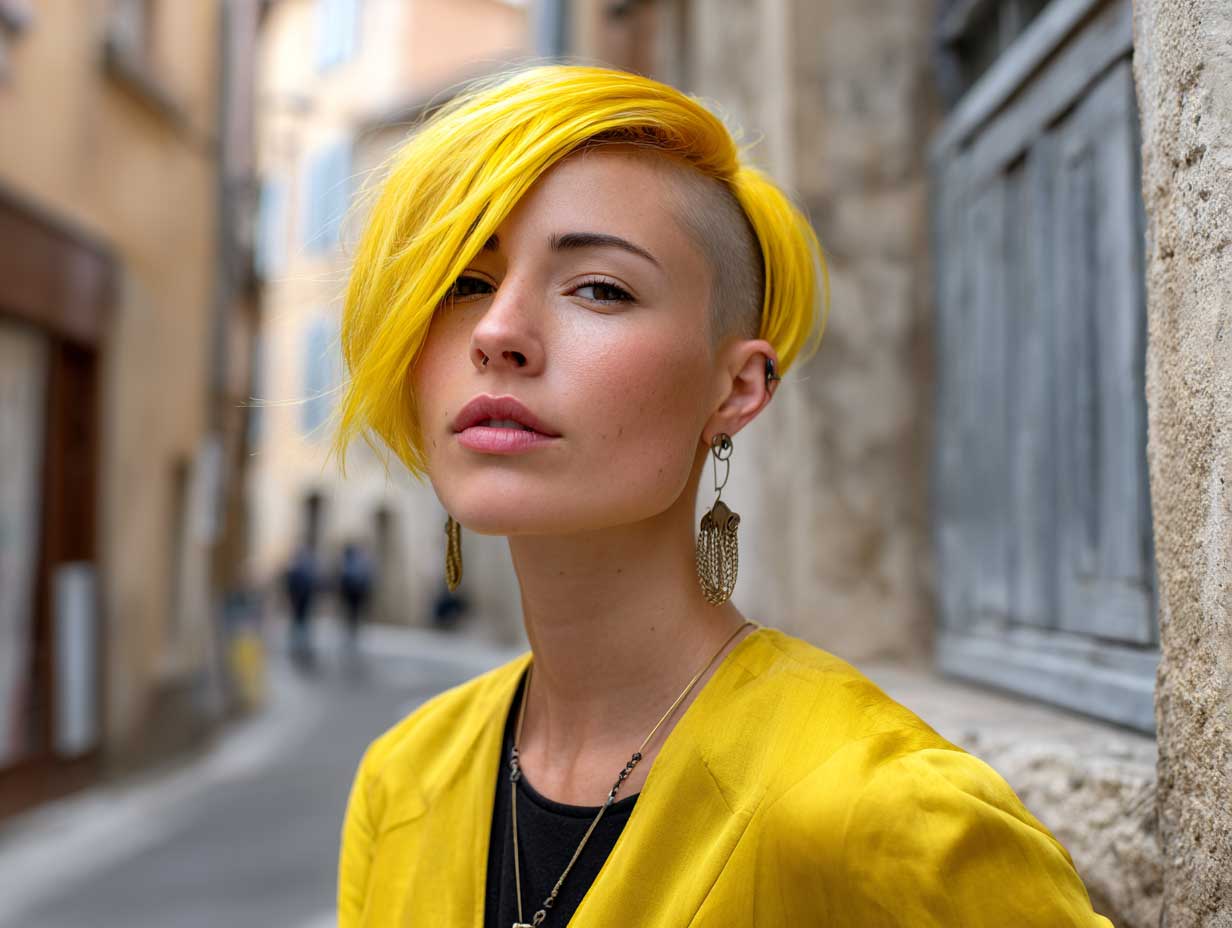
The physics of why this works on fine hair is actually simple: you need your strands where people can see them, not dispersed across your entire head. The undercut takes the hair that was sitting flat against your temple and skull — doing nothing useful — and removes it entirely. The remaining longer section now carries all the visual weight, and because it’s concentrated and vivid, it reads as substantially more hair than it actually is. Think of it less like a haircut and more like an optical edit.
Lemon yellow requires a full bleach-and-tone process — budget $150–$250 at a salon and plan for 3–4 hours, especially if your starting color is darker than a level 7. Pravana Vivids Neon Yellow and Wella Color Charm Paints Lemon Drop are the two I’ve seen hold best on straight hair because the smooth cuticle allows maximum color saturation. Expect to refresh the yellow every 6–8 weeks; this shade fades to a pale gold rather than brassy orange, which is actually a workable interim look.
Does the styling get complicated? Not even slightly. The longer side smooths with a flat iron in two passes — Babyliss Pro Nano Titanium at around $120 is the tool I own and use daily — and stays put with a light mist of Kevin Murphy Session Spray. The undercut side needs nothing. You’ll spend more time on color maintenance than on daily styling, which is the opposite of what people expect and exactly why fine-haired women who try this cut rarely go back to anything else. Asymmetrical styles for round faces offer more direction if face shape is a concern when choosing the undercut height.
Layering the longer side of an asymmetrical cut when you have fine hair is the fastest way to destroy the whole effect. Layers on thin straight hair create feathery, disconnected ends that read as breakage, not body. The long side of an asymmetrical cut on fine hair should be cut with minimal or no layering — the weight of a single-length fall is what produces the illusion of thickness. I’ve watched stylists add in “movement layers” on fine-haired clients and the result looks like hair that lost a fight with a razor. Keep it solid, keep it long, keep the weight intact.
Warm Mocha Asymmetrical Haircuts for Thin Straight Hair with Angular Bangs
Asymmetrical haircuts for thin straight hair take on a completely different personality when you introduce angular bangs — and warm mocha brown is the color that makes those angles read as soft rather than severe. You need that softness. The bang sweeps diagonally across the forehead and tucks into the longer side, which means the entire front of the face is framed by one continuous diagonal line. It’s the hairstyle equivalent of a well-placed contour: it reshapes what you see without changing what’s actually there.




Diagonal energy is the specific thing fine hair craves and rarely gets. Most fine-haired people try to solve flatness with horizontal cuts — blunt bobs, straight fringes, even layers that sit at the same level all the way around. All of those choices reinforce the horizontal plane of the hair and make it look flatter. The angular bang breaks that pattern. It introduces a vector, and the eye follows that vector across and down through the longer side, reading the whole shape as dynamic and intentional instead of flat.
Mocha brown in the level 5–6 range with warm undertones is the right color here for a reason I’ve confirmed across many hair appointments: it creates the appearance of depth inside the strand. Redken Shades EQ 6NB (Natural Brown) is around $12 per tube and mixes into a tone that glows under daylight without going orange. It’s distinct from a flat chocolate brown, which can look two-dimensional on straight hair. The warm mocha has just enough golden undertone to catch light at different angles, making the hair appear to have more thickness than it does.
Styling the bangs correctly is the make-or-break moment for this cut. Use a medium round brush — the 1.5-inch barrel size — and direct the bang away from the face and slightly downward while applying medium heat. This sets the diagonal sweep and prevents the bang from splitting into the unflattering center-part position it naturally wants to go. A small amount of Bumble and Bumble Styling Wax ($28) on fingertips pressed through the bang tip keeps the angle crisp all day without stiffness. The rest of the cut air-dries cleanly on straight hair — no additional styling needed. For more on how angle and length interact on fine strands, this breakdown of lob haircuts for straight hair covers the same principles in a different length category.
What fails here is a squared-off bang cut straight across. The moment the bang is horizontal instead of diagonal, you lose the asymmetry entirely and end up with a choppy fringe that competes with the cut rather than extending it. The diagonal is non-negotiable — it’s what makes this haircut work rather than just look like a bob with an aggressive fringe.
The Verdict
Asymmetry Is Not a Trend Fix — It’s a Structural Solution for Fine Straight Hair
The soft ash blonde sweep works best for first-timers who want a noticeable but low-commitment change. Book a session every 10–12 weeks to keep the imbalance sharp — fine hair grows fast and the angle blurs quickly without maintenance.
The lemon yellow undercut is the highest-impact option and also the lowest daily effort. The maintenance cost is in the color ($150–$250 per refresh), not in the morning routine, which stays under five minutes.
The mocha angular bang version solves the specific problem of flat fine hair looking static and one-dimensional. The diagonal breaks the horizontal plane and the warm tone adds perceived depth. Save this post before your next salon appointment — your stylist needs to see exactly which angle and which color you mean.