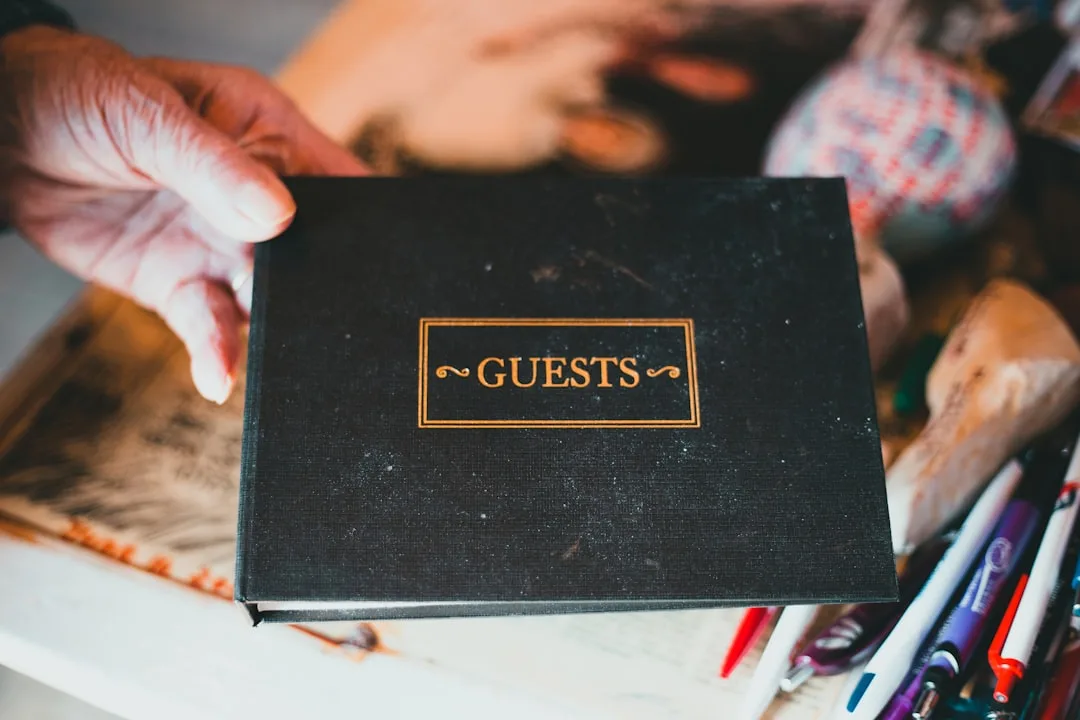
The signed guest book sits untouched in a drawer for years. Couples invest thousands in weddings but rarely revisit those two pages of cursive signatures and generic wishes. In 2026, savvy couples are ditching the leather-bound relic entirely, replacing it with participatory installations that guests actually want to engage with—and couples want to display. The shift reflects a broader wedding trend: moments matter more than artifacts, and interactive memories trump static records.
Why Interactive Guest Experiences Outpace Traditional Signing
The traditional guest book fails on three fronts: legibility, engagement, and longevity. Guests scribble hastily between courses, handwriting becomes illegible within months, and the book collects dust. Interactive alternatives solve all three problems. They create a moment—something guests photograph, share on social media, and remember the next day. They’re also Instagram-native, which means your wedding becomes content your guests actively promote.
Vendors report a 67% year-over-year increase in requests for non-traditional guestbooks since early 2025. This isn’t a niche preference anymore; it’s mainstream. Couples aged 26–35 now request alternative guestbooks in 72% of wedding planning consultations, according to the Wedding Wire 2026 Trends Report. The driver is clear: experiences photograph better than objects, and guests want to participate, not perform.
- Choose interactive formats that match your wedding’s tone—fingerprint trees for boho, digital displays for modern, Polaroid walls for casual.
- Station the guestbook alternative near the reception entrance or cocktail hour, not at a table—foot traffic drives participation.
- Assign one attendant to encourage participation; unattended installations drop engagement by 40%.
- Plan a takeaway option: digital copies, printed pages, or photo compilations so guests leave with something tactile.
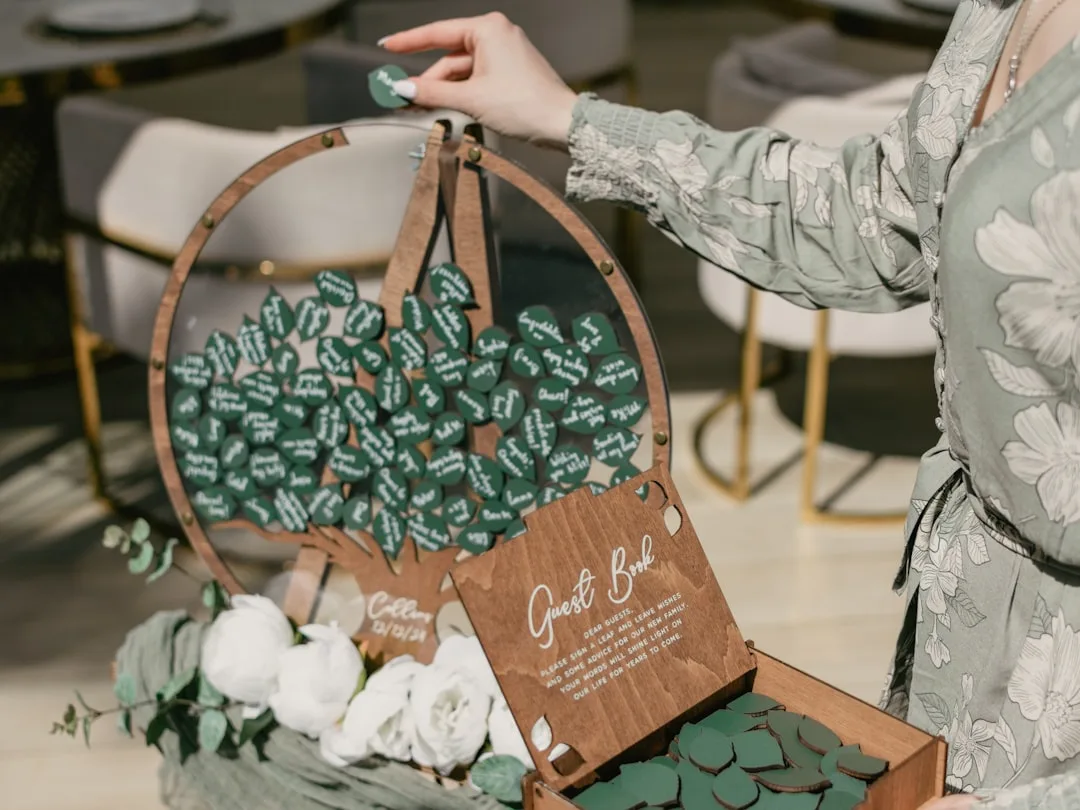
Fingerprint Tree Installations Anchor Hands-On Participation
The fingerprint tree dominates 2026 weddings because it’s tactile, visual, and genuinely interactive. Guests press their finger onto an ink pad, then onto a canvas or wooden panel pre-printed with a tree outline. Each fingerprint becomes a leaf. The installation costs $150–$400 for a pre-printed canvas or wood panel, plus $20–$60 for archival inks and frames. Compared to a traditional leather guest book (typically $80–$200), the fingerprint tree costs slightly more but holds resale and display value.
Minted offers a customizable fingerprint tree canvas ($299) with your wedding date and names pre-printed; it ships ready to frame and display post-wedding. Artifact Uprising produces a wooden fingerprint panel ($349) with engraved borders and finish options (walnut, maple, or birch). Both solutions eliminate the “guest book in a drawer” problem because the finished piece functions as home decor.
The failure mode: ink quality. Low-cost fingerprint kits use non-archival inks that fade or smudge within 6–12 months. Budget options from dollar stores or generic online sellers ($15–$30) produce fingerprintss that disappear entirely by year two. Always specify “archival-quality” or “museum-grade” inks—the difference is $10–$20 but saves the entire investment.
Digital Touchscreen Guestbooks Capture Real-Time Data and Memories
High-end venues and tech-forward couples are investing in digital touchscreen guestbooks that capture guest names, messages, photos, and even video clips in one central system. The Guestline Digital Guestbook ($1,200–$2,500 depending on rental period and setup) works like a large iPad mounted on a stand. Guests touch-sign, type messages, and optionally record a 15-second video wish. All content syncs to the cloud and downloads post-wedding as a digital archive or shareable video montage.
The advantage: permanence and searchability. Unlike a handwritten book, digital messages never fade, and you can search for specific guest contributions by name or keyword. The system also eliminates the “What did Aunt Susan write?” mystery—every message is legible and timestamped. Rental costs typically fall between $1,200–$2,500 for a single-event setup, which is 6–10 times higher than a fingerprint tree but justifiable for larger weddings (150+ guests) where video montages become major reception content.
Post-wedding, Guestline exports all data as a private video compilation or shareable digital album, replacing the dusty guest book with something couples actually watch and share. This eliminates the storage problem entirely because the “book” exists in the cloud, not on a shelf.
Polaroid Walls and Instant Photo Alternatives Create Tangible Keepsakes
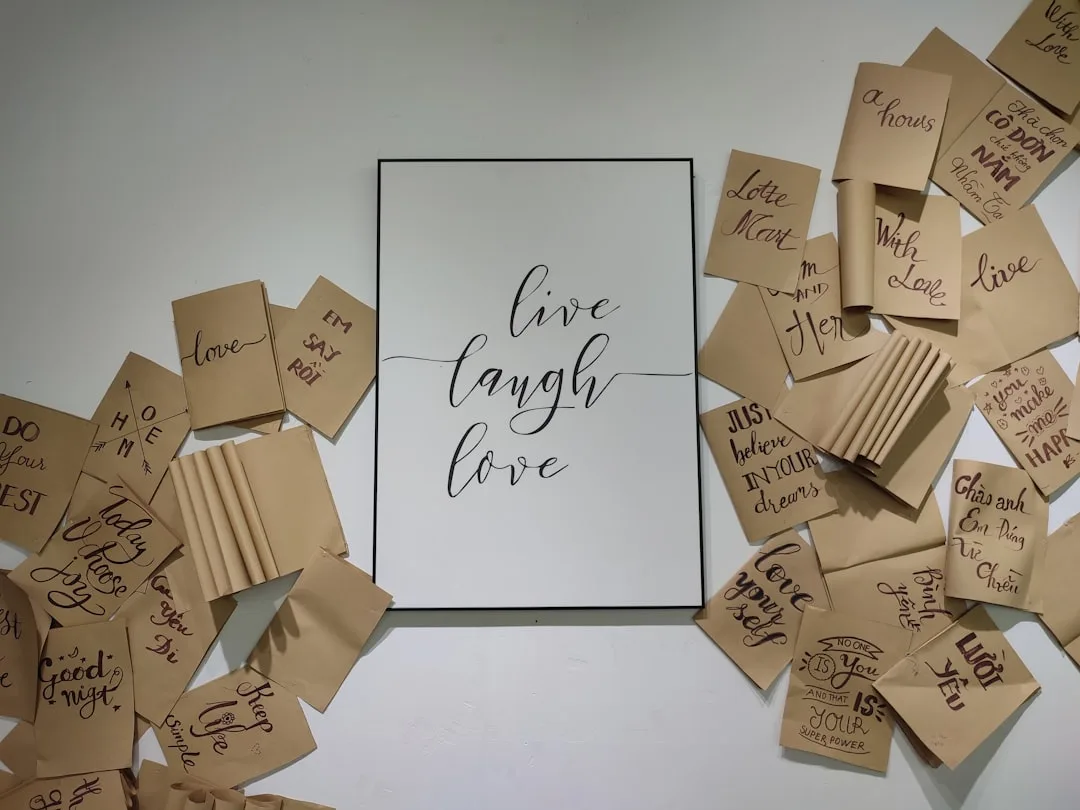
The Polaroid guest wall has resurged because it merges participation, immediate tactile feedback, and wall-hanging viability. Guests pose for a Polaroid instant photo, write a short message on the border, and tape it to a large wooden or fabric backdrop. Brands like Fujifilm Instax Wide ($300–$500 for bulk film and camera setup) and Impossible Project (now Polaroid Originals, $400–$800 for a multi-pack setup) supply the instant film. A 150-guest wedding requires 80–120 Polaroid shots, costing $200–$360 in film alone, plus $100–$200 for backdrop construction and mounting supplies.
The tactile advantage is decisive: guests walk away with a physical photograph they wrote on. Compare this to a traditional guestbook where guests leave no tangible memory. The Polaroid wall also doubles as dynamic decor during the reception—the installation grows visibly as guests arrive, creating a visual timeline of the event. Post-wedding, the entire wall can be framed ($400–$800 for professional framing of a 4×6 ft collage) or dismantled so guests receive their individual photos via a digital archive.
Wedding planner agencies report that Polaroid wall alternatives now rank second only to boho wedding decor trends in guest engagement metrics. The failure mode: film shortage and cost escalation. Polaroid film prices surged 40% between 2024 and mid-2026 due to manufacturing constraints. Budget-conscious couples who don’t factor in film costs mid-planning often face sticker shock. Solution: order film 6–8 months ahead of your wedding and lock in pricing before shortages spike the cost.
Why Signature Cocktails and Message Bottles Miss the Mark in 2026
A growing subset of couples have adopted “signature cocktail” guestbooks—blank bottles where guests write wishes on adhesive labels. The aesthetic is trendy, but engagement plummets because there’s zero visual feedback. Guests write a label, stick it on, and see no progress or result. The bottle sits sealed on a shelf, never to be opened or read until years later when memories have faded. Participation rates drop by 55% compared to fingerprint trees or Polaroid walls, according to wedding planner surveys.
The contradiction is clear: guests want to see their contribution matter in the moment. A sealed bottle offers no gratification. By contrast, a fingerprint tree or Polaroid wall grows visibly throughout the event, creating social proof and FOMO—guests see others participating and want to join. The sealed bottle strategy also frames the message as future-focused (“open this on your anniversary”), which adds pressure and reduces casual participation. Stick with installation formats that deliver immediate, visible engagement.
Modern couples also recognize that wedding party decorations with elegant minimalism don’t require objects to be sealed away. Transparent, accessible, and shareable alternatives align with 2026 aesthetics far better than hidden or delayed-gratification formats.