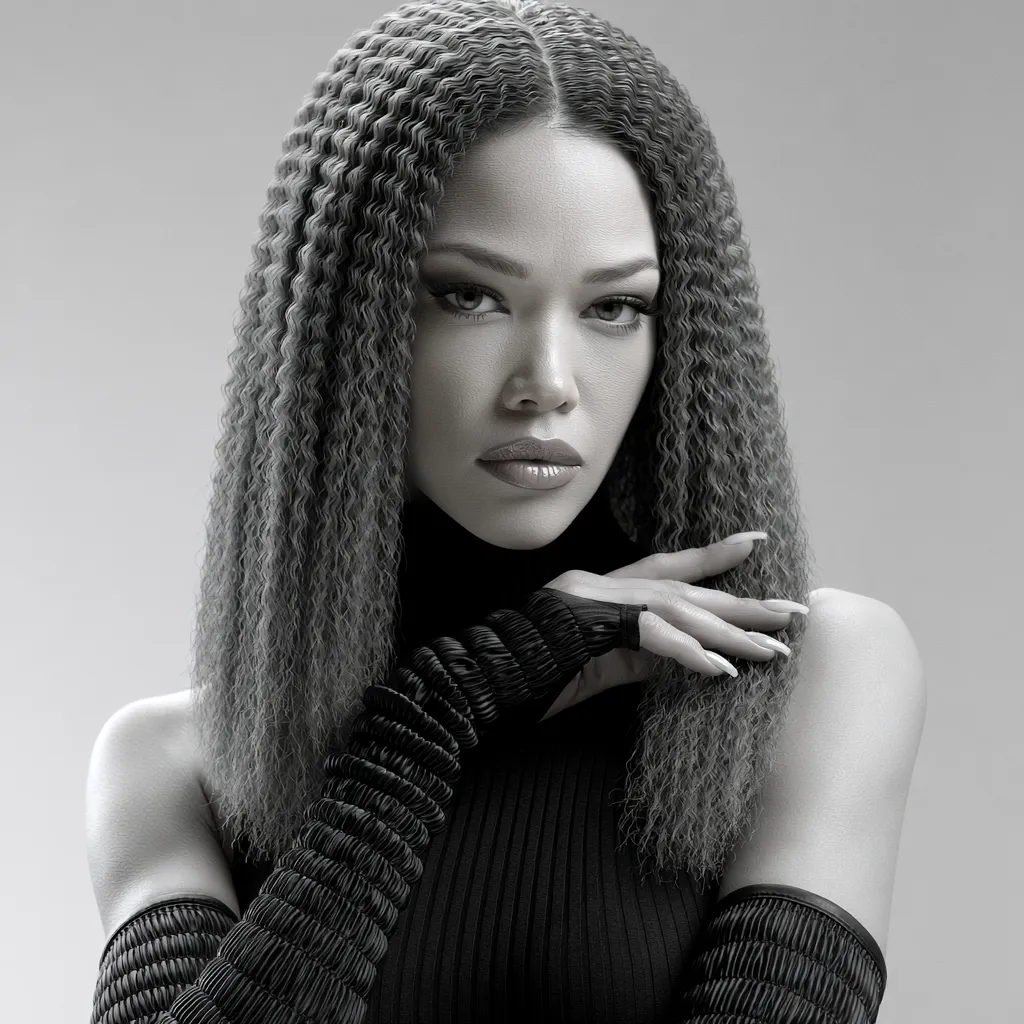
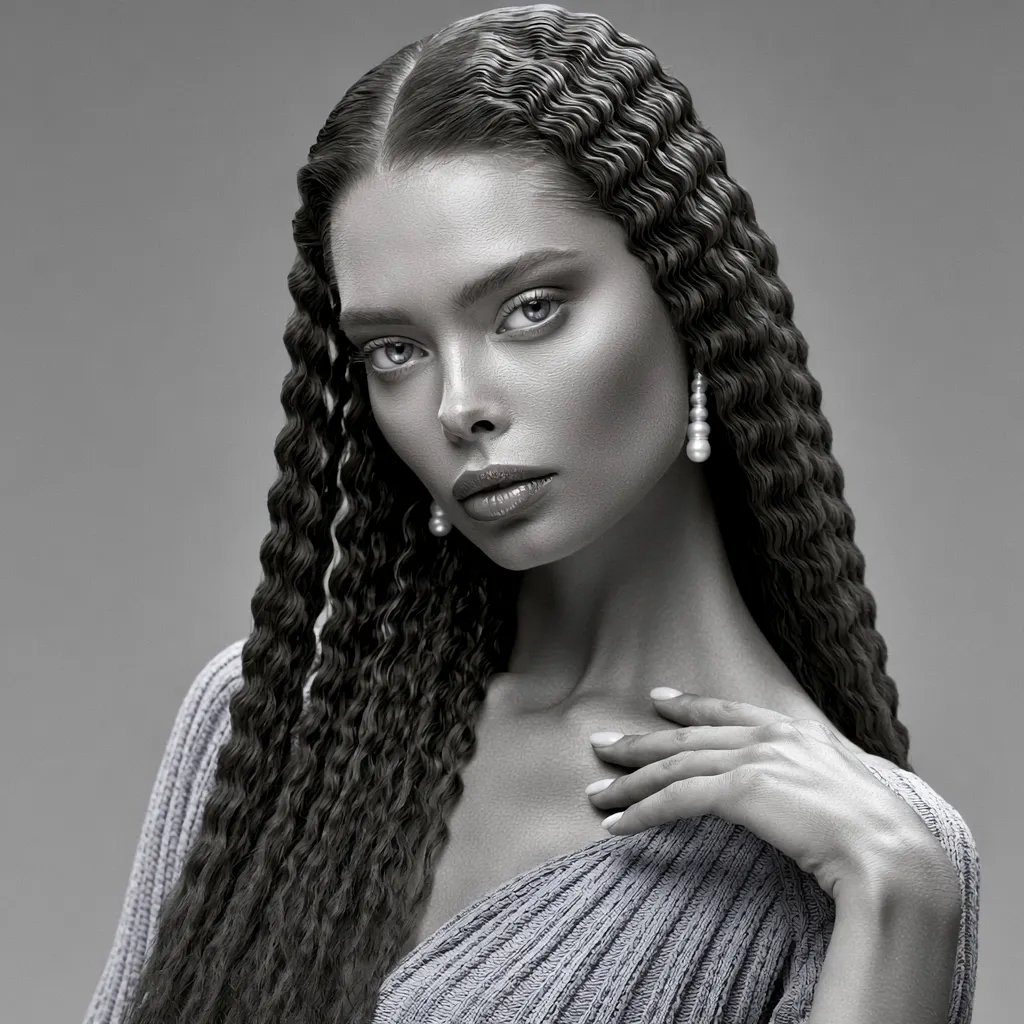
Crimped hairstyles for straight hair solve a problem most styling tools create: too much smoothness, not enough character. Sleek strands are a clean canvas, but without texture they tend to disappear by midday. A crimping iron changes the structure of each section, creating zigzag ridges that reflect light from multiple angles and hold their shape through movement, wind, and hours of wear.
The trend has more staying power than most people expect. Hair.com notes that crimped hair has accumulated over 104 million posts on TikTok — and the looks being recreated now are significantly more wearable than the stiff all-over waves of the original 1980s era. Today’s approaches use selective crimping, bold color pairings, and half-up structures that read as deliberate rather than dated.
Three distinct looks are covered below — coral orange with feathered bangs, violet with pinned-back volume, and lime green in a sleek half-up silhouette. Each uses a different part of the head as the focal point, which means the crimping technique and placement change per section. The right approach depends on whether the goal is texture throughout the length, structured height at the crown, or a contrast between polished top and dimensional base.
- Medium crimping irons (1–2 inches wide) produce the classic defined-wave pattern best suited to straight hair.
- Clamp each section for 10–15 seconds — longer does not improve the crimp and increases heat damage risk.
- Fine hair stays safer at 350–375°F; coarse or thick straight hair handles 400–450°F.
- Feathered bangs left smooth contrast the crimped lengths and keep the look from reading as one heavy block of texture.
- The half-up crimped structure works because it creates two distinct zones — control at the top, movement at the bottom.
- Conair’s ceramic crimping iron (around $27.59 on Amazon) is the most accessible entry point for at-home crimping.
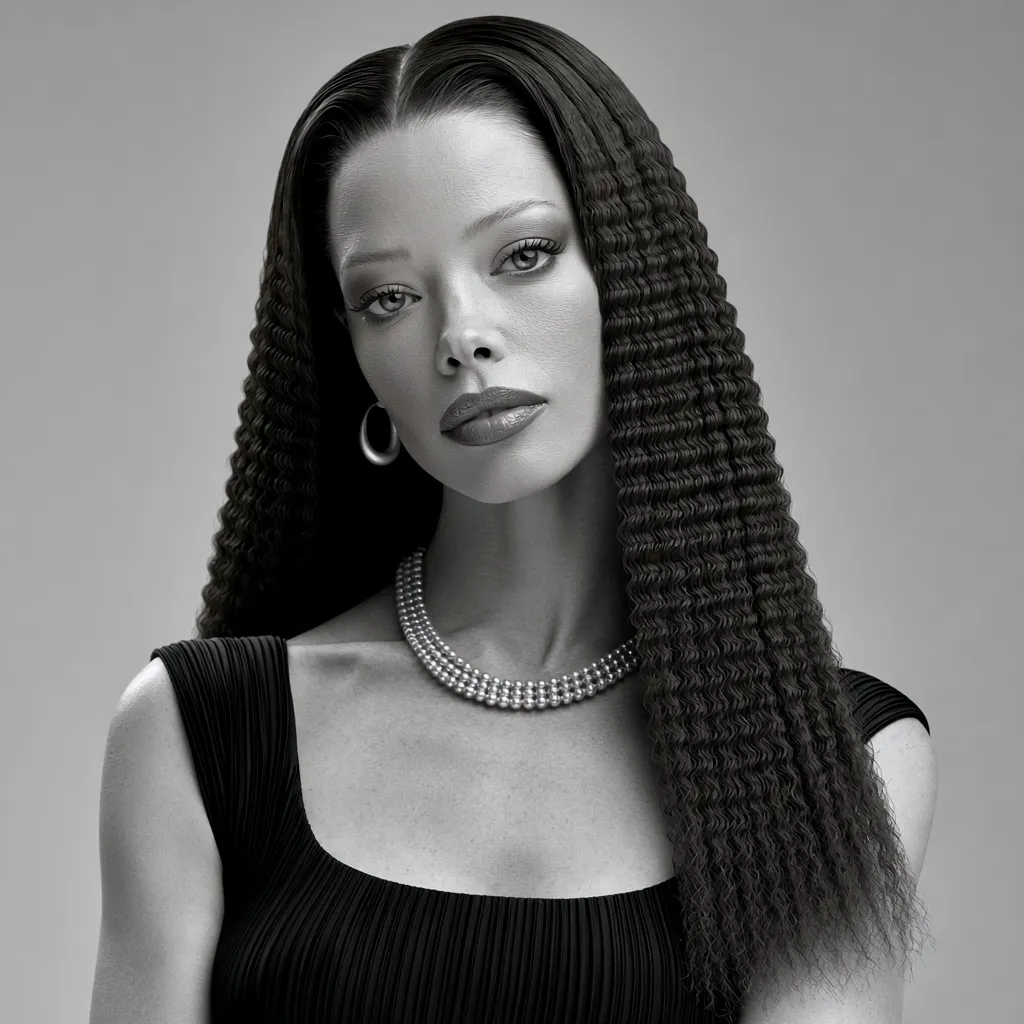
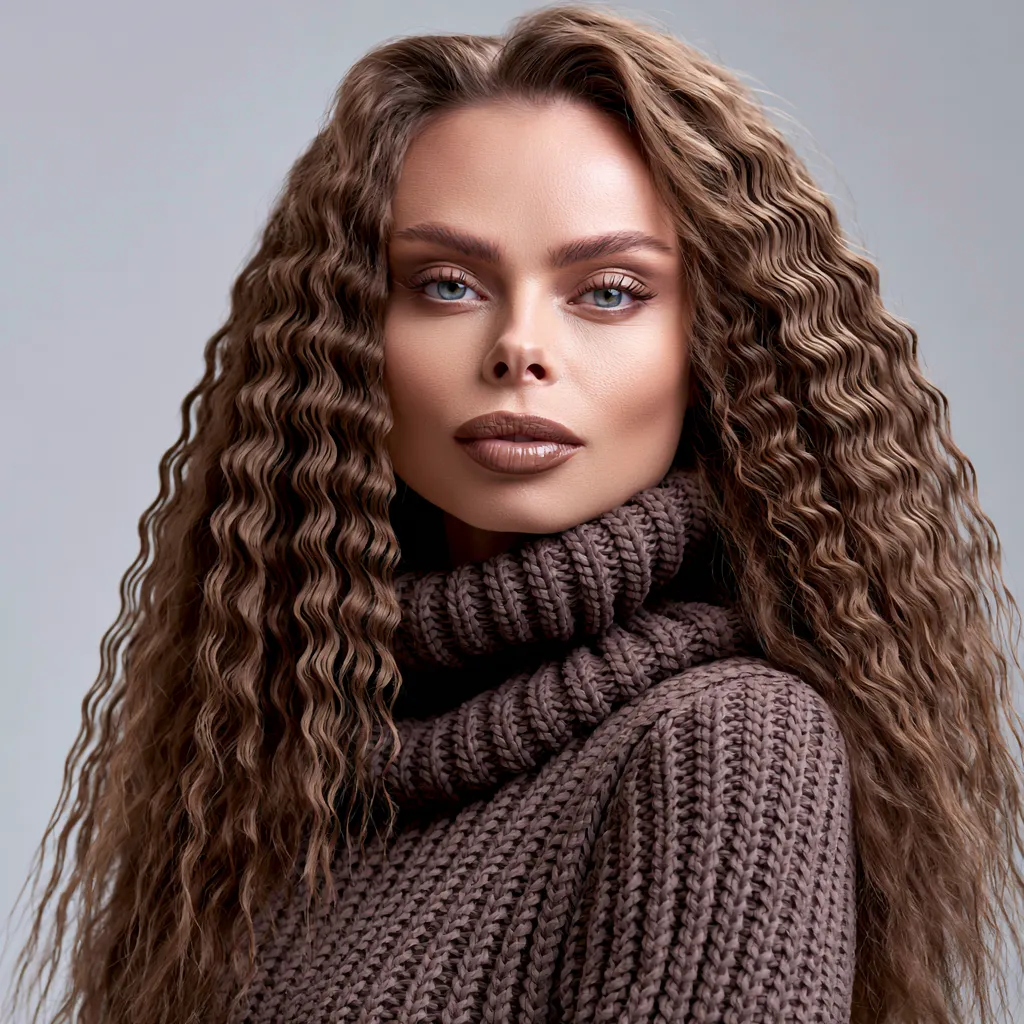
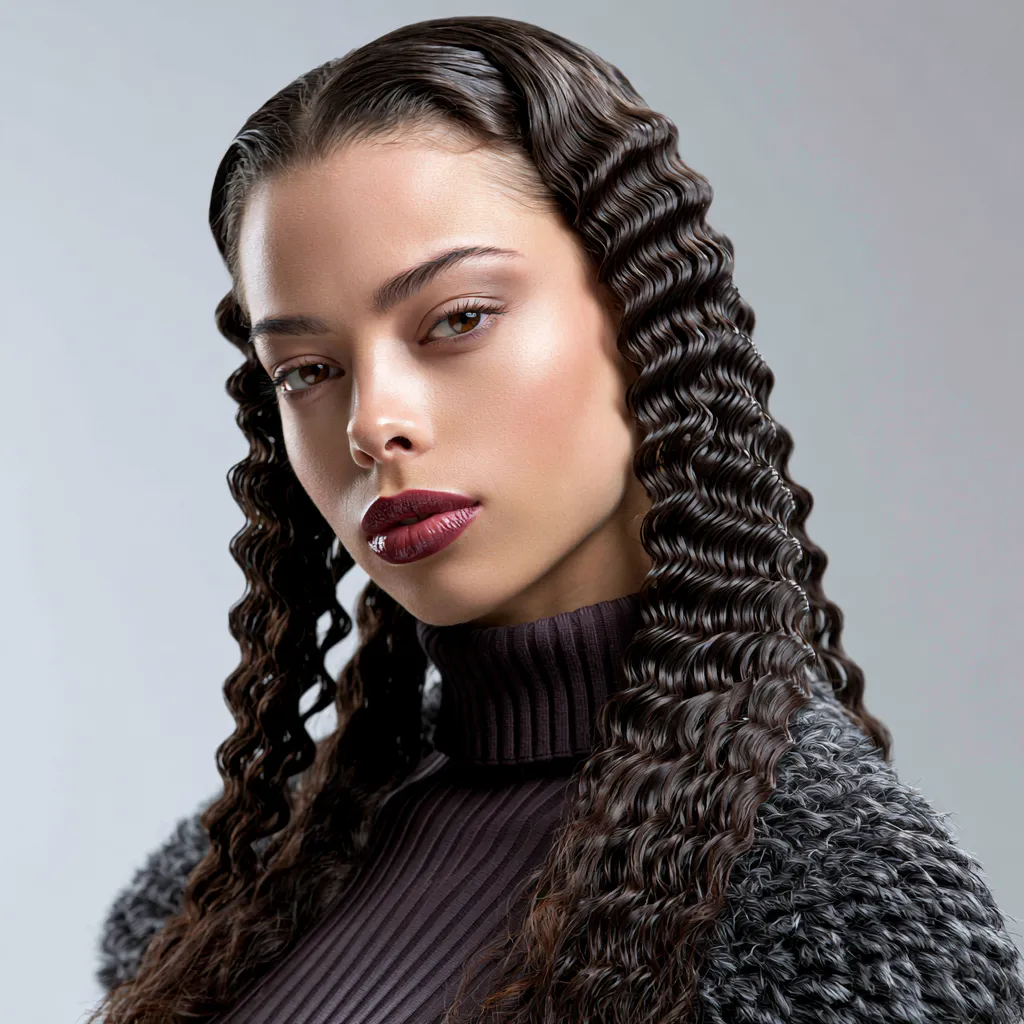
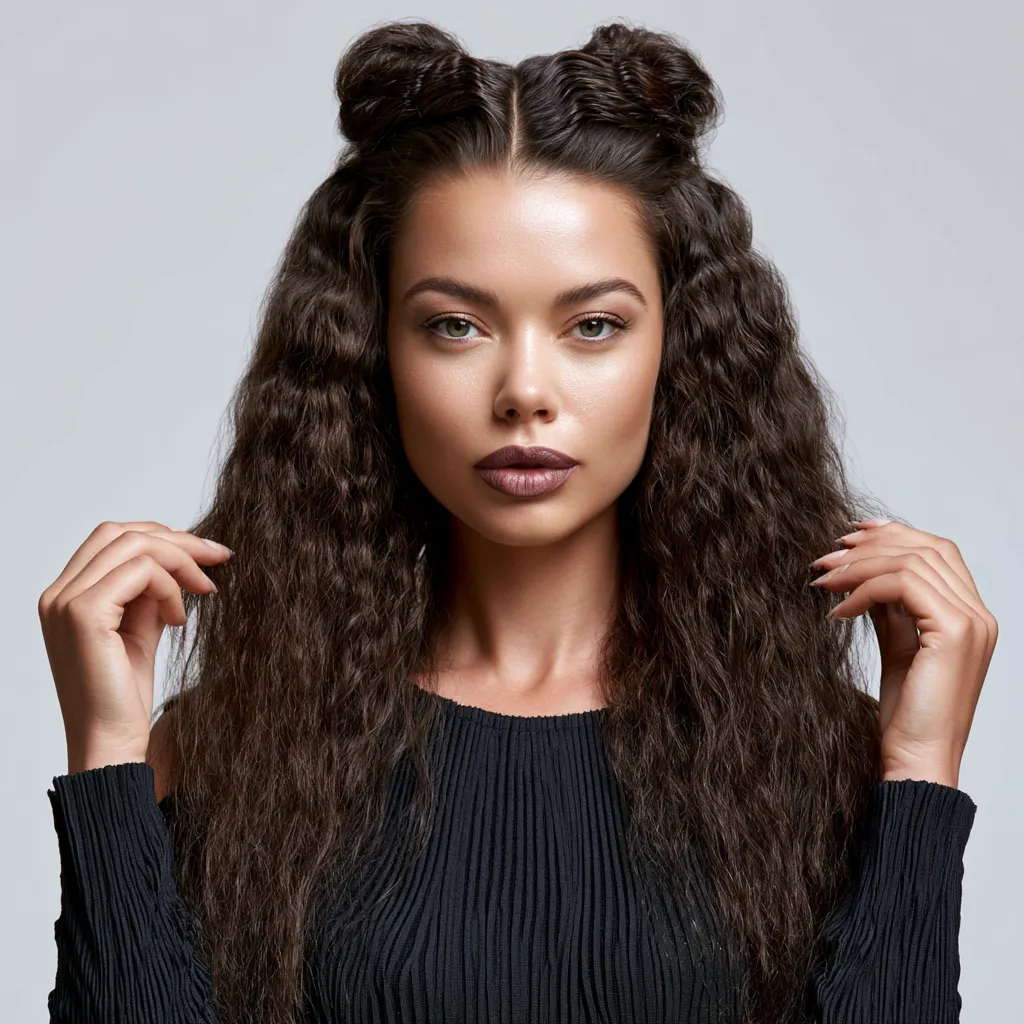
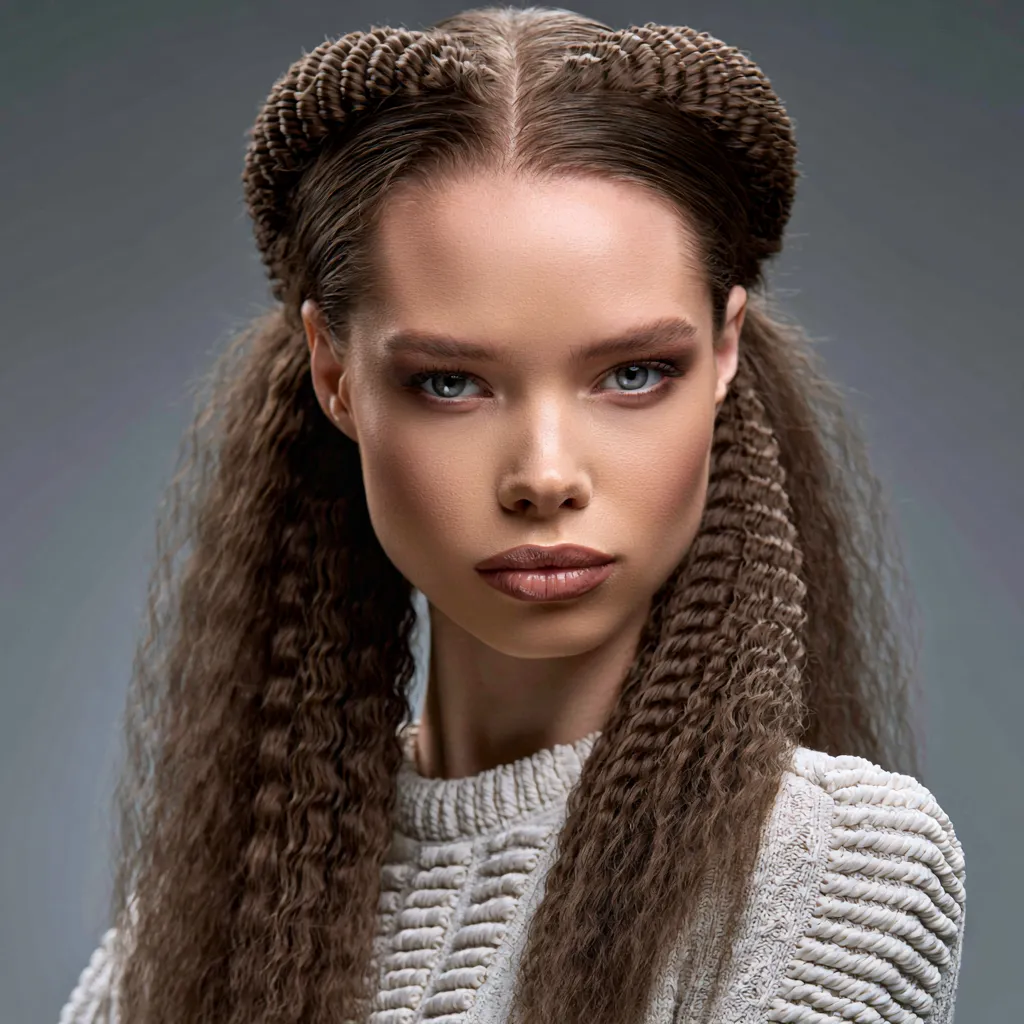
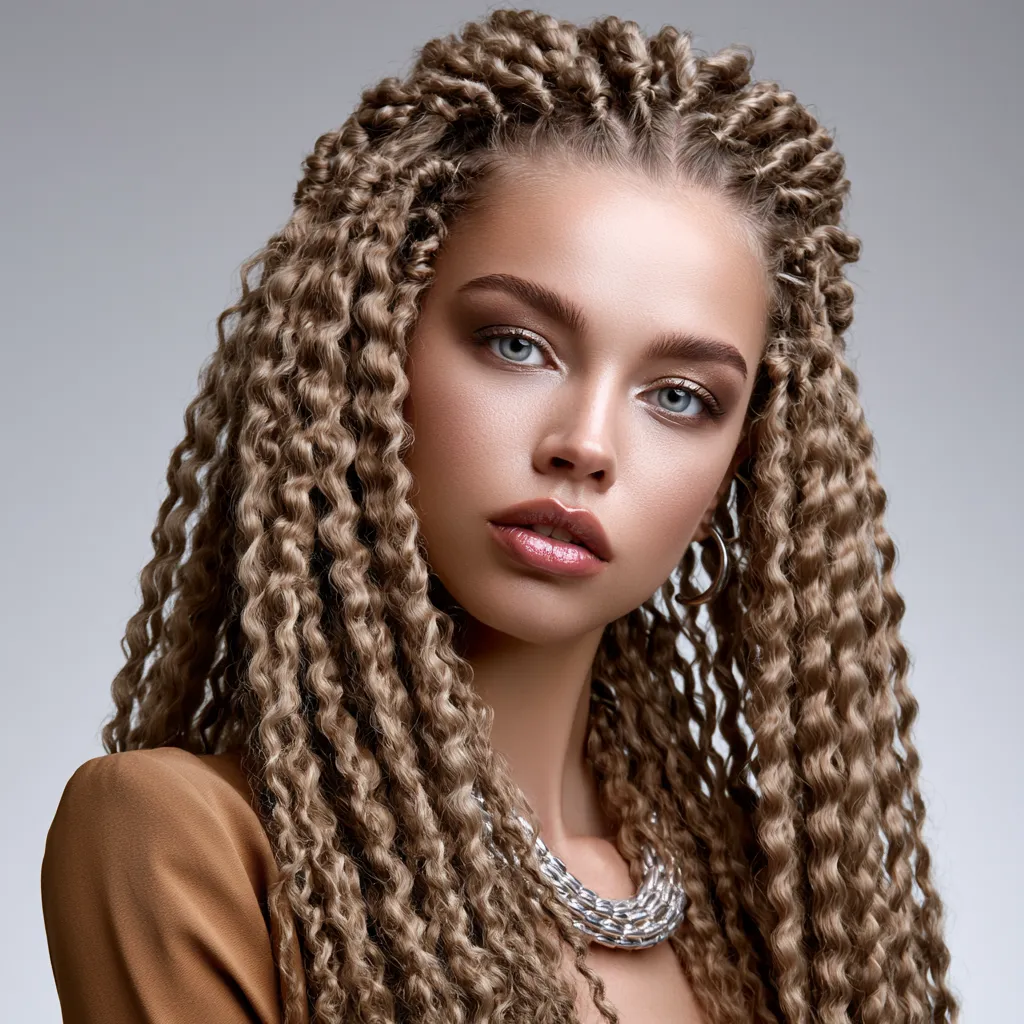
Coral Orange Meets Feathered Bangs — Where Crimped Hairstyles Earn Their Edge
Coral orange is one of those shades that does the structural work before a single iron touches the hair. Paired with crimped hairstyles on straight hair, the warm hue catches light inside every fold of the wave pattern, making the texture appear three times more defined than it would on neutral-toned hair. What keeps it from tipping into costume territory is the feathered bangs — kept smooth and fanned slightly to the side, they frame the face in a way that reads editorial rather than 1980s throwback.
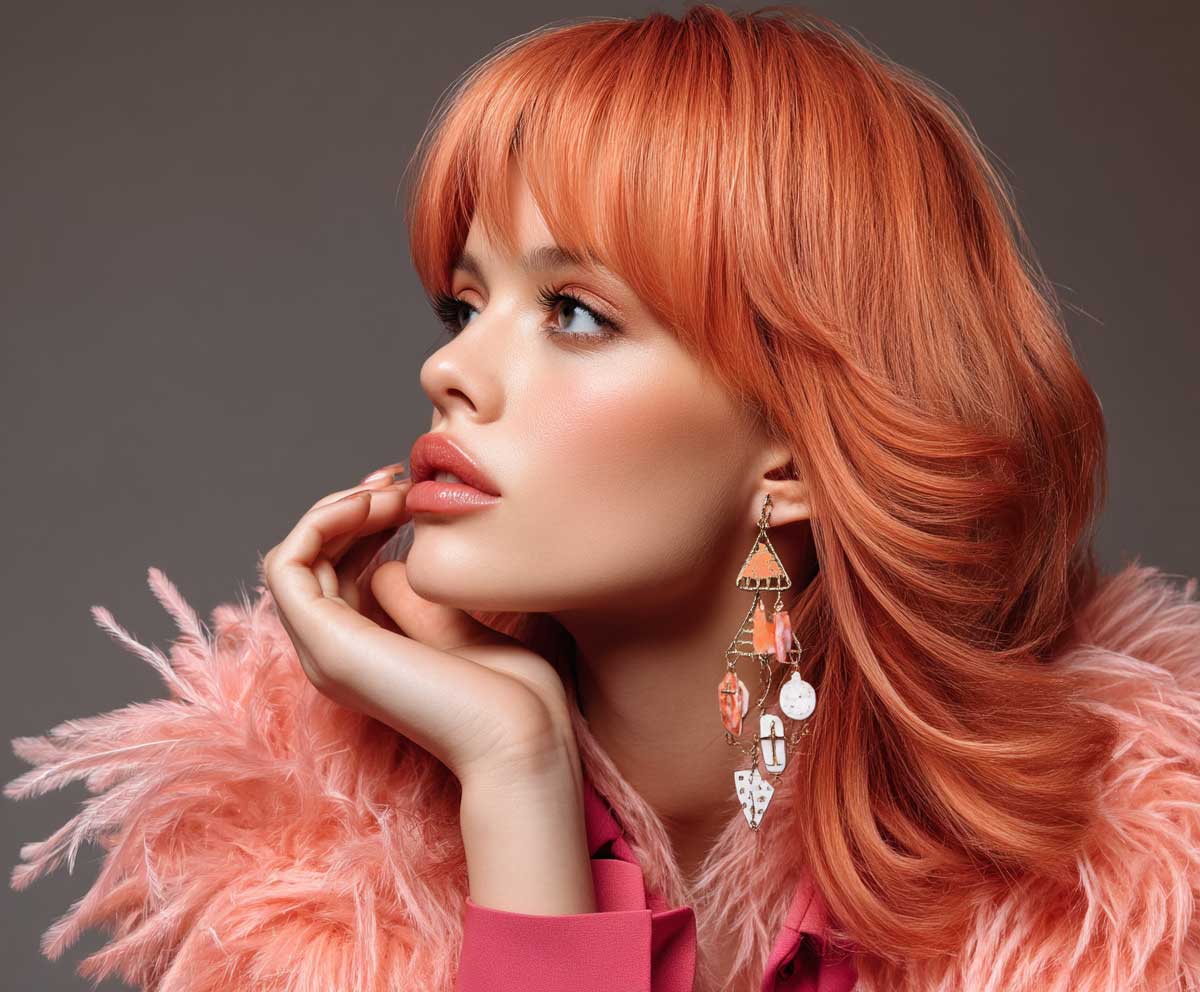
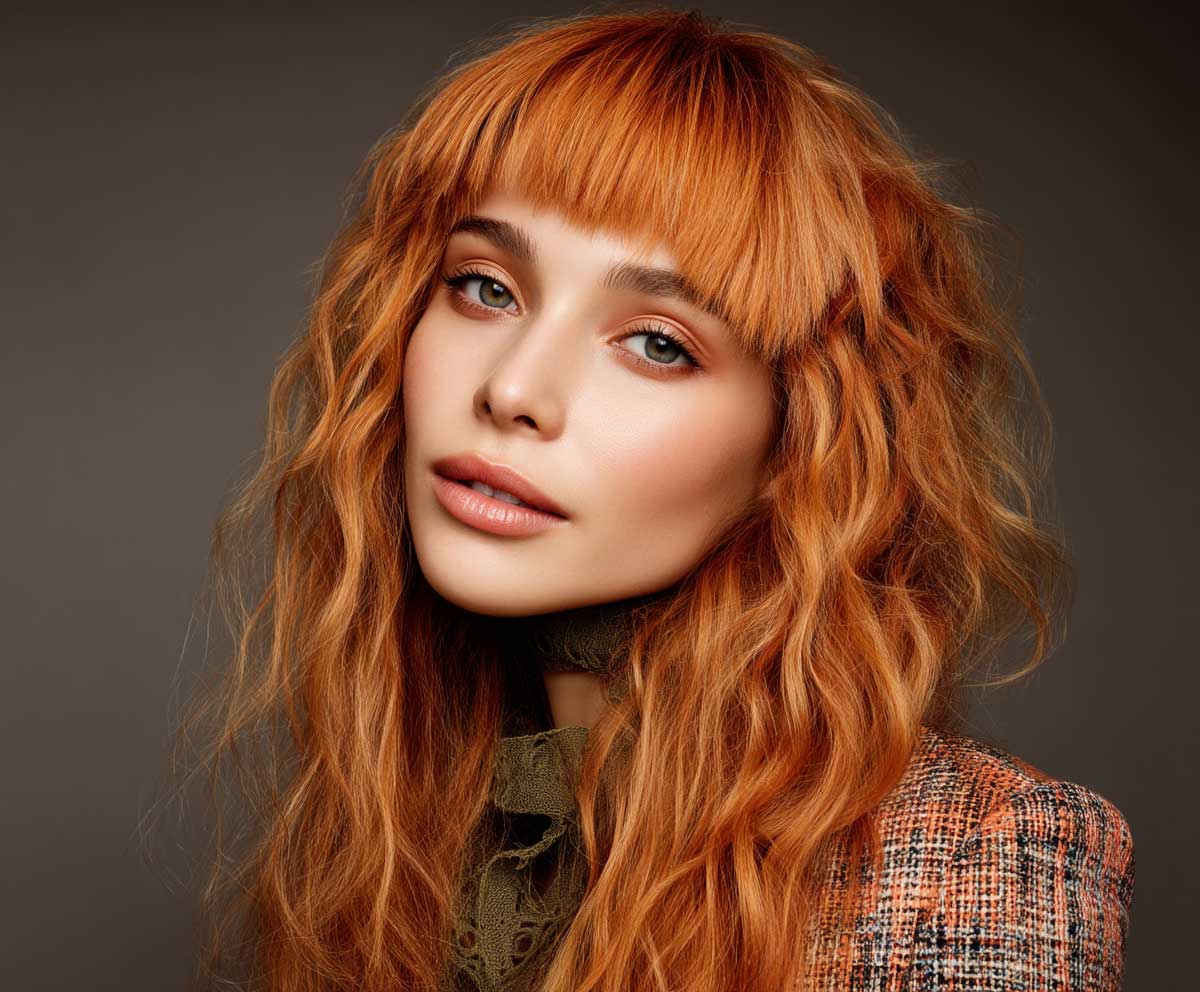
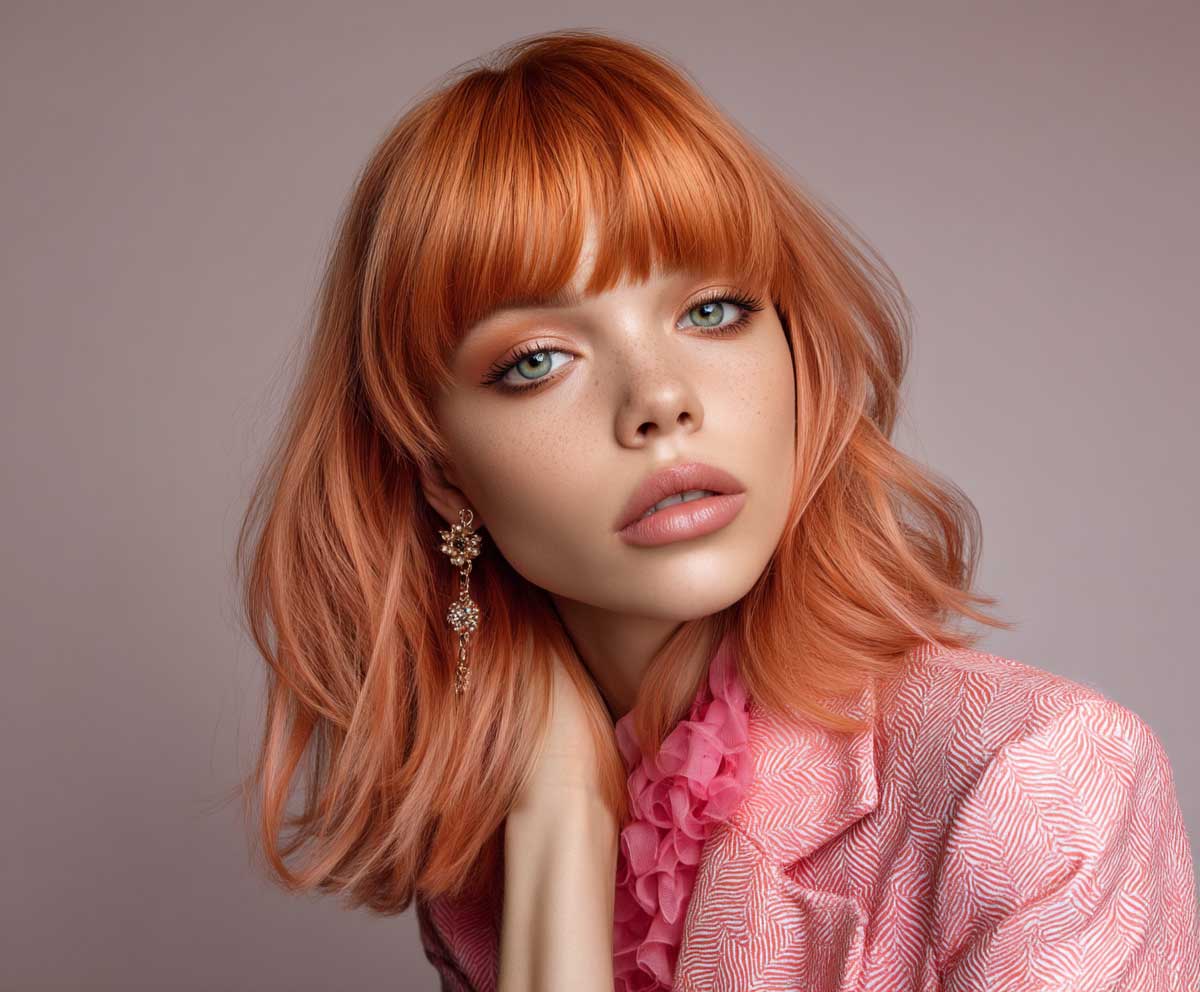
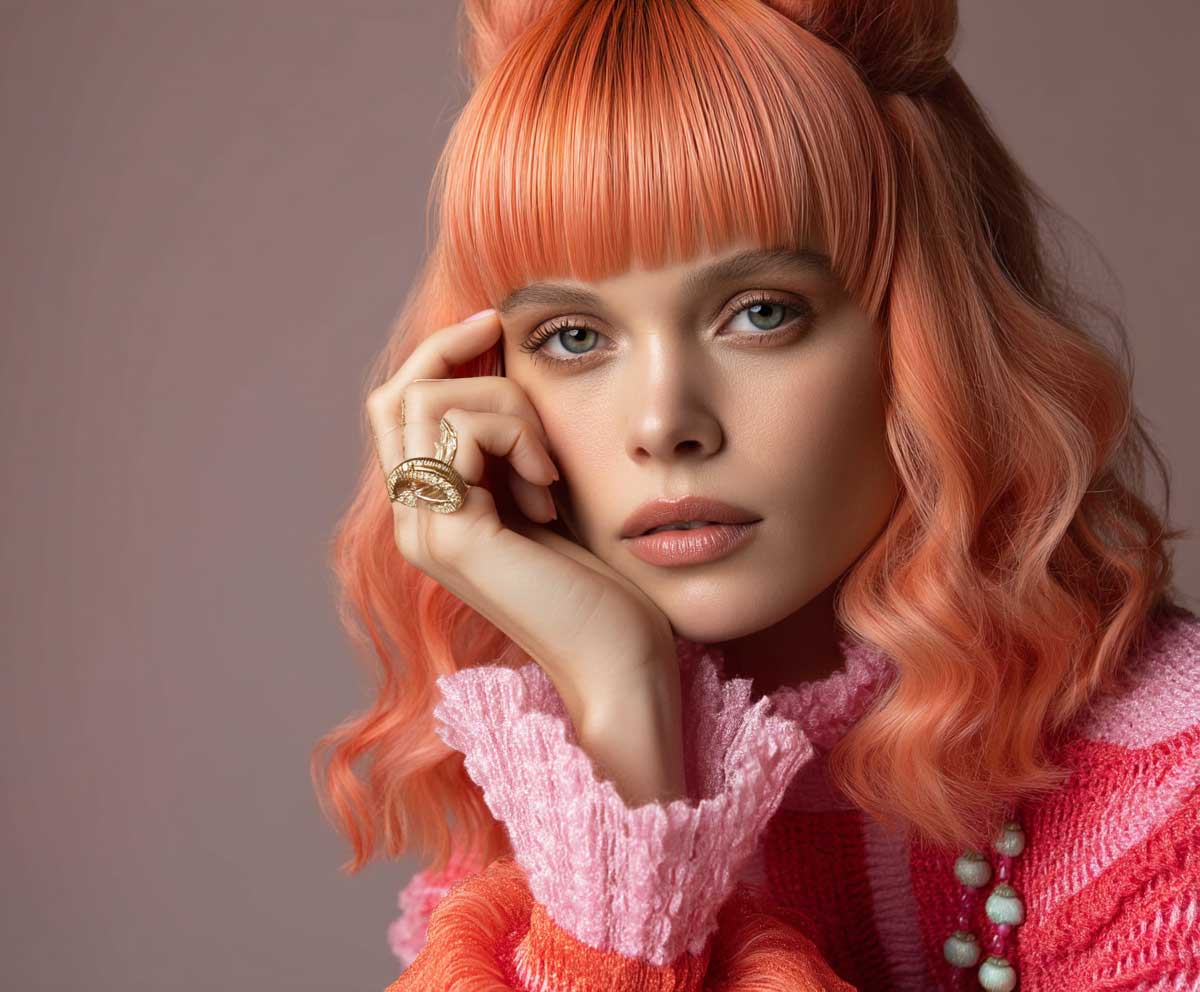
The technical approach here relies on contrast between two zones. Blow-dry the bangs completely straight first, directing them slightly to one side with a round brush so they fan outward rather than lying flat. Then section the rest of the hair below the cheekbones and work through each section with a 1–2 inch ceramic crimping iron, clamping for 10–15 seconds per pass. Stylists recommend using a light mousse on the lengths before crimping — it gives the iron something to grip and keeps the ridges from collapsing within the first hour. A finishing spray holds everything in place without adding stiffness.
What doesn’t work with this look is crimping too close to the roots. Ridges that start at the scalp create a blocky volume that reads as unkempt rather than textured. The crimp should begin at or just below cheekbone level, which gives the style a natural transition from the smooth crown to the dimensional lengths. Does the coral tone require special maintenance? Vivid shades like this fade fastest at the ends — use sulfate-free shampoo and rinse with cool water to extend the vibrancy by two to three weeks between color services.
Think of the crimped section as a folded accordion — each fold amplifies the color rather than hiding it, which is the mechanic that makes vivid shades so effective with this technique. Pair the finished look with oversized round sunglasses or a structured blazer to push the retro energy further without touching the hair. Vintage accessories extend the visual logic the crimping already established.
Avoid crimping the bangs themselves. The feathered bang works precisely because it remains smooth — crimped fringe creates a uniform texture wall that flattens the face rather than framing it. If you want texture near the face, add a single loose wave to the side pieces that frame the temples, but keep the front fringe smooth and swept. Also skip silicone-heavy serums on the lengths before crimping — they coat the hair shaft and prevent the iron from setting the wave pattern properly.
Violet Straight Hair, Pinned Back — Crimped Hairstyles at Their Most Sculptural
Crimping straight hair in violet and pinning back the sides creates a structure that is closer to sculpture than styling. The depth of a violet shade shifts under light — it reads as lavender in bright conditions and deepens to near-plum in lower light — and the ridged wave pattern of crimped hairstyles amplifies that shift by multiplying the surfaces that catch and reflect. The result is a look that appears to change throughout the day without touching it.


To build this look, crimp the full length of the hair first — including the sections that will be pinned back. Once completely crimped, take two side sections (roughly from the temple to just behind the ear) and draw them back toward the crown. Secure with flat pins about an inch above ear level, tucking the pins beneath the top layer so they’re hidden in the finished style. This creates a soft updo effect that lifts the front sections away from the face while leaving the crimped back section completely free to move.
Why does crimping work better than curling for this structure? Curls at the pin-back point tend to create a lump where the gathered sections meet the rest of the hair. Crimped waves lie flatter at the gathering point because the ridges compress when pinned, distributing the volume evenly rather than bunching. A shine serum on the ends — not on the roots — and a flexible-hold hairspray on the pinned sections is enough to keep the look intact for four to six hours without restyling.
For evening events or creative shoots, a small bow clip or velvet pin above the gathering point adds a detail that reads as intentional at any distance. Avoid heavy glitter sprays — they disrupt the tonal depth of violet shades by adding a uniform shimmer that flattens the color. A single shot of shine spray is more effective and far less distracting. For more half-up construction techniques that work specifically on straight textures, the half up half down hairstyles for different hair types breakdown covers grip products and pin placement in more detail.
Lime Green Half-Up Crimped Hairstyles — Straight at the Top, Dimensional Below
The crimped half-up silhouette works on straight hair because it splits the visual into two deliberately different zones rather than committing to one texture throughout. Lime green makes that split impossible to miss: the smooth upper section reads as almost liquid in the saturated shade, while the crimped lower half catches and scatters light through every ridge. Crimped hairstyles worn in this half-up format carry more visual tension than fully crimped looks precisely because the contrast between the two zones is so sharp.
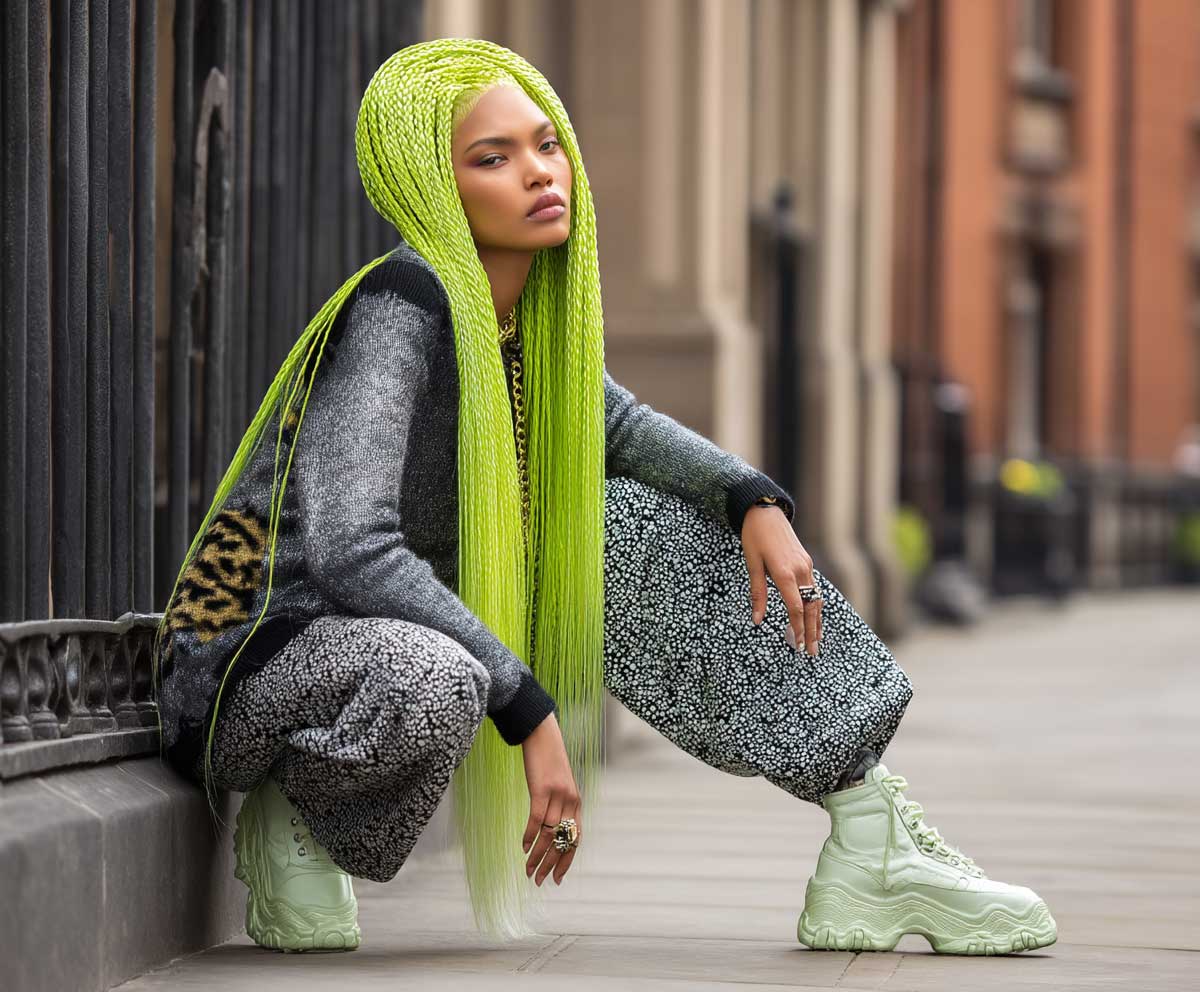

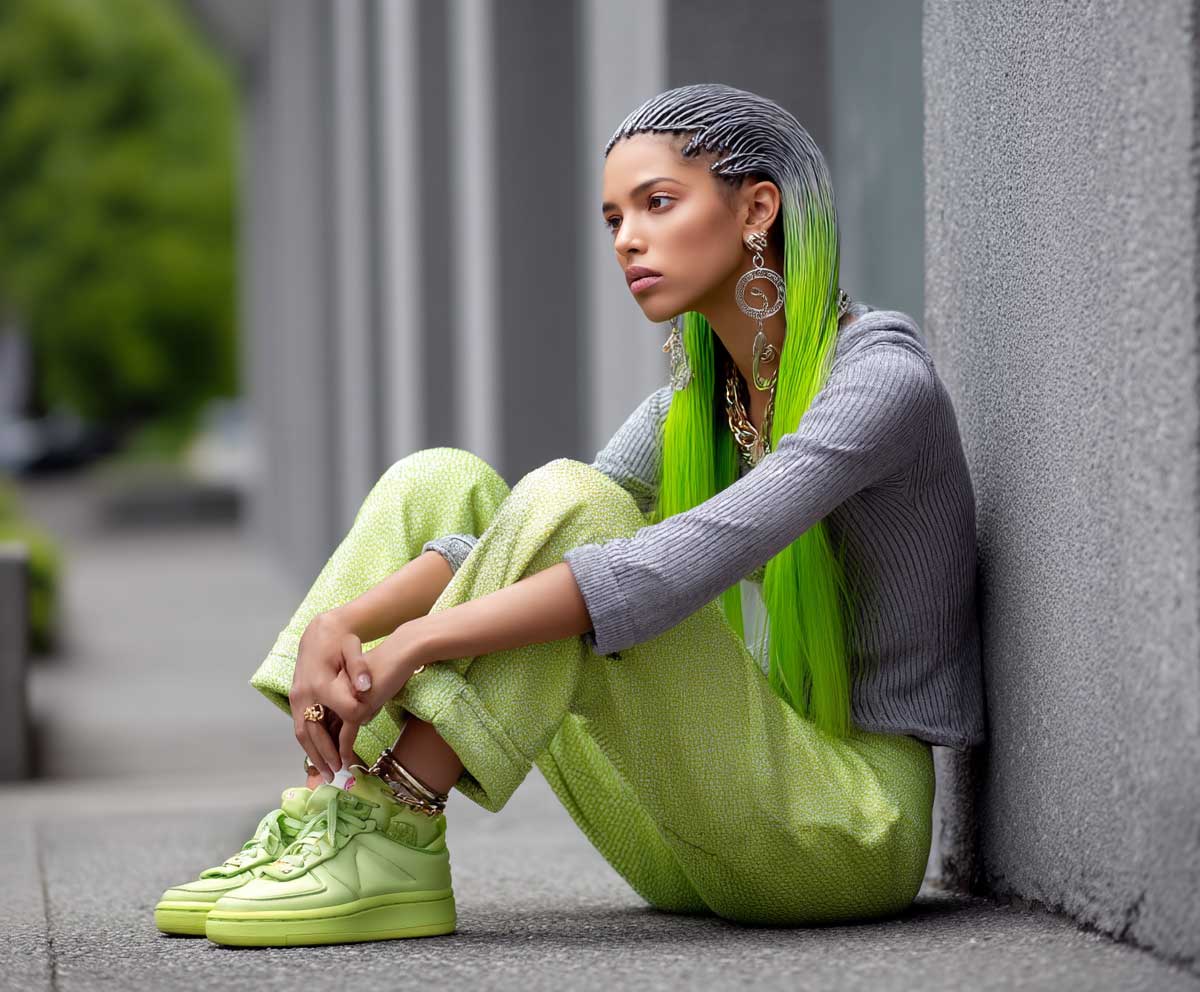
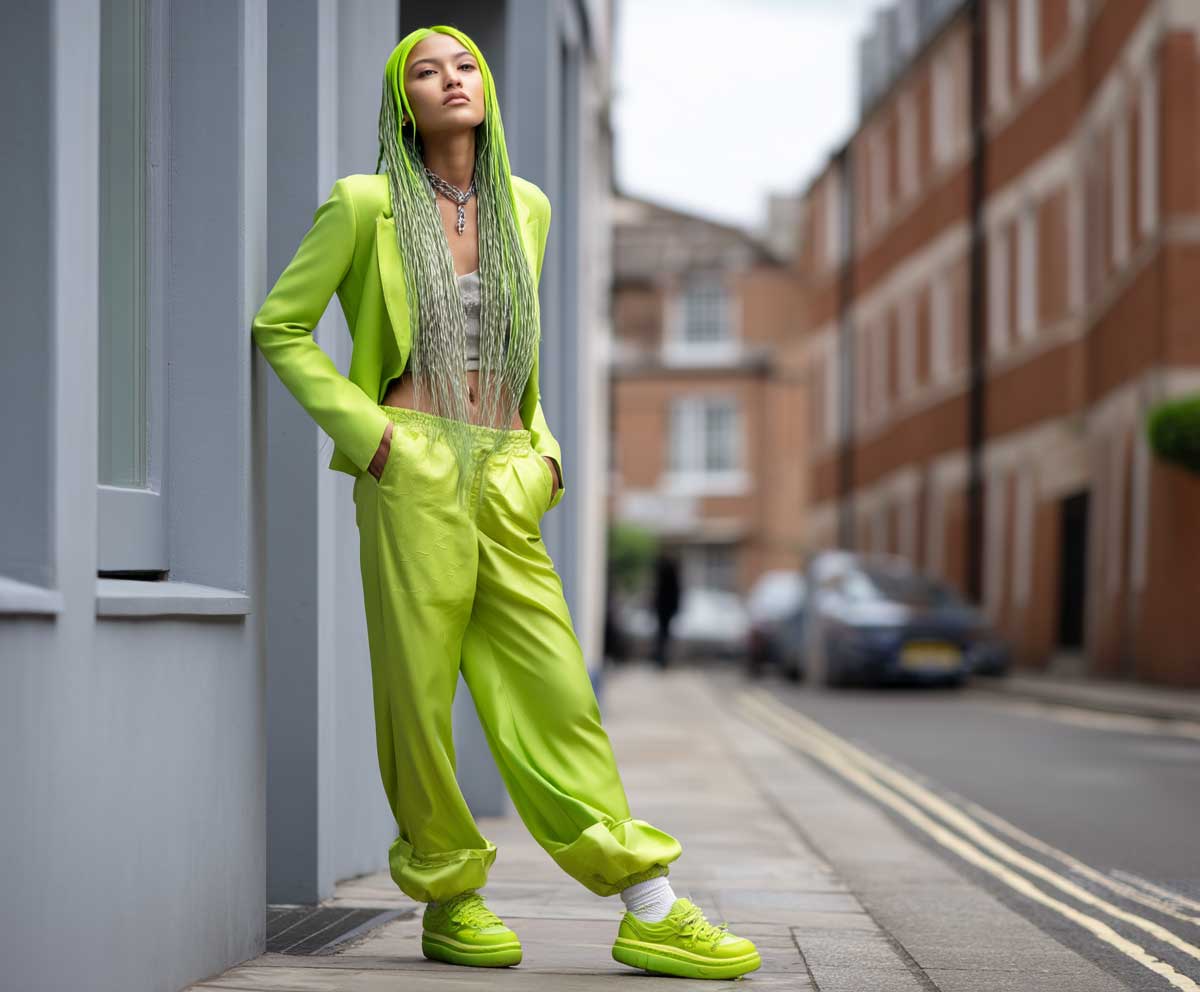

Build the style from the bottom up. Start with a center part, then crimp all hair from roughly the mid-section downward — leaving the top half completely smooth. Once the crimping is done, gather the smooth upper portion into a high half-ponytail or small bun and secure with a clear elastic. The crimped lengths drop freely below. A styling cream worked through the lower section before crimping helps define each ridge and prevents the common mistake of over-dried, crunchy texture; aim for movement, not stiffness.
A Conair ceramic crimping iron (around $27.59 on Amazon) with 1–2 inch plates is the right tool for this look — the standard medium-width plates create defined ridges without making the waves look too fine or too chunky against the solid lime green color. Hair.com’s styling guide for crimped hair notes that clamping for 10–15 seconds per section locks the texture in properly, and on vivid-toned straight hair that timing holds reliably through four to five hours of movement. What to avoid: gathering the crimped sections into the half-up ponytail. The elastic should catch only the smooth top section — the moment crimped hair gets bundled under the elastic, it creates an uneven gathering point that pulls the style toward messy rather than structured.
Graphic eyeliner or a structured collar amplifies the precision the look already has at the crown. The lime green shade demands that everything around it be deliberate — accidental elements read as errors next to a color this saturated. For bridal or formal events where a crimped half-up style needs to hold through hours of wear, the bridal hair half up half down breakdown covers pin placement and longevity strategies that apply directly to this structure.
| Look | Focal Zone | Crimp Placement | Key Risk |
|---|---|---|---|
| Coral Orange + Feathered Bangs | Length and movement | Below cheekbones to ends | Crimping too close to roots creates bulk |
| Violet + Pinned-Back Volume | Crown height and sides | Full length, then pin sections | Pins visible if placed above the top layer |
| Lime Green Half-Up | Contrast between zones | Lower half only, top kept smooth | Gathering crimped hair into the elastic |
Stylists recommend a heat protectant on every section before crimping, regardless of hair health. For a full technical breakdown of how heat tools interact with different hair types, Hair.com by L’Oréal’s crimped hair styling guide walks through tool selection, section size, and timing for different textures.
THE VERDICT
Crimped hairstyles on straight hair work when the placement is deliberate, not total
Feathered bangs kept smooth create contrast that elevates the crimped lengths below — uniform texture head-to-toe flattens the look rather than building it.
A medium 1–2 inch ceramic crimping iron clamped for 10–15 seconds per section is the right tool across all three color stories. Heat above 400°F suits coarse straight hair; fine strands stay safer below 375°F.
The half-up split is the most wearable format for everyday styling — keep the smooth zone at the top, and the crimped zone moves freely without losing its pattern. Save this post.