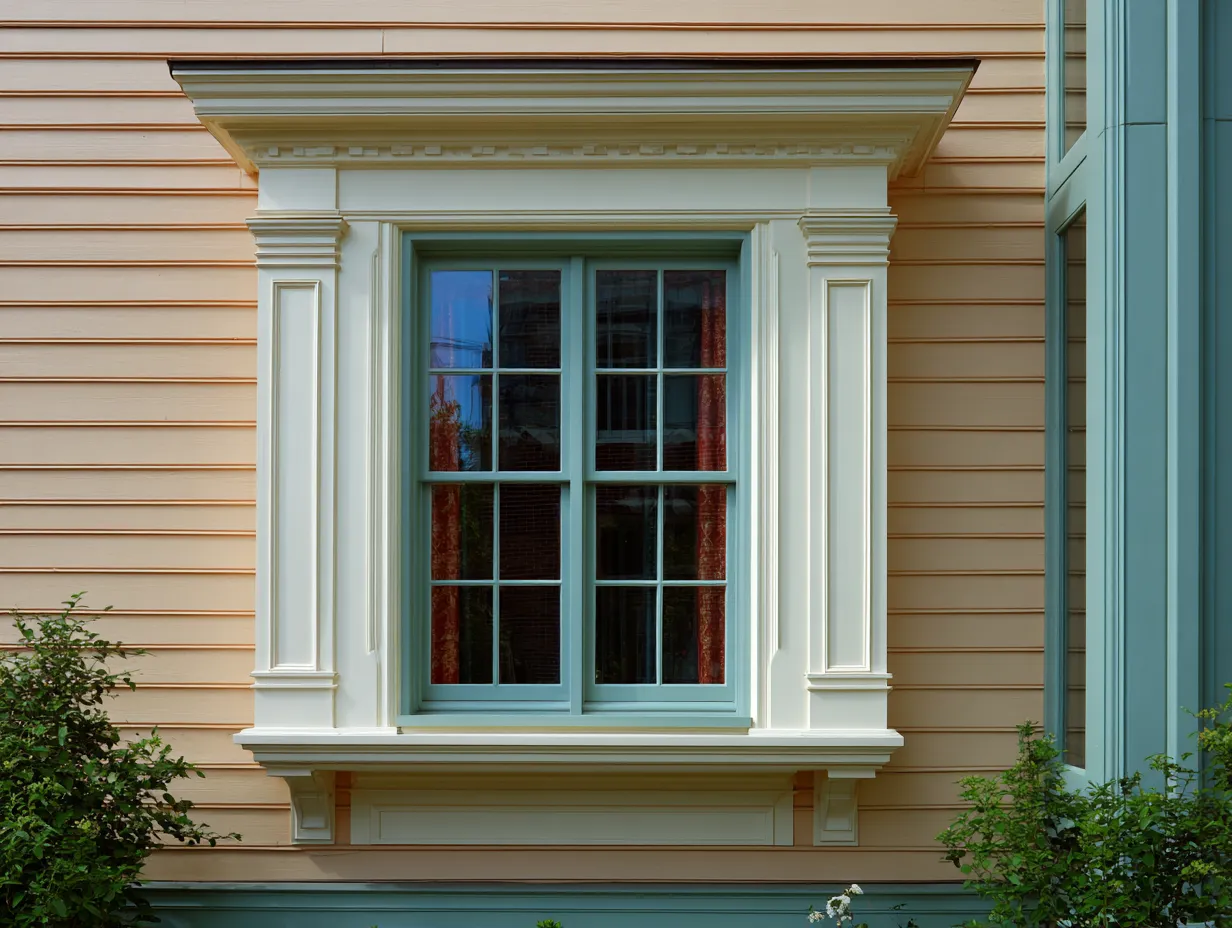
Navy and cream trim around windows works because the two colors sit at opposite ends of the light scale. A classic navy such as Benjamin Moore Hale Navy reflects only about 6–8% of light, while a cream like Sherwin-Williams Creamy reflects around 81%, so every casing reads clearly from the street. Does it suit any house? It fits best on modern classic, Colonial and traditional facades with visible molding profiles, and it struggles on flat, trimless openings. If your windows have no casing at all, add one before you pick up a brush.
The palette runs in two directions: a cream body with navy casings, or a navy body with cream trim. Painting existing window trim averages $2.59–$5.40 per linear foot nationally, so a window with roughly 16 feet of casing lands near $41–$86. Trim also wears faster than walls, with typical repaint cycles of 3–6 years versus 5–8 years for wood siding. Budget for that second round before committing to a deep, saturated navy.
The examples below move from close-up molding details to full elevations, with paint codes, contrast numbers and costs for each version. Treat them like a fitting room for your house rather than a catalog. Hold each photo next to a picture of your own windows and compare casing width first, color second.
Quick Scan
- Navy at LRV 5–8 against cream at LRV 81 creates a gap of 70+ points, roughly double the 30–40 point minimum used for crisp trim contrast
- Cream house with navy trim reads warmer than a white house with navy trim: SW Creamy sits at LRV 81 vs BM White Dove at LRV 85
- Professional trim painting averages $2.59–$5.40 per linear foot, or about $41–$86 for a 16-foot window casing
- Trim needs a repaint every 3–6 years, sooner than wood siding at 5–8 years; coastal homes may need it every 2–3 years
- Follow the 60-30-10 split: body 60%, trim 30%, door or shutters 10%
- Budget navy paint can fade to a chalky grey-blue within two seasons on sunny elevations
- The same pairing moves indoors: a navy sofa or wainscoting against cream walls
Modern Classic Facades Built on Navy and Cream Trim Around Windows
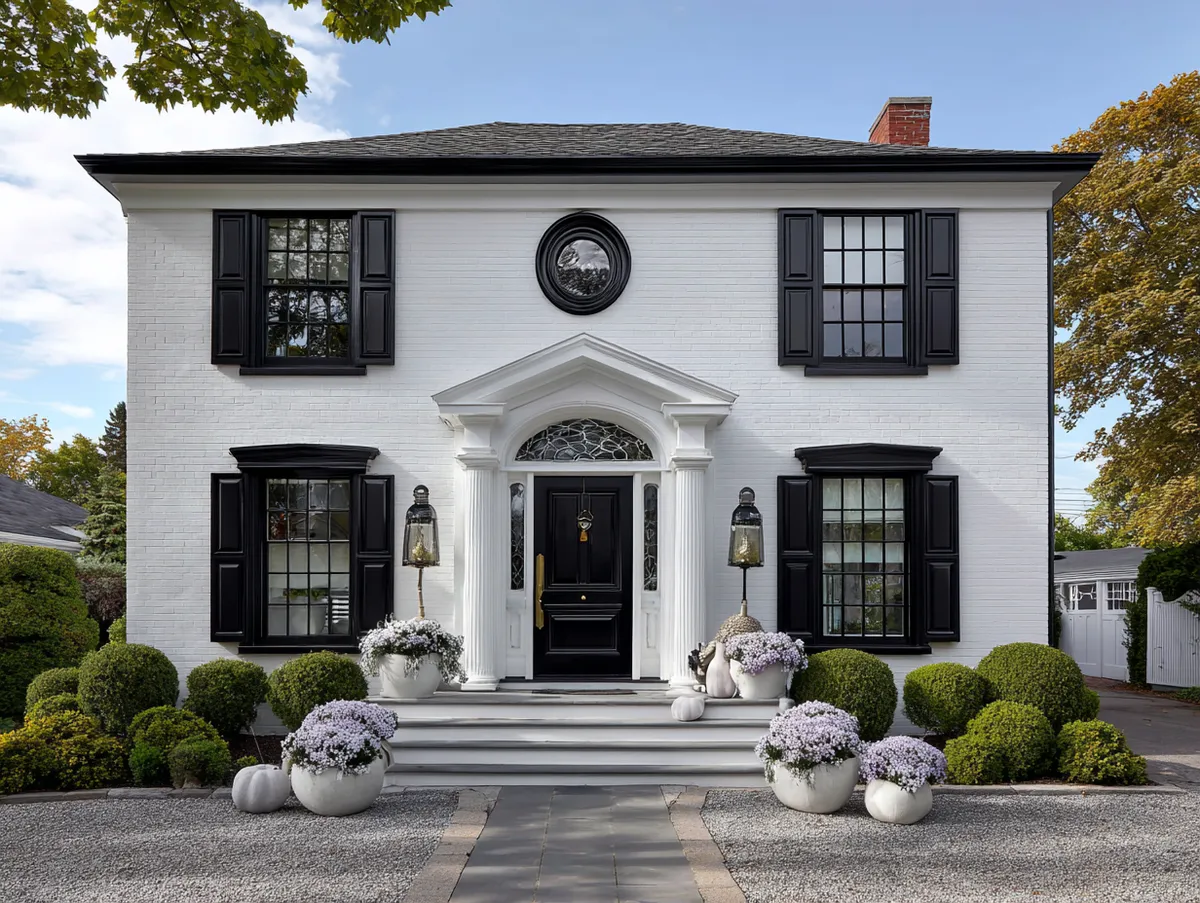
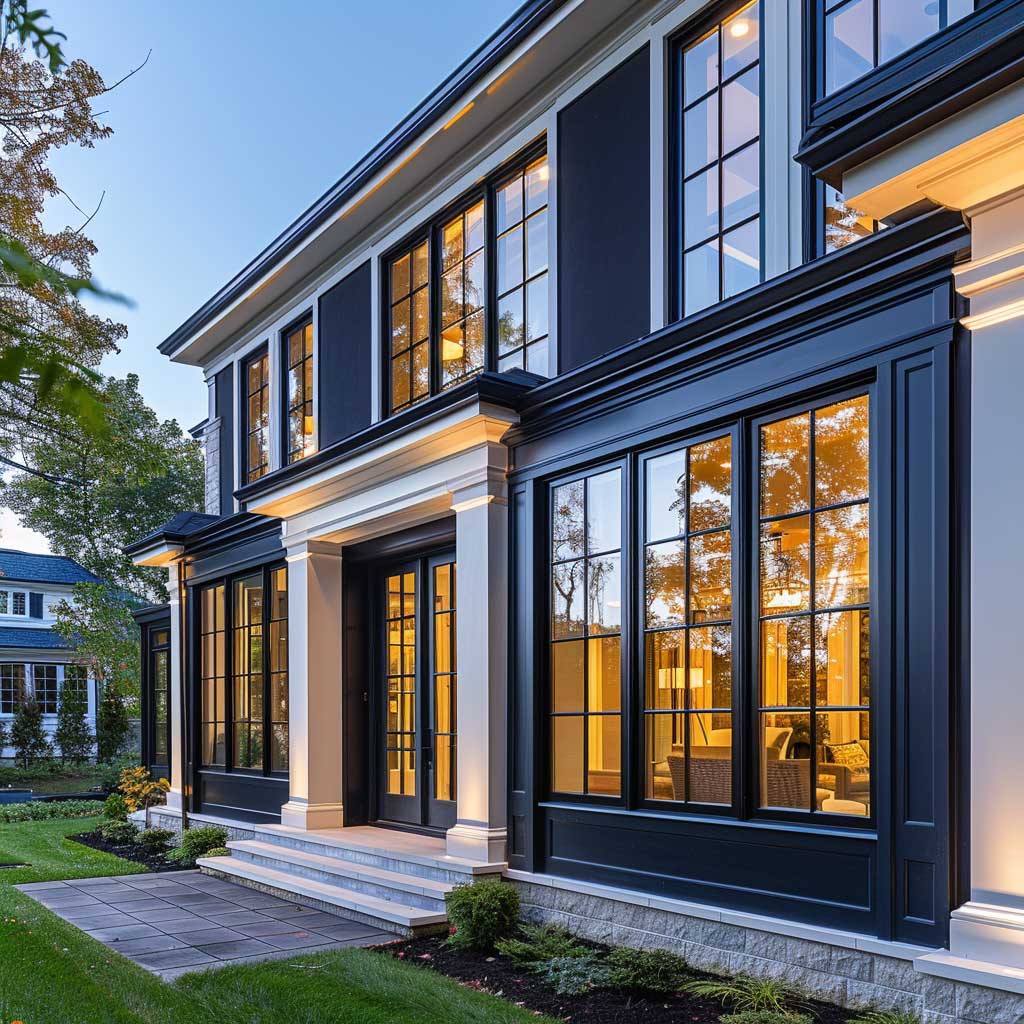
A cream house with navy trim is the version most people picture first, and on a modern classic facade it behaves like a framed print. The cream body is the mat, the navy casing is the frame, and the glass becomes the picture. Paint guides recommend at least 30–40 LRV points between body and trim for a sharp edge, and Hale Navy against Creamy clears that bar roughly twice over. Use that margin to keep the casing generous rather than thin.
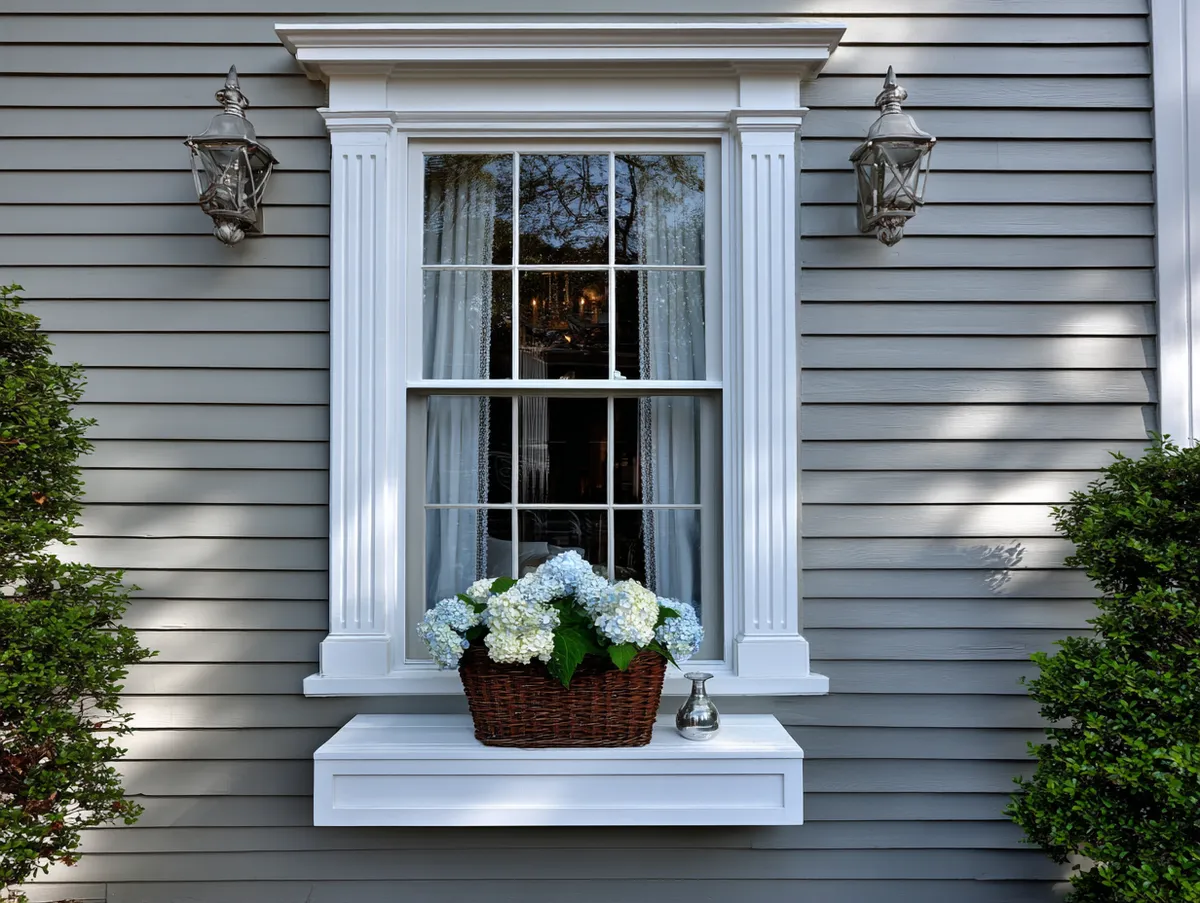
Why does width matter so much with navy trim? Dark colors visually shrink narrow profiles, so a slim bead reads like a pencil outline while a full casing reads like architecture. The same contrast logic drives black and white trim around windows exterior designs, where a dark border pulls window geometry into focus from across the street. Navy does it with less severity than black because it warms up at close range. Skip painting only the head casing navy; a partial frame looks like the job stopped halfway.
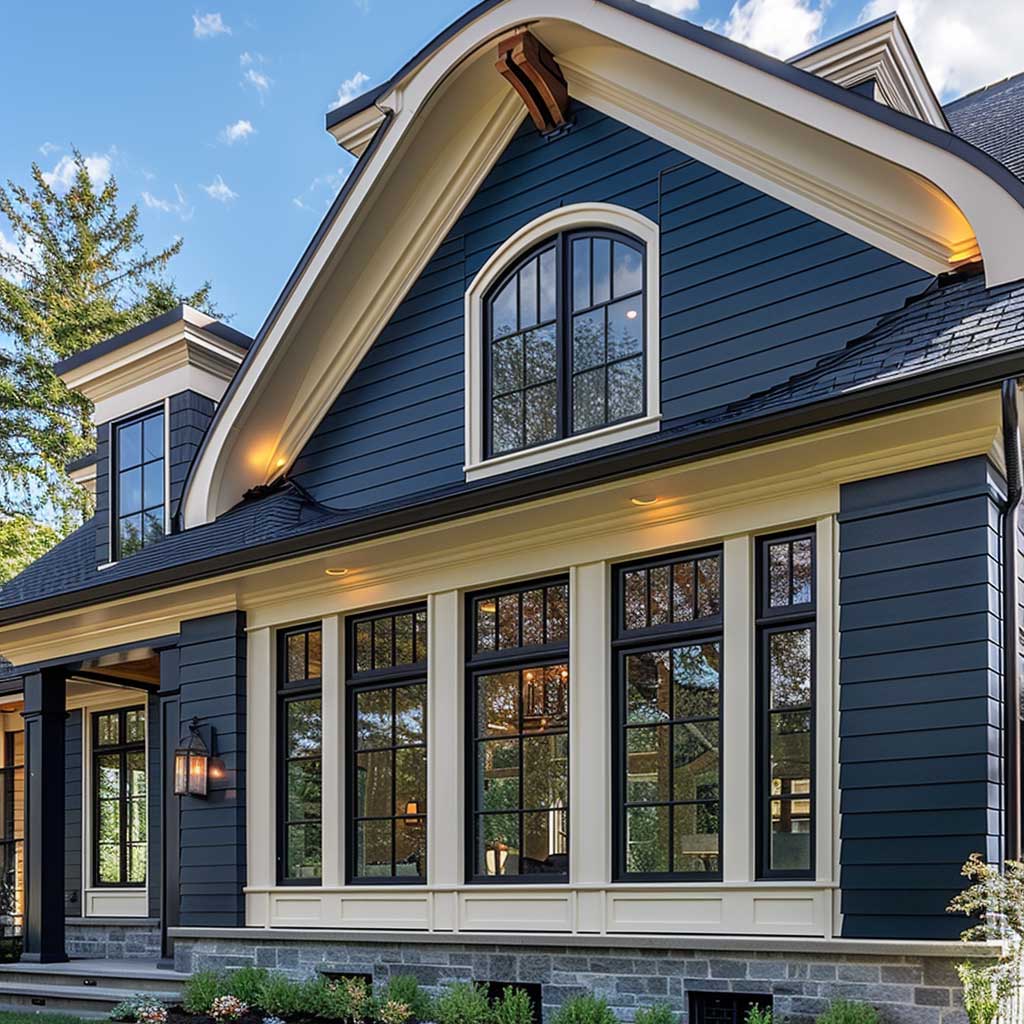
Repainting existing casings costs far less than replacing them, which makes this look one of the cheaper facade upgrades. National averages from the Homewyse window trim painting calculator run $2.59–$5.40 per linear foot, including prep, caulk and two coats. A ten-window house with about 16 feet of trim per opening comes to roughly $415–$865 in total. Get at least two itemized quotes, since site access and prep time swing the final number.
Navy blue window frames and navy casings are not the same decision. If the vinyl frame stays white while the casing turns navy, the opening reads as double-framed, a white ring inside a dark one. Painted wood sashes can follow the casing color, while factory vinyl usually cannot be painted without risking the warranty. Decide on frame color first, then match the casing to it or deliberately contrast it.

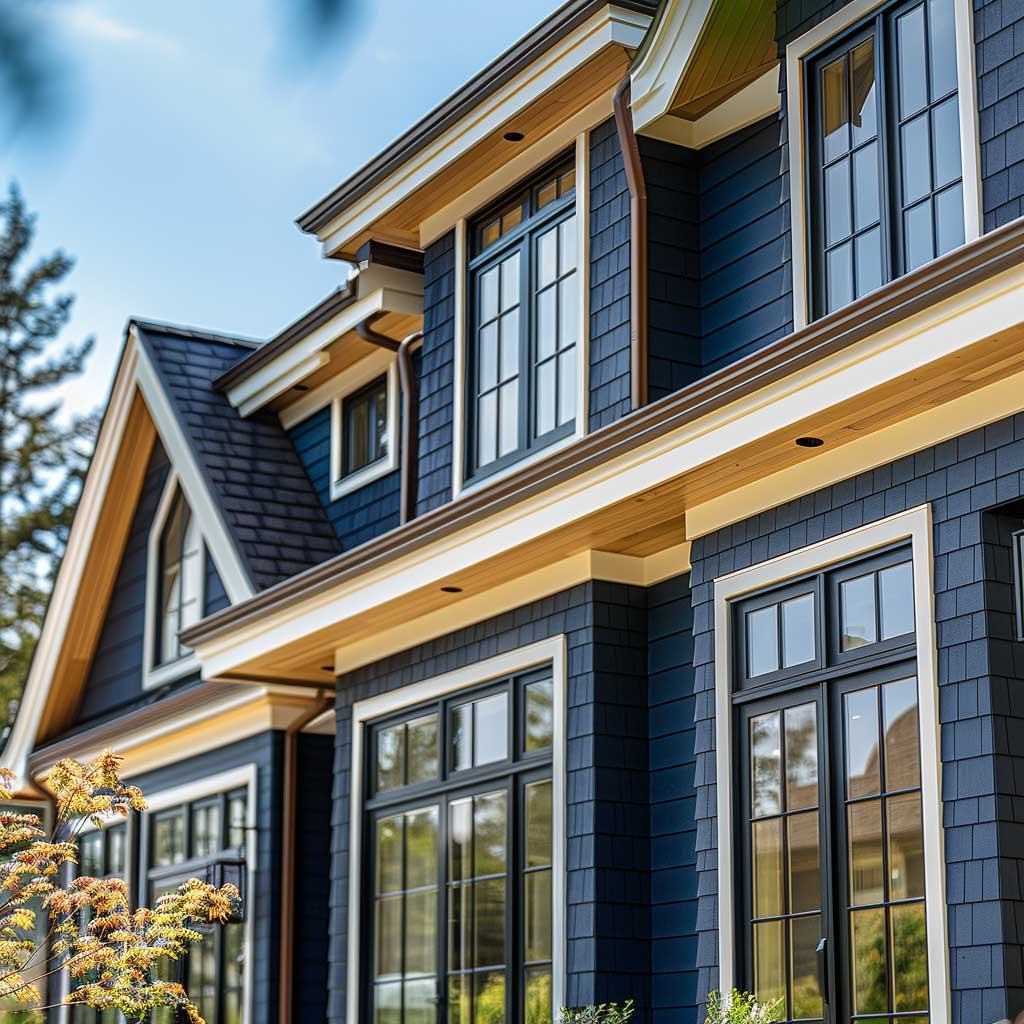
Flip the Palette With a Blue House and Cream Trim
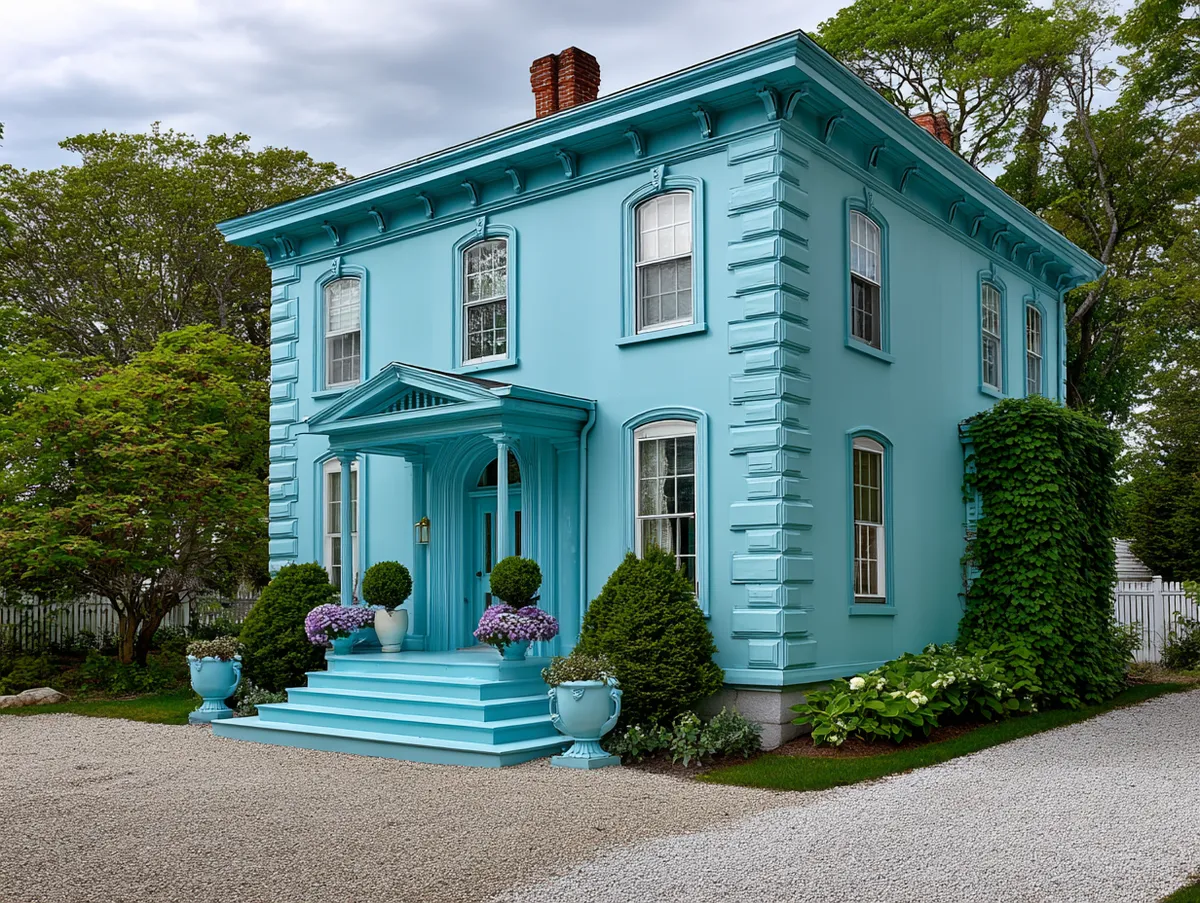
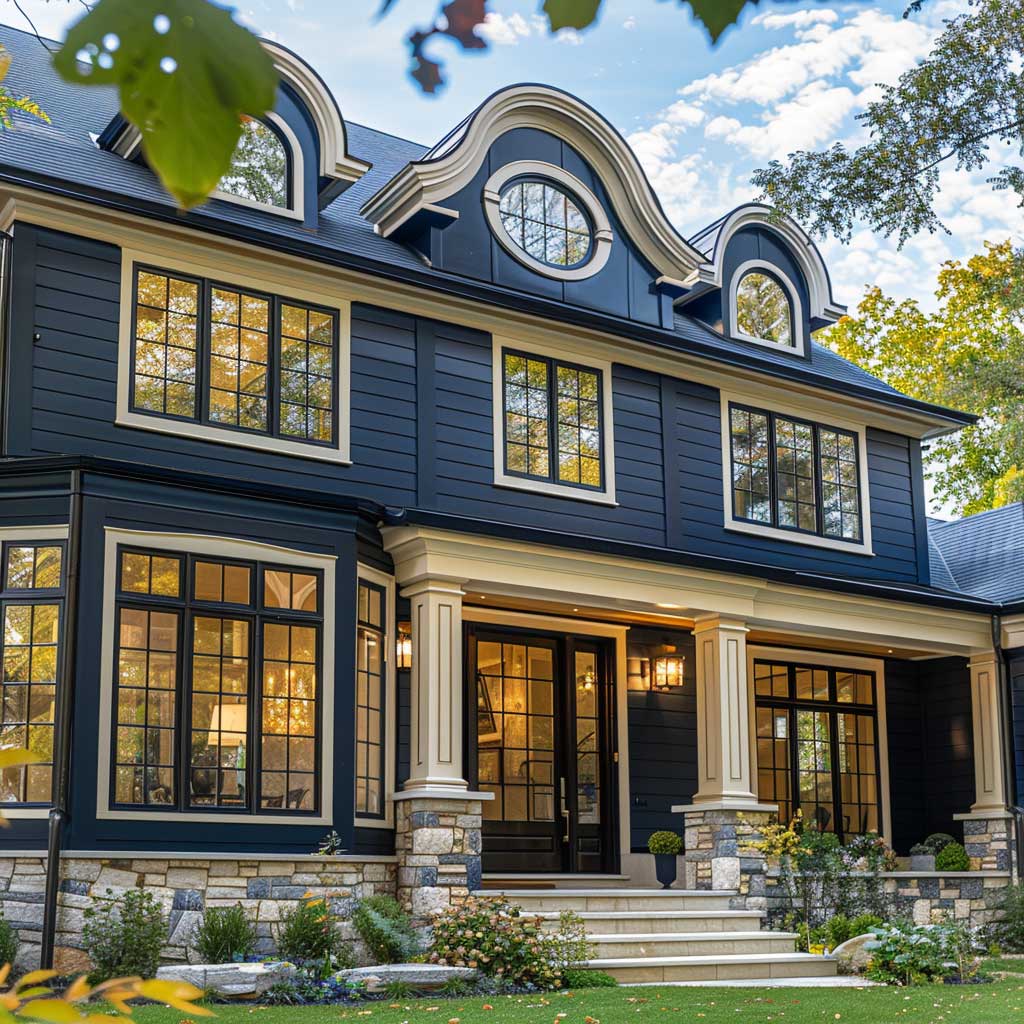
A blue house with cream trim reverses the visual weight: the navy body becomes the dark field, and cream casings glow around each window like lampshades at dusk. Sherwin-Williams Naval sits at LRV 5 and Hale Navy near 6, so both read almost black from the curb and reveal their blue only up close. Cream trim at LRV 81–85 stops the facade from turning into a silhouette after sunset. Choose cream over bright white here when your roof, brick or stone carries warm undertones.
Navy blue houses look intentional when the color split follows the 60-30-10 rule: body 60%, trim 30%, accent 10%. With navy covering the walls and cream on the casings, the front door becomes the 10% slot for brass, warm wood or a muted red. Should the door be navy too? Avoid it, because a door in the body color simply disappears into the wall. Give the entry its own accent and let the cream trim lead the eye toward it.

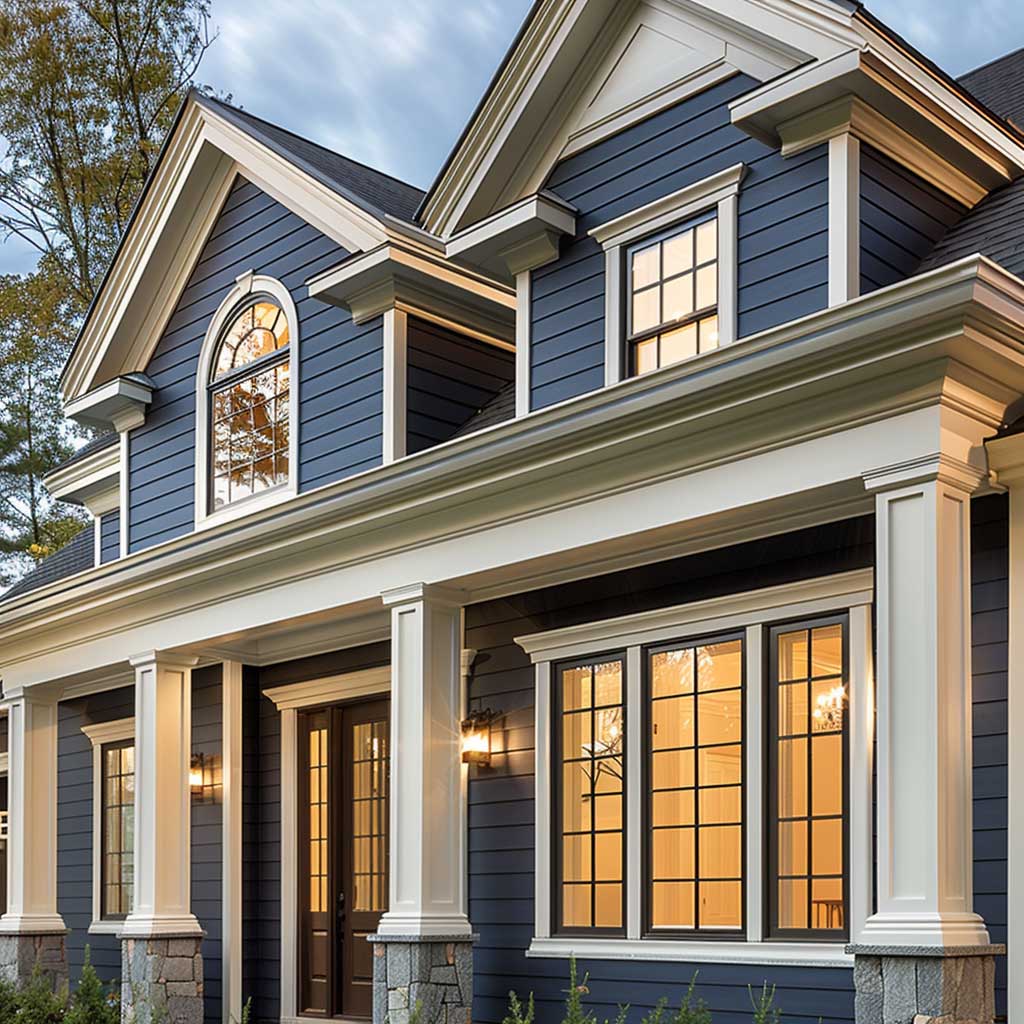
Deep navy bodies pay a price on sunny walls, since low-LRV paint absorbs more heat on south and west elevations. Exterior paint guides note that Hale Navy at LRV 6 handles that load better than darker navies sitting at LRV 3–4. Budget paint is the bigger risk: lower-grade navy can fade to a chalky grey-blue within two seasons. Spend on a premium acrylic exterior line for the body and save on accessories instead.
Maintenance splits unevenly between the two colors. Trim and doors typically need a refresh every 3–6 years, while wood siding lasts 5–8 years, so cream casings will ask for attention first. On a navy body, dirt and pollen show up on the cream long before the walls look tired, much like a white shirt collar. Wash the trim each spring and touch up sills, which take the heaviest weather.
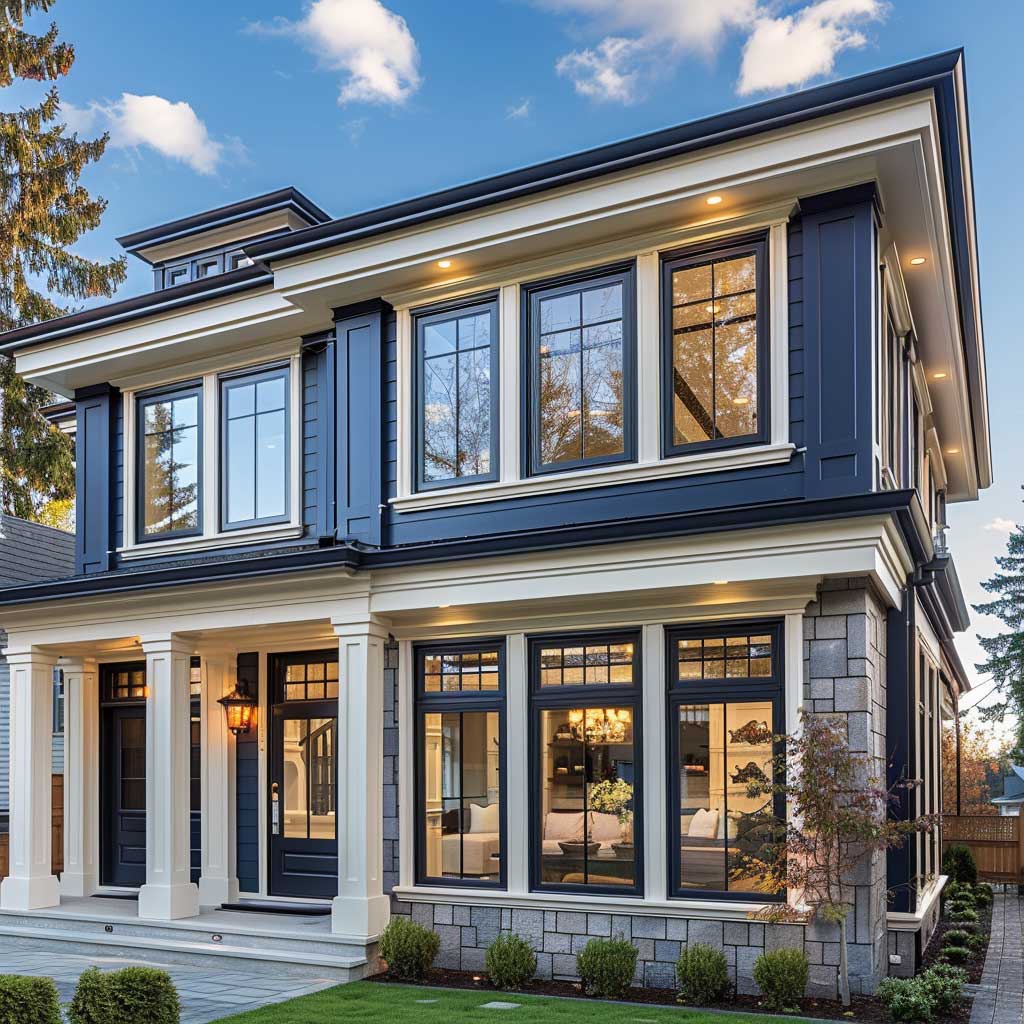
Don’t Do This. Don’t paint cream trim on the street elevation and leave the side walls in leftover white; the 30% trim share in the 60-30-10 split has to wrap the whole house. Avoid pairing a grey-leaning navy with a strongly yellow cream, since the mismatch reads like two different color schemes in flat light. Also skip a single sample swatch: test at least two creams on both north and south walls before ordering gallons.
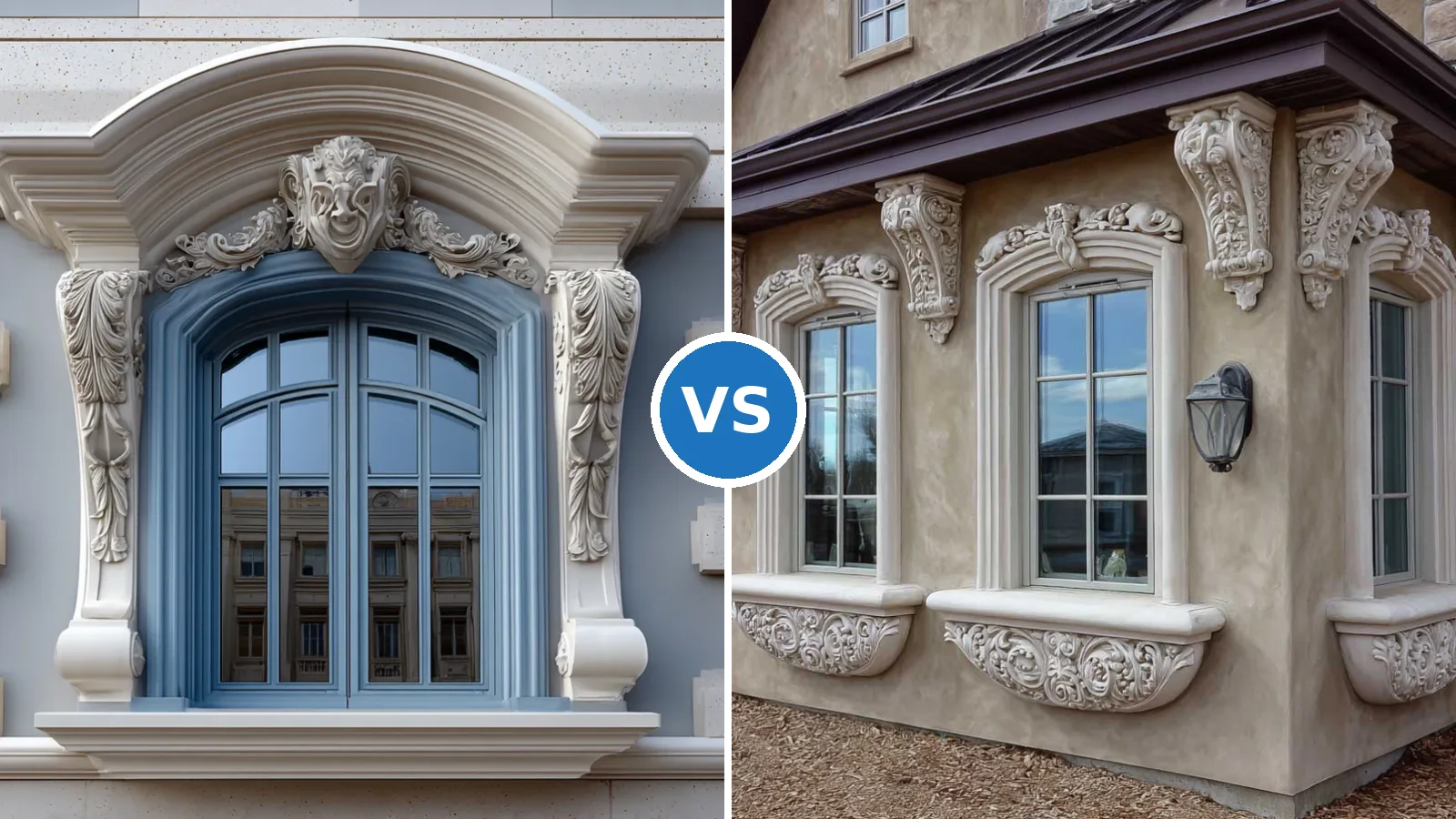
Elegant Navy and Cream Trim Around Windows for Detailed Moldings
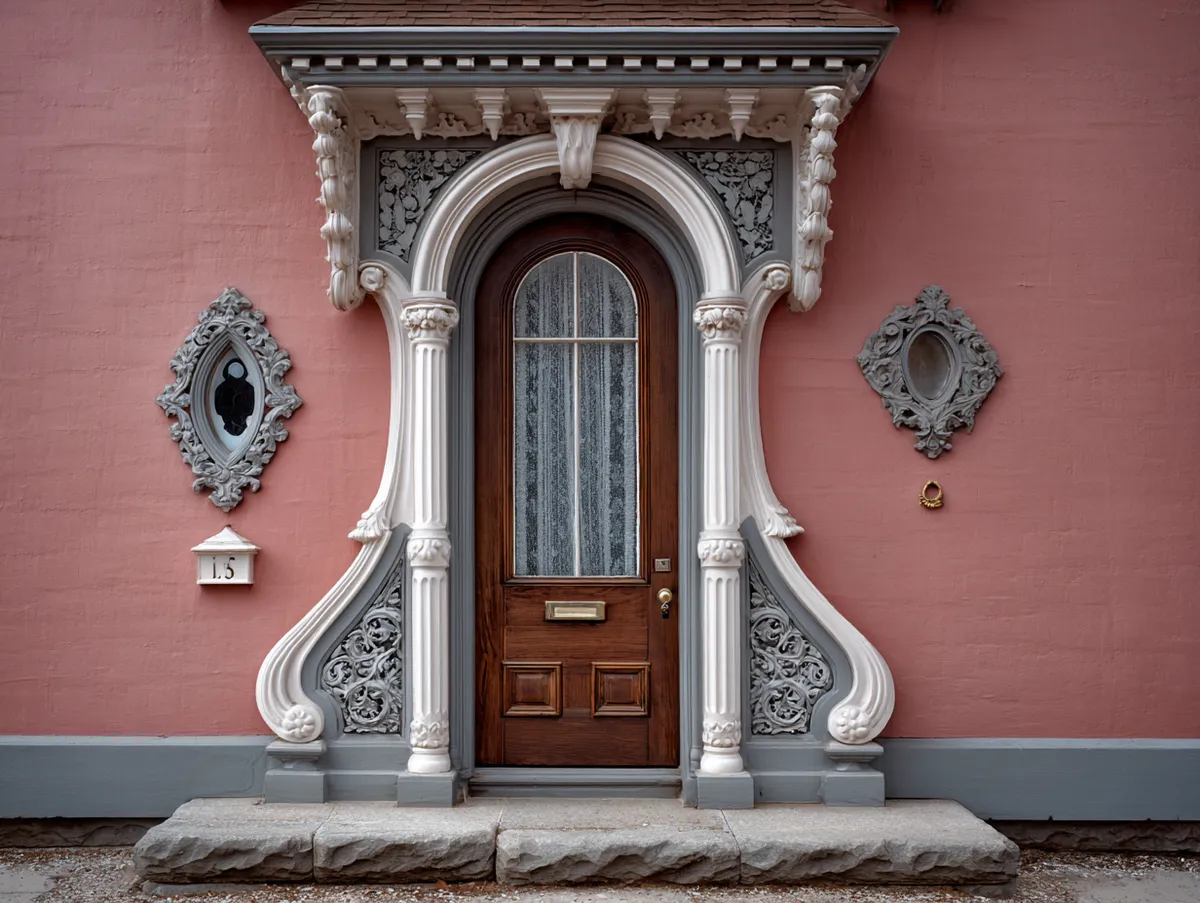
Layered moldings, crossheads and keystones are where navy and cream trim around windows shows the most character. Navy on a carved profile works like ink on embossed paper, catching shadow lines that a pale paint would wash out. Cream windows and sashes keep that detail soft, while bright white sharpens it into something closer to a coastal look. Pick the effect first, then the color chip.
Cream or white next to navy? The numbers are close but the mood is not: SW Creamy sits at LRV 81, SW Dover White at 83 and BM White Dove at 85. Dover White can read noticeably more yellow in some light, while White Dove stays closer to a classic white. A white house with navy trim feels crisp and nautical; a cream house with navy trim feels warmer and more traditional. Match the cream to your fixed elements, such as roof shingles and stone, rather than to a paint fan deck.
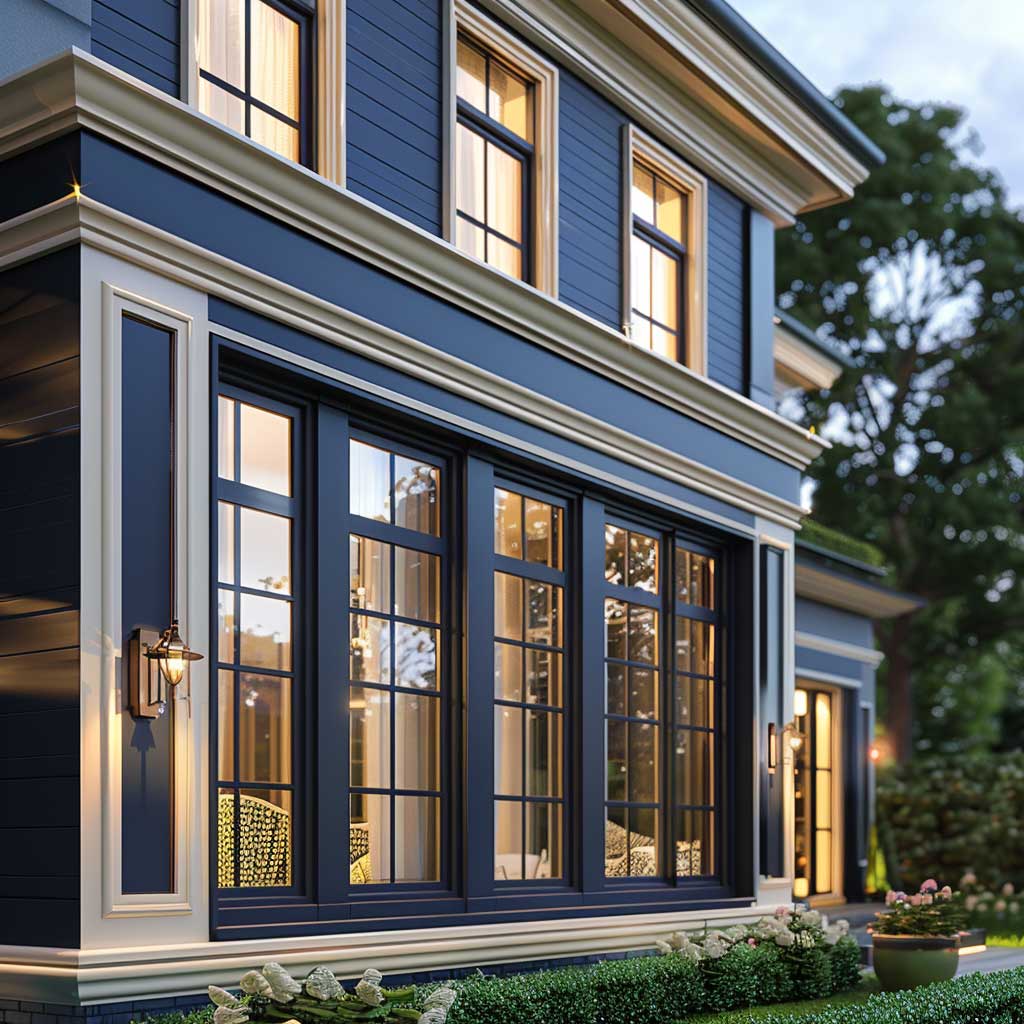

Detailed moldings also collect water in their ledges, so they age faster than flat trim. General guidance puts exterior window trim on a 5–7 year repaint cycle, and houses near the coast may need it every 2–3 years. Ornate profiles add labor minutes per foot, so expect quotes toward the top of the $2.59–$5.40 range. Run through this checklist before the first coat goes on:
- Test two navy samples and two creams on both the sunniest and shadiest walls.
- Check each sample at morning, noon and dusk before choosing.
- Scrape, fill and caulk every joint before priming; navy shows flaws more than cream.
- Paint casing, sill and any keystone in one finish so sheen stays consistent.
- Keep a labeled quart of each color for sill touch-ups between full repaints.

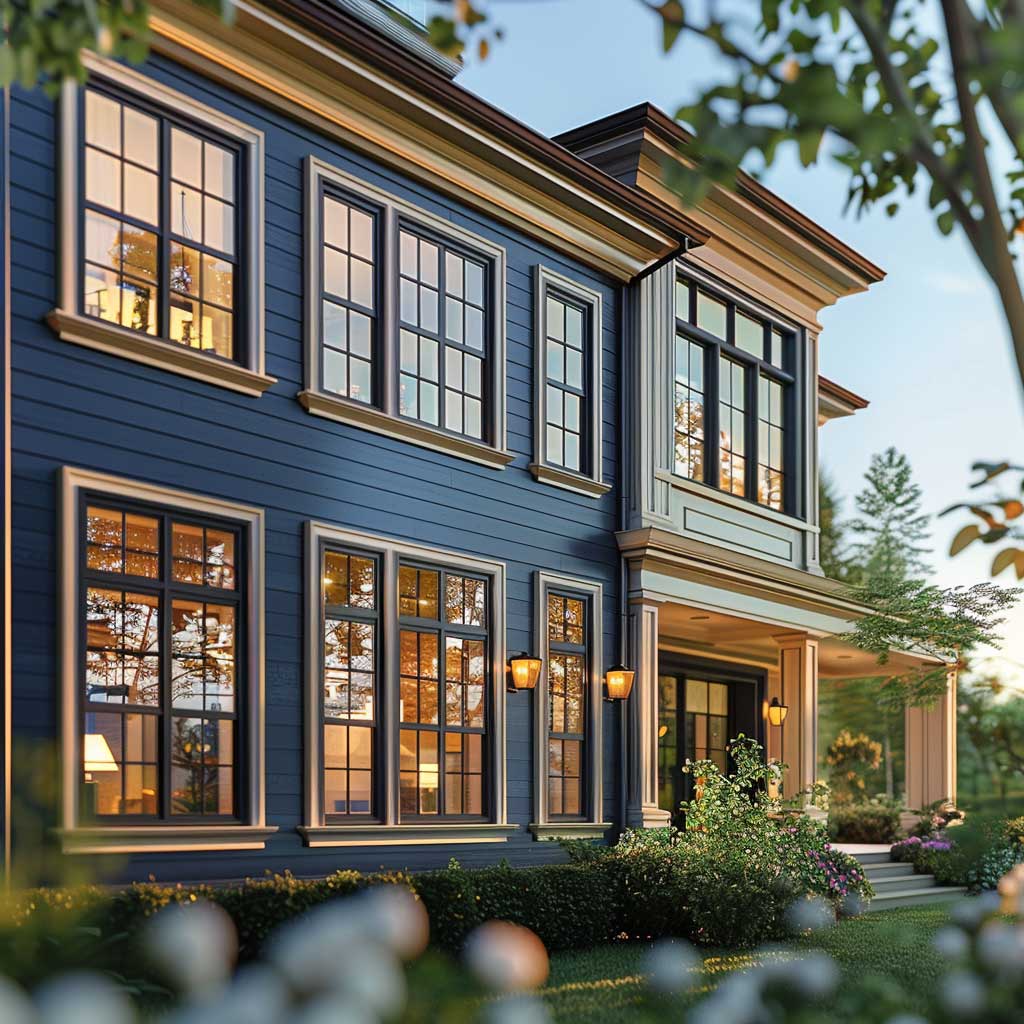
A navy sill is the piece people forget, and it is the line the eye reads first from the street. Leaving it cream while the sides turn navy breaks the frame, a bit like a picture missing its bottom edge. Sills also take the most rain and UV, which is why they often need touch-ups 1–2 years before the rest of the trim. Include the sill in the navy scope every time.
Carry the Palette Indoors to a Navy and Cream Living Room
A navy and cream living room borrows the same contrast and dials it down for daily life. Hale Navy bounces back only about 6% of the light that hits it, so full navy walls can swallow a north-facing room, while cream walls near LRV 81 keep it bright. Think of a navy blazer over a cream shirt: the dark piece frames, the light piece breathes. Put navy on the sofa, wainscoting or a single wall rather than all four.
The 60-30-10 split works indoors too, with cream walls at 60%, navy upholstery or paneling at 30% and brass or wood accents at 10%. A deep sofa is the easiest anchor, and these blue sofa living room ideas show how a navy piece settles into coastal, contemporary and rustic rooms. Is cream trim needed inside as well? Only if your exterior already uses it, since repeating the pairing ties the house together. Avoid mixing a cool navy sofa with yellow-cream walls; test fabric swatches against the paint chip in daylight.
The table below compares the four main versions of the pairing side by side. Use it to match contrast level and upkeep to the house you actually have, not to the photo you like most.
| Scheme | Main color | Contrast color | Approx. LRV gap | Trim repaint cycle | Overall look |
|---|---|---|---|---|---|
| Cream house, navy trim | SW Creamy (LRV 81) | BM Hale Navy (LRV ~6) | ~75 points | 3–6 years | Warm, tailored, traditional |
| Navy house, cream trim | SW Naval (LRV 5) | SW Creamy (LRV 81) | ~76 points | 3–6 years | Formal, moody, high impact |
| White house, navy trim | BM White Dove (LRV 85) | BM Hale Navy (LRV ~6) | ~79 points | 3–6 years | Crisp, coastal |
| Navy and cream living room | Cream walls (LRV ~81) | Navy sofa or wainscoting | ~75 points | Interior, rarely | Cozy, layered |
Where Navy and Cream Earns Its Keep
A 70+ point gap between navy and cream gives you nearly the punch of black and white with far more warmth, which is why the pairing outlasts trend cycles. It rewards houses with real casings and moldings and punishes flat, trimless openings.
Pick the direction by mood: a cream body with navy casings reads warm and classic, while a navy body with cream trim reads formal and dramatic. Either way, keep the 60-30-10 split and give the door its own 10% accent.
Plan money and time honestly. Expect $2.59–$5.40 per linear foot for professional trim painting and a repaint every 3–6 years, or every 2–3 years on the coast.
Buy premium exterior paint for any navy surface, test samples on at least two elevations, and include sills in the navy scope. Those three decisions separate a finished facade from one that looks like a paint experiment.