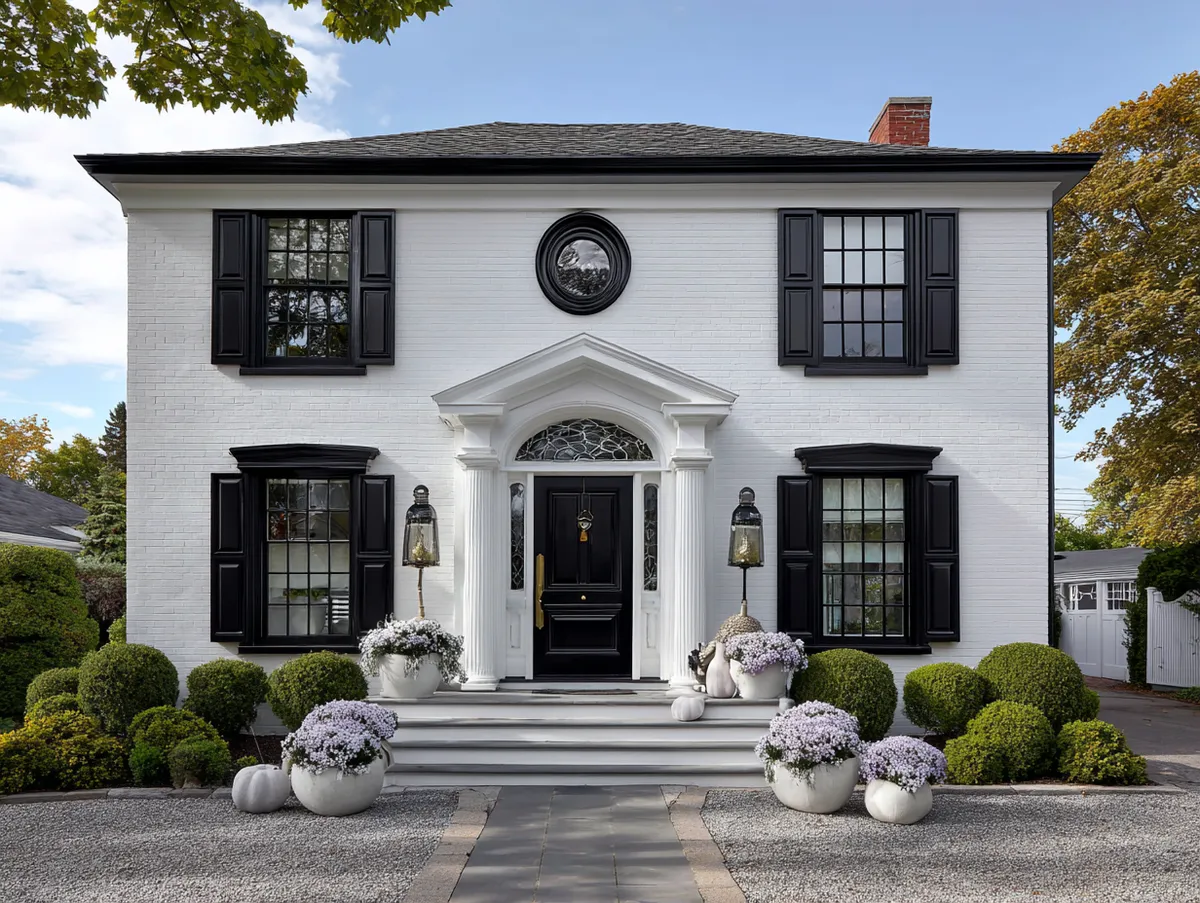
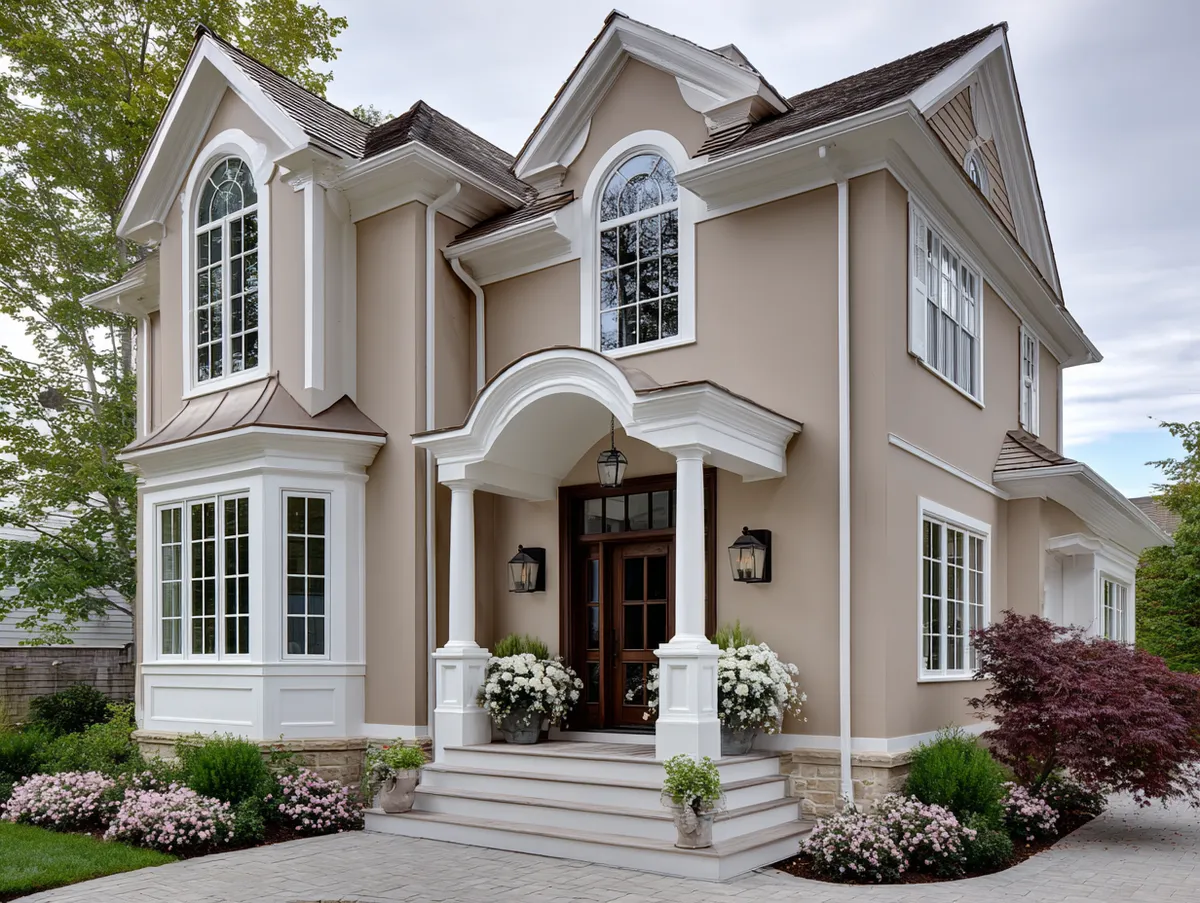
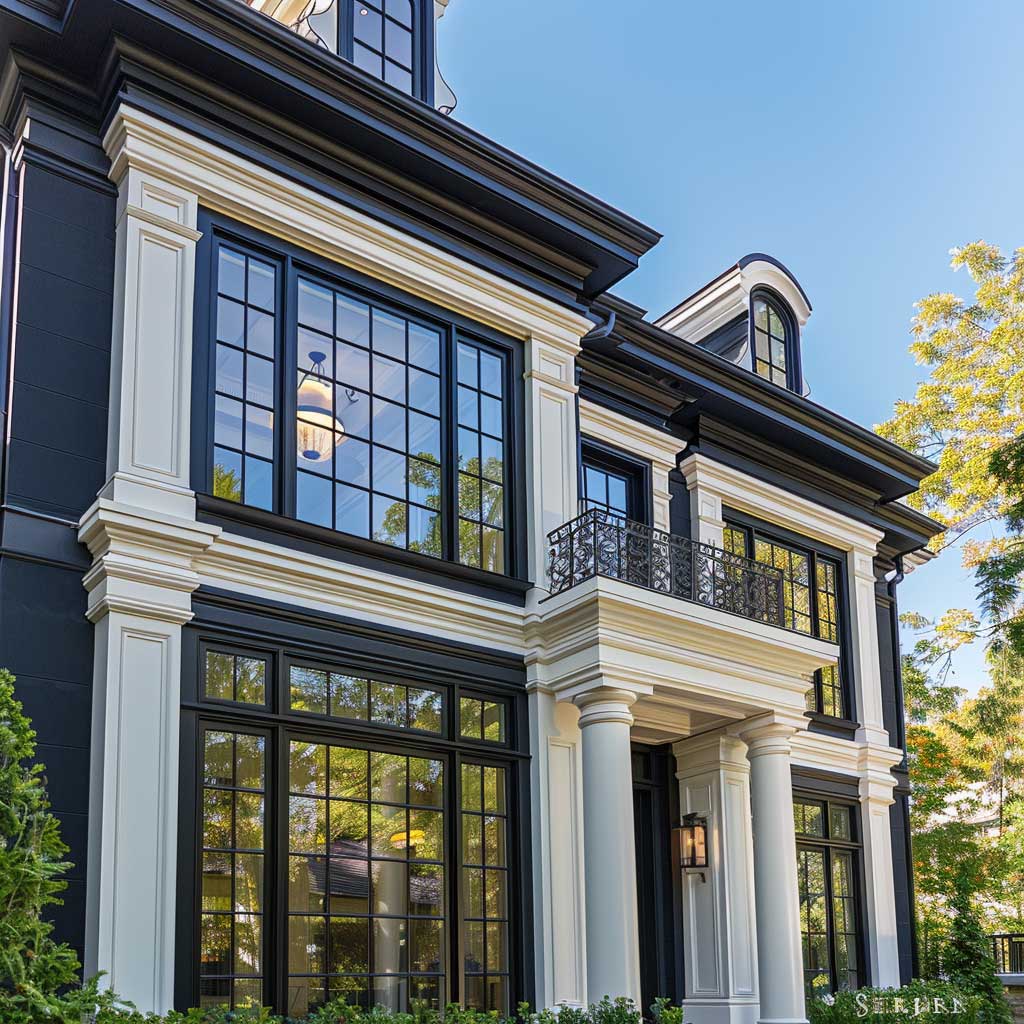
A white house with terracotta roof tiles is the oldest color formula in Mediterranean architecture — and it still outperforms every trend that tries to replace it. The white exterior acts like bleached limestone: it reflects heat, reads clean from the street, and lets the terracotta do all the emotional heavy lifting. I’ve looked at hundreds of exterior schemes, and this pairing consistently earns more second-looks than charcoal-and-white combinations that dominate Pinterest right now. The earthy clay tone grounds the brightness without dulling it. You get warmth without muddiness. That’s a hard balance to hit with paint.
What makes this combination work is contrast with temperature match. White is cool. Terracotta is warm. They sit on opposite ends of the tone spectrum, yet share the same low-saturation restraint — neither one is screaming for attention. Sherwin-Williams “Alabaster” (SW 7008) against Mission-style clay tile is my go-to reference when someone asks what “effortless curb appeal” actually looks like. Don’t use pure white. It reads too stark against terracotta’s orange undertone and the trim ends up looking plastic.
Quick Scan
- Color pairing: Off-white or warm white walls + terracotta roof tiles or trim
- Works best on: Mediterranean, Spanish Colonial, stucco, and modern classic exteriors
- Key accent question: If your roof is terracotta, use ivory or sandstone trim — not bright white
- Shutter color with terracotta roof: Deep forest green, charcoal, or ivory — avoid black
- Paint reference: Sherwin-Williams “Alabaster” (walls), Benjamin Moore “Pale Oak” (trim)
- Cost reality: Quality exterior paint runs $40–$70 per gallon; budget 5–8 gallons per coat for a standard two-story
White Walls and a Terracotta Roof Pull the Color Temperature in Opposite Directions — Intentionally


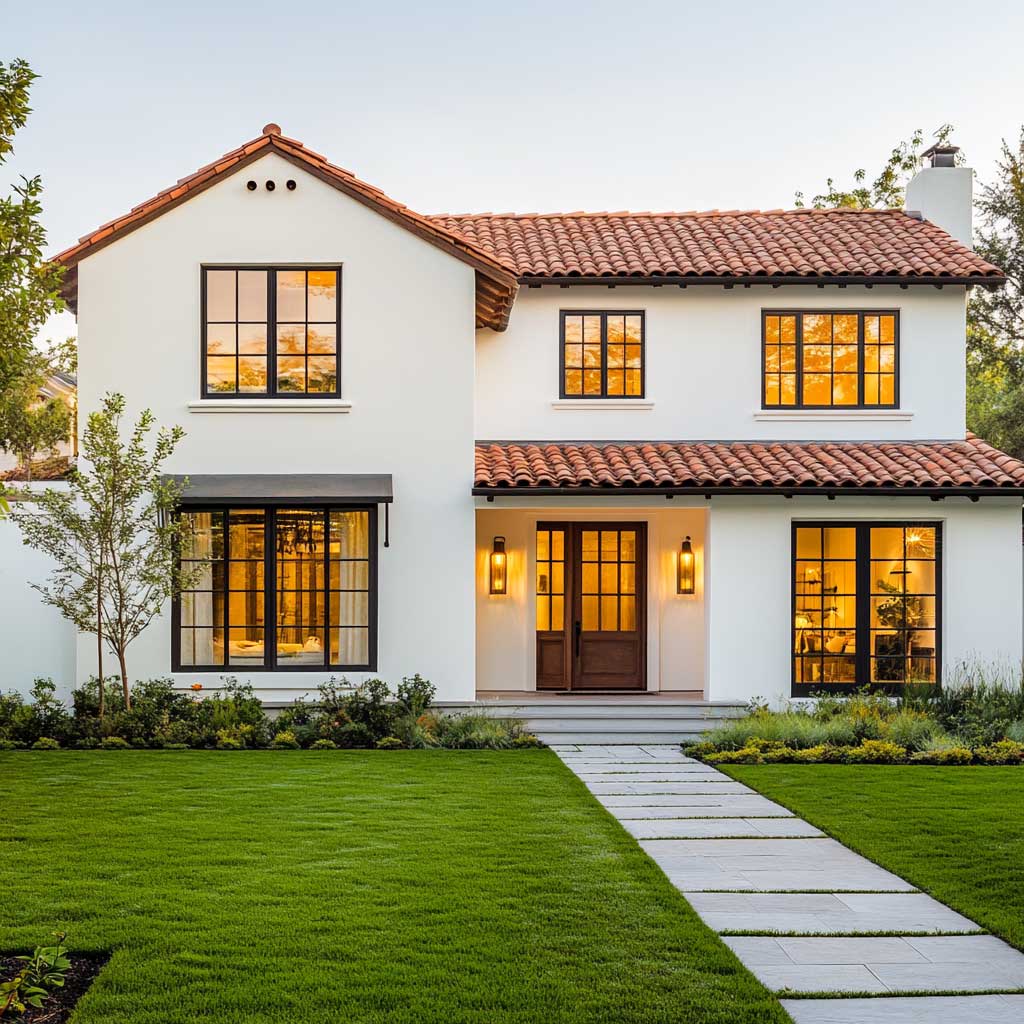
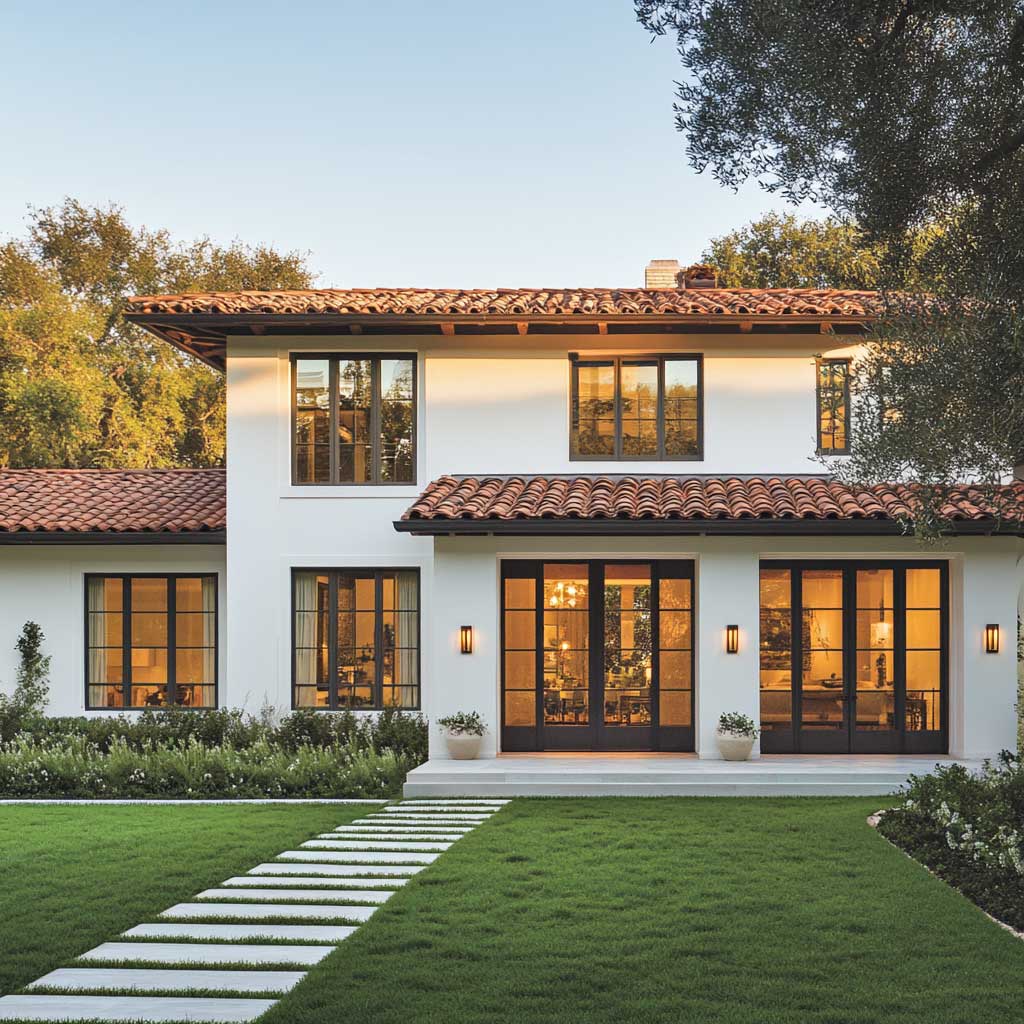
Terracotta roof tiles on a white house work the same way a wood floor works in a white interior — they deliver the warmth the walls refuse to carry. The roof isn’t a secondary detail. It’s the decision. Choose the wrong white (too blue-toned, too pure) and the terracotta looks orange and cheap. Choose the right white (Sherwin-Williams “Alabaster” or Benjamin Moore “White Dove”) and the clay tile suddenly reads rich, aged, and intentional. I’ve watched neighbors repaint twice trying to fix a terracotta mismatch, and both times the roof wasn’t the problem — the wall color was.
The terracotta trim framing windows and doors earns its keep by giving the eye a place to land. Crisp white walls without trim accents read flat from the street — like a blank document nobody bothered to format. Add terracotta molding around the window openings and suddenly the facade has rhythm. The depth increases. You notice the architectural detail instead of the paint. This is why Spanish Colonial homes in California and Florida consistently photograph better than their all-white counterparts in the same neighborhood.
One mistake I see constantly: pairing terracotta tile with bright white gutters and fascia. Bright white next to terracotta creates a jarring hot-cold clash that reads unfinished. Go ivory or sandstone for all horizontal trim elements instead — match the warmth, not the brightness. It’s a $200 paint correction that visually ties the whole roofline together.


At golden hour — that 45-minute window before sunset — terracotta roof tiles shift from burnt clay to warm amber. The white walls pick up that reflected glow and the whole facade looks like it’s lit from inside. No other roof color does this. Charcoal goes dark and flat. Gray reads cold. Terracotta amplifies the light. If you’re ever uncertain about this combination, photograph the house at 5 PM on a clear day. The image will make the decision for you.
This pairing handles traditional and contemporary architecture equally well. Modern homes with clean lines and minimal ornament benefit from the terracotta’s organic texture — it prevents the facade from reading sterile. Traditional homes gain Mediterranean warmth without committing to a full Spanish Colonial renovation. You can see more warm exterior color pairings that use terracotta as an anchor in this collection of warm brown and terracotta house paint combinations.
Terracotta Window Shutters on White Walls Do More Than Block the Sun


Terracotta shutters earn their keep by solving a problem most white house owners don’t know they have: visual flatness across a wide facade. A white wall with white trim is a blank wall. Add terracotta shutters at each window and you suddenly have rhythm — a repeating warm accent that creates vertical punctuation across the horizontal expanse. This is the same principle a fashion editor uses when she adds a terracotta belt to an all-white outfit. The detail does the work. The base stays clean.
The functional case for shutters is also worth making. Quality wood shutters with exterior-grade paint in a terracotta shade (Benjamin Moore “Firenze” is a close match at around $70/gallon) run $150–$350 per pair installed. Composite shutters in a similar tone run $60–$120. Real louvered shutters — not the flat decorative kind nailed flush to the wall — actually provide shade and privacy when closed. I’ve tested both, and the louvered version earns the cost difference every summer in rooms that face west.
One honest warning: terracotta shutters look wrong paired with a grey or blue-toned white. The warm shutter against a cool wall creates a color temperature fight that makes the facade look unresolved. You need a warm white as your base — something with a yellow or pink undertone, not a grey one. Sherwin-Williams “Creamy” (SW 7012) is the right white for this combination. Their “Extra White” (SW 7006) is not.
Don’t Do This
Don’t pair terracotta shutters with a bright or cool-toned white base. Pure white walls (especially SW “Extra White” or Benjamin Moore “Chantilly Lace”) have grey or blue undertones that clash with terracotta’s warm clay tone. The result looks like two separate design decisions fighting for dominance on the same facade. Test your white paint swatch directly next to a terracotta tile sample in outdoor light before you commit to a gallon. They should feel like the same temperature family, not opposites. If the white looks icy next to the terracotta, it is.


Mid-morning light — around 9–11 AM — is when terracotta shutters look their most saturated and intentional. The side-light creates shadow depth in the louvres, showing the texture and dimension that flat photos never capture. If you’re staging your home for sale, photograph the exterior at this time specifically. The terracotta reads richer, the white looks cleaner, and the house looks like it was designed, not painted by accident. Soft shadows are free staging.
Connecting the shutter color to other exterior details makes the scheme feel considered rather than decorative. Terracotta door planters, a clay tile threshold, or even a rust-toned doormat extends the warm accent beyond the windows and keeps it from reading as an isolated detail. The exterior color design team at Brick&Batten recommends echoing accent colors in at least three separate elements to make a scheme read as intentional rather than accidental — a rule that applies perfectly to terracotta shutter combinations.
Porch Accents in Terracotta Anchor the Whole Facade from the Ground Up

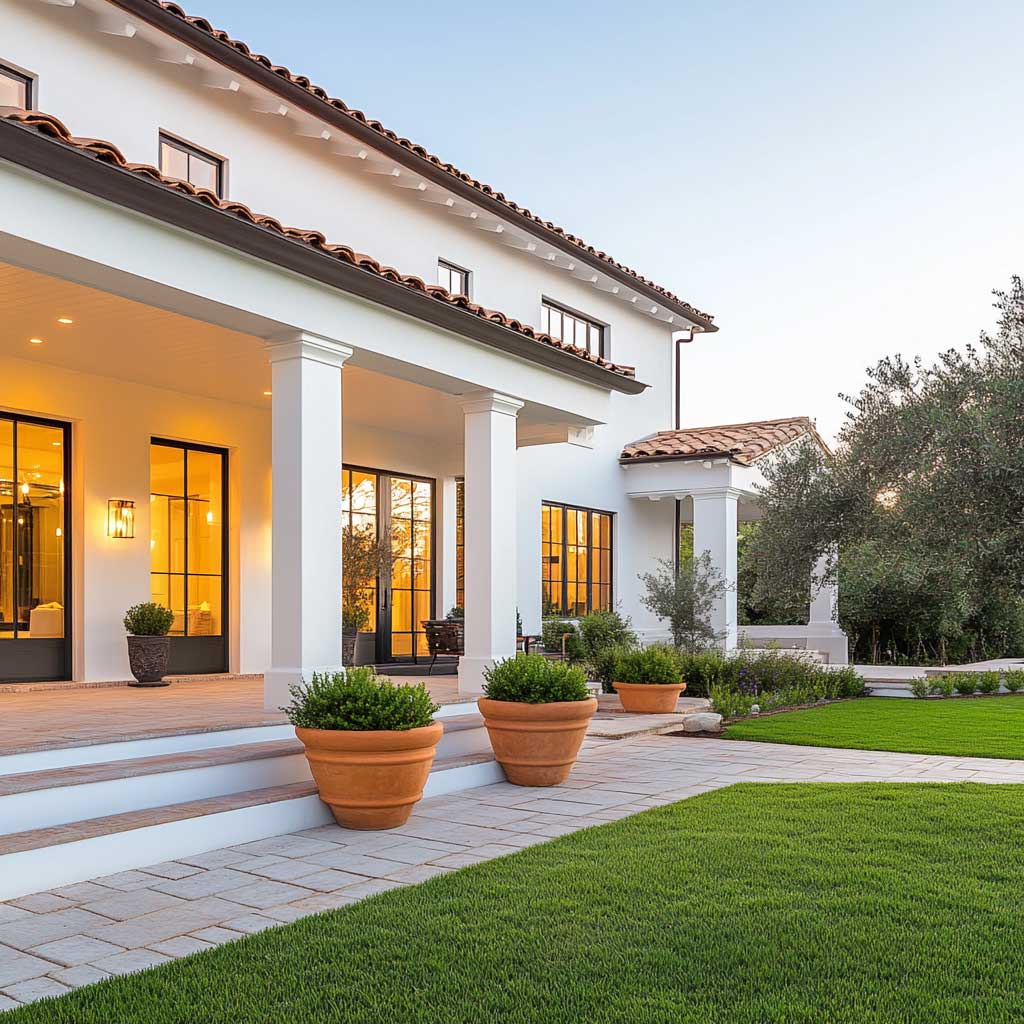


Porch accents are where the terracotta-and-white combination proves it scales. Roof tile is high up and distant. Shutters are mid-level. Porch details — column bases, planter pots, tile thresholds, trim molding — bring the earthy tone down to eye level and arm’s reach. The result is a scheme that feels grounded rather than just decorated. My go-to rule: place at least one terracotta element below knee height on the porch to anchor the color story in the ground plane.
Italian terracotta pots — the real ones from Impruneta, not the resin knockoffs — run $80–$250 depending on diameter. Worth every dollar. They age beautifully, developing a salt-stained patina that makes them look more expensive over time instead of less. The resin versions I’ve owned turn chalky and brittle in two winters. Large Impruneta pots filled with clipped boxwood or olive trees flanking a white front door is one of those combinations where the sum is genuinely greater than its parts.
The common mistake on porches: using terracotta paint on structural columns. Terracotta-painted columns on a white house read as a costume, not a design decision. The color needs to appear in movable, replaceable elements first — pots, cushions, a doormat, a tile inset. Save the paint for the shutters and trim. Columns painted terracotta look fine in spring and absurd by August when the paint starts chalking from UV exposure on west-facing elevations.


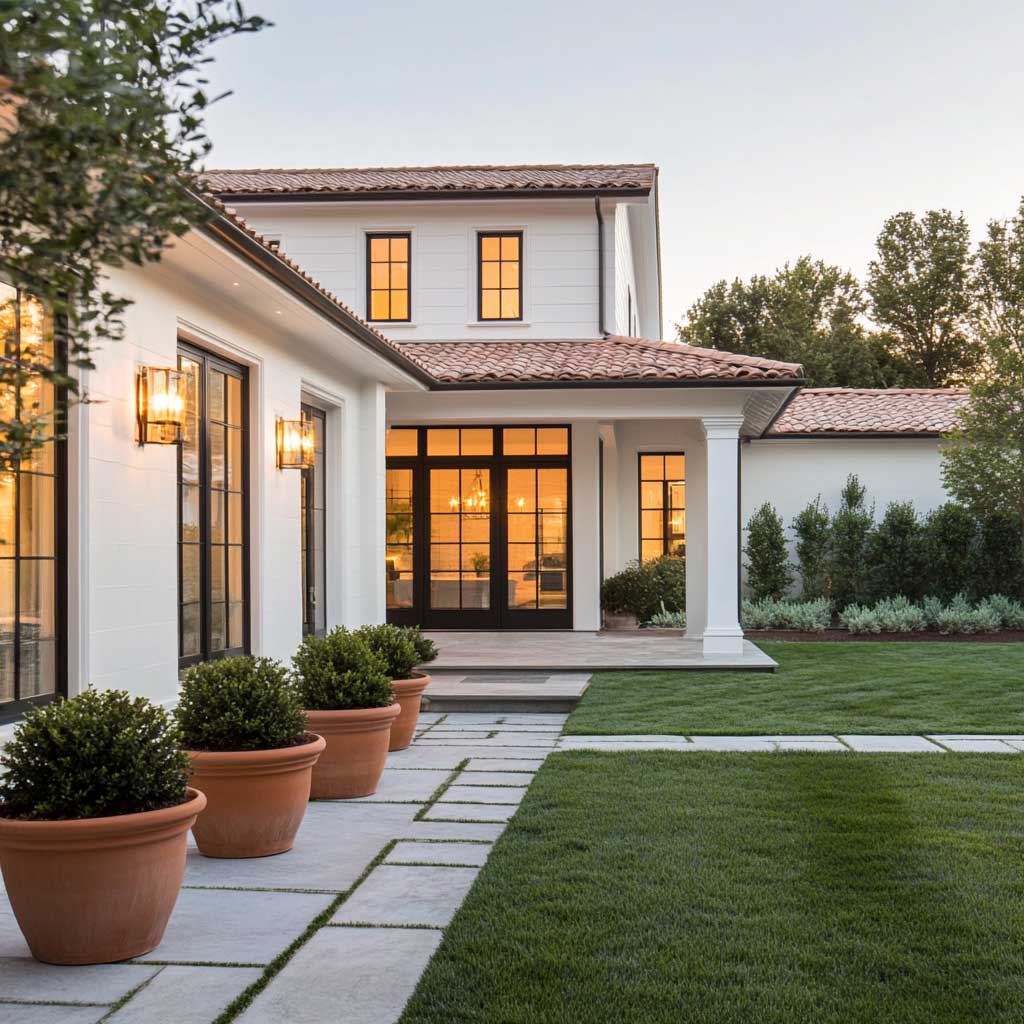

Evening light is when a terracotta-accented porch earns its biggest return. Warm porch lighting — 2700K bulbs, not the blueish 4000K daylight type — reflects off clay pots and terracotta tile thresholds and makes the whole entrance glow like a restaurant entrance rather than a suburban front door. I’ve tested this directly: the same porch with cool white bulbs looked fine; with 2700K Edison bulbs in the overhead fixture, it looked $200,000 more expensive. Lighting choice costs $12 per bulb and changes everything.
If you’re thinking about extending this warm palette to your full facade color story, the approach detailed in terracotta and beige as dominant exterior tones is worth reading alongside this. The combination of warm whites, terracotta accents, and sandy beige trim is the Mediterranean formula that architects have been running for 400 years. It’s not a trend. It’s a system.
ArtFasad Verdict
White plus terracotta is a formula, not a mood. Follow the rules and it works every time.
Use a warm white — SW “Alabaster” or BM “White Dove” — never a blue-toned pure white. Keep the terracotta in at least three separate elements at different heights: roof, shutters, porch. Anchor it all with ivory trim, not bright white gutters.
The combination handles direct sun and afternoon shadow equally well, which is more than most exterior schemes can claim. Clay tile roofs run $10–$20 per square foot installed but last 50+ years, far outlasting asphalt shingles at half the lifetime cost.
Save this post — you’ll want these paint references when the contractor shows up with swatches.