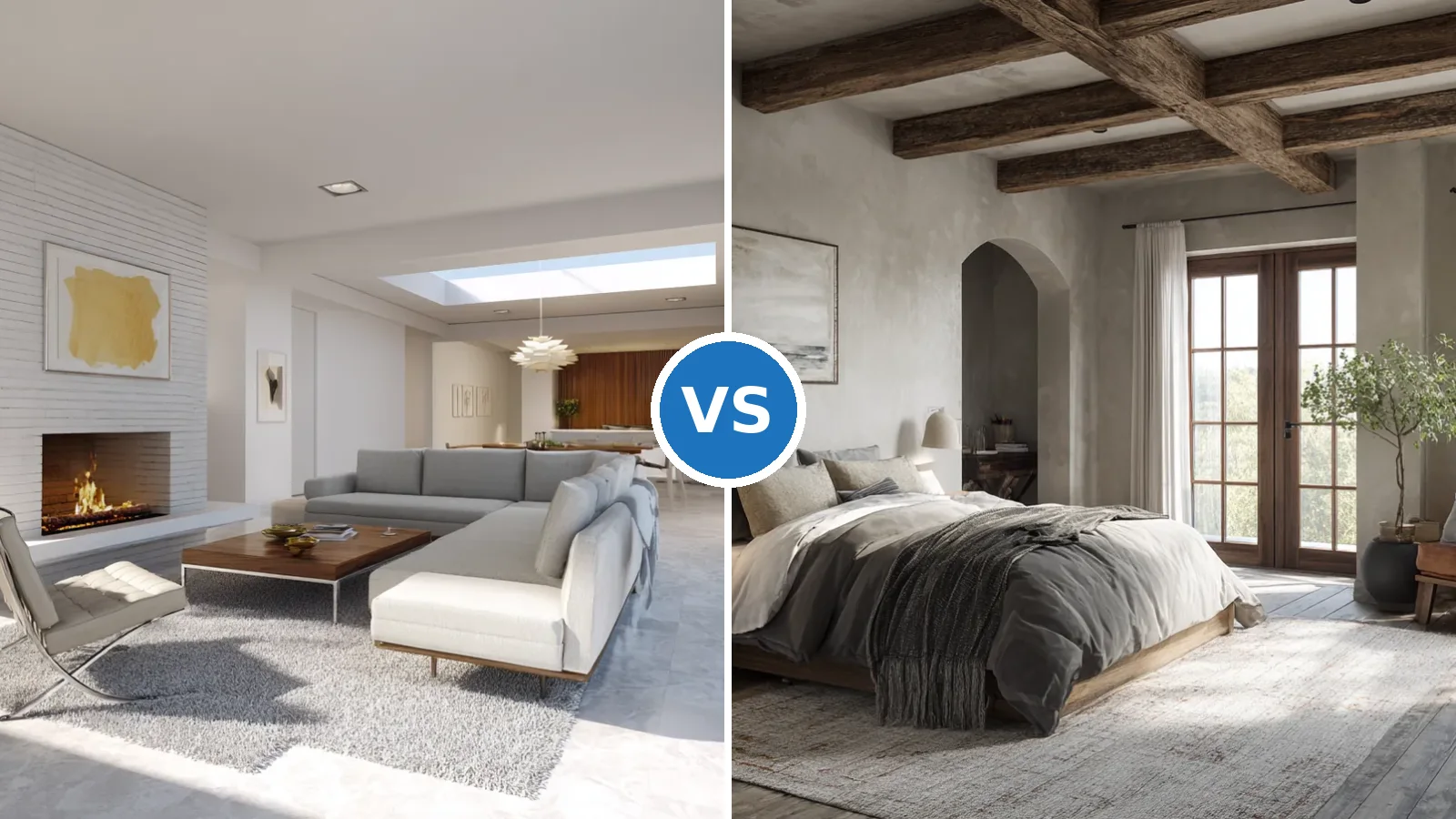
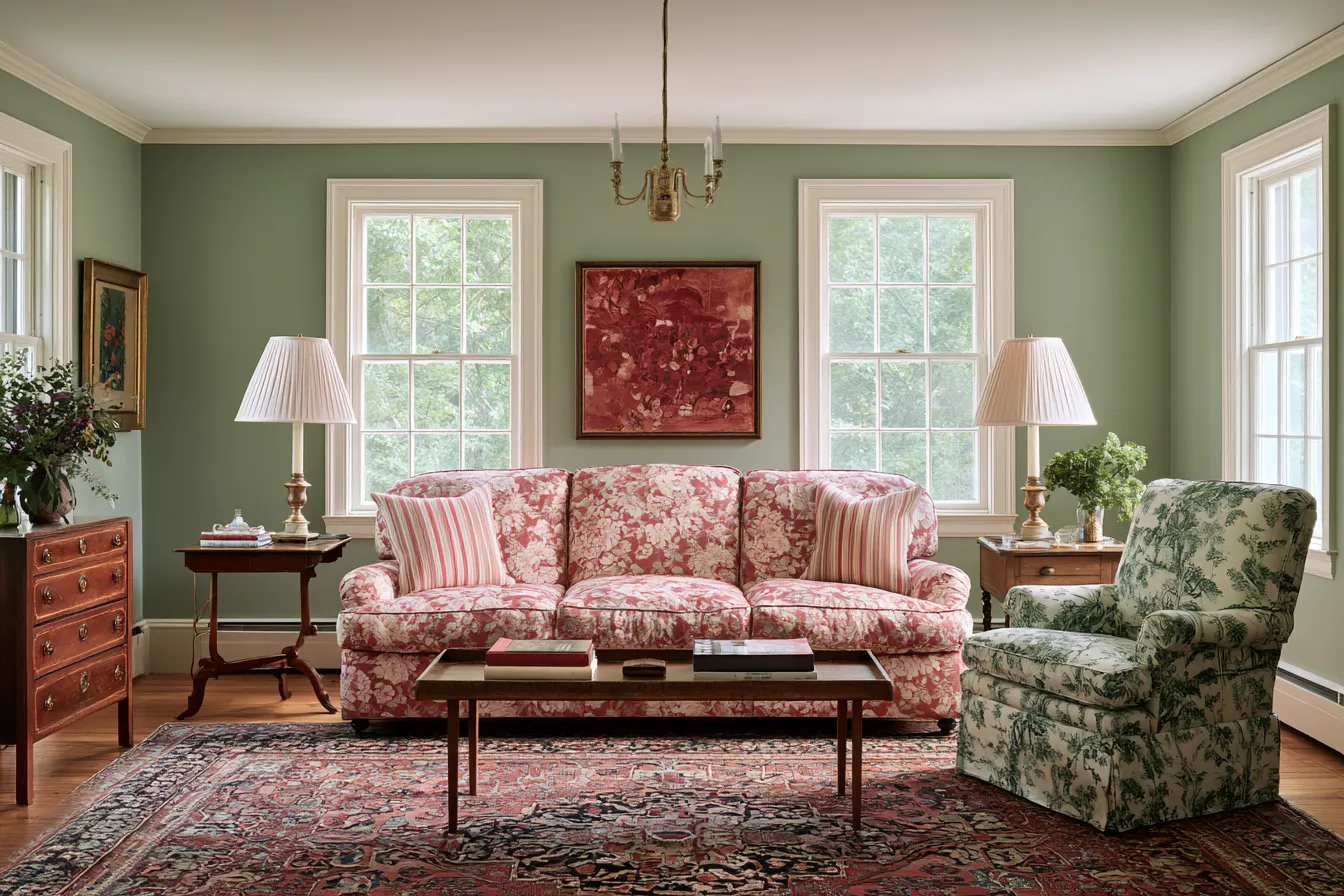
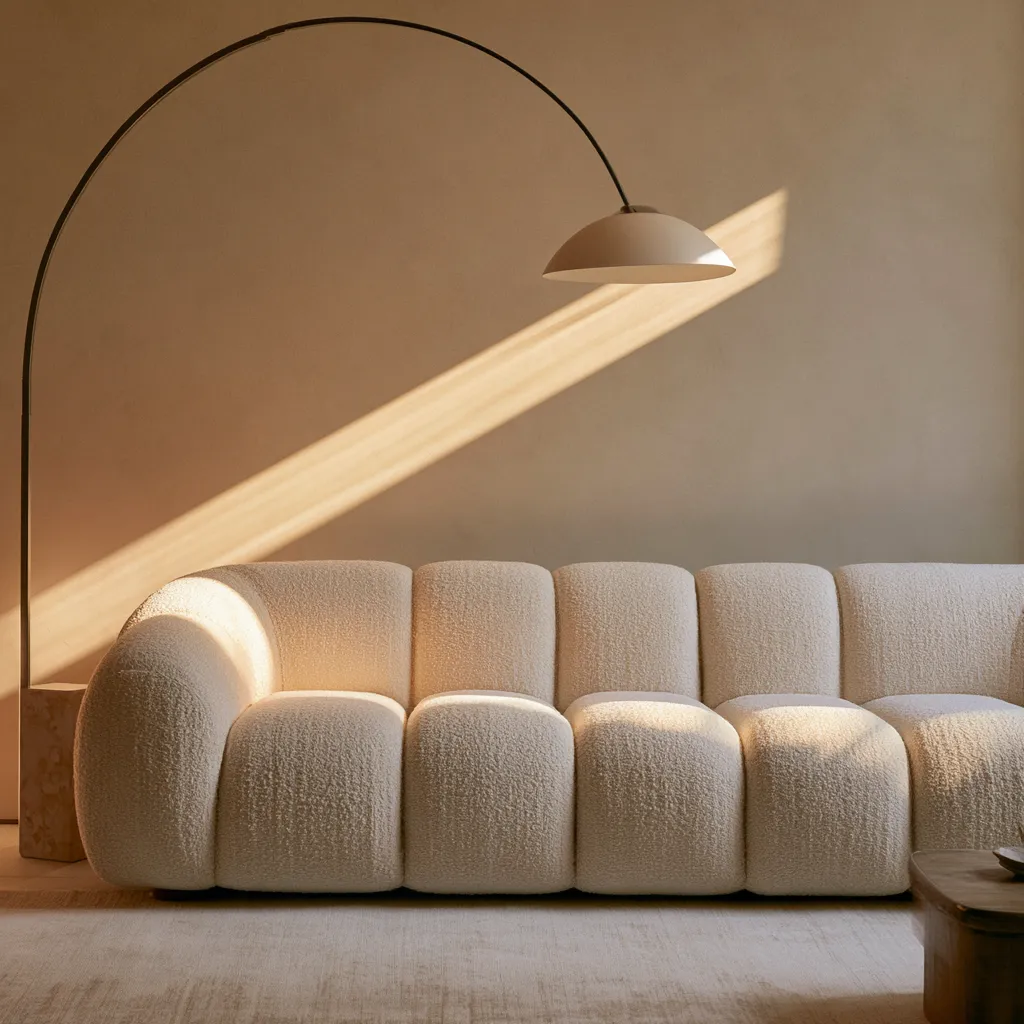
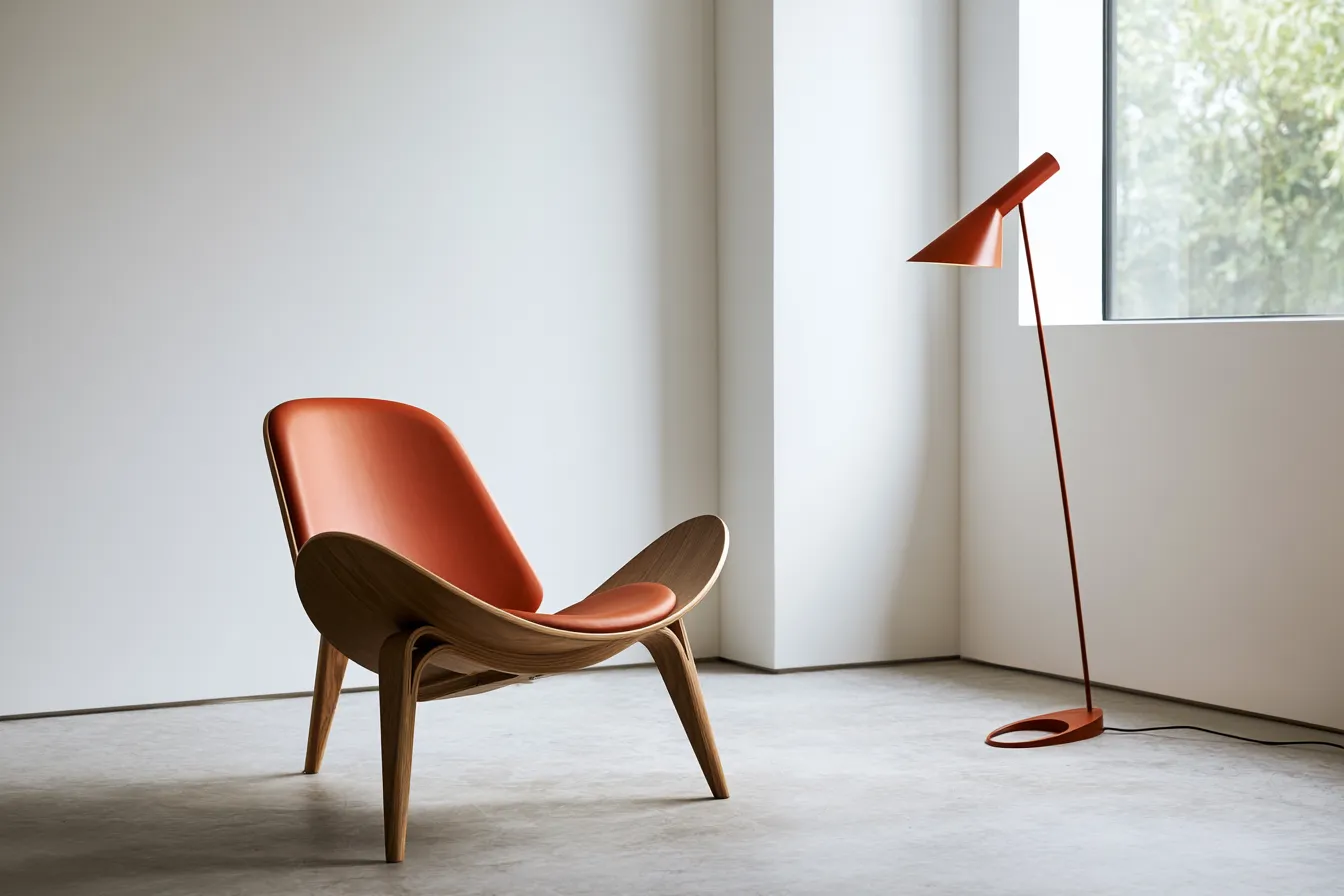
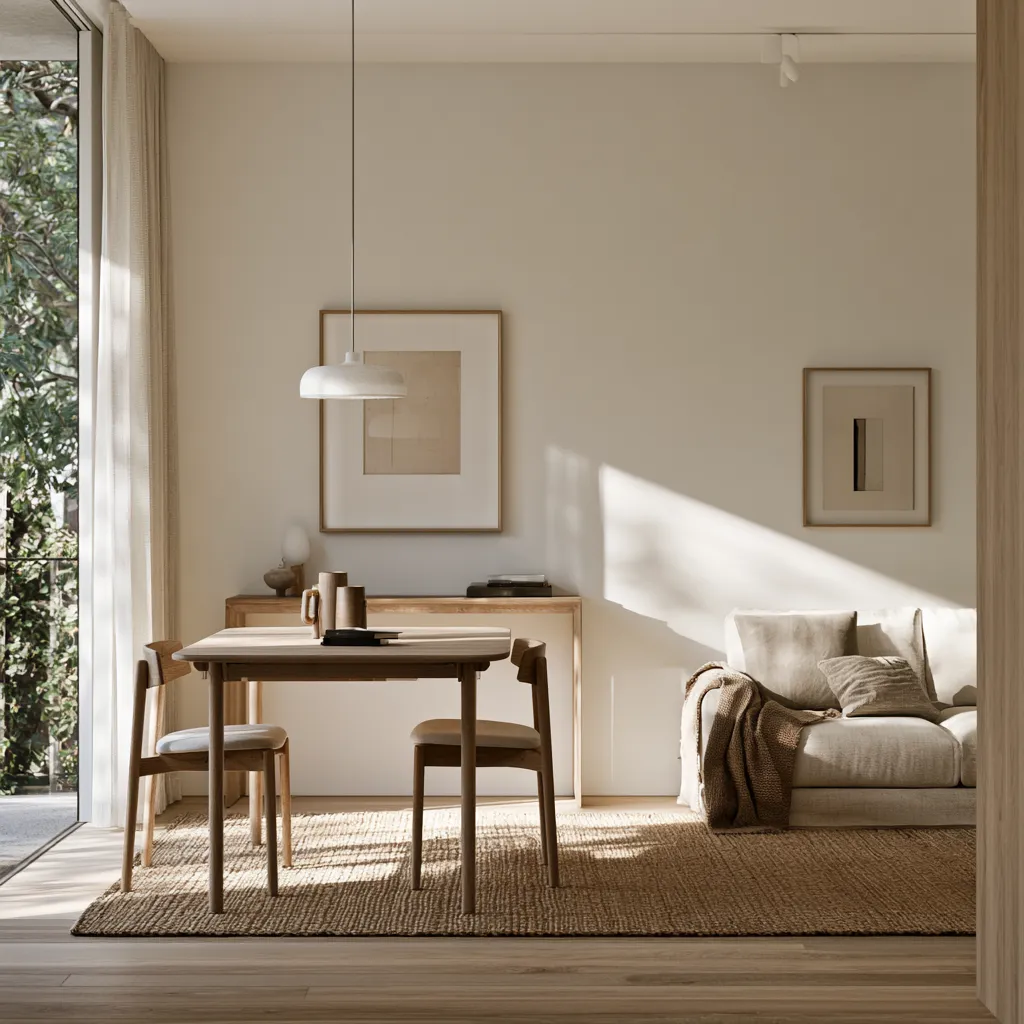
A mid century modern lake house interior works when warm wood, clean-lined furniture and a few bold colors frame the water instead of competing with it. The style draws on design produced roughly between 1945 and 1969, so it already favors big glass, low profiles and honest materials. Does it suit a cabin that sees damp springs and dry winters? Yes, as long as the wood is chosen well and the room stays between 40% and 60% relative humidity.
The fastest route takes three moves: one walnut or teak anchor piece, one oversized abstract artwork and one icon chair facing the window. Budgets swing widely, since a vintage Danish teak sideboard often lists around $1,900–$4,800, while a new Eames Lounge Chair and Ottoman starts near $8,050 at list price. Spend on the piece you touch every day and save on the accents.
Vintage lake house decor fits the same frame when it leans retro rather than nautical. Swap anchor prints and slogan signs for 1950s and 1960s ceramics, a teak tray or a single framed map of the lake. The room then reads as collected over decades instead of bought in one weekend. Start by removing every themed sign before adding anything new.
Quick Scan
- Mid-century design spans roughly 1945–1969, so borrow shapes from that window, not from 1970s rustic.
- Walnut (about 1,010 lbf Janka) looks richest, while white oak (1,360 lbf) handles boots and dogs better.
- Keep indoor humidity at 40–60% and avoid swings larger than 5% in 24 hours.
- Art over a sofa should be about two-thirds its width, roughly 56 inches over an 84-inch sofa.
- Center artwork 57–60 inches from the floor and 6–10 inches above the sofa back.
- A new Eames Lounge and Ottoman lists from $8,050, versus about $1,900–$4,800 for a vintage teak sideboard.
- Warm 2700K bulbs keep teal and mustard saturated, cool white flattens them.
Warm Wood Tones Anchor a Mid Century Modern Lake House Interior
Warm wood is the first layer of any mid century modern lake house interior, and three species do most of the work: walnut, teak and oak. Walnut brings the darkest chocolate grain, teak ages toward honey-gold, and white oak stays lighter and calmer next to grey water. Think of the wood as the dock under the room, because everything else ties up to it. Pick one dominant species and let it cover at least the sideboard and the coffee table.


Hardness matters more at a lake than in a city apartment. On the Janka scale, black walnut rates about 1,010 lbf and teak roughly 1,070–1,155 lbf, while white oak reaches 1,360 lbf, which makes it about 35% harder than walnut. Is walnut too soft for a family cabin? Not for a sideboard or credenza, but wet boots and dog claws will mark a walnut bench far faster than an oak one. Put walnut on vertical, low-traffic pieces and keep oak where people walk.
Lake air is the real stress test for retro wood furniture. Most specialists recommend 40–60% relative humidity, and stability matters as much as the number: this guide to wood furniture and humidity cites a limit of about 5% change in any 24-hour period. Seasonal homes are the danger zone, since a heated house at 50% in September can sink to 25% by January, and wood below 30% starts to crack. Leave an inexpensive hygrometer in the living room and check it on every visit.


Large glass finishes the job, because grain only looks rich in daylight. A walnut sideboard under a wide window reads warm at noon and almost black at dusk, so pair it with a lighter rug or a teak chair to hold the contrast. If new openings are on the table, these modern approaches to integrating glass walls for panoramic views show how frameless, sliding and double-glazed options change a room. Avoid parking dark wood in direct afternoon sun and set it side-on to the window instead.
Vintage Lake House Decor Through Bold Abstract Art
Vintage lake house decor gets its personality from art, and mid-century pieces deliver it through flat color and geometry rather than lighthouses and fish. Teal, mustard, burnt orange and primary red pop against the greens and greys outside, which is why one bold canvas beats a dozen small themed prints. Treat the artwork like a sail, a single big shape that catches every eye in the room. Choose the large abstract piece first and buy smaller accents only afterward.


Scale decides whether retro art looks intentional or lost. The common gallery rule calls for a piece about two-thirds the width of the sofa below it, so an 84-inch sofa needs roughly 56 inches of art, as one canvas or a tight grouping. Hang it with the center 57–60 inches from the floor and leave 6–10 inches between the sofa back and the frame. Measure the sofa first and shop second, never the other way around.
Can a lake house wall carry vintage art without turning into a museum of the 1950s? Yes, when retro pieces share the room with one or two contemporary prints in the same palette. A real 1960s abstract beside a modern screenprint in matching teal looks collected, while three reproduction atomic posters in a row look like a theme party. Keep kitschy lake signs and retro art off the same wall, because one cancels the other.


Light switches the art on after sunset. Warm bulbs around 2700K keep mustard and teal saturated, while cool white light drains them toward grey. A single picture light or two adjustable spots is enough for one statement piece. Replace the cool-white bulbs nearest the art before judging whether a new canvas works.
Don’t Do This
- Don’t cover walls with fish, anchors and slogan signs, since one oversized abstract does more than a dozen themed prints.
- Don’t hang art with its center at 70 inches, because 57–60 inches is the eye-level standard galleries use.
- Don’t put a 36-inch print over a 96-inch sofa, aim closer to 64 inches of art instead.
- Don’t let a closed-up cabin fall below 30% humidity over winter, as cracks in solid wood are permanent.
- Don’t use walnut for a mudroom bench when white oak is about 350 lbf harder on the Janka scale.
Iconic Furniture Turns a Mid Century Modern Lake House Interior Into a Retreat
Mid century lake house rooms become real retreats once one recognizable piece takes the best seat by the window. The Eames Lounge Chair and Ottoman, introduced by Herman Miller in 1956, is the classic pick, with molded wood shells, leather cushions and a swivel base. A kidney-shaped sofa or a low teak coffee table plays the supporting role. Give the icon the view seat and build the rest of the layout around its sight line.


Authentic icons cost real money, so the numbers deserve a close look. Herman Miller lists the Eames Lounge and Ottoman from about $8,050 to roughly $10,945 depending on size and finish, while vintage Danish teak sideboards on dealer sites commonly sit around $1,900–$4,800. Is the chair worth three to four times a credenza? For a room where someone reads by the window every evening, often yes, but for a cabin used a handful of weekends a year, a vintage sideboard stretches the budget further. Skip wobbly look-alikes, since a bad lounge chair is worse than no lounge chair.
Footprint is the hidden spec in any mid-century modern lake retreat. The standard Eames chair measures about 31.5 inches high and 33.5 inches wide, and the ottoman adds a second zone in front of it. Like a canoe on a narrow dock, it needs room to swing, because the base swivels and the shell reclines. Angle it toward the glass rather than the TV and leave a clear walkway behind it.


Open-plan layouts make icon pieces work hardest, because the chair, sofa and table read as one composition against the lake. Floor-to-ceiling glass keeps the view in charge, and tempered panes are about four to five times stronger than ordinary glass. For a closer look at how water and glazing play off each other, see this piece on maximizing views with glass facades and reflective water surfaces. Keep pendants and floor lamps slim so they never cut across the horizon line.
Walnut, Teak and Oak Side by Side
Choosing wood for a mid-century lake house comes down to color, hardness and how each species ages near water. Teak’s oily grain handles moisture swings better than walnut, while white oak, at 1,360 lbf, takes the most abuse from boots and paws. Which one wins overall? None of them, any more than a canoe beats a kayak, since it depends on the water you paddle. Limit a single room to two species at most.
| Wood | Janka hardness | Color and aging | Moisture behavior | Best mid-century use | Lake house verdict |
|---|---|---|---|---|---|
| Black walnut | About 1,010 lbf | Dark chocolate grain, softens slightly in sun | Low shrinkage, needs 40–60% RH | Sideboards, credenzas, wall panels | Vertical, low-traffic pieces |
| Teak | About 1,070–1,155 lbf | Honey-gold patina over time | Very stable thanks to natural oils | Lounge chairs, dining tables, trays | Best all-rounder near water |
| White oak | About 1,360 lbf | Pale to mid-tone, stains evenly | Stable, especially quarter-sawn | Floors, benches, dining tables | High-traffic zones and entries |
| Red oak | About 1,290 lbf | Pinkish cast, can blotch when stained | Moderate stability | Budget casegoods | Workable, less period-correct |
Where the money goes matters as much as which wood you pick. An icon chair costs roughly three to four times a vintage sideboard, yet both shape the room for decades. Treat the budget like ballast in a boat, placing the heaviest spend where it keeps everything steady. Avoid splitting funds evenly across ten mid-range pieces when two strong ones carry the look.
| Piece | Typical price | Key size or target | Era | Where it pays off |
|---|---|---|---|---|
| Eames Lounge Chair and Ottoman (new) | $8,050–$10,945 list | Chair about 31.5 in high × 33.5 in wide | Introduced 1956 | Reading spot facing the lake |
| Vintage Danish teak sideboard | About $1,900–$4,800 | Up to about 90 in long on large models | 1950s–1970s | Main living or dining wall |
| Large abstract artwork | Varies by artist and edition | About 2/3 sofa width, 56 in for an 84 in sofa | 1950s–1960s style | Above the sofa, centered at 57–60 in |
| Hygrometer | Low-cost | 40–60% RH, under 5% swing per 24 h | Any | Seasonal cabins left closed in winter |
Retro Lines, Lake Light, No Kitsch
A mid century modern lake house interior succeeds on three decisions, not thirty: one wood, one statement artwork and one icon seat facing the water. Get those right and a room built around a $1,900 vintage sideboard can feel as finished as one built around an $8,000 chair. The view does the rest of the work.
Keep the climate steady at 40–60% humidity, because cracked walnut cannot be repaired back to original. Seasonal cabins can drop to 25% in winter, so a hygrometer belongs on the packing list for every visit.
Size art at two-thirds of the sofa width and center it at 57–60 inches. Most retro rooms that feel slightly off are simply hung too high or too small.
Use teak or white oak where people walk and save walnut for vertical surfaces. The 350 lbf hardness gap between walnut and white oak shows up quickly once wet feet and pets come through the door.