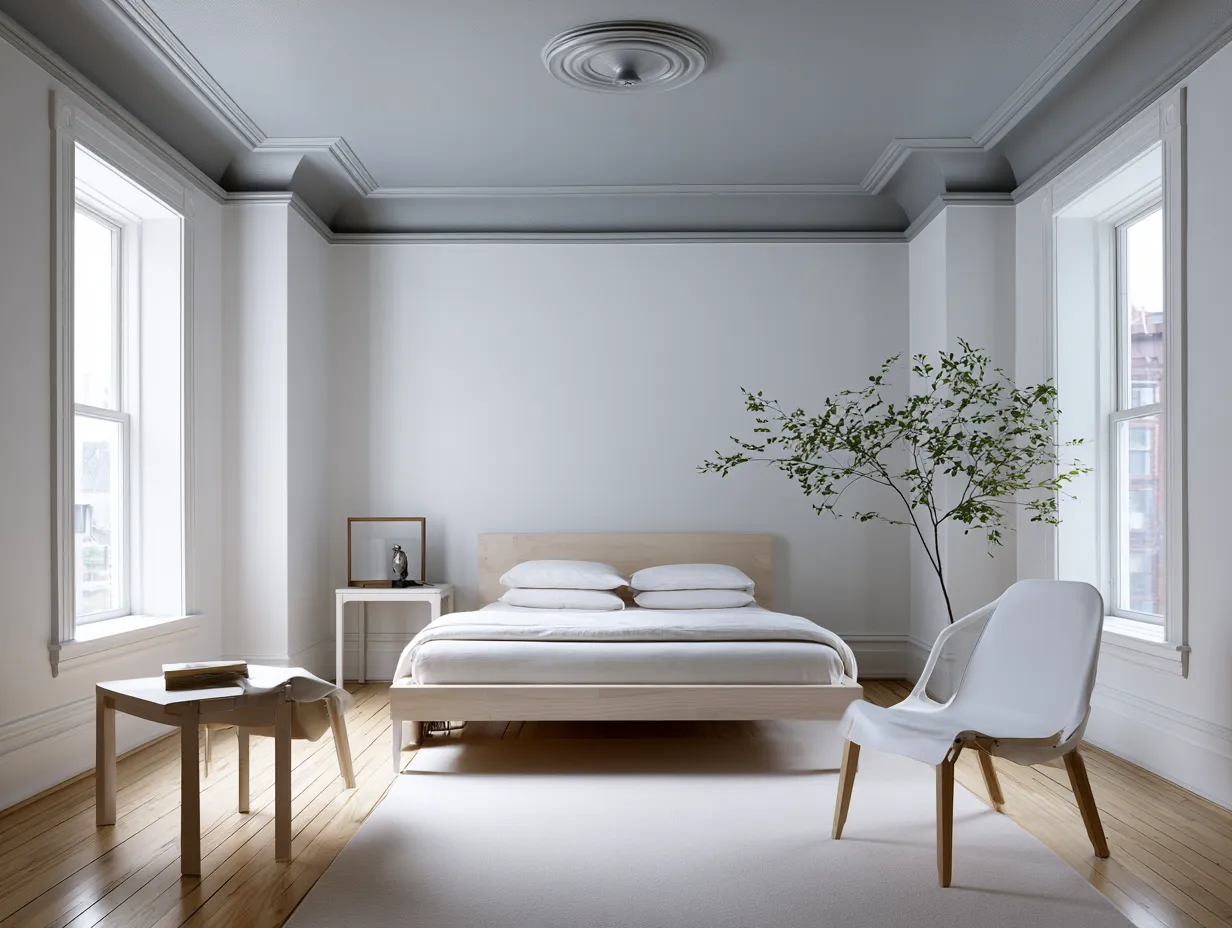
An accent chair is one of the highest-leverage decisions you can make in a living room. One well-chosen piece does what a sofa alone cannot: it interrupts the visual rhythm, introduces a second material or colour, and gives the room a reason to be looked at from multiple angles. Yet most living rooms get it wrong — the chair sits in the corner looking like it arrived in the wrong decade, or it matches the sofa so closely it disappears entirely.
This guide works through the decisions that actually matter: shape, fabric, placement, and scale — with real examples and numbers to anchor the choices. Whether your room is 12 × 14 ft or a sprawling open-plan, there is an accent chair configuration that will make the space read as intentional.
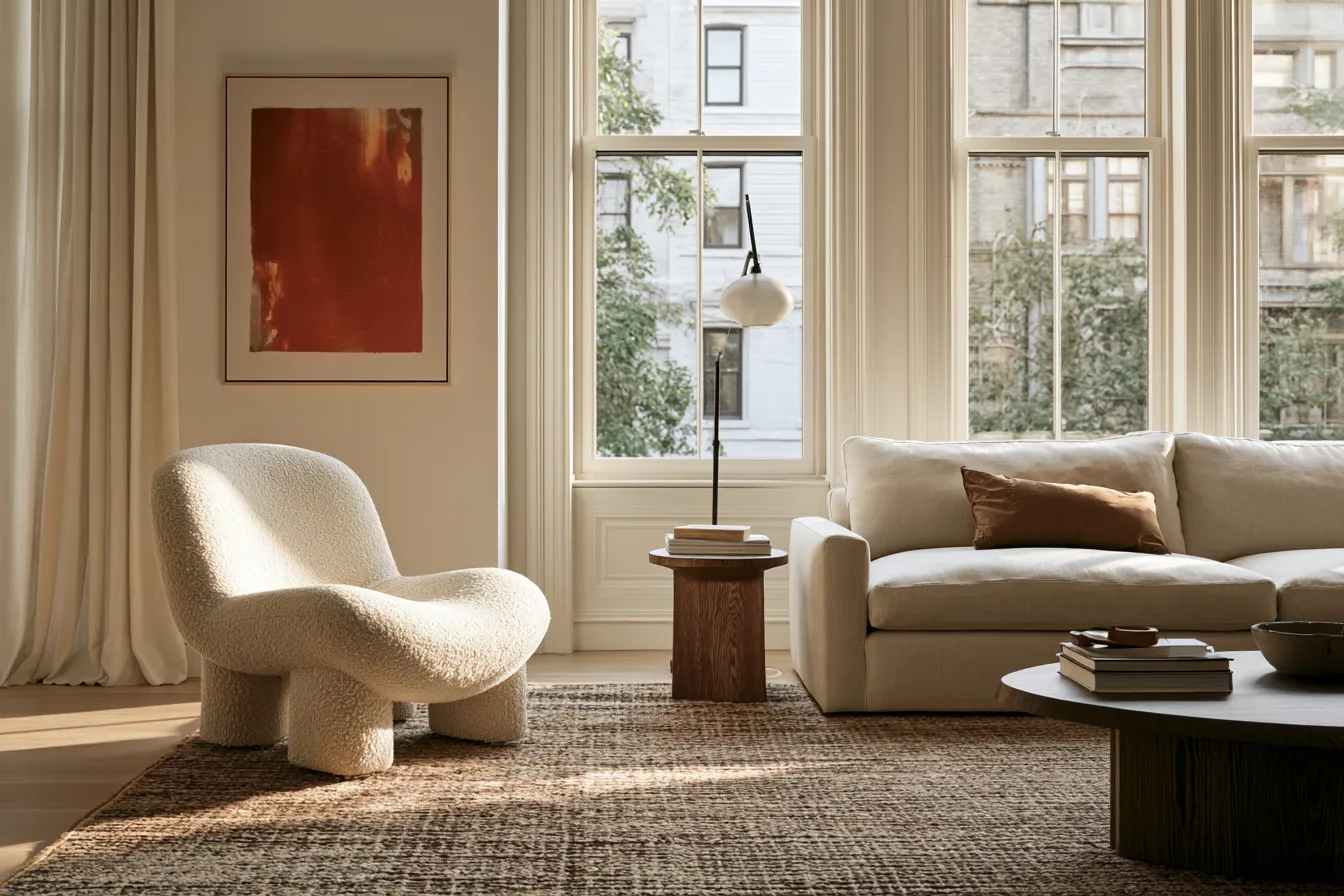
Why One Good Accent Chair for the Living Room Changes Everything
Interior designers consistently cite the accent chair as the single piece most likely to be underestimated at purchase and overvalued once installed. A 2024 survey by House Beautiful found that 68% of homeowners who added an accent chair rated it as one of the top three changes that made their living room feel more designed — above art, above rugs, above new lighting. The reason is straightforward: a sofa defines the room’s function; the accent chair defines its character.
The mechanics are just as clear. A sofa typically occupies 8–10 feet of visual width and sets the dominant material story. When an accent chair — in a contrasting fabric, silhouette, or colour — enters the frame from a different angle, the brain reads it as a second design decision rather than background furniture. That contrast is what makes a room feel curated rather than furnished.
The 6 Best Accent Chair Styles for a Living Room in 2026
Before choosing a specific chair, it helps to understand what each category brings to a living room — not just aesthetically, but functionally. Some chairs invite long sits; others are better as visual anchors with limited occupancy. Knowing which you need before you fall in love with a profile saves expensive mistakes.
1. The Barrel Chair
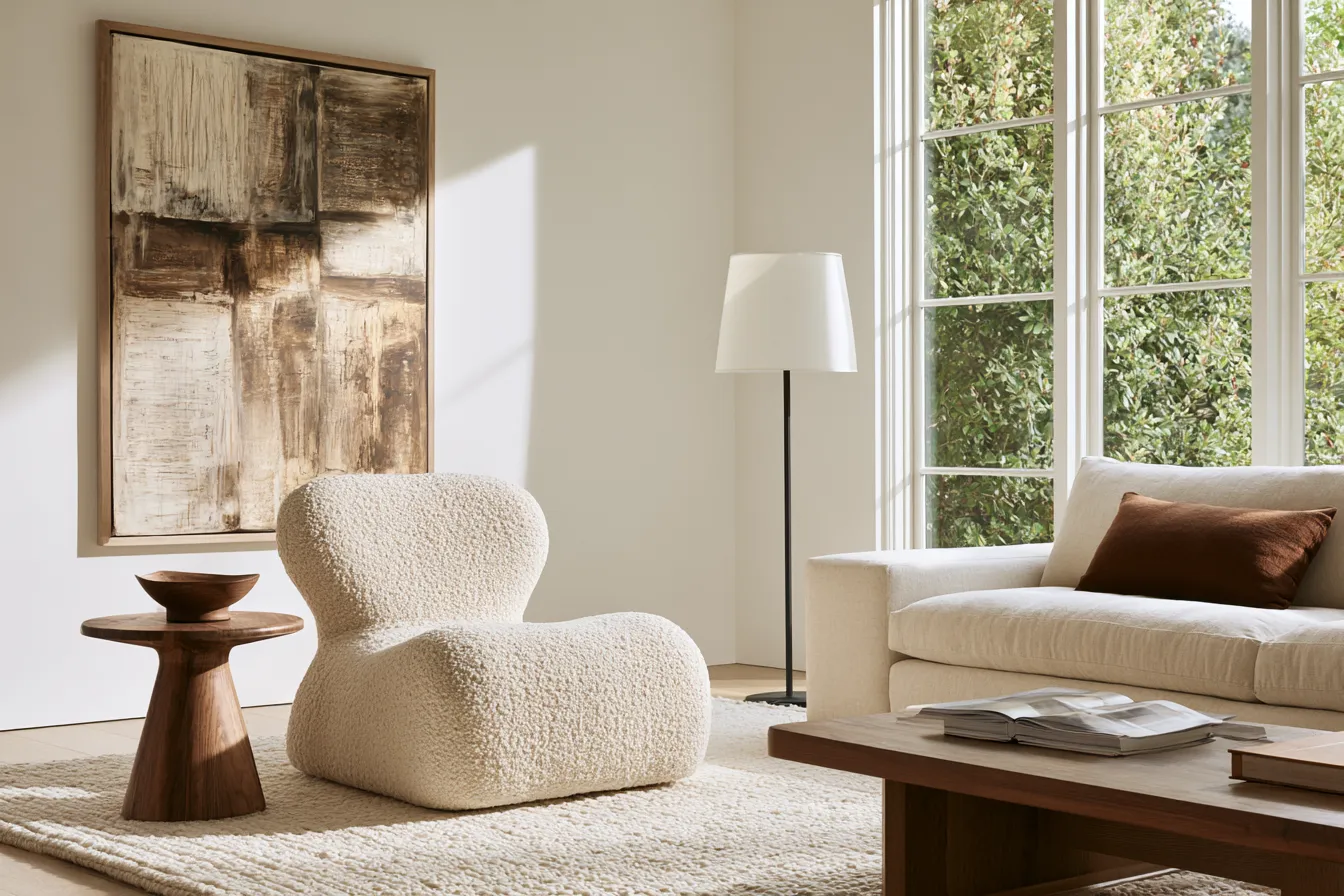
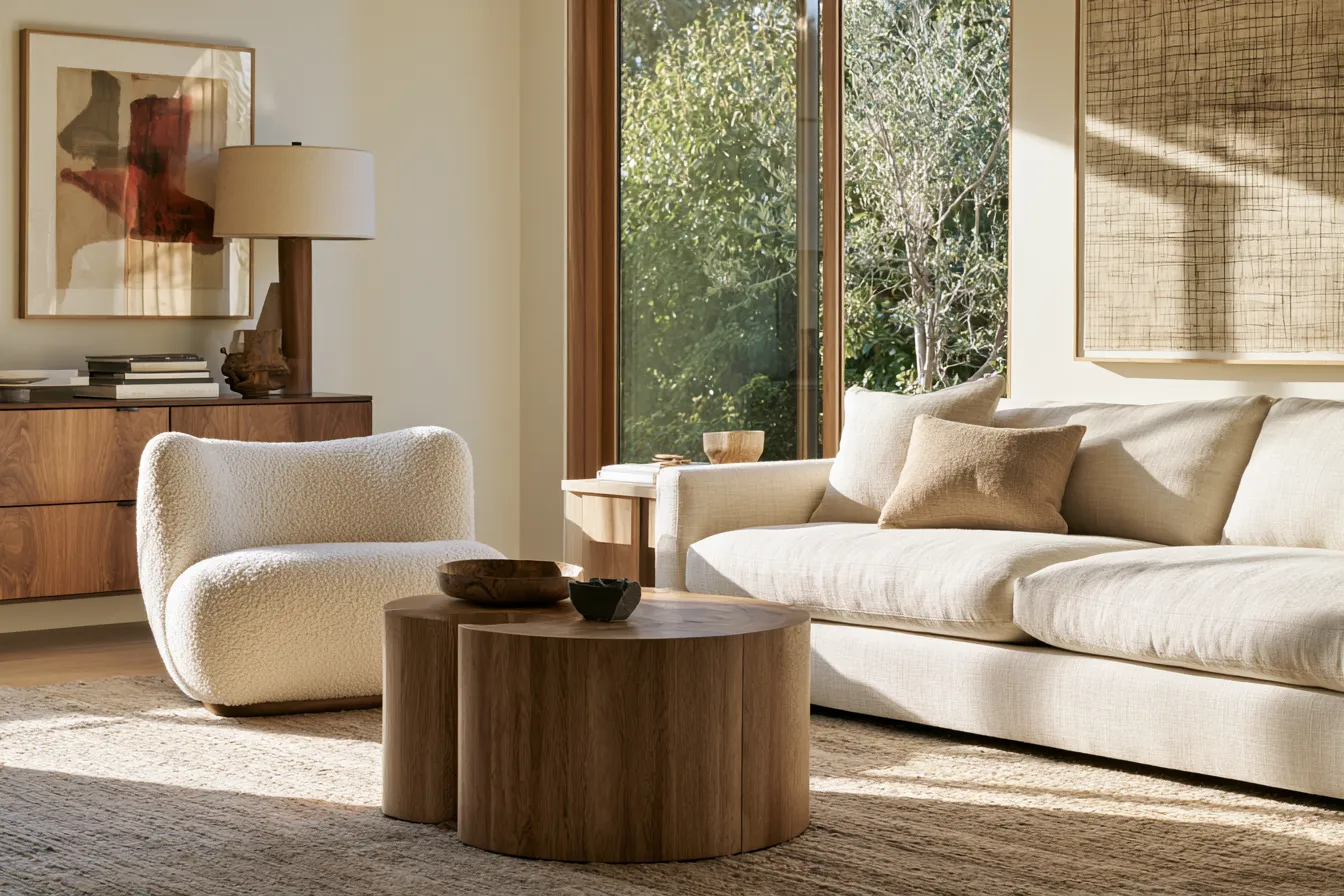
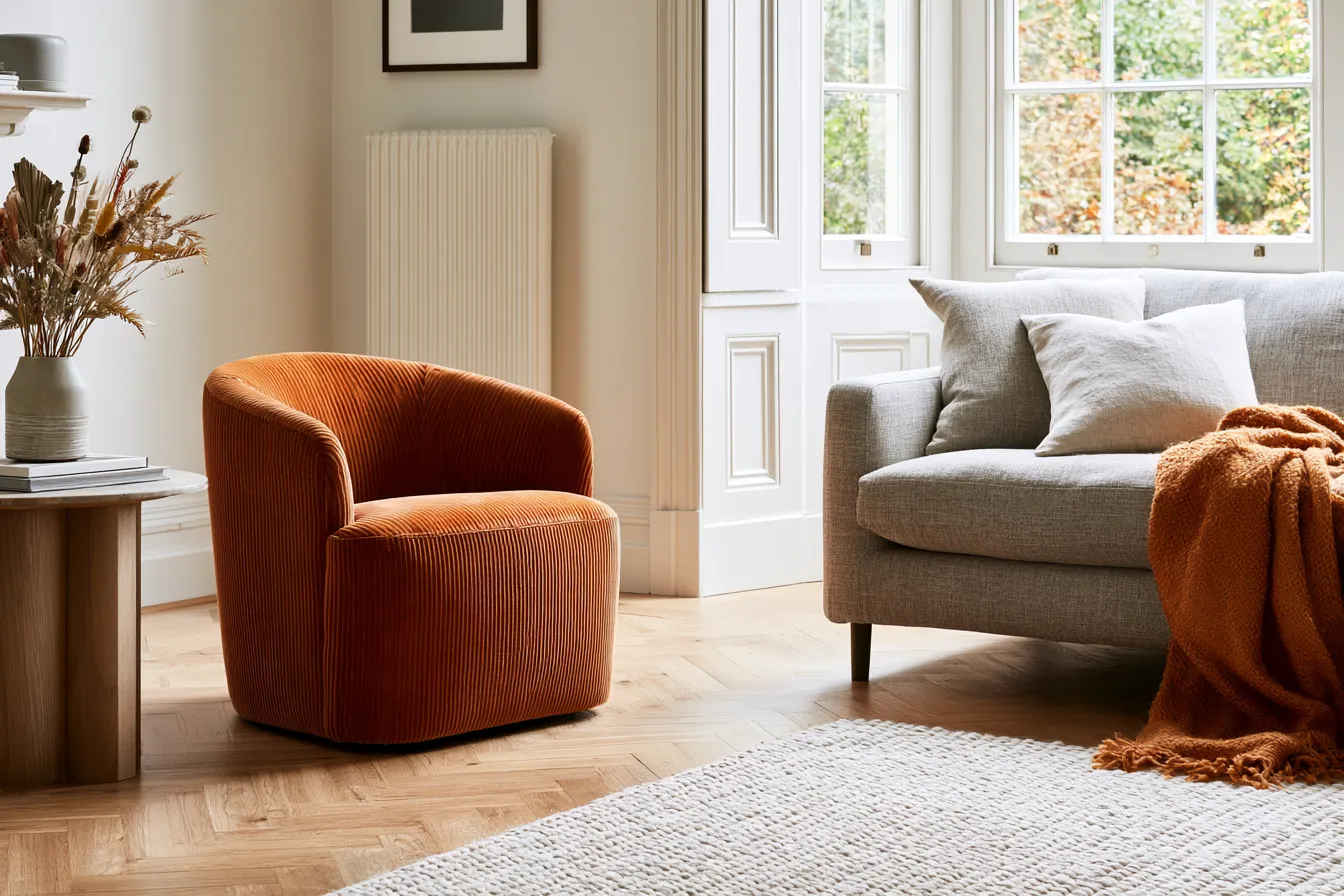
Barrel chairs — fully upholstered with a curved, continuous back that wraps around the sides — are among the most space-efficient accent chair ideas for small living rooms. Their compact footprint (typically 28–32 inches wide) and enveloping shape make them feel substantial without consuming floor area. In boucle or a textured weave, they read as a statement even in a corner. Pair with a small side table at exactly seat height (roughly 18 inches) to avoid the chair looking isolated.
2. The Wingback Chair
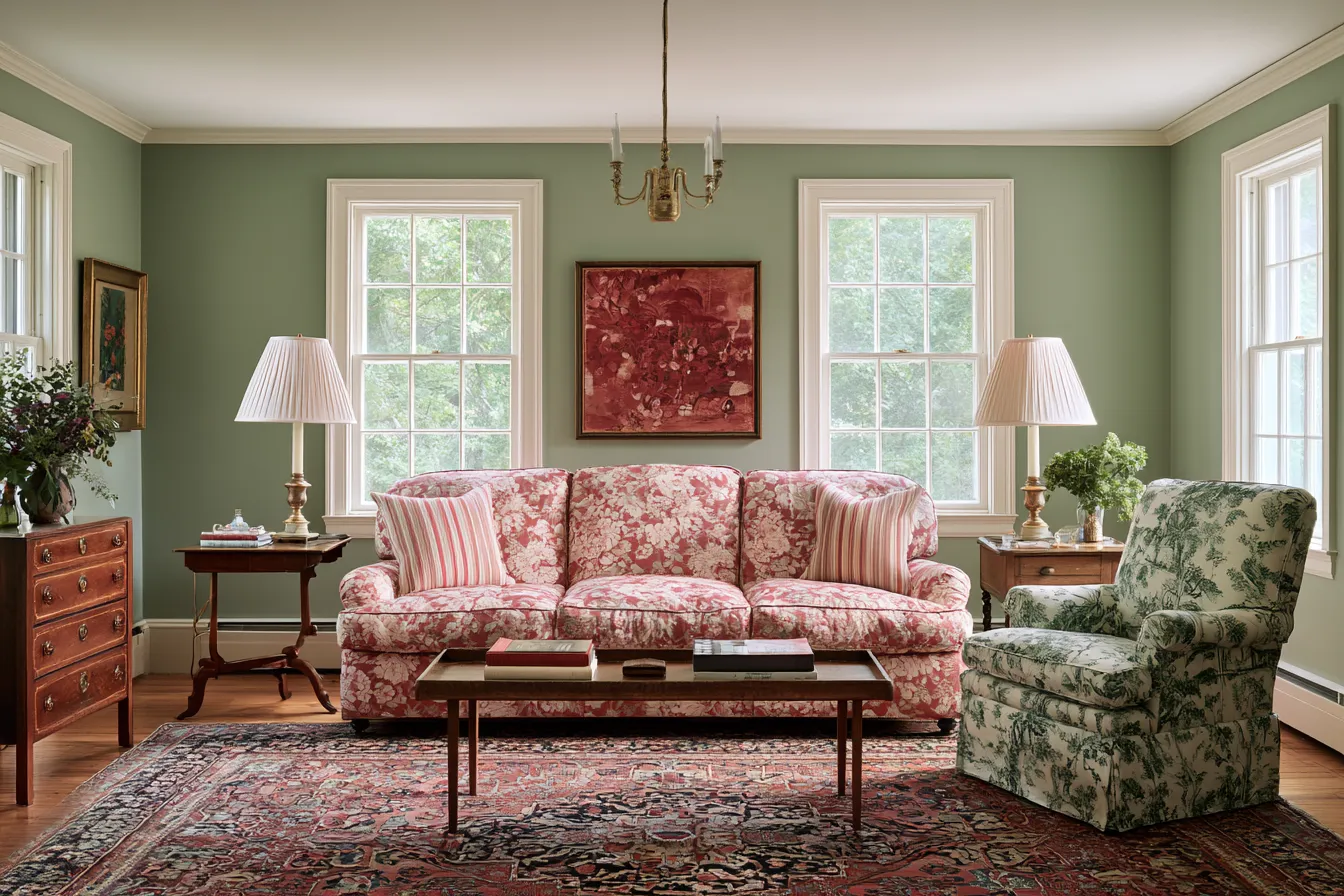
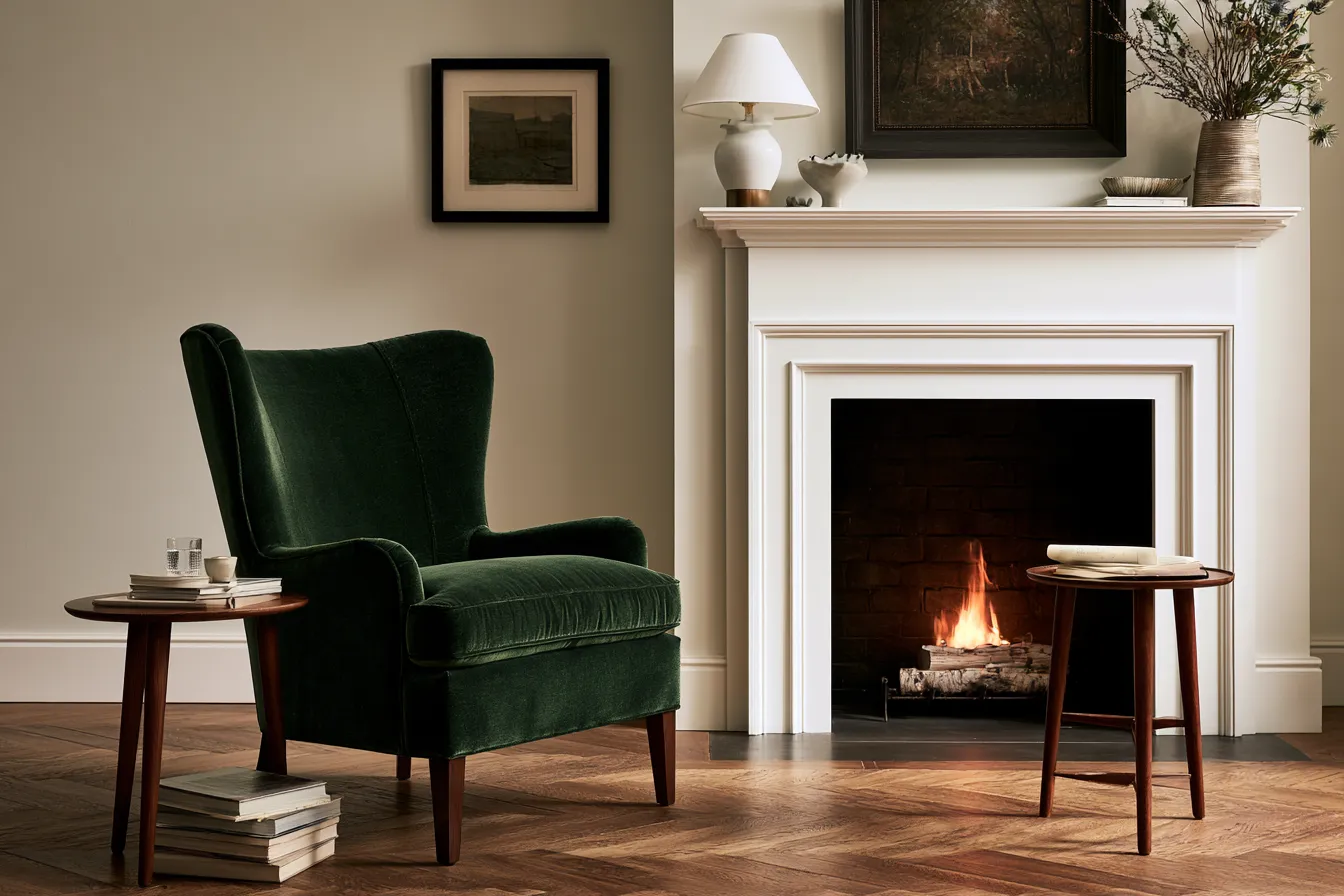
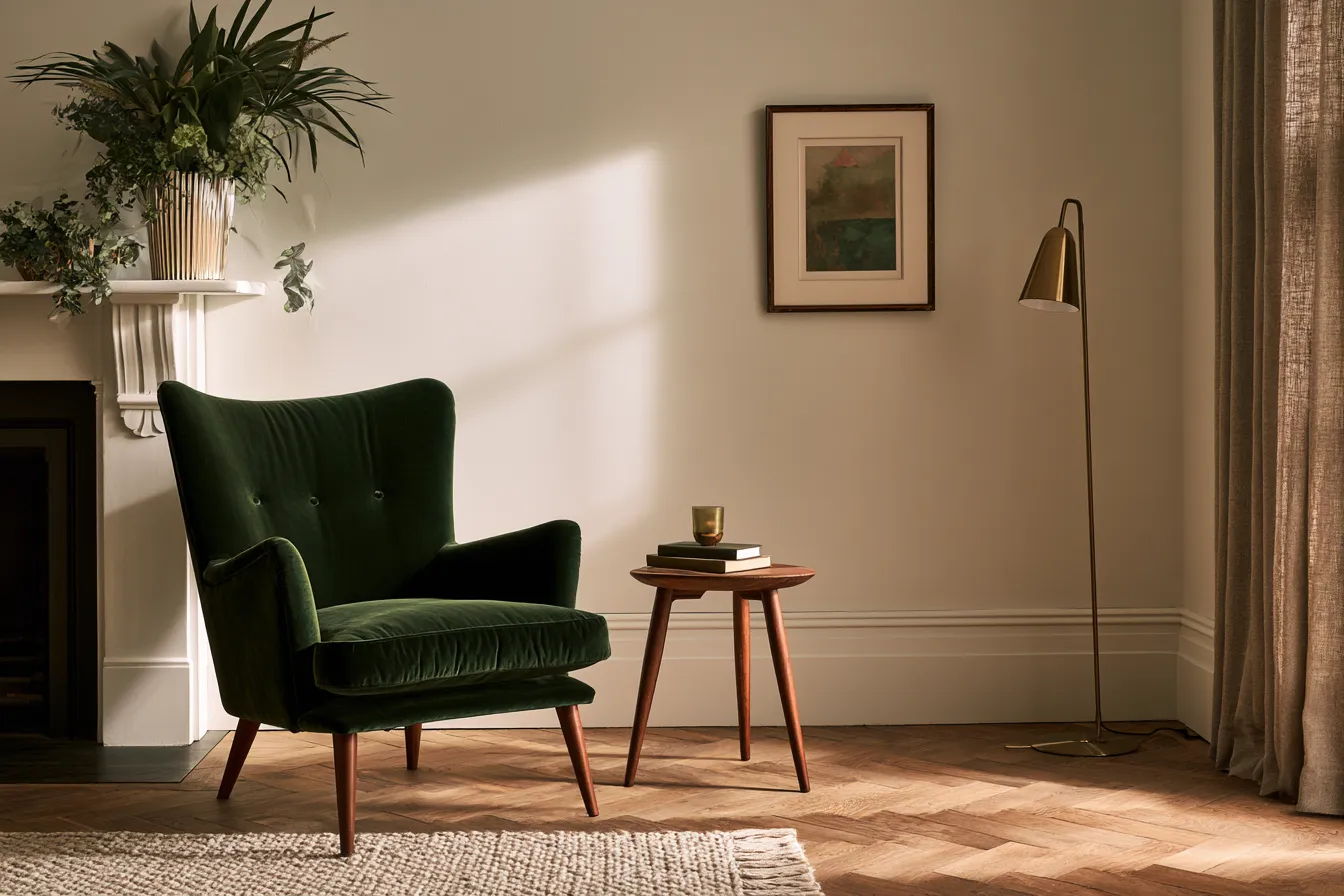
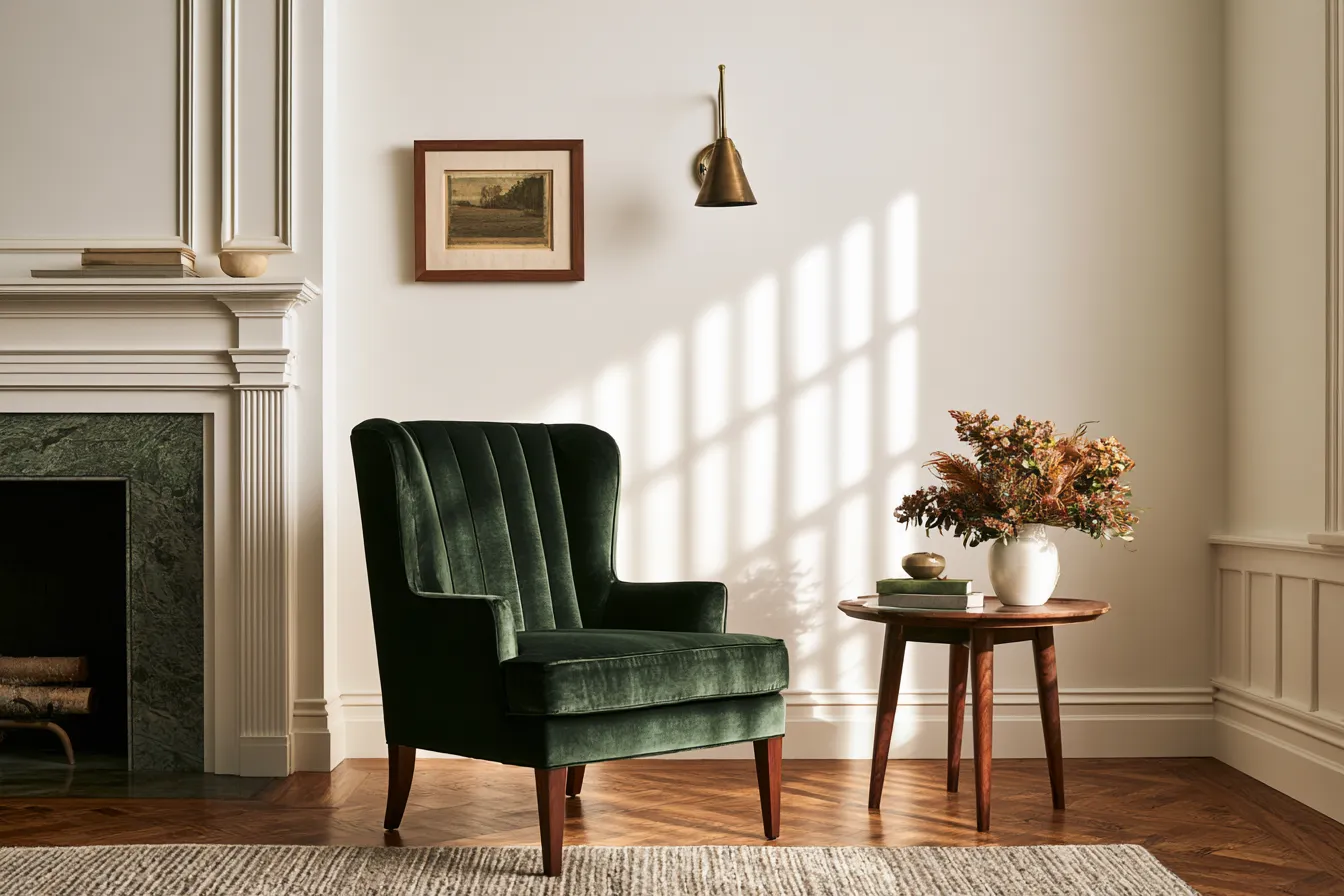
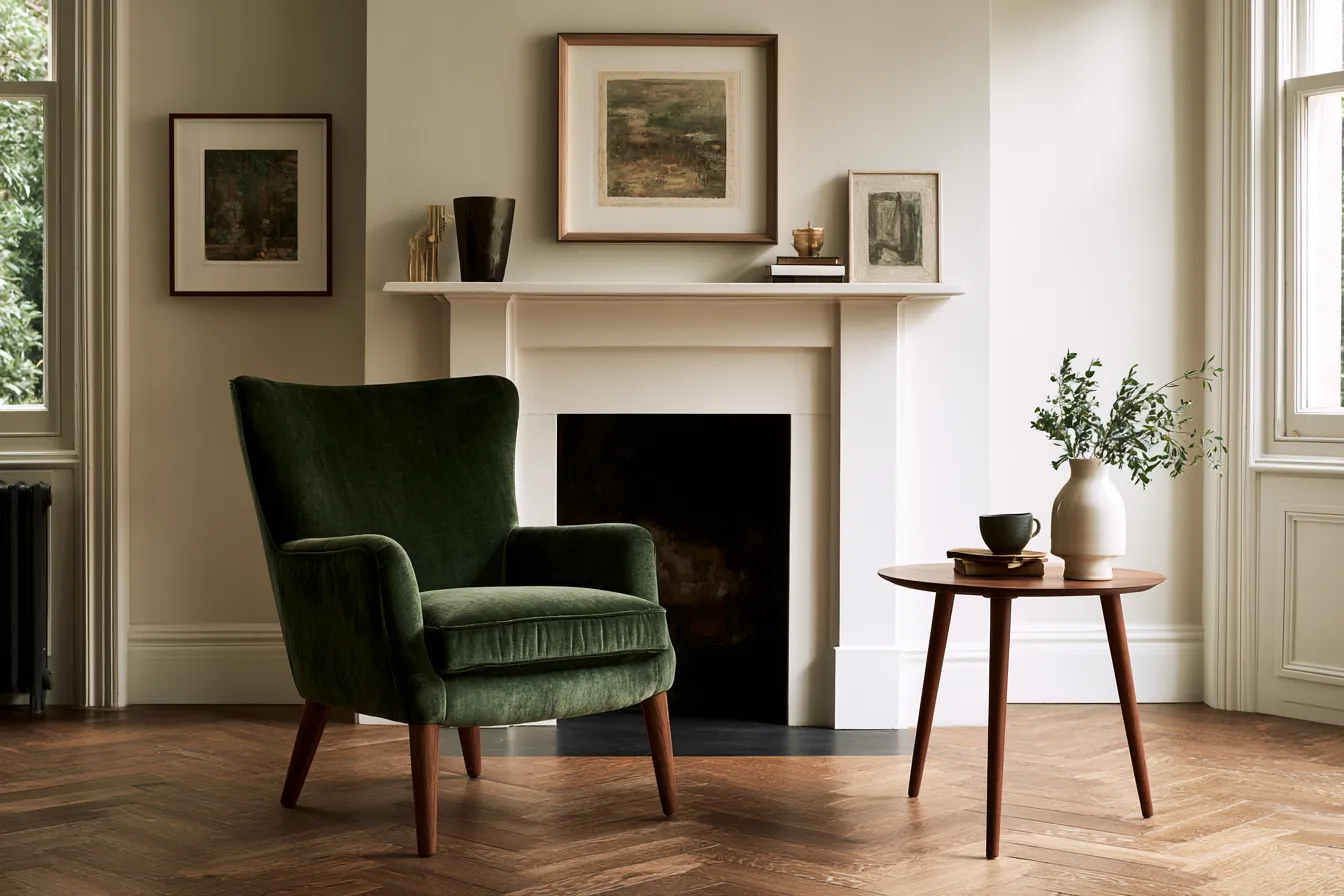
The wingback remains one of the most reliable accent chair ideas for a living room with traditional or transitional bones. The high back and flanking wings give the chair a strong silhouette that works well beside a fireplace or at the end of a sofa. Updated in a velvet or a bold pattern — deep merlot, forest green, a graphic check — the wingback reads as classic without being stiff. Avoid placing it directly facing the television; the tall back breaks sightlines and the chair’s occupant ends up craning.
3. The Slipper Chair
Slipper chairs — armless, low-profiled, with legs set directly at the base — are the accent chair ideas most interior designers reach for when the living room already has a lot going on. Their slim footprint and visual lightness (especially on tapered wooden legs) allow them to occupy a corner, a window bay, or the end of a coffee table zone without adding visual weight. In a living room with a busy sofa pattern, a slipper chair in a clean linen or a flat weave restores calm.
4. The Club Chair
Deep-seated, wide-armed, and invariably comfortable — the club chair is for living rooms where the accent piece needs to pull double duty as a proper seat. At 32–36 inches wide, it is not a small-space solution, but in a room of 14 × 16 ft or larger it anchors a seating group with authority. Leather club chairs are a design staple for good reason: they age well, they contrast naturally with softer upholstery, and they introduce a material that reads masculine without excluding anyone from the room. For a fresh take, try a club chair in a deep hunter green or a warm cognac.
5. The Sculptural or Statement Chair
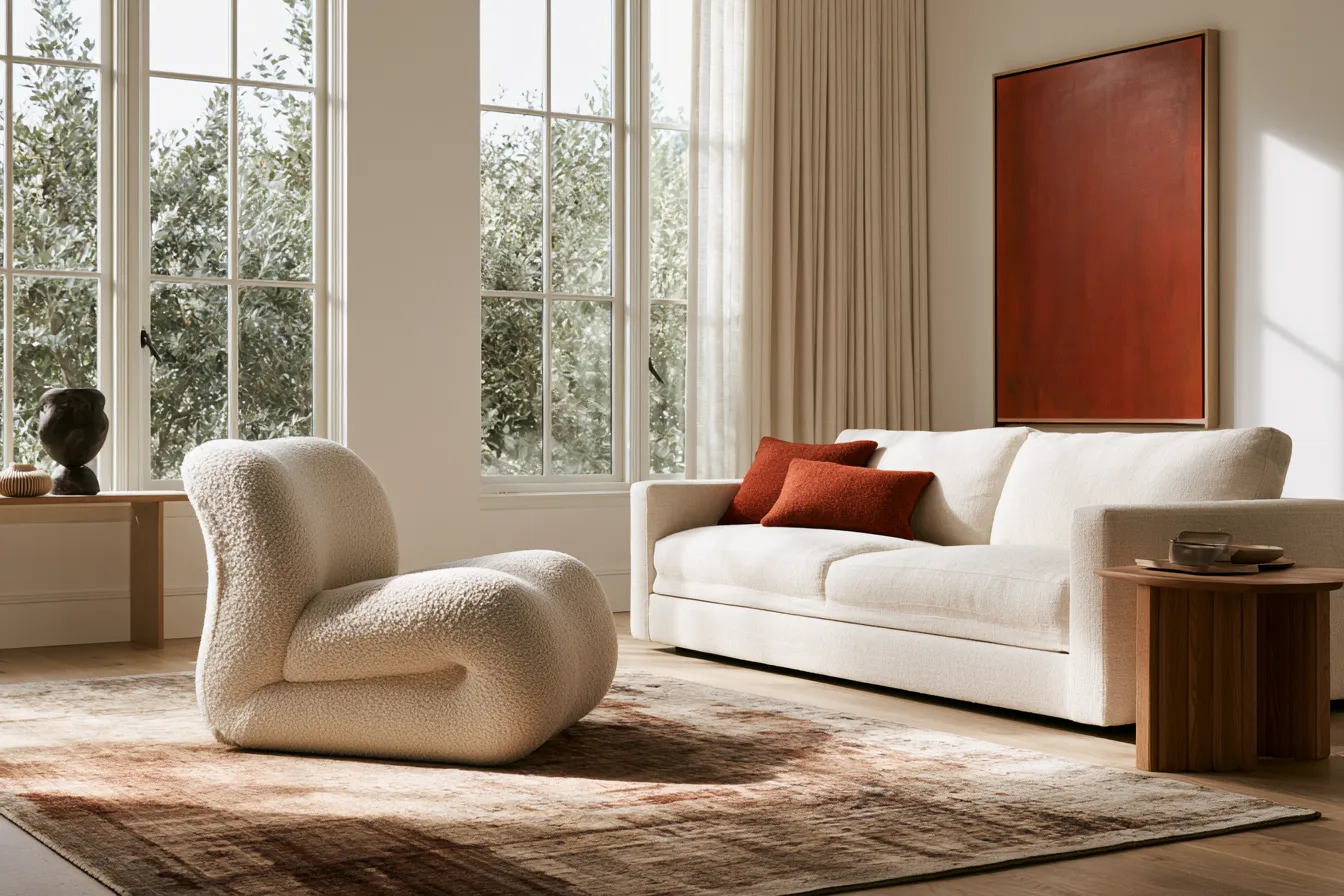
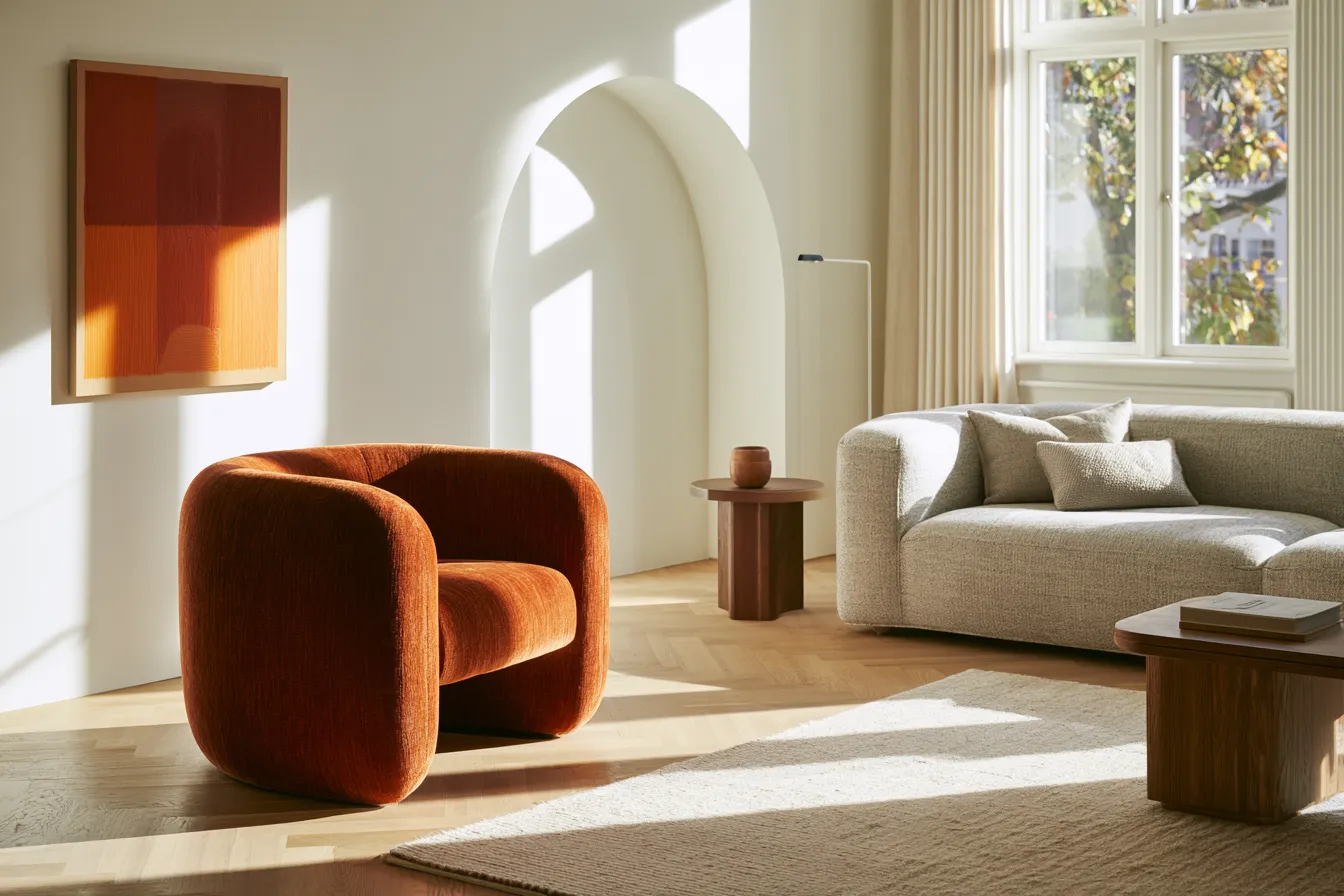
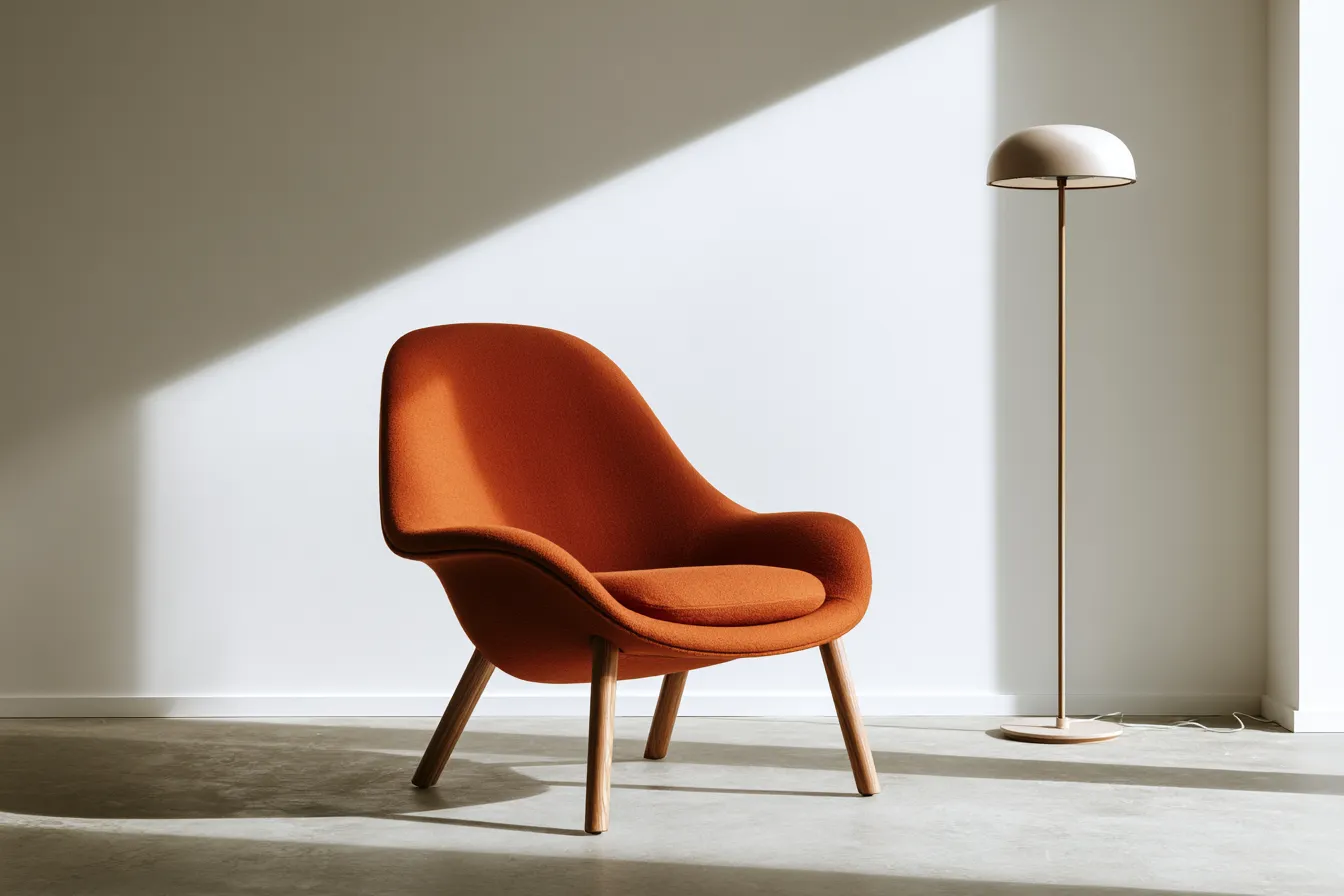
The category of sculptural chairs — Egg chairs, tulip-inspired shapes, curved forms with organic silhouettes — has grown significantly since 2022 as the biophilic and organic modern movements pushed designers toward softer geometries. These are the accent chair ideas for living rooms where the chair is intended to be a talking point first and a seat second. They work best when the rest of the room is restrained: a clean sofa in a solid, the floor bare or covered with a flat weave, walls in a single tone. Let the chair do the work.
For more on how organic forms are reshaping modern interiors, see our deep dive into how curved furniture is displacing the mid-century angular look.
6. The Recliner Reimagined
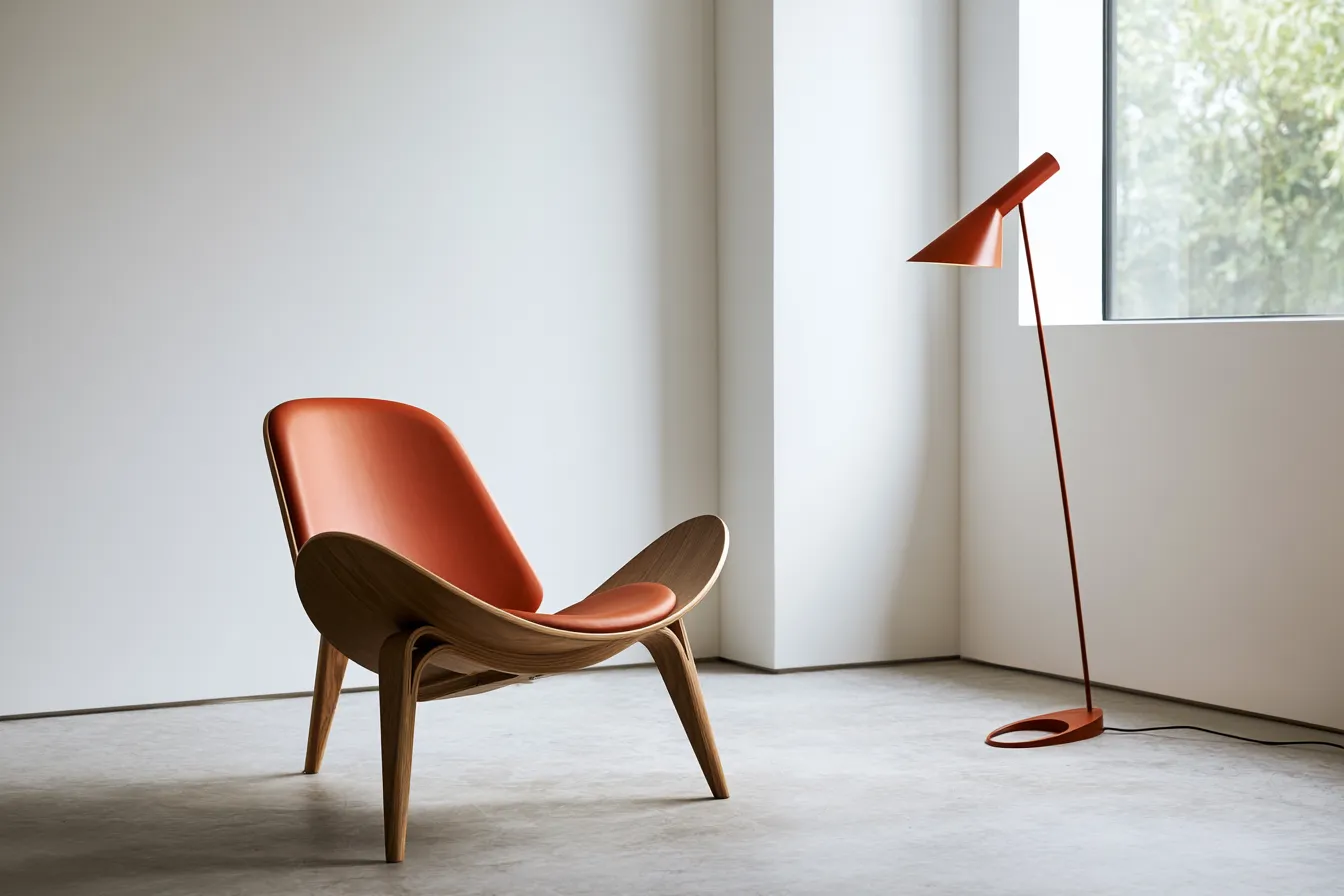
The word “recliner” has historically been incompatible with “accent chair ideas for a stylish living room,” but that has changed. Contemporary recliners — particularly those from Scandinavian and Japanese manufacturers — now deliver full recline functionality in a low-profile, visually light body. Look for slim-arm designs with exposed wooden frames and clean upholstery. The key is choosing a form that does not look like a recliner when upright: the function becomes a pleasant surprise rather than the room’s dominant visual.
Accent Chair Fabric Guide: What to Choose and Why
The fabric determines whether your accent chair idea survives contact with real life. A velvet barrel chair is a different object in a room with two children and a dog than it is in a studio used primarily for hosting dinner parties. The following table maps fabric types to their practical and visual properties so you can match material to life, not just to mood board.
| Fabric | Durability (Martindale) | Best Living Room Context | Avoid If |
|---|---|---|---|
| Velvet | 25,000–40,000 rubs | Adult-primary rooms, low direct sunlight | Pets with claws, west-facing windows |
| Boucle | 15,000–25,000 rubs | Organic modern, Japandi, Scandi rooms | Heavy daily use, pets that shed |
| Linen blend | 25,000–35,000 rubs | Neutral palettes, warm natural rooms | Humid climates (creases and fades) |
| Performance fabric | 50,000–100,000 rubs | Family rooms, pets, children | Rooms requiring a luxury textile feel |
| Leather (full-grain) | Effectively unlimited | Industrial, mid-century, eclectic rooms | Very hot rooms, rooms with high UV |
| Woven cotton | 20,000–30,000 rubs | Coastal, boho, transitional rooms | White or pale versions in high-traffic spots |
Martindale rub counts above 25,000 are generally considered suitable for domestic heavy use. Anything above 50,000 is contract-grade and essentially indestructible in a home context. If durability is the primary concern, performance fabrics — often woven from solution-dyed acrylic or recycled polyester — now come in textures that are difficult to distinguish from natural fibres at a glance.
Colour Pairing: Accent Chair Ideas That Work Against Every Sofa
The most common mistake in living room accent chair ideas is matching too closely. The chair should contrast — in hue, value, or temperature — with the sofa. The goal is not to clash; it is to distinguish. Here are the pairings that reliably work and why each succeeds:
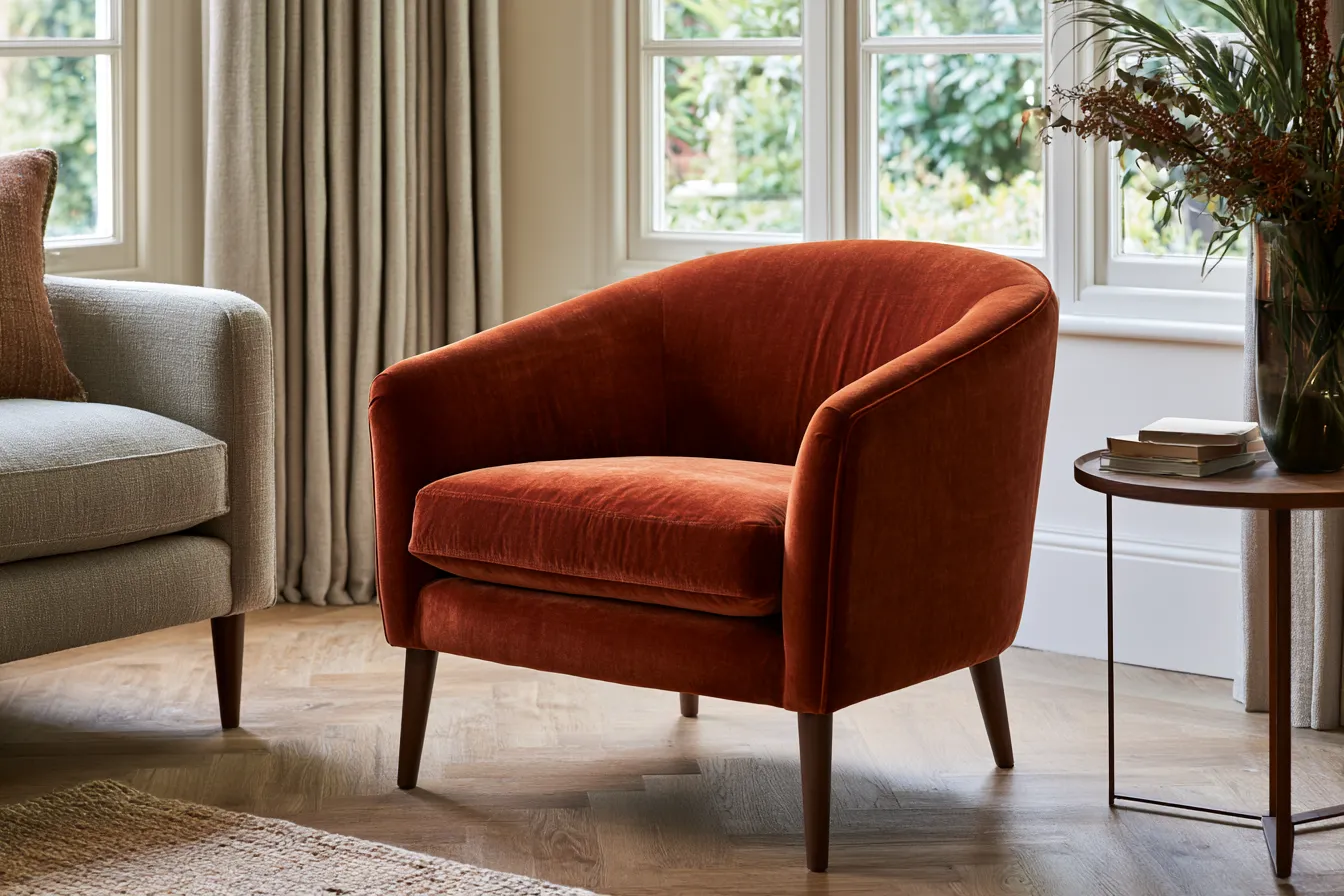
- Grey sofa + terracotta chair: The warm earthiness of terracotta sits directly opposite the cool neutrality of grey on the colour temperature axis. This pairing has been dominant since 2022 and shows no sign of fatigue — terracotta reads differently in velvet (rich and saturated) versus linen (dry and Provençal).
- Cream or white sofa + deep forest green chair: A forest green accent chair introduces depth and nature without the aggression of a primary colour. This works especially well in rooms with natural wood elements. See our guide on warm beige and sage green living room ideas for room-wide colour context.
- Navy sofa + mustard or ochre chair: The complementary dynamic between blue-navy and warm yellow is one of the strongest in the colour wheel. A mustard velvet accent chair against a navy sofa delivers contrast that is vivid without being jarring.
- Beige sofa + cobalt or sapphire chair: The saturated blue against a warm beige background is a combination that designers have used for decades in Mediterranean and transitional rooms. The cooler chair stops the room from reading as overly warm.
- Charcoal sofa + blush or warm pink chair: This pairing softens a room dominated by dark upholstery and works particularly well in living rooms with lower ceilings where the dark sofa can feel oppressive without a visual counterpoint.
- Brown leather sofa + cognac or forest green chair: Two warm materials in different tonal registers — the green introduces colour without abandoning the warmth of the leather. A popular pairing in eclectic and mid-century rooms.
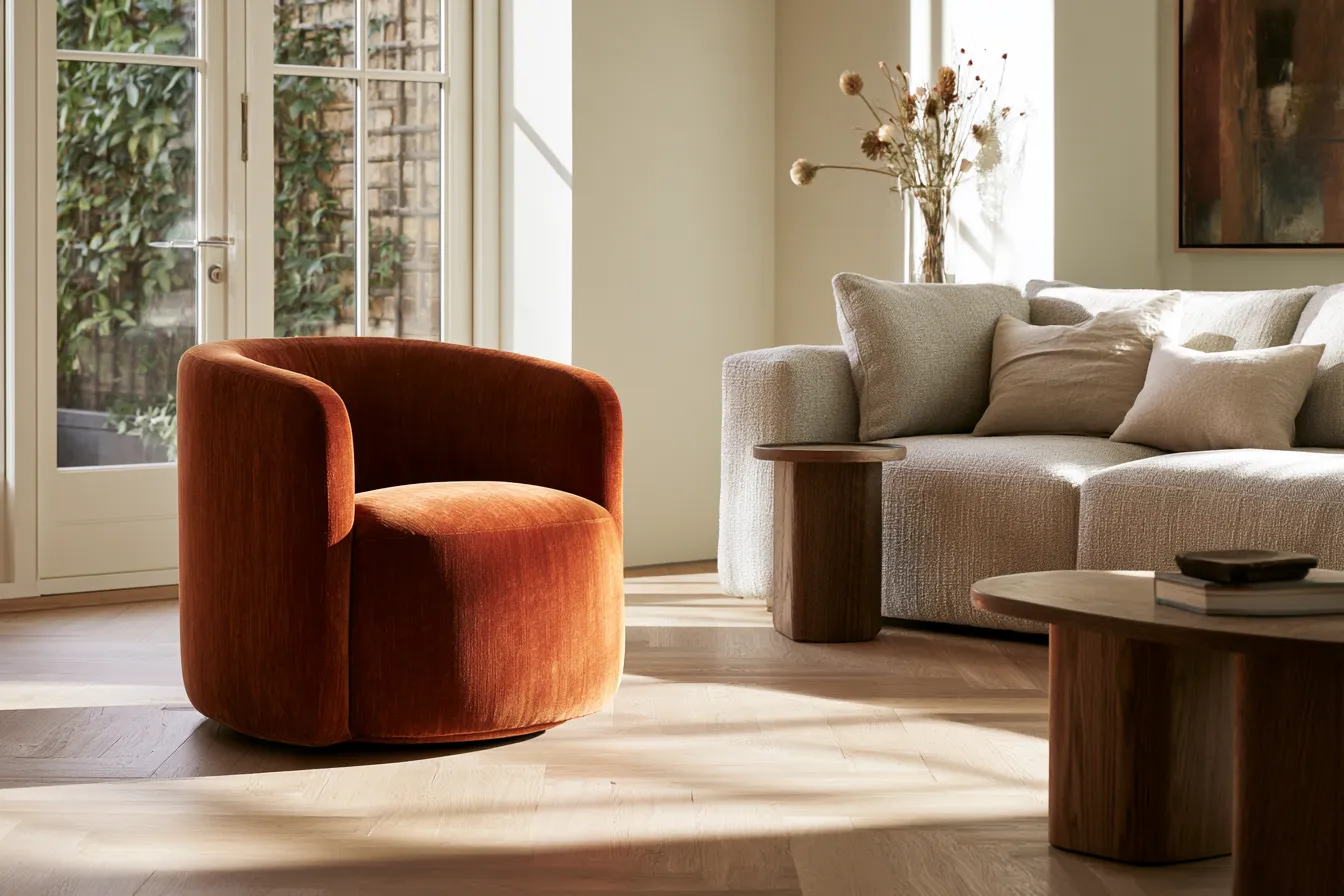
Placement Rules for Accent Chairs in a Living Room
Where a chair sits matters as much as what it looks like. Misplaced accent chairs create rooms that feel either cluttered or lonely depending on the error. These are the placement principles that interior designers apply consistently:
The Conversation Zone Rule
Any seating piece placed more than 8 feet from the sofa will feel disconnected from conversation. At 10 feet or more, the chair essentially forms its own seating island. This is not inherently wrong — in a large open-plan living room a reading chair set apart intentionally can anchor a secondary zone — but in a standard living room, keep the accent chair within 7–8 feet of the sofa’s nearest seat. The room will read as cohesive rather than overfurnished.
The 45-Degree Angle
Placing an accent chair at a 45-degree angle to the sofa rather than parallel or perpendicular creates a seating arrangement that invites conversation from multiple directions. This configuration is a staple in hospitality design and works equally well in residential rooms of 12 × 14 ft or larger. The angled placement also allows the chair’s profile — its most design-forward view — to be seen from the room’s primary entrance point.
Pair Two, Skip One
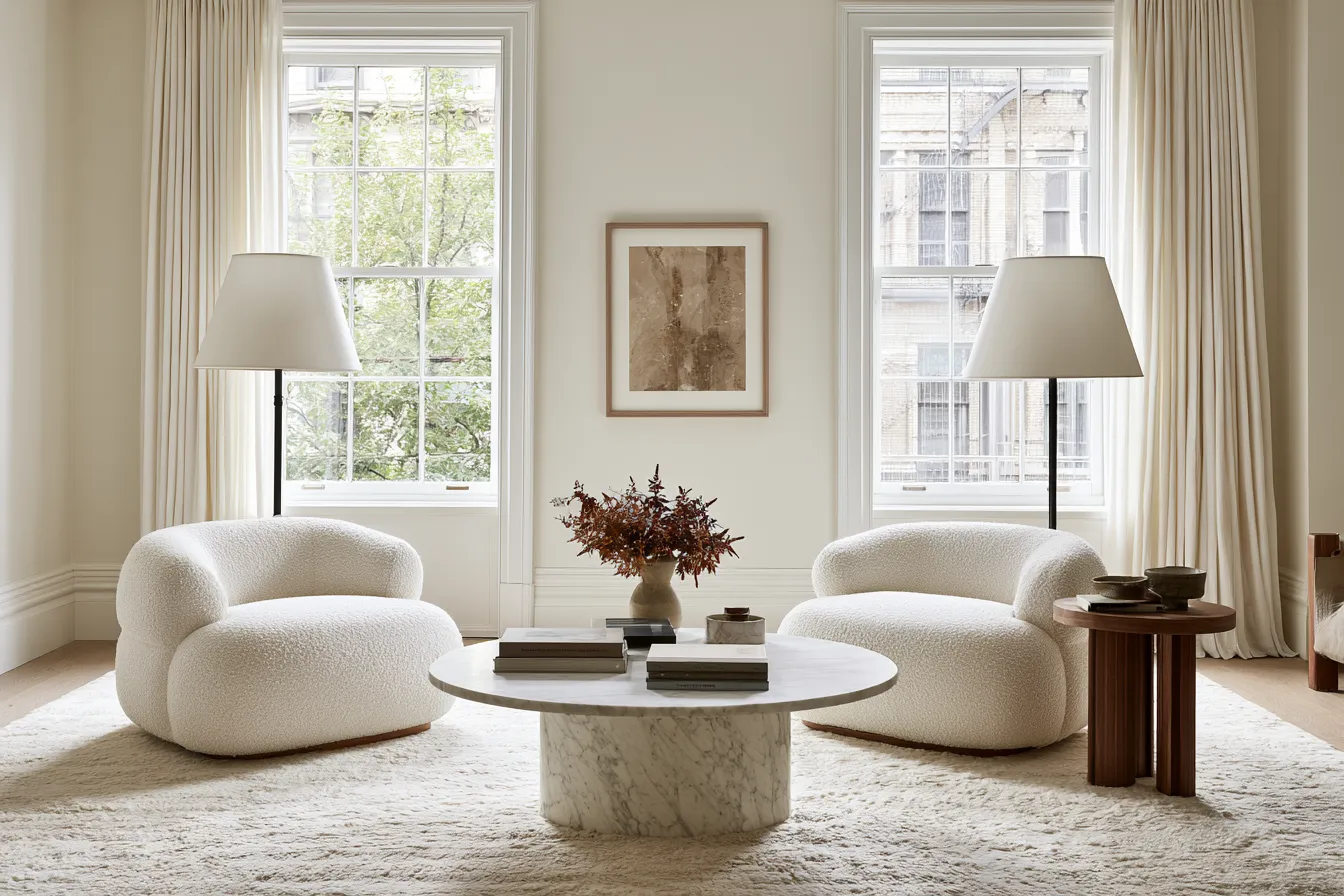
A single accent chair is a common choice, but two matching accent chairs flanking a sofa or a coffee table is one of the most classic accent chair ideas for larger living rooms. The symmetry creates a formal, deliberate atmosphere that a single chair rarely achieves. In a room of 16 × 18 ft or more, two chairs are often proportionally necessary to balance the visual weight of a large three-seater sofa. Keep the chairs identical in frame but allow variation in cushion or throw for a curated-not-matched look.
For inspiration on how to balance multiple seating elements, our article on unique sofa arrangements for petite living rooms explores the same principles in a tighter footprint.
The Corner Activation
Dead corners are one of the most common complaints in living room design. An accent chair — particularly a compact barrel or slipper style — is one of the most effective remedies. Place the chair with its back 4–6 inches from the corner walls and angle it slightly inward toward the room. Add a floor lamp set at 60–65 inches (the standard reading height) positioned just behind and to the side of the chair, and a small table at seat height. This creates a complete vignette that activates the corner without requiring structural change.
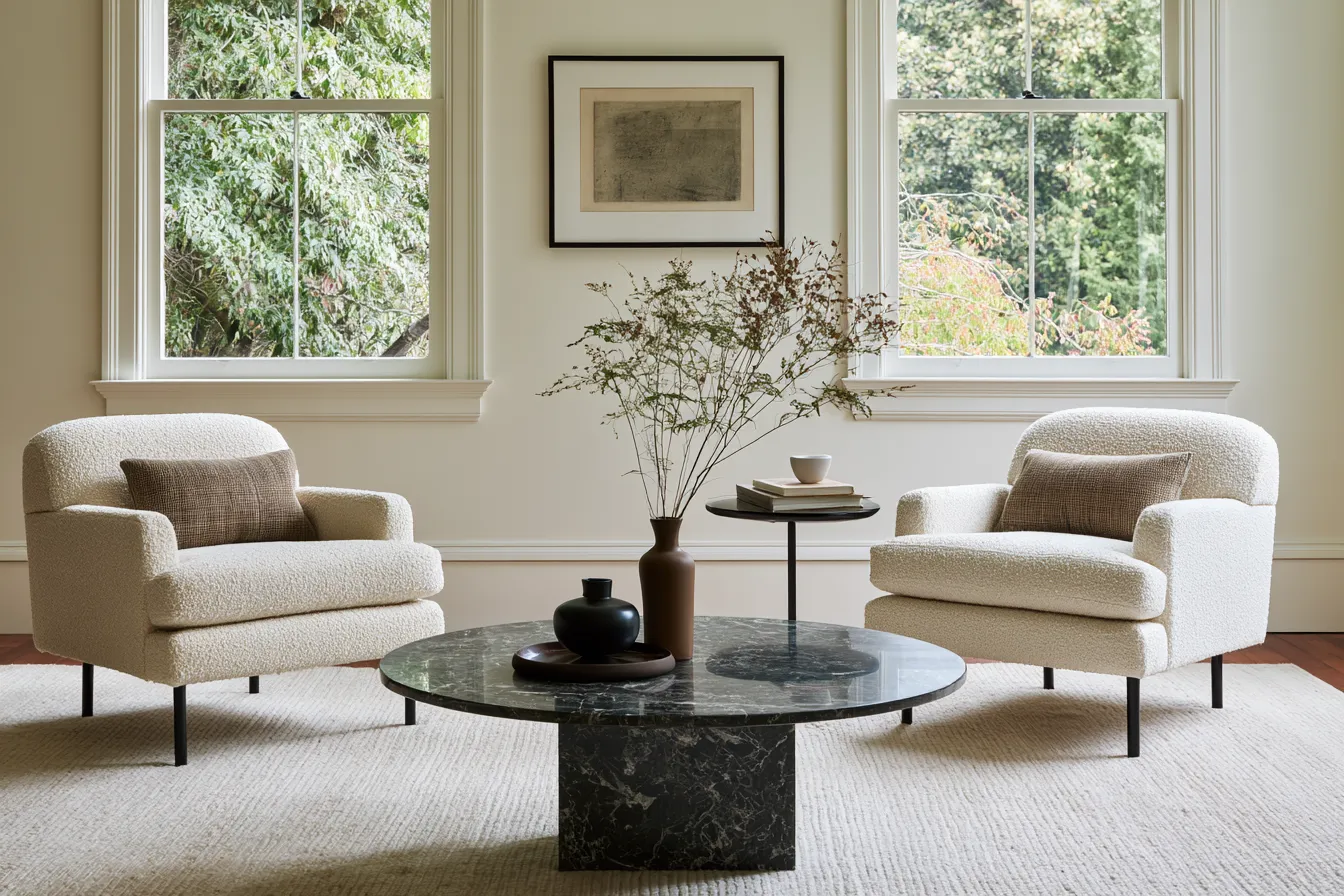
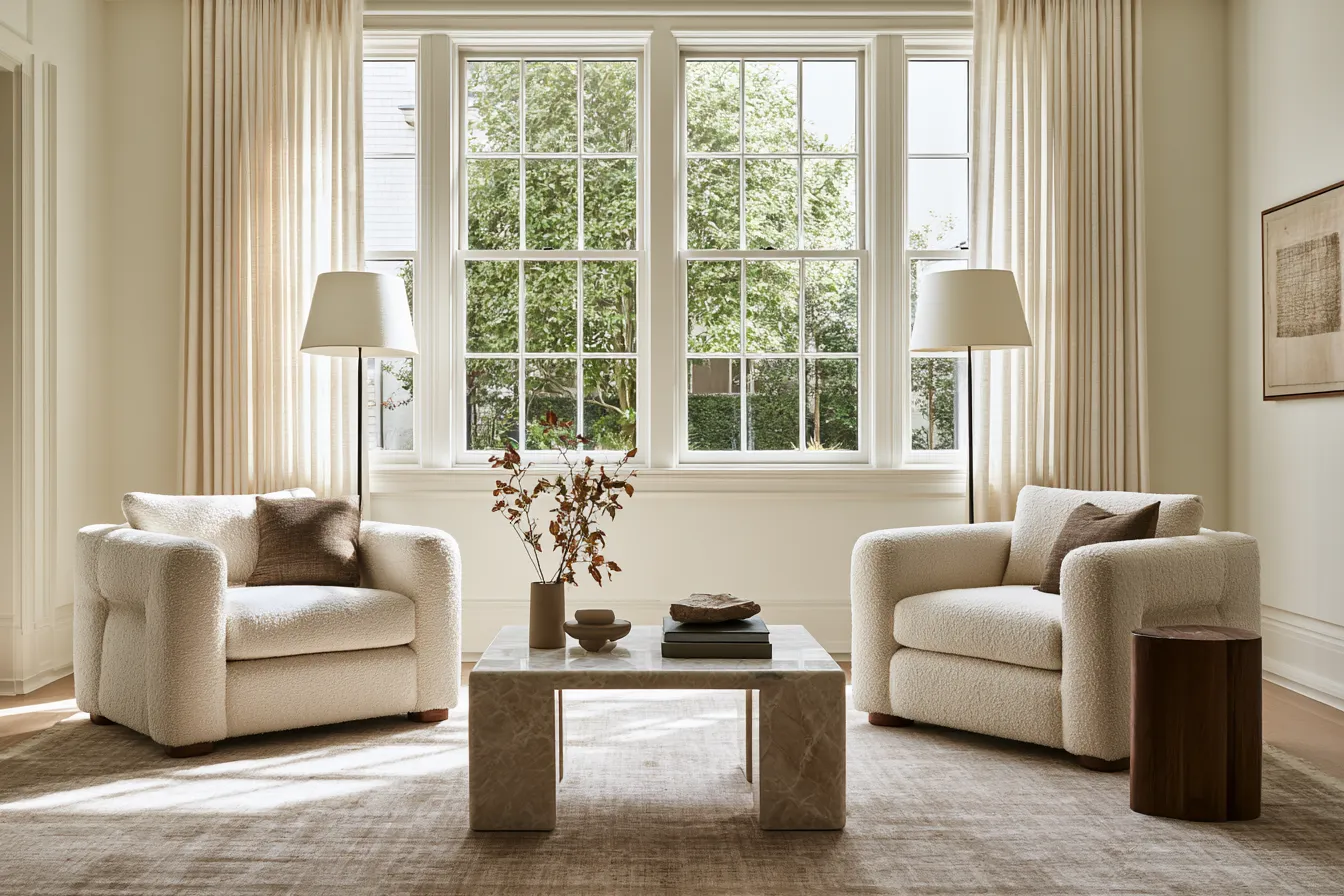
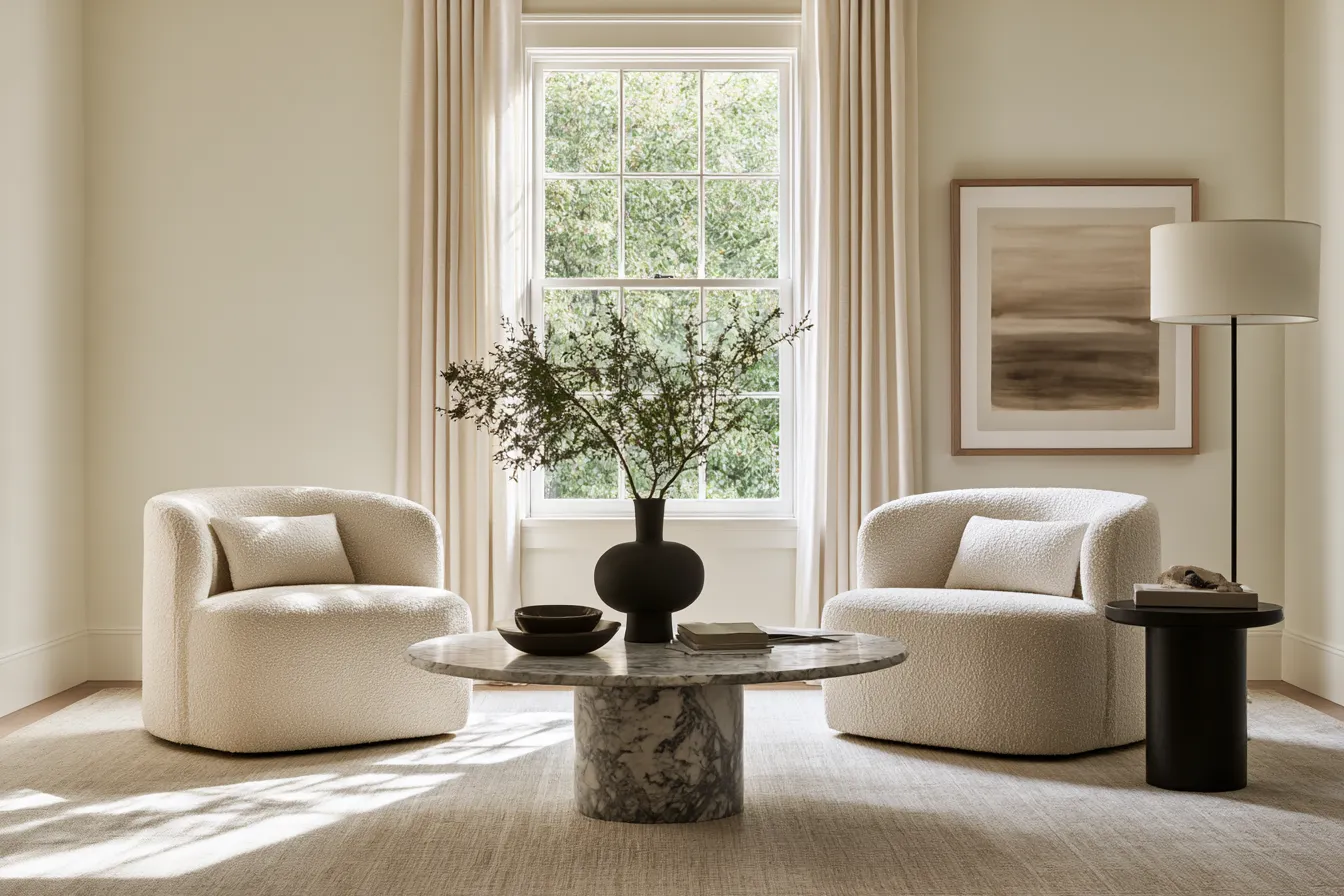
Scale and Proportion: Getting the Size Right
An accent chair that is too small for the room looks like doll furniture. One that is too large competes with the sofa for dominance and makes the room feel crowded. The general rule is that the accent chair should occupy roughly 60–75% of the visual mass of a single sofa seat — present enough to read clearly, not large enough to challenge the sofa’s authority as the primary seating piece.
In practical terms: if your sofa is a large three-seater at 90 inches, a generous club chair at 34 inches wide is appropriate. If your sofa is a compact two-seater at 60 inches, a barrel or slipper chair at 28–30 inches will maintain proportion. Seat height is equally important: a chair with a seat height of 18–19 inches will feel cohesive alongside a sofa at the same height; a seat height of 14–15 inches (common in low-profile lounge chairs) will create a visual disconnect that reads as an error rather than a design choice unless the sofa is similarly low.
Accent Chair Ideas for Living Rooms by Style
Scandinavian and Japandi Living Rooms
In Scandinavian and Japandi-influenced living rooms, the accent chair should earn its place through material quality rather than colour. Boucle, washed linen, or a natural wool weave in off-white, warm oat, or pale sage — paired with a frame in light ash or birch — delivers the textural interest these rooms depend on without breaking the palette. Avoid high-contrast colours; the accent here is tactile, not chromatic.
Mid-Century Modern Living Rooms
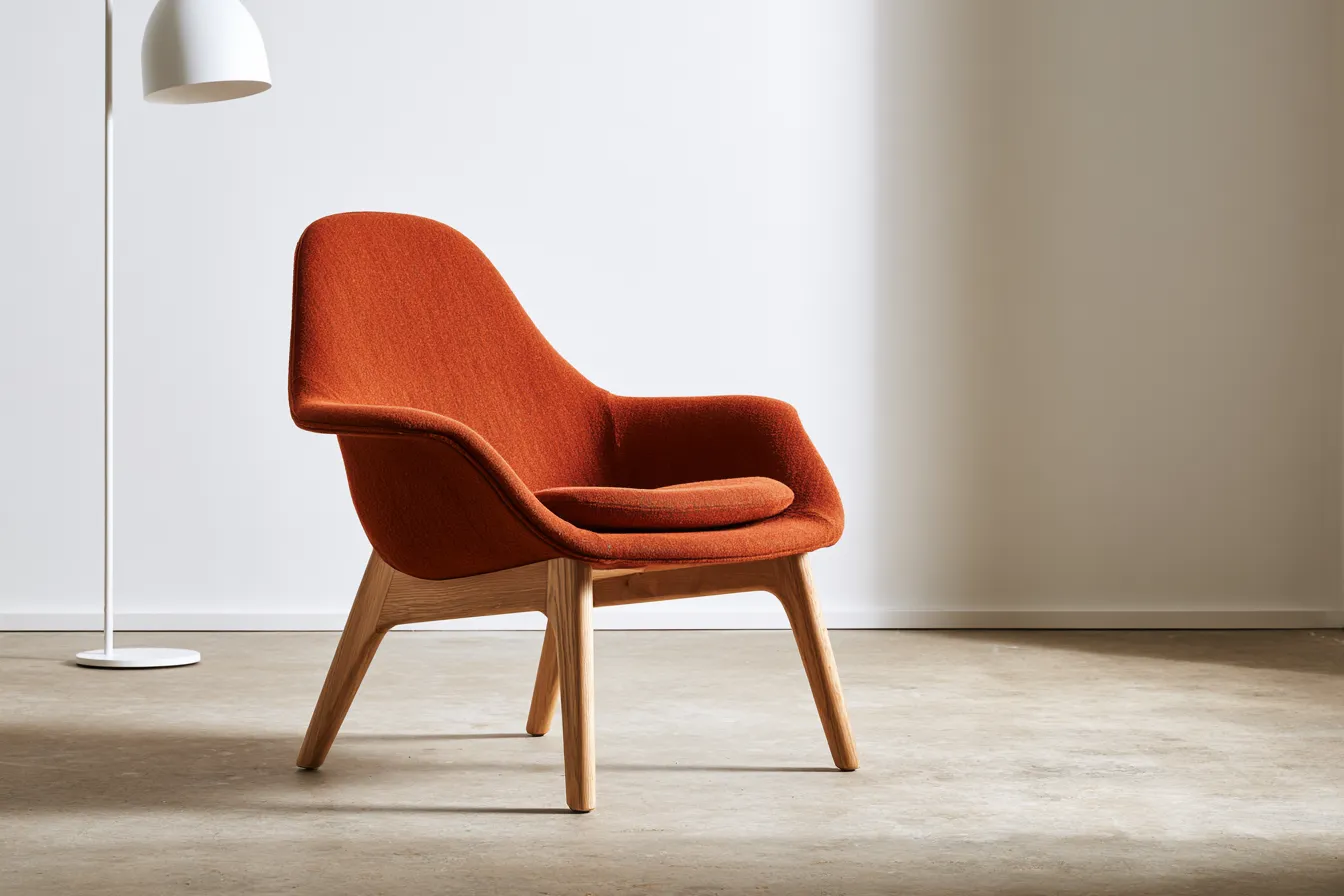
Mid-century modern rooms are where the iconic forms — the Egg, the Womb, the Barcelona — find their natural home, but they are not the only options. A simple T-cushion armchair on tapered walnut legs in a mustard, burnt orange, or avocado fabric will deliver the period reference at a fraction of the cost while allowing the room’s other mid-century elements (the credenza, the geometric rug) to share the visual work. For a modern update to the style, Neo Deco living room principles offer a way to pull mid-century geometry into a more current context.
Maximalist and Eclectic Living Rooms
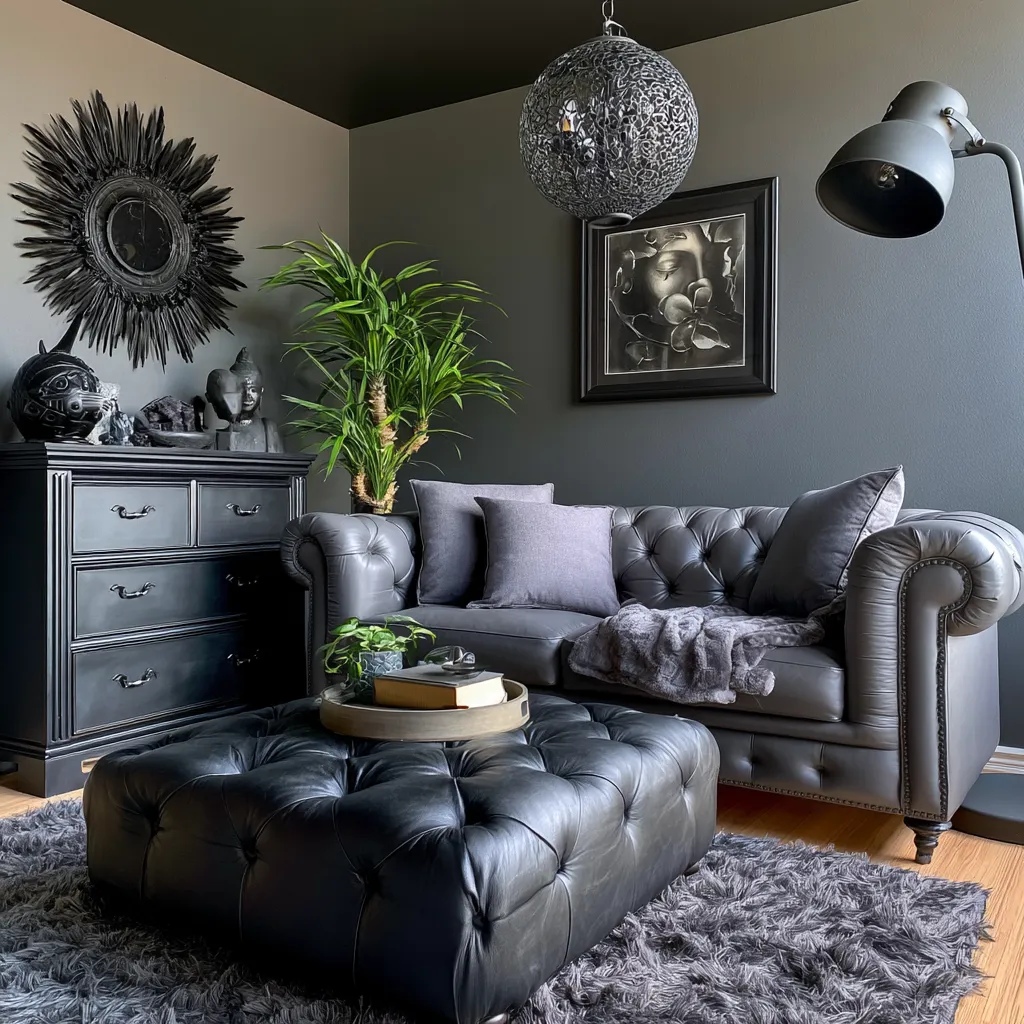
In maximalist rooms, the accent chair’s job description changes. Rather than providing contrast to a restrained sofa, it needs to earn its place within an already-busy composition. The most effective accent chair ideas for maximalist living rooms involve either a very bold singular piece — a sculptural form in a print that ties together the room’s colour story — or a deliberately quieter chair that provides visual rest within the larger composition. One approach that consistently works: a deep-buttoned club chair in a plain dark leather or velvet that anchors the eye while the pattern-heavy elements around it do the decorative work.
Minimalist Living Rooms
Minimalist living rooms are where the accent chair can do the most work with the least company. When a room operates in a narrow palette with limited decorative objects, a single beautifully chosen accent chair becomes the primary visual event. This is where spending more on the chair is genuinely justified — the room depends on it. A sculptural boucle armchair on a raw oak base, placed in the room’s best light, can carry an entire minimalist composition on its own. Pair with a single floor lamp and a thin-legged side table; resist the urge to add anything else.
What to Put Next to an Accent Chair: The Supporting Cast
An accent chair without context is a chair that looks like it wandered in. The pieces immediately surrounding the chair are what transform it from furniture into a design moment. Three elements reliably complete the picture:
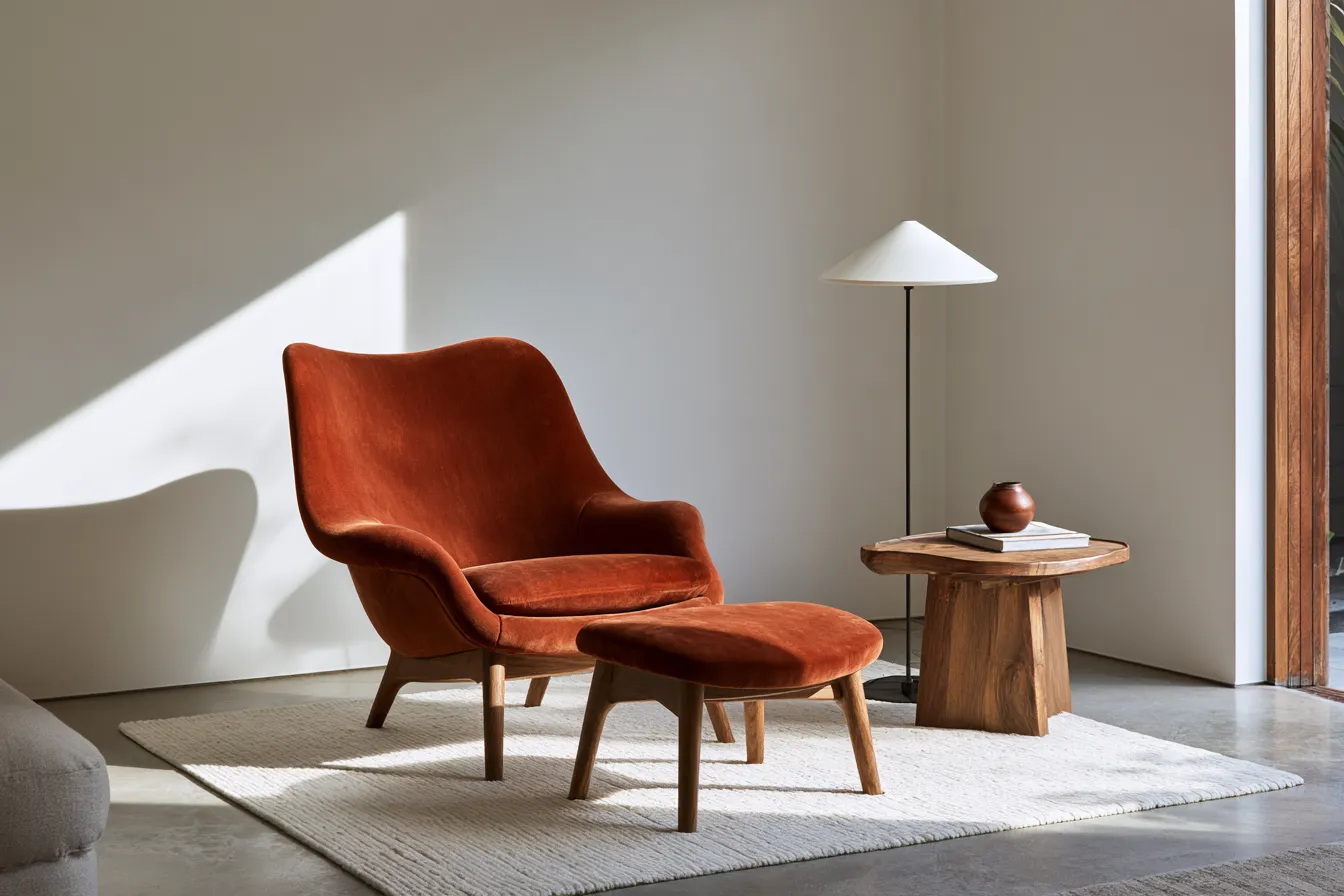
- Side table: Seat height is the standard — 18–20 inches — which puts the table surface just within reach without requiring an awkward reach. A C-shaped side table that slides under the chair arm is the most practical solution for smaller rooms since it does not need floor space of its own.
- Floor lamp: An arc floor lamp positioned with its head 60–65 inches from the floor and its base 18–24 inches behind and to the side of the chair creates a reading-ready pool of light without requiring a ceiling fixture directly above. This also gives the chair vignette a vertical element that reads well from across the room.
- Throw: A throw draped over the arm rather than the seat back is the editorial styling approach that reads as casual-intentional rather than deliberately arranged. Choose a throw material that contrasts with the chair’s fabric — a chunky knit over velvet, a flat linen weave over boucle — and pick up one colour from the room’s secondary palette.
The interplay between all the layers of a living room — rugs, chairs, lighting, textiles — is explored in detail in our guide to layered rugs and how they create depth without renovation, which covers the foundational approach to building a composed interior from the floor up.
Accent Chair Ideas for Small Living Rooms
Small living rooms — under 120 sq ft — require accent chair ideas that prioritise visual lightness alongside character. The specific strategies that work:
- Exposed legs always: A chair on visible legs reads as lighter than an equivalent fully upholstered chair. The eye can see floor under and through the piece, which preserves the sense of open space. Avoid skirted or fully upholstered bases in rooms under 12 × 10 ft.
- Compact footprint, generous scale: A chair can be compact in footprint (28–30 inches wide) while still having a tall back and a strong profile — the barrel and slipper chairs both achieve this. Avoid wide, low lounge chairs that consume floor area without adding vertical interest.
- Match to wall, contrast on cushion: In a very small room, upholstering the accent chair in a colour close to the wall — a cream chair against cream walls — reduces the visual weight of the chair while allowing a contrasting cushion or throw to deliver the chromatic accent. The chair reads as part of the architecture rather than another object competing for attention.
- One is enough: Resist the urge to add a second accent chair in a small living room. One well-chosen piece creates the sense of a curated, intentional room. Two chairs in a small space create the sense of a waiting room.
Budget Brackets: What to Expect at Every Price Point
Accent chair pricing spans an enormous range and the correlation between price and design quality is real but not linear. Understanding what each budget bracket delivers helps set expectations before the search begins.
| Budget Range | What You Get | Limitations | Best Approach |
|---|---|---|---|
| Under £200 / $250 | Mass-market shapes, polyester or low-grade fabric, pine frame | Durability under 3–4 years heavy use; fabric looks tired quickly | Use for low-traffic statement corners; replace when needed |
| £200–£600 / $250–$750 | Solid hardwood frame, better fabric grades, more silhouette options | Limited bespoke options; standard dimensions only | Best value for most living rooms; where most of the quality curve happens |
| £600–£1,500 / $750–$1,900 | Kiln-dried hardwood, genuine or high-grade performance fabrics, design-led silhouettes | Long lead times from independent makers | For rooms where the chair is the primary design statement |
| £1,500+ / $1,900+ | Bespoke dimensions, designer fabrics, heirloom construction, iconic design pieces | Price does not always reflect proportional aesthetic improvement over the tier below | Reserve for statement pieces in investment rooms |
The most consistent advice from interior designers: spend more on the frame than on the fabric. A well-built frame in kiln-dried hardwood with a mortise-and-tenon joint structure will last decades and can be re-upholstered when the fabric ages. A beautifully upholstered chair on a softwood or engineered-board frame will typically begin to creak and flex within 3–5 years of regular use.
The Accent Chair as an Investment in the Room
The design logic that underlies every accent chair idea for a living room comes back to the same principle: contrast creates interest, and interest is what makes a room feel designed rather than assembled. A sofa provides the foundation. The accent chair provides the argument. When the two are chosen in relation to each other — not matching, not clashing, but consciously responding — the room stops being a collection of furniture and starts being a space with a point of view.
Choose the form that fits the room’s scale. Choose the fabric that fits your life. Choose the colour that responds to the sofa rather than repeating it. Place the chair where it can be seen from the room’s entrance. Add a lamp, a table, and a throw. That sequence of decisions, made deliberately, is what turns an accent chair idea into a room that people notice the moment they walk in.