A minimalist dining room works when every piece earns its floor space: one table, matching chairs, a single strong light and very little else. The style does work in small apartments and large houses alike, as long as the layout respects two numbers furniture makers repeat everywhere. Leave at least 36 inches between the table edge and the nearest wall, and give each diner about 24 inches of table edge. Get those two right and almost any clean-lined furniture will look intentional.
Color decides the mood more than the furniture shape does. White reads open, black reads sharp, gray reads balanced and blue reads calm, and each one changes how much light the room returns. Budget is rarely the blocker, since standard dining tables in typical price ranges start around $150 for glass on a metal base and climb past $1,200 for solid wood. Choose the palette first, then the table material, then the light.
Quick Scan
- Leave 36 inches from table edge to wall, or 42–48 inches where people walk behind seated guests.
- Plan 24 inches of table edge per seat: a 72-inch table seats 6, a 96-inch table seats 8.
- True white paints sit at LRV 82–94; near-black and navy sit at 0–10, so they absorb most of the light.
- Hang the pendant 30–36 inches above the tabletop, not higher.
- Glass-and-metal tables cost about $150–$1,200; solid wood usually runs $2,000–$6,000.
- Gray sets hide wear better than white and feel lighter than black.
- One centerpiece beats three small objects on a clean tabletop.
White Furniture for a Bright Minimalist Dining Room
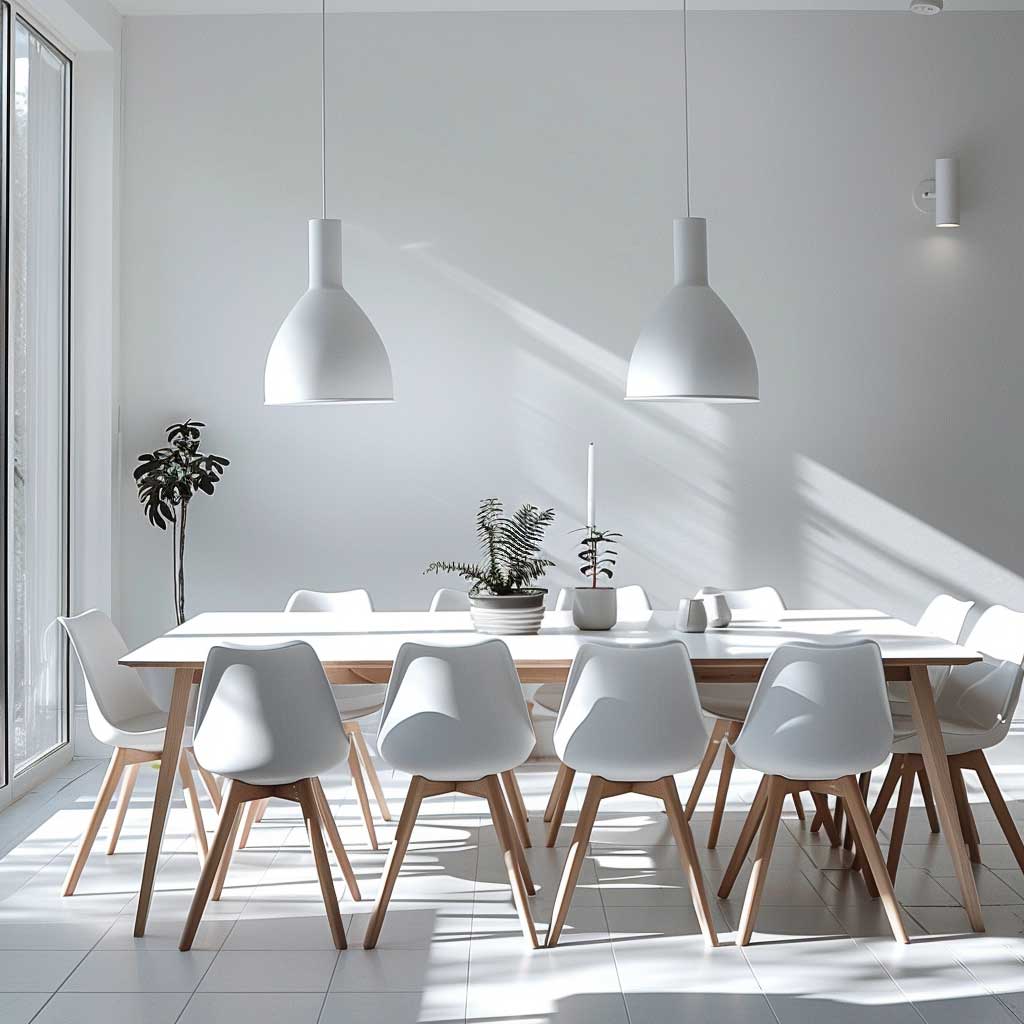
Minimalist dining room design in white starts with surfaces that bounce light instead of soaking it up. Wall paints sold as true whites sit between 82 and 94 on the light reflectance value (LRV) scale, while off-whites land around 70–80. That 10-point gap decides whether the room looks crisp or creamy once the sun goes down. Pick the wall white first and match the table to it, never the reverse.
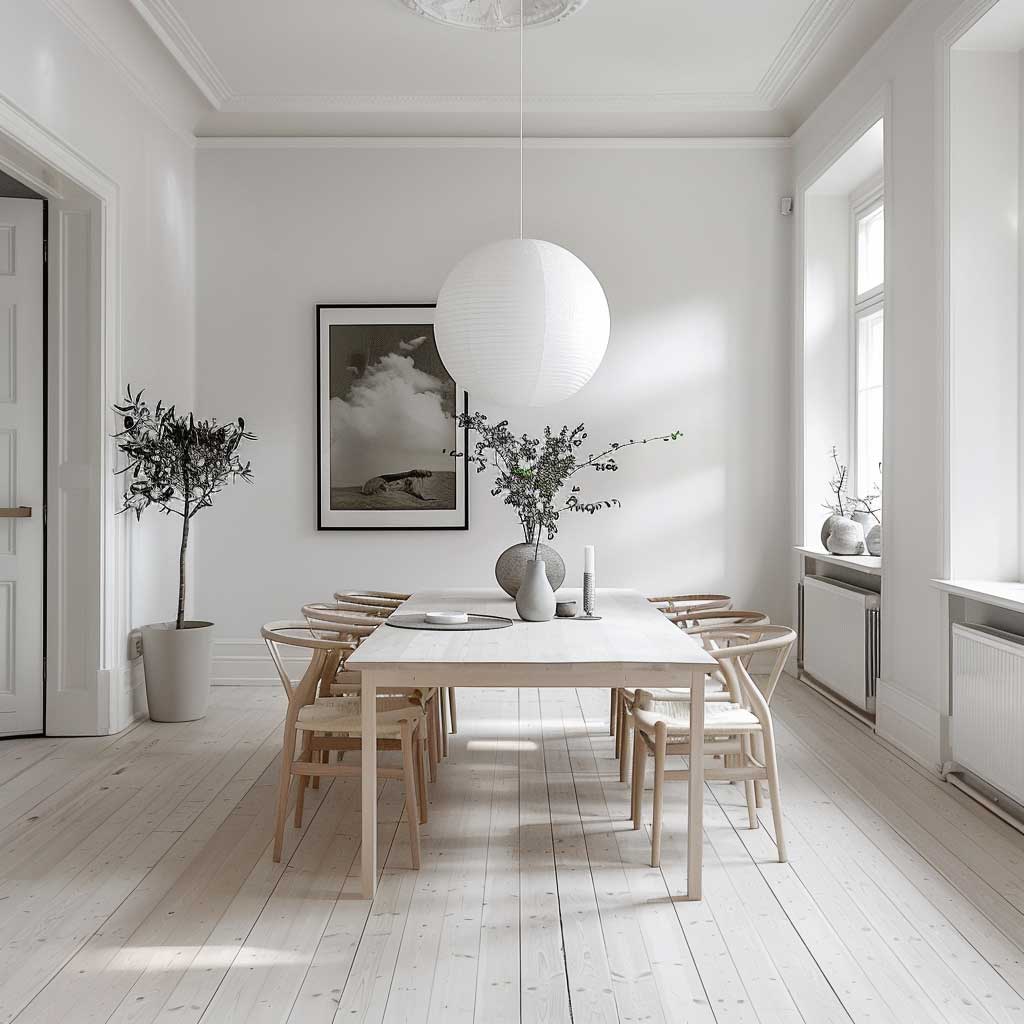
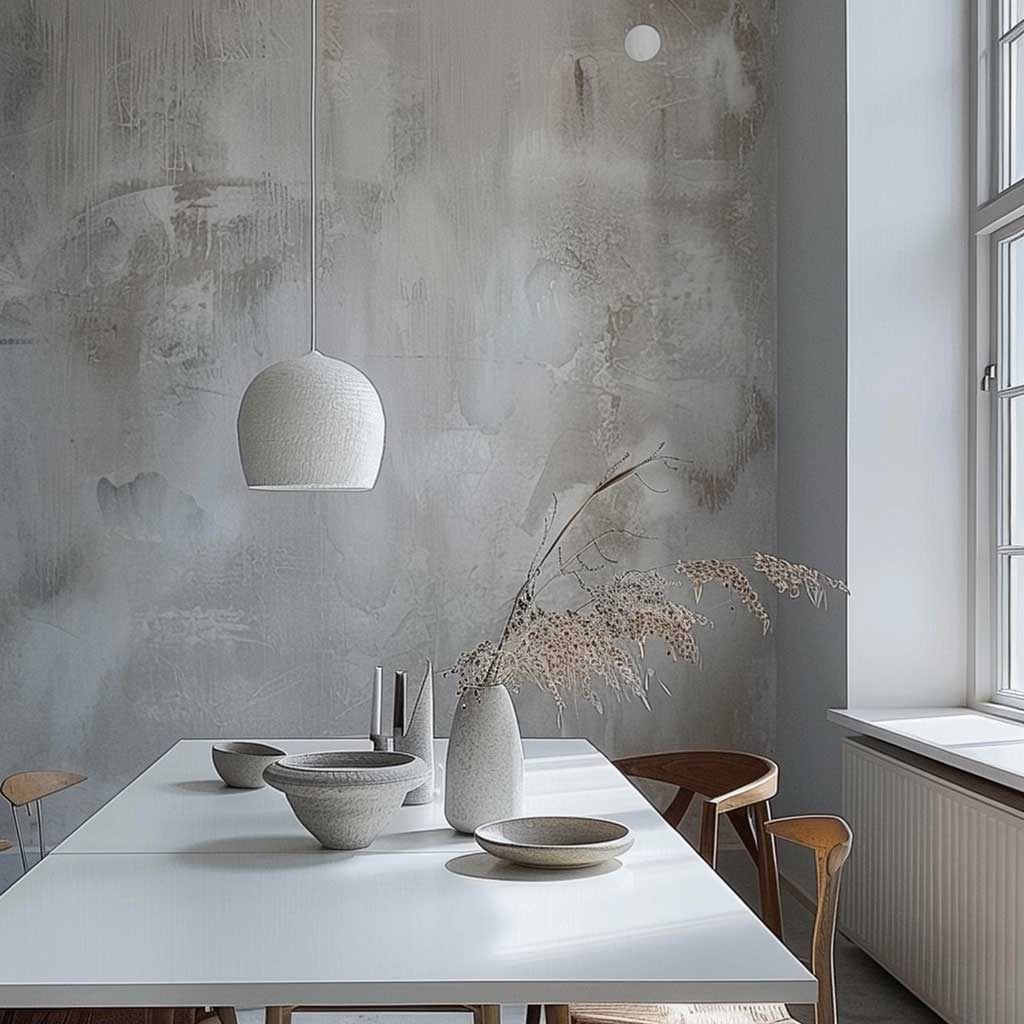
Which table suits an all-white room best? A matte lacquer or stone top keeps the surface flat and glare-free, and marble or stone tables typically cost $400–$1,500, against $150–$1,200 for tempered glass on a metal base. Glass feels lighter in a tight room, yet it shows fingerprints within a day of use. Choose stone or matte lacquer if the table serves daily family meals.
Treat white furniture like a blank page: one bold line reads clearly, ten lines turn into scribbles. Chairs with slim legs and plain seats in white or pale gray keep the outline quiet. Do not combine three different whites in one room, because a bright white chair beside an ivory table makes both look worn. Keep walls, table and chairs inside one white family.
Daylight does half the work in a pale scheme, so window coverings should stay thin and plain. Sheer linen or a flat roller blind lets light through without adding pattern, and the side-by-side costs in minimalist window treatments with real price data start at roughly $30 per window. A heavy patterned drape cancels the airy effect instantly. Mount the rod near the ceiling so the wall reads taller.
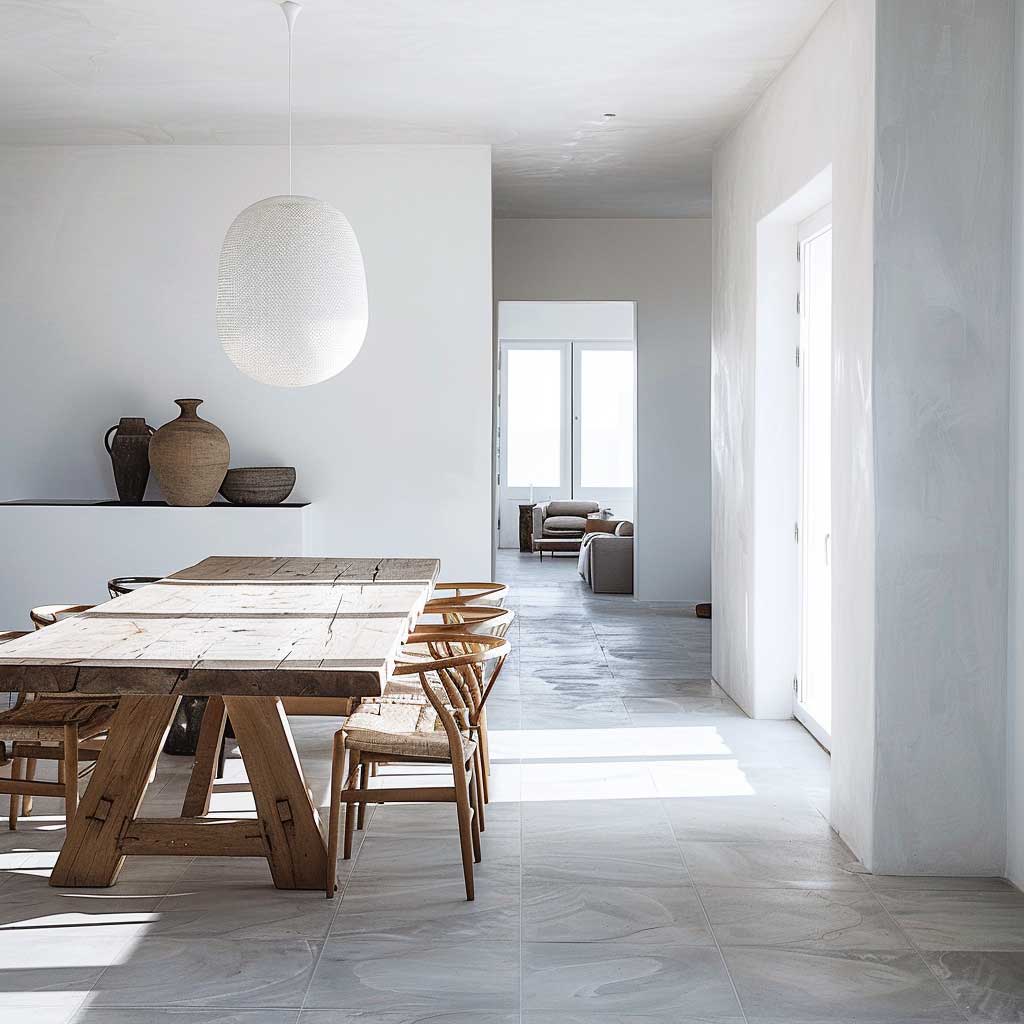
Storage in a white room should disappear into the wall. A flat-front sideboard painted the wall color holds plates and linens without adding a new shape to the room. Leave the same 36 inches in front of it that you leave around the table, since drawers and doors need space to open. A sideboard squeezed to 24 inches from the chairs turns every dinner into a shuffle.
Black Pieces Give a Modern Minimalist Dining Room Its Edge
A modern minimalist dining room in black trades airiness for definition. Near-black finishes sit at LRV 0–10, so they return almost no light, and a black table stops the eye the way a full stop ends a sentence. Black works best as furniture against lighter walls, not as dark walls plus dark furniture. One strong dark anchor is enough for most rooms.
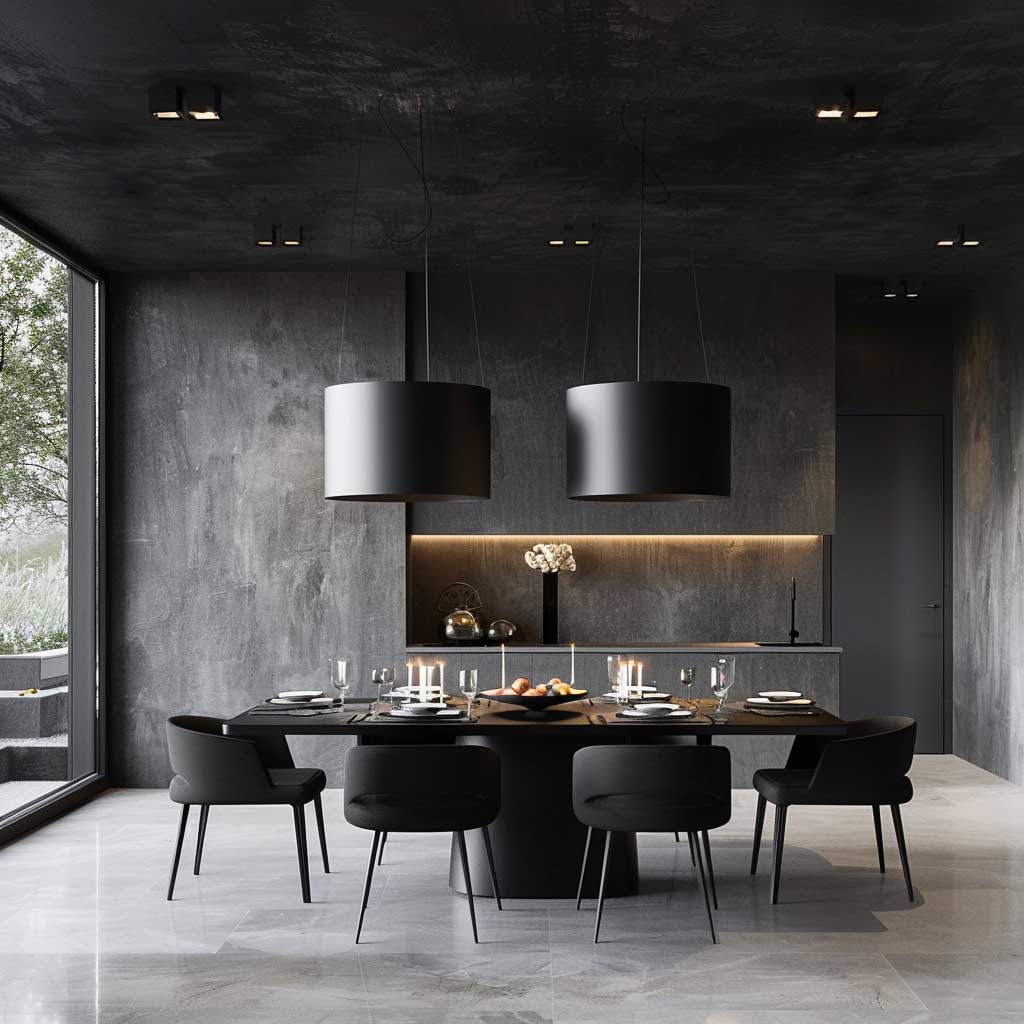
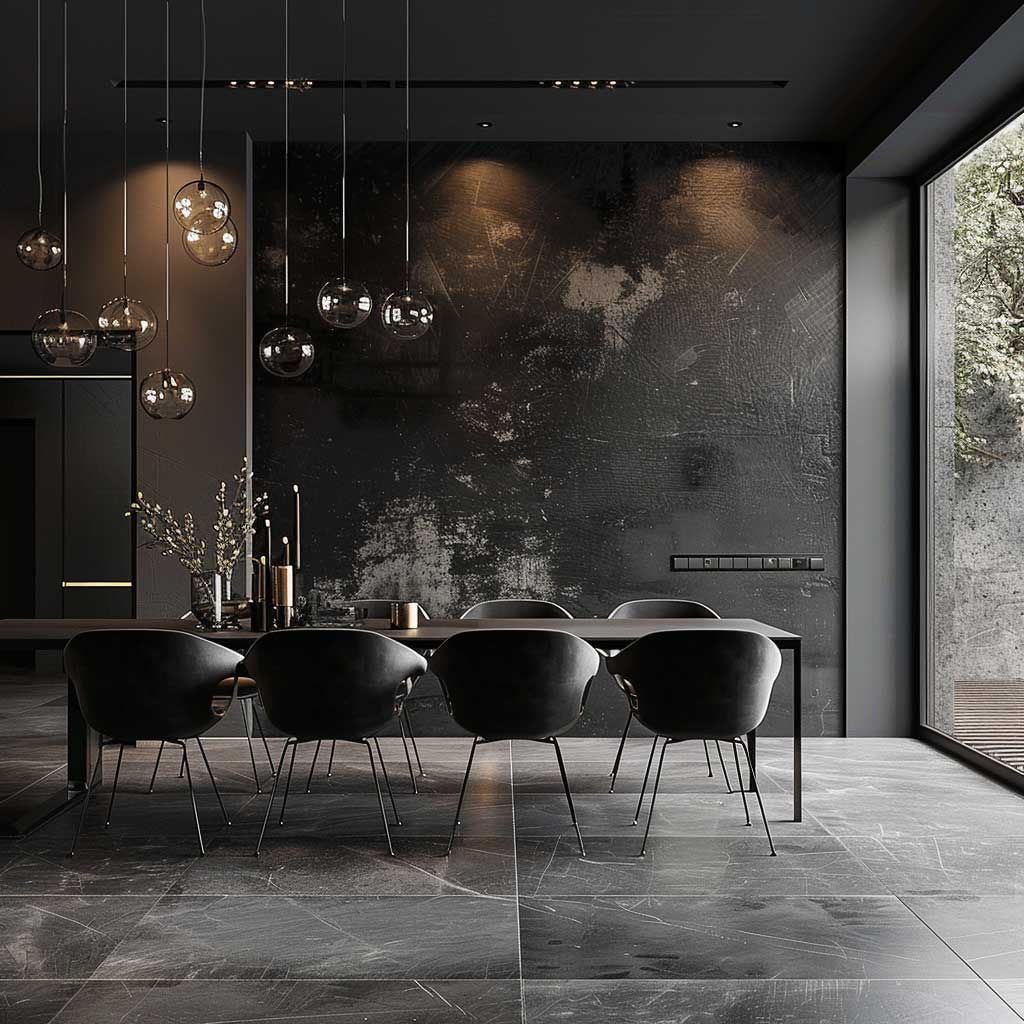
Matte or gloss for a black top? Matte hides fine scratches and looks more current, while high gloss mirrors the pendant and shows dust within hours. A matte black wood table with black metal chairs gives two textures in one color, which keeps the scheme from looking flat. Choose matte for any table used more than once a day.
Light matters more here than in any other palette, because dark surfaces swallow it. Hang the pendant 30–36 inches above the tabletop and use warm 2700–3000K bulbs so faces look natural rather than gray. A fixture hung at 45 inches leaves the table in a pool of shadow. Add a dimmer so one fixture covers both breakfast and late dinners.
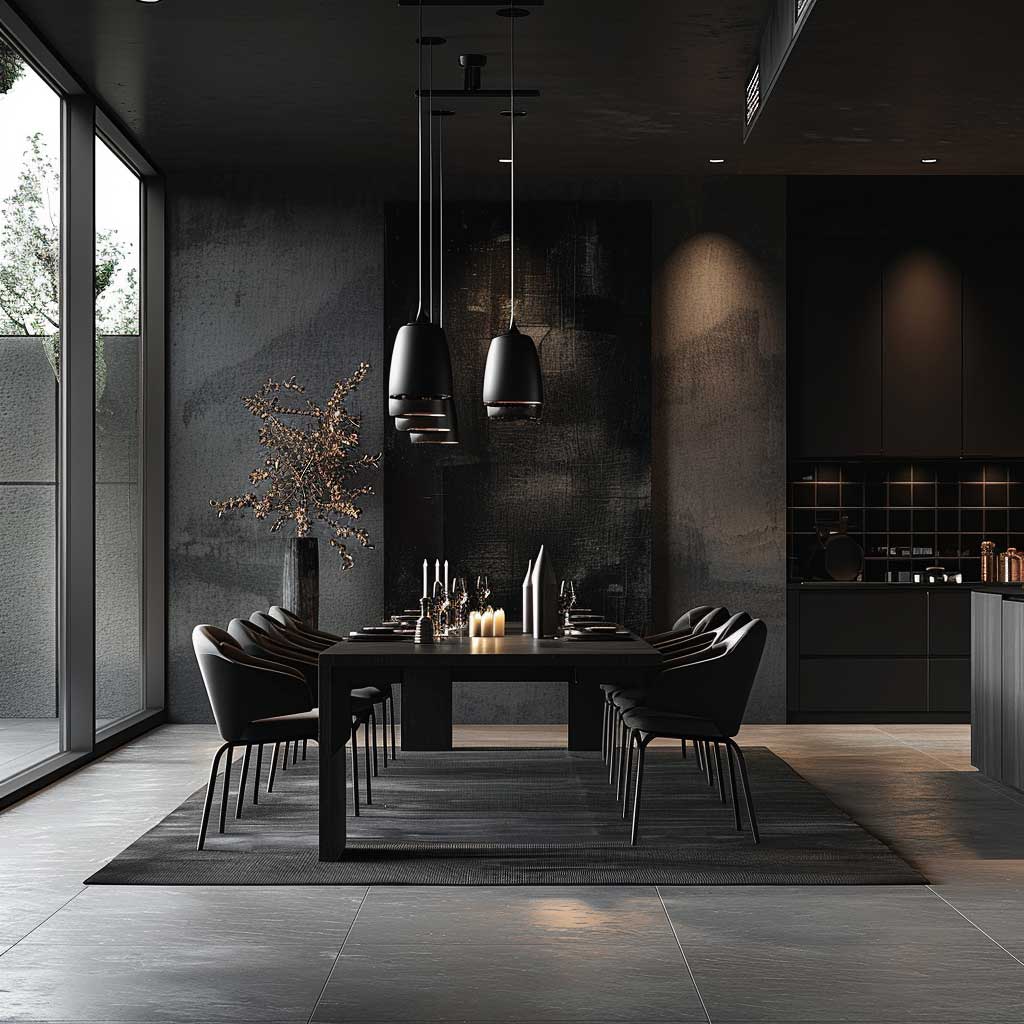
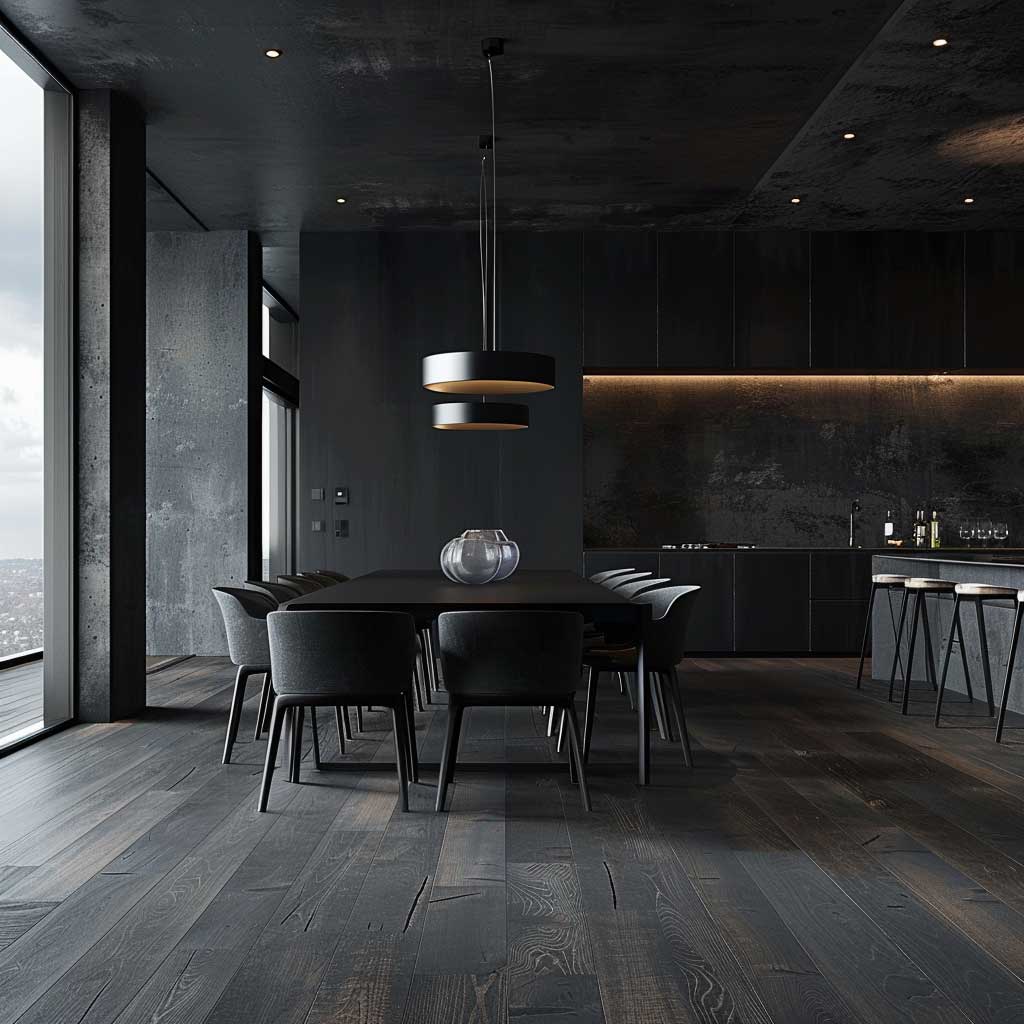
Do not buy a black table, black chairs, black sideboard and black rug in one go. Four dark pieces in a standard room read as a hole in the floor plan, not a design choice. Keep black to the table and chairs, and let the storage match the walls. A single green plant in a pale pot gives the eye a resting point.
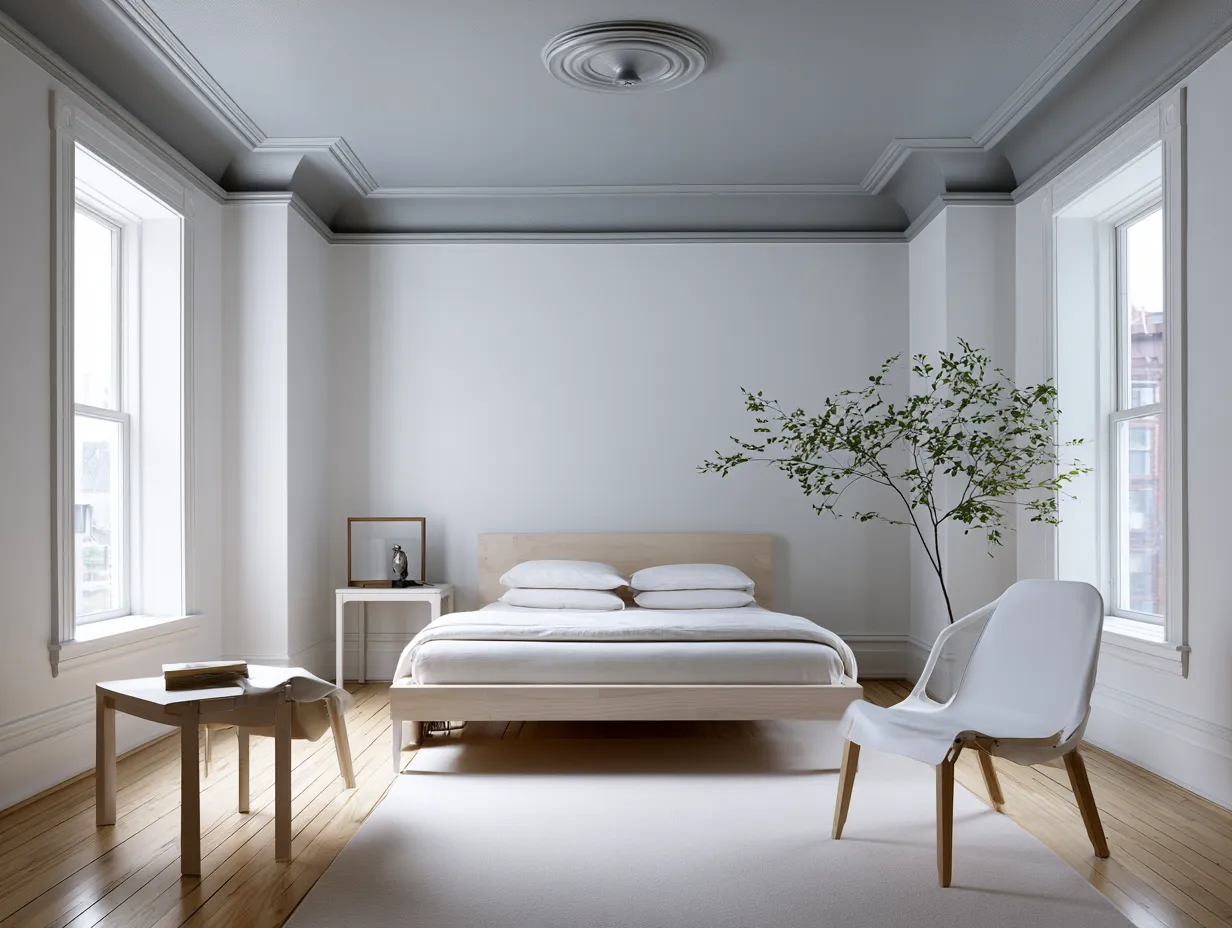
Gray Dining Sets Balance Warmth and Restraint
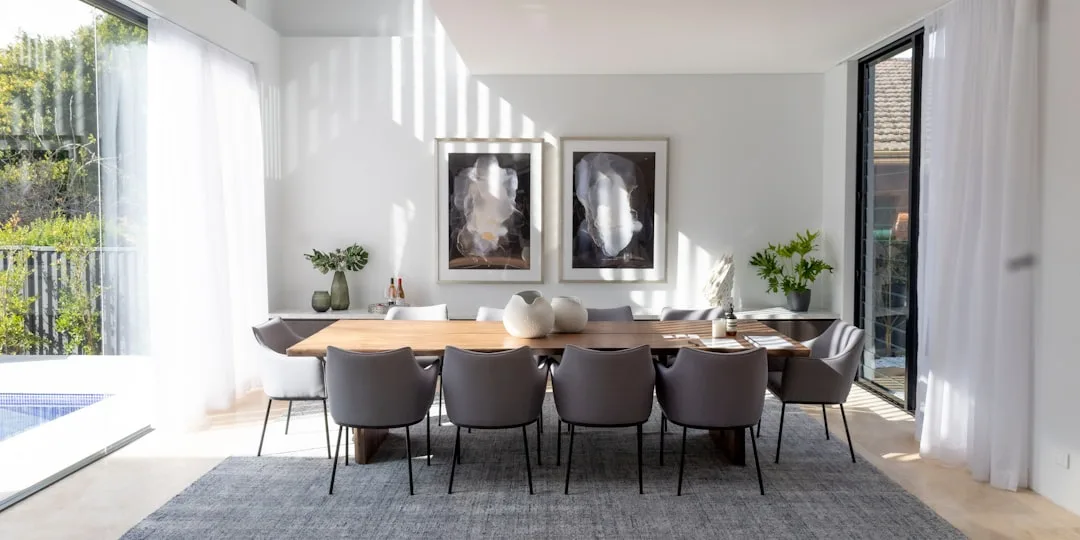
Minimalist dining room sets in gray solve a problem most households face: a color that hides daily wear without feeling heavy. Mid-gray paints and fabrics sit around LRV 51–60, halfway between white and black, so they reflect some light and absorb some. A matched set also removes guesswork, since the table arrives at the standard 28–30-inch height with chairs that leave 10–12 inches between seat and tabletop. Check that seat gap before buying any mixed pair.

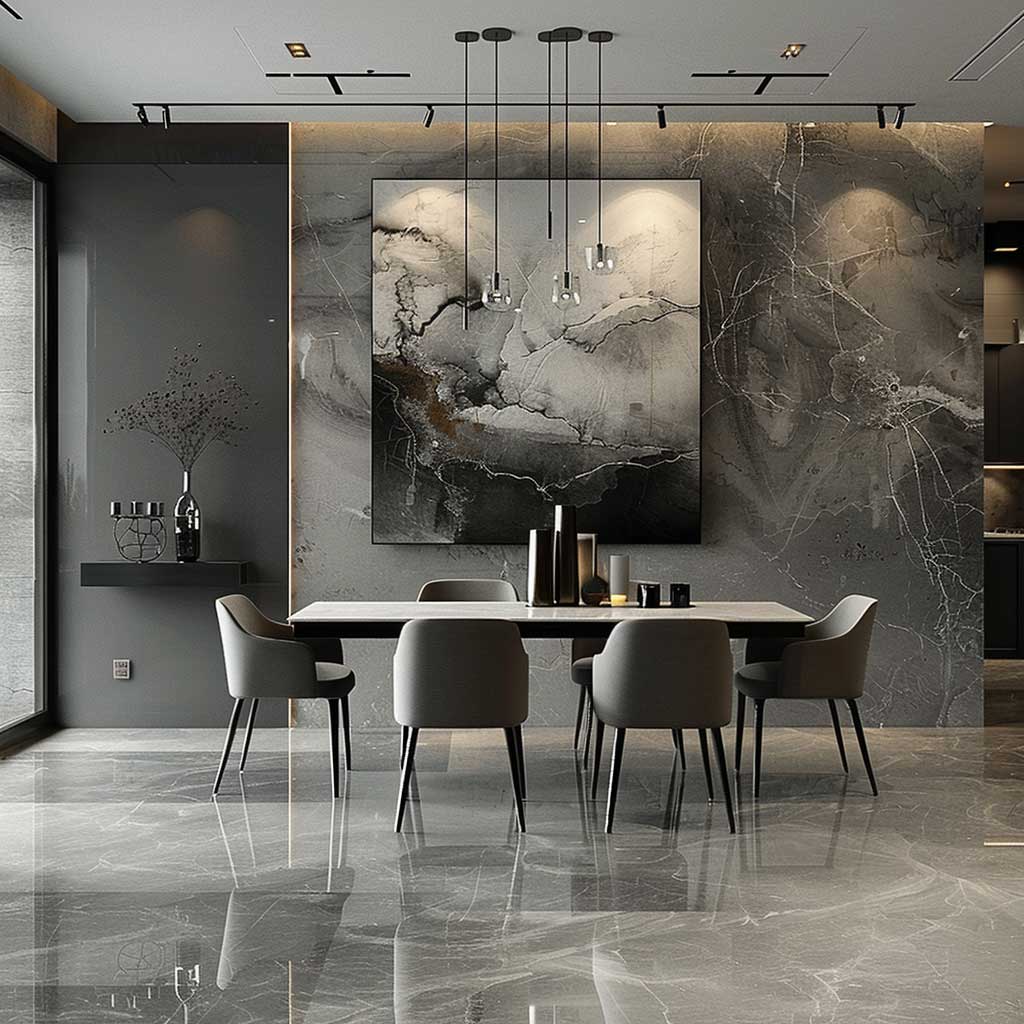
Set or mix-and-match? Complete sets with chairs usually run $500–$6,000, with about $2,000 as a common middle figure, while buying pieces separately often costs more but allows a better chair. A set guarantees matching proportions; a mix allows a softer upholstered seat next to a hard concrete-look top. Buy the set if comfort and budget matter more than individuality.
Two shades of gray look richer than one. A pale table with charcoal chairs follows the same ratio logic behind black and white living rooms built on a 70/30 split: roughly 70% light tone, 30% dark. Equal amounts of both shades tend to look undecided. Let the lighter gray cover the largest surfaces.

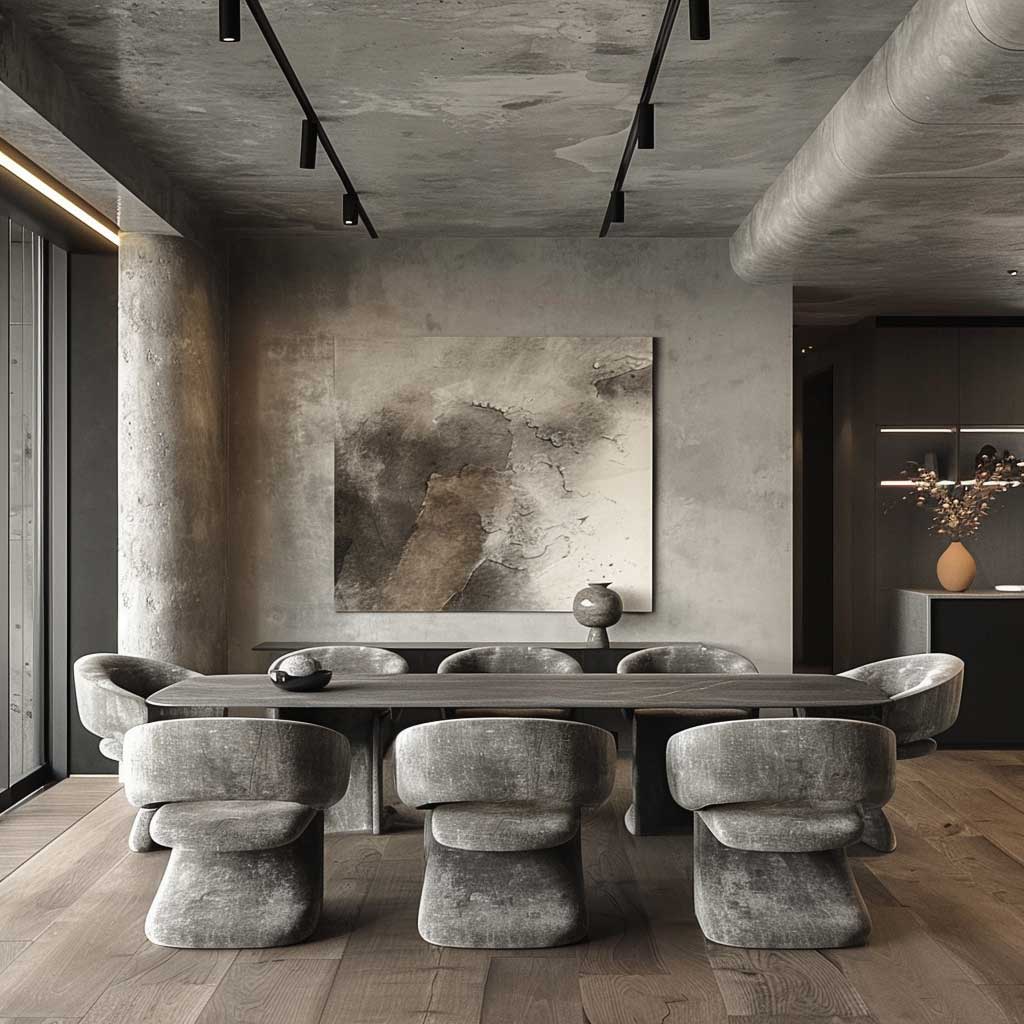
A gray room without texture feels like a foggy morning: pleasant for ten minutes, dull after an hour. Skip gray walls, gray curtains and a gray rug in the same tone, because the furniture will vanish into the background. Add one natural material such as oak legs or a wool rug. If you use a rug, extend it 24 inches past the table edge on every side so chair legs stay on it when pulled out.
Blue Tables and Chairs Calm a Minimal Dining Area
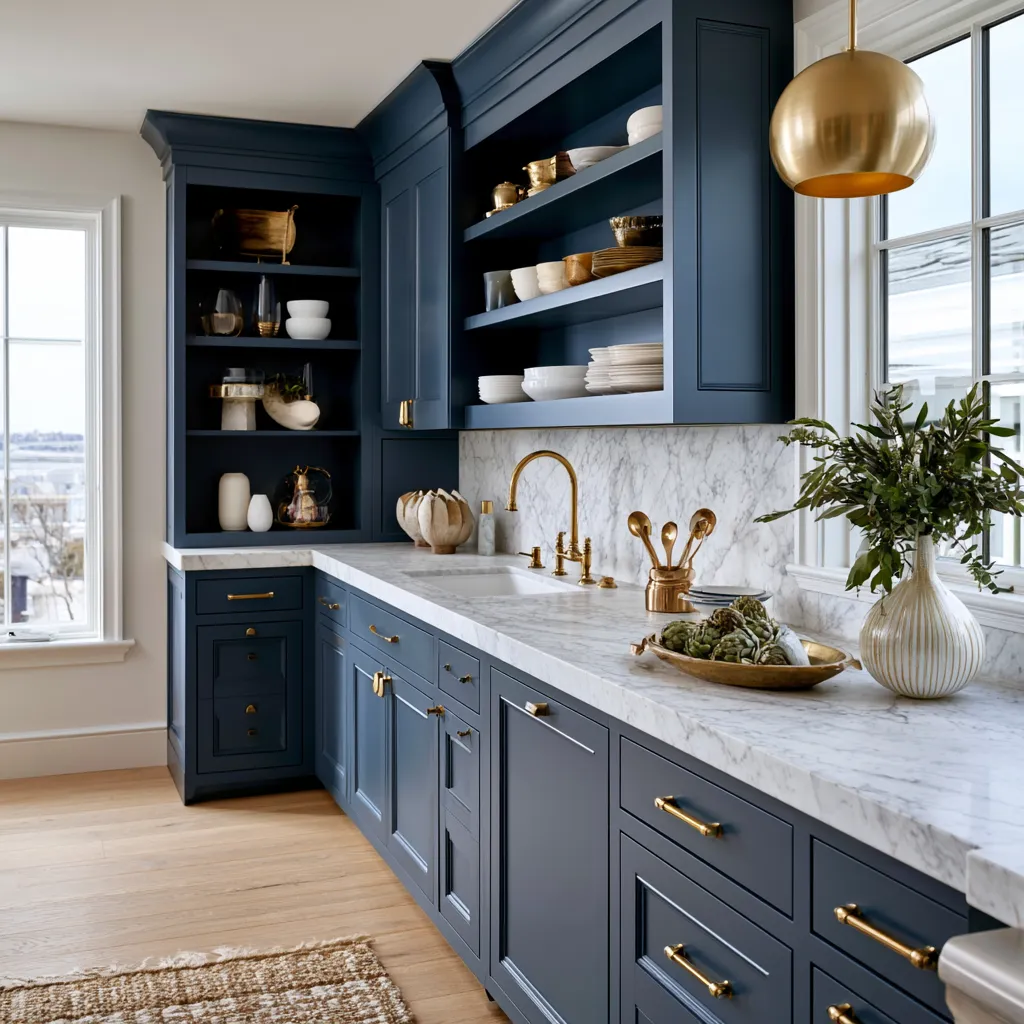
Minimal dining room ideas in blue rely on one saturated shade surrounded by quiet space. Deep navy paints sit around LRV 8 and behave almost like black, while mid blues at LRV 10–30 still read clearly as color. That difference matters in a room with a single window. Use navy for furniture and a mid or pale blue only where large surfaces need color.

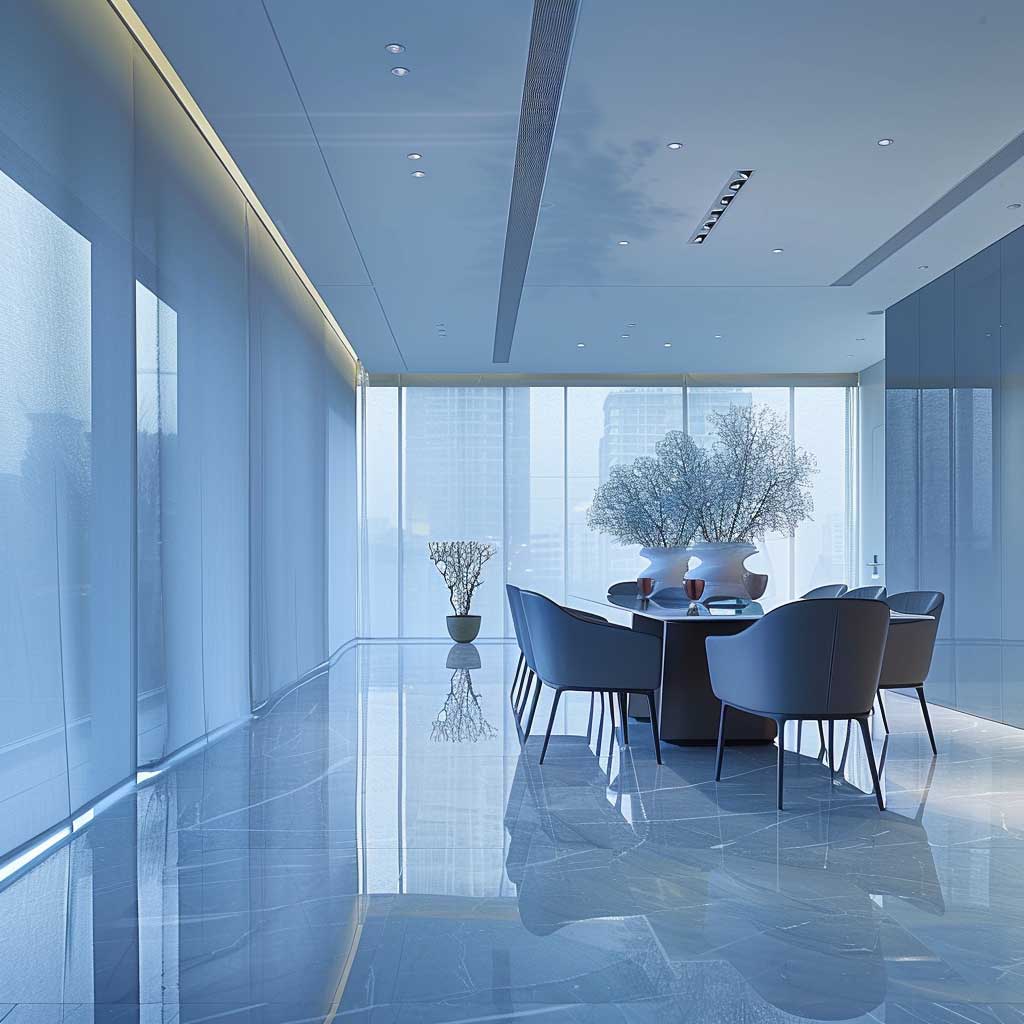
Navy table with pale chairs, or the reverse? A navy table grounds the room, while pale blue chairs keep the outline light; the opposite combination makes the chairs look heavier than the table. North-facing rooms need walls above LRV 60 to stop blue furniture from turning gray. Put the darkest blue on the largest single piece.
Minimal dining room decor in a blue scheme should come from texture, not extra objects. A linen runner, a ceramic bowl and one plant cover everything the table needs. Do not add blue art, blue vases and blue napkins at once, since the room starts to look like a themed showroom. Pick one accent outside the blue family, such as warm wood or brass.
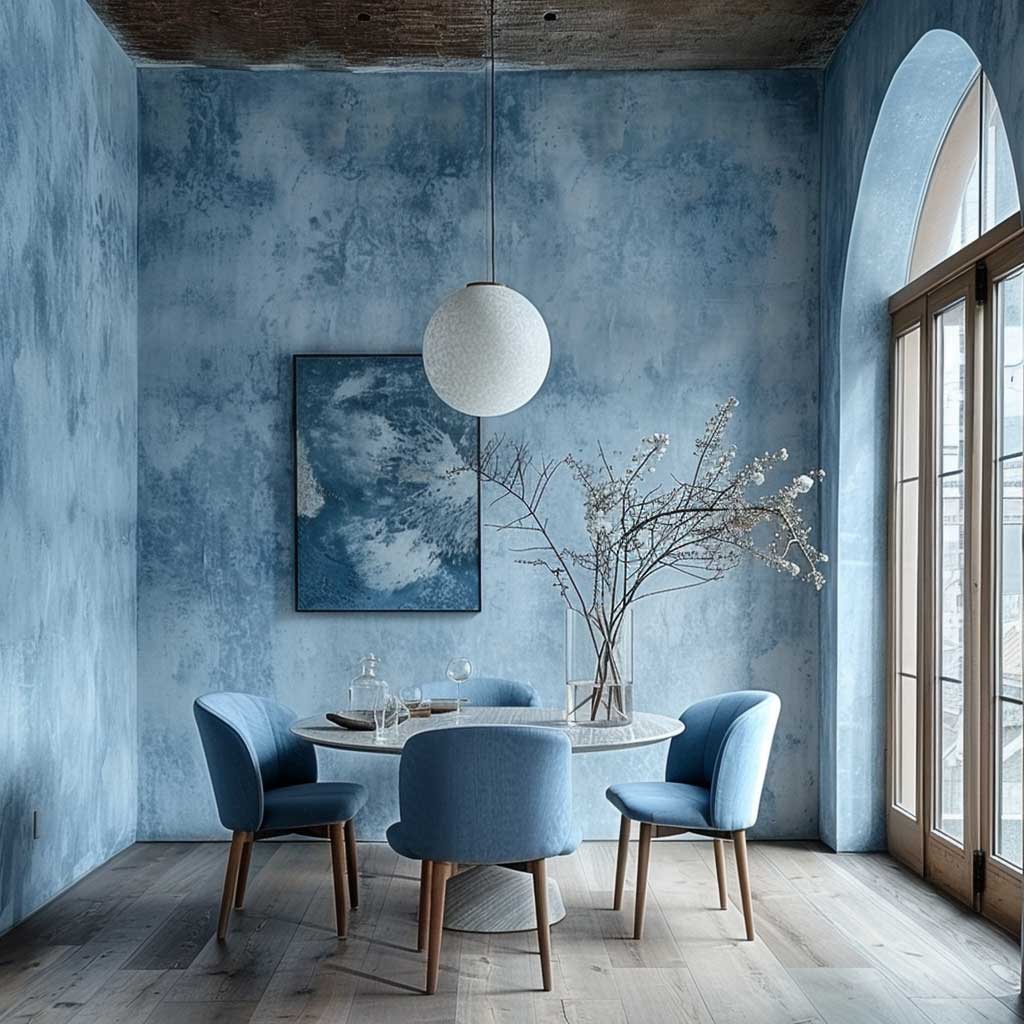
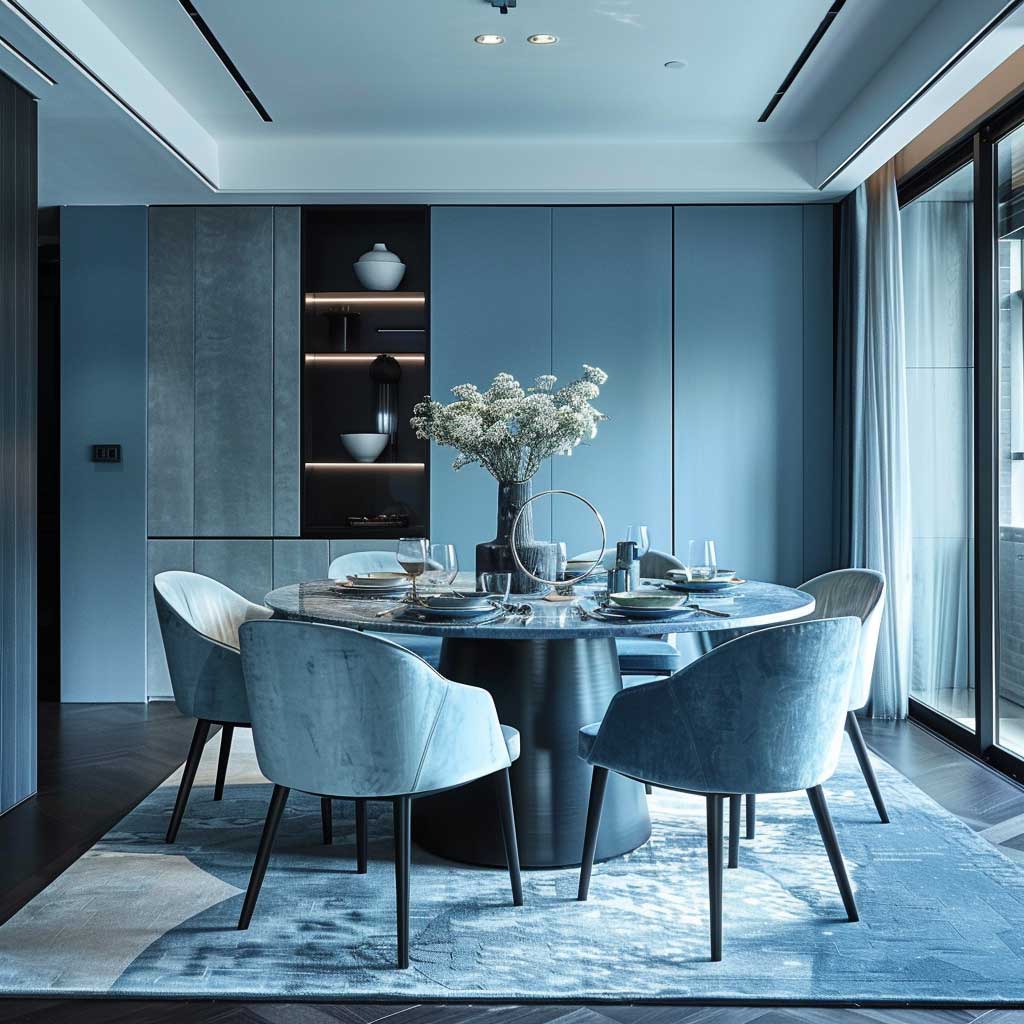
Blue works like still water: the calmer the surface, the deeper it looks. A painted solid-wood table in mid-range price bands usually costs $600–$1,500, and a quality lacquer finish keeps the color even for years. Cheap painted veneer chips at the edges first, and blue shows every chip. Spend the budget on the table and save on the chairs.
Measurements Every Minimalist Dining Table Needs
A minimalist dining table only looks calm when the room around it has room to breathe. Furniture makers agree on 36 inches between the table edge and the nearest wall or cabinet, and 42–48 inches where that gap also serves as a walkway. Each seat needs about 24 inches of edge, so six people fit around a 72-inch rectangle. Measure the room before falling for any table online.
- Table width: 36–42 inches for a rectangular top with real plates and a centerpiece.
- Table height: 28–30 inches, with 10–12 inches between chair seat and tabletop.
- Tabletop thickness: 3/4 to 1 inch keeps the profile slim without losing strength.
- Pendant height: 30–36 inches above the tabletop.
- Rug size: 24 inches beyond the table edge on every side.
Round or rectangular for a small room? A round table of 54–60 inches seats four with no corners to bump, while a rectangle of 60–84 inches seats more people per square foot. In a minimalist living dining room, the rug does the job of a wall, marking where the dining zone starts. Avoid a rug smaller than the chair footprint, because it shrinks the zone instead of defining it.
Furniture retailer Castlery publishes a clear summary of standard dining table dimensions, including length, width, height and light clearance. It is useful as a printout when comparing listings. Most product pages list table size but leave out the clearance it demands. Add 72 inches to each table dimension to get the minimum room size.
| Seats | Table shape and size | Minimum room (36-inch clearance) | Rug that fits | Best for |
|---|---|---|---|---|
| 4 | Round, 54 inches | 126 × 126 inches (10.5 × 10.5 ft) | 9-ft round | Small apartments, open-plan corners |
| 6 | Rectangle, 72 × 40 inches | 144 × 112 inches (12 × 9.3 ft) | 8 × 10 ft | Most family dining rooms |
| 8 | Rectangle, 96 × 42 inches | 168 × 114 inches (14 × 9.5 ft) | 9 × 12 ft | Large rooms, frequent guests |
Styling a Minimalist Dining Table Without the Clutter
Minimalist dining table styling follows a rule of one: one centerpiece, one material, one focal point on the wall. Art above a sideboard or table looks balanced at two-thirds to three-quarters of the wall width, and anything narrower floats like a postage stamp. A centerpiece should stay well below the pendant, which already sits 30–36 inches above the top. Leave at least half the tabletop bare between meals.
Runner or bare top? A bare stone or lacquer surface is the cleanest look, while a linen runner softens a hard gray or black table and protects it from bowls. Think of the runner as a frame around a photo, not the photo itself. Skip runners on glass tables, where they only highlight smudges. Pick one route and keep it for everyday use.
Don’t Do This
- Don’t place the table closer than 36 inches to a wall; at 24 inches nobody can pass behind a seated guest.
- Don’t hang the pendant above 36 inches over the top; the light spreads and the table loses its focus.
- Don’t seat six people at a 60-inch table; six need about 72 inches of edge at 24 inches each.
- Don’t fill the table with three small objects when one 1 larger bowl does the job better.
- Don’t mix a glossy black table with glossy black chairs; two shiny surfaces double the dust and glare.
Palette Comparison by Light, Cost and Upkeep
Minimalist dining room furniture comes down to four trade-offs: how much light the color returns, what the matching table costs, how fast it shows wear and what mood it sets. White returns the most light, black the least, and gray and blue sit in between. The table below sets the four palettes side by side. Use it to rule out one or two before shopping.
| Palette | Typical LRV range | Mood | Common table type and price | Shows wear | Best room |
|---|---|---|---|---|---|
| White | 82–94 (true white) | Open, bright | Stone or marble, $400–$1,500 | Fast: marks, yellowing | Small or north-facing rooms |
| Black | 0–10 | Sharp, modern | Glass or metal base, $150–$1,200 | Medium: dust on gloss | Bright rooms with large windows |
| Gray | 51–60 (mid gray) | Balanced, quiet | Full set with chairs, $500–$6,000 | Slow: hides scuffs | Family rooms, daily use |
| Blue | 8 (navy) to 30 (mid blue) | Calm, deep | Painted solid wood, $600–$1,500 | Medium: edge chips | Evening dining, open-plan spaces |
Where a Clean Dining Room Starts
Space beats style every time: a plain table with 36 inches of clearance looks more refined than a designer piece jammed against the wall.
White suits small and dim rooms because true whites reflect 82–94% of light, while black needs a bright room and a pendant hung 30–36 inches above the top.
Gray sets at $500–$6,000 are the safest choice for busy households, since mid-gray hides scuffs far longer than white or gloss black.
Blue rewards restraint: one navy table, pale chairs and walls above LRV 60 give depth without darkening the room. Measure first, pick one palette, and buy the table before anything else.