
A female crew cut is one of the cleanest, most low-maintenance haircuts a woman can choose, and it works across face shapes, hair textures, and age groups. The cut removes visual noise and lets bone structure do the work — cheekbones become focal points, jawlines sharpen, and eyes draw immediate attention without a single product in the morning. The question isn’t whether it works; it’s which version of the cut works best for you.
Women are choosing crew cuts in growing numbers. Data from major US salon chains shows requests for ultra-short women’s cuts rose approximately 18% between 2024 and 2026, a shift driven by athletes, musicians, and influencers wearing cropped looks visibly and confidently. The style has moved from niche to genuinely mainstream, and it’s holding there because it delivers results.
The range of looks achievable within the crew cut framework is wider than most people expect before trying it. A tight, uniform buzz and an Ivy League crew with a side sweep are both technically crew cuts — they just read very differently. Understanding that range is the first step toward making an appointment rather than putting it off indefinitely.
- The cut works on oval, heart, square, and round faces — face shape changes the approach, not the suitability
- Maintenance is minimal: trims every 4–6 weeks, a moisturizing shampoo, and optional light pomade or matte paste
- Average salon cost in the US in 2026 ranges from $45–$85 for a women’s crew cut — no heat tools needed daily
- Color amplifies the style: platinum, copper, and warm brunettes photograph especially well on a short base
- Accessories become the primary styling layer — statement earrings, scarves, and bold glasses read more powerfully with short hair
- Every hair texture adapts to the crew structure: straight, wavy, curly, and coily all work with the right cutting technique
What the Female Crew Cut Actually Does for Your Face and Style
The female crew cut does something most haircuts avoid: it strips the frame away and puts the face front and center. Cheekbones, brow line, and jawline — features that longer hair softens or partially obscures — become the dominant visual elements. This is why the cut reads as confident even before the person wearing it says a word. It’s a structural choice with a social signal built in.
Women arrive at the cut from different directions. Some want the practical reality of a low-maintenance morning routine — no blow drying, no heat tools, no split-end appointments every six weeks. Others want the visual statement: something that communicates self-assurance in a room without requiring explanation. A few are drawn first to related short cuts like the textured pixie bob hybrid, then step shorter when they realize they want even less maintenance. Whatever the entry point, the results tend to stay similar: women who make the cut rarely regret it.
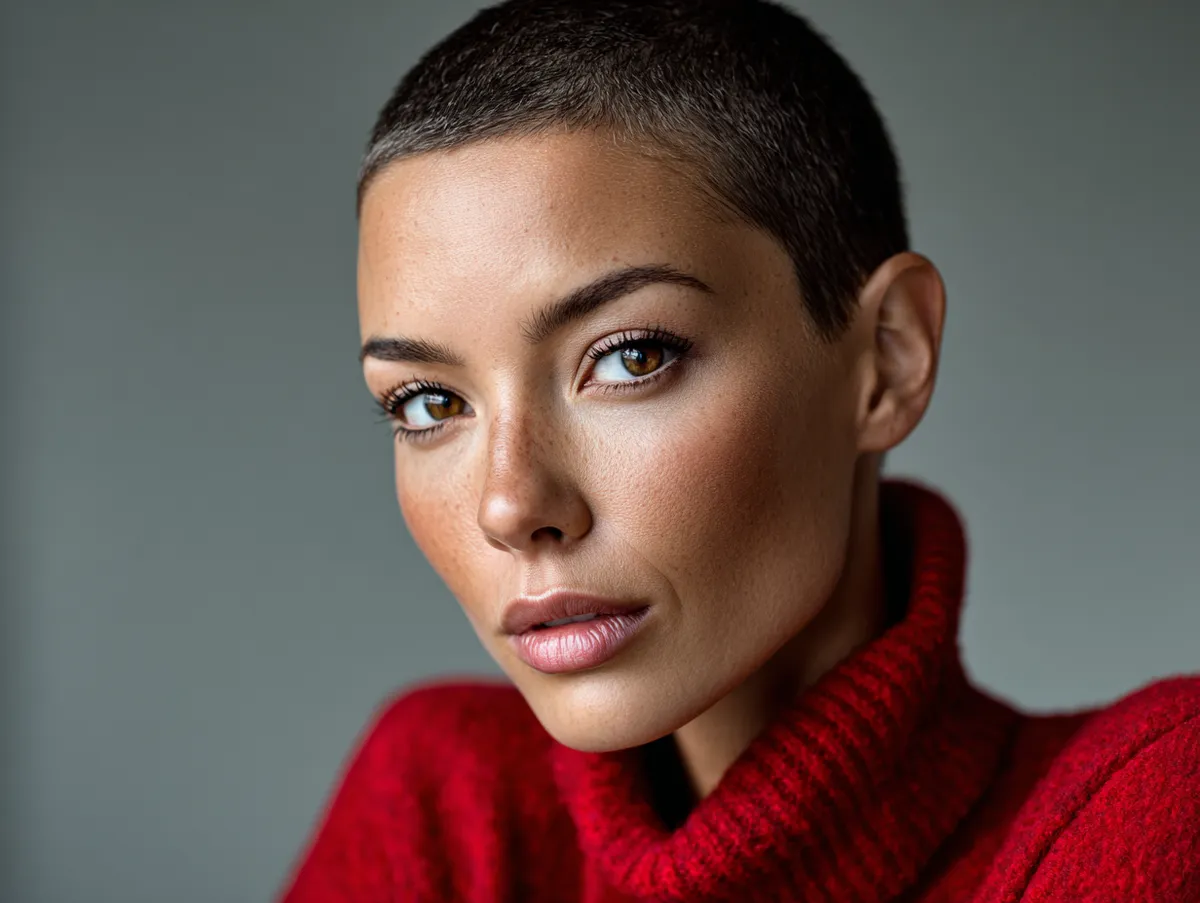
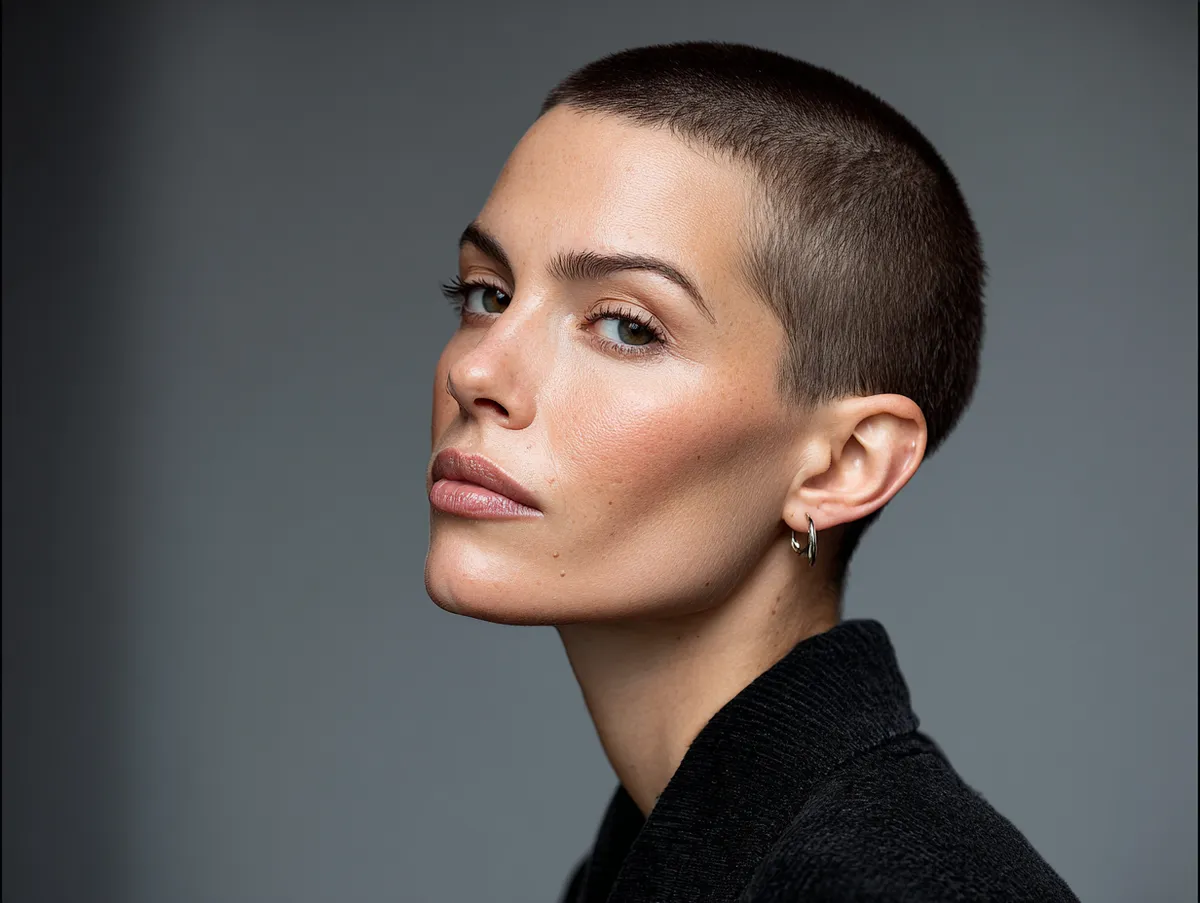
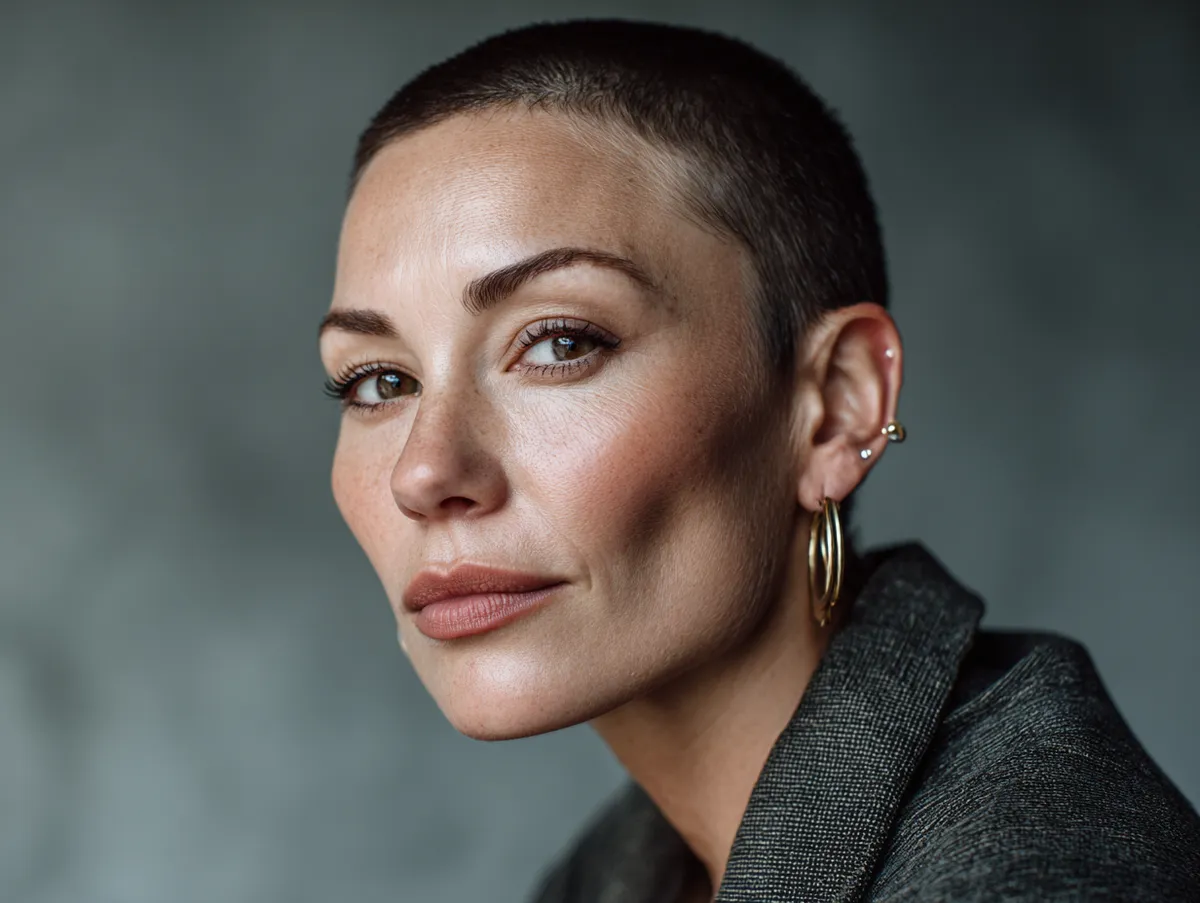
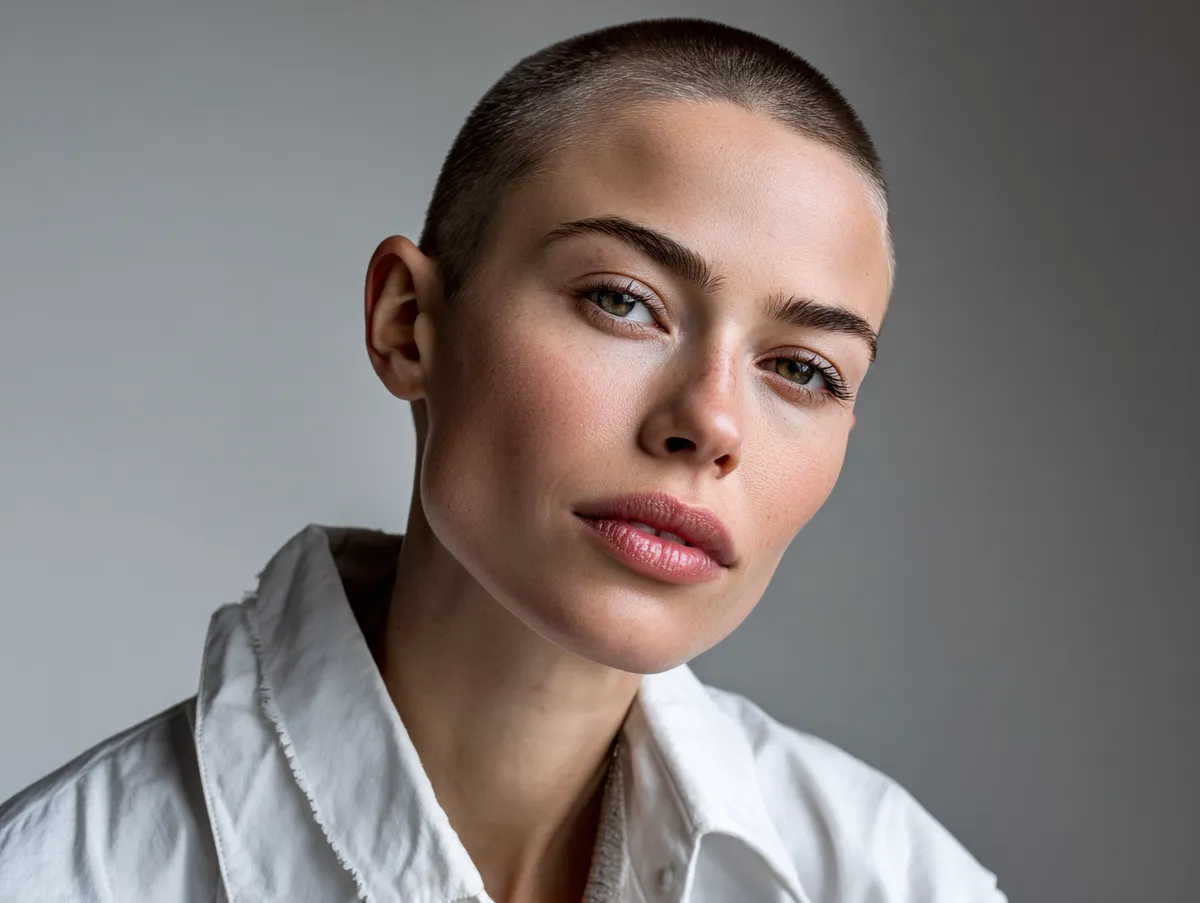
The cut is a framework with real variation inside it. The clipper guard number, the nape taper style, the amount of length left on top, and whether the sides fade or stay uniform all produce meaningfully different results. A #2 on top with a skin fade reads graphic and sharp. Half an inch to an inch on top with a soft taper reads more textured and wearable for everyday professional contexts. Neither is wrong — they answer different questions about what you want the cut to communicate.
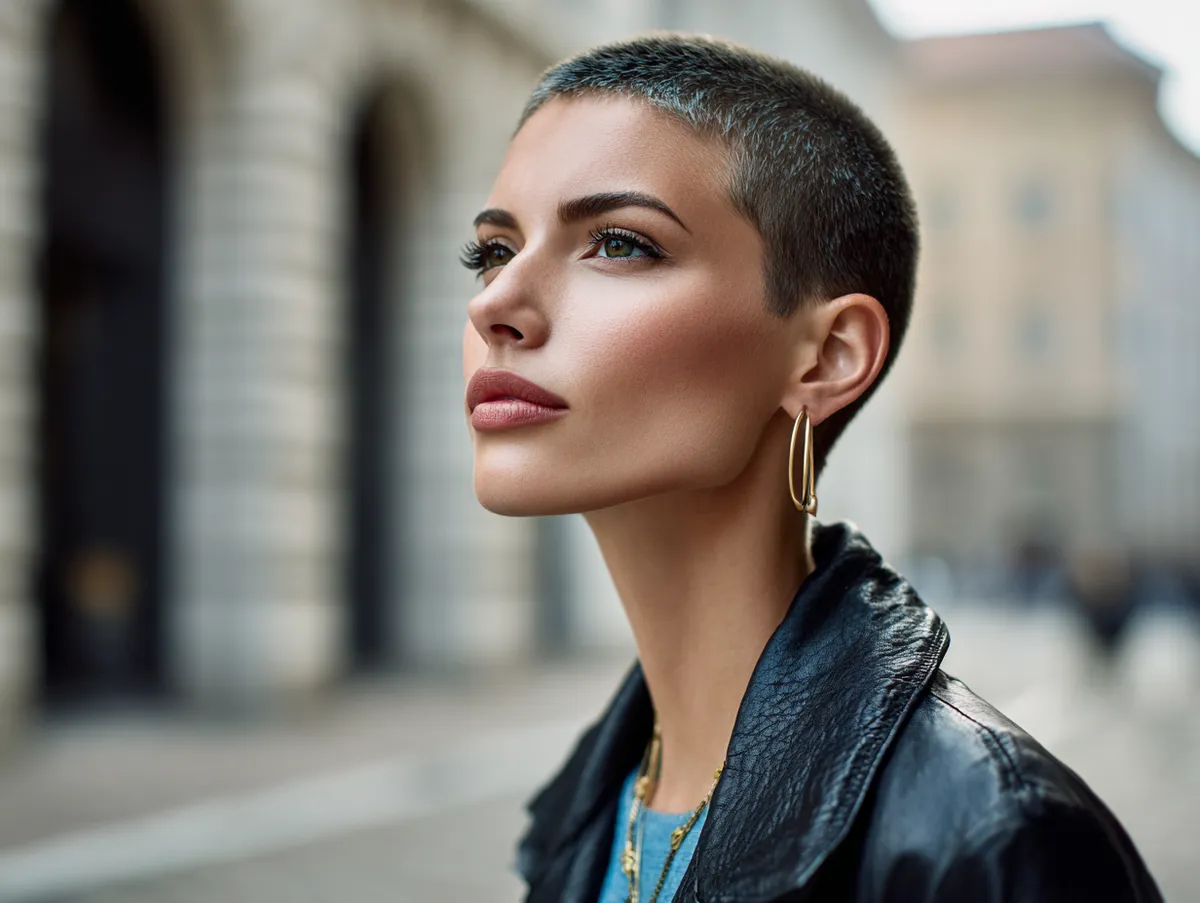
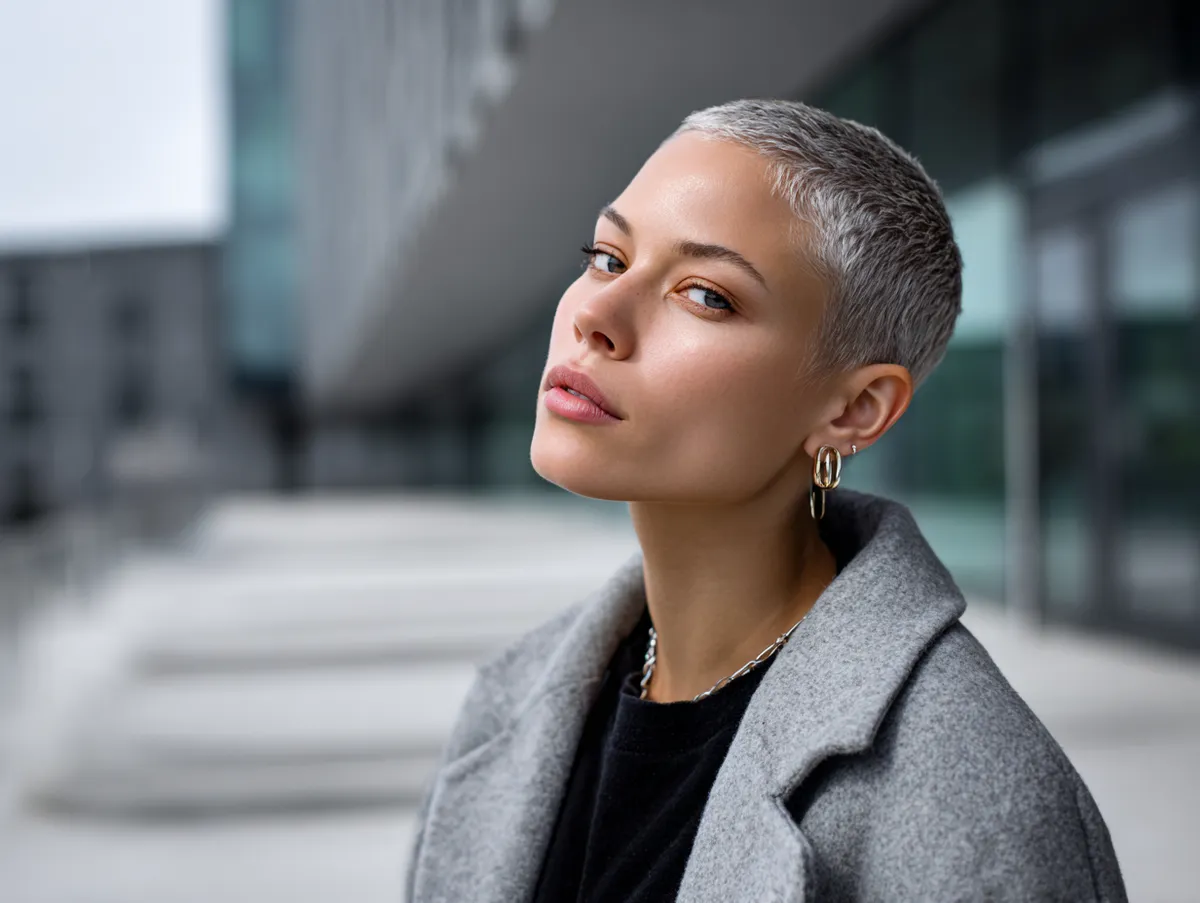
- Classic crew: uniform short length throughout, sharp taper at sides and nape — the most minimal and graphic option
- Tapered crew: slightly more length on top, faded or tapered sides — more dimensional, works particularly well on oval and heart-shaped faces
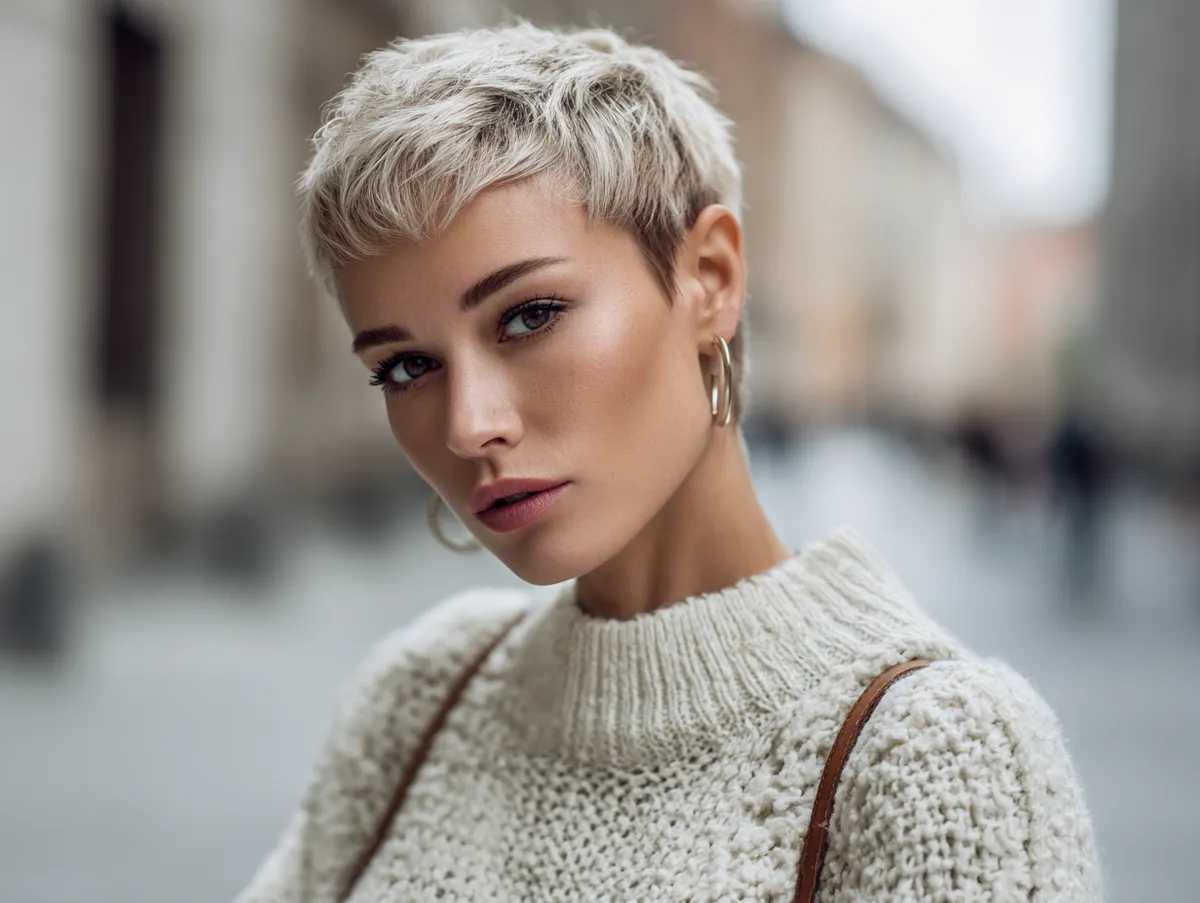
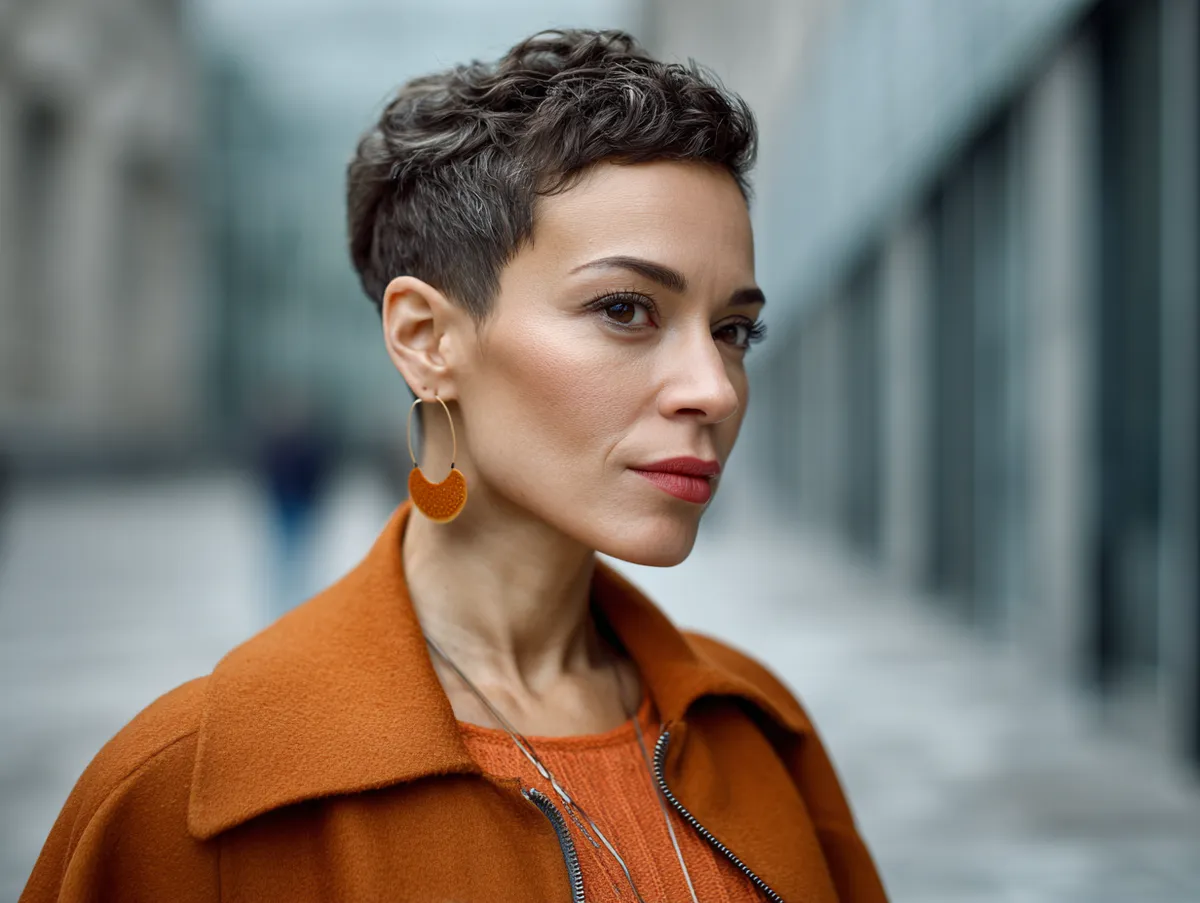
- Textured crew: one to one-and-a-half inches on top, point-cut for movement — bridges the territory between crew and pixie
- Ivy League crew: enough length on top to part or sweep to one side — adds softness without sacrificing the cropped silhouette
Many stylists recommend going for the tapered or textured version first — leaving some length on top — before committing to a shorter, tighter variation. The reasoning is simple: you can always go shorter at the next visit. You cannot go longer in two weeks without waiting for the hair to grow back.
How to Style a Female Crew Cut with a Feminine Aesthetic
A female crew cut reads as feminine or not largely based on what surrounds it, and the range is genuinely wide. The same closely cropped cut looks entirely different with bold lipstick and chandelier earrings versus with a matte nude lip and minimal jewelry. Short hair doesn’t lock you into one aesthetic — it removes a styling variable and replaces it with a cleaner surface that amplifies everything else you’re doing with your appearance.
Makeup becomes a primary styling tool once hair is out of the conversation. Bold lip colors, defined brow work, graphic eyeliner — all of these read more immediately when the face isn’t framed by hair competing for attention. Women with crew cuts often report spending less total time getting ready than they did at longer lengths, even when they add more makeup to the routine. Think of the face as a clean exhibition wall: a crew cut gives the art more space to breathe.
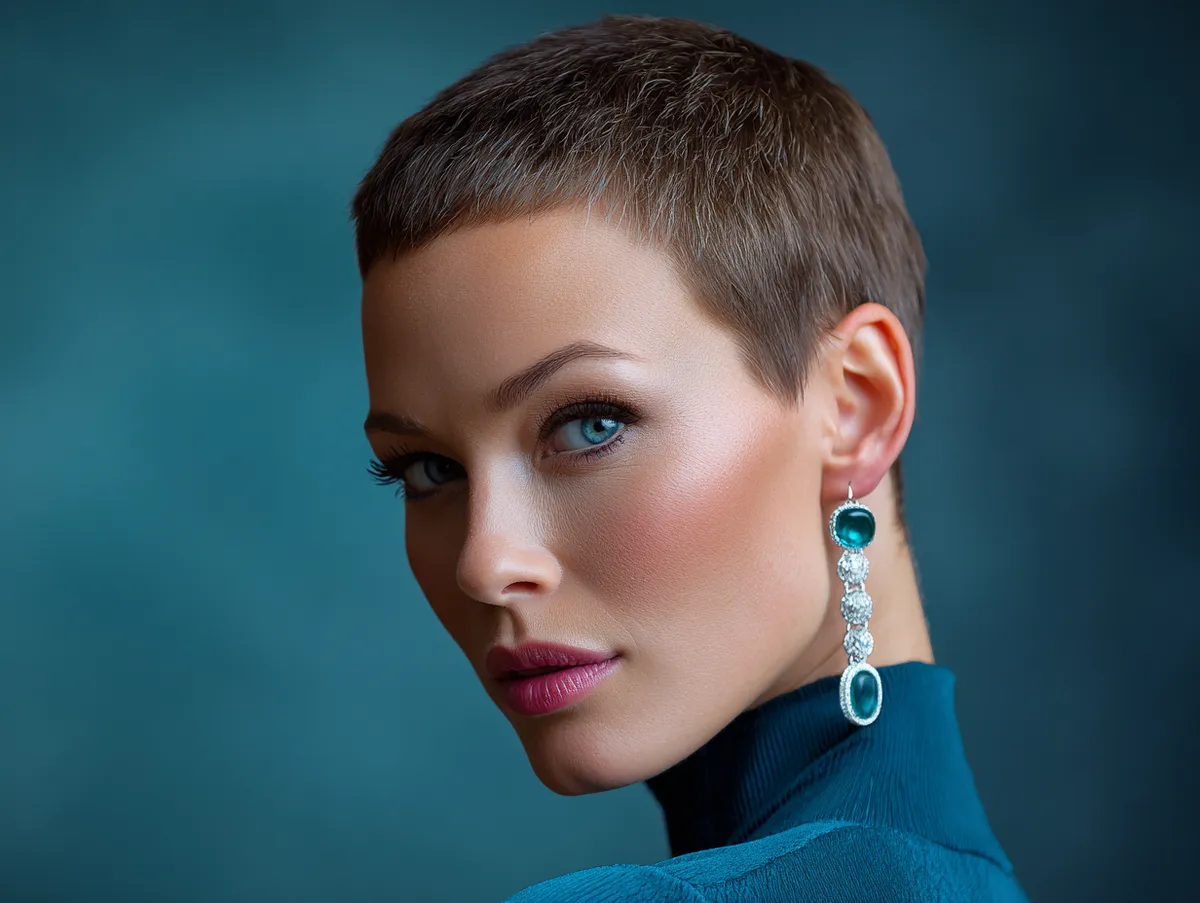
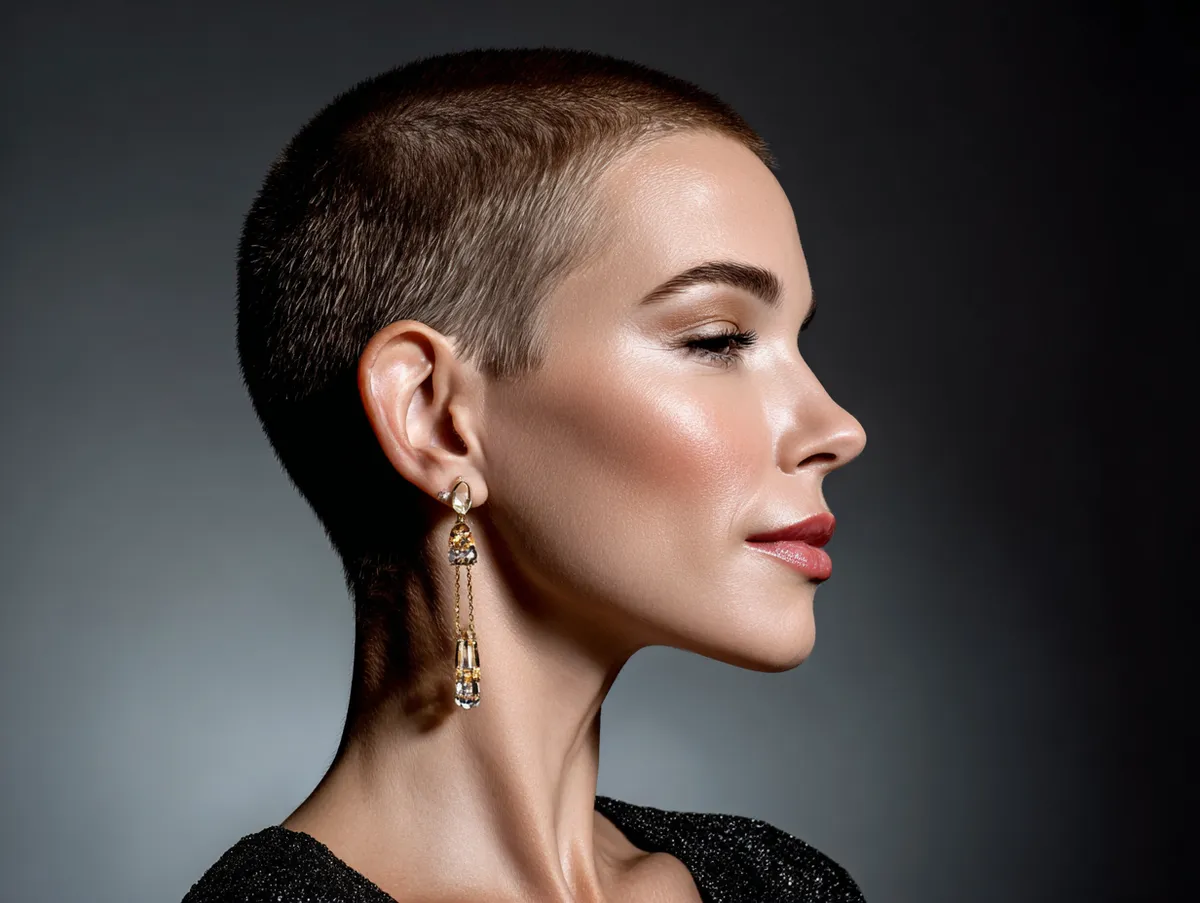
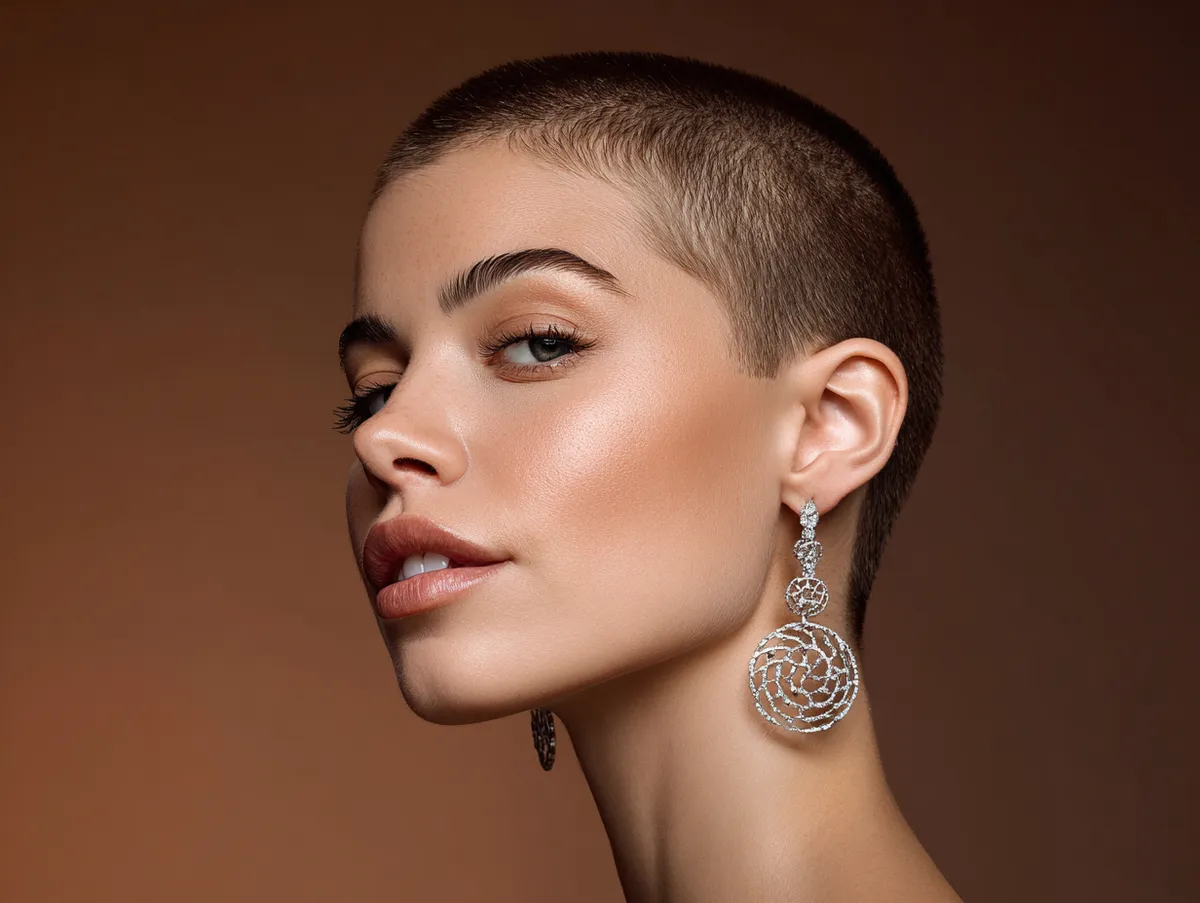
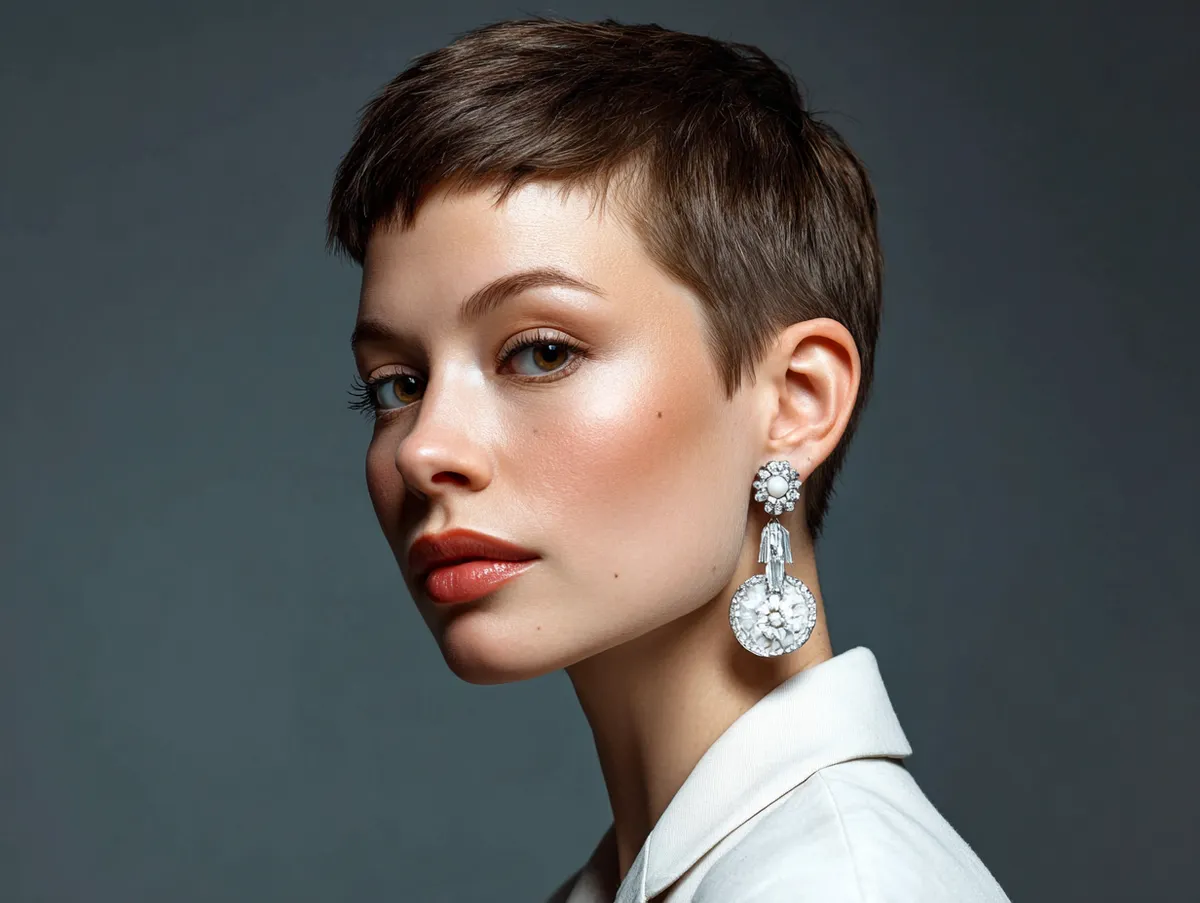
Earrings deserve specific attention. With a crew cut, the ear is fully visible at all times — which means earrings become a constant and deliberate accessory rather than an optional finishing touch. Hoops, drops, studs, and statement pieces that would be partially hidden by longer hair now register completely. Many women who make the cut find themselves refreshing their earring collection shortly after — not because they need to, but because the cut makes the investment genuinely visible for the first time.
Color is another strong femininity lever on short hair. Pastel tones — lavender, rose, ice blue — sit against the scalp at shorter lengths and read softer and more delicate than the same colors on long hair. Platinum is striking in a different way: architectural and editorial. For women who want to try something bold in color but have avoided it at longer lengths because of maintenance commitment, a crew cut is actually the most practical moment to go for it. A full re-dye service on a crew cut takes under an hour and costs significantly less in product than the same work on shoulder-length hair. For detailed placement strategy on short cuts, the guide on face-framing highlights for short hair covers approach by face shape and base color.
One styling myth worth clearing up: there’s no requirement to dress in oversized or gender-neutral clothing to carry a crew cut. A crew cut with a structured midi dress, heeled boots, and statement jewelry is a fully realized, feminine look. Hair and clothing don’t need to match in perceived masculinity level — they just need to function together as a composition, and short hair is flexible in that regard across every context from office to formal event.
Crew Cuts for Women by Hair Type and Texture
Crew cuts for women work across hair textures, but how they work shifts depending on what you’re starting with. Hair type affects cutting technique, product choice, and trim frequency — knowing your texture before the appointment leads to a more productive conversation with your stylist and more accurate expectations for the finished result.
Straight hair holds a crew cut’s shape most predictably. Lines stay clean, tapers read crisp, and the cut grows out in a controlled way that makes the maintenance schedule easy to track. Wavy hair introduces natural movement on top that many women find adds casual character without any product at all — the waves create visual texture that a straight-haired crew cut would need pomade to replicate. Curly and coily hair produces a different kind of volume entirely: a rounded, full crown that reads striking at short lengths. For curly-haired women, the key instruction is to ask specifically for dry-cutting — wet curl patterns appear longer than they are, and a stylist cutting wet hair may take off more than intended, leaving the result shorter than the reference image suggested.
| Hair Type | Best Crew Cut Approach | Daily Product | Trim Frequency |
|---|---|---|---|
| Straight / Fine | Tapered crew, slightly longer on top for visible texture | Light matte paste or pomade | Every 4–5 weeks |
| Straight / Thick | Classic crew, standard clipper grade for clean finish | Medium hold gel or mousse | Every 4 weeks |
| Wavy | Tapered or textured crew, let wave express naturally on top | Light texturizing cream or spray | Every 5–6 weeks |
| Curly / Coily | Request dry-cutting; uniform or tapered, curls define the crown | Curl cream or light gel | Every 4–5 weeks |
Per styling advice from Rush Hair & Beauty’s editorial team, bringing reference images that show both the top profile and the nape line is the single most useful preparation for a crew cut appointment. The nape taper is where the cut’s modern quality lives — a properly tapered nape reads intentional and current; a blunt nape reads dated. Their recommendation is trims every 4–6 weeks to maintain the taper and keep the silhouette intact. Full guidance on cutting technique and maintenance by hair texture is available at Rush Hair & Beauty’s crew cut guide.
DON’T DO THIS
Don’t request the shortest possible version on your first crew cut appointment based on a reference photo from someone with a different face shape and hair texture. The tightest crew cuts — a #1 or #2 clipper all over — look striking on some faces and unflattering on others, depending on head shape and skin tone. Start with a tapered crew that leaves half an inch to an inch on top. That version is still genuinely short, still low-maintenance, and still makes the visual statement — with enough hair to assess the look before going shorter. You can always go shorter at the next appointment. You cannot undo a #1 clipper in two weeks.
Female Crew Cut Compared to Pixie and Buzz Cut Options
Women deciding between a crew cut, a pixie, and a buzz cut are navigating three overlapping but meaningfully distinct options. All three read as short; the differences show up in daily styling flexibility, salon visit frequency, and how much variation exists within each category. Understanding the distinctions helps you ask for what you actually want.
| Style | Key Feature | Top Length | Salon Frequency | Daily Styling |
|---|---|---|---|---|
| Crew Cut | Uniform short length, tapered sides and nape | ¼ – 1 inch | Every 4–6 weeks | Minimal — pomade optional |
| Pixie Cut | Longer crown, shorter back and sides, often with bangs or texture | 1 – 3 inches | Every 5–8 weeks | Low to moderate — texturizing products used |
| Buzz Cut | Uniform clipper length all over, no variation between sections | Under ¼ inch | Every 3–4 weeks | Near zero — no product needed |
The crew cut occupies practical middle ground. It’s more shaped than a buzz but less demanding than a pixie with layering, bang maintenance, and texture work. For women who want something close-cropped with a defined shape at the crown and around the ears — not shaved to the scalp, not as involved as a styled pixie — the crew cut answers the question most directly.
Face shape matters in this comparison. Crew cuts work particularly well on square and oval faces because uniform short length emphasizes facial symmetry rather than compensating for it. Round faces benefit from a textured crew with slightly more height on top — the added volume creates visual elongation that a flat, uniform cut doesn’t provide. Heart-shaped faces do well with a tapered crew where slightly more length on top softens the visual width at the forehead. When in doubt about which variation suits your specific face shape, ask your stylist to show you the difference using their portfolio before any cutting begins.
Bottom Line
A female crew cut works for women. The right version depends on face shape, hair texture, and how minimal you actually want to go.
Start with a tapered or textured crew before committing to a tighter, more uniform option.
Bring reference photos that show the nape profile — that’s where the cut’s modern quality lives.
Plan for 4–6 week trims. Daily styling drops to near zero; the only ongoing investment is the appointment itself.
You Might Also Like


Related Topics