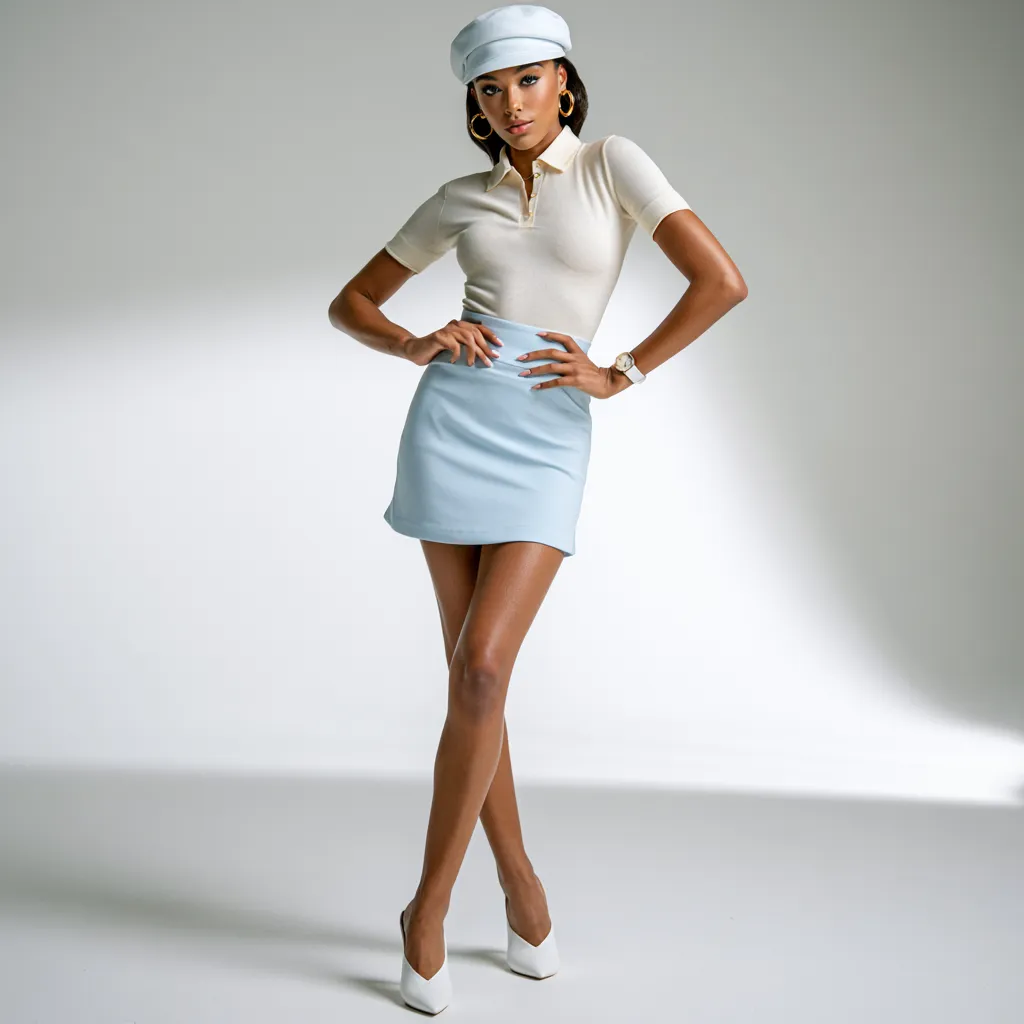
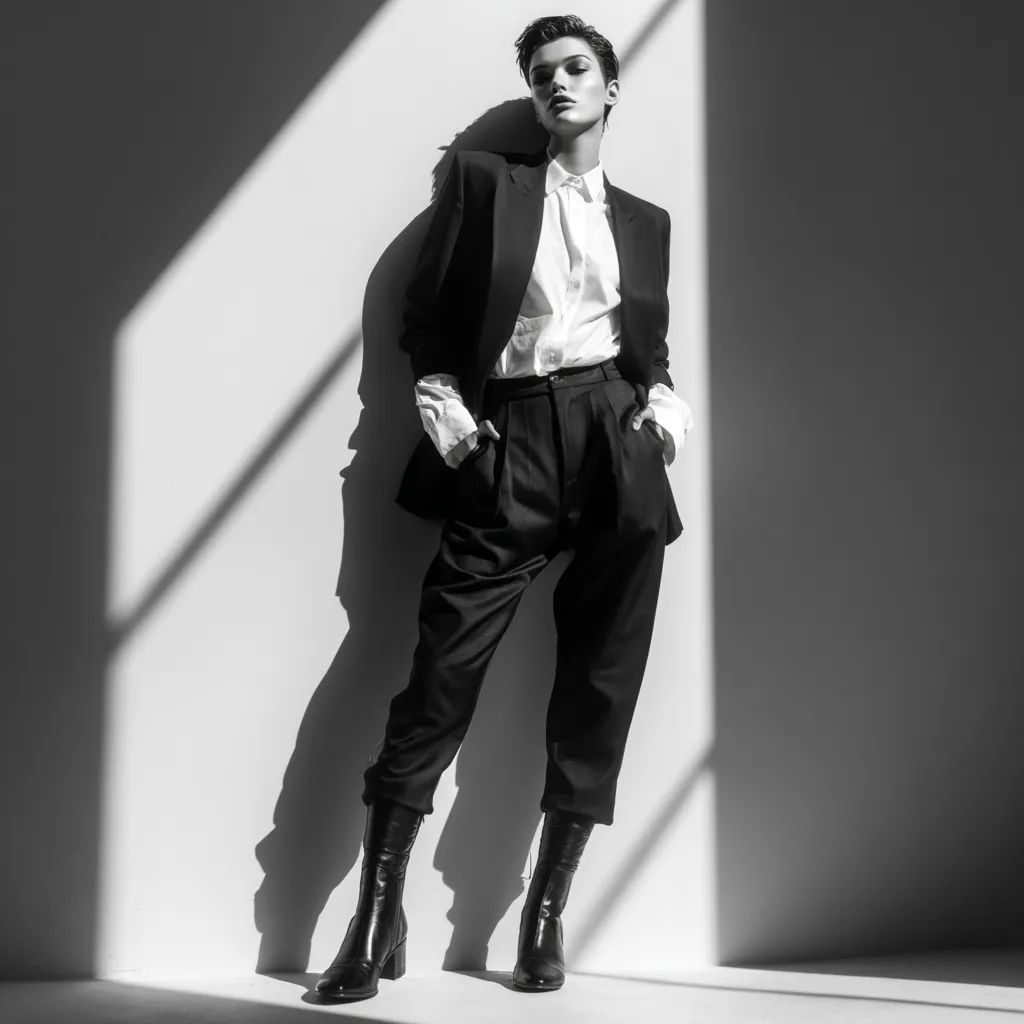
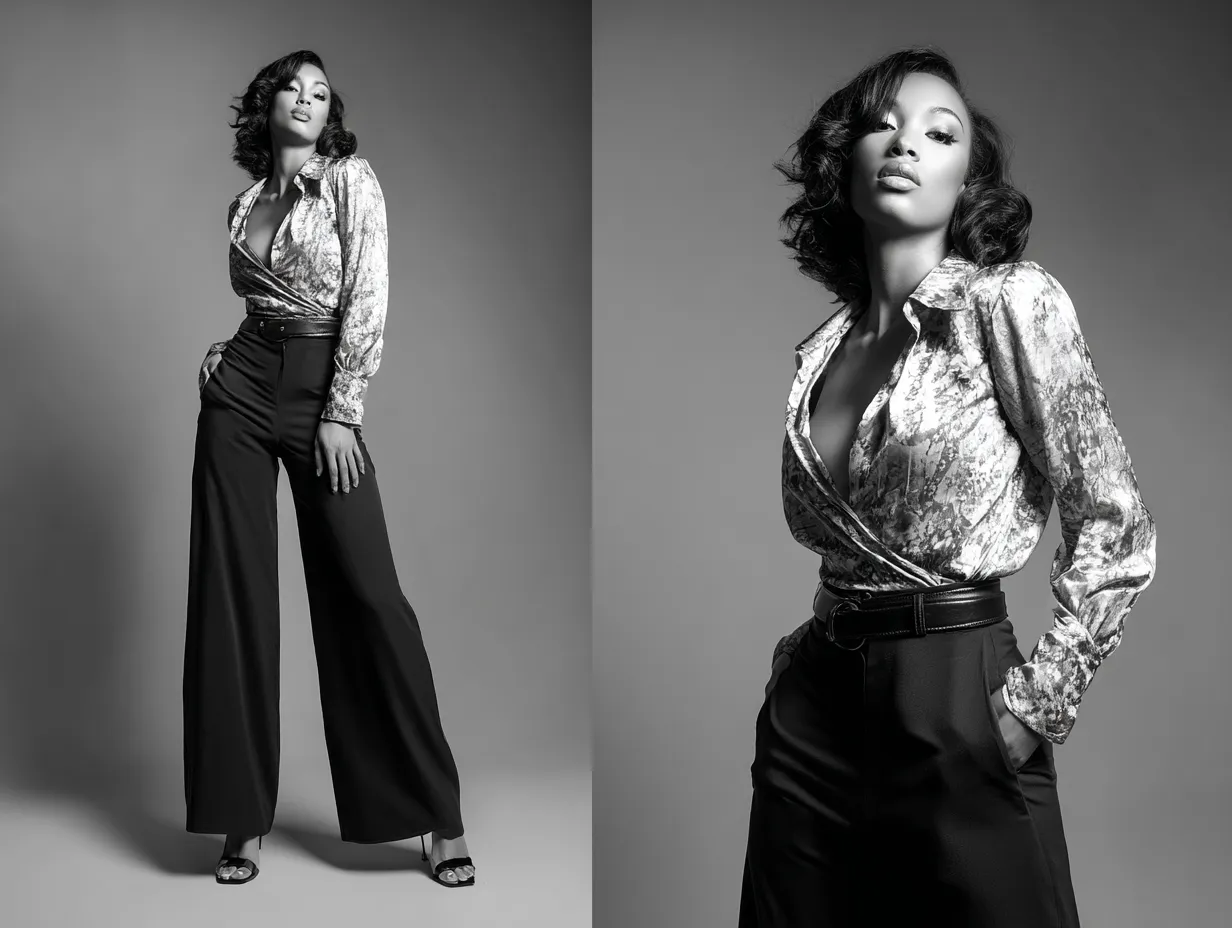
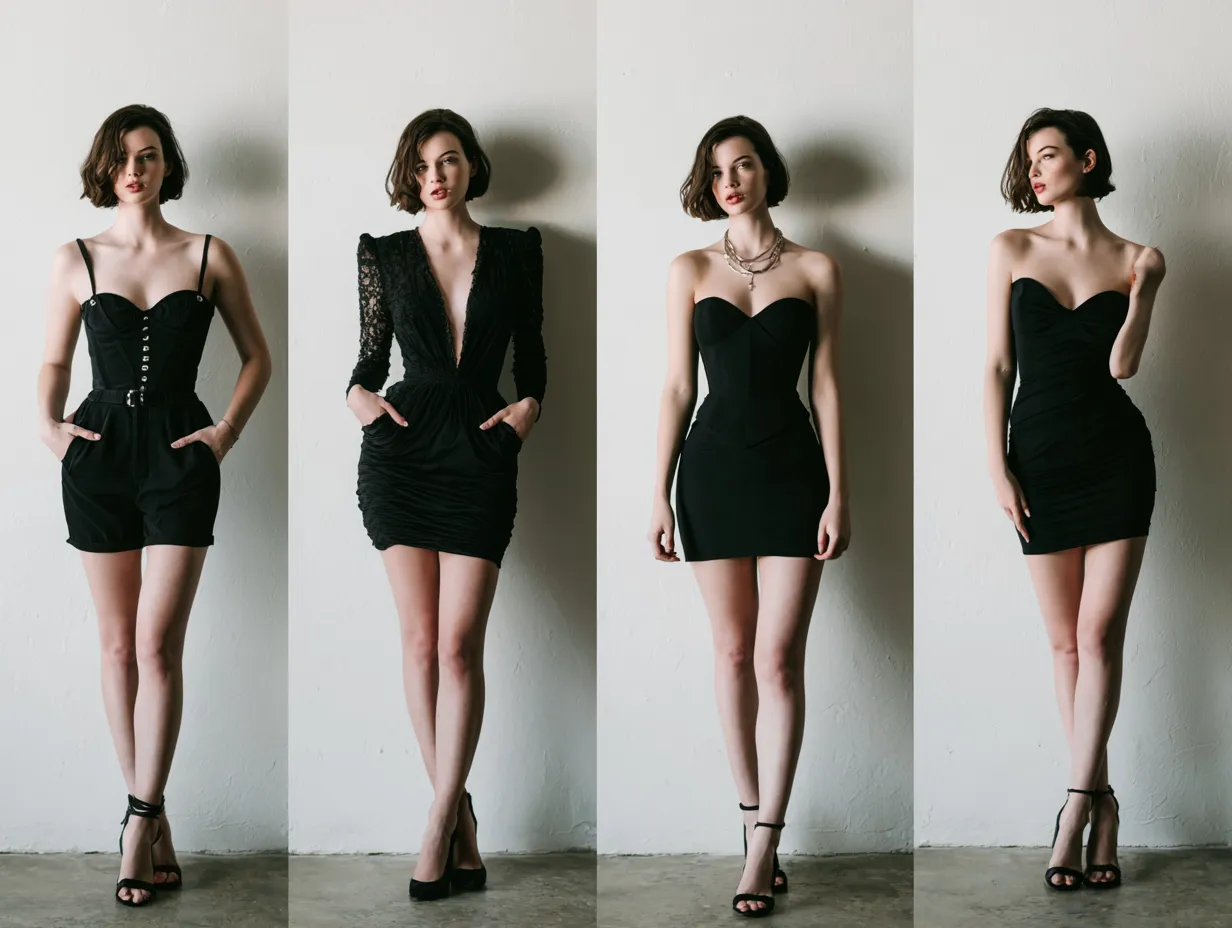
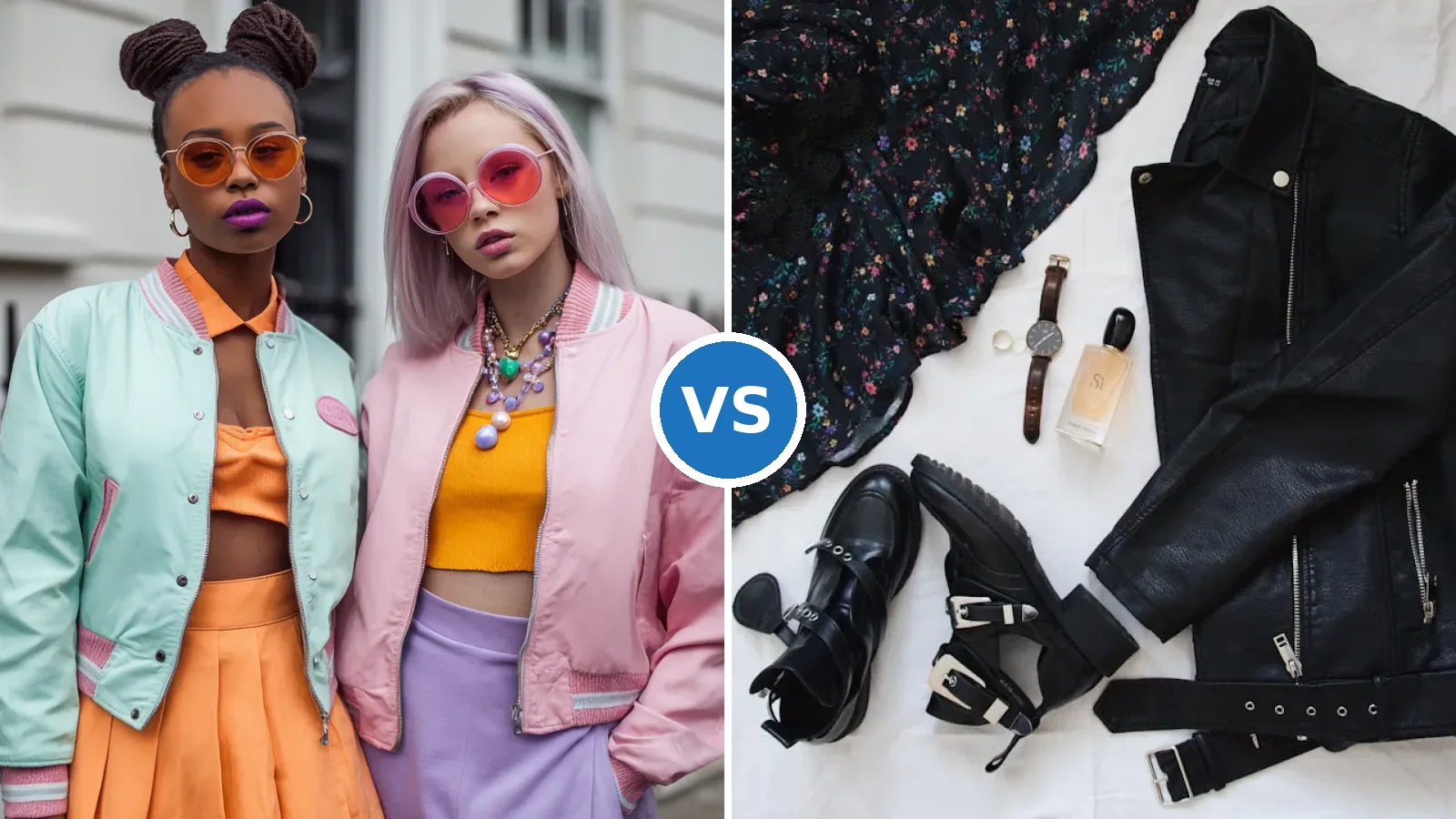
The average American woman owns 103 pieces of clothing but regularly wears only 10% of them, according to a 2015 ClosetMaid consumer survey cited widely in wardrobe psychology research. By the time most women reach their 30s, they have enough clothes to fill two wardrobes and not enough outfits that actually work. The capsule wardrobe concept exists to solve exactly this problem — not by reducing your wardrobe to a punishing minimum, but by making every piece earn its place through versatility, quality, and fit.
This guide covers the capsule wardrobe essentials for women in their 30s as a complete system: what to include, what to skip, how many pieces you actually need, and how to build the wardrobe in stages if you are starting from scratch. The numbers, formulas, and logic here are specific to the way most women in their 30s actually live — with professional obligations, social lives, physical activity, and a budget that makes every purchase a real decision.
Why Your 30s Are the Right Decade to Build a Capsule Wardrobe
The capsule wardrobe concept was coined by London boutique owner Susie Faux in the 1970s and later popularized in the United States by Donna Karan’s 1985 “Seven Easy Pieces” collection. The idea — a small selection of interchangeable garments that form the foundation of a functional wardrobe — has been refined and debated for five decades. But its logic is most powerful in your 30s for three specific reasons.
First, your style preferences have stabilized enough that you know what you actually wear. The experimental buying of your 20s — the one-off statement pieces, the trend purchases, the clothes bought for a life you imagined rather than the one you lived — has given you data. You know you never reach for that structured skirt. You know the one blue blazer gets worn twice a week while three others hang unused. The 30s are when that pattern recognition becomes actionable.
Second, your budget can now support quality. A capsule wardrobe built on $30 fast-fashion basics is a temporary fix — the pieces wear out in six months, the fit degrades after washing, and the visual quality reads at lower price points. In your 30s, investing $150 to $400 per piece in a smaller number of well-made items typically costs less over five years than replacing $40 pieces every season.
Third, your life has complexity that requires range without volume. A woman in her 30s may move between a professional office environment, a casual weekend, a formal dinner, a gym session, and a school pickup in a single week. A capsule wardrobe built correctly handles all of these with the same 32 pieces rather than requiring separate “wardrobes” for each context.
How Many Pieces Does a Capsule Wardrobe for Women in Their 30s Actually Need
The most common capsule wardrobe number cited online is 33 pieces, based on Project 333, the minimalism challenge created by Courtney Carver in 2010. This number — which includes tops, bottoms, dresses, outerwear, and shoes but excludes workout clothes, pajamas, and underwear — is a useful starting point but not a universal rule.
A more practical target for women in their 30s with full professional and social lives is 32 to 40 pieces of core clothing, not counting shoes, bags, and accessories. This range accounts for seasonal needs (you genuinely need a coat in winter and a swim cover-up in summer), professional dress codes (some work environments require more formal separates), and the reality that doing laundry once a week rather than every two days is a reasonable life expectation.
The math: with 32 pieces of core clothing, and assuming each piece works with at least 4 others in the wardrobe, the theoretical outfit combinations exceed 200. In practice, real women use 20 to 40 combinations regularly — which means 32 well-chosen pieces creates genuine variety without decision fatigue.
The Core Capsule Wardrobe Essentials for Women in Their 30s
The following 32 pieces form the structural foundation of a capsule wardrobe optimized for women in their 30s. They are organized by category with specific notes on why each piece earns its place — because in a capsule wardrobe, every item needs a reason to exist beyond “it is nice.”
Tops — 8 Pieces
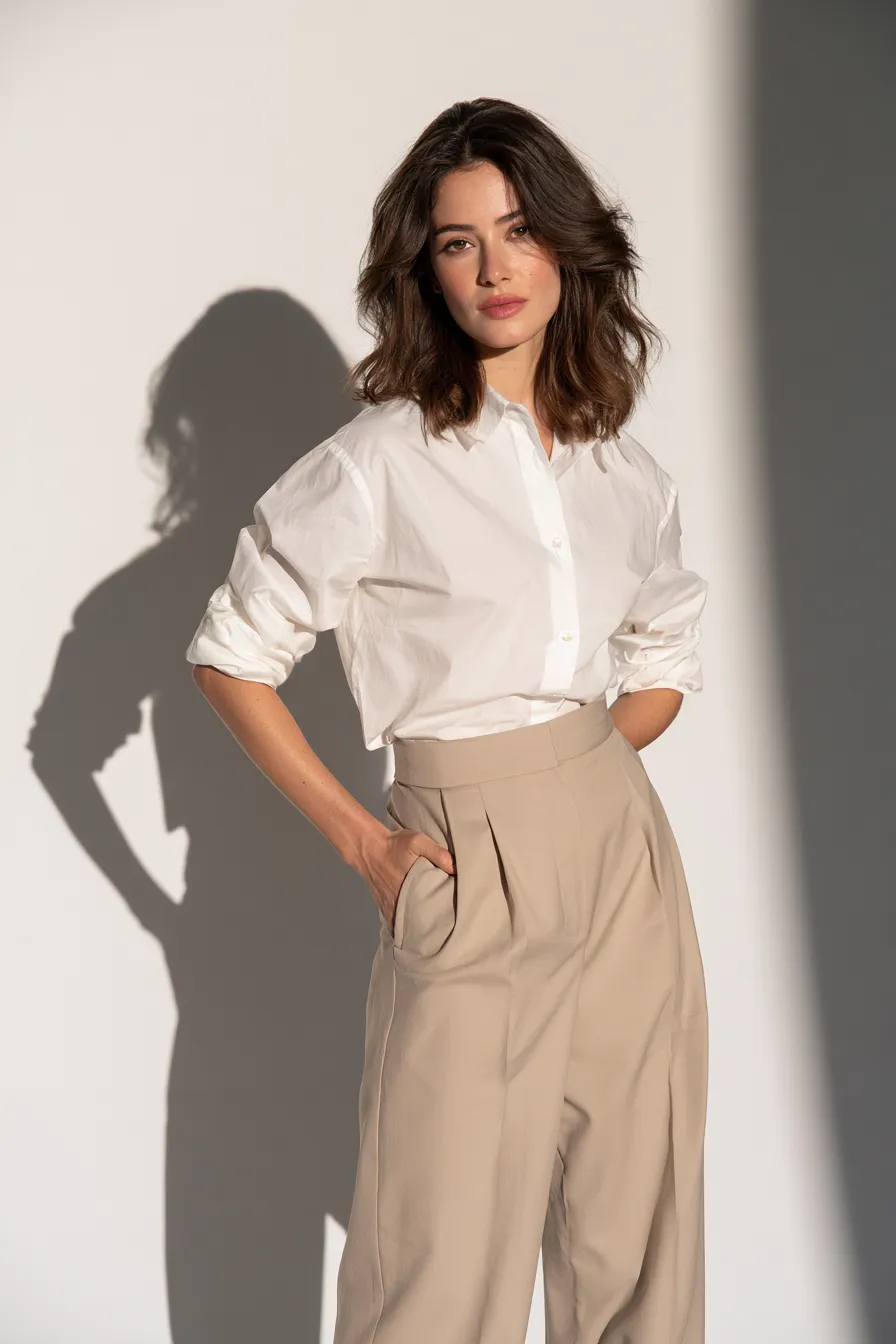
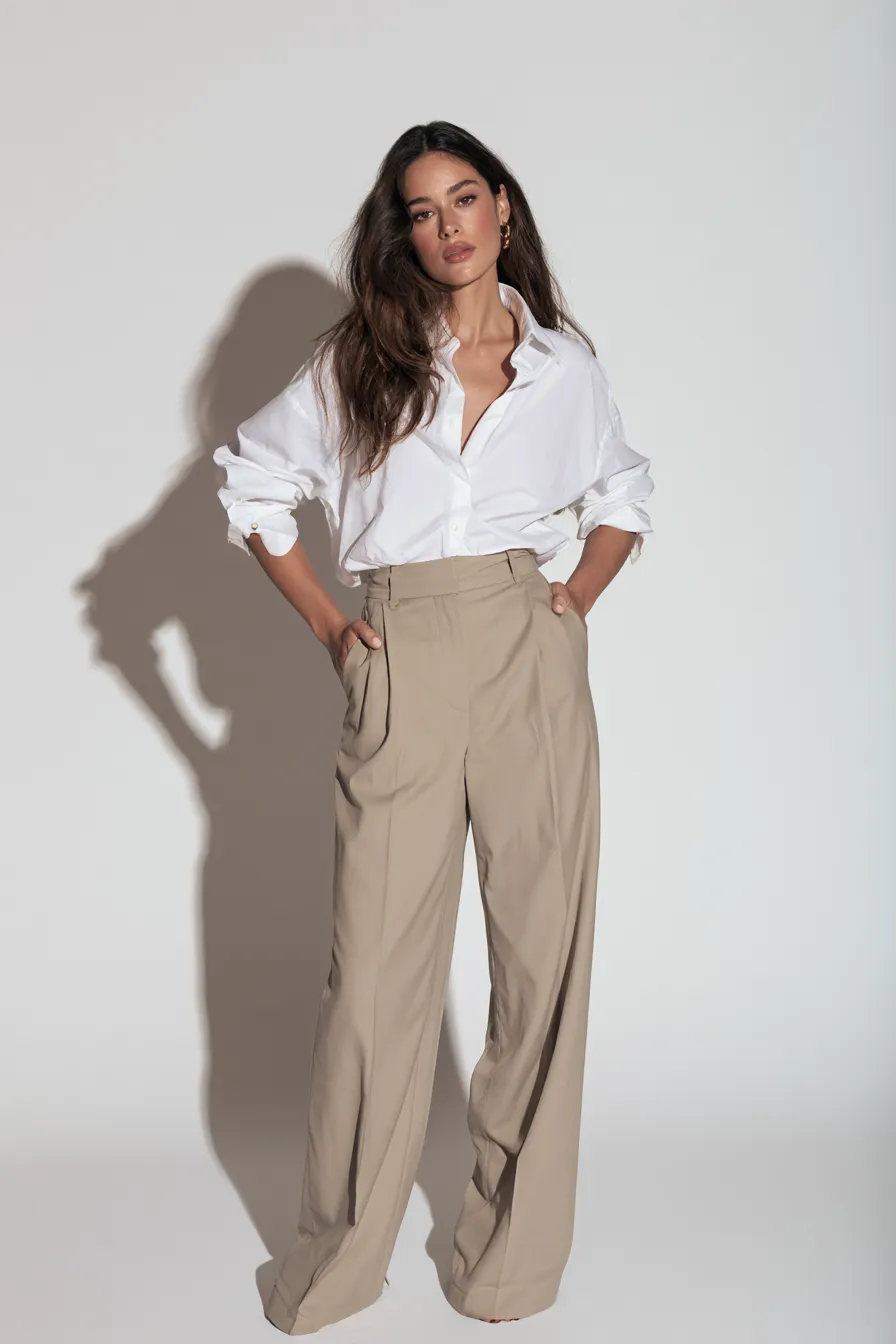
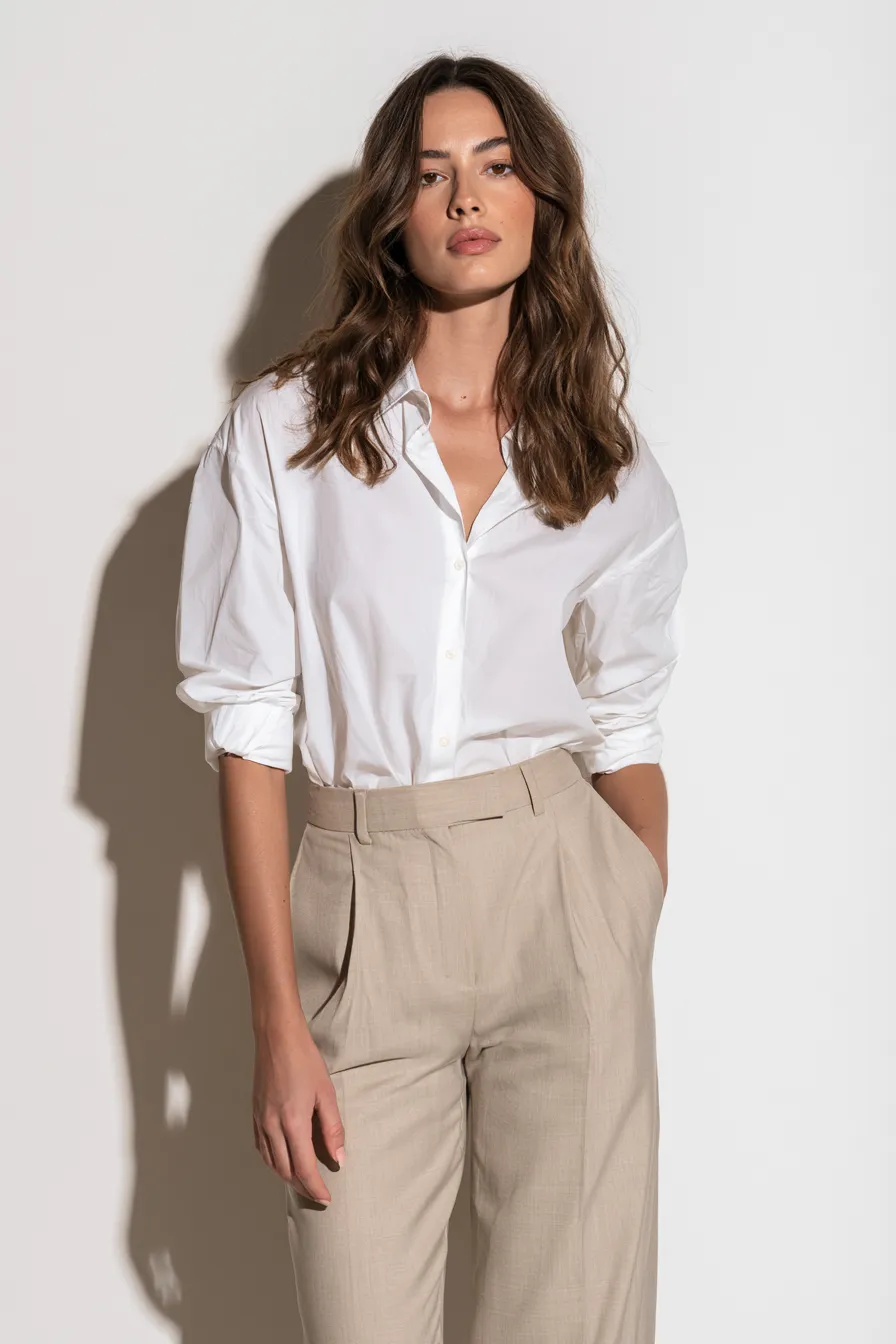
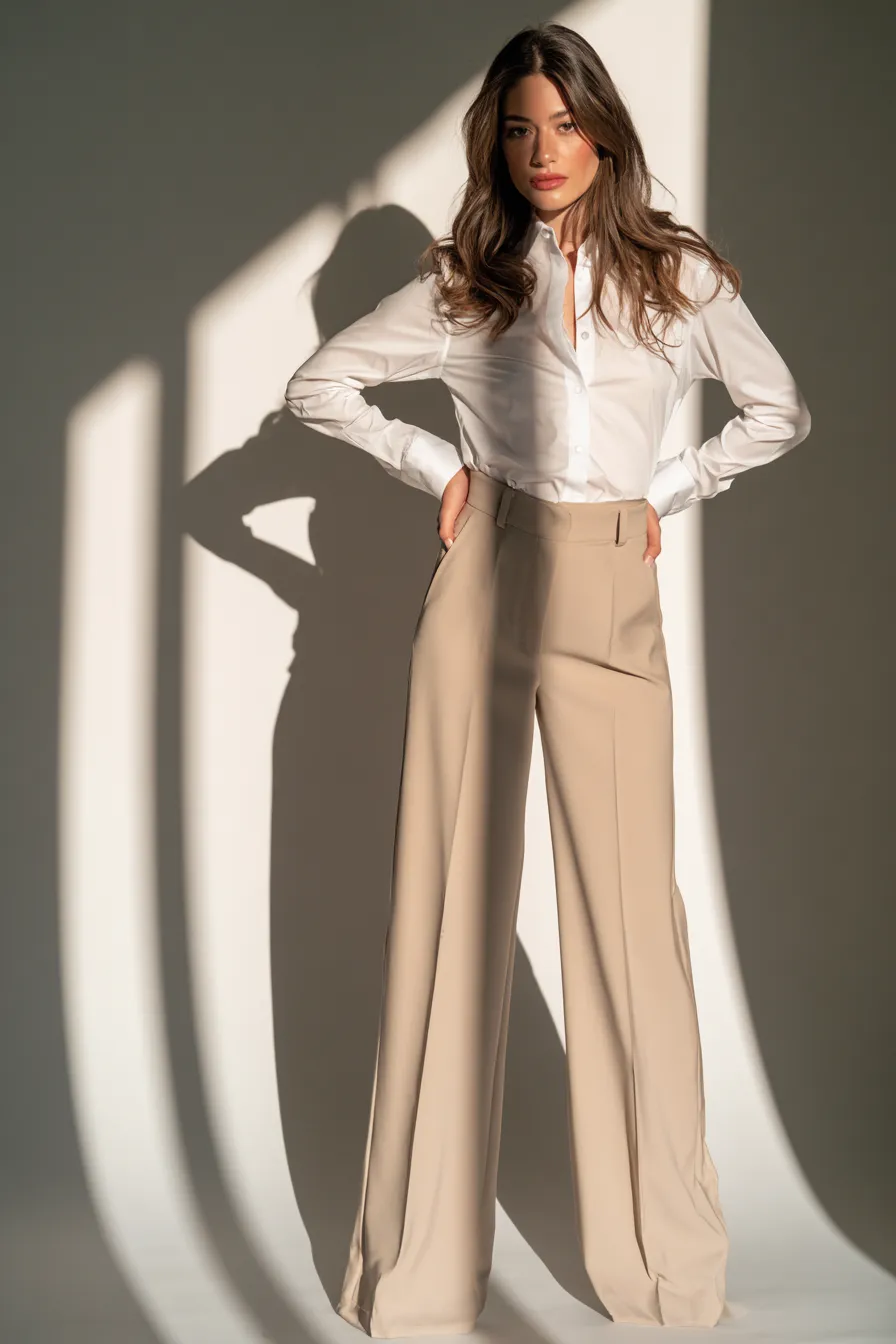
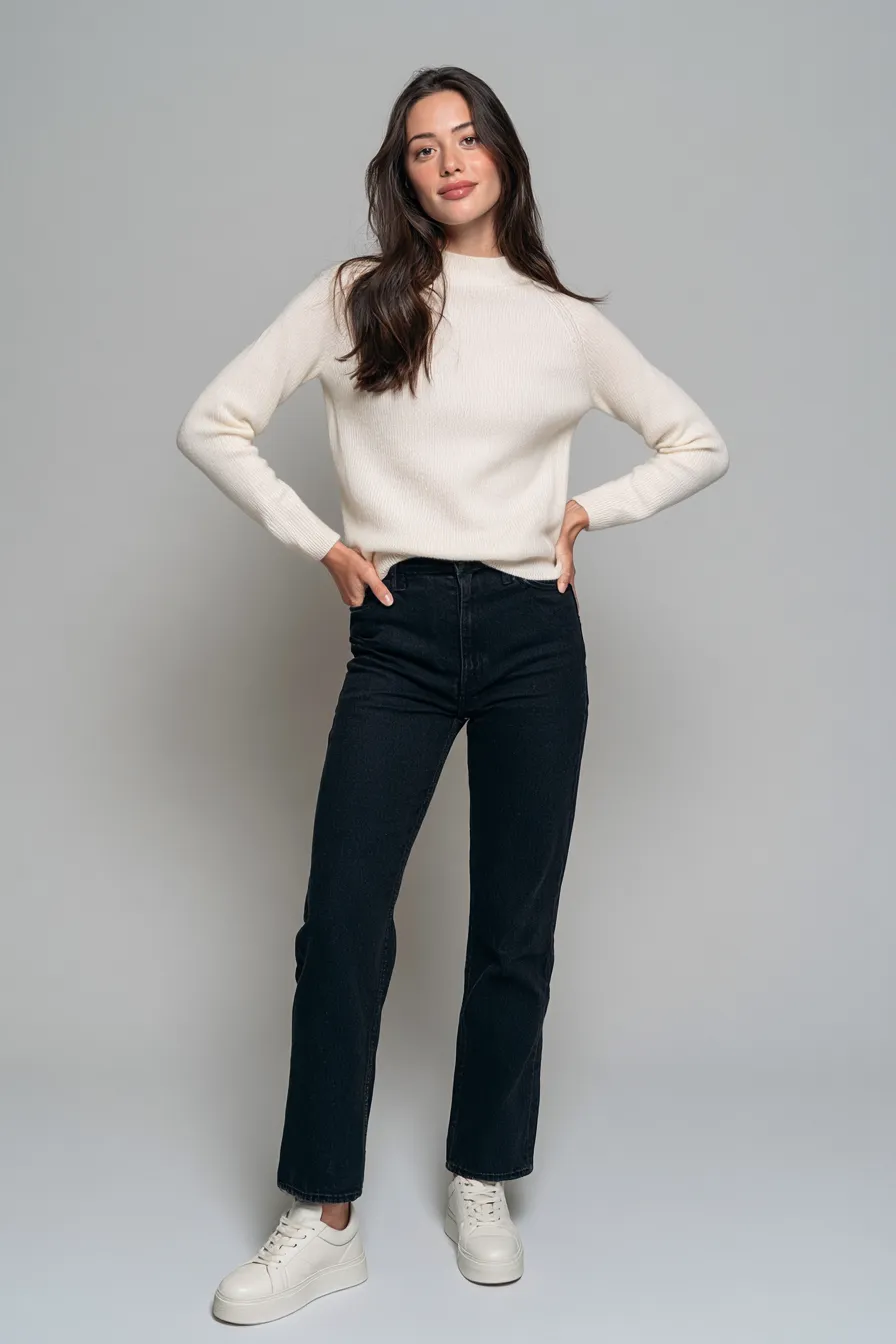
- White fitted button-down shirt. The single most versatile top in existence. Wears under blazers, over bikinis, tucked into high-waisted trousers, half-tucked with jeans, knotted over a midi skirt. Cotton-poplin or a cotton-linen blend holds its shape after washing. This is the piece worth spending $80 to $180 on.
- Black fitted crewneck or V-neck tee. The foundational layering piece. High-quality Pima cotton or modal reads differently than a $10 version — it hangs better, stretches less, and does not go translucent after 10 washes.
- White or cream fitted tee. Pairs with everything in the wardrobe. Slight stretch is fine; avoid excessive Lycra content that causes the fabric to cling at unflattering points.
- Neutral ribbed turtleneck or fitted knit top. Beige, camel, or cream. Works under blazers, on its own with wide-leg trousers, or tucked into a high-waisted midi skirt. This earns its place in 9 months of the year in most climates.
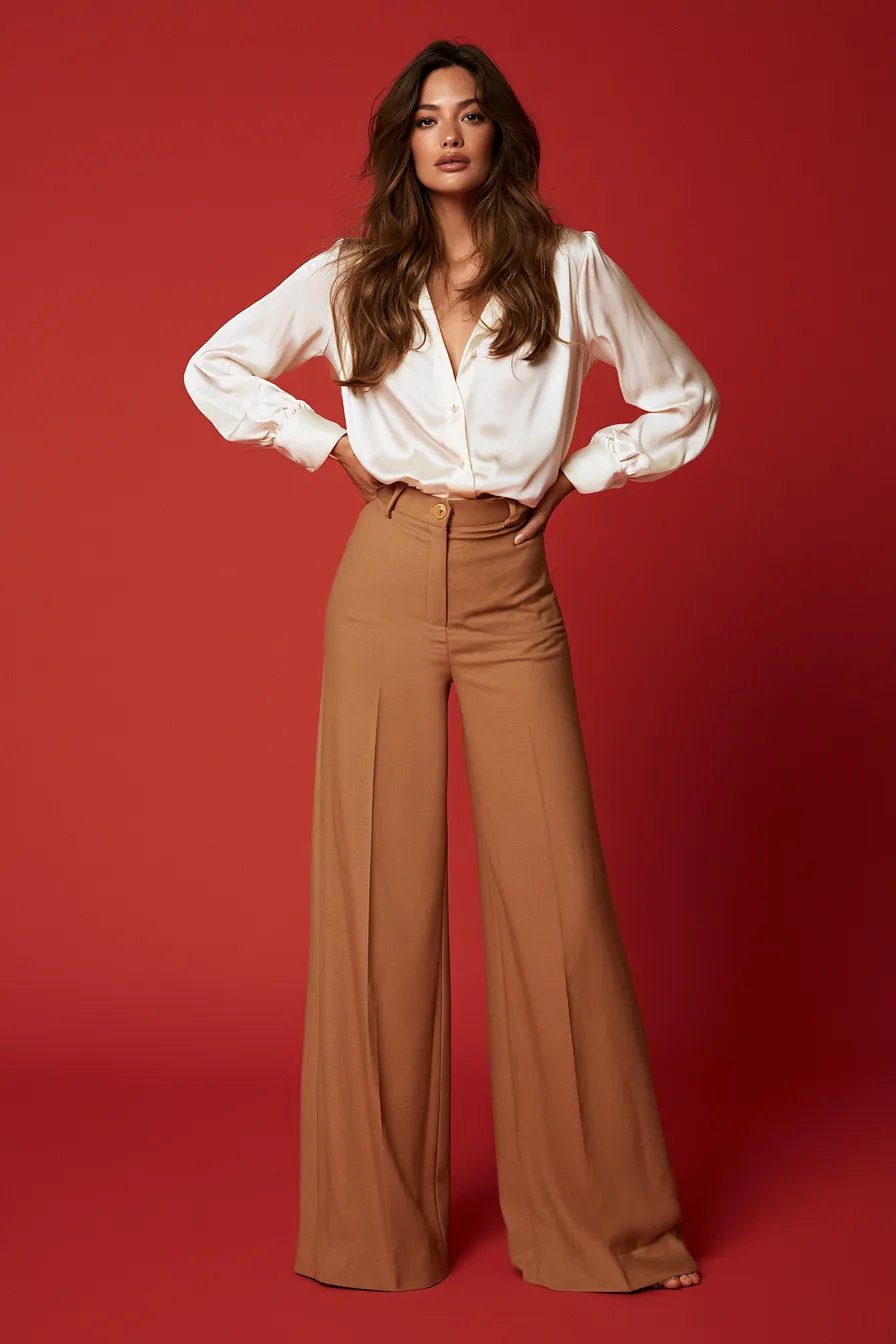
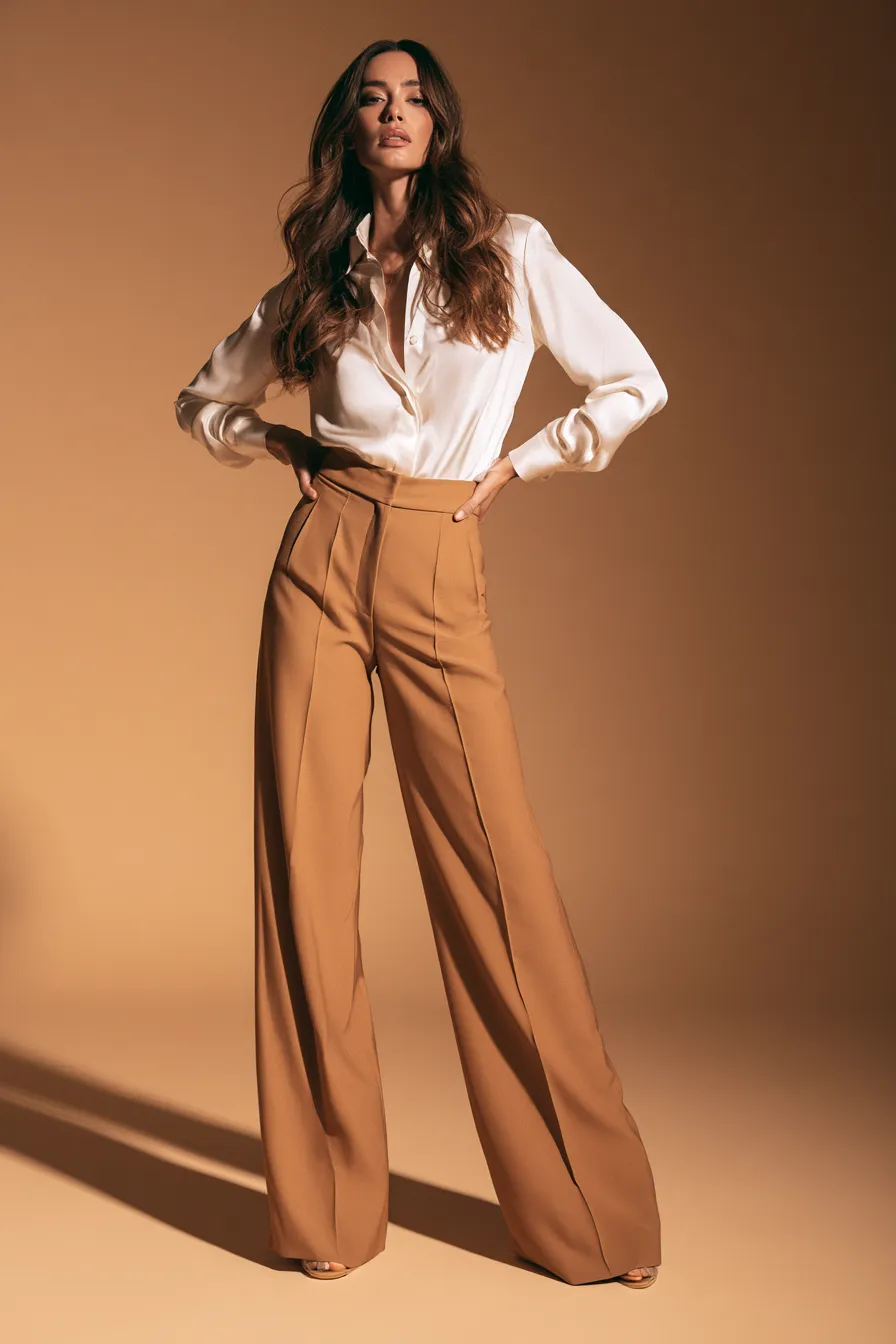
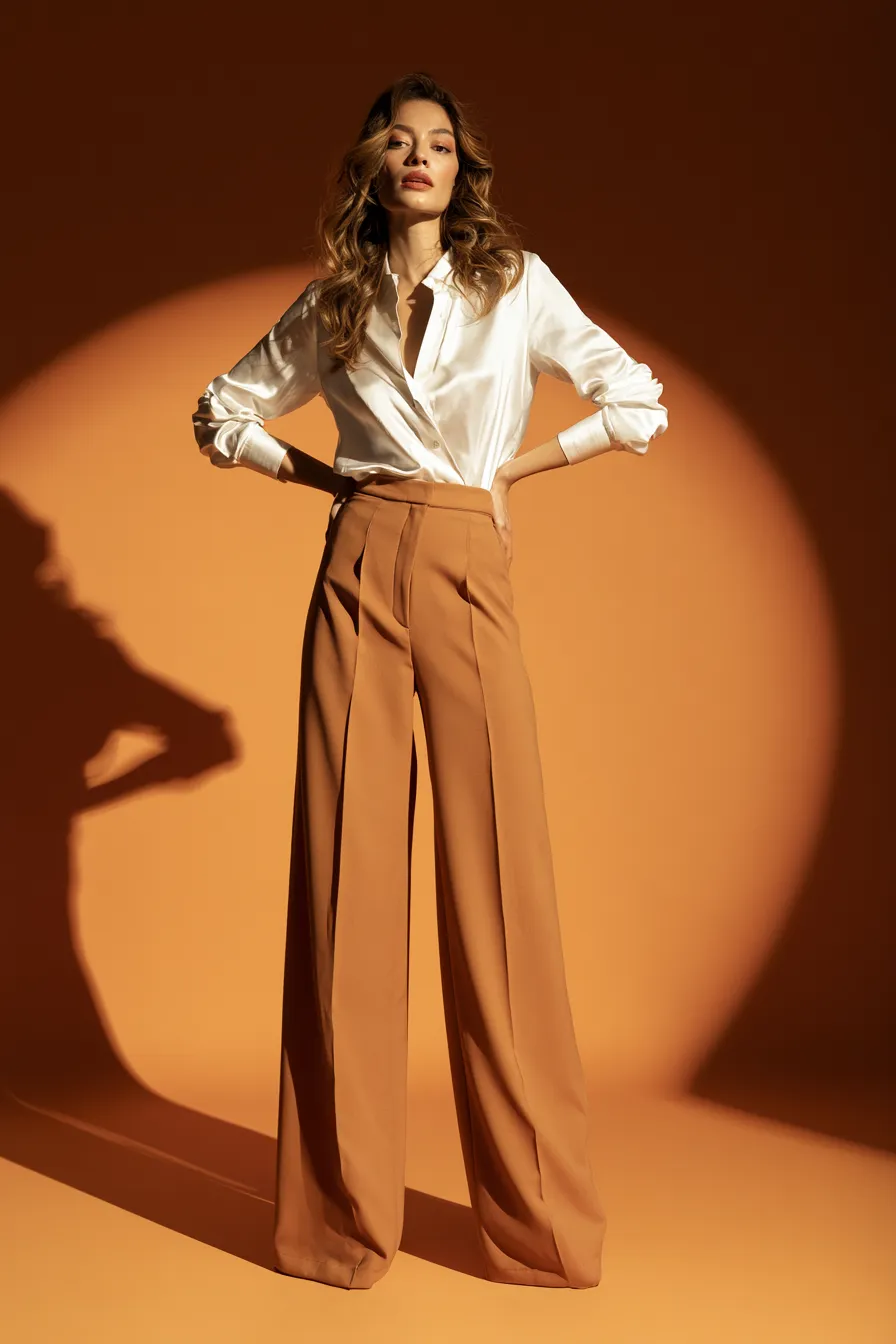
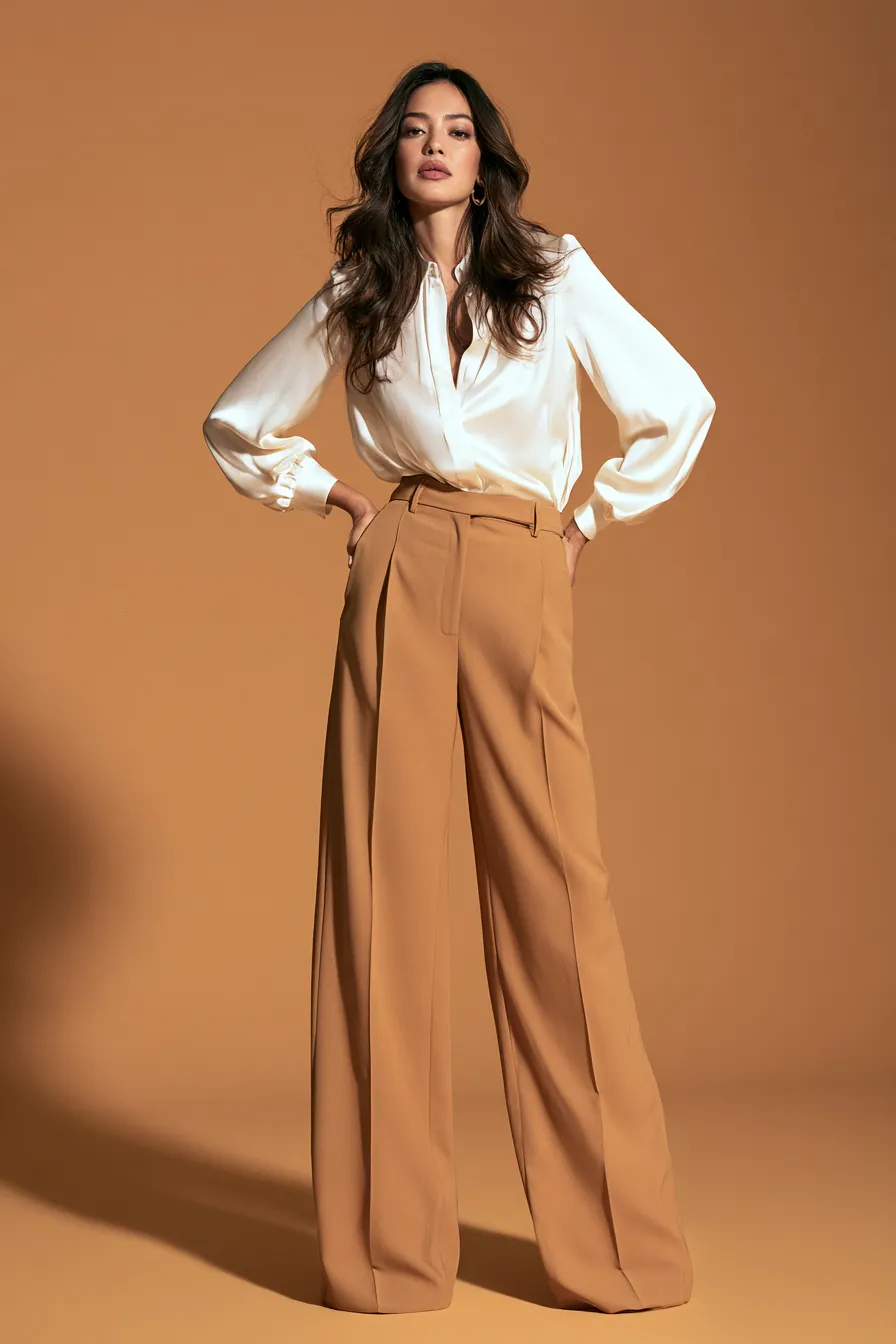
- Silk or satin blouse in a neutral or subtle pattern. The piece that makes everything around it look elevated. Wear it tucked into tailored trousers for work, half-tucked with straight-leg jeans for the weekend, or under a blazer. Washable silk from brands like Quince or Equipment has made this accessible at $80 to $150.
- Striped long-sleeve top. Breton stripes in navy and white or black and white are perennially relevant and pair with jeans, trousers, skirts, and shorts. One stripe piece per capsule is enough.
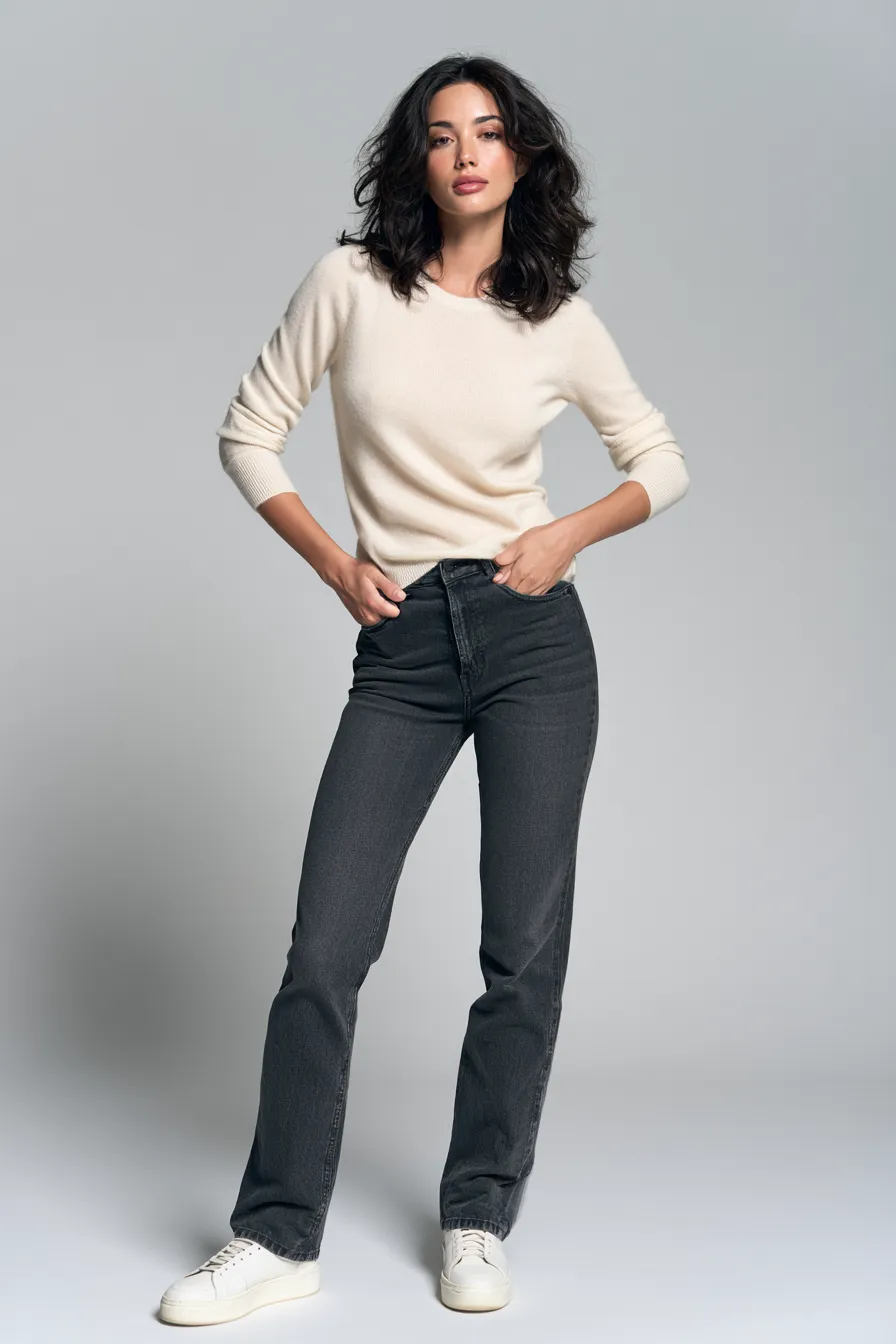
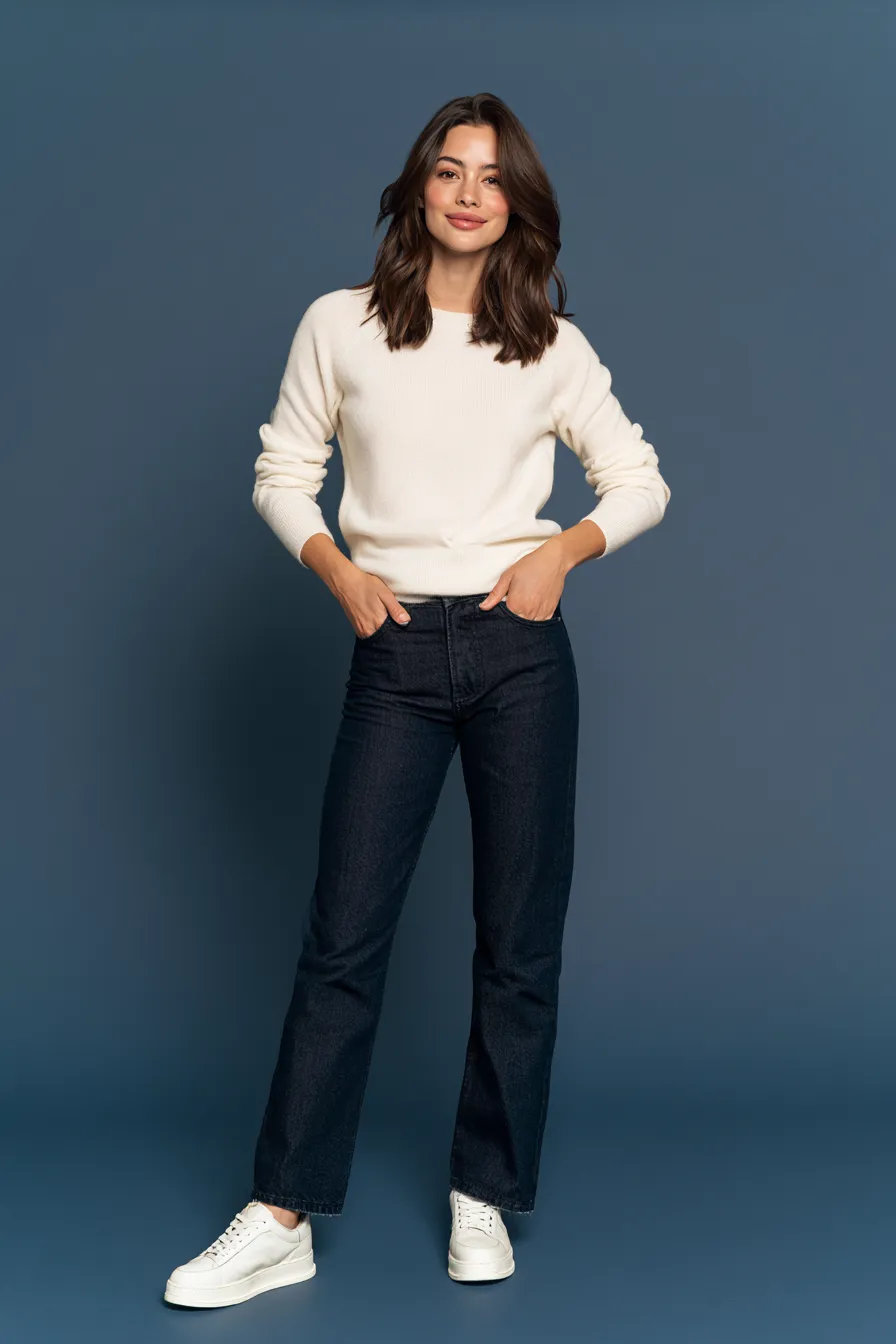
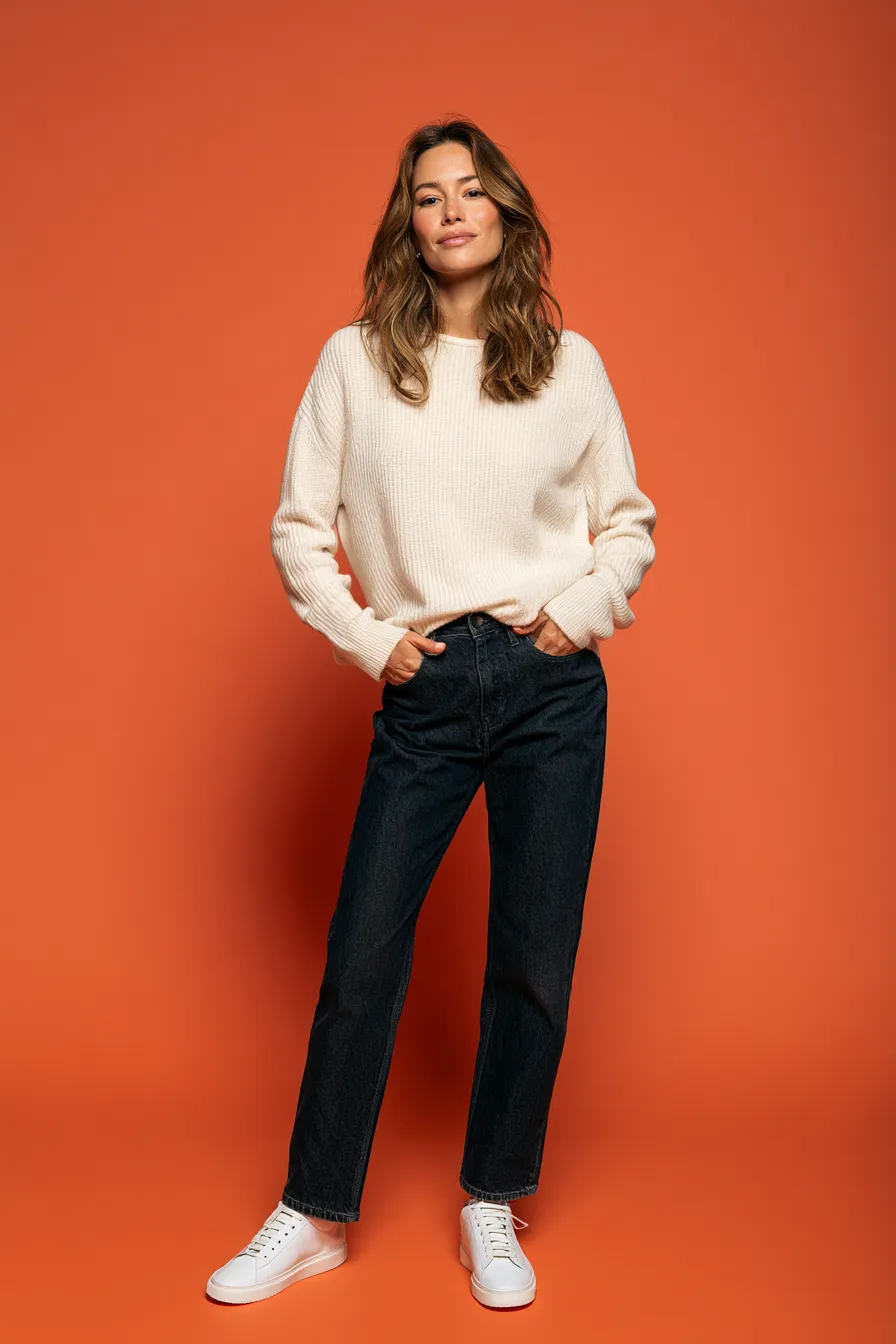
- Fitted cashmere or merino sweater. Mid-weight, crew or V-neck. This is the other piece — alongside the white button-down — where quality investment pays off most visibly. A $200 cashmere sweater worn 80 times over 5 years costs $2.50 per wear. A $40 acrylic sweater worn 10 times before pilling costs $4.00 per wear and adds visual noise.
- Cropped fitted jacket or structured cardigan. The layer that transitions a casual bottom into a smart-casual look. Hip-length, structured enough to hold its shape, in a neutral that works across the other tops and bottoms.
Bottoms — 7 Pieces
- Dark-wash straight-leg jeans. Not skinny, not wide, not boyfriend. Straight-leg sits between all of these and works with the most shoe and top combinations. Dark wash reads as smarter, extends the jeans into more dress-code contexts, and hides wear better than mid or light wash.
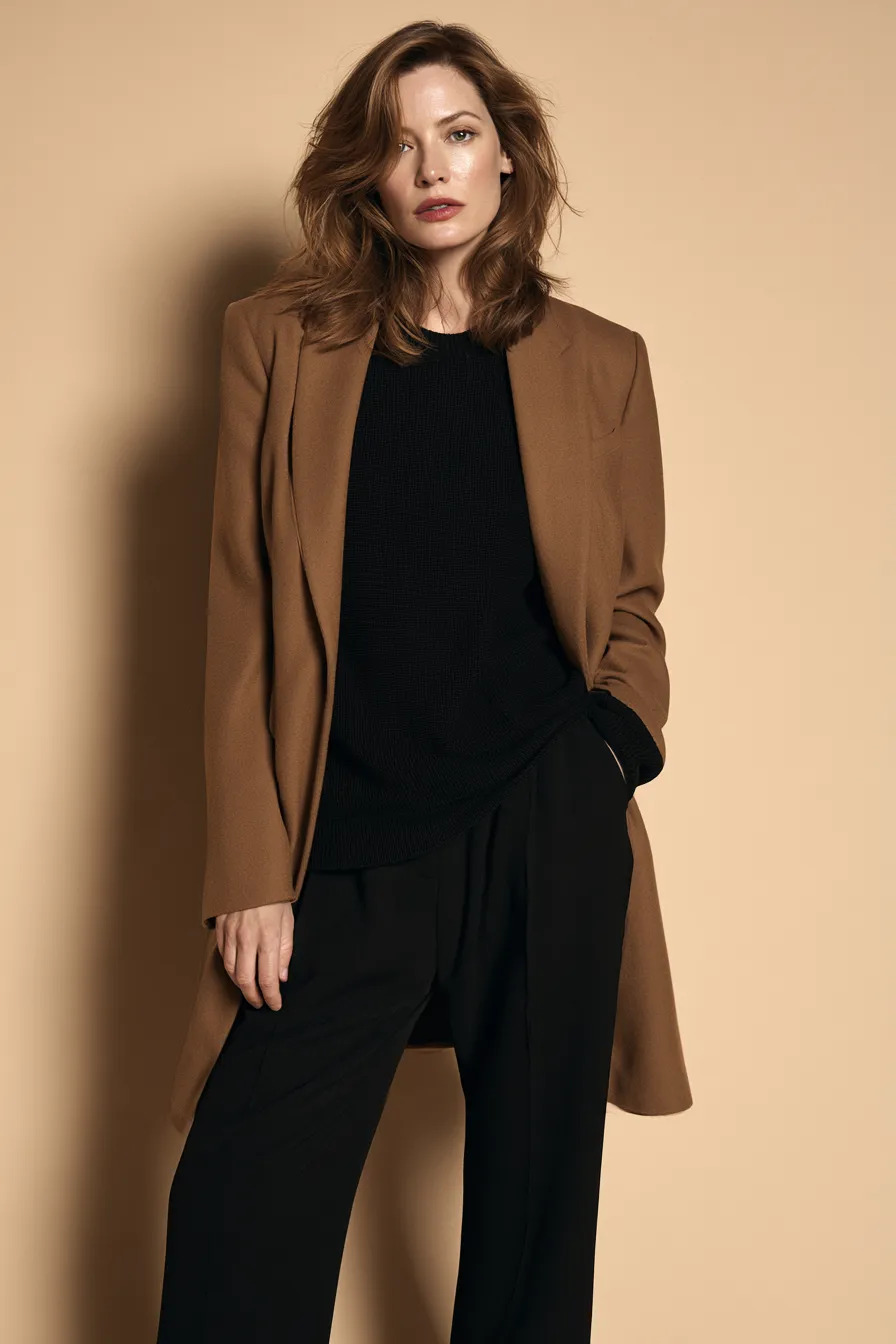
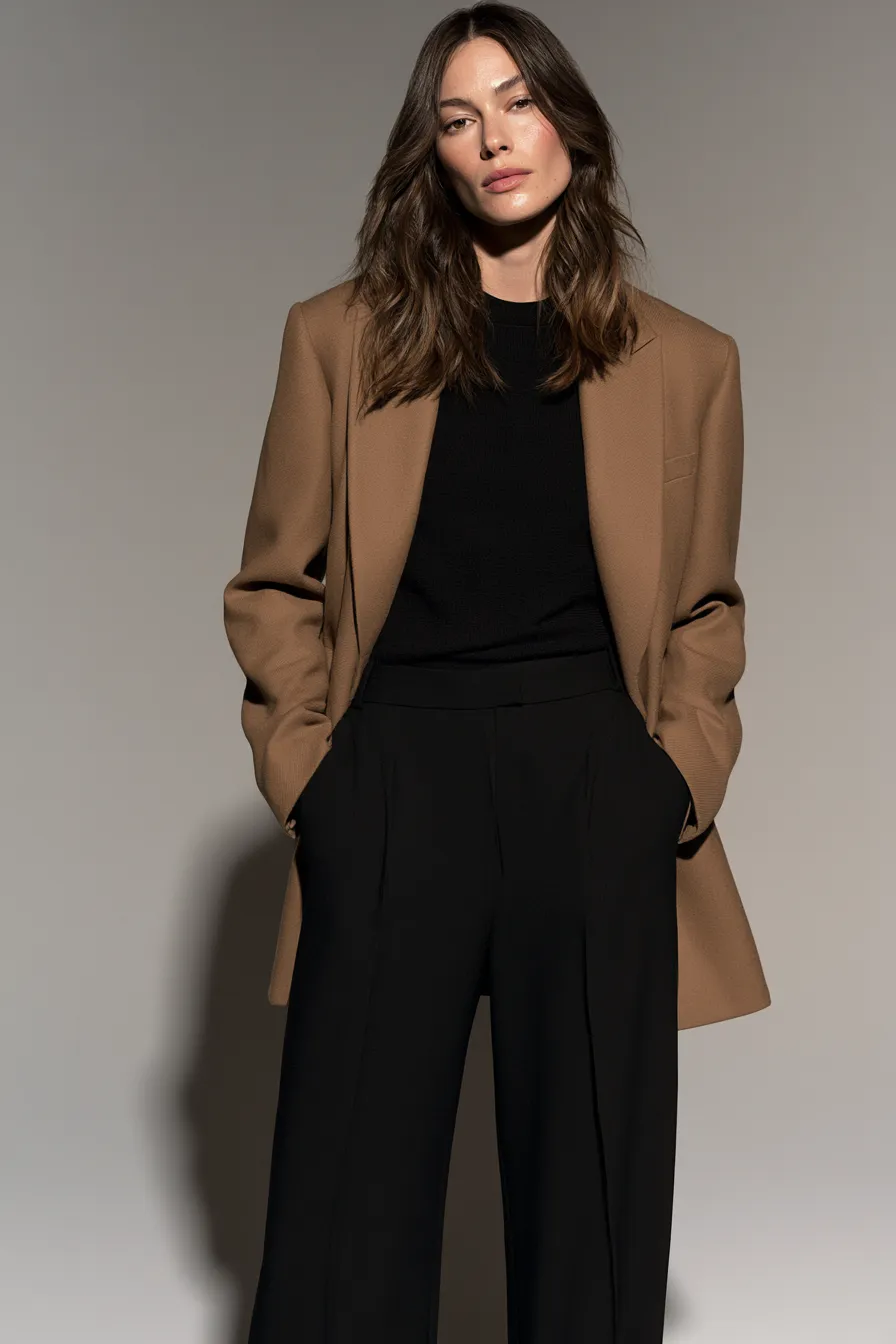
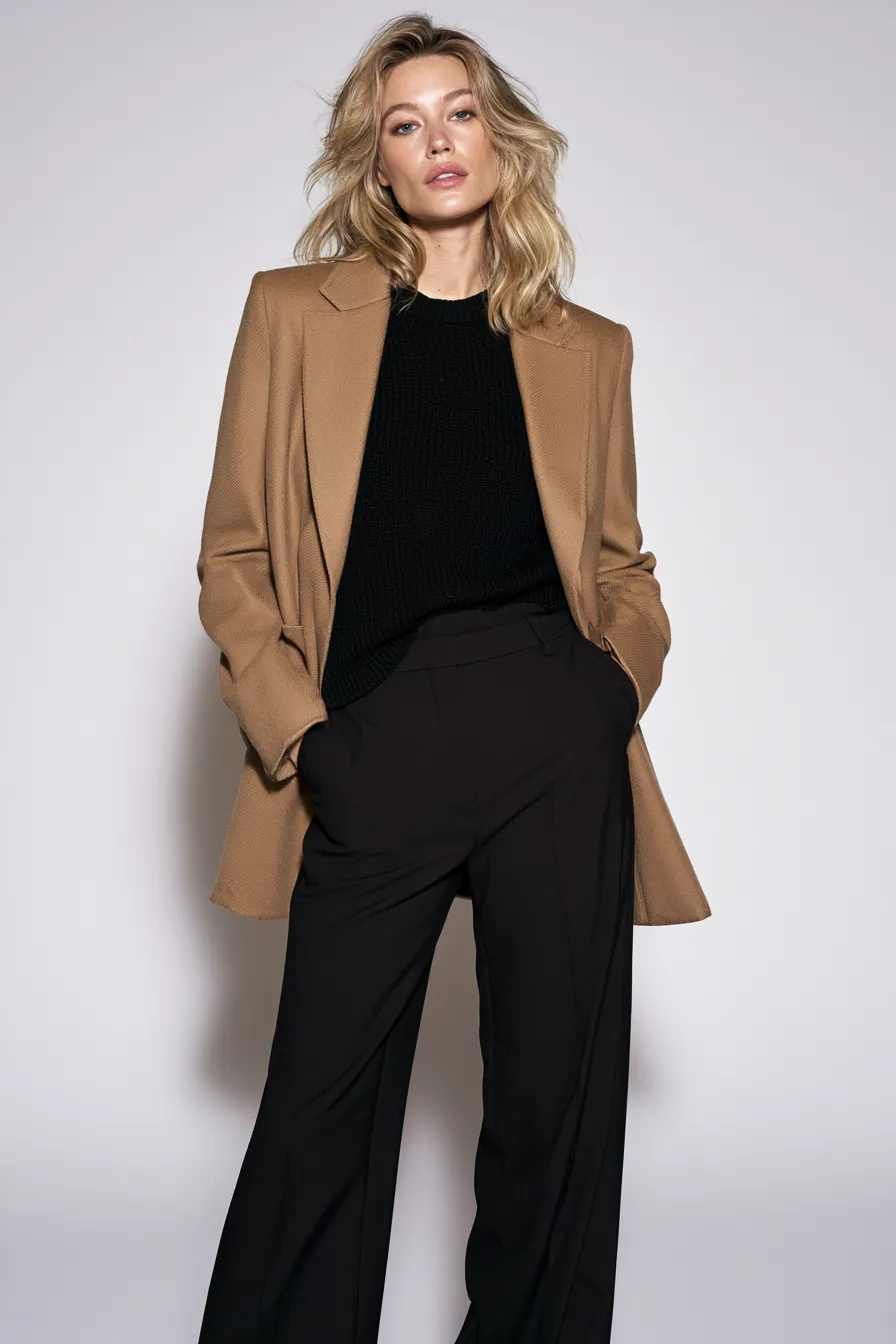
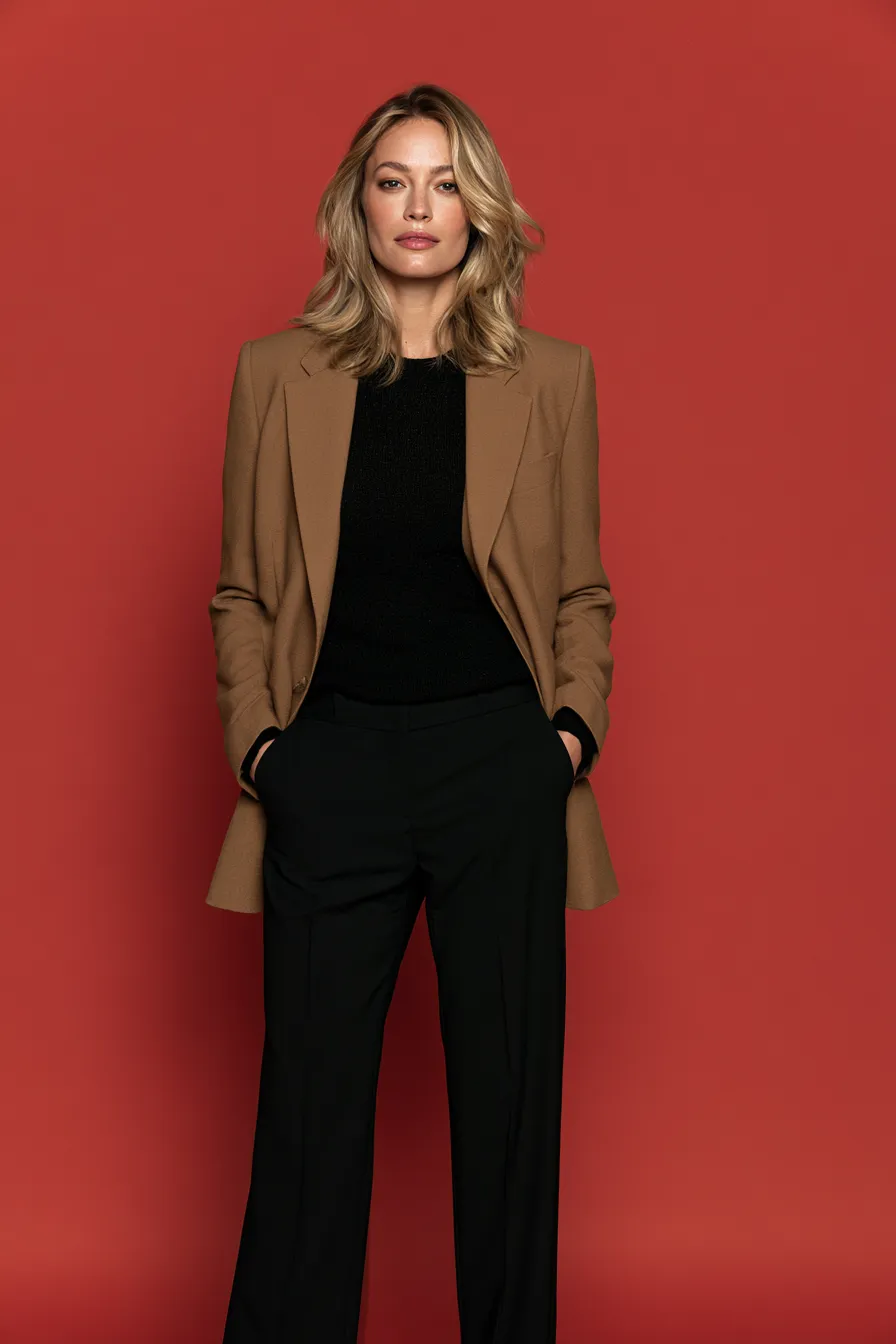
- High-waisted wide-leg trousers in a neutral. The defining trouser silhouette of the mid-2020s. In camel, cream, charcoal, or black. These have taken over from the slim trouser as the default professional bottom, and for good reason — they work on most body types, pair with both fitted and relaxed tops, and read as smart without effort. Wide-leg trousers are dominating professional dressing and belong in every 30s capsule wardrobe as a non-negotiable.
- Tailored black trousers. Straight or slightly tapered, high-waisted, in a fabric with structure — ponte, a wool blend, or a quality polyester that does not wrinkle. This is the professional fallback that works when the wide-leg trouser feels too casual for the context.
- Midi skirt in a neutral or subtle print. A-line or straight cut with a waist seam. Pairs with 6 of the 8 tops in this list and extends into both casual and formal contexts depending on footwear and accessories. Satin, linen, or a structured cotton are the best fabric choices.
- White or cream wide-leg jeans or trousers. The summer bottom that makes every top look more considered. White denim in a straight or wide cut or linen trousers in cream — either serves the same function: brightening and lightening every outfit they appear in.
- Fitted knee-length shorts or tailored shorts in a neutral. For the 4 to 6 months of warm weather most women experience. Linen, cotton, or a structured crepe. These make a casual summer look feel pulled together when paired with any of the tops above.
- Black ponte or denim mini or midi pencil skirt. The bottom that anchors the most dressed-up casual outfits. Pairs with fitted tops and heels for evening, with an oversized knit and sneakers for the weekend.
Dresses — 4 Pieces
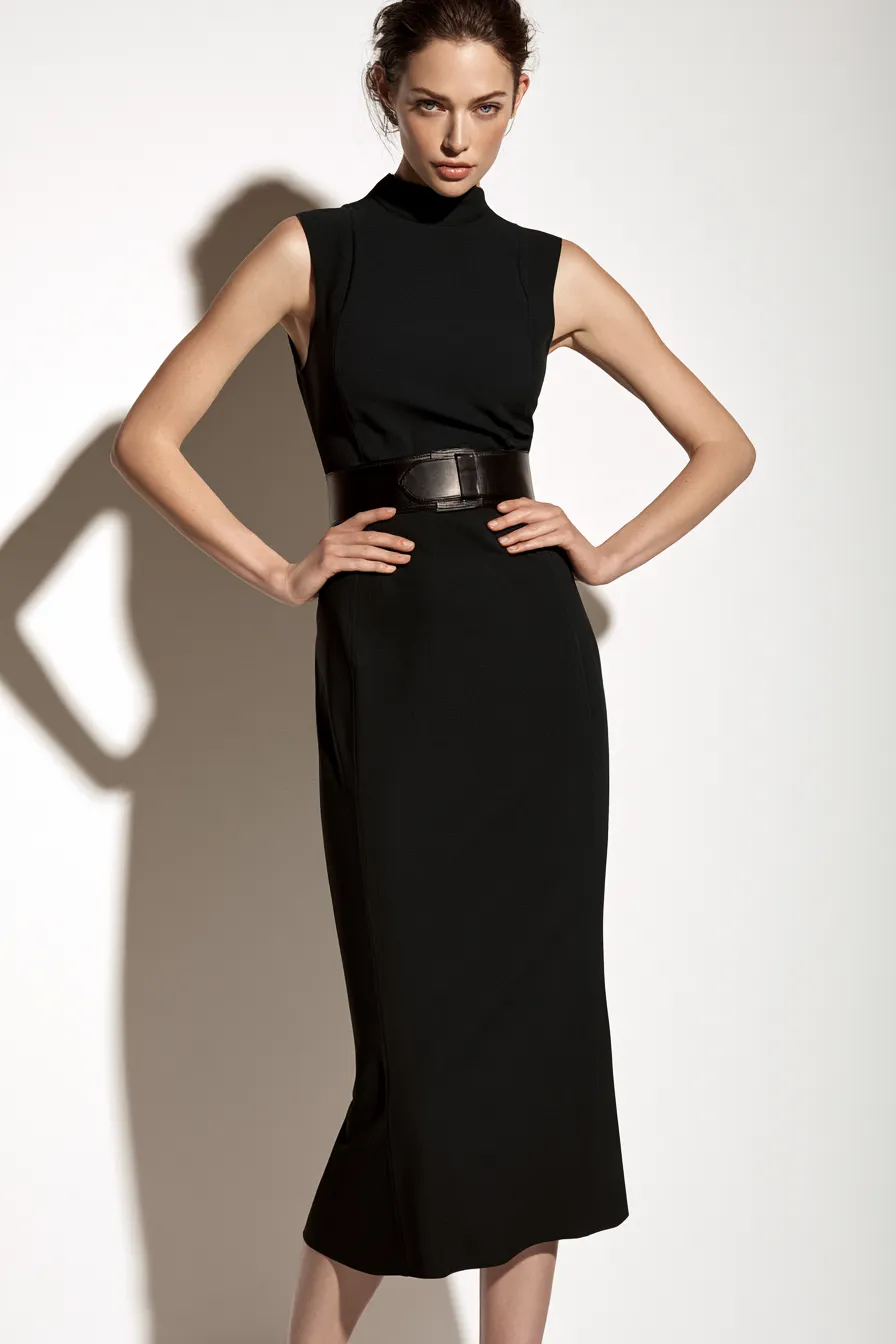
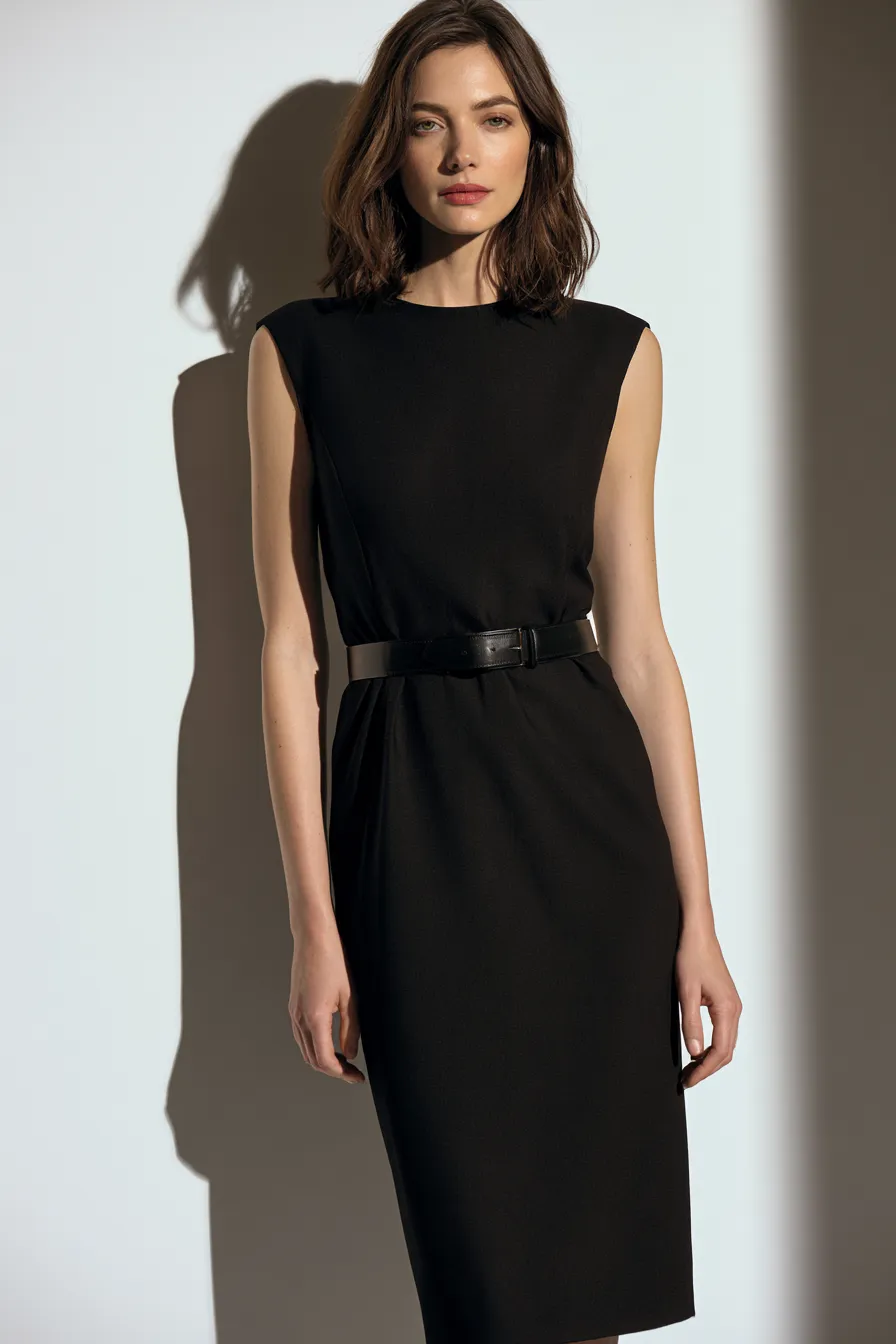
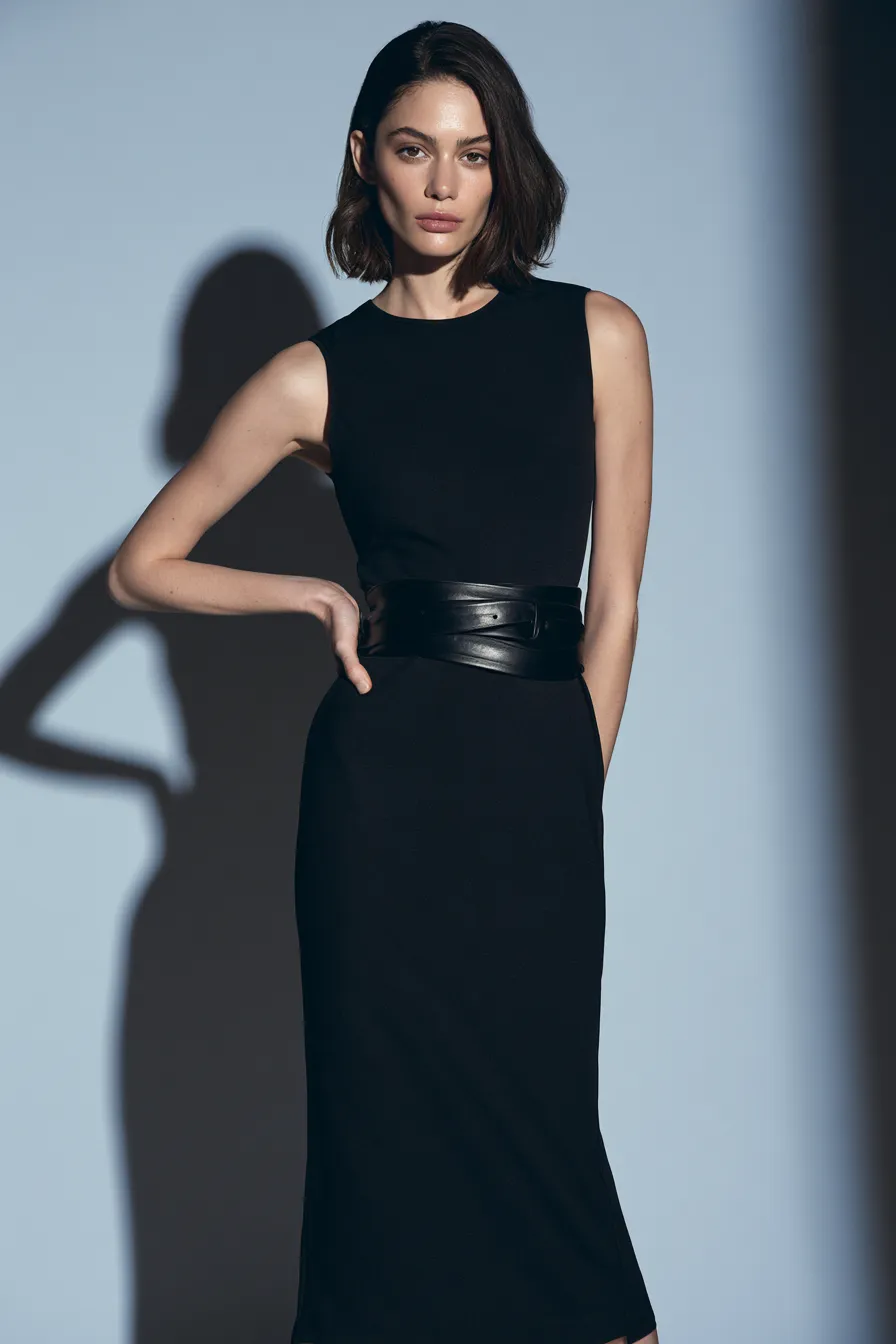
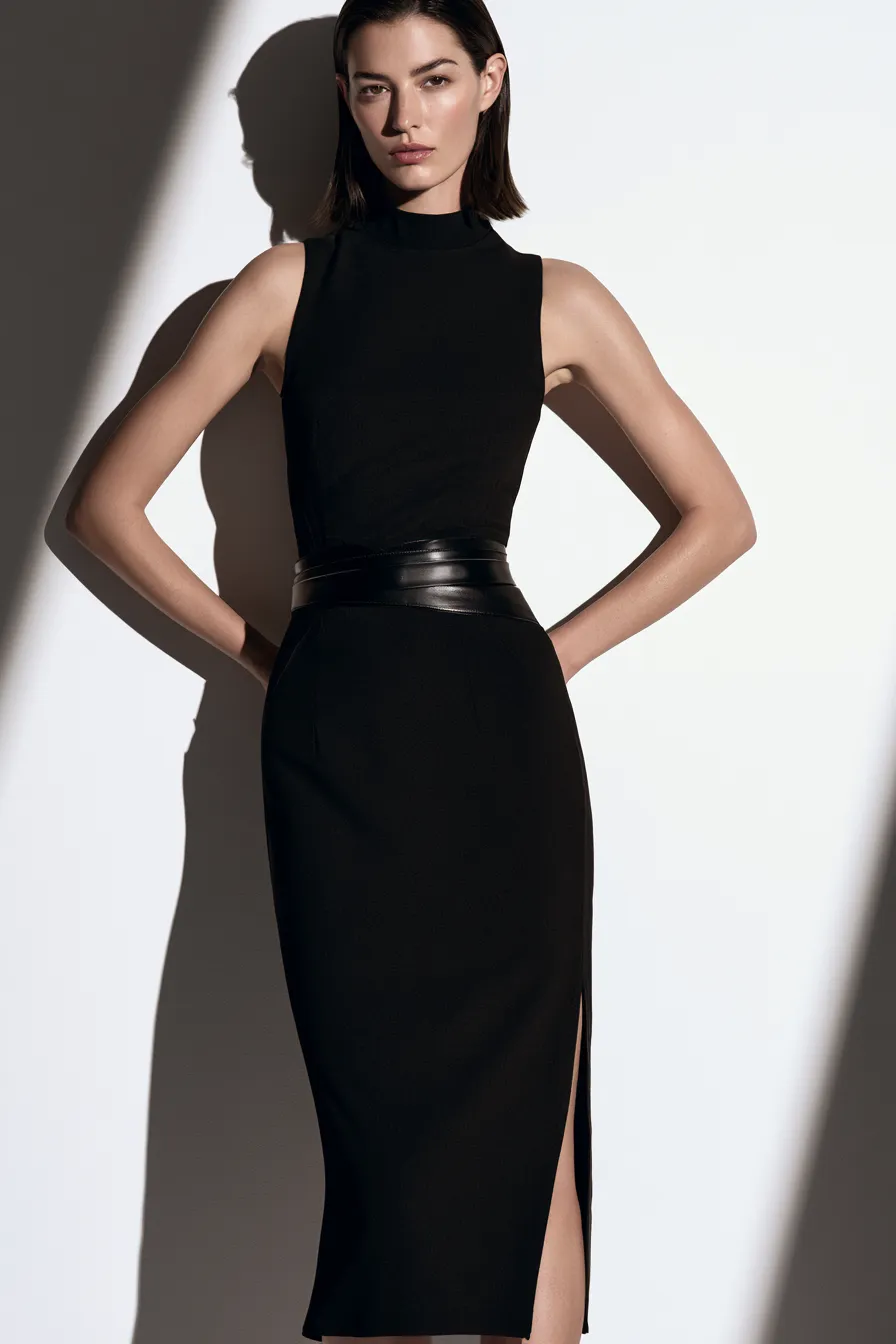
- Little black dress in a versatile length. Midi or knee-length, fitted but not body-con, in a fabric that does not wrinkle in a suitcase. This single piece handles work functions, casual dinners, weddings as a base with accessories, and evening events with a change of shoes. A black dress can genuinely shift from office to after hours with one accessory change — this is the definition of capsule efficiency.
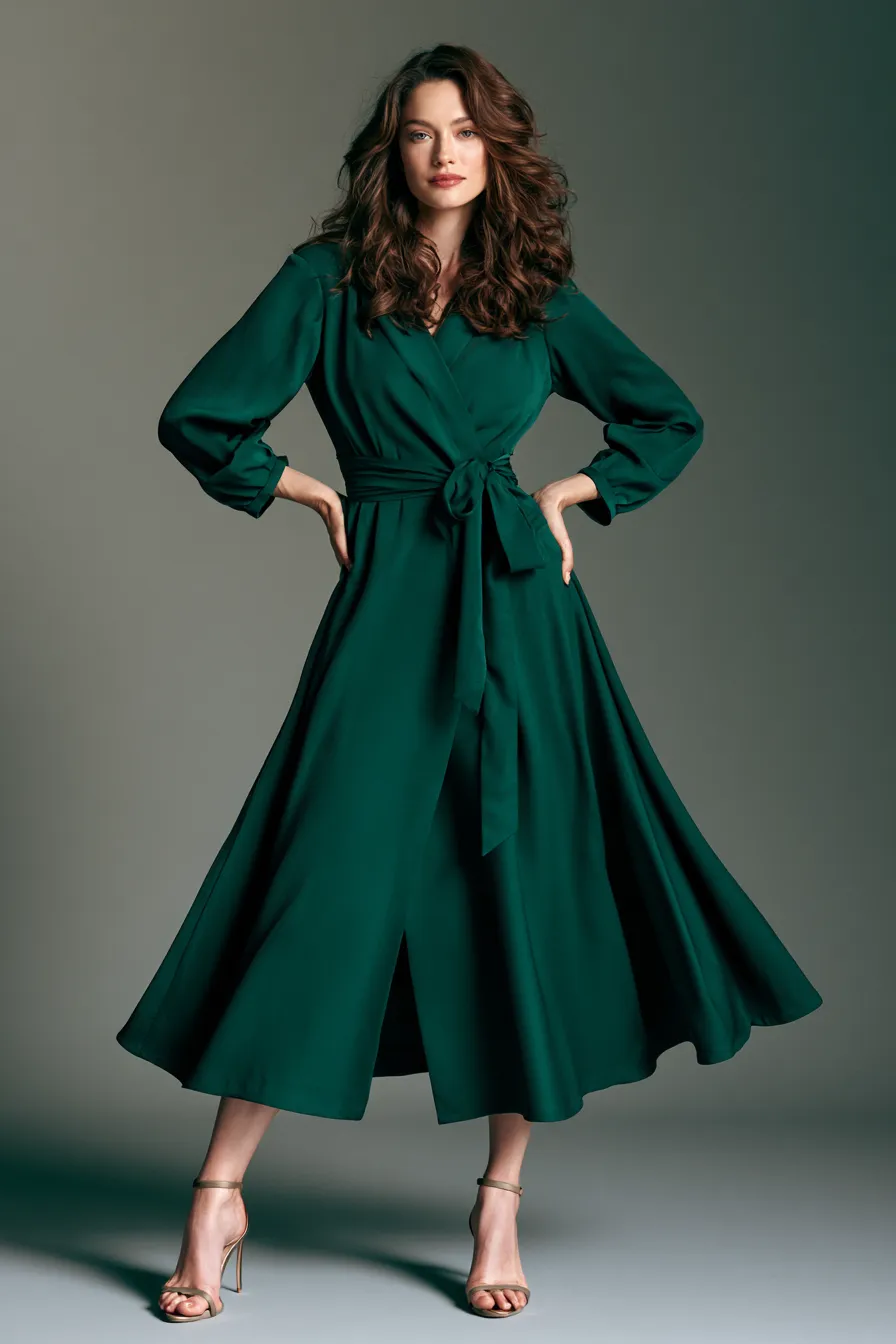
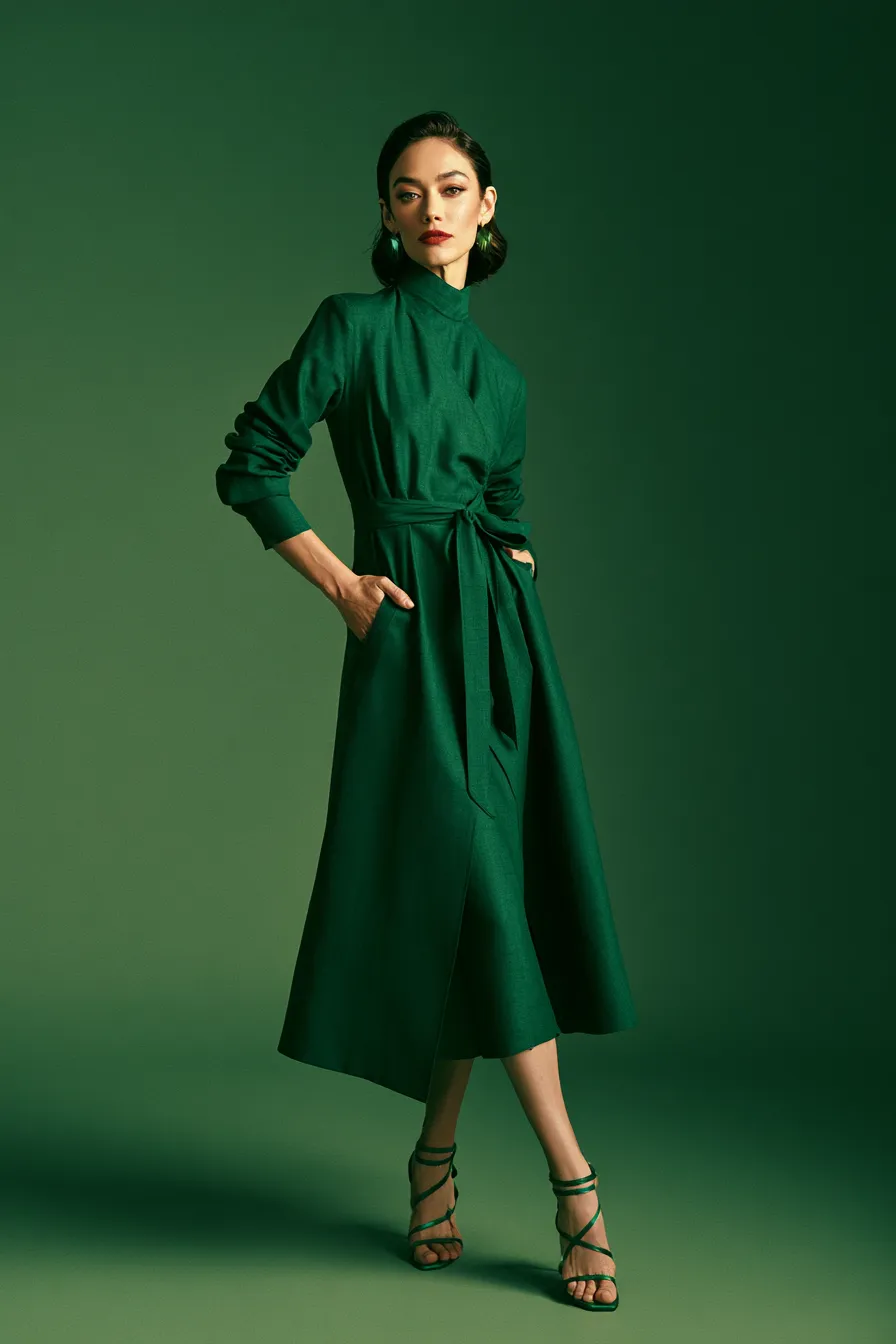
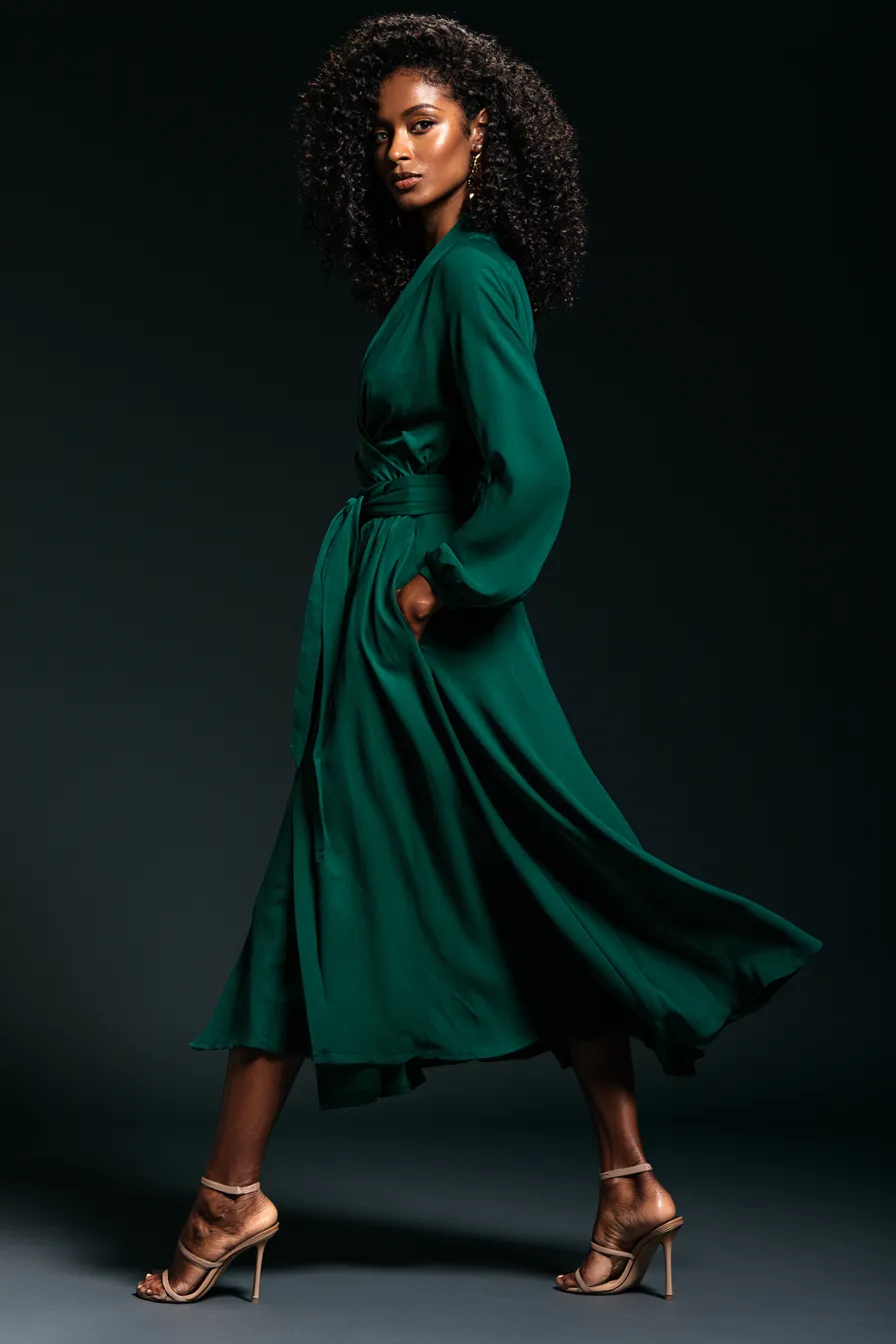
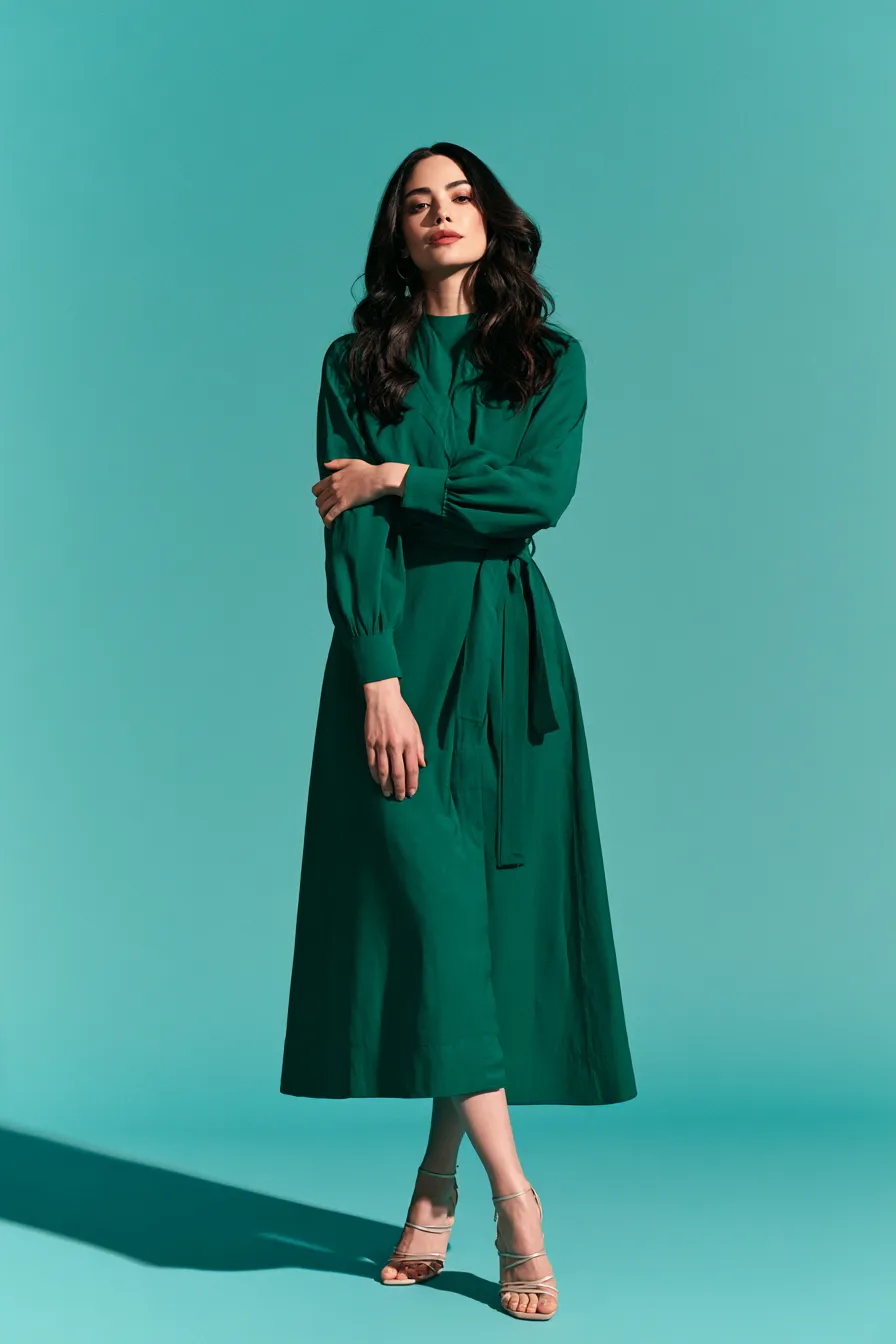
- Wrap dress in a neutral or subtle pattern. The most figure-forgiving and universally flattering dress silhouette. Works in all seasons with layering, fits a range of body types without alteration, and crosses from casual to semi-formal depending on footwear.
- Linen or cotton shirt dress for summer. Belted or self-belted. This is the one-piece outfit for warm months that works from Saturday market to office in the right fabric weight. Olive, navy, cream, or tan are the colors that work hardest.
- Fitted knit midi dress. Jersey or rib-knit, in black, navy, or a deep neutral. This is the dress that gets worn most frequently once it is in the wardrobe — it requires zero styling decisions, packs to nothing, and looks more expensive than it costs.
Outerwear — 3 Pieces
- Trench coat in camel or khaki. The coat that works over every other piece in this wardrobe. A cropped trench coat shifts with every season and pairs with jeans, trousers, dresses, and skirts equally. Full-length or knee-length depending on your height and preference.
- Structured blazer in a neutral. Black, navy, camel, or cream. Hip-length, with structure at the shoulder, closable at the waist. This is the blazer that redefines professional style when worn correctly — it lifts any bottom from casual to smart-casual or professional in one layer.
- Lightweight puffer or wool coat for winter. Climate-dependent. In colder climates, a wool or cashmere blend coat in a neutral. In milder climates, a packable lightweight down jacket. One coat per season is the capsule rule — the trench handles shoulder seasons, this handles winter.
Shoes — 5 Pairs
- White leather or leather-look sneakers. The shoe that makes every casual outfit cohere. Stan Smiths, New Balance 574s, Common Projects if the budget allows. This pair does the most work of any shoe in the capsule.
- Classic black ankle boots with a low or block heel. The boot that works from October to March over jeans, under trousers, and with midi skirts. A 2 to 3 cm heel is the most versatile height — walkable enough for full days, elevated enough for evenings.
- Pointed-toe flat or low-heel in a neutral. Ballet flat, loafer, or kitten heel. The shoe that elevates a casual outfit into smart-casual without the commitment of a heel. Nude, black, tan, or a metallic.
- Strappy sandal or heel for warm months and evenings. One formal-ready shoe that transitions the wardrobe into evening contexts. Heel height is personal — what matters is that it works with at least 5 of the dress and skirt options in the list.
- Comfortable walking shoe or loafer for everyday. A leather loafer, a quality sneaker in a second neutral color, or a supportive flat. The shoe for full days that need comfort without sacrificing the visual quality of the outfit.
Bags — 3 Pieces
- Structured tote in black or tan leather. Large enough for a laptop, work files, or a change of shoes. This handles every professional and errand context.
- Small crossbody or shoulder bag in a neutral. For evenings, travel, and weekends when the tote is too large. Leather or leather-look in black, tan, or a complementary neutral.
- Canvas or cotton tote. The practical everyday bag for grocery runs, the gym, the beach, and any context where the leather bag would be damaged. Monochrome or a subtle print.
Accessories — 2 Key Pieces
- One quality leather belt in a neutral. Thin to medium width. The belt that cinches the trench, defines the shirt dress, and elevates the jeans-and-tee combination.
- One versatile scarf in a neutral or subtle pattern. Silk, wool, or a blend. Wears around the neck, in the hair, tied on a bag handle, or as a light shoulder layer. A single quality scarf adds 20 visual outfit variations at zero additional clothing cost.
Capsule Wardrobe Pieces Compared — What to Spend and What to Save
Not every capsule piece deserves the same budget. The following table organizes the core 32 essentials by investment priority — based on cost-per-wear data, quality degradation rates, and how visible the quality difference is at different price points.
| Category | Piece | Investment Level | Why | Budget Range |
|---|---|---|---|---|
| Tops | White button-down shirt | High | Worn constantly, quality visible | $80 – $180 |
| Tops | Cashmere or merino sweater | High | Pilling is instant quality signal | $120 – $280 |
| Tops | Silk or satin blouse | Medium | Washable silk now accessible | $70 – $150 |
| Tops | Black and white fitted tees | Low–Medium | Replace every 1–2 years anyway | $25 – $60 each |
| Bottoms | High-waisted wide-leg trousers | Medium–High | Daily wear, structure matters | $80 – $200 |
| Bottoms | Dark-wash straight-leg jeans | Medium | Mid-range denim lasts 3–5 years | $70 – $150 |
| Bottoms | Tailored black trousers | High | Fit and fabric quality obvious | $100 – $250 |
| Dresses | Little black dress | High | Worn for key occasions, longevity essential | $120 – $300 |
| Dresses | Wrap dress | Medium | Wide price range for same effect | $60 – $150 |
| Outerwear | Trench coat | High | Visible daily, lasts 10+ years quality | $150 – $400 |
| Outerwear | Structured blazer | High | Silhouette and fabric define outcome | $120 – $350 |
| Shoes | White leather sneakers | Medium–High | Quality leather cleans better, lasts longer | $80 – $200 |
| Shoes | Black ankle boots | High | Worn 5 months per year, quality critical | $150 – $350 |
| Bags | Structured leather tote | High | Daily use, quality leather ages better | $150 – $500 |
| Accessories | Leather belt | Medium | Used daily, visible quality signal | $40 – $120 |
The Colour Palette Behind Every Capsule Wardrobe for Women in Their 30s
The interchangeability that makes a capsule wardrobe work depends almost entirely on color palette discipline. A capsule where every piece works with every other piece mathematically requires that the colors either match, complement, or sit in the same tonal family.
The most functional capsule palette for women in their 30s builds around three neutrals and one or two accent colors. The neutrals do the structural work — they are the colors that appear in the most expensive and most frequently worn pieces. The accent colors add visual interest and express personal style without disrupting the interchangeability of the system.
Neutral foundation options (choose three): Black, white, cream, ivory, camel, tan, khaki, stone, navy, charcoal gray, warm gray. The specific three you choose should reflect your skin tone and what you are naturally drawn to wearing — the capsule system does not work if you build it in colors that are theoretically correct but practically feel wrong on your body.
Accent color options (choose one or two): A deep jewel tone (burgundy, forest green, cobalt, deep rust) that works across seasons, or a brighter seasonal color used only in tops and accessories where it is easier to rotate. Neutral tones in beige and cream are dominating 2026 fashion — building your capsule around these now means your wardrobe is aligned with the current design direction and will not look dated in three years.
The practical test: before adding any piece to your capsule, ask how many other items in the wardrobe it works with. If the answer is fewer than 4, the piece belongs in a different wardrobe. If the answer is 8 or more, it is a genuine capsule essential.
How the 30s Capsule Wardrobe Differs from What You Built in Your 20s
The wardrobe logic of the 20s is experimentation-first — buying pieces to explore aesthetics, try trends, and figure out what you actually like. This produces a closet full of range and very little depth. The capsule wardrobe logic of the 30s is the opposite: depth-first, with every piece earned rather than explored.
Concretely, the differences look like this:
- In your 20s you buy 5 blazers in different colors and wear each one twice. In your 30s you buy one blazer in the right neutral and wear it 80 times.
- In your 20s you have 12 pairs of jeans. In your 30s you have 2, both of which fit perfectly and work with everything.
- In your 20s you buy pieces based on how they look in the store or in a photo. In your 30s you buy based on cost-per-wear projection and how the piece integrates with what you already own.
- In your 20s “versatile” means wearable in multiple ways. In your 30s “versatile” means wearable with at least 6 other specific pieces already in your wardrobe.
If you are approaching a 30s capsule wardrobe for the first time with a wardrobe full of 20s-era pieces, the audit process matters as much as the buying process. Before purchasing anything new, lay out what you currently own and count what you have worn in the last 3 months. If a piece has not been worn in 3 months and has no specific seasonal reason for the absence, it probably does not belong in the capsule.
Building the Capsule Wardrobe in Stages — A Practical Timeline
Building a complete capsule wardrobe in one shopping session is both expensive and rarely effective — without time to test combinations, you buy things that look good in isolation but fail to integrate. A staged approach over 3 to 6 months produces better results at lower total cost.
Stage 1 — Month 1 (Foundation): White button-down, dark-wash straight-leg jeans, black fitted tee, wide-leg trousers, structured blazer, white leather sneakers, black ankle boots. These 7 pieces create 15 to 20 immediately functional outfit combinations and reveal quickly which gaps in the wardrobe are most urgent.
Stage 2 — Month 2 to 3 (Depth): Little black dress, cashmere sweater, wrap dress, silk or satin blouse, tailored black trousers, trench coat, structured tote. These 7 additions extend range into formal contexts, season transitions, and travel.
Stage 3 — Month 4 to 6 (Completion): Remaining tops, midi skirt, linen shirt dress, knit midi dress, remaining shoes, bags, and accessories. By this stage, you have tested stages 1 and 2 extensively and know exactly what is missing — which makes stage 3 purchases more accurate and less likely to be wasted.
If budget is a constraint, prioritize the pieces in Stage 1. Research consistently shows that the foundation pieces — a good white shirt, quality jeans, a structured blazer — generate the highest cost-per-wear returns of anything in the wardrobe. The special-occasion pieces in Stage 2 have lower per-wear returns but higher per-occasion value.
Capsule Wardrobe Outfits for Women in Their 30s — 10 Ready Combinations
The following outfit combinations are drawn directly from the 32-piece list above. Each combination is notation-style — the point is to demonstrate how the pieces interconnect, not to describe specific colors. In your actual wardrobe, color choices within the palette you chose will determine the specifics.
- White button-down + dark-wash jeans + white leather sneakers + structured tote (Monday meeting casual)
- Silk blouse + tailored black trousers + pointed-toe flat + crossbody bag (Office presentation)
- Structured blazer + ribbed turtleneck + wide-leg trousers + ankle boots (Professional formal)
- Wrap dress + strappy sandal + crossbody bag (Work function or smart dinner)
- Fitted cashmere sweater + straight-leg jeans + loafer + belt (Weekend errands to lunch)
- Little black dress + ankle boots + blazer + leather belt (After-work dinner or event)
- Linen shirt dress belted + flat sandals + canvas tote (Weekend market or casual summer day)
- Striped tee + tailored black trousers + ankle boots (Elevated casual office)
- Knit midi dress + white leather sneakers or flat boots (Everyday put-together)
- Silk blouse + midi skirt + block-heel sandal (Smart-casual event or long lunch)
What the Capsule Wardrobe Is Not — Common Mistakes Women in Their 30s Make
The capsule wardrobe concept attracts a specific type of misapplication — buying 30 beige pieces that technically all “go together” but produce 30 outfits that look identical. This is not a capsule wardrobe. It is a monochrome wardrobe without intentional editing. The difference matters because variety of expression is part of the function, not a luxury addition.
A second common mistake is building the capsule without accounting for actual lifestyle. A capsule wardrobe for a freelance designer who works from home, attends yoga 4 times a week, and travels frequently looks different from one for a corporate lawyer in a city with four distinct seasons. The 32-piece structure above is a template — the proportions of work vs. casual pieces, warm vs. cold weather items, and formal vs. relaxed options should shift based on how your actual week is structured.
A third mistake: treating the capsule as permanent. A well-built 30s capsule wardrobe should be reviewed and edited once a year — not because the pieces need replacing (quality pieces last 5 to 10 years), but because your life changes. A promotion, a move to a different city, a change in social circumstances — all of these shift the proportions of what you actually need. The capsule that served you at 32 may need 3 swaps at 36 to remain functional.
The Quiet Luxury Angle — Where the 30s Capsule Connects to Broader Style Trends
The capsule wardrobe framework for women in their 30s aligns naturally with the quiet luxury aesthetic that has dominated style discourse since 2022 — not because it is a trend to follow, but because both are built on the same logic: quality over quantity, neutral foundation over trend dependence, and understated confidence over visible logos or seasonal statements.
Building a quiet luxury capsule wardrobe shares most of its DNA with the 30s essentials described above — the difference is mainly in the price points that quiet luxury targets and the specific brand language around the aesthetic. The 30s capsule is the structural version; quiet luxury is a stylistic overlay that can be applied or removed based on personal preference.
What this means practically: the 32-piece list in this guide will produce a quiet luxury aesthetic naturally if you select pieces in muted neutrals with quality fabrics and clean lines. It will produce a bolder, more expressive aesthetic if you introduce accent colors and statement pieces in the tops and accessories. The structure is the same. The voice changes with your color and print choices.
The Bottom Line on Capsule Wardrobe Essentials for Women in Their 30s
The capsule wardrobe is not about owning less for its own sake. It is about owning specifically — a set of pieces that work together, work for your actual life, and work for long enough that the cost-per-wear mathematics favour quality over volume. For women in their 30s, who have both the life experience to know what they actually wear and the financial position to invest in what works, the capsule wardrobe is the single most effective wardrobe strategy available.
Start with 7 foundation pieces. Test them for 6 weeks. Add depth. Edit ruthlessly. The wardrobe you end up with in 6 months will cost less per wear than anything you built in the decade before — and it will take less time in the morning, less money each season, and less mental energy each time you stand in front of your closet.