You walk into the salon wanting warm, dimensional color that photographs rich and feels easy. Copper hair vs auburn: one is built on hand-painted tones refreshed every 6 to 8 weeks, and the other is built on deep auburn paired with a precision cut that holds its elegance for months. Both sound good. Only one fits your actual life.
Copper hair and auburn hair both sit in the warm-red family, but they are not the same choice. The first is about color technique and ongoing pigment management. The second is about cut structure and the natural depth that a strong hairline creates. Understanding what each demands—and what each delivers—matters before you commit time and money to either.
What copper hair and auburn hair actually are
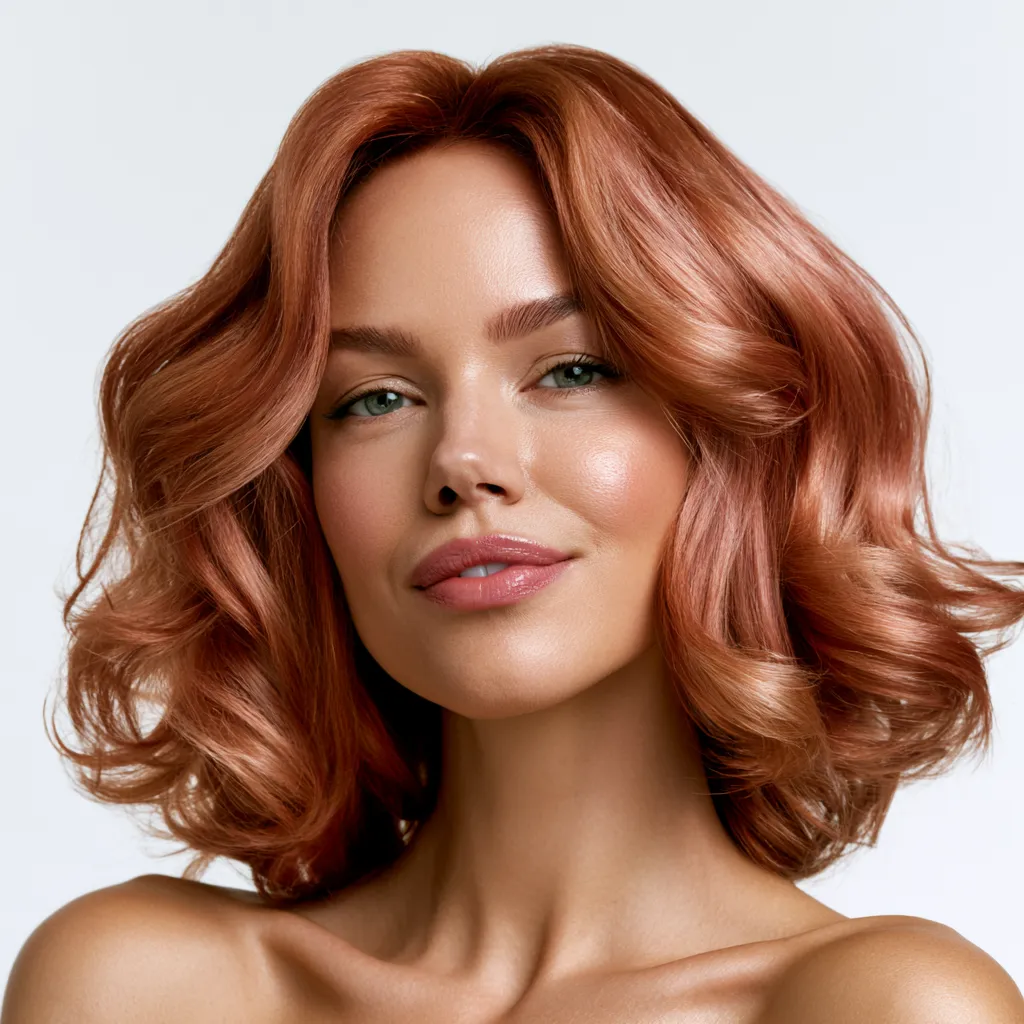
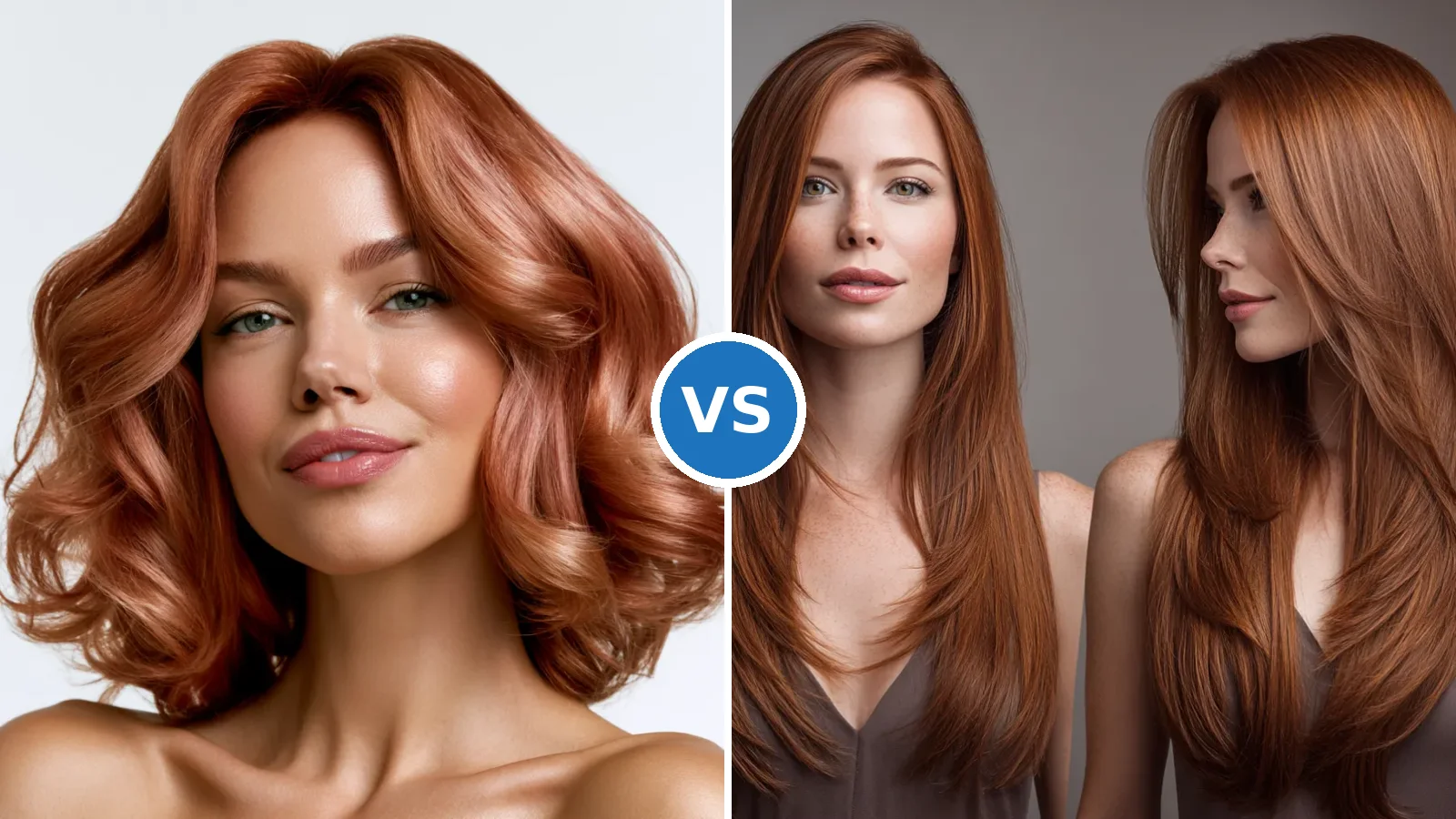
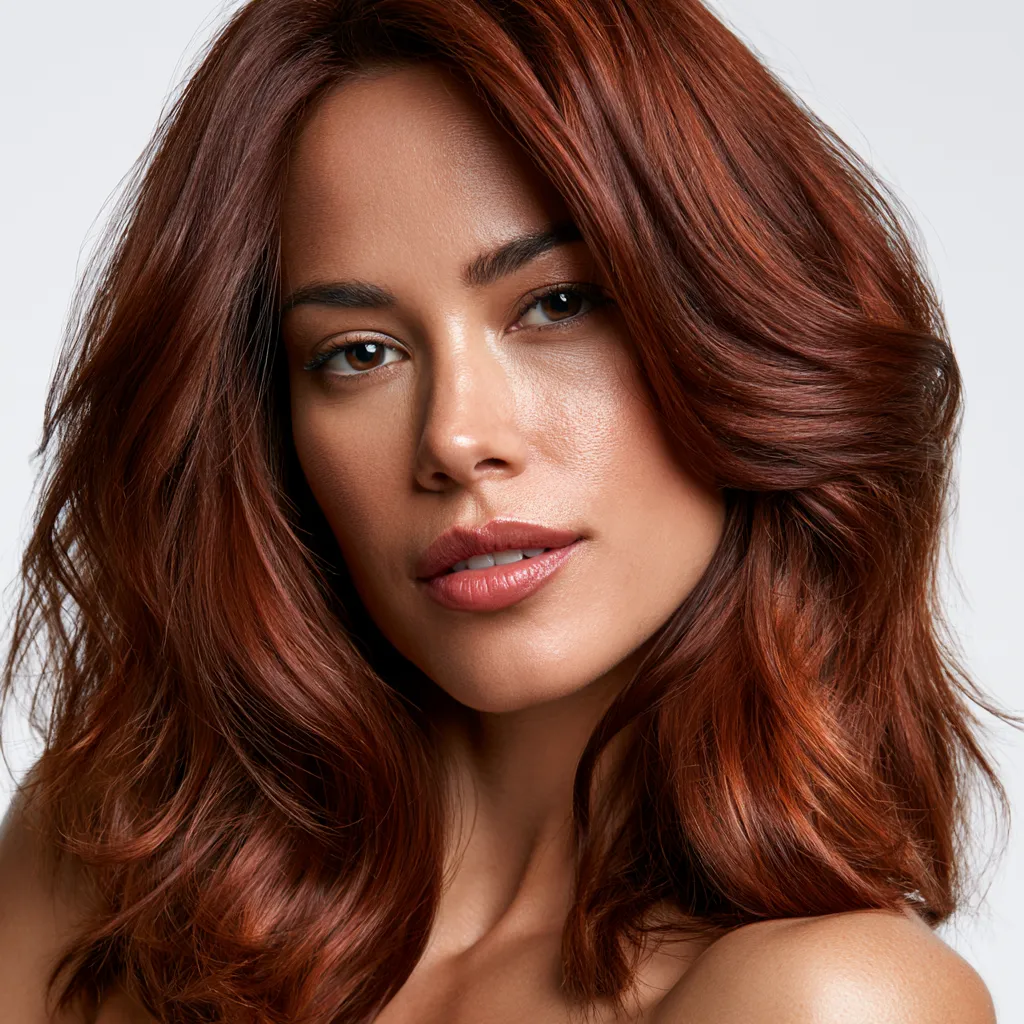
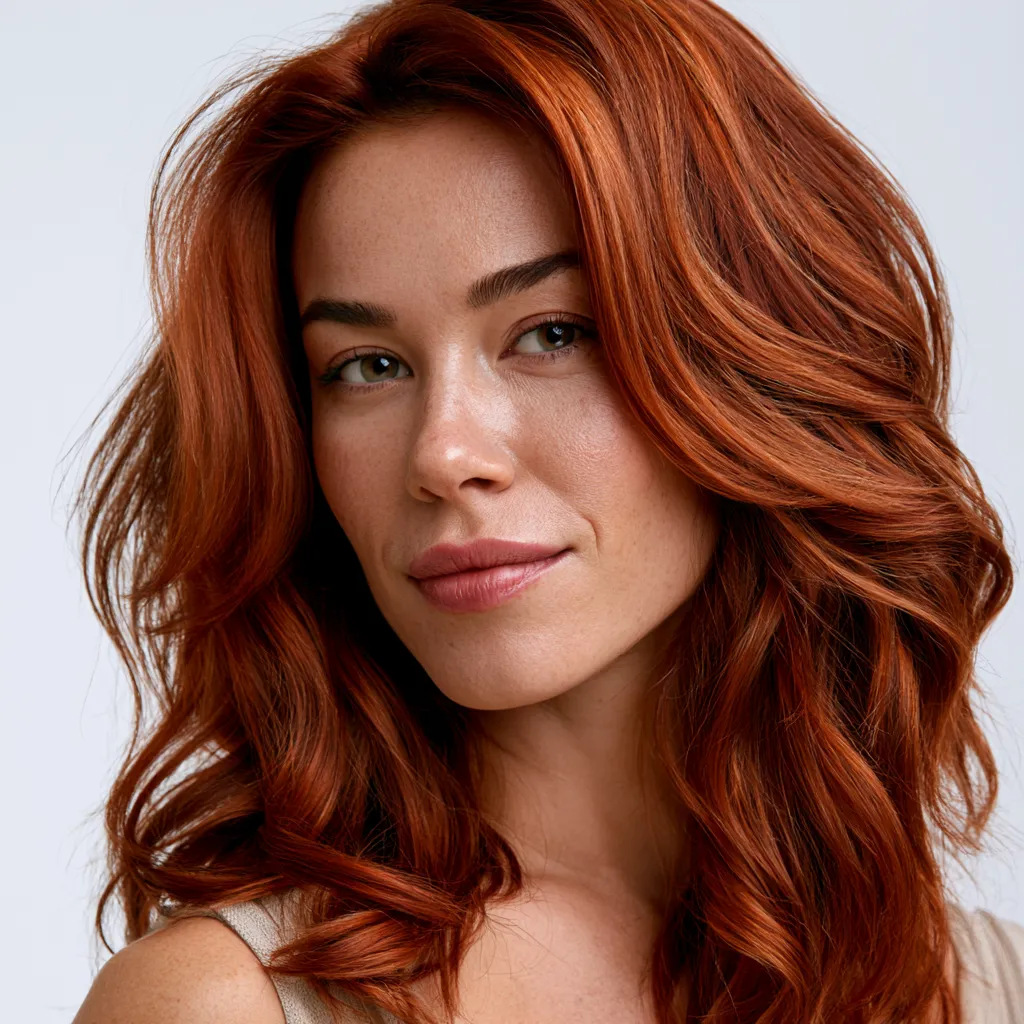
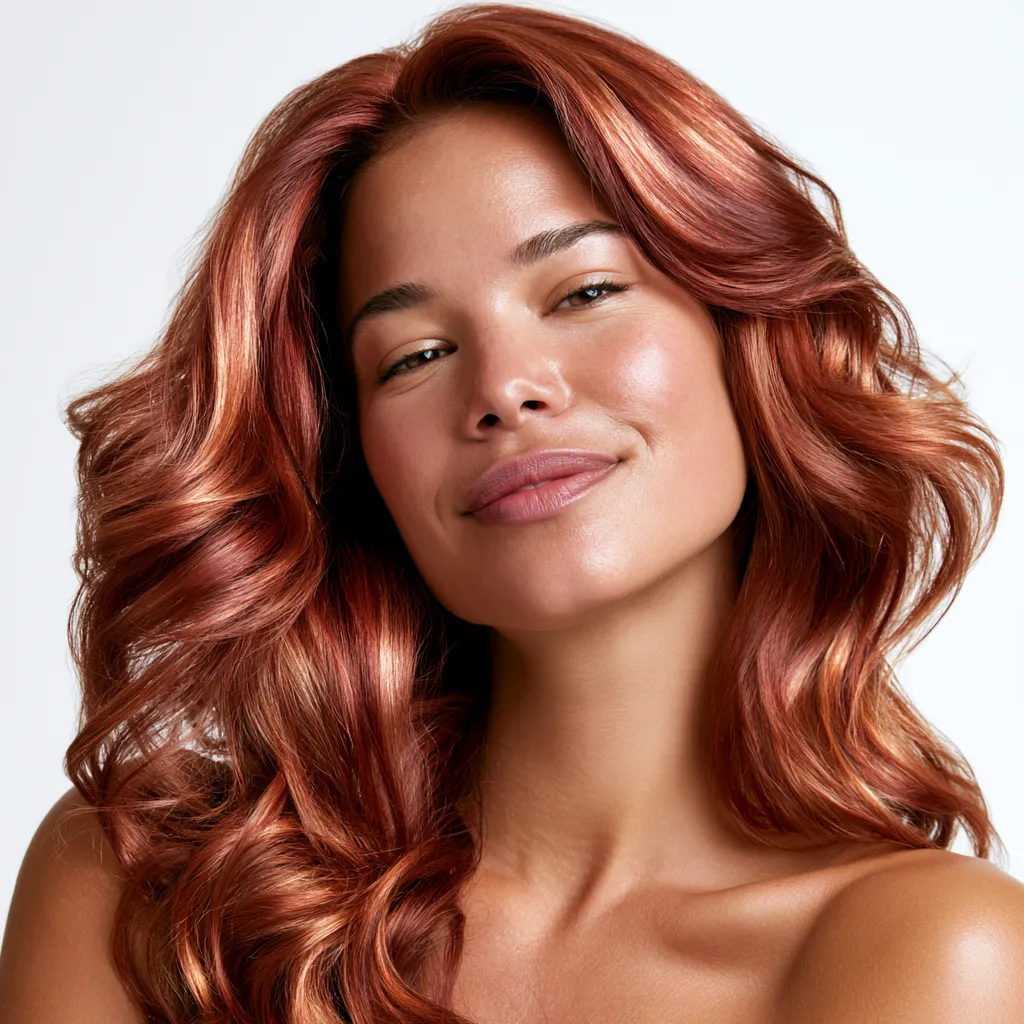
Copper hair color in 2026 has moved away from flat, orange-forward shades toward brown-based variants: cinnamon copper, burnt sienna, and muted amber. These are not single-process applications—they require sequential processing and a balayage technique, where warm tones are hand-painted onto mid-lengths and ends to mimic how light naturally falls. The result is glossy and dimensional, catching light at different points along the strand.
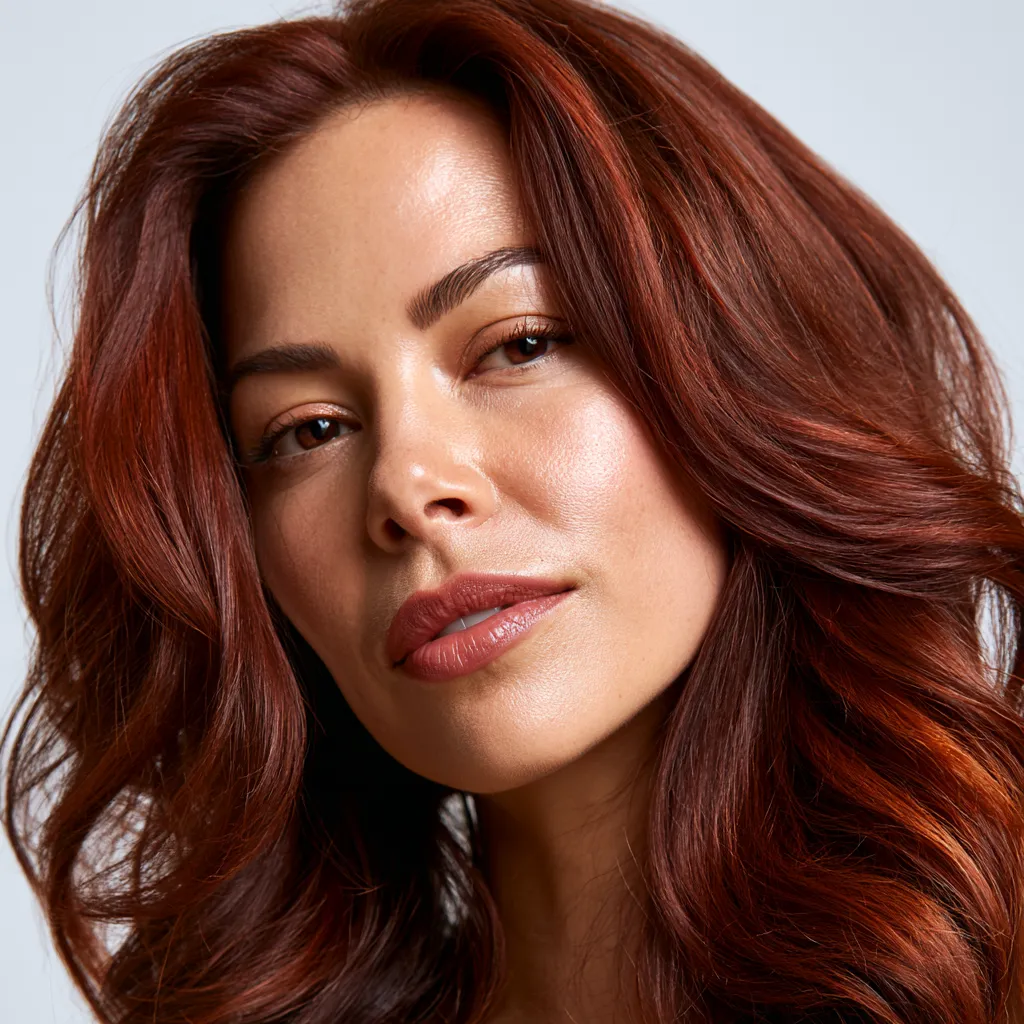
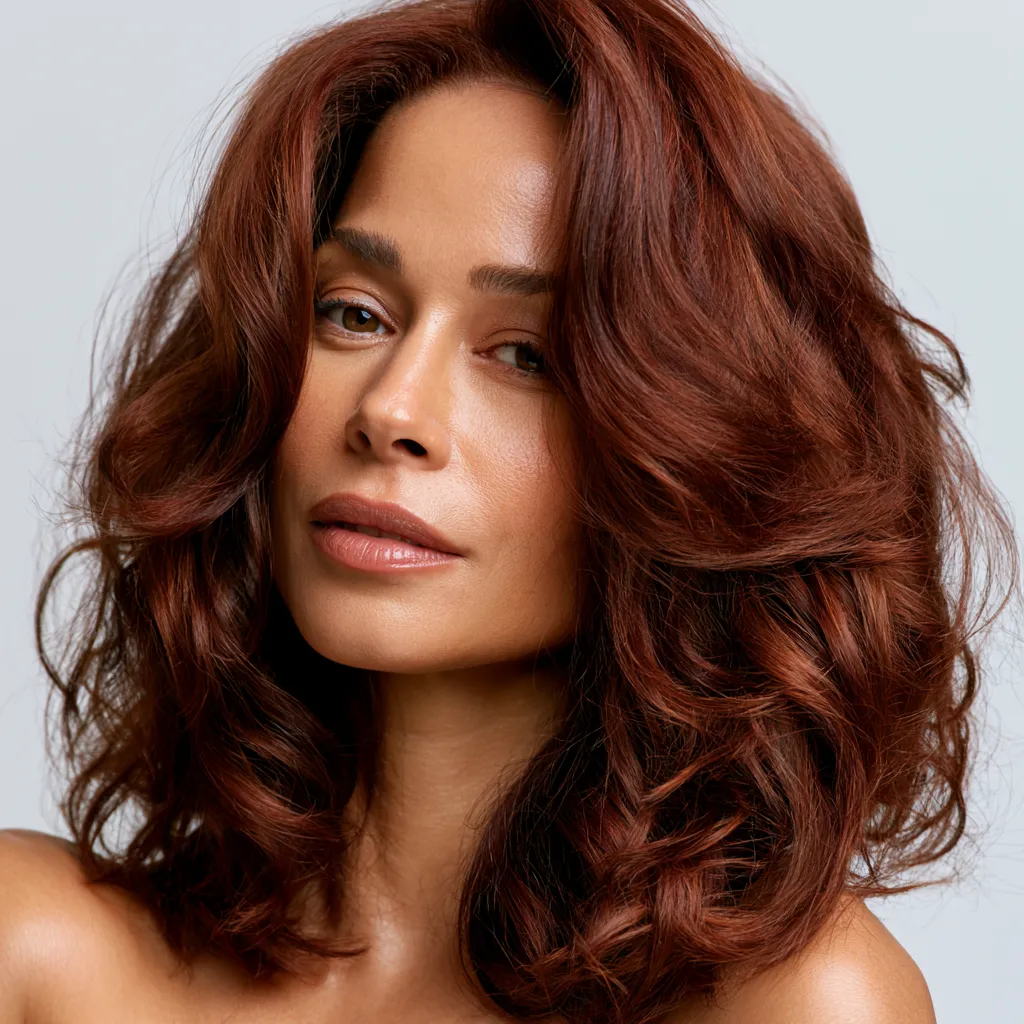
Auburn long straight hair is a deep, natural-looking red-brown that radiates warmth without requiring constant color maintenance. The color itself is the foundation, but the impact comes from the cut—whether layered ends, feathered layers, or a blunt line—that structures how the rich tone reads and moves.
One is a color statement. The other is a color-and-cut partnership.
Quick Verdict
- Choose copper hair if you are willing to visit the salon every 6–8 weeks, use sulfate-free products, and want a glossy, dimensional finish that looks intentionally styled.
- Choose auburn long straight if you prefer low-color-maintenance depth, want a cut-focused look, and can commit to regular trims over color refreshes.
- Choose copper if you have medium to light skin tones and want a statement that photographs distinctly warm.
- Choose auburn if you want a single cohesive tone that suits most complexions without customization.

Copper hair vs auburn on maintenance, appearance, and commitment
Copper demands the most rigorous maintenance routine. Sulfate-free shampoos are non-negotiable—sulfate-containing products strip copper pigment faster than almost any other tone. At-home gloss treatments like color-extending systems bridge the gap between salon visits, but your baseline is still a salon appointment every 6 to 8 weeks to maintain vibrancy. The payoff is a glossy, multi-dimensional finish that feels intentional and catches light beautifully.
Auburn works differently. Once the cut is established, the maintenance burden shifts to keeping the shape sharp. Regular trims preserve the line, but the color itself does not fade the way copper does.
You are not buying sulfate-free products or scheduling glosses. You are protecting a cut investment, not a pigment investment.
On appearance, copper wins on dimension and movement—the balayage placement creates depth that a solid color cannot. Auburn wins on natural cohesion—it looks like your hair simply got better, not like it got colored.
| Criteria | Copper Hair | Auburn Long Straight |
|---|---|---|
| Color maintenance frequency | Every 6–8 weeks for vibrancy | No color maintenance; trim every 8–12 weeks |
| Product requirements | Sulfate-free shampoo, color-extending gloss required | Standard sulfate-containing shampoo acceptable |
| Dimensional effect | High—hand-painted balayage creates movement | Moderate—achieved through cut layers, not color |
| Natural appearance | Intentional and styled-looking | Naturally rich, minimal styling signal |
| Color longevity between appointments | Fades noticeably within 4 weeks without product | Holds indefinitely; shape degrades instead |
| Cut options | Any length and texture | Optimized for long straight hair; layered ends, feathered, or blunt |
Where copper hair wins
Copper’s greatest strength is dimensional visual impact. The hand-painted balayage technique creates depth that reads differently in sunlight, indoor light, and on camera. When you move, the color shifts—warm bronze at the roots, cinnamon at the mid-lengths, amber at the ends. This is not something a solid auburn tone achieves, no matter the cut.
Copper also works across all hair lengths. Auburn is optimized for long, straight hair, but copper balayage works beautifully on shoulder-length bobs, pixies, and textured styles. If you want warm dimensional color without committing to length, copper is the clearer choice.
Lastly, copper has current momentum. The shift from orange-forward to brown-based variants means more colorists have refined the technique, and more product lines have formulated specifically for copper pigment stability. Access and expertise are easier to find right now.
Where auburn long straight wins
Auburn’s advantage is simplicity and durability. Once your hair reaches that rich depth, there is no color fade to chase. You are managing a cut, not a pigment.
That means no special shampoos, no glosses, no counting down to your next appointment window. You trim when the shape starts to soften—usually every 8 to 12 weeks depending on your haircut style—and the color remains constant.
Auburn also reads as easily natural. Copper, by design, looks styled. That is not a flaw—it is intentional.
But if you want richness without the signal that you are actively maintaining a trend, auburn delivers. The deep, warm tone looks like it could be natural, even when it has been enhanced.
From a cost perspective, auburn is lighter on the wallet long-term. You are not buying sulfate-free products or scheduling color appointments on a strict timeline. You are paying for cuts, which are less frequent and cheaper than color maintenance every 6 to 8 weeks plus product expenses.


The number one mistake when choosing between copper hair vs auburn
The biggest mistake is assuming you can treat copper like auburn—or vice versa. Many people choose copper because they love the dimensional look, then use regular sulfate-containing shampoo because it is cheaper or more convenient. Within 3 to 4 weeks, the copper oxidizes and fades flat. The payoff evaporates.
The mirror mistake happens with auburn: people commit to the cut thinking the color will handle itself, then neglect trims because they are focused on color. Without regular cuts, the layered ends or feathered structure becomes shapeless, and the rich auburn tone loses the structure that made it read as intentional. The color is still there, but the look collapses.
Do not choose based on the color alone. Choose based on the full maintenance lifestyle—the products, the appointment frequency, the at-home styling commitment. Each option requires a different kind of fidelity.

Final verdict on copper hair vs auburn
Choose copper hair if you have 6 to 8 weeks between salon visits available, do not mind spending on sulfate-free products and color glosses, and want your warm tone to be visually dimensional and obviously styled. It photographs richly and signals intentional color investment.
Choose auburn long straight if you prefer to minimize color maintenance, want a sophisticated cut to be the focal point, and appreciate warmth that reads as naturally saturated rather than painted. Your investment goes into the cut, not the pigment cycle.
Both are warm, beautiful, and worth doing well. The deciding factor is not which color is objectively better—it is which maintenance rhythm fits your actual schedule and priorities.