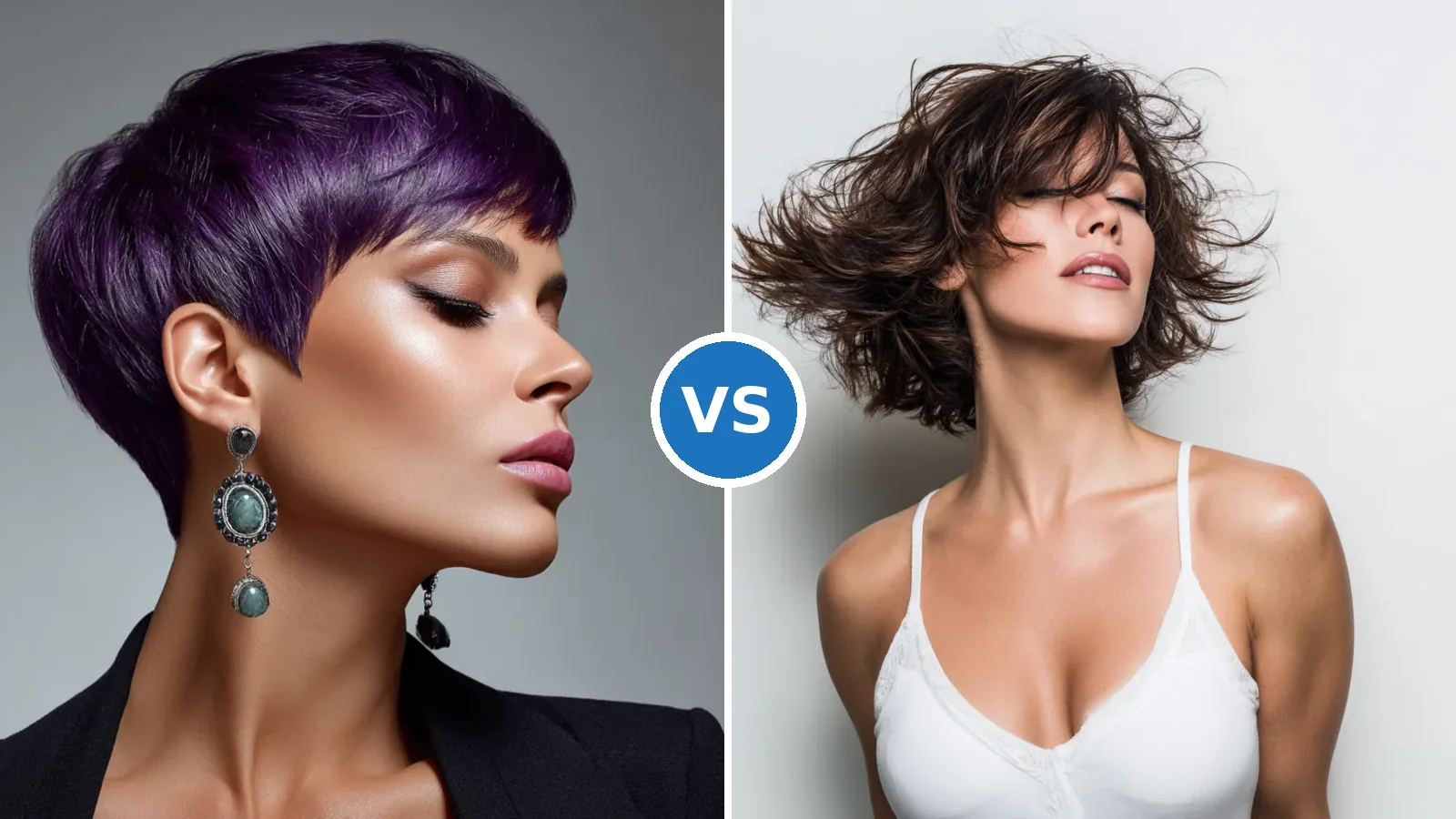
A well-cut pixie cut for round face shapes works by lifting height at the crown and tapering the sides so the face reads longer instead of wider. The short length removes bulk at the cheeks while diagonal fringe or side-swept pieces break the circular outline. When the top stays textured and the nape stays clean, the style delivers both structure and low daily effort.
Most round faces gain the strongest balance from volume concentrated on top and close sides rather than equal length all around. Stylists note that trims every 4–6 weeks keep the taper sharp; after that window the sides begin to fill out and the elongating effect fades. Product choice stays simple—one pea-sized amount of matte paste or light mousse is usually enough.
Color can amplify the shape. Cool platinum reflects light upward, warm chestnut softens without adding width, and jet black sharpens every edge. Each shade pairs cleanly with the same core cut, so the decision rests more on maintenance tolerance than on face-shape rules.
Quick Scan
- Height at the crown + tapered sides = visual elongation
- Side-swept or asymmetrical fringe beats blunt micro-bangs
- Trims every 4–6 weeks keep the shape working
- Platinum needs toning every 4–6 weeks; chestnut and black need far less
- Texturizing paste or light mousse handles most daily styling in under 5 minutes
- Skip equal-length crops that sit heavy at the cheeks
Short Pixie Hairstyles for Round Faces in Platinum Blonde
Short pixie hairstyles for round faces gain instant contrast when the hair is lifted to platinum. The cool tone throws light upward and draws the eye to the precise lines of the cut rather than the width of the cheeks. Feathered layers on top keep the silhouette airy so the face never feels boxed in.


Why does platinum work so well here? The high-contrast shade acts like a built-in highlighter, making cheekbones and eyes appear more defined. Average salon toning for platinum falls every 4–6 weeks and can run $60–$200 per visit depending on region and hair length. Skip the temptation to stretch appointments past six weeks—brassiness creeps in fast and softens the sharp geometry the cut needs.

Think of the platinum pixie as architectural lighting: the color itself becomes part of the structure. A light texturizing cream worked through dry hair separates the layers without weight. The result stays wearable from desk to evening without a second product change.

For thin hair, the same cut gains density illusion because the pale shade reflects light across every strand. Ask for point-cutting on the ends so the top stays piecey rather than flat. This approach keeps the style low on daily effort while still delivering the vertical lift a round face needs.
Rich Chestnut Brown Pixie That Softens Without Width
Rich chestnut brown pixie cuts for round faces trade high-contrast drama for warmth that still lengthens. The deeper tone sits closer to most natural hair colors, so root growth stays less noticeable and salon visits stretch further. Side-swept fringe and feathered layers do the structural work of breaking the circular outline.


How much lower is the maintenance? Chestnut typically needs only a gloss every 8–10 weeks rather than frequent toning, and many wearers extend trims closer to six weeks without losing shape. The color behaves like a quiet frame: it supports the cut without competing for attention. A volumizing mousse at the roots followed by finger-tousling keeps the crown lifted and the sides light.

One common misstep is letting the fringe grow too heavy across the forehead. Keep it diagonal and airy so it creates a line rather than a horizontal bar. Pair the look with a light smoothing serum only on the longer top pieces if a sleeker finish is preferred. The same cut also pairs well with short layered hairstyles that add definition when more texture is wanted later.

Chestnut works especially well on medium to fine hair because the warm depth creates the illusion of thickness without extra product. Avoid heavy creams that collapse the lift at the crown—the goal is movement, not weight.
Jet Black Pixie Cut for Round Face With Sharp Edges
A jet black pixie cut for round face shapes turns the silhouette into a graphic outline. The near-zero light absorption makes every taper and angle read clearly, so the soft curves of the face gain instant contrast. Close sides and a slightly longer textured top keep the vertical emphasis intact.


Maintenance stays among the simplest of the three colors. No toning schedule is required; the main task is keeping the hair healthy with regular conditioning so the surface stays reflective. Average women’s short cuts in many salons land between $35 and $90, with true precision pixies often sitting toward the higher end of that range. A weekly deep conditioner preserves the mirror finish that makes the black shade so effective.

Style it two ways: smoothing serum for a polished finish or matte paste for piecey separation. Both approaches keep the sides tight and the top lifted. The cut also adapts cleanly to finer textures because the dark color itself creates density illusion. For more structural options, the same principle appears in asymmetrical hairstyles designed for bold definition.

Skip the all-over equal length that sits like a helmet. The moment the sides match the top in weight, the elongating effect disappears. Keep the taper and the style continues to do its job.
Low Maintenance Pixie Options That Still Elongate
Low maintenance short pixie cuts for round faces exist, but they still require the same core geometry: height on top, clean sides. The difference lies in length choice and color. A slightly longer top that can be finger-styled and a shade close to the natural base color reduce both product and salon frequency.
What happens if the sides grow out unchecked? The face begins to look wider again within three to four weeks. A trim every five to six weeks is the realistic floor for keeping the taper effective. Matte paste applied only to the ends, not the roots, prevents the flat look that fine hair sometimes develops. For further reading on shaping principles, external stylists often point to the same height-plus-taper formula detailed in guides such as pixie cuts designed specifically for round faces.
Don’t Do This
- Equal length all around that mirrors the face shape
- Heavy blunt fringe that shortens the forehead
- Heavy product at the roots that collapses crown lift
- Stretching trims past six weeks when the taper is the main elongating tool
Comparing Platinum, Chestnut and Jet Black on Round Faces
| Shade | Maintenance Rhythm | Best For | Daily Styling |
|---|---|---|---|
| Platinum blonde | Toning every 4–6 weeks | High contrast, fine hair density illusion | Light cream or paste, 3–5 min |
| Chestnut brown | Gloss every 8–10 weeks | Warm skin tones, lower commitment | Mous se at roots, finger style |
| Jet black | Conditioning focus, no toner | Maximum edge definition | Serum or matte paste, 2–4 min |
Each option follows the same structural rules. Choose the shade according to how often you are willing to sit in a color chair, not according to rigid face-shape dogma. The cut itself carries most of the elongating work.
Key takeaway
A pixie cut for round face shapes succeeds when height lives at the crown and weight stays off the cheeks.
Keep the sides tapered and the fringe diagonal or side-swept.
Plan trims every 4–6 weeks so the geometry does not soften.
Pick color for contrast or ease, then let the cut do the structural work.
TITLE TAG: Pixie Cut for Round Face That Builds Real Length
META DESCRIPTION: Short pixie hairstyles for round faces work when height sits at the crown and sides stay tapered. See real styling times, maintenance rhythms and color options that keep the shape sharp.