Western wedding decoration built from real vintage pieces reads instantly different than decoration built from party-store kits. A worn pair of boots, a barrel that once held wine, a bolo tie with actual tarnish — these objects carry weight that new props never do, no matter how carefully they’re styled. Guests notice the difference within arm’s reach, even if they can’t name why.
The four elements below cover decor, transportation, attire, and dessert, so nothing repeats the same idea twice across the reception. Each one comes with real pricing, because guessing at a budget is worse than knowing it’s tight.
Quick Scan
- Vintage cowboy boots at auction run $100–$350 a pair — cheaper than most rental centerpieces.
- Horse-drawn carriage rentals average $500–$800 an hour nationwide.
- A silver bolo tie starts around $39.95 and outlasts a rented vest.
- Wedding cakes average $500–$700; a wine barrel cake stand adds $35–$45.
- One worn vintage piece per element beats matching everything new from a costume kit.
Worn Leather Boots Turn Table Setting Into Western Wedding Decoration History


Western wedding decoration gets far more interesting once real objects replace props, and a pair of scuffed leather boots does that job for less than a rental company charges for plastic horseshoes. At auction, vintage cowboy boots typically sell for $100 to $350 a pair, with two-tone 1970s pairs and recognizable brands like Nocona commanding the higher end. Set on a rough wooden table, one boot works as a bud vase and the other holds a candle, so guests get texture without a florist bill. Think of the pair the way a bartender thinks of a good glass — the container does half the work of making the drink look intentional.
Don’t buy a matched brand-new pair just to distress them at home — sandpaper on fresh leather looks exactly like sandpaper on fresh leather, and guests clock the difference within a few feet. Where do real worn pairs actually turn up? Estate sales, boot repair shops that resell trade-ins, and auction sites all move genuinely aged pairs faster than antique malls do, usually for less money too. Pair the boots with a burlap runner and a handful of lanterns and the leather starts doing the heavy lifting the rest of the table doesn’t need to do.
Wildflowers in dusty pink or ochre settle into the boot shaft without wilting through a four-hour reception, which outlasts most cut arrangements in a warm barn. A lantern set six inches to either side throws enough light to photograph the leather’s texture without washing it out. The last boot on the last table should look slightly different from the first — matching props read as a kit, mismatched ones read as a collection.
A Carriage Ride Announces the Bride Before Any Vow Is Spoken


A western style wedding idea that sticks in guests’ memory almost always involves the entrance, and nothing stages an entrance like a horse-drawn carriage arriving at walking pace. National averages for horse-and-carriage rentals run $500 to $800 an hour, though smaller regional outfits sometimes quote closer to $200 for a short in-town ride. That price usually buys one horse team, one driver, and roughly 20 to 30 minutes of actual carriage time — book two trips if the ceremony and reception sit at different spots on the property. A carriage does for a wedding entrance what a red carpet does for an awards show: it tells everyone where to look before anything else happens.
Don’t skip the weather clause in the rental contract — horses spook at sudden noise and rain, and a company that won’t discuss a backup plan for wind or thunderstorms is one to avoid. Ask specifically whether the quoted hourly rate includes travel time to the venue, since a driver hauling a carriage 40 miles will often bill that separately. A well-lit dirt path beats a paved driveway for the ride itself; the gentle unevenness underfoot supports the wheel creak that makes the entrance feel period-accurate rather than staged.
For couples drawn to structural staging beyond the carriage itself, a reclaimed-wood ceremony arch design extends the same idea to the altar end of the aisle. Late-afternoon light works better than midday sun for carriage photos, since low sun angles catch dust kicked up by the wheels and give the scene a warmer cast. The carriage should stop moving fully before the bride puts weight on the step; horses shift their footing more than cars do, and a half-stopped carriage is how ankles get twisted on wedding days.
A Bolo Tie Under Forty Dollars Outworks a Rented Tuxedo Vest


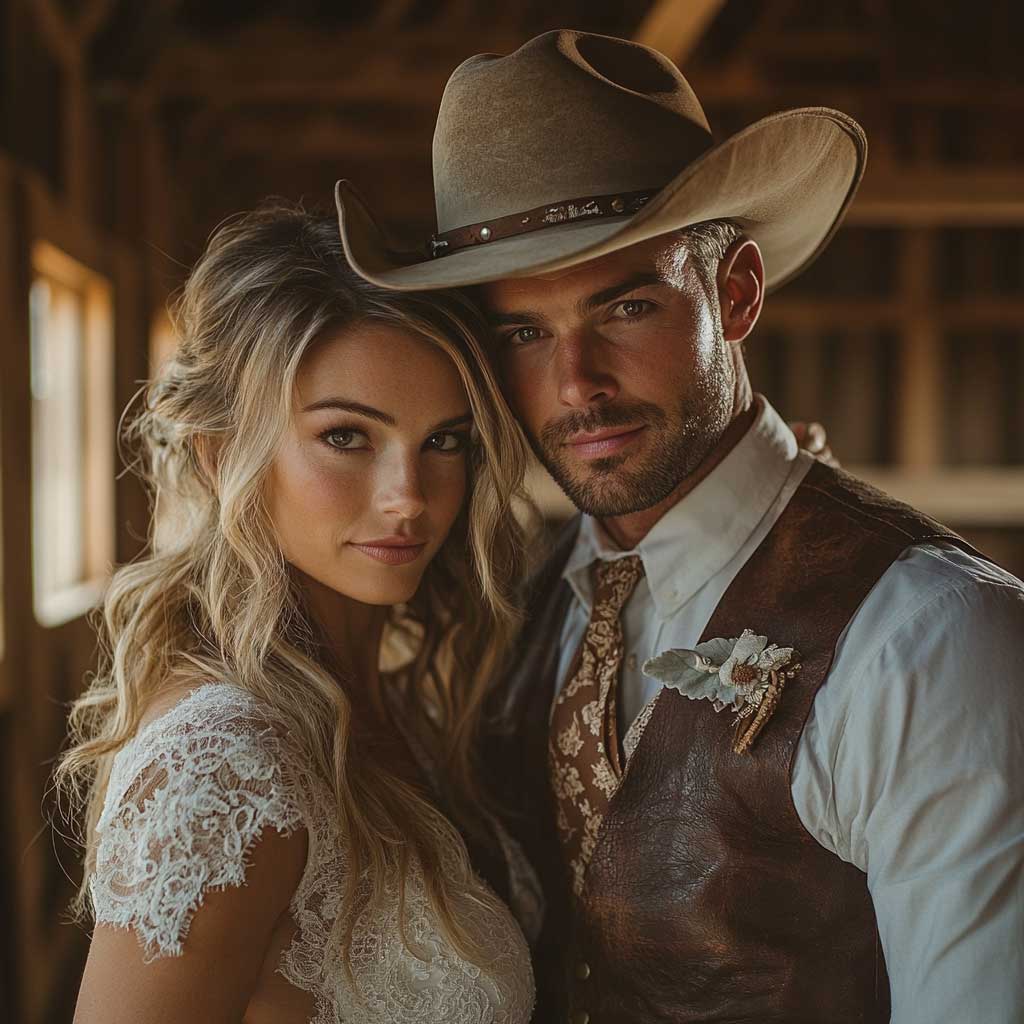
Western theme wedding attire works best when exactly one piece per outfit carries real history, rather than every accessory trying to look vintage at once. A silver-and-copper bolo tie from a western specialty shop runs about $39.95, which costs less than most tuxedo vest rentals and gets to stay with the groom afterward. Pair it with a plain white shirt and dark trousers so the bolo reads as the statement piece instead of competing with a patterned vest. Stylists recommend the same restraint for the bride — one vintage hat or one pair of boots, not both at full volume.
A leather vest that’s actually been worn softens at the shoulders in a way new leather won’t for a year of regular use, so borrowing or buying secondhand beats new almost every time. What holds up better in a barn all night, wool felt or straw? Wool felt keeps its shape through humidity and hours of dancing; straw hats go soft and lose their brim curve by the reception’s second hour.
Don’t Do This: Skip full costume-kit western wardrobes for the wedding party. Brand-new felt hats, stiff vinyl chaps, and shiny synthetic vests all read as costume rather than heritage in photos, and the smell of new synthetic material lingers through the entire reception. Rent or buy one worn leather piece per person instead of dressing everyone head-to-toe in unworn western gear.
A rustic barn setting with exposed beams does more for the outfit than any additional accessory could — natural wood and low candlelight flatter worn leather in a way fluorescent tent lighting never will. Lace on the bride’s gown reads as an intentional callback to the theme rather than a bridal-magazine default when it’s paired with something as plain as a cowboy hat rather than a tiara or veil comb. The groom’s bolo tie should sit at the second shirt button, not the collar — too high and it reads costume, too low and it disappears in photos.
Whiskey Barrel Stands Give Western Wedding Decoration a Dessert Table Too


A western theme wedding cake earns its place as a centerpiece once it sits on something with texture instead of a rented white linen-covered table. A natural wine or whiskey barrel works as a stand for about $35 to $45 in rental fees, and its 36-inch height puts the cake at a good eye level for photos without a riser underneath. Wedding cakes nationwide average around $500 to $700, according to Zola’s wedding cake cost guide, which puts more elaborate fondant-and-sugar-flower designs closer to $700 to $1,100. A horseshoe or lasso motif piped into the frosting costs a baker maybe twenty extra minutes and turns a plain tier into a theme piece without extra cake.
Don’t order elaborate cascading sugar flowers for an outdoor barn reception in summer — fondant work like that softens and slides above roughly 75 degrees, and a barrel stand won’t save a cake that’s already sagging by the toast. Lace doilies draped over the barrel top hide the hardware without covering the wood grain that makes the stand worth using in the first place. What actually holds up in heat, buttercream or fondant? Buttercream tolerates a warm room far better than fondant does and still takes piped horseshoe or rope details just fine.
Burlap banners with the couple’s initials add a personal marker without the cost of a custom cake topper, and they read clearly in photos from ten feet away. Antique lanterns positioned on either side of the barrel throw enough warm light to photograph the cake’s texture after sunset, when a barn’s overhead lighting usually goes dim. For couples chasing something less rustic and more sculptural, architectural tiered wedding cake trends show where the format is headed if barrel-and-burlap ever starts to feel too expected.
WESTERN WEDDING DECORATION, DISTILLED
Real objects beat rented props every time a guest gets close enough to touch them.
A worn boot, a real barrel, a tarnished bolo tie — none of them cost more than the rental-store version, and all three photograph like they’ve earned their place.
Spend the saved money on the horse-drawn carriage entrance. That’s the moment guests actually talk about afterward.
Save this post so you’ve got the pricing and sourcing details handy when vendor calls start.