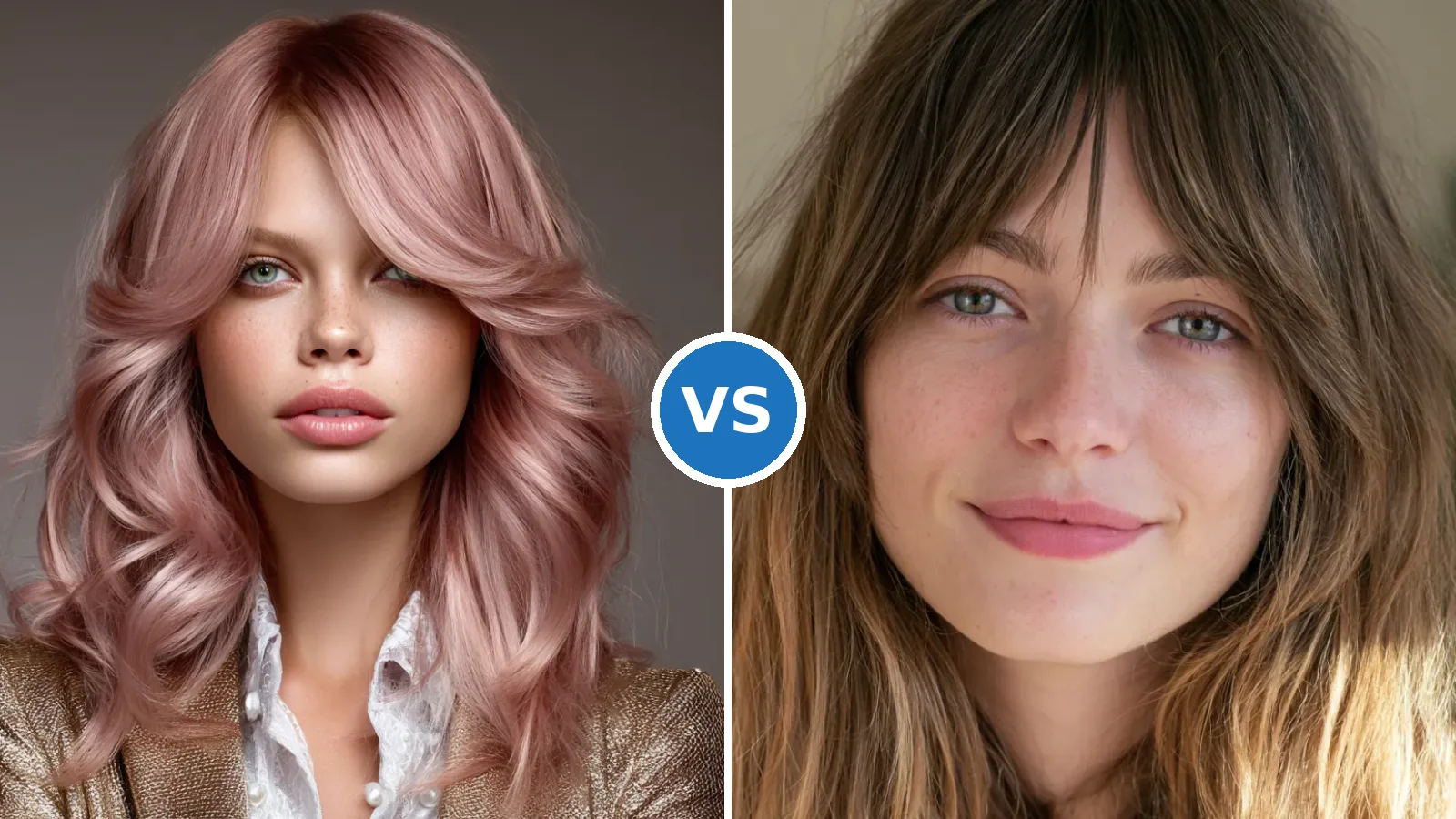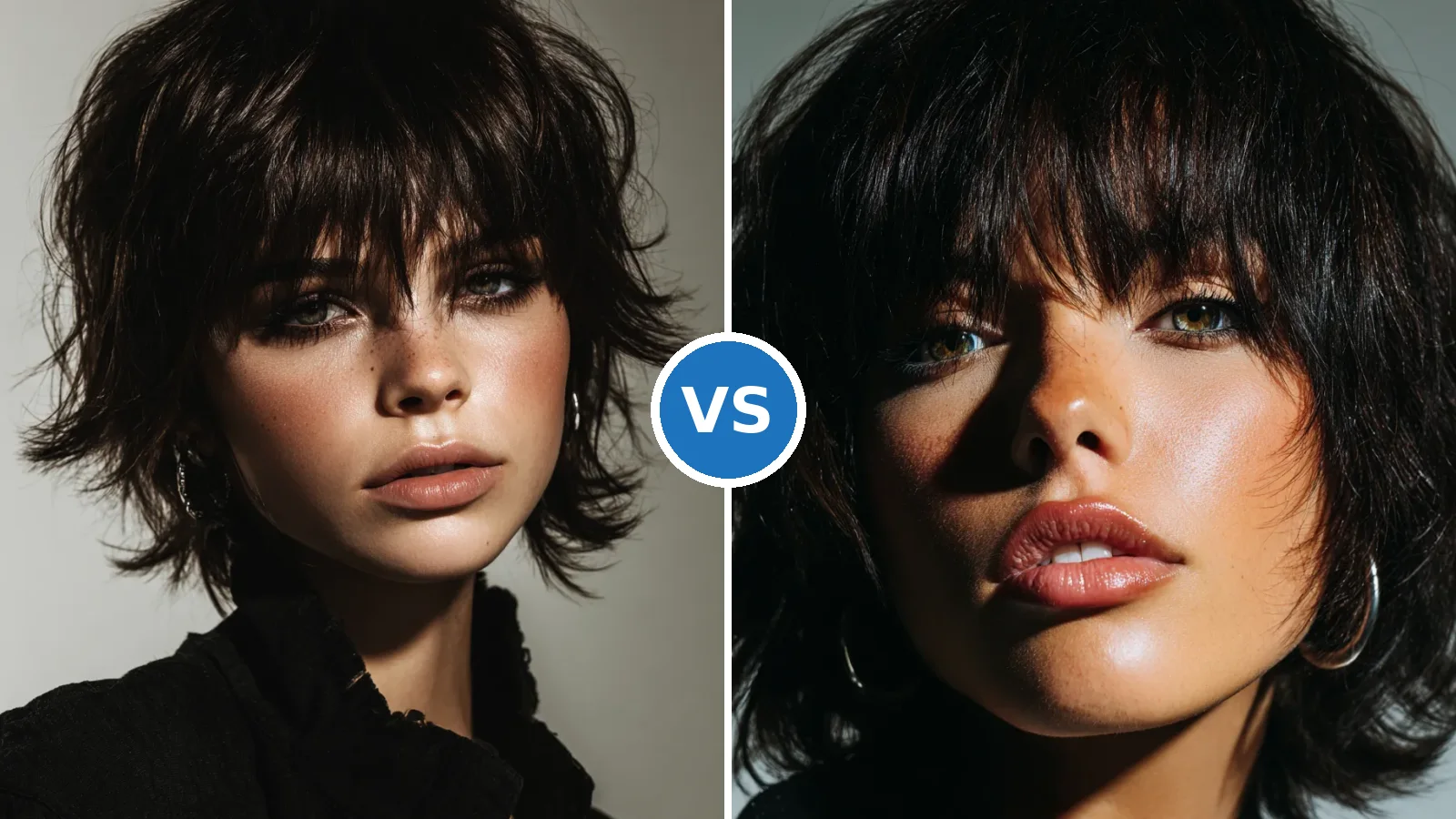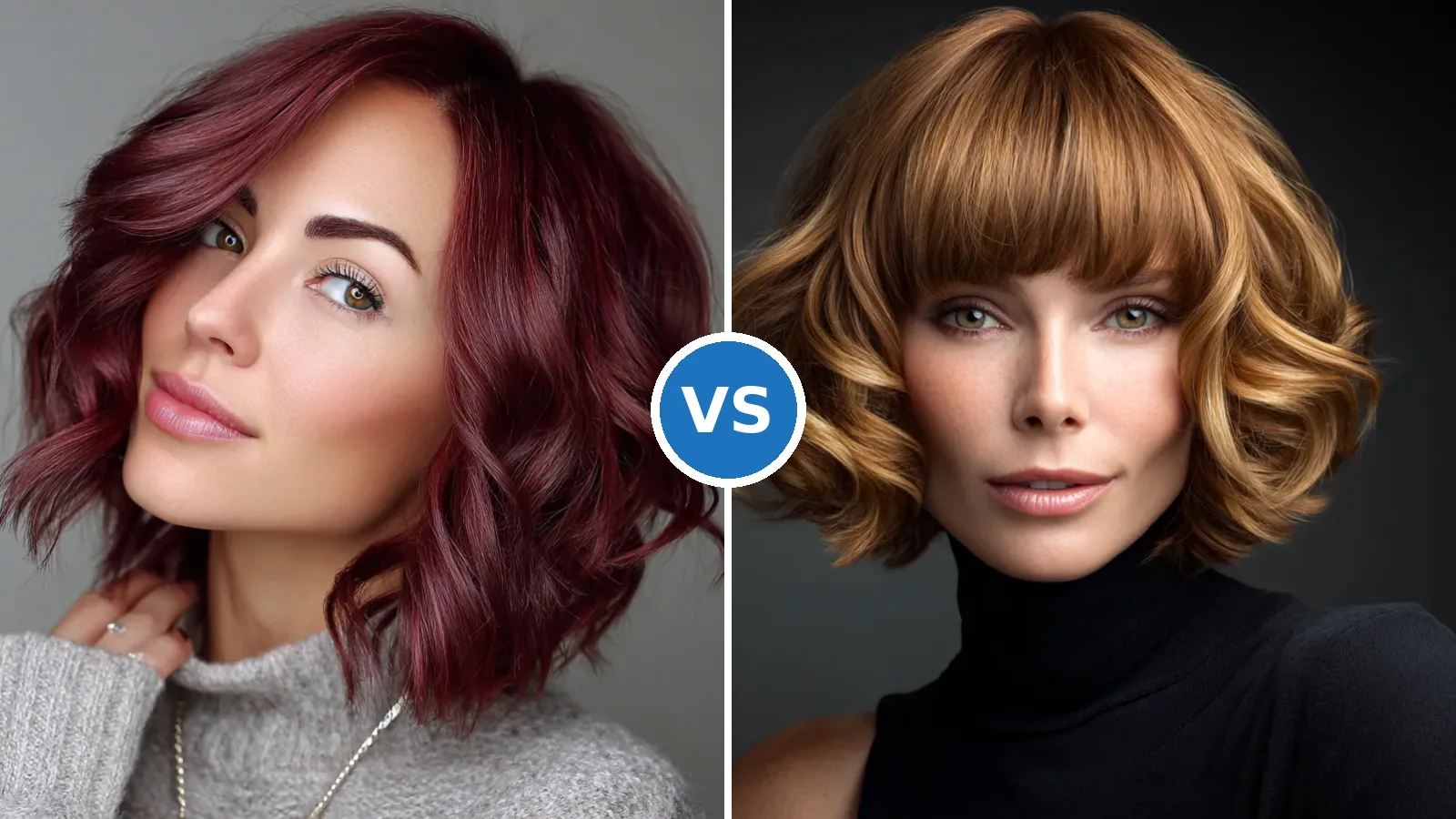

The choice between micro vs curtain bangs comes down to how sharp you want your fringe to look and how often you can get it trimmed. Micro bangs suit someone who wants a short, bold line and will keep up with it, while curtain bangs suit someone who wants soft framing with more room to grow.
Both can be adjusted for your face and texture, so neither is reserved for one type of person. The bigger difference shows a few weeks after the cut, when a very short line starts to move and a longer, parted one still blends in.
What each cut looks like
With precise micro bangs, the fringe ends well above the eyebrows. The edge is usually crisp, so the forehead and eyes become the focus. A stylist can also add texture or a slight angle when a blunt line feels too severe.
Textured curtain bangs are longer, parted pieces that open around the face. Layers of different lengths let the ends separate and move. The shortest pieces usually start around the cheekbone, and the longest can reach past the jaw.
Quick Verdict
- Choose micro bangs if you want a bold, defined line and can book frequent trims.
- Choose curtain bangs if you want a softer frame and longer gaps between visits.
- Choose micro bangs if your fine hair looks wispy when a fringe gets long.
- Choose curtain bangs if you have natural waves and like an undone finish.

Micro vs curtain bangs on the points that matter
Upkeep, finish and hair behavior usually decide this choice. Face shape matters too, but placement and angle can change the result with either cut.
| Criteria | Micro bangs | Curtain bangs |
|---|---|---|
| Finish | Sharp and high in contrast | Soft, layered and parted |
| Trim schedule | About every 2 to 4 weeks, by texture | About every 4 to 6 weeks |
| Visible regrowth | Shows almost at once | Hidden better by graduated layers |
| Fine straight hair | Short length cuts down weight | Needs longer layers and light texturing |
| Natural waves | Need smoothing or shaping for a neat line | Support the loose texture with little styling |
| Growing out | Passes through a noticeable in-between stage | Longer pieces blend in more easily |
Upkeep and daily styling
Curtain bangs win on salon upkeep. Their uneven, graduated lengths disguise new growth, so a missed week is less obvious. Micro bangs need a trim about every two to three weeks on straight or wavy hair, and about every three to four weeks on curly or coily hair.
For the short style, a boar-bristle brush and a small amount of lightweight pomade or matte clay help control flyaways. Keep heavy oils and serums off the fringe, since they can leave it limp. A dry shampoo or volumizing powder at the roots can add lift.
The longer style still takes some work, especially on straight hair. Blow-dry it with a round brush and direct the pieces away from the face. On wavy hair, a little leave-in conditioner, a scrunch and air-drying may be enough.

Hair texture can change the answer
Micro bangs have the edge for fine hair that gets stringy at longer lengths. Less length means less weight pulling on each strand. Thick hair can also hold the short shape well and gives the line a dense, sculpted look.
Curtain bangs are the easier match for natural waves. They also work with curls, where the layers can follow the existing pattern. Fine, straight hair needs restraint here, because heavy texturizing can make the pieces look thin.
Curly and coily hair can wear micro bangs too. Ask for the shape to be cut dry, in its natural pattern, so you can see where each curl will sit. Tightly coiled hair may need daily styling if you want a very crisp edge.
Face shape and placement
On oval or long faces, short bangs can draw the eye across the forehead and create a strong focal point. Curtain pieces that open near the cheekbones can add softness and a sense of width to a long face. For round faces, ask for wispy sides with the short cut, or use the longer parted pieces to create a more vertical frame.
Square faces need care with either choice. A blunt micro line can emphasize the jaw, so an angle or texture may work better. A side-swept version is also worth discussing if a center-parted curtain shape draws attention to the jawline.
Heart-shaped faces can wear both. An off-center micro fringe softens the forehead, while longer layers frame it without adding much bulk near the chin. A diamond-shaped face may prefer movement over a very rigid short edge.

Where each option comes out ahead
Pick the short fringe for impact. It gives a clearer shape, puts more attention on the eyes and can solve the weighed-down feeling of some fine hair. Its strength is also its demand, because small changes in length and direction are easy to see.
The parted style wins on trim frequency, softness and a gradual grow-out. It also gives you more freedom to wear the front pieces tucked into the rest of your cut. You still need a stylist who can place the layers well, especially if your hair is fine or already damaged.
The mistake to avoid before cutting
The common mistake is choosing from a front-facing photo without checking how that hair behaves. Someone with tight curls might bring in a picture of a flat, straight micro fringe, then find that matching it takes daily styling. A better reference shows a similar curl pattern and the finish they want on an ordinary morning.
The same applies to a wavy curtain reference on fine, straight hair. Ask how much of the movement comes from the cut and how much comes from drying or styling. If you are unsure, start longer, since a stylist can shorten curtain pieces later.

Who should choose which
Choose micro bangs when you want your fringe to be the main feature and regular appointments fit your routine. Choose curtain bangs when you prefer a softer outline, expect some time between trims or may want to grow the front out. Before booking, tell your stylist how much time you spend styling and bring two photos with hair similar to yours.