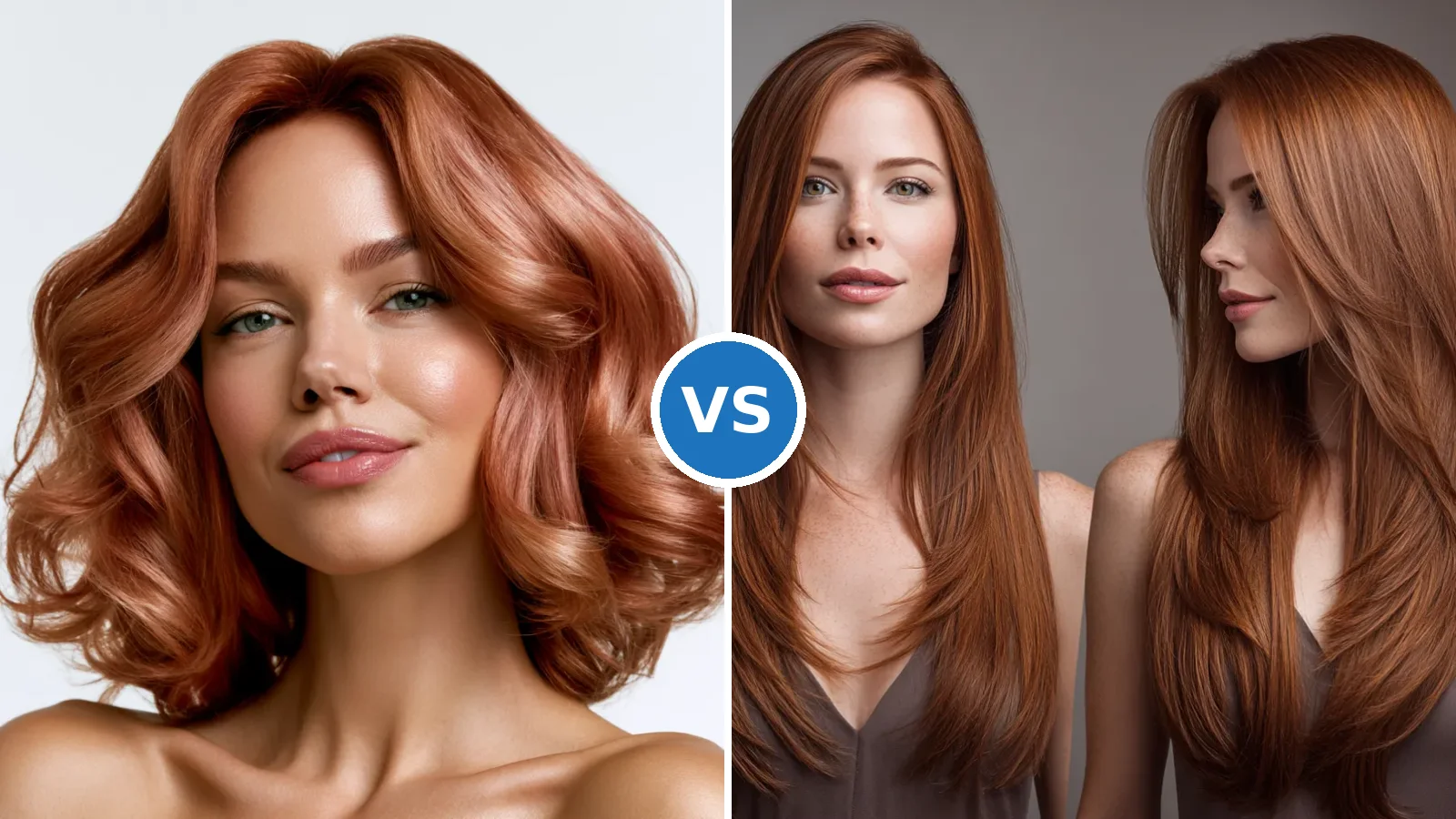
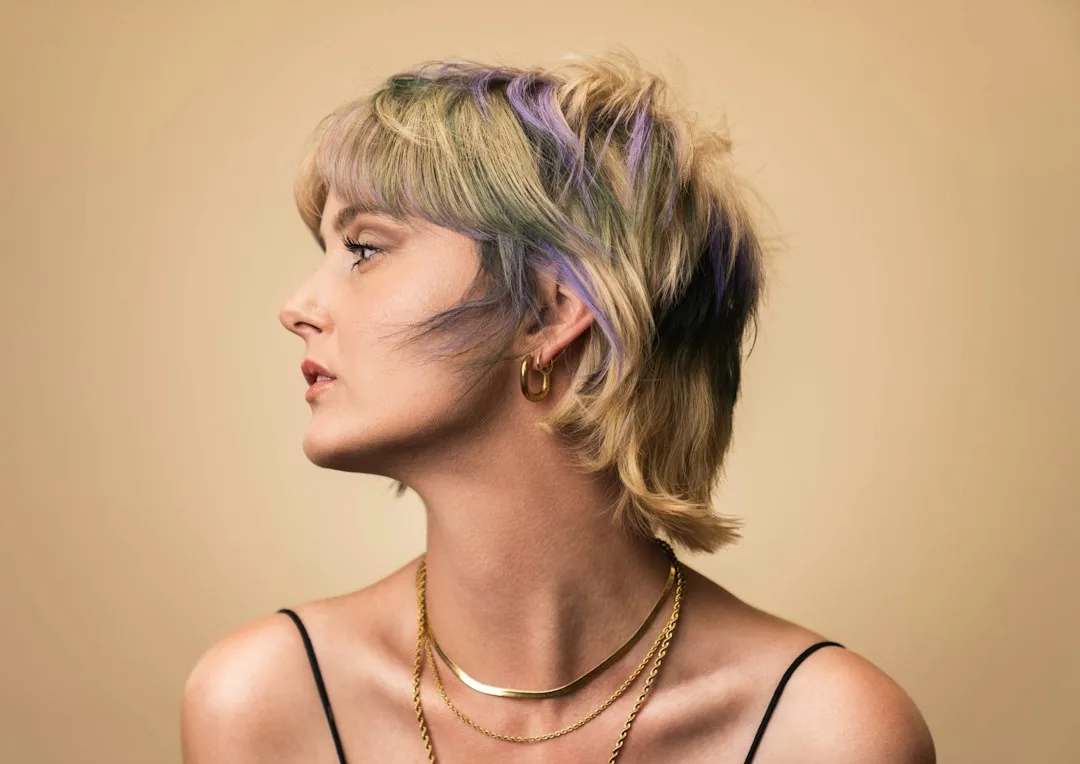
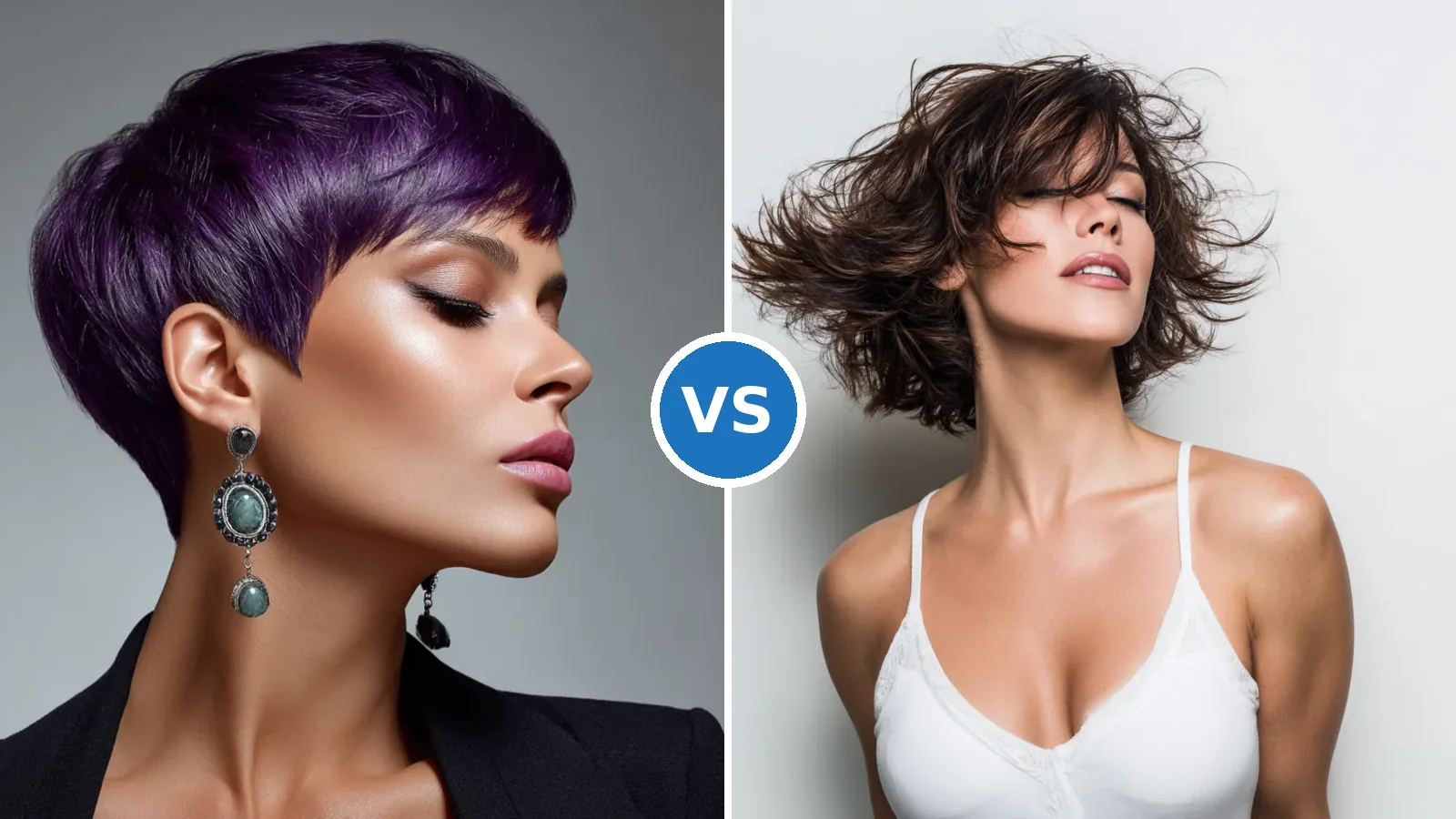
A v shape hair cut with feathered ends sits in a category of its own — it has the structural drama of a pointed silhouette at the back, but the ends dissolve into wispy, airy texture instead of landing heavy. I’ve had three different stylists attempt this on my hair over the years, and the difference between a clean feathered V and a chunky blunt V is immediately visible in motion. The feathering technique uses point-cutting at the ends to separate each strand, so your hair moves independently rather than as one dense curtain.
You’ll notice the real payoff when you’re walking — every strand catches the light differently, and the back of the cut looks like it’s constantly shifting. Feathered ends require about 15% less product than smooth blunt cuts because the texture itself creates the illusion of body. Expect to pay $80–$140 at a mid-range salon for a v shape hair cut with proper feathering, which is roughly $20 more than a standard V due to the point-cutting time involved.
Color makes a dramatic difference in how readable the feathering is. Pastels and vivid hues catch light at the wispy tips and make the technique visible from across the room. Brunette and natural tones let the movement speak through shine and shadow rather than color contrast. All three variations below use different color strategies to highlight the same underlying cut.
- Feathered ends on a V shape hair cut reduce perceived weight without reducing length
- Point-cutting at the ends is the technique — not thinning shears, which damage fine hair
- Pastel peach is the most visible color for showing off feathered texture in photos
- Brunette V cuts with light feathering are the lowest-maintenance option — one gloss treatment every 6 weeks
- Electric blue requires a color refresh every 4–5 weeks but holds the V silhouette even as pigment fades
- Trims every 6–8 weeks preserve the feathered tips before split ends travel up the shaft
Pastel Peach Flows Differently When the Ends Are Feathered
A v shape hair cut in pastel peach with feathered ends is the combination I keep saving to my phone every time it appears — the color and the cut reinforce each other in a way solid naturals simply don’t. Peach tones are warm and directional; they pull the eye toward the tips of the hair, which is exactly where the feathering lives. The deep V at the back begins around the mid-back, and the feathering starts at mid-lengths and tapers toward the ends, so the last two inches of every strand are individually separated.


Blow drying with a round brush is my go-to method for this look — lift at the crown first, then let the ends air-dry naturally for the last five minutes so the feathering doesn’t get compressed. Kenra Platinum Silkening Mist (~$26) works well as a pre-dry product because it adds slip without weighing down the tips. Avoid any serum or oil applied directly to the feathered ends before drying; I made that mistake once and ended up with clumped, stringy tips that defeated the whole point of the cut.
Does pastel peach fade fast? Yes — most people find it shifts toward a golden blonde within four weeks without a toner refresh. My colorist at a mid-range salon charges around $55 for a gloss refresh on this length, and it’s worth doing every five weeks to keep the warmth readable at the tips. The upside is that even the faded version looks intentional on a feathered V, because the tips go slightly lighter than the mid-lengths and create natural dimension. Think of it as a built-in ombré that arrives for free about week four.
Straight or slightly wavy hair shows off this v shape hair cut most clearly. Very curly textures can work, but the V point becomes less defined as curl shrinkage tightens the ends. If you’re working with natural wave, diffuse on low heat and scrunch the ends upward rather than downward — this keeps the feathered layers separated instead of merging into a single wave clump at the back.
- Don’t ask for thinning shears on feathered ends — thinning shears create ragged, inconsistent texture. Point-cutting with straight scissors is the correct technique and your stylist should know the difference. If they reach for the thinning shears immediately, redirect them.
- Don’t apply heavy oil to the tips before drying — it collapses the feathered separation and leaves you with flat, wet-looking ends that lose the entire airy effect the cut is built around.
- Don’t skip trims past 8 weeks — feathered ends are fine by design, so split ends travel up the shaft faster than on blunt cuts. Six to eight weeks between trims keeps the tips clean.
Rich Brunette V Shape Hair Cut Where Less Feathering Does More
A v shape hair cut in rich brunette with understated feathered ends is, in my experience, the most wearable version of this style for everyday life. The feathering here is deliberately restrained — just enough texture at the ends to prevent the heaviness that comes with a dense blunt V, but not so wispy that the shape reads fragile. I’ve worn a version of this cut for two years and it survives work meetings, gym ponytails, and weekend styling without falling apart between trims.


Thick hair benefits most from this version. The feathering technique removes bulk from the ends without touching the density at the scalp, so you get natural volume at the crown while the back tapers cleanly into the V point. What doesn’t work on thick hair is over-feathering — if a stylist goes too aggressive with point-cutting on dense strands, the ends become stringy and the V loses its defined silhouette. Ask for “light feathering through the last two inches only” and show a reference photo to make the instruction concrete.
A gloss treatment is the single best investment for this cut — not a deep conditioning mask, not a protein treatment, a gloss. John Frieda Brilliant Brunette Shine Gloss (~$12 at drugstores) applied at home every three weeks keeps the brunette tone saturated and the feathered tips reflective rather than dull. You’ll notice the difference immediately when light hits the layered ends; each feathered strand catches individually rather than merging into a flat surface. That’s the visual payoff of the cut, and the gloss is what sustains it.
For professional environments, this v shape hair cut reads polished without requiring heat styling every morning. A quick brush-through and a fingertip-sized amount of smoothing serum — Moroccanoil Treatment Light (~$15 for the travel size) is my standard — is genuinely all it takes. The feathered design modernizes a traditional V silhouette without making it feel trendy or fragile. It’s the hairstyle equivalent of a well-cut blazer: structured enough to mean business, relaxed enough to survive a full day. For more on how layered cuts can work with similar movement principles, long layered hairstyles with feathered ends covers related techniques in detail.
Electric Blue V Shape Hair Cut Where Wispy Layers Carry the Whole Look
Electric blue on a v shape hair cut with wispy feathered layers is not a subtle statement — it’s the kind of hair that makes people turn around on the street, and the feathering is what prevents it from reading costume. The sharp V formation at the back anchors the silhouette, while the wispy layers flick outward with individual personality rather than sitting flat as a single dense block. I’d compare it to a peacock feather: every individual strand is visible, and the movement is the whole point.


Pravana Vivids Electric Blue (~$14 at Sally Beauty) is the semi-permanent shade most colorists reach for on this intensity level. It fades to a softer sky-blue over four to five weeks, which actually looks intentional rather than washed out when the V structure holds. The cut outlasts the color — that’s the practical advantage of this combination. You’re not starting from scratch when the pigment shifts; you’re just refreshing a tone on a silhouette that already works. Regular gloss treatments in clear or a diluted blue toner every four weeks keep the tips from going grey-green as the pigment lifts.
Styling this version requires restraint. Air drying or diffusing on low heat preserves the wispy feathered separation that makes the cut readable. A lightweight volumizing spray — Not Your Mother’s Curl Talk Curl Defining Spray (~$7) works even on straight hair here — applied before air drying gives the ends enough grip to separate without stiffening. What kills this look is a flat iron run straight through from root to tip. The heat collapses the feathered tips into a blunt edge and erases the texture the point-cutting created. If you want some smoothness at the crown, flat iron only the top two inches and leave the feathered layers completely alone.
The feathering technique is what separates this from an ordinary blue V cut. Without the wispy ends, the same color on a blunt silhouette would look blocky and heavy — more dye-job-gone-bold than intentional editorial shape. With the feathering, each blue strand has its own movement and the neon reads as dimensional rather than flat. Authoritative styling resources like Latest Hairstyles document how feathering technique reduces visual bulk on bold colors specifically, which tracks exactly with what I’ve observed on vivid-pigment clients. You can see how this v shape hair cut compares to other silhouettes in v shape hair cut options for straight sleek looks — the structural difference between feathered and non-feathered ends is immediately obvious side by side.
The Verdict
A V Shape Hair Cut Doesn’t Land Without the Right Ends
Feathered tips are doing structural work, not decorative work — they remove the weight that makes long V cuts look limp and heavy in the lower half. The point-cutting technique your stylist uses at the ends determines whether the back silhouette reads airy or clunky.
Pastel peach is the most forgiving color for showing off feathered texture in photos and real life. Brunette with light feathering is the lowest-maintenance version — one gloss every few weeks, no heat required. Electric blue demands color refresh every four to five weeks but rewards you with the most visually dramatic movement of the three.
Save this post before your next salon appointment — show the reference photos directly to your stylist and ask specifically for point-cutting at the ends rather than thinning shears.