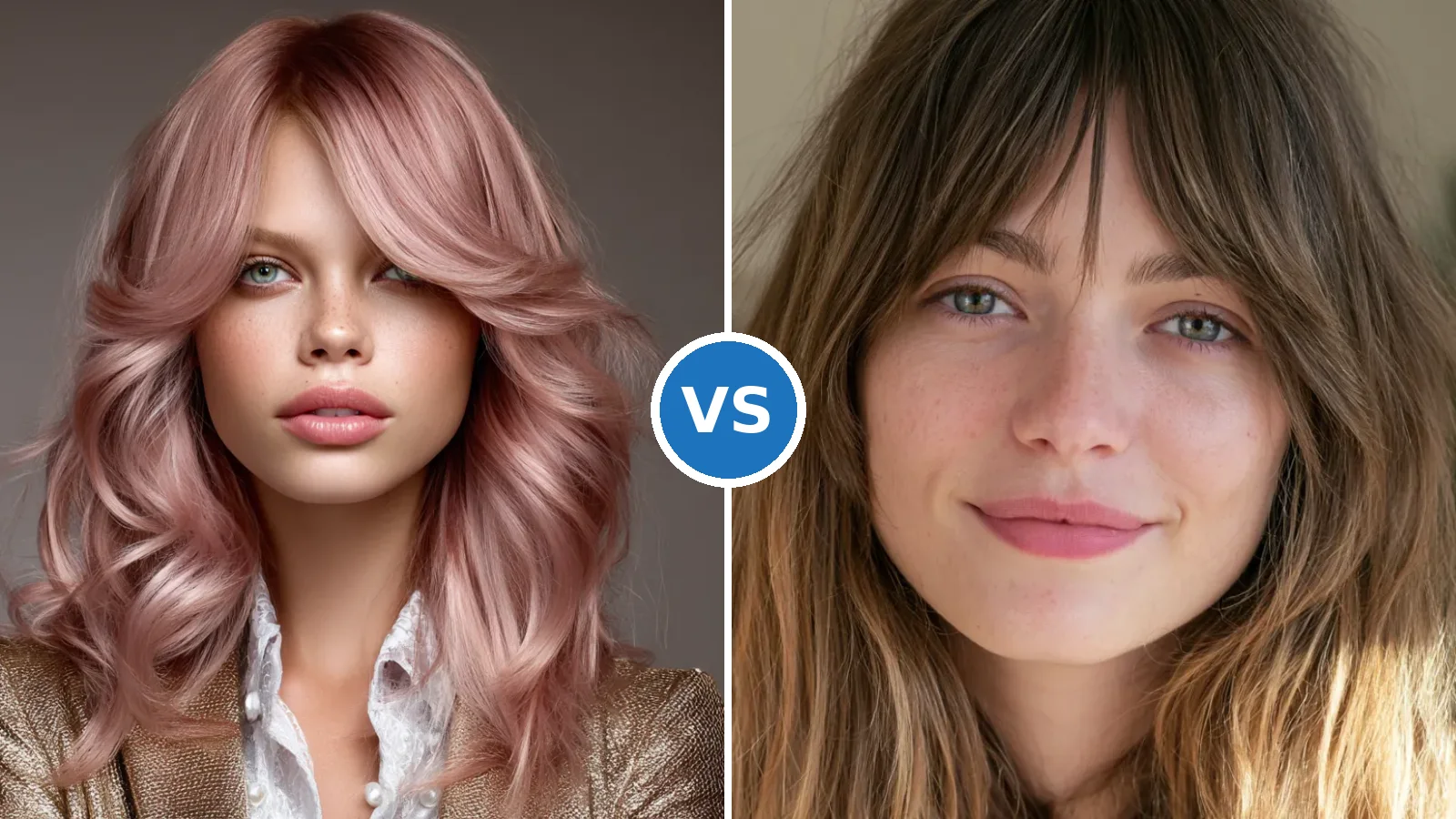
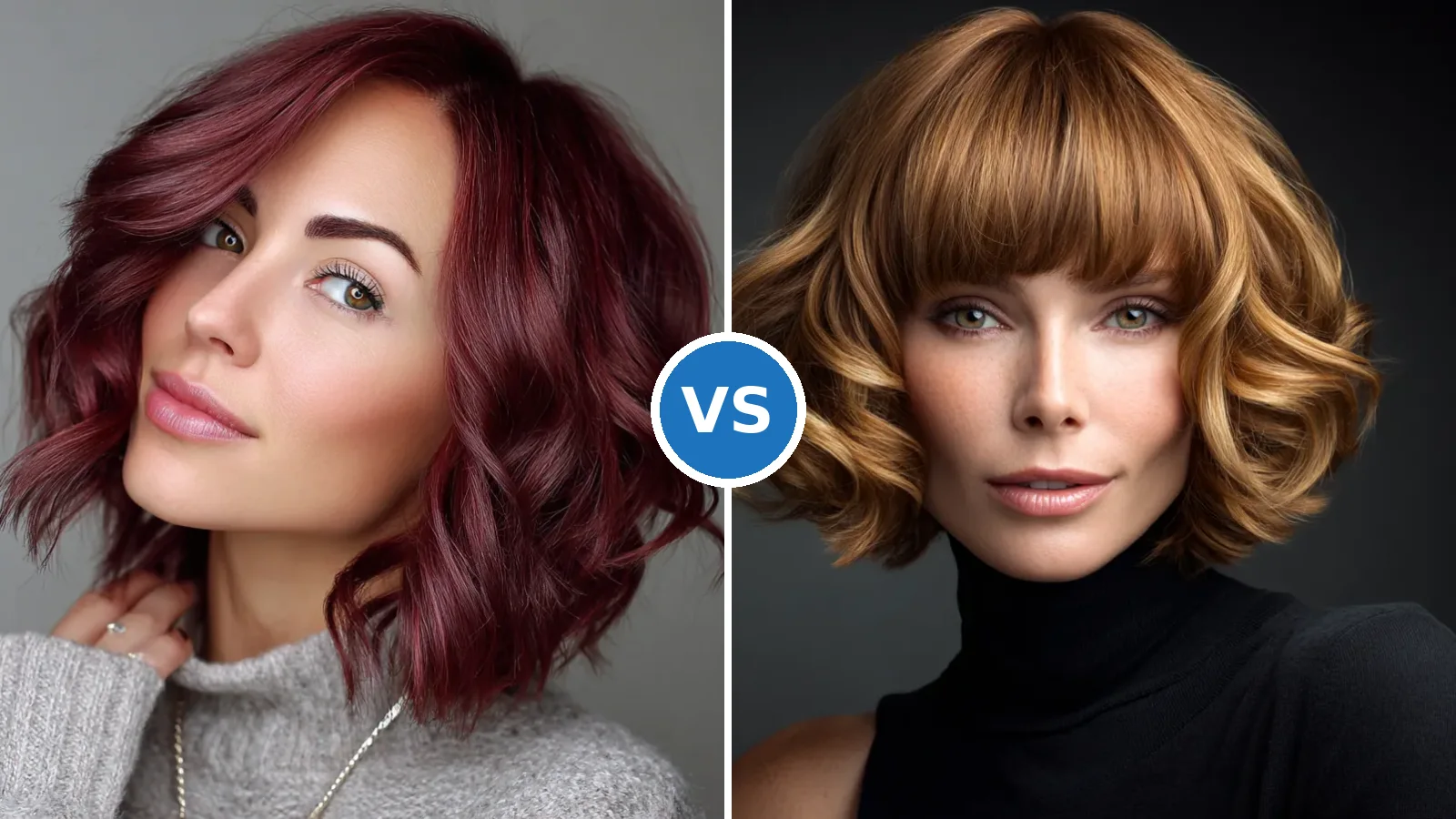
The hime cut with curtain bangs lands differently than any other structured haircut — and I’ve seen enough salon chairs to know why. Warm chestnut tones pull the natural depth out of the blunt side sections, making the whole silhouette look richer and more intentional. Add a wispy curtain bang that barely grazes the brows, and what was once a rigid Japanese court style becomes something you’d actually wear on a Tuesday.
You’ll notice the bangs are doing serious heavy lifting here. They soften the jaw-framing structure of the hime cut, so the look reads as polished rather than costume-y. That’s the tension that makes this work — precision meets featherweight fringe, and neither gives ground.
My go-to color recommendation for this silhouette is a warm chestnut in the range of Level 5-6 with copper-gold undertones. It catches light the way darker cool-toned shades simply don’t, and the warmth reads especially well against medium and olive skin tones. Below are three distinct styling directions for the hime cut with curtain bangs, each with its own product routine and finish.
- Hime cut with curtain bangs works best on straight-to-wavy hair; heavy curl will fight the blunt side sections.
- Warm chestnut (Level 5-6, copper-gold undertones) is the most photogenic color family for this cut.
- Wispy curtain bangs need point-cutting, not blunt shears — ask your stylist specifically for this technique.
- Olaplex No.6 Bond Smoother (~$28) is the single best product for keeping the side sections crisp between trims.
- Expect a trim every 5-6 weeks to maintain the hime structure; the bangs grow out faster than you think.
- A round brush blow-dry on the bangs — not a flat iron — gives you the curtain curve without weight.
Silky Finish on the Hime Cut with Curtain Bangs
A sleek, high-shine result is the most sought-after version of the hime cut with curtain bangs, and the warm chestnut color is the reason it reads so well. Chestnut at this depth absorbs and reflects light simultaneously, creating dimension you’d otherwise need balayage to fake. The blunt side sections stay razor-sharp, while the feathered curtain fringe keeps the face-framing soft enough to avoid the “period drama” effect some clients fear.
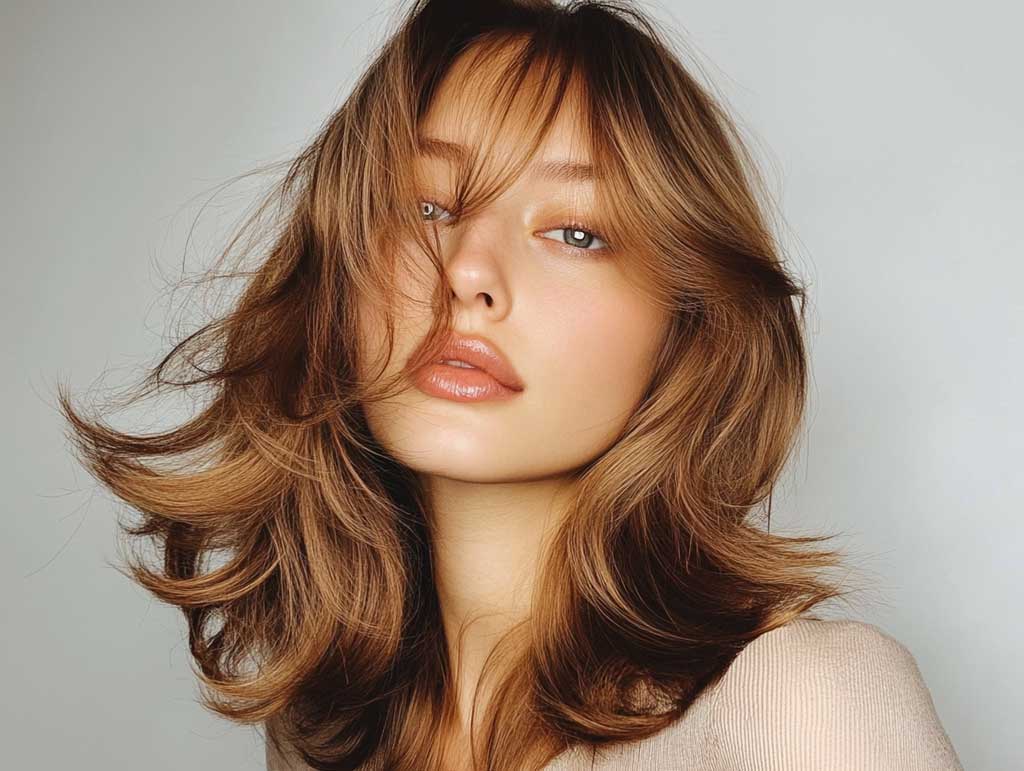
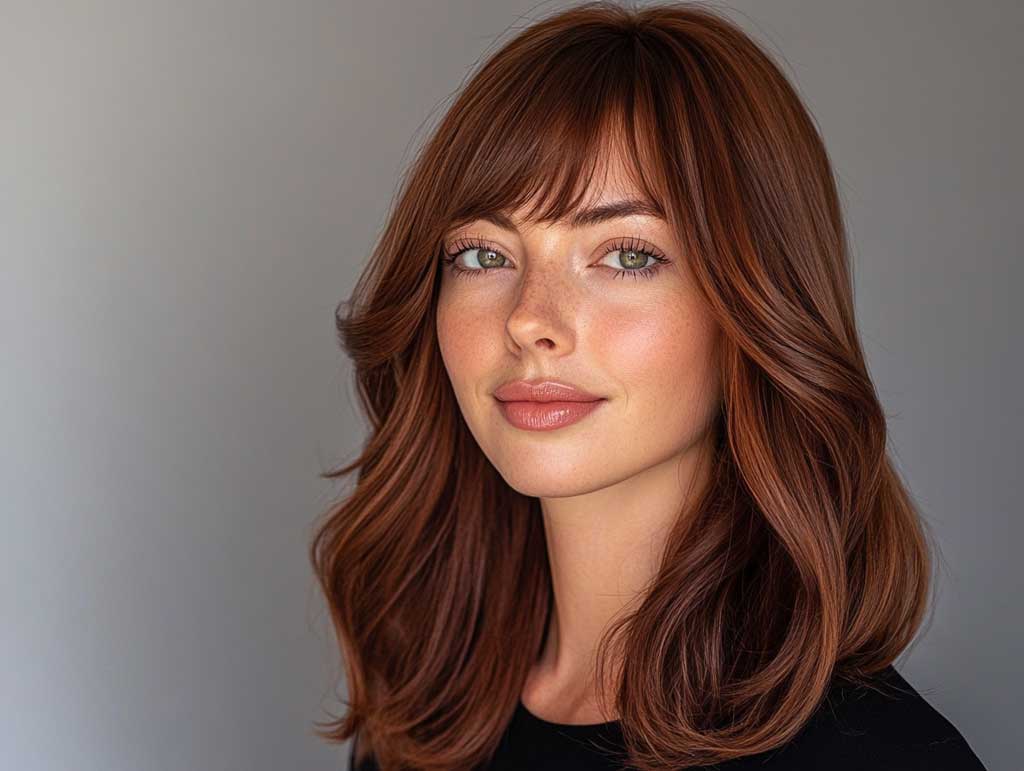
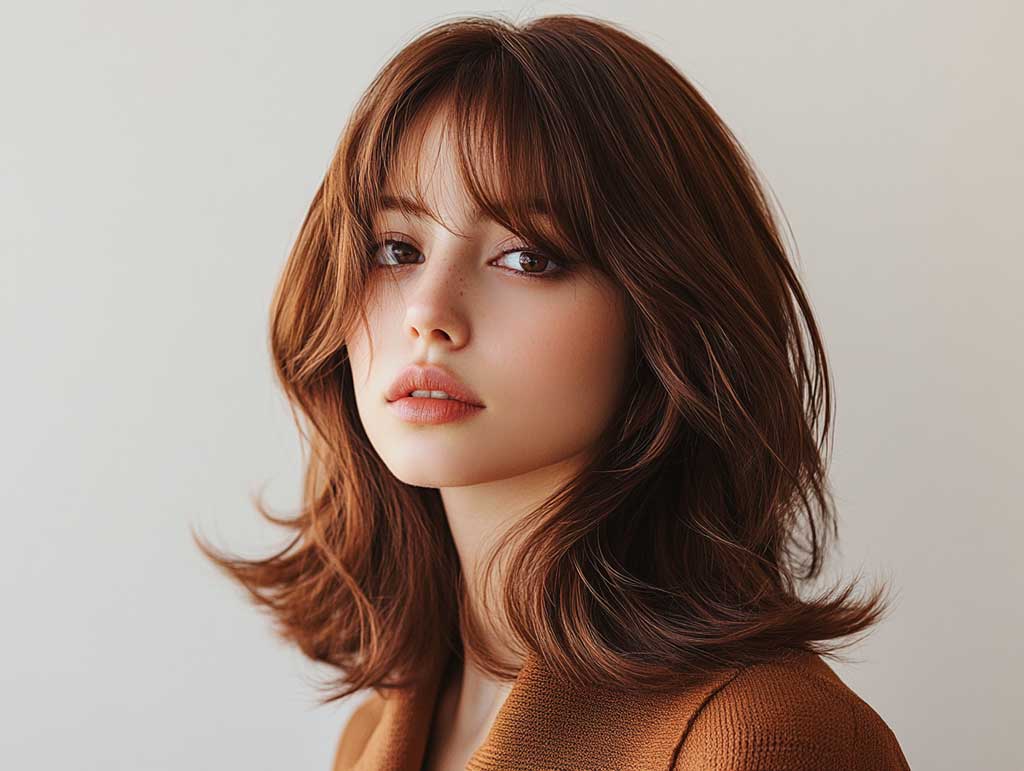
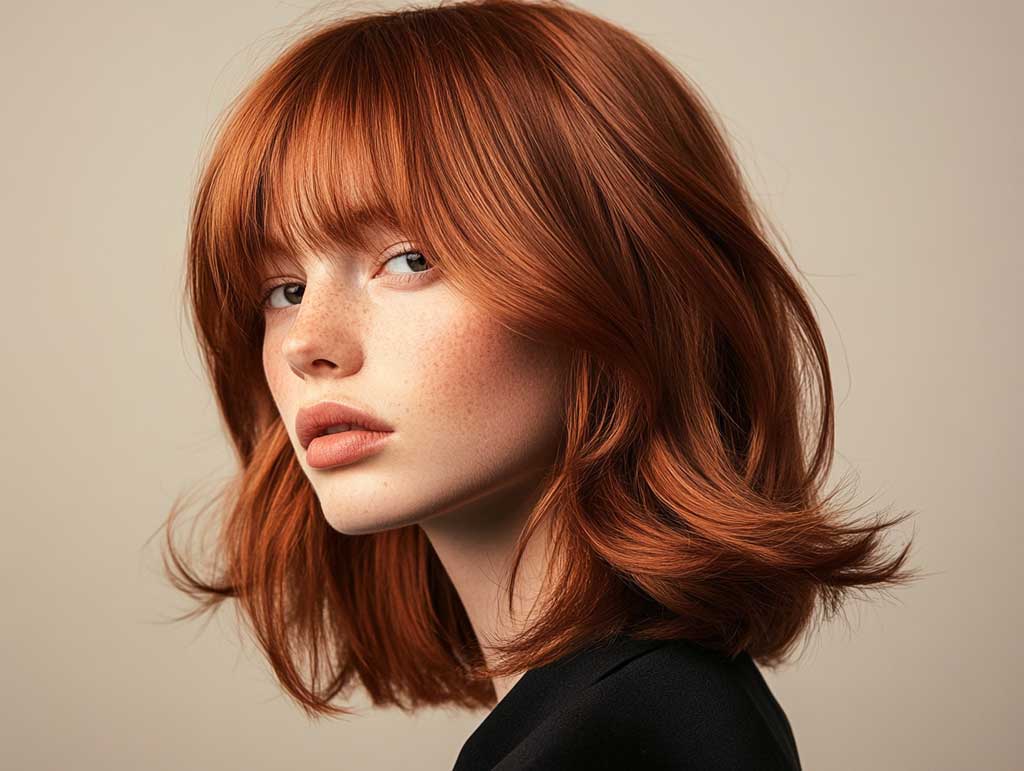
Olaplex No.6 Bond Smoother ($28) is my go-to for this version — rake it through damp strands before blow-drying and the warm chestnut almost glows. I’ve tried cheaper smoothing serums and they either flatten the curtain bang or make the whole thing feel coated. What works is a lightweight smoothing serum with a low silicone content so the hair stays pliable, not stiff. The feathery texture of the bangs is what stops the look from reading heavy, and you protect that with product restraint.
Does silky mean over-processed? Not with this cut. The whole point of the wispy curtain bang is that it moves. If your bangs sit flat against your forehead without any separation, you’ve used too much product — start with a pea-sized amount and add from there. I stole this trick from a session stylist: dry the bangs first with a round brush before touching the rest of the hair, so they set with the curve intact before the heat from the rest of the blow-dry can flatten them.
Sulfate-free shampoo is non-negotiable at this color depth. Pureology Strength Cure (~$34) is worth the price if you’re maintaining warm chestnut — sulfates strip red-gold molecules first, and you’ll notice the color going ashy within three washes without protection. A leave-in conditioner applied mid-shaft to ends (never on the roots of curtain bangs) keeps the strands manageable without adding bulk at the fringe. Straightening iron at 300°F max on the side sections; any hotter and the ends will start to flick outward and undercut the precision of the hime structure.
Skipping heat protection on this cut is the one mistake I see repeated. The blunt side sections look dull and split within weeks if you’re applying heat without a barrier. Tresemmé Thermal Creations Heat Tamer Spray ($6) does the job at any budget. This silky version of the hime cut with curtain bangs is the one most likely to photograph well — the structured geometry and the light-catching chestnut create a look that translates clearly in mirrors, photos, and real life simultaneously.
- Don’t cut the curtain bangs blunt. Blunt shears on this fringe kills the wispy effect entirely. Point-cut only — your stylist should be angling the scissors vertically into the ends, not cutting straight across.
- Don’t skip the root touch-up window. Warm chestnut fades faster at the roots than at the ends. Going more than 8 weeks without a gloss or toner will make the overall color look two-toned in a bad way.
- Don’t use a paddle brush on the curtain bangs. Paddle brushes flatten the curtain curve. Round brush only, medium barrel, during the blow-dry.
Layered Movement in the Hime Cut with Curtain Bangs
A layered variation of the hime cut with curtain bangs solves the one problem the classic structure creates: weight. Traditional hime cuts can feel solid and immovable, especially on thicker hair. Soft layers in the body of the cut — starting at the collarbone and feathering down — let the warm chestnut color show its dimension rather than sitting as a flat sheet. The curtain fringe pulls the whole thing forward and soft, making the face-framing effect feel natural rather than architectural.


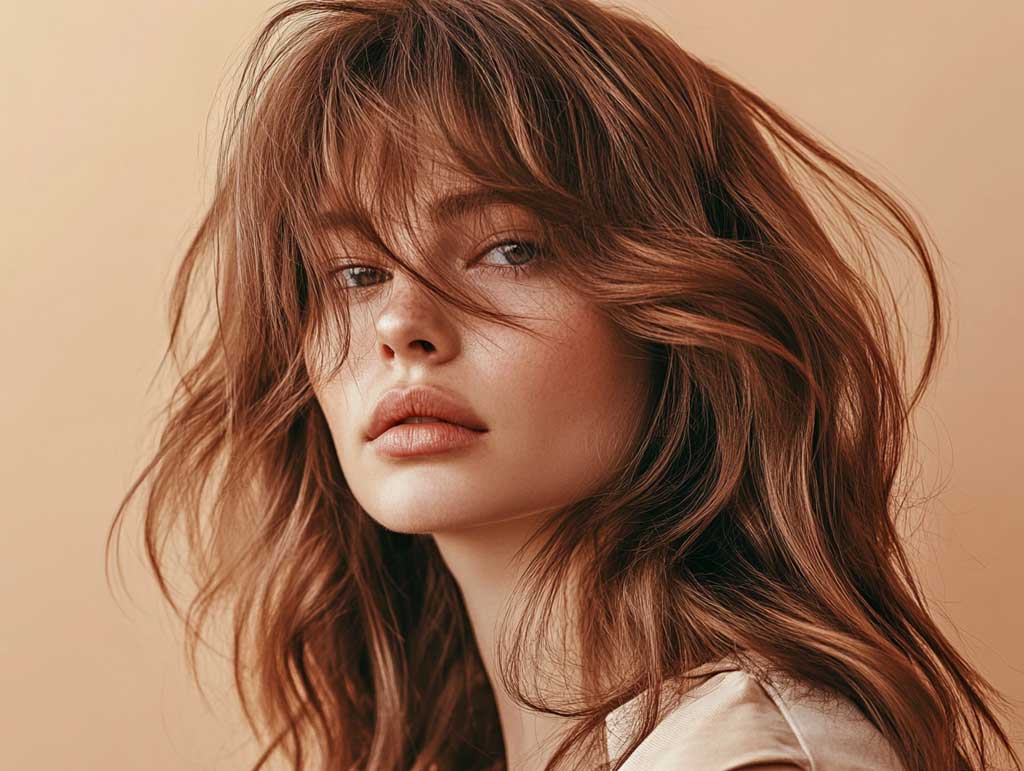
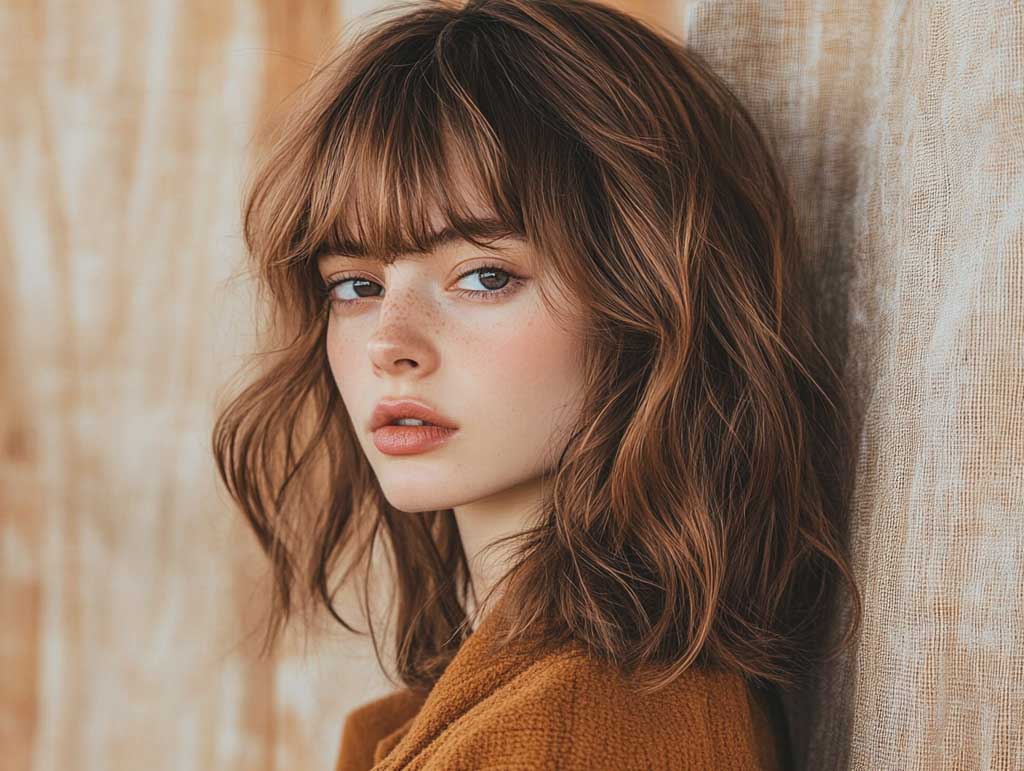
Think of the blunt hime structure like a picture frame — the layers are the painting inside it. The jaw-length side sections stay intact as anchor points, but the internal layering removes the bulk that makes thick hair look boxy. I own two round brushes specifically for this kind of work: a small one (1 inch) for the curtain fringe and a medium (1.75 inch) for the body of the cut. Mixing the barrel sizes during blow-dry gives you the volume underneath without competing with the light curtain bang.
John Frieda Frizz Ease Curl Reviver Mousse (~$10) is the product I keep recommending for the layered version. A volumizing mousse like this one lifts the curtain fringe without weighing it down, and on warm chestnut hair the hold is light enough that the color catches the light between sections. Apply to damp bangs only, then use the round brush to dry them with a slight inward curve — that curve is what creates the “curtain” effect and separates this from a standard fringe.
What doesn’t work on the layered version? Over-layering. I’ve seen stylists go too aggressive with thinning shears on the side sections trying to reduce weight, and what you end up with is a hime structure that collapses by noon. The blunt side sections need to keep their density — thin internally in the back sections only, leave the front geometry alone. You can read more about why face-framing cuts behave differently on various face shapes in this breakdown of face-framing haircuts for oval faces.
A few drops of Moroccanoil Treatment Light (~$15 for 25ml) on the ends after styling keeps the warm chestnut shade looking luminous without weighting the curtain bang. Apply it to your palms, rub them together, and run through the bottom third of the hair only. Keeping the oil away from the fringe is the difference between a soft curtain hang and bangs plastered to your forehead by 2pm.
Glossy Tapered Variation of the Hime Cut with Curtain Bangs
The hime cut with curtain bangs gets its most refined interpretation when the fringe is tapered rather than uniformly wispy. Tapered curtain bangs are longer at the outer edges and shorter at the center part — it’s a more precise cut than the looser feathered version, and the effect on warm chestnut hair is cinematic. Deep chestnut tones at Level 5 read almost auburn in direct light and pure brown in shadow, and the tapered bang parting the center adds a face-framing precision that softer fringe styles can’t replicate.
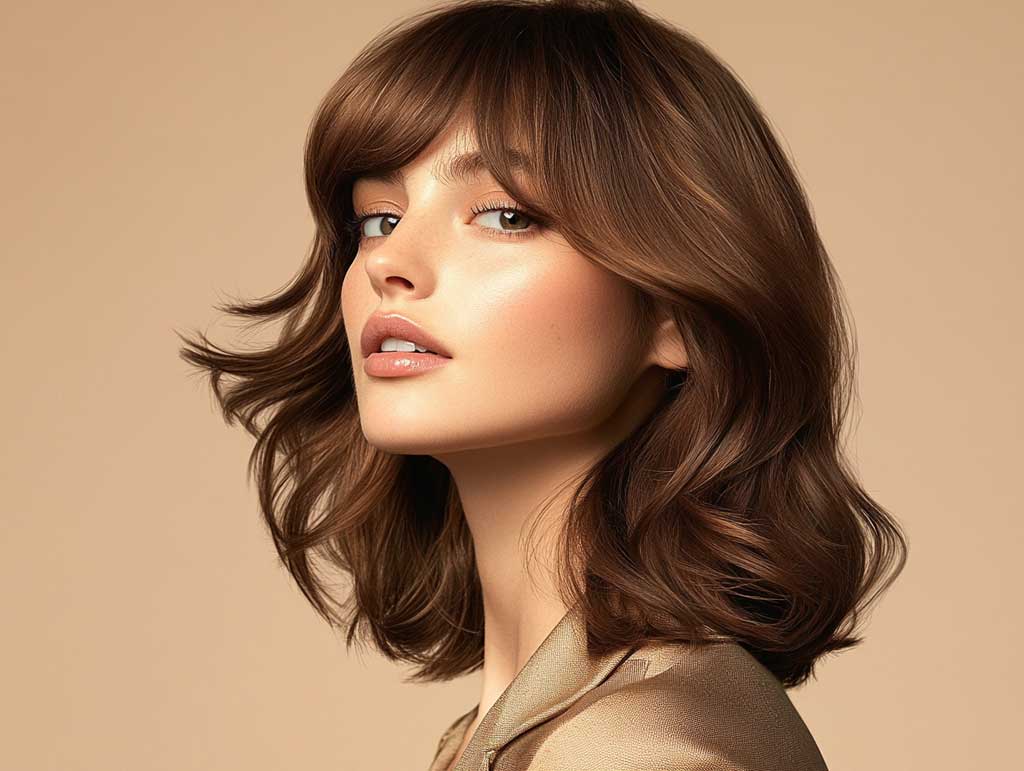
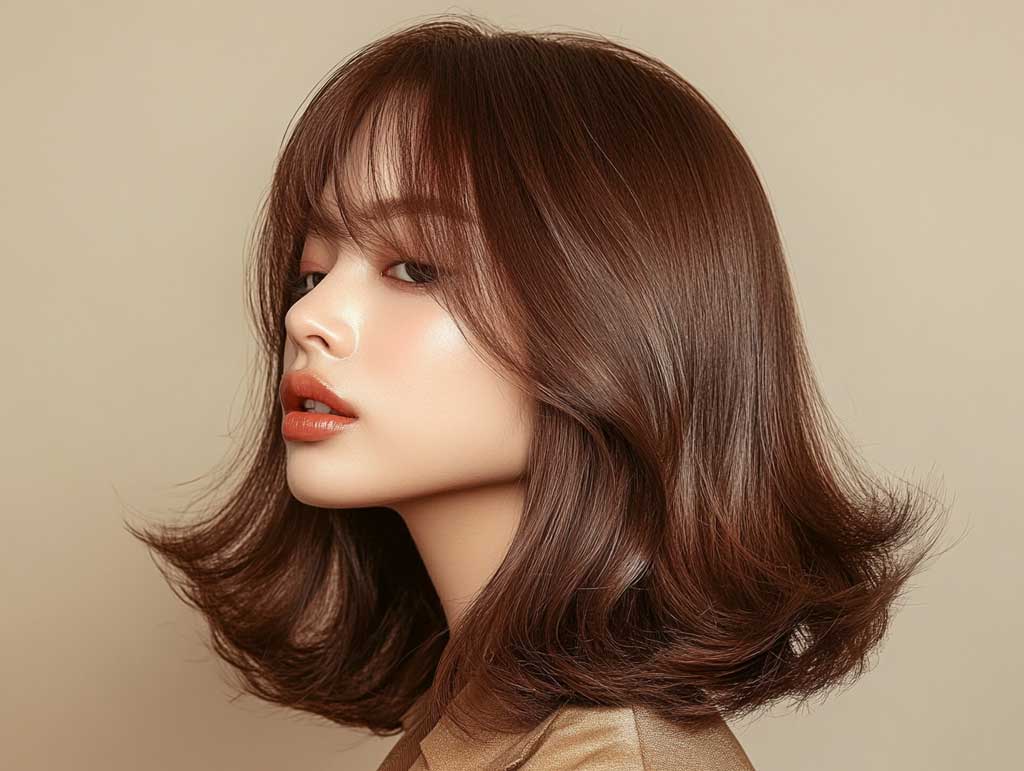
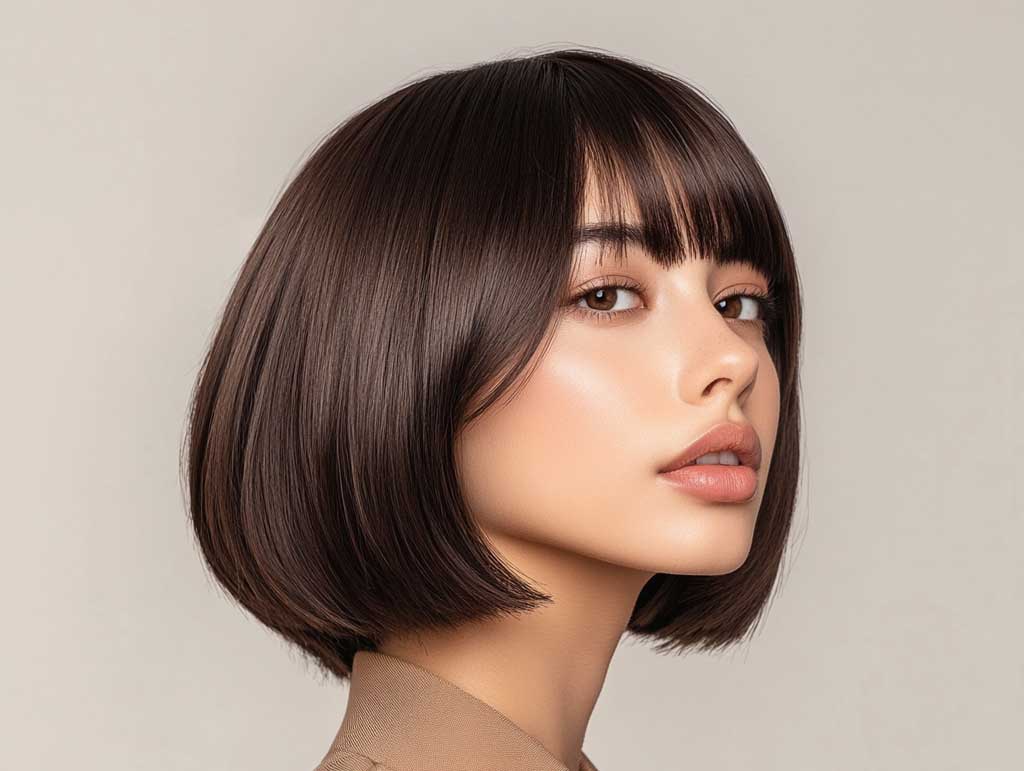

Kenra Platinum Silkening Mist ($22) is the shine-boosting treatment I’d reach for on this version specifically. Spray it on dry hair after styling and the warm chestnut shade goes from solid to multidimensional — each layer of the cut picks up light at a different angle. The tapered shape of the bangs allows natural movement without looking shaggy, which is the technical challenge: a precisely cut fringe that still moves like it’s casually placed. That requires point-cutting on slightly dry hair, not wet.
Hydration is where most people lose this finish. Deep conditioning treatments — I use the Briogeo Don’t Despair, Repair! Deep Conditioning Mask ($38) every ten days — preserve the smoothness that makes the tapered bang sit correctly. Warm chestnut tones fade at a rate of about one level every 4-6 weeks without color-protecting shampoo; Redken Color Extend Magnetics ($20) keeps the richness from going brassy or flat. The color is doing the structural work in this variation, so protecting it is protecting the cut.
You can also find strong styling reference in the platinum hime cut with angular ends — the precision principles are the same even though the color and tone are different. For the tapered curtain bang specifically, ask your stylist to cut this fringe in two passes: one at medium length to establish the shape, one final pass with point-cut texture to remove any bluntness. Rushing that second pass is the most common reason tapered bangs end up looking like regular blunt fringe. For even more curtain bang context with layered hair, the curtain Korean bangs guide covers the cutting technique in detail.
On this version of the cut, a subtle wave on the body of the hair — not on the bangs — adds a final layer of sophistication. Use a 1.25-inch curling wand on the mid-lengths only, wrap loosely away from the face, and let fall without brushing out. The tapered curtain bang stays straight while the body of the cut has movement; the contrast between the two is what makes the glossy hime cut look intentional rather than accidental. For additional context on how different bang cutting techniques affect face-framing results, John Frieda’s breakdown of hime cut variations explains the structural differences between blunt, tapered, and wispy fringe in practical terms.
The Verdict
Curtain bangs didn’t soften the hime cut — they made it wearable
Wispy curtain bangs on a warm chestnut hime cut are doing structural work. They bridge the gap between the precise side sections and the face, so the cut reads as framing rather than framing you.
Warm chestnut at Level 5-6 with copper-gold undertones is the single best color choice for this silhouette — it makes the layered geometry visible without any highlight work.
The difference between a curtain bang that holds and one that collapses is one product choice: volumizing mousse on damp fringe, round brush dry, and nothing else on the bangs afterward. Save this post.