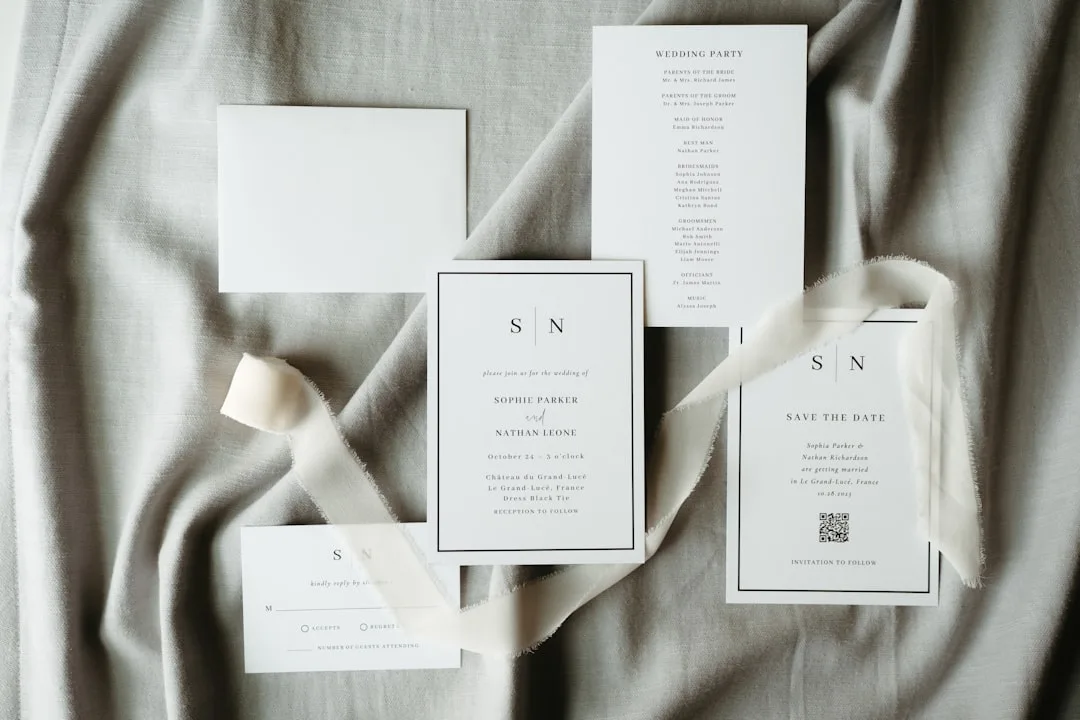
Walk into a modern wedding’s welcome suite in July 2026, and you’ll notice something immediate: guests are handling stationery like artifacts. The wedding day stationery suite has abandoned the flat, glossy postcard aesthetic entirely. Instead, couples are commissioning multi-layered pieces that demand touch—vellum overlays, embedded wildflower seeds, embossed metallic accents, and mixed-media binding that transforms a simple invitation into an object worth framing.
Why Texture Replaced Ink as the Primary Design Element
The shift began when designers realized flat printing no longer signals premium. Minted, a leader in custom stationery, now reports that couples requesting embossed, vellum-layered invitations outnumber flat cardstock orders by 3-to-1. The psychological driver is clear: tactile stationery creates anticipation before guests even arrive.
Touch triggers memory better than sight alone. When a guest runs their finger across an embossed monogram or feels the weight of handmade paper, they’re already emotionally invested in the event. This is why luxury hotels redesigned their key cards and why high-end fashion houses switched to embossed packaging a decade ago.
The wedding day stationery suite now does the same work that used to require a save-the-date, invitation, timeline card, and escort card—all at once, all textured.
Quick Tips
- Layer at least three distinct materials: one translucent (vellum), one tactile (kraft or handmade), one metallic or structural (copper foil, wax seal)
- Use embossing over printing wherever possible—it reads as luxury and ages better in photos
- Source handmade paper from local artisans or established mills like Mohawk Fine Papers, which offer certified sustainable options
- Bind layered cards with twine, ribbon, or wax seal rather than traditional folding to preserve texture integrity
The Material Hierarchy Wedding Designers Use Now
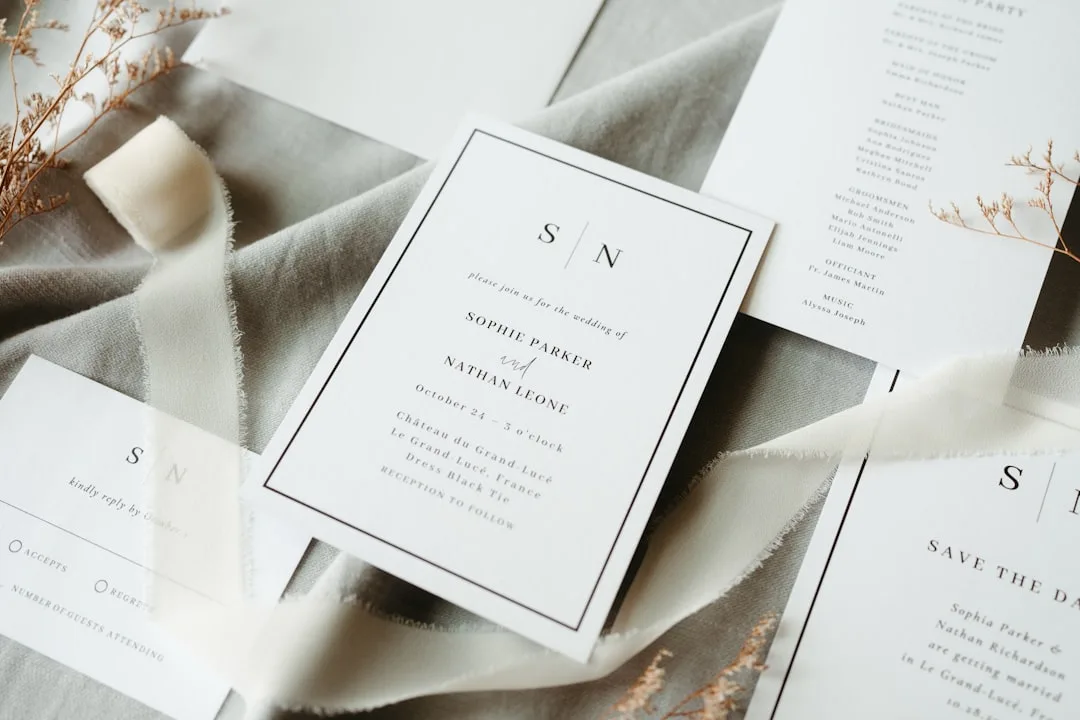
Luxury wedding stationery designers at firms like Kinwear and Smock have developed a three-tier tactile system. The outer layer—the first impression—uses vellum or translucent Yupo paper with a subtle printed pattern or monogram. This layer never bears full text.
The middle layer combines cardstock weight with visible texture: natural flecking, deckled edges, or watermark detail. Mohawk Fine Papers’ Via line (a regenerated fiber stock with visible plant material) dominates here. One layer, three sensory cues.
The base layer holds all essential information and often features a metallic accent—embossed copper, letterpress elements in gold, or a wax seal system. This is where the couple’s story lives.
| Material Choice | Tactile Effect | Common Use |
|---|---|---|
| Vellum | Translucent, layered feel | Outer overlay, soft reveal |
| Handmade Paper | Deckled edges, visible fiber | Invitation base, program cover |
| Embossed Cardstock | Raised monogram, dimensional | Secondary information layer |
| Metallic Foil | Reflective, structural | Accent detail, envelope lining |
The Most Common Wedding Stationery Mistake Couples Make
The biggest error: layering too many materials without a structural anchor. A bride from Boston commissioned an invitation with seven separate components—vellum, kraft paper, gold foil accent, twine, wax seal, guest card, and belly band. Total weight made the USPS charge oversized postage, and guests reported pieces arrived separated and mismatched.
The problem was ambition without hierarchy. Too many layers with equal visual weight overwhelms rather than impresses. The winning approach is to layer purposefully—one hero material (the vellum overlay or the handmade base), supported by one accent element (embossing or foil), bound by one structural choice (a wax seal or ribbon).
More is not sophistication. Restraint is.
How Wedding Day Stationery Extends to Ceremony Programs and Menus
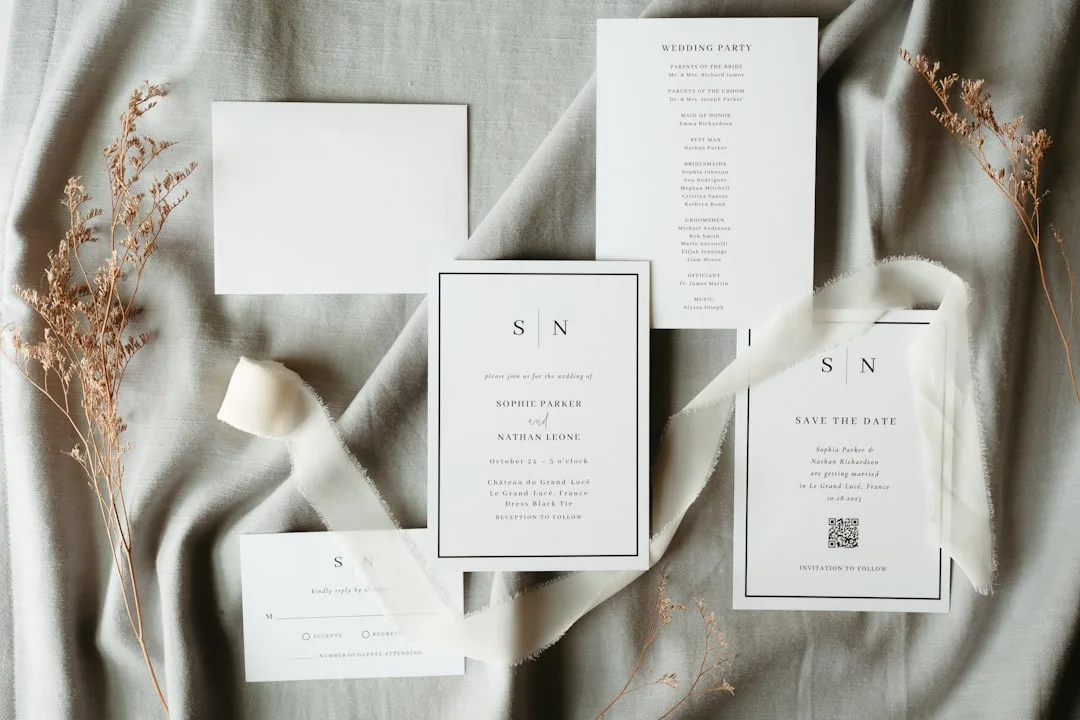
The logic of layered, tactile stationery now permeates the entire suite. Ceremony programs use the same vellum-over-cardstock approach, but programs also experiment with wood veneer covers (sourced from sustainable vendors like Paperbark & Twine) or even lightweight linen covers with embossed ceremony order on the back.
Menu cards at receptions now feature printed text on one side and an embossed detail on the reverse—a small gesture that makes guests turn the card over, extending the tactile interaction. This is a lesson borrowed from luxury packaging: make the object work harder.
Escort cards remain stationery’s final frontier. Rather than flat table-number cards, progressive couples are printing on kraft or handmade paper and attaching a small embossed name panel, creating a mini-version of the invitation’s tactile complexity. Guests literally hold a piece of stationery that mirrors the main suite.
Where to Commission a Wedding Day Stationery Suite Built on Texture
Minted offers template-based customization with vellum options and emboss-on-demand, making layered stationery accessible without a $2000+ custom design fee. For couples investing in bespoke work, designers like those specializing in Wedding Party Decorations with Elegant Minimalism often integrate stationery into broader ceremony design.
Local print shops in major cities (seek out AIGA-member studios or ask your wedding planner) increasingly stock specialty papers—Mohawk, Neenah, Southworth—and can hand-bind or emboss custom orders. The cost for a bespoke layered invitation suite typically ranges from $5-8 per unit for 100+ quantities, compared to $1-2 for traditional flat cardstock.
Sustainability matters now too. Couples requesting seed paper that guests plant after the wedding, or choosing FSC-certified cardstock with visible recycled content, align the tactile luxury with environmental responsibility—a pairing that defines 2026 luxury.
Why Texture Will Outlast Trends While Flat Design Fades
Tactile stationery endures because it’s not a passing aesthetic. It’s a functional response to digital overload. When every communication arrives as a screen notification, physical stationery that demands attention and touch becomes a rare luxury in itself.
Wedding guests will photograph and share your invitation. A textured, layered piece photographs richer and reads as more intentional than a standard card. The tactile detail translates into perceived value even through a screen.
This is also why 3+ Boho Wedding Decor Trends You’ll Love increasingly pair with textured stationery—both reject digital minimalism in favor of materials that reveal themselves slowly, across multiple senses. Your wedding day stationery suite is no longer background detail. It’s the first physical experience guests have of your event.