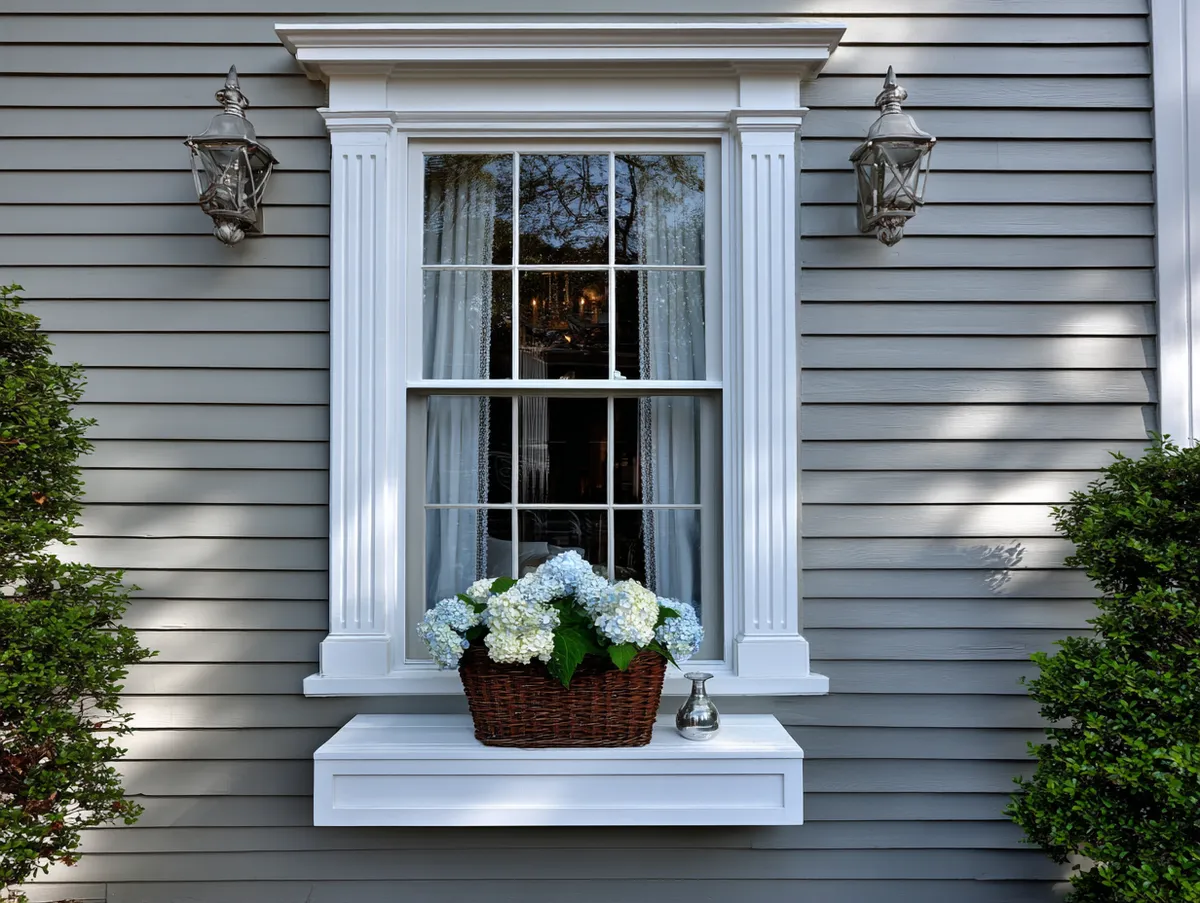
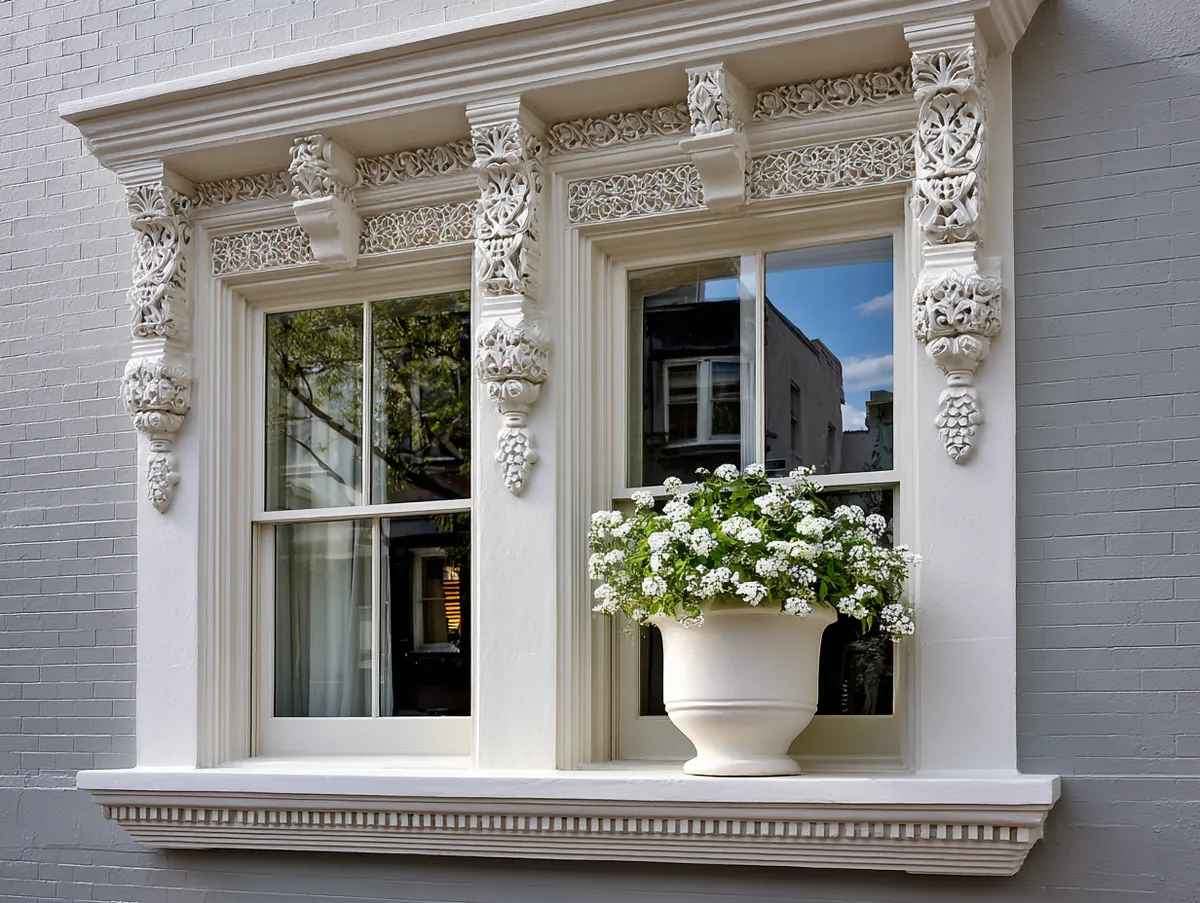
Black moldings around outside windows do something most exterior upgrades can’t — they define the architecture of a house from across the street in a single reading. The dark frame around each opening acts like a mat around a photograph: the window becomes a feature instead of a gap in the wall. That’s the logic behind a design detail that appears on Victorian townhouses, mid-century colonials, and brand-new modern builds alike, and still reads as deliberate every time.
According to Homewyse’s 2026 cost data, window trim molding installation runs $10.01–$15.34 per linear foot — a typical window with 16 linear feet of casing lands at $160–$245 installed. That’s one of the lower-cost exterior upgrades available, and the National Association of Realtors links strong curb appeal to sale prices up to 10% higher than comparable homes. The math is hard to argue with.
Three distinct approaches to black molding — tall windows, symmetrical facades, and stone-accent pairings — each create a different visual result with the same core contrast. The section that follows breaks down how each works, where it fails, and what separates a finished facade from an unfinished one.
- Window trim molding installation costs $10.01–$15.34 per linear foot installed (Homewyse, 2026)
- Black is the #1 window frame color cited by 71% of windows and doors contractors (Fixr industry survey)
- Tall windows with black molding: height draws the eye upward and makes a one-story read like two
- Symmetrical facades with matching black door and window trim outperform random accent placement every time
- Stone + black molding is the pairing that requires the most restraint — and rewards it most visibly
- Homes with strong curb appeal sell for up to 10% more than comparable properties (National Association of Realtors)
What Tall Windows Reveal When Black Moldings Frame Them Right
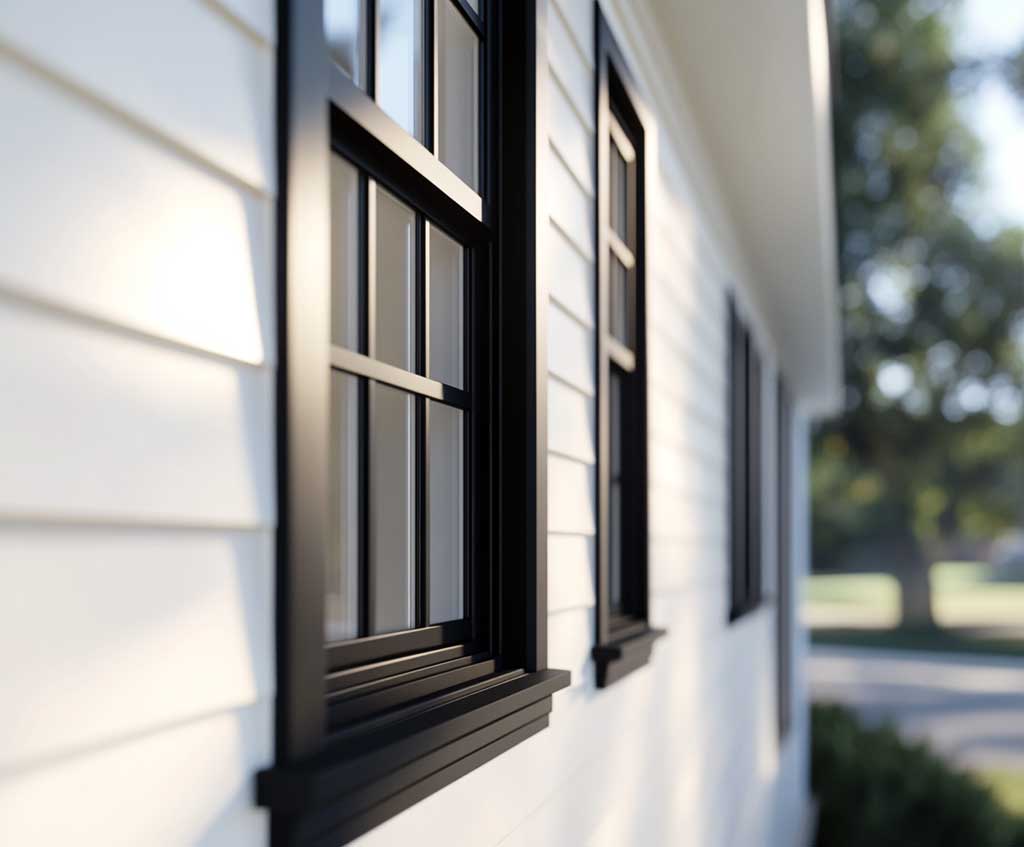
Pairing black moldings with tall exterior windows amplifies everything the architecture is already doing — height, scale, the proportion of glass to wall. A 3½-inch black casing around a floor-to-ceiling window turns the opening into a statement; the same casing at 1½ inches turns it into a detail nobody notices. Stylists recommend sizing the molding profile to at least 10% of the window width, otherwise the frame reads as tentative rather than intentional. The eye needs a definitive edge to register the window as a design feature rather than a construction necessity.
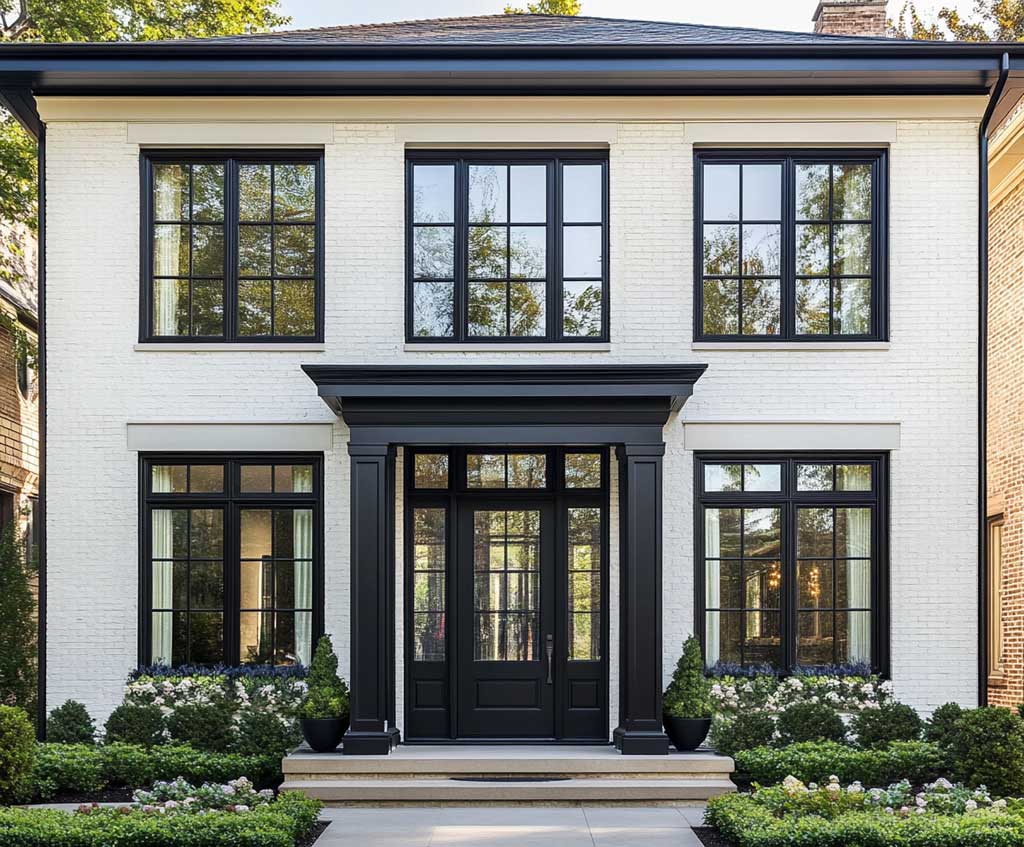
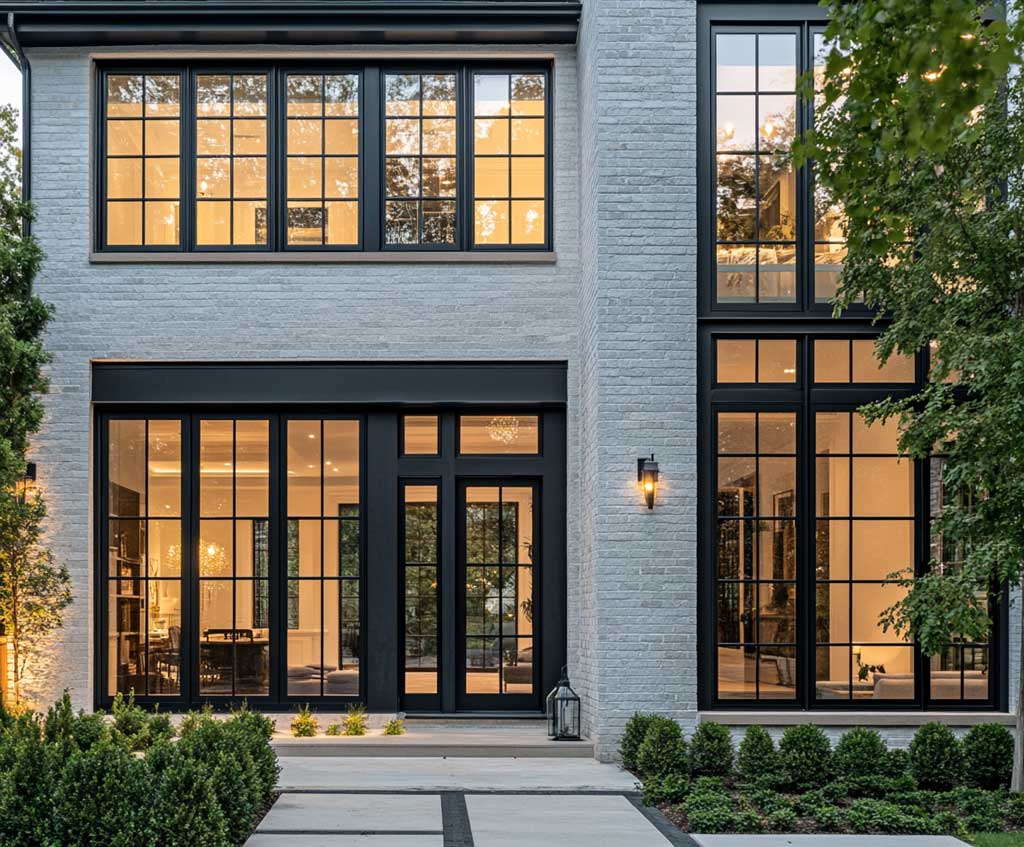
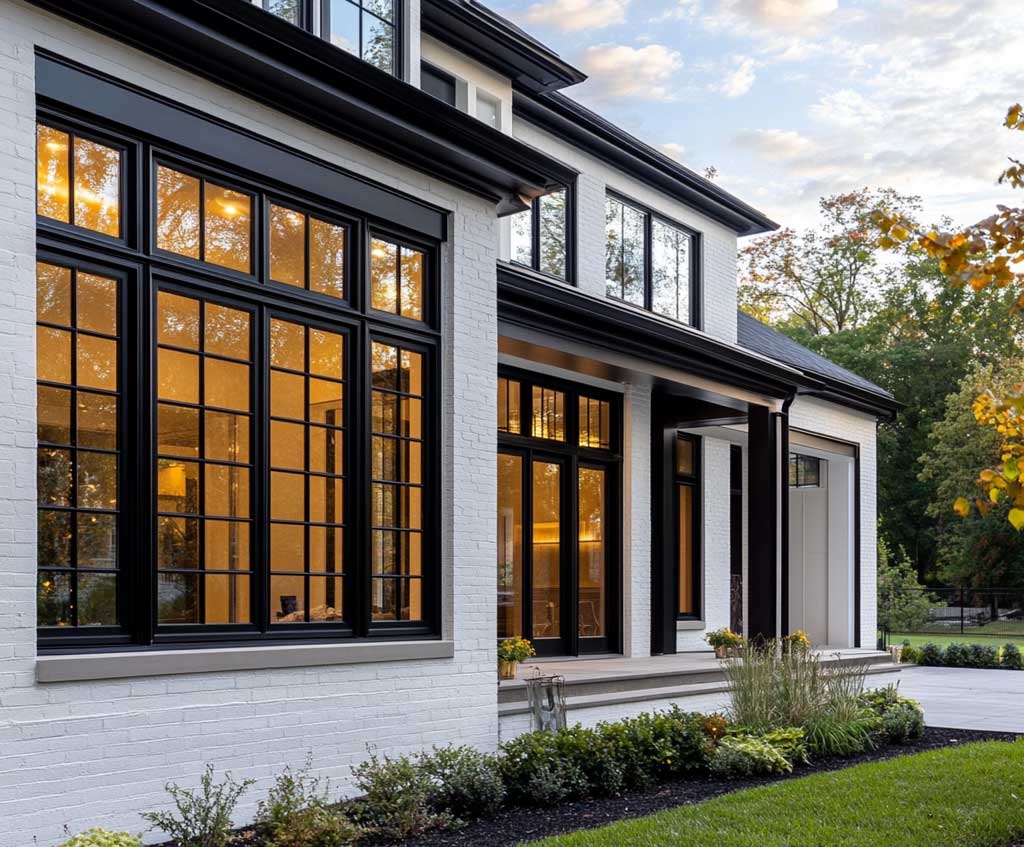
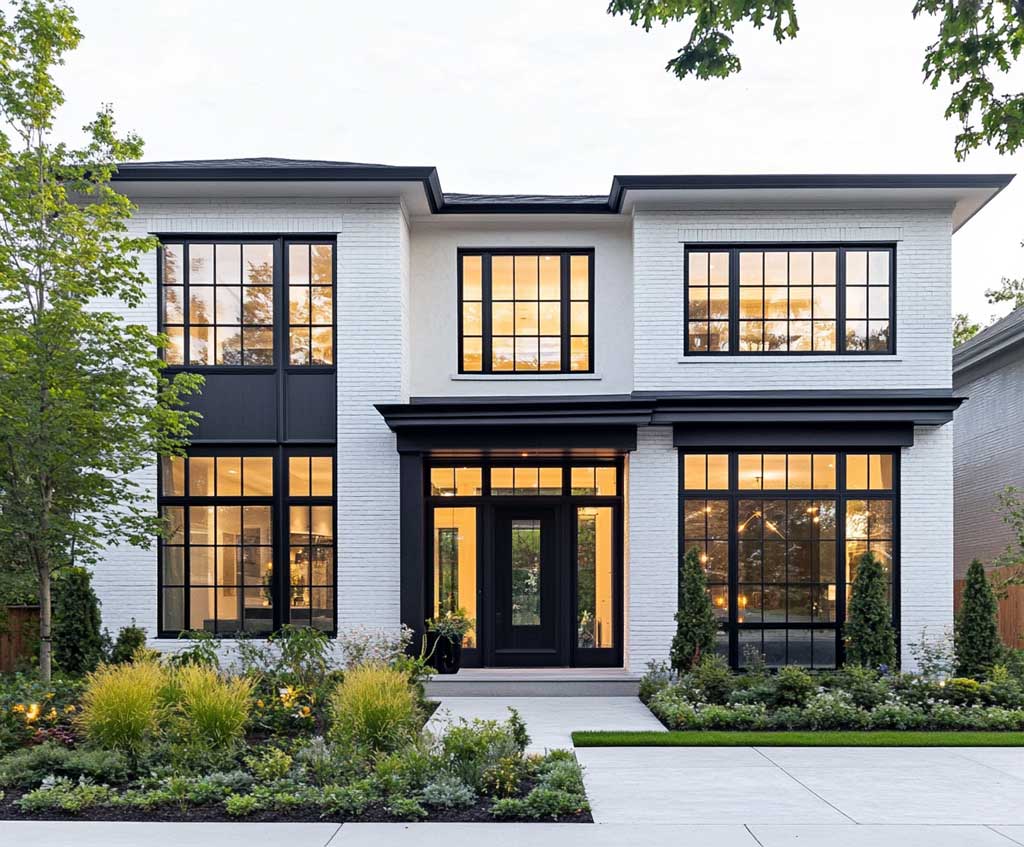
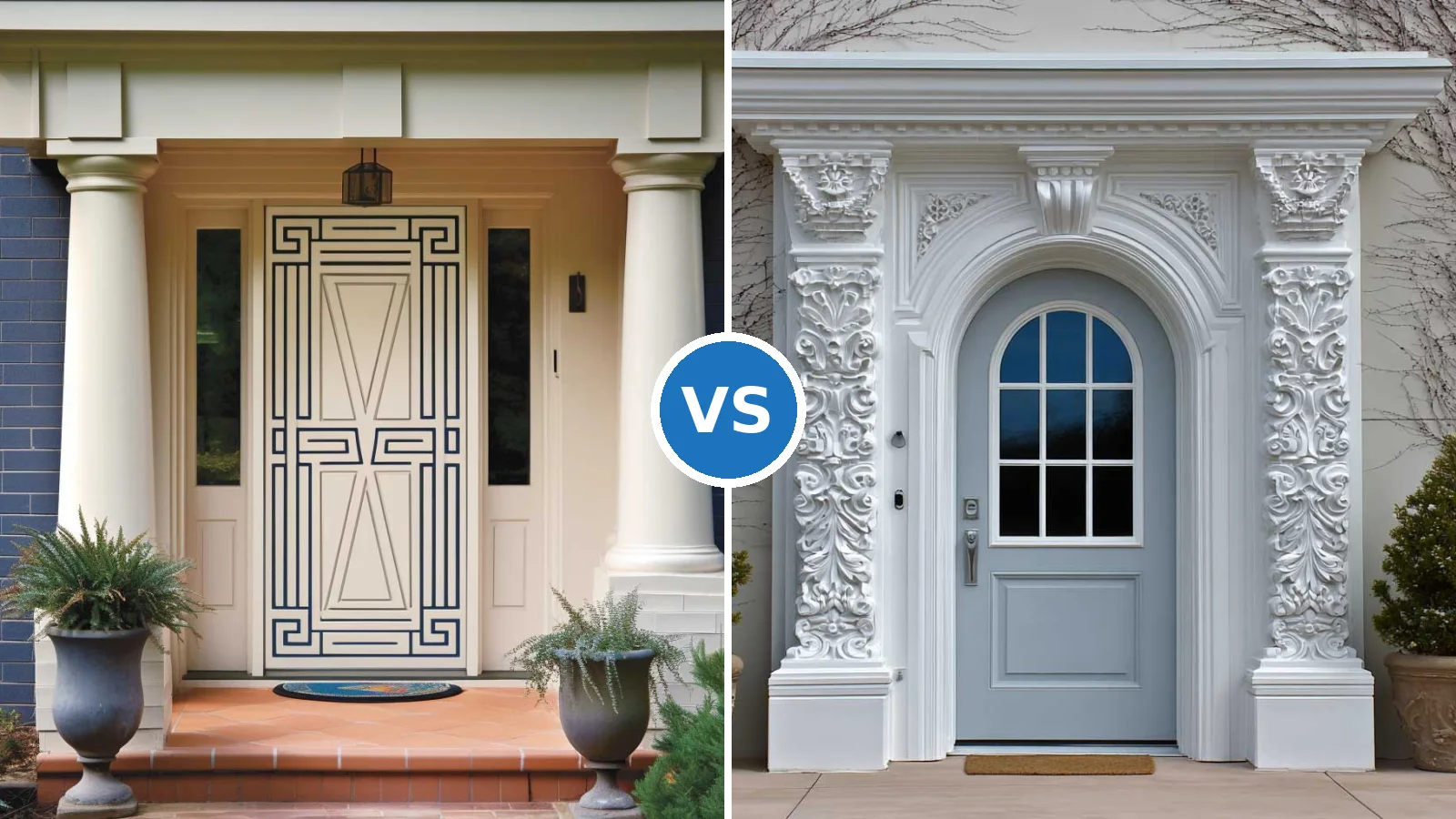
Matching the front door trim to the window molding is the move that holds the whole composition together. Can a single door color really affect the reading of multiple windows? Yes — because the eye tracks repeated dark shapes across a facade as a system, not as unrelated elements. When the door casing shares the same black profile and finish as the windows, the facade reads as a considered design. When the door is black and the window trim is a different shade or finish, the result looks like two separate decisions that happened to end up on the same house. Sherwin-Williams Tricorn Black (SW 6258) applied in the same satin finish to both door and window casings eliminates that risk entirely.
Tall windows with black molding work across more architectural styles than most homeowners expect — modern classic, transitional, and even traditional colonial elevations all absorb the detail without becoming costume-y. The trick here is to keep the wall field neutral. Off-white exteriors in the Sherwin-Williams Alabaster or Benjamin Moore Seapearl range give the black molding space to do its job without competing. Pure optical white amplifies the contrast so aggressively it can read as a label rather than a residential facade, particularly on south-facing elevations in direct afternoon sun. For a closer look at how black and white trim around windows handles different facade types and light conditions, the full breakdown covers paint codes and common pitfalls in one place.
Avoid applying black molding to the casing and sides of a window while leaving the sill its original color. The sill is the horizontal anchor the eye reads first from the street — missing it breaks the frame in exactly the way you were trying to avoid. Apply the same black to every element of the window surround, sill included, or the result looks accidental rather than architectural. Also skip painting only the top half of an arched window in black while leaving the curved segment white — the asymmetry makes the molding look like a failed repair job, not a design choice.
Symmetry Reads Louder When Black Moldings Lock the Windows in Place
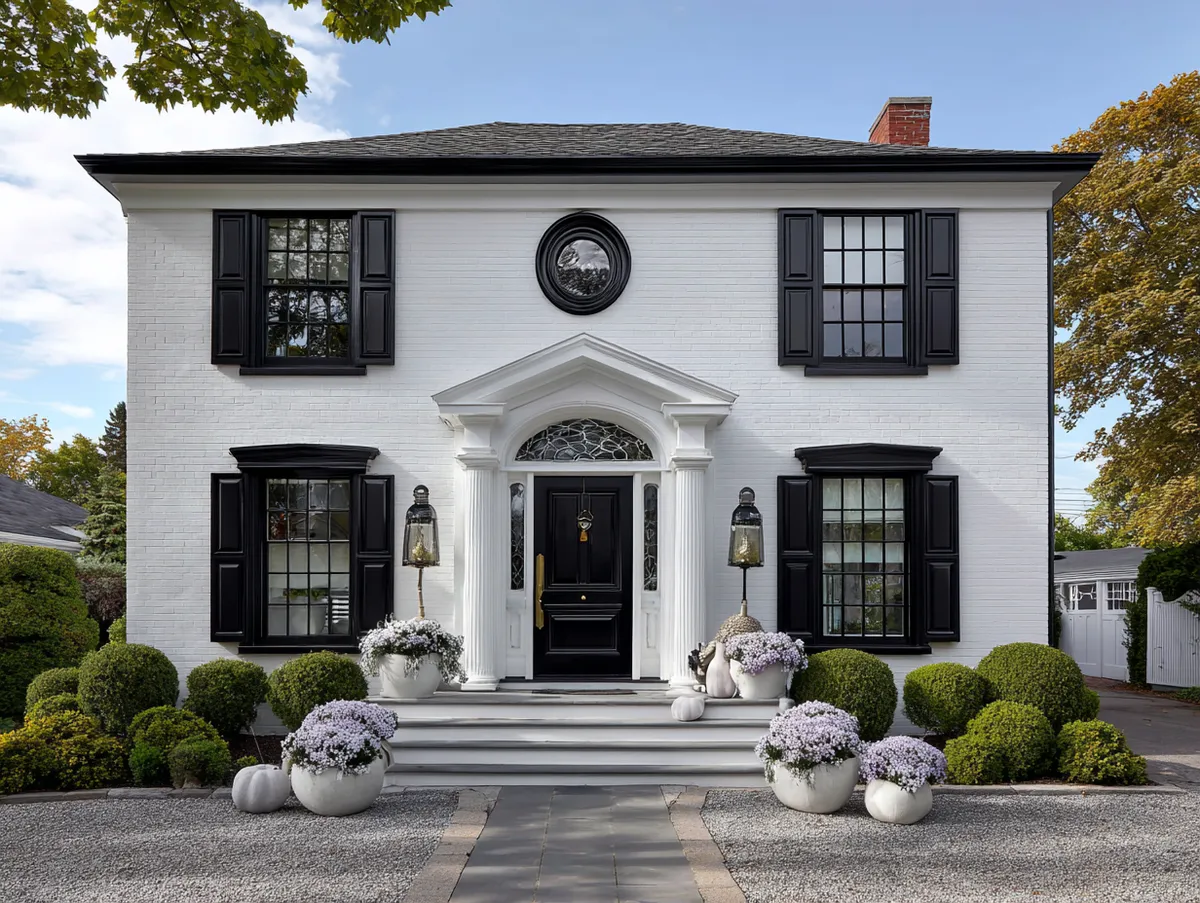
Symmetrical black window molding on an exterior works because the dark frames transform the windows from openings into visual anchors — the kind that hold a facade together the way a center part holds a hairstyle. Two identically molded windows flanking a central black-trimmed door create a composition that reads as complete from any distance, with each element supporting the others rather than competing for attention. Window trim molding runs $10.01–$15.34 per linear foot installed according to Homewyse’s 2026 data, which means a symmetrical three-opening facade — two windows plus a door — typically adds $500–$900 in molding and installation to the exterior budget. That’s the cost of one weekend’s worth of professional painting, and the visual return lasts years longer.
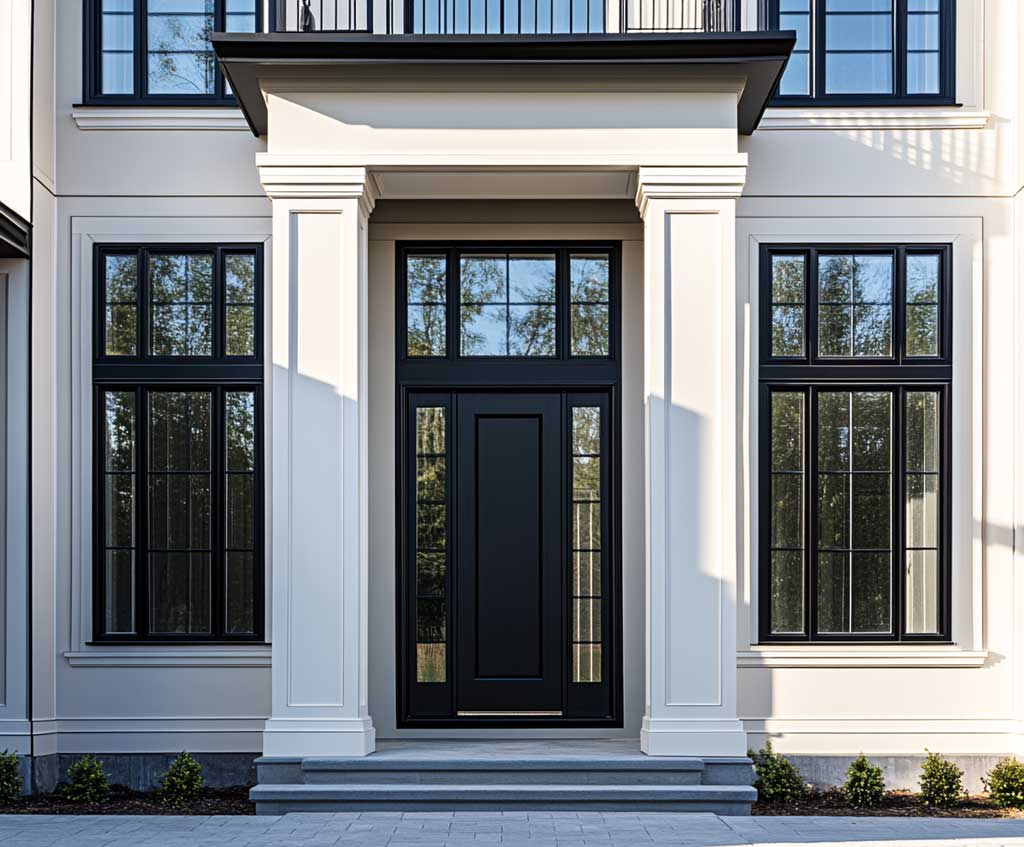
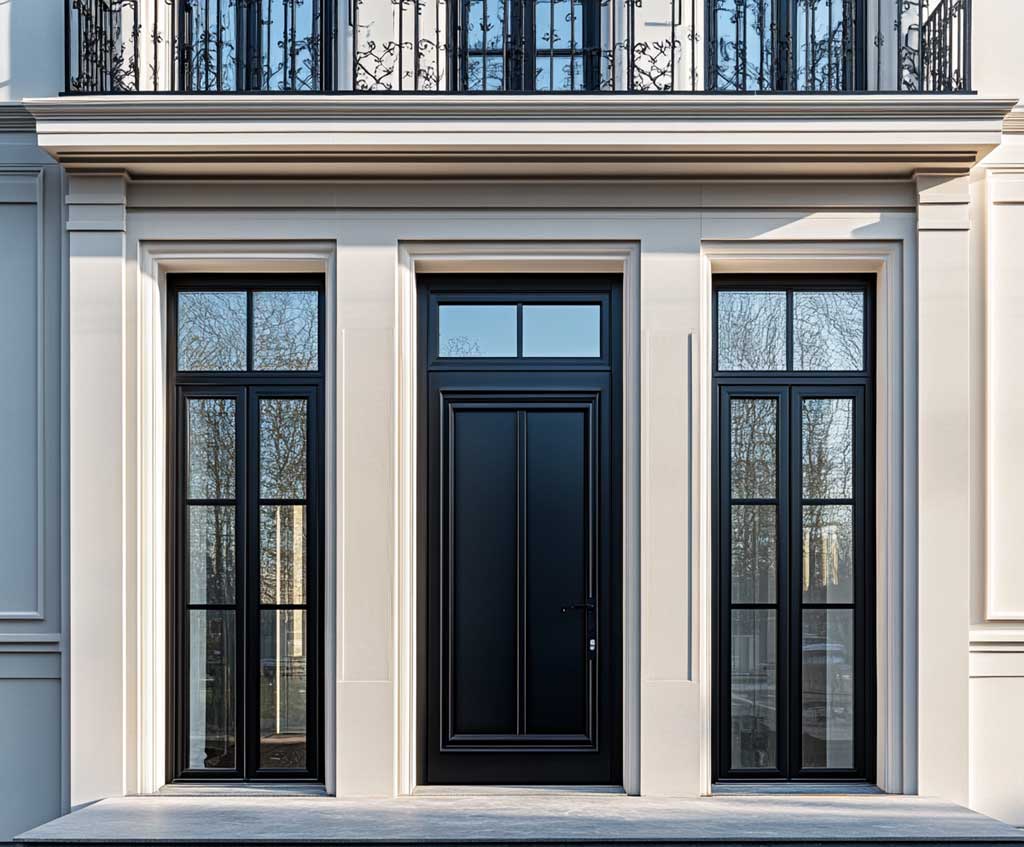
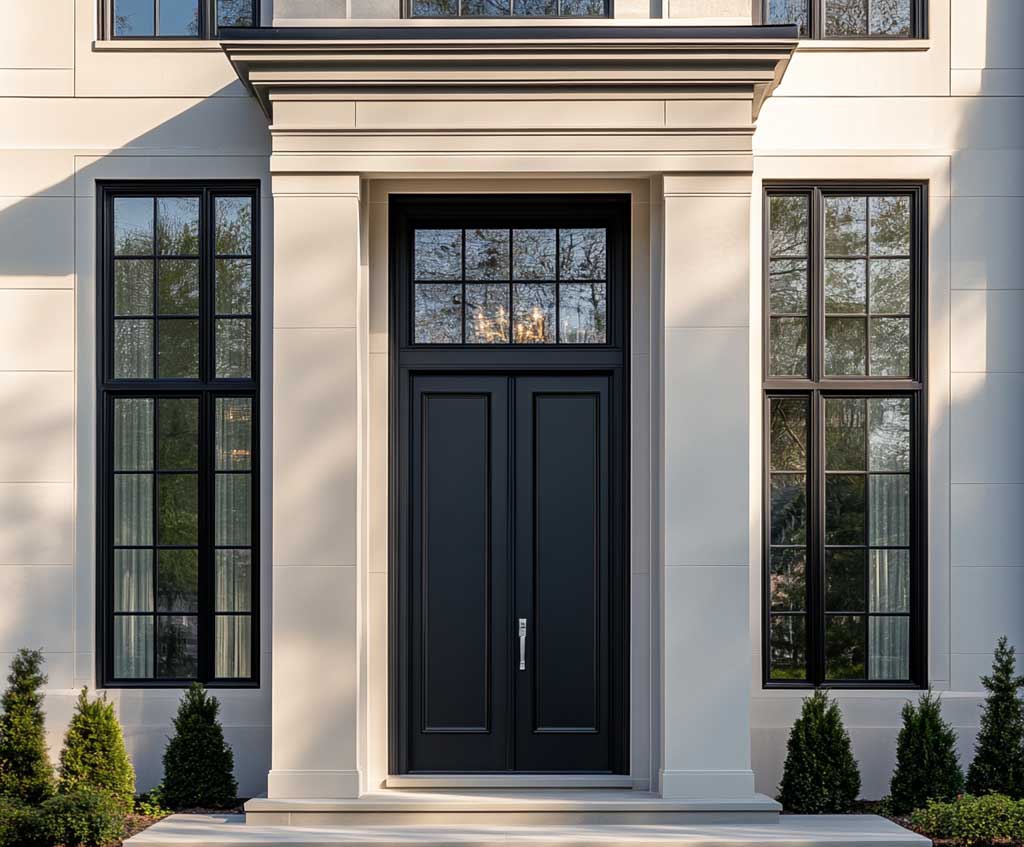
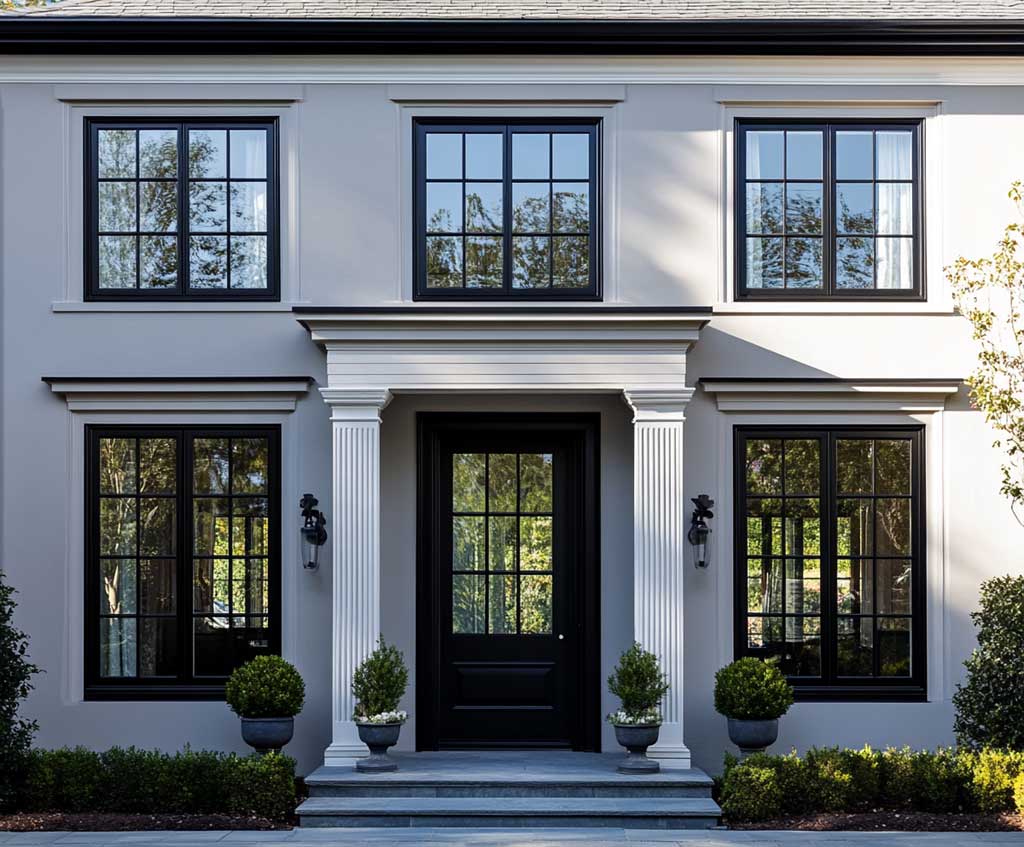
What separates a symmetrical facade that works from one that just looks like a flip — is the finish consistency. A common approach is to run the same paint formula and sheen across every dark element on the elevation simultaneously: casing, sill, door frame, exterior sconces. Mixing a flat black door with a semi-gloss black casing produces two different blacks in direct sunlight — the effect reads as a color mismatch rather than a cohesive system. Stylists recommend buying a single quart of exterior trim paint at whatever sheen the casing calls for and rolling every dark element on the facade with that same product. The visual coherence that results costs nothing extra and prevents the most common symmetry failure.
Does symmetry work on facades where the windows aren’t evenly spaced due to interior layout? The answer is: sometimes, with adjustments. A common approach is to use the black molding width itself as the corrective — widening the casing profile on the narrower side of an asymmetric pair so the visual weight of the dark frame compensates for the position difference. This works best when the disparity is 6 inches or less. Beyond that, the eye detects the asymmetry regardless of molding width and the facade reads as unresolved. A light gray exterior — softer than pure white but with enough contrast for the black trim to register clearly — is the most forgiving background for navigating this problem.
Stone Walls Make Black Moldings Around Windows Hit Differently
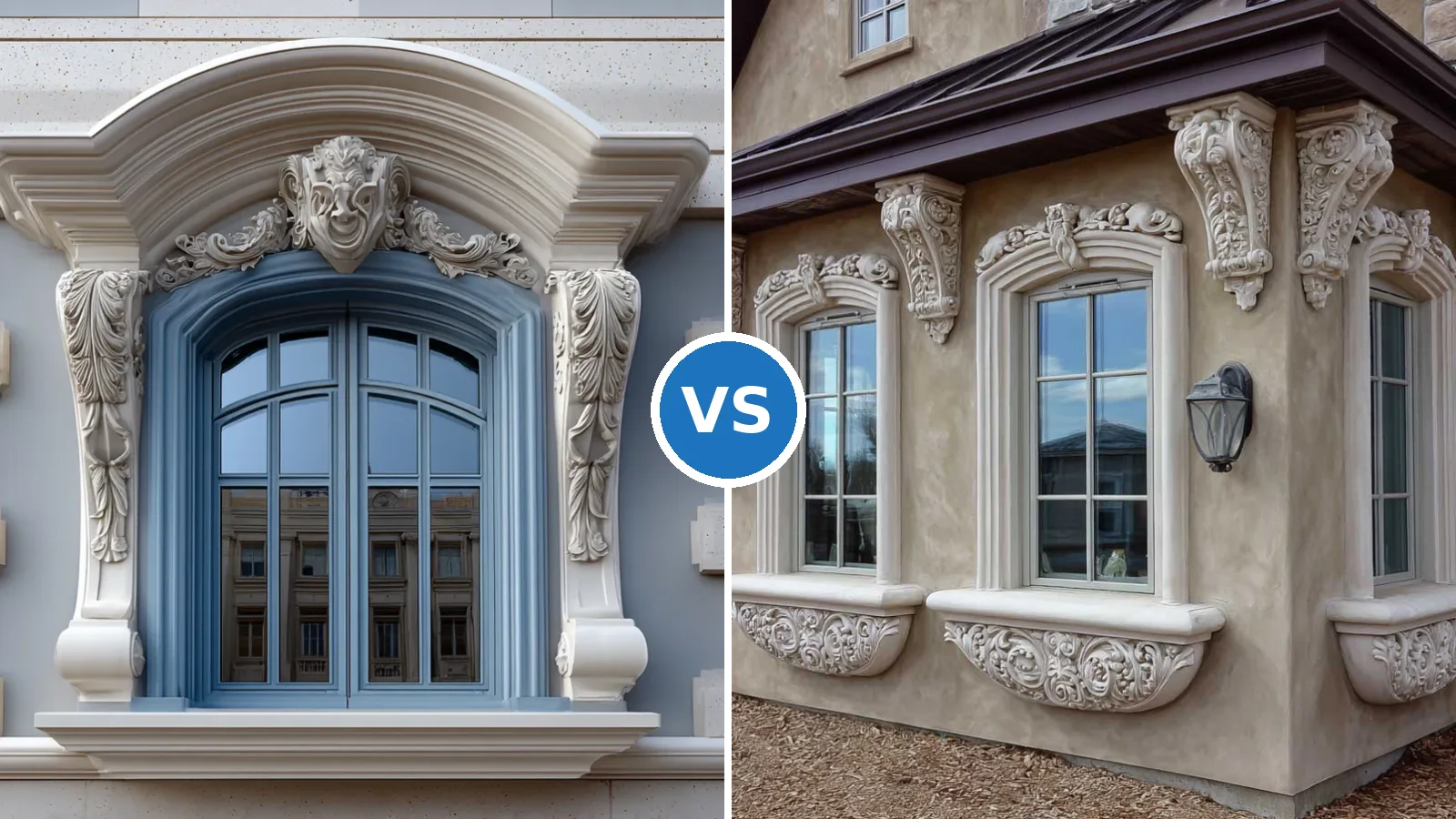
Black molding against natural stone exterior is the combination that requires the most restraint and pays back that restraint with the most visible result. Stone brings texture, warmth, and irregularity to a facade — qualities that a flat, smooth black casing counterbalances rather than competes with. The trick here is understanding that the stone and the molding are doing opposite jobs: the stone creates visual noise that grounds the building in the landscape, while the black frame creates visual silence that forces attention to the window geometry. Together, they read like a well-edited room where every element has a reason to be there. Aluminum window capping in matte black — typically $75–$200 per window installed according to Angi’s 2026 cost data — holds its color against stone for 20 or more years without the chalking and fading that painted trim shows on heat-absorbing south-facing walls.
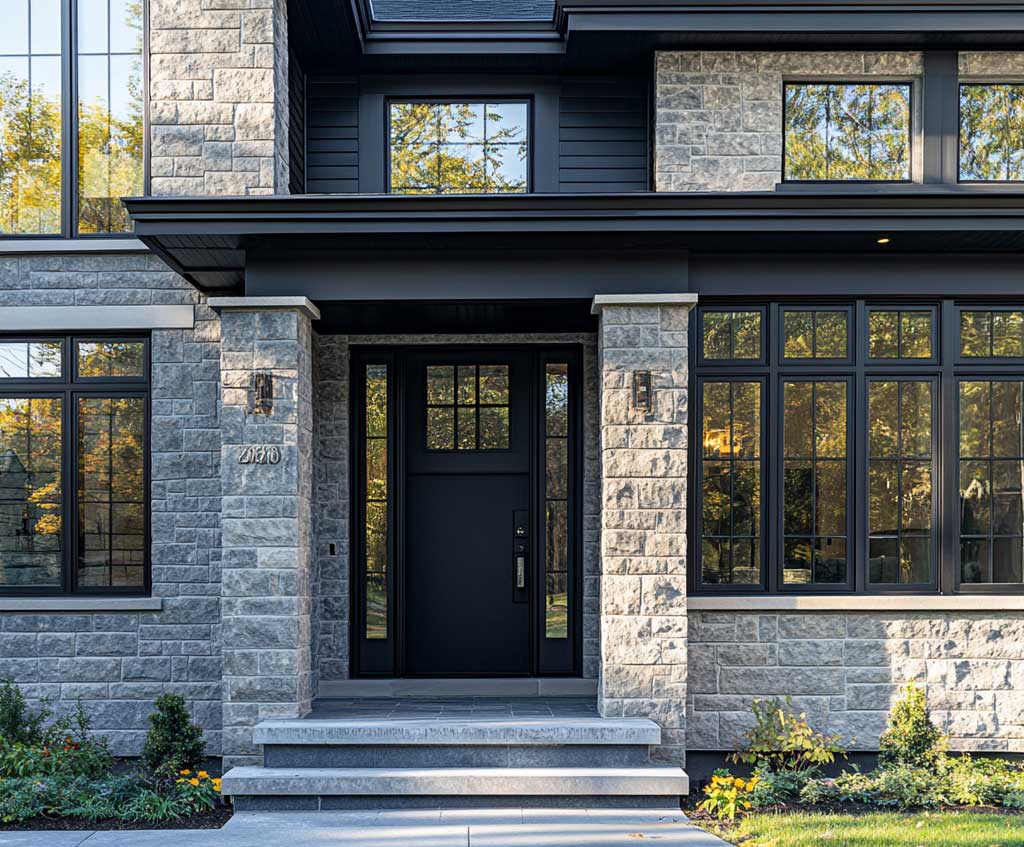
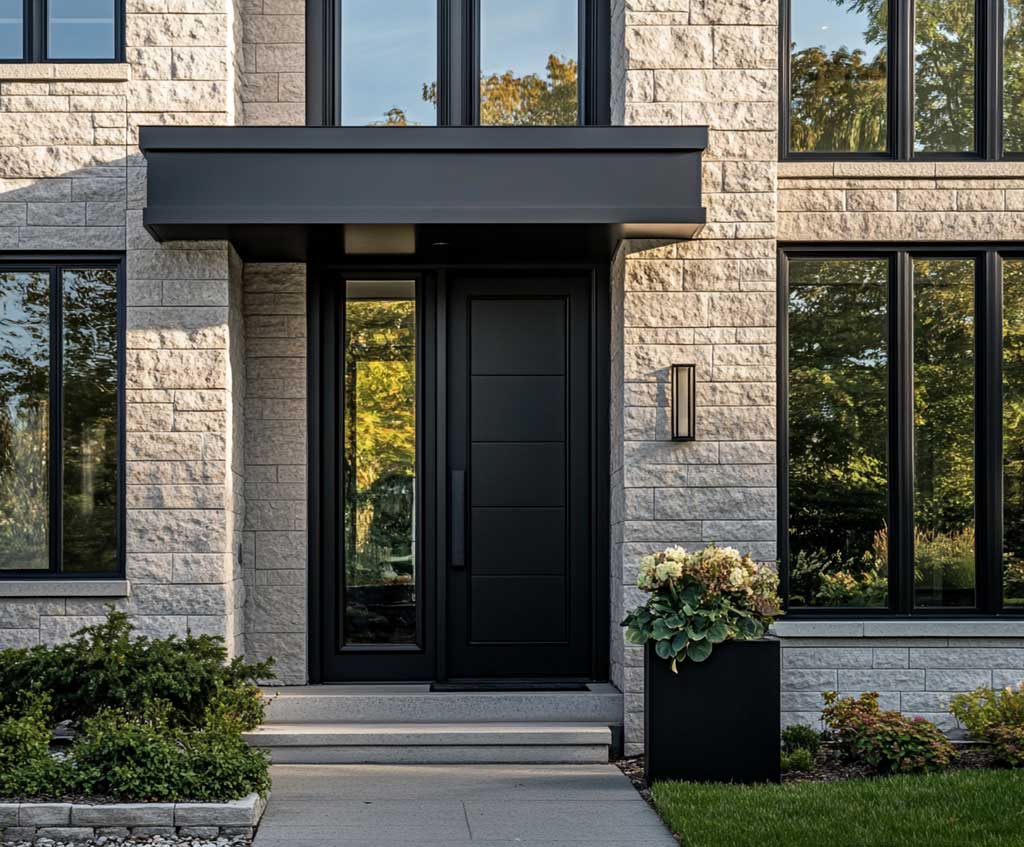
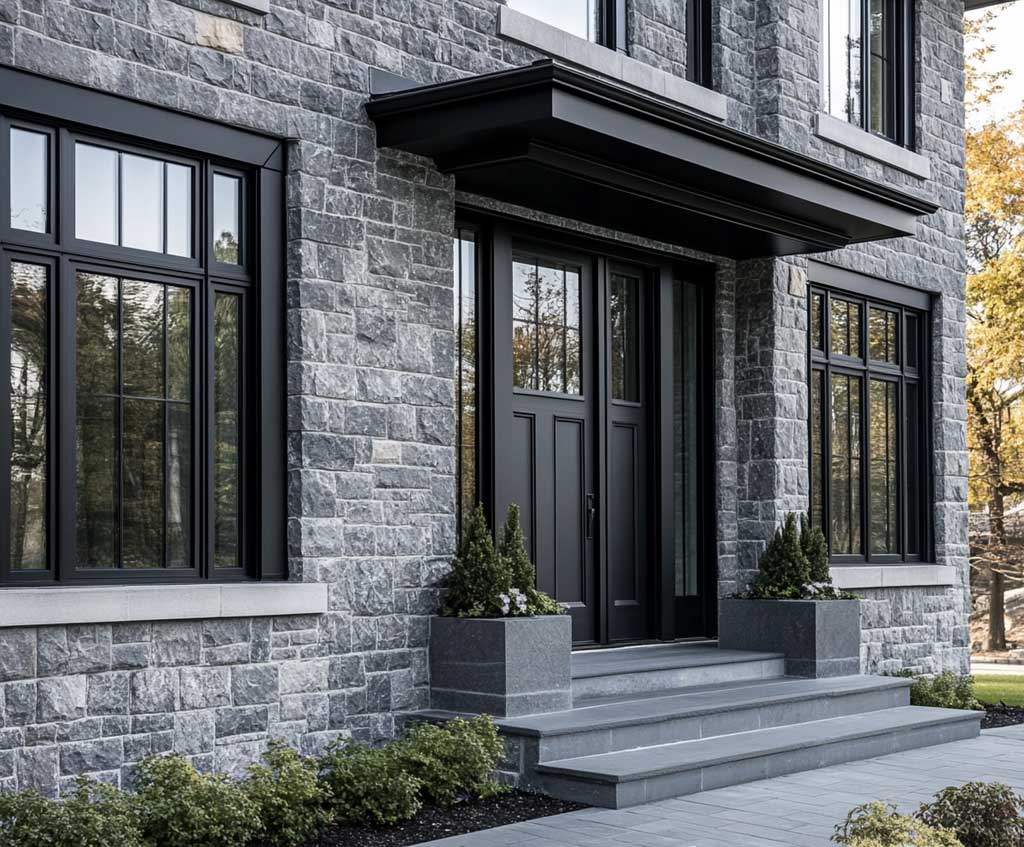
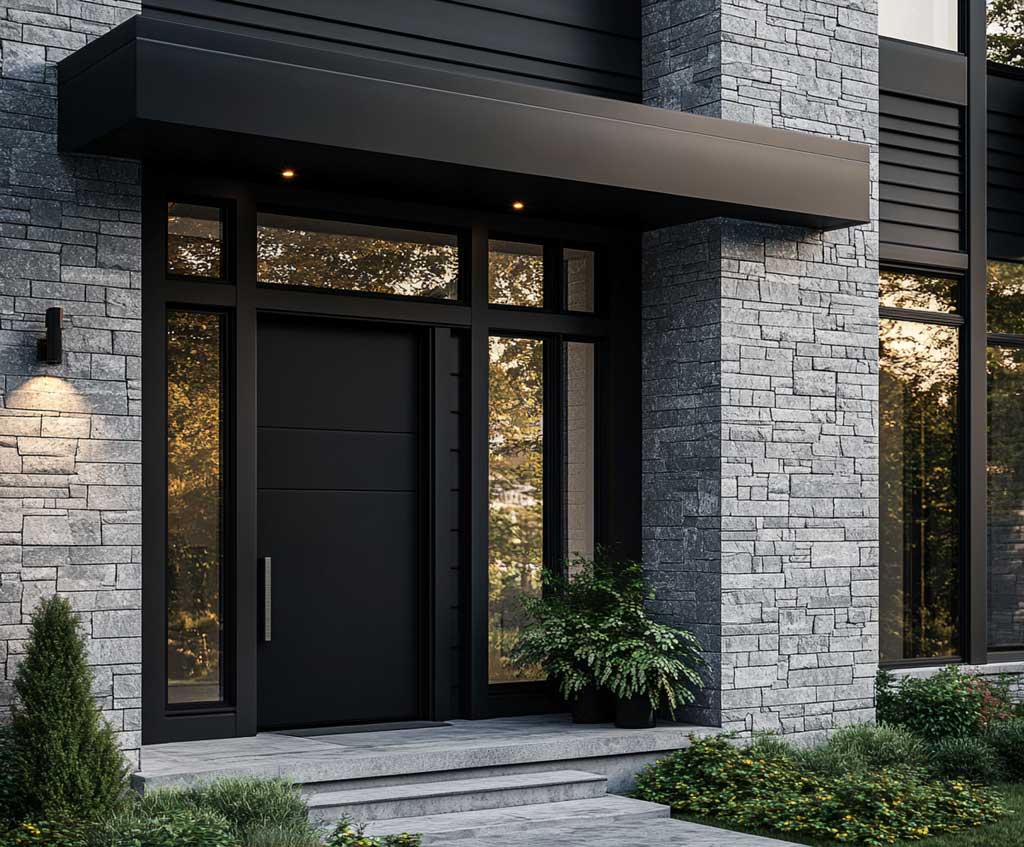
Stone color temperature is the variable most homeowners overlook when choosing black molding. Warm-toned stone — buff limestone, honey sandstone, terracotta-veined fieldstone — pairs best with a black that reads warm in flat light, such as Sherwin-Williams Iron Ore (SW 7069), which carries a slight charcoal-brown undertone. Cool-gray or blue-slate stone reads better against a true black like Tricorn Black (SW 6258), which has no warm cast. Using a warm-toned black against cool stone, or vice versa, creates an undertone clash that’s barely visible in photographs and immediately obvious in person. You’ll notice it most in the shadow line between the casing and the stone surface — where the two materials meet is where the undertone conflict becomes a color conflict. For a broader look at how material combinations with black exterior trim play out across different cladding types, exterior window trim options breaks down wood, PVC, aluminum, and brick side by side with cost data.
Matching the black door to the black window molding on a stone facade is non-negotiable — and the exterior sconces are the detail that closes the design. A matte black exterior light fixture at $40–$120 (widely available at hardware retailers) next to a black-trimmed window costs almost nothing relative to the stone installation but delivers the visual continuity that makes the whole composition read as architecture rather than renovation. Avoid mixing stone types on a single wall elevation — fieldstone on the lower half and ashlar above creates two different textures the molding then has to bridge, and the result looks like a material budget ran out rather than a design decision. For further inspiration on stone pairings with black trim, the Russin blog on black exterior trim design ideas covers stone-plus-wood-plus-black compositions with real project examples.
| Approach | Best Wall Type | Installed Cost Range | Main Risk |
|---|---|---|---|
| Tall window black molding | Off-white stucco or siding | $160–$245 per window | Undersized casing profile |
| Symmetrical facade molding | Light gray or greige siding | $500–$900 for 3-opening facade | Finish inconsistency between elements |
| Stone accent + black molding | Natural stone or stone veneer | $75–$200 per window (aluminum cap) | Warm/cool undertone mismatch |
Final Word
Black Moldings Around Outside Windows Earn Their Cost in the First Impression
Window trim molding installation runs $10.01–$15.34 per linear foot — one of the most cost-efficient exterior upgrades available — and the visual return starts the moment a buyer or neighbor reads the facade from the street.
Casing width, finish consistency, and matching every dark element on the elevation — door, sconces, sill — are the three decisions that separate a facade that looks considered from one that looks unfinished. Stone pairings require the extra step of matching undertone temperatures between the molding and the wall material.
Save this post before your next conversation with a contractor or painter.