Small front porch furniture ideas work when every piece fits the depth you actually have, not the depth in a catalog photo. Many post-war front porches measure only about 5 feet deep, compared with roughly 8 feet on pre-war houses, and the furniture still has to leave a clear 36-inch path to the door. Two slim chairs, a 24-inch bistro set or a 42-inch bench are the three setups that fit most compact entries. Pick one of them, not all three.
Can a contemporary look survive on a porch this tight? It can, as long as frames stay low and leggy and the palette sticks to two or three tones. A seat height of 17–19 inches and a seat depth under 20 inches keep chairs comfortable without swallowing the walkway. Think of the porch as a hallway that happens to serve coffee, so anything that slows foot traffic has to earn its place.
The sections below cover minimalist lounge chairs, compact bistro sets and slim benches, plus the materials that last 10 years versus 50. Each setup comes with real measurements and clearances. Grab a tape measure before you open a single shopping tab.
Quick Scan
- Keep a 36-inch clear path from the steps to the door; 24 inches is the bare minimum on very tight entries.
- One row of lounge chairs plus a walkway needs about 5 feet 8 inches of depth; facing seating needs about 8 feet 4 inches.
- A 24-inch bistro table seats two; a 28-inch top adds room for plates and glasses.
- A 42–50-inch bench seats two adults with a 15–20-inch seat depth.
- Teak lasts 25–50+ years, powder-coated aluminum 15–25 years, quality resin wicker 10–15 years.
- Solution-dyed acrylic cushions resist fading for 1,500+ sun hours, far longer than surface-dyed covers.
- Open, raised frames read lighter than solid, boxy bases on the same footprint.
Porch Depth Decides Which Small Front Porch Furniture Ideas Work
Narrow front porch furniture ideas start with one number: the distance from the house wall to the porch edge. A lounge chair runs about 32 inches deep, and a route past it needs another 36 inches, so one row of seating asks for roughly 68 inches, or 5 feet 8 inches. Is a 5-foot porch out of the game? Not at all, but it calls for armless chairs or a bench under 20 inches deep instead of a full lounger. Measure wall to edge in three spots, because older porches rarely run perfectly square.
House history explains why so many entries feel cramped today. Pre-war pattern books typically show front porches about 8 feet deep, while many post-war versions shrank to around 5 feet, as Builder magazine’s analysis of front porch proportions points out. That 3-foot gap is the difference between a porch you sit on and a porch you only walk across. Plan for the porch you have, not the 8-foot version from a design feed.
- Under 5 feet deep: one armless chair or a bench up to 18 inches deep, placed beside the door rather than in front of it.
- Around 6 feet deep: one row of chairs against the wall with a 36-inch route past them.
- Around 8 feet deep: two chairs plus a 14–18-inch side table, or a swing with 3–4 feet of clearance front and back.
- 8 feet 4 inches and deeper: facing seating on both sides of the walkway.
Skip the deep cushioned loveseat that looked perfect in the showroom. A 36-inch-deep sofa on a 6-foot porch leaves barely 3 feet to squeeze past, and every guest ends up turning sideways. Two separate chairs at 24–30 inches wide beat one bulky piece because they can slide apart when a delivery arrives. Treat the footprint like a parking space: tape it on the floor and walk past it with a grocery bag before you buy.
Minimalist Lounge Chairs Bring Modern Front Porch Seating Without Bulk
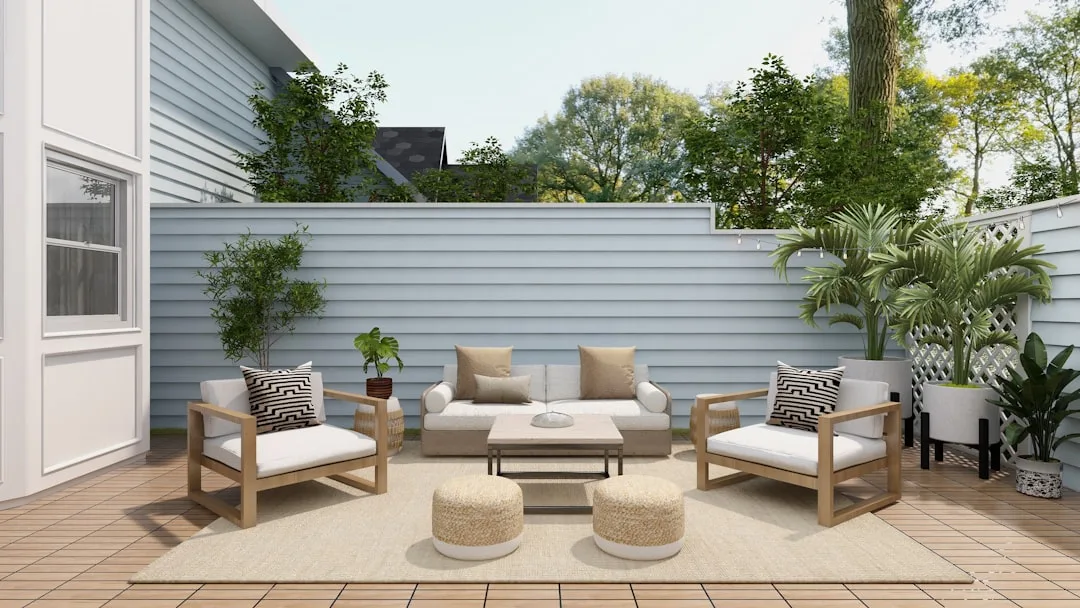
Modern front porch furniture ideas lean on minimalist lounge chairs because raised legs and clean lines let the floor show through, which makes a small porch read larger. For small front porch seating, look for frames 24–30 inches wide with a 17–19-inch seat height, since anything lower turns standing up into a workout. A pair of slim metal or weathered-wood chairs plus one side table is the classic contemporary setup. Budget versions of the same look, from $10–30 thrifted chairs to $15–25 cushions, are broken down in these small front porch ideas on a budget with real costs.


Why do low-profile chairs look more contemporary than chunky ones? Visual weight sits on the floor line, so a chair on thin legs behaves like a glass coffee table indoors: present, but never heavy. Compare a solid resin club chair with an open aluminum frame of the same 28-inch width, and the open frame looks noticeably lighter. Choose cushions in sand, clay or stone, and keep frames in black, charcoal or natural wood.
Give each lounge chair 2–3 feet of breathing room, the clearance usually recommended around loungers and rocking chairs. A side table 14–18 inches across holds a mug and a book without bumping knees. Don’t push both chairs flush against the railing, because anyone who leans back needs a few inches of slack. Angle the pair slightly toward each other so conversation happens without craning.


Greenery and light finish the minimalist look without adding floor clutter. A three-tier plant stand at $20–40 holds five to seven pots in the footprint of one, and railing planters use no floor space at all. Warm 2700K bulbs feel residential, while 4000K and cooler light makes a porch feel like a loading dock. One tall planter beside each chair is enough, because a third pot starts crowding the path.
A Compact Bistro Set Turns Small Porch Seating Into a Café Corner
Small porch seating ideas rarely beat a bistro set for morning coffee, because one round table and two chairs cover both sitting and eating. Standard bistro tops run 24–30 inches across, and a 24-inch top seats two people while keeping traffic moving. Most compact sets stand about 28 inches tall, close to dining height, so the table handles breakfast instead of only drinks. Choose a round top over a square one on tight porches, since there are no corners to catch hips.


How much floor does the whole set really take? Plan on roughly 24 inches of elbow room per person and about 30 inches behind each chair to pull it out and stand up. On a 6-foot porch, that usually means pushing the table against the wall and seating two people side by side rather than facing each other across the walkway. It works like a café window bar: less face-to-face, more street-watching.
Avoid bargain sets woven from thin PVC-based wicker, which can turn brittle under UV within one to two years. Powder-coated aluminum or e-coated iron frames hold up far longer, and folding chairs slide indoors before a storm. Check the load rating too; one popular compact set lists a 220-pound capacity, which covers most adults. Fold-flat chairs also free the entire porch for parties or moving day.


Keep tabletop styling small enough to leave room for two plates. A centerpiece no wider than 6 inches, such as a bud vase or a battery candle, still leaves space for cups and saucers. Fragrant herbs in a railing box add scent and color without touching the floor. Swap the centerpiece each season rather than adding more objects, and the café feel stays crisp instead of cluttered.
Slim Benches Solve Seating for a Narrow Front Porch
Seating for a small front porch often comes down to a bench, since one 42–50-inch piece seats two adults on less wall than two separate chairs with a table between them. The comfortable target is a 17–19-inch seat height and a 15–20-inch seat depth, with about 36 inches of clear space in front. Past roughly 20 inches of depth, shorter sitters can’t reach the backrest and end up perched on the edge. Measure the wall between the door trim and the porch corner before choosing a length.


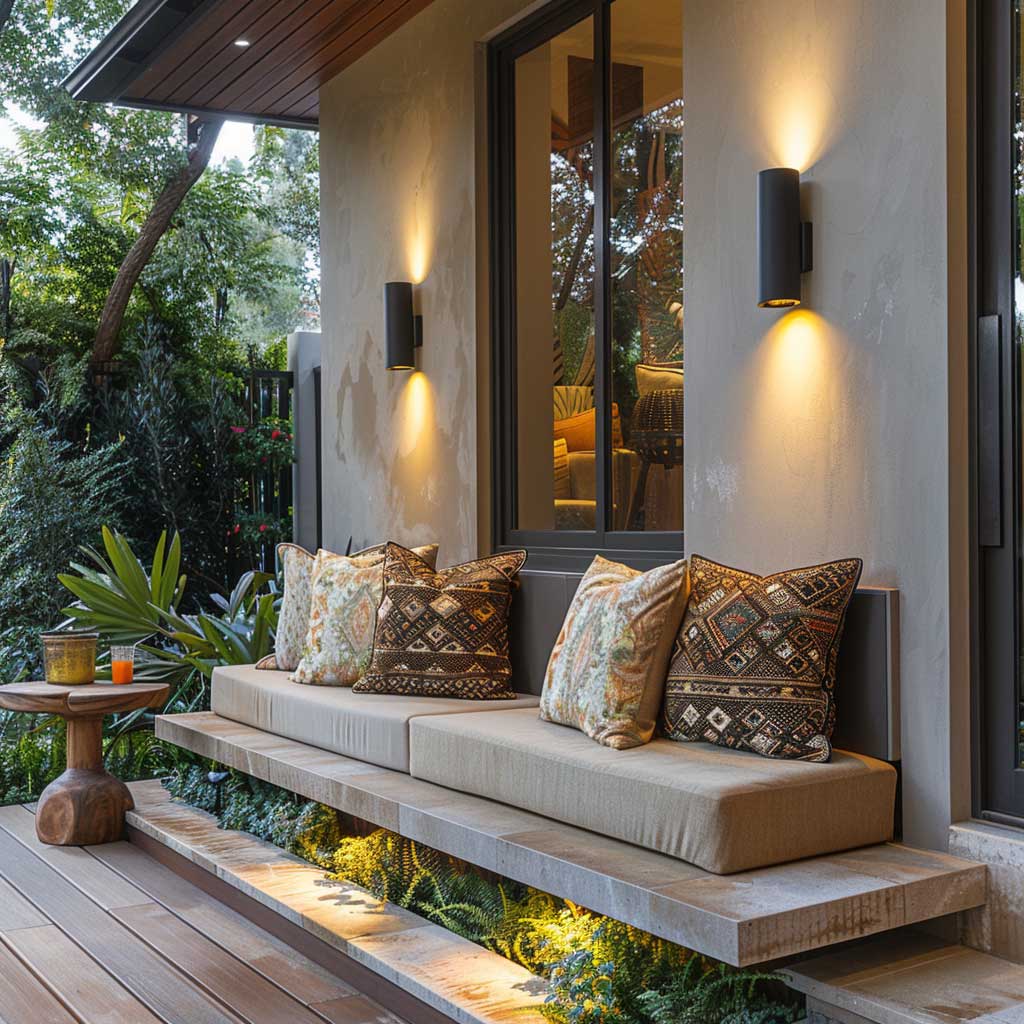
Teak, powder-coated metal and treated wood all suit a contemporary bench, but they age very differently. Quality teak can last 25–50 years or more, while unsealed wood in a rainy climate may fail in 5–7 years compared with about 25 years when sealed. Is teak worth the higher price on a porch this size? On a single bench the price gap is smaller than on a full set, so the long-life material often makes sense here. A bench works like a pew in a narrow chapel, seating more people per inch than any chair.
Cushions and light turn a plain bench into the spot everyone heads for. Solution-dyed acrylic fabrics block over 97% of UV and are tested for 1,500+ hours of sun, while surface-dyed covers fade much sooner. Two throw pillows in different sizes beat four matching ones that crowd the seat. Pair the bench with a sconce or lantern from these front porch lighting ideas with real fixture prices, keeping bulbs in the 400–800 lumen range.


Don’t center a long bench on the door if the porch is under 6 feet deep. Slide it to one side, or angle a compact bench into a corner, which often wins back clearance without losing a seat. A 14–18-inch side table at one end handles drinks, and a low planter at the other end frames the setup. The result reads like a built-in window seat that can still move when the seasons change.
Weatherproof Materials Keep Small Front Porch Furniture Ideas Looking Sharp
Front porch furniture ideas only pay off when the materials survive sun, rain and freeze-thaw cycles. Powder-coated aluminum typically lasts 15–25 years, quality teak 25–50+ years, and mid-range HDPE wicker on aluminum frames around 10–15 years. Aluminum wins on portability, while teak wins on longevity but weighs the most of the three. Pick aluminum if the furniture moves often and teak if it stays in one spot.
Indoor porch furniture ideas follow looser rules on a screened or enclosed porch, where softer upholstery and lighter wicker can work because rain and direct UV rarely reach them. Is regular indoor furniture safe on a covered but open porch? Only partly, since blowing rain and humid air still get in, so outdoor-rated fabric remains the safer bet. Treat a screened porch like a sunroom and an open porch like a boat deck.
Don’t Do This: Don’t buy a cheap PVC wicker set to save money, because it can crack within 1–2 years of sun while HDPE wicker on aluminum lasts 10–15. Don’t leave unsealed softwood outside in a rainy climate either, where it may fail in 5–7 years instead of about 25. Spend on the frame first and the accessories second.
| Material | Typical lifespan | Weight | Maintenance | Best porch type |
|---|---|---|---|---|
| Teak | 25–50+ years | Heaviest | Medium, oiling or sealing 1–2 times a year | Open porches, stay-put benches |
| Powder-coated aluminum | 15–25 years | Light | Low, rinse and touch up scratches | Coastal and rainy climates, chairs you move often |
| Wrought iron or steel | 15–25 years | Heavy | Medium, keep the finish intact | Windy porches, bistro sets |
| HDPE wicker on aluminum | 10–15 years | Light to moderate | Low, soap and water | Covered porches, lounge chairs |
| Budget PVC wicker | 1–2 years in full sun | Light | Low, but replaced often | Fully enclosed porches only |
Lounge Chairs Versus Bistro Set Versus Bench on a Compact Porch
Comparing the three setups side by side shows which one suits a given porch depth. A bench seats two on 42–50 inches of wall, a bistro set needs a 24-inch table plus chair room, and two lounge chairs ask for the most depth at about 5 feet 8 inches including the walkway. Which one wins on a 5-foot porch? The bench, because its 15–20-inch depth leaves the most floor free. Choosing furniture this way is like choosing a car by garage size, so skip lounge chairs below 6 feet unless they are armless and shallow.
| Setup | Typical size | Seats | Minimum porch depth | Clear path to keep | Best for |
|---|---|---|---|---|---|
| Two lounge chairs and side table | Chairs 24–30 in wide, about 32 in deep; table 14–18 in | 2 | About 5 ft 8 in, 6 ft comfortable | 36 in | Reading, slow mornings |
| Bistro set | 24–30 in round table, about 28 in tall | 2 | About 6 ft with table against the wall | 36 in plus 30 in behind chairs | Coffee, small meals |
| Slim bench | 42–50 in long, 15–20 in deep | 2 | About 5 ft | 36 in in front | Narrow porches, quick sits |
| Facing seating | Two rows of 32-in-deep chairs | 4 | About 8 ft 4 in | 36 in between rows | Hosting guests |
The Smart Pick for Tight Porches
A 42–50-inch bench is the most space-efficient answer for porches near 5 feet deep, while two lounge chairs need closer to 6 feet to keep a 36-inch path open. Measure first and the right setup usually picks itself.
Choose a 24-inch bistro set when coffee and breakfast matter more than lounging. Go up to a 28-inch top only when the porch runs past 6 feet deep.
Spend on materials before decor. Teak or powder-coated aluminum at 15–50 years of service outlasts budget PVC wicker that can crack within 1–2 years.
Finish with solution-dyed cushions tested for 1,500+ sun hours and warm 2700K light. That combination keeps a compact porch usable from spring mornings to late-fall evenings.