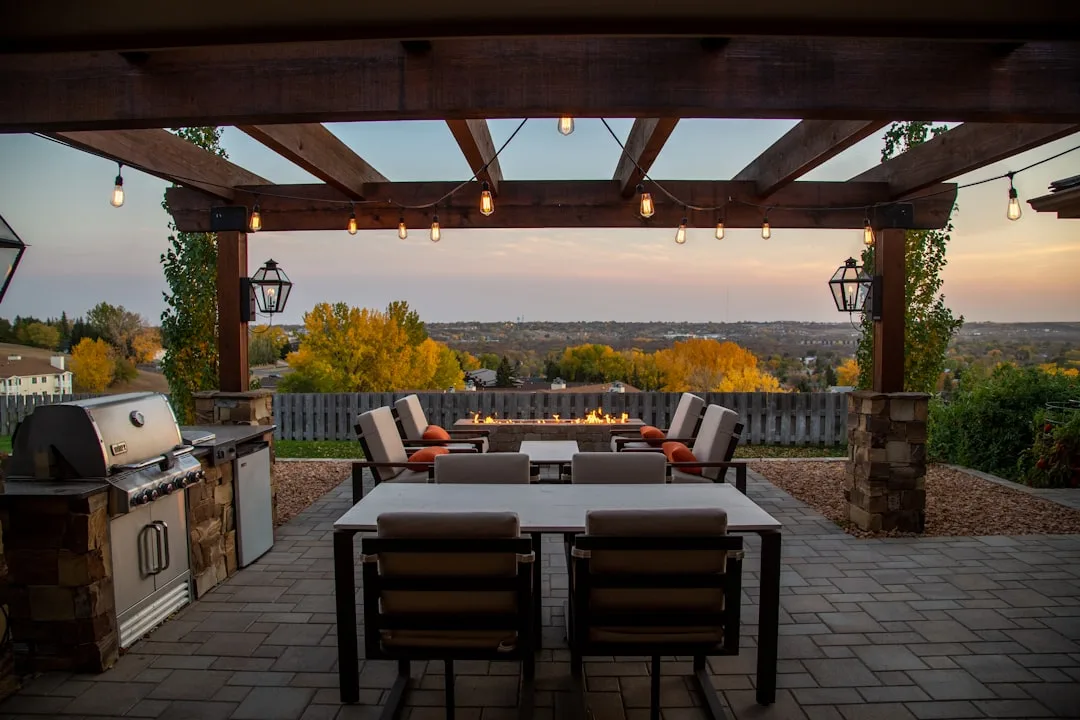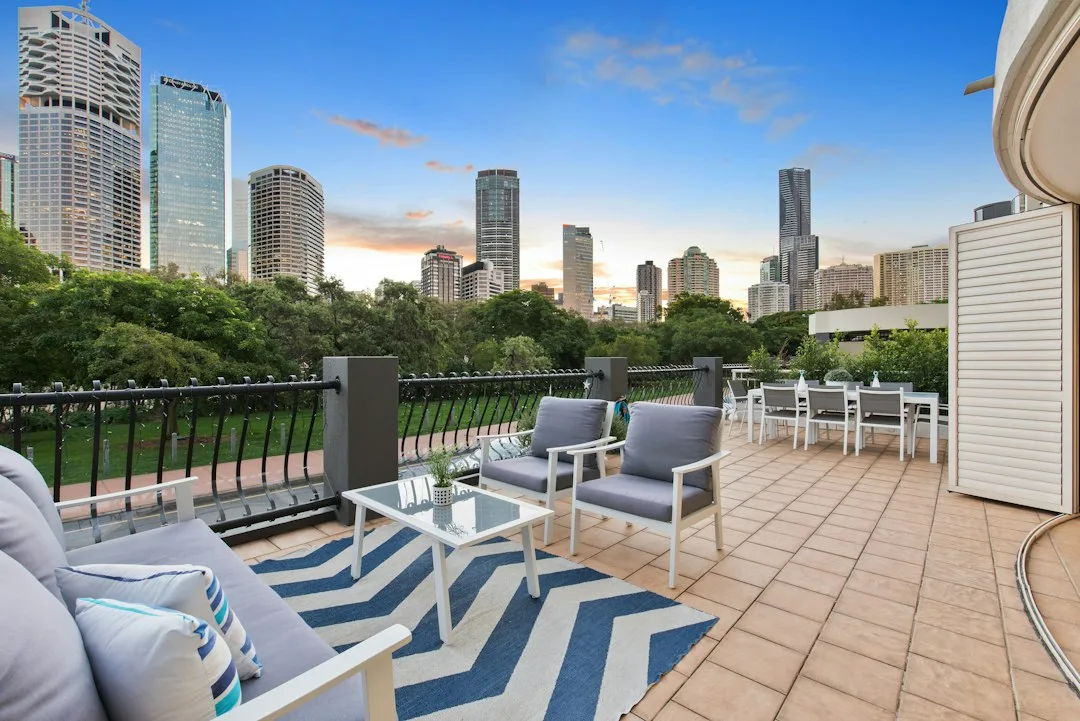
On a cold October morning, the patio chairs still sit on bare concrete, and the set looks like it belongs to three different houses. An outdoor rug for patio use fixes that in one afternoon. Designers now treat it as the first purchase rather than the last, because it pulls scattered seating into a single room.
Why Designers Treat the Rug as the Anchor
Browse the outdoor collections at Frontgate or Dash & Albert and you will notice a pattern. Rugs appear under sofas, daybeds, and dining tables rather than in empty corners. That placement is deliberate, and it shows what the rug actually does: it defines edges that a yard otherwise lacks.
Without a floor covering, a patio reads as leftover slab. Add a rug and the same space starts to feel like a room you can step into from the kitchen door. The difference is immediate, and it costs far less than replacing the furniture.
Quick Tips
- Choose a rug that fits under the front legs of every chair in the grouping.
- Match the rug to one existing accent color, such as a planter or cushion.
- Leave a border of exposed slab so the rug reads as a deliberate shape.
- Buy a pad made for outdoor use before you lay the rug down.
Materials That Survive Weather and Sun
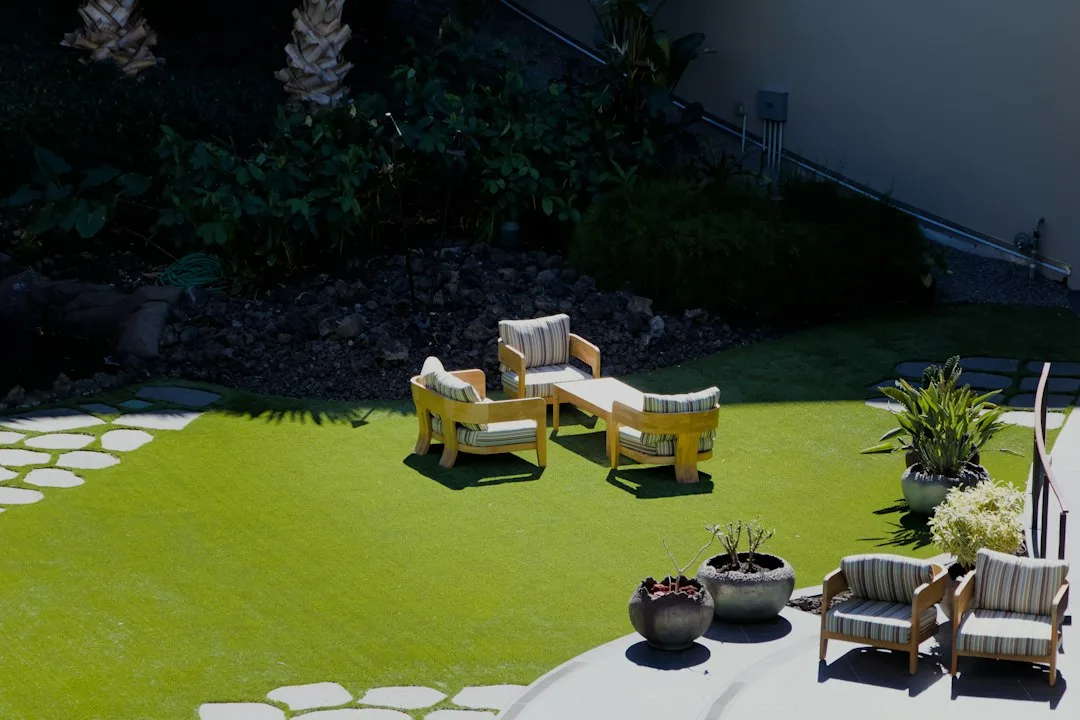
Most outdoor rugs fall into three families: flatweave synthetics, washable tufted styles, and natural fiber options. Loloi and Safavieh both sell flatweave polypropylene rugs in standard sizes such as 5 by 7 feet. Those flat surfaces shed water quickly and stay low enough that chair legs glide over them without catching.
Ruggable takes a different route with machine-washable rugs that use a removable pad. That suits households with children or pets. The tradeoff is that a washable rug usually performs best under a covered porch rather than in full rain.
Natural jute looks beautiful in photographs, but it rots quickly when it stays wet. Keep it strictly under a screened or roofed area. Check the label before you buy.
| Material | Best Spot | Main Tradeoff |
|---|---|---|
| Polypropylene flatweave | Open patio in direct sun | Colors can fade over several summers |
| Washable tufted (Ruggable style) | Covered porch or kids play zone | Needs full drying time after rinsing |
| Woven synthetic (Dash & Albert style) | Dining area with heavy chairs | Heavier to move for cleaning |
| Natural jute fiber | Screened porch only | Rots quickly if it gets wet |
Choosing an Outdoor Rug for Patio Zones
Start by measuring the seating zone, not the whole room. Every front chair leg should sit on the rug so the grouping feels stable. A rug that only touches one edge of the set will always look like an afterthought.
For a conversation set with four chairs and a small table, a 5 by 7 foot rug is a common starting point. A dining set for six usually needs 8 by 10 feet. Keep at least 12 inches of exposed slab around the edges.
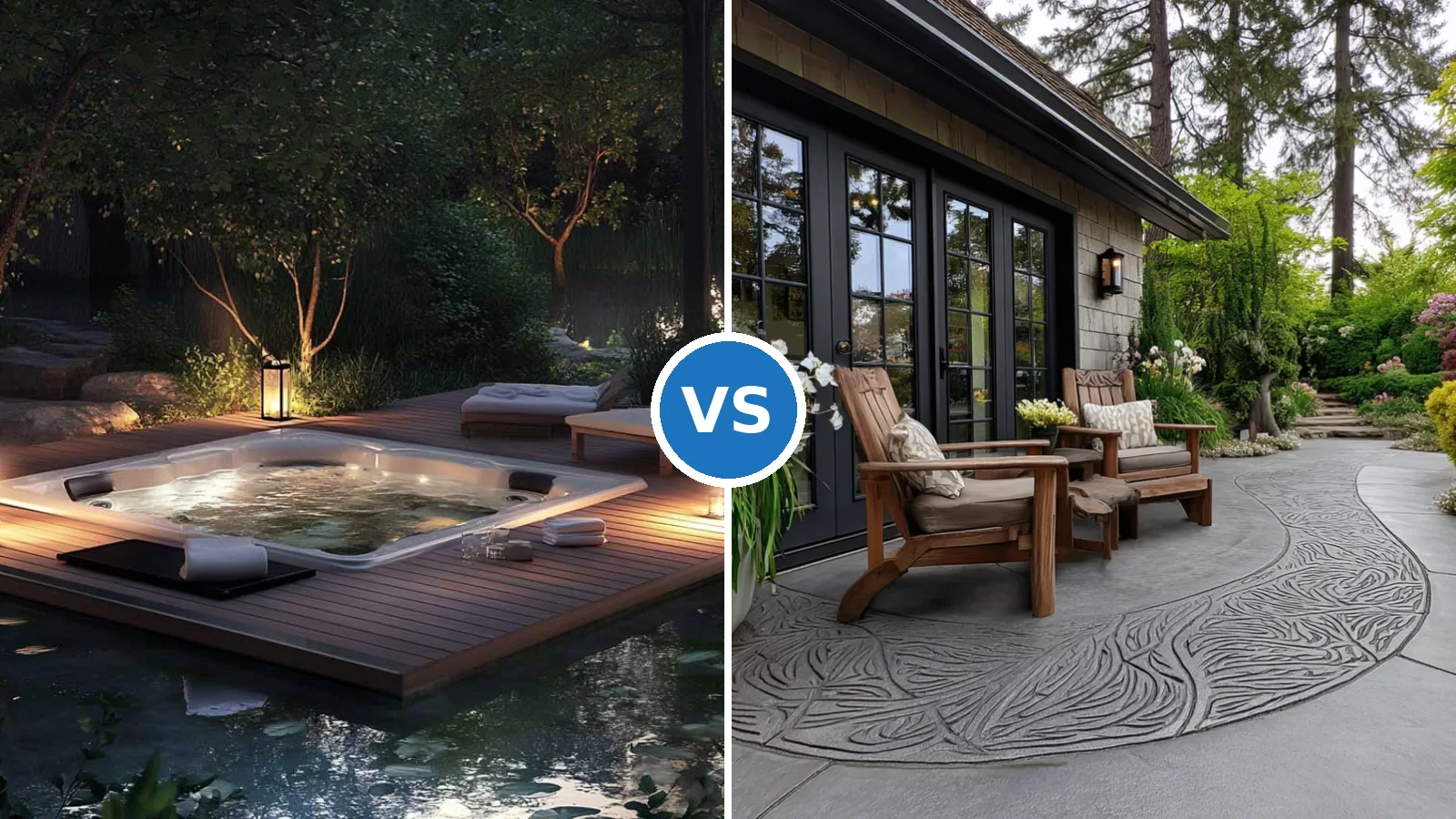
If your slab is still new, the layout ideas in Concrete House Idea With Patio Style Courtyard show how a plain pad takes a rug well. Use the same proportions in a smaller yard. The rug should frame the furniture, not disappear beneath it.
The Mistake That Makes a Patio Rug Look Cheap
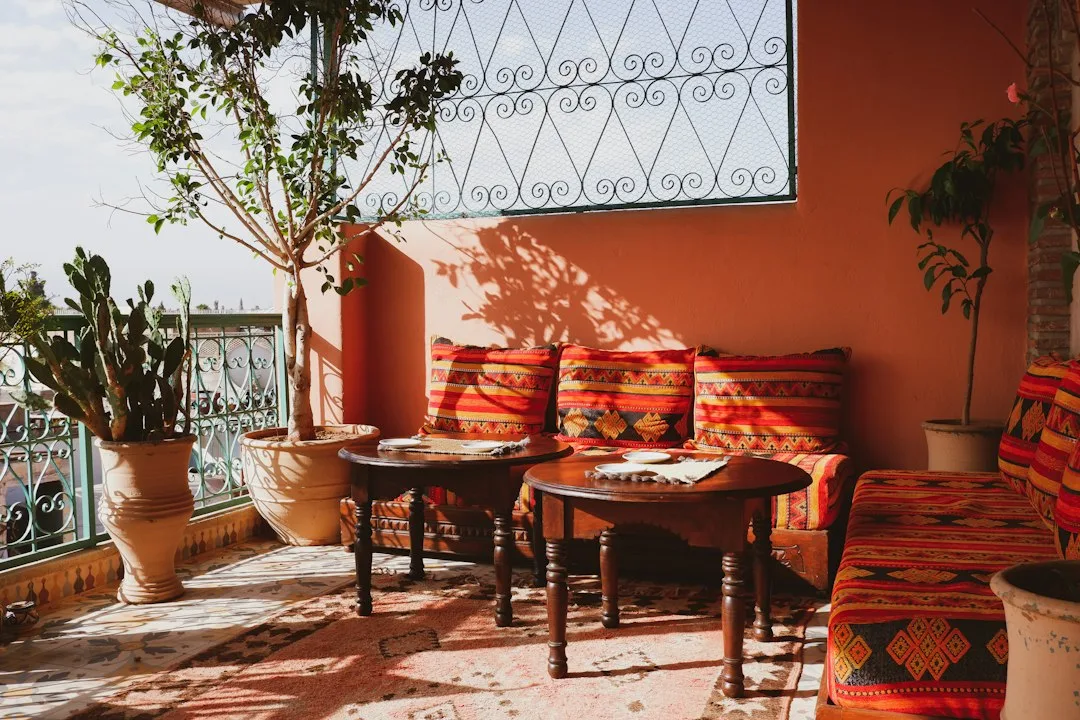
The most common error is buying a rug that is too small. A 4 by 6 foot rug under a 7 foot sectional leaves the back legs hanging off the edge. The whole set then looks like it is sliding toward the lawn.
Buyers also skip the pad. Without an outdoor rug pad, a rug can slide on wet concrete and curl at the corners after a few rainy weeks. That curl catches heels and makes the space feel unfinished.
Measure the furniture footprint first. Then buy one size larger than you think you need.
Cleaning and Storage Through Wet Seasons
Pull the rug up before a hard freeze and before long storm stretches. Hose it off with mild soap and let it dry flat in shade. Direct sun while damp can bleach dyes faster than most people expect.
Fall is the right time to decide whether a rug earns a winter spot. Rugs stored in damp garages develop mildew within a season. Keep them in a dry shed or indoors, rolled rather than folded.
Pairing Rugs With Lighting and Planters
A rug works best as one layer among several. Pair it with the outdoor lighting you already have, and keep planters near its edges so soil stays off the fibers. Warm-toned rugs look cozy under string lights. High-contrast patterns can look busy after dark.
Think of the rug as the floor of an outdoor room. Walls come from the house, a fence, or a pergola. The ceiling is the sky. Once the rug defines the floor, every other choice becomes easier to make.