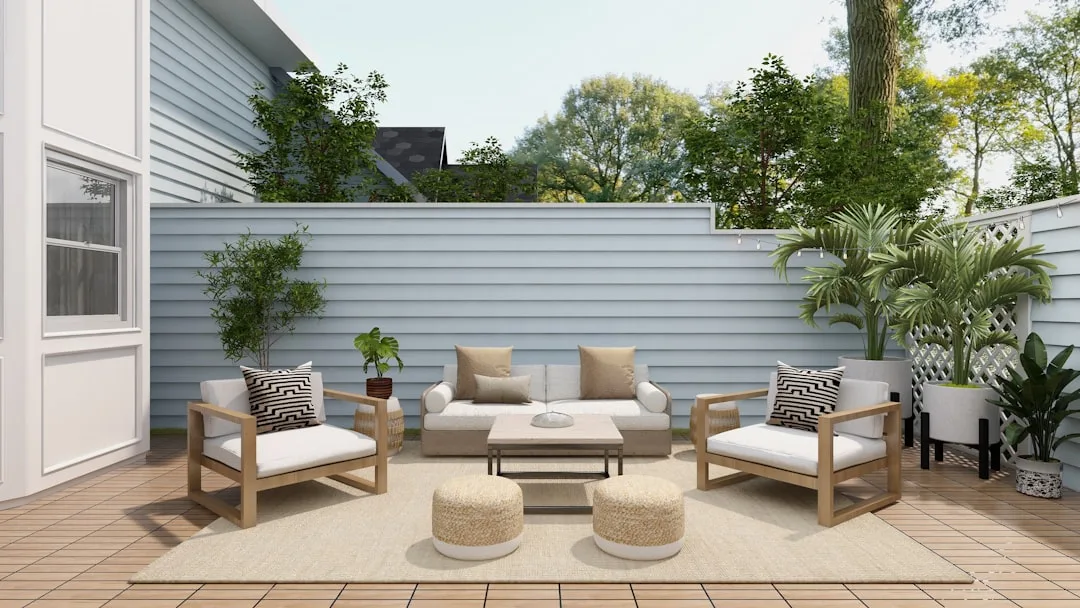
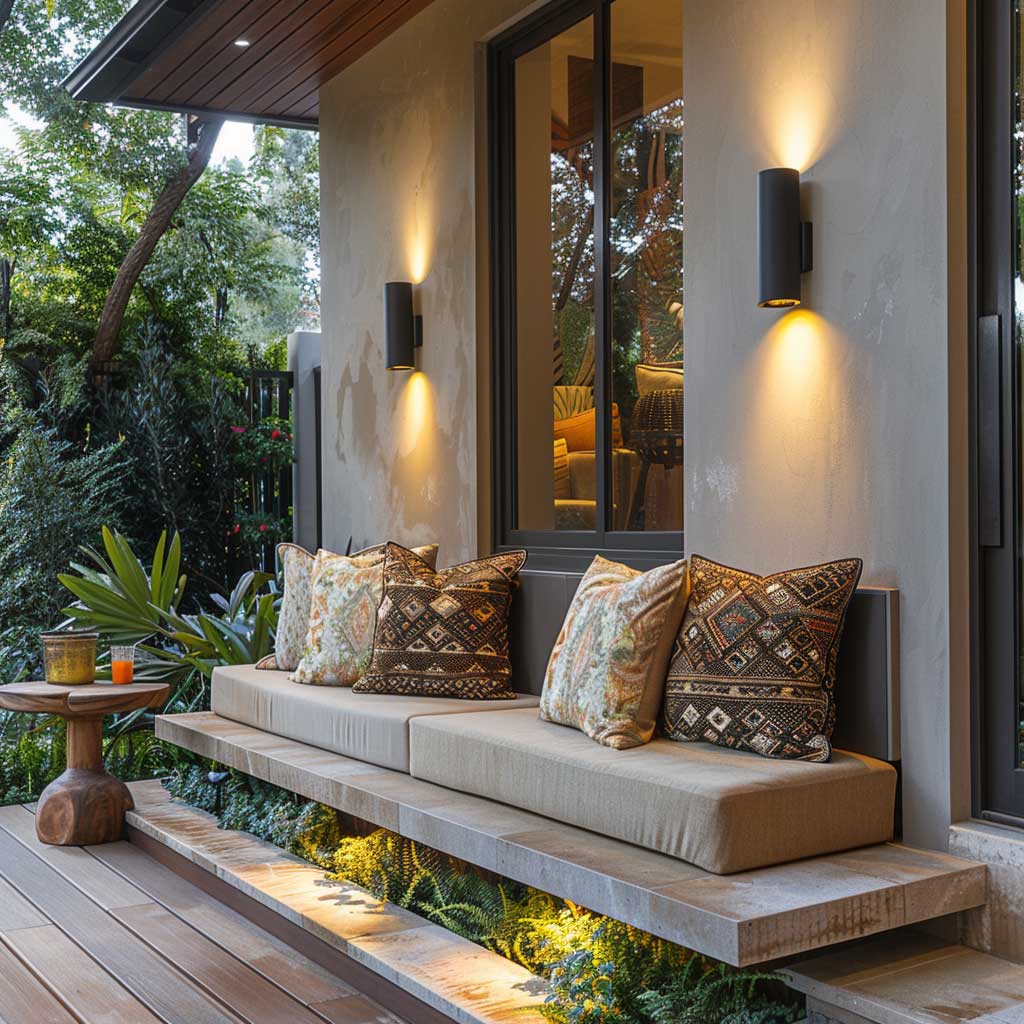
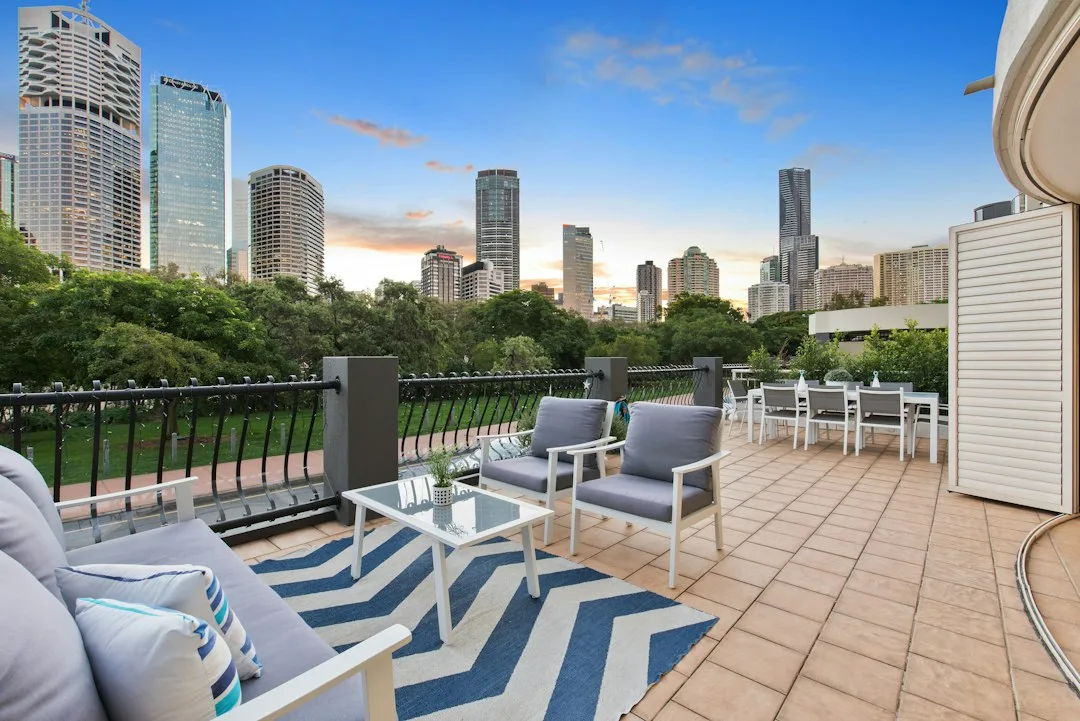
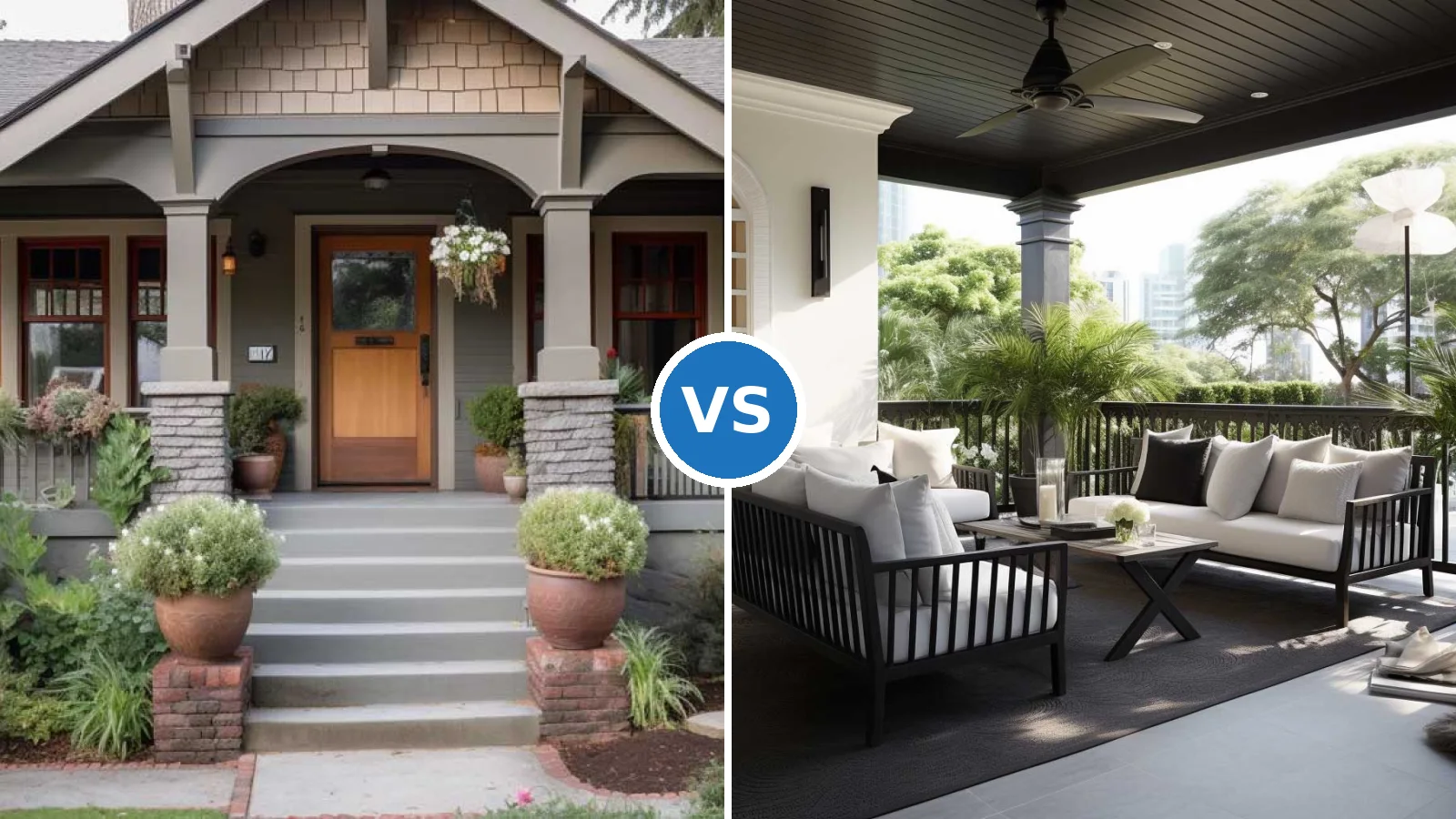
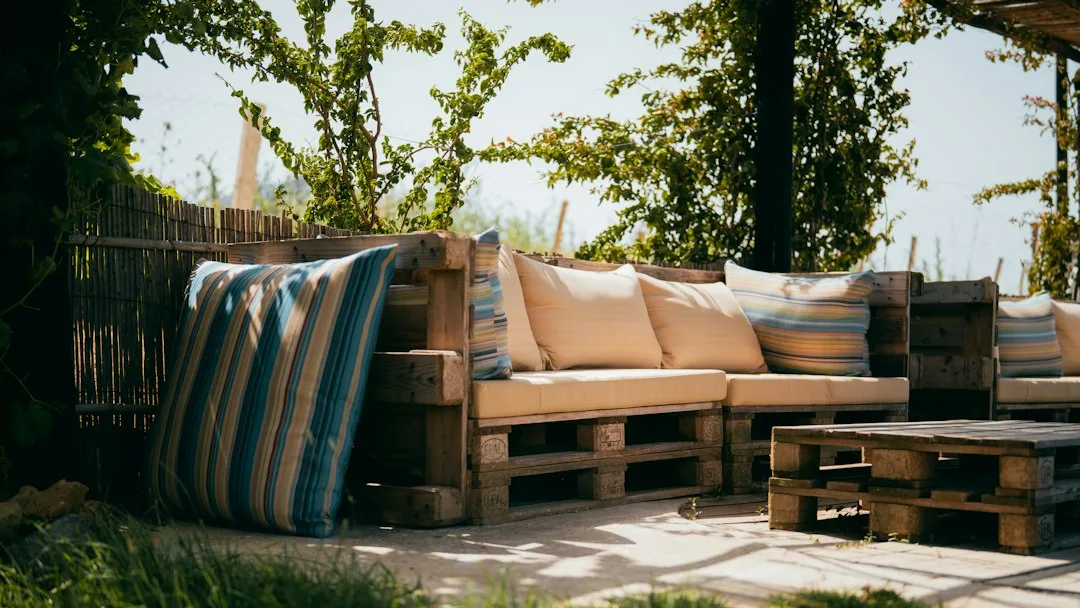
Space-saving outdoor furniture turns cramped balconies and narrow patios into usable retreats. Compact pieces that fold, stack or tuck into corners deliver seating and surfaces without blocking movement. Choose scale first, then style, and even 40-square-foot zones support daily use.
Folding bistro sets, slim sectionals and stackable chairs solve the core problem: limited floor area. Average three-piece folding sets start near $65–$150, while modular corner seating often lands between $150 and $550. Measure clearances before purchase and leave at least 30 inches for walkways.
The right selection keeps sightlines open and storage simple. Materials like powder-coated aluminum, resin and treated wood resist weather while staying light enough to rearrange seasonally.
- Folding bistro sets free floor space in under a minute
- L-shaped compact sectionals claim unused corners
- Stackable chairs store vertically when not needed
- Leave 30 inches of clear walkway around every grouping
- Average entry-level sets range $65–$300 depending on material
- Vertical greenery and slim rugs expand perceived size
Folding Bistro Sets Keep Tight Outdoor Zones Flexible
Space-saving outdoor furniture begins with the classic folding bistro set. A round or square table under 28 inches plus two lightweight chairs fits balconies as narrow as 5 feet. When the area doubles as a yoga spot or storage zone, the set folds flat and leans against a wall.

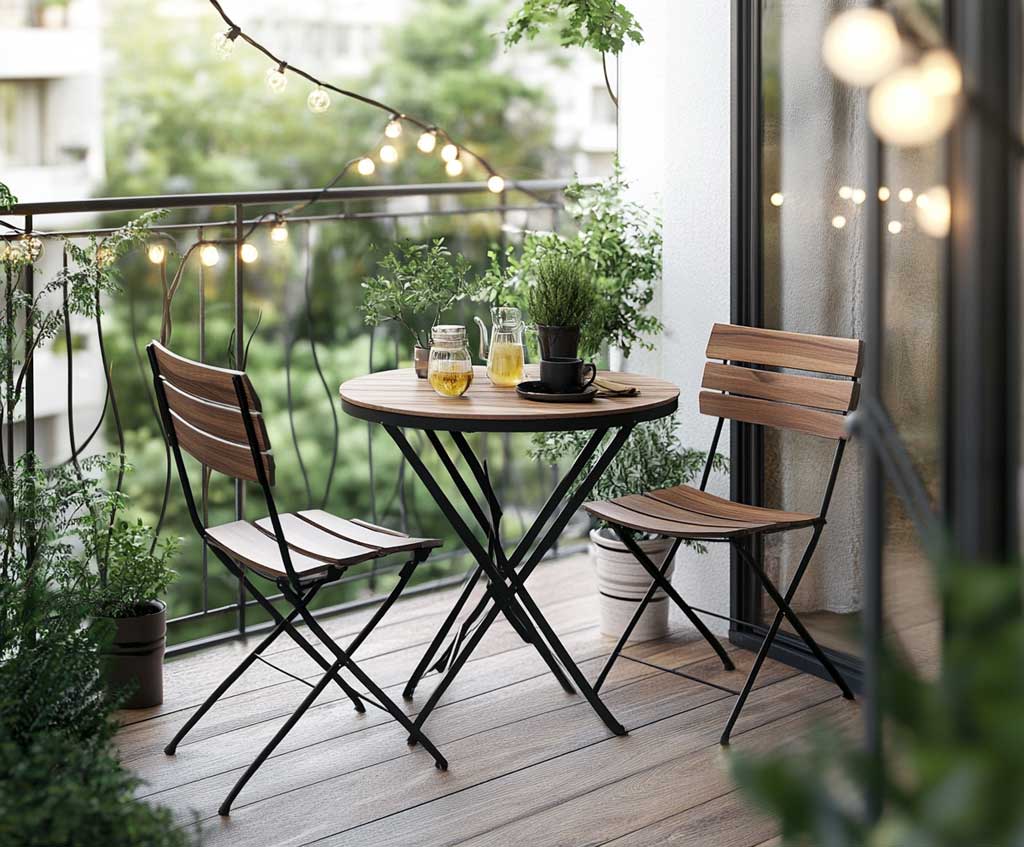
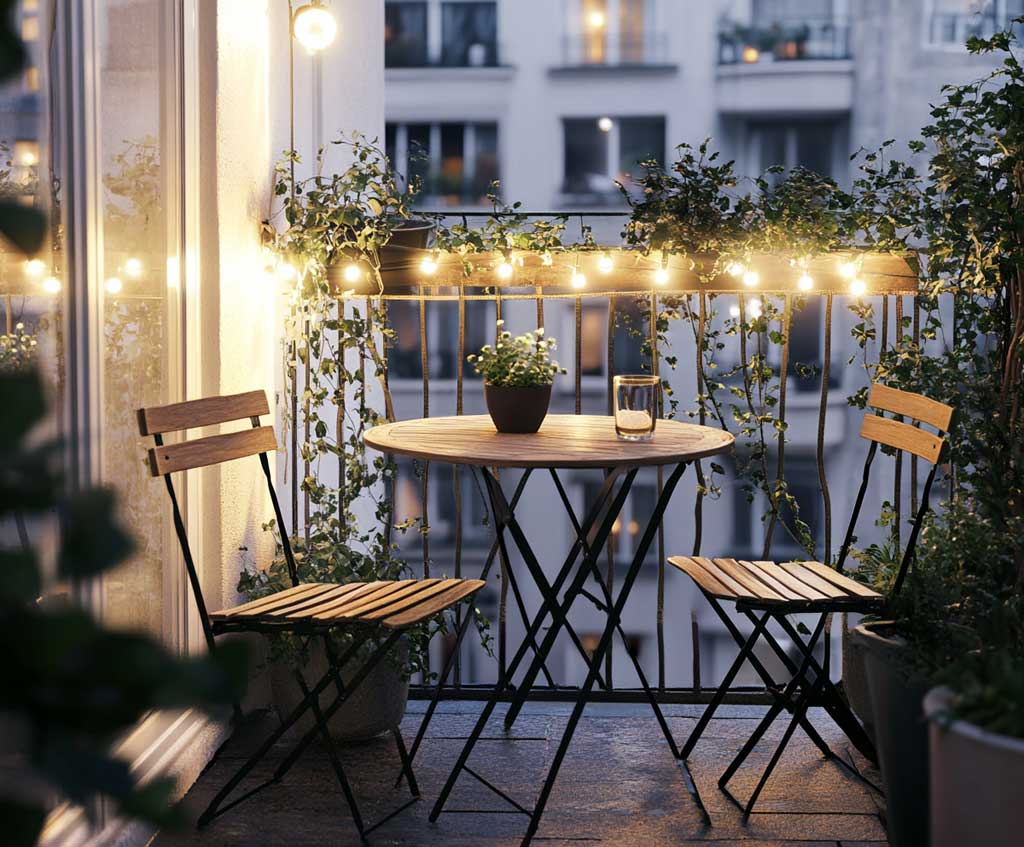
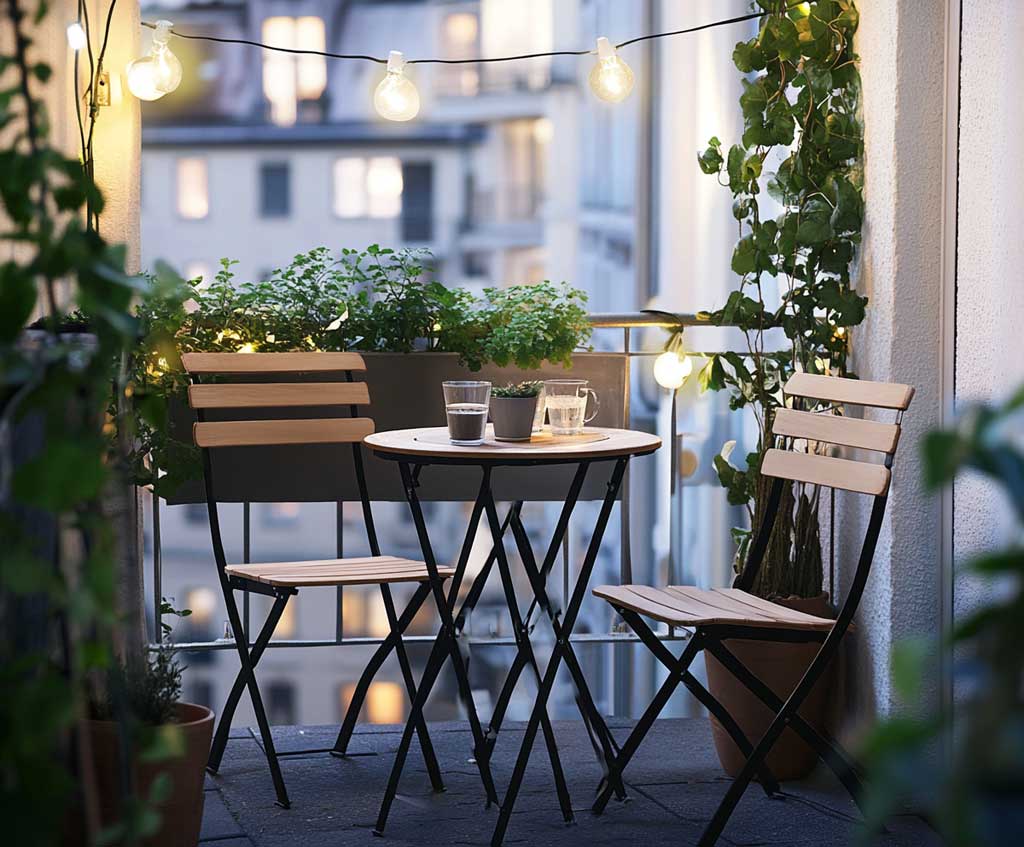
Wood-and-metal combinations balance durability and visual lightness. Many sets support 300–400 pounds per chair and weigh little enough to carry indoors during storms. Think of the set as a temporary café that vanishes when the space needs to breathe.
What happens if the chairs feel too upright for long sits? Add thin outdoor cushions that store with the folded frames. Avoid oversized tables that force chairs into the walkway; a 24-inch diameter surface leaves room to pass. Pair with string lights or a single pot to finish the zone without clutter.
Entry-level folding sets commonly retail between $65 and $150 according to current retailer ranges. Higher-end powder-coated or acacia versions reach $200–$300. Place one new internal link early: for layout strategies that pair well with these pieces, review patio furniture arrangement ideas for small yards.
Compact Outdoor Sectionals Claim Corner Real Estate
Compact outdoor sectionals turn awkward corners into primary seating. An L-shaped piece under 50 inches per leg seats three without dominating a 6-by-8-foot patio. Weather-resistant wicker or resin frames hold shape through rain and sun.


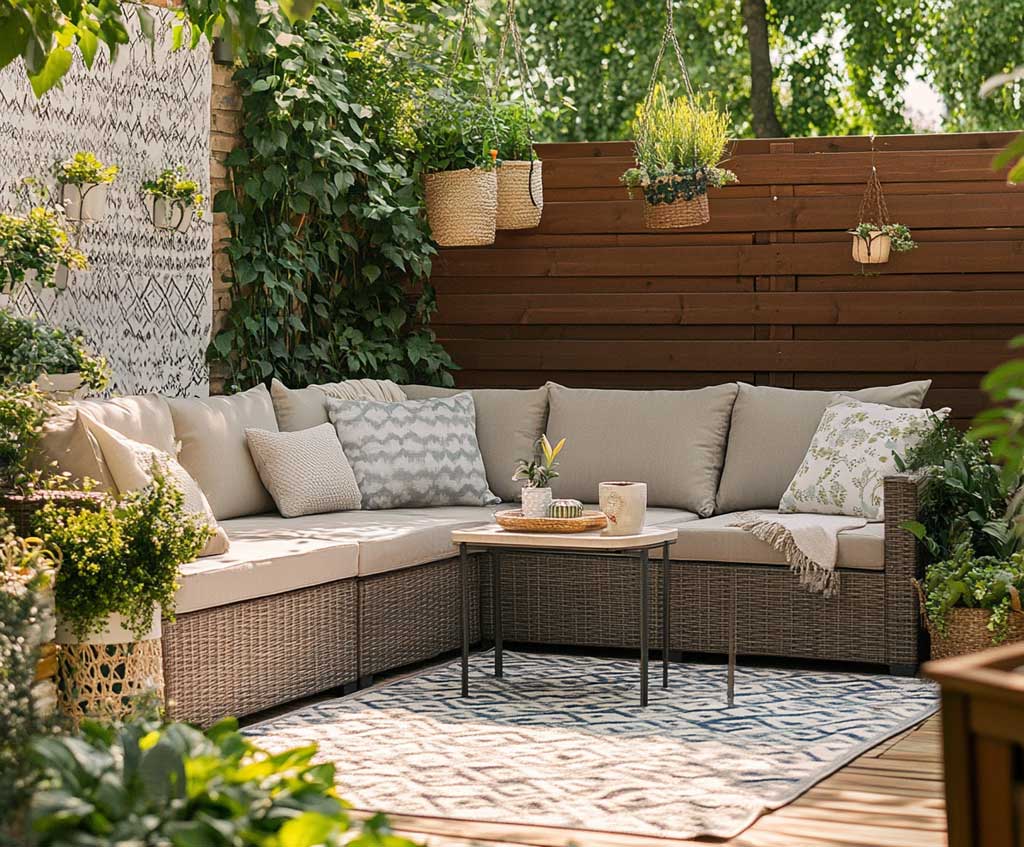

Neutral cushions keep the profile calm; a single patterned throw pillow adds personality without bulk. Hanging planters or a slim vertical garden supply greenery while the floor stays clear. A low coffee table under 20 inches wide completes the grouping.
Why skip full-size sectionals? They often consume 10-by-10 feet and leave no circulation. Compact models from major retailers start around $150–$550 for three-to-five-piece sets. The anti-move: never force a deep chaise into a space under 7 feet deep. Measure the actual corner angle first.
Treat the sectional like a built-in banquette that still moves. When guests arrive, shift one module to open a path. This approach mirrors the logic used in cozy minimalist small balcony furniture ideas for similarly tight footprints.
Stackable Chairs and Tables Adapt to Changing Needs
Stackable chairs and tables form the most flexible category of space-saving outdoor furniture. Lightweight aluminum or resin frames stack six to eight high when the patio becomes a play area or drying space. A matching square table doubles as a plant stand between meals.
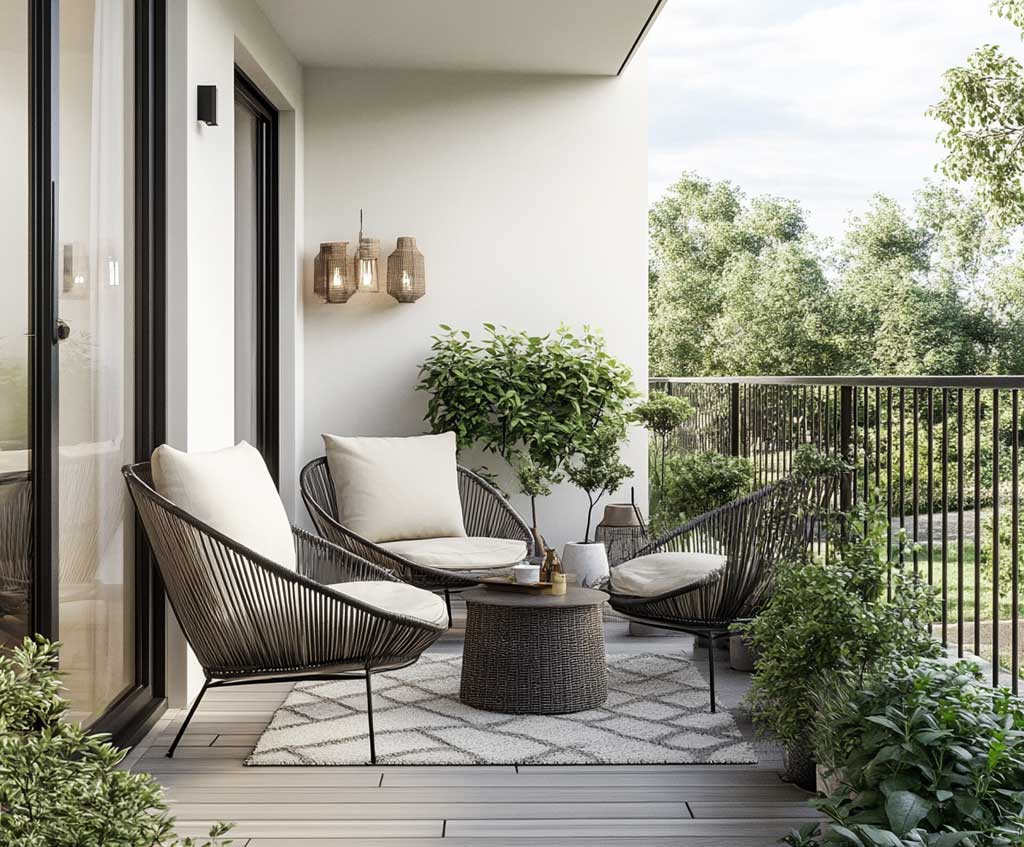
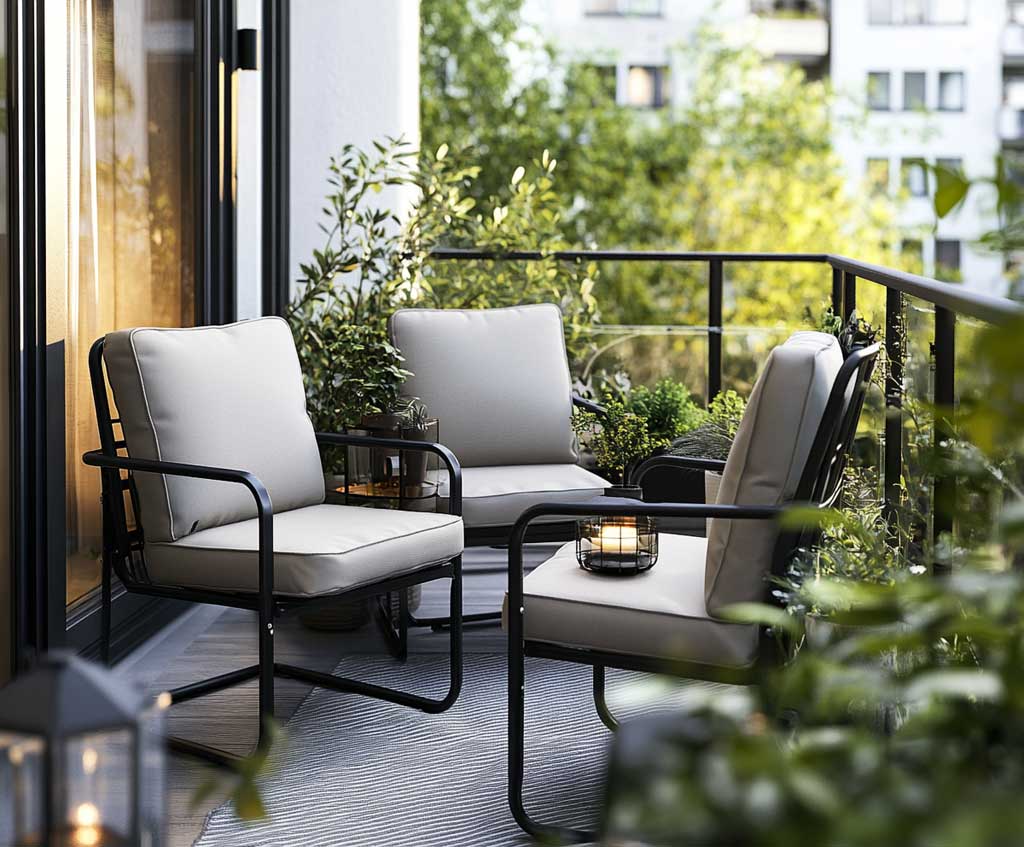

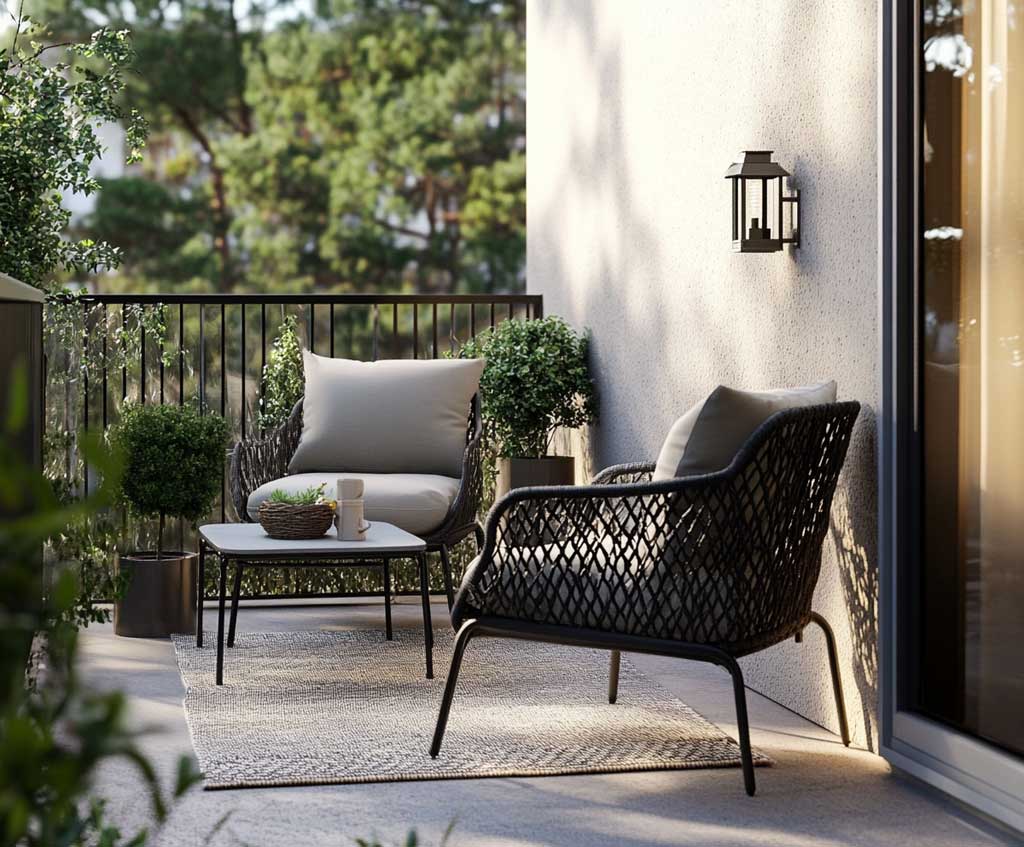
Most stackable dining chairs measure roughly 18–24 inches wide and support 300 pounds. Sets of four often fall between $100 and $300. Cushions swap seasonally; store them indoors to extend life. A small outdoor rug anchors the group and softens hard surfaces.
How many chairs does a 6-by-8 balcony actually need? Two for daily use, two more stacked nearby for guests. Never leave a full stack in the traffic path—treat the pile like a temporary wall that disappears after dinner. Lanterns and one or two pots finish the look without crowding.
This furniture behaves like restaurant seating that lives at home: ready when needed, invisible when not. Aluminum frames resist rust; resin versions stay cooler under direct sun.
Comparing Core Options for Limited Outdoor Footprints
| Type | Best Use | Typical Footprint | Price Range | Storage Ease |
|---|---|---|---|---|
| Folding bistro set | Daily dining for two | 4 ft diameter | $65–$300 | Folds flat |
| Compact sectional | Corner lounging | 8×8–10 ft | $150–$550 | Partial modules |
| Stackable chairs + table | Flexible seating | 2×2 ft per chair | $100–$300 (set of 4) | Stacks vertically |
Practical Moves That Keep Small Patios Livable
Measure net usable area after subtracting door swings and fixed obstacles. A 5-by-8 balcony leaves roughly 25–30 square feet once clearances are marked. Painter’s tape outlines furniture before any delivery arrives.
What kills the open feel fastest? Pushing every piece against the railing. Float items a few inches inward so light and air move around them. Limit seating categories to two—never mix four different styles on a single small surface.
Vertical elements expand the sense of space the way tall bookcases do indoors. Wall planters, hanging baskets or a slim shelf free floor area while adding life. One outdoor rug under 5-by-7 feet defines the zone without visual weight.
Don’t Do This
- Buy full-size sectionals for patios under 150 square feet
- Skip measuring door clearance and walkways
- Leave cushions outdoors through winter rains
- Force matching “sets” that ignore actual dimensions
Choosing Materials That Survive Real Weather
Powder-coated aluminum stays light and rust-free in coastal or humid zones. Resin and synthetic wicker handle UV better than natural materials and dry quickly after rain. Teak or acacia needs annual oiling but ages with character.
Cushion fabric decides longevity more than the frame. Solution-dyed acrylics resist fading for five-plus seasons; basic polyester may look tired after two summers. Store or cover pieces when the forecast turns severe.
Weight capacity matters for daily use. Many stackable and folding chairs list 300-pound ratings; verify before purchase. A single high-quality frame outlasts three cheap replacements and keeps the patio looking intentional year after year.
Clear Next Steps for Any Small Outdoor Space
Start with accurate measurements and a simple sketch of zones. Decide whether daily dining, lounging or both must fit the footprint. Select one primary furniture type that folds or stacks so the space can reset.
Prioritize pieces under 28 inches in depth or diameter for balconies and narrow decks. Leave circulation paths open and add vertical greenery rather than more floor items.
Test a folding bistro or stackable set first if the budget is limited. Expand to a compact sectional only after confirming the corner can absorb it without choking movement. Consistent scale and seasonal storage turn even the smallest patio into a reliable outdoor room.