An asian inspired kitchen turns a compact cooking and dining zone into a calm, ordered room that feels larger than its footprint. Typical small kitchens under 100 sq ft gain visual breathing room when natural wood, soft light and restrained surfaces replace clutter. Cosmetic updates often run $300–$1,500 while a full remodel of a 10×10 space sits between $18,000 and $35,000 according to recent market data.
The approach works because it prioritizes function first: clear counters, vertical storage and materials that hide appliances. Shoji-style dividers or bamboo accents add the signature look without eating floor area. Expect a finished space that supports daily cooking while giving the same quiet atmosphere found in larger traditional rooms.
Readers looking for asian kitchen design ideas usually want proof that the style survives real use. The numbers show it does: work aisles of 42 inches remain standard even in tight layouts, and strand-woven bamboo flooring installs for $7–$17 per sq ft while lasting 20-plus years.
Quick Scan
- Small-kitchen remodel average: $10,500–$20,000 cosmetic; $18,000–$35,000 full for 10×10
- Bamboo flooring installed: $7–$17 per sq ft vs hardwood $12–$21
- Shoji panel DIY paper: $3–$7 per screen; custom new $400–$900
- Work aisle minimum: 42 inches for one cook, 48 inches for two
- Tatami mat typical size: 88×176 cm (Edoma); mid-grade new mat starts around $100–$200
- Open-shelf limit that keeps calm: 3 objects maximum per shelf
- Japandi vs pure Japanese: warmer oak and linen vs cooler matte stone and bare surfaces
Elegant Wood and Soft Light for Compact Asian Inspired Kitchen Layouts

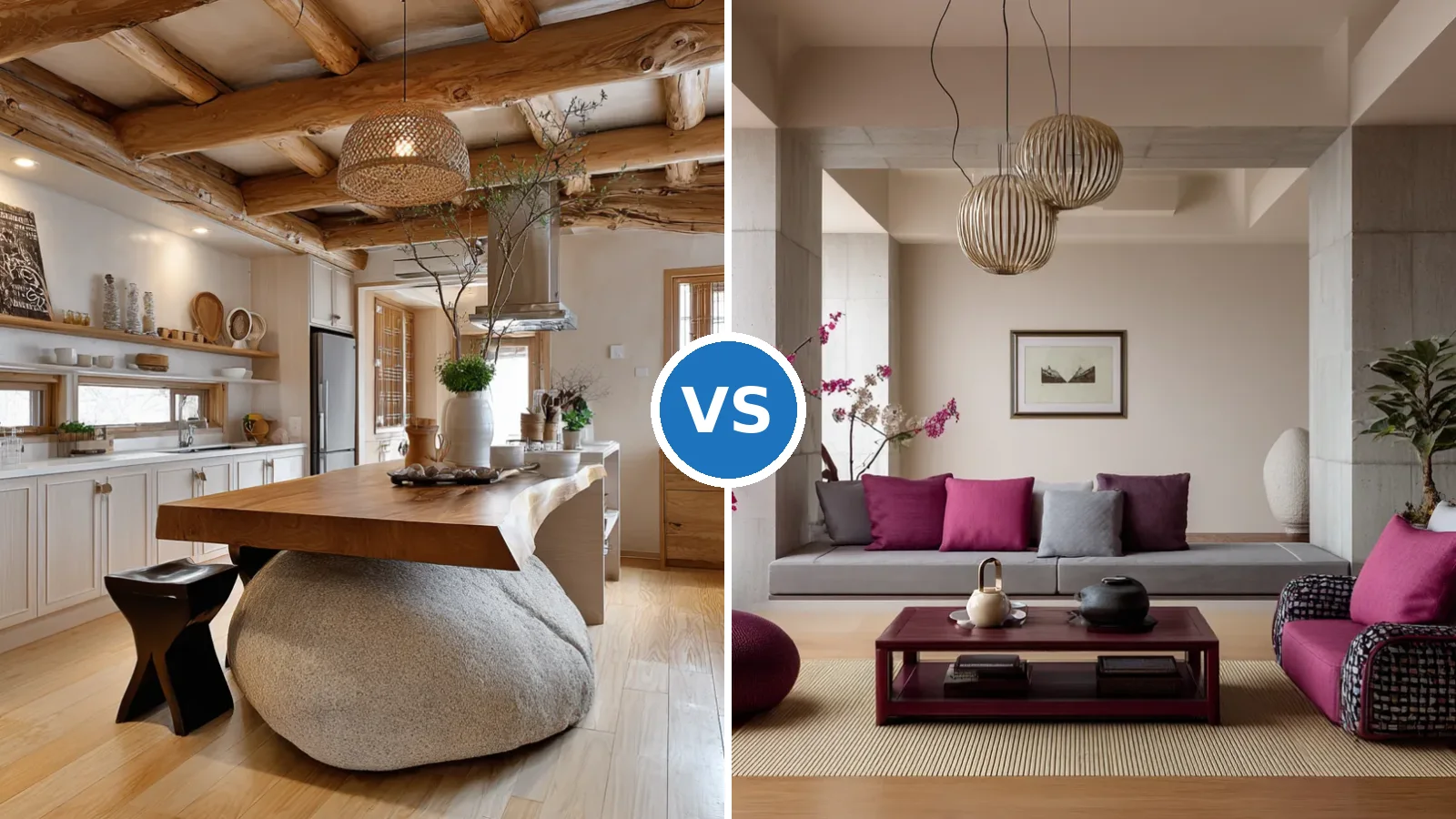
Asian inspired kitchen spaces gain elegance when a single dark wood table anchors the dining side. The surface stays low and uncluttered so the room reads wider. Pair it with slim chairs that tuck fully under the edge; the visual mass drops by roughly a third compared with bulky upholstered seats.
What happens if the table sits too high? The ceiling suddenly feels lower and the whole zone loses its quiet character. Keep table height near 72 cm rather than the more common 75 cm. The difference is small yet the room expands.

Shoji-style screens solve the classic open-plan problem: cooking smells stay contained while light still flows. A standard 90×180 cm panel costs $10–$17 to re-paper locally or $3–$7 for DIY paper. Custom white-oak frames run $400–$900 each. Place the screen so it slides parallel to the main walkway rather than blocking the 42-inch work aisle.
Think of the screen as a soft curtain made of wood and paper. It filters glare the same way a paper lantern softens a bare bulb. Avoid plastic-laminated versions that cost $50-plus per panel and block more light than they transmit.

Bamboo accents deliver the natural texture without heavy visual weight. A set of utensil holders and a single placemat runner cost under $40 yet shift the palette from cold white to warm earth. Strand-woven bamboo flooring itself installs for $7–$17 per sq ft and registers harder than most oak on the Janka scale.
Compare that to solid hardwood at $12–$21 installed: bamboo wins on both price and renewable growth rate. Limit the accent pieces to two or three so the surfaces stay clear. Too many bamboo objects and the room tips into theme-park territory.

When every surface shares the same restrained palette the small asian kitchen design ideas begin to feel intentional rather than sparse. Earth tones form the base; a single red or gold accent appears only once. Ambient lighting at 2700 K keeps the evening mood soft without the harshness of cool LEDs.
One practical test: stand at the far end of the room and count visible objects on the counters. If the number exceeds five, edit again. The goal is a space that still functions for daily meals yet never looks busy.
Serene Stone and Low Seating That Expand a Small Asian Dining Room

Serene asian inspired kitchen and dining zones often drop the seating height. A low wooden table paired with floor cushions recreates the traditional posture while freeing wall space for storage. Standard chair height is 18 inches; floor seating sits 12–14 inches and immediately makes the ceiling feel higher.
Is floor seating practical every day? For short meals and tea it works well. For longer family dinners most households keep one conventional chair set in reserve. The low table itself can double as a coffee table when cushions are stacked against the wall.

Natural stone countertops bring cool permanence that balances warm wood. Honed finishes hide water spots better than polished ones. Open shelving above the counters works only when limited to three carefully chosen pieces; more than that and the calm disappears. Average quartz installed cost sits between $60 and $120 per sq ft, while laminate stays under $40.
The rule of thumb borrowed from Japanese kitchens is 70 percent hidden storage and 30 percent display. That ratio keeps the room looking ordered even when the pantry is full. Avoid the common mistake of lining every shelf with matching ceramics—visual noise returns instantly.

Hardwood or bamboo floors paired with a single bonsai and rice-paper lanterns complete the serene effect. The lanterns diffuse light the same way paper screens do, cutting glare by roughly half compared with bare bulbs. A modest tabletop fountain adds gentle sound without needing plumbing changes.
Color stays in the quiet range: whites, soft greens and light browns. The palette alone can make a 70-sq-ft kitchen feel closer to 90. Skip the high-contrast black accents that shrink the room in photographs.

Once the surfaces stay clear and the materials stay natural the space begins to function as a daily retreat. The same principles that work in larger rooms scale down cleanly because they rely on subtraction rather than addition. For deeper layout logic see the Japanese minimalist kitchen design that treats every inch as earned space.
Zen Principles Applied to Asian Kitchen Design Ideas That Stay Practical
Zen-style asian kitchen design ideas start with simplification and end with usable calm. A wooden table on tatami-style mats creates the classic low dining posture. Standard Edoma tatami measures 88×176 cm; mid-grade mats begin around $100–$200 each while premium domestic igusa reaches $300-plus.
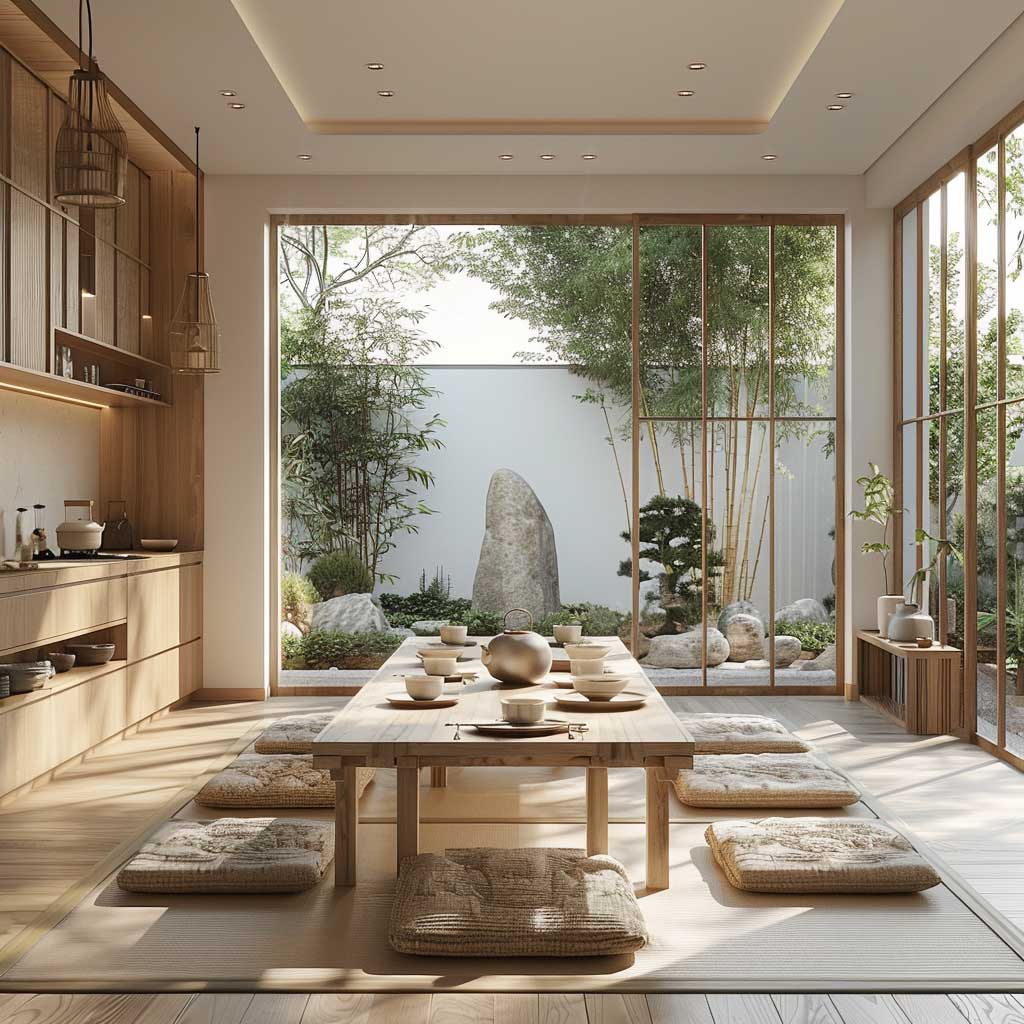
Large windows that face a garden or courtyard pull the outdoors inside. The connection to nature is the core of the style; without it the room risks feeling like a stage set. Stone garden elements on a counter or shelf add texture that no synthetic material matches.
Do not place real tatami in a wet kitchen zone. Moisture destroys the rush surface within months. Use the mats only in the dry dining section or choose modern fiberboard-core versions rated for higher humidity.

Bamboo plants and a few ceramic tea pieces on open shelves reinforce the cultural reference without clutter. The color range stays neutral—beige, gray, olive—so the eye rests rather than jumps. Soft indirect lighting maintains the atmosphere after dark; cool overhead spots destroy it.
Every object earns its place by usefulness or quiet beauty. If an item fails both tests it leaves the room. That single discipline turns even a 60-sq-ft kitchen into a place that feels intentional.

Artificial light should stay warm and low. Recessed strips at 2700 K under cabinets or inside soffits keep the zen character after sunset. One well-placed pendant above the dining table is enough; multiple fixtures create visual noise.

The finished room proves that even the smallest footprint can hold calm when every choice follows the same quiet logic. For furniture that supports the same mood explore zen dining room furniture ideas that keep seating low and surfaces clear.
Material and Layout Comparison for Small Asian Kitchens
| Element | Budget Option | Mid-Range | Premium | Typical Cost Range | Best Use |
|---|---|---|---|---|---|
| Flooring | Engineered bamboo | Strand-woven bamboo | White oak | $5–$17 / sq ft installed | High-traffic kitchen |
| Countertop | Laminate | Quartz | Honed natural stone | $10–$120 / sq ft | Daily prep surface |
| Divider | DIY shoji paper | Prefabricated screen | Custom oak shoji | $3–$900 per panel | Kitchen–dining split |
| Seating | Floor cushions | Low wooden stools | Custom zaisu chairs | $20–$400 each | Dining zone |
| Lighting | Rice-paper lantern | 2700 K LED strip | Custom washi pendant | $30–$250 | Ambient evening light |
Practical Choices That Keep the Style Alive Daily
The strongest asian themed kitchen decor decisions are the ones that survive real cooking. Keep the 42-inch work aisle clear even when the fridge door is open. Choose finishes that hide fingerprints and water marks. Limit open display to objects that earn their place every week.
A common failure is treating the style as pure decoration. When the counters fill with appliances and the shelves multiply the calm vanishes. Edit monthly. The room rewards the discipline with a quiet that larger, busier kitchens rarely achieve.
External data from kitchen planning guidelines confirm the same spatial rules: continuous prep surface of at least 36 inches beside the sink and landing zones of 15–24 inches around the refrigerator. Those numbers work inside asian inspired layouts just as they do in any other compact kitchen.
Steady Calm That Fits Real Life
An asian inspired kitchen succeeds when the numbers and the atmosphere line up. Spaces under 100 sq ft gain the most from the style because the rules of subtraction create the largest perceived gain.
Start with one clear surface, one natural material and one soft light source. Add only what the daily routine actually needs. The result is a room that supports cooking and conversation without visual noise.
Keep the work aisle at 42 inches, limit open shelves to three objects, and choose finishes that age quietly. Those three moves deliver more lasting effect than any single statement piece.
The style rewards restraint. Every object that stays must justify its presence. When that test is applied consistently the smallest kitchen and dining room becomes the calmest room in the house.