You’re standing on your back porch in July, swatting flies, and wondering why you didn’t close this thing in years ago. By October, you’re watching leaves pile against the exterior and thinking: should this be glass or screens? A screened vs enclosed porch comparison comes down to seasonal use and budget.
Screened porches offer three-season comfort at a fraction of the cost; enclosed porches deliver year-round living space but require substantial investment. The choice depends on your climate, how often you actually use outdoor space, and whether the added expense aligns with your home’s resale value.
Screened vs enclosed porch — what each option actually is
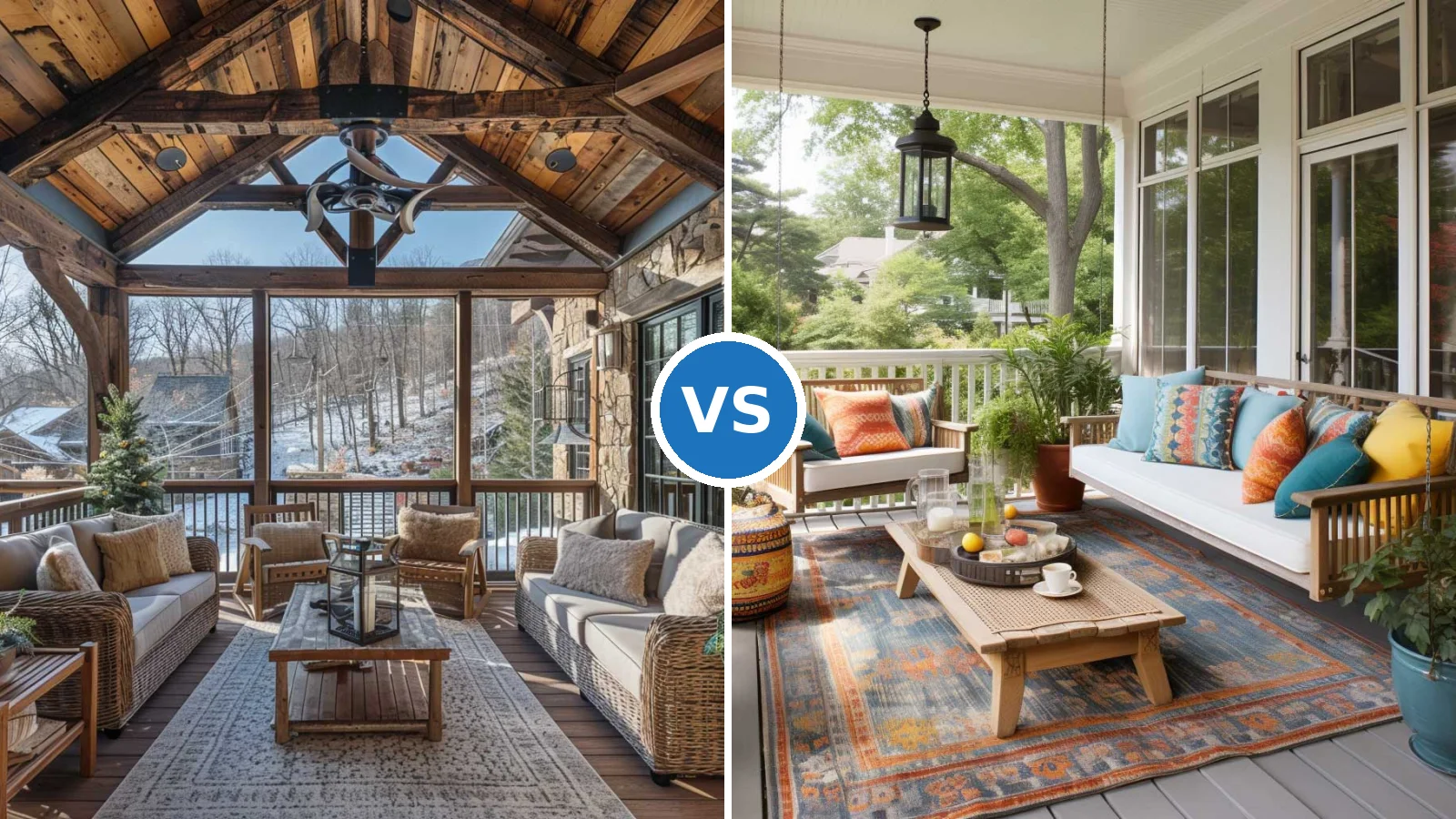
A screened porch uses mesh panels—fiberglass or aluminum—held in frames to block insects and debris while letting air circulate freely. An enclosed porch replaces screens with solid walls, usually floor-to-ceiling glass panels backed by insulated framing, creating an actual room with climate control.
Screened porches are open-air rooms that feel connected to the outdoors. Enclosed porches are extensions of your interior living space, complete with heating and cooling options for harsh seasons.

Cost and what you actually get for it
Screened porch projects range from roughly $1,500–$4,000 if you handle the installation yourself using DIY systems, or $2,000–$5,000 for professional screening of an existing structure. A new screened porch built from the ground up costs $10,000–$35,000 for around 200 square feet.
Enclosed porches with glass walls start at $20,000 for a three-season sunroom and climb to $50,000–$80,000 for a full four-season room with insulation and HVAC connections. The structural difference is the thermal break—an insulated aluminum frame that lets you use the space below 40°F without running a space heater constantly.
Both types can return meaningful resale value. Screened porches return 75–84% of build cost at resale. Enclosed porches also represent a solid long-term investment, though the larger upfront cost means you’re committing to longer-term ownership to break even.
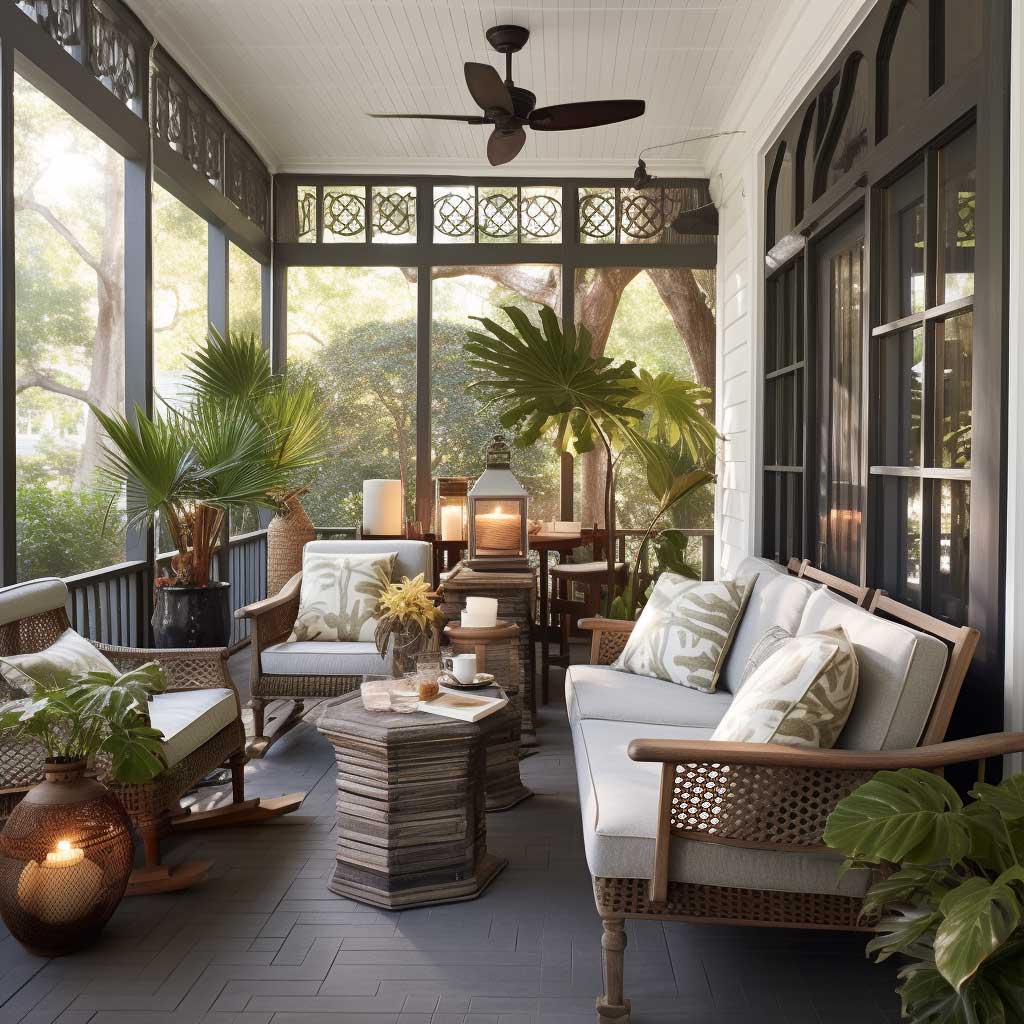
Durability and seasonal performance
Screened porch durability depends entirely on mesh material choice. Fiberglass costs as little as $0.20 per square foot but degrades in 7–10 years, especially on south-facing exposures where UV breaks down the fibers and causes visible sagging within two summers. Aluminum mesh at $0.45–$0.75 per square foot resists wind sag and lasts longer without color fade or structural failure.
Enclosed porch glass performs year-round. Low-E glass (the thermal-break upgrade) costs $200–$400 more per panel and prevents the greenhouse effect that clear glass creates on south-facing walls. The frame material matters more than the glass: improper sealing between wood and glass invites mold inside the frame within 18 months.
Maintenance differs sharply. Screened porches need periodic screen re-tensioning and occasional mesh replacement. Enclosed porches need glass cleaning and thermal break caulk inspection—lower labor but higher stakes if something fails.
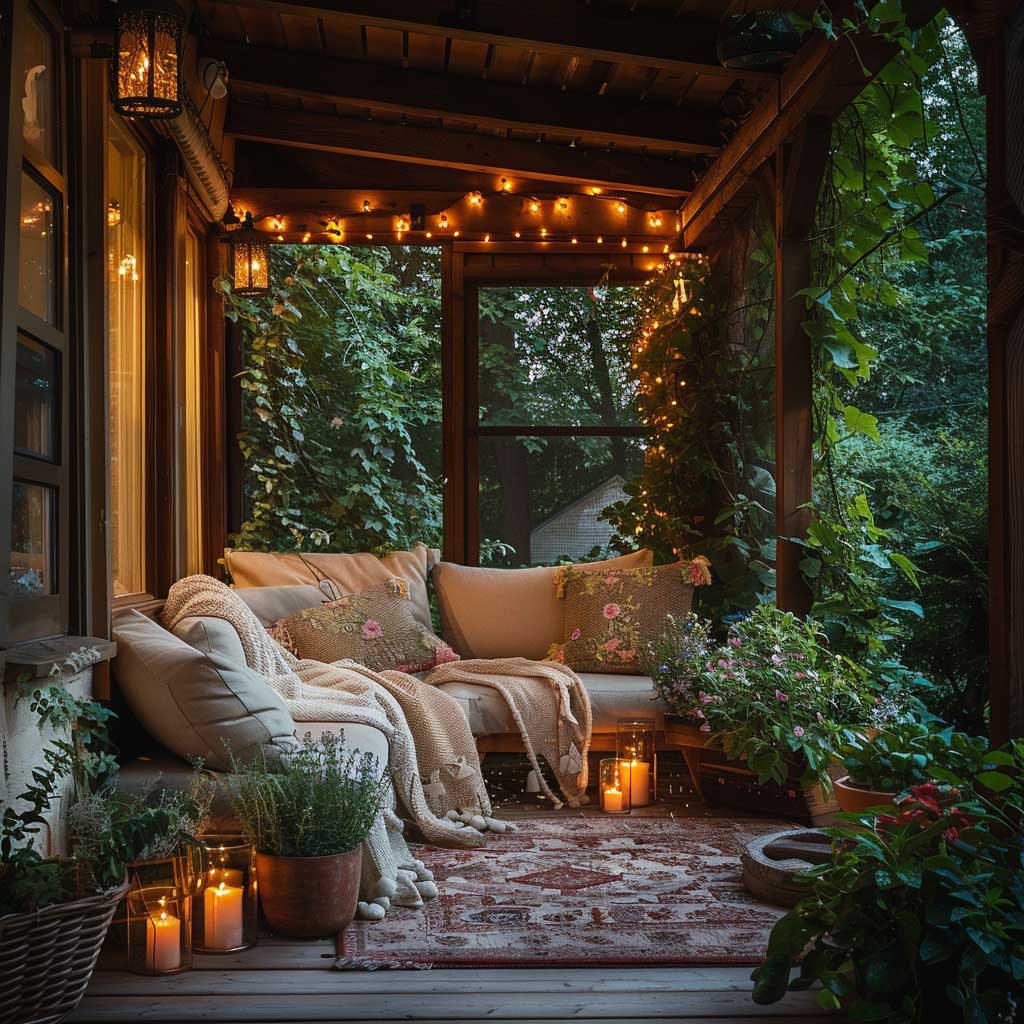
Design flexibility and what works where
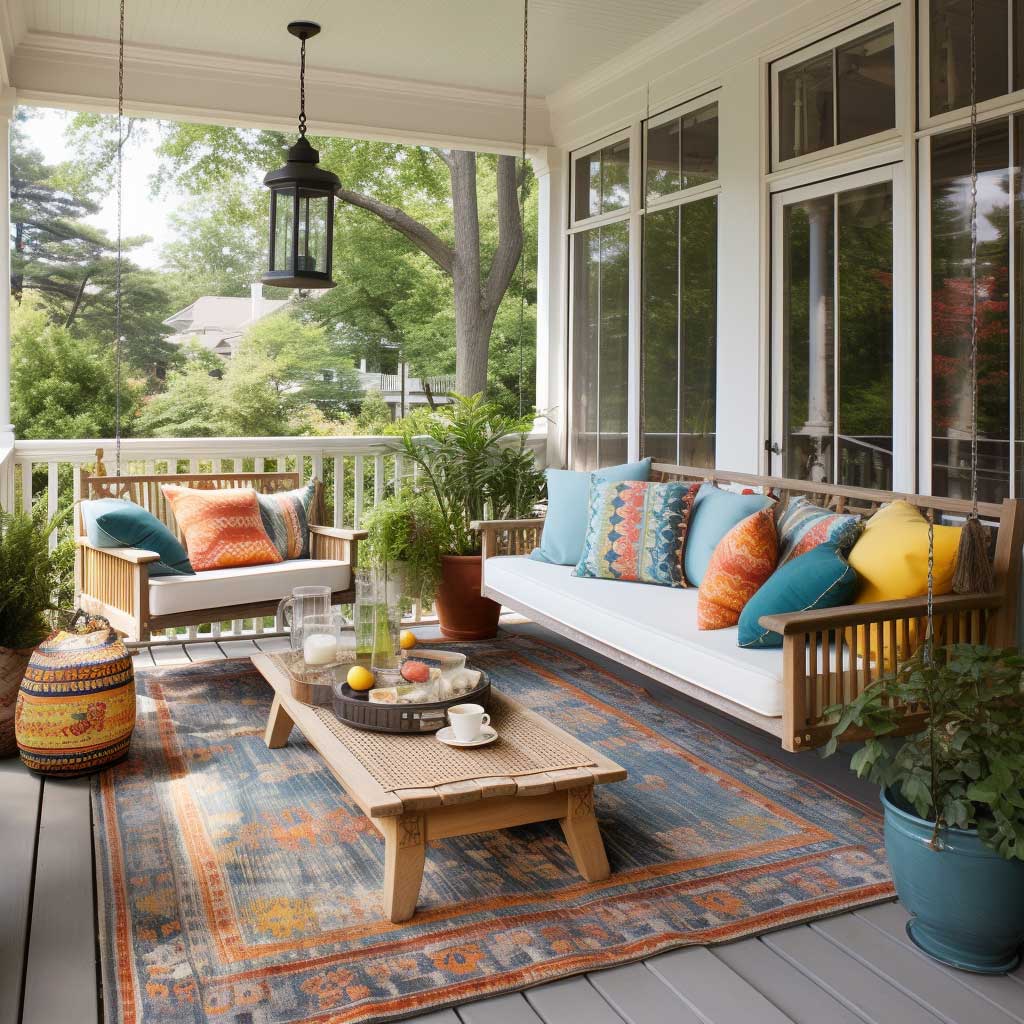
Screened porches excel at framing views. Contemporary designs run large aluminum screen panels in single frames rather than divided sections, minimizing the visual interruption of frame lines. Cozy screened corner porches work best under 150 square feet and depend on furniture choice—a heavier rattan loveseat with Sunbrella cushions anchors the space without sliding across sloped decking.
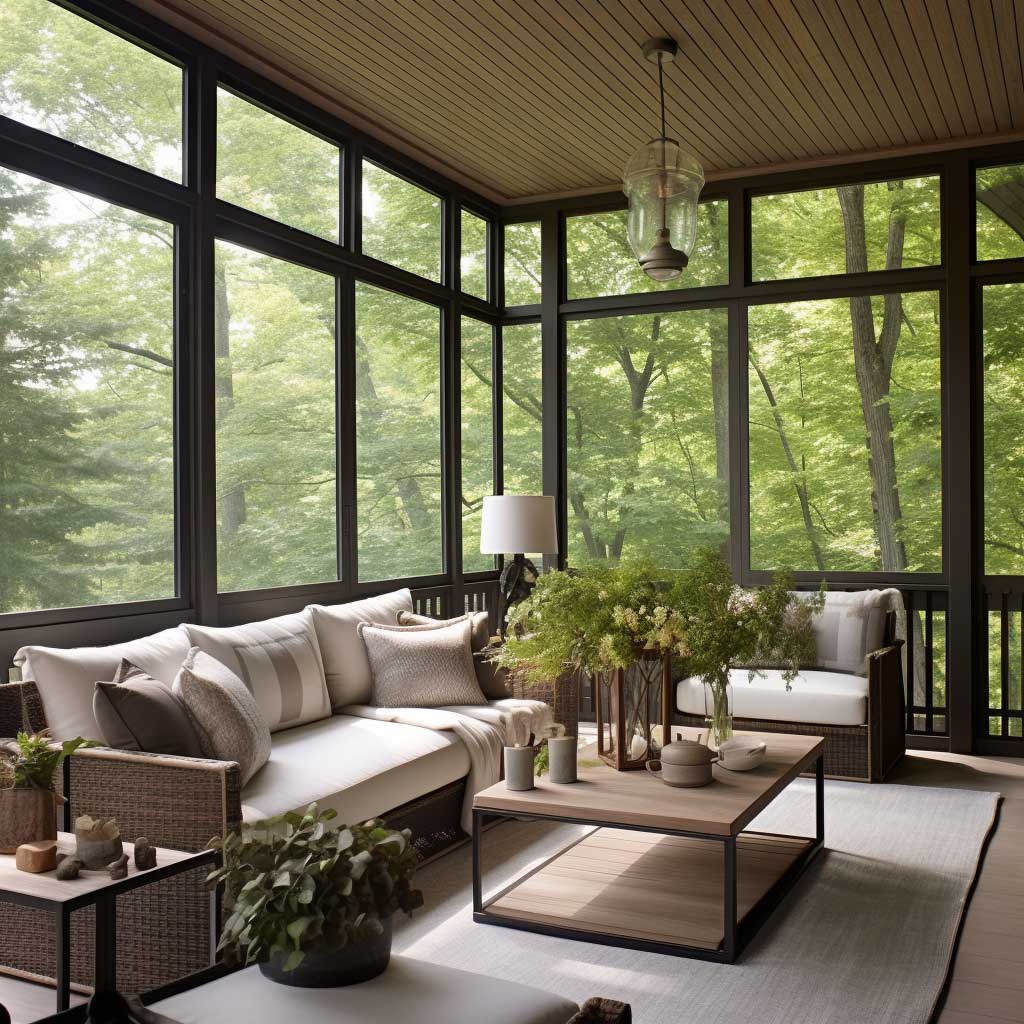
Enclosed porches are about what’s inside, not outside. Glass makes every detail visible from beyond the porch, so clutter reads as clutter and minimalism reads as sophisticated. Furniture strategy flips: instead of small accent pieces, you want fewer larger pieces like a deep sectional or paired armchairs that don’t fragment the sight lines.
Flooring strategy separates them too. Screened porches tolerate horizontal patterns like composite decking. Enclosed porches need polished concrete or smooth surfaces that transition smoothly with interior flooring and don’t introduce competing visual lines.
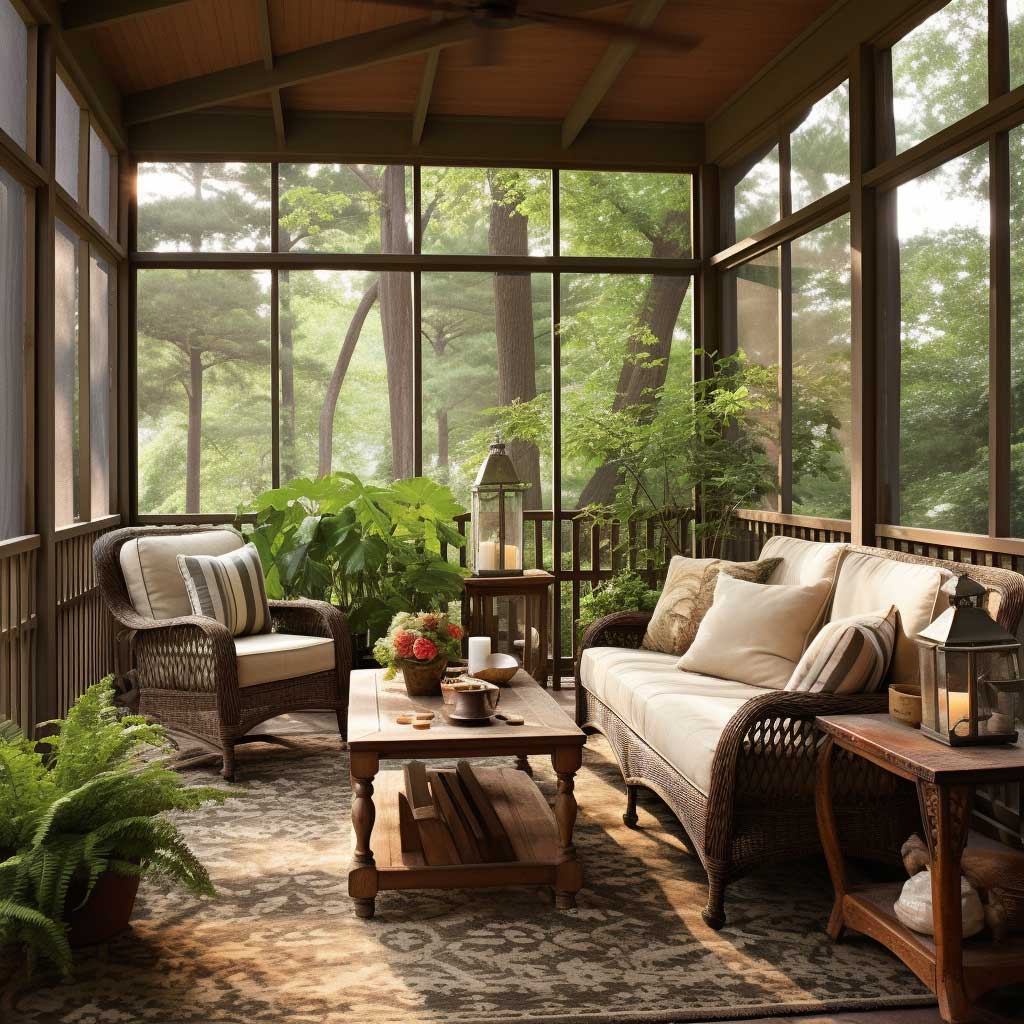
Where screened porches win
Budget is the first obvious win. A DIY screened enclosure at $1,500–$4,000 is accessible to far more homeowners than a $50,000+ glass room. Even professionally installed screened porches at $2,000–$5,000 let you add functional outdoor space without financing a major renovation.
Outdoor airflow is the second. If you live in a humid climate and want natural ventilation without air conditioning running constantly, screens let breezes through while keeping insects out. This matters enormously in transitional seasons when you don’t want forced heat or cooling.
Maintenance is simpler too. Replacing a section of screen mesh is a weekend DIY task costing under $100. Fixing a compromised thermal break in an enclosed porch requires professional repair.


Where enclosed porches win
Year-round usability is the deciding factor. A screened porch is genuinely three-season space in most climates—it works brilliantly spring through fall, then becomes a storage zone once frost arrives. An enclosed porch with proper insulation and heating extends the season by months or eliminates the seasonal limitation entirely.
Home value is measurable. The $15,000–$25,000 increase in appraised value means you recover a meaningful chunk of the $50,000–$80,000 investment when you sell. A screened porch doesn’t move the appraisal needle as dramatically, making it more of a lifestyle choice than a financial asset.
Light and view are superior. Floor-to-ceiling glass with low-E coatings creates a visual pass-through—the outside becomes the interior design. Screens always interrupt the sight line with their mesh grid, no matter how refined the material.

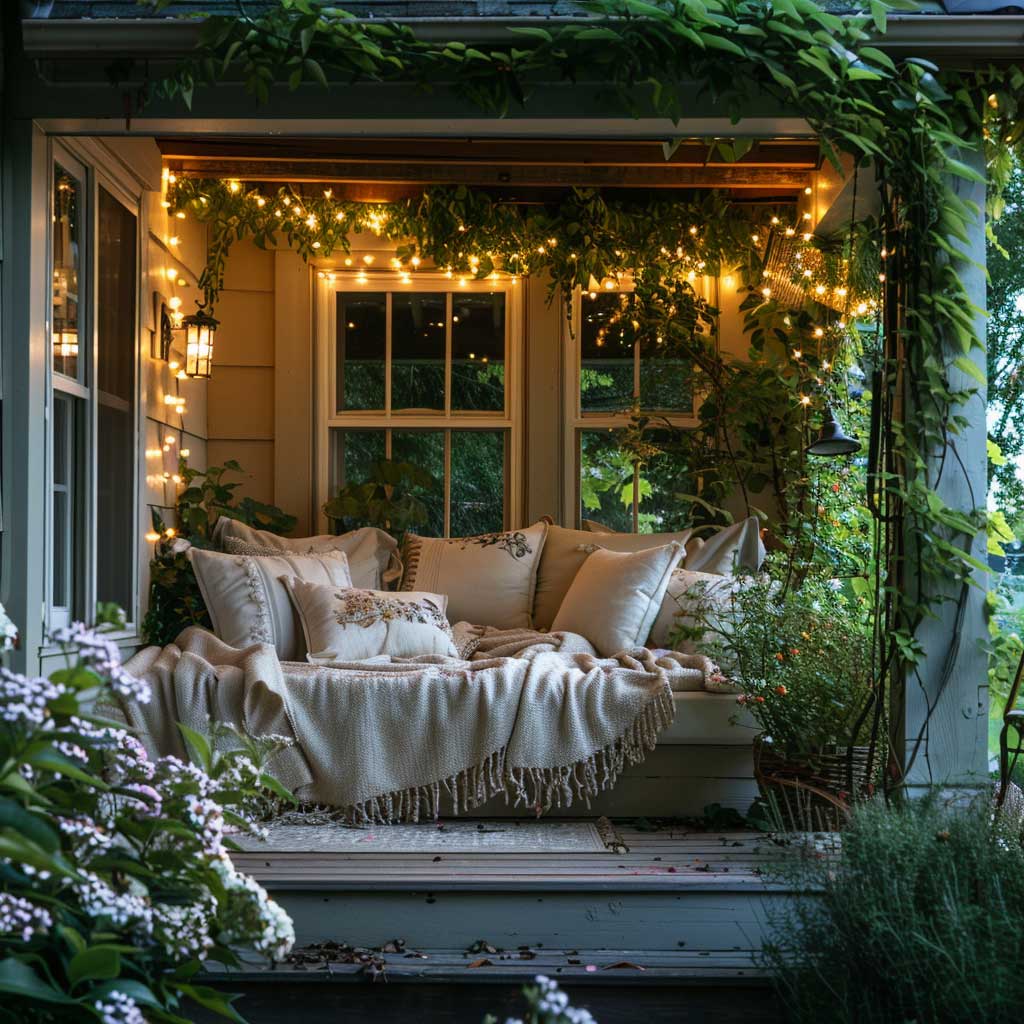
The biggest mistake — ignoring screen tension and UV exposure
The most common failure is choosing fiberglass mesh on a south-facing screened porch and expecting it to stay tight. One contractor watched a $1,800 DIY screen enclosure develop visible bowing and gaps within two summers because the homeowner bought the cheapest mesh available, thinking all screens are equivalent. The gap between frame and mesh became an insect highway, defeating the entire purpose of the enclosure.
The fix costs $50–$100 more upfront: specify PVC-coated polyester screen at $0.60–$1.00 per square foot or aluminum mesh if your budget allows. This is where cutting corners actually destroys the room’s function. Similar mistake: painting an accent wall inside an enclosed porch.
You paid $50,000 for views and natural light, then obscured both with teal walls. Color belongs on removable textiles only—rugs under $300 and pillows you can swap seasonally.

Final verdict — choose based on your actual use pattern
Choose a screened porch if you live where three-season outdoor living is enough, your budget is under $5,000–$10,000, and you value the sensation of being outdoors while protected from insects. The airflow, simplicity, and modest cost make it the right choice for people who mostly use outdoor spaces spring through fall.
Choose an enclosed porch if you want year-round living space, you’re willing to invest $40,000–$80,000, and your home’s resale value matters to your long-term plans. This is the choice for climates where winter is severe or your household uses outdoor space so frequently that three seasons feel limiting.
Neither option is wrong—the choice depends on whether seasonal limitations feel acceptable to you, and whether the financial return on a major enclosure renovation aligns with your timeline at this property.