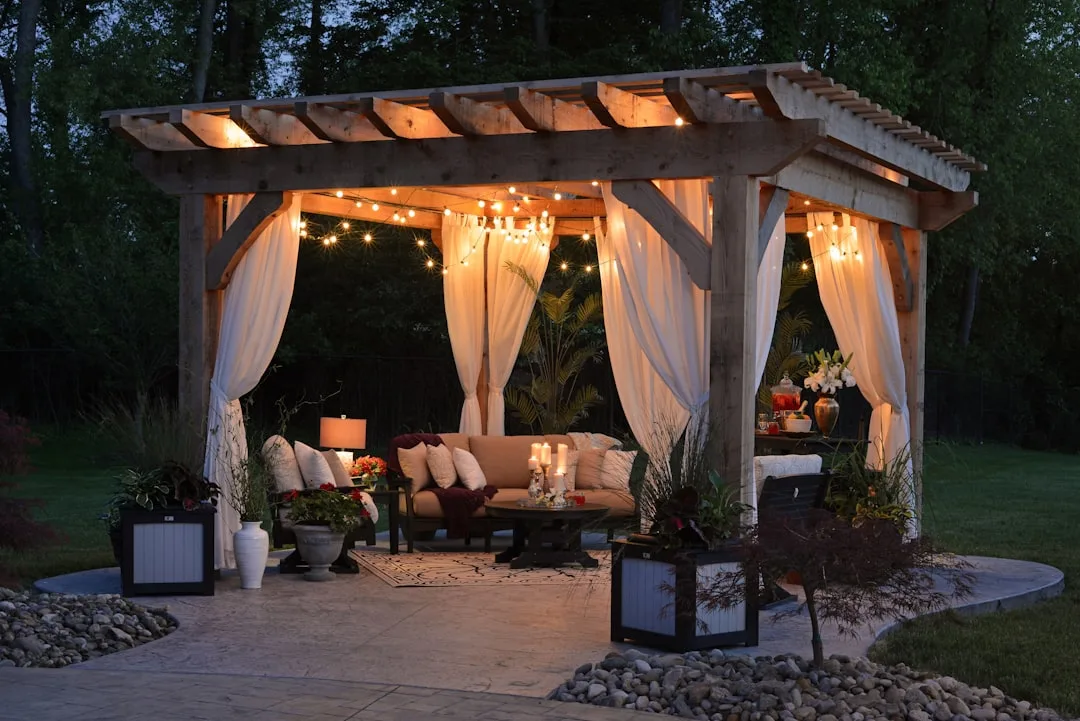
Outdoor accent lighting has become the most underrated patio investment of 2026. While most homeowners default to overhead fixtures, strategic outdoor accent lighting creates dimension, extends usable evening hours, and fundamentally reshapes how your patio functions after sunset. This trend reflects a shift from task lighting alone toward layered atmospheric design—the same principle high-end hotels use to make outdoor terraces feel intentional and inviting.
Why Uplighting Changes How Your Patio Feels
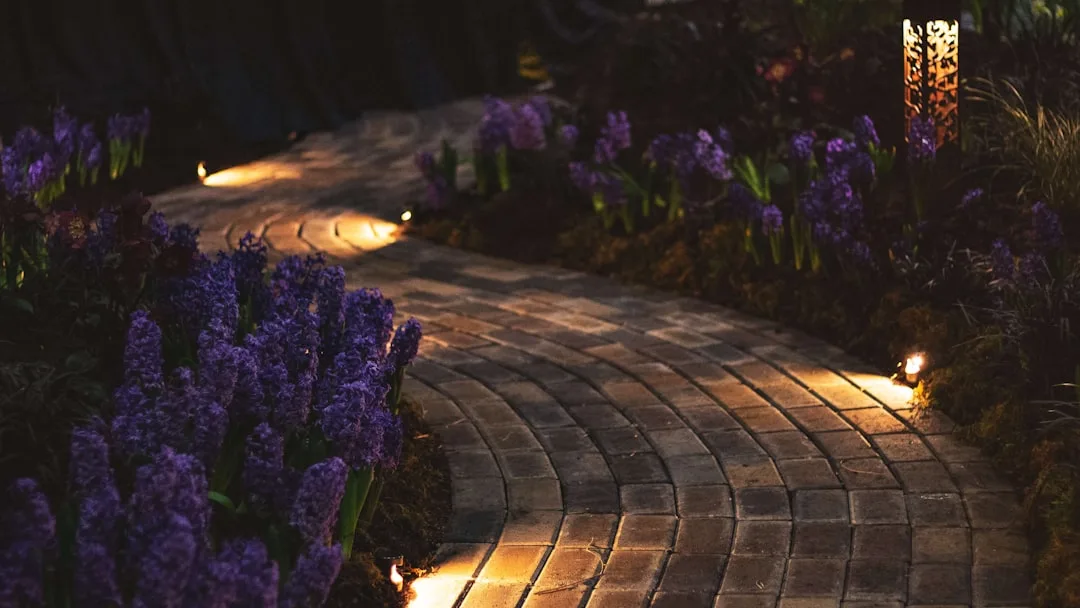
Uplighting—directing light upward onto vertical surfaces—is the core technique driving this trend. Rather than washing light downward from above, uplighting grazes trees, stone walls, and architectural features from their base, creating dramatic shadow play and perceived depth. Brands like Kichler and Landscape Forms manufacture specialty uplighting fixtures designed for this purpose, with adjustable beam angles and color temperature control.
The psychological impact is immediate. Uplighting on a stone wall or mature tree creates visual interest that overhead fixtures cannot achieve. It also eliminates the flat, stadium-like feeling of conventional patio lighting. Your patio becomes a series of lit planes rather than one evenly illuminated rectangle.
Most homeowners make one critical mistake here: they place uplighting too far from the surface they’re illuminating. Fixtures positioned 18 inches to 2 feet away from a wall create clean, pronounced shadow patterns; fixtures 4+ feet away wash the wall without drama. Incorrect placement cost and performance compound—you’re spending money without impact.
Quick Tips
- Mount uplighting 12–24 inches from vertical surfaces for defined shadow patterns
- Use 2700K warm color temperature to mimic candlelight and avoid harsh cool tones
- Aim fixtures upward at 45–60 degrees to prevent light spill into neighbors’ yards
- Layer accent lighting in zones: trees, walls, water features, and planters separately
Grazing Techniques Highlight Texture and Materiality
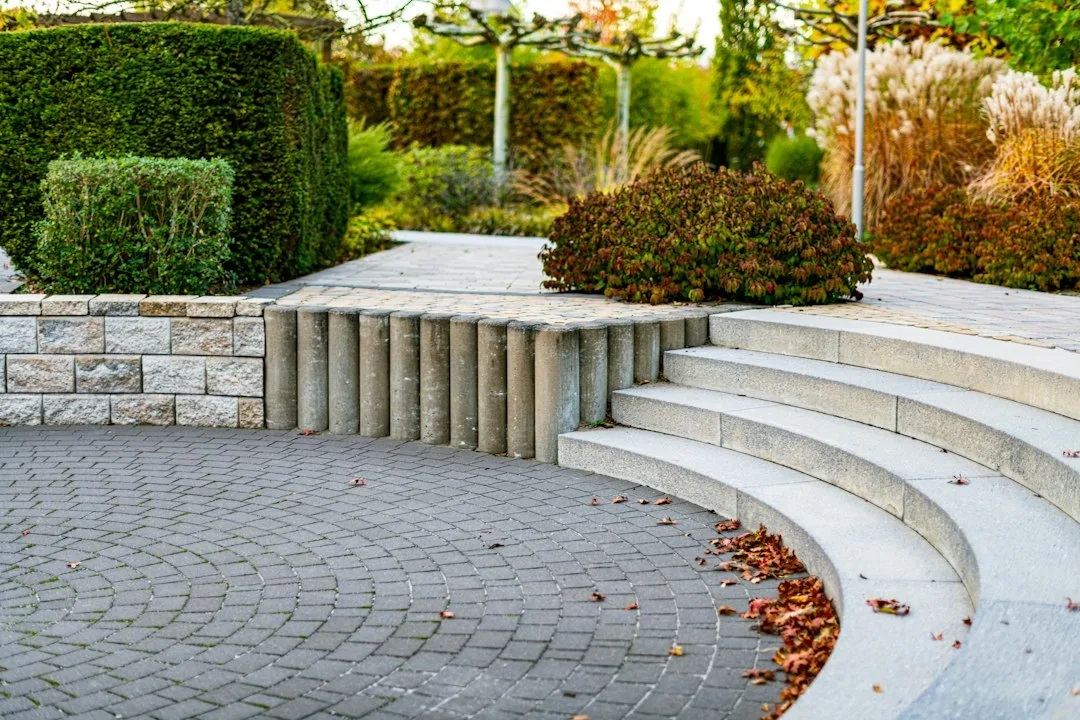
Grazing is a refinement of uplighting: light strikes a textured surface at an acute angle, emphasizing grain, brick pattern, stone seams, and plant foliage. A weathered brick patio wall gains character under grazing light in ways that direct illumination never achieves. Fixtures like the WAC Lighting Landscape 12V series and Philips Hue Outdoor Wanderer are designed specifically for this narrow-beam, glancing-angle application.
Texture becomes part of your nighttime aesthetic. A beautifully designed patio yard with texture and material layering shows exponentially more visual richness when grazing light reveals surface detail. Smooth concrete reads as flat; textured concrete or stone reads as layered and refined.
| Lighting Technique | Best Surface Type | Shadow Effect |
|---|---|---|
| Uplighting | Architectural walls, specimen trees | High contrast, dramatic depth |
| Grazing | Textured brick, stone, wood siding | Subtle shadow detail, material emphasis |
| Wall-washing | Large flat walls, pergola underside | Even brightness, minimal shadow |
| Downlighting | Step edges, pathway safety zones | Visibility and definition |
Specimen Trees and Plant Accent Lighting Create Focal Points
A mature tree illuminated from below becomes an outdoor room’s anchor. Landscape architects increasingly specify accent lighting for specimen trees—the standout plant elements that define a yard’s character. Uplighting from four directions around a tree base creates a glowing canopy effect; from a single side, it silhouettes foliage for sculptural drama.
The Landscape Lighting Company manufactures tree-specific uplighting fixtures with waterproof housings rated for direct ground installation. Wired into 12-volt low-voltage systems, these avoid the shock and maintenance issues of high-voltage buried wiring. A 40-watt equivalent LED uplighting fixture uses minimal power while delivering rich, warm color.
Accent lighting on plantings also extends your landscape’s visual season. In summer, lush foliage glows; in winter, architectural branch structure becomes a graphic element. This single investment spans twelve months of aesthetic impact.

Integration With Smart Home Controls Drives Adoption
Landscape Lighting Design Principles for Outdoor Spaces
Professional landscape lighting designers follow proven principles that transform residential yards into nighttime showscapes. Layering—combining ambient, task, and accent lighting—creates depth and visual interest after sunset. Ambient lighting provides overall visibility through path lights and bollards, while task lighting illuminates functional areas like patios and seating zones. Accent lighting, as discussed, highlights specimen plants and architectural features.
The concept of “moonlighting” mimics natural moonlight by placing uplights high in trees to cast soft shadows downward. This technique works beautifully in courtyards and enclosed garden rooms, as seen in designs like a Concrete House Idea With Patio Style Courtyard, where overhead canopy lighting creates intimate gathering spaces. Silhouetting—backlighting architectural elements—adds drama and dimension to modern home exteriors.
Color temperature selection matters significantly. Warm white (2700K) enhances traditional and Mediterranean landscapes, while cooler tones (4000K) suit contemporary minimalist designs. Warm tones also attract fewer insects than blue-spectrum lighting, making patio areas more comfortable for evening entertaining. The interplay between light and shadow should feel natural, never overly theatrical.
Pathway lighting serves dual purposes: safety and aesthetics. Low-voltage LED fixtures installed along walkways guide movement while creating ambient light spillover. A Beautiful Single Story House with Patio Yard benefits from consistent lighting that unifies the entire outdoor living zone, connecting the home’s interior warmth to the surrounding landscape.
Practical Resources for Your Patio Accent Lighting Project
These tools and guides help you plan fixture placement, size your transformer, choose efficient products, and avoid common installation mistakes — start with whichever step matches where you are in the project.
How do I pick outdoor fixtures that won’t blast light into my neighbor’s yard?
What beam angle and color temperature should I use for each feature on my patio?
Where can I compare energy-efficient outdoor light fixtures side by side?
Is there a way to see what my lighting plan will look like at night before I buy anything?
How do I figure out what size transformer and wire gauge I need for a low-voltage system?