Modern coastal kitchen ideas look easy on a mood board: pale blue, white shaker, rattan pendant, done. The gap between a kitchen that photographs well and one that genuinely feels like the shore is almost always a material decision, not a color one. Bleached white-oak floors next to quartz countertops with natural veining read as coastal without a single anchor hook in sight. Paint swatches alone do not.
The NKBA’s 2025 Kitchen Trends Report notes that blue is the second most popular kitchen color among industry designers, chosen by 63% of respondents — which means the color choice is no longer a differentiator. What separates a forgettable coastal kitchen from one that earns a save on Pinterest is the combination of texture, natural material, and the discipline not to overdo the nautical accessories.
The kitchens below are organized around five specific design moves. Each one addresses a real decision point — shiplap placement, cabinet color depth, ceiling height, material layering — with numbers and specific product categories where they apply. Color is the starting point, not the finish line.
– Benjamin Moore Advance paint runs $35–$89/gallon — enough for a full cabinet repaint with two coats in most kitchens
– Shiplap installed costs $3–$11/sq ft depending on wood type; pine is the budget-friendly coastal choice
– Rattan pendant lights for kitchen islands start around $160 and are the fastest single-piece coastal signal
– Quartz countertops run $50–$150/sq ft installed — the non-porous surface is a practical win in a beach-house context
– Skylights average $1,600–$4,200 installed and deliver more light per dollar than adding a window in an existing wall
– The mistake most people make: matching the palette perfectly while using materials that belong in a suburban subdivision
Shiplap on the Island Does More Work Than Shiplap on the Wall
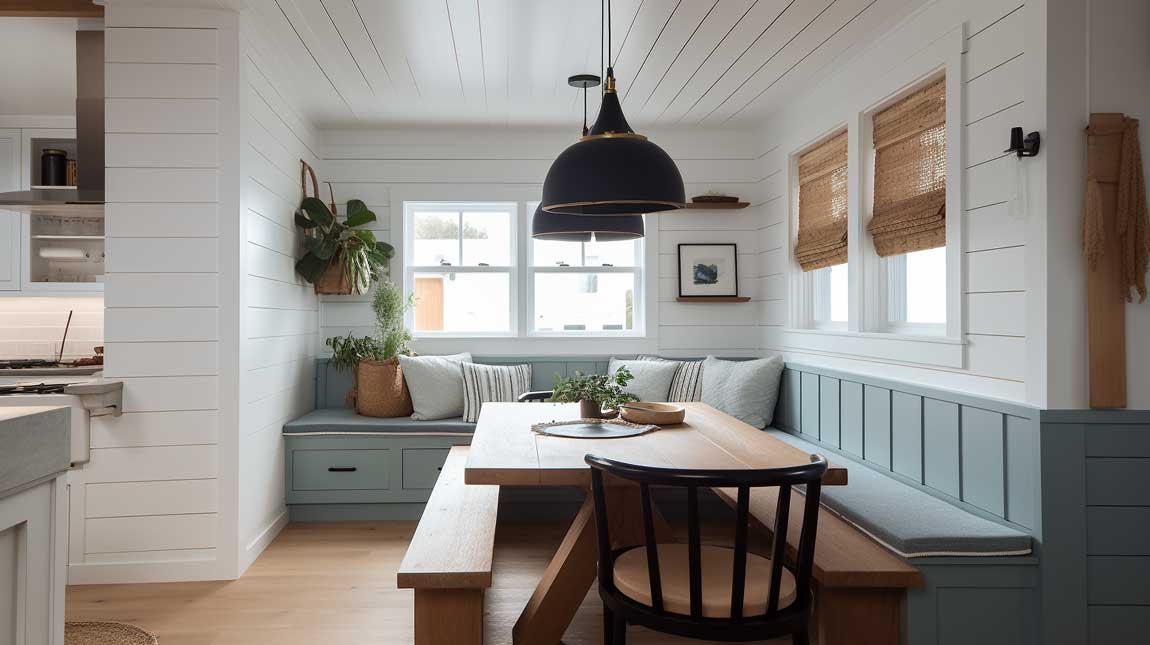
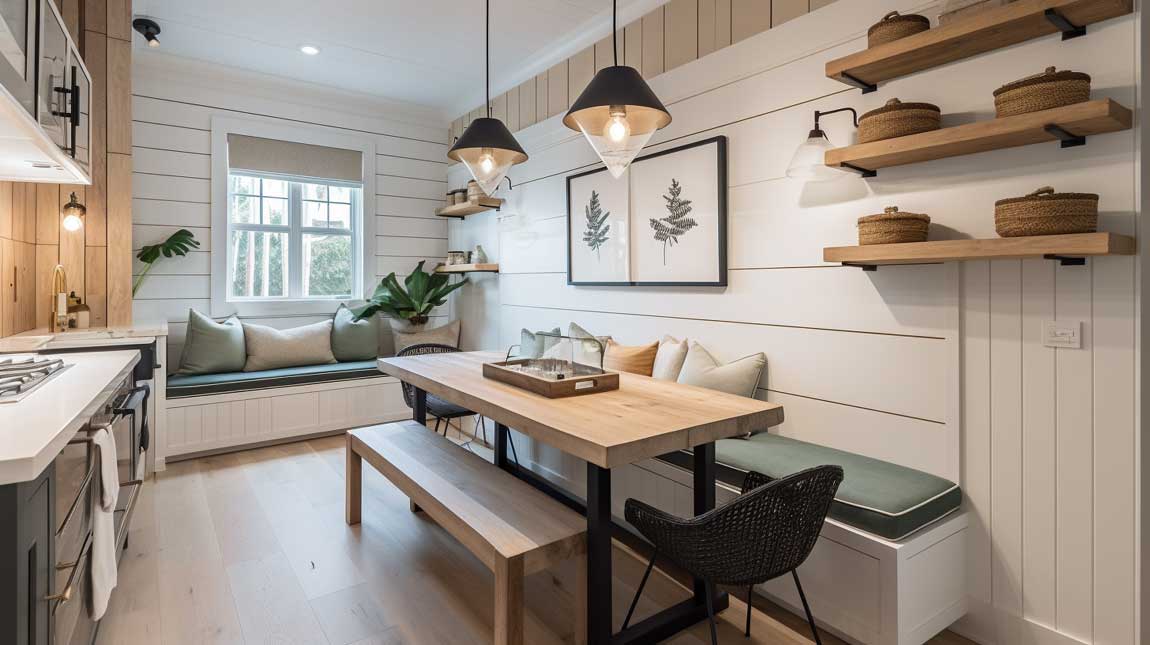
Pine shiplap costs $2–$4 per square foot in materials, and the location choice determines whether it reads as coastal or farmhouse. Applied horizontally to a kitchen island’s face — rather than wrapping an entire wall — shiplap becomes a focal accent that anchors the space without overwhelming it. Wrapping every wall is the version that tips into a beach-gift-shop aesthetic, and stylists consistently flag it as the most common overreach in this style.
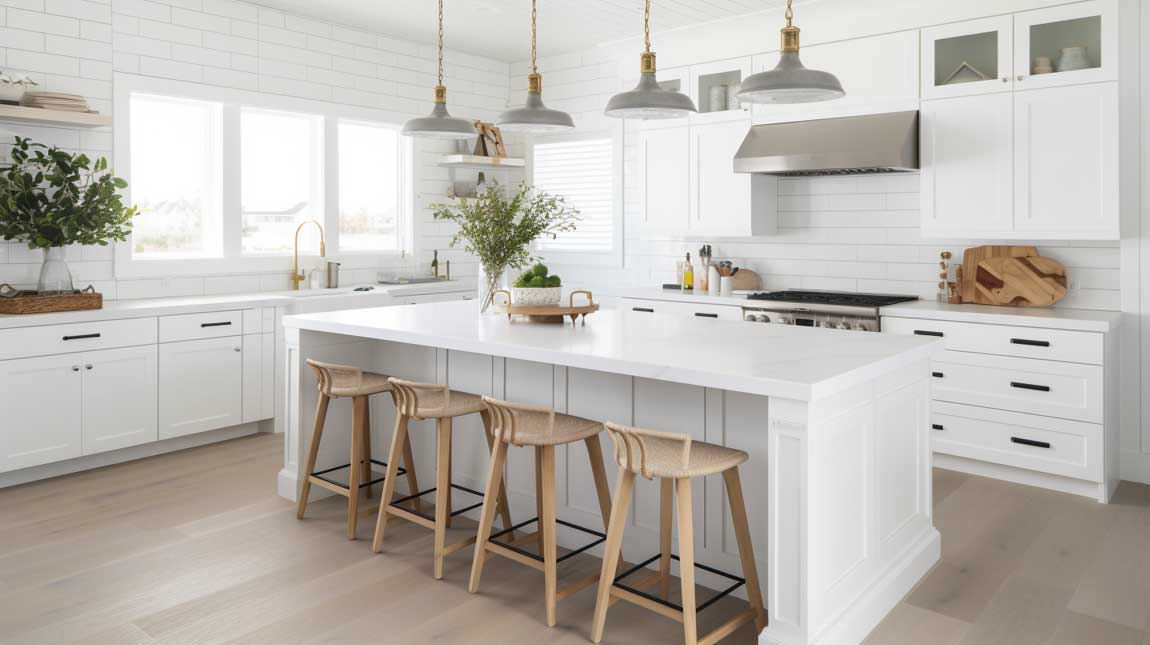
The open-concept layout is doing heavy lifting here beyond aesthetics: removing a wall between the kitchen and adjacent living space typically adds 15–20% more usable kitchen circulation — a practical reason designers pair it with coastal modern builds, where the mood depends on airflow and sight lines. Sleek flat-panel cabinetry beside the shiplap creates productive contrast; both textures need each other to register. Try a dining nook with a bench built into the corner — the shiplap wall behind the bench frames the seating like a built-in piece of furniture rather than just applied cladding. For related Hamptons-inspired approaches that combine shiplap with contemporary cabinetry, see modern Hamptons style kitchen design.
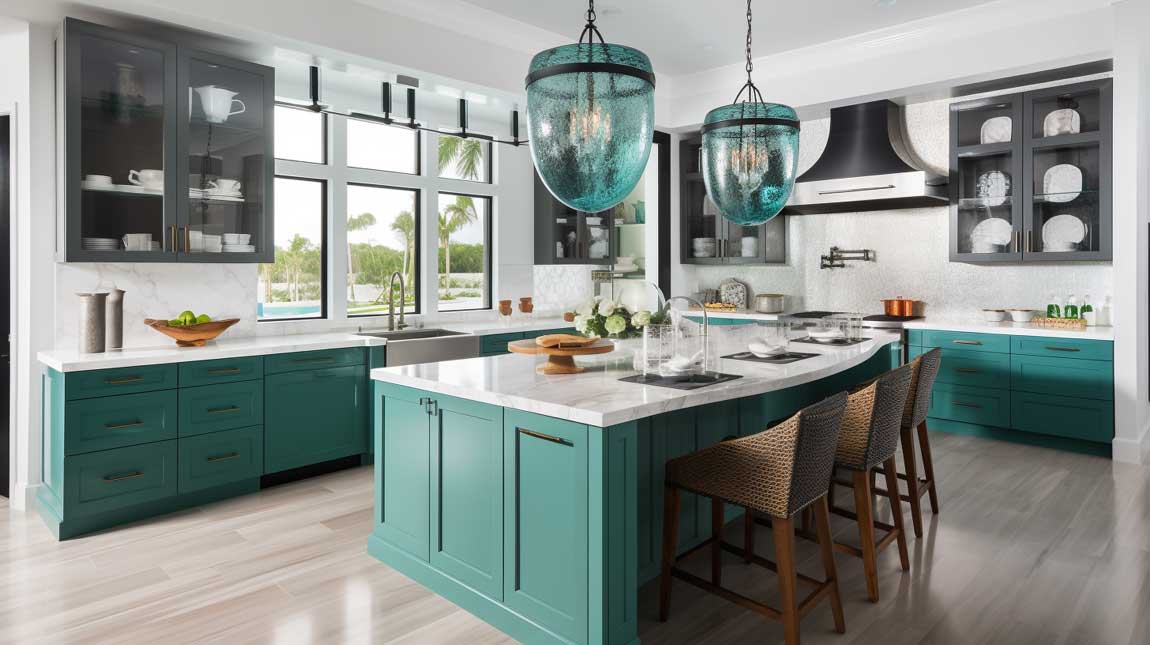
Blue Cabinets Read Coastal — Until the Wrong Shade Kills the Light
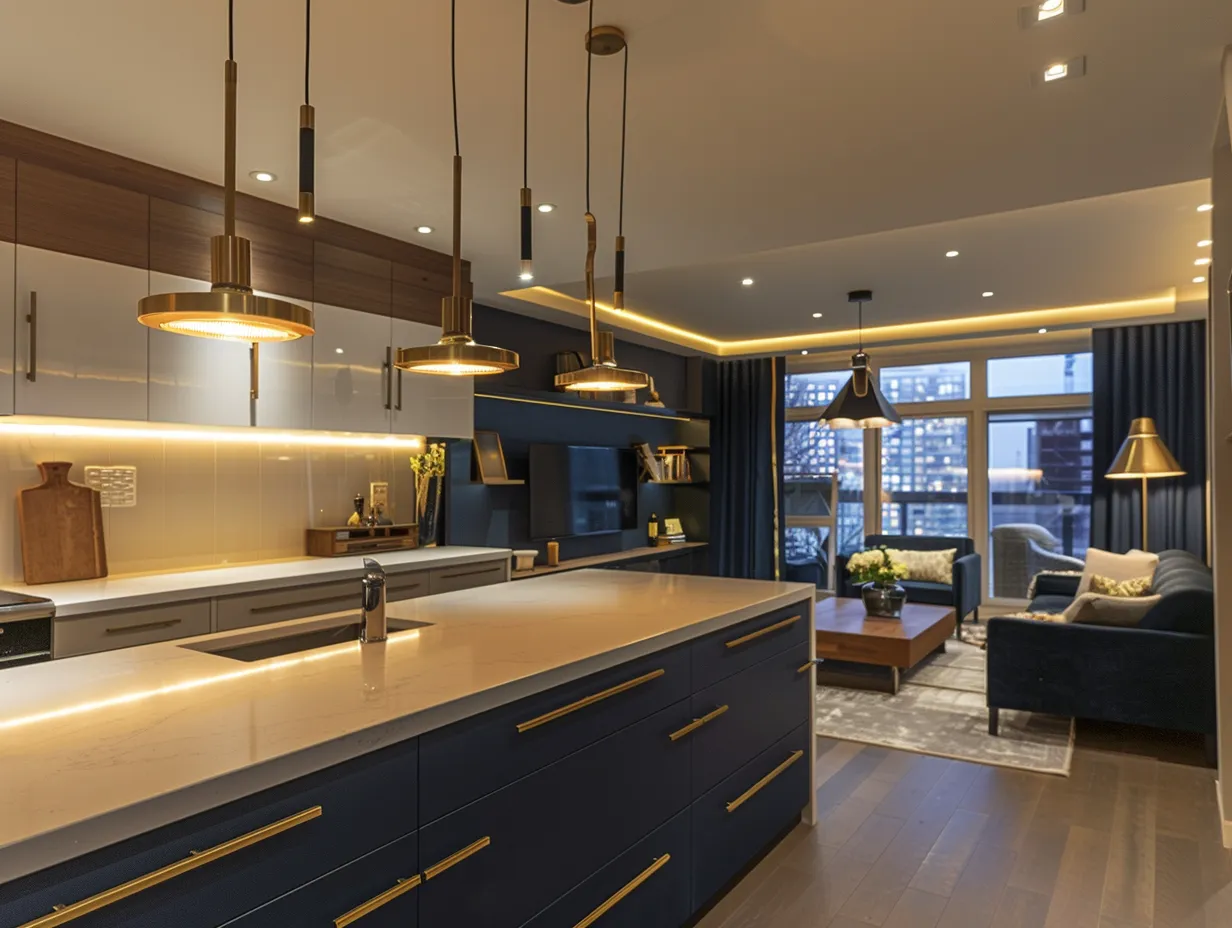
Coastal contemporary kitchens with blue cabinets live or die by the LRV — light reflectance value — of the color chosen. Benjamin Moore Hale Navy (HC-154) has an LRV of 8.36, which works beautifully on an island that gets direct sunlight but turns heavy and cave-like on upper cabinets in a north-facing kitchen. A gallon of Benjamin Moore Advance Interior Paint in satin retails for $35.99–$88.99, depending on retailer — the right finish for cabinets, since it levels like an alkyd but cleans up with water.
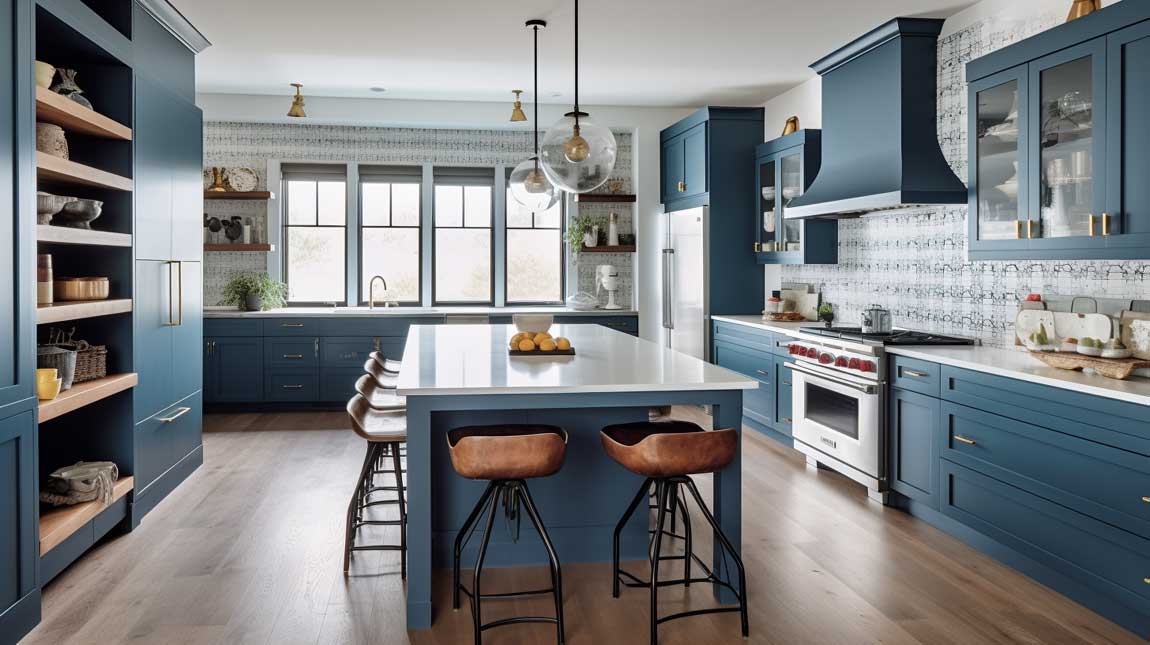

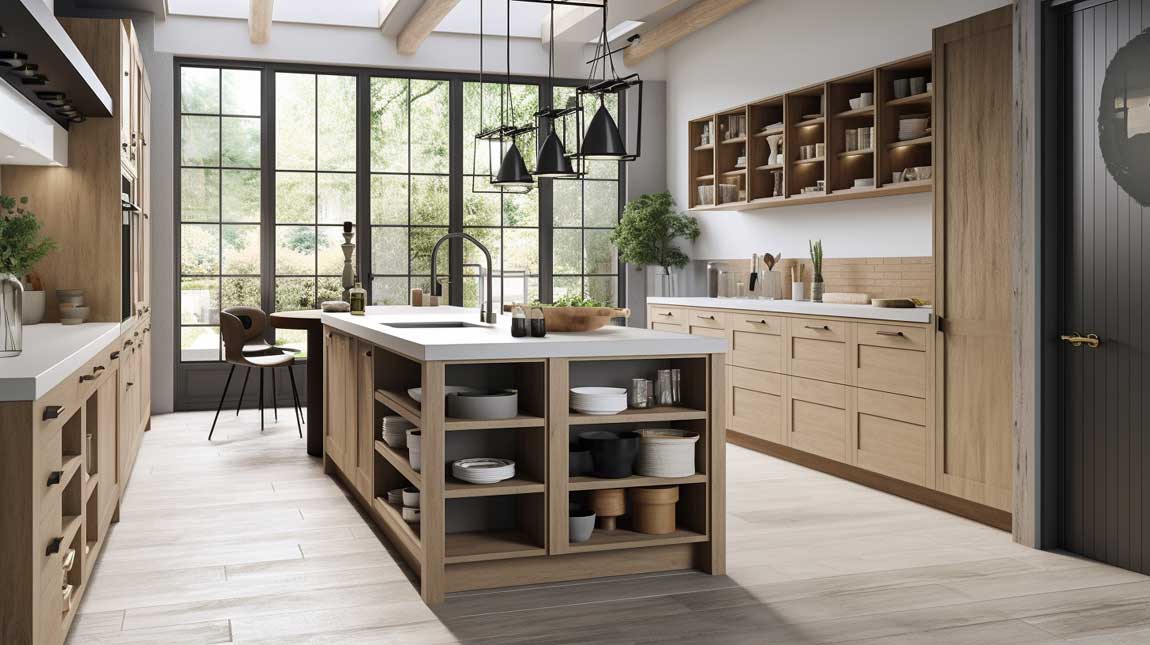
Open shelving paired with blue lower cabinets is one of the most practical moves in this look. The exposed shelves visually lighten the cabinet mass while giving you a display layer for textural objects — linen dish towels, matte ceramic vessels, sea-glass-toned pitchers — that carry the coastal theme without requiring any nautical kitsch. The white countertop above dark cabinets acts like a waterline: it resets the eye and keeps the lower half from dragging the room down. Avoid mixing cool-toned hardware (chrome, stainless) with warm-toned blue cabinets — the combination reads as unresolved rather than deliberate. Warm brass or unlacquered brass hardware bridges navy blue and natural wood flooring in a way chrome cannot. For more options across the blue cabinet spectrum, see modern navy blue kitchen cabinet ideas.
Do not paint all four walls, the ceiling, and every cabinet the same shade of blue in a coastal kitchen. The goal is a specific lightness and contrast — not a monochromatic immersion experience. Deep, saturated blue on every surface makes the kitchen feel smaller and darker; the coastal effect depends on the blue reading against a backdrop of white, light wood, or natural stone. Pick one surface as the statement: lower cabinets, the island, or a single accent wall behind open shelving. Everything else stays light.
Neutral Coastal Kitchen Palettes Work Because Gray Holds the Sea’s Undertones
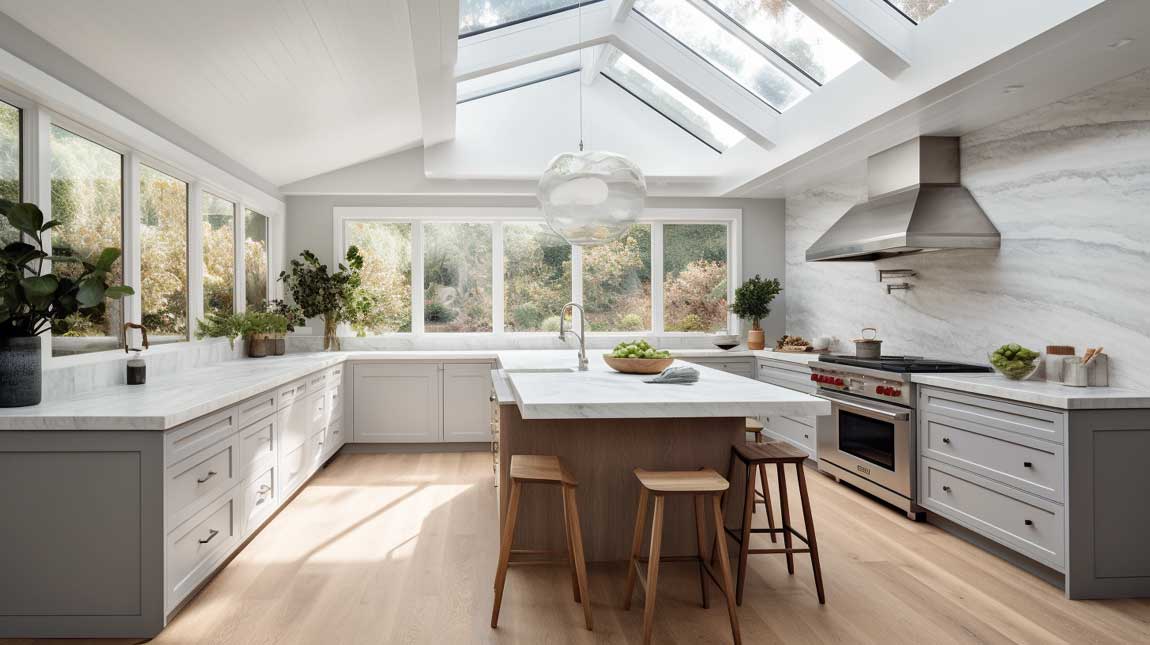
A neutral coastal kitchen built on white and gray succeeds when the gray carries a blue or green undertone — not a purple one, which reads as dated — because it mirrors the actual color of saltwater in overcast light. This is a mechanical reason, not a stylistic preference: your eye reads the undertone subconsciously and either confirms or breaks the coastal association. Coastal kitchen designs in this palette are the most forgiving for dark or landlocked rooms because the lightness does the heavy lifting without requiring a water view.

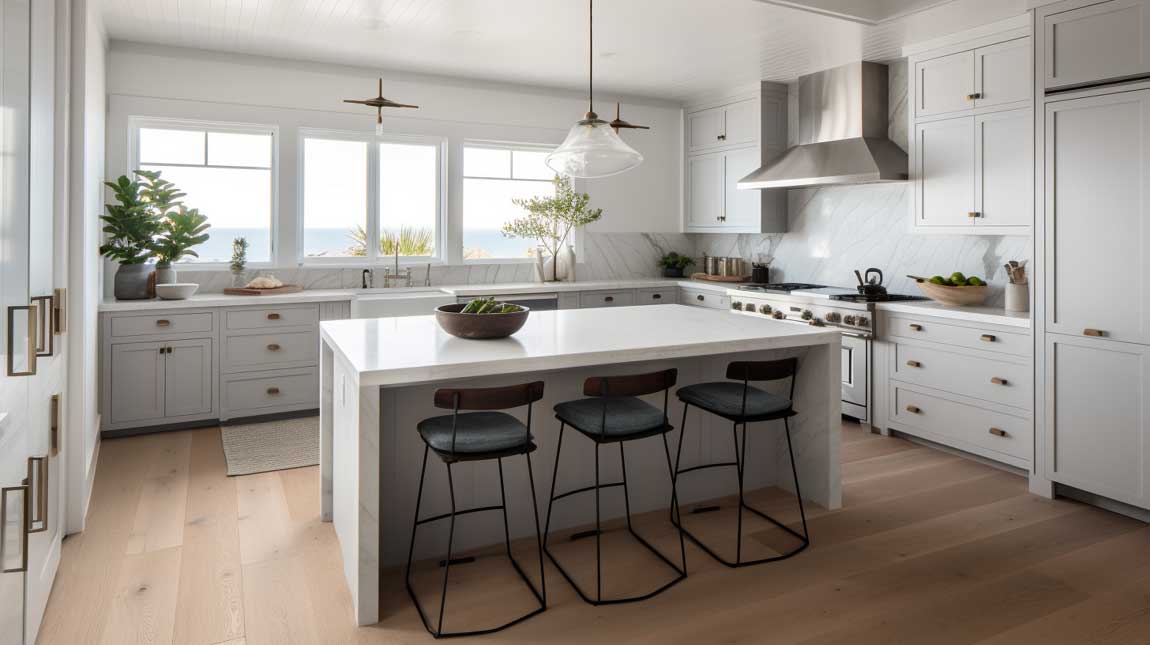
Quartz countertops are the practical choice here, running $50–$150 per square foot installed — the non-porous surface resists the cooking oils and moisture that a beach-house kitchen sees more of than an inland one. Gray subway tile backsplash in a handmade glaze — rather than a factory-uniform tile — adds the subtle surface variation that makes the room feel less like a showroom and more like a house someone actually lives in. Does the gray read warmer in artificial light than in daylight? Check the tile against your cabinetry at both times of day before committing — gray tile with a pink cast under LED lighting is a common and expensive mistake. Stainless steel appliances work here precisely because they reflect whatever color is around them, borrowing the gray and white palette rather than imposing their own.
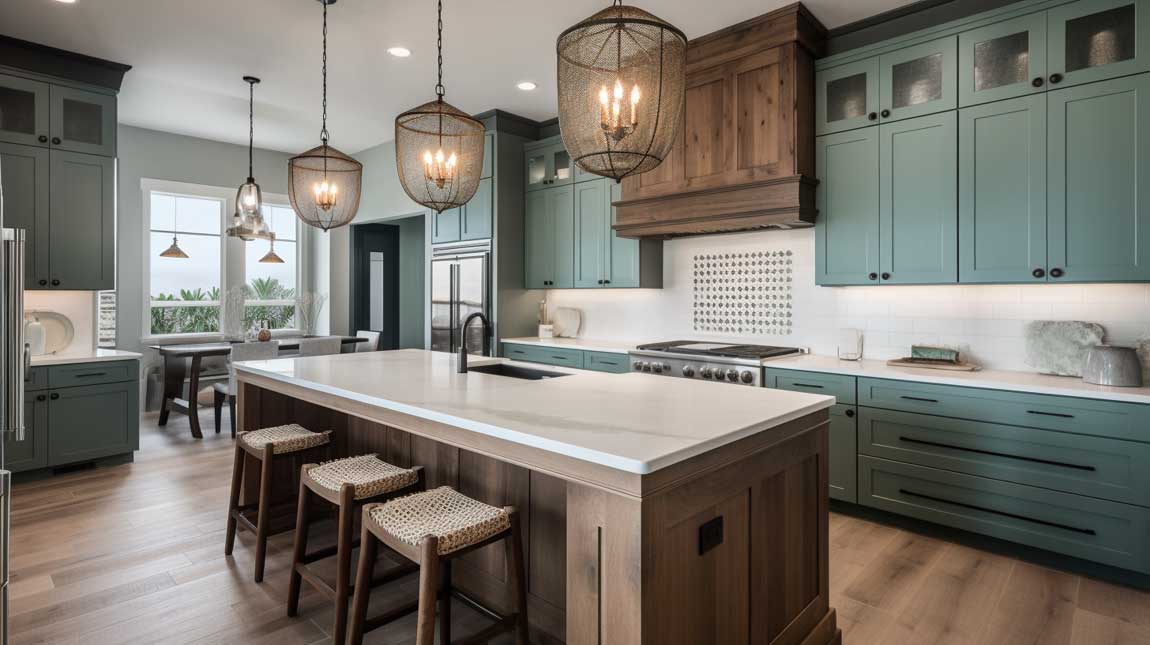
Rattan, Exposed Beams, and the Modern Beach Kitchen Texture Stack
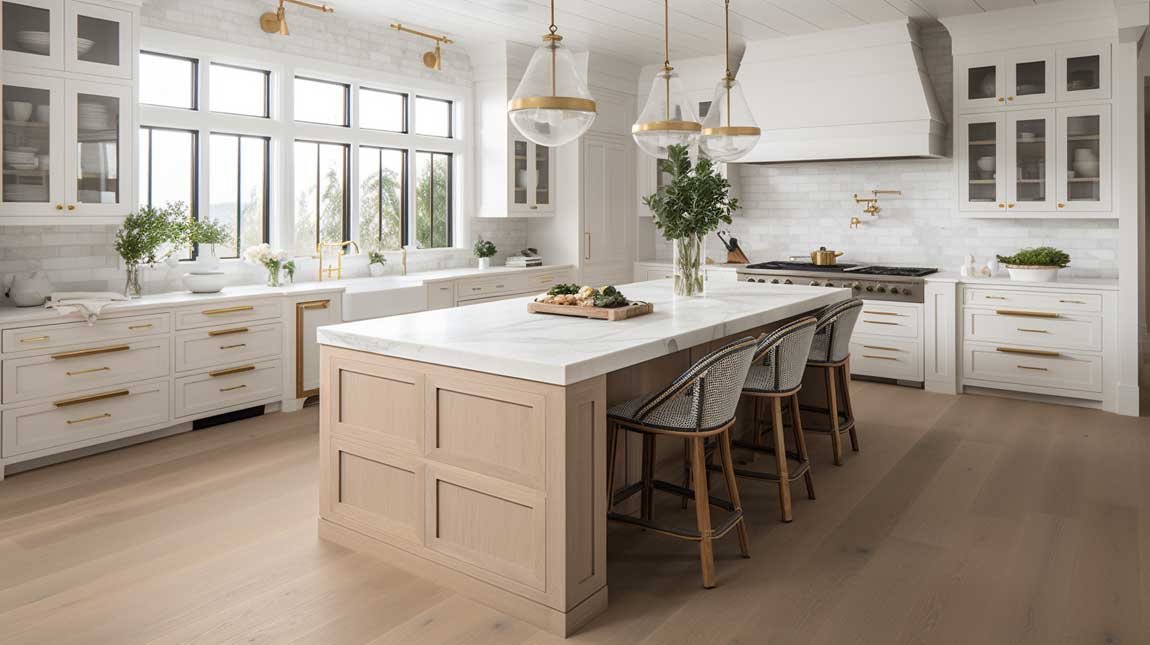
Modern beach house kitchen design at its most resolved layers at least three distinct textures: something woven (rattan barstools or pendant shades), something raw and structural (exposed wood beams or reclaimed ceiling planks), and something smooth and contemporary (flat-panel cabinetry or polished quartz). Take away any one of the three and the space tips — either too rustic, too beachy, or too modern. The texture stack is what interior designers call the “grip” that keeps all the coastal signals coherent.

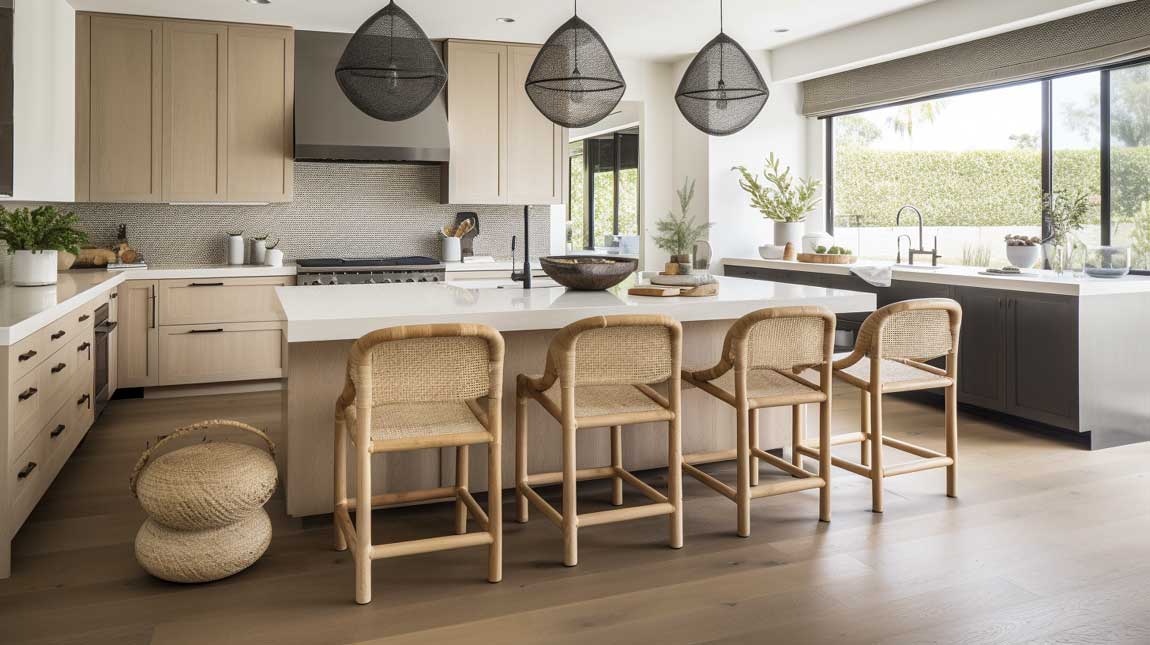
Rattan pendant lights for kitchen islands run $160–$230 from retailers like Lamppo and lighting-forest; the Home Depot carries a brass-ringed rattan drum pendant at $179.49. The price point is low enough that it is the single fastest swap for adding a coastal texture layer without touching the cabinets. Rattan barstools tend to feel less resolved than rattan pendants when used in isolation — they read as boho rather than coastal — so pair them with a warm wood seat or seat cushion in a performance fabric to ground the look. Do not use plastic-wicker outdoor chairs indoors as a substitute; the texture reads as porch furniture, which is not the same effect. What is the difference between rattan and wicker? Rattan is the material (a natural palm), wicker is the weaving technique — a rattan pendant is woven rattan, which is what you want.
Skylights and Ocean Views — When the Modern Coastal Kitchen Ideas Require the Room to Earn Its Light
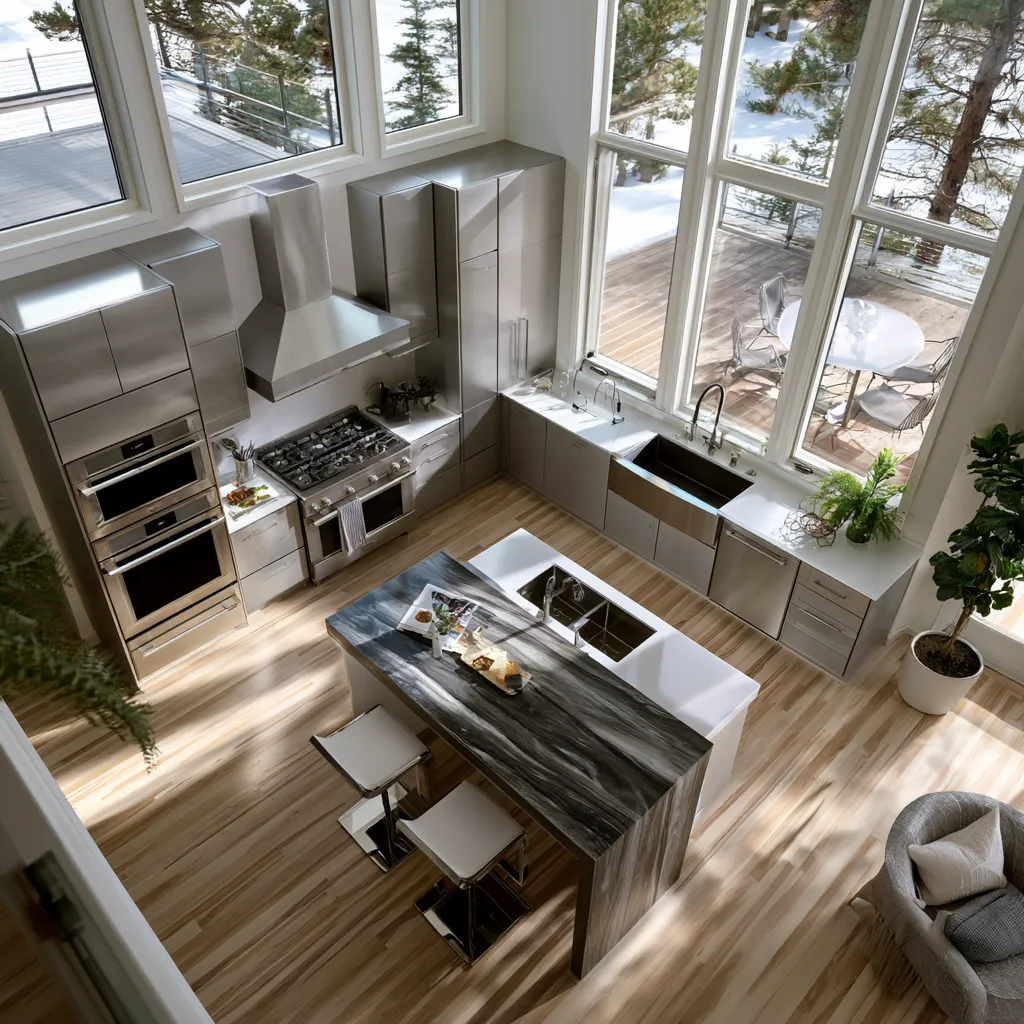
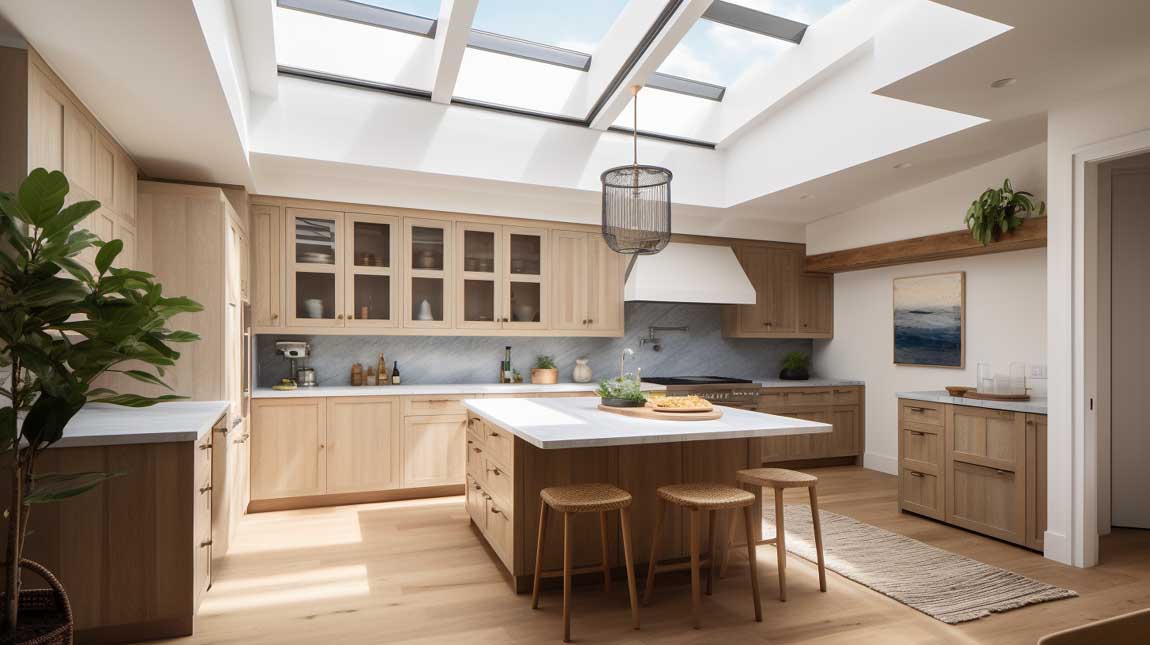
Modern coastal kitchen design depends on natural light in a way that most interior styles do not — the entire palette reads differently under artificial light, and the coastal effect collapses if the room feels dim. A vaulted ceiling with skylights is the structural solution when the kitchen sits in the interior of a plan without direct water views: skylights average $1,600–$4,200 installed, with vaulted ceilings making installation simpler because no light shaft needs to be built through attic space. For kitchens with an actual ocean or coastal view, the counter-intuitive move is to minimize window trim and let the frame disappear — the view should read as part of the room, not as a picture hanging on the wall.
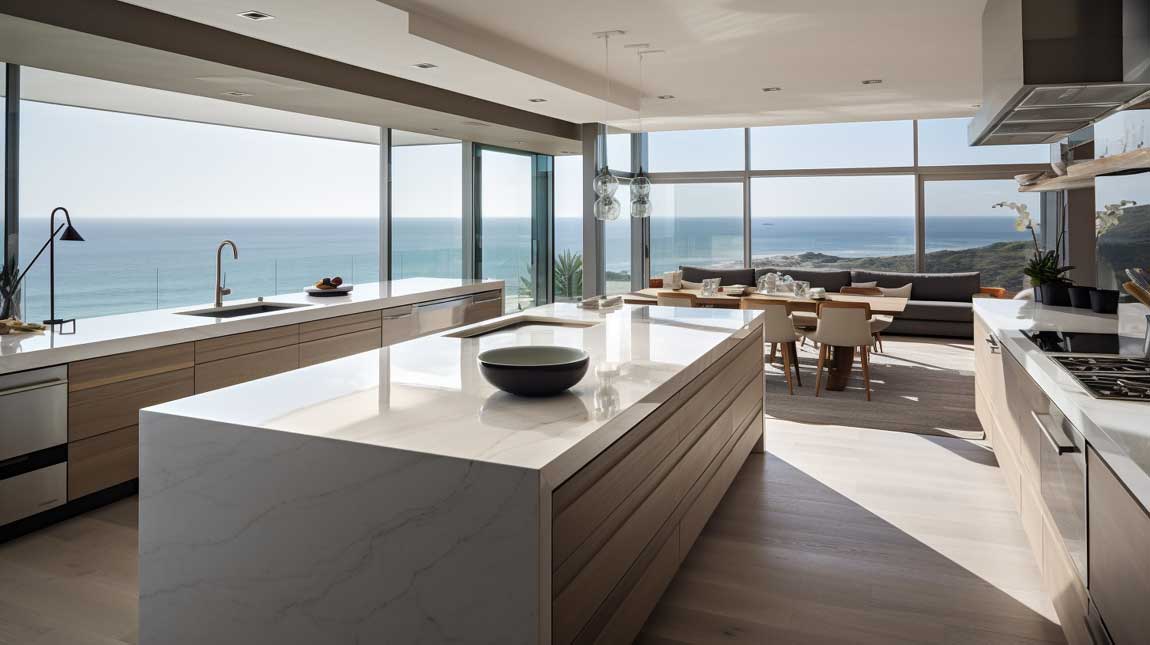

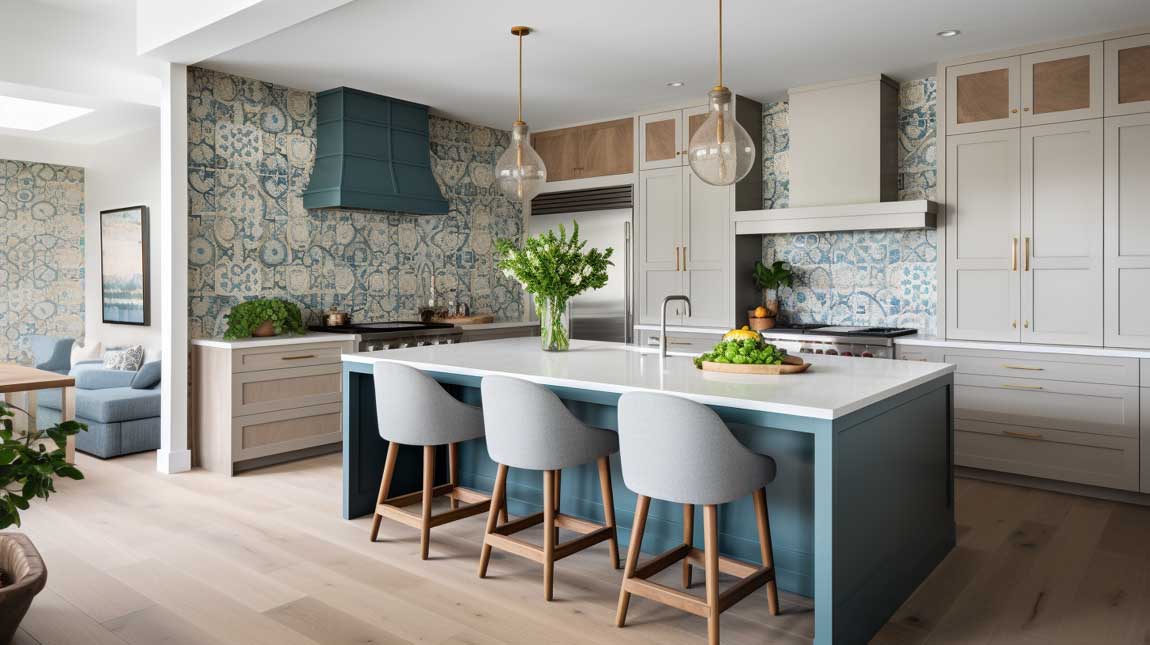
A statement backsplash earns its place in a light-filled coastal kitchen because it has competition — the view, the ceiling height, the island mass. A patterned tile in a sand, wave, or organic motif signals coastal without hitting anyone over the head with anchors or starfish. Mixed open and closed storage is the layout solution for kitchens that need to hold all the visual interest in one space: open shelves at eye level display the texture objects, closed cabinets below handle the practicalities. The common mistake is installing open shelving across an entire wall and then filling it with mismatched everyday dishes — the display layer needs curation or it works against the room. According to NKBA’s 2025 industry research, mixed-material schemes combining wood, stone, and metal are the dominant direction, with 84% of surveyed designers noting that lighting fixtures increasingly feature differing materials — a data point that validates the layered pendant approach over single-finish fixtures.


| Design Approach | Key Material Signal | Cost Anchor | What to Avoid |
|---|---|---|---|
| Shiplap Island Accent | Pine shiplap on island face | $2–$4/sq ft material | Wrapping all four walls |
| Blue Cabinet Coastal | Navy cabinet + white upper | $36–$89/gallon BM Advance | Chrome hardware with warm navy |
| Neutral White-Gray | Quartz counter + glazed subway tile | $50–$150/sq ft installed | Purple-toned gray; purple reads interior, not coastal |
| Rattan + Beam Texture Stack | Rattan pendant + exposed beam | $160–$230 rattan pendant | Rattan barstools without grounding element |
| Light-First Layout | Skylight or floor-to-ceiling window | $1,600–$4,200 skylight installed | Heavy window trim that breaks the view |
The NKBA’s kitchen design research confirms that natural material layering — wood with stone, matte with texture — is the defining direction for modern coastal kitchens. For a deeper look at how mixed materials, natural wood tones, and open kitchen planning intersect, the NKBA’s 2025 kitchen and bath trend overview covers how professionals are approaching exactly this combination of soft minimalism and tactile finish in real projects.
The Bottom Line
Modern Coastal Kitchens Are a Material Problem, Not a Color Problem
Blue paint and white cabinets get you to the starting line. What keeps the look from reading as a staged vacation rental is the combination of an organic texture (rattan or exposed beam), a natural stone or handmade-tile surface, and enough natural light to activate the palette.
Shiplap belongs on the island face or a single feature wall — not wrapped around every surface. Quartz countertops at $50–$150/sq ft installed earn their cost in a kitchen that will see beach-house use. Skylights at $1,600–$4,200 are the structural move for interior kitchens that lack a view.
Save this post — the section on shiplap placement and the rattan texture stack are the two decisions most people get wrong the first time.
Related Topics
FAQ
What makes a kitchen look coastal modern rather than just coastal?
What color cabinets work best for a modern coastal kitchen?
How much does it cost to add a coastal look to a kitchen without a full renovation?
What is the difference between coastal modern and coastal contemporary kitchen design?
What is modern coastal cuisine?
Does a neutral coastal kitchen without blue cabinets still read as coastal?
Complete guide
Every Modern Kitchen Design Idea Worth Stealing Right Now
Layout, cabinets, islands, materials, color, lighting — all in one place
Complete guide
Coastal Home Style Ideas That Actually Feel Like the Shore
Kitchens, bedrooms, bathrooms, exteriors, palettes, outdoor — all in one place