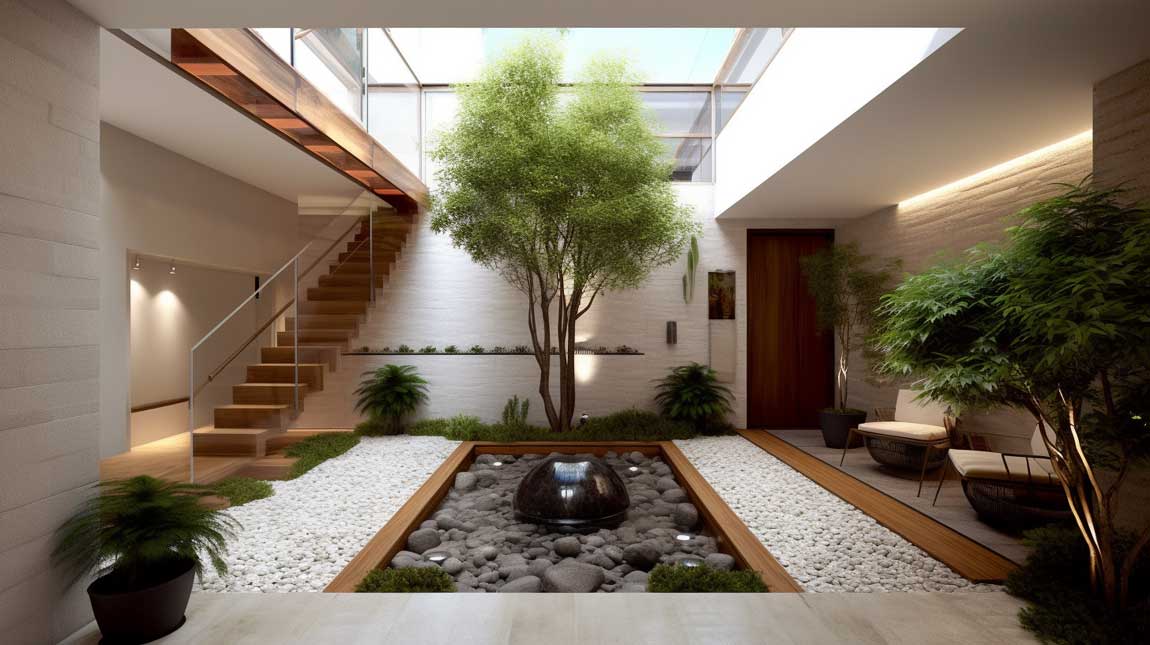
Small deck spaces work best when you build up, fold away and light outward instead of filling the floor. A 48-square-foot platform can typically hold a bistro set for two or a compact loveseat, and the rest of the comfort comes from walls, railings and the evening glow. Does a tiny deck really feel bigger with these tricks? Yes, because the eye reads height, clear floor and reflected light as extra room. Start by measuring the floor and the one wall or railing that gets the most sun.
Three moves do most of the work: a vertical herb or flower wall, furniture that folds or hides storage, and warm LED lighting paired with an outdoor mirror. LED string lights use roughly 80% less energy than incandescent strands, and most herbs need 6 or more hours of direct sun, so placement matters more than budget. Every upgrade also adds weight, and building codes typically design a residential deck for a 40 psf live load. Plan the heavy pieces first and the decorative ones last.
- Herbs need 6+ hours of direct sun and containers at least 6–12 inches deep.
- A round bistro table of 24–28 inches seats two; armless folding chairs run 17–19 inches wide vs about 24 for standard chairs.
- Outdoors, 24 inches behind a chair is enough, compared with 36 inches indoors.
- LED string lights last 25,000+ hours vs roughly 1,000 for incandescent.
- Acrylic mirrors are about 20 times stronger than glass and cost around $30–$80 per panel.
- Code minimum for decks is a 40 psf live load, and a cubic foot of water weighs just over 62 lb.
- Warm white at 2700K–3000K keeps an evening deck soft rather than clinical.
Herb Walls Turn Small Deck Spaces Into Green Rooms
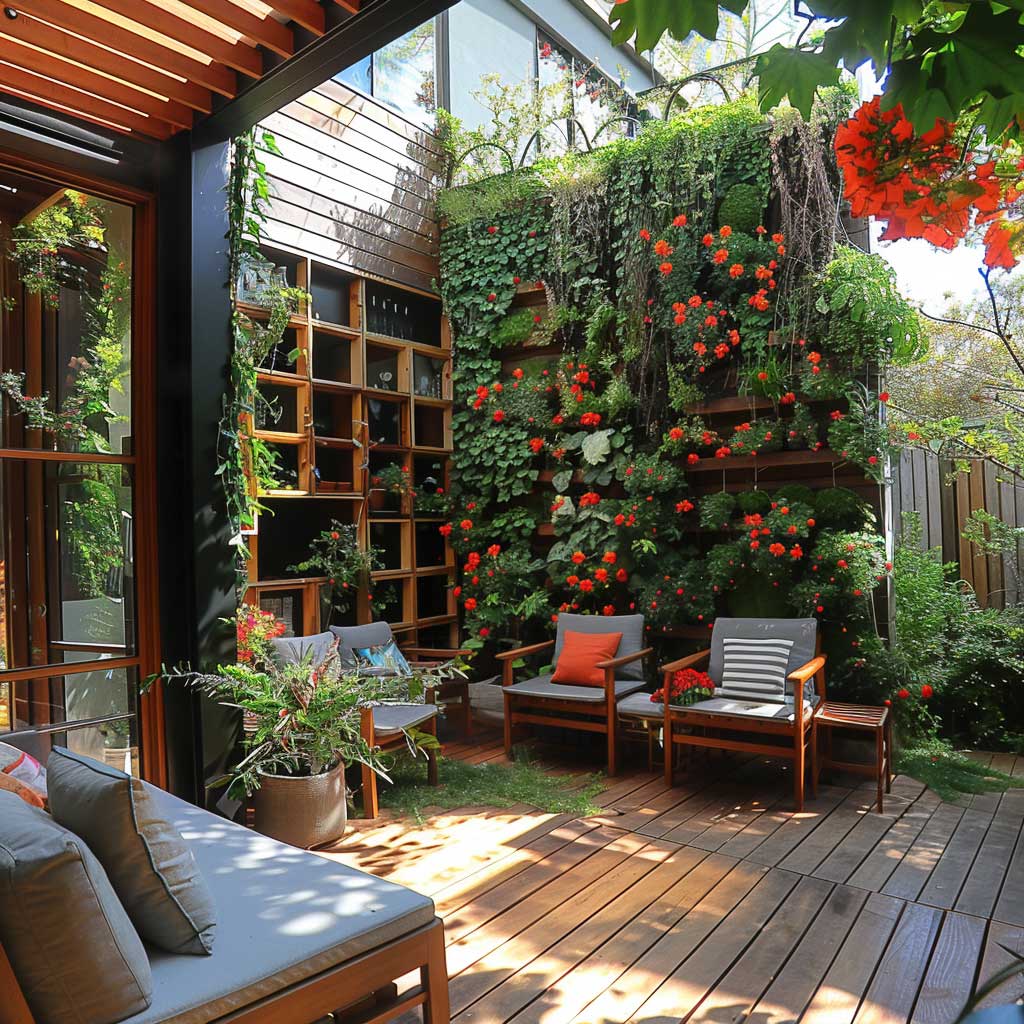


A vertical garden deck design is the fastest way to add planting to small deck spaces without giving up a single square foot of floor. Trellises, wall pockets and railing boxes stack plants the way a bookcase stacks books, so the eye travels upward instead of across a cramped platform. Most herbs need 6 or more hours of direct sun, which means the sunniest wall or railing should carry the edible layer. Keep shade-tolerant ferns and ivy for the darker side rather than forcing basil into a corner that sees 3 hours of light.
Herb walls are also the most photogenic option, which is why herbal deck photos so often show basil, thyme and rosemary in neat tiers. Most herbs grow well in containers at least 6–12 inches deep, while a planter about 12 inches wide can hold several varieties together. Does a shallow wall pocket work for herbs? It works for thyme and chives for a season, but rosemary and sage want the deeper box. Group woody, drought-tolerant herbs in one planter and thirsty basil in another.
Container material changes upkeep more than style does. Large pots hold more soil and dry out slower, and a breakdown of outdoor patio planters and their materials for freeze-thaw climates notes that composite resin weighs about 60% less than concrete. On a deck, lighter beats heavier almost every time. Pick composite or fiberglass for any planter you cannot lift alone.
- Full sun, 6+ hours: rosemary, thyme, sage and oregano in one shared box.
- Part sun, under 6 hours: parsley, chives and leafy greens; mint always in its own pot.
- Shade side: ferns, ivy and heuchera for texture, not for the kitchen.
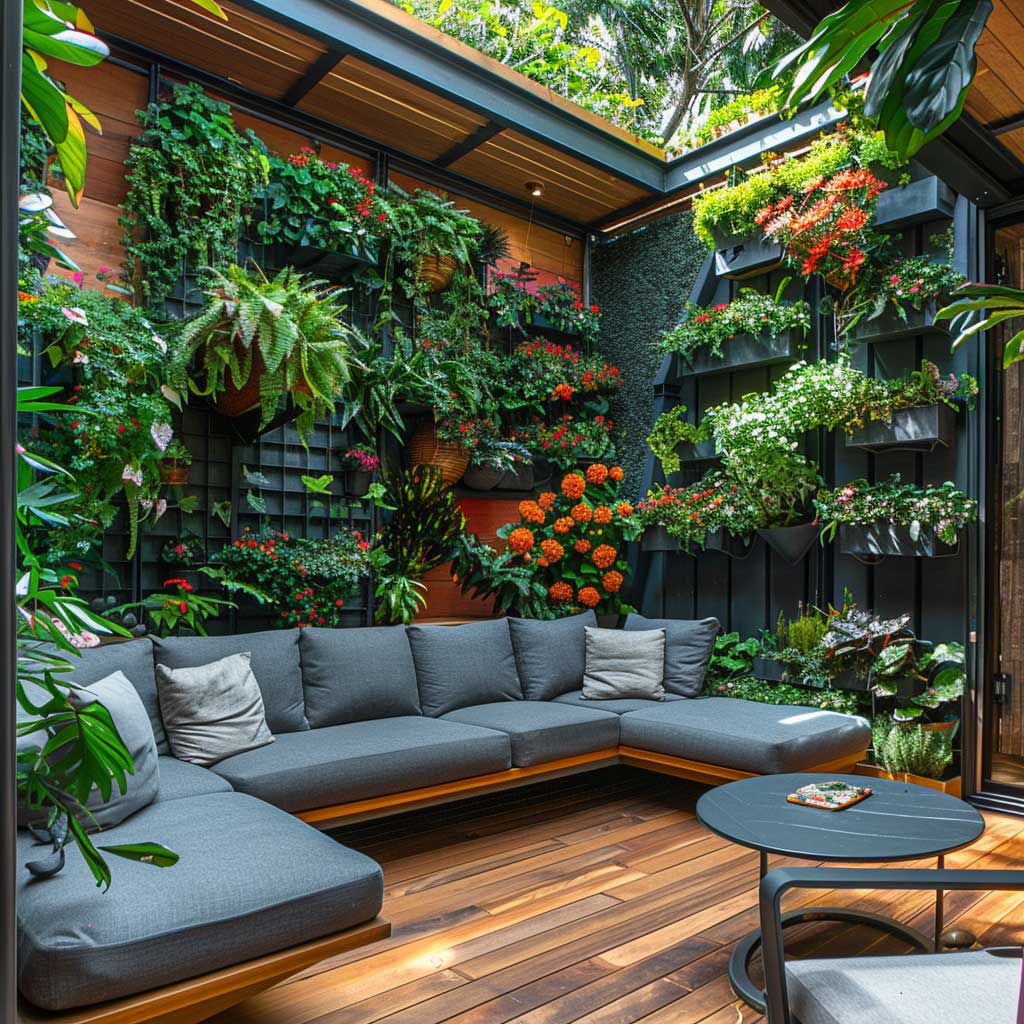


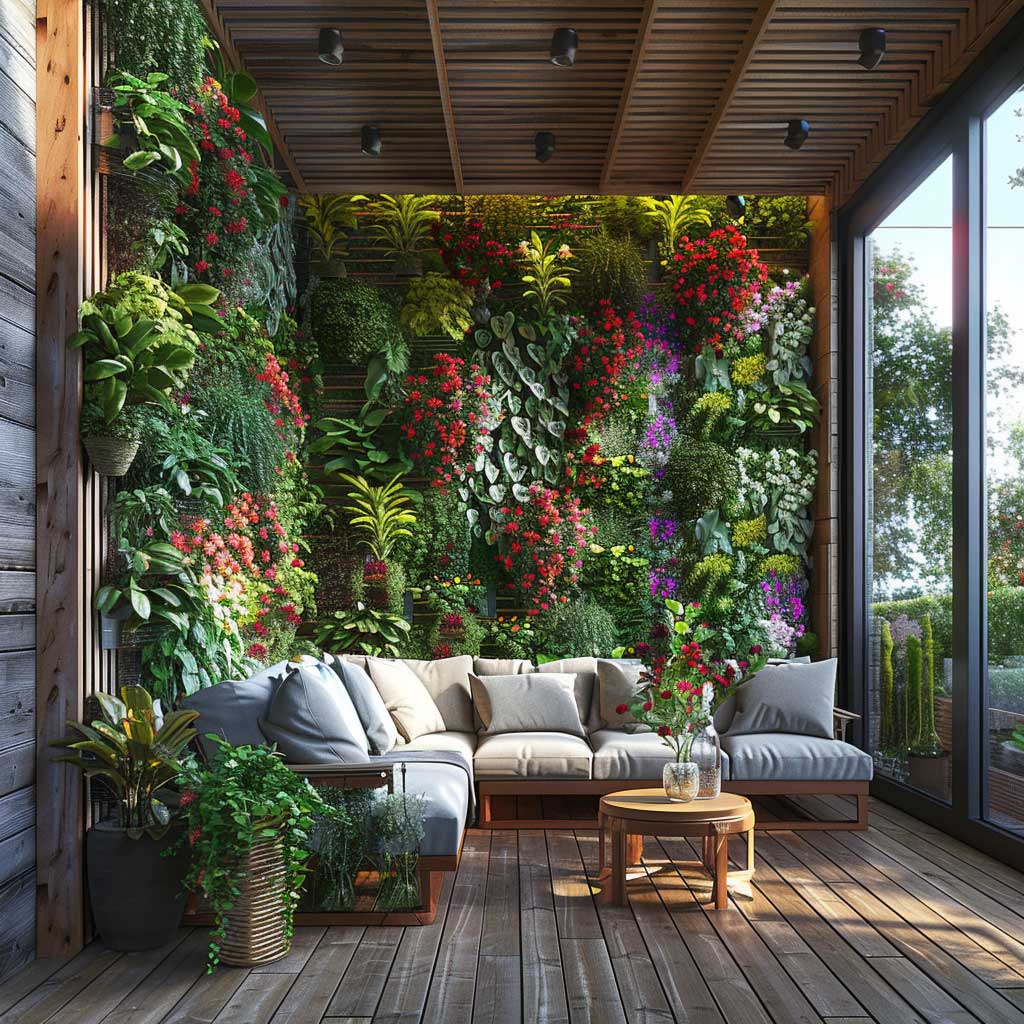
Weight is the hidden cost of any garden on deck boards. Building codes typically require residential decks to carry a 40 psf live load, and the Decks.com overview of residential psf deck requirements notes that assembly spaces such as restaurants are rated at 100 psf. Wet soil, water and heavy pots all count against that residential margin. Mount wall planters on the house wall or on posts, never on a thin rail cap.
Don’t Do This: Don’t cluster a stock tank, a water feature or several 36-inch planters in one corner of a small deck. A cubic foot of water weighs just over 62 pounds, so even shallow standing water passes the 40 psf design load quickly, and a large planter can top 80 pounds once full. Spread heavy containers along the beam line and ask a builder before adding anything that holds water.
Fold-Away Furniture Frees the Floor on a Compact Deck
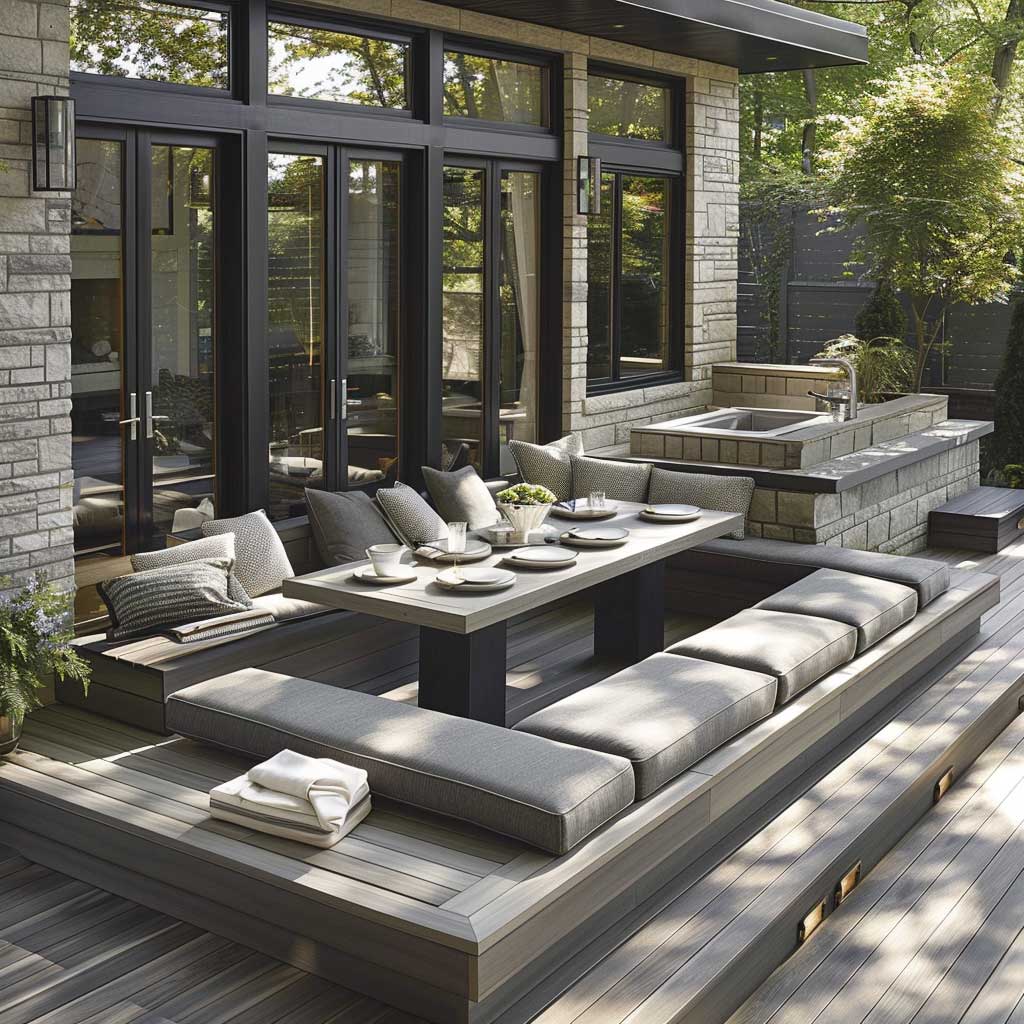


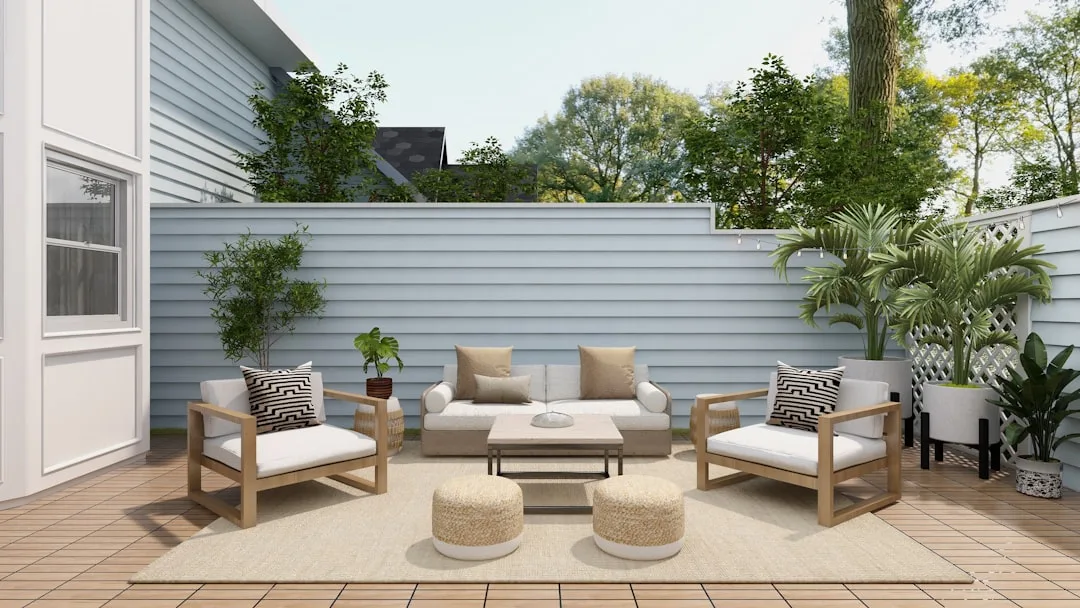
Multifunctional furniture for outdoor decks earns its place by doing two jobs in one footprint, and on a compact deck that means seats that store and tables that fold. A three-piece bistro set with a table around 24 inches wide is usually the right scale for a small platform. A round 24–28 inch top seats two comfortably and three at a push, while a 36-inch table belongs on a larger deck. Measure your floor and subtract the walkway before you fall for a set online.
Chair width is where small space decks win or lose a seat. Armless folding chairs run about 17–19 inches wide compared with roughly 24 inches for a standard outdoor dining chair, which frees close to a foot between two seats. Outdoors, 24 inches behind a chair is usually enough, compared with the 36 inches designers allow indoors. Choose armless pieces and keep a clear 24-inch path to any gate or stair.
Storage benches work like a car trunk: the seat is the lid, and cushions, hoses and herb tools disappear underneath. A bench along one railing replaces two chairs and a separate deck box, which saves both floor and visual clutter. Is a corner bench better than loose chairs on a narrow deck? Usually yes, because seating along two walls holds more people in less depth. Avoid deep sofas that need a coffee table parked in front of them.
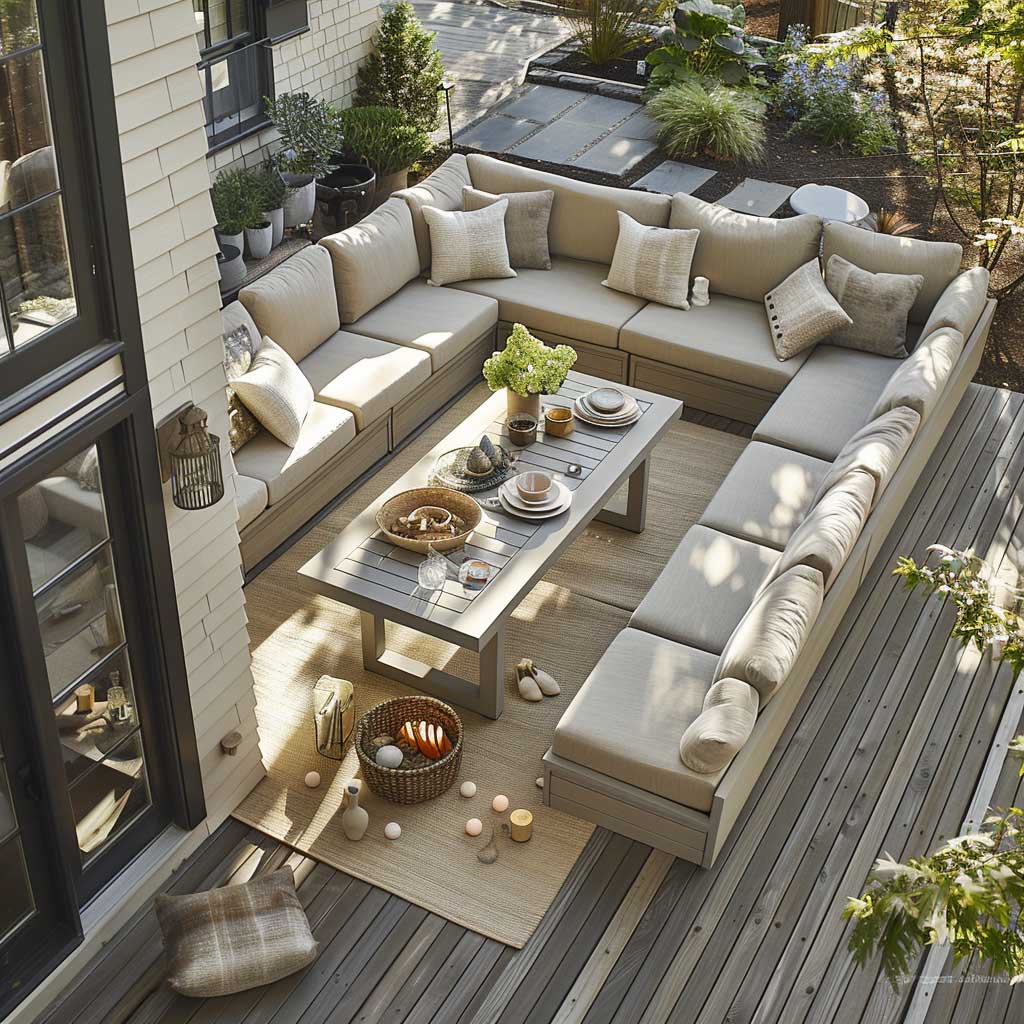


Style follows the same logic as an indoor room. A neutral frame in black aluminum, teak or gray wicker reads lighter than a busy pattern, and two or three cushions supply enough color for a small platform. A premium 24-inch folding table such as the Ethimo Flower weighs about 14.4 pounds and costs around $345, while mass-market folding bistro sets with two chairs often sell for roughly $90–$110. Spend more only on the piece you touch daily, which is usually the chairs.
Side tables under 18 inches across can replace a coffee table entirely and slide wherever a drink lands. Fold anything you use less than once a week and keep it inside the bench. A matching five-piece set looks tidy in the store but locks the deck into one layout for every occasion. Skip it and buy two or three pieces that move.
Light and Mirrors Stretch Small Space Decks After Dark
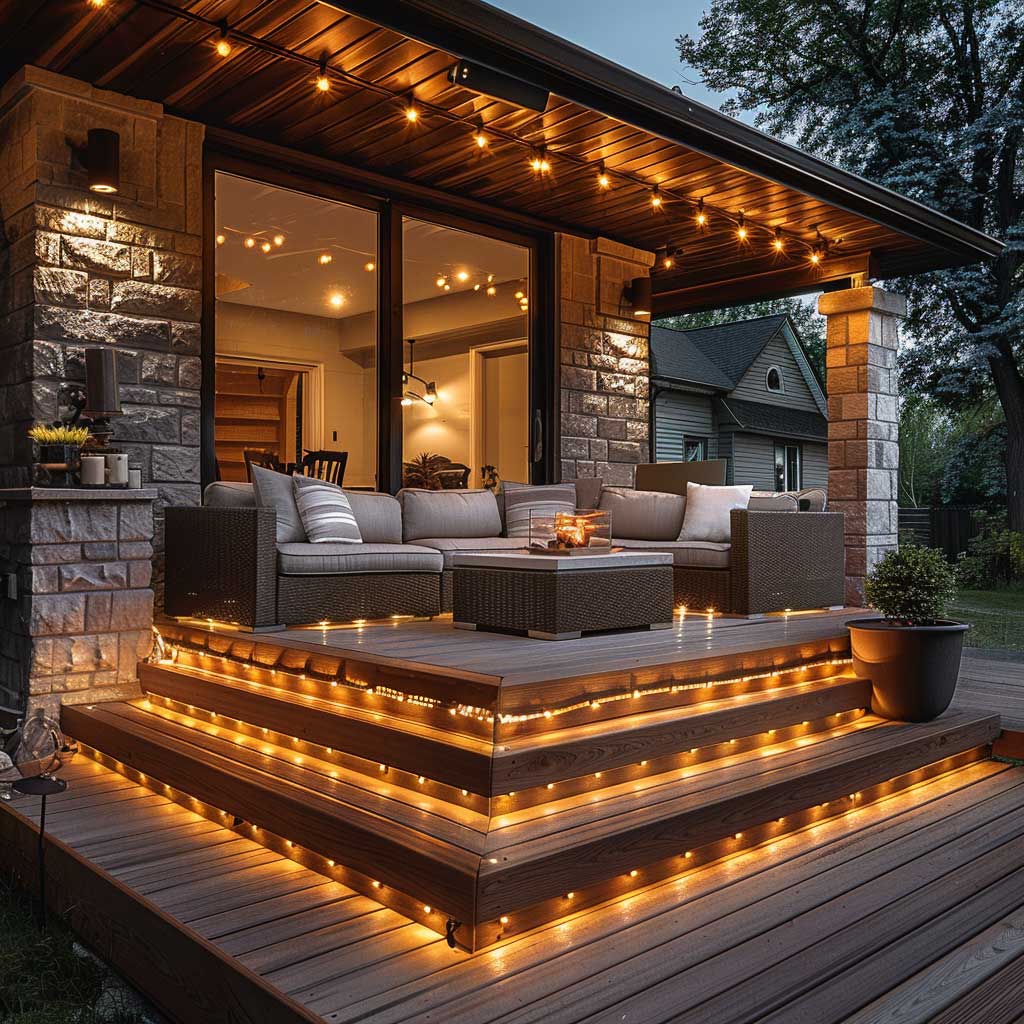
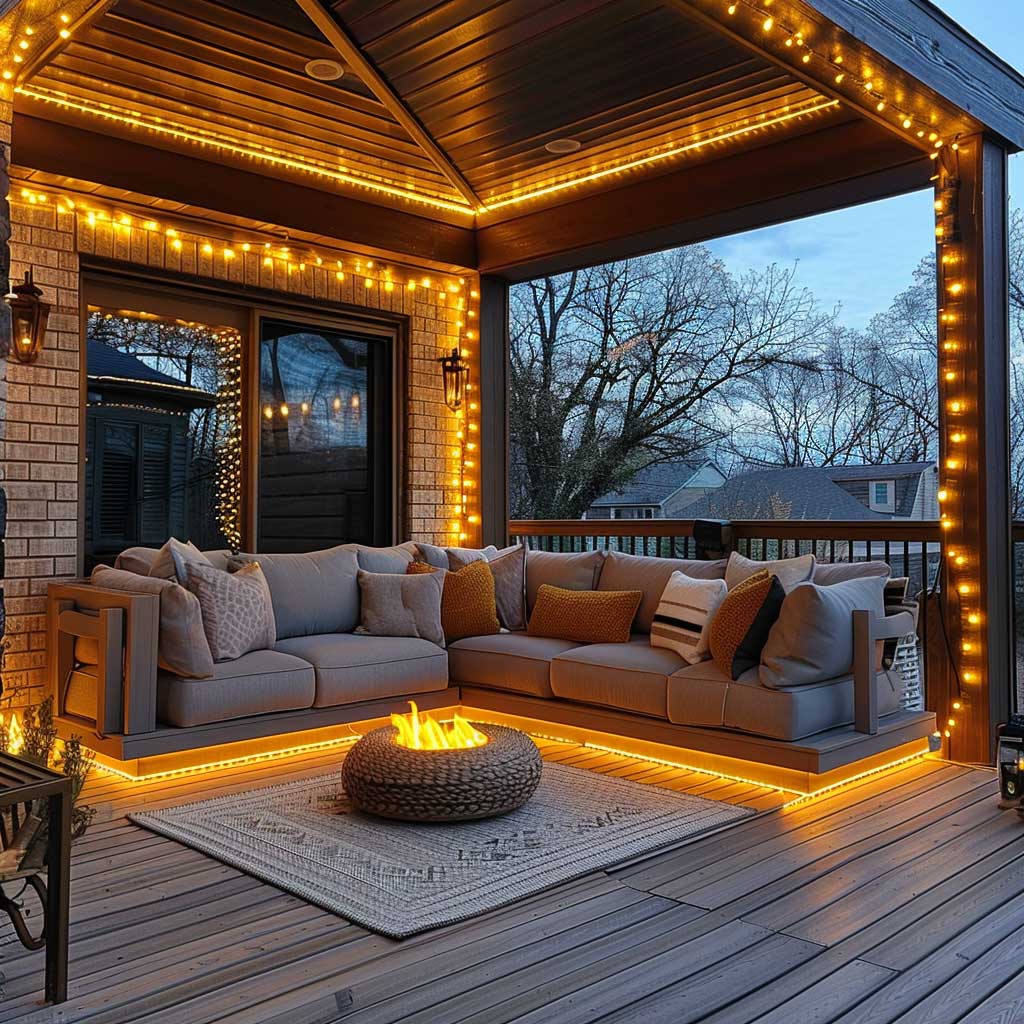
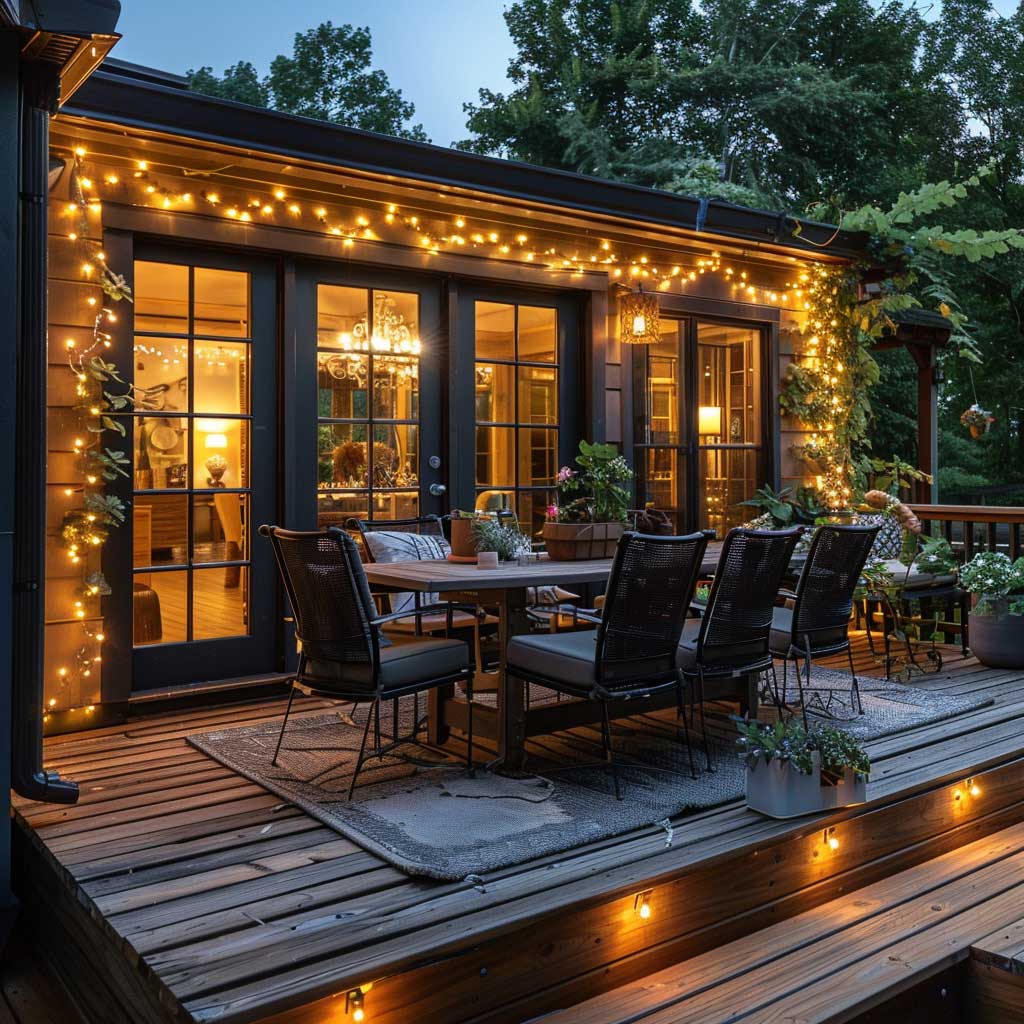

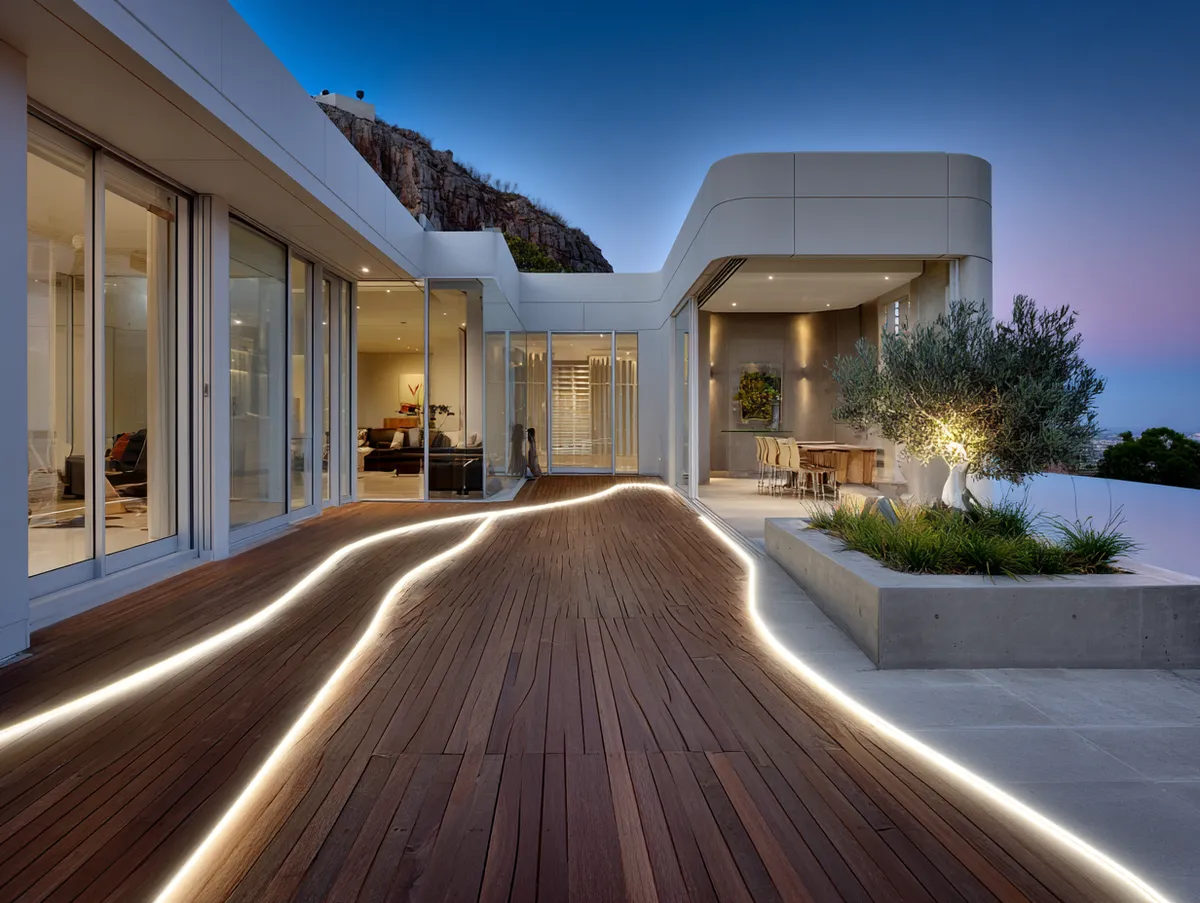
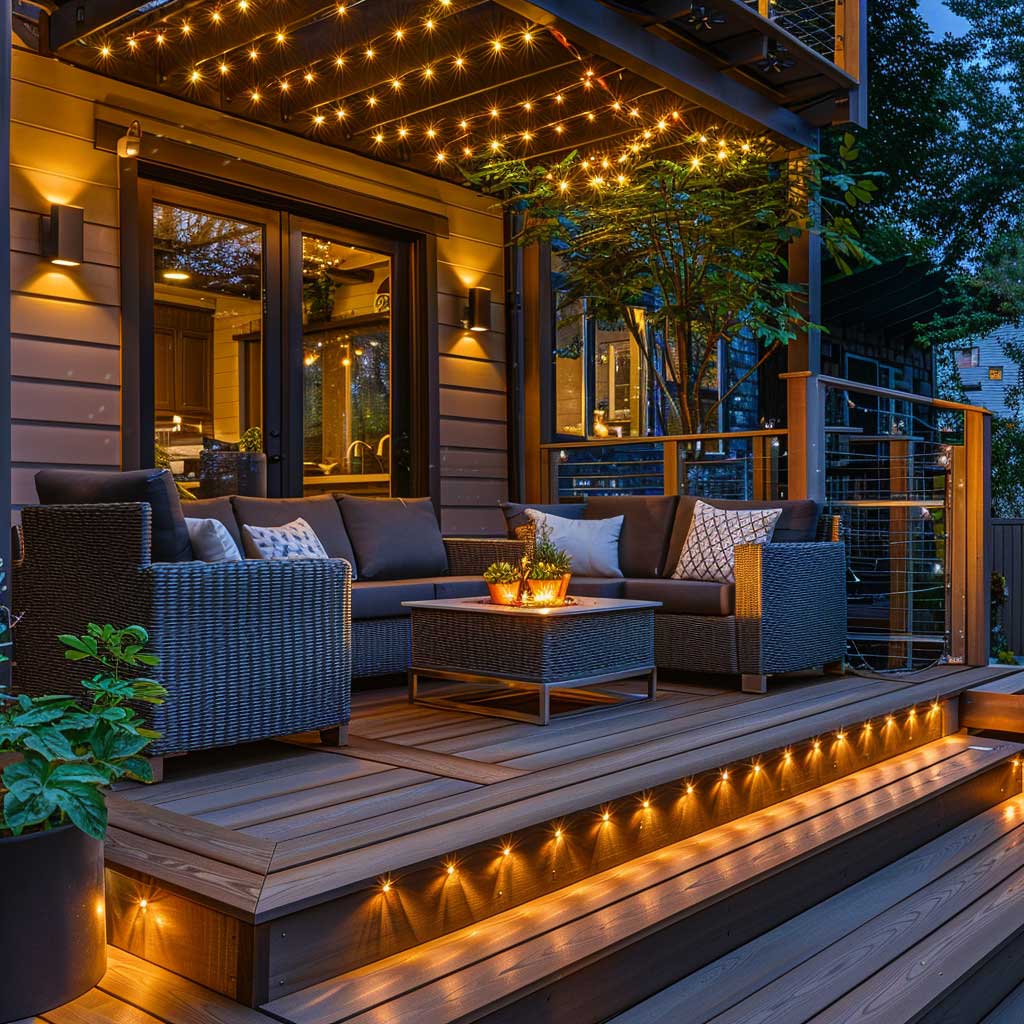
Innovative lighting and mirrors for small outdoor decks change how big the space feels, because the eye measures a room by how far light and reflection reach. A string run overhead works like a low café ceiling, defining the room without closing it in. LED strands use around 80% less energy than incandescent ones and can last 25,000 hours or more versus about 1,000. Hang the overhead string before you buy any extra lamp.
Color temperature decides whether the deck feels like a terrace or a parking lot. Warm white around 2700K–3000K flatters wood and plants, and the same range used for exterior garage lighting with fixture sizes, lumens and Kelvin works on a deck railing too. Does cool white ever suit a deck? Rarely, since 5000K bulbs turn cedar gray and make faces look tired. Match every bulb on the deck to one temperature.
Layering beats raw brightness. One overhead string, two or three low accents in the planters and a single lantern on the table give depth that one floodlight never can. LED strands can often be linked in runs of up to 20, compared with three to five for incandescent sets, so one outdoor outlet frequently covers the whole deck. Put the accents on a dusk sensor and leave the overhead string on a switch.
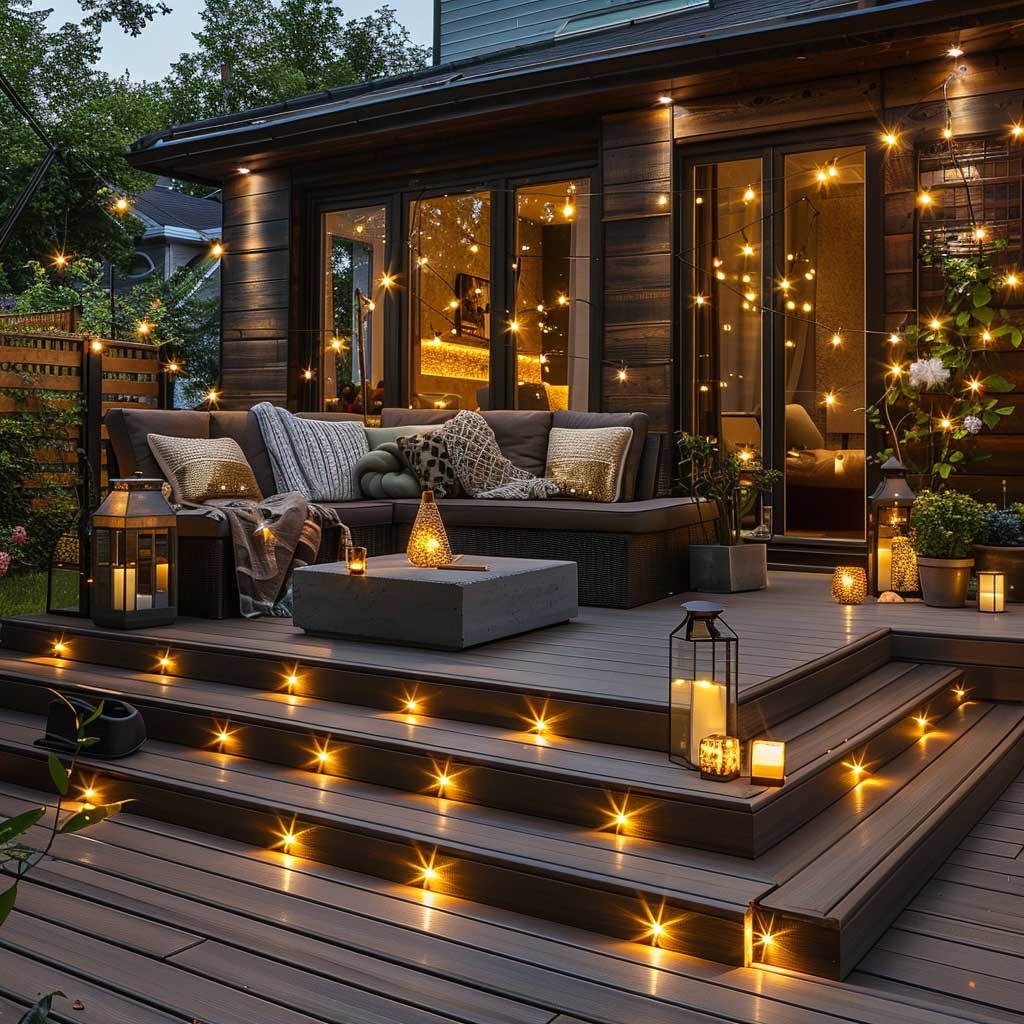
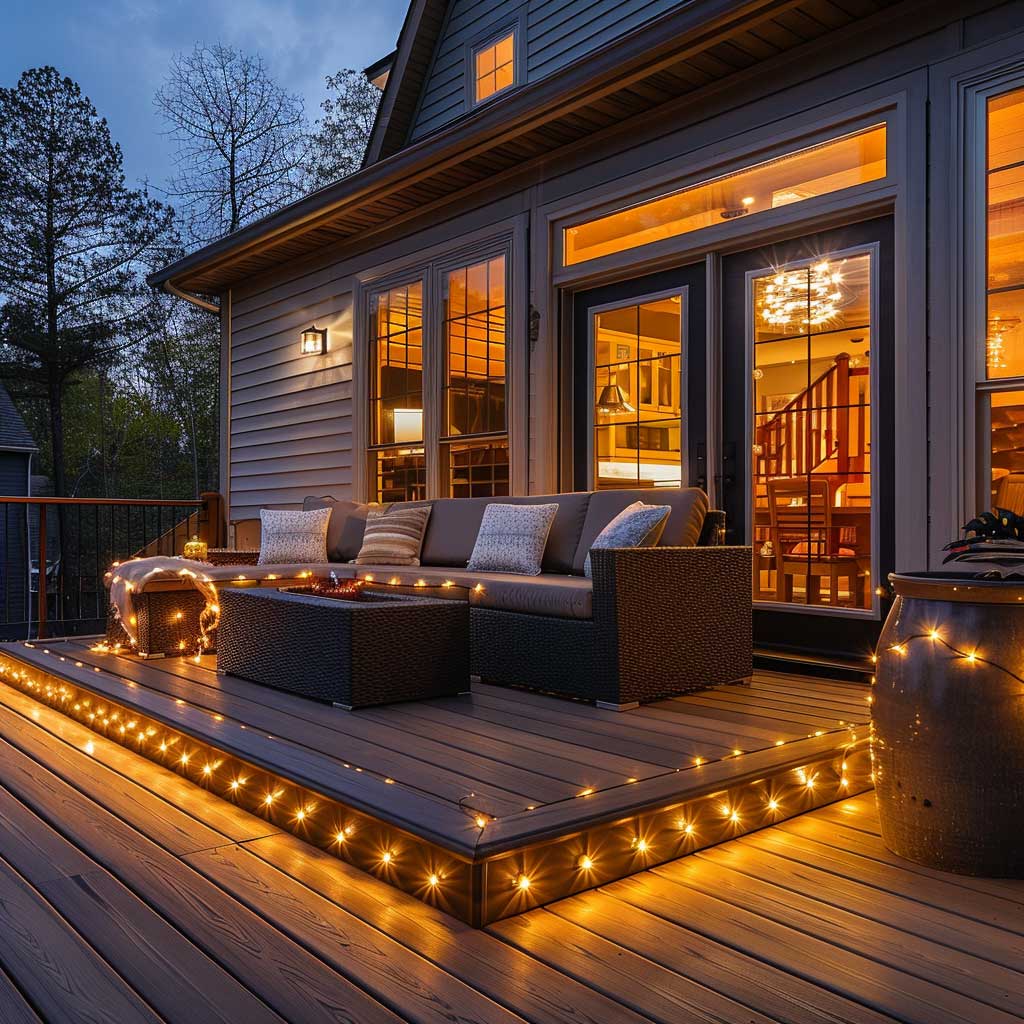
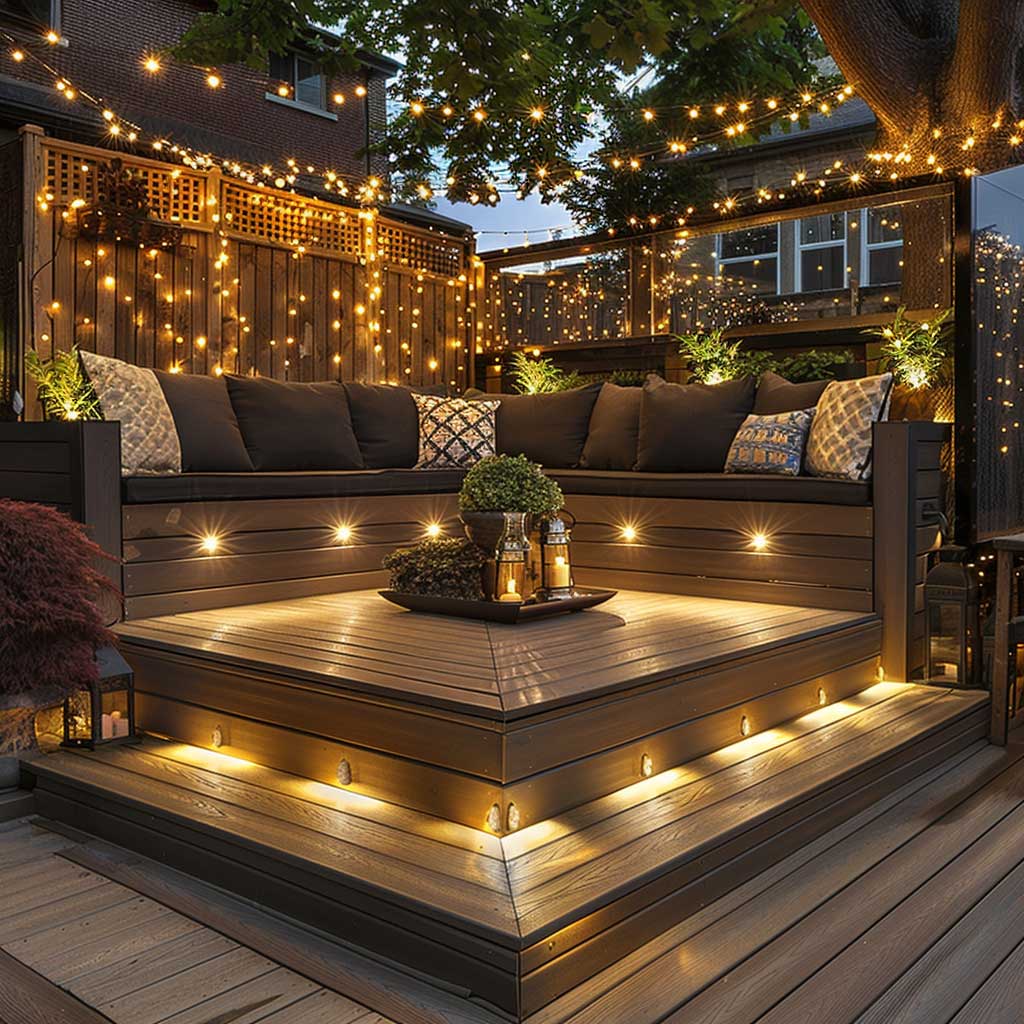
An outdoor mirror works like a window cut into a fence, doubling whatever greenery it faces. Acrylic panels are lighter than glass and about 20 times stronger, and typical panels run around $30–$80 each. Polycarbonate costs roughly twice as much as acrylic but is about 200 times stronger than glass, which suits windy, exposed decks. Pick acrylic for a sheltered wall and polycarbonate for an open railing.
Placement keeps a mirror safe and flattering. Reflections of open sky or dense foliage can confuse birds, and a panel catching harsh midday sun throws glare straight back at the seating. Is a bigger mirror always better? No, a smaller framed panel reads as an architectural feature and lowers the collision risk. Hang the center near eye level, around 60 inches, and soften the edges with climbing plants.
Weight, Cost and Care Compared for Small Deck Spaces
Comparing upgrades side by side shows that the lightest choices are often the cheapest, and lighter usually wins on a deck. LED strings and acrylic mirrors add almost no load, while big planters and anything holding water eat into the 40 psf margin fast. Furniture sits in the middle: a folding bistro table can weigh under 15 pounds, while a storage bench gets heavy once it is packed. Treat the budget like packing a carry-on and add the heavy items first.
Which upgrade gives the most change per dollar? Usually the LED string, since it lasts 25 times longer than incandescent strands and reshapes the deck every evening. The herb wall comes second because a few dollars of buckets can do the job of a $50 ceramic planter. Never buy a water feature before someone checks the framing.
| Upgrade | Typical cost | Key number | Load on deck | Upkeep |
|---|---|---|---|---|
| Vertical herb wall | $50+ per ceramic planter vs a few dollars per bucket | 6+ hours sun, 6–12 in deep | Medium (wet soil) | Water weekly, more in heat |
| Folding bistro set | About $90–$110 | 24–28 in table seats 2 | Low | Wipe down, store in winter |
| Premium folding table | About $345 | 23.6 in top, 14.4 lb | Very low | Minimal |
| Storage bench | Varies by material | Replaces 2 chairs + deck box | Medium when full | Check lid and hinges each season |
| LED string lights | Higher upfront than incandescent | 25,000+ hrs vs ~1,000 | Negligible | Check plugs and hooks each spring |
| Acrylic mirror | $30–$80 per panel | ~20× stronger than glass | Low | Soft cloth only, scratches easily |
| Polycarbonate mirror | ~2× acrylic price | ~200× stronger than glass | Low | Soft cloth only |
The Short List
Small deck spaces feel bigger when plants climb, furniture folds and light reaches the edges, and a 24-inch bistro set plus one warm LED string beats a five-piece dining set on a 48-square-foot deck every time.
Put herbs on the wall that gets 6 or more hours of sun, in containers at least 6–12 inches deep, and keep heavy planters close to posts and beams.
Choose armless folding chairs at 17–19 inches wide and leave 24 inches behind each seat so the deck still feels open with guests.
Finish with 2700K–3000K LED strings and one acrylic mirror facing greenery; at 25,000+ hours of life, the lights should outlast most of the furniture.