Scandinavian window treatments solve a specific problem: how to manage light in a home where every natural lumen is worth protecting. The short answer is to choose one clean-lined option per room — sheer curtains, roller shades, or wood blinds — and let the material do the talking. These three approaches cover the living room, bedroom, and kitchen without a single heavy valance or fussy layering trick.
Nordic interiors treat windows almost the way a photographer treats a lens: the goal is controlled exposure, not decoration. A sheer linen panel in white or oat diffuses direct sunlight while preserving the sense of an open room. A clean roller shade in soft gray blocks glare at midday without making the space feel dark. A slim wood blind in birch or oak simply adjusts the angle of light like a shutter on a camera. None of these options competes with furniture or wall color — they support the whole.
The three options below each fit a specific room type and a specific need. If you want to understand where Scandinavian interior style sits relative to other modern aesthetics, the comparison of mid century modern and Scandinavian design covers the key differences in detail. For window treatments specifically, read on.
- Sheer curtains in white or cream are the safest all-room choice — they filter light without blocking it.
- Roller shades in muted gray or sand suit bedrooms best; pair with a blackout liner for complete darkness.
- Wood blinds in light-toned birch, oak, or maple align naturally with Scandinavian kitchens.
- All three options work on the same principle: one material, one neutral color, minimal hardware.
- Avoid mixing patterns, textures, or metals within a single room — contrast kills the Nordic calm.
- Ready-made wood blinds typically run $30–$225 per window; custom cuts add roughly $30–$75 in labor per window.
Soft Sheer Curtains for the Scandinavian Living Room
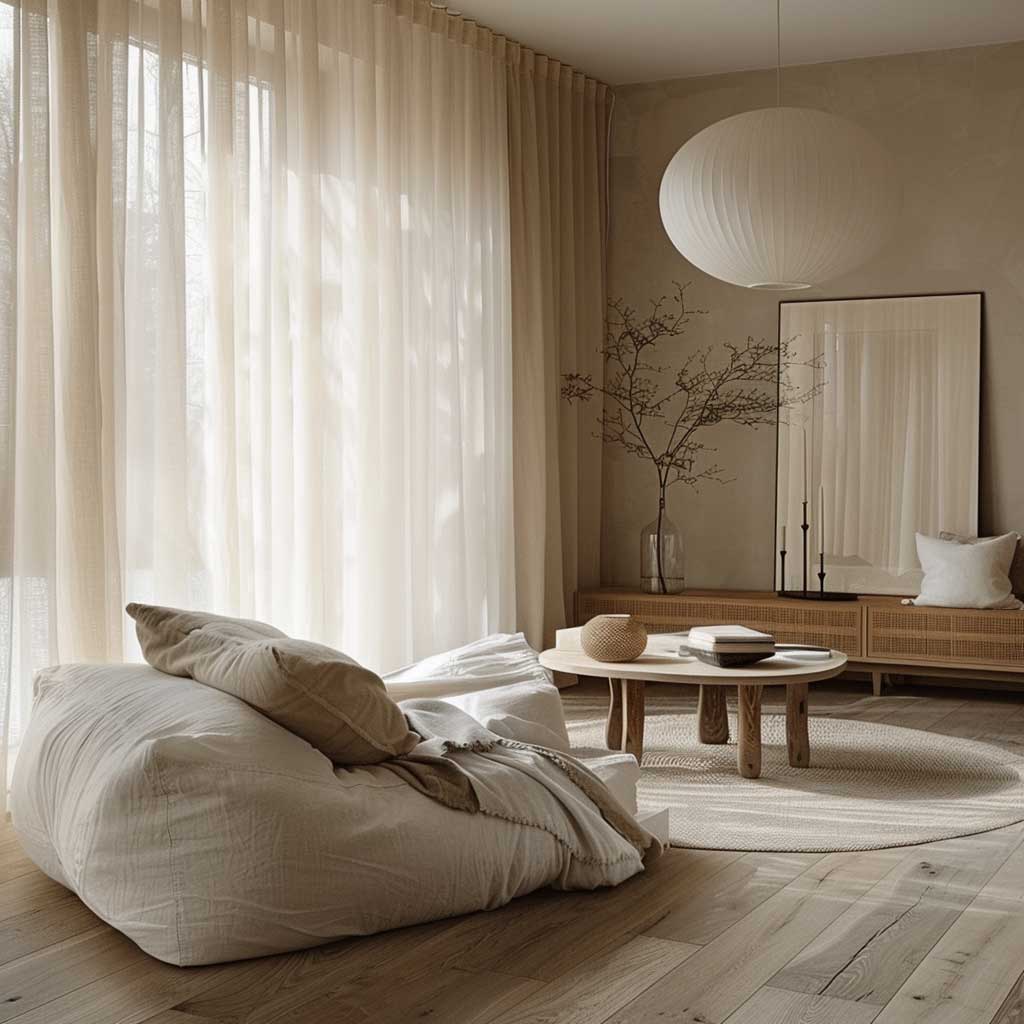
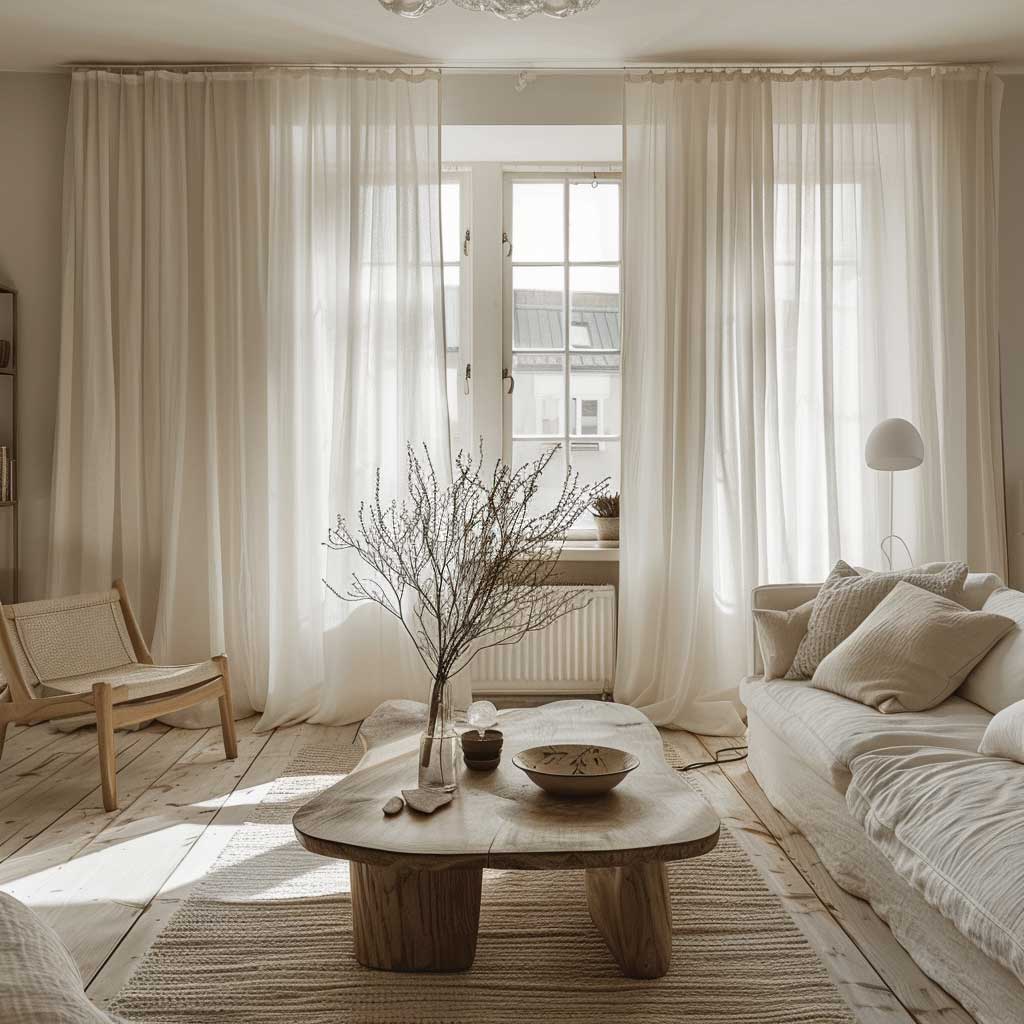
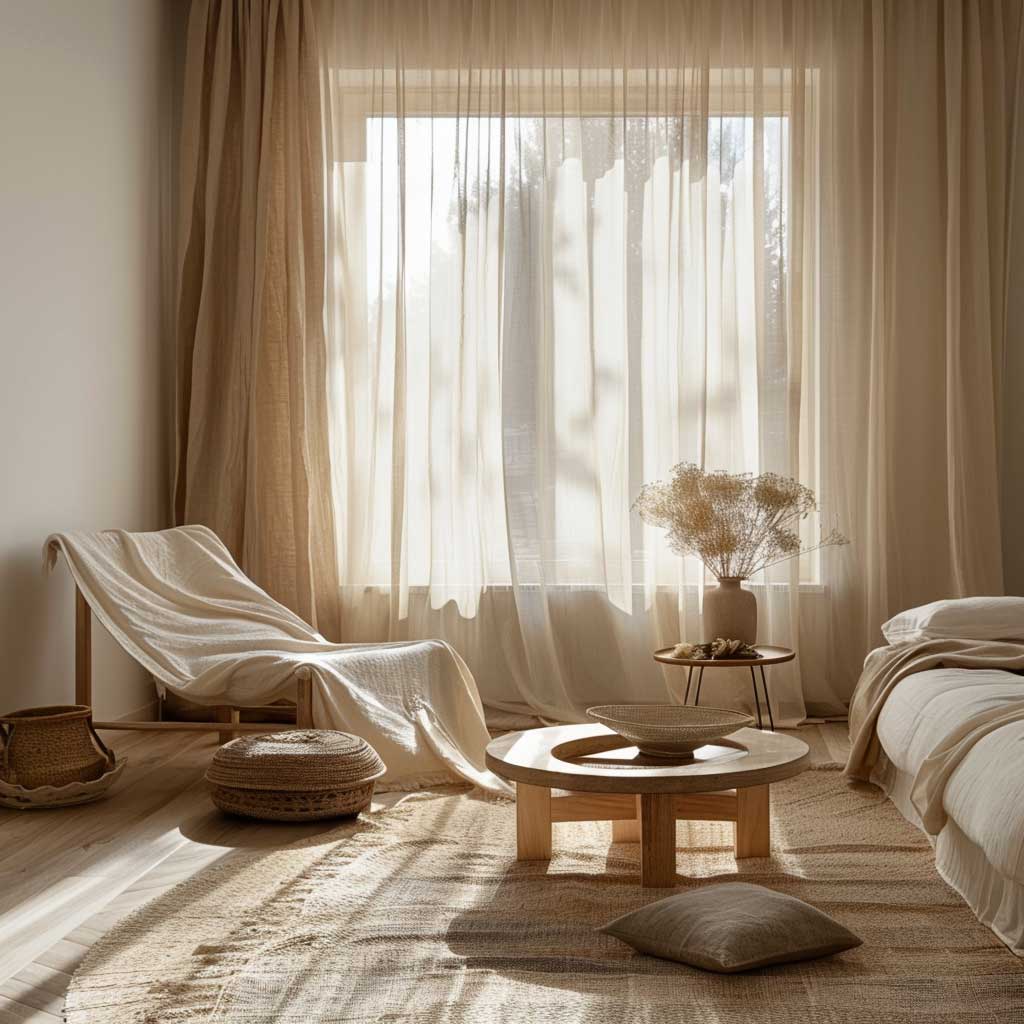
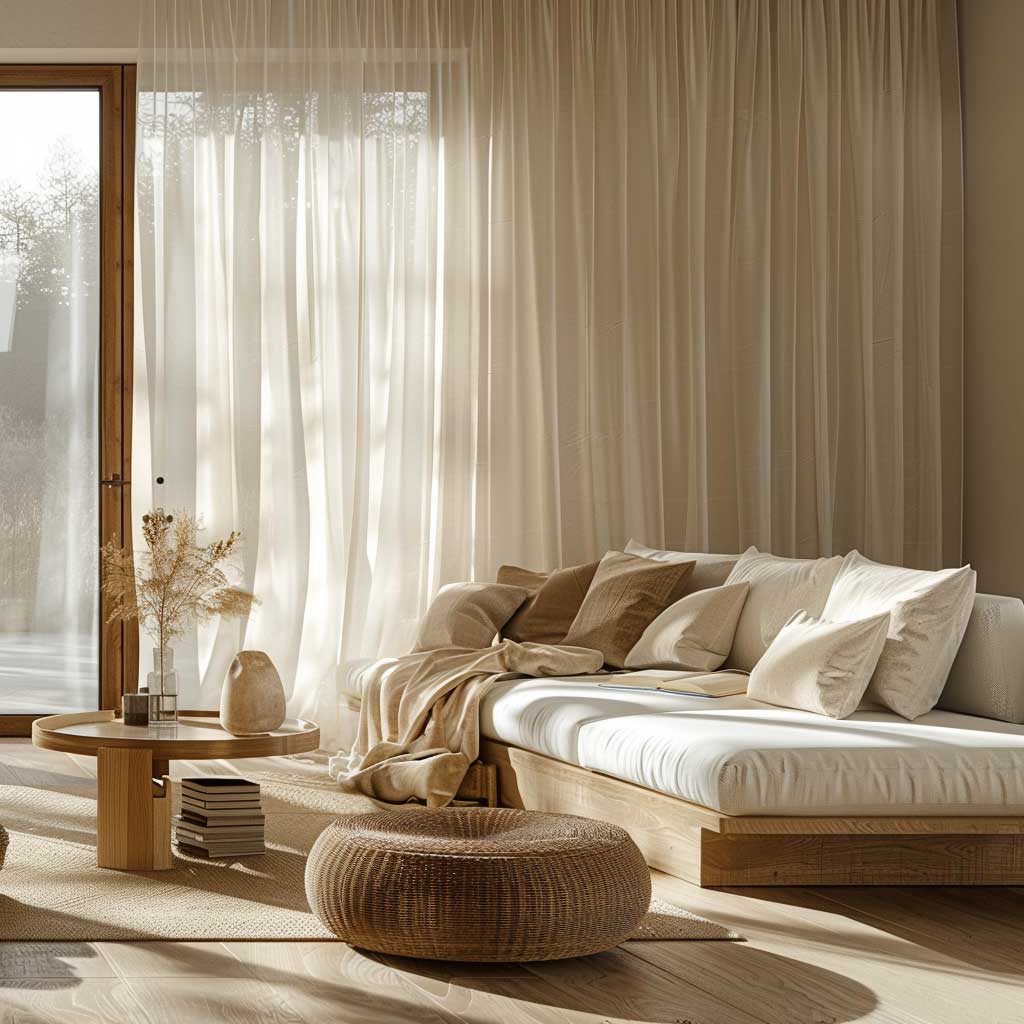
Scandi window dressing in the living room almost always starts with sheers, and there’s a clear reason for that: a translucent panel lets natural light fill the space while keeping the room from feeling exposed. White, cream, and pale oat are the standard palette choices, and they hold that ranking because they read as neutral against both light-stained birch floors and warm gray walls. The curtain becomes part of the room’s background, not its focal point.
Does the fabric weight matter? Yes — and more than most people expect. Linen sheers block around 10–30% of incoming light, which is enough to soften glare at noon without dimming the room for reading. Cotton voile sits at the lighter end of that range and picks up the slightest air movement, giving the space a subtle sense of life. What fabric should you avoid? Stay away from polyester sheers that look flat and commercial; the slight irregular weave of linen or cotton is exactly what gives a Scandinavian living room its texture without adding visual noise.
Hang the rod as close to the ceiling as possible — at least 6 inches above the window frame, and ideally at cornice height. This is the single detail that separates a Scandinavian window treatment that looks considered from one that looks makeshift. A panel hung low compresses the visual height of a room; a panel hung high draws the eye upward and makes even a standard 8-foot ceiling feel taller. Let the panel length reach the floor or fall 1–2 inches short of it. Nothing in between.
One common mistake is pairing sheer curtains with a decorative curtain rod in a contrasting finish — matte black hardware against white sheers, for example. This creates visual tension that Nordic interiors work hard to avoid. A slim brass or brushed nickel rod, small enough to disappear when the curtains are drawn open, keeps the whole arrangement quiet. If extra privacy or blackout performance is needed in the evening, layer a plain white roller shade behind the sheer rather than swapping to heavier drapes.
- Best fabrics: linen, cotton voile, lightweight cotton blend
- Best colors: white, oat, cream, very pale gray
- Rod position: minimum 6 inches above the window frame
- Panel length: floor-length or 1–2 inches short; nothing in between
- Hardware: slim profile in brushed nickel or brass; no decorative finials
Minimalist Roller Shades for the Scandinavian Bedroom
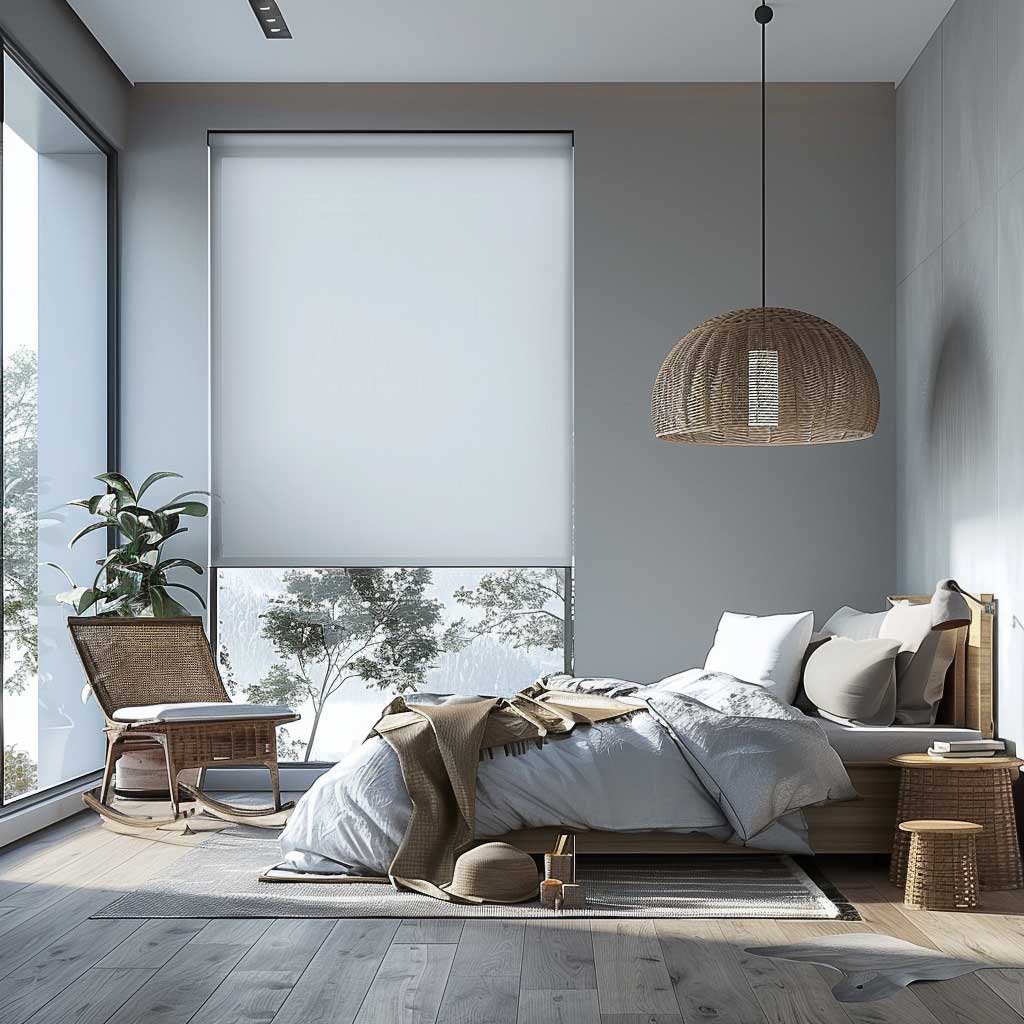

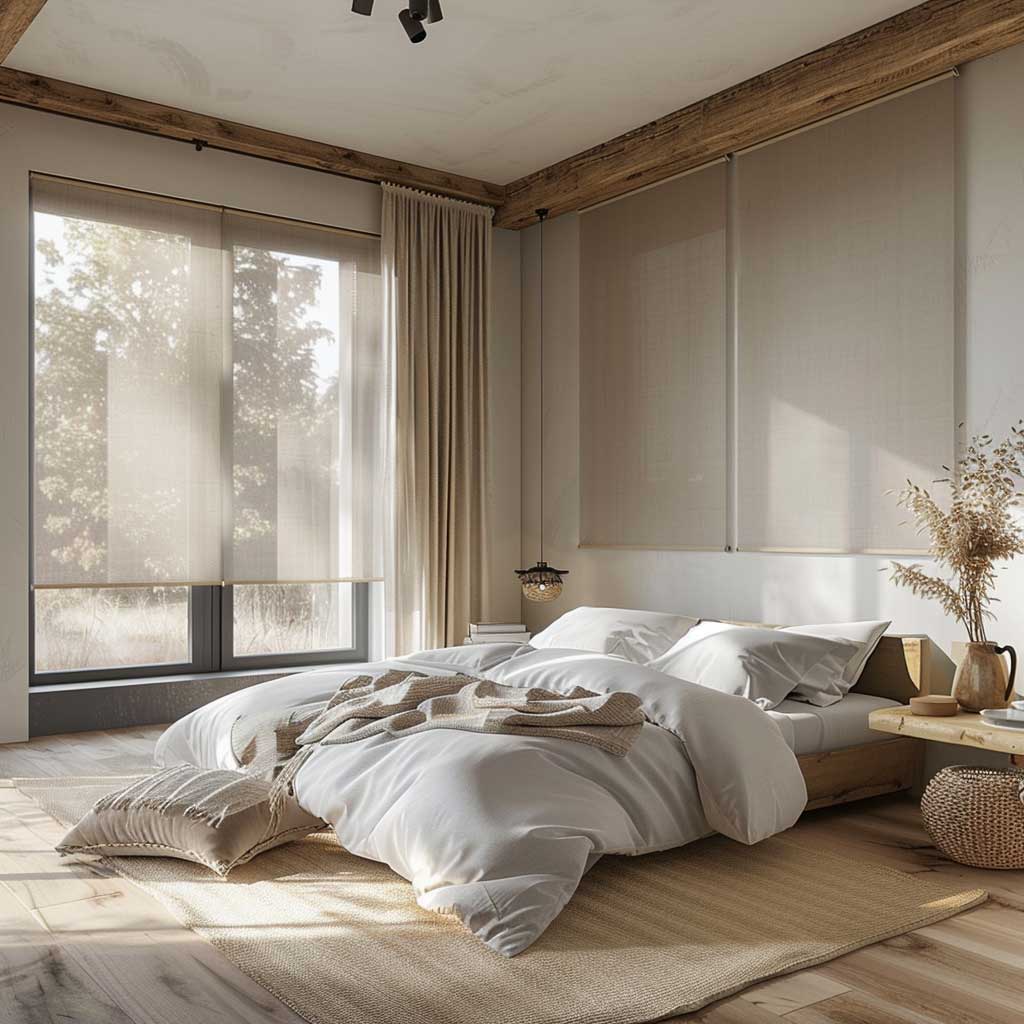
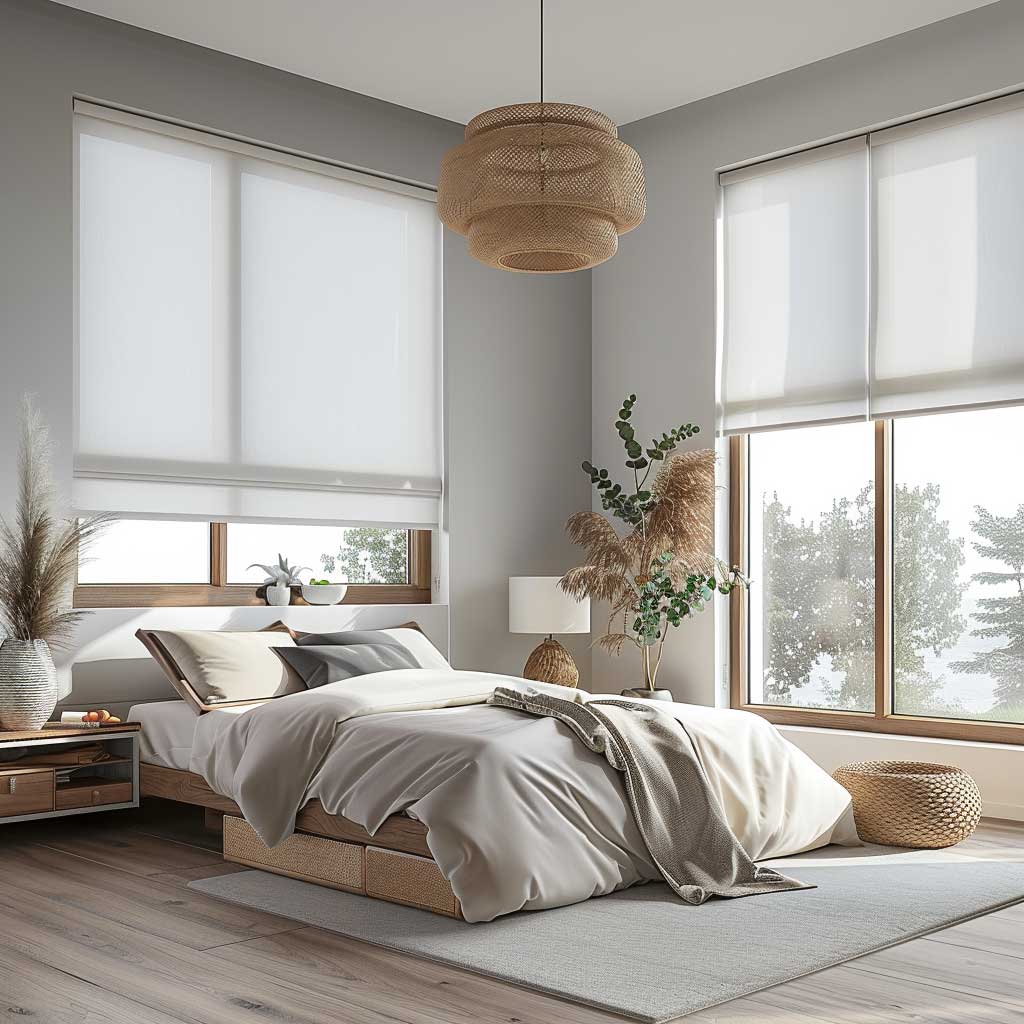
Minimalist roller shades for the Scandinavian bedroom make sense for the same reason a simple white duvet makes sense: nothing competes with the rest of the room’s calm. A single panel rolls up around a tube at the top of the window and disappears completely when raised, leaving nothing to see except the glass and whatever light comes through. According to average pricing data, ready-made roller shades run roughly $40–$150 per window — making them the most budget-accessible scandi window treatment option of the three covered here.
The choice between light-filtering and blackout material is the most practical decision in this category. Light-filtering roller shades in white or sand let diffused daylight into the room in the morning, which aligns with the Scandinavian approach of welcoming natural light wherever possible. A blackout liner added behind the same shade turns the window opaque on demand — useful for shift workers, summer months in higher latitudes, or anyone who sleeps better in a dark room. The liner adds roughly $20–$40 per window at most retailers.
Color selection is simpler here than anywhere else in the house. Stick to white, soft gray, or sand. These three shades disappear against pale walls in daylight and hold their composure against darker walls in lamplight. Avoid beige that reads as yellow or green under certain bulbs — sample the shade in your own room before ordering. Think of the roller shade the way a theater director thinks about a black curtain backstage: its job is to disappear so the main performance, which is the room itself, can take center stage.
What should be avoided here? Patterned roller shades. Even a subtle geometric print breaks the quiet that a Scandinavian bedroom depends on. The same goes for an exposed spring mechanism or a visible side chain — an open roll (also called a cassette-free mount) leaves the shade material open to the room, which looks clean; a cassette housing adds a slim visible header but keeps the mechanism dust-free. Either works. A side chain hanging against the wall does not; use a cordless pull-down or a motor instead.
Wood Blinds That Suit a Contemporary Scandinavian Kitchen
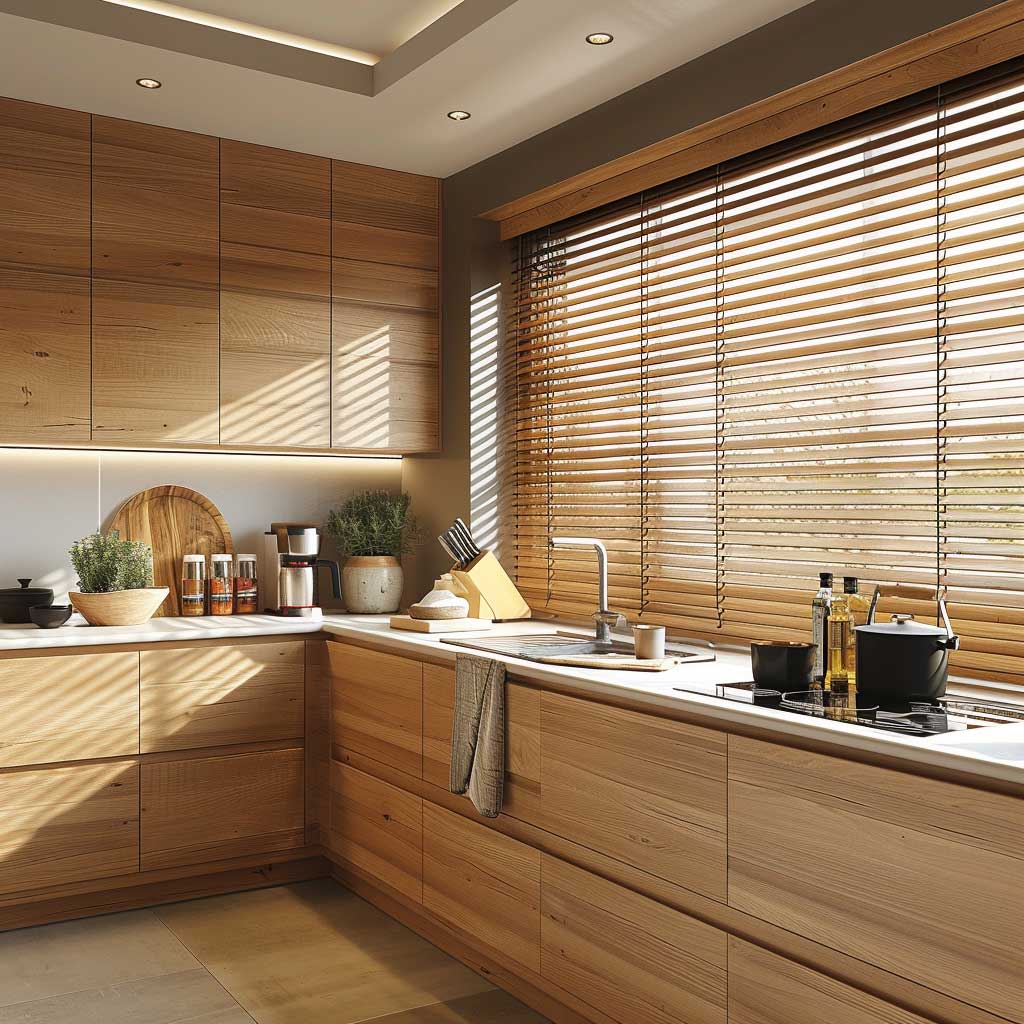
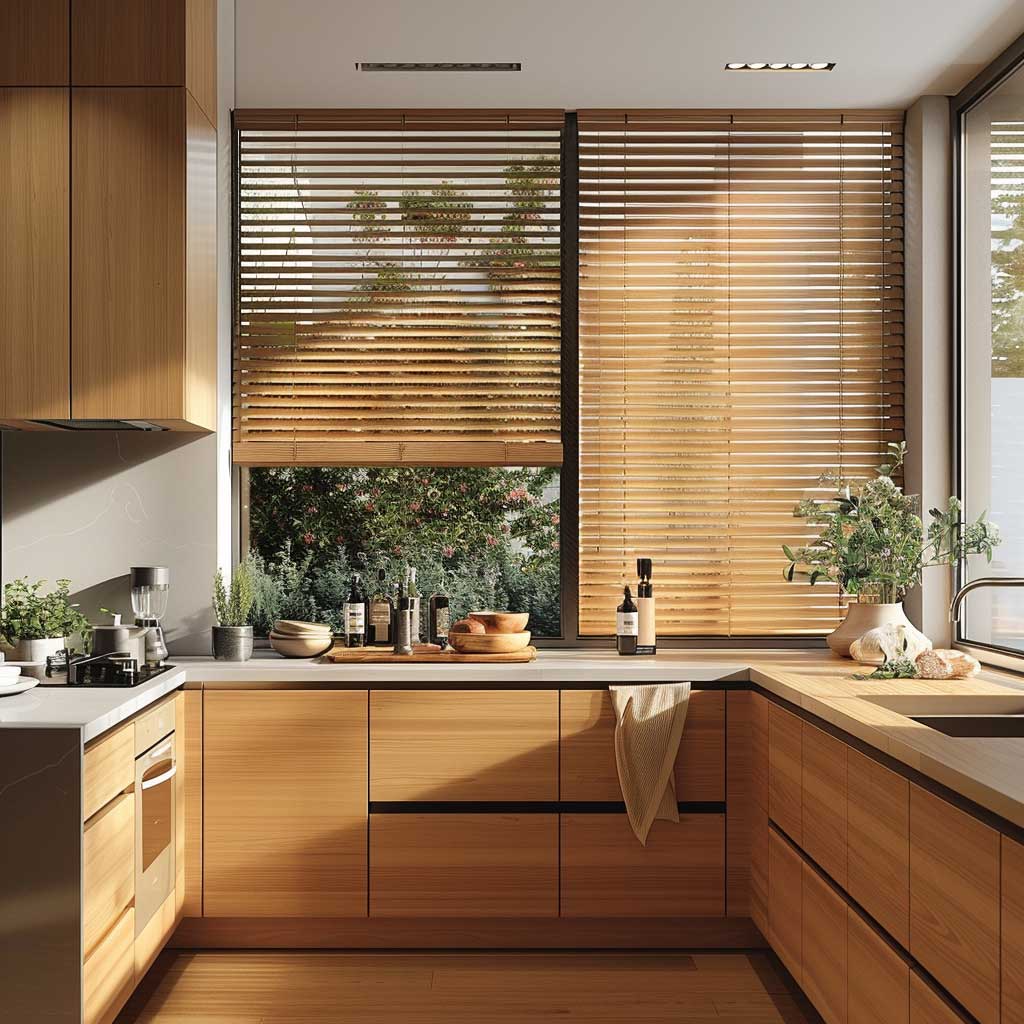
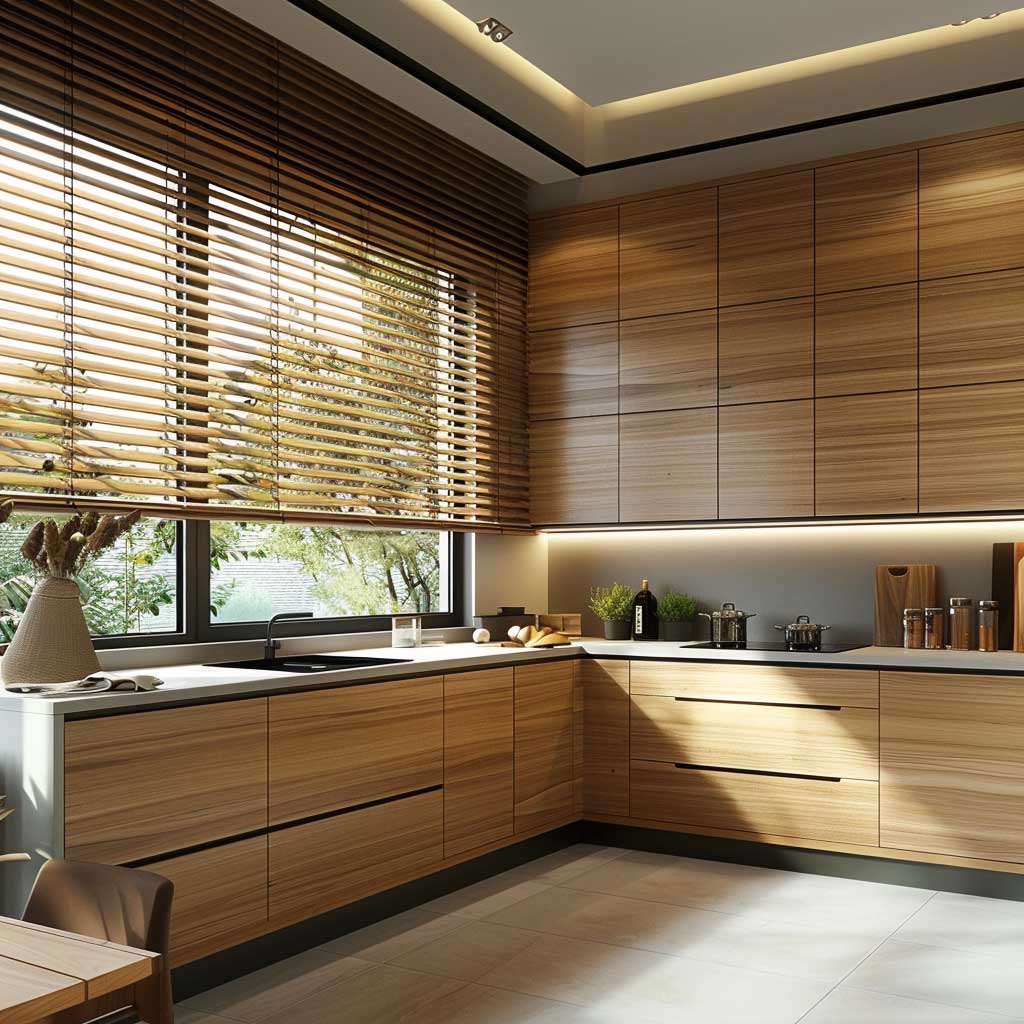
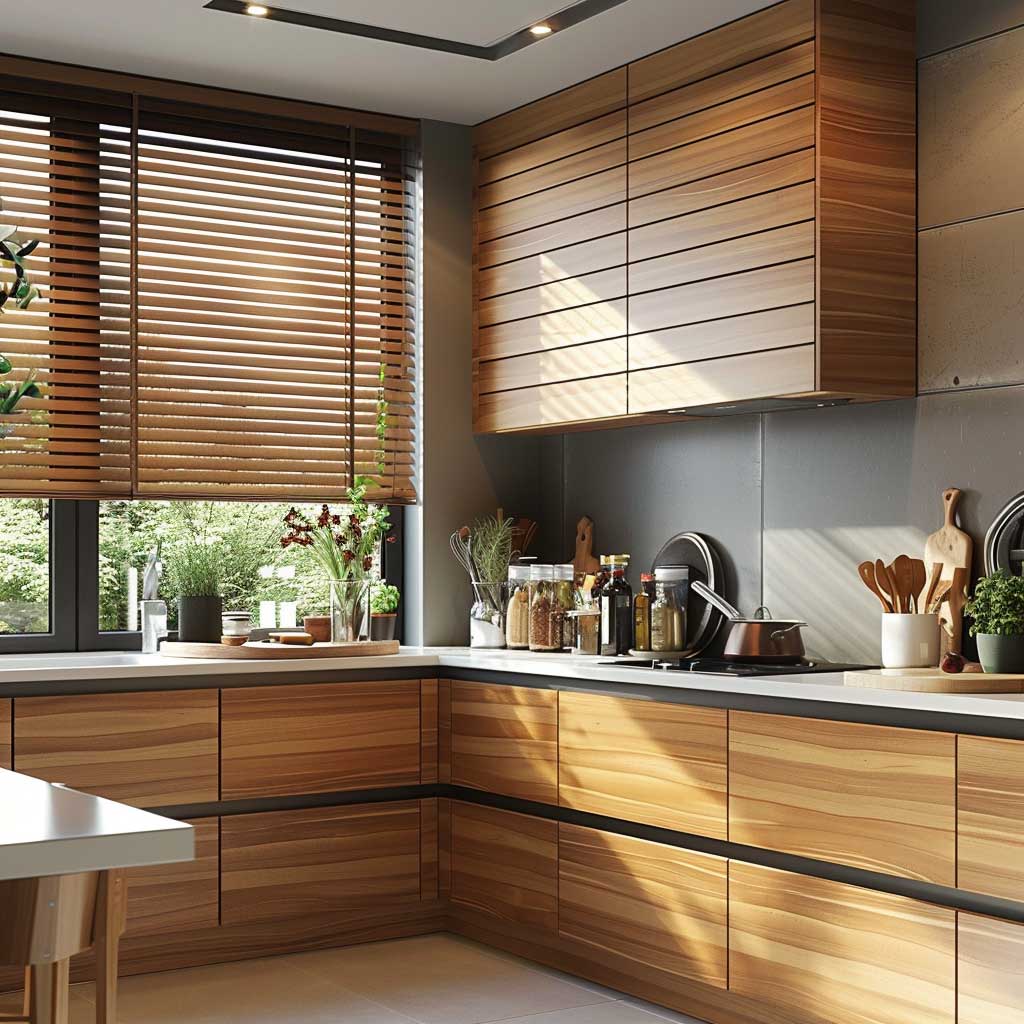
Wood blinds in the Scandinavian kitchen work because they echo a material already present in the room. Almost every Nordic kitchen has light-stained wood in some form — floor boards, cabinet doors, open shelving, a butcher block counter — and a birch, oak, or maple blind reinforces that palette rather than introducing a new one. The blind is not decorating the window; it is extending the room’s existing material logic to the window. That distinction matters in a style where everything should look like it belongs.
Slat width is a detail worth choosing deliberately. A 1-inch or 2-inch slat reads as fine and detailed, which suits a kitchen with smaller windows or compact proportions. A 2.5-inch slat creates a more relaxed, Shaker-adjacent look that works well with flat-panel cabinets and a wider window opening. Avoid 3-inch slats in a kitchen context — they look more appropriate in an office or a room with very tall windows. For finish, choose an uncoated or matte-sealed natural wood; a high-gloss lacquered slat looks out of place in a Nordic setting, which tends toward textures that age gracefully rather than surfaces that stay perfect. If you’re choosing tile or other materials for the kitchen at the same time, the guide on timeless brown kitchen backsplash tile shows how natural warm tones work in a Scandinavian-adjacent kitchen palette.
How easy are wood blinds to clean in a kitchen environment? Easier than curtains, harder than roller shades. Each slat wipes down with a damp microfiber cloth, which takes about three minutes per window. A light mineral oil treatment once a year keeps the wood from drying out — a step that sheers and roller shades simply don’t require. This maintenance reality is worth factoring into the decision: wood blinds are not a zero-effort choice, but the annual treatment is also what gives them a longer useful life than most synthetic alternatives. Per pricing data from window covering retailers, ready-made real wood blinds typically cost $30–$225 per window for materials, with custom sizing adding a further $60–$300 depending on width.
The one thing to watch: avoid lifting the slats to the very top during cooking. Steam and cooking residue accumulate on slats that sit directly above a stove or an open window above the sink. A position halfway between fully open and fully angled keeps airflow moving while protecting the wood surface. This is a practical scandi window dressing rule that most guides skip — and the one most likely to extend the life of the blind past the five-year mark.
Comparing the Three Scandinavian Window Treatment Options
| Feature | Sheer Curtains | Roller Shades | Wood Blinds |
|---|---|---|---|
| Best room | Living room | Bedroom | Kitchen |
| Light control | Low — diffuses without blocking | Medium to high — light filter or blackout | High — adjustable by slat angle |
| Privacy | Low during day, moderate at night | High when fully lowered | High with slats closed |
| Maintenance | Machine wash or dry clean | Wipe with damp cloth | Wipe + annual oil treatment |
| Approx. cost (per window) | $20–$100 fabric + hardware | $40–$150 ready-made | $30–$225 ready-made |
| Works with | Oak, birch, neutral walls | All wall colors | Wood-heavy rooms |
| Avoid if | You need blackout performance | You dislike a strictly flat look | Kitchen has high humidity year-round |
Dont Do This — Scandi Window Dressing Mistakes Worth Avoiding
The most common scandi window treatment mistake is choosing the wrong scale of hardware. An oversized curtain rod with decorative ends, a wide visible cassette on a roller shade, or a bulky valance above wood blinds all shift attention toward the window frame instead of through it. Nordic rooms treat windows as sources of light, not as design objects — and the hardware should follow that logic. Keep the rod the thinnest diameter that carries the curtain weight, or mount a roller shade with a fascia that sits flush to the wall.
The second mistake is treating all three rooms the same way. Sheers in the bedroom feel private to the occupant but offer almost no visual separation from outside — a problem once evening lights come on. Wood blinds in a living room can feel heavy against a sofa and reading lamp. Match the treatment type to the room’s primary purpose — diffuse light in the social room, block light in the sleep room, filter and control light in the work room — and the whole apartment or house starts to feel intentional rather than furnished by coincidence.
Finally: do not skimp on width. A curtain panel that barely covers the window frame when drawn open looks sparse in every interior style, and in a Scandinavian room where simplicity depends on proportion, undersized panels look like a mistake rather than a choice. Sheer panels should cover the window plus at least 6 inches on each side when fully open. Roller shades and wood blinds should be measured for an inside or outside mount deliberately, not improvised at the point of purchase. A well-fitted treatment in a plain fabric outperforms a textured one that is three inches too narrow every single time. For further reference on Scandinavian-specific material choices, The Shade Store’s guide to Scandinavian curtains covers fabric and pleat style selection in practical detail.
The Right Choice for Each Room
Scandinavian window treatments work because they remove options rather than add them. Each room gets one type of treatment chosen for how that room actually uses light — and the result is a home that feels coherent rather than decorated.
Start with the living room. A sheer linen or cotton voile curtain in white or cream, hung from a slim rod at cornice height, handles the morning and afternoon light without interrupting the view or competing with the furniture. This is the room where natural light spends the most time, and the treatment should honor that.
Move to the bedroom. A roller shade in soft gray or white, fitted inside the frame for a clean line, gives full control from full diffusion to complete blackout with a liner. Nothing about it needs to announce itself. That invisibility is the point.
Finish with the kitchen. A light-toned wood blind in birch, oak, or maple connects the window to the room’s existing material palette and adjusts light direction through the cooking hours. Oil it once a year, wipe it down after cooking, and it will look better in five years than it did on day one.
One treatment per room, chosen for function. That is the whole system — and it is old enough in Nordic homes to be considered permanent rather than fashionable.