A sleek straight hair style gets an entirely different personality once you drop a blunt line into it, and color is what decides which personality shows up. Cut the ends dead straight across, then push orange, aqua green, or hot pink through it, and the same geometry reads three completely different ways. Nothing about the shape changes — only the light bouncing off it does. That’s the appeal: one haircut, three separate statements, depending on which bottle of dye gets opened.
Straight, one-length hair reflects color and shine more evenly than anything textured, which is exactly why a blunt cut is the preferred canvas for these looks. Vivid, all-over color always costs more than a natural shade, and it always demands more upkeep once you leave the chair. Ask your colorist how much pre-lightening your hair needs before you book — that single answer changes both the price and how long you’ll be in the salon. Below are three ways to wear this combination, each with its own upkeep reality.
Quick Scan
- Vivid, single-process color runs $150–$350 at most salons — more if your hair needs lightening first
- A blunt line needs a trim every 6–8 weeks to stay sharp, regardless of the color on top
- Vivid tones fade fastest at the ends — plan on a touch-up every 1–2 weeks
- Orange leans warm, aqua green leans cool, hot pink works on nearly every undertone
- Skip DIY bleach jobs — uneven lightening shows up instantly on a blunt hemline
Orange Goes Full Glass With This Sleek Straight Hair Style
Straight hair takes to a blunt cut better than most textures ever will, and orange pushes that partnership into its loudest register yet. A glass finish is what separates a good orange from a forgettable one — it turns each strand into a small mirror, throwing warm light back at the room. Orange as a hair color skews warm no matter the exact shade, which makes it a strong pick for anyone with golden or olive undertones. Cooler skin tones can still wear it, but a stylist usually nudges the shade toward a coral base to keep it flattering.
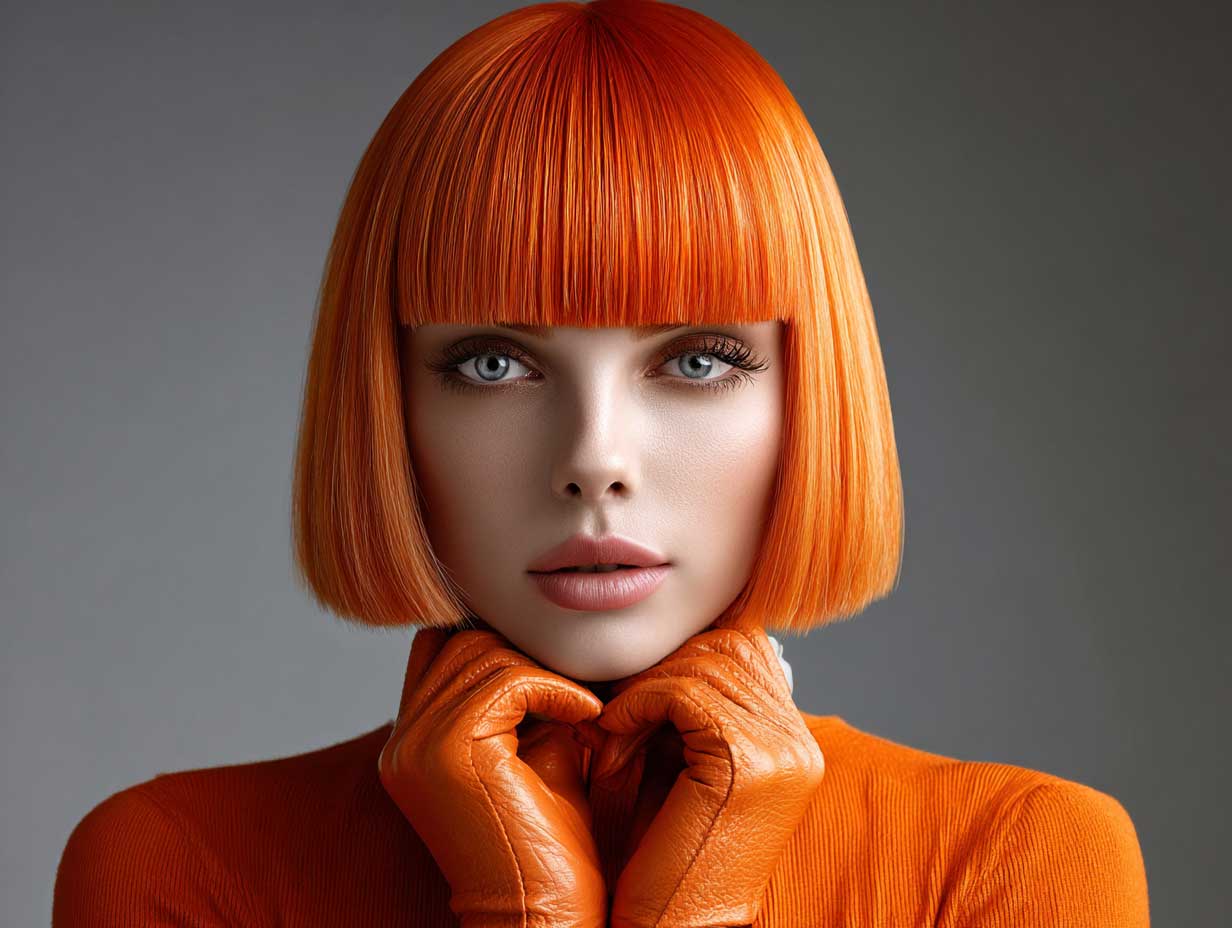

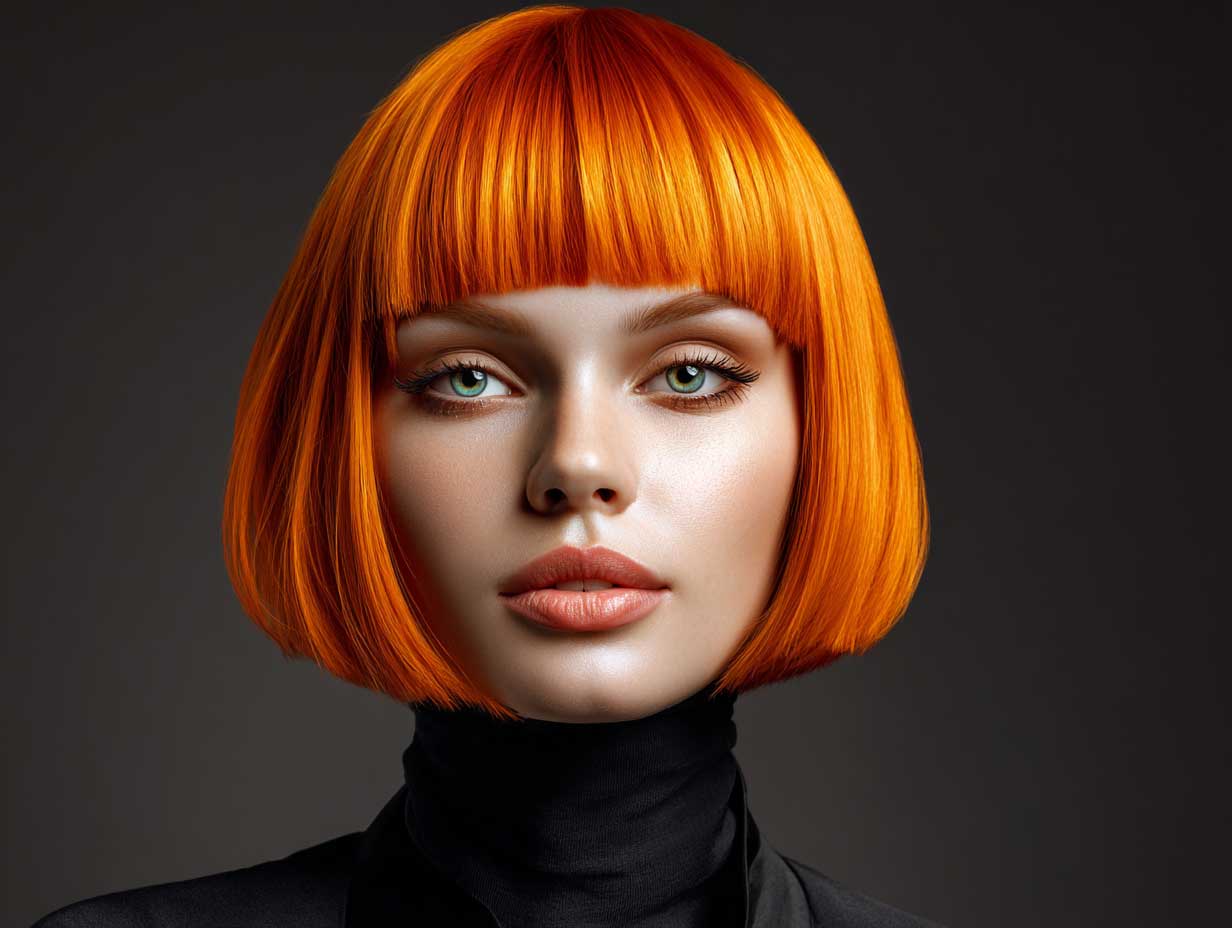
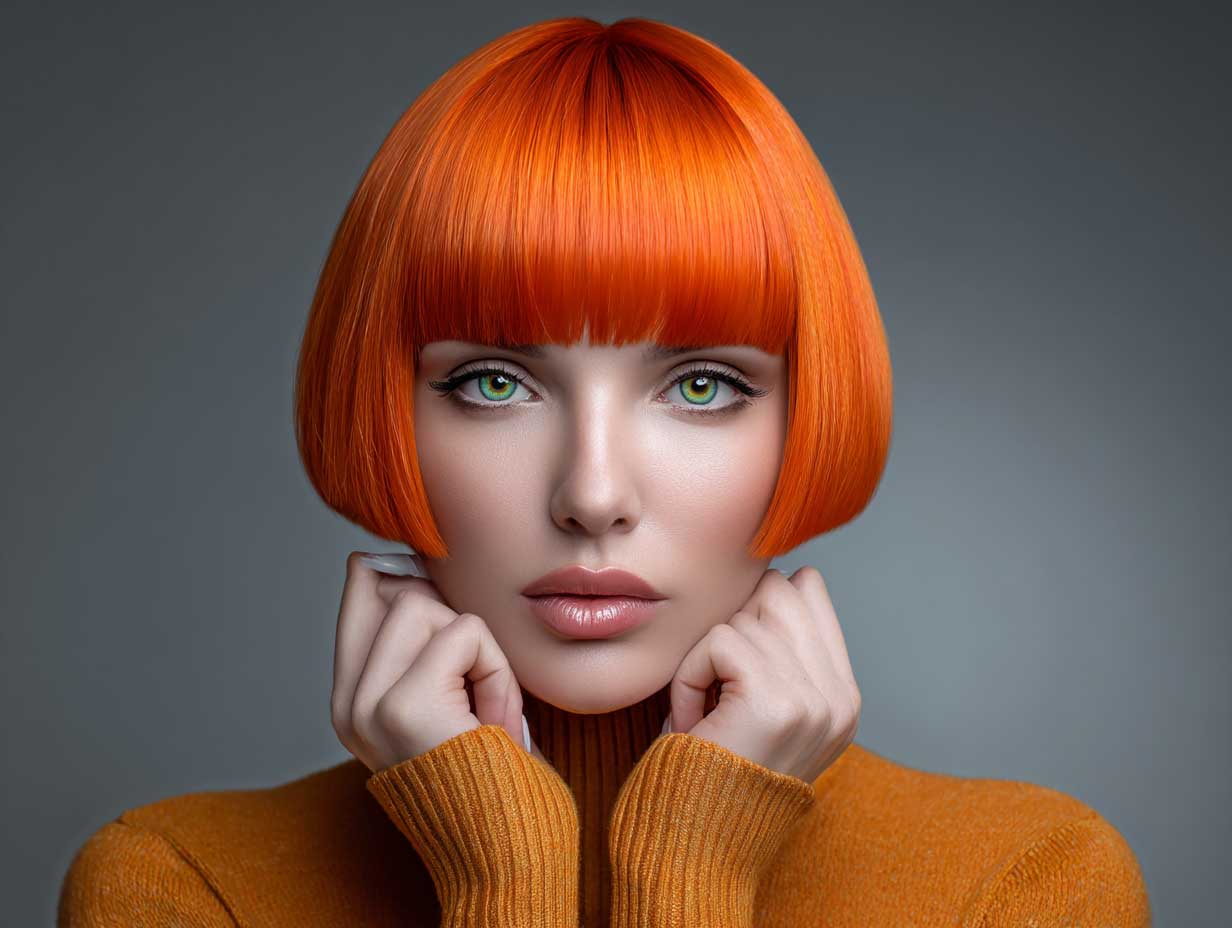
A center part does more work here than people give it credit for — it splits the color evenly and lets the blunt hemline read as one unbroken line instead of two competing shapes. Ends cut with any inconsistency show up instantly under a glass finish, the same way a scratch shows up faster on a glossy car hood than a matte one. Expect to pay $150 to $350 for a vivid, single-process orange at most salons, more if your base hair needs lightening first. That range holds whether you’re going for a soft tangerine or a full traffic-cone orange — the labor stays the same, only the pigment amount changes.
Getting the glass effect starts with a smoothing shampoo and conditioner, then a blow-dry with a paddle brush to set the shape before any heat tool touches it. A flat iron finishes the smoothing, and a lightweight, silicone-based gloss spray locks in the reflective quality. Skip heavy oils here — they weigh straight hair down and dull the exact shine you’re trying to create. Does the glass effect survive a second day? Mostly yes, as long as you refresh the part and mist the roots with the same gloss spray.
Orange is one of the faster-fading vivid tones, so don’t expect it to look salon-fresh past week two without help. Switch to a sulfate-free shampoo the day you leave the chair, not two weeks later once the color has already started slipping toward brassy yellow — colorists have documented several specific tips for slowing vibrant color fade that go beyond just switching shampoo. Skipping that step is the fastest way to turn a $250 color service into a faded, uneven mess within a month.
This version of the cut rewards people who want drama without chaos — it’s loud in color, but the shape stays disciplined. That contrast, between a wild tone and a controlled line, is a big part of why orange blunt cuts photograph as well as they do. For anyone chasing that specific mix of shine and structure, the glass-smooth straight hair trend currently moving through salons is worth a look before you book.
Razor Precision Is the Only Thing Holding This Aqua Cut Together
A blunt haircut on straight hair turns almost architectural once you take away the warmth of orange and swap in aqua green. Aqua reads cooler and more clinical than orange, and razor precision is what keeps it from tipping into costume territory. Straight, ultra-smooth hair lets a cool tone sit flat against the skin instead of competing with warmth the way it would on wavy or curly texture. Anyone with cool or neutral undertones gets the most natural-looking payoff from this shade; warmer undertones can still wear it, but the green cast tends to fight golden skin rather than complement it.

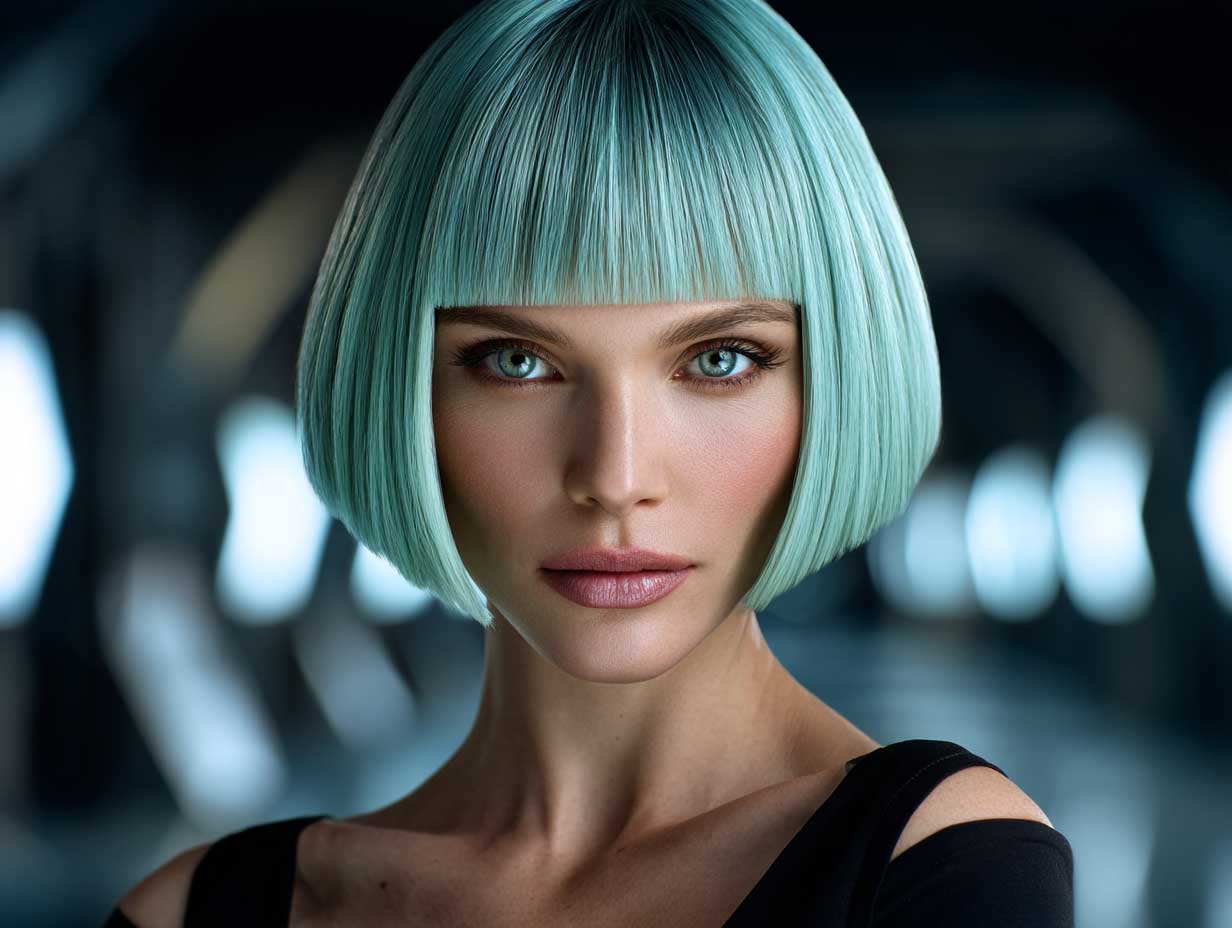

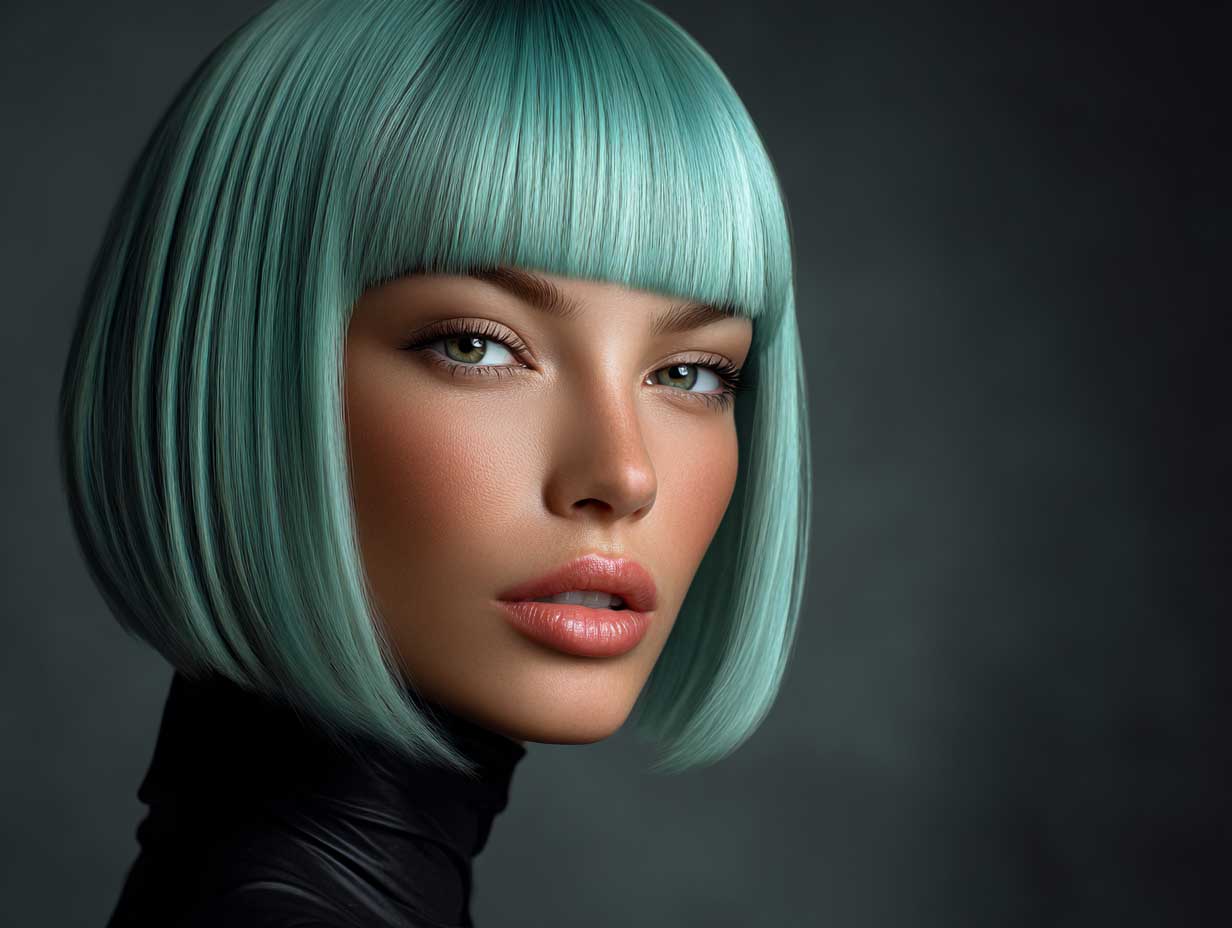
To get the razor-sharp edge, the haircut has to be performed with real technical finesse. Even the smallest inconsistency in line becomes obvious when hair this straight is paired with a color this bright, the same way a crooked picture frame stands out more on a bare white wall than a busy one. A professional cut paired with intense smoothing techniques makes the difference — ceramic-plate flat irons and a lightweight smoothing balm eliminate flyaways and sharpen the linear shape.
Don’t Do This
- Don’t bleach at home before a vivid color — uneven lightening turns into visible patches under a blunt, glossy finish
- Don’t book a vivid color without a consultation first — pre-lightening time and cost vary too much to guess
- Don’t run a flat iron on high heat over freshly bleached hair — it’s the fastest route to breakage right at the hemline
- Don’t stretch a blunt cut past 8 weeks between trims — the line rounds out and the whole shape stops reading as intentional
Here’s the honest maintenance math: how long does a blunt cut on straight hair actually hold before it needs work? Plan on a trim every six to eight weeks to keep the perimeter sharp, no matter which color is sitting on top of it. The middle part does its own job here too, guiding the eye straight to the angles the scissors created rather than to the color alone. In aqua green, that combination of shape and cool tone reads like wearable architecture rather than a passing trend.
This look suits someone who wants control more than volume — there’s no curl or texture doing the work, just the line and the color. If a low-effort straight cut appeals to you beyond just this one color, the low-maintenance blunt bob and pixie breakdown for straight hair covers which shapes hold their line longest between salon visits.
Hot Pink Finally Makes a Case for This Sleek Straight Hair Style
Pair a straight blunt haircut with hot pink and the whole look shifts from bold to unapologetic. A hot pink blunt cut finished to a mirror shine reads as confident rather than playful, especially next to the sharp perimeter of the cut itself. Pink at this saturation works on nearly every undertone because the pigment sits close to red, which flatters warm and cool skin about equally well. The one group that needs to plan ahead is anyone with dark natural hair — pink won’t show up without significant pre-lightening, and that step adds real time and cost to the appointment.

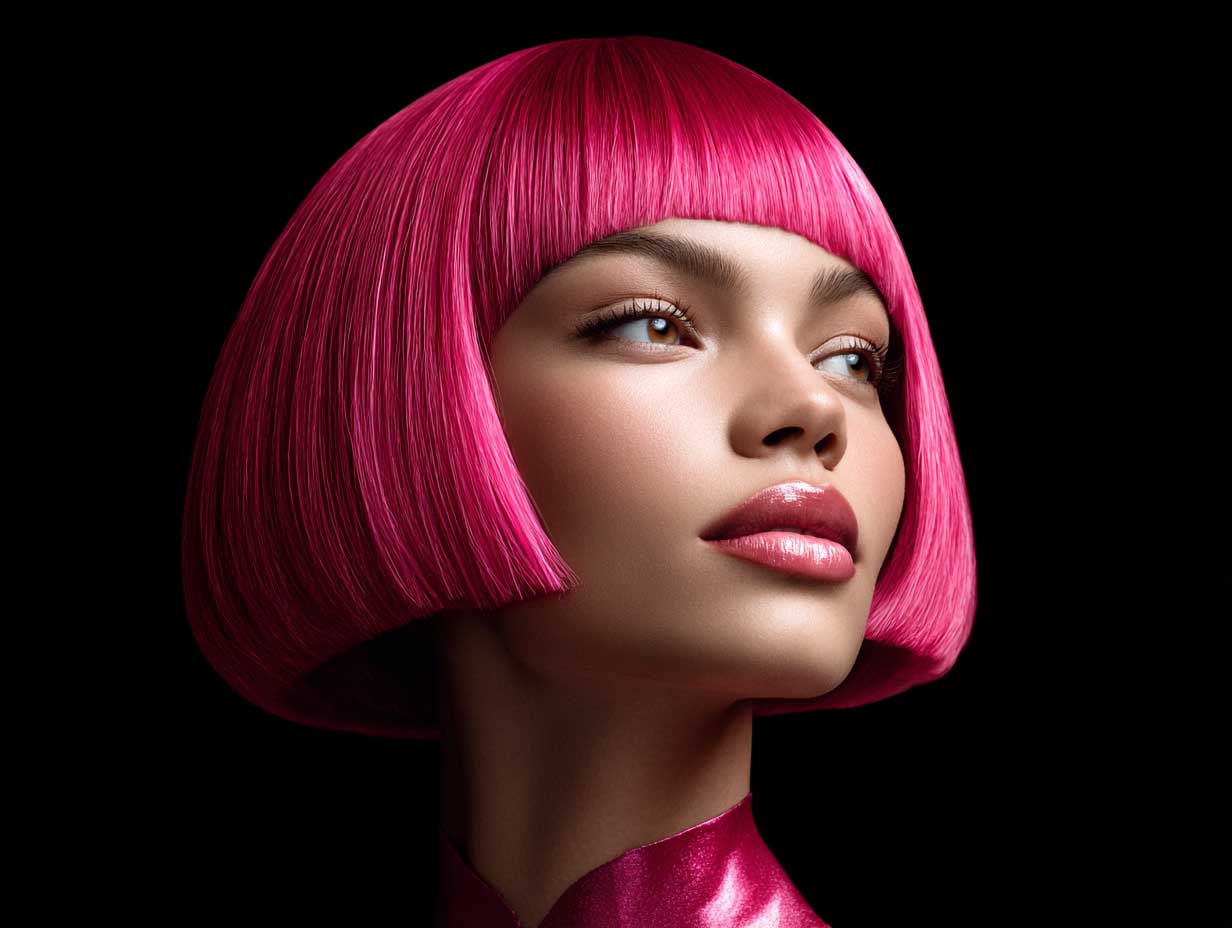
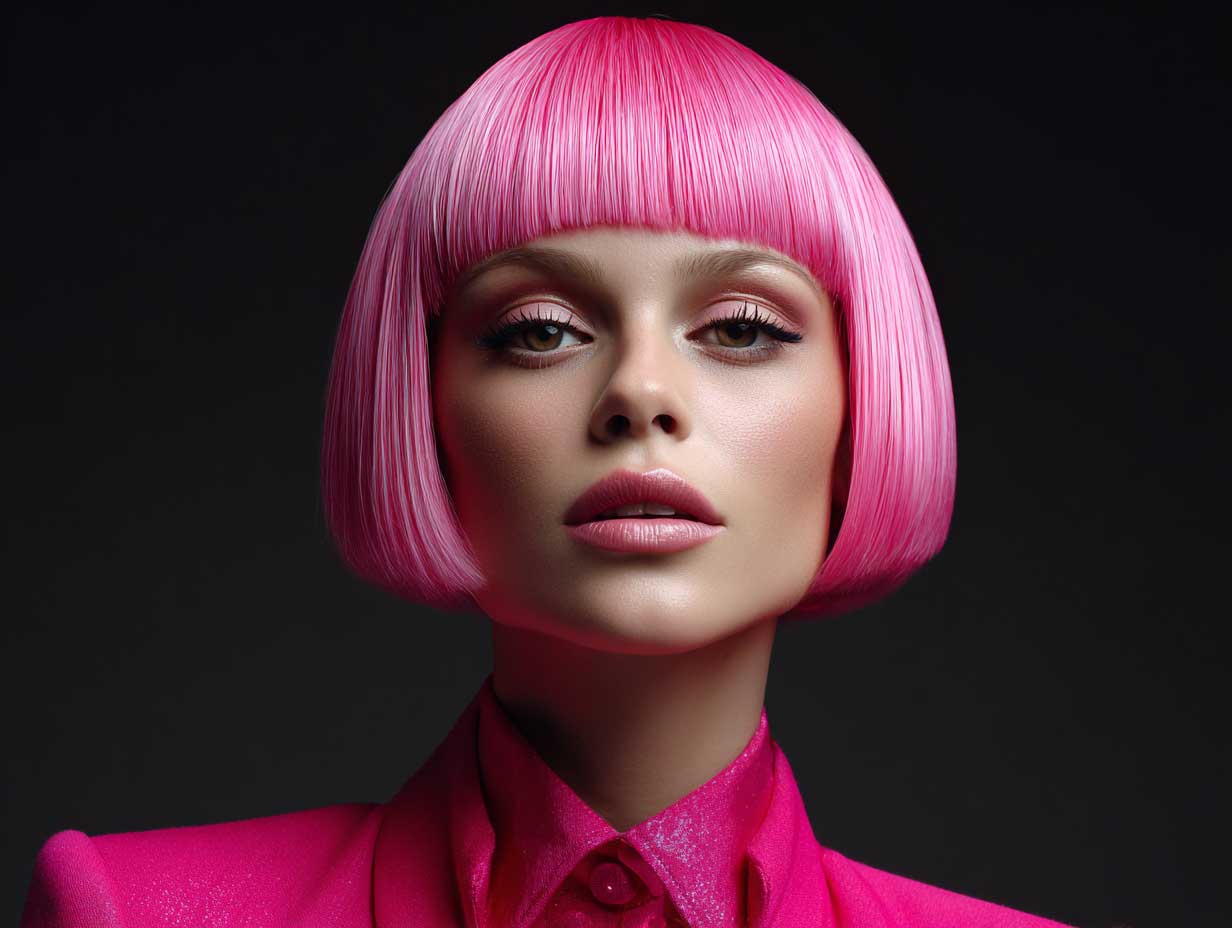

Getting the mirror shine starts with a full blow-dry using a round brush, followed by a straightener pass to remove any last bend in the strand. A gloss-enhancing, heat-activated spray locks in the reflective quality, working almost like a topcoat over nail polish — it doesn’t change the color, only how much light it throws back. Skip anything with a matte finish here; matte products are the fastest way to flatten a look that’s supposed to read glossy.
How long does hot pink actually hold up on straight hair? Semi-permanent vivid color like this typically lasts four to six weeks, or roughly ten to twelve washes, before it fades enough to need a refresh. Washing with cool water and a color-safe, sulfate-free formula stretches that window; hot water and clarifying shampoos shrink it fast. The middle part does double duty in this version too, splitting the pink into two identical, symmetrical panels that make the saturation look deliberate rather than accidental.
Don’t skip the color-safe shampoo swap to save a few dollars — it’s the fastest way to watch a $200 pink fade into a dull rose within two weeks. This version rewards people who like being noticed: the shine makes it hard to ignore, and the structure keeps it from ever looking undone. Hot pink on a blunt line proves a sharp shape can carry a loud color without either one overwhelming the other.
| Color | Finish | Touch-Up Frequency | Fade Risk |
|---|---|---|---|
| Orange (Glass Finish) | High-gloss mirror shine | Every 1–2 weeks | Fades toward brassy yellow |
| Aqua Green (Razor Precision) | Cool matte-to-satin | Every 1–2 weeks | Fades toward pale seafoam |
| Hot Pink (Mirror Shine) | Liquid-glass finish | Every 1–2 weeks | Fades toward soft peach |
THE TAKEAWAY
Same blunt line, three completely different attitudes.
Orange runs warm and fades fastest — budget for weekly touch-ups if you want it staying bright.
Aqua green rewards a technically precise cut more than any product you buy afterward.
Hot pink is the most forgiving on undertone, but needs the most pre-lightening on dark hair. Save this post before your next salon visit.