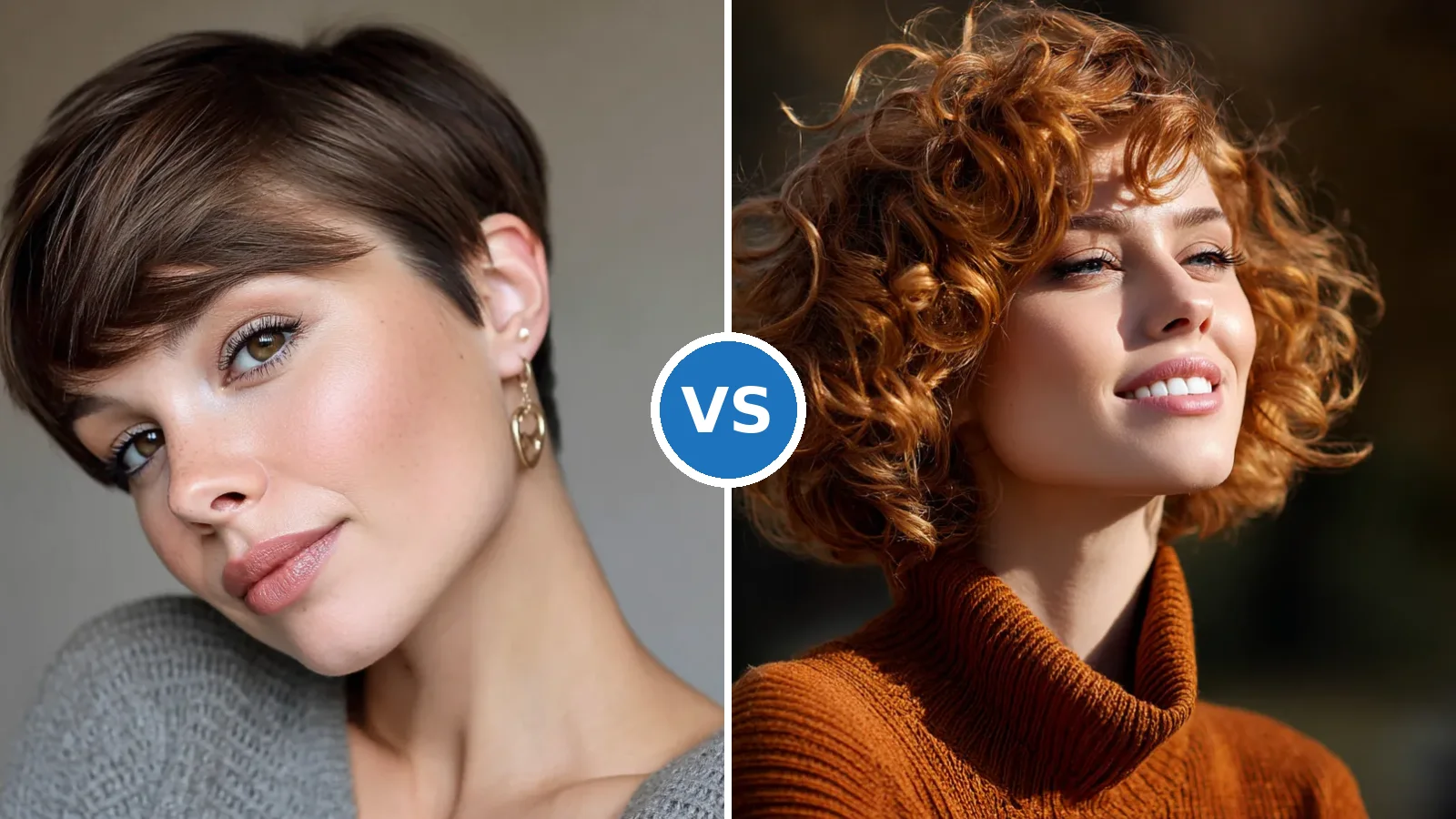
Long haircuts for oval faces outperform nearly every other shape-and-length pairing in the salon chair — but that advantage disappears fast when the cut ignores where the layers actually start. Oval geometry gives you a forehead slightly wider than the chin, with softly rounded sides, and that proportion is exactly what most long haircuts accidentally fight against by dumping all the weight at one length. I’ve seen this go wrong on clients with genuinely gorgeous bone structure. The fix is always the same: place the first layer break at or just above the cheekbone, and let everything below carry movement. Three cuts in this post do exactly that, and I’ll tell you what each one gets right — and what to skip if you want the shape to land.
Color plays into this more than most people realize. You don’t need a dramatic tone, but you do need dimension — something that reads lighter through the mid-lengths so the layers register visually instead of blending into a flat curtain. The three styles below each use a specific color strategy to make the cut’s structure visible from ten feet away. Burgundy, ash brown, and jet black each work differently, and I’ll break down why.
In this post
- Long Choppy Layers in Deep Burgundy — and the one placement mistake to avoid
- Feathered Side-Parted Waves in Cool Ash Brown — why the side part changes the read of an oval face
- Romantic Loose Curls in Jet Black — what jet black does to curl definition that brown can’t match
- FAQ on oval face haircut decisions most stylists don’t explain out loud
Choppy Layers in Deep Burgundy Start Below the Chin for a Reason
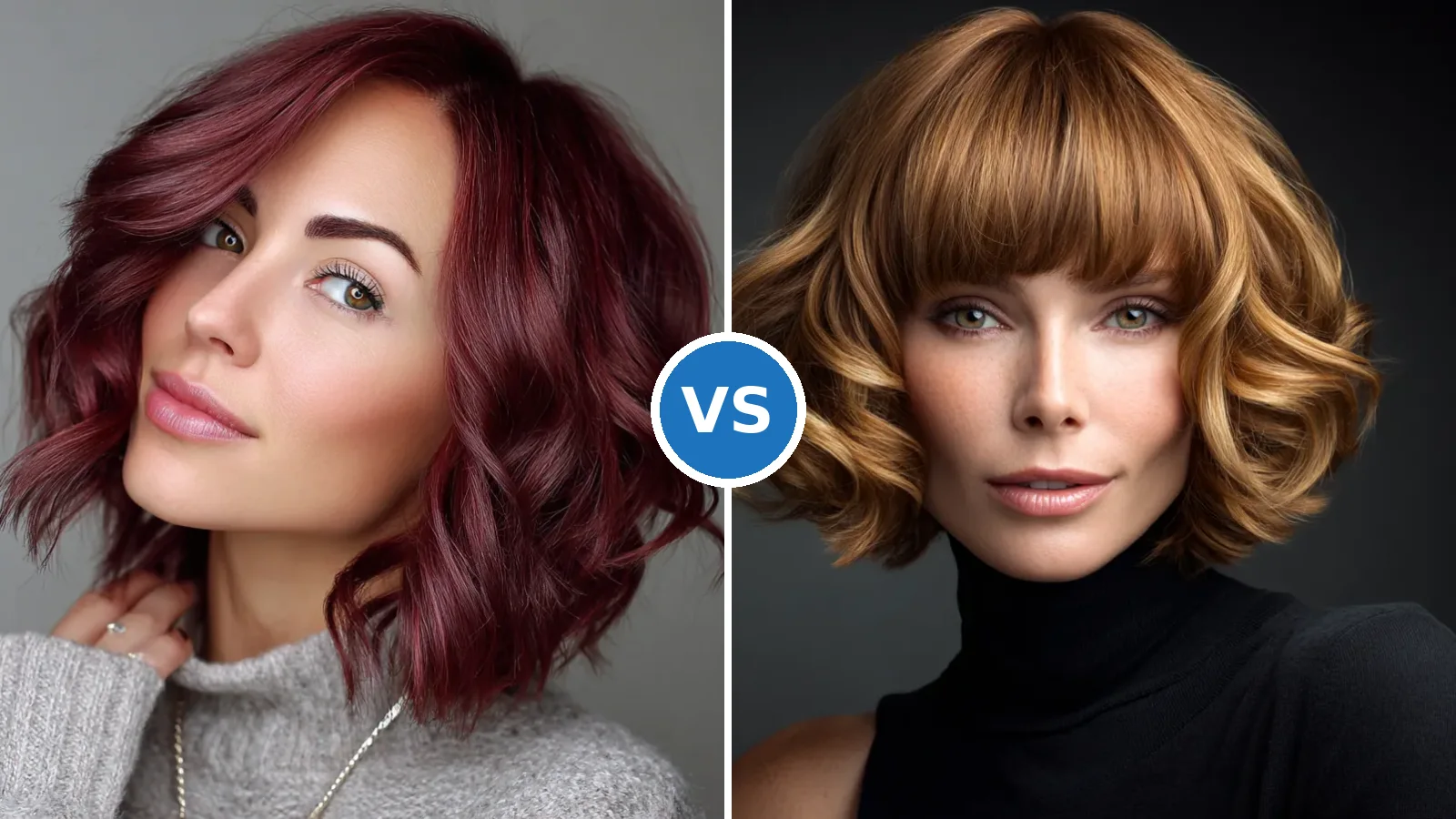
Choppy layers hit differently on an oval face when the first break lands below the chin rather than at the crown. I’ve watched stylists start layers too high and watch the whole thing collapse into a shapeless triangle by day three — no movement, no frame, just bulk. Starting the chop just under the jaw keeps length visible from the front while adding that texture hit at the ends. You’ll notice the face actually looks sharper, not softer.
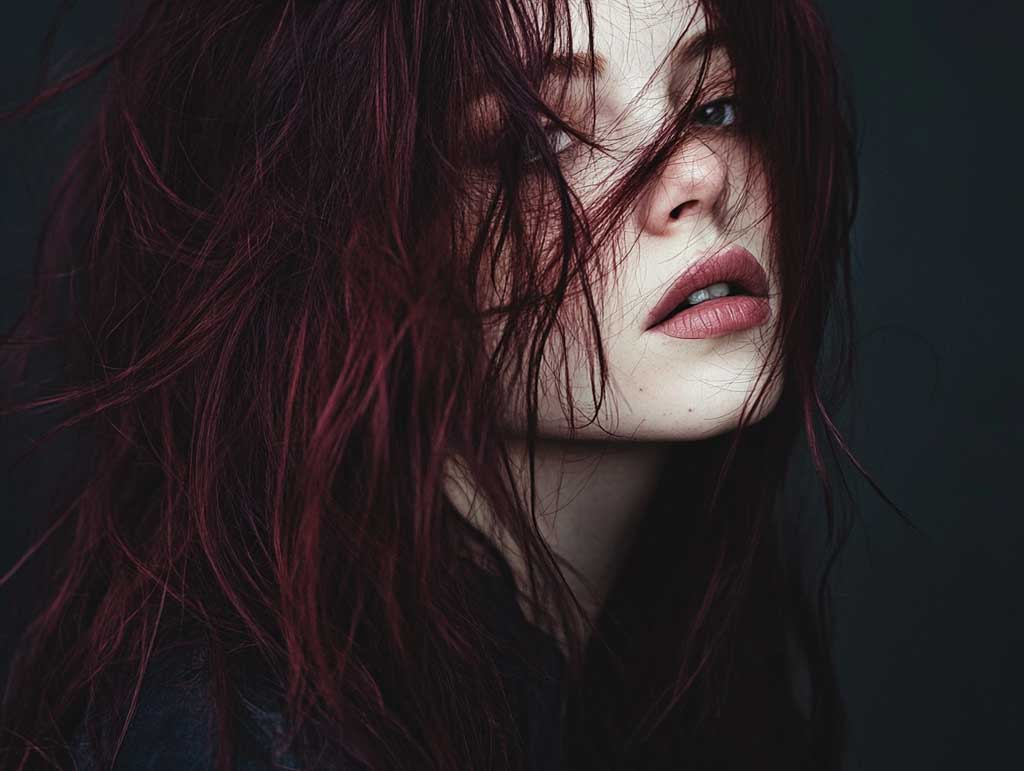


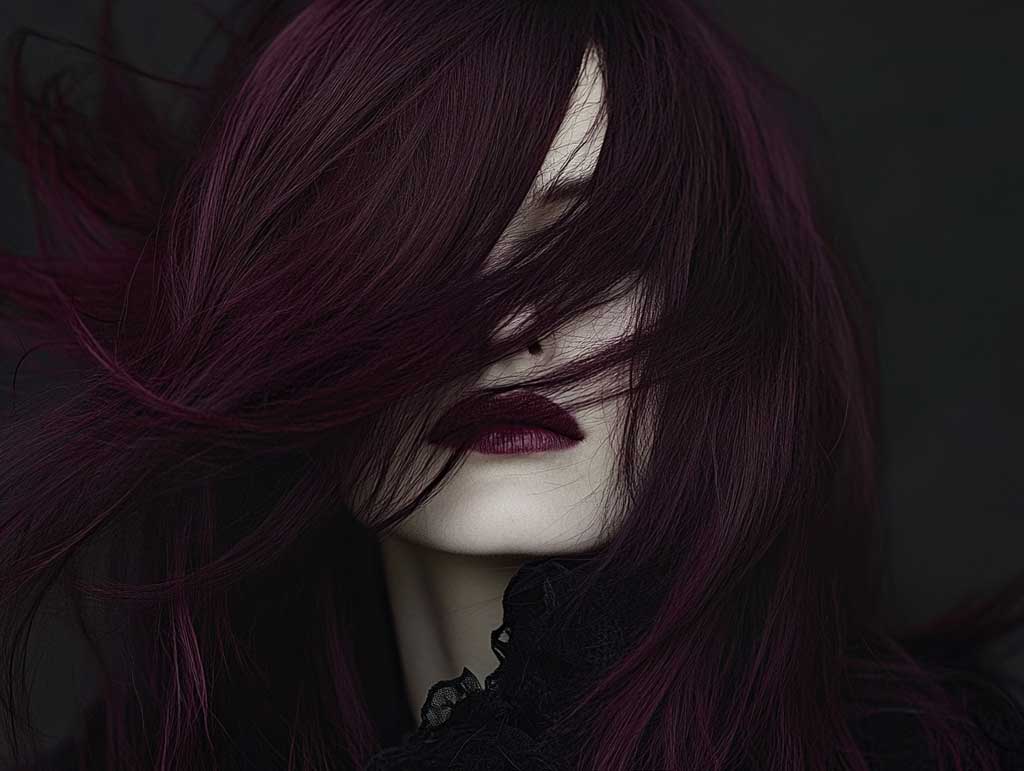
Deep burgundy earns its place here because the contrast between the darker root and the richer red mid-lengths makes each layer pop as a separate visual element. Solid dark brown does none of that — the layers disappear into each other, and you lose the whole point of the cut. The burgundy reads as three-dimensional without a single highlight appointment, which is a legitimate cost saving. Expect to spend $120–180 at a salon for the initial color, and plan a gloss refresh every eight weeks at around $60 to keep the tone from going flat copper.
To keep the texture definition alive between appointments, reach for a lightweight texturizing spray — I use IGK’s Beach Club Texture Spray ($29) on day-two hair and it separates the choppy ends without loading them. A quality flat iron like the GHD Platinum+ ($249) can flip the ends slightly outward for a more editorial shape or press them flat for a cleaner finish. Avoid anything with a barrel wider than 1.25 inches or you’ll smooth out the chop entirely.
Skip this cut if your hair is very fine and limp at the roots. Choppy ends need some density to read as intentional texture; on genuinely thin hair they just look like split ends that need a trim. The fix isn’t a different cut — it’s a volume-focused cut for thin hair on an oval face that builds structure from the root instead of the ends.
Don’t Do This
Asking your stylist for “choppy layers but not too choppy” is the number one way to get a blunt cut with a few random snips that don’t do anything. Choppy is a specific technique — point-cutting into the ends at an angle — not a vibe. Bring a reference photo. And do not request choppy layers on hair that hasn’t been colored in months; single-process flat color kills the contrast that makes the texture visible in the first place.
Feathered Waves in Ash Brown Shift the Visual Weight Off Center
A deep side part on an oval face does something geometrically interesting: it breaks the forehead line asymmetrically, which keeps the face from reading as a perfect vertical oval — which sounds like a compliment but on a two-dimensional photo reads as slightly flat. Feathered waves amplify this. The lightest layers at the front catch movement first, so the hair seems to travel sideways before falling down. My go-to instruction for this in the salon chair is: “Face-framing pieces that start at the cheekbone and feather out, not in.”
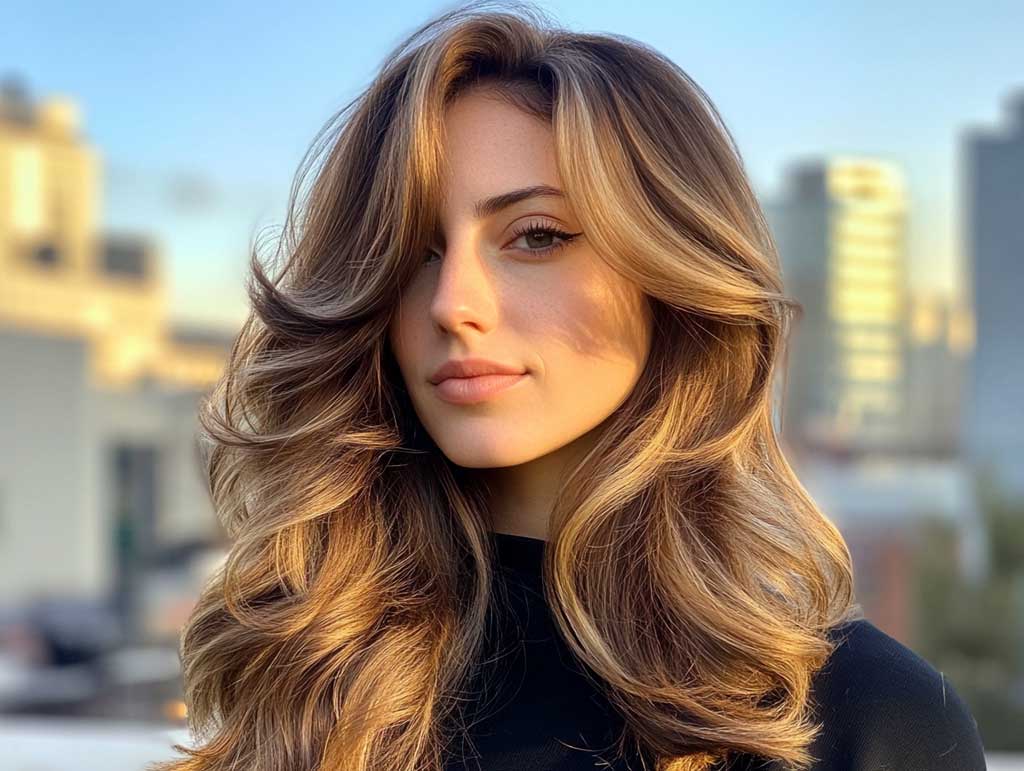
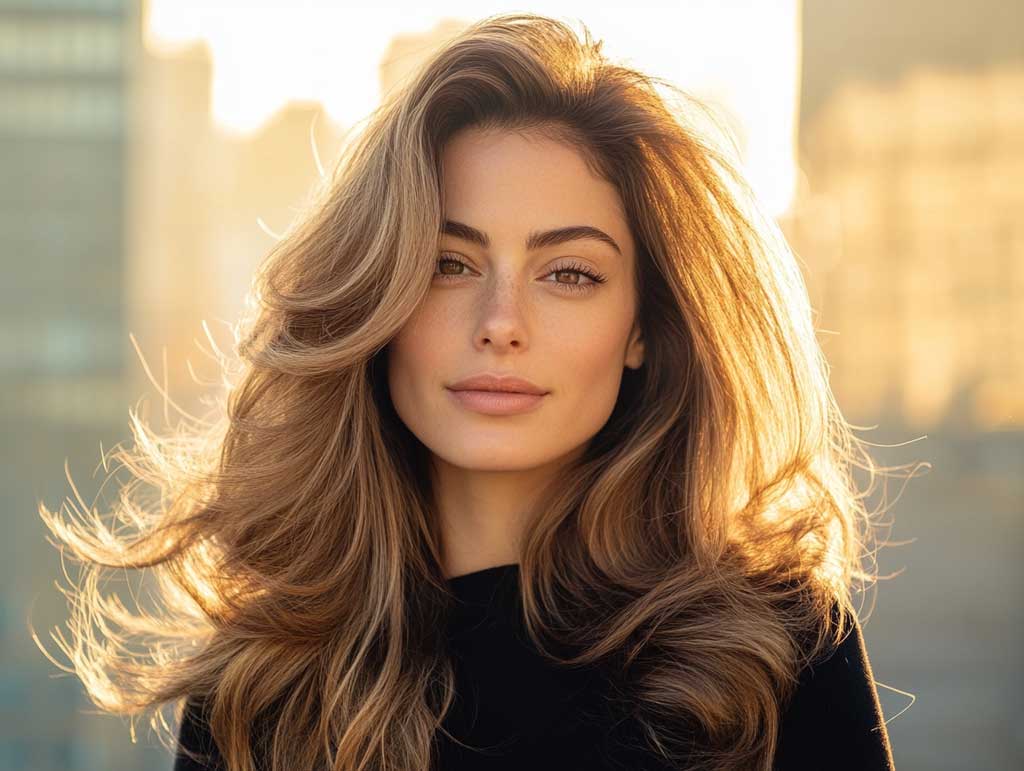
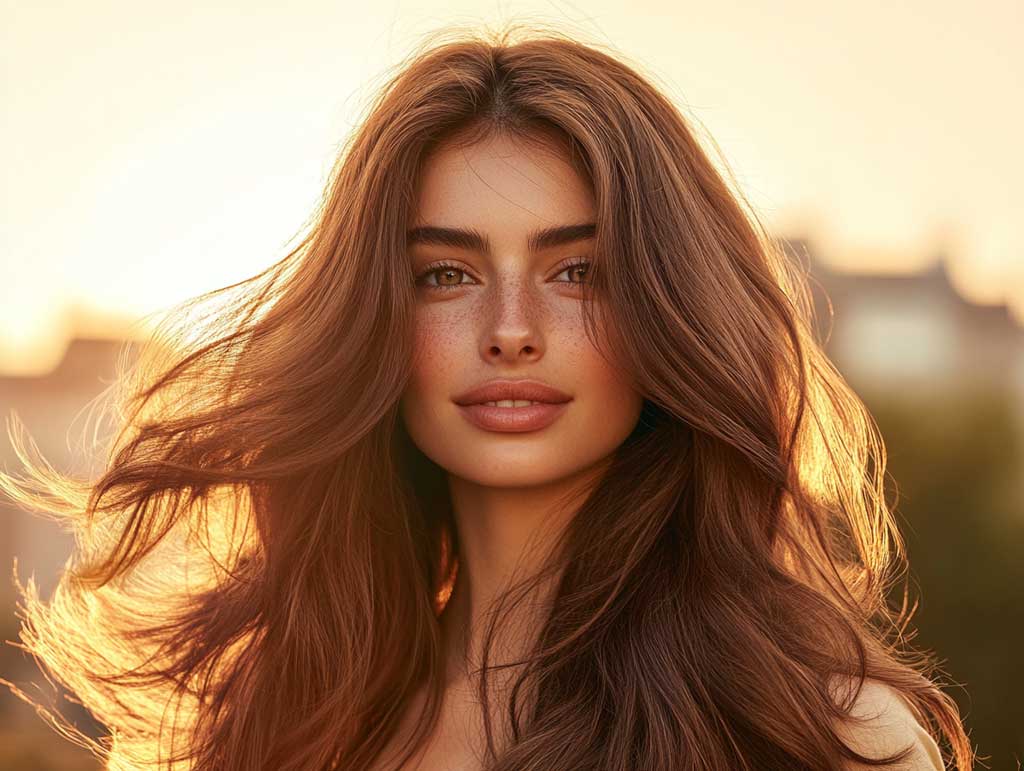
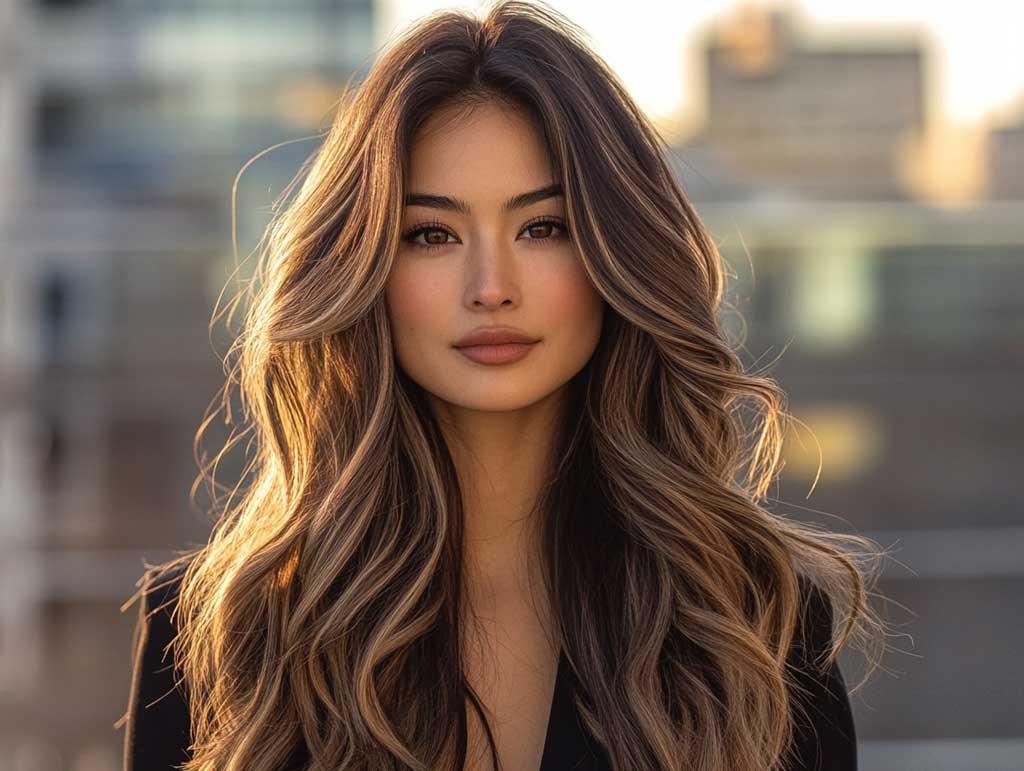
Cool ash brown is doing something warm tones can’t: it reflects light as a single, unified plane rather than scattering it across warm and cool patches. That tonal evenness makes the feathered layers appear more intentional because the only contrast happening is the structural one — light versus shadow in the actual layers, not color fighting color. Warm caramel or honey tones are pretty, but they break up the surface too early and the feathering gets visually lost in the noise. Ash brown keeps the eye reading the shape, not the color.
Styling routine: a dime of volumizing mousse (Bumble and bumble Thickening Full-Form Mousse, $32) worked through damp hair before blow-drying, then a round brush to roll the ends into the wave rather than curl them. The goal is a bend, not a ringlet. For days you want more defined movement, a 1.5-inch curling wand on the mid-lengths only — leave the roots and the very ends untouched. The feathered tips curl themselves from the residual heat. Don’t make the rookie mistake of curling the face-framing pieces toward the face; curl them away for this shape, or the side part loses its geometry.
This is also the cut to request if you’re growing out highlights gone wrong. Ash brown sits beautifully over faded balayage because it neutralizes the orange without going dark. A look at how highlights complement oval face proportions explains the color logic in more detail if you’re navigating a color correction at the same time as a cut change.
Jet Black Loose Curls Make Every Layer Visible Without Highlights
Loose curls on an oval face work because the curl shape naturally widens the mid-face — not at the cheekbone, but between the cheekbone and jaw — which is exactly where an oval tends to narrow. The framing effect isn’t about adding volume for its own sake. It’s about interrupting the long vertical drop of hair at strategic intervals so the eye stops and registers the face rather than sliding straight down to the collarbone. Jet black makes each spiral distinct because the color depth creates shadow between the coils even on fine-textured hair.
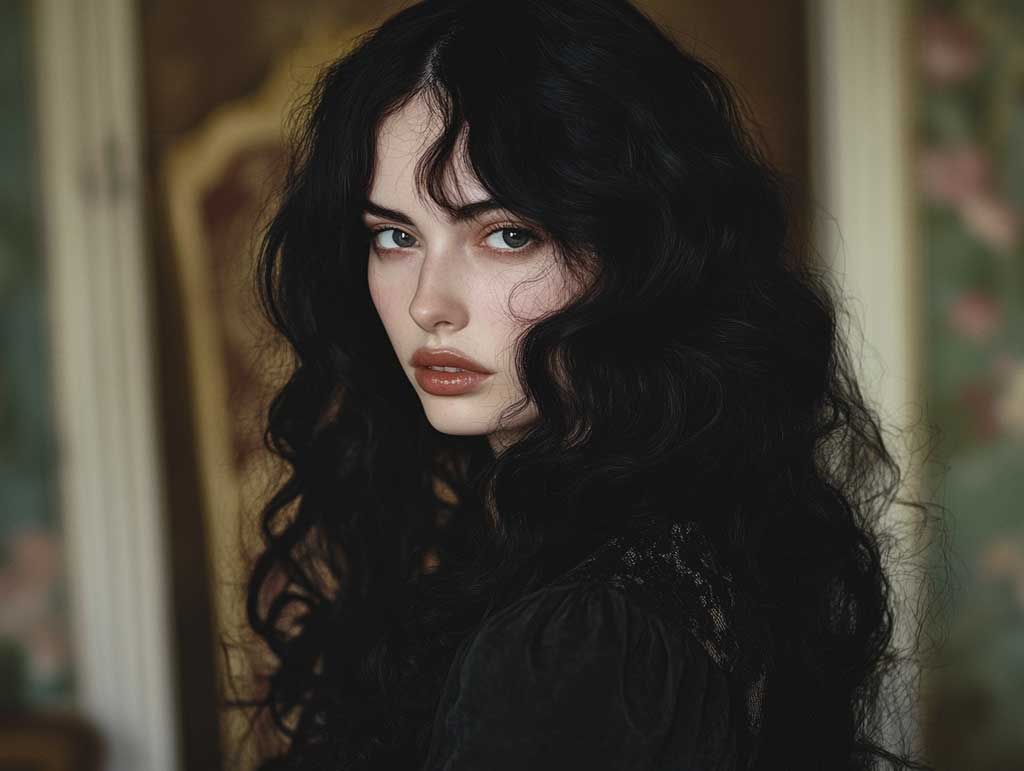
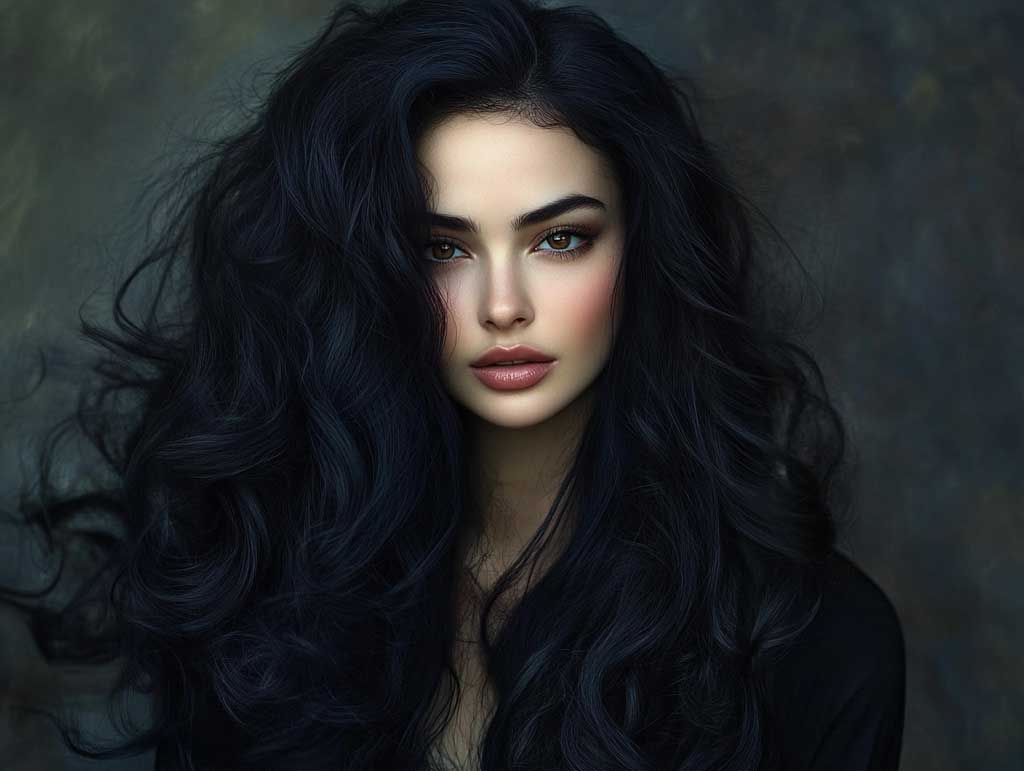
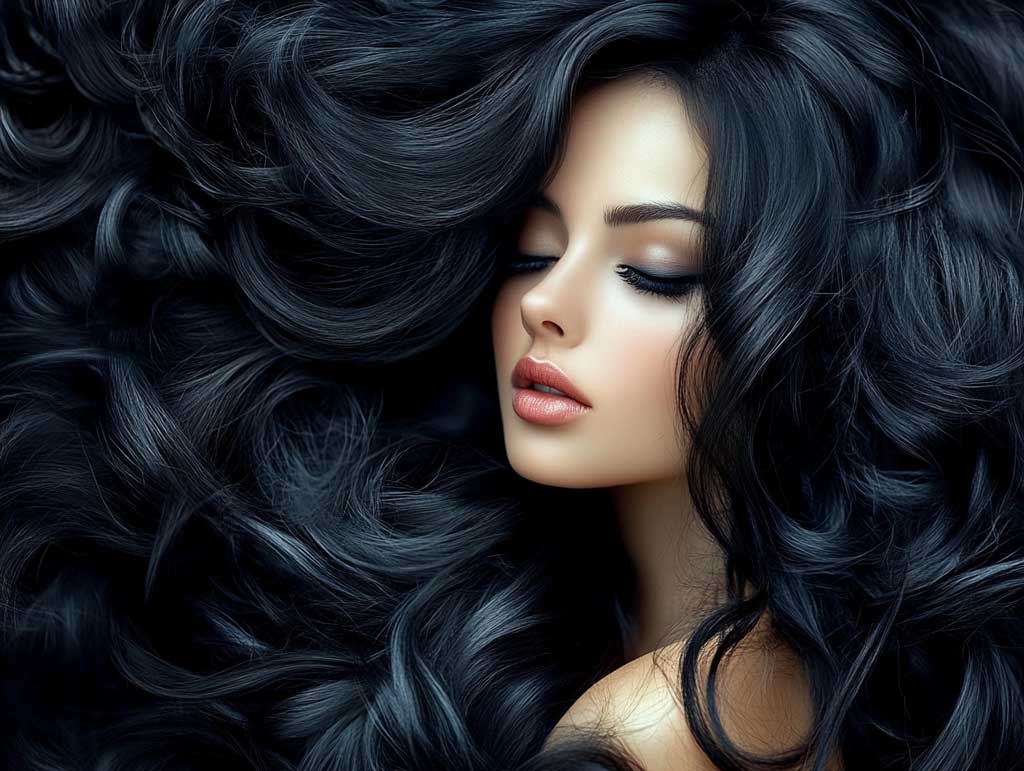
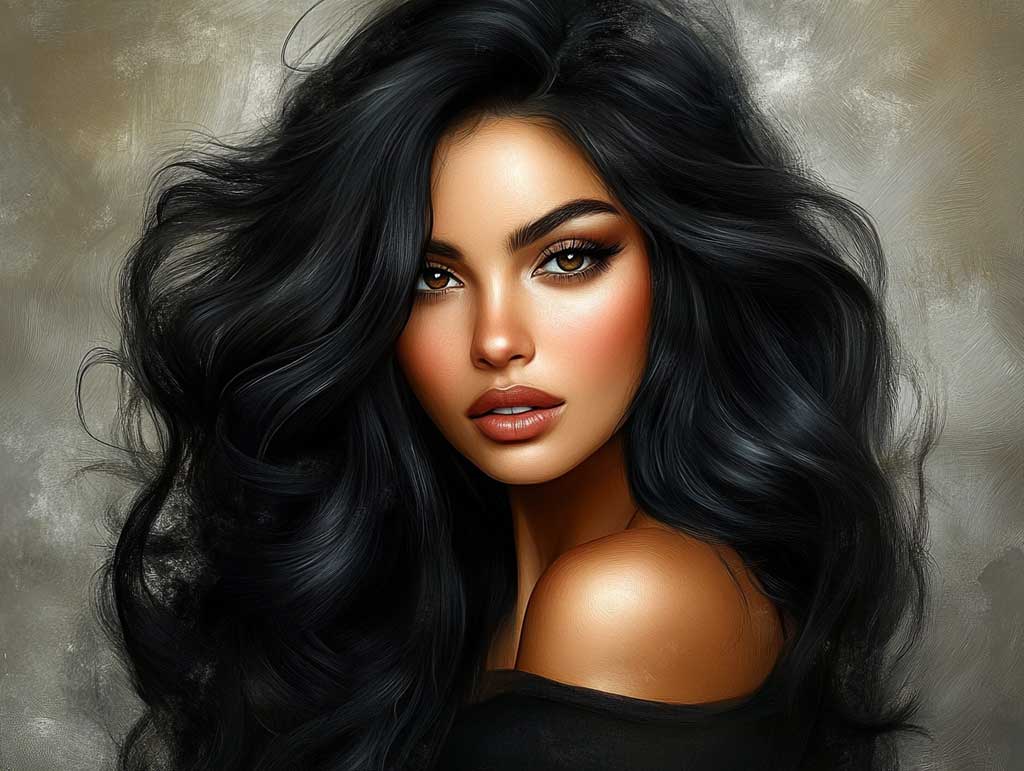
The layers underneath the curls are doing the structural heavy lifting. A single-length cut with loose curls collapses into a pyramid by midday because the weight pulls the curl pattern out — you’re left with a wave at best and a frizzy triangle at worst. Ask specifically for “long layers starting at the collarbone, with shorter pieces through the crown to support the curl,” and you’ll get a cut that holds its shape from morning to midnight. Subtle layers are the architecture; the color is just the facade.
For product: curl-enhancing cream is non-negotiable — I’ve tried skipping it and the jet black ends always look dry against the shine of the roots, which draws attention to the least interesting part of the style. DevaCurl SuperCream ($28) or Ouidad Curl Immersion ($26) both work. Apply section by section to damp hair, then air dry or use a diffuser attachment on low heat. If you want tighter definition on top, a 1-inch curling iron on the crown pieces after drying gives controlled spiral without touching the natural curl pattern lower down.
Jet black fades to a greenish cast under fluorescent light if the formula sits too long — pull it at 25–30 minutes maximum and follow with a color-safe conditioner every wash to maintain depth. Permanent jet black takes four to six hours of bleaching to remove cleanly, so commit to the shade before you sit in the chair. I’ve seen women go jet black for a season and spend $400 correcting it in spring — beautiful in November, expensive regret in March.
| Style | Best Oval Face Type | Maintenance Level | Approx. Color Cost |
|---|---|---|---|
| Choppy Layers, Burgundy | Longer oval, medium-thick hair | Moderate (gloss every 8 wk) | $120–180 initial + $60 refresh |
| Feathered Waves, Ash Brown | Any oval, especially with highlights growing out | Low-moderate (toner every 10 wk) | $90–140 |
| Loose Curls, Jet Black | Oval with naturally wavy or curly texture | High (monthly root touch-up) | $80–120 per session |
If you’re deciding between these cuts and aren’t sure how layers interact with different face shapes, the breakdown in this piece on face-framing haircuts for oval faces covers the logic behind layer placement in detail — worth reading before your next appointment.
Bottom Line
Long Haircuts for Oval Faces Either Use the Geometry or Ignore It
Every cut here places layers relative to the cheekbone — not the shoulder, not the collarbone. That single decision is what separates a haircut that looks engineered for your face from one that just happens to be long.
Color dimension keeps the layers readable. Flat, single-process color in any of these three shades will halve the visual impact of the cut. At minimum, ask for a gloss or toner that creates root-to-mid depth.
The side part on the feathered ash brown style is not optional. It does the geometric work. Center-parting that cut turns it into a curtain with no structural opinion. Save this post before your next appointment so you can show your stylist the exact images.