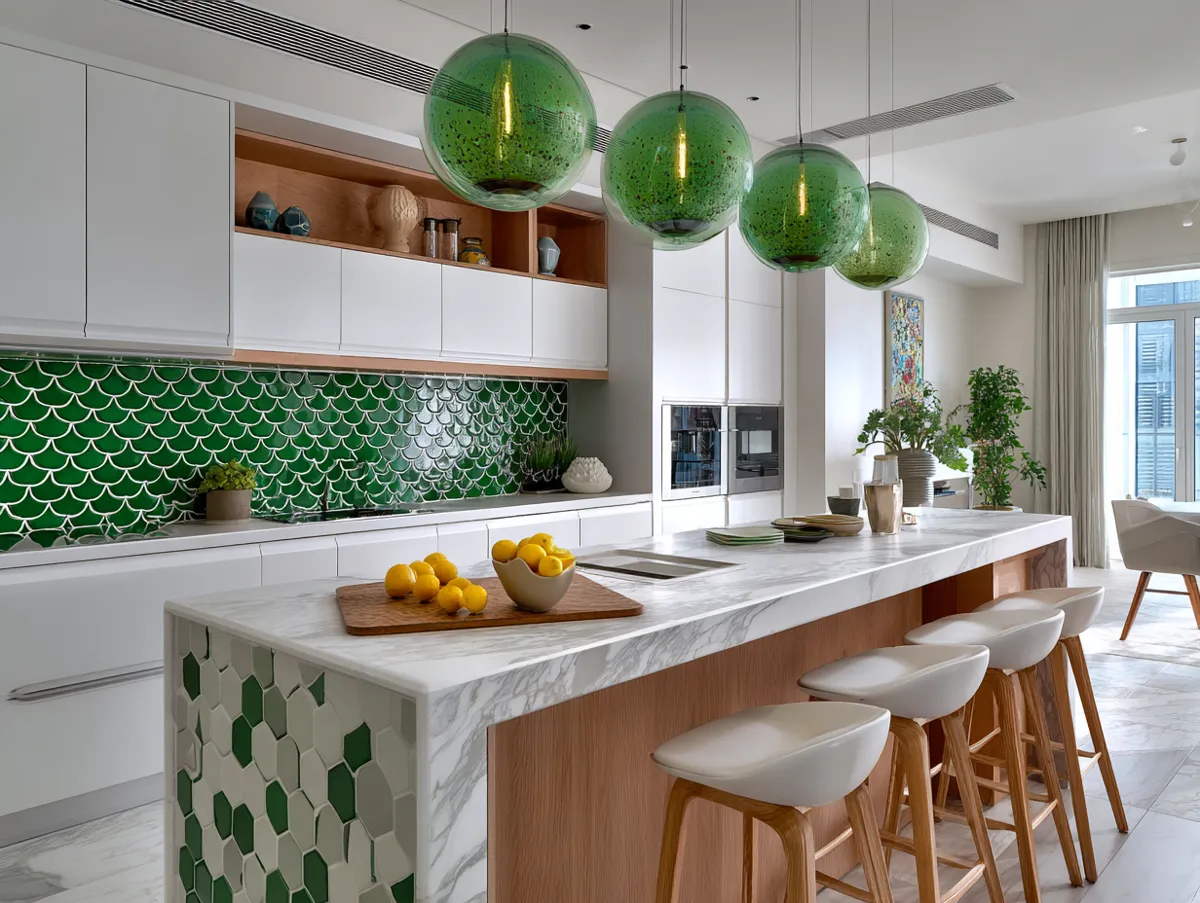
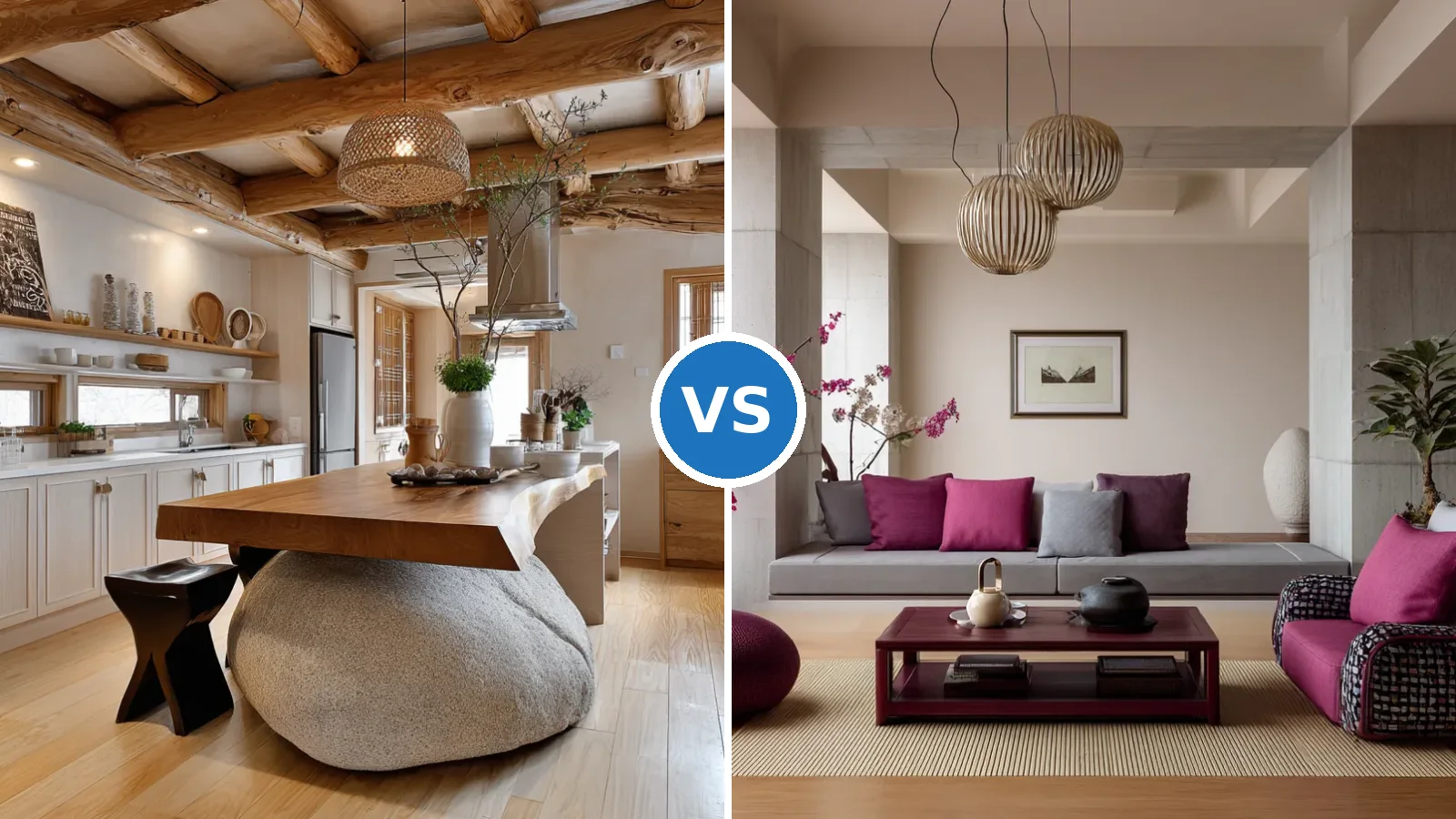
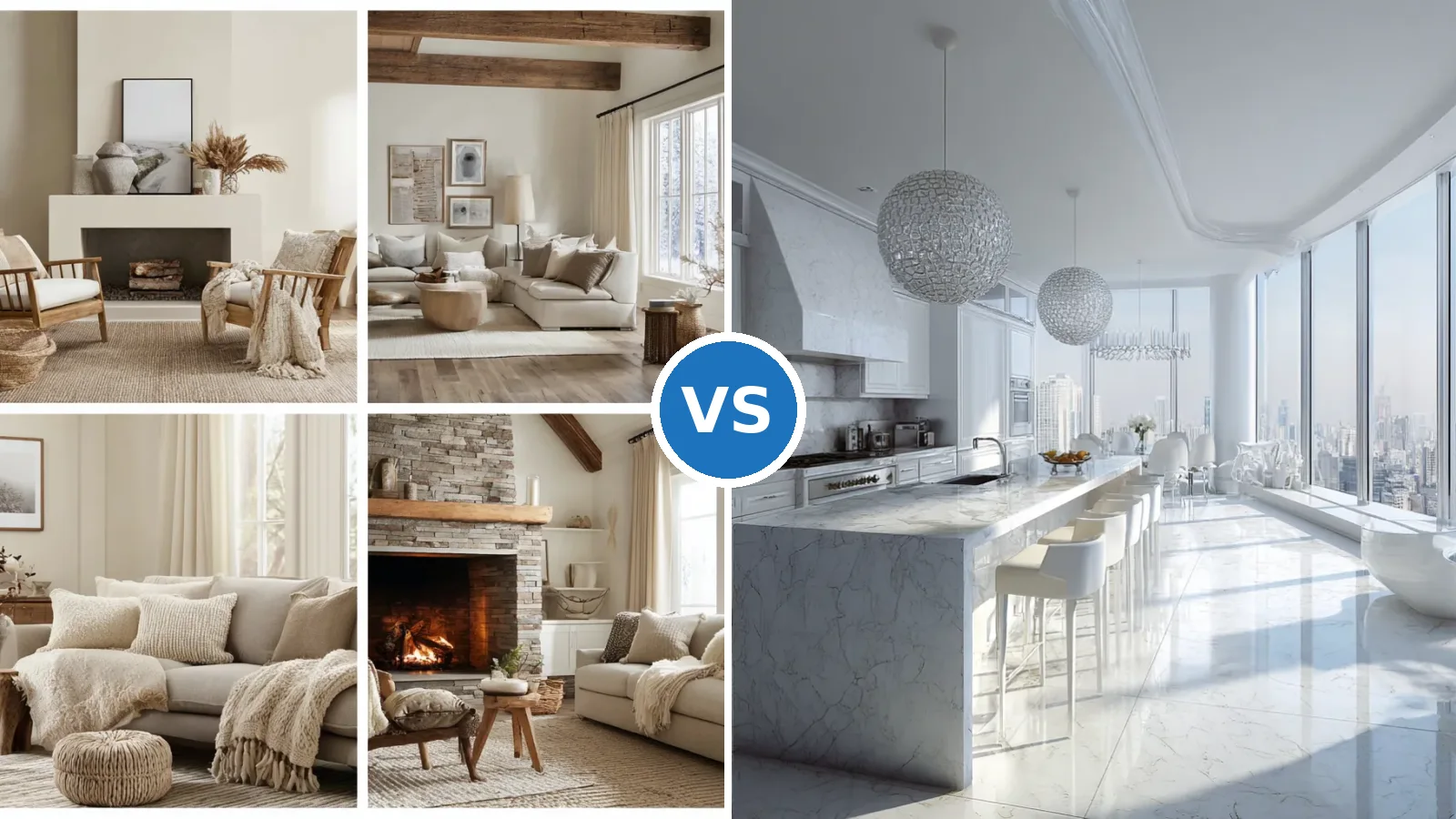
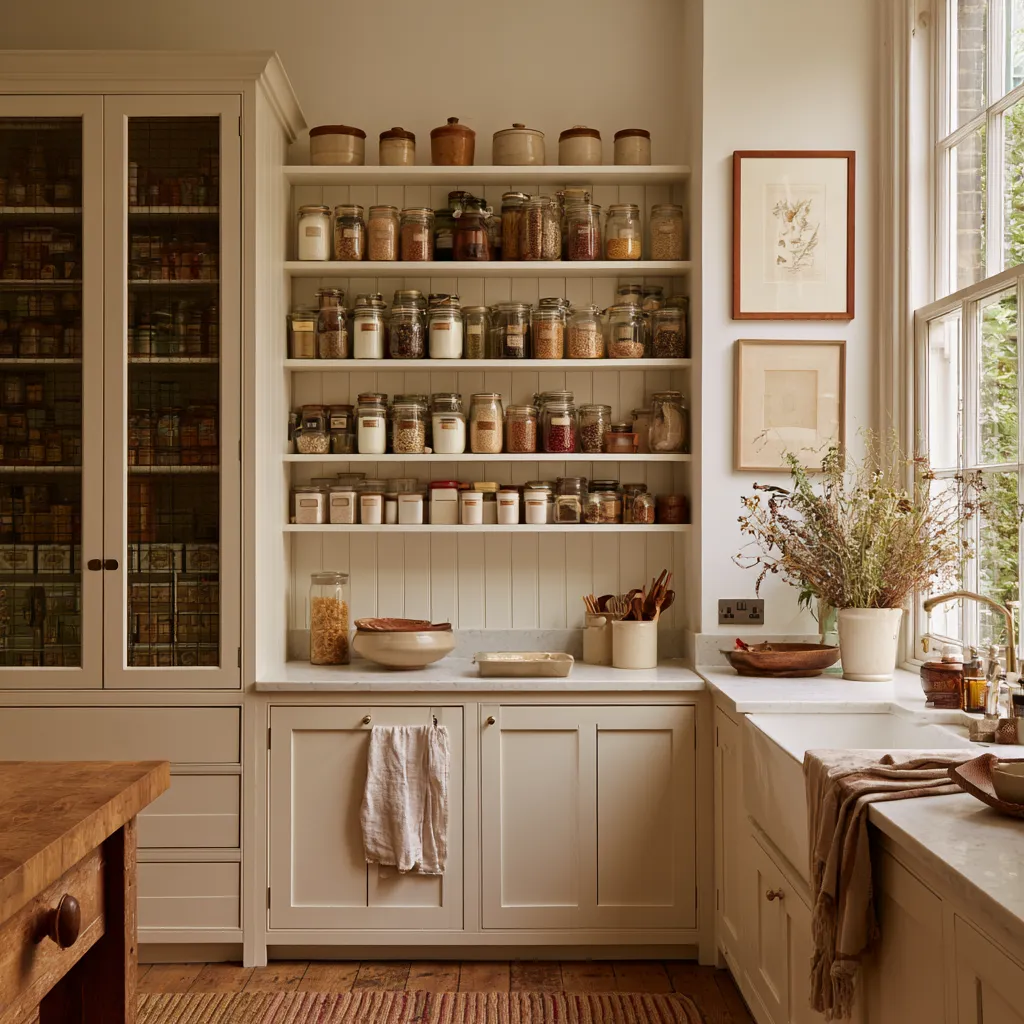
A mint green kitchen works when the color sits on the cabinets and white, wood or steel handles the rest of the room. Does it date quickly? Not if you choose a soft shade: mints with a light reflectance value (LRV) of roughly 48 to 80 look fresh in daylight without turning sugary. Professional cabinet painting averages about $4,000, around half the typical cost of replacing cabinets. Start with the doors you already have, not a new kitchen.
The most reliable layout is two-tone, with mint on the lower cabinets and white on the uppers, which makes the room feel taller. By industry estimates, colored cabinets now account for more than 30% of new kitchen installations, against under 10% five years earlier, so mint no longer reads as a gimmick. A cool mint and a warm mint behave like two different colors once evening light arrives. Settle the undertone first and the finish second.
The sections below cover three proven pairings: sleek steel appliances, open wood shelving and a mint and white split. Each comes with prices, paint shades and the mistakes that cost the most to undo. Think of mint as the lead singer of the room, backed by a quiet band of neutrals. Paint one run of cabinets first and judge it in both morning and evening light before committing to the rest.
Quick Scan
- Greens with an LRV of about 40–60 read as real color without darkening a room; mints from 70 to 80 lean pale and airy.
- Professional cabinet painting runs $2,500–$6,500, averaging about $4,000, versus roughly $8,000 for new cabinets.
- Open shelving costs about $50–$150 per linear foot installed, against $200–$800 for upper cabinets.
- Installed quartz typically costs $50–$150 per square foot, while marble often runs $75–$250 and etches more easily.
- Two-tone beats all-mint in small rooms: mint lowers plus white uppers keep the space from feeling boxed in.
- Satin or eggshell hides fingerprints on mint doors better than high gloss.
- A pro typically paints an average kitchen’s cabinets in 4–5 days, and the finish lasts 8–10 years with care.
Sleek Steel Appliances Against a Modern Mint Green Kitchen
A modern mint green kitchen gets its edge from contrast: cool mint doors next to brushed stainless steel look sharper than mint next to white appliances. Steel is neutral but reflective, so it bounces the green around the room instead of competing with it. Which mint holds its own beside a silver fridge? A light shade around LRV 72, such as Mint Condition, keeps enough pigment to read as green under bright task lighting. Hold your paint sample against the actual appliance finish, not a white board.


The island is where this look earns its keep. A mint base under a white quartz top gives a surface that resists stains, and installed quartz typically costs about $50–$150 per square foot, compared with roughly $75–$250 for marble. Pendants hung about 65–70 cm above a dining top anchor the seating side of the island without blocking sightlines. Skip glossy black pendants here, because they drag the eye down and fight the airy mint. Brushed nickel or white glass keeps the palette calm.
Warm wood accents stop mint and steel from feeling clinical, the way a leather strap warms up a steel watch. Oak flooring, walnut barstools or a single timber shelf supply the warmth that cool colors can’t produce on their own. Two wood tones are plenty in one kitchen, while three or more start to look like leftover samples. Match the stool wood to the floor and let everything else stay mint, white or steel.


Large windows do half the styling work in this scheme, because daylight on steel and mint makes both surfaces look cleaner. Darker corners need help from the white elements around them. A bright white with an LRV near 92 reflects noticeably more light than a creamy white near 85, as these white corner kitchen cabinet ideas with real costs and sizes show. Paint the cabinet farthest from the window in the lightest shade of your palette.
Mint Green Kitchen Cabinets Under Open Wood Shelving
Mint green kitchen cabinets on the lower run with open wood shelves above form a lighter, cheaper alternative to a full wall of uppers. Open shelving typically costs about $50–$150 per linear foot installed, compared with roughly $200–$800 for upper cabinets. Is it practical for everyday cooking? Yes, as long as the shelves hold the dishes you use daily and everything else hides behind mint doors. Plan the shelves around your top ten most-used items.
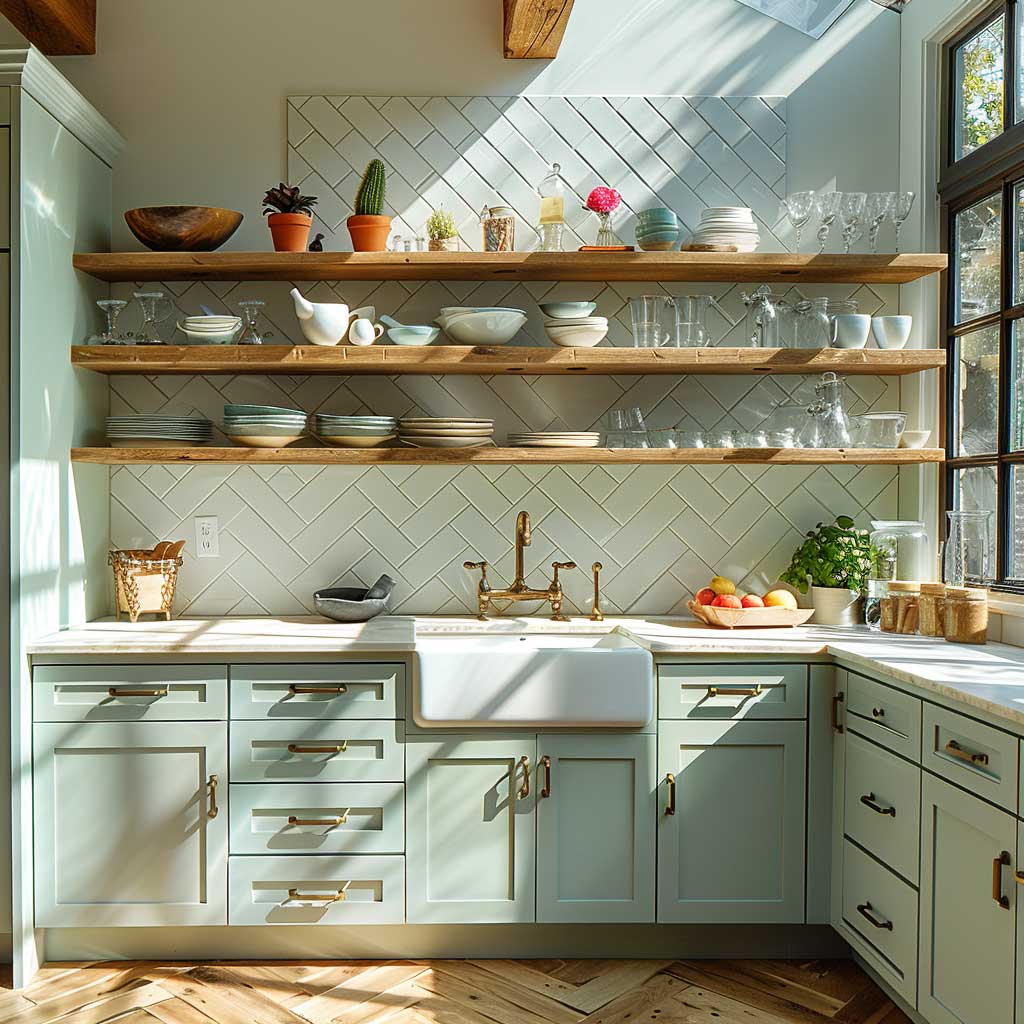

Placement decides whether the shelves look built-in or improvised. The first shelf usually sits 18–20 inches above the counter, where an upper cabinet would start, and a well-mounted floating shelf holds about 30–50 lbs. Don’t stack a full set of stoneware on one floating board. Spread heavy plates across two shelves and screw every bracket into a stud.
White marble with grey veining flatters mint, but it etches under lemon juice and wine in a way quartz does not. A herringbone backsplash adds texture, and installers typically charge $2–$4 more per square foot for the pattern than for a straight lay. Treat the backsplash like the frame on a painting: it should hold the picture together, not shout over it. On a tight budget, run herringbone only behind the range.
- Keep shelf depth around 250–300 mm (10–12 inches) so items at the back stay visible.
- Fill shelves to roughly 70% so they look deliberate instead of crammed.
- Group white ceramics and add one wood or brass piece per shelf.
- Keep open shelves at least one cabinet width away from the hob if you cook with oil.


Open shelving carries a cleaning cost that closed mint doors avoid. Displayed dishes collect grease and dust, so they need a weekly wipe, while cabinet fronts get by with a monthly one. A skylight or wide window makes the wood and mint glow, which is the real payoff of dropping the uppers. If the window sits on the shelf wall, mount the boards on the side walls so the light stays unblocked.
The Two-Tone Split Behind Every Mint Green and White Kitchen
A mint green and white kitchen splits color by height, with mint on the lower cabinets and island and white on the uppers and walls. White uppers visually recede, so the room reads taller than it would with floor-to-ceiling green. Which white suits mint best? A crisp white near LRV 92 sharpens a cool, bluish mint, while a softer white around LRV 83–85 suits mints with a warm yellow undertone. Paint both whites on one board and compare them beside your mint sample.

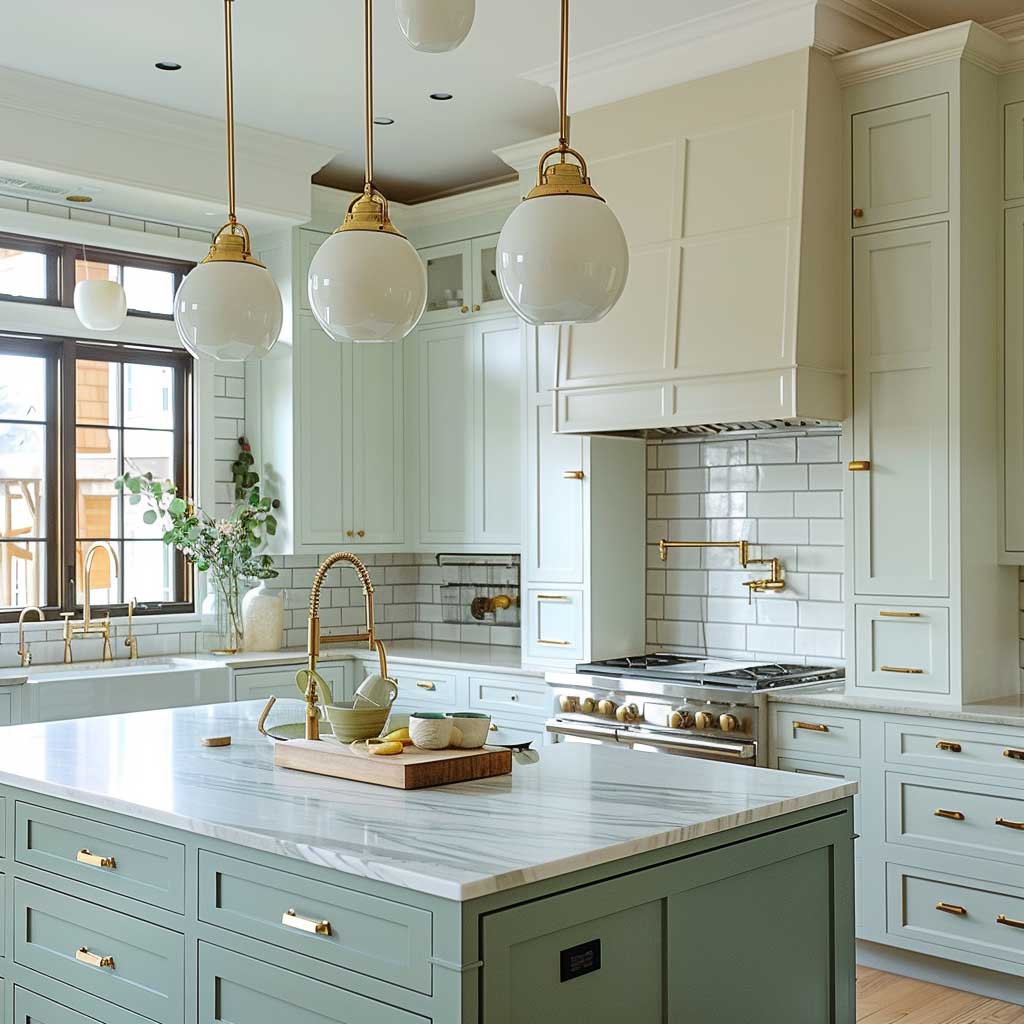
White subway tile behind mint cabinets is a classic move for good reason. Standard 3×6 tile usually costs about $7–$13 per square foot, and a typical 30-square-foot backsplash lands around $900–$2,100 installed. Glossy tile bounces light, while matte tile hides water spots better. Avoid bright white grout in a busy kitchen, because it greys within months; pale grey grout keeps the lines crisp much longer.
Brass handles and a brass faucet bring warmth that mint and white can’t produce alone. New cabinet hardware typically adds $100 to $1,000 or more, depending on the number of pulls and the metal. Think of brass as jewelry on a plain dress: two or three touches look intentional, while ten look like a costume. Match the faucet to the pulls and keep the light fittings in a quieter finish.
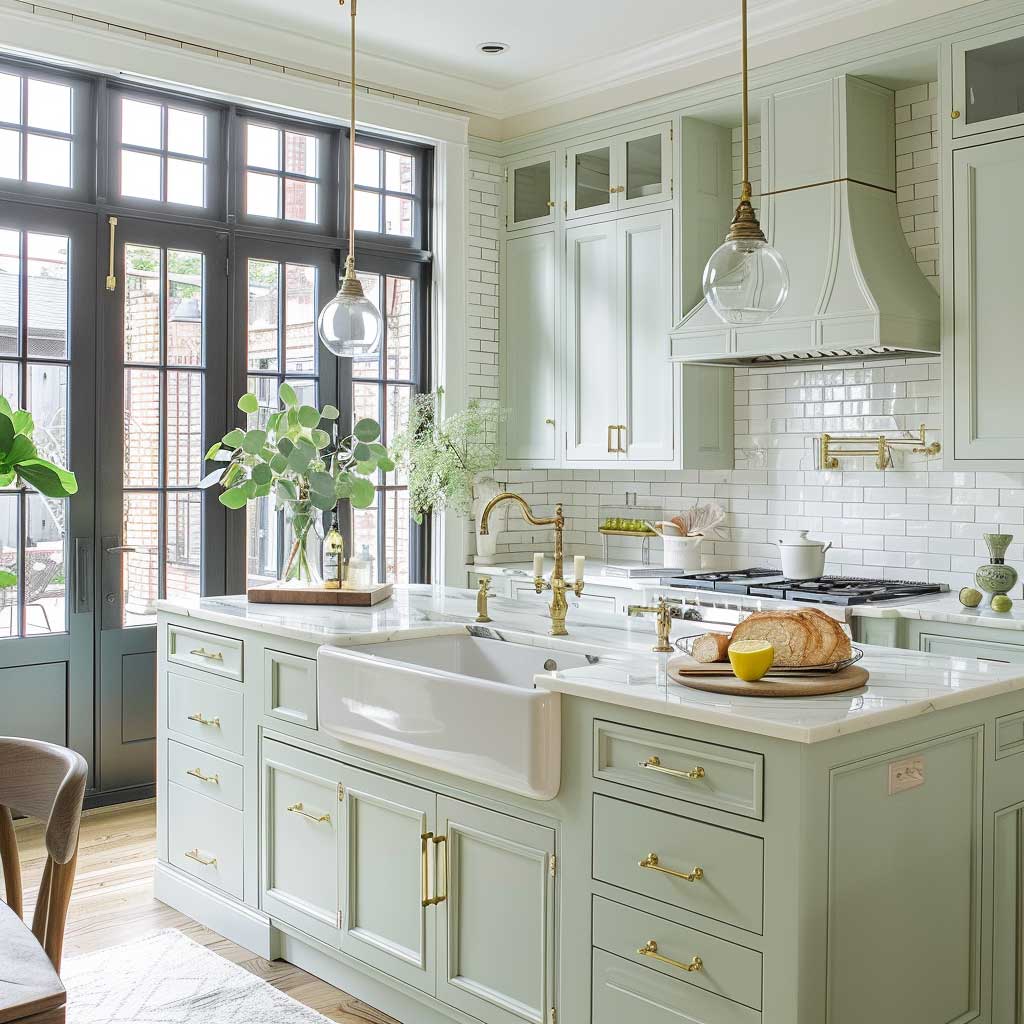
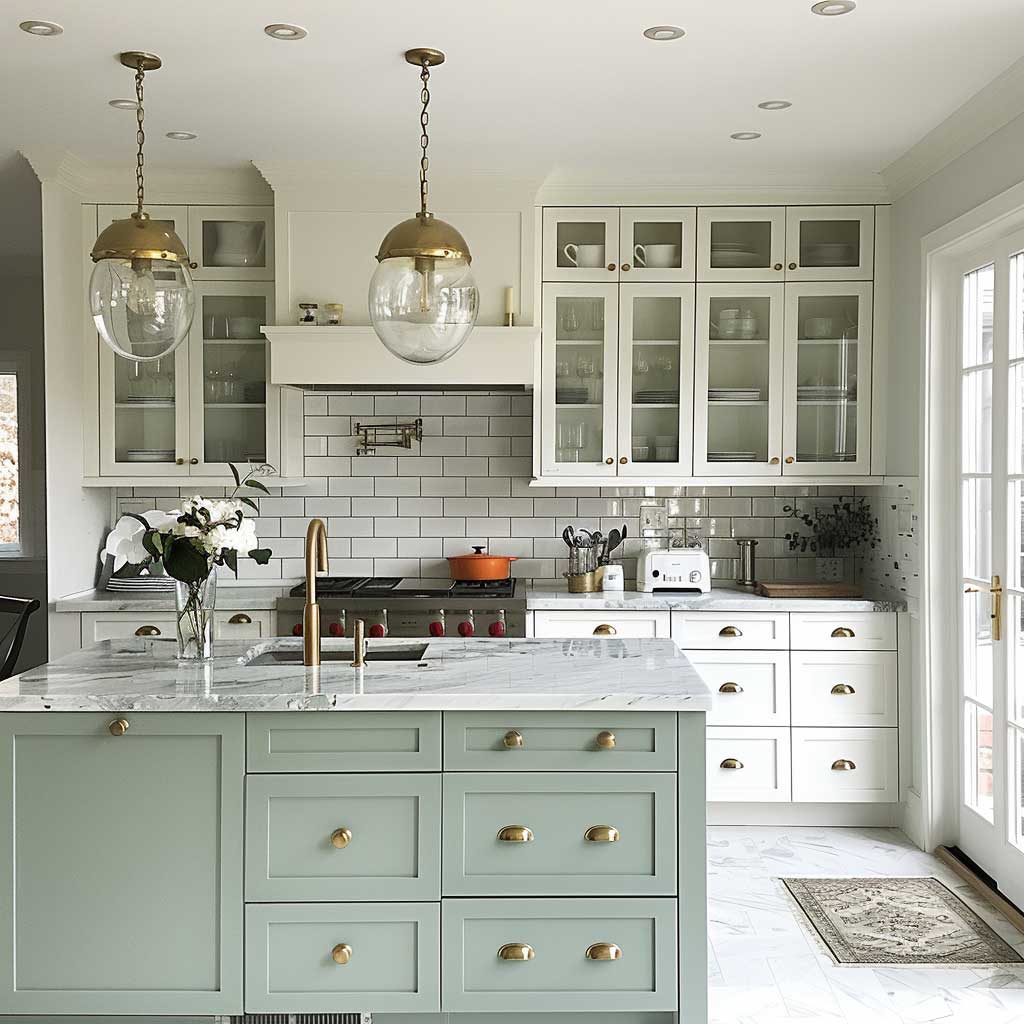
The split works especially well in open-plan homes, where the kitchen is on view from the sofa. Mint lowers sit below eye level from the living zone, so the room stays calm instead of turning into a wall of green. These open plan kitchen diner layouts for small houses explain how to keep a 90 cm walkway clear around an island. Add two herb pots by the window and stop there, because a crowded sill breaks the clean two-tone line.
Picking a Mint Shade That Survives Morning and Evening Light
Choosing a mint kitchen color starts with light reflectance, not the name on the swatch. Greens between roughly LRV 40 and 60 read clearly as color without darkening a room, while shades above 70 lean toward a pale, almost white mint. Does a north-facing kitchen need a lighter mint? Usually yes, because cool daylight pushes mint toward grey. In that case, choose a lighter and slightly warmer shade than the one that looked right in the store.
| Shade | Code | LRV | Reads as | Best spot |
|---|---|---|---|---|
| Seawashed Glass | SW 9034 | 48 | Soft sage-leaning mint | Island or lower cabinets |
| Retro Mint | SW 9036 | 54 | Clear mid-tone mint | Lowers in a bright room |
| Mint Condition | SW 6743 | 72 | Fresh light mint | Full cabinet runs |
| White Mint | SW 6441 | 78 | Green-tinted white | Walls beside mint cabinets |
| Minted | SW 6735 | 80 | Pale airy mint | Small or dark kitchens |
Finish matters as much as the shade itself. Satin or eggshell is the sweet spot for cabinets, since it wipes clean and hides fingerprints better than high gloss, which shows every brush mark and dent. Matte is cheapest but stains more easily near the sink. A paint chip is a trailer, not the film, so test a large sample board on a real door before buying the 1–2 gallons an average kitchen needs.
Don’t Do This
Never roll mint straight over glossy laminate or swollen MDF doors without proper prep. These materials can’t be sanded like solid wood, so paint only works on undamaged surfaces with a bonding primer. Painting saves about half the cost of replacement ($4,000 versus roughly $8,000), but peeling doors wipe out that saving fast. If the boxes are water-damaged, replace them and paint the new doors instead.
Paint, Reface or Replace on a Mint Cabinet Budget
Budgeting for mint green cabinets comes down to three routes, and paint is the cheapest by a wide margin. Based on typical national averages, painting costs about $4,000, refacing about $8,250 and full replacement about $8,000 before any layout change. Is painting worth it on older cabinets? Only when the boxes are sound, because new color can’t fix sagging shelves or failed hinges. Check every box for water damage before you choose a route.
| Route | Typical cost | Time on site | What changes | Best for |
|---|---|---|---|---|
| DIY paint | About $400 in materials | A weekend to a week | Color and finish | Solid wood doors, patient owners |
| Professional paint | $2,500–$6,500 (avg. about $4,000) | 4–5 days | Color and finish, lasts 8–10 years | Sound boxes, color change only |
| Refacing | About $8,250 | Longer than painting | New doors and drawer fronts | Dated door styles on good boxes |
| Replacement | About $8,000 on average | Longest of the three | Boxes, doors and layout | Damaged cabinets or a new plan |
Kitchen size moves the price more than the color does. A small kitchen with 15–20 doors and drawers typically runs $1,000–$3,500 to paint, a medium one with 30–45 pieces runs $3,500–$7,000, and a large island kitchen can pass $10,000. Labor makes up around 85% of the bill, according to this kitchen cabinet painting cost breakdown. Pricing works like a taxi meter: the count of doors keeps it ticking, so count yours before requesting at least three quotes.
Paint type is the other lever. Latex costs about $12–$25 per gallon but often needs touch-ups within a year or two, while alkyd runs $20–$55 per gallon and stands up far better to hands and steam. Don’t save $50 on paint for a kitchen that took $4,000 of labor to finish. Ask for alkyd or a cabinet-grade acrylic in satin on every mint door.
Where Mint Pays Off
A mint green kitchen pays off when the shade sits between about LRV 48 and 80 and the budget goes into paint rather than new boxes, roughly $4,000 against about $8,000 for replacement.
Put mint on the lowers and the island, then keep the uppers white or open. That split makes a small room read taller than floor-to-ceiling green, and it hides scuffs where hands and feet hit most.
Choose open shelving at $50–$150 per linear foot when light matters more than hidden storage, and quartz at $50–$150 per square foot installed when you want marble’s look without etching.
Test two mint samples on real doors in morning and evening light, then finish in satin. Done well, a professional paint job keeps its color for 8–10 years.