Bay window seating built around Scandinavian simplicity works because it stops fighting the architecture. Clean lines, natural materials, and deliberate restraint let the window itself carry the room — not the furniture crammed around it. You need fewer pieces, not more. I’ve pulled three approaches that nail this balance, ranging from a light-wood bench setup under $400 to modern armchairs that anchor a reading corner without cluttering it.
Most bay window furniture ideas fail for the same reason: too much pattern, too many accent pillows, too little breathing room. Scandinavian design is basically the opposite of that. Neutral tones, honest materials, one or two plants on the ledge — that’s the whole formula.
Light wood bench + sill plants: Warmest, most budget-friendly. IKEA SKOGSTA bench at $149.99 fits most standard bay widths.
Textured cushions on a wooden bench: Most livable day-to-day. HAY Cornet Stool at $345 pairs well as a side piece.
Modern armchairs facing the window: Most sophisticated. HAY Chisel Lounge Chair starts at $1,695 at DWR.
One mistake to avoid: Matching cushion fabric to the wall color. It flattens everything into beige soup.
Light Wood Accents Do the Structural Work Here, Not the Decor
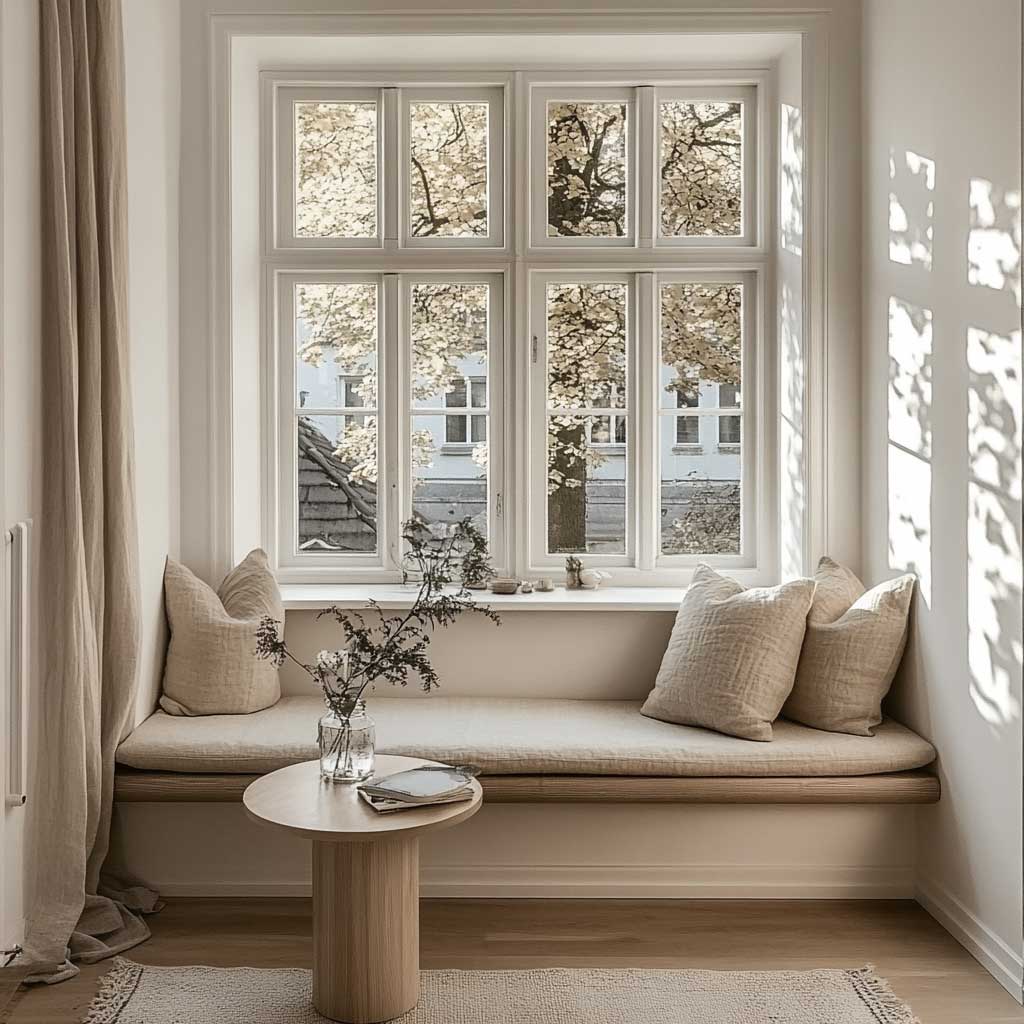
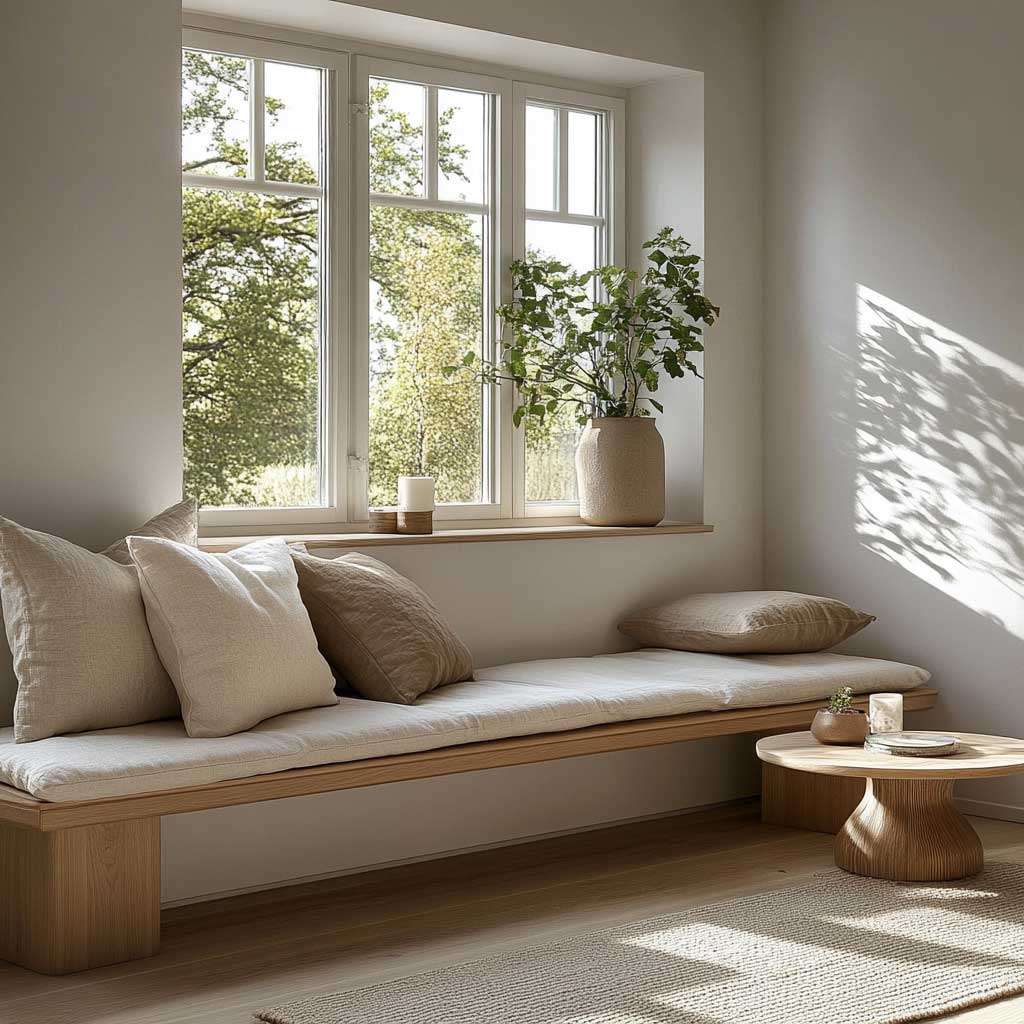
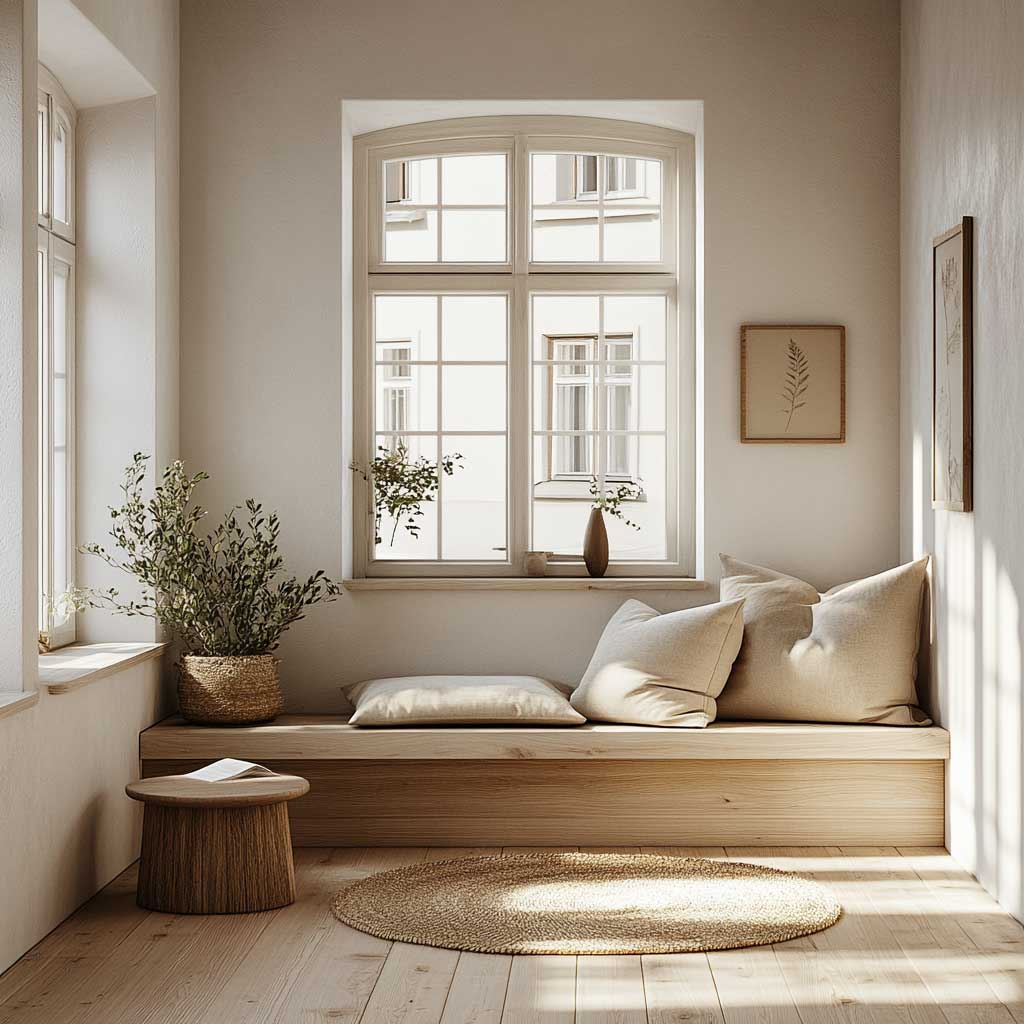
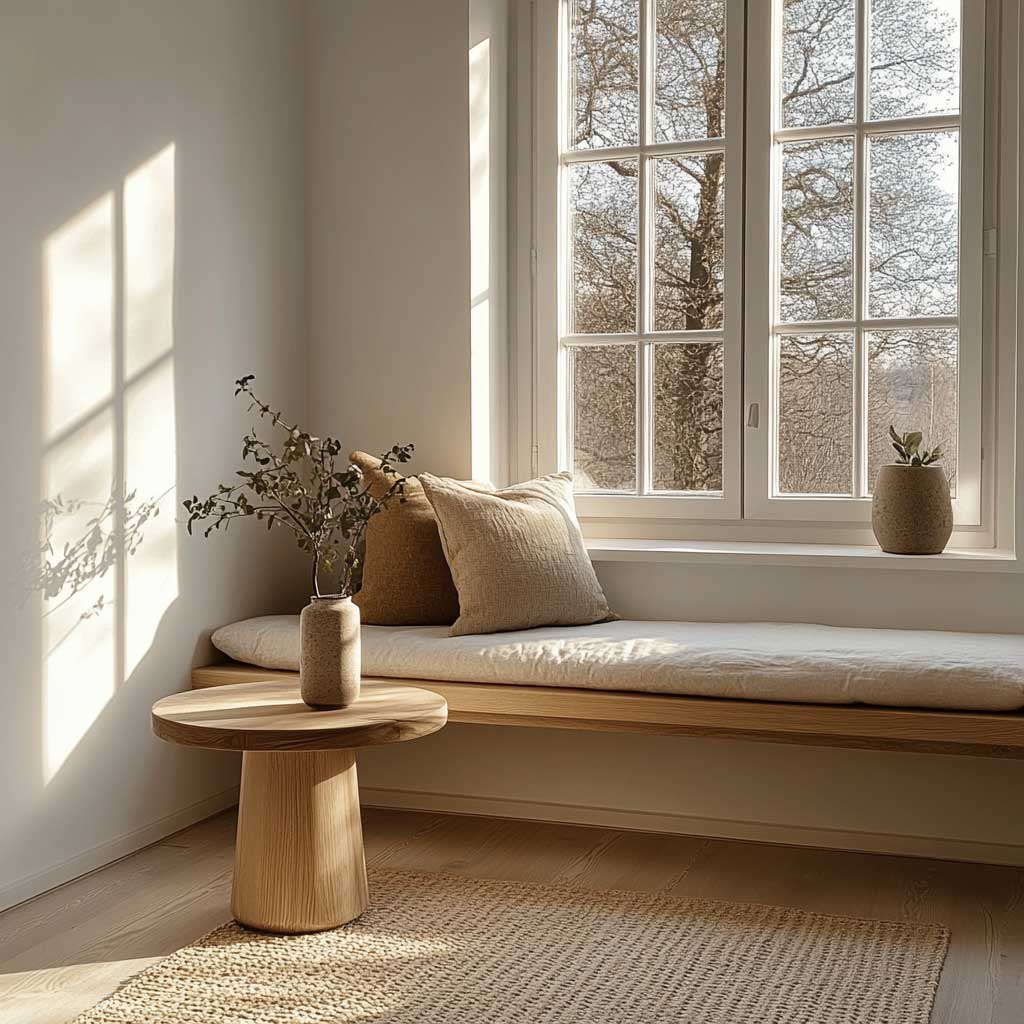
Light wood in a bay window setting behaves like a prism for daylight — birch and oak tones pick up the sun and scatter warmth across white walls without doing anything dramatic. My go-to is a bench in the 18-inch seat-height range, which puts the sill at exactly the right level for resting a coffee. IKEA’s SKOGSTA bench in solid acacia at $149.99 works for a standard 4-foot bay width. Pricier option is the HAY Cornet Stool at $345, which pairs better with higher-end interiors.
The round side table question trips people up. You want something in the same wood family as the bench — not necessarily identical, but tonally close. A table in a darker walnut next to a pale birch bench reads as two different rooms colliding in one corner. Keep within two shades of each other. Diameter between 14 and 18 inches fits the depth of most bay window alcoves without blocking the seat.
Plants on the window ledge earn their place here because they justify the daylight — something alive responding to it. Two or three pots of different heights work better than a row of identical succulents, which starts to look like a display shelf at a garden center. Trailing plants like pothos hang over the ledge edge and soften the right angle between sill and wall. Avoid anything with large leaves that blocks the glass panel below eye level.
What doesn’t work: a matching set where every piece — bench, table, and tray — comes from the same product line. It ends up looking like a floor display. Pull pieces from different sources and let the wood tone do the visual connecting, not the brand.
The modern bay window design breakdown on ArtFasad covers sill heights in detail — drop to 18 inches from floor for a proper bench seat, which requires tempered glass per most building codes. Worth knowing before you commit to a furniture height. Standard 36-inch sill puts the window ledge at desk level, useless for sitting.
Textured Cushions Work as Insulation Against the Look Getting Cold
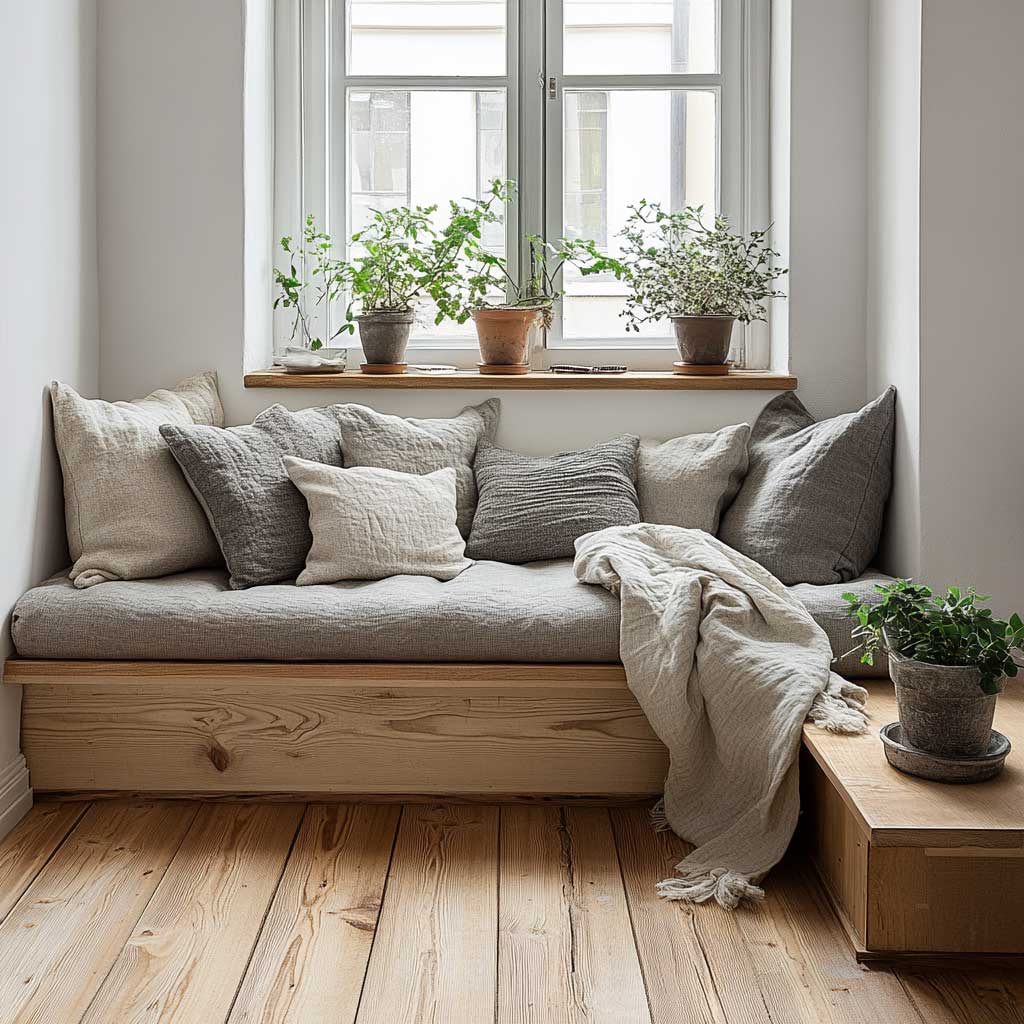
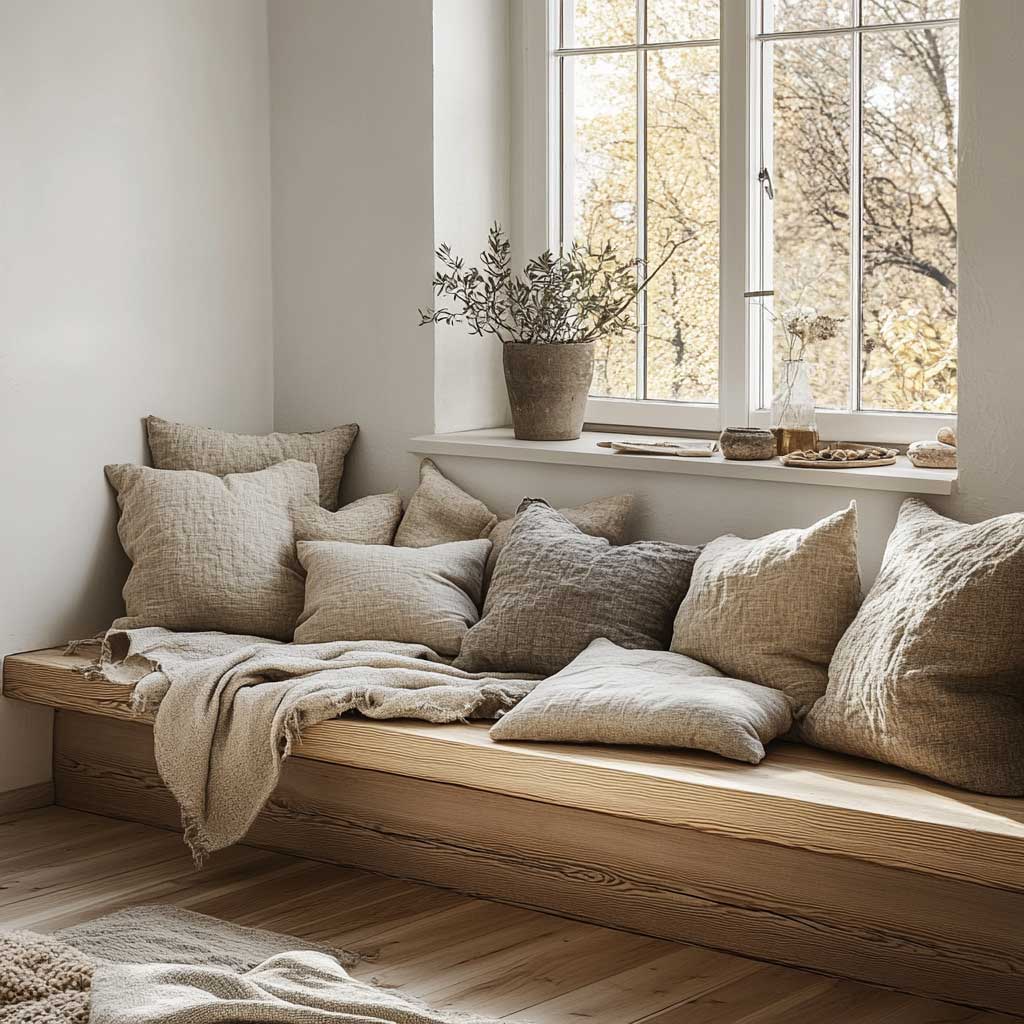
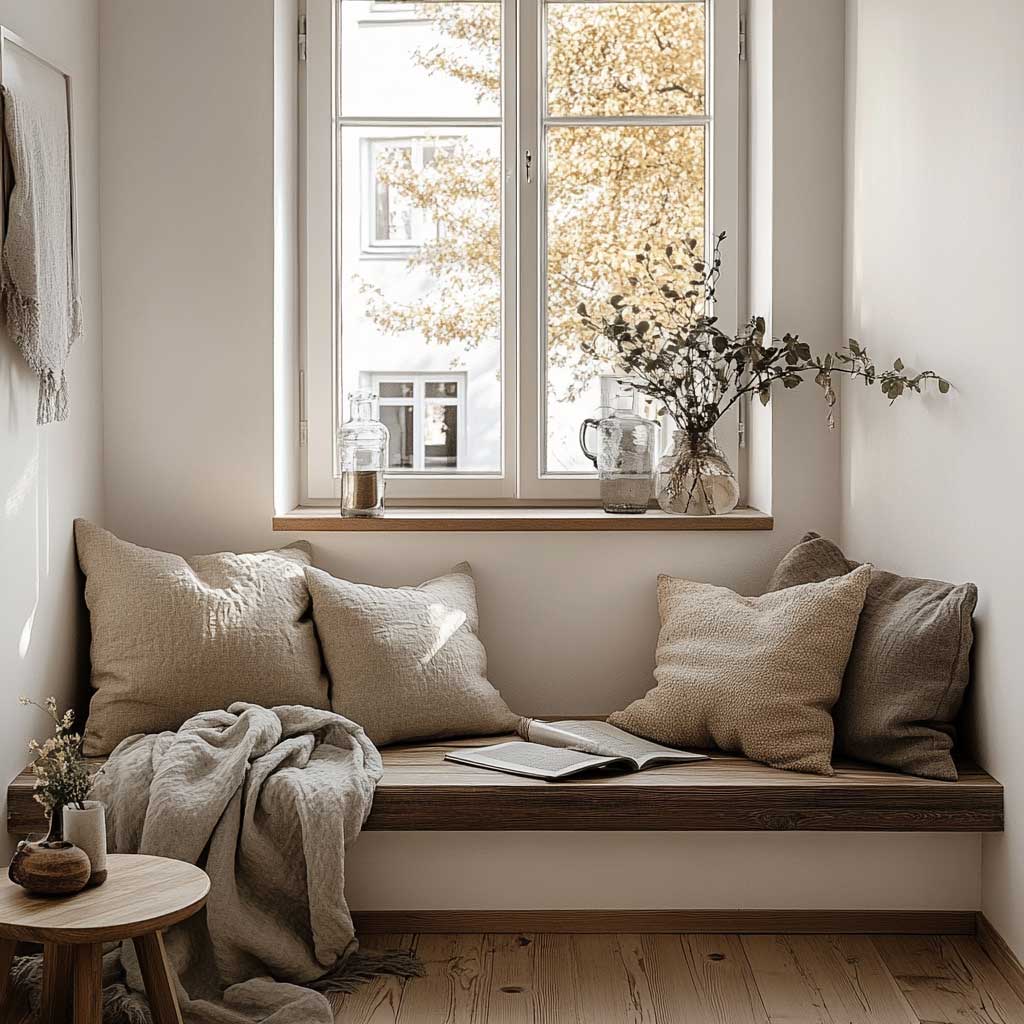
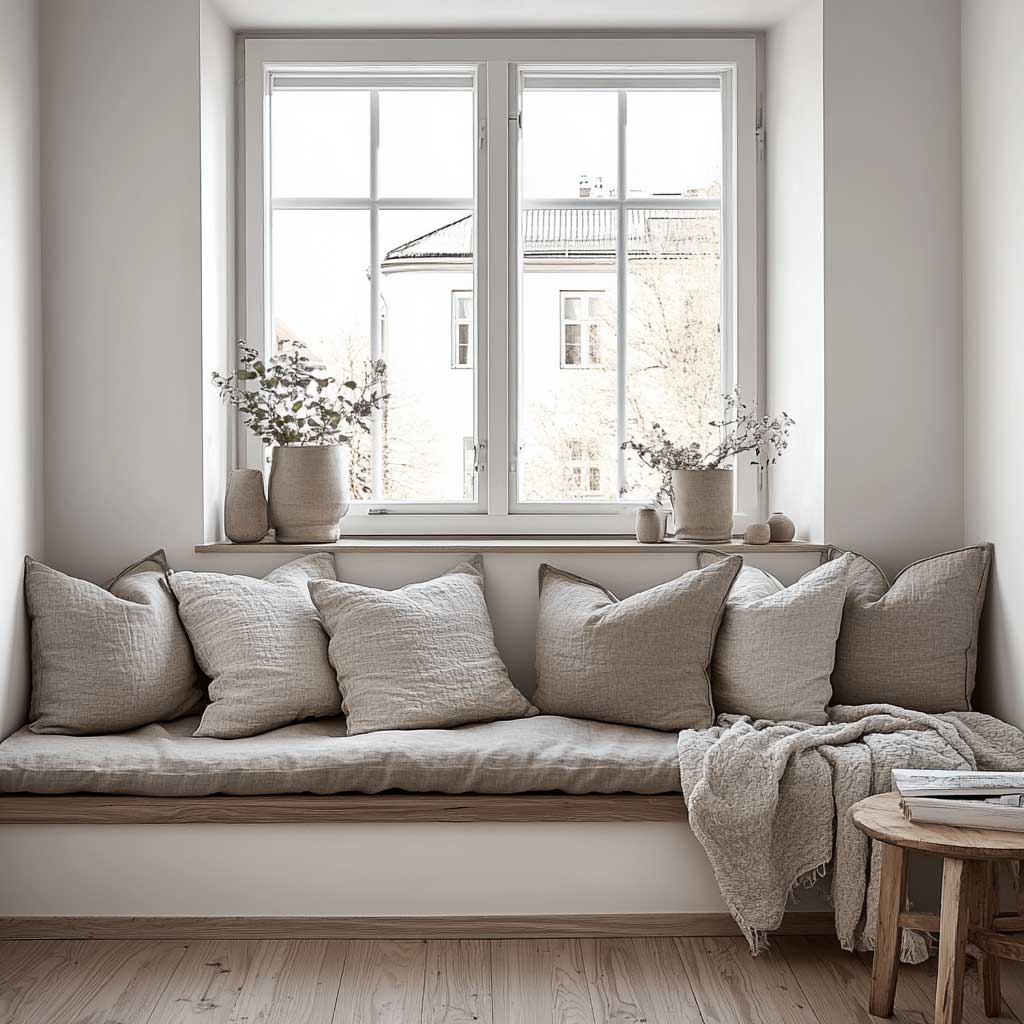
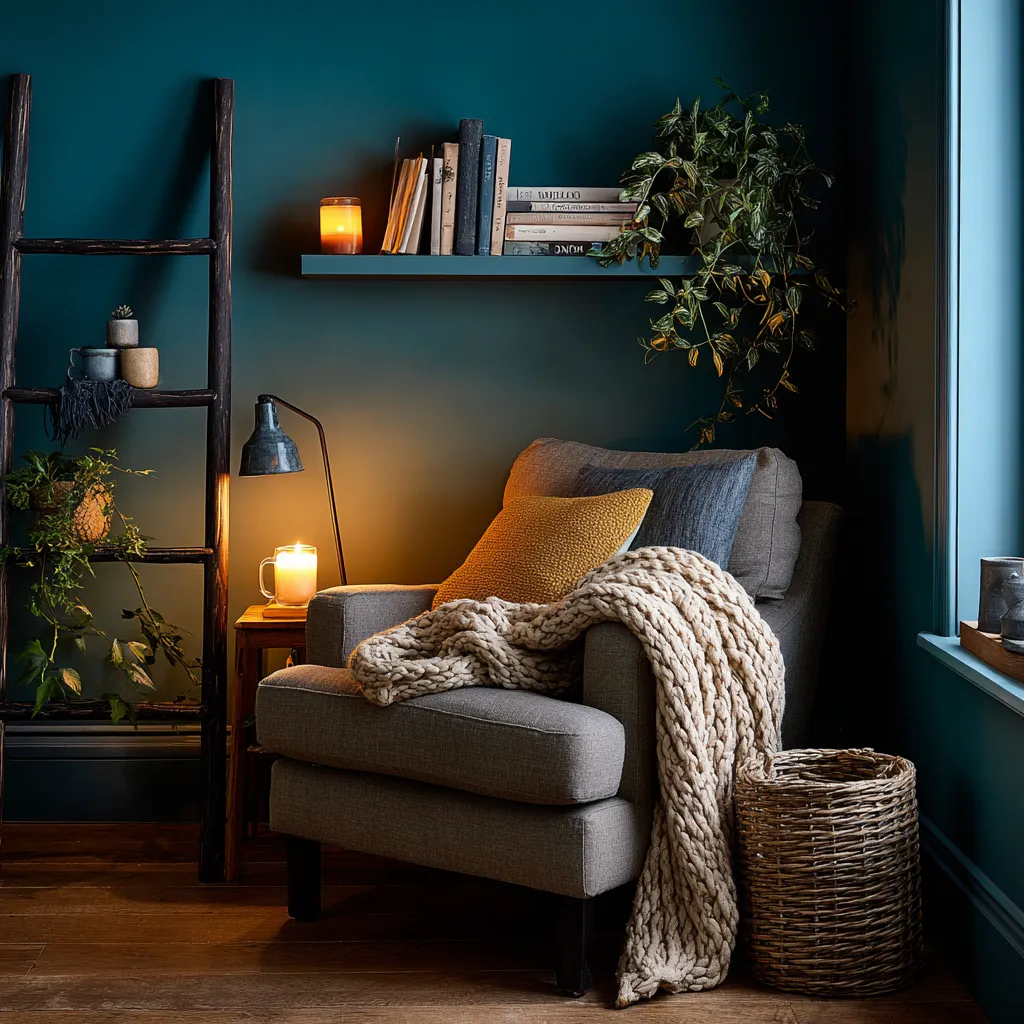
Texture does something color can’t — it absorbs light softly and adds depth without committing to a hue. My bench cushions are a bouclé weave in warm oat from a Finnish brand called Lapuan Kankurit; around $85 for a 60x60cm cover. Swap them out in winter for a heavier felted wool and the whole corner reads differently without changing a single piece of furniture. That’s the trick I stole from a Scandinavian interior stylist whose apartment I toured three winters ago.
Muted grays and beiges stay dominant here because they act as a visual neutral that lets the wood and the window take center stage. What doesn’t work is a statement cushion in a bright accent color — the bay window nook becomes a landing pad for your eye instead of a resting place. I tried a terracotta cushion in a similar setup and it looked like a decorating mistake, not a choice. Stick to the palette of the room’s largest piece of furniture.
Throw blankets belong draped naturally, not folded into a tight square the way they look in catalog photos. A loosely folded throw resting on the far end of the bench signals that someone actually sits here. Brands like Lapuan Kankurit and Røros Tweed make merino throws in the $120 to $180 range that hold their shape after washing without looking stiff. Skip the polyester fleece blankets — they pill within six months and look cheap under natural light from the window.
Don’t pile more than two cushion layers on a Scandinavian bench. Three or four cushions stacked up looks like a storage problem, not a design choice. The seat disappears under fabric and the wood — which is the whole point — becomes invisible. One flat seat cushion plus one lumbar pillow. That’s the limit. Anything more and you’ve crossed from cozy into cluttered, and no amount of neutral tone fixes cluttered.
Potted plants on the sill in this context do different work than they do in the light-wood section — here they interrupt the softness with something structured. A snake plant or a small fig gives a vertical element that keeps the cushioned bench from looking too horizontal and low. You want contrast in silhouette, not just contrast in texture.
Armchairs Turn a Bay Window from a Nook Into a Destination

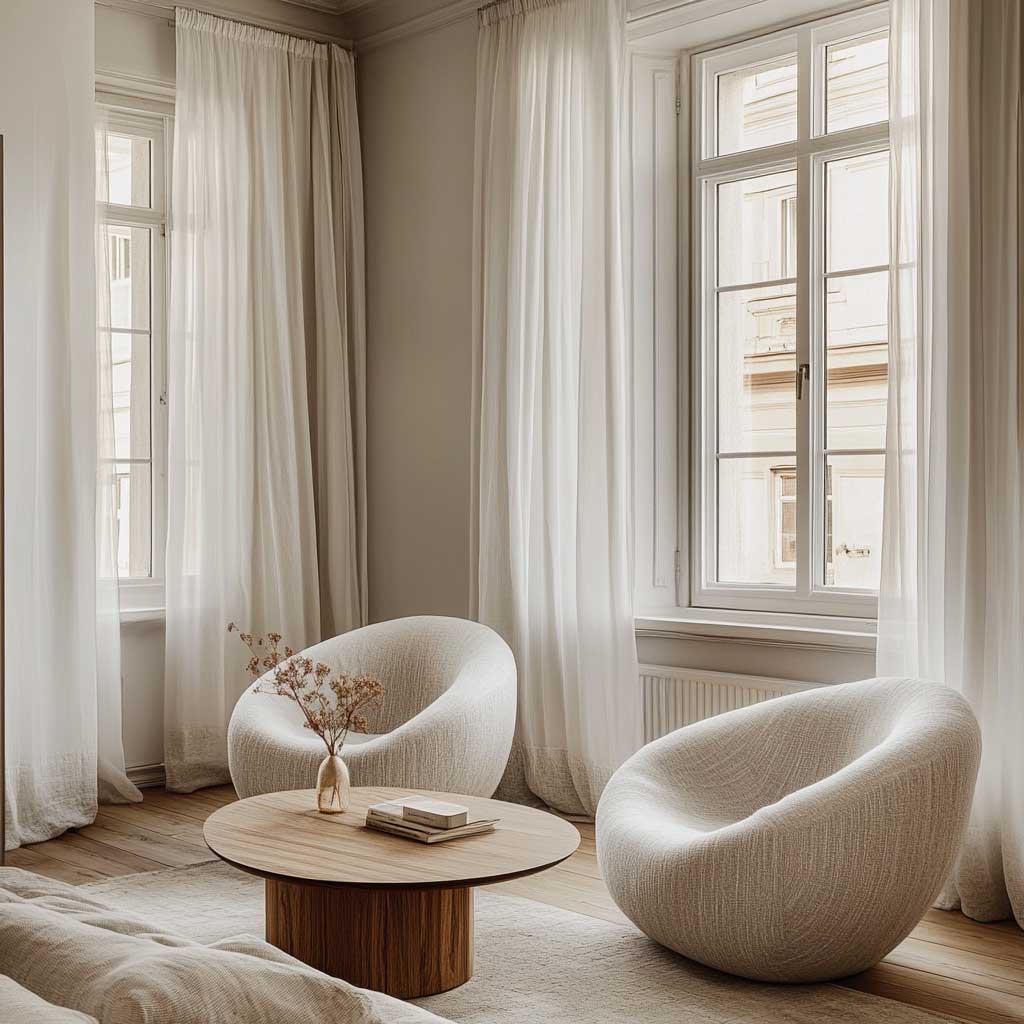
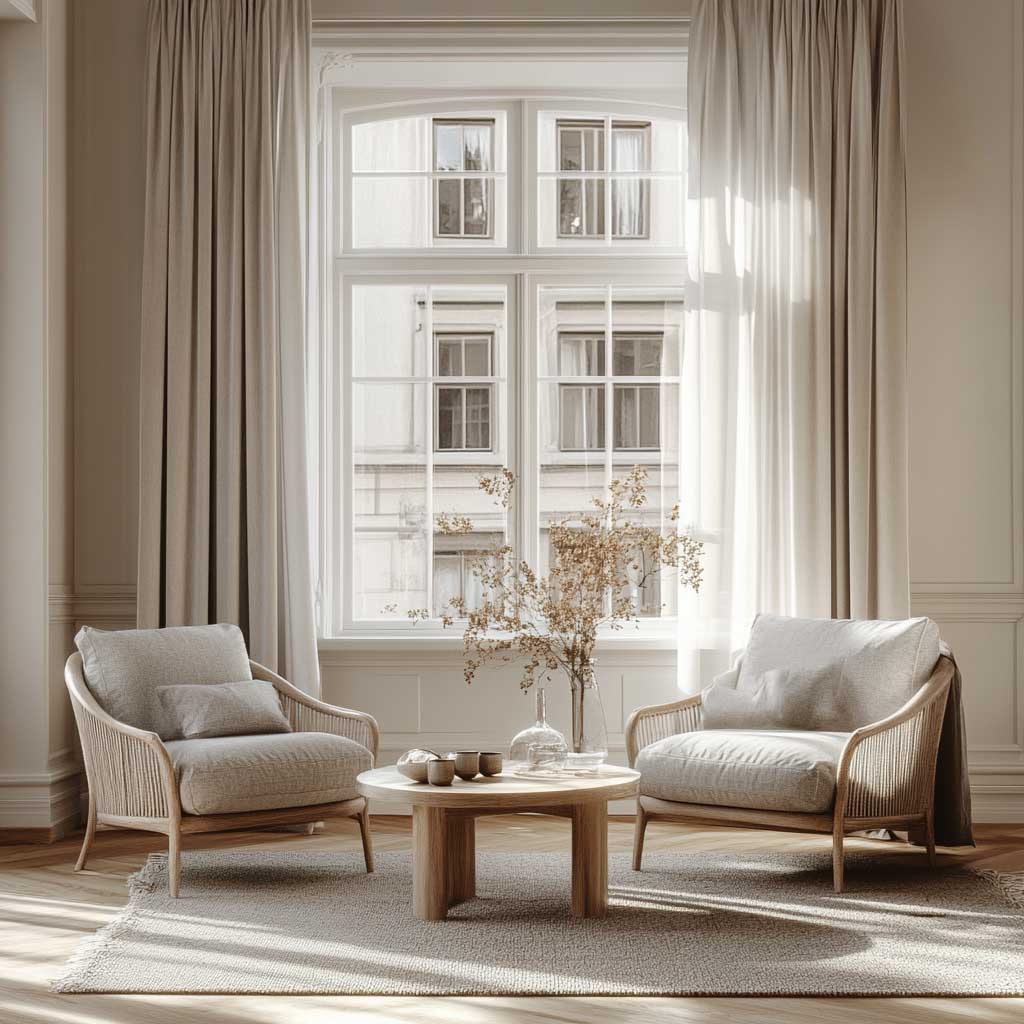
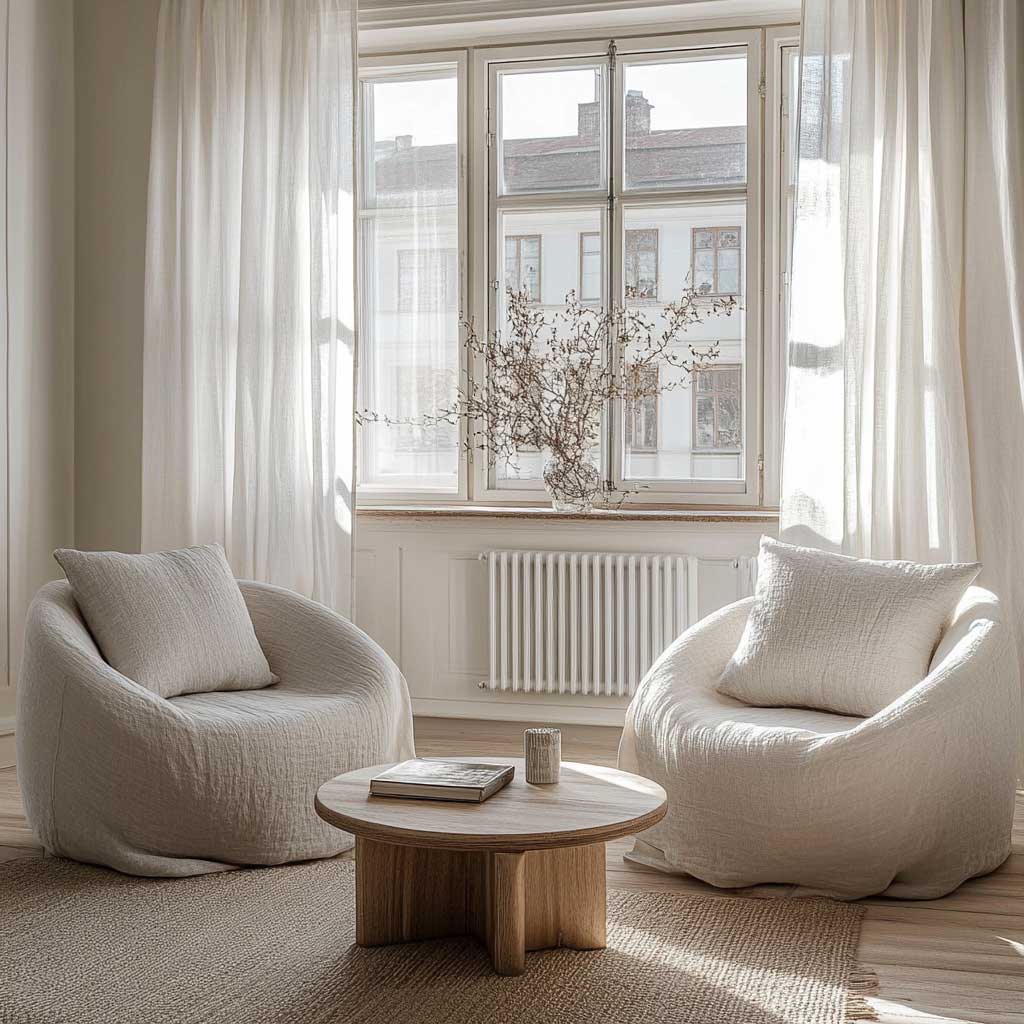
Two armchairs in a bay window work differently than a bench — you’re creating a conversation setup rather than a solo retreat. The chairs face each other slightly, coffee table between them, window behind. It reads like a room within a room. I own two HAY Chisel Lounge Chairs in cognac leather with the oak base and they cost $1,895 each from DWR — not cheap, but they work with everything from linen curtains to concrete floors because the silhouette is that clean.
Gray fabric is the obvious choice for armchairs in a Scandinavian bay setup, and it does work. Does it make a statement? No. What gray does is stay out of the way of the window, which is where the real interest is. The risk is buying cheap gray upholstery that reads as institutional — office-waiting-room gray — rather than warm stone gray. Test the fabric in daylight before committing. Cheap polyester blends look flat under afternoon sun; wool or wool-blend upholstery picks up the light the way a cushion should.
The coffee table wants to be slim and low — 14 to 16 inches tall max. A thick, heavy table between two chairs in a bay window blocks sightlines to the window and makes the space feel smaller. I’ve tried a reclaimed wood slab table and a travertine disc — both too bulky. A slim walnut table with tapered legs stays light visually. Muuto’s Relate side table at $236 hits the right proportions for a standard three-panel bay.
Sheer linen curtains at the sides of the bay — not across it — frame the window without stealing light. Full blackout drapes on a bay window are a waste of the architecture. If you need privacy, frosted film on the lower third of the glass costs $15 at any hardware store and works invisibly. You’ll notice it only from outside.
For a deeper look at how different furniture styles work against various bay window designs — including box bays where armchair placement shifts — the industrial bay window furniture breakdown on ArtFasad covers the contrast between heavy metal-framed seating and lighter Scandinavian approaches.
Bay Window Seating
The furniture is there to justify the window, not compete with it.
Light wood, one or two plants, and a bench that doesn’t fight the proportions of the alcove — that’s the full Scandinavian bay window formula. Armchairs cost more and take more floor space, but they change the purpose of the zone entirely.
The single most expensive mistake I see is buying furniture that’s too wide for the bay depth. Measure from glass to interior wall before ordering anything. Most residential bays run 18 to 24 inches deep — that’s your hard limit for any single piece.
Save this post before your next furniture search.