Walk through a renovated terrace in Bristol this autumn and you will spot the same change: a dark, slim-framed glass wall where a solid pine door used to sit. Steel framed glass doors have moved out of warehouse conversions and into ordinary family kitchens and living rooms. The reason has more to do with daylight than nostalgia.
The look started with industrial windows. Crittall, the Essex manufacturer, built hot-rolled steel window sections for factories and housing schemes through much of the twentieth century.
Why Steel Framed Glass Doors Keep Returning to Homes
Those slim profiles let daylight travel deep into a room without the bulk of timber. Today’s versions use powder-coated steel in black, graphite and sometimes a warm bronze, and the frame can be almost as narrow as the glass edge. Thin sightlines are the whole point.
Three forces are driving the comeback. Open-plan living has left kitchens and sitting rooms competing for the same window light, and a steel frame divides them without blocking the view. Designers also want doors that look deliberate beside limewash walls and oak floors.
Dutch manufacturer Jansen has produced steel window and door systems for decades, and architects often specify them for conversions where the original metal is protected. Schüco, the German company, builds aluminium-framed systems with thermal breaks that copy the steel look in a lighter frame. You will see both in catalogues from established installers.
Quick Tips
- Measure the rough opening at three heights and work from the narrowest reading.
- Ask for the thermal break and U-value in writing before you sign.
- Match hardware finish to the frame colour so the door reads as one element.
- Check the swing path against cabinets, radiators and furniture.
Frame Materials Compared Before You Order
Steel is not the only option, so compare frames before you commit. Each material changes the look, the thermal performance and the upkeep. Use the table below to narrow the list.
| Frame Type | Profile | Best Use |
|---|---|---|
| Steel | Thinnest, black or graphite | Heritage homes and bold kitchens |
| Aluminium | Slim with a thermal break | Modern extensions and wide spans |
| Timber | Wider, warm finish | Traditional rooms and cottages |
| Fiberglass (Pella) | Medium, paintable | Humid rooms and low maintenance |
Steel gives the thinnest profile, but it needs a thermal break in cold climates. Without one, the inside face of the frame can sweat in winter. Aluminium matches the slimness in lighter colours, and Pella’s fiberglass frames suit owners who want a painted finish that resists warping.
Where a Glazed Partition Works Best in Real Layouts
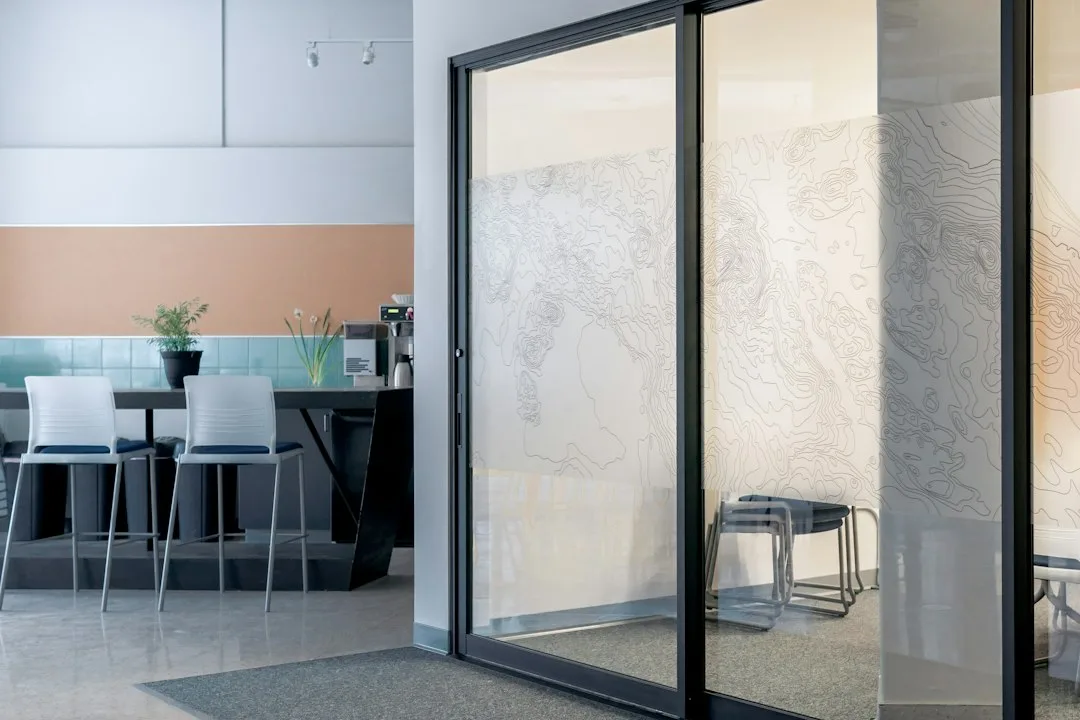
The strongest use is a partition between a kitchen and a dining room, or a glazed door opening from a hallway into a study. In a Victorian semi with a narrow back extension, a black steel door set into the original brick opening can pull light deeper into the ground floor. Ask the installer to check the existing lintel first.
Placement matters as much as the frame. A door that swings into a tight kitchen will block cabinets, so consider a sliding or pivot option instead. Line the door up with a main wall rather than a random joint.
If you are planning the whole ground floor, How to Build a Beautiful Home with Stylish Interiors by Designing With a Purpose offers a practical way to decide where light should land first.
The Mistake That Turns a Feature Into a Cold Draft
The most common error is buying a thin-profile door without checking the glass unit. A single-glazed steel frame in an exposed north-facing wall creates a cold patch by December. Owners then add radiators they did not budget for.
Installers often describe one pattern. A kitchen extension in a northern English town gets a black steel door with standard double glazing and no thermal break. By January the inner frame is wet with condensation, the tiles near the sill feel cold, and the owner is paying to fix it within two winters.
The fix costs little at the specification stage and a lot afterwards. Ask for U-value figures, a confirmed thermal break and a seal test before the frame is fixed in place.
Pairing Steel Frames With Warm Materials
Steel reads cold on its own, so pair it with materials that soften the edge. Oak flooring, lime plaster and linen curtains take the hard line down a notch. Brass Home Accents on the handle or pull, in an aged finish, look intentional rather than industrial.
Colour matters too. Black frames sit well against warm white or greige walls, while graphite suits deep green or ink blue. Keep every piece of hardware in one finish.
For a calmer take on the same warmth, see Discovering Japandi Bedroom Design for Zen Interiors, which shows how timber and muted tones soften hard lines.
Budget and Upkeep Over the Long Run
A bespoke steel door set often sits in the four-figure range per opening, so treat it as a structural upgrade rather than décor. That spend can replace a bulkier timber door and a second window you would otherwise add. Plan the budget before the design gets locked in.
Upkeep is light. Wipe the frame with mild soapy water, check the drainage channel at the sill twice a year, and touch up chips in the powder coat before rust starts. Ask your installer for a written maintenance schedule.
Steel framed glass doors reward careful planning, and a good installer will walk the opening with you before a single cut is made.