Quick Scan
- Drapery backdrop wedding searches surged 1,510% on Pinterest in 2026 — the fastest-rising décor term in the wedding category.
- Chiffon, silk, and velvet are the primary fabrics; champagne, ivory, dusty rose, and sage are the dominant 2026 colorways.
- Full professional installations from companies like EventWorks and Archive Rentals run $800 to $3,000+; DIY arch setups cost as little as $80 to $250.
- Never mix more than two fabric types in a single installation — texture contrast creates visual noise rather than harmony.
- Ceiling drapery requires professional rigging; floor-standing arches are the only DIY-appropriate format for non-professionals.
Pinterest’s 2026 Wedding Trends Report — built from over 7 billion wedding-related searches — logged a 1,510% year-over-year surge for ‘drapery backdrop wedding.’ That is not a rounding error. It is the single fastest-rising décor term in the entire wedding category, ahead of ‘stained glass wedding arch’ which itself jumped 750%. Something structural shifted in how couples think about ceremony focal points, and the floral wall is losing its grip. Billowing fabric installations are now the hero moment — framing vows, catching natural light, and generating the kind of save-worthy images that travel across Pinterest and TikTok feeds for months after the event.
Fabric Choice Drives Everything About a Drapery Backdrop
Wezoree identifies chiffon, silk, and velvet as the three fabrics powering the 2026 drapery trend — and each one behaves entirely differently in front of a camera. Chiffon catches wind and light simultaneously, creating movement that reads as dynamic even in still photography. Silk holds a deeper luster, especially under warm ceremony lighting. Velvet, which Wezoree specifically calls out as making a ‘strong comeback,’ absorbs light rather than reflecting it, making it ideal for fall and winter ceremonies where richness matters more than airy movement.
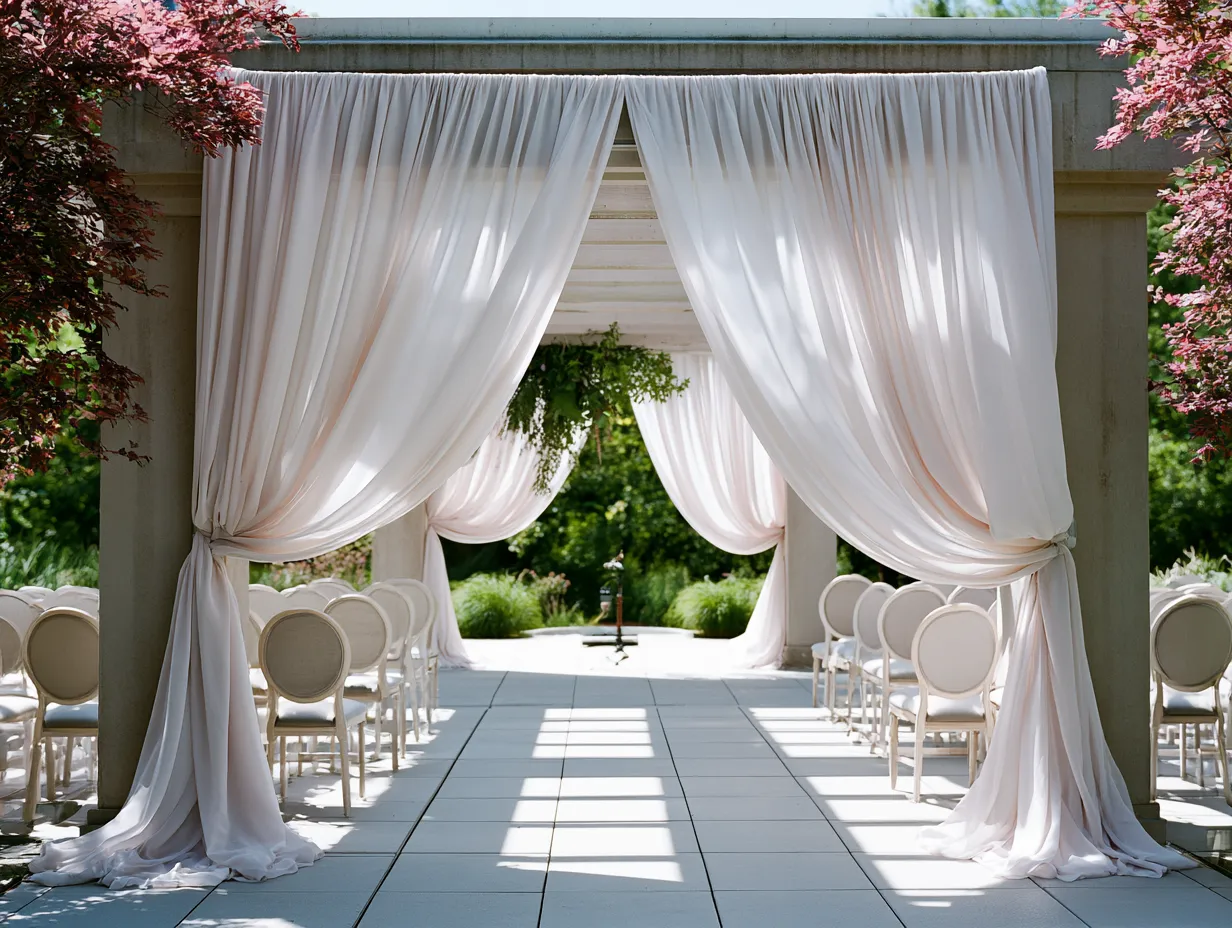
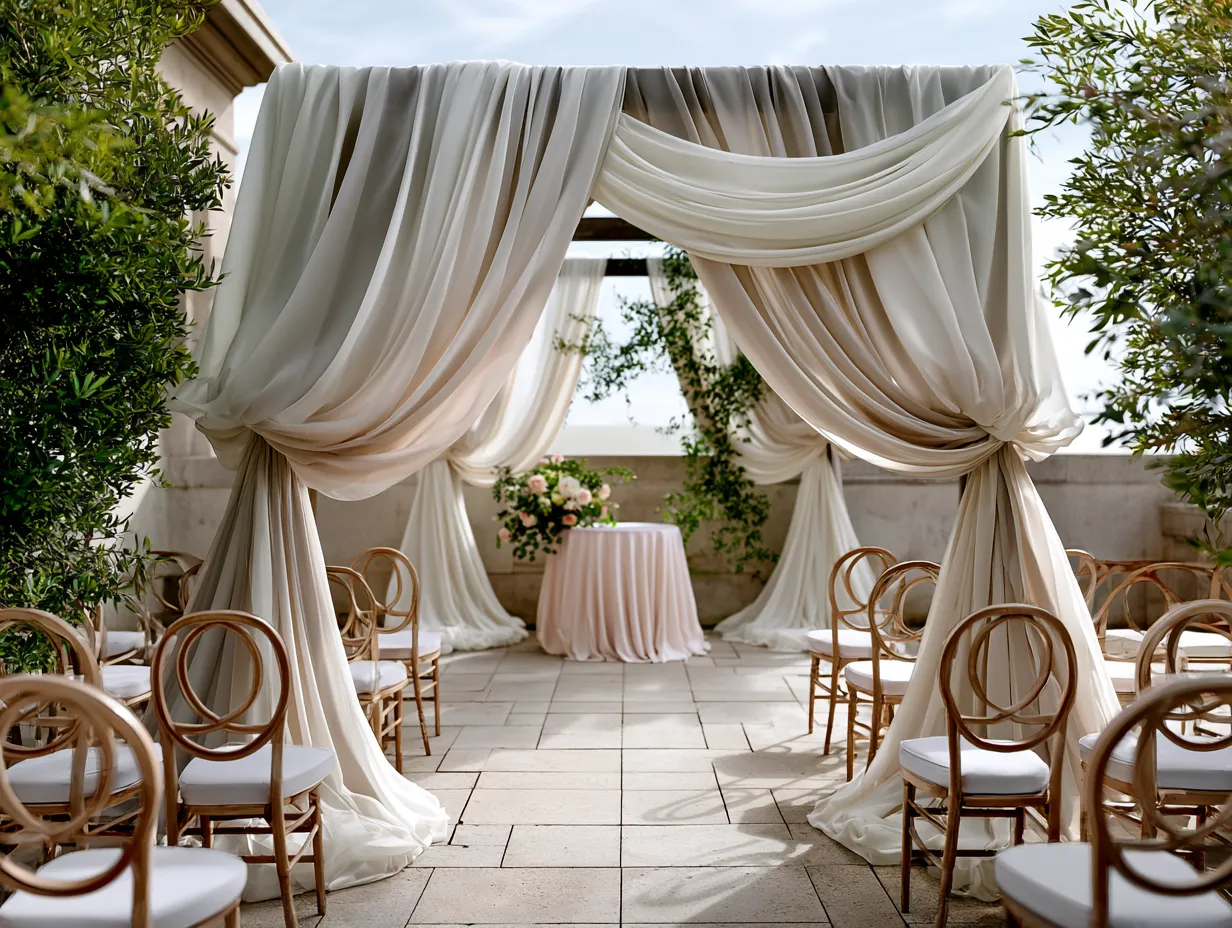
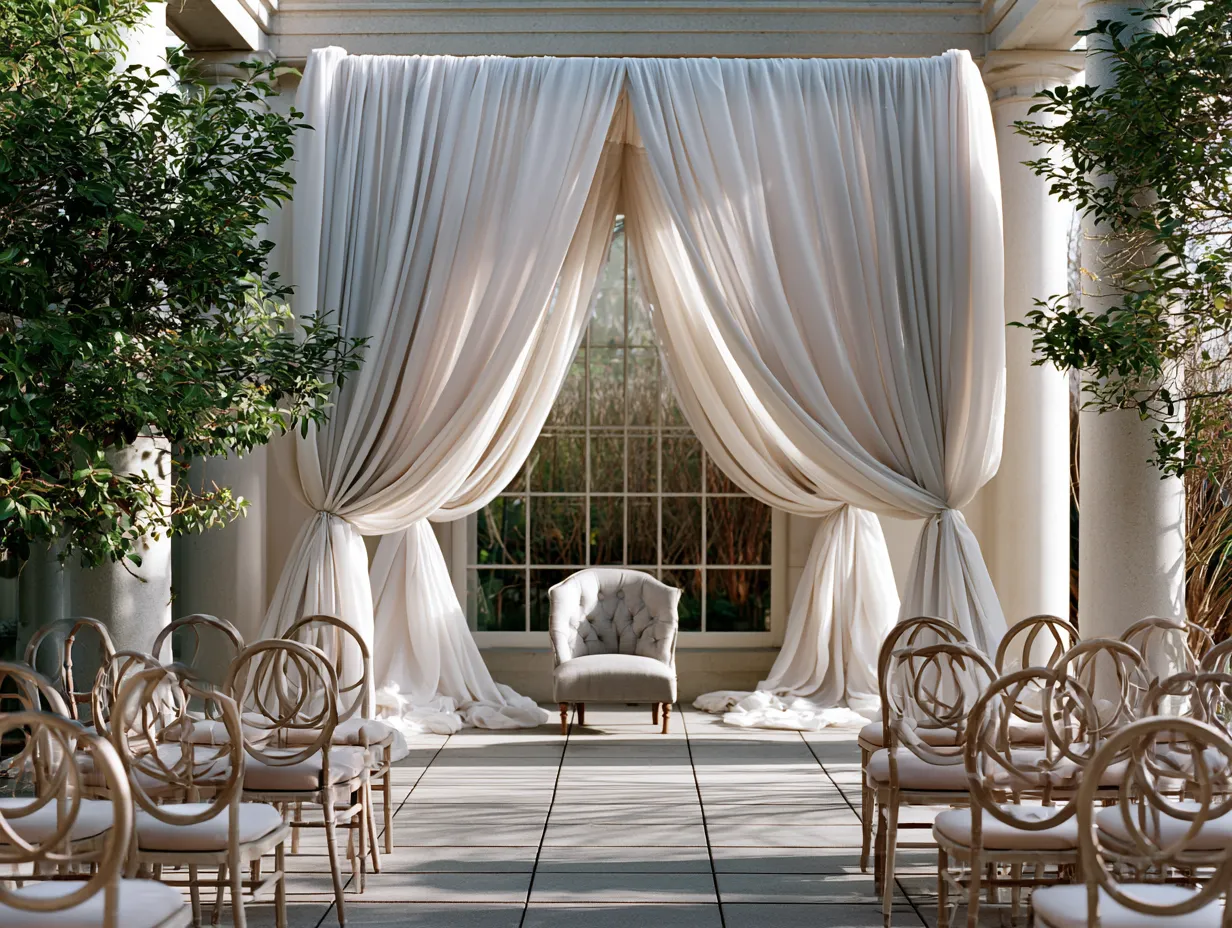
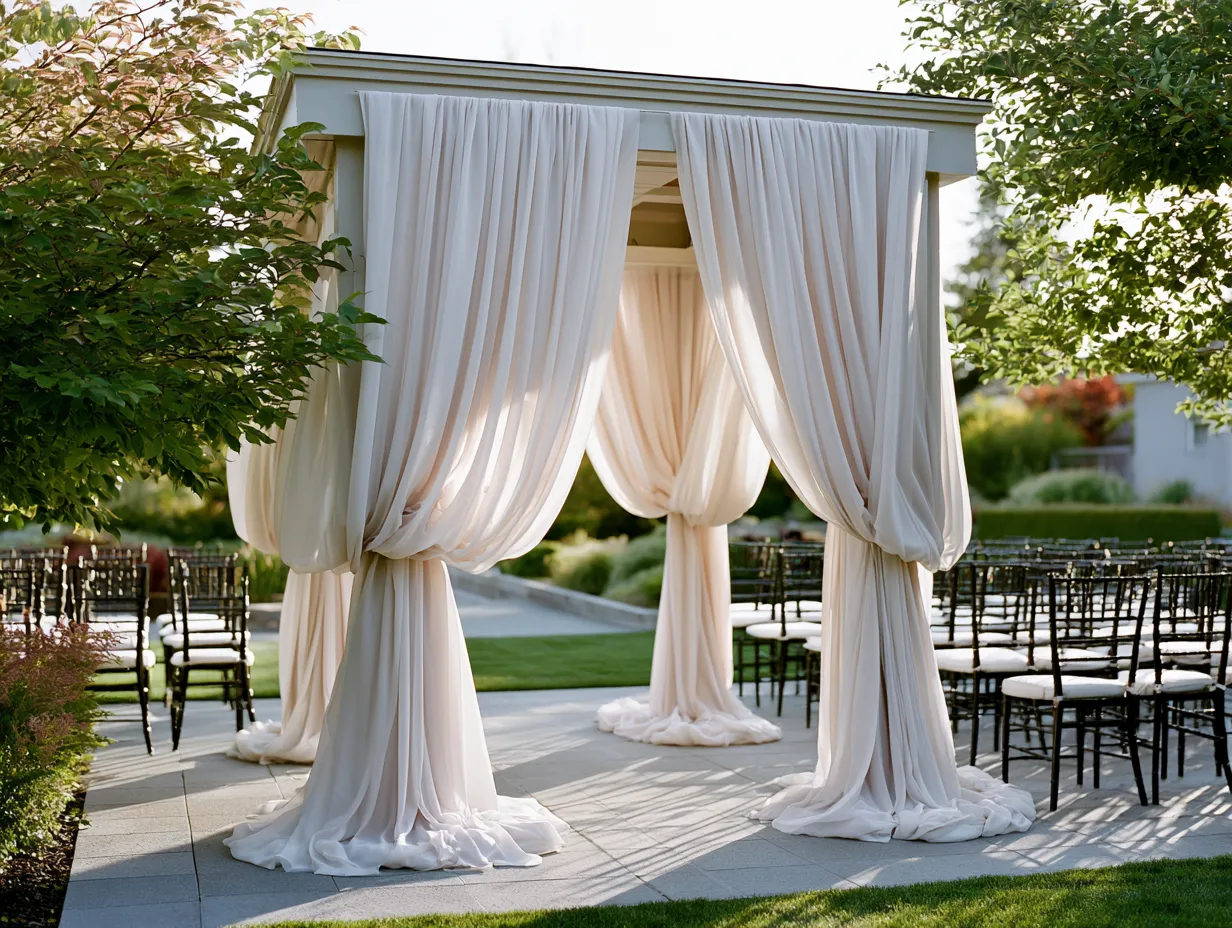
Colorway is just as strategic as fabric weight. Champagne, ivory, dusty rose, and sage are the dominant palette in 2026 — a shift away from stark white that reads as warmer and more editorial on camera. Does that mean bright white is off-limits? Not entirely, but ivory and champagne photograph with more depth against skin tones, which is why planners are defaulting to them. Sage specifically layers beautifully against outdoor backdrops, functioning almost like a continuation of greenery rather than a contrast to it.
If you love 3+ Boho Wedding Decor Trends You’ll Love, the good news is that drapery backdrops map directly onto that aesthetic — loose, organic, and tactile. The anti-advice here matters: do not mix more than two fabric types in a single installation. A chiffon-and-velvet combination sounds interesting in theory, but the contrast in texture weight creates visual noise rather than harmony. Pick one primary fabric and use a secondary only for accent panels.
Fabric width and panel count determine perceived scale. A single arch draped with two 108-inch panels reads intimate. A full ceremony backdrop covering 12 to 15 feet of width typically requires six to eight panels minimum to avoid gaps that expose venue walls or structural scaffolding behind. Etsy artisan vendors sell individual fabric arch panels ranging from roughly $50 to $300 depending on weight and width — a realistic DIY entry point for couples building their own installation.
Don’t Do This
- Do not mix more than two fabric types in one installation — the weight contrast between fabrics like chiffon and velvet creates visual noise that reads as cluttered rather than layered.
- Do not use indoor trade-show pipe-and-drape hardware for outdoor ceremonies — base plates are not rated for uneven terrain or wind, and the structure can pull forward even in moderate gusts.
- Do not attempt DIY ceiling drapery installations without professional rigging consultation — load calculations and venue liability make this outside the safe DIY scope regardless of skill level.
- Do not cut fabric panels on the morning of the ceremony — measure and cut in advance to avoid irreversible mistakes when there is no time or margin for error.
Installation Structure Separates a Gallery Moment From a Collapsed Mess
Lara Zhang of By Lara — cited in The Knot’s 2026 wedding décor forecast — describes oversized textile installations as functioning like ‘contemporary gallery pieces.’ That comparison is useful because it reframes the technical question: how you hang fabric matters as much as which fabric you choose. A drapery backdrop is a structural installation first and a decorative one second. The rigging determines whether it moves gracefully or sags into a wrinkled pile thirty minutes before the ceremony begins.
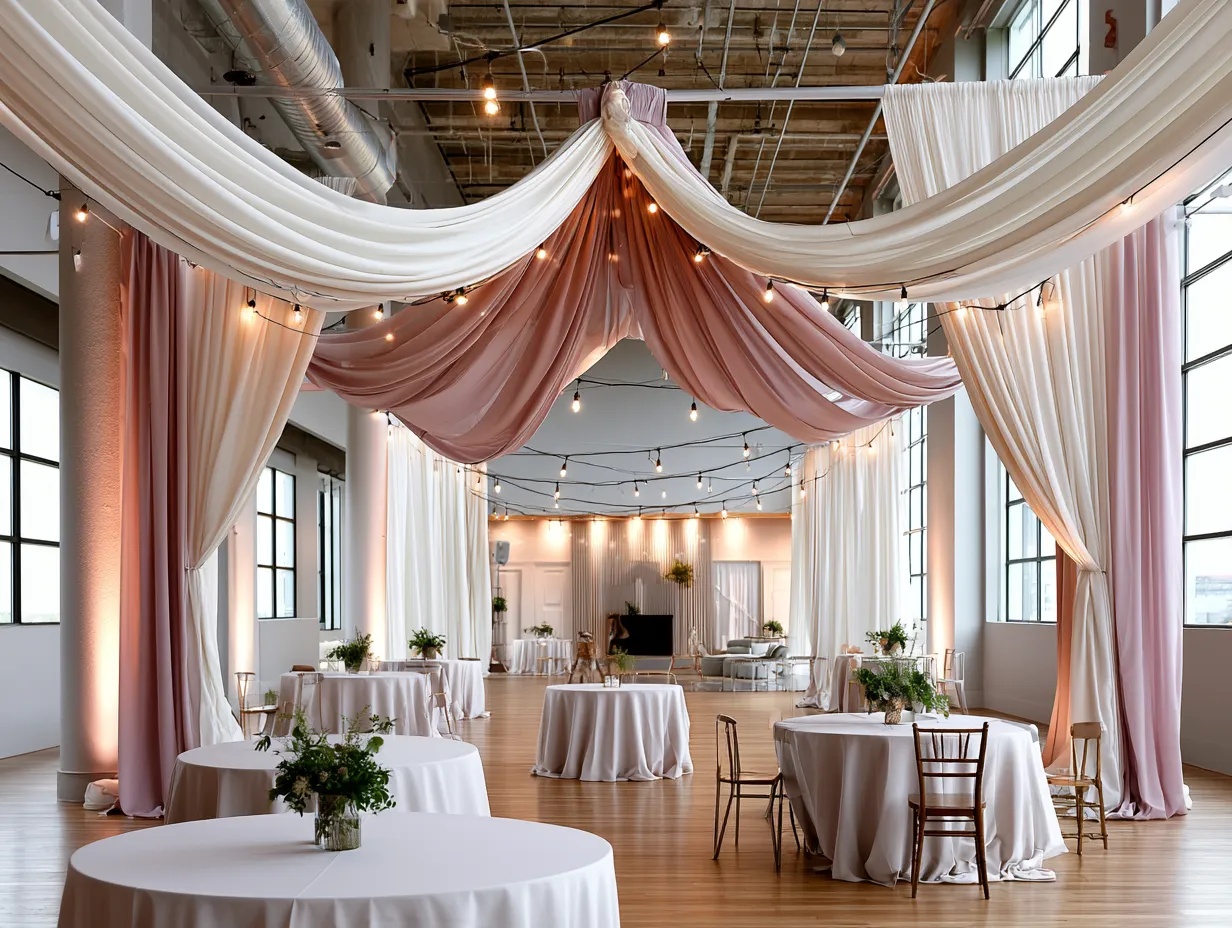
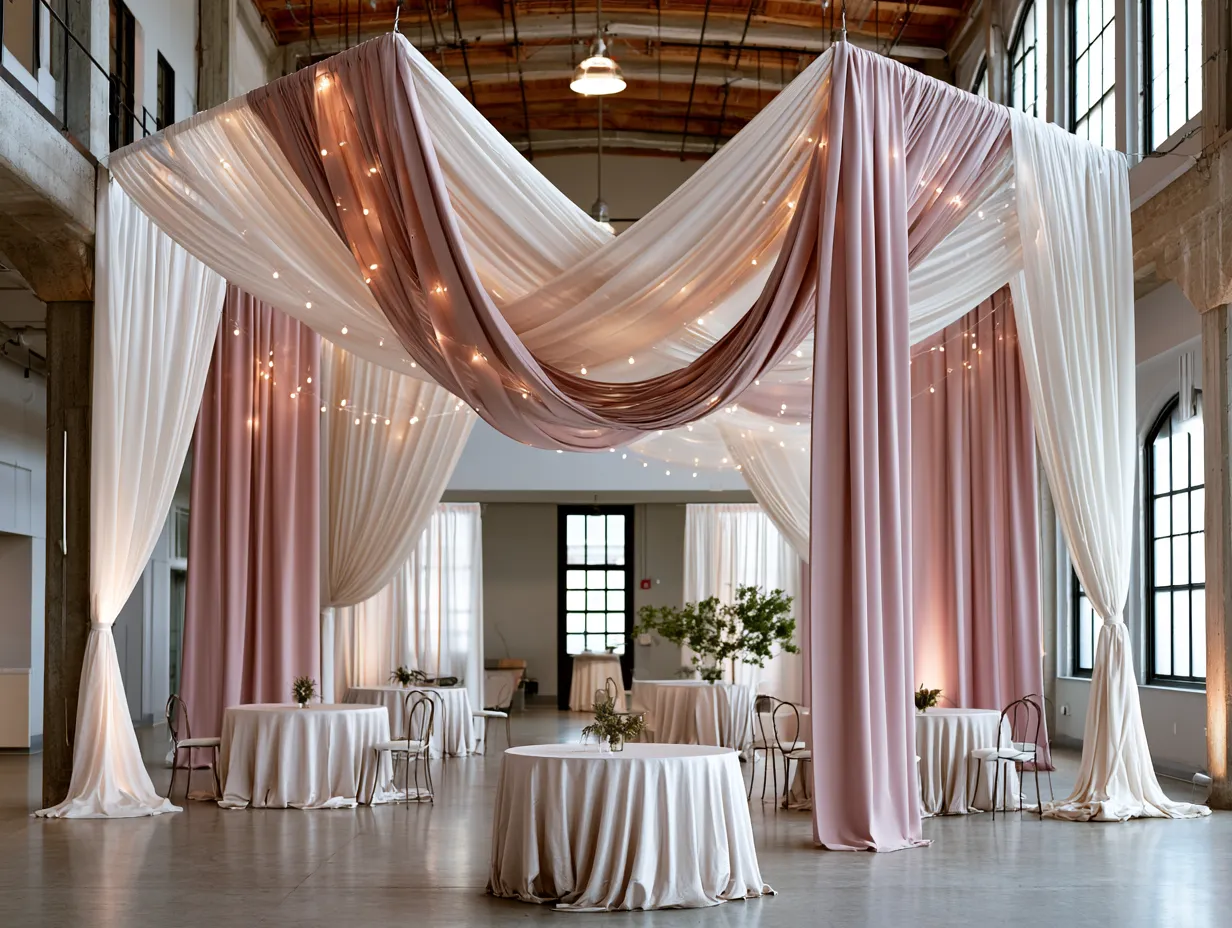
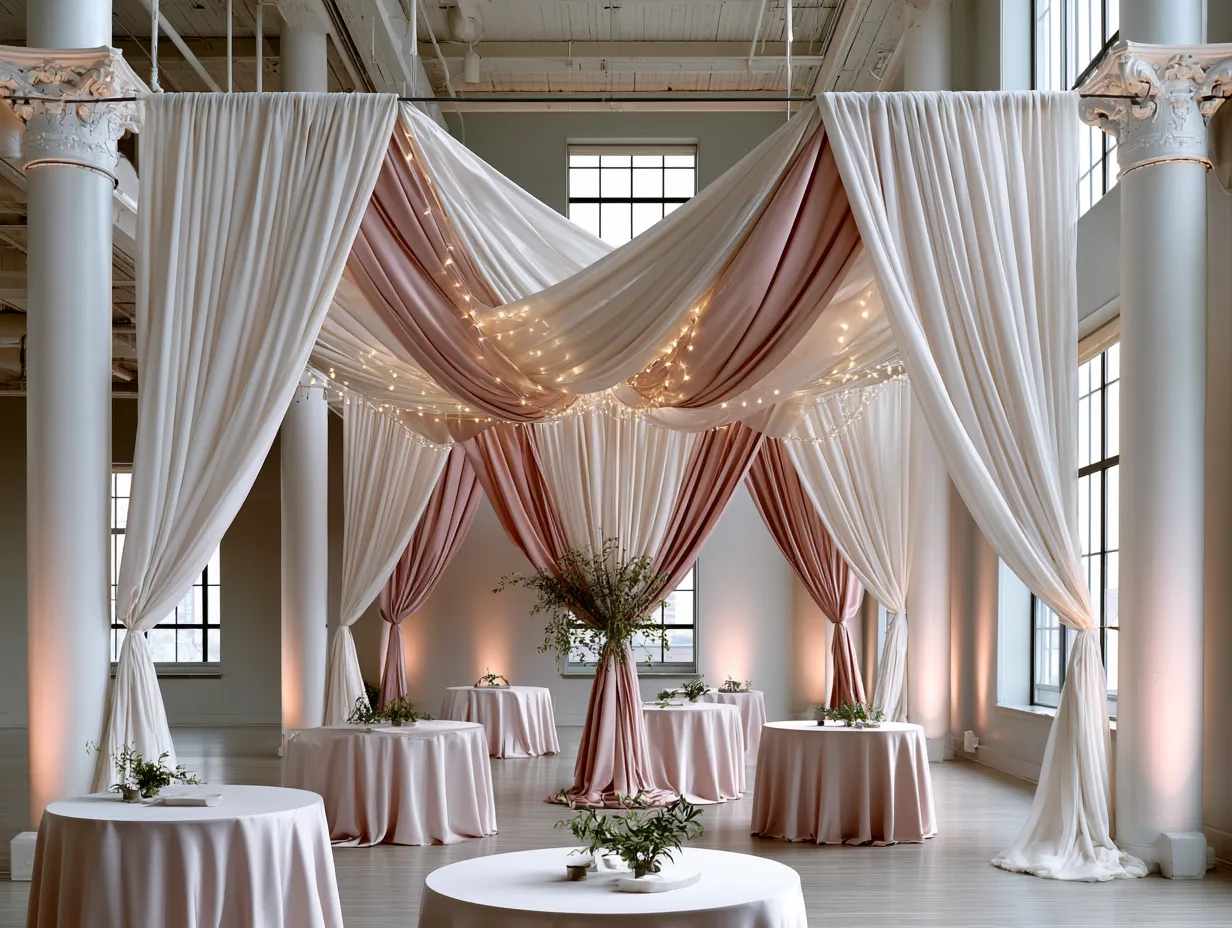
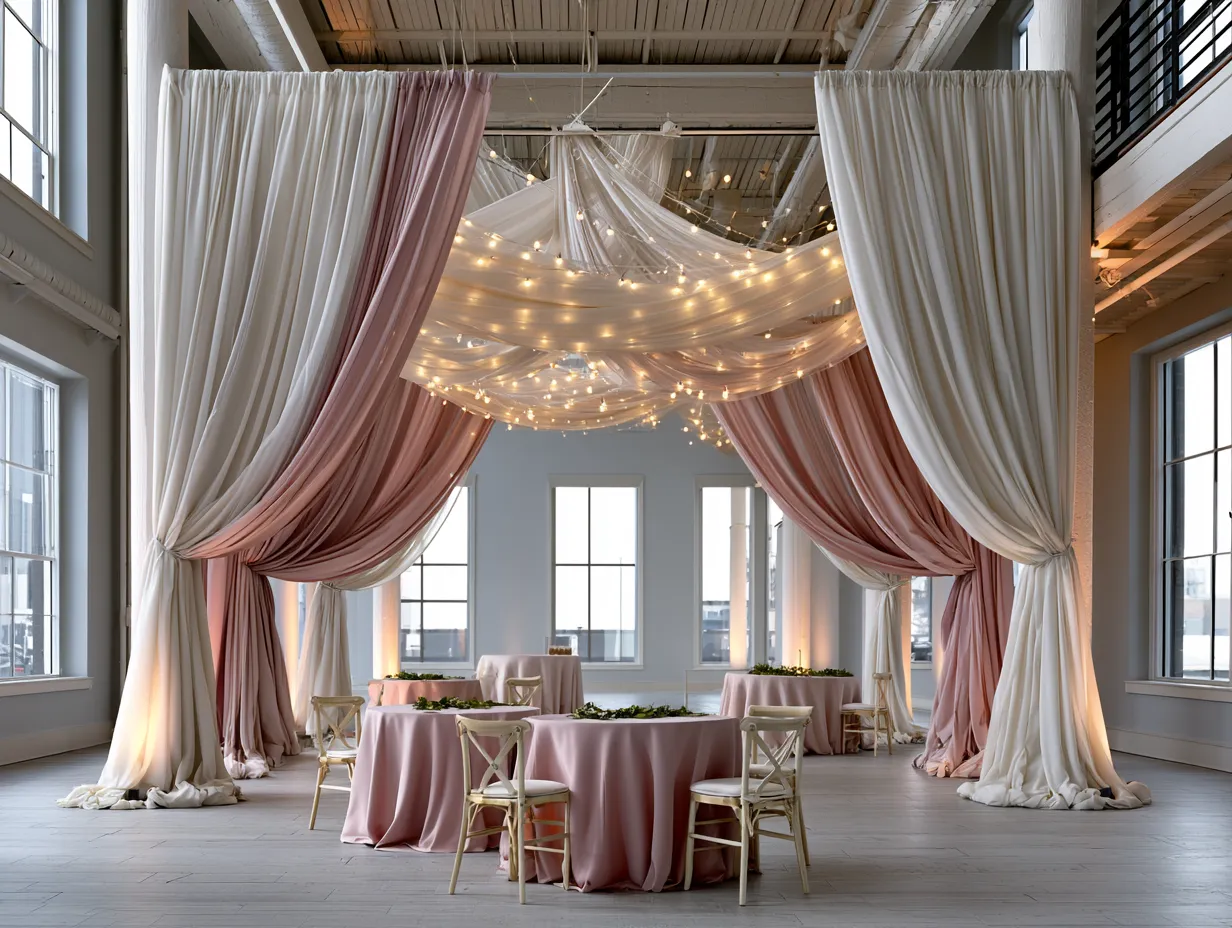
Archive Rentals, serving California and Riviera Maya, and EventWorks, covering Charleston, Savannah, and the broader Southeast U.S., are two of the leading venue-décor rental companies currently offering curated drapery arch and backdrop packages for 2026 weddings. Full professional drapery installations from rental companies typically run $800 to $3,000 or more depending on venue size and panel volume. That range sounds wide, but the $800 floor generally covers a single-arch setup with four to six panels, while the $3,000-plus range reflects ceiling-to-floor drapery systems that transform an entire venue wall. For couples managing a $36,000 average U.S. wedding budget — per Zola — the decision often comes down to whether the backdrop is the primary visual investment or one of several elements.
100 Layer Cake’s 2026 trend report confirms that billowing fabric ‘transforms ceilings, frames spaces, and softens architecture,’ with demand intensifying for outdoor summer ceremonies where fabric movement in natural light becomes a dynamic, living element of the scene. That movement is an asset. It is also a liability if the hardware is not rated for outdoor conditions. The anti-advice: never use pipe-and-drape hardware designed for indoor trade shows at an outdoor venue with any wind exposure. The base plates are not weighted for uneven terrain, and even moderate gusts can pull the entire structure forward. Outdoor installations require either ground-staked uprights or weighted ballast systems rated for exterior use.
For couples integrating drapery backdrops into a larger décor scheme, the pairing with minimal table styling is strategic rather than accidental. Referencing Wedding Party Decorations with Elegant Minimalism makes the case clearly — when the ceremony backdrop carries maximum visual weight, the reception decor can afford to step back. An elaborate centerpiece competing with a full drapery installation creates visual fatigue rather than coherence.
Ceiling draping deserves its own consideration. Fabric suspended from ceiling rigging transforms the overhead plane in ways that no floral installation can replicate at the same price point. Six to eight panels of chiffon gathered at a central ceiling point and fanned outward toward the perimeter walls creates a tent-like canopy effect that photographs dramatically from a wide angle. The structural requirement is ceiling rigging points rated for textile loads — a detail that must be confirmed with venue management before any installation day, not on it.
| Installation Type | Typical Cost Range | Best For |
|---|---|---|
| DIY Fabric Arch (PVC frame + Etsy panels) | $80–$250 | Outdoor garden or backyard ceremonies |
| Rental Drapery Arch (EventWorks / Archive Rentals) | $800–$1,500 | Venue ceremonies needing professional setup |
| Full Ceiling Drapery System (professional rigging) | $1,200–$3,000+ | Indoor ballrooms or large venue transformations |
| Floral Wall Installation (comparable scale) | $2,500–$6,000+ | Static indoor backdrops with high color saturation |
DIY Drapery Backdrops Work When the Math Is Done Before the Fabric Is Bought
The 78% of couples in Zola’s 2026 survey who said they fear tariff and economic pressure will push wedding costs higher are driving a significant shift toward Pinterest-inspired DIY décor. Drapery backdrops are the most financially accessible large-scale installation in the current wedding market — but only when the project is scoped correctly before a single yard of fabric is ordered. Getting the math wrong means either a sparse installation that looks unfinished or a fabric surplus that absorbs budget without adding visual value.
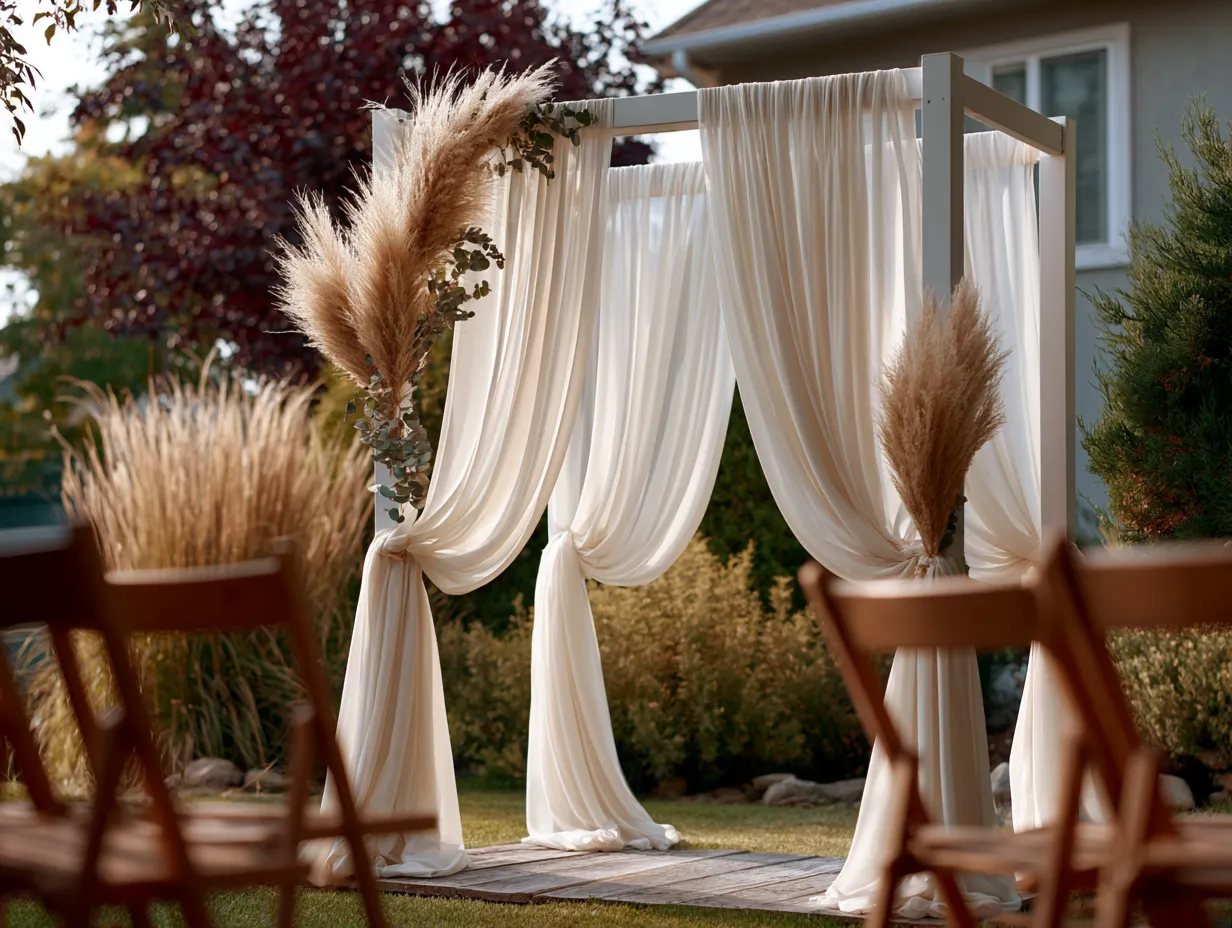
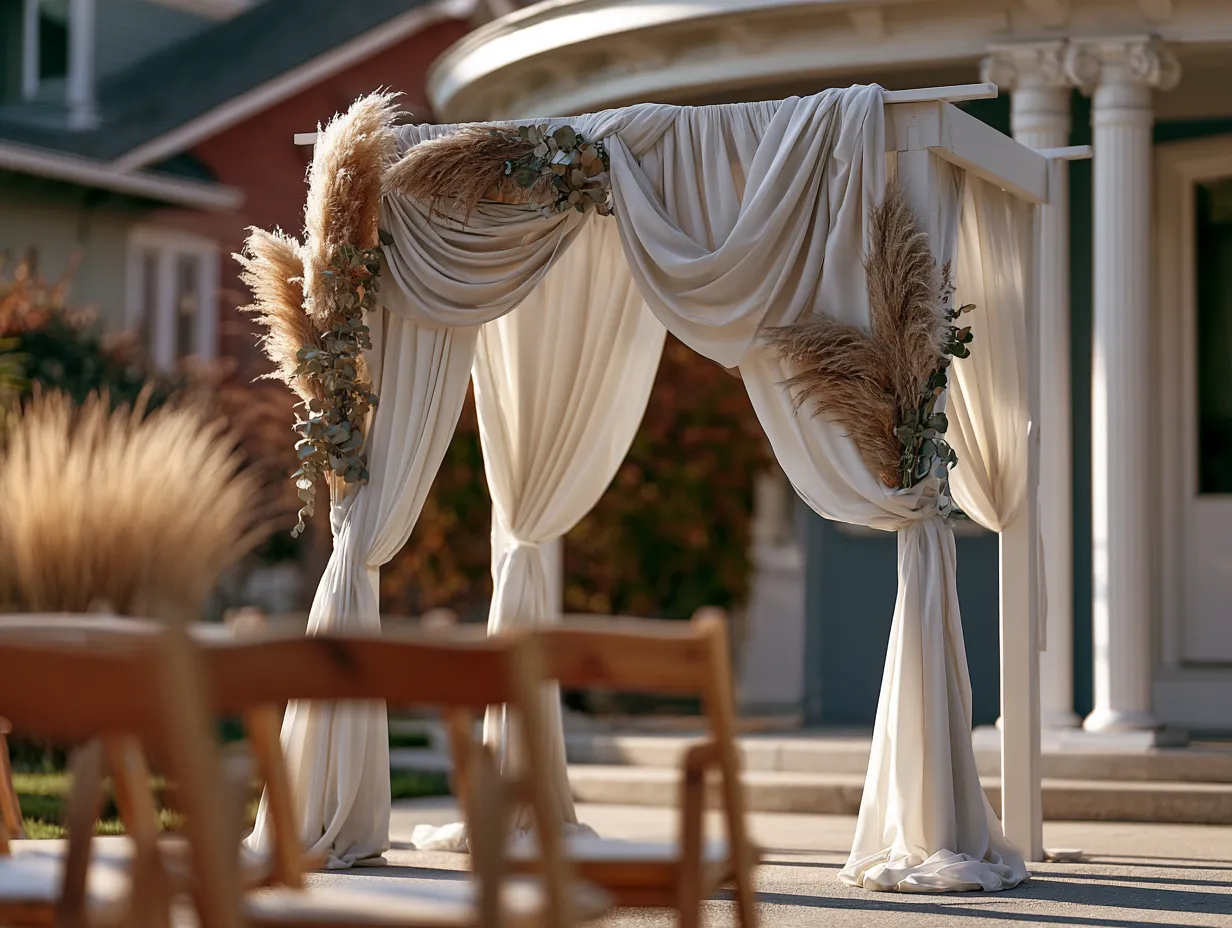
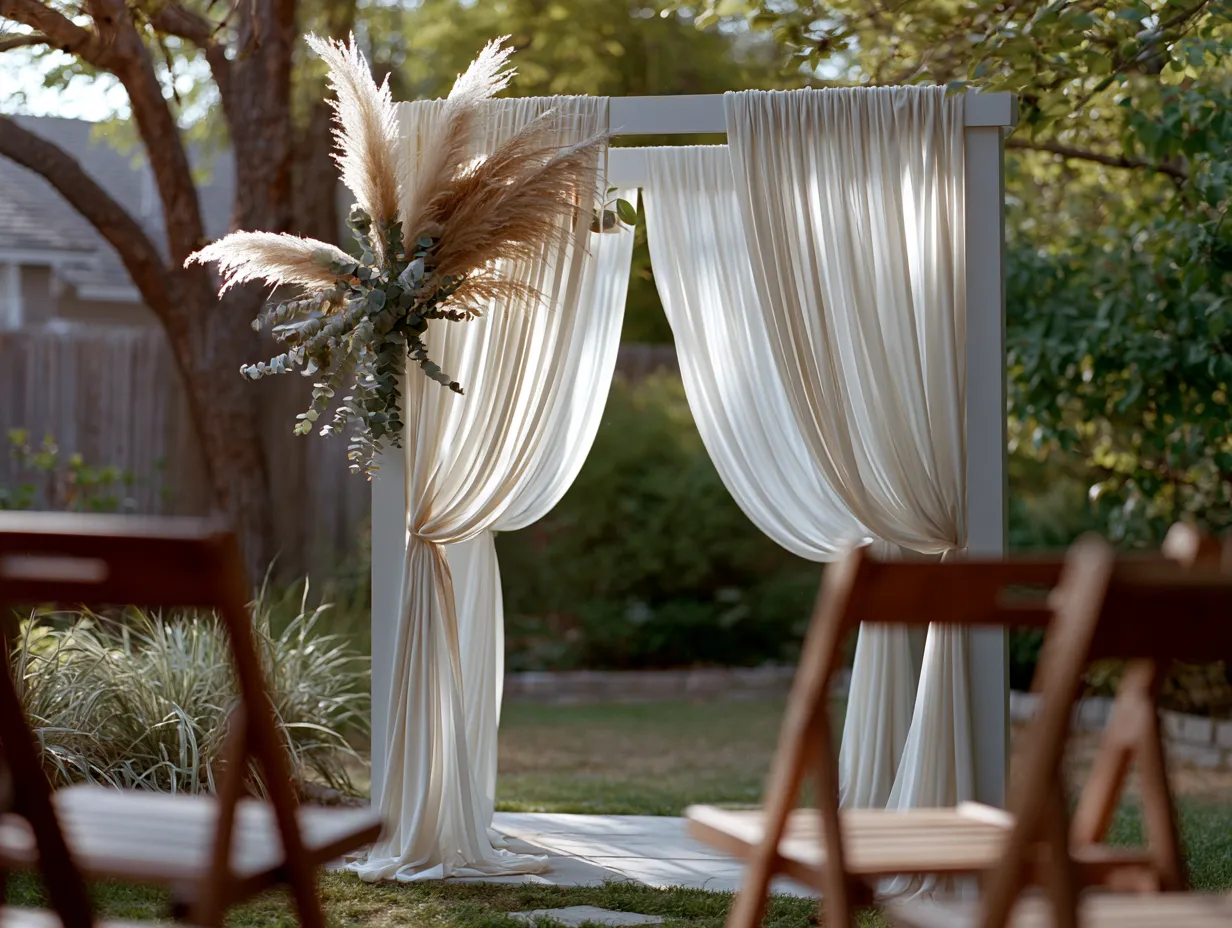
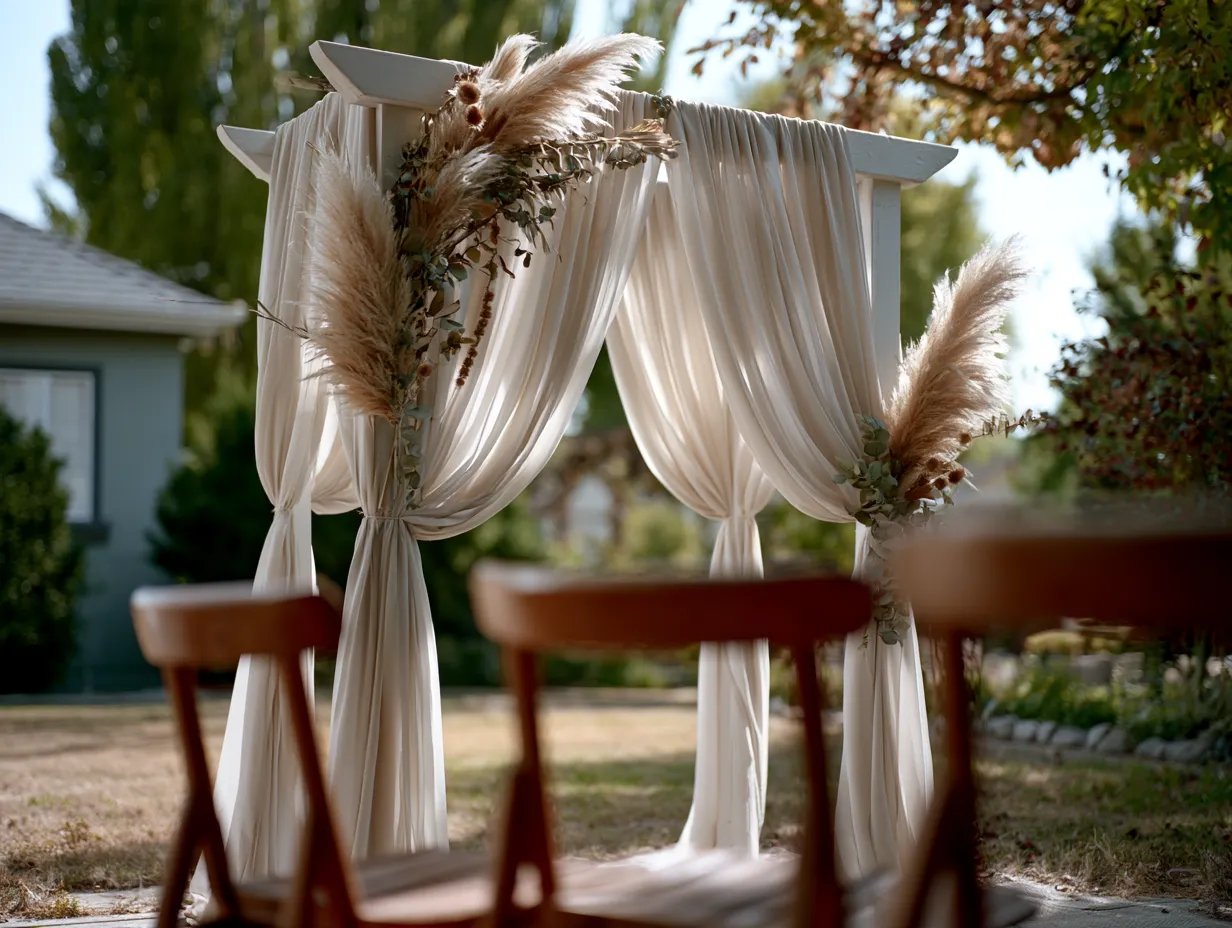
Start with the frame. PVC pipe and fittings from any hardware store can build a functional arch frame for under $40. A 7-foot by 6-foot arch — proportional for most ceremony spaces — requires two vertical uprights, one curved or flat crossbar, and four to six elbow fittings. The frame must be secured with sandbags or weighted buckets regardless of whether the ceremony is indoors or outside. What is the minimum weight needed? For a fabric-loaded PVC arch, at least 25 pounds of ballast per upright is the working floor — less than that, and the frame tips at the first contact.
Fabric sourcing follows frame sizing. Measure your arch span plus a minimum 20% overage for gathering — ungathered fabric looks cheap and flat, which defeats the entire visual purpose. Fabric.com and JOANN Fabrics both carry ceremony-weight chiffon in the trending colorways (champagne, ivory, dusty rose, sage) at $4 to $12 per yard depending on weight. Etsy remains the strongest channel for pre-cut arch panels sized for standard frames, with individual panels ranging from $50 to $300. Ordering pre-cut avoids the most common DIY mistake: cutting fabric panels on-site the morning of the ceremony when there is no margin for error.
The anti-advice for DIY installations is direct: do not attempt a DIY ceiling drapery installation without professional rigging consultation. Floor-standing arch backdrops are manageable for a non-professional. Ceiling systems involve load calculations, rigging hardware, and venue liability considerations that fall outside the DIY skill set. The cost difference between a floor arch DIY ($80 to $250 all-in) and a professionally rigged ceiling system ($1,200 to $2,500) is significant enough that the ceiling version should always be delegated to a rental company like EventWorks or Archive Rentals.
Finishing details separate a polished DIY drapery backdrop from one that reads as unfinished. Dried pampas grass tucked into gathered fabric knots, trailing ribbon in a complementary colorway, or simple eucalyptus stems secured with floral wire add organic texture without requiring floral design skills. Keep additions asymmetrical — one heavy side and one lighter side creates movement and intentionality. A perfectly symmetrical arch reads as formal; an asymmetrical one reads as designed. That single distinction is what makes the difference between a backdrop that gets saved on Pinterest and one that blends into the background.
FAQ
how much fabric do I need for a wedding drapery backdrop
For a standard 7-foot-by-6-foot arch, plan for at least 20% more fabric than the bare frame span to allow for gathering — ungathered fabric reads as flat and thin. Six to eight panels of 108-inch chiffon typically fill a 12-to-15-foot-wide ceremony backdrop. Always calculate fabric by panel count and add overage before ordering.
what is the difference between a drapery backdrop and a floral wall for weddings
A floral wall is a static, dense installation that relies on volume and color saturation for impact. A drapery backdrop creates movement, especially in natural light or outdoor settings, and photographs with depth and dimension that flat floral grids cannot replicate. Drapery installations are also significantly less expensive and faster to install on the ceremony day.
can you use a drapery backdrop outdoors for a wedding
Yes, but outdoor installations require hardware rated for exterior use — specifically ground-staked uprights or weighted ballast systems with at least 25 pounds per upright. Standard indoor pipe-and-drape hardware is not safe for outdoor settings with any wind exposure. Fabric movement is an asset outdoors, but only if the frame is secured correctly.
what fabric is best for a wedding drapery backdrop in summer
Chiffon is the strongest choice for summer outdoor ceremonies because it catches natural light and moves in even slight breezes, creating dynamic images. Silk is better suited to indoor venues where light can be controlled. Velvet is reserved for fall and winter weddings where its light-absorbing richness reads better than in bright summer conditions.
where can I rent a drapery backdrop for a wedding
Archive Rentals serves California and Riviera Maya, while EventWorks covers Charleston, Savannah, and the broader Southeast U.S. — both offer curated drapery arch and backdrop packages for 2026 weddings. Pricing typically starts around $800 for a single-arch setup. Local event rental companies in most metro areas also offer similar packages; search specifically for 'fabric backdrop rental' rather than 'pipe and drape' to find ceremony-specific inventory.
what colors are trending for wedding drapery backdrops in 2026
Champagne, ivory, dusty rose, and sage are the four dominant colorways identified by Wezoree for 2026 drapery installations. Stark white is less common because ivory and champagne photograph with more warmth and depth against skin tones. Sage works particularly well at outdoor venues where it reads as an extension of natural greenery rather than a contrast to it.
How to Build a DIY Drapery Arch Backdrop for a Wedding
A step-by-step process for building a floor-standing fabric arch backdrop using PVC framing and pre-cut chiffon panels, suitable for outdoor or indoor ceremony spaces.
-
1
Measure and Plan Your Frame
Determine your desired arch height and width — 7 feet tall by 6 feet wide is proportional for most ceremony spaces. Sketch the frame shape before buying materials so you know exactly which PVC fittings are needed. A flat-top rectangle requires fewer fittings than a curved arch and is structurally more stable for outdoor use.
-
2
Build the PVC Frame
Purchase 1.5-inch PVC pipe and elbow fittings from any hardware store — total material cost is typically under $40. Cut uprights and crossbar to your planned dimensions using a PVC cutter or handsaw. Dry-fit all connections before cementing so adjustments are still possible.
-
3
Secure the Frame With Ballast
Place the frame uprights into weighted buckets or sandbags — minimum 25 pounds of ballast per upright for any outdoor installation. Test stability by applying light pressure from multiple angles before adding any fabric. Do not skip this step; an unsecured frame is a safety hazard and a ceremony disruption.
-
4
Attach and Gather Fabric Panels
Drape pre-cut chiffon panels over the crossbar, gathering each panel with zip ties or floral wire at the connection points. Allow at least 20% extra length for gathering so panels have visual fullness. Asymmetrical arrangement — heavier draping on one side — reads as intentionally designed rather than accidental.
-
5
Add Finishing Accents
Tuck dried pampas grass, eucalyptus stems, or trailing ribbon into the gathered fabric knots using floral wire. Keep additions to one or two accent types to avoid visual clutter. Step back and evaluate from ceremony seating distance — details that read well at arm’s length often disappear at ten feet, and vice versa.
Save this
Drapery Backdrop Wedding Installs Are the Defining Ceremony Focal Point of 2026
The 1,510% search surge is not a trend in the early adoption phase — it is already mainstream, and the couples booking summer 2026 ceremonies are the ones driving it. Choosing between a $150 DIY chiffon arch and a $2,500 professionally rigged ceiling installation comes down to scope, venue, and which element of the wedding is worth the investment ceiling.
Fabric choice, panel count, and structural hardware are the three decisions that determine whether a drapery backdrop reads as a designed gallery moment or an afterthought. Get those right and the backdrop does the visual work that no static floral wall can replicate in natural light. Save this post.
📌 Save to PinterestComplete guide
Furniture Decor Ideas for Every Room in Your Home
Living room, bedroom, dining, kitchen, outdoor — all in one place
Complete guide
Wedding Hairstyles for Every Length Role and Vision
Brides, bridesmaids, guests, mothers of the bride — all in one place
Complete guide
Party Fashion Outfits That Turn Every Room Into a Runway
Disco, holiday, pool, white party, themed dress codes — all in one place