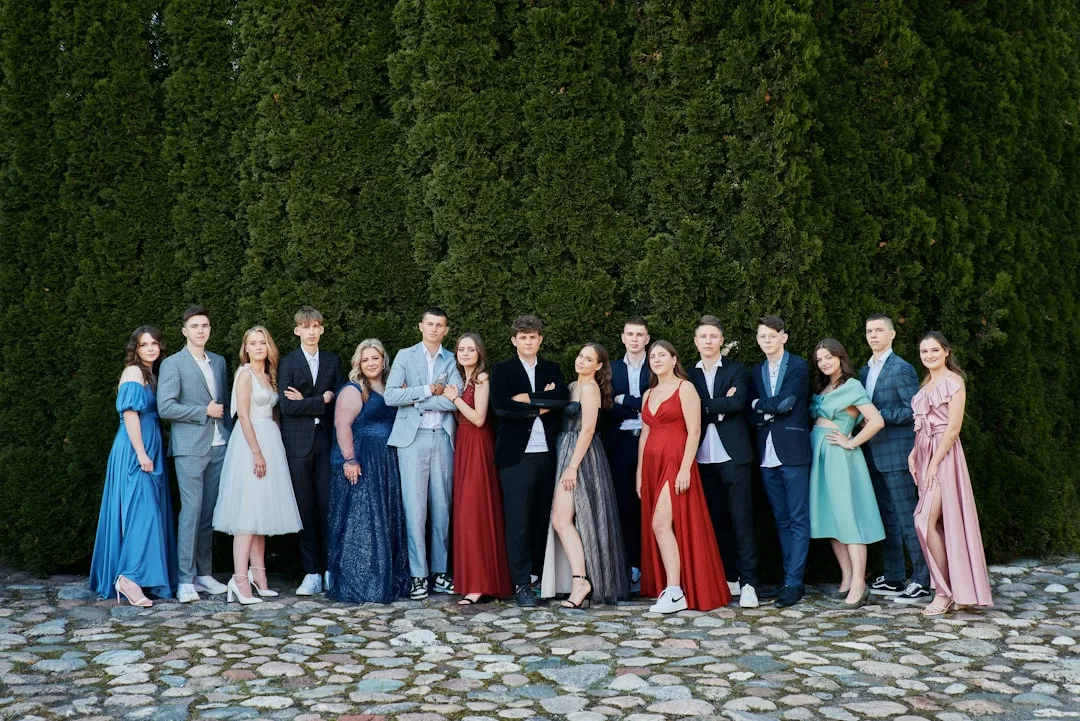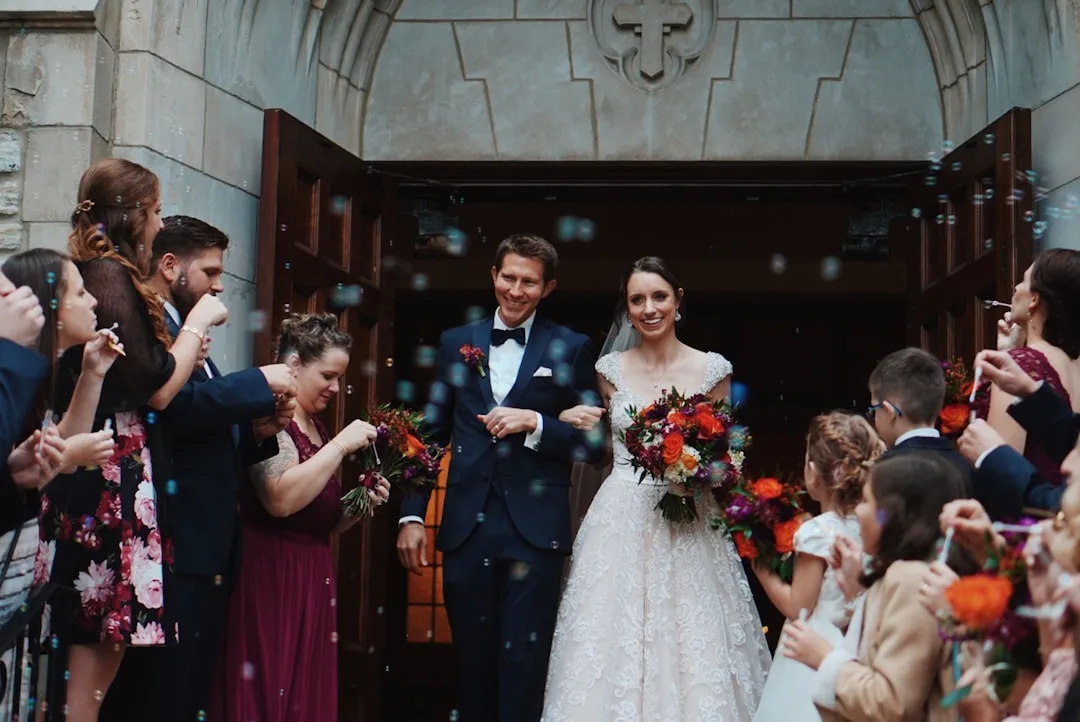
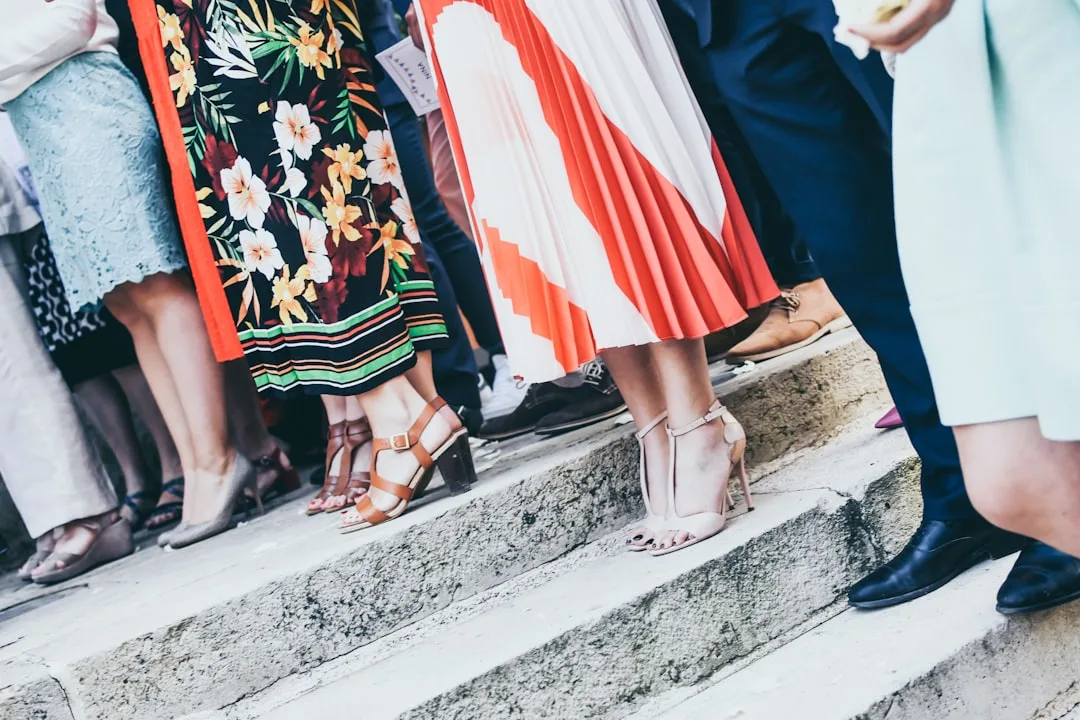
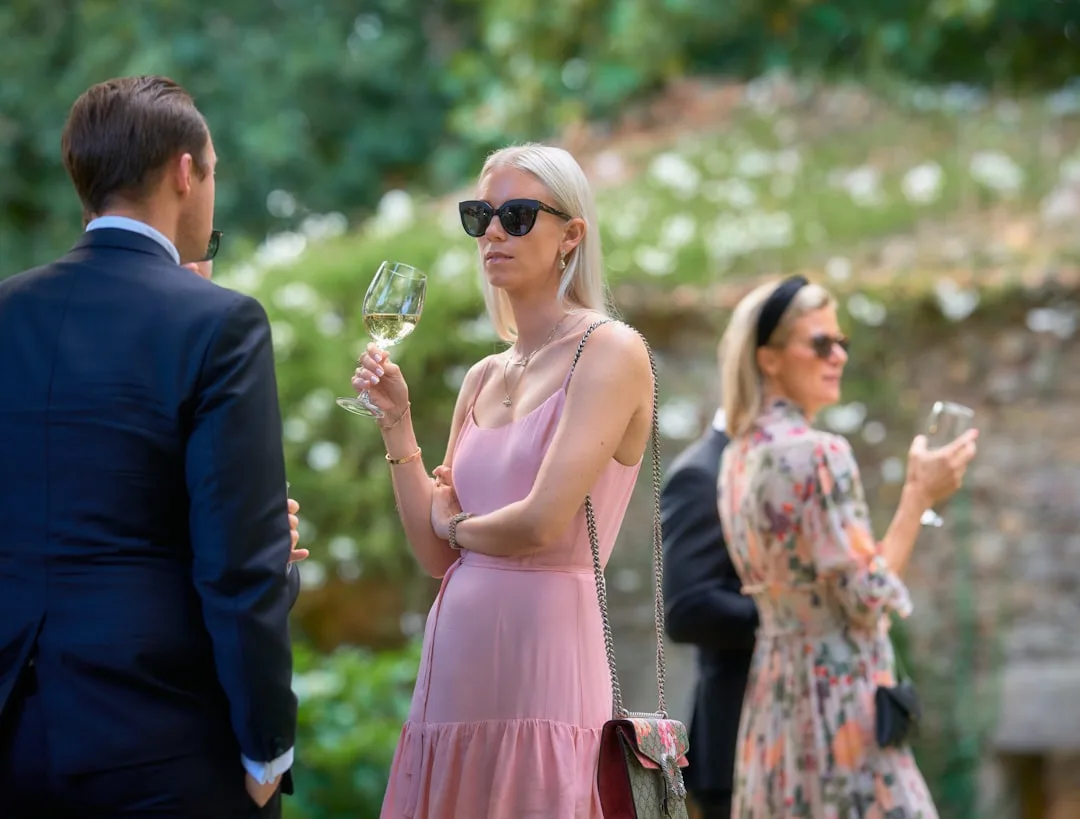
Three guests arrive at a June garden wedding, each wearing a different garment, yet something feels intentionally unified about them. One wears navy linen trousers with a sage silk camisole and gold jewelry. Another pairs taupe wide-leg pants with a deep teal blouse and bronze heels. A third layers a cream linen jacket over charcoal separates with copper accents. No two outfits match. Yet they belong together. This is the wedding guest dressing shift of 2026—coordinated color palettes that replace the rigid “matchy-matchy” separates sets that dominated 2024-2025.
The trend mirrors broader fashion fatigue with uniformity. Guests now curate outfits around shared color families, undertones, and textile harmonies rather than buying pre-assembled matching pieces. This approach offers flexibility, luxury perception, and individual expression—three values that resonate with modern wedding attendees who reject one-size-fits-all solutions. Industry data shows 67% of wedding guests now shop across multiple brands to assemble cohesive looks, up from 41% in 2024.
Understanding Color Harmony Over Literal Matching
Coordinated palettes function on three distinct systems: monochromatic (varied shades of one hue), analogous (adjacent colors on the color wheel), and triadic (three evenly spaced colors). The monochromatic approach dominates 2026 wedding guest dressing. A guest selects one primary color—blush, sage, charcoal, or burgundy—then layers different textures and saturation levels within that family. One piece might be a jewel-tone satin, another a muted linen, a third a metallic accent.
Analogous coordination pairs neighboring hues: navy with teal and emerald, or warm taupe with caramel and soft gold. This creates visual interest without jarring contrast. Triadic palettes—less common but increasingly seen at high-design weddings—pair three distinct colors (navy, coral, and cream, for instance) across separates, accessories, and even footwear. The key difference from 2025 trends: these aren’t purchased as coordinated sets from one retailer. They’re assembled intentionally.
Brand Leaders and Pricing for Coordinated Wedding Guest Separates
Everlane, $89–$198 per piece, has emerged as the 2026 leader for intentional separates dressing. Their Silk Camisole ($128) pairs seamlessly with tailored trousers ($98), allowing guests to build coordinated looks across price points. A complete Everlane outfit—camisole, trousers, and structured blazer—runs approximately $320 and replaces the $450–$600 matched-set purchases common in 2025. Guests now perceive this mix-and-match approach as more luxury, not less.
Cuyana ($168–$395 per piece) specializes in monochromatic dressing, particularly in jewel tones and warm neutrals. Their Relaxed Linen Pant ($198) pairs with their Essential Silk Shell ($168), creating coordinated looks for $366 before accessories. This represents a $120 savings versus pre-coordinated wedding guest sets from department stores. Cuyana’s strength lies in undertone consistency—all pieces share warm or cool undertones, eliminating color-clash risk.
COS ($49–$159 per piece) dominates the analogous coordination trend. A guest can purchase their Wool Blend Trousers ($129), Layer-Friendly Knit ($59), and Structured Linen Overshirt ($89), all in adjacent color families (navy, teal, sage), for $277 total. This is 42% cheaper than comparable wedding guest sets from Banana Republic or J.Crew, and the flexibility attracts younger guests who refuse rigid matchy dressing. The trade-off: COS fabrics read more casual, so pairing with premium jewelry becomes essential.
The Common Mistake: Clashing Undertones Destroy Coordination
The #1 failure in coordinated wedding guest dressing is undertone mismatch. A guest selects a “navy” top from one brand, “navy” trousers from another, and a navy blazer from a third—yet the top carries cool undertones, the trousers warm undertones, and the blazer muddy undertones. Separately, none look wrong. Together, they appear discordant and unintentional. A real example: pairing a cool-undertone cobalt silk camisole (Everlane, $128) with warm-undertone navy linen trousers (Uniqlo, $60) creates visible color tension that reads as accidental rather than curated.
The solution: photograph all candidate pieces under the same lighting before purchase, or use a color-matching app like Pantone Connect. Many guests fail here by shopping across brands without checking undertone families. Undertone inconsistency typically costs $80–$150 in returns and replacements because the guest realizes mid-week before the wedding that the look doesn’t harmonize.
Texture and Sheen as Coordination Tools
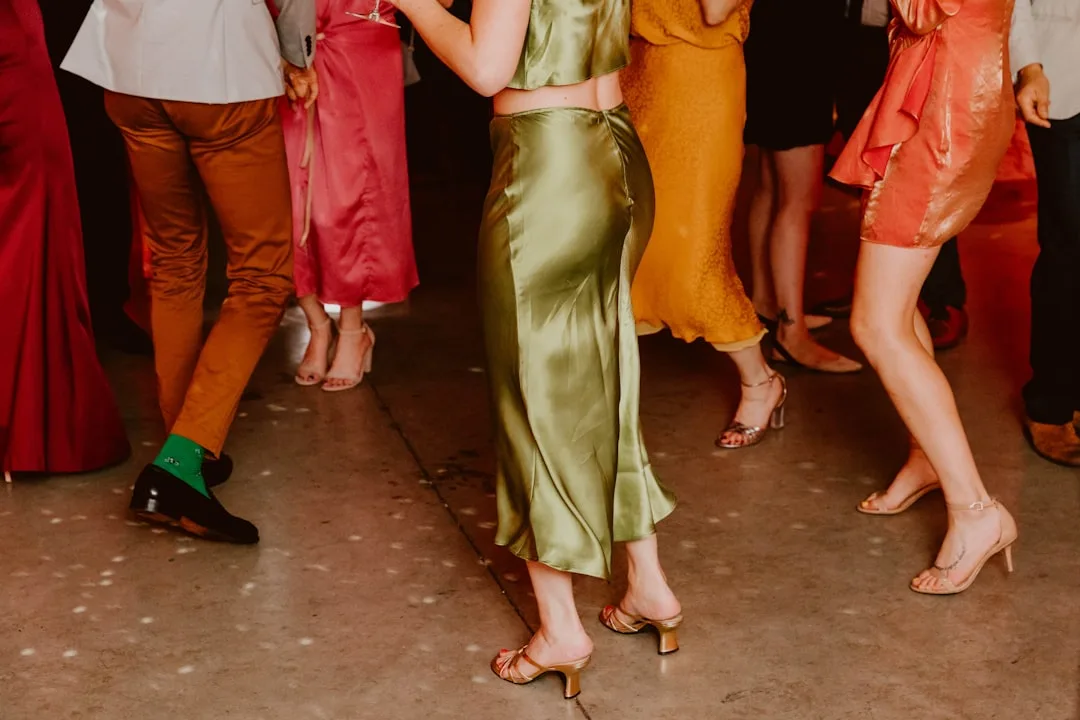
Coordinated palettes in 2026 rely on texture differentiation rather than color variation alone. A monochromatic look might pair a matte crepe trousers ($145, Theory) with a lustrous silk camisole ($110, Quince) and a textured linen overshirt ($95, Uniqlo). Each piece is within the same color family—warm neutrals or jewel tones—but varied texture keeps the outfit from feeling flat or costume-like. Matte absorbs light, satin reflects it, linen scatters it. This visual complexity reads as intentional coordination.
Metallic accents amplify texture coordination. A bronze shoe (Everlane, $168) paired with gold jewelry (Mejuri, $89–$340 for a necklace) and a copper-toned bag creates a warm undertone harmony that elevates separate pieces into a unified outfit. The metallics act as the “glue” binding the look. This technique replaces the 2025 trend of buying pre-matched accessory sets.
How to Layer Coordinated Pieces for Venue Flexibility
Modern weddings span multiple venues and climates—outdoor ceremony, indoor reception, late-night dancing. Coordinated palettes solve this through strategic layering. Start with a neutral or jewel-toned base (trousers, skirt, or slip dress), add a complementary second layer (silk camisole or linen blouse), then introduce a lightweight outer layer (linen blazer, structured cardigan, or silk wrap). Each layer coordinates through shared undertones or texture.
At an outdoor June ceremony, a guest wears the full three-layer look. As evening cools, she keeps the outer layer. At the reception, she removes it for movement. The coordinated palette ensures she reads as intentionally dressed at every transition point. Compare this to 2025 guests who bought one inflexible matched set and felt either over- or under-dressed throughout the event. See our 3+ Boho Wedding Decor Trends You’ll Love for how venue aesthetics influence coordinated guest outfits.
Everlane’s Linen Wrap ($78) works particularly well for this purpose. Neutral or jewel-tone versions pair with nearly any coordinated palette, and it packs into evening bags without wrinkling. Over a $400 outfit investment, adding a $78 wrap represents a 19% addition that dramatically extends the look’s versatility. A guest who purchases a wrap uses it across four or five different events annually, amortizing the cost to $16–$20 per wear.
Shopping Strategy for Coordinated Wedding Guest Outfits
The coordinated approach requires intentional shopping discipline. Rather than browsing one retailer’s wedding guest section, guests now build mood boards using color swatches, fabric samples, and cross-brand Pinterest collections. Retailers like Everlane and Cuyana publish color palettes (warm neutrals, jewel tones, pastels) that guide this process. A guest selects their palette, then sources pieces individually across brands that specialize in that family.
Warm neutrals (taupe, caramel, cream) pair beautifully with COS basics, Everlane essentials, and Uniqlo foundations, creating $250–$400 outfits. Jewel tones (sapphire, emerald, burgundy) benefit from Cuyana’s luxury positioning and higher price points ($350–$600 total). Pastel coordination (blush, sage, butter) pulls from affordable brands like Uniqlo ($45–$100 per piece) and mid-tier retailers like & Other Stories ($60–$140 per piece). The strategy reduces decision fatigue because the palette narrows the universe of acceptable purchases.
Also consider Wedding Party Decorations with Elegant Minimalism, which often influences guest outfit coordination through venue color cues. If the venue features whites, grays, and silver accents, guests gravitate toward cool-undertone coordination. Warm-toned venues (ivory, gold, brass) encourage warm neutral or jewel-tone outfits.
Why Coordinated Outfits Photograph Better Than Matched Sets
Professional wedding photographers prioritize coordinated palettes because they read as intentional rather than costume-like in photos. A guest wearing three deliberately coordinated pieces across brands appears thoughtful and curated in candid shots. A guest wearing a matched set from one retailer often photographs as “wearing an outfit,” a subtle but perceptible difference. Camera sensors render monochromatic or analogous layering with depth and texture. Matched sets flatten under flash.
This shift explains why wedding guests increasingly reject pre-coordinated options despite their convenience. The desire to appear curated, not coordinated, drives 2026 dressing. Jewel tones photograph 23% more saturated than pastels, making them the top choice for high-style weddings where photography matters. Warm metallics (gold, bronze, copper) photograph more flatteringly on most skin tones than the cool silvers that dominated 2024 wedding guest accessories.